US Business

Eurozone unemployment drops to record low

Unemployment in the eurozone has dropped to a record low, at 6.5 percent in October, the EU’s Eurostat statistics office said Thursday.

The reading — the lowest since Eurostat started compiling jobless figures in April 1998 — was an indicator that the economies of the 19 EU nations using the euro had bounced back after the Covid pandemic.

The seasonally adjusted unemployment rate was markedly less than the 7.3 percent recorded a year ago.

Eurostat estimated that, for the entire 27-nation European Union, 12.95 million adults were unemployed in October — or 6.0 percent of the active population — with 10.87 million of them in the eurozone. 

While all OECD economies, with the exception of former EU member Britain, have recovered to their pre-pandemic size, global headwinds are stalling the recovery.

The eurozone is likely to tip towards recession within weeks, according to the European Commission.

Inflation is running hot, despite falling back in the latest reading on Wednesday, at 10 percent — above the European Central Bank’s two-percent target — largely because of high energy prices spurred by the fallout of Russia’s war in Ukraine.

Business activity has been declining for five straight months, according to a PMI survey published by S&P Global, although the rate of decline slowed in November.

The ECB will pore over the latest indicators as it walks a tight rope between raising interest rates to combat inflation and the risk of tipping the economy into a deep recession.

An analysis note from ING bank said the unemployment data showed “the labour market remains resilient despite the slowing economy”.

It added that it expected the ECB to remain “on high alert in its fight against inflation”.

Younger people had the highest unemployment rate in the EU and its eurozone, at 15.1 percent and 15.0 percent respectively, according to Eurostat. That was an increase over a year ago.

In the eurozone’s biggest economy, Germany, the unemployment rate was 3.0 percent, down from 3.3 percent in October 2021.

In the second biggest, France, it was 7.1 percent, down from 7.6 percent a year earlier.

The Czech Republic, which is not in the eurozone, had the lowest unemployment rate in the EU, at 2.1 percent, while eurozone member Spain was the highest, with 12.5 percent.

Musk vows interface implants in human brains within six months

Tech billionaire Elon Musk said on Wednesday one of his companies would in six months be able to implant a device into a human brain that would allow communication with a computer.

The interface, produced by Musk’s start-up Neuralink, would allow the user to communicate directly with computers through their thoughts, he said.

“We’ve submitted I think most of our paperwork to the FDA (US Food and Drug Administration) and we think probably in about six months we should be able to have our first Neuralink in a human,” he said in a company presentation.

“We’ve been working hard to be ready for our first human (implant), and obviously we want to be extremely careful and certain that it will work well before putting a device in a human,” he said.

Musk — who bought Twitter last month and also owns SpaceX, Tesla and several other companies — has been known to make ambitious predictions about his companies, with several not becoming reality.

In July 2019, he vowed that Neuralink would be able to perform its first tests on humans in 2020.

The prototypes, which are the size of a coin, have been implanted in the skulls of monkeys.

At the Neuralink presentation, the company showed several monkeys “playing” basic video games or moving a cursor on a screen through their Neuralink implant.

Musk said the company would try to use the implants to restore vision and mobility in humans.

“We would initially enable someone who has almost no ability to operate their muscles… and enable them to operate their phone faster than someone who has working hands,” he said.

“As miraculous as it may sound, we are confident that it is possible to restore full body functionality to someone who has a severed spinal cord,” he said.

Beyond the potential to treat neurological diseases, Musk’s ultimate goal is to ensure that humans are not intellectually overwhelmed by artificial intelligence, he said.

Other companies working on similar systems include Synchron, which announced in July that it had implanted the first brain-machine interface in the United States. 

Asia extends stocks rally as dollar drops on Fed rate optimism

Asian stocks extended a global rally Thursday and the dollar sank after Federal Reserve boss Jerome Powell flagged a rate hike slowdown and China signalled a softer approach to fighting Covid.

A growing sense of hope that months of sharp monetary tightening around the world is finally reining inflation back from its decades-long highs sent equities surging in November, even as policymakers warned more work had to be done.

And in a much-anticipated speech Wednesday, Powell said the full effects of the Fed’s belt-tightening had yet to be felt but that it “makes sense to moderate the pace of our rate increases as we approach the level of restraint that will be sufficient to bring inflation down”.

He signalled the US central bank’s December gathering would likely see officials lift borrowing costs by 50 basis points, having pushed them up by a bumper 75 points at the past four meetings.

However, Powell did say policy would need to remain tight “for some time” to restore price stability, echoing comments from other Fed officials who suggested there might not be any cuts until 2024.

Analysts said the reaction to Powell’s remarks — which had been expected to be his most dovish in some time — highlighted a sense of relief among investors that a long-hoped-for pivot was on the cards.

All three main indexes on Wall Street surged, with the Nasdaq leading the way as rate-sensitive tech firms rocketed.

The gains extended November’s rally and helped claw back more of the hefty losses suffered for much of 2022.

Investors were “putting those nasty thoughts of a bear market to bed as the December Santa Rally springs alive”, said Stephen Innes at SPI Asset Management.

“Indeed investors are revelling in the afterglow of moderating Fed signals. And with the Fed done with jumbo hikes, it’s seemingly enough to mark the bottom in the bear market and could lead to a sustainable rally.”

He added that bets on rates topping five percent were fading and the advance in markets could push into the new year, with another slowdown in November inflation potentially fuelling a bull rally — when a market rises 20 percent from its recent low. 

“Still,” he warned, “inflation will need to play along.”

– China Covid hope –

In another sign of hope, data earlier showed that eurozone inflation eased for the first time in 17 months in November.

Hong Kong extended its rally into a third day, with tech giants including Alibaba and Tencent tracking massive gains in their US-listed stock, while Shanghai was also up.

Those rallies were also helped by signs that China is edging towards a more pragmatic approach to fighting the coronavirus, having hammered the economy this year with its strict zero-Covid strategy of lockdowns and mass testing.

After widespread unrest against the measures — and calls for more political freedoms — authorities have announced moves aimed at loosening some restrictions.

On Wednesday, Vice Premier Sun Chunlan, who heads China’s Covid campaign, told the National Health Commission that the fight was entering a new phase as Omicron weakens and more people are vaccinated.

Bloomberg News also noted that she did not refer to “dynamic Covid-zero”, the term used to explain Beijing’s strategy. 

“While we shouldn’t expect a dramatic shift in policy from the leadership, particularly before the March Congress, any modest softening in its Covid-zero policy will and should be welcomed,” said OANDA’s Craig Erlam. 

“The approach has been extremely damaging to growth and confidence and the protests highlight how public opinion towards it is changing.”

Among other markets, Tokyo, Sydney and Taipei added more than one percent while Singapore, Seoul, Wellington, Mumbai and Bangkok were also in positive territory.

London, Paris and Frankfurt rose at the open.

The dollar suffered another sell-off, tanking more than one percent to briefly hit as low as 135.84 yen Thursday, a level not seen since August.

The greenback’s losses come after it soared across the board this year as Fed monetary policy diverged more and more from other central banks.

– Key figures around 0820 GMT –

Tokyo – Nikkei 225: UP 0.9 percent at 28,226.08 (close)

Hong Kong – Hang Seng Index: UP 0.8 percent at 18,736.44 (close)

Shanghai – Composite: UP 0.5 percent at 3,165.47 (close)

London – FTSE 100: Up 0.3 percent at 7,598.35

Dollar/yen: DOWN at 136.28 yen from 138.03 yen on Wednesday

Euro/dollar: UP at $1.0424 from $1.0408 on Wednesday

Pound/dollar: UP at $1.2100 from $1.2052

Euro/pound: DOWN at 86.20 pence from 86.34 pence

West Texas Intermediate: DOWN 0.6 percent at $80.05 per barrel

Brent North Sea crude: DOWN 0.6 percent at $86.46 per barrel

New York – Dow: UP 2.2 percent at 34,589.77 (close)

El Salvador journalists sue NSO Group in US over alleged Pegasus attacks

Salvadoran digital newspaper El Faro’s employees filed a lawsuit in a US federal court on Wednesday against NSO Group, alleging the Israeli firm’s controversial Pegasus software was used to spy on them.

The lawsuit was filed in California by 13 El Faro journalists and two administrative staff, represented by lawyers from the Knight First Amendment Institute at Columbia University.

Pegasus was used to breach the phones of at least 22 people associated with El Faro, including the plaintiffs, compromising their communications and data, according to the complaint — a copy of which was released by the Knight Institute.

“Their devices were accessed remotely and surreptitiously, their communications and activities monitored, and their personal data accessed and stolen,” it alleges.

“The attacks have compromised Plaintiffs’ safety as well as the safety of their colleagues, sources, and family members.”

These alleged activities violated the US Computer Fraud and Abuse Act (CFAA), according to the lawsuit.

The Pegasus spyware infiltrates mobile phones to extract data or to activate a camera or microphone to spy on their owners.

NSO Group claims it is only sold to government agencies to target criminals and terrorists, with the green light of Israeli authorities.

The company has been criticized by global rights groups for privacy violations around the world and is facing lawsuits from major tech firms such as Apple and Microsoft.

US authorities put NSO Group on a blacklist last year, with the Commerce Department saying the firm’s tools “enabled foreign governments to conduct transnational repression.”

The El Salvador government has denied it was behind the surveillance of El Faro staff.

“Unfortunately we have had to look for a court in another country, because there is no possibility that in El Salvador we can obtain justice,” El Faro’s director, Carlos Dada, said in a statement.

“One of the main demands of this lawsuit is that the federal court require NSO Group to identify, return and delete all information obtained through these attacks,” El Faro said. 

“The court is also requested to prohibit NSO Group from re-executing Pegasus against the members of this media and that the same federal court issue an order against NSO Group so that it can disclose the client who was behind the espionage.”

El Salvador journalists sue NSO Group in US over alleged Pegasus attacks

Salvadoran digital newspaper El Faro’s employees filed a lawsuit in a US federal court on Wednesday against NSO Group, alleging the Israeli firm’s controversial Pegasus software was used to spy on them.

The lawsuit was filed in California by 13 El Faro journalists and two administrative staff, represented by lawyers from the Knight First Amendment Institute at Columbia University.

Pegasus was used to breach the phones of at least 22 people associated with El Faro, including the plaintiffs, compromising their communications and data, according to the complaint — a copy of which was released by the Knight Institute.

“Their devices were accessed remotely and surreptitiously, their communications and activities monitored, and their personal data accessed and stolen,” it alleges.

“The attacks have compromised Plaintiffs’ safety as well as the safety of their colleagues, sources, and family members.”

These alleged activities violated the US Computer Fraud and Abuse Act (CFAA), according to the lawsuit.

The Pegasus spyware infiltrates mobile phones to extract data or to activate a camera or microphone to spy on their owners.

NSO Group claims it is only sold to government agencies to target criminals and terrorists, with the green light of Israeli authorities.

The company has been criticized by global rights groups for privacy violations around the world and is facing lawsuits from major tech firms such as Apple and Microsoft.

US authorities put NSO Group on a blacklist last year, with the Commerce Department saying the firm’s tools “enabled foreign governments to conduct transnational repression.”

The El Salvador government has denied it was behind the surveillance of El Faro staff.

“Unfortunately we have had to look for a court in another country, because there is no possibility that in El Salvador we can obtain justice,” El Faro’s director, Carlos Dada, said in a statement.

“One of the main demands of this lawsuit is that the federal court require NSO Group to identify, return and delete all information obtained through these attacks,” El Faro said. 

“The court is also requested to prohibit NSO Group from re-executing Pegasus against the members of this media and that the same federal court issue an order against NSO Group so that it can disclose the client who was behind the espionage.”

SpaceX again postpones Japanese moon lander launch

SpaceX on Wednesday postponed the launch of the world’s first private lander to the Moon, a mission undertaken by Japanese firm ispace.

A Falcon 9 rocket was scheduled to blast off at 3:37 am (0837 GMT) on Thursday from Cape Canaveral in the US state of Florida, but SpaceX said further checks on the vehicle had led to a delay. 

“After further inspections of the launch vehicle and data review, we’re standing down from tomorrow’s launch of @ispace_inc’s HAKUTO-R Mission 1; a new target launch date will be shared once confirmed,” the firm tweeted.

Until now, only the United States, Russia and China have managed to put a robot on the lunar surface.

The mission by ispace is the first of a program called Hakuto-R. 

The lander would touch down around April 2023 on the visible side of the Moon, in the Atlas crater, according to a company statement.

The delay came after the launch had already been postponed by a day due to the need for additional pre-flight checks, SpaceX and ispace said on Wednesday.

Measuring just over 2 by 2.5 meters, the lander carries on board a 10-kilogram rover named Rashid, built by the United Arab Emirates. 

The oil-rich country is a newcomer to the space race but counts recent successes including sending a probe into Mars’ orbit last year. If it succeeds, Rashid will be the Arab world’s first Moon mission.

“We have achieved so much in the six short years since we first began conceptualizing this project in 2016,” said ispace CEO Takeshi Hakamada.

Hakuto was one of five finalists in the international Google Lunar XPrize competition, a challenge to land a rover on the Moon before a 2018 deadline, which ended without a winner. But some of the projects are still ongoing.

Another finalist, from the Israeli organization SpaceIL, failed in April 2019 to become the first privately-funded mission to achieve the feat, after crashing into the surface while attempting to land.

ispace, which has just 200 employees, says it “aims to extend the sphere of human life into space and create a sustainable world by providing high-frequency, low-cost transportation services to the Moon.”

burs-aha/rma

SpaceX again postpones Japanese moon lander launch

SpaceX on Wednesday postponed the launch of the world’s first private lander to the Moon, a mission undertaken by Japanese firm ispace.

A Falcon 9 rocket was scheduled to blast off at 3:37 am (0837 GMT) on Thursday from Cape Canaveral in the US state of Florida, but SpaceX said further checks on the vehicle had led to a delay. 

“After further inspections of the launch vehicle and data review, we’re standing down from tomorrow’s launch of @ispace_inc’s HAKUTO-R Mission 1; a new target launch date will be shared once confirmed,” the firm tweeted.

Until now, only the United States, Russia and China have managed to put a robot on the lunar surface.

The mission by ispace is the first of a program called Hakuto-R. 

The lander would touch down around April 2023 on the visible side of the Moon, in the Atlas crater, according to a company statement.

The delay came after the launch had already been postponed by a day due to the need for additional pre-flight checks, SpaceX and ispace said on Wednesday.

Measuring just over 2 by 2.5 meters, the lander carries on board a 10-kilogram rover named Rashid, built by the United Arab Emirates. 

The oil-rich country is a newcomer to the space race but counts recent successes including sending a probe into Mars’ orbit last year. If it succeeds, Rashid will be the Arab world’s first Moon mission.

“We have achieved so much in the six short years since we first began conceptualizing this project in 2016,” said ispace CEO Takeshi Hakamada.

Hakuto was one of five finalists in the international Google Lunar XPrize competition, a challenge to land a rover on the Moon before a 2018 deadline, which ended without a winner. But some of the projects are still ongoing.

Another finalist, from the Israeli organization SpaceIL, failed in April 2019 to become the first privately-funded mission to achieve the feat, after crashing into the surface while attempting to land.

ispace, which has just 200 employees, says it “aims to extend the sphere of human life into space and create a sustainable world by providing high-frequency, low-cost transportation services to the Moon.”

burs-aha/rma

Spiking costs, fading snow squeeze Austrian ski resorts

One of Austria’s top ski resorts is making as much artificial snow as possible to lay a thick base on the slopes before its energy bills leap.

Like other spots across the Alps, world-famous Kitzbuehel is being hit by inflation-driven cost hikes, but also warmer winters that are ever less snowy.

“We expect that our power costs will at least double this season,” said Anton Bodner, head of the resort’s Bergbahn Kitzbuehel company, noting several lower price energy contracts run out by year’s end.

“We are talking about millions of euros,” he added, while looking over one of the few slopes already open.

The soaring energy bills for Austria’s famed ski resorts have translated into pricier tickets, but also shorter hours and reduced service.

“We have no choice but to pass higher power prices on to our customers,” Bodner told AFP, adding that they had kept increases below inflation, which stood at 11 percent by October.

Ski resorts like Kitzbuehel will try to save money by trimming opening times, ramping up snowmaking when temperatures are colder and reducing lift capacity to save energy.

Kitzbuehel plans to run its lifts about two hours less per day, opening slightly later and closing earlier. 

– Less schnitzel –

But at the end of the day, it’s skiers who wind up feeling the pinch and fewer are expected to turn up. 

A recently conducted survey was pointing towards significantly fewer holidaymakers this winter season in Austria due to high inflation compared to 2019, said Oliver Fritz, senior economist at the Austrian Institute of Economic Research (WIFO). 

“Even if a (winter) vacation is planned, potential guests want to spend less,” Fritz said.

Cutting expenses like eating out, shortening holidays or turning to cheaper accommodation or resorts are some of the ways people are dialling back.

“At the restaurant we will only have schnitzel once a week and not twice” like we used to, skiier Klaus Bernert told AFP in Kitzbuehel, which is known for its alpine skiing downhill race.

“Everything has become about 20, 30 percent more expensive. Another 20, 30 percent, and we can no longer afford skiing. Then we would unfortunately have to give up our hobby,” the 58-year-old added.

Equipment and season passes for him and another family member “already ate up two to three monthly salaries”, he said.

Sabine Huber, a local from a nearby valley, said she expected more and more people to continue to switch to ski touring, a sport where enthusiasts climb the slopes on skis, rendering lift tickets unnecessary.

“I’m lucky that I’m a ski tourer and can practise my sport relatively cheaply. Of course, I know many who are already considering whether or not to buy a ski pass because of high prices,” she said.

– Melting profits –

Austria’s famous ski resorts are part of its winter tourism industry, which pulled in about 3.9 percent of the country’s national GDP in 2019, before the pandemic slashed profits.     

Ski resorts are trying to stay optimistic, but it remains to be seen how Alpine tourist destinations across Europe will fare as warming temperatures and inflation threaten their very existence.

“Since 1961, the average annual snow cover duration over the entire area of Austria has decreased by 40 days,” said Marc Olefs, head of climate research at Austria’s national meteorological and geophysical service ZAMG.  

Without measures to cut greenhouse gas-related warming, the duration of natural snow cover at altitudes ranging from 1,500 to 2,500 metres could “decrease by a further 25 percent by 2100”, Olefs noted.

And without snowy winters and sub-zero temperatures, both natural and artificial snow will soon be a thing of the past. 

“Ski resorts can no longer be operated economically without artificial snow, because the tourism industry simply needs predictability and reliability. With artificial snow, we can guarantee that skiing is possible from the beginning of December until April,” said Kitzbuehel’s Bodner.

Austria’s economy would also suffer considerable damage.

Around 16 of 30 billion euros that the tourism industry generated per year before the pandemic were from the winter season, said Fritz, the economist.

“If Alpine winter tourism is severely affected by climate change, ten billion euros can certainly be regarded as endangered,” he said.

Tesla hoping electric 'Semi' will shake up heavy duty market

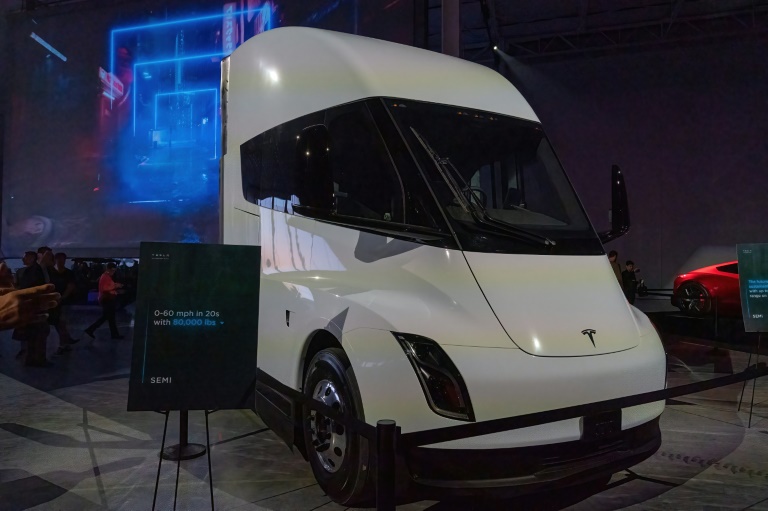
After years of delays, US automaker Tesla is expected on Thursday to deliver its first battery-powered semi truck, with which it hopes to get a jump start on the nascent electric heavy duty vehicle market by offering longer ranges without recharging.

The Elon Musk-led company is scheduled to hand over the keys to its first electric truck — dubbed “Semi” — at its Nevada manufacturing plant to multinational food company PepsiCo.

With its sleek design, the Tesla electric semi has been highly anticipated since Musk unveiled a prototype in 2017, but the launch of full-scale production has been delayed well past the initial 2019 expectation.

Other manufacturers have meanwhile entered the market, from traditional truck makers such as Daimler, Volvo and China’s BYD, to startups like US company Nikola.

The competition has also begun to roll out their deliveries, and have many orders of their own waiting to fill.

However, the truck that “the market has been waiting for… is the one from Tesla,” says Dave Mullaney, a transportation specialist with sustainability think tank RMI.

Legacy manufacturers have primarily converted their diesel-designed trucks to electric.

“The Tesla, on the other hand, was designed to be electric from the very first design,” says Mullaney, who also underlined the company’s 15 years of experience in electric vehicles.

If the Tesla vehicle lives up to expectations, “it’s going to be a huge difference,” Mullaney says.

In a tweet on Saturday, Musk said that one Semi had driven 500 miles (800 kilometers) with a total weight of 81,000 pounds (nearly 37 tons).

The electric vehicles currently on offer only have a range of 250 to 300 miles.

– Physical limitations? –

To carry heavy loads over such long distances, the battery “needs to be very large — that makes it very heavy, takes up a lot of space and is very costly,” says Mike Roeth, director of the North American Council for Freight Efficiency (NACFE).

“The industry has kind of been wondering whether you can physically package that much battery” and keep the truck’s weight low enough to be able to do the job, Roeth adds.

With the ability to travel up to 500 miles without recharging, long-distance trips in electric trucks would be much more feasible, allowing drivers to return to warehouses in the same day.

Even longer trips could be taken over several days if drivers can find charging stations at truck rest stops.

The use of electric light duty vehicles for short-haul deliveries has been steadily growing for some time, but new regulations are pushing manufacturers and transporters to speed up the transition and build out long-haul capabilities.

The most populous US state, California, has passed a law phasing out combustion engine trucks, which has since been followed by other states.

The European Union is also expected to debate new standards in the coming months.

Companies are also facing pressure to have more environmentally conscious reputations.

They “want to be on the right side of history,” says Marie Cheron of the Europe-based association Transport & Environment.

Those who do not commit to a decarbonization strategy, some of whom say they are waiting for technologies to improve, “are falling behind,” she says.

Another motivation to transition, Roeth says, is that drivers who have been able to test them, “love the electric trucks a lot.”

“They’re very quiet, they don’t have the smells of the exhaust, and they are comfortable to drive.”

– Cost considerations –

For the adoption of electric trucks to accelerate, their range must truly live up to promises and batteries ideally would shrink, several analysts told AFP.

The charging infrastructure must also be built out.

That means adding more charging stations, but also building an electric distribution system strong enough to allow, for example, ten trucks to plug in at the same time in one parking lot.

The biggest factor will certainly be price.

An electric truck costs about 70 percent more to buy than a diesel truck at the moment, but in terms of energy and maintenance, it’s cheaper, Mullaney says.

“Battery electric vehicles will be competitive with diesel… it’s only a matter of time,” a spokeswoman for the American manufacturer Navistar, a subsidiary of Traton, told AFP.

Wedbush Securities analyst Dan Ives says that Tesla must now “prove they can produce at scale, they need to execute.”

In late October, Musk said that Tesla is aiming to build 50,000 Semis by 2024.

In 2018, when production of Tesla’s Model 3 sedan struggled to ramp up, Musk showed that he was capable of getting his teams to speed up.

Ives says Musk’s attention is unfortunately focused on his newest acquisition, Twitter.

“The circus show there takes away a monumental moment in Tesla history,” he adds.

Tesla hoping electric 'Semi' will shake up heavy duty market

After years of delays, US automaker Tesla is expected on Thursday to deliver its first battery-powered semi truck, with which it hopes to get a jump start on the nascent electric heavy duty vehicle market by offering longer ranges without recharging.

The Elon Musk-led company is scheduled to hand over the keys to its first electric truck — dubbed “Semi” — at its Nevada manufacturing plant to multinational food company PepsiCo.

With its sleek design, the Tesla electric semi has been highly anticipated since Musk unveiled a prototype in 2017, but the launch of full-scale production has been delayed well past the initial 2019 expectation.

Other manufacturers have meanwhile entered the market, from traditional truck makers such as Daimler, Volvo and China’s BYD, to startups like US company Nikola.

The competition has also begun to roll out their deliveries, and have many orders of their own waiting to fill.

However, the truck that “the market has been waiting for… is the one from Tesla,” says Dave Mullaney, a transportation specialist with sustainability think tank RMI.

Legacy manufacturers have primarily converted their diesel-designed trucks to electric.

“The Tesla, on the other hand, was designed to be electric from the very first design,” says Mullaney, who also underlined the company’s 15 years of experience in electric vehicles.

If the Tesla vehicle lives up to expectations, “it’s going to be a huge difference,” Mullaney says.

In a tweet on Saturday, Musk said that one Semi had driven 500 miles (800 kilometers) with a total weight of 81,000 pounds (nearly 37 tons).

The electric vehicles currently on offer only have a range of 250 to 300 miles.

– Physical limitations? –

To carry heavy loads over such long distances, the battery “needs to be very large — that makes it very heavy, takes up a lot of space and is very costly,” says Mike Roeth, director of the North American Council for Freight Efficiency (NACFE).

“The industry has kind of been wondering whether you can physically package that much battery” and keep the truck’s weight low enough to be able to do the job, Roeth adds.

With the ability to travel up to 500 miles without recharging, long-distance trips in electric trucks would be much more feasible, allowing drivers to return to warehouses in the same day.

Even longer trips could be taken over several days if drivers can find charging stations at truck rest stops.

The use of electric light duty vehicles for short-haul deliveries has been steadily growing for some time, but new regulations are pushing manufacturers and transporters to speed up the transition and build out long-haul capabilities.

The most populous US state, California, has passed a law phasing out combustion engine trucks, which has since been followed by other states.

The European Union is also expected to debate new standards in the coming months.

Companies are also facing pressure to have more environmentally conscious reputations.

They “want to be on the right side of history,” says Marie Cheron of the Europe-based association Transport & Environment.

Those who do not commit to a decarbonization strategy, some of whom say they are waiting for technologies to improve, “are falling behind,” she says.

Another motivation to transition, Roeth says, is that drivers who have been able to test them, “love the electric trucks a lot.”

“They’re very quiet, they don’t have the smells of the exhaust, and they are comfortable to drive.”

– Cost considerations –

For the adoption of electric trucks to accelerate, their range must truly live up to promises and batteries ideally would shrink, several analysts told AFP.

The charging infrastructure must also be built out.

That means adding more charging stations, but also building an electric distribution system strong enough to allow, for example, ten trucks to plug in at the same time in one parking lot.

The biggest factor will certainly be price.

An electric truck costs about 70 percent more to buy than a diesel truck at the moment, but in terms of energy and maintenance, it’s cheaper, Mullaney says.

“Battery electric vehicles will be competitive with diesel… it’s only a matter of time,” a spokeswoman for the American manufacturer Navistar, a subsidiary of Traton, told AFP.

Wedbush Securities analyst Dan Ives says that Tesla must now “prove they can produce at scale, they need to execute.”

In late October, Musk said that Tesla is aiming to build 50,000 Semis by 2024.

In 2018, when production of Tesla’s Model 3 sedan struggled to ramp up, Musk showed that he was capable of getting his teams to speed up.

Ives says Musk’s attention is unfortunately focused on his newest acquisition, Twitter.

“The circus show there takes away a monumental moment in Tesla history,” he adds.

Close Bitnami banner
Bitnami