US Business

Asian stocks extend global rally as dollar drops on Fed rate hope

Asian stocks extended a global rally Thursday and the dollar sank after Federal Reserve boss Jerome Powell flagged a rate hike slowdown and China signalled a softer approach to fighting Covid.

A growing sense of hope that months of sharp monetary tightening around the world is finally reining inflation back from its decades-long highs sent equities surging in November, even as policymakers warned more work had to be done.

And in a much-anticipated speech Wednesday, Powell said the full effects of the Fed’s belt-tightening had yet to be felt but that it “makes sense to moderate the pace of our rate increases as we approach the level of restraint that will be sufficient to bring inflation down”.

He signalled the US central bank’s December gathering would likely see officials lift borrowing costs by 50 basis points, having pushed them up by a bumper 75 points at the past four meetings.

However, Powell did say policy would need to remain tight “for some time” to restore price stability, echoing comments from other Fed officials who suggested there might not be any cuts until 2024.

Analysts said the reaction to Powell’s remarks — which had been expected to be his most dovish in some time — highlighted a sense of relief among investors that a long-hoped-for pivot was on the cards.

All three main indexes on Wall Street surged, with the Nasdaq leading the way as rate-sensitive tech firms rocketed.

The gains extended November’s rally and helped claw back more of the hefty losses suffered for much of 2022.

The dollar also suffered a sell-off, tanking more than one percent against the yen to levels not seen since August.

The greenback’s losses come after it soared across the board this year as Fed monetary policy diverged more and more from other central banks.

– Softer Covid approach in China? –

Investors were “putting those nasty thoughts of a bear market to bed as the December Santa Rally springs alive”, said Stephen Innes at SPI Asset Management.

“Indeed investors are revelling in the afterglow of moderating Fed signals. And with the Fed done with jumbo hikes, it’s seemingly enough to mark the bottom in the bear market and could lead to a sustainable rally.”

He added that bets on rates topping five percent were fading and the advance in markets could push into the new year, with another slowdown in November inflation potentially fuelling a bull rally — when a market rises 20 percent from its recent low. 

“Still,” he warned, “inflation will need to play along.”

In another sign of hope, data earlier showed that eurozone inflation eased for the first time in 17 months in November.

Hong Kong led the gains in Asia again, with tech giants including Alibaba and Tencent tracking massive gains in their US-listed stock, while Shanghai was also well up.

Those rallies were also helped by signs that China is edging towards a more pragmatic approach to fighting the coronavirus, having hammered the economy this year with its strict zero-Covid strategy of lockdowns and mass testing.

After widespread unrest against the measures — and calls for more political freedoms — authorities have announced moves aimed at loosening some restrictions.

On Wednesday, Vice Premier Sun Chunlan, who heads China’s Covid campaign, told the National Health Commission that the fight was entering a new phase as Omicron weakens and more people are vaccinated.

Bloomberg News also noted that she did not refer to “dynamic Covid-zero”, the term used to explain Beijing’s strategy. 

“It is clear that the authorities are setting the stage for Covid measures to be relaxed,” said Justin Tang, at United First Partners. “Equity prices will see a boost as China joins the rest of the world in living with Covid.”

Among other markets, Tokyo, Sydney and Taipei added more than one percent while Singapore, Seoul, Wellington, Mumbai and Bangkok were also in positive territory.

– Key figures around 0530 GMT –

Tokyo – Nikkei 225: UP 1.1 percent at 28,266.50 

Hong Kong – Hang Seng Index: UP 1.4 percent at 18,851.25

Shanghai – Composite: UP 0.7 percent at 3,173.59

Dollar/yen: DOWN at 136.29 yen from 138.03 yen on Wednesday

Euro/dollar: UP at $1.0445 from $1.0408 on Wednesday

Pound/dollar: UP at $1.2101 from $1.2052

Euro/pound: DOWN at 86.32 pence from 86.34 pence

West Texas Intermediate: DOWN 0.1 percent at $80.45 per barrel

Brent North Sea crude: DOWN 0.2 percent at $86.82 per barrel

New York – Dow: UP 2.2 percent at 34,589.77 (close)

London – FTSE 100: UP 0.8 percent at 7,573.05 (close)
Biden to host Macron for White House state visit

France’s Emmanuel Macron was set to be hosted by President Joe Biden at the White House Thursday for a state visit mixing sumptuous ceremonies with hard-edged talks on transatlantic trade and how to manage a rising China.

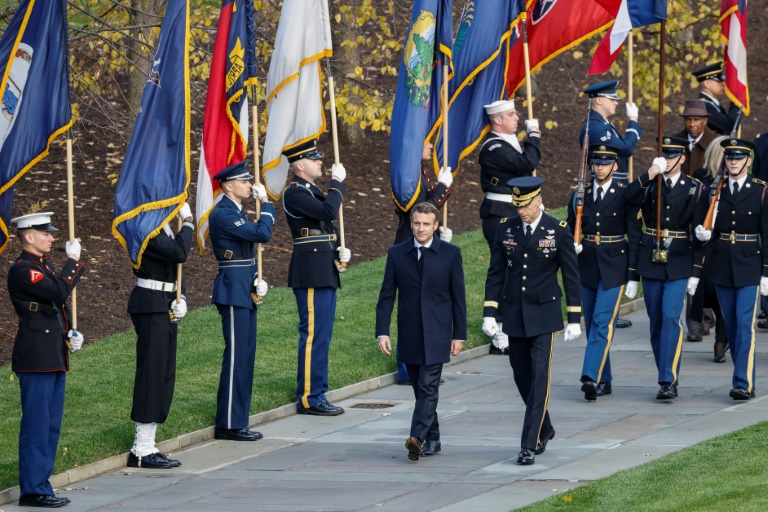
A military honor guard was due to be standing ready at the White House to welcome the French leader, accompanied by his wife, Brigitte, before the two presidents meet in the Oval Office for what are expected to be substantial discussions as they seek to defuse tensions over what Macron has described as “aggressive” subsidies for US manufacturers.

They were to give a joint press conference ahead of winding up the day with a lavish dinner featuring French favorites of wine and cheese — but in both cases American-made.

The two governments have emphasized their historic links — France is the United States’ oldest ally — as well as their close partnership in the Western alliance confronting Russia’s invasion of Ukraine.

However, Macron made clear, in unusually blunt language, that he is not just in Washington to discuss the easy parts of the relationship.

At a lunch with lawmakers and business leaders Wednesday, he lashed out at Biden’s signature policy called the Inflation Reduction Act, which is set to pour billions of dollars into environmentally friendly industries, with strong backing for US-based manufacturers.

The White House touts the IRA legislation as a groundbreaking effort to reignite US manufacturing and promote renewable technologies. European Union governments are crying foul, threatening to launch a trade war by subsidizing their own green economy sector.

“This is super aggressive for our business people,” Macron said, warning that what he sees as unfair US practices will “kill” European jobs.

“The consequence of the IRA is that you will perhaps fix your issue but you will increase my problem. I’m sorry to be so straightforward,” Macron said.

The White House responded by insisting that the state visit is about the two presidents’ “warm relationship.”

US advances in the clean energy economy will help Europeans too, White House Press Secretary Karine Jean-Pierre said. The IRA “presents significant opportunities for European firms as well as benefits to EU energy security. This is not a zero-sum game.”

In a speech later at the French embassy, Macron said the subsidies could become a real sticking point in US relations with Europe.

While voicing support for the environmental goals of the IRA, Macron said “these are choices that will split the West,” even as he agreed that ties remained solid for now.

On Wednesday evening, he and his wife joined Biden and First Lady Jill Biden for dinner in an Italian restaurant in Washington for a moment that was both private and “political,” according to an adviser to the Elysee, ahead of Thursday’s official events.

Also on Wednesday, Macron joined Vice President Kamala Harris at NASA headquarters in Washington to discuss cooperation in space — and to propose putting the first Frenchman on the Moon.

– Menu and music –

Macron’s two busy days in Washington will culminate Thursday with the first formal state dinner of Biden’s presidency — the grand tradition having been shelved due to Covid-19 restrictions.

Grammy-award-winning American musician Jon Batiste will perform at the banquet, which the White House said will kick off with butter-poached Maine lobster, paired with caviar, delicata squash raviolo and tarragon sauce.

The main course features beef and triple-cooked butter potatoes, before leading to the cheese course of award-winning US brands, and finally orange chiffon cake, roasted pears with citrus sauce and creme fraiche ice cream.

Washing all that down will be three different wines — all from US vineyards.

– China high on agenda –

Trade tensions, however, are only part of the uncomfortable flip side to the red carpet occasion.

Another gripe in Europe is the high cost of US liquid natural gas exports — which have surged to help compensate for canceled Russian deliveries.

There is also divergence on how to deal with the rise of superpower China. The question — with Washington pursuing a more hawkish tone and EU powers trying to find a middle ground — is unlikely to see much progress.

“Europe has since 2018 its own, unique strategy for relations with China,” tweeted French embassy spokesman Pascal Confavreux in Washington.

White House National Security Council spokesman John Kirby said China will be “very high on the agenda” this week but stressed that both countries share a broad approach.

“We believe that not only France, but every other member of the G7 — frankly, our NATO allies too — see the threats and challenges posed by China in the same way.”

How bringing back lost species revives ecosystems

Scientists often study the grim impacts of losing wildlife to hunting, habitat destruction and climate change. But what happens when endangered animals are brought back from the brink?

Research has shown restoring so-called “keystone” species — those with an outsized impact on their environment — is vital for the health of ecosystems, and can come with unexpected benefits for humans.

Here are some notable examples from North America. 

– Wolves –

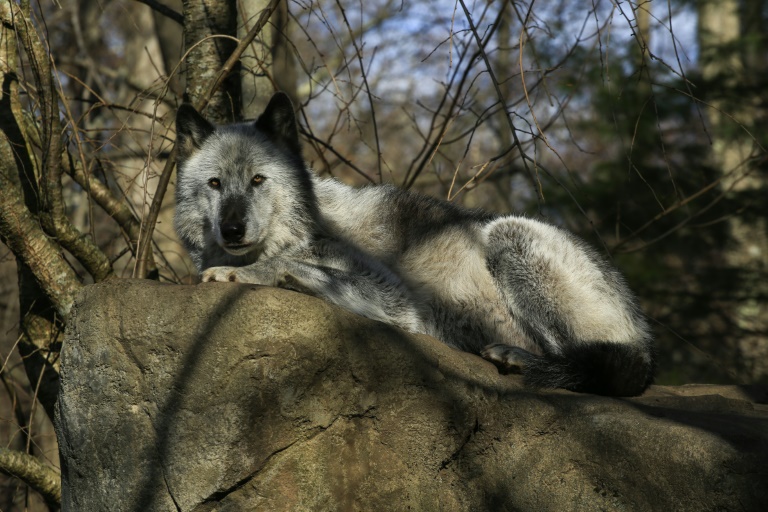
Few species evoke the American wild as much as wolves. 

Though revered by Indigenous communities, European colonists who arrived in the 1600s embarked on widespread extermination campaigns through hunting and trapping.

By the mid-20th century, fewer than a thousand gray wolves were left in the contiguous United States, down from at least a quarter million before colonization.

Extinction was averted in the 1970s when lawmakers passed the Endangered Species Act, helping revive the apex predator in parts of its former range.

Then, in the mid-1990s, the government took wolves from Canada and reintroduced them to Yellowstone National Park.

This generated a wealth of data that scientists are still working to understand.

The new arrivals kept elk numbers down, preventing them from over-browsing vegetation that provides material for birds to build nests and beavers to build dams — a phenomenon known as a trophic cascade.

The recovered vegetation helped stop soil erosion into rivers, changing their course by reducing meandering.

While building their dams, the beavers also create deep ponds that juvenile fish and frogs need to survive.

When they embark on hunts, wolves focus on weak and diseased prey, ensuring survival of the fittest.

A recent paper even found that wolves brought back in the midwestern state of Wisconsin kept deer away from roads, reducing collisions with cars.

Amaroq Weiss, a biologist and senior wolf advocate for the Center for Biological Diversity compared ecosystems to tapestries, “and when we take out some of the threads, we weaken that tapestry,” she told AFP.

It’s thought there are now more than 6,000 gray wolves in the contiguous United States. The main threat is legalized hunting in some states.

– Buffalo –

The story of the American buffalo — also known as bison — is inextricably linked to the dark history of the early United States.

From an estimated 30 million, their number plummeted to just hundreds by the late 19th century as the US government sought to wipe out plains tribe Indians whose way of life depended on the animal.

“It was an intentional genocide to remove the buffalo, to the remove the Indians and force them onto reservations,” Cody Considine of The Nature Conservancy (TNC) told AFP.

Buffalo, he explained, are an integral part of TNC’s efforts to re-establish prairies in the Nachusa Grasslands of Illinois.

The buffalo, who were introduced there in 2014 and now number around a hundred, favor eating grass over flowering plants and legumes, which in turn allows a variety of birds, insects and amphibians to flourish.

“Some of these species without that grazing simply just disappear off the landscape due to the high competition of the grasses,” added Considine.

As they forage, bisons’ hooves kick up and aerate the soil, further aiding in plant growth as well as seed dispersion. 

TNC currently manages some 6,500 buffalo, and is creating a pilot program with tribal partners that involves transferring excess animals to Indigenous communities, as part of broader efforts to revive America’s national mammal. 

Some 20,000 buffalo are now thought to roam in “conservation herds,” though none are truly free roaming, added Considine.

– Sea otters –

As the dominant predator of marine nearshore environments, sea otters play a hugely important role in their ecosystem.

Historically they spanned from Baja California up the West Coast up to Alaska, Russia and northern Japan, but hunting for fur in the 1700s and 1800s decimated their numbers, which were once up to 300,000. 

They were thought for a while to have been completely exterminated off California, but a small surviving population of around 50 helped them partially recover to some 3,000 today.

Jess Fujii, sea otter program manager at the Monterey Bay Aquarium, told AFP that research during the 1970s in the Aleutian Islands showed the otters maintained the balance of kelp forest by keeping a check on the sea urchins that graze on them.

In the last decade, more complex interactions have come to light. These include the downstream benefits of otters for eelgrass habitats in California estuaries. 

Here, the sea otters controlled the population of crabs, which meant there were more sea slugs who were able to graze algae, keeping the eelgrass healthy.

Eelgrass is considered a “nursery of the sea” for juvenile fish, and it also reduces erosion, which can factor in coastal floods.

“Kelp and eelgrass are often considered good ways to sequester carbon which can help mitigate the ongoing impacts of climate change,” stressed Fujii, a prime example of how destruction of nature can worsen planetary warming.

Musk says Twitter clash with Apple a 'misunderstanding'

Twitter owner Elon Musk said he met with Apple chief Tim Cook on Wednesday and “resolved the misunderstanding” that prompted him to declare war on the iPhone maker’s App Store.

“Among other things, we resolved the misunderstanding about Twitter potentially being removed from the App Store,” Musk tweeted.

“Tim was clear that Apple never considered doing so.”

Musk also tweeted a video clip of “Apple’s beautiful HQ” in Cupertino, California, noting that he had had a “good conversation” with Cook.

Apple did not reply to AFP requests for comment.

The world’s richest person opened fire on the planet’s most valuable company early this week over fees and rules at the App Store, saying Apple had threatened to oust his recently acquired social media platform.

The billionaire CEO had tweeted that Apple “threatened to withhold Twitter from its App Store, but won’t tell us why.”

Apple, which has not issued a public statement on the matter, typically tells developers if fixes need to be implemented in apps to conform to App Store policies.

Analysts told AFP the clash may have came down to money, with Musk irked that the App Store takes a commission on transactions such as subscriptions.

Musk has delayed the relaunch of the Twitter Blue subscription tier intended to have users pay for perks such as account verification check marks.

Twitter rolled out Blue early in November, but pulled the plug after impersonators paid for check marks to appear legitimate in what former head of safety and security Yoel Roth referred to as “a disaster.”

Both Apple and Google also require social networking services on their app stores to have effective systems for moderating harmful or abusive content.

But since taking over Twitter last month, Musk has cut around half of Twitter’s workforce, including many employees tasked with fighting disinformation, while an unknown number of others have quit.

He has also reinstated previously banned accounts, including that of former president Donald Trump.

Describing himself as a “free speech absolutist,” Musk believes that all content permitted by law should be allowed on Twitter, and has described his actions as a “revolution against online censorship in America.”

Musk says Twitter clash with Apple a 'misunderstanding'

Twitter owner Elon Musk said he met with Apple chief Tim Cook on Wednesday and “resolved the misunderstanding” that prompted him to declare war on the iPhone maker’s App Store.

“Among other things, we resolved the misunderstanding about Twitter potentially being removed from the App Store,” Musk tweeted.

“Tim was clear that Apple never considered doing so.”

Musk also tweeted a video clip of “Apple’s beautiful HQ” in Cupertino, California, noting that he had had a “good conversation” with Cook.

Apple did not reply to AFP requests for comment.

The world’s richest person opened fire on the planet’s most valuable company early this week over fees and rules at the App Store, saying Apple had threatened to oust his recently acquired social media platform.

The billionaire CEO had tweeted that Apple “threatened to withhold Twitter from its App Store, but won’t tell us why.”

Apple, which has not issued a public statement on the matter, typically tells developers if fixes need to be implemented in apps to conform to App Store policies.

Analysts told AFP the clash may have came down to money, with Musk irked that the App Store takes a commission on transactions such as subscriptions.

Musk has delayed the relaunch of the Twitter Blue subscription tier intended to have users pay for perks such as account verification check marks.

Twitter rolled out Blue early in November, but pulled the plug after impersonators paid for check marks to appear legitimate in what former head of safety and security Yoel Roth referred to as “a disaster.”

Both Apple and Google also require social networking services on their app stores to have effective systems for moderating harmful or abusive content.

But since taking over Twitter last month, Musk has cut around half of Twitter’s workforce, including many employees tasked with fighting disinformation, while an unknown number of others have quit.

He has also reinstated previously banned accounts, including that of former president Donald Trump.

Describing himself as a “free speech absolutist,” Musk believes that all content permitted by law should be allowed on Twitter, and has described his actions as a “revolution against online censorship in America.”

How bringing back lost species revives ecosystems

Scientists often study the grim impacts of losing wildlife to hunting, habitat destruction and climate change. But what happens when endangered animals are brought back from the brink?

Research has shown restoring so-called “keystone” species — those with an outsized impact on their environment — is vital for the health of ecosystems, and can come with unexpected benefits for humans.

Here are some notable examples from North America. 

– Wolves –

Few species evoke the American wild as much as wolves. 

Though revered by Indigenous communities, European colonists who arrived in the 1600s embarked on widespread extermination campaigns through hunting and trapping.

By the mid-20th century, fewer than a thousand gray wolves were left in the continental United States, down from at least a quarter million before colonization.

Extinction was averted in the 1970s when lawmakers passed the Endangered Species Act, helping revive the apex predator in parts of its former range.

Then, in the mid-1990s, the government took wolves from Canada and reintroduced them to Yellowstone National Park.

This generated a wealth of data that scientists are still working to understand.

The new arrivals kept elk numbers down, preventing them from over-browsing vegetation that provides material for birds to build nests and beavers to build dams — a phenomenon known as a trophic cascade.

The recovered vegetation helped stop soil erosion into rivers, changing their course by reducing meandering.

While building their dams, the beavers also create deep ponds that juvenile fish and frogs need to survive.

When they embark on hunts, wolves focus on weak and diseased prey, ensuring survival of the fittest.

A recent paper even found that wolves brought back in the midwestern state of Wisconsin kept deer away from roads, reducing collisions with cars.

Amaroq Weiss, a biologist and senior wolf advocate for the Center for Biological Diversity compared ecosystems to tapestries, “and when we take out some of the threads, we weaken that tapestry,” she told AFP.

It’s thought there are now more than 6,000 gray wolves in the US. The main threat is legalized hunting in some states.

– Buffalo –

The story of the American buffalo — also known as bison — is inextricably linked to the dark history of the early United States.

From an estimated 30 million, their number plummeted to just hundreds by the late 19th century as the US government sought to wipe out plains tribe Indians whose way of life depended on the animal.

“It was an intentional genocide to remove the buffalo, to the remove the Indians and force them onto reservations,” Cody Considine of The Nature Conservancy (TNC) told AFP.

Buffalo, he explained, are an integral part of TNC’s efforts to re-establish prairies in the Nachusa Grasslands of Illinois.

The buffalo, who were introduced there in 2014 and now number around a hundred, favor eating grass over flowering plants and legumes, which in turn allows a variety of birds, insects and amphibians to flourish.

“Some of these species without that grazing simply just disappear off the landscape due to the high competition of the grasses,” added Considine.

As they forage, bisons’ hooves kick up and aerate the soil, further aiding in plant growth as well as seed dispersion. 

TNC currently manages some 6,500 buffalo, and is creating a pilot program with tribal partners that involves transferring excess animals to Indigenous communities, as part of broader efforts to revive America’s national mammal. 

Some 20,000 buffalo are now thought to roam in “conservation herds,” though none are truly free roaming, added Considine.

– Sea otters –

As the dominant predator of marine nearshore environments, sea otters play a hugely important role in their ecosystem.

Historically they spanned from Baja California up the West Coast up to Alaska, Russia and northern Japan, but hunting in the 1700s and 1800s decimated their numbers, which were once up to 300,000. 

They were thought for a while to have been completely exterminated off California, but a small surviving population of around 50 helped them partially recover to some 3,000 today.

Jess Fujii, sea otter program manager at the Monterey Bay Aquarium, told AFP that research during the 1970s in the Aleutian Islands showed the otters maintained the balance of kelp forest by keeping a check on the sea urchins that graze on them.

In the last decade, more complex interactions have come to light. These include the downstream benefits of otters for eelgrass habitats in California estuaries. 

Here, the sea otters controlled the population of crabs, which meant there were more sea slugs who were able to graze algae, keeping the eelgrass healthy.

Eelgrass is considered a “nursery of the sea” for juvenile fish, and it also reduces erosion, which can factor in coastal floods.

“Kelp and eelgrass are often considered good ways to sequester carbon which can help mitigate the ongoing impacts of climate change,” stressed Fujii, a prime example of how destruction of nature can worsen planetary warming.

Asian stocks join global rally and dollar drops on Fed rate joy

Asian stocks extended a global rally Thursday and the dollar fell after Federal Reserve boss Jerome Powell flagged a slowdown in the pace of interest rate hikes and China opened the way for a softer approach to fighting Covid.

A growing sense of hope that months of sharp monetary tightening around the world is finally reining inflation back from its decades-long highs sent equities surging in November, even as policymakers warned more work had to be done.

And in a much-anticipated speech Wednesday, Powell said that the full effects of the Fed’s belt-tightening had yet to be felt but that it “makes sense to moderate the pace of our rate increases as we approach the level of restraint that will be sufficient to bring inflation down”.

He signalled the December gathering would likely see officials lift borrowing costs 50 basis points, having pushed them up by a bumper 75 points at the past four meetings.

However, he did say policy would need to remain tight “for some time” to restore price stability, echoing comments from other Fed officials who have suggested there might not be any cuts until 2024.

Analysts said the reaction to Powell’s remarks — which had been expected to be his most dovish in some time — highlighted a sense of relief among investors that a long-hoped-for pivot was in the cards.

All three main indexes on Wall Street surged, with the Nasdaq leading the way as rate-sensitive tech firms rocketed.

The gains extended November’s rally and helped claw back more of the hefty losses suffered for much of 2022.

The dollar was also suffering a sell-off, having soared across the board this year as Fed monetary policy diverged more and more from other central banks.

Investors were “putting those nasty thoughts of a bear market to bed as the December Santa Rally springs alive”, said Stephen Innes at SPI Asset Management.

“Indeed investors are revelling in the afterglow of moderating Fed signals. And with the Fed done with jumbo hikes, it’s seemingly  enough to mark the bottom in the bear market and could lead to a sustainable rally.”

He added that bets on rates topping five percent were fading and the advance in markets could push into the new year, with another slowdown in November inflation potentially fuelling a bull rally — when a market rises 20 percent from its recent low. 

“Still,” he warned. “Inflation will need to play along.”

In another sign of hope, data earlier showed that eurozone inflation eased for the first time in 17 months in November.

Hong Kong led the gains in Asia again, with tech giants including Alibaba and Tencent tracking massive gains in their US-listed stock, while Shanghai was also well up.

Those rallies were also helped by signs that China is edging towards a more pragmatic approach to fighting the coronavirus, having hammered the economy this year with its strict Covid-zero strategy of lockdowns and mass testing.

After widespread unrest against the measures — and calls for more political freedoms — authorities have announced moves aimed at loosening some restrictions.

On Wednesday, Vice Premier Sun Chunlan, who is heading China’s Covid campaign, told the National Health Commission that the fight was entering a new phase as Omicron weakens and more people are vaccinated.

Bloomberg News also noted that she did not refer to “dynamic Covid-zero”, the term used to explain Beijing’s strategy. 

“It is clear that the authorities are setting the stage for Covid measures to be relaxed,” Justin Tang, at United First Partners, said. “Equity prices will see a boost as China joins the rest of the world in living with Covid.”

– Key figures around 0300 GMT –

Tokyo – Nikkei 225: UP 1.1 percent at 28,281.04 (break)

Hong Kong – Hang Seng Index: UP 1.5 percent at 18,875.14

Shanghai – Composite: UP 0.9 percent at 3,180.22

Euro/dollar: UP at $1.0426 from $1.0408 on Wednesday

Dollar/yen: DOWN at 136.75 yen from 138.03 yen

Pound/dollar: UP at $1.2081 from $1.2052

Euro/pound: DOWN at 86.32 pence from 86.34 pence

West Texas Intermediate: FLAT at $80.55 per barrel

Brent North Sea crude: DOWN 0.1 percent at $86.89 per barrel

New York – Dow: UP 2.2 percent at 34,589.77 (close)

London – FTSE 100: UP 0.8 percent at 7,573.05 (close)
Hackers dump Australian health data online, declare 'case closed'

The hackers leaking stolen Australian health records to the dark web on Thursday appeared to end their extortion attempt by dumping a final batch of data online and declaring:”Case closed.”

In November the hackers demanded health insurer Medibank pay US$9.7 million to keep the records off the internet — or one dollar for each of the company’s impacted customers, which included Prime Minister Anthony Albanese.

Medibank refused to pay at the urging of the federal government, which at the height of the crisis considered making it illegal for hacked companies to hand over ransoms.

On Thursday morning the hackers said they had posted the last of the data online, deliberately coinciding with International Computer Security Day.

“Happy Cyber Security Day,” they wrote. 

“Added folder full. Case closed.” 

The first batches of stolen data started appearing on a dark web forum on November 9, in curated posts highlighting medical records about drug addiction, pregnancy terminations and sexually transmitted infections. 

Medibank on Thursday said the latest post was “incomplete and hard to understand” — an indication the hackers may have lost interest after a ransom was taken off the table.  

“While our investigation continues there are currently no signs that financial or banking data has been taken,” Medibank said in a statement.  

Australian Federal Police Commissioner Reece Kershaw said in November the hackers were believed to be a group of “loosely affiliated cyber criminals” who were based in Russia. 

Cybersecurity analysts have suggested they could be linked to Russian hacker group REvil. 

Australian government ministers have variously dubbed the hackers “scumbags”, “scummy criminals”, and “rolled gold mongrels”.

Prince William, Kate, in US for visit overshadowed by new race row

Prince William and wife Kate began their first visit to America in eight years Wednesday under the cloud of a fresh racism row after his godmother quit the royal household for repeatedly asking a Black British woman where she was “really” from.

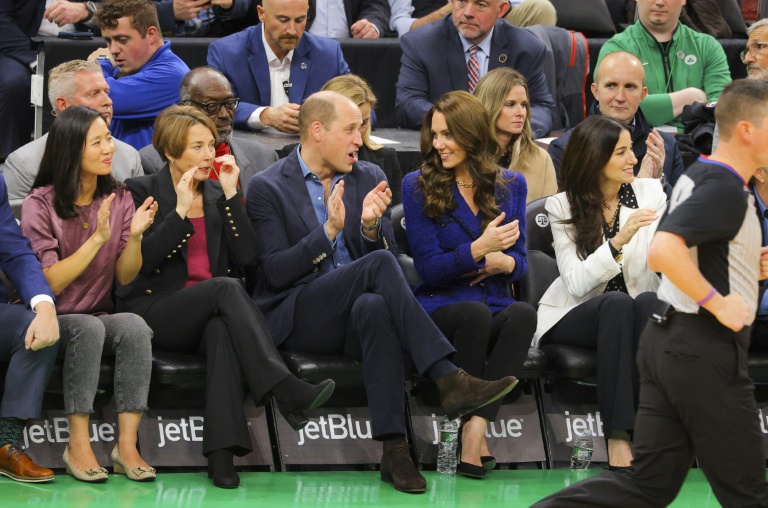
The Prince and Princess of Wales met Boston mayor Michelle Wu and governor-elect Maura Healey at the city hall and then sat courtside at a Boston Celtics versus Miami Heat NBA game as they kickstarted their three-day trip focused on climate change.

The beginning of the visit — which comes after racism claims from William’s brother Harry and mixed-race sister-in-law, Meghan — was however overshadowed by the resignation and apology of 83-year-old Susan Hussey, one of William’s six godmothers.

“Racism has no place in our society,” a spokesman for the royal couple told reporters in Boston. 

“These comments were unacceptable, and it’s right that the individual has stepped aside with immediate effect.”

William was not involved in the decision but “believes it’s the right course of action to be taken”, the spokesman added.

The trip is the royal couple’s first one overseas since the 40-year-old William became heir to the throne in September, when his father succeeded queen Elizabeth II to become King Charles III.

They last visited the United States in 2014 when they went to New York and Washington, in a trip that included a reception at the White House with the then-president Barack Obama and his deputy, Joe Biden.

The White House said Biden will meet the royal couple on Friday.

– Awards –

It is also their first trip stateside since Harry and Meghan sensationally quit the royal family in early 2020. No meeting has been announced between the estranged brothers.

The visit will culminate on Friday evening with a star-studded ceremony for William’s Earthshot Prize initiative to tackle climate change.

The awards ceremony — described by royal insiders as William’s “Superbowl moment” — is now in its second year, and rewards five innovators with £1 million each ($1.2 million).

A host of stars are expected at Boston’s MGM Music Hall, including singers Billie Eilish and Annie Lennox, sisters Chloe x Halle, and actor Rami Malek.

Other engagements include discussions with local officials about rising sea levels in the city on the North Atlantic coast.

They will also meet charities working with disadvantaged young people and a laboratory specializing in green technologies.

“We are both looking forward to spending the next few days learning about the innovative ways the people of Massachusetts are tackling climate change,” William told cheering crowds outside city hall.

Hussey is a longstanding former lady-in-waiting to William’s late grandmother, queen Elizabeth II and was a courtier to Queen Consort Camilla. 

She was portrayed in Season Five of the hit Netflix series, “The Crown,” the recent release of which has driven US interest in the House of Windsor up even further.

Ngozi Fulani, the chief executive of the London-based Sistah Space group which campaigns for survivors of domestic abuse, said the comments came as she attended a palace reception on Tuesday.

Asked where she was from, Fulani said Hackney, northeast London, prompting the woman whom she identified only as “Lady SH” to ask: “No, what part of Africa are you from?”

Fulani said she was born and raised in the UK and was British but the woman persisted.

“Where do you really come from, where do your people come from?… When did you first come here?” she was asked.

Fulani repeated that she was a British national born in the UK and was forced to say she was “of African heritage, Caribbean descent.”

Women’s Equality Party leader Mandu Reid, who witnessed the exchange, called it “grim” and like an “interrogation.”

– ‘Unacceptable’ –

Buckingham Palace said it took the incident “extremely seriously” and called the comments “unacceptable and deeply regrettable.”

“In the meantime, the individual concerned would like to express her profound apologies for the hurt caused and has stepped aside from her honorary role with immediate effect.” it added.

British media outlets all quoted palace sources as confirming it was Hussey who made the remarks.

Camilla has scrapped the formal roles of ladies in waiting, but Hussey, whose late husband was a former BBC chairman, was kept on as a royal retainer by King Charles III.

Last year, William insisted “we are very much not a racist family”, after Harry and Meghan — who have won many fans among younger people and in the Black community for taking on the British establishment — alleged that an unidentified royal had asked what color skin their baby would have.

burs-pdh/dw

Bankman-Fried apologizes, says didn't 'try to commit fraud'

Former FTX Chief Executive Sam Bankman-Fried apologized Wednesday for a “lot of mistakes” in the abrupt collapse of the cryptocurrency firm and said he did not knowingly behave fraudulently.

“I didn’t ever try to commit fraud on anyone,” Bankman-Fried told the Dealbook conference hosted by CNBC and The New York Times.

“I’m deeply sorry about what happened,” Bankman-Fried said. “Clearly I made a lot of mistakes or things I would be able to give anything to be able to do over again.”

Bankman-Fried, appearing by video from the Bahamas and donning his trademark t-shirt, said he was “shocked” by many of the details that have surfaced amid the cryptocurrency platform’s collapse, depicting the problems as stemming from lax oversight and corporate controls rather than an intent to defraud. 

On November 11, Bankman-Fried resigned as FTX filed for bankruptcy protection while facing a large financing shortfall and a deluge of withdrawals from panicked customers. The firm at its peak had been worth some $32 billion.

At the time, FTX had taken some $10 billion in customer funds without authorization, according to the Wall Street Journal.

Much attention has focused on the relationship between FTX and Alameda Research, an affiliated trading firm. 

Bankman-Fried acknowledged an “embarrassing” lack of attention to conflicts of interest between the two firms, but insisted that he was not abreast of the details on Alameda and did not run Alameda.

– Thought no ‘existential’ risk –

Among the revelations, the digital currency news site CoinDesk reported on November 2 that Alameda’s balance sheet was heavily built on FTT — a token created by FTX and not based on an asset with independent value. 

The value of FTT plunged in early November as both Alameda and FTX cratered and has not recovered.

Bankman-Fried said that he was also surprised at the scale of Alameda’s positions on FTX that were troubled and which ultimately stressed the firm.

“I didn’t think it was existential for FTX,” Bankman-Fried said of Alameda’s financial stress, adding that he thought the problem would “end up having some small impact on FTX, but not a significant one, not one that hurt customers at all.”

Bankman-Fried said he didn’t knowingly “comingle” funds between the two firms.

FTX’s newly installed CEO John J. Ray has lambasted his predecessors in a November 17 filing in bankruptcy court.

“Never in my career have I seen such a complete failure of corporate controls and such a complete absence of trustworthy financial information as occurred here,” Ray said in the filing. 

“From compromised systems integrity and faulty regulatory oversight abroad, to the concentration of control in the hands of a very small group of inexperienced, unsophisticated and potentially compromised individuals, this situation is unprecedented,” he said.

Bankman-Fried on Wednesday said he was not aware that he was the subject of a criminal probe, adding that he rejected his lawyer’s advice to stay silent now.

“I have a duty to explain what happened,” he said. “And I think I have a duty … if there is anything I can do to try and help customers out here.”

Bankman-Fried suggested US investors in FTX could recover their losses, but did not explain how this might happen.

Close Bitnami banner
Bitnami