US Business

Credit Suisse expects Q4 pre-tax loss of $1.6 bn

Credit Suisse predicted a surprise fourth-quarter pre-tax loss of up to $1.6 billion as the beleaguered bank undertakes a radical overhaul, sending stocks tumbling again on Wednesday.

Shaken by repeated scandals, Switzerland’s second-biggest bank unveiled a rejig in late October but accepted its accounts would take a hit of up to 1.5 billion Swiss francs ($1.6 billion) in the final three months of the year.

At an extraordinary general meeting, shareholders approved capital increases worth around four billion Swiss francs in order to fund the restructuring plan.

Chairman Axel Lehmann called it an “important step in our journey to build the new Credit Suisse”.

“This vote confirms confidence in the strategy, as we presented it in October, and we are fully focused on delivering our strategic priorities to lay the foundation for future profitable growth,” he said.

The increase in share capital is expected to boost Credit Suisse’s CET1 ratio, which compares a bank’s capital to its risk-weighted assets.

At 1200 GMT, the group’s shares were down 4.8 percent at 3.67 Swiss francs, while the Swiss stock exchange’s main SMI index was up 0.2 percent.

The bank suffered a net loss of 273 million Swiss francs in the first quarter, then nearly 1.6 million in the second quarter and four billion in the third.

The scale of fourth-quarter losses “will depend on a number of factors including the investment bank’s performance for the remainder of the quarter, the continued exit of non-core positions, any goodwill impairments, and the outcome of certain other actions, including potential real-estate sales”, the Zurich-based bank said in a statement.

Credit Suisse said in October that it expected to incur restructuring charges and software and property impairments of around 250 million Swiss francs in the fourth quarter as part of its overhaul.

– Question of trust –

The bank’s reorganisation is aimed at dramatically reducing the scale of its investment bank, in a bid to repair the damage following a series of scandals.

In addition to revamping its investment banking unit, the announced measures include slashing 9,000 jobs and a capital injection from the Saudi National Bank.

However, the restructuring takes place in an unfavourable context for the banking sector.

Its investment bank suffered the backlash of the “substantial industry-wide slowdown” in capital markets and reduced activity in the sales and trading markets, it said.

“The bank expects these market conditions to continue in the coming months.”

Andreas Venditti, an analyst at Swiss investment managers Vontobel, said the “massive net outflows” in wealth management — the bank’s core business alongside its Swiss domestic banking — “are deeply concerning — even more so as they have not yet reversed.

“Credit Suisse needs to restore trust as fast as possible — but that is easier said than done.”

Flora Bocahut, an analyst at the US investment bank Jefferies, added: “Today’s update confirms our concerns that the Credit Suisse ship is yet to stabilise, and it’ll get worse before it potentially gets better.”

– Archegos, Greensill shocks –

Credit Suisse’s capital-guzzling investment banking arm has been the source of heavy losses which plunged its accounts into the red — eclipsing its more stable activities such as wealth management or its Swiss domestic banking services.

Credit Suisse’s investment bank suffered a loss of 3.7 billion Swiss francs in 2021 and backed that up with a 992 million Swiss franc loss in the first half of 2022.

It was hit by the implosion of US fund Archegos, which cost Credit Suisse more than $5 billion.

Meanwhile its asset management branch was rocked by the bankruptcy of British financial firm Greensill, in which some $10 billion had been committed through four funds.

Credit Suisse is one of 30 banks globally deemed too big to fail, forcing it to set aside more cash to weather a crisis.

While many industry experts think a bankruptcy highly improbable, these rumours helped drag its share price down to a low of 3.158 Swiss francs on October 3.

At least six killed in US Walmart shooting

A gunman killed at least six people at a Walmart store Tuesday just ahead of the Thanksgiving holiday in the second mass shooting in the United States in four days.

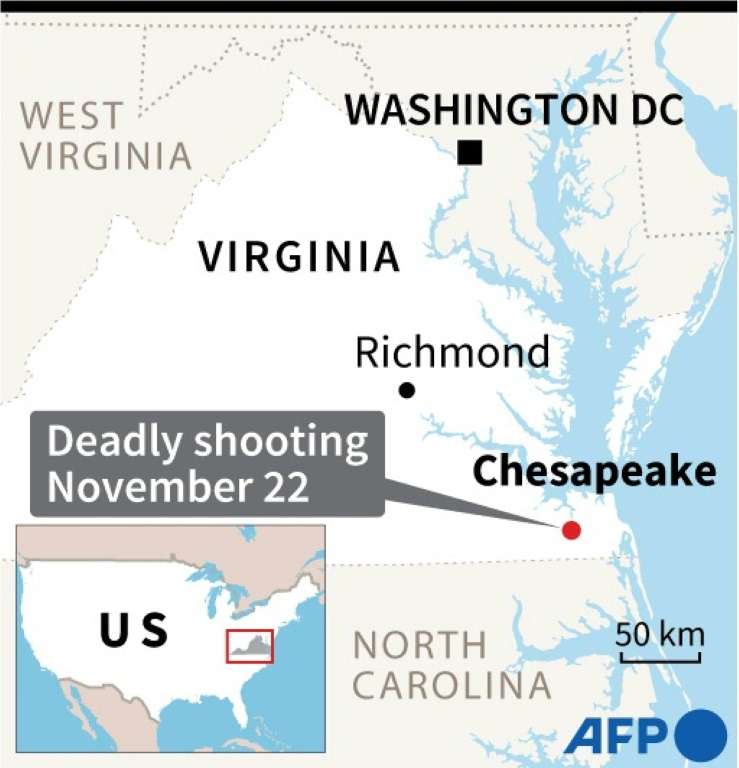
Police said the shooter was also dead after the late-night assault in Chesapeake in the state of Virginia that followed a weekend gun attack at an LGBTQ club in Colorado that killed five people.

“Chesapeake Police confirm 7 fatalities, including the shooter, from last night’s shooting at Walmart on Sam’s Circle,” the city confirmed on its Twitter account.

Chesapeake Police Department officer Leo Kosinski earlier told reporters that there had been multiple fatalities at the megastore, which local media reported was busy with holiday shoppers.

CNN quoted a law enforcement source as saying the attacker was believed to be an employee or former employee of the store who started shooting other workers in a room used for staff breaks.

At some point the shooter turned the gun on himself, CNN quoted the source as saying.

Emergency calls were first made just after 10:00 pm Tuesday (0300 GMT Wednesday) while the store was still open, with rapid response officers and tactical teams entering immediately after arriving on the scene, Kosinski said.

US media reported that witnesses said the shooting began at the back of the store and that at least five wounded had been rushed to the hospital. 

“We believe it is a single shooter and that single shooter is deceased at this time,” Kosinski said, adding he did not believe any shots had been fired by police.

In the hours afterwards, news footage showed a major police presence around the Walmart, which is located about 150 miles (240 kilometers) southeast of the US capital Washington.

– ‘Senseless violence’ –

Kosinski said officers and investigators were carefully sweeping the store and securing the area.

Walmart, the largest retailer in the United States, issued a statement early Wednesday saying: “We are shocked at this tragic event.” 

The company added that it was “praying for those impacted, the community and our associates. We’re working closely with law enforcement, and we are focused on supporting our associates.”

Virginia state Senator Louise Lucas, who represents the Chesapeake region, said she was “heartbroken that America’s latest mass shooting took place… in my district.”

“I will not rest until we find the solutions to end this gun violence epidemic in our country that has taken so many lives,” she wrote on Twitter.

The shooting occurred at a major retailer less than 48 hours before Americans nationwide celebrate Thanksgiving.

“Tragically, our community is suffering from yet another incident of senseless gun violence just as families are gathering for Thanksgiving,” tweeted Congressman Bobby Scott of Virginia.

The incident occurred three nights after a gunman opened fire inside an LGBTQ nightclub in Colorado Springs, killing five people and injuring at least 18, in what is being investigated as a possible hate crime.

Authorities said that suspect, identified as 22-year-old Anderson Lee Aldrich, had used a long rifle at the club, where partygoers were marking the Transgender Day of Remembrance, which pays tribute to trans people targeted in violent attacks.

Gun violence occurs at an alarming rate in the United States, where more than 600 mass shootings have occurred so far in 2022, according to the Gun Violence Archive website.

European equities waver on economic gloom

European stock markets wavered on Wednesday on news that the eurozone and UK economies shrank in November, but by less than the prior month.

In midday deals, Frankfurt equities fell 0.2 percent and Paris flatlined, while London won 0.3 percent.

Oil prices slid on fears of more painful Covid lockdowns in China that could ravage the Asian giant’s energy demand. 

The euro steadied against the dollar and yen.

– ‘Grim picture’ –

The eurozone’s composite purchasing managers index (PMI), a key economic indicator, improved from 47.3 in October to 47.8 in November, S&P Global said.

However, activity languished under 50 — signifying the fifth consecutive month of economic contraction as inflation spikes.

“The latest macroeconomic data from Europe continues to paint a grim picture,” said City Index analyst Fawad Razaqzada.

“Flash manufacturing and services PMIs for France and Germany, and eurozone as a whole, remain in contraction territory.

“Although the PMI data still managed to beat expectations, that’s only because we are seeing improvement from a very low base.”

Britain’s composite PMI was also fractionally higher, from 48.2 to 48.3 in November, but that marked the fourth straight contraction.

The news comes after the UK government recently confirmed that the nation’s economy was in recession, with inflation sitting at a 41-year high.

The reading is “consistent with our view that the (British) economy is probably already in recession”, noted Capital Economics analyst Ashley Webb.

Elsewhere, Asian stocks rose on hopes that the Federal Reserve will carry out smaller US rate hikes at its next few meetings after inflation cooled in the world’s biggest economy.

But there is growing concern that a surge in China’s Covid-19 cases will see officials impose more economically-damaging restrictions.

Wall Street on Tuesday enjoyed a timely rally thanks to healthy retailer earnings amid signs US consumers — the economy’s key driver — remain resilient to higher borrowing costs and inflation.

Minutes from the Fed’s policy meeting this month will be pored over when they are released Wednesday, with traders hoping for some insight into the bank’s thinking on rates.

However, US trading volumes are likely to be muted ahead of Thanksgiving on Thursday.

Traders were also keeping tabs on protests at the world’s largest iPhone factory as Foxconn workers grow increasingly angry at long-running Covid curbs.

– Key figures around 1200 GMT –

London – FTSE 100: UP 0.3 percent at 7,473.95 points

Paris – CAC 40: FLAT at 6,659.70

Frankfurt – DAX: DOWN 0.2 percent at 14,401.20

EURO STOXX 50: UP 0.1 percent at 3,935.38

Hong Kong – Hang Seng Index: UP 0.6 percent at 17,523.81 (close)

Shanghai – Composite: UP 0.3 percent at 3,096.91 (close)

Tokyo – Nikkei 225: Closed for a holiday

New York – Dow: UP 1.2 percent at 34,098.10 (close)

Euro/dollar: UP at $1.0315 from $1.0304 on Tuesday

Dollar/yen: UP at 141.45 yen from 141.23 yen

Pound/dollar: UP at $1.1938 from $1.1886

Euro/pound: DOWN at 86.39 pence from 86.69 pence

West Texas Intermediate: DOWN 2.1 percent at $79.22 per barrel

Brent North Sea crude: DOWN 2.3 percent at $86.32 per barrel

burs-rfj/bcp/kjm

A greener ride: West Africans switch on to electric motorbikes

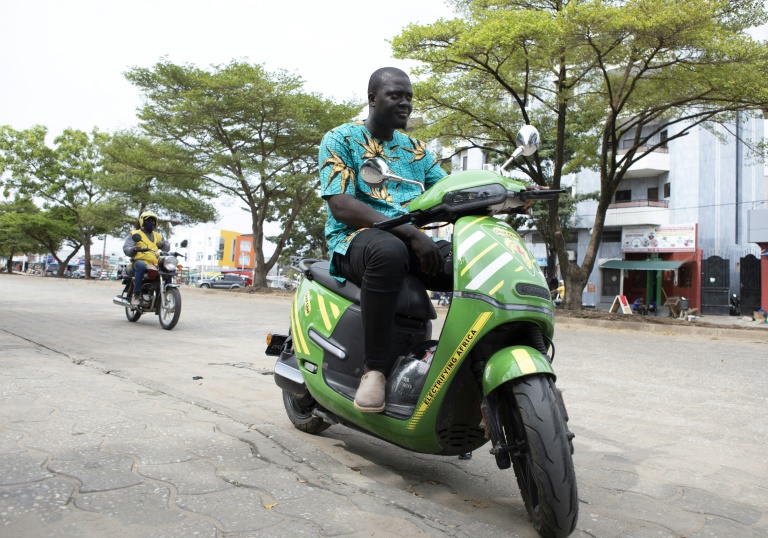
Beninese hairdresser Edwige Govi makes a point these days of using electric motorbike taxis to get around Cotonou, saying she enjoys a ride that is quiet and clean.

Motorcycle taxis are a popular and cheap form of transportation in West Africa. 

But in Benin and Togo, electric models are gaining the ascendancy over petrol-powered rivals.

Customers are plumping for environmentally-friendlier travel and taxi drivers are switching to machines that, above all, are less expensive to buy and operate. 

“They are very quiet and do not give off smoke,” says Govi, 26, who had just completed a half-hour run across Benin’s economic hub.

In African cities, road pollution is becoming a major health and environment issue, although for taxi drivers, the big attraction of electric motorcycles is the cost.

“I manage to get by,” said Govi’s driver, Octave, wearing the green and yellow vest used by Benin’s zemidjan taxis — a word meaning “take me quickly” in the local Fon language. 

“I make more money than with my fuel motorcycle.”

Local environmentalist Murielle Hozanhekpon said the electric motorbikes do have some disadvantages “but not on an environmental level”.

Alain Tossounon, a journalist specialising in environmental issues, said electric bikes were prized by taxi drivers as they were less expensive to maintain or run.

The cost factor has become more and more important in the face of an explosion of fuel prices this year triggered by Russia’s invasion of Ukraine.

– Credit carrot –

In Benin, an electric motorcycle costs 480,000 CFA ($737 / euros) against 490,050 CFA ($752 / euros) for a petrol-driven equivalent.

But this significant price difference is only one factor which explains the trend towards “silent motorcycles,” said Tossounon. 

Many taxi drivers are also lured by flexible credit deals — instead of making a hefty one-off purchase, many are able to get loans that they pay off monthly, weekly or even daily. 

Two companies in Cotonou have been offering electric models and say they are overwhelmed by demand. 

“The queue here is from morning to evening. Every hour, at least two roll out of the shop,” said vendor Anicet Takalodjou. 

Oloufounmi Koucoi, 38, director of another company delivering the models to Cotonou, said they had put thousands of e-motorcycles in circulation.

“The number is growing every day.” 

By assembling the motorcycles locally in Benin, his electric models are cheaper than if they had been imported. 

To attract customers, his company, Zed-Motors, offers solar panels to facilitate recharging for those who do not have electricity at home. 

For decades, Benin and its economy have struggled with power cuts. The situation has improved, but outages remain common.

In rural areas, especially, electricity remains largely inaccessible.

 – Battery change – 

In Lome, capital of neighbouring Togo, Octave de Souza parades proudly through the streets on his brand-new green electric motorcycle. 

One point in particular makes him and his wallet happy: no more fuelling up.

“All you need to do is change the battery,” he smiled. “There are sales outlets, you go there and it’s exchanged for you.” 

A recharge costs 1,000 CFA ($1.50 / euros) and can provide three days’ mobility. For the same price, Octave said, he would only be able to ride for one day using petrol, which is subsidised by the government.

Local authorities also are encouraging the switch to electric in a bid to replace old, highly polluting motorcycles. 

But some drivers remain wary of electric models, citing range anxiety — the worry of coming to a halt with a flat battery.

Taxi driver Koffi Abotsi said he struggled with the “stress” of having to quickly find a charging station so as not to break down. 

“This sometimes leads us to swap (the battery) even with 10 percent or 15 percent charge remaining so as not to have any unpleasant surprises along the way.”

In US, inflation sparks tough Thanksgiving meal sacrifices

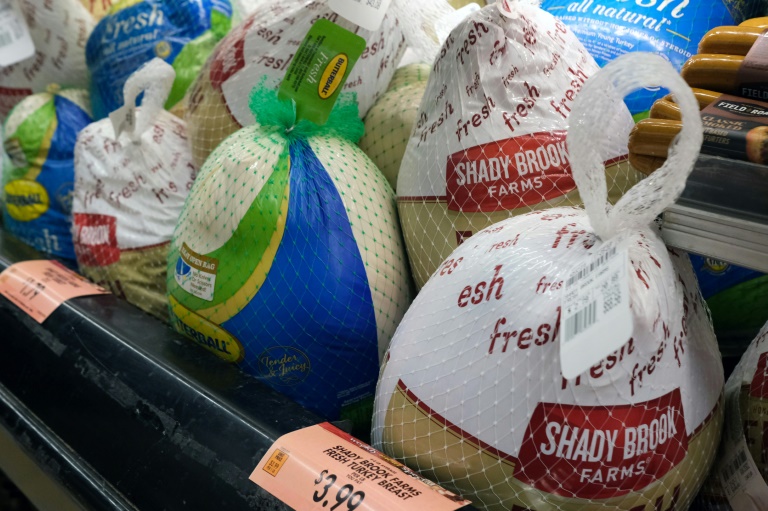
Sandra White normally has turkey for Thanksgiving dinner. But on Thursday, due to soaring inflation, she’s going to have fried chicken instead.

“It’s too expensive, too expensive,” the 70-year-old White, a resident of East Harlem, says of the traditional holiday bird. 

She asked her guests to bring other parts of the meal.

It’s the same story for fellow shopper Yeisha Swan, but she got lucky: one of her loved ones bought the family fowl, and she was able to cut costs on the side dishes, which for many are just as important as the main course.

“This is way less than what I would buy. I couldn’t get my ham…. I’m using canned collard greens. It’s different,” Swan, 42, tells AFP outside a New York supermarket.

Inflation is red-hot in the United States, reaching the highest levels in decades this year. And while some prices have eased in recent months, consumers say they are straining to handle their grocery bills — a tough blow at the holidays.

Compounding that problem is a bird flu outbreak that forced the culling of about 50 million poultry, including eight million turkeys, according to calculations based on US Department of Agriculture data.

Turkey costs 21 percent more in the United States than it did last year, according to the American Farm Bureau.

– ‘Had to really cut back’ –

The turkey is not the only component of a classic Thanksgiving meal that is more pricey. A Farm Bureau survey showed that cubed stuffing mix was 69 percent more expensive as compared with last year.

The only must-have with a price drop? Cranberries.

An average meal for 10 this year — including turkey, stuffing, peas, sweet potatoes, cranberries, carrots, rolls and pumpkin pie — will cost $64.05, or 20 percent more than in 2021, the Farm Bureau said.

“I just had to really cut back…. We used to have a party and we couldn’t do that for Thanksgiving,” says chef Jose Rodriguez. Instead of an open house for all of his loved ones, he will eat with his wife and their two dogs.

Although turkey prices have jumped, demand has not completely collapsed.

At Wendel’s Poultry Farm near Buffalo, New York — which emerged unscathed from the bird flu crisis — all 1,100 Thanksgiving turkeys were sold out. Customers can already place an order for a Christmas bird.

In order to make up for increasing costs of raw materials, Wendel’s hiked its prices by 22 percent, explains manager Cami Wendel.

Retail giant Walmart went in the opposite direction, offering its Thanksgiving basket, including a turkey, for the same price as last year. Its low prices have allowed it to make inroads in the grocery market since inflation took off.

In US, inflation sparks tough Thanksgiving meal sacrifices

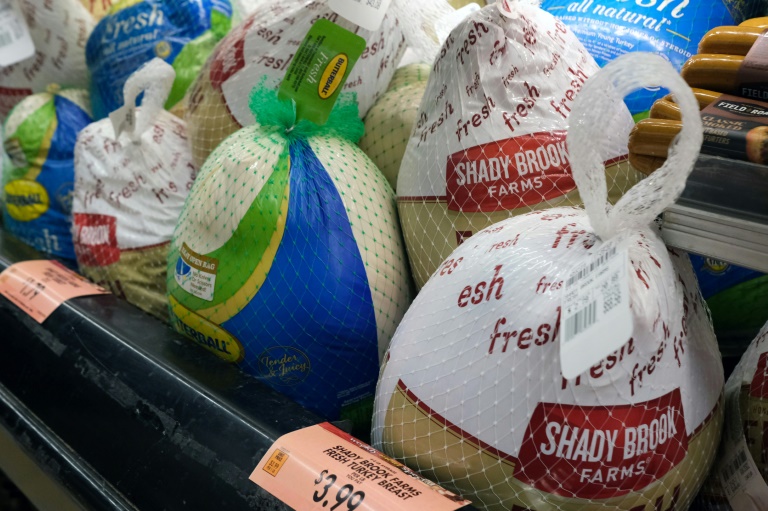
Sandra White normally has turkey for Thanksgiving dinner. But on Thursday, due to soaring inflation, she’s going to have fried chicken instead.

“It’s too expensive, too expensive,” the 70-year-old White, a resident of East Harlem, says of the traditional holiday bird. 

She asked her guests to bring other parts of the meal.

It’s the same story for fellow shopper Yeisha Swan, but she got lucky: one of her loved ones bought the family fowl, and she was able to cut costs on the side dishes, which for many are just as important as the main course.

“This is way less than what I would buy. I couldn’t get my ham…. I’m using canned collard greens. It’s different,” Swan, 42, tells AFP outside a New York supermarket.

Inflation is red-hot in the United States, reaching the highest levels in decades this year. And while some prices have eased in recent months, consumers say they are straining to handle their grocery bills — a tough blow at the holidays.

Compounding that problem is a bird flu outbreak that forced the culling of about 50 million poultry, including eight million turkeys, according to calculations based on US Department of Agriculture data.

Turkey costs 21 percent more in the United States than it did last year, according to the American Farm Bureau.

– ‘Had to really cut back’ –

The turkey is not the only component of a classic Thanksgiving meal that is more pricey. A Farm Bureau survey showed that cubed stuffing mix was 69 percent more expensive as compared with last year.

The only must-have with a price drop? Cranberries.

An average meal for 10 this year — including turkey, stuffing, peas, sweet potatoes, cranberries, carrots, rolls and pumpkin pie — will cost $64.05, or 20 percent more than in 2021, the Farm Bureau said.

“I just had to really cut back…. We used to have a party and we couldn’t do that for Thanksgiving,” says chef Jose Rodriguez. Instead of an open house for all of his loved ones, he will eat with his wife and their two dogs.

Although turkey prices have jumped, demand has not completely collapsed.

At Wendel’s Poultry Farm near Buffalo, New York — which emerged unscathed from the bird flu crisis — all 1,100 Thanksgiving turkeys were sold out. Customers can already place an order for a Christmas bird.

In order to make up for increasing costs of raw materials, Wendel’s hiked its prices by 22 percent, explains manager Cami Wendel.

Retail giant Walmart went in the opposite direction, offering its Thanksgiving basket, including a turkey, for the same price as last year. Its low prices have allowed it to make inroads in the grocery market since inflation took off.

Medical community frets over fate of Twitter

For days, doctors, scientists and public health experts have been telling their Twitter followers where to find them on other platforms if Elon Musk’s newly-acquired company tanks.

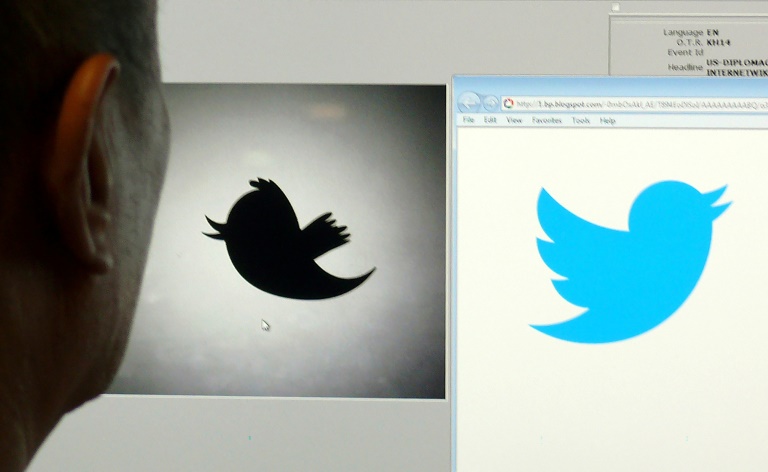
The social media giant symbolized by the blue bird has laid off half of its 7,500 employees, while several hundred others have resigned, creating doubts over its future.

Even if it survives, the unpredictability of the new boss has raised fears his policies could profoundly alter the character of the so-called digital town square.

That would be a deep loss for medical experts, who have used Twitter since the start of the Covid pandemic as a tool to quickly gather information, share their research, communicate public health messages and forge new collaborations.

The pandemic was a “tipping point for the use of social media as a primary resource for researchers,” Jason Kindrachuk, a virologist at the University of Manitoba in Canada, told AFP.

As the coronavirus began its global march in January 2020, researchers embarked on studies to understand how the virus spreads, its health effects, and how best to protect oneself. 

They shared findings immediately on Twitter to assist the wider medical community and an anxious public, often in the form of “preprints” — early versions of scientific papers before they are submitted to a journal.

“In the middle of a pandemic, the ability to rapidly share information is critical for knowledge translation and dissemination, and Twitter is able to do this in a way that is typically not feasible for textbooks or journals,” said a commentary published in the Canadian Journal of Emergency Medicine.

The process of peer review effectively took place in real time on Twitter, with scientists publicly sharing their interpretations and critiques of each new study.

Of course, there was also a downside: unworthy work received outsized attention, and non-specialists held forth on subjects far from their areas of expertise.

– International collaborations –

On the other hand, it was thanks to Twitter that experts from around the world were able to find one another easily and team up.

“There are people that I collaborate with now that have been based on interactions that were born out of Twitter,” said Kindrachuk, who has around 22,000 followers. 

“To think that that could change in the very near future, that to me does kind of bring some feelings of concern and regret.”

For example, it was the vital work of researchers from South Africa and Botswana that alerted the world to the dangerous Omicron variant in late 2021.

The loss of Twitter would be compounded by the fact it has long been frequented by experts of another profession: journalism.

“Because Twitter is a platform that is followed by a lot of journalists, it helps, there’s a feedback loop. It gets amplified,” explained Celine Gounder, an infectious disease specialist and epidemiologist with 88,000 followers.

She added she had moved a private Twitter discussion with a dozen colleagues to Signal, and started once more posting her thoughts to LinkedIn as well as the Post News platform.

Many experts have now put their handles on rival service Mastodon on their Twitter bios, or directed their followers to their newsletters on Substack.

If Twitter doesn’t work out, “we will all adapt, we will find other social media platforms,” said Kindrachuk. 

“But it will take time and unfortunately, infectious diseases don’t wait for us to find new mechanisms to communicate.”

Medical community frets over fate of Twitter

For days, doctors, scientists and public health experts have been telling their Twitter followers where to find them on other platforms if Elon Musk’s newly-acquired company tanks.

The social media giant symbolized by the blue bird has laid off half of its 7,500 employees, while several hundred others have resigned, creating doubts over its future.

Even if it survives, the unpredictability of the new boss has raised fears his policies could profoundly alter the character of the so-called digital town square.

That would be a deep loss for medical experts, who have used Twitter since the start of the Covid pandemic as a tool to quickly gather information, share their research, communicate public health messages and forge new collaborations.

The pandemic was a “tipping point for the use of social media as a primary resource for researchers,” Jason Kindrachuk, a virologist at the University of Manitoba in Canada, told AFP.

As the coronavirus began its global march in January 2020, researchers embarked on studies to understand how the virus spreads, its health effects, and how best to protect oneself. 

They shared findings immediately on Twitter to assist the wider medical community and an anxious public, often in the form of “preprints” — early versions of scientific papers before they are submitted to a journal.

“In the middle of a pandemic, the ability to rapidly share information is critical for knowledge translation and dissemination, and Twitter is able to do this in a way that is typically not feasible for textbooks or journals,” said a commentary published in the Canadian Journal of Emergency Medicine.

The process of peer review effectively took place in real time on Twitter, with scientists publicly sharing their interpretations and critiques of each new study.

Of course, there was also a downside: unworthy work received outsized attention, and non-specialists held forth on subjects far from their areas of expertise.

– International collaborations –

On the other hand, it was thanks to Twitter that experts from around the world were able to find one another easily and team up.

“There are people that I collaborate with now that have been based on interactions that were born out of Twitter,” said Kindrachuk, who has around 22,000 followers. 

“To think that that could change in the very near future, that to me does kind of bring some feelings of concern and regret.”

For example, it was the vital work of researchers from South Africa and Botswana that alerted the world to the dangerous Omicron variant in late 2021.

The loss of Twitter would be compounded by the fact it has long been frequented by experts of another profession: journalism.

“Because Twitter is a platform that is followed by a lot of journalists, it helps, there’s a feedback loop. It gets amplified,” explained Celine Gounder, an infectious disease specialist and epidemiologist with 88,000 followers.

She added she had moved a private Twitter discussion with a dozen colleagues to Signal, and started once more posting her thoughts to LinkedIn as well as the Post News platform.

Many experts have now put their handles on rival service Mastodon on their Twitter bios, or directed their followers to their newsletters on Substack.

If Twitter doesn’t work out, “we will all adapt, we will find other social media platforms,” said Kindrachuk. 

“But it will take time and unfortunately, infectious diseases don’t wait for us to find new mechanisms to communicate.”

In final briefing, Fauci urges Americans to get vaccinated

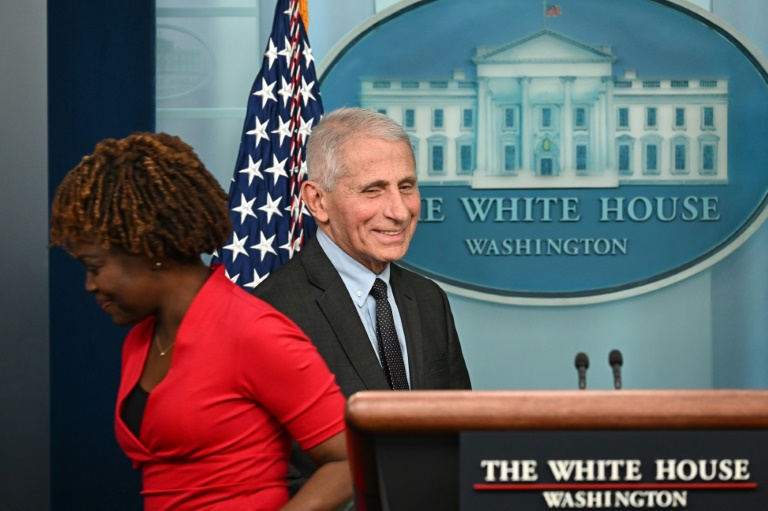
True to form, America’s outgoing top infectious disease official, Anthony Fauci, used what may be his final White House appearance Tuesday to convey a simple message.

“Please for your own safety and for that of your family, get your updated Covid-19 shot as soon as you’re eligible,” said the 81-year-old, hammering home a public health mantra in the face of slow booster uptake.

Vaccines targeting Omicron’s sublineages BA.4 and BA.5 have been widely available since summer, but so far only 11 percent of the eligible over-five population in the United States have received them.

Boosting the case, the Centers for Disease Control and Prevention released a study that showed the new shots reduced the risk of infection by around 30 percent among people who had the last of their doses two or three months earlier.

President Joe Biden’s Covid coordinator Ashish Jha also announced a “six-week sprint” to increase shots in arms by the end of the year and blunt the impact of an expected winter wave.

Influenza and RSV, which are rebounding after two years of containment during lockdowns, are already adding to the burden on the health care system and could get worse.

But Fauci offered a hopeful assessment about prospects as cold weather settles in. 

Between the vaccinated and those with prior infections, he said he hoped “there’s enough community protection that we’re not going to see a repeat of what we saw last year at this time,” even as newer variants emerge.

Fauci will step down next month from his roles in government as Biden’s chief medical advisor, as well as director of the National Institute for Allergies and Infectious Diseases, which he has headed since 1984.

The physician-scientist first rose to prominence during the HIV-AIDS crisis, and more recently led the US response to the Zika virus and Ebola.

Reflecting on his time helming America’s fight against Covid, Fauci admitted the government could have done a better job at conveying uncertainty early on in the pandemic when advice changed fast.

But he said the most difficult thing he had to deal with was the polarization that had fractured America along political lines.

“When I see people…not getting vaccinated for reasons that have nothing to do with public health, that have to do because of divisiveness, and ideological differences, as a physician, it pains me,” he said.

“Whether you’re a far right Republican or a far left Democrat, doesn’t make any difference to me. I look upon it the same way as I did in the emergency room in the middle of New York City.”

On the proliferation of bad health advice online, he said the “way you counter misinformation and disinformation, is to do whatever you can as often as you can to provide correct information.” 

Indeed, Fauci often found himself having to contradict then-president Donald Trump’s unscientific Covid advice — such as ingesting bleach to fight the virus — in clashes that helped turn him into a hated figure on the far right.

Republican lawmakers are expected to grill Fauci when they take control of the House of Representatives in January, but the scientist said he remained undaunted.

“We can defend and explain and stand by everything that we’ve said so I have nothing to hide.”

Manchester United owners consider sale as Ronaldo exits

Manchester United’s owners said Tuesday they were ready to sell the club, potentially bringing down the curtain on an acrimonious 17 years under the Glazer family.

On a tumultuous day for the English giants, it was earlier revealed that star player Cristiano Ronaldo has left the club with “immediate effect.”

Weeks of turbulence appeared to have come to an end when United announced Ronaldo’s contract had been terminated by mutual agreement to bring to an end his second spell at Old Trafford.

That dramatic announcement was eclipsed just hours later by the news the US-based Glazer family could also be on their way out.

“The board will consider all strategic alternatives, including new investment into the club, a sale, or other transactions involving the company,” United said in a statement.

The Glazers have been unpopular with supporters ever since a £790 million ($934 million) leveraged takeover in 2005 burdened the club with huge debts.

Frustration towards the Americans has only grown during a nine-year decline in results on the pitch since Alex Ferguson’s retirement as manager in 2013.

The Red Devils have not won the Premier League title since Ferguson’s final campaign in 2012/2013 and have failed to win any trophy since 2017.

United currently sit fifth in the Premier League, 11 points behind leaders Arsenal.

“We will evaluate all options to ensure that we best serve our fans and that Manchester United maximizes the significant growth opportunities available to the club today and in the future,” added Avram and Joel Glazer, the club’s executive co-chairmen and directors.

The statement also recognised the need for investment in stadium redevelopment.

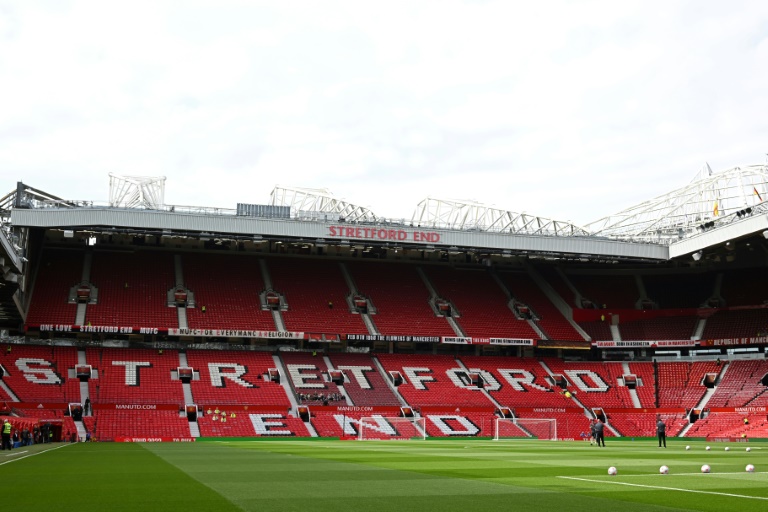
Old Trafford remains the largest club stadium in England with a capacity of 74,000 but has not had a significant upgrade since 2006.

– Ronaldo departs –

Erik ten Hag is the fifth permanent manager at Old Trafford in the past nine years and his early months in charge have been dominated by debate over Ronaldo’s place in the team.

The five-time Ballon d’Or winner had been used sparingly by the former Ajax boss in the Premier League.

Ronaldo reacted with an explosive interview on TalkTV last week in which he said he felt “betrayed” by the club and had no respect for Ten Hag.

The Portugal captain, who is currently competing in his fifth World Cup, also took aim at the Glazers, claiming they “don’t care about the club”.

“Cristiano Ronaldo is to leave Manchester United by mutual agreement, with immediate effect,” United said in an earlier statement.

“The club thanks him for his immense contribution across two spells at Old Trafford, scoring 145 goals in 346 appearances, and wishes him and his family well for the future.”

News of the Glazers inviting investment comes just weeks after Liverpool’s American owners, the Fenway Sports Group, indicated they were willing to sell.

Both United and Liverpool were involved in the failed European Super League (ESL) project that sought to create a US-style closed league format for Europe’s elite clubs without the need to qualify or promotion and relegation.

Amid a furious backlash to the ESL, a match between United and Liverpool was abandoned in May 2021 after supporters stormed the pitch at a time when fans were shut out of stadiums due to coronavirus restrictions.

Protests against the Glazers have continued to be common on matchdays at Old Trafford despite huge spending on player transfer fees and wages, including on Ronaldo’s homecoming.

In May, Premier League rivals Chelsea were sold for £2.5 billion ($3 billion), a record for a football club, to another American consortium led by Todd Boehly, with a further investment of £1.75 billion promised on the playing squad and infrastructure.

Close Bitnami banner
Bitnami