US Business

Twitter fate in doubt as employees defy Musk ultimatum

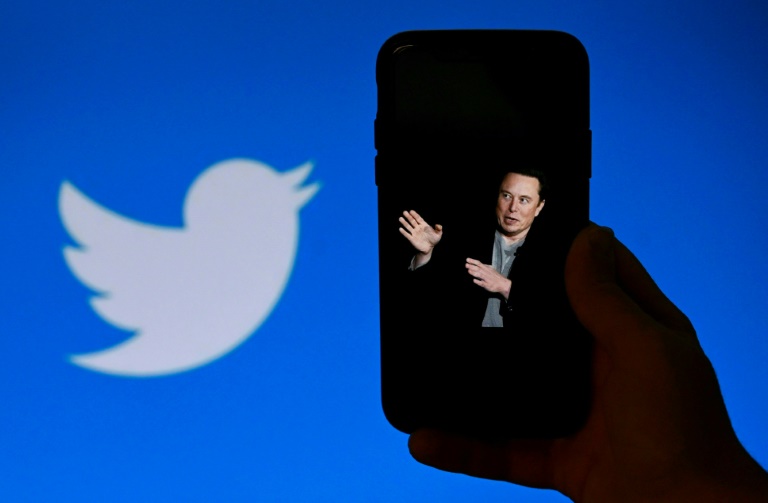
The future of Twitter seemed to hang in the balance Friday after its offices were locked down and key employees announced their departures in defiance of an ultimatum from new owner Elon Musk.

Fears grew that the fresh exodus would threaten the very existence of one of the world’s most influential internet platforms, which serves as a key communication tool for the world’s media, politicians, companies and celebrities.

Musk, also the CEO of Tesla and SpaceX, has come under fire for radical changes at the California-based firm, which he bought less than a month ago for $44 billion.

In an internal memo sent this week, Musk had told workers that they must choose to be “extremely hardcore” or lose their jobs.

He had already fired half of the company’s 7,500 staff, scrapped a work-from-home policy and imposed long hours, all while his attempts to overhaul Twitter face backlash and delays.

“I may be #exceptional, but gosh darn it, I’m just not #hardcore,” tweeted one former employee, Andrea Horst, whose LinkedIn profile still reads “Supply Chain & Capacity Management (Survivor) @Twitter.” 

His stumbling attempts to revamp user verification with a controversial subscription service have led to a slew of fake accounts and pranks, and prompted major advertisers to step away from the platform.

– ‘Not super worried’ –

Fevered talk of the site’s imminent demise was driving record high engagement on Twitter, according to Musk.

He noted the irony by posting the popular meme of an actor jokingly posing over a grave. Both the man and the tombstone were overlaid with Twitter’s logo. The post was “liked” by more than 1.3 million users.

In a later tweet, sent during Friday’s early hours on the West Coast, the South African-born billionaire said: “Record numbers of users are logging in to see if Twitter is dead, ironically making it more alive than ever!”.

Musk added that the “best people are staying, so I’m not super worried.”

Despite Musk’s assurances, entry to Twitter’s offices were temporarily closed until Monday, even with a badge, according to an internal message seen on US media.

In the internal memo sent Wednesday, Musk had asked staff to follow a link to affirm their commitment to “the new Twitter” by 5:00 pm New York time (2200 GMT) on Thursday.

If they did not do so, they would have lost their jobs, receiving three months of severance pay.

Twitter did not respond to AFP requests for comment on the new measure.

Signs that government regulators were becoming impatient with Musk’s handling of Twitter also grew on Friday, especially over the platform’s ability to moderate content with a severely reduced headcount.

A group of US senators on Thursday said Musk’s plans for the site “undermined the integrity and safety of the platform… despite clear warnings those changes would be abused for fraud, scams, and dangerous impersonation.”

A top regulator for the European Union meanwhile said that Musk should be increasing the number of moderators in Europe, not reducing them.

Musk “knows perfectly well what the conditions are for Twitter to continue operating in Europe,” EU commissioner Thierry Breton said.

A spokesman for German Chancellor Olaf Scholz said the government was watching developments at Twitter “with growing concern” and reviewing its presence on the platform.


Ivory Coast, Ghana throw down gauntlet on cocoa price

The world’s chocolate industry could be in for a turbulent ride as the two biggest cocoa producers set down demands for manufacturers to pay higher prices for their growers.

The quarrel focuses on the Living Income Differential (LID) — a policy that Ivory Coast and Ghana introduced in 2019 to fight poverty among cocoa farmers in the global $130-billion chocolate market.

Under it, Ivory Coast and Ghana vowed to charge a premium of $400 per tonne on all cocoa sales, starting with the 2020/21 harvest.

But trade boards in the countries — the Ivorian Coffee-Cocoa Council (CCC) and the Ghana Cocoa Board (Cocobod) — say the scheme is being undermined as cocoa traders depress the price of another premium that operates in parallel.

“We’ve introduced the Living Income Differential as a means of improving the farmer income,” said Fiifi Boafo, Cocobod’s spokesperson.

“You have these companies circumventing these processes to ensure that the Living Income Differential effect is not felt in (their) lives.” 

The two countries together account for 60 percent of the world’s cocoa but their farmers earn less than six percent of the industry’s global revenue.

They boycotted a bridge-building meeting in Brussels late last month and set November 20 as a deadline for bringing buyers into line.

They are threatening to punish corporations by barring them from visiting plantations to estimate harvests — a key factor in cocoa price forecasting.

They are also threatening to suspend sustainability programmes that chocolate giants use to enhance their image with fast-growing ethnic consumers.

“This boycott and also ultimatum is to draw attention to the fact that inasmuch as it is important for us to talk about deforestation, it is important to talk about child labour, it is equally important to talk about the farmer income,” said Boafo.

– Premium pressure –

The LID premium is being completed by a price stabilisation fund to help buffer the international price of cocoa in the event of big market fluctuations.

Some experts say the chocolate giants have factored the LID into their costs but claw back some of this by exerting pressure on another premium based on the quality of cocoa beans.

This premium, known as the origin differential, has plunged below zero in recent years, effectively cancelling out part of the LID.

Covid is being used as “a pretext not to pay,” CCC President Yves Brahima Kone told AFP. “The thing is, the multinationals have increased their profits — they are able to pay.”

The World Cocoa Foundation, an umbrella group of public entities and corporations aimed at supporting sustainability in the sector, declined to comment on the faceoff.

Among corporations, Nestle said it strongly backed efforts for growers to maintain a decent standard of living and had been paying the LID since its inception.

Some experts say that time may weigh against Ivory Coast and Ghana if the row escalates.

Virtually all of Ivory Coast’s crop is purchased by roughly half a dozen majors. Of this, around 80 percent heads to Europe, the wealthy market where sustainability factors — environmental and labour criteria — count most for consumers.

“Ivory Coast’s economy is heavily dependent on cocoa income,” said one specialist. “It needs to sell its beans.”

“Stopping sustainability programmes is difficult to explain to the general public, and Ivory Coast’s image could (also) suffer.” 

'European California' Portugal woos Americans seeking better life

Nathan Hadlock moved to Portugal to escape the violence and lack of social welfare he saw in the United States, while still enjoying the sun and sea he had loved in California.

“Lisbon checked all the boxes,” the 40-year-old American entrepreneur told AFP.

It even has a suspension bridge that is almost a dead ringer for San Francisco’s Golden Gate.  

“My partner and I were looking to slow life down and enjoy things more. And so we made a list of the top 10 places in the world and Lisbon quickly made it to the top.”

The couple, who started a family when they moved to the Portuguese capital in 2020, were drawn by the weather, the good food, the cheaper lifestyle and the ease of travelling to other parts of Europe. 

They also wanted to escape the darker sides of US society.

“One of the main reasons (US) investors are looking to move here, is their kids’ safety. They often say, ‘I don’t want my kid to go to school and get shot,'” Hadlock insisted.

“And that’s a real thing in the United States that just no one here in Europe has to experience.” 

Jen Wittman, who uprooted from the Golden State to Lisbon during the pandemic with her husband and teenage son, said the United States was “really kind of falling apart at the seams”.

“The George Floyd incident and the pandemic, the political division, the racism… Everything was just getting overwhelming in America.”

Having a European social net made a big difference too.

“America is terrible with health care. And it’s terrible if you’re a retiree and you have a health condition. Essentially in America you can be bankrupted by an illness,” the 47-year-old said.

At around 7,000, the number of US citizens living in Portugal remains tiny compared to the 42,000 British expats who had made the country their home.

But while the influx of Brits — the largest expat community from western Europe — has begun to tail off, incomers from the States have doubled since 2018.

This year Americans are jostling with the Chinese for top spot among overseas investors lured by Portugal’s “golden visas” — residents permits issued for foreigners prepared to buy property or transfer capital to the Iberian country.

But most come on a D7 visa, which demands they have a regular “passive income” from pensions, rents or investments.

– ‘Different mentality’ –

Joana Mendonca, a lawyer for migration consultancy Global Citizen Solutions, speaks “almost every day” to US clients.

“Some come because they’re digital nomads and want to work from home by the sea,” she said. 

“There are also entire families, who dream of one day getting their children into European universities.

“And there are retired people who sell everything in the States so they can enjoy a good retirement in Portugal.”

Mendonca said Americans had “a different mentality” from other foreign investors, who were drawn to Portugal essentially by residency permits and tax exemptions.

“They really want to come and live here and adopt a different lifestyle,” she said, even though the introduction of the golden visa scheme in 2012 has contributed to an unwelcome surge in property prices.

Hadlock started off as a digital nomad in Portugal. Now he works for an investment fund that buys up land for olive and almond groves in the rolling hills of the Alentejo.

The region south of Lisbon reminds him of California’s Napa and Sonoma valleys.

– ‘Surf and good wine’ –

In Lisbon, Hadlock runs get-togethers to develop business ties between California and Portugal. The group calls itself Red Bridge, in a nod to the red suspension bridges spanning San Francisco Bay and the Tagus estuary.

Jonathan Littman, one of the co-founders, still lives in California but is learning Portuguese.

He got to know Portuguese start-ups in Silicon Valley when Lisbon started organising yearly international web summits in 2016.

“We sort of see this as the California of Europe,” he said.

“The surfing, the coast… We both have great wine. We both have a love of seafood and healthy cuisine. We both can be a little laid back.”

Like her compatriots, Wittman and her family left the States to escape a “divisiveness” that Hadlock said is “pulling the US apart” and is palpable “as soon as you get off the plane”.

But Portugal was not their first choice.

“We tried to move to Italy but they were not accepting American visa applicants at all,” she recalled. “And so, we were like, ‘Who in Europe will take Americans?’ And it was Croatia and Portugal.”

She and her husband run their own digital marketing company and have no plans to move back.

“It’s safe. It’s inclusive. We feel safe walking around, we feel safe at night. We do things that we could never do in America without being in constant fear,” she said.

US home sales drop for record ninth straight month on high prices

US existing home sales slid for a record ninth straight month in October, industry data showed Friday, as rising mortgage rates squeeze affordability.

Inflation in the United States has soared to the highest levels in recent decades, leading the Federal Reserve to embark on an aggressive campaign to cool the world’s biggest economy.

Those rapid interest rate hikes have boosted borrowing costs, with immediate impacts on the key housing market, which has exploded in recent years amid the pandemic.

Sales of all types of homes and condos slid 5.9 percent last month compared to September, the National Association of Realtors (NAR) said in its latest report.

This marks the ninth straight month of declines, the longest string in figures dating back to 1999.

The sales pace slowed to an annual rate of 4.4 million, seasonally adjusted, 28.4 percent below October 2021.

“More potential homebuyers were squeezed out from qualifying for a mortgage in October as mortgage rates climbed,” NAR chief economist Lawrence Yun said.

The median home price was $379,100 last month, down from a record high in June but still well above the same period a year ago as prices rose in all regions.

Yun said the impact is greater in expensive areas and in markets that saw significant home price gains in recent years.

“Looking at October of 2019, pre-Covid, and the latest figure, home prices are up a whopping 40 percent, and that’s really hurting affordability,” he told reporters on Friday.

“We know that most families’ incomes, most households’ incomes, have not risen by 40 percent,” he added.

With the inventory of homes on the market still tight, nearly a quarter sales were for more than the asking price, according to the NAR.

The US housing market took off during the pandemic as Americans flush with savings capitalized on bargain lending rates, helping buoy the economy.

But average mortgage costs jumped to 6.9 percent last month, according to home loan finance company Freddie Mac, more than double the rate in 2021.

“Affordability has been crushed by the surge in mortgage rates,” Ian Shepherdson of Pantheon Macroeconomics said in a recent analysis.

While sales have slumped, prices have only recently started to drop and “home prices have much further to fall… given the scale of the collapse in demand,” he said.

Existing home sales comprise 90 percent of the US real estate market.

All four major regions in the country saw sales declines last month, NAR said.

US home sales drop for record ninth straight month on high prices

US existing home sales slid for a record ninth straight month in October, industry data showed Friday, as rising mortgage rates squeeze affordability.

Inflation in the United States has soared to the highest levels in recent decades, leading the Federal Reserve to embark on an aggressive campaign to cool the world’s biggest economy.

Those rapid interest rate hikes have boosted borrowing costs, with immediate impacts on the key housing market, which has exploded in recent years amid the pandemic.

Sales of all types of homes and condos slid 5.9 percent last month compared to September, the National Association of Realtors (NAR) said in its latest report.

This marks the ninth straight month of declines, the longest string in figures dating back to 1999.

The sales pace slowed to an annual rate of 4.4 million, seasonally adjusted, 28.4 percent below October 2021.

“More potential homebuyers were squeezed out from qualifying for a mortgage in October as mortgage rates climbed,” NAR chief economist Lawrence Yun said.

The median home price was $379,100 last month, down from a record high in June but still well above the same period a year ago as prices rose in all regions.

Yun said the impact is greater in expensive areas and in markets that saw significant home price gains in recent years.

“Looking at October of 2019, pre-Covid, and the latest figure, home prices are up a whopping 40 percent, and that’s really hurting affordability,” he told reporters on Friday.

“We know that most families’ incomes, most households’ incomes, have not risen by 40 percent,” he added.

With the inventory of homes on the market still tight, nearly a quarter sales were for more than the asking price, according to the NAR.

The US housing market took off during the pandemic as Americans flush with savings capitalized on bargain lending rates, helping buoy the economy.

But average mortgage costs jumped to 6.9 percent last month, according to home loan finance company Freddie Mac, more than double the rate in 2021.

“Affordability has been crushed by the surge in mortgage rates,” Ian Shepherdson of Pantheon Macroeconomics said in a recent analysis.

While sales have slumped, prices have only recently started to drop and “home prices have much further to fall… given the scale of the collapse in demand,” he said.

Existing home sales comprise 90 percent of the US real estate market.

All four major regions in the country saw sales declines last month, NAR said.

World stocks rally but oil prices tumble

Global main stock markets rallied Friday as investors fished for bargain shares and shrugged off losses elsewhere, but oil prices fell as concerns over the global economy persist.

London stocks were lifted by official data showing UK retail sales rose 0.6 percent in October, rebounding from a 1.5-percent slump in September.

The news boosted the pound, which had fallen the previous day on a harsh government budget and confirmation Britain was in recession.

London stocks gained 0.6 percent, while Frankfurt and Paris jumped 1.1 and 1.0 percent in value respectively.

The pound also rebounded after a sharp fall against the dollar Thursday.

But others cautioned against getting too excited by the UK retail data since the country is in the grip of a worsening cost-of-living crisis.

“It is not the start of a promising trend,” said Craig Erlam at OANDA online trading platform.

The Dow Jones was also up 0.7 percent after opening in New York buoyed by earnings reports from retail companies including Gap and Foot Locker.

But with worries about the world’s economy and rising coronavirus cases in China, the price of the main US crude oil contract, WTI, fell Friday below $80 per barrel for the first time since the end of September.

The main international oil contract, Brent crude, also tumbled by nearly four percent Friday around 1430 GMT.

– Fears abound –

Asian equities experienced mixed fortunes Friday as cautious investors tried to gauge the outlook for Federal Reserve monetary policy after several officials tempered optimism over signs that inflation is slowing in the world’s biggest economy.

While the week has been broadly positive for global equities following softer-than-expected US consumer and wholesale price figures, a strong reading on retail sales and jobless claims showed plenty of resilience to higher interest rates.

With that in mind, St Louis Fed President James Bullard warned more hikes were needed to bring inflation down from four-decade highs, adding that US interest rates might need to go as high as seven percent.

That was followed by Minneapolis Fed boss Neel Kaskari saying he had not witnessed much evidence that underlying demand was cooling and did not want to forecast when the tightening would end.

The comments came after a similar message from other policymakers, who have sought to calm markets, which soared in the wake of last Thursday’s consumer prices reading.

They also fuelled fears among traders that the sharp rate-hiking campaign — including four bumper 0.75-point increases in a row — would tip the US economy into recession.

“Investors seem continually surprised by the Fed merely repeating its mantra,” said Interactive Investor analyst Richard Hunter.

“Rates are likely to continue rising… and may well stay higher until such time as a sustained slowdown in inflation is evident.”

– Key figures around 1430 GMT –

London – FTSE 100: UP 0.6 percent at 7,387.76 points

Paris – CAC 40: UP 1.0 percent at 6,645.38

Frankfurt – DAX: UP 1.1 percent at 14,419.46

EURO STOXX 50: UP 1.2 percent at 3,926.21

New York – Dow: 0.7 percent at 33,792.59 points 

Tokyo – Nikkei 225: DOWN 0.1 percent at 27,899.77 (close)

Hong Kong – Hang Seng Index: DOWN 0.3 percent at 17,992.54 (close)

Shanghai – Composite: DOWN 0.6 percent at 3,097.24 (close)

Pound/dollar: UP at $1.1888 from $1.1864 on Thursday

Euro/dollar: DOWN at $1.0348 from $1.0362

Dollar/yen: DOWN at 139.77 yen from 140.20 yen

Euro/pound: DOWN at 87.05 from 87.34 pence

Brent North Sea crude: DOWN 3.9 percent at $86.27 per barrel

West Texas Intermediate: DOWN 4.5 percent at $77.93 per barrel

burs-raz/cdw

Swedish prosecutor confirms Nord Stream pipeline sabotage

The blasts which destroyed sections of the Nord Stream pipelines carrying natural gas from Russia to Germany under the Baltic Sea in September were acts of sabotage, Swedish officials confirmed Friday.

The Nord Stream 1 and 2 pipelines have been at the centre of geopolitical tensions as Russia cut gas supplies to Europe in suspected retaliation against Western sanctions following Moscow’s invasion of Ukraine.

Four large gas leaks were discovered on Nord Stream’s two pipelines off the Danish island of Bornholm at the end of September, with seismic institutes recording two underwater explosions just prior.

Investigators had already said preliminary inspections had reinforced suspicions of sabotage.

Russia and Western countries, particularly the United States, have traded bitter barbs over who is responsible for the blasts.

“The analyses conducted found traces of explosives on several foreign objects” at the sites of the blasts, prosecutor Mats Ljungqvist, who is leading the preliminary investigation, said in a statement Friday.

Ljungqvist added technical analyses were continuing in order to “draw more reliable conclusions regarding the incident”.

Sweden’s prosecution authority said the “continued investigation will show if anyone can be formally suspected of a crime”.

The Swedish Security Service (SAPO) — which is conducting the investigation under the prosecutors’ leadership — confirmed the findings in a separate statement but both authorities declined to comment further.

The closely watched investigation has also been supported by Sweden’s coast guard, the Swedish armed forces and the police.

– Trading blame –

While the leaks were in international waters, two of them were in the Danish exclusive economic zone and two in Sweden’s.

At the end of October, Nord Stream sent a Russian-flagged civilian vessel to inspect the damage in the Swedish zone. 

The same week the prosecution authority announced it was conducting a second probe of the damage to complement the first done in early October.

In early November, the operator said roughly 250 metres (820 feet) of the of the Nord Stream 1 pipeline had been destroyed and that craters with a depth of three to five metres had been found on the seabed.

Although the pipelines were not in operation when the leaks occurred, they both still contained gas which spewed up through the water and into the atmosphere.

Moscow has accused Western countries of being behind the explosions of the pipelines, but has not provided any firm proof. 

In early November, the Kremlin accused Britain of “directing and coordinating” the explosions.

The accusation was rejected as “distractions which are part of the Russian playbook” by a spokesman for British Prime Minister Rishi Sunak.

Ukraine and some Western countries have meanwhile pointed the finger at Russia.

In mid-October, Russia said it was ready to resume deliveries of gas through the parts of the pipeline not affected by the leaks, with President Vladimir Putin saying “the ball was in the EU’s court”.

Earth now weighs six ronnagrams: New metric prefixes voted in

Say hello to ronnagrams and quettametres: International scientists gathered in France voted on Friday for new metric prefixes to express the world’s largest and smallest measurements, prompted by an ever-growing amount of data.

It marks the first time in more than three decades that new prefixes have been added to the International System of Units (SI), the agreed global standard for the metric system.

Joining the ranks of well-known prefixes like kilo and milli are ronna and quetta for the largest numbers — and ronto and quecto for the smallest.

The change was voted on by scientists and government representatives from across the world attending the 27th General Conference on Weights and Measures, which governs the SI and meets roughly every four years at Versailles Palace, west of Paris.

The UK’s National Physical Laboratory, which led the push for the new prefixes, confirmed that the resolution had passed in a statement.

The prefixes make it easier to express large amounts — for example, always referring to a kilometre as 1,000 metres or a millimetre as one thousandth of a metre would quickly become cumbersome.

Since the SI was established in 1960, scientific need has led to a growing number of prefixes. The last time was in 1991, when chemists wanting to express vast molecular quantities spurred the addition of zetta and yotta.

A yottametre is a one followed by 24 zeroes. 

But even the mighty yotta is not enough to handle the world’s voracious appetite for data, according to Richard Brown, the head of metrology at the UK’s National Physical Laboratory.

“In terms of expressing data in yottabytes, which is the highest prefix currently, we’re very close to the limit,” Brown told AFP.

“At the bottom end, it makes sense to have a symmetrical expansion, which is useful for quantum science, particle physics — when you’re measuring really, really small things.”

– New weight of the world –

The new prefixes can simplify how we talk about some pretty big objects.

“If we think about mass, instead of distance, the Earth weighs approximately six ronnagrams,” which is a six followed by 27 zeroes, Brown said.

“Jupiter, that’s about two quettagrams,” he added — a two followed by 30 zeros.

Brown said he had the idea for the update when he saw media reports using unsanctioned prefixes for data storage such as brontobytes and hellabytes. Google in particular has been using hella for bytes since 2010.

“Those were terms that were unofficially in circulation, so it was clear that the SI had to do something,” he said.

However metric prefixes need to be shortened to just their first letter — and B and H were already taken, ruling out bronto and hella.

“The only letters that were not used for other units or other symbols were R and Q,” Brown said.

Convention dictates that the larger prefixes end in an A, and the smaller ones in an O.

And “the middle of the words are very, very loosely based on the Greek and Latin for nine and 10,” Brown said.

The new prefixes should “future proof the system” and satisfy the world’s need for higher numbers — at least for the next 20 to 25 years, he added.

Twitter exodus begins after Musk 'hardcore' ultimatum

Employee departures multiplied at Twitter on Thursday after an ultimatum from new owner Elon Musk, who demanded staff choose between being “extremely hardcore” and working long hours, or losing their jobs.

“I may be #exceptional, but gosh darn it, I’m just not #hardcore,” tweeted one former employee, Andrea Horst, whose LinkedIn profile still reads “Supply Chain & Capacity Management (Survivor) @Twitter.” 

She added the hashtag “#lovewhereyouworked,” as did many other employees announcing their choice. 

Musk, also the CEO of Tesla and SpaceX, has come under fire for radical changes at the social media company, which he bought for $44 billion late last month.

He had already fired half of the company’s 7,500 staff, scrapped a work-from-home policy and imposed long hours, all while his attempts to overhaul Twitter have faced chaos and delays.

His stumbling attempts to revamp user verification with a controversial subscription service have led to a slew of fake accounts and pranks, and prompted major advertisers to step away from the platform.

– Is Twitter dead? –

Much of the fevered talk driving engagement on Twitter late on Thursday was concerning the possibility of the site’s imminent demise.

Musk noted the irony by posting the popular meme of an actor jokingly posing over a grave. Both the man and the tombstone were overlaid with Twitter’s logo. The post was “liked” by more than 1 million users.

In a later tweet, sent during Friday’s early hours on the West Coast, the billionaire said: “Record numbers of users are logging in to see if Twitter is dead, ironically making it more alive than ever!”

The troubled social media network’s management told employees Thursday that offices were temporarily closed and inaccessible, even with a badge, according to Zoe Schiffer, a journalist for the tech industry newsletter Platformer. 

“Going forward, to build a breakthrough Twitter 2.0 and succeed in an increasingly competitive world, we will need to be extremely hardcore,” Musk wrote in the ultimatum, an internal memo sent Wednesday and seen by AFP. 

“This will mean working long hours at high intensity. Only exceptional performance will constitute a passing grade,” he added.

Staff had been asked to follow a link to affirm their commitment to “the new Twitter” by 5:00 pm New York time (2200 GMT) on Thursday.

If they did not do so, they lost their jobs, receiving three months of severance pay — an unusual method even in the United States, where labor laws are less protective for employees than in many other developed countries. 

Twitter did not respond to AFP requests for comment on the new measure.

“No words just grateful to say I was able to get my dream job and do more than I ever thought possible. It’s been a wild ride,” Deanna Hines-Glasgow, who was a senior client account manager at Twitter, tweeted Thursday, according to her LinkedIn profile.  

Esther Crawford, the platform’s director of product development and one of the few managers who have not been fired, who have not resigned and who still publicly support the new leader, tweeted: “To all the Tweeps who decided to make today your last day: thanks for being incredible teammates through the ups and downs. 

“I can’t wait to see what you do next.” 

Twitter exodus begins after Musk 'hardcore' ultimatum

Employee departures multiplied at Twitter on Thursday after an ultimatum from new owner Elon Musk, who demanded staff choose between being “extremely hardcore” and working long hours, or losing their jobs.

“I may be #exceptional, but gosh darn it, I’m just not #hardcore,” tweeted one former employee, Andrea Horst, whose LinkedIn profile still reads “Supply Chain & Capacity Management (Survivor) @Twitter.” 

She added the hashtag “#lovewhereyouworked,” as did many other employees announcing their choice. 

Musk, also the CEO of Tesla and SpaceX, has come under fire for radical changes at the social media company, which he bought for $44 billion late last month.

He had already fired half of the company’s 7,500 staff, scrapped a work-from-home policy and imposed long hours, all while his attempts to overhaul Twitter have faced chaos and delays.

His stumbling attempts to revamp user verification with a controversial subscription service have led to a slew of fake accounts and pranks, and prompted major advertisers to step away from the platform.

– Is Twitter dead? –

Much of the fevered talk driving engagement on Twitter late on Thursday was concerning the possibility of the site’s imminent demise.

Musk noted the irony by posting the popular meme of an actor jokingly posing over a grave. Both the man and the tombstone were overlaid with Twitter’s logo. The post was “liked” by more than 1 million users.

In a later tweet, sent during Friday’s early hours on the West Coast, the billionaire said: “Record numbers of users are logging in to see if Twitter is dead, ironically making it more alive than ever!”

The troubled social media network’s management told employees Thursday that offices were temporarily closed and inaccessible, even with a badge, according to Zoe Schiffer, a journalist for the tech industry newsletter Platformer. 

“Going forward, to build a breakthrough Twitter 2.0 and succeed in an increasingly competitive world, we will need to be extremely hardcore,” Musk wrote in the ultimatum, an internal memo sent Wednesday and seen by AFP. 

“This will mean working long hours at high intensity. Only exceptional performance will constitute a passing grade,” he added.

Staff had been asked to follow a link to affirm their commitment to “the new Twitter” by 5:00 pm New York time (2200 GMT) on Thursday.

If they did not do so, they lost their jobs, receiving three months of severance pay — an unusual method even in the United States, where labor laws are less protective for employees than in many other developed countries. 

Twitter did not respond to AFP requests for comment on the new measure.

“No words just grateful to say I was able to get my dream job and do more than I ever thought possible. It’s been a wild ride,” Deanna Hines-Glasgow, who was a senior client account manager at Twitter, tweeted Thursday, according to her LinkedIn profile.  

Esther Crawford, the platform’s director of product development and one of the few managers who have not been fired, who have not resigned and who still publicly support the new leader, tweeted: “To all the Tweeps who decided to make today your last day: thanks for being incredible teammates through the ups and downs. 

“I can’t wait to see what you do next.” 

Close Bitnami banner
Bitnami