US Business

Trump acolyte Kari Lake loses Arizona governor race

Donald Trump loyalist and prominent election denier Kari Lake has lost her bid to be governor of Arizona, US networks projected Monday, rounding out a difficult week for the former president as he readies a new run for the White House.

Lake, a former TV anchor, had been seen as one of Trump’s most reliable picks heading into the midterm elections, but her defeat caps a run of results that have raised doubts about the former president’s place in the Republican Party.

The projections by major US TV networks come after a week of intense scrutiny of the vote count in Arizona, where Lake and her supporters have repeatedly cast doubt on the competence and integrity of officials.

“Democracy is worth the wait,” tweeted Lake’s opponent, Democrat Katie Hobbs.

“Thank you, Arizona. I am so honored and so proud to be your next Governor.”

But Lake, who has built her brand on skepticism of the mainstream media and the political establishment appeared to reject the projections.

“Arizonans know BS when they see it,” she tweeted, using a euphemism for nonsense.

– Election denial –

If confirmed by election officials, Hobbs’s victory would mark an end to a bitter election campaign which Lake joined in earnest when she quit local broadcast journalism last year.

The former anchor married her made-for-tv smile to the flame-throwing political style of Trumpism, delighting the Make America Great Again wing of her party.

She made denial of the 2020 presidential election win by Joe Biden a key tenet of her campaign, and said that she would not have validated his victory if she had been in the governor’s mansion at the time.

Her caustic attacks on journalists and election officials, including the Republicans heading key departments in hotly contested Maricopa County, earned her plaudits with the base.

But they also led to warnings that she was stoking trouble in a country still reeling from the January 2021 assault on the Capitol by Trump supporters.

Democratic National Convention chair Jaime Harrison on Monday tweeted his congratulations to Hobbs along with the phrase: “Sanity wins!”

Hobbs thanked the voters after her projected win.

“For the Arizonans who did not vote for me, I will work just as hard for you — because even in this moment of division, I believe there is so much more that connects us,” she said in a statement quoted by US media.

Trump, who is expected on Tuesday to announce his entry to the 2024 race for the White House, took to his Truth Social platform to denounce the call.

“Wow! They just took the election away from Kari Lake. It’s really bad out there!” he wrote, without explaining who “they” were.

– Scrutiny –

Lake had declared herself “100 percent confident” that she would prevail, but — in line with Trump’s playbook — had expended a lot of energy sowing doubt about the election system.

Supporters seized upon minor problems with vote tabulation machines in Maricopa County, the home of America’s fifth biggest city, Phoenix, which left some people standing in short lines last Tuesday.

Officials have forcefully insisted that no legitimate vote would be excluded, and mounted a well-organized social media campaign to push back at falsehoods circulating online as the count plodded methodically on.

Arizona has been under intense scrutiny for two years since Biden eked out a narrow win in the state.

Maricopa County became ground zero for election deniers, who made unfounded claims about ballot stuffing, despite repeated investigations that turned up no evidence of wrongdoing.

The slow-moving count in Arizona has been the subject of national — and international — fascination this week as it became increasingly clear that election deniers across the United States had fared badly.

Lake was thought of as a leading light in the movement, and Republican Party insiders — as well as media pundits — have noted that regardless of the result, she could be well placed for a spot on a future White House ticket.

US probe of journalist's death 'important step': Abu Akleh family

The family of Al Jazeera journalist Shireen Abu Akleh, who was likely killed by an Israeli soldier, on Tuesday praised a US decision to open a probe into her death.

“This is an important step,” a statement from the Palestinian-American family said, voicing hope for a “truly independent, credible and thorough probe.”

Abu Akleh was killed while covering an Israeli army raid in the occupied West Bank on May 11.

The veteran Al Jazeera reporter was wearing a bulletproof vest marked “Press” and a helmet when she was shot in the head in the Jenin refugee camp, a historic flashpoint in the Israeli-Palestinian conflict.  

The Israeli army conceded on September 5 that one of its soldiers had likely shot Abu Akleh after having mistaken her for a militant.

The Abu Akleh family statement noted that it had been asking for a US probe “since the begining”.

“It is what the United States should do when a US citizen is killed abroad, especially when they were killed, like Shireen, by a foreign military.”

Defence Minister Benny Gantz said Israel “will not cooperate with an external investigation”.

“The decision taken by the US Justice Department to conduct an investigation into the tragic passing of Shireen Abu Akleh, is a mistake. The IDF (Israeli army) has conducted a professional, independent investigation, which was presented to American officials with whom the case details were shared,” Gantz said in a statement. 

The Federal Bureau of Investigation has refused to confirm or deny the investigation.

But Politico reported that the FBI was probing the May 11 shooting. 

– No prosecution –

The Israeli army’s top lawyer has said that criminal charges against the soldier likely involved in the shooting were not merited, as the the invidual was acting in what Israel considered to be an active combat zone. 

Prime Minister Yair Lapid has also rejected suggestions the soldier should be prosecuted.

“I will not allow an IDF soldier that was protecting himself from terrorist fire to be prosecuted just to receive applause from abroad,” Lapid told a military ceremony.

Last week, Abu Akleh’s family and colleagues told UN investigators that she had been deliberately targeted as part of Israel’s “wide-scale war” on Palestinian media workers, and called for accountability and justice.

Doha-based Al Jazeera and the Qatari state have also alleged the Abu Akleh was deliberately targeted by Israeli soldiers. 

Rich nations target $20 bn to wean Indonesia off coal

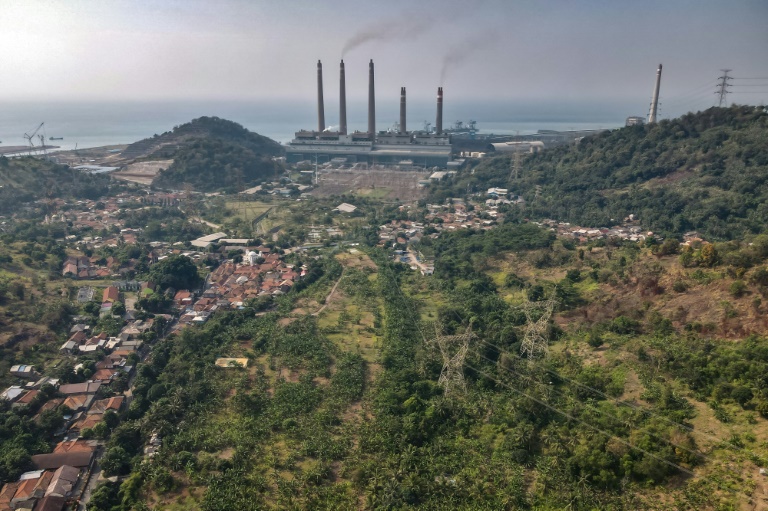
Rich nations pledged Tuesday to raise at least $20 billion to help wean Indonesia off coal and reach carbon neutrality by 2050, a decade earlier than planned, the White House said.

The United States, Japan, Canada and six European countries signed the accord with Jakarta on the sidelines of the G20 summit in Bali to ensure a “just power sector transition” away from Indonesia’s coal-dependent economy, they said in a statement released by the White House.

Under the deal, Indonesia, home to the world’s third-largest rainforest, pledges to be carbon-neutral by 2050, 10 years earlier than previously planned, and to almost double its renewable energy generation by 2030.

Indonesian President Joko Widodo hailed the deal as a model that could be replicated in other countries to meet the world’s climate goals.

“Indonesia is committed to using our energy transition to achieve a green economy and drive sustainable development,” he said in a statement.

“We are grateful for the cooperation and the support from our international partners to realise its full implementation that will accelerate this transition.”

Sponsors of the deal said Jakarta had committed to an ambitious shift to clean energy in return for $10 billion in public sector finance and $10 billion in private funding over three to five years.

The financing included “grants, concessional loans, market-rate loans, guarantees and private investments” for the country, which has one of the largest coal reserves in the world.

US President Joe Biden praised Jakarta’s “tremendous leadership” in sealing the partnership.

“The resulting new and accelerated targets demonstrate how countries can dramatically cut emissions and increase renewable energy while advancing a commitment to creating quality jobs and protecting livelihoods and communities,” he said.

Indonesia had questioned the terms of a 2021 deal to end deforestation by 2030 signed by over 100 countries, including the Southeast Asian archipelago, arguing it would hinder the country’s economic development.

The donor pledge announced on Tuesday was part of a slew of projects announced under an infrastructure partnership — aimed as a counter-balance to China’s Belt and Road Initiative — to provide support to poor and developing nations.

They ranged from funding for digital projects in the Pacific, to investment in the sustainable mining of nickel and cobalt in Brazil and powering solar projects in Honduras.

Asian markets rise further as China moves provide support

Asian markets rose Tuesday as investors brushed off a reverse on Wall Street and focused on signs of slowing inflation and China’s moves to shore up its economy.

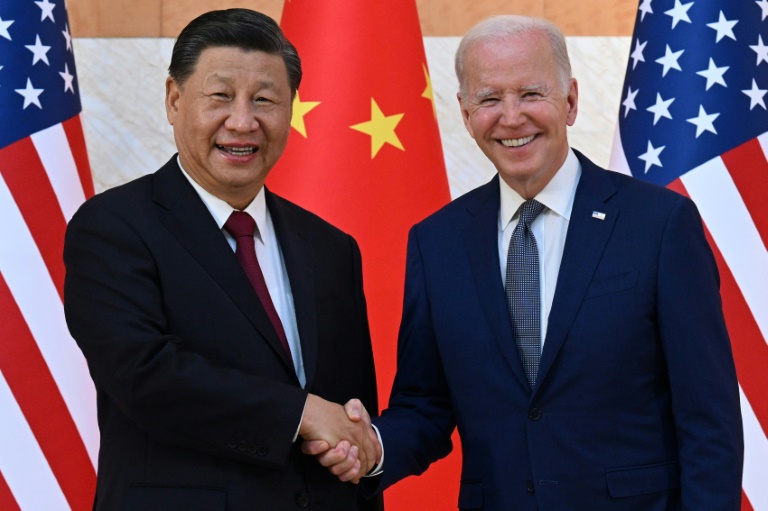
A largely positive meeting between US President Joe Biden and Chinese counterpart Xi Jinping indicated an easing of tensions between the powers and added to the upbeat mood on trading floors.

Still, there remains a lot of trepidation that central bank interest rate hikes aimed at taming inflation will eventually send economies into a recession.

And since Thursday’s forecast-beating consumer prices data, Federal Reserve officials have warned there were more increases in the pipeline, though they are not expected to be as big as the previous four rises, of 75 basis points.

The latest was vice chair Lael Brainard, who said that while it would probably be right to slow down the rate hikes, “we have additional work to do both on raising rates and sustaining restraint to bring inflation down”.

The comments, along with profit-taking, helped push Wall Street’s three main indexes into the red and pushed the dollar up against its peers, having tumbled last week.

Stephen Innes at SPI Asset Management said: “With US growth yet to fall off a cliff, make no mistake, inflation is still at the fulcrum of market expectations as board members continue to push back a bit on market pricing.”

However, Asian traders were a little more upbeat, cheered by China’s move to ease some of its strict Covid-19 restrictions and provide much-needed support to its beleaguered property sector.

Hong Kong rose more than four percent and Shanghai also closed in positive territory.

Tokyo, Singapore, Seoul, Manila, Mumbai, Taipei, Jakarta, Bangkok and Wellington also gained, but Sydney dipped.

Paris and Frankfurt rose at the open though London was slightly down.

Optimism for a thawing in relations between Washington and Beijing was boosted after Biden and Xi’s extended talks on the sidelines of the G20 summit in Indonesia.

While there remain differences on hot-potato issues such as Taiwan, the two did find common ground on the Ukraine conflict, climate and the need to avoid another Cold War.

After the talks, Chinese Foreign Minister Wang Yi described it as a “new starting point”, adding that Beijing hoped “to stop the tumbling of bilateral ties and to stabilise the relationship”.

After a painful year for markets across the planet, dealers are hopeful that there is finally light at the end of the tunnel.

“It’s certainly a time to be thinking about a recovery regime unfolding for markets,” said Kristina Hooper of Invesco.

“But it’s going to take a little time before we know if this really is something of a turning point for inflation and the Fed can be a lot more comfortable about hastening the end of tightening,” she told Bloomberg Radio.

– Key figures around 0820 GMT –

Tokyo – Nikkei 225: UP 0.1 percent at 27,990.17 (close)

Hong Kong – Hang Seng Index: UP 4.1 percent at 18,343.12 (close)

Shanghai – Composite: UP 1.6 percent at 3,134.08 (close)

London – FTSE 100: DOWN 0.1 percent at 7,375.39

Euro/dollar: UP at $1.0410 from $1.0331 on Monday

Pound/dollar: UP at $1.1825 from $1.1751 

Dollar/yen: DOWN at 139.44 yen from 139.90 yen

Euro/pound: UP at 88.00 pence from 87.89 pence

West Texas Intermediate: DOWN 0.6 percent at $85.38 per barrel

Brent North Sea crude: DOWN 0.4 percent at $92.78 per barrel

New York – Dow: DOWN 0.6 percent at 33,536.70 (close)

Russia faces G20 calls to end Ukraine war

Russia faced mounting diplomatic pressure to end its war in Ukraine Tuesday, as G20 leaders meeting in Indonesia rued the high cost of the eight-month-old conflict.

In a draft communique, countries including Russia deplored the impact of “the war in Ukraine” — a conflict that “most members strongly condemned”.

The group is also expected to declare that “the use or threat of use of nuclear weapons” is “inadmissible”, a veiled rebuke of President Vladimir Putin who has repeatedly raised the spectre of nuclear conflagration.

Putin was forced to skip the summit as he reckons with a string of embarrassing battlefield defeats and a grinding war that threatens the future of his regime.

Rubbing salt in his wounds, Ukrainian leader Volodymyr Zelensky — fresh from a visit to liberated Kherson — delivered an impassioned video appeal to G20 leaders.

Zelensky told leaders from China’s Xi Jinping to America’s Joe Biden that they could “save thousands of lives” by pressing for a Russian withdrawal.

“I am convinced now is the time when the Russian destructive war must and can be stopped,” he said, sporting his now-trademark army-green T-shirt.

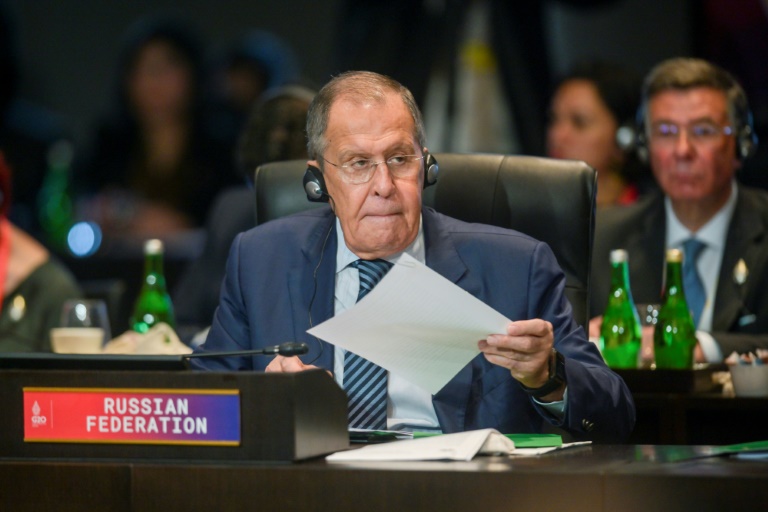
Putin’s delegate, Foreign Minister Sergei Lavrov, remained in his seat throughout Zelensky’s address, two diplomatic sources told AFP.

The veteran diplomat had preparations for the summit disrupted by two trips to a Bali hospital in as many days for an undisclosed ailment.

– ‘Immense’ suffering –

The United States and its allies sought to use the summit to broaden the coalition against Russia’s invasion and scotch Moscow’s claims of a war of East versus West.

Many “see Russia’s war in Ukraine as the root source of immense economic and humanitarian suffering in the world” said a senior US official.

Russia and its G20 allies China, India and South Africa refrained from criticising Putin’s war explicitly, and the draft joint statement is replete with diplomatic fudges and linguistic gymnastics.

But it gives a growing sense of the worldwide impact of the war.

G20 members Argentina and Turkey are among the nations worst hit by food inflation worldwide, but there was scarcely a country around the table unaffected by high food and fuel prices.

“The war is affecting everyone” said Argentine Foreign Minister Santiago Cafiero. 

“In the northern hemisphere the merchants of death broker lethal arms sales, but in the southern hemisphere food is costly or scarce — what kills are not bullets or missiles, but poverty and hunger.”

There was also a hint at growing Chinese unease with Russia’s prosecution of the war 

when presidents Xi and Biden met late Monday.

Both men voiced opposition to the “use or threat of use” of nuclear weapons in Ukraine, the White House said, although Beijing did not repeat that concern in public.

“It’s clear that the Russians are very isolated,” said one Western official. “I think some countries engaged with Russia but… I did not see any gestures of great solidarity.”

– Grain corridor –

A deal allowing Ukraine to export grain through the Black Sea was another focus of conversation.

It expires November 19, and Russia has already threatened to rip it up.

Ukraine is one of the world’s top grain producers, and the Russian invasion had blocked 20 million tonnes of grain in its ports before the United Nations and Turkey brokered the deal in July.

The G20 is expected to urge “full, timely and continued implementation”.

The summit build-up focused heavily on Xi, who is making only his second overseas trip since the pandemic began.

Xi and Biden cooled Cold War rhetoric during three hours of talks on Monday, taking some of the heat out of their simmering superpower rivalry. 

“The world expects that China and the United States will properly handle the relationship,” Xi told Biden.

Former US diplomat Danny Russel described the meeting as broadly positive. 

“We should beware of prematurely declaring the strategic rivalry over. However, we saw a deliberate effort to stabilise a dangerously overheated relationship.”

Humanity hits the eight billion mark

A baby born somewhere on Tuesday will be the world’s eight billionth person, according to a projection by the United Nations.

“The milestone is an occasion to celebrate diversity and advancements while considering humanity’s shared responsibility for the planet,” UN Secretary-General Antonio Guterres said in a statement.

The UN attributes the growth to human development, with people living longer thanks to improvements in public health, nutrition, personal hygiene and medicine. 

It is also the result of higher fertility rates, particularly in the world’s poorest countries — most of which are in sub-Saharan Africa — putting their development goals at risk.

– How many is too many? –

Population growth has also magnified the environmental impacts of economic development.

But while some worry that eight billion humans is too many for planet Earth, most experts say the bigger problem is the overconsumption of resources by the wealthiest people.

“Some express concerns that our world is overpopulated,” said United Nations Population Fund chief Natalia Kanem. “I am here to say clearly that the sheer number of human lives is not a cause for fear.”

Joel Cohen of Rockefeller University’s Laboratory of Populations told AFP the question of how many people Earth can support has two sides: natural limits and human choices.

Our choices result in humans consuming far more biological resources, such as forests and land, than the planet can regenerate each year. 

The overconsumption of fossil fuels, for example, leads to more carbon dioxide emissions, responsible for global warming.

“We are stupid. We lacked foresight. We are greedy. We don’t use the information we have. That’s where the choices and the problems lie,” said Cohen. 

However, he rejects the idea that humans are a curse on the planet, saying people should be given better choices.

– Slowing growth –  

The current population is more than three times higher than the 2.5 billion global headcount in 1950.

However, after a peak in the early 1960s, the world’s population growth rate has decelerated dramatically, Rachel Snow of the UN Population Fund told AFP.

Annual growth has fallen from a high of 2.1 percent between 1962 and 1965 to below 1 percent in 2020.

That could potentially fall further to around 0.5 percent by 2050 due to a continued decline in fertility rates, the United Nations projects.

The UN projects the population to continue growing to about 8.5 billion in 2030, 9.7 billion in 2050, and peaking around 10.4 billion in the 2080s.

Other groups have, however, calculated different figures.

The US-based Institute for Health Metrics and Evaluation (IHME) estimated in a 2020 study that the global population would max out by 2064, without ever reaching 10 billion, and decline to 8.8 billion by 2100.

– Black Death – 

Since the emergence of the first humans in Africa over two million years ago the world’s population has ballooned, with only fleeting pauses to the increasing number of people sharing Earth.

Our ancestors were hunter-gatherers, who had few children compared to later settled populations in order to maintain their nomadic lifestyle.

The introduction of agriculture in the Neolithic era, around 10,000 BC, brought the first known major population leap.

With agriculture came sedentarization and the ability to store food, which caused birth rates to soar.

From around six million in 10,000 BC, the global population leapt to 100 million in 2,000 BC and then to 250 million in the first century AD, according to the French Institute for Demographic Studies.

As a result of the Black Death, the human population dropped between 1300 and 1400, from 429 to 374 million.

Other events, like the Plague of Justinian, which hit the Mediterranean over two centuries from 541-767, and the wars of the early Middle Ages in western Europe, also caused temporary dips in the number of humans on Earth.

From the 19th century on, the population began to explode, due largely to the development of modern medicine and the industrialization of agriculture, which boosted global food supplies.

Since 1800, the world’s population has jumped eight-fold, from an estimated one billion to eight billion.

The development of vaccines was key, with the smallpox jab particularly helping zap one of history’s biggest killers. 

Russia faces G20 calls to end Ukraine war

Russia faced mounting diplomatic pressure to end its war in Ukraine Tuesday, as G20 leaders meeting in Indonesia rued the high cost of the eight-month-old conflict.

In a draft communique, countries including Russia deplored the impact of “the war in Ukraine” — a conflict that “most members strongly condemned”.

The group is also expected to declare that “the use or threat of use of nuclear weapons” is “inadmissible”, a veiled rebuke of President Vladimir Putin who has repeatedly raised the spectre of nuclear conflagration.

Putin was forced to skip the summit as he reckons with a string of embarrassing battlefield defeats and a grinding war that threatens the future of his regime.

Rubbing salt in his wounds, Ukrainian leader Volodymyr Zelensky — fresh from a visit to liberated Kherson — delivered an impassioned video appeal to G20 leaders.

Zelensky told leaders from China’s Xi Jinping to America’s Joe Biden that they could “save thousands of lives” by pressing for a Russian withdrawal.

“I am convinced now is the time when the Russian destructive war must and can be stopped,” he said, sporting his now-trademark army-green T-shirt.

Putin’s delegate, Foreign Minister Sergei Lavrov, remained in his seat throughout Zelensky’s address, two diplomatic sources told AFP.

The veteran diplomat had preparations for the summit disrupted by two trips to a Bali hospital in as many days for an undisclosed ailment.

– ‘Immense’ suffering –

The United States and its allies sought to use the summit to broaden the coalition against Russia’s invasion and scotch Moscow’s claims of a war of East versus West.

Many “see Russia’s war in Ukraine as the root source of immense economic and humanitarian suffering in the world” said a senior US official.

Russia and its G20 allies China, India and South Africa refrained from criticising Putin’s war explicitly, and the draft joint statement is replete with diplomatic fudges and linguistic gymnastics.

But it gives a growing sense of the worldwide impact of the war.

G20 members Argentina and Turkey are among the nations worst hit by food inflation worldwide, but there was scarcely a country around the table unaffected by high food and fuel prices.

“The war is affecting everyone” said Argentine Foreign Minister Santiago Cafiero. 

“In the northern hemisphere the merchants of death broker lethal arms sales, but in the southern hemisphere food is costly or scarce — what kills are not bullets or missiles, but poverty and hunger.”

There was also a hint at growing Chinese unease with Russia’s prosecution of the war 

when presidents Xi and Biden met late Monday.

Both men voiced opposition to the “use or threat of use” of nuclear weapons in Ukraine, the White House said, although Beijing did not repeat that concern in public.

“It’s clear that the Russians are very isolated,” said one Western official. “I think some countries engaged with Russia but… I did not see any gestures of great solidarity.”

– Grain corridor –

A deal allowing Ukraine to export grain through the Black Sea was another focus of conversation.

It expires November 19, and Russia has already threatened to rip it up.

Ukraine is one of the world’s top grain producers, and the Russian invasion had blocked 20 million tonnes of grain in its ports before the United Nations and Turkey brokered the deal in July.

The G20 is expected to urge “full, timely and continued implementation”.

The summit build-up focused heavily on Xi, who is making only his second overseas trip since the pandemic began.

Xi and Biden cooled Cold War rhetoric during three hours of talks on Monday, taking some of the heat out of their simmering superpower rivalry. 

“The world expects that China and the United States will properly handle the relationship,” Xi told Biden.

Former US diplomat Danny Russel described the meeting as broadly positive. 

“We should beware of prematurely declaring the strategic rivalry over. However, we saw a deliberate effort to stabilise a dangerously overheated relationship.”

Renault touts 'warm' Nissan ties as pair review alliance

There is a “warm atmosphere” within the Renault-Nissan alliance and a deal regarding its future will be announced “in due time”, the French carmaker’s chairman said Tuesday.

The auto giants are in talks over a potentially drastic reshaping of their sometimes rocky 23-year union.

Nissan currently owns 15 percent of Renault, but Renault owns 43 percent of Nissan — a power imbalance that has long bothered the Japanese company.

While the discussions are behind closed doors, a source close to the matter told AFP that they involve a rebalancing of the cross-shareholding arrangement, and a possible Nissan investment in Renault’s new electric vehicle venture.

But concerns over issues such as the sharing of EV intellectual property have delayed an announcement, according to the source.

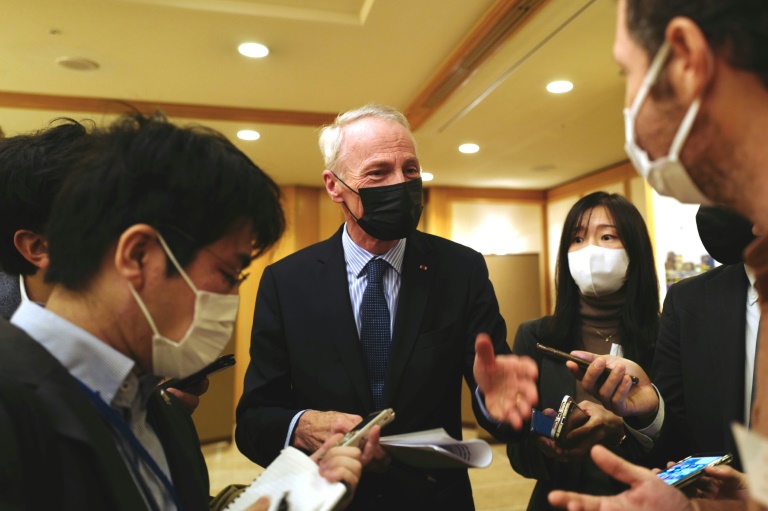
On Tuesday, Renault chair and alliance boss Jean-Dominique Senard sought to reassure reporters in Tokyo that the “warm atmosphere” within the alliance “bodes well” for its future.

“Confidence and trust have never been as high” between the pair and their smaller partner Mitsubishi Motors since he took charge of the three-way alliance almost four years ago, Senard said.

Any deal on a new shareholding agreement will be unveiled “in due time”, he added after giving a speech at an international financial forum.

Renault and Nissan joined forces in 1999, when the French company rescued the Japanese carmaker from bankruptcy.

Relations between the pair have not always been smooth, however, and were thrown into further disarray by the shock 2018 arrest of tycoon alliance boss Carlos Ghosn.

This month, Renault announced it will split its operations in two — a new electric vehicle business called Ampere and a separate subsidiary for petrol, diesel and hybrid cars that will pair up with China’s Geely.

Renault has yet to outline the part that Nissan will play in the new electric division, but its joint venture with Geely is reportedly raising questions in Japan about future technology transfers to the Chinese carmaker.

After FTX collapse, cryptocurrency sector fights back

The failure of the FTX platform has undermined investor confidence and threatened the young cryptocurrency sector, pushing its main players to mobilise to save it.

The boss of the largest cryptocurrency exchange platform, Binance, did everything to reassure investors on Tuesday.

“The projects that survive this difficult time will be much stronger later on,” said Changpeng Zhao in response to questions from Internet users on Twitter.

But for now, the market is shaken.

Cryptocurrencies are valued at $870 billion, according to data from Coingecko, a site that lists more than 13,000 of them through 600 exchanges.

Less than ten days ago it was over $1 trillion, and at its highest a year ago, $3 trillion, most of which evaporated as bitcoin prices crashed (- 74% over one year), but also Ethereum (-73%) or Dogecoin (-67%).

The bankruptcy of FTX, which even in early November was still considered one of the most reliable platforms, is a reminder to investors of the sector’s uncertainty.

The company must liquidate its cryptoassets and its stakes in companies to pay off its creditors, flooding the market.

Cryptocurrencies are already recovering from a similar crisis in the first half of the year when the cryptocurrency Terra saw its price collapse, dragging bitcoin down with it.

– ‘Pour water on fire’ –

But this time around, FTX was an even bigger player.

“There are parallels to be drawn with Lehman Brothers”, the Wall Street giant whose bankruptcy in 2008 amplified the financial crisis, said Walid Koudmani, analyst at XTB, who told AFP that the possibility of an outright end to cryptocurrencies may even arise.

The fall in cryptocurrencies, however, comes in a rising global market, and seems to indicate that cryptoassets are not yet significantly correlated with the real economy.

“But I don’t think it’s going to fail as an industry, or as a concept,” said Koudmani.

For many observers, the survival of the sector will see a calming down period far from those first decentralised and deregulated ideals.

In 2017, bitcoin saw its price soar before collapsing, but after several lean years, nicknamed “crypto winter”, it came back with a vengeance at the end of 2020, rising to a record almost $65,000 at the start of 2021.

Marion Laboure, analyst at Deutsche Bank, said she believed the setbacks of FTX would  help clean up the sector.

“We believe this second ‘crypto winter’ will be a net positive because the FTX collapse will edge the crypto ecosystem closer to the established financial sector,” she said.

For now “market concentration is greater than ever, with Binance being the biggest winner”, Laboure said.

“They’re trying to pour water on the fire, but if you followed the FTX situation, Binance had quite an important role,” added Koudmani

– Platforms in turmoil –

It remains to be seen whether the current main players, exchange platforms such as Binance and Coinbase, will be among the survivors.

They allow users to buy and sell cryptoassets, but also offer more or less complex derivative products on these already very volatile assets, and are at the heart of the ecosystem.

But they are often based in regions with loose legislation: FTX is headquartered in the Bahamas, while Binance has no centralised headquarters, making the job of regulators difficult. 

The bankruptcy of FTX is causing some users to withdraw their funds because they fear that their buying platform has also used their cryptoassets to invest.

Among the platforms in turmoil, the most important is now Crypto.com, whose boss has acknowledged an erroneous transfer of several hundred million dollars, but claims to have recovered the funds.

Binance, for its part, claims to have the necessary liquidity to face the crisis, and says it is ready to publish “proof”.

Zhao announced on Monday the launch of a rescue fund and also proposed the creation of an industry body that would bring together the biggest players in the sector. But he also said he was going to rescue FTX early last week, before giving up due to the magnitude of the task.

Trump acolyte Kari Lake loses Arizona governor race

Donald Trump loyalist and prominent election denier Kari Lake has lost her bid to be governor of Arizona, US networks projected Monday, rounding out a difficult week for the former president as he readies a new run for the White House.

Lake, a former TV anchor, had been seen as one of Trump’s most reliable picks heading into the midterm elections, but her defeat caps a run of results that have raised doubts about the former president’s place in the Republican Party.

The projections by major US TV networks come after a week of intense scrutiny of the vote count in Arizona, where Lake and her supporters have repeatedly cast doubt on the competence and integrity of officials.

“Democracy is worth the wait,” tweeted Lake’s opponent, Democrat Katie Hobbs.

“Thank you, Arizona. I am so honored and so proud to be your next Governor.”

But Lake, who has built her brand on skepticism of the mainstream media and the political establishment appeared to reject the projections.

“Arizonans know BS when they see it,” she tweeted, using a euphemism for nonsense.

– Election denial –

If confirmed by election officials, Hobbs’s victory would mark an end to a bitter election campaign which Lake joined in earnest when she quit local broadcast journalism last year.

The former anchor married her made-for-tv smile to the flame-throwing political style of Trumpism, delighting the Make America Great Again wing of her party.

She made denial of the 2020 presidential election win by Joe Biden a key tenet of her campaign, and said that she would not have validated his victory if she had been in the governor’s mansion at the time.

Her caustic attacks on journalists and election officials, including the Republicans heading key departments in hotly contested Maricopa County, earned her plaudits with the base.

But they also led to warnings that she was stoking trouble in a country still reeling from the January 2021 assault on the Capitol by Trump supporters.

Democratic National Convention chair Jaime Harrison on Monday tweeted his congratulations to Hobbs along with the phrase: “Sanity wins”

Trump, who is expected on Tuesday to announce his entry to the 2024 race for the White House, took to his Truth Social platform to denounce the call.

“Wow! They just took the election away from Kari Lake. It’s really bad out there!” he wrote, without explaining who “they” were.

– Scrutiny –

Lake had declared herself “100 percent confident” that she would prevail, but — in line with Trump’s playbook — had expended a lot of energy sowing doubt about the election system.

Supporters seized upon minor problems with vote tabulation machines in Maricopa County, the home of America’s fifth biggest city, Phoenix, which left some people standing in short lines last Tuesday.

Officials have forcefully insisted that no legitimate vote would be excluded, and mounted a well-organized social media campaign to push back at falsehoods circulating online as the count plodded methodically on.

Arizona has been under intense scrutiny for two years since Biden eked out a narrow win in the state.

Maricopa County became ground zero for election deniers, who made unfounded claims about ballot stuffing, despite repeated investigations that turned up no evidence of wrongdoing.

The slow-moving count in Arizona has been the subject of national — and international — fascination this week as it became increasingly clear that election deniers across the United States had fared badly.

Lake was thought of as a leading light in the movement, and Republican Party insiders — as well as media pundits — have noted that regardless of the result, she could be well placed for a spot on a future White House ticket.
Close Bitnami banner
Bitnami