US Business

Chip giant TSMC shares surge on Buffett stake

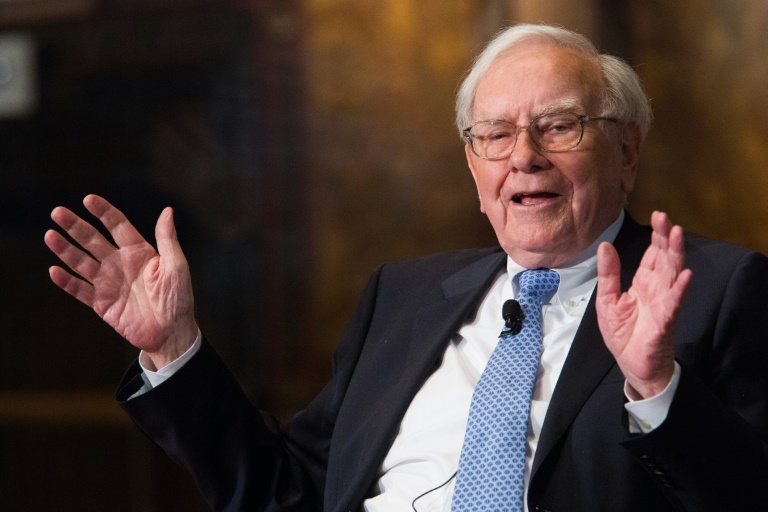
Shares in Taiwan’s TSMC soared on Tuesday after Warren Buffett’s Berkshire Hathaway confirmed it had taken a close to $5 billion stake in a major boost of confidence for the semiconductor giant.

Taiwan Semiconductor Manufacturing Company operates the world’s largest silicon wafer factories and produces some of the most advanced microchips used in everything from smartphones and cars to missiles.

The company’s shares and profits soared for the first two years of the coronavirus pandemic during a global shortage of semiconductors.

That climb came to an end this year as demand was clipped and the prospect of a global downturn loomed with the firm’s shares down 24 percent since January 1 and some US$230 billion wiped from its valuation. 

But that rout turned a corner in the past week with a sudden surge of investor buying and in Tuesday morning trade the company was up nearly eight percent.

That came after Buffet’s Hathaway confirmed in a filing it had acquired about 60 million American Depository Receipts in TSMC in the three months ended September.

Billionaire finance guru Buffett is one of the world’s most successful investors and has a long track record of making savvy, lucrative bets.

In October TSMC announced plans to slash expenditure by around 10 percent in the latest sign from a major global chipmaker that they are expecting the global downturn to deepen.

But the company remains in the fortunate position of making some of the world’s most advanced chips, with key clients including Apple, Nvidia and Qualcomm.

The company reported forecast-beating results in the third quarter with a net income of TW$280.9 billion ($8.8 billion).

Asian markets rise further as China moves provide support

Asian markets rose Tuesday as investors brushed off a reverse on Wall Street and focused on signs of slowing inflation and China’s moves to shore up its economy.

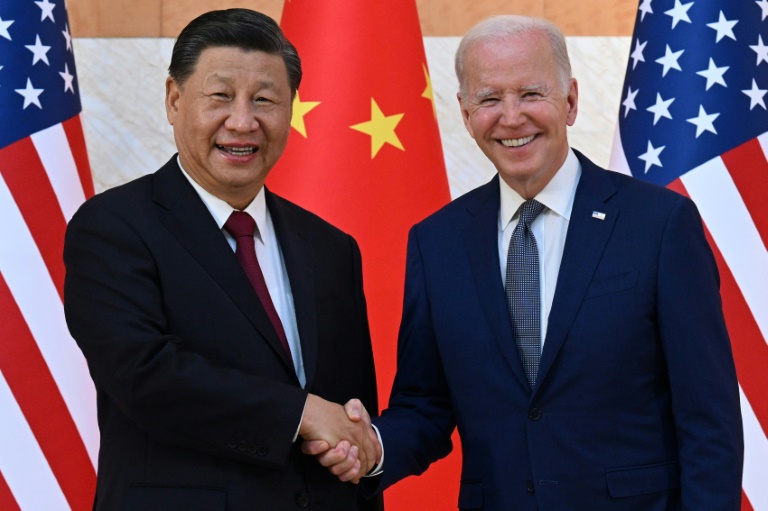
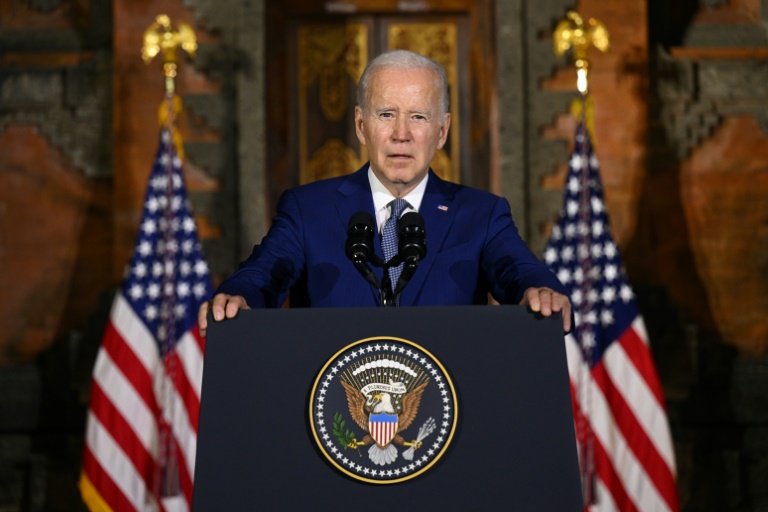
A largely positive meeting between US President Joe Biden and Chinese counterpart Xi Jinping indicated an easing of tensions between the powers and added to the upbeat mood on trading floors.

Still, there remains a lot of trepidation that central bank interest rate hikes aimed at taming inflation will eventually send economies into a recession.

And since Thursday’s forecast-beating consumer prices data, Federal Reserve officials have warned there were more increases in the pipeline, though they are not expected to be as big as the previous four rises, of 75 basis points.

The latest was vice chair Lael Brainard, who said that while it would probably be right to slow down the rate hikes, “we have additional work to do both on raising rates and sustaining restraint to bring inflation down”. 

The comments, along with profit-taking, helped push Wall Street’s three main indexes into the red and pushed the dollar up against its peers, having tumbled last week.

Stephen Innes at SPI Asset Management said: “With US growth yet to fall off a cliff, make no mistake, inflation is still at the fulcrum of market expectations as board members continue to push back a bit on market pricing.”

However, Asian traders were a little more upbeat, cheered by China’s move to ease some of its strict Covid-19 restrictions and provide much-needed support to its beleaguered property sector.

Hong Kong rose more than two percent and Shanghai was also in positive territory.

Tokyo, Singapore, Seoul, Mumbai, Manila, Taipei, Bangkok and Wellington were also up, but Sydney and Jakarta dipped. 

Optimism for a thawing in relations between Washington and Beijing was boosted after Biden and Xi’s extended talks on the sidelines of the G20 summit in Indonesia.

While there remain differences on hot-potato issues such as Taiwan, the two did find common ground on the Ukraine conflict, climate and the need to avoid another Cold War.

After the talks, Chinese Foreign Minister Wang Yi described it as a “new starting point”, adding that Beijing hoped “to stop the tumbling of bilateral ties and to stabilise the relationship”.

After a painful year for markets across the planet, dealers are hopeful that there is finally light at the end of the tunnel.

“It’s certainly a time to be thinking about a recovery regime unfolding for markets,” said Kristina Hooper of Invesco.

“But it’s going to take a little time before we know if this really is something of a turning point for inflation and the Fed can be a lot more comfortable about hastening the end of tightening,” she told Bloomberg Radio.

– Key figures around 0410 GMT –

Tokyo – Nikkei 225: UP 0.2 percent at 28,017.28

Hong Kong – Hang Seng Index: UP 3.6 percent at 18,257.69 (break)

Shanghai – Composite: UP 1.3 percent at 3,122.58 (break)

Euro/dollar: DOWN at $1.0324 from $1.0331 on Friday

Pound/dollar: UP at $1.1764 from $1.1751 

Dollar/yen: UP at 140.35 yen from 139.90 yen

Euro/pound: DOWN at 87.74 pence from 87.89 pence

West Texas Intermediate: DOWN 0.4 percent at $85.51 per barrel

Brent North Sea crude: DOWN 0.1 percent at $93.01 per barrel

New York – Dow: DOWN 0.6 percent at 33,536.70 (close)

London – FTSE 100: UP 0.9 percent at 7,385.17 (close)

NASA returning to the Moon with mega rocket launch

Third time’s the charm?

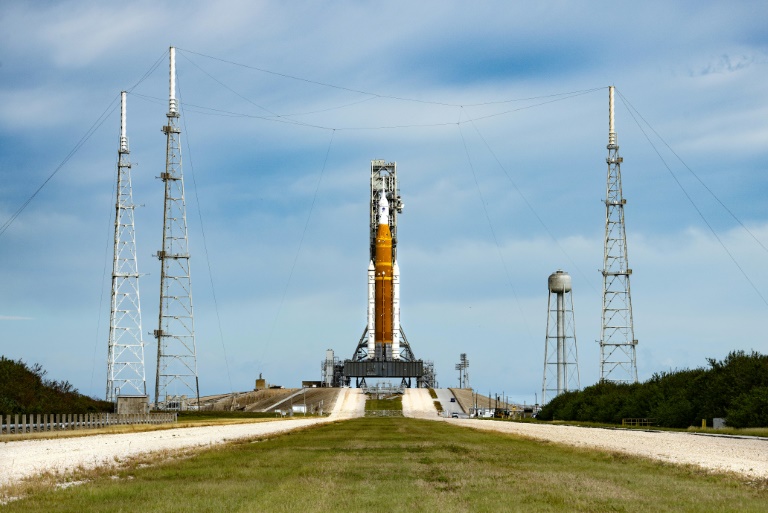
After two failed attempts, NASA plans to launch its new mega Moon rocket early Wednesday from Florida, less than a week after the massive machine withstood a hurricane.

“Our time is coming. And we hope that that is on Wednesday,” said Mike Sarafin, the manager of the much-delayed Artemis 1 mission, at NASA headquarters.

The Artemis 1 mission, a test flight without astronauts, represents the first step in the US space agency’s plan to build a lasting presence on the Moon, and taking lessons from there to prepare for a future voyage to Mars.

Named after the sister of Apollo in Greek mythology, the new space program comes 50 years after humans last set foot on lunar soil.

The first launch of the Space Launch System rocket, the most powerful ever designed by NASA, is set for Wednesday at 1:04 am local time (0604 GMT), with a possible launch window of two hours.

Countdown has already begun at the storied Kennedy Space Center, where the orange and white behemoth awaits its maiden flight.

The takeoff is scheduled less than a week after the passage of Hurricane Nicole, which the rocket endured outside on its launch pad.

For now, officials are evaluating the risk associated with hurricane damage to a thin strip of caulk-like material called RTV, which encircles the Orion crew capsule atop the rocket, and makes it more aerodynamic.

Teams are looking at whether the RTV could shake loose during launch and pose problems.

Two backup dates are possible if needed, on November 19 and 25.

– Far side of Moon –

The weather promises to be mild, with a 90 percent chance of favorable conditions during the launch window. 

At the end of September, the rocket had to be wheeled back to its assembly building to be sheltered from another hurricane, Ian.

Before these weather setbacks, two launch attempts had to be canceled for technical reasons.

The first failure was related to a faulty sensor, and the second to a fuel leak when filling the rocket’s tanks. It runs on ultra-cold, ultra-volatile liquid oxygen and hydrogen.

NASA has since replaced a seal and modified its procedures to avoid thermal shock as much as possible.

Tank-filling is now due to begin Tuesday afternoon.

About 100,000 people are expected on the coast to watch the launch, with the rocket promising to light up the night sky.

The Orion capsule will be lifted by two boosters and four powerful engines under the core stage, which will detach after only a few minutes.

After a final push from the upper stage, the capsule will be well on its way, taking several days to reach its destination.

Rather than landing on the Moon, it will assume a distant orbit, venturing 40,000 miles (64,000 kilometers) beyond the far side — further than any other habitable spacecraft so far.

Finally, Orion will embark on the return leg of its journey. When passing through the atmosphere, the capsule’s heat shield will need to withstand a temperature half as hot as the Sun’s surface.

If takeoff happens Wednesday, the mission would last 25 and a half days in all, with a splashdown in the Pacific Ocean on December 11.

NASA is banking on a successful mission after developing the SLS rocket for more than a decade. It will have invested more than $90 billion in its new lunar program by the end of 2025, according to a public audit.

Artemis 2 will be almost a replay of the first mission, albeit with astronauts, in 2024. 

Boots on the ground should happen during Artemis 3, no sooner than 2025, with the crew set to include the first woman and first person of color on the Moon.

UK budget predicted to be a nightmare before Christmas

Britain will on Thursday hike taxes and slash public spending in a government budget signalling a return to austerity despite millions suffering a cost-of-living crisis in an economy facing recession.

Conservative Prime Minister Rishi Sunak, who took office just three weeks ago, has vowed to fix the economic havoc created by his short-lived predecessor Liz Truss.

But he is mindful of sky-rocketing energy bills, decades-high inflation and rising interest rates that are squeezing households.

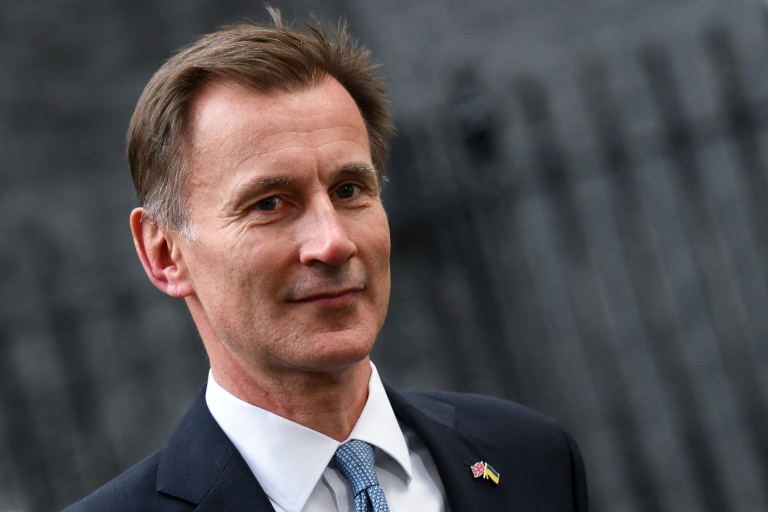
Finance minister Jeremy Hunt will present his crucial budget in parliament, alongside official economic and inflation forecasts — with recent data signalling a grim outlook.

Chancellor of the Exchequer Hunt is expected to unveil fiscal consolidation totalling between £50 billion and £60 billion (between $58.7 billion and $70.5 billion), media reports suggest.

– Scrooge –

“We’re all going to be paying a bit more tax, I’m afraid,” Hunt told UK media over the weekend, likening himself to the penny-pinching miser Ebenezer Scrooge in Charles Dickens’ festive favourite “A Christmas Carol”.

“We will be asking everyone for sacrifices,” he said, stressing however that the pain would fall disproportionately on the better off.

In more gloomy news, Britain’s economy shrank in the third quarter as inflation soars, recent data showed, likely confirming it is already in a recession.

The Bank of England has said the UK economy would also contract in the current final quarter, meaning the economy was in a recession which it warned could last until mid-2024.

“The big fiscal tightening … is coming just as the recession begins,” noted Capital Economics analyst Ashley Webb.

“The clear risk is that the fiscal consolidation deepens the recession,” he cautioned.

Truss’ unfunded tax-slashing budget sparked a collapse in the pound and an explosion in state borrowing costs during her 49-day tenure that began in September.

Investors fretted over a black hole of as much as £200 billion, forcing emergency intervention from the Bank of England.

She then fired her finance minister Kwasi Kwarteng and replaced him with Hunt, who set about reversing the much-criticised budget and curtailed a costly freeze in domestic fuel bills. 

Yet it was not enough to keep Truss in Downing Street.

– Stability back? –

Markets have since regained an even keel after Sunak took the helm and political turmoil subsided, but retail lenders’ mortgage rates remain elevated.

“What we are seeing now is that stability has returned to the United Kingdom,” Sunak told Sky News in Bali, Indonesia, where he is attending the G20 summit.

“But that’s because the expectation is that the government will make those difficult but necessary decisions to ensure that we can get a grip of inflation, reduce it for people with the cost of living, also limit the increase in mortgage rates.

“I would really want people to be reassured that … all the decisions we make will have fairness and compassion at their heart.”

Economic storm clouds could darken further this week, with unemployment and inflation data due for release on Tuesday and Wednesday respectively.

The BoE this month sprang its biggest interest rate hike since 1989 to fight sky-high inflation, which stands at a four-decade peak above 10 percent as energy and food prices soar as a result of the Ukraine war.

The bank’s key rate has rocketed from 0.1 percent to 3.0 percent in under one year, in turn ramping up home loan repayments and worsening the cost-of living crisis.

– ‘Austerity 2.0’ –

Britain’s main opposition Labour party has slammed Sunak, arguing that a second wave of austerity is not the answer.

“I don’t believe that austerity 2.0, after the austerity that we have gone through after the last 12 years, is the right approach,” said Labour’s finance spokeswoman Rachel Reeves.

“Public services area already on their knees,” added Reeves, a former Bank of England economist, calling it a “badge of shame” that the nurses felt compelled to go on strike.

Tens of thousands of staff in various industries have already gone on strike across Britain this year to press for higher pay.

Reports suggest that Hunt will freeze income tax rate thresholds, which means more people are dragged into higher tax brackets over time.

He could also overhaul the government’s energy bills support scheme with more targeted measures.

And Hunt could ramp up windfall tax on oil and gas giants, whose profits have surged on fallout from Russia’s war on Ukraine.

Most Asian markets up further as China moves provide support

Asian markets mostly rose Tuesday as investors brushed off a reverse on Wall Street and focused on signs of slowing inflation and China’s moves to shore up its economy.

While the week got off to a slower start, the mood remains buoyant across trading floors, particularly in Hong Kong, where tech firms led the way.

Still, there remains a lot of trepidation that central bank interest rate hikes aimed at taming inflation will eventually send economies into a recession.

And since Thursday’s forecast-beating consumer prices data, Federal Reserve officials have warned there were more increases in the pipeline, though they are not expected to be as big as the previous four 75 basis point rises.

The latest was vice chair Lael Brainard, who said that while it would probably be right to slow down the rate hikes, “we have additional work to do both on raising rates and sustaining restraint to bring inflation down”. 

The comments, along with profit-taking, helped push Wall Street’s three main indexes into the red and pushed the dollar up against its peers, having tumbled last week.

Stephen Innes at STI Asset Management said: “With US growth yet to fall off a cliff, make no mistake, inflation is still at the fulcrum of market expectations as board members continue to push back a bit on market pricing.”

However, Asian traders were a little more upbeat, with dealers cheered by China’s move to ease some of its strict Covid-19 restrictions and provide much-needed support to its beleaguered property sector.

Hong Kong rose more than two percent and Shanghai was also in positive territory.

Tokyo, Singapore, Manila, Taipei, Jakarta and Wellington were also up, but Sydney and Seoul dipped. 

After a painful year for markets across the planet, there are budding hopes for light at the end of the tunnel.

“It’s certainly a time to be thinking about a recovery regime unfolding for markets,” said Kristina Hooper of Invesco.

“But it’s going to take a little time before we know if this really is something of a turning point for inflation and the Fed can be a lot more comfortable about hastening the end of tightening,” she told Bloomberg Radio.

Adding to the largely positive mood was a slight easing of China-US tensions after presidents Joe Biden and Xi Jinping held extended talks on the sidelines of the G20 summit in Indonesia.

After the talks, Chinese Foreign Minister Wang Yi described it as a “new starting point” and that they “hope to stop the tumbling of bilateral ties and to stabilise the relationship”.

– Key figures around 0230 GMT –

Tokyo – Nikkei 225: UP 0.1 percent at 27,994.68 (break)

Hong Kong – Hang Seng Index: UP 2.3 percent at 18,031.85

Shanghai – Composite: UP 0.5 percent at 3,100.05

Euro/dollar: DOWN at $1.0326 from $1.0331 on Friday

Pound/dollar: UP at $1.1765 from $1.1751 

Dollar/yen: UP at 140.25 yen from 139.90 yen

Euro/pound: DOWN at 87.75 pence from 87.89 pence

West Texas Intermediate: DOWN 0.6 percent at $85.39 per barrel

Brent North Sea crude: DOWN 0.3 percent at $92.91 per barrel

New York – Dow: DOWN 0.6 percent at 33,536.70 (close)

London – FTSE 100: UP 0.9 percent at 7,385.17 (close)

Russia under pressure as G20 tackles Ukraine war, soaring food prices

The United States and its allies on Tuesday heaped pressure on Russia to end the Ukraine war, using a G20 summit to pin painfully high global food and fuel prices squarely at President Vladimir Putin’s door Tuesday.

Eyeing a joint G20 declaration that would condemn Russia’s eight-month-old invasion and threats to use nuclear weapons, US and European officials painted the summit in Bali as evidence of Russia’s deepening isolation.

“I think you’re going to see most members of the G20 make clear that they condemn Russia’s war in Ukraine,” a senior US official said, speaking on condition of anonymity.

“Russia’s war of aggression is being condemned in the strongest possible terms,” adding that many “see Russia’s war in Ukraine as the root source of immense economic and humanitarian suffering in the world.”

It remained far from clear that Russia’s G20 allies China, India and South Africa would sign up to language that would condemn Putin’s war so explicitly.

Such a condemnation at the G20 would be a heavy diplomatic defeat for Moscow, which has been keen to paint opposition to the conflict as Western-dominated.

There was a hint at growing Chinese unease with Russia’s prosecution of the war though when presidents Xi Jinping and Joe Biden met late Monday.

Both men voiced opposition to the “use or threat of use” of nuclear weapons in Ukraine, according to a White House account of the meeting.

European Council president Charles Michel signalled that while a draft agreement had been agreed to in principle, there was still work to be done.

“I am absolutely convinced that we should try to use the meeting today and tomorrow to convince all of the parties to put more pressure on Russia,” he told media as the summit opened.

G20 leaders are gathered in Bali as soaring inflation drives millions more into poverty and tips several nations toward recession.

“Every household on the planet is feeling the impact of Putin’s war,” British officials said previewing Prime Minister Rishi Sunak’s remarks.

US allies hope that argument finds favour with G20 nations that, while cautious about denouncing Russia, are deeply concerned about rising prices.

G20 members Argentina and Turkey are among the countries worst hit by food inflation, while India and South Africa have avoided criticism of Moscow.

Putin has decided to skip the summit as he deals with the fallout from a string of embarrassing battlefield defeats in a war that his supporters believed would be over in days.

Rubbing salt in the wound, Ukrainian leader Volodymyr Zelensky — fresh from a visit to liberated Kherson — will address G20 leaders in a video message.

In Putin’s sted, Russia is represented by Sergei Lavrov, despite the veteran foreign minister making two Bali hospital trips in as many days for an undisclosed ailment. 

Moscow denied the top diplomat had been hospitalised.  

Although a seasoned and pugilistic diplomat, Lavrov is not seen as part of Putin’s inner circle — meaning the chance of a diplomatic breakthrough to end the war is vanishingly small.  

With Zelensky and Putin absent “there is little chance of any real peace diplomacy in Bali,” said Richard Gowan of the International Crisis Group. 

Still, French President Emmanuel Macron has kept an olive branch extended. He will call Putin after the G20 summit, according to a senior French official. 

– Grain corridor –

An expiring deal allowing Ukraine to export grain through the Black Sea is likely to be another focus of conversation.

The deal ends on November 19, and Russia has already threatened to rip it up.

On Monday, United Nations Secretary-General Antonio Guterres voiced hope that Russia would extend, saying the arrangement was crucial for food security.

“I am hopeful that the Black Sea grain initiative will be renewed,” Guterres said.

Ukraine is one of the world’s top grain producers, and the Russian invasion had blocked 20 million tonnes of grain in its ports before the United Nations and Turkey brokered the deal in July.

“We need urgent action to prevent famine and hunger in a growing number of places around the world,” Guterres said.

The summit build-up has focused on Xi, on only his second overseas trip since the pandemic.

He meets Tuesday with French President Emmanuel Macron and Australia’s Anthony Albanese, a day after a first presidential sitdown with Biden. 

The pair cooled Cold War rhetoric in a three-hour summit as they tried to take some of the heat out of their simmering superpower rivalry. 

“The world expects that China and the United States will properly handle the relationship,” Xi told Biden.

Former US diplomat Danny Russel described the meeting as broadly positive. 

“We should beware of prematurely declaring the strategic rivalry over. However, we saw a deliberate effort to stabilise a dangerously overheated relationship.”

US presses China for debt relief in developing countries

The United States is pressing China and other G20 members to do more on debt relief for the world’s poorest countries, a senior US official said Tuesday.

The issue will be highlighted in the final joint statement when the summit in the Indonesian resort island of Bali ends this week, the official said, but there will not be unanimity.

“What you’re going to see in the G20 statement is that 19 members of the G20 came together to say this is a core, first-order issue that we need to take collective action with respect to, and you’ll see that, you know, one country is still blocking progress,” the official said, speaking on condition of anonymity.

He would not name the hold-out country but this appeared likely to be China, a massive creditor to poor countries around the world in a policy that Western countries have condemned as “debt traps” used to tighten Beijing’s grip on the global economy.

The official mentioned similar opposition to joint agreement on restructuring such debts at the October meetings of the World Bank and International Monetary Fund.

The issue “will continue to be a topic of conversation between the US and China and within the G20”, he said.

“We’re seeing — because of the stresses on the global economy, because of the food and energy security issues that we’re facing, as well as the broader macro-economic headwinds in the globe — that a set of emerging countries are finding themselves in pretty substantial distress when it comes to their debt burdens,” the US official said.

“It is vital to find a way forward to provide those countries that relief, so they can ultimately begin growing again and get their citizens and their economy out from under the burden.”

Debt relief will also be a concern in broader relations with China, which presidents Joe Biden and Xi Jinping sought to reinvigorate Monday at a meeting on the sidelines of the G20.

“I suspect that that will be a core topic that we continue engaging the PRC (China) on in the weeks and months ahead,” the official said.

US Senate to vote this week on same-sex marriage bill

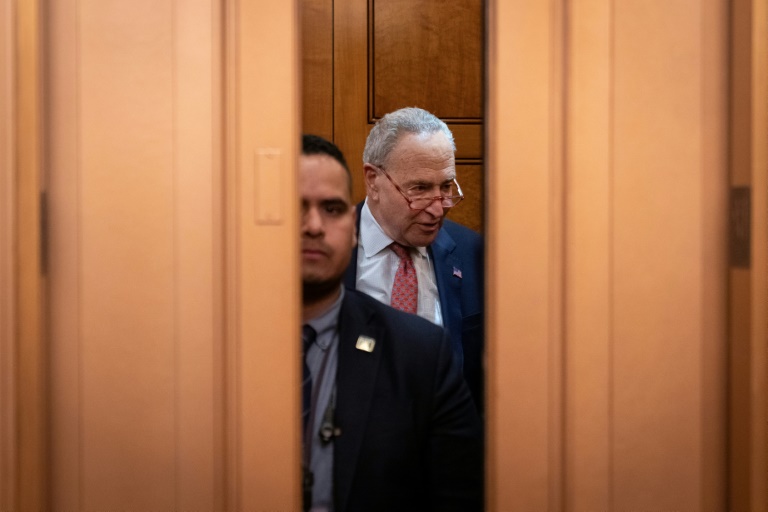
The US Senate will vote this week on a bill to protect same-sex marriage, Democratic Senate leader Chuck Schumer said Monday, after an agreement reached between members of both parties.

In the United States, same-sex unions have been guaranteed by the Supreme Court since 2015. 

But after the court’s historic overturning of a longstanding ruling protecting the right to abortion, many progressives fear that same-sex marriage may also be under threat. 

In mid-July, the House of Representatives passed a law to protect such unions across the country. All House Democrats and 47 Republicans supported the bill, but nearly 160 Republicans opposed it. 

In the Senate, negotiations have been underway for weeks to ensure the support of at least 10 Republicans for the bill, the number needed for it to pass under qualified majority rules. 

A bipartisan group of senators announced on Monday that an agreement had been reached. 

The bill is a “needed step” to grant millions of couples “the certainty that they will continue to enjoy the freedoms, rights and responsibilities afforded to all other marriages,” said Democratic Senator Kyrsten Sinema.

A first procedural vote on the bill, which also protects interracial couples, will be scheduled for Wednesday, Schumer said. 

He urged the conservative opposition to line up behind the bill, which he described as “extremely important.” 

A large majority of Americans support same-sex marriage, including in Republican ranks. But the religious right remains mostly opposed to it. 

The Republican minority leader, Mitch McConnell, who wields great influence over his caucus, has not yet indicated whether he will vote in favor of the bill. 

Japan's economy shrinks unexpectedly in third quarter

Japan’s economy shrank in the three months to September due to slower-than-expected consumption, official data showed Tuesday, dashing hopes of another quarter of growth.

Higher import volumes and costs fuelled by the weak yen and the soaring price of commodities such as oil weighed on the world’s third-largest economy.

And private consumption did not see a significant jump, despite the end of Covid-19 restrictions.

The surprise negative reading follows three consecutive quarters of growth, after an initial negative reading in the first quarter was revised upwards.

From July to September, Japan’s gross domestic product contracted 0.3 percent quarter-on-quarter, missing market expectations of 0.3 percent growth, the government data showed.

Corporate investment was up for the period but private residential investment declined, while an increase in imports overwhelmed an increase in exports, the cabinet office said.

In the three-month period, private consumption grew 0.3 percent, down from 1.3 percent in the second quarter.

The data is preliminary, and GDP figures are often revised in later months.

Taro Saito, senior economist at NLI Research Institute, predicted the gloomy result would be short-lived. 

“The contraction this quarter is a one-off phenomenon, and we think the October-December quarter will see growth again,” he told AFP.

“Individual consumption and corporate investment both remain strong. A government campaign to support tourism across the country will also likely help boost consumption,” Saito added.

Before the data release, analysts had predicted a pick-up in consumption but acknowledged that Japan faces headwinds because of its trade balance.

A slower global economy, which is “likely to be dragged down by tightening in monetary policy, zero-Covid policy in China and geopolitical uncertainties,” is also a negative factor for Japan, UBS economists Masamichi Adachi and Go Kurihara said.

“On top of these factors, the secular drag from a shrinking and ageing population and low medium-to-long-term growth expectations cannot be ignored,” they added.

Last month, Japanese Prime Minister Fumio Kishida announced a $260 billion stimulus package to cushion the economy from the impact of inflation and the weak yen.

The Japanese currency has tumbled from about 115 against the dollar before Russia’s invasion of Ukraine to around 140 on Tuesday, after hitting three-decade lows of 151 yen last month.

The main driver of the yen’s fall is the gap between the stance of the Bank of Japan, which is sticking to its long-standing monetary easing policies, and the US Federal Reserve, which has made a series of aggressive rate hikes to tackle inflation.

Japan is heavily reliant on imported energy and also ships in other goods including much of its food.

The country fully reopened its borders to foreign tourists in October, after two and a half years of tough Covid-19 border restrictions.

Three out of four bitcoin investors have lost money: study

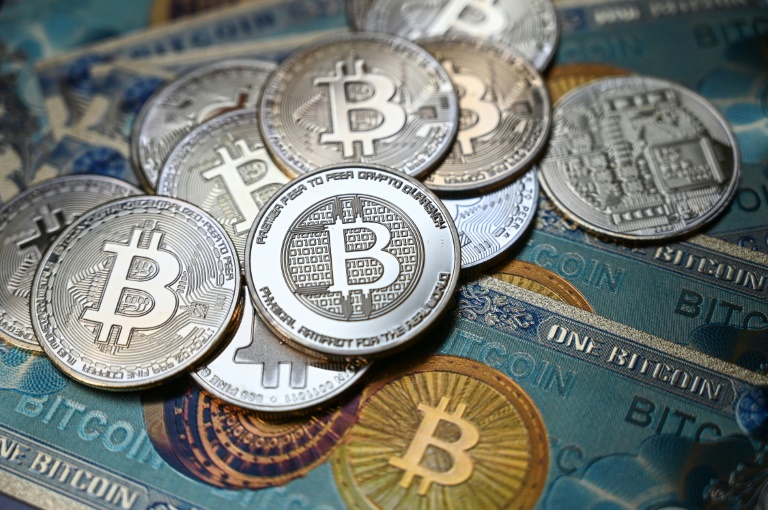
Roughly three-quarters of people who have bought bitcoin have lost money according to a study published Monday as the cryptocurrency sector reels from the collapse of a major exchange that has sapped confidence.

Economists at the Bank of International Settlements, an institution widely considered as the central banks of central banks, analysed data on investors in cryptocurrencies in 95 countries between 2015 and 2022.

“Overall, back of the envelope calculations suggest that around three-quarters of users have lost money on their bitcoin investments,” they said in their study.

During the period studied, the price of bitcoin rose from $250 in August 2015 to peak at nearly $69,000 in November 2021. It is now trading at around $16,500.

The number of people using smartphone apps allowing one to purchase and sell cryptocurrencies rose from 119,000 to 32.5 million during the same period.

“Our analysis has shown that, around the world, bitcoin price increases have been tied to greater entry by retail investors,” the researchers wrote.

Moreover, they said they found that “as prices were rising and smaller users were buying bitcoin, the largest holders (the so-called ‘whales’ or ‘humpbacks’) were selling –- making a return at the smaller users’ expense.”

The researchers did not have direct data on the gains or losses of individual investors. However, they were able to extrapolate based on the price of bitcoin when new investors began using cryptocurrency trading apps and the approximately $20,000 it was worth last month.

The study also found that the biggest segment of new cryptocurrency investors, at roughly 40 percent, were men under 35, and who are commonly identified as the most “risk-seeking” segment of the population.

Researchers found most cryptocurrency investors saw it as a speculative investment and that young men tended to be more active in trading in the months after a big rise in the bitcoin price.

They said the jump in investors after price increases should raise concerns whether more consumer protection is needed.

Close Bitnami banner
Bitnami