US Business

Hurricane causes only minor damage to Artemis rocket

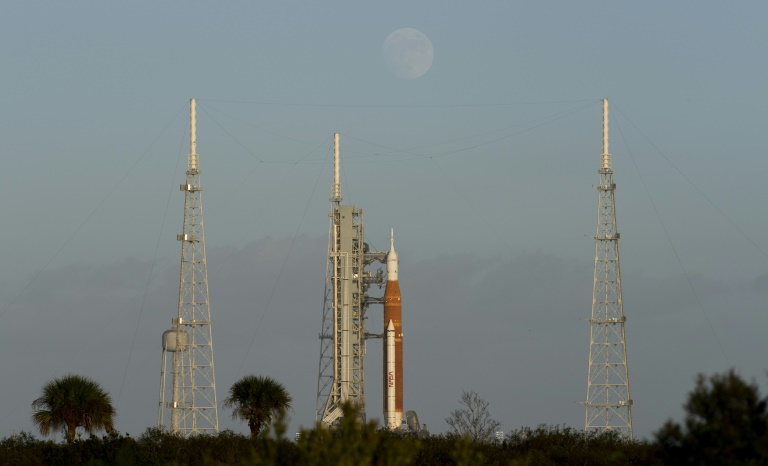
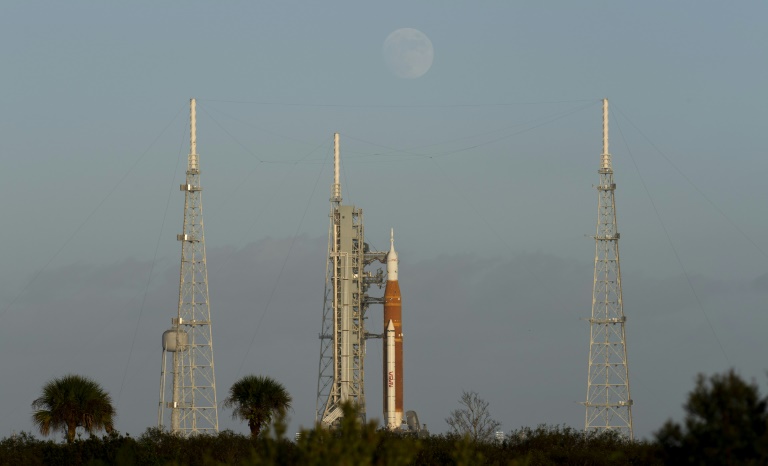
After initial visual inspections, NASA said on Thursday that its new mega moon rocket apparently suffered no major damage after Hurricane Nicole hit Florida.

But employees must conduct further checks on site as soon as possible to confirm the initial assessment, said Jim Free, associate administrator at the US space agency.

Free said that NASA teams employing cameras at the launch pad at Kennedy Space Center found “very minor damage such as loose caulk and tears in weather coverings.”

Nicole made landfall Wednesday night on Florida’s Atlantic Coast as a Category 1 hurricane.

Free said wind sensors detected gusts up to 82 miles (132 kilometers) per hour along the rocket’s body, which is “within the rocket’s capability” to withstand.

The uncrewed Artemis 1 mission, slated now to blast off on November 16, will mark the very first flight of a highly-anticipated US program of returning to the moon. NASA hopes to use an Artemis rocket to send astronauts to the lunar surface as soon as 2025, assuming the program goes to plan.

Such a feat would mark the first time humans walk on the Moon since Apollo 17 in 1972.

Hurricane causes only minor damage to Artemis rocket

After initial visual inspections, NASA said on Thursday that its new mega moon rocket apparently suffered no major damage after Hurricane Nicole hit Florida.

But employees must conduct further checks on site as soon as possible to confirm the initial assessment, said Jim Free, associate administrator at the US space agency.

Free said that NASA teams employing cameras at the launch pad at Kennedy Space Center found “very minor damage such as loose caulk and tears in weather coverings.”

Nicole made landfall Wednesday night on Florida’s Atlantic Coast as a Category 1 hurricane.

Free said wind sensors detected gusts up to 82 miles (132 kilometers) per hour along the rocket’s body, which is “within the rocket’s capability” to withstand.

The uncrewed Artemis 1 mission, slated now to blast off on November 16, will mark the very first flight of a highly-anticipated US program of returning to the moon. NASA hopes to use an Artemis rocket to send astronauts to the lunar surface as soon as 2025, assuming the program goes to plan.

Such a feat would mark the first time humans walk on the Moon since Apollo 17 in 1972.

At US universities, power shifts from teachers to students

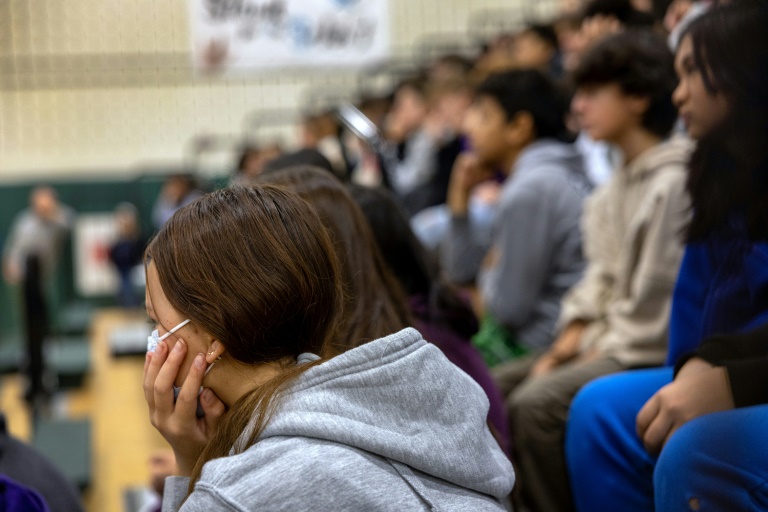
The recent dismissal of an American professor, whose students said he graded too harshly, has ignited debate in the United States about universities that bend too much to the wishes of their students.

Maitland Jones, who taught organic chemistry at New York University (NYU), was dismissed in August without a prior interview or clear explanation, leaving him “baffled,” he told AFP.

Eighty-two of his students signed a petition to complain about his grading, which they considered too harsh.

“The students who wrote the petition were… not able to accept the fact that they were not doing well… They looked around for someone to blame,” Jones told AFP.

Jones estimated that only a quarter of his 350 students failed to achieve a passing grade.

Jones’ dismissal at age 84 might have gone unnoticed without an article in the New York Times in early October, which sparked a heated debate. Prior to serving as an adjunct professor at NYU, a private university, Jones held prestigious teaching posts at Princeton and Yale. 

Many other professors have offered support to Jones, decrying what they see as the disproportionate weight of the opinion of students, some with sensitivities heightened by social tensions and Covid-related lockdowns.

– ‘Power has shifted’ –

Marty Ross, a professor emeritus at Northeastern University in Boston, believes that some private universities patronize students in a country where students are routinely asked for feedback about professors and courses.

These “clients,” he said, tend to feel hostility toward hard subjects or ones outside their major, such as organic chemistry, and “develop a ‘why do we need this course?’ attitude.”

“If (they are) struggling, they give the course poor ratings and may go so far as to formally lodge complaints,” he told AFP.

In contrast, the retired environmental scientist said he knows of incompetent professors who manage to fill their classes just by having a reputation for being “easy graders.” 

In the end, Ross said, “the power has shifted from faculty to students, which is not the best way to run a college. It is as though patients suddenly are telling surgeons how to operate.”

The deferential relationship between students and professors seen elsewhere doesn’t really exist in US faculties, said Karin Fischer, a journalist and research associate at UC Berkeley’s Center for Studies in Higher Education.

“In the United States, there’s this notion that you’re supposed to challenge authority in the classroom. You’re supposed to ask questions to your professors. You’re not supposed to assume that everything is through the gospel of them,” she said. “Debating and having discussions and questioning is part of the critical thinking mindset of the American university.” 

Souradeep Banerjee, a young instructor at Temple University who spent most of his studies in India, said he first became aware of the power of US students when he was assigned the task of grading papers.

The professor of a course with 300 students in it sat Banerjee and three other teaching assistants down and told them they had to go easier in grading “because Temple’s finances and how the university runs basically depends on the enrollment of the students, right?”

– Skyhigh tuition –

This business relationship is paramount to some students and their parents, who demand a quality of education commensurate with the sacrifices they make to attend college.

In the United States, it is common for a college student to pay up to $60,000 a year in tuition, not including housing, transportation, or food expenses. Many students take out large loans to finance their college education.

“The fact that they’ve had to borrow heavily does put a lot of pressure on them to get good grades,” Fischer said. Students want to do well “so they’re not having to spend additional semesters in college.”

Before enrolling in classes, Temple University freshman Daniela James said she considers how professors grade and checks out comments at RateMyProfessors.com.

“It puts a lot of pressure on me because I can’t afford to waste my time. I’m paying so much,” said James, who juggles two odd jobs outside of class, one on campus and one at a major US fashion chain.

Climate change escalates risk of conflict, demands on US forces

The fallout from climate change threatens to fuel conflicts around the world, adding to the suffering caused by the direct effects of a rapidly warming planet.

Competition will grow as droughts make food and water increasingly scarce, people will flee hard-hit areas, and melting Arctic ice is opening up new areas for countries to vie for resources and influence — all factors that expand the potential for conflict.

As climate change presents new security threats, it also poses significant challenges for the US military as it operates around the world deterring adversaries and addressing crises.

Storms and flooding have already caused billions of dollars in damage to US bases and the threat will only worsen. At the same time, more frequent disasters are increasing demands on troops and more extreme environmental conditions may require changes to training and equipment.

“Rising temperatures, changing precipitation patterns and more frequent, extreme and unpredictable weather conditions caused by climate change are worsening existing security risks and creating new challenges,” US Defense Secretary Lloyd Austin wrote in the forward to a 2022 progress report on efforts to adapt to climate change.

“Climate change is increasing the demand and scope for military operations at home and around the world. At the same time, it is undermining military readiness and imposing increasingly unsustainable costs on the Department of Defense,” Austin said.

Morgan Higman, a fellow in the CSIS Energy Security and Climate Change Program, said there are already tensions over how to address climate change, while its physical effects will “create the potential for conflict within and across country borders.”

– Damaged bases –

“Many countries are facing hardship associated with drought and water scarcity, sea-level rise, and/or extreme heat — impacts which will reduce economic productivity, exacerbate migration and require increasing levels of humanitarian assistance,” she said.

Gregory Pollock, principal director of the Pentagon’s Office of Arctic and Global Resilience Policy, which is responsible for addressing the national security implications of climate change, said the United States is “closely monitoring” potential increased competition over resources.

A climate-driven rise in migration “bears the potential to destabilize various parts of the world,” he said, while the opening of the Arctic — and increased competition in the region — is another possible source of instability.

As various countries pursue objectives in the region, “our concern is that that could lead to a change in the security environment in that part of the world. The Arctic has historically been a peaceful region; we wish to keep it that way,” Pollock said.

Aside from the increased potential for conflict, climate change — the topic of high-level talks this week at the COP27 summit in Egypt — is presenting other challenges for the US military.

Pollock said three US bases suffered some $9 billion in hurricane and flood damage from 2018 to 2019, and there are key sites around the world that “are likely to be increasingly compromised by forces associated with climate change, whether it’s coastal erosion, or flooding, or increased hurricanes or typhoons.”

– ‘Erodes readiness’ –

Climate change also means troops may be fighting in tougher conditions — a situation the Defense Department acknowledges could require shifts in training and equipment.

The US military is “preparing combat forces capable of operating under the most extreme and adverse weather and terrain conditions,” its climate adaptation progress report said.

It is currently “assessing and reviewing testing and training programs, equipment, exercises and acquisition for integration of climate change considerations.”

US forces are already responding to a rising number of disasters, both abroad and at home.

“We’re… seeing increased frequency of disasters, and therefore increased demand on US military forces to contribute to response operations,” especially in Asia in recent years, Pollock said.

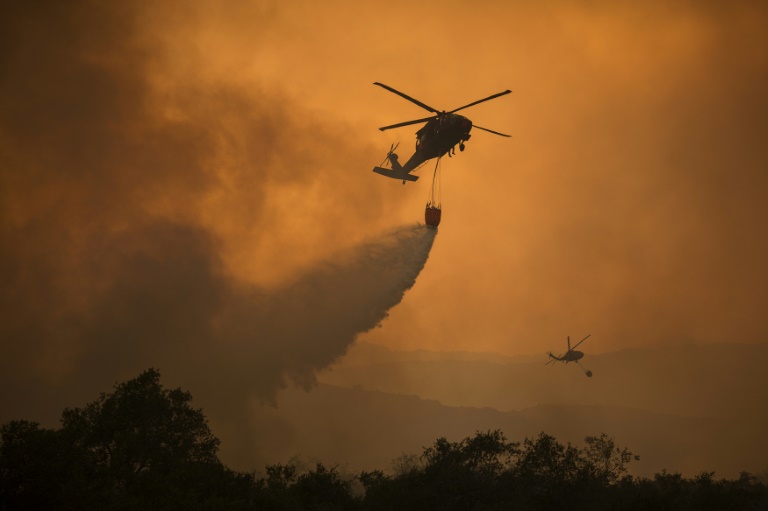
Inside the United States, National Guard forces are now being tasked with combating wildfires throughout the year as opposed to throughout a season, which is “taxing on our force, and it erodes readiness,” he said.

There is more than $3 billion in climate-related funding in the proposed 2023 defense budget, and the US military highlighted the threat posed by climate change in its 2022 National Defense Strategy.

But a change in who holds the White House could lead to decreased emphasis on the challenges posed by climate change — something Higman said the Pentagon needs to avoid.

“The military can’t not think about climate change,” she said. “The hazards are too great and too numerous.”

'Watch me' run: Biden confidence grows in his 2024 odds

It’s far from official but if recent statements are any indication, President Joe Biden is girding for a 2024 showdown with former opponent Donald Trump — a duel for which most Americans have little appetite.

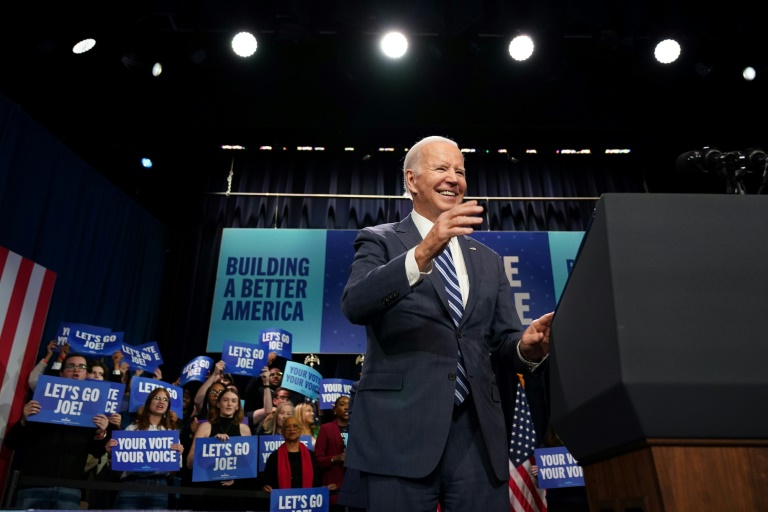
Speaking Wednesday Biden even went so far as to say it was his “intention to run again.”

The 79-year-old Democrat’s new tone — confident and upbeat — evinces the opportunity he now senses on the horizon.

While the balance of Congress still remains unknown, the Republicans’ much desired “red wave” failed to materialize in Tuesday’s midterm elections, and they did not sweep as many candidates into office as hoped.

Despite Biden’s new optimism, a majority of Americans — 56 percent according to a YouGov/The Economist poll from early November and even more according to some exit polls — do not want him to run again.

When asked about this by one journalist, a self-assured Biden responded: “Watch me.”

While he has said he will hold off on a confirmation until “early next year,” Biden has already laid a strong foundation to appeal to the electorate via reforms he hopes will propel him beyond his current low approval rating of 41 percent, according to polling aggregator FiveThirtyEight.

Asked what he would change to sway public opinion, Biden responded: “Nothing, because (Americans are) just finding out what we’re doing. The more they know about what we’re doing, the more support there is.”

New highways, faster internet, cheaper insulin — these are the perks which Biden hopes will win over voters.

And he believes that time is on his side too. There is no rush to declare, he feels, even as Trump, 74, repeatedly promotes a “big announcement” next Tuesday.

A majority of Americans also do not want the real estate billionaire to run again — 53 percent according to the YouGov/The Economist poll.

Biden has often said and certainly continues to believe that he is the person best positioned to beat Trump again.

And according to exit polls he is right.

“Biden’s approval rating, while low, was higher than Trump’s by just about the same margin” as between their 2020 presidential scores, said political science professor Wendy Schiller of Brown University.

Biden has so far not weighed in on other possible opponents, such as rising Republican star Ron DeSantis, the 44-year-old Republican governor of Florida.

Asked whether he would prefer to face DeSantis or Trump, Biden said only: “It’d be fun watching them take on each other.”

– ‘Has to commit’ –

Optimism is, after all, the hallmark of Biden’s long career, which has involved two failed bids for the White House.

Despite these political setbacks, Biden never quit believing in his odds, which also seems to be his modus operandi in the face of Father Time, with Biden to turn 80 later this month.

His doctor a year ago said he was healthy — particularly given that Biden’s pace could easily bring a younger man to his knees.

But with thinner hair, a stiffer gait and more numerous verbal hesitations, the president is beginning to look the part of an octogenarian.

Even so, “being the leader of the party, it would be political malpractice for him to announce now that he was not seeking reelection because it would destroy any remaining leverage he has over Congress and in the public arena,” Schiller said.

“If for no other reason than to uphold and protect what he has already accomplished, he has to commit to seeking reelection,” Schiller added.

And at least for the moment, momentum is also on his side.

Why does US ballot counting take so long?

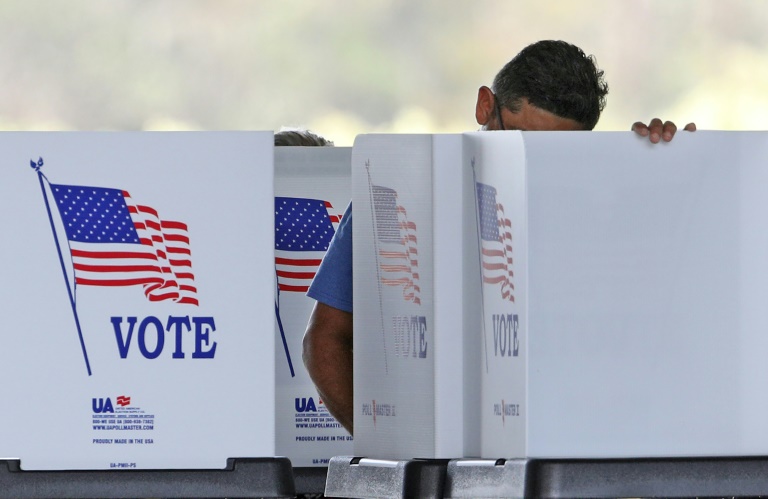
The balance of power in the US Congress following Tuesday’s midterm elections is still up in the air, with several key races yet to be called some 48 hours after many polls closed.

A cliffhanger-style multi-day wait for results is far from unusual in the United States, where it is the media that generally first calls elections, based on votes tabulated by county clerks and other officials as well as statistical analysis.

While the long delays can exasperate American voters, and raise questions from curious international observers, there are several reasons why the process can stretch out.

– Patchwork of rules –

For starters, US elections are largely decentralized, and each of the 50 states has its own rules.

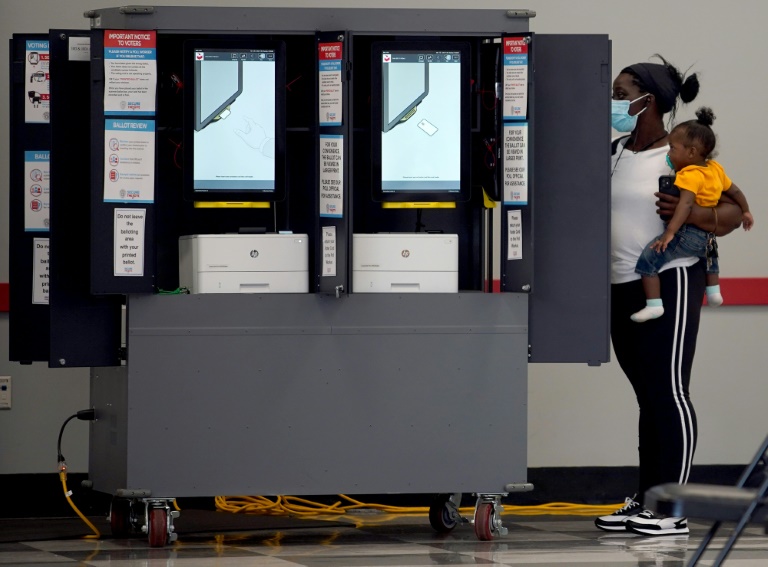
Some Americans vote on machines, others with paper ballots. Some vote in person, others by mail.

Some vote on election day, others in advance. Many citizens take advantage of ballot drop boxes.

As election officials in multiple states urged patience with the vote counting, Republican US Senator Marco Rubio of Florida aired his complaints.

“If #Florida can count 7.5 million ballots in 5 hours how can it take days for some states to count less than 2 million?” Rubio tweeted Wednesday.

Ballots, on which Americans generally vote for a variety of candidates and initiatives, can take a while to tally.

With voting by mail widely popularized during the Covid-19 pandemic, things are taking even longer — the ballots can arrive at counting stations several days after the election. Ohio and Alaska count those that arrive up to 10 days later.

Compounding matters, in many states election officials are not even allowed to begin counting mail-in votes in advance.

The extended time needed to carry out the process fuels conspiracy theories, especially after the 2020 election, which president Donald Trump falsely claimed was rigged against him.

That race between Trump and eventual winner Joe Biden was not known for four days.

– Georgia nail-biter –

The southeastern state of Georgia played a special role in 2020, as the balance of the US Senate hung on a second-round election in the state.

This year is proving to be a case of deja vu.

With no one candidate surpassing the 50 percent threshold on Tuesday to prevent a second round, the two leading candidates, Democratic incumbent Raphael Warnock and Republican challenger Herschel Walker are headed to a December 6 runoff.

Organizing elections in a country of some 333 million citizens is in itself a logistical challenge.

– Unforeseen hiccups –

The process rarely goes off without a few small hiccups. This year for example, the electoral machines in one Arizona county encountered operational problems, disrupting the vote.

Some Republicans — including Trump himself — pointed to it as evidence of fraud, a claim immediately dismissed by authorities.

Even without technical incident, races can simply be extremely close, as several in Tuesday’s election are turning out to be.

Twenty states have laws mandating a recount if the margin between candidates is too thin.

In one stand-out case in 2000, the country held its breath for 36 days with the entire election hinging on delayed results from one state, Florida, as Texas governor George W. Bush and vice president Al Gore vied for the White House.

At the heart of the civic imbroglio was a razor-thin vote that prompted a highly contested hand recount. In the end, the battle wound its way to the Supreme Court, which issued a decision favoring Bush that December.

In 2008, a race for a US Senate seat in Minnesota resulted in an epic legal battle. The result was finally known some eight months later.

Chase Oliver, the obscure candidate who could impact US national politics

Few voted for him, but he has plunged American politics into uncertainty: Libertarian Party candidate Chase Oliver won just enough votes in his Senate election race to force a runoff that could shape the rest of Joe Biden’s presidency.

Oliver grabbed some two percent or 81,000 votes in Georgia’s Senate poll at Tuesday’s midterm elections — enough to prevent his more powerful rivals, Democrat Raphael Warnock and Republican Herschel Walker, from taking the seat outright.

Now that sliver of support for Oliver, a 37-year-old Star Trek fan who ran his campaign from his basement, could determine the winner of Warnock and Walker’s December 6 runoff — and therefore, potentially, control of the upper house of the US legislature.

Despite the frustration levelled at Oliver for the costly runoff and keeping US politics on a knife edge for weeks, he’s not upset. 

“You can’t blame a candidate for just being an option on the ballot,” he told Vice News this week. 

He told the New York Times: “I don’t think you can spoil something that’s already rotten … And I think that’s what the two-party system in Washington, DC, currently is — it’s rotten.”

– ‘Armed and gay’ –

Oliver, who describes himself on Twitter as “armed and gay”, is not your typical political candidate.

He is categorically pro-gun, fiscally conservative, but also pro-reproductive rights, pro-legalization of cannabis and against the death penalty. 

In Fayetteville, a small town of 19,000 inhabitants in the suburbs of Atlanta, most of the people who spoke to AFP knew little about him — save that he had caused the runoff. 

“If it hadn’t been for him, one of the two other candidates would have won,” said Joe, a retiree who would not give his last name. “It’s a waste of money.” 

Others have reproached him similarily on Twitter. “Why do you hate democracy?” he replied to one.

Oliver has insisted his candidacy is about giving voters more choice than simply the bipartisan divide of Republicans or Democrats.

As for the money — he told Vice he spent “like $10,000” on his campaign while working two jobs.

“So right now my ‘cost per vote’ is about 14 cents. That’s compared to a billion dollars spent by my opponents, much if it on negative attack ads,” he tweeted on Wednesday.

Democrats and Republicans have spent a combined total of more than $241 million on the race so far, according to the Wall Street Journal — around $30 for each of Georgia’s 7.8 million voters.

– Kingmaker? No, thanks – 

The midterm elections count is ongoing, but Republicans appear on track to win the lower House of Representatives — and if they take the Senate too, it will leave Biden a lame duck.

One Senate seat could make all the difference. Barring a Democratic victory in both Nevada and Arizona — which is still possible — it is in Georgia that Senate control will be decided.

Warnock and Walker are separated by just 35,000 votes, but he says he has no interest in endorsing either of them.

“They ignored the people who voted for me and they ignored the issues I support,” he told Vice. 

His message seems to have resonated with some voters in Fayetteville. 

“I’m fine with him running in the election. The more options the better,” said Susan Cromie, a 67-year-old retiree who nevertheless is not thrilled with the idea of a runoff. 

“I don’t want to vote again. I’m tired of the ads,” she said while mimicking putting a gun to her head. “But that said, it’s a necessary evil.” 

'Crash' director Paul Haggis loses New York rape case

A New York jury on Thursday found Oscar-winning Canadian filmmaker Paul Haggis liable for raping a publicist in 2013, ordering him to pay her at least $7.5 million in damages.

The jurors ruled against Haggis, who wrote and directed “Crash,” in the rape lawsuit following a two-week civil trial in Manhattan.

The 69-year-old was accused in 2017 by film publicist Haleigh Breest of abusing and raping her in 2013, when she was 26 years old.

With the #MeToo movement gaining ground, three more women subsequently accused Haggis — who also penned the screenplay for “Million Dollar Baby” — of sexual assault.

More recently, Haggis was arrested in June in southern Italy on suspicion of aggravated sexual assault in a different case. He denied any wrongdoing and was soon released.

In her suit, Breest said that on the evening of January 31, 2013, after a film screening in Manhattan, the director insisted she have a drink at his home, even though she preferred to go to a bar. 

Once in his apartment, Haggis made multiple advances before making her perform oral sex and then raping her, she said.

“I am grateful that I had the opportunity to seek justice and accountability in court and that the jury chose to follow the facts and believed me,” Breest said in a statement.

During the trial, the filmmaker’s lawyers suggested that her suit was guided by the Church of Scientology, which Haggis left and has since criticized, according to US media.

The plaintiff’s lawyers denied the accusation.

Haggis does not face criminal charges in the case.

Known for being one of the creators of the “Walker Texas Ranger” television series, Haggis received an Oscar for best picture and best original screenplay in 2006 for “Crash.”

He was additionally the screenwriter for “Flags of Our Fathers” and “Letters from Iwo Jima,” as well as James Bond films “Casino Royale” and “Quantum of Solace.”

Alleged LockBit ransomware operator arrested in Canada

A dual Russian-Canadian national allegedly involved in the LockBit global ransomware campaign has been arrested in Canada, US and European authorities announced on Thursday.

Mikhail Vasiliev, 33, of Bradford, Ontario, is now awaiting extradition to the United States, the US Justice Department said in a statement.

“This arrest is the result of over two-and-a-half-years of investigation into the LockBit ransomware group, which has harmed victims in the United States and around the world,” US Deputy Attorney General Lisa Monaco said.

Europol said the arrest resulted from a complex investigation involving law enforcement in France, Canada and the United States.

It said LockBit has been used to carry out attacks against critical infrastructure and large industrial groups around the world, with ransom demands ranging from €5 million to €70 million ($5.1 mln to $71.4 mln)

According to a criminal complaint filed against Vasiliev in New Jersey, LockBit, which first appeared in January 2020, has been deployed against as many as 1,000 victims in the United States and other countries.

LockBit members have extracted tens of millions of dollars in ransom payments from their victims, it said.

Vasiliev faces up to five years in prison if convicted of conspiring to damage protected computers and transmit ransom demands.

Europol said two other alleged LockBit members were arrested in Ukraine in September.

Ukraine says dozens of villages recaptured amid Russian retreat

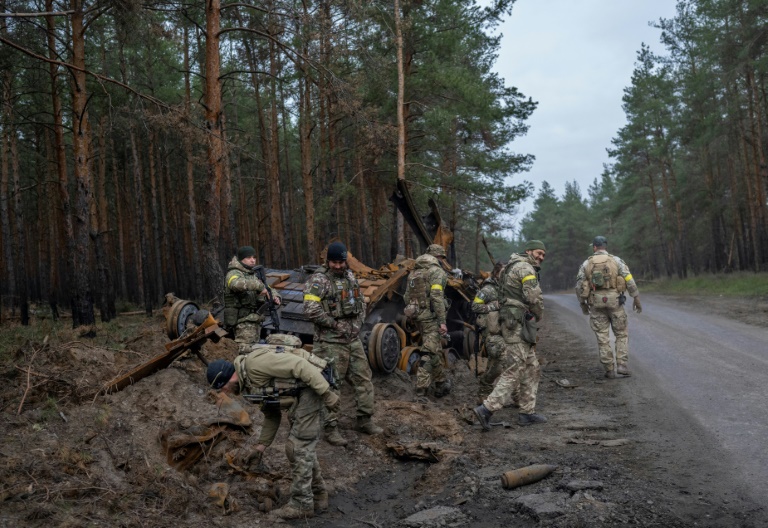
Kyiv forces have recaptured over 40 towns and villages in southern Ukraine, President Zelensky said Thursday, as Moscow signaled its army had begun retreating from the strategic city of Kherson.

The United States meanwhile announced a new $400 million security assistance package for Kyiv, which will include defense systems and surface-to-air missiles as Ukraine is reeling from massive recent Russian airstrikes targeting key infrastructure.

“Today we have good news from the south,” Zelensky said in his daily address to the nation. “The number of Ukrainian flags returning to their rightful place as part of the ongoing defense operation is already dozens.”

Zelensky said 41 settlements have been “liberated” from Russian occupation.

Moscow said it had made the “difficult decision” to pull forces from Kherson, and Russia’s defence ministry on Thursday said its units were manoeuvring in the area.

Ukrainian troops have for weeks been capturing villages en route to Kherson city in the eponymous region, where Kremlin-installed leaders have been pulling out civilians in what Kyiv has called illegal deportations.

The retreat would be a major Russian setback in a region Vladimir Putin claimed to have annexed, but officials in Kyiv have remained wary, saying Russia was unlikely to leave Kherson without a fight.

– Battlefield… and diplomacy? –

In his speech, Zelensky, who has been facing pressure from Western capitals to resume peace talks with Russia, hinted that negotiations were not ruled out if Ukraine regains all its territory.

“We have to go all the way on the battlefield and through diplomacy so that all over our land, along our entire internationally recognised border, our flags — Ukrainian flags — are installed,” Zelensky said.

He also thanked US President Joe Biden and the American people for the air defense systems.

“Together we’re building an air shield to protect civilians,” Zelensky said on Twitter. “We’re bringing victory over the aggressor closer!”

US media have reported in recent days that the Biden administration has been urging Zelensky to publicly declare a willingness to talk to Russia.

And on Wednesday top US general Mark Milley said that military victory may not be possible in the war.

“There’s… an opportunity here, a window of opportunity for negotiation,” he said.

– ‘Can you trust a thing they say?’ –

On the battlefield, in the southern city of Mykolaiv, which Russian forces have pounded with artillery and missiles for months, there was little belief the Russians would retreat.

“How can you trust a thing they say?” asked Volodymyr Vypritskiy, a 55-year-old driver. “How can you trust people that always told us they were our brothers? People who start killing their brothers — can you really believe them?”

Zelensky has suggested Russia could be strategically feigning rather than experiencing a major setback.

Military officials in Kyiv reiterated that caution on Thursday.

“At this point, we can’t confirm or deny information about the retreat of Russian troops from Kherson,” said Oleksiy Gromov, from the Ukrainian armed forces’ general staff.

Russia losing the Kherson region would return to Ukraine important access to the Sea of Azov and leave Putin with little to show from a campaign that has turned him into a pariah in Western eyes.

The retreat will put pressure on Russian control of the rest of the Kherson region, which forms a land bridge from Russia to Crimea, the peninsula that Moscow annexed in 2014.

– Massive casualties –

Kherson was one of four Ukrainian regions that Russia declared it had annexed in September, shortly after being forced to withdraw from swathes of territory in the northeastern Kharkiv region.

The United States this week estimated more than 100,000 Russian military personnel have been killed or wounded in Ukraine.

Kyiv’s forces have likely suffered similar casualties, according to General Milley.

Russia has been pushing to capture the eastern Donbas city of Bakhmut, with the battered town famous for wine and salt mines coming under intensive fire for weeks.

“It has become harder these past three days. The Russians are pushing more and more. But our boys are holding their positions,” 26-year-old soldier Vitaliy told AFP in Bakhmut.

Around half of the 70,000 people living in the city have stayed despite the fighting, mostly in the east of the city, for the past four months.

Close Bitnami banner
Bitnami