US Business

US inflation eases in October but still near decades-high

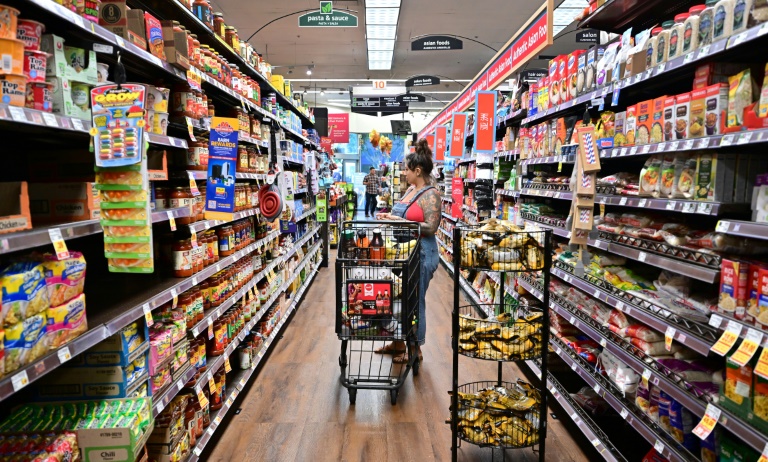
US consumer prices cooled in October but remained at decades-high levels, according to government data released Thursday, keeping the pressure on President Joe Biden as his Democratic party struggles to retain control of Congress.

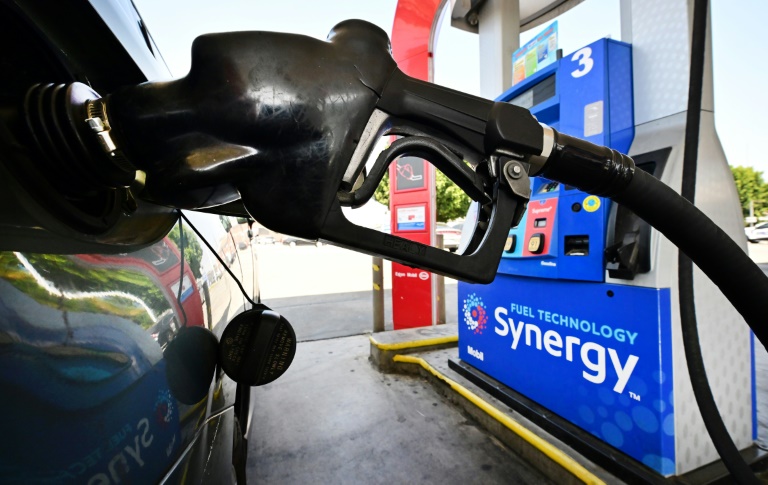
The closely-watched report showed more evidence of rising costs, including a rebound in gasoline prices, in a year when surging inflation topped voter concerns, and as Americans headed to the polls in this week’s midterm elections.

But there were positive signs in the consumer price index (CPI), which showed annual inflation slowed to 7.7 percent in October, even while underscoring a heightened cost of living, the Labor Department reported.

That was the lowest annual increase since January, fueling hopes that soaring costs will start to pull back and causing Wall Street stocks to rally.

Biden welcomed the data, saying it showed “a much-needed break in inflation at the grocery store as we head into the holidays.” 

But he cautioned in a statement that it will “take time to get inflation back to normal levels,” with potential setbacks along the way, and vowed to keep helping households with living costs.

While the annual inflation rate was down from a harsh 9.1 percent in June — the highest in 40 years — latest numbers are unlikely to bring quick reprieve from the Federal Reserve’s aggressive moves to cool the economy.

Russia’s war in Ukraine has sent food and fuel prices soaring, and the energy index surged 17.6 percent over the past 12 months, according to the data.

Excluding volatile food and energy prices, “core” CPI rose 6.3 percent in October from a year ago, slightly below the rate in September.

– ‘Uncomfortably high’ –

As residents reel from soaring costs, the US central bank has moved forcefully to lower demand and bring prices down.

The Fed has raised the benchmark lending rate six times this year, including four consecutive giant rate hikes, despite fears it could trigger a recession.

Fed Chair Jerome Powell last week said it was premature to consider pausing the hikes, but there is a growing chorus of voices, including some Fed officials, advocating for smaller steps in coming months.

Dallas Fed President Lorie Logan said Thursday that she believes “it may soon be appropriate to slow the pace of rate increases” so policymakers can assess how conditions are changing.

But she warned that “a slower pace should not be taken to represent easier policy.”

Another official, Cleveland Fed President Loretta Mester, added in separate remarks that inflation remains persistent and monetary policy needs to become restrictive and stay that way for some time.

While headline data “surprised to the downside,” consumer prices “remain uncomfortably high,” said economist Rubeela Farooqi of High Frequency Economics.

Still, the numbers will be welcome news to Fed policymakers, with prices “finally showing some response” to the steep rate hikes, supporting a step-down in the pace moving forward, she said in an analysis.

Stephen Innes, managing partner at SPI Asset Management, said the inflation data “should mean the beginning of the end for inflation fears.”

Monthly CPI rose 0.4 percent in October, the same as in September, while the core rate slowed to 0.3 percent, half the pace of the prior month, data showed.

Housing costs contributed to over half of the overall monthly increase in October, while gasoline also resumed its upward move, the Labor Department said.

The energy index rose 1.8 percent in October, following three consecutive declines, including a 4.0 percent jump in gasoline.

But food prices, especially food at home, eased last month.

Ryan Sweet of Oxford Economics cautioned that the deceleration in the monthly CPI was likely affected by a methodology change in estimating health insurance prices, which created a “bigger drag” than expected.

But analysts are hopeful of some softening ahead as housing and other costs ease. 

Ian Shepherdson of Pantheon Macroeconomics said “the fever appears to be breaking in rents” and this should gradually transmit to headline numbers.

US equities rallied on the news, ending the day with steep gains.

“One good core CPI print proves nothing, but we see good reasons to think this one is the real deal,” Shepherdson said.
US inflation eases in October but still near decades-high

US consumer prices cooled in October but remained at decades-high levels, according to government data released Thursday, keeping the pressure on President Joe Biden as his Democratic party struggles to retain control of Congress.

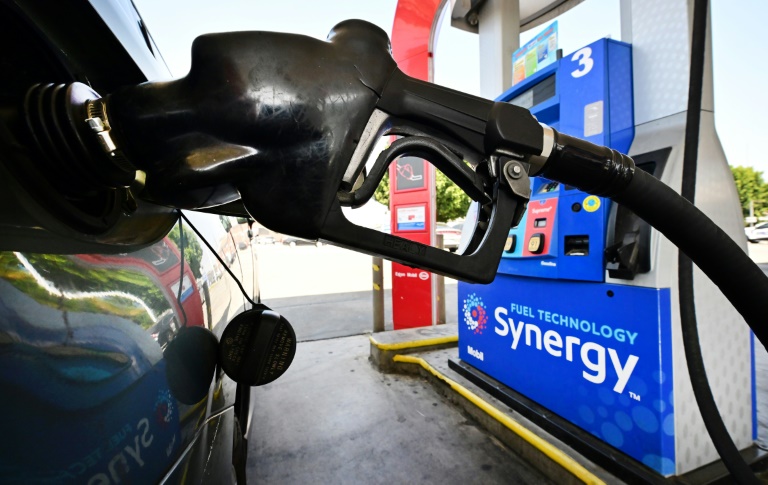
The closely-watched report showed more evidence of rising costs, including a rebound in gasoline prices, in a year when surging inflation topped voter concerns, and as Americans headed to the polls in this week’s midterm elections.

But there were positive signs in the consumer price index (CPI), which showed annual inflation slowed to 7.7 percent in October, even while underscoring a heightened cost of living, the Labor Department reported.

That was the lowest annual increase since January, fueling hopes that soaring costs will start to pull back and causing Wall Street stocks to rally.

Biden welcomed the data, saying it showed “a much-needed break in inflation at the grocery store as we head into the holidays.” 

But he cautioned in a statement that it will “take time to get inflation back to normal levels,” with potential setbacks along the way, and vowed to keep helping households with living costs.

While the annual inflation rate was down from a harsh 9.1 percent in June — the highest in 40 years — latest numbers are unlikely to bring quick reprieve from the Federal Reserve’s aggressive moves to cool the economy.

Russia’s war in Ukraine has sent food and fuel prices soaring, and the energy index surged 17.6 percent over the past 12 months, according to the data.

Excluding volatile food and energy prices, “core” CPI rose 6.3 percent in October from a year ago, slightly below the rate in September.

– ‘Uncomfortably high’ –

As residents reel from soaring costs, the US central bank has moved forcefully to lower demand and bring prices down.

The Fed has raised the benchmark lending rate six times this year, including four consecutive giant rate hikes, despite fears it could trigger a recession.

Fed Chair Jerome Powell last week said it was premature to consider pausing the hikes, but there is a growing chorus of voices, including some Fed officials, advocating for smaller steps in coming months.

Dallas Fed President Lorie Logan said Thursday that she believes “it may soon be appropriate to slow the pace of rate increases” so policymakers can assess how conditions are changing.

But she warned that “a slower pace should not be taken to represent easier policy.”

Another official, Cleveland Fed President Loretta Mester, added in separate remarks that inflation remains persistent and monetary policy needs to become restrictive and stay that way for some time.

While headline data “surprised to the downside,” consumer prices “remain uncomfortably high,” said economist Rubeela Farooqi of High Frequency Economics.

Still, the numbers will be welcome news to Fed policymakers, with prices “finally showing some response” to the steep rate hikes, supporting a step-down in the pace moving forward, she said in an analysis.

Stephen Innes, managing partner at SPI Asset Management, said the inflation data “should mean the beginning of the end for inflation fears.”

Monthly CPI rose 0.4 percent in October, the same as in September, while the core rate slowed to 0.3 percent, half the pace of the prior month, data showed.

Housing costs contributed to over half of the overall monthly increase in October, while gasoline also resumed its upward move, the Labor Department said.

The energy index rose 1.8 percent in October, following three consecutive declines, including a 4.0 percent jump in gasoline.

But food prices, especially food at home, eased last month.

Ryan Sweet of Oxford Economics cautioned that the deceleration in the monthly CPI was likely affected by a methodology change in estimating health insurance prices, which created a “bigger drag” than expected.

But analysts are hopeful of some softening ahead as housing and other costs ease. 

Ian Shepherdson of Pantheon Macroeconomics said “the fever appears to be breaking in rents” and this should gradually transmit to headline numbers.

US equities rallied on the news, ending the day with steep gains.

“One good core CPI print proves nothing, but we see good reasons to think this one is the real deal,” Shepherdson said.
Stocks rally, dollar slumps after US inflation slows

Stocks rallied while the dollar slumped against rival currencies on Thursday after news of lower US inflation dimmed expectations of more aggressive Federal Reserve rate hikes.

The consumer price index (CPI), a key measure of inflation, rose at an annual pace of 7.7 percent in October.

That was below analyst expectations and a dip from the 8.2 percent rate recorded in September.

The dollar plunged more than four percent against the yen, while the pound jumped 3.2 percent against the greenback and the euro rose two percent.

Meanwhile, Wall Street stocks surged, with the Dow ending 3.7 percent higher with a nearly 1,200-point jump.

The broader S&P 500 jumped 5.5 percent and the tech-heavy Nasdaq Composite index soared 7.4 percent.

“I don’t recall having ever seeing the Nasdaq being up seven percent ever (and) I’ve been watching the markets for over 50 years,” Peter Cardillo of Spartan Capital Securities told AFP.

“Inflation has finally started to drop like a rock in the US and this is the best news that anyone can expect,” added AvaTrade analyst Naeem Aslam.

He expects that the Fed will still continue with rate hikes, though at a slower pace.

The Fed’s benchmark lending rate currently stands at between 3.75 to 4.0 percent, the highest since January 2008.

Investors have been keenly watching for signs that Fed policymakers will pivot away from their aggressive 0.75 percentage point hikes or pause them altogether.

Matt Weller at StoneX said that after the softer inflation reading, traders are now pricing in an 80 percent chance that the Fed will shift down to a 0.50 percentage point interest rate hike and now see rates peaking below 5.0 percent.

“There’s optimism that the worst of the selling may be behind us,” on equity markets, which are down heavily this year.

– Covid and crypto –

Markets are grappling also with the impact of strict zero-Covid measures in China, with supply chains and activity slowed by harsh lockdowns and testing policies.

“China’s domestic demand is weak and their key trading partners are entering recession territory,” said Edward Moya at OANDA trading group.

The crypto world has meanwhile been rocked by a surprise decision from Binance — the world’s biggest cryptocurrency platform — to scrap a possible acquisition of rival FTX.com a day after disclosing it had signed a non-binding letter of intent to buy it.

The near-collapse of FTX has plunged bitcoin to a two-year low.

“FTX’s slump from over a $32 billion valuation to zero in less than a few days raises numerous issues,” said Stephen Innes at SPI Asset Management.

“Prominent investors are wearing eggs on their faces after diving in head first.”

He added that gold and silver would be the biggest beneficiaries of the crypto fallout with investors looking to the trusted precious metals for stability.

– Key figures around 2130 GMT –

New York – Dow: UP 3.7 percent at 33,715.37 points (close)

New York – S&P 500: UP 5.5 percent at 3,956.37 (close)

New York – Nasdaq: UP 7.4 percent at 11,114.15 (close)

EURO STOXX 50: UP 3.2 percent at 3,846.56 (close)

London – FTSE 100: UP 1.1 percent at 7,375.34 (close)

Frankfurt – DAX: UP 3.5 percent at 14,146.09 (close)

Paris – CAC 40: UP 2.0 percent at 6,556.83 (close)

Tokyo – Nikkei 225: DOWN 1.0 percent at 27,446.10 (close) 

Hong Kong – Hang Seng Index: DOWN 1.7 percent at 16,081.04 (close)

Shanghai – Composite: DOWN 0.4 percent at 3,036.13 (close)

Euro/dollar: UP at $1.0219 from $1.0076 Wednesday 

Pound/dollar: UP at $1.1724 from $1.1544

Dollar/yen: DOWN at 140.67 yen from 145.58 yen

Euro/pound: DOWN at 87.10 pence from 87.26 pence

West Texas Intermediate: UP 0.7 percent at $86.47 per barrel

Brent North Sea crude: UP 1.1 percent at $93.67 per barrel

burs-rl-bys/dw

Transit strikes snarl London, Paris as workers seek raises

Commuters in London and Paris scrambled for alternatives Thursday — or just stayed home — as public transport workers went on strike for higher pay, the latest industrial action seeking relief from soaring prices in Europe.

Spreading labour unrest is a growing problem for governments that are already spending billions trying to blunt the worst effects of rising prices, at least for the most vulnerable.

“I took my car, the train and now I have to cycle,” said 36-year-old Nicco Hogg in London.

The action in Britain, by members of the Rail, Maritime and Transport (RMT) and Unite unions, followed several walkouts this year amid a long-running dispute over job cuts, pensions and working conditions.

Some commuters were sympathetic to their cause.

“They are defending their working conditions and their pay so it’s fair enough,” said 28-year-old Pema Monaghan, a writer also working in publishing.

Others doubted that the action would have much impact on politicians.

“They have loads of strikes,” said Daniel Osei, 26, who works in mental health for children in the London borough of Fulham.

“They’re not really affecting the government as much as they are affecting us.”

In France, the strike aims also to ratchet up pressure on President Emmanuel Macron before he brings a controversial pensions overhaul bill to parliament, which would require millions of people to work beyond the current retirement age of 62.

“It’s to show that if we want to take action, we know how to take action,” said Frederic Souillot, head of France’s FO union.

– ‘Calm and patient’ –

Five Paris Metro lines were completely shut down, with most others operating with only limited rush-hour service — one two automated lines without drivers were running normally.

Many commuters appeared to heed the call by transit operator RATP to postpone trips or work from home, making transport less chaotic than many had feared, while the city’s growing network of bike lanes saw a surge of cyclists.

Others decided to book a day off ahead of a long weekend thanks to Friday’s French bank holiday.

As a result, “apart from a few angry commuters, everybody is being calm and patient”, said Nolwenn, a 21-year-old transit agent deployed at Saint-Lazare station in Paris, one of Europe’s busiest commuter hubs.

But the two main suburban rail lines called RER A and B, which connect central Paris with Disneyland Paris and the Charles de Gaulle and Orly airports, saw more severe disruptions.

Trains on the metro lines still open were packed, with some running only every 15-20 minutes instead of the usual three-minute rhythm.

“It’s a mess,” said Sylvie, 46, after failing to board a metro on the number seven line because of the crowds.

Authorities in London also said the Underground system was “severely disrupted”, with limited or no services running, and advised people to avoid trying to use the network.

Reports said many buses were packed to capacity, while roads were more congested than usual.

– ‘Return to the roundabouts’ – 

French unions have staged strikes across several sectors in recent weeks seeking pay hikes or increased hiring as spiralling energy costs feed into widespread inflation.

Thursday’s strike included a protest march in the capital that shut down major traffic avenues.

But the Paris transport strike did not spill over into other sectors, with only the hard-line CGT union calling for general work stoppages.

“Let’s unite, let’s be as many as possible, even if we have to return to the roundabouts,” said Communist Party leader Fabien Roussel, a reference to the “Yellow Vests” movement starting in 2018 that had anti-government protesters gather at busy traffic circles. 

Unions representing the RATP’s nearly 70,000 employees say they are feeling the pinch of soaring prices, but are also overstretched because of insufficient hiring, resulting in increased sick leave.

That has led to more service delays or lower frequency on busy metro lines in recent months, causing headaches for the system’s roughly 12 million daily users.

In neighbouring Spain, meanwhile, an association of independent truck drivers called for an unlimited strike starting Monday to protest against delays in the implementation of a charter protecting their incomes.

The call comes eight months after an earlier strike in the sector had a major impact on the Spanish economy.

E-cig giant Juul secures funds to avoid bankruptcy

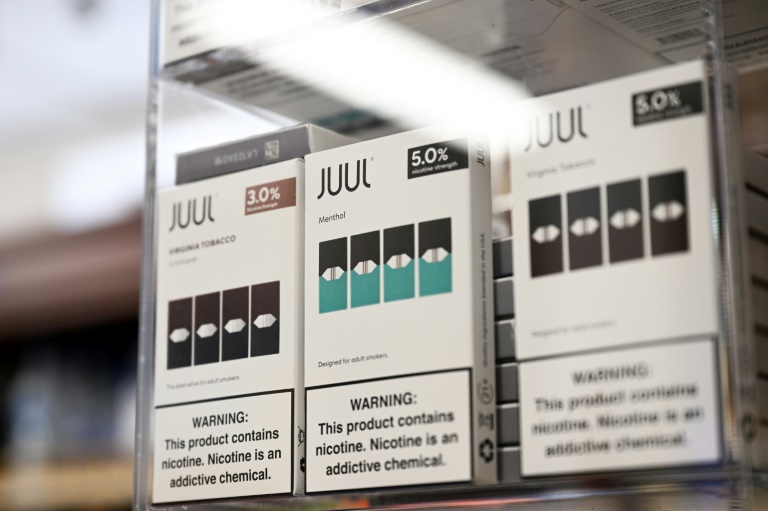
American e-cigarette firm Juul Labs has secured financing to stay afloat but confirmed job cuts, it said in a statement Thursday, while dealing with a dispute on whether its products can remain on market.

The vaping giant has challenged a June action by the US Food and Drug Administration ordering all products it made to be off the market in the United States, after finding that it failed to address certain safety concerns.

The FDA order has been put on hold after an appeal by Juul, which argues that its products are safe for adult smokers.

“Today, Juul Labs has identified a path forward, enabled by an investment of capital from some of our earliest investors,” a Juul spokesperson told AFP in a statement.

This investment will help Juul Labs to maintain business operations and “continue advancing its administrative appeal of the FDA’s marketing denial order,” among other needs, the firm added.

But it is undertaking a reorganization “including the difficult but necessary step of separating from many valued colleagues,” the spokesperson said, without providing further details.

Juul told staff on Thursday that it has halted bankruptcy preparations with the new injection of funds, The Wall Street Journal reported.

It is also undertaking a cost-cutting program, and plans to lay off around 400 employees while cutting its operating budget by up to 40 percent, according to the report.

The company’s wide range of flavored vapes, which have included mango and creme brulee, helped it become a byword for e-cigarettes in the US.

But it has also been blamed for a surge in youth vaping over its marketing of fruit and candy flavored e-cigarettes, which it stopped selling in 2019.

Proponents of vaping say that it is less harmful than traditional tobacco, though the science is not clear.

Those who disagree, however, counter that the flavors are appealing to young people, arguing that companies which sell them are knowingly or otherwise getting a new generation hooked on nicotine.

By the end of 2018, Juul had more than 70 percent of the US market for e-cigarettes.

Apple limits file-sharing for Chinese iPhone users after anti-govt protest

Apple limited file-sharing for Chinese iPhone users Thursday, a month after reports that anti-government protesters were using the function to share digital leaflets with strangers.

Under the update to the AirDrop function, users of smartphones sold by Apple in China can only opt in to receive files from non-contacts during a 10-minute window before it automatically shuts off. The feature did not previously have a time limit.

The update, rolled out in the operating system released overnight, makes it virtually impossible to receive unexpected files from strangers.

The change follows widespread reports of people using AirDrop to spread leaflets critical of the Chinese Communist Party in crowded public spaces, partly inspired by a protest in Beijing in which a man hung banners calling for the removal of President Xi Jinping.

Chinese censors quickly scrubbed online videos and posts referring to the protest, while hundreds of users on the popular payment and chat app WeChat had their accounts blocked after speaking about the rare act of rebellion.

Apple declined AFP’s request for comment on the record but the company is now understood to be planning a roll out of the feature across the globe.

Apple phones sold outside mainland China on Thursday did not appear to be affected by the update, while iPhones sold in China displayed the limit regardless of which country the user’s App Store account was based in.

The description for users said the update “includes bug fixes and security updates”.

-‘Less appealing’-

The California-based tech giant, which touts security and privacy protections as key features of its devices, has previously faced criticism for alleged concessions to Beijing.

China is seen by Western observers as becoming increasingly repressive as President Xi Jinping embarks on his third term as the country’s most powerful figure.

“This is one small sample of a type of China cost…that’s making China much less appealing as a investment and manufacturing destination for many global multinationals many global companies,” Isaac Stone Fish, CEO of Strategy Risks, told AFP.

“Apple has to understand the very real risks of being overly exposed to China in 2022,” he added.

Other apparent concessions included opening a data centre in China, as well as removing an app in 2019 that allowed Hong Kong pro-democracy protesters to keep track of police.

It has also faced boycott threats in China as it stands in the crossfire of US-China tensions, with Beijing warning in 2020 that it could turn its citizens against Apple if Washington blocked Chinese apps.

Some Chinese social media users on Thursday hailed the iPhone update as a positive step in preventing unsolicited messages from strangers. One Weibo user said the change would “greatly reduce the probability of iPhone users being harassed”.

A handful questioned why the function was only being rolled out on Chinese iPhones, with one Weibo commenter joking about Apple CEO Tim Cook’s friendliness with Beijing: “So is Tim Cook a Party member or not?”

Changpeng Zhao, the undisputed king of crypto

At parties, on stages and in meetings, Changpeng Zhao is rarely seen without his black polo shirt, emblazoned with the insignia of his crypto firm Binance.

The look is vital to the myth of Zhao, the boy from rural China who once flipped burgers for a living in Canada but now has a personal fortune of $17 billion, according to Forbes.

“I’m a small entrepreneur,” he told AFP earlier this year when comparing himself to Elon Musk, adding for good measure that he was just a “normal guy” in comparison to the world’s richest man.

Yet Binance has cornered more than half of the crypto-trading market and its main rival, FTX, was all but wiped out this week — elevating his company to the pinnacle of the crypto world.

And 45-year-old Zhao, who founded Binance in Shanghai in 2017, has emerged as the most central and most visible figure in crypto.

Hyperactive on social media, popping up at every possible tech conference and rarely out of TV studios, he expanded his reach even further recently by shovelling $500 million to Musk to buy Twitter.

Yet his breakneck rise has been dogged by controversy.

His cryptocurrency exchange has been repeatedly accused of facilitating money laundering and sanctions busting — claims it denies — and last month it was hacked for around $100 million. 

– True grit? –

The rags-to-riches tale of Zhao’s life has become almost mythical in crypto circles.

His early life in China was scarred by hardship when his parents were denounced and sent to the countryside for a dose of peasant hardship.

After the family emigrated to Canada a decade later, young Zhao had to work at McDonald’s and a petrol station to help the family survive.

This instilled “drive, grit, and initiative” into the young man and helped to create today’s “crypto leader”, according to the Binance website.

Zhao’s nomadic childhood informed his adult life, which has seen him crop up everywhere from New York to Tokyo.

The official legend has it that he caught the bitcoin bug during a conversation around a poker table, and started Binance a few years later in Shanghai.

He quickly left China and has since hinted that he might set up Binance in many jurisdictions — Singapore, France, Malta, Dubai, Bahrain — without definitively committing to any of them.

He often says he “favours good regulation over bad” and dismisses the idea of a company needing headquarters as a “complex issue”, before swiftly changing the subject.

This opacity has made him a popular figure among crypto purists, who loathe any form of regulation, and has kept regulators from knocking too hard at his door — so far.

– Musk flirtation –

However, like many crypto companies, there has long been a whiff of scandal around Binance.

It has been accused of pursuing growth at any cost and failing to properly check the identities of customers, allowing money laundering and sanctions busting to flourish.

Zhao has feuded openly with journalists over the claims — accusing outlets including Reuters of peddling fake news.

However, a Reuters story this month suggesting Binance had handled billions of dollars in transactions involving Iranian entities proved harder to brush off.

Binance admitted in a blog post — not written by Zhao — that it had “interacted with certain Iran-based nexuses” and had moved to freeze the accounts.

It remains to be seen what further action might come Binance’s way for the sanctions faux-pas, but Zhao’s bruising run-ins with the media have seen him increasingly champion the free speech absolutism also favoured by Musk.

Surprisingly, given their shared interests and newly entwined businesses, the two men have not met in person.

“He’s busy, I’m busy,” Zhao told a press conference at the Web Summit in Portugal in early November.

But ever mindful of his blue-collar image, he added: “If we happen to be in the same city, I wouldn’t mind it. If he’s a good drinker.”

EU watchdog backs Sanofi Covid booster jab

The EU on Thursday approved a Covid booster vaccine by French drug maker Sanofi and Britain’s GSK after it gave positive results against the Omicron variant in trials.

The approval of the “next generation” jab by the European Medicines Agency (EMA) is a shot in the arm for Sanofi and GSK, which have lagged behind rivals in offering a vaccine.

The VidPrevtyn Beta jab could be used as a booster in adults previously given mRNA jabs like those from Pfizer/BioNTech and Moderna, or viral vector vaccines made by AstraZeneca and Johnson & Johnson, the EMA said.

“A booster dose of VidPrevtyn Beta is expected to be at least as effective as Comirnaty (Pfizer’s vaccine) at restoring protection against Covid-19,” the Amsterdam-based EMA said.

A trial of 162 adults given the Sanofi-GSK booster showed that it triggers a higher production of antibodies against the Omicron BA.1 subvariant than Pfizer’s jab, the regulator said.

A second study restored immunity in 627 adults who received other vaccines for their first course of jabs.

Sanofi said it was ready to start its first shipments of the booster in Britain and the EU, in line with advance contracts for 70 million doses.

“Today’s approval validates our research in developing a novel solution for the Covid-19 pandemic,” Thomas Triomphe, Sanofi executive vice president for vaccines, said.

The vaccine combines a Sanofi-developed antigen based on the Beta variant, which stimulates the production of germ-killing antibodies, with GSK’s adjuvant technology, a substance that bolsters the immune response triggered by a vaccine.

– End of a long road –

Sanofi and GSK developed the jab at the same time that they are waiting for regulatory approval for their first-generation vaccine.

The approval marks the end of a long journey for Sanofi to bring a Covid vaccine to market. The French pharma giant, considered to be a world leader on vaccines, has come under huge scrutiny at home for failing to roll out a Covid jab earlier.

The firm vowed to produce a billion vaccine doses in 2021, only for a dosage problem during clinical trials to send its researchers back to the drawing board. It also tried to develop a vaccine based on mRNA technology, only to abandon that plan as well.

While it struggled, Pfizer/BioNTech and Moderna brought their vaccines to market at a pace never before seen in history. Both vaccines were approved nearly two full years before Sanofi’s breakthrough on Thursday.

“It is, it must be recognised, a failure… compared to the speed that was needed,” Sanofi chairman Serge Weinberg told a shareholders’ meeting in May.

While Sanofi has finally managed to get a Covid vaccine approved, the question remains about how much demand remains in an already crowded market. 

Last week frontrunner Pfizer raised the annual sales forecast for its vaccine to $36 billion on the back of new deals for boosters.

Moderna meanwhile slashed the sales forecast for its own vaccine by $2-$3 billion dollars due to shipment delays.

On Thursday, French-Austrian biotech Valneva announced it will cut up to a quarter of its workforce. 

Valneva became the first French firm to get a Covid vaccine approved by the EMA in June. It suspended production a month later, however, after the EU slashed its initial order of 60 million doses to just 1.25 million.

As midterm count drags on, focus shifts to 2024 White House race

Control of the US Congress hung in the balance Thursday as ballot-counting dragged on and attention shifted to the next big election — the 2024 presidential campaign — and whether Americans could be faced with a Joe Biden-Donald Trump re-match.

With 209 seats so far, Republicans appear poised to secure a slim majority in the 435-seat House of Representatives, but control of the Senate may come down to an early December runoff in the southern state of Georgia.

Biden, who turns 80 this month, on Wednesday celebrated what he said was the success of his Democratic Party in fending off a predicted Republican landslide in a stormy economic climate.

“While the press and the pundits were predicting a giant red wave, it didn’t happen,” he said.

Biden, already America’s oldest president, insisted that he plans to run for a second term in November 2024 despite calls by some members of the party for him to step aside and hand the reins over to a new generation of leaders.

He promised a final decision “early next year.”

A drubbing would have surely raised questions about whether Biden should run again in 2024. But instead he did better than his two Democratic predecessors, Barack Obama and Bill Clinton, who both took a hammering in their first midterms.

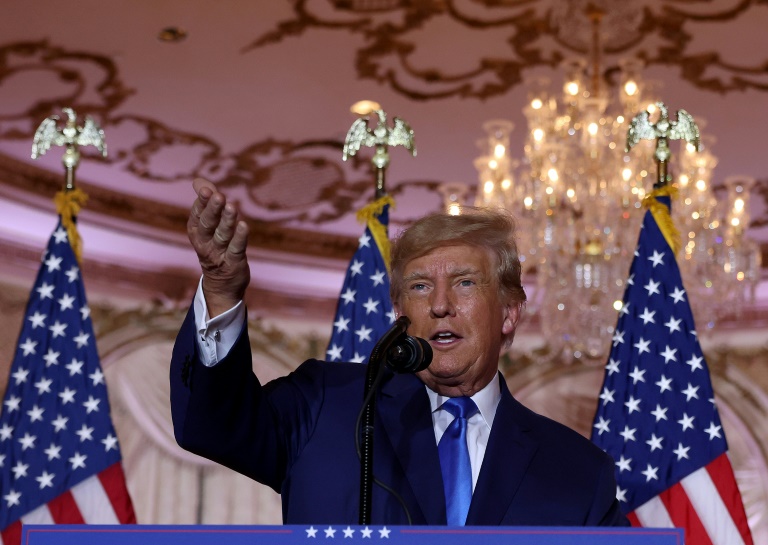
The 76-year-old Trump has promised a “very big announcement” in Florida on Tuesday that was expected to be the launch of his official campaign for the 2024 Republican presidential nomination.

Trump’s early entry into the race would appear designed to fend off possible criminal charges over taking top secret documents from the White House, his efforts to overturn the 2020 election and the January 6 attack on the US Capitol by his supporters.

It may also be intended to undercut his chief potential rival for the Republican presidential nomination, Florida Governor Ron DeSantis, who emerged as one of the biggest winners from Tuesday’s midterms.

“(Trump’s) intention is to consolidate his support early and crowd out other potential candidates,” said Jon Rogowski, a professor of political science at the University of Chicago.

– ‘Ron De-Sanctimonious’ –

The 44-year-old DeSantis, a Harvard- and Yale-educated lawyer, notched up a nearly 20-point victory over his Democratic opponent in the Florida governor’s race and took credit for a host of Republican victories in other races in the “Sunshine State.”

“We not only won election, we have rewritten the political map,” DeSantis said. “We’ve got so much more to do and I have only begun to fight.”

While DeSantis has emerged as Trump’s main rival for the nomination, the former president continues to dominate in the polls when Republicans are asked who they want to represent the party in the 2024 White House race.

Trump clearly has the Florida governor, a one-time ally, in his sights, referring to him by a derogatory nickname — Ron De-Sanctimonious – and belittling his election victory.

“Shouldn’t it be said that in 2020, I got 1.1 Million more votes in Florida than Ron D got this year, 5.7 Million to 4.6 Million?” Trump said on his Truth Social platform. “Just asking?”

Biden was asked by reporters on Wednesday about a Trump-DeSantis showdown.

“It’ll be fun watching them take on each other,” he said.

In the Senate, Democrat John Fetterman defeated Trump-endorsed candidate Mehmet Oz, seizing the Pennsylvania seat after the most expensive Senate race in US history.

The final makeup of the Senate now hangs on three seats: Arizona and Nevada, where the counting of votes could take several more days, and Georgia, where there will be a December 6 runoff between Democratic incumbent Raphael Warnock and former American football star Herschel Walker. 

Even with a slim majority in the House, Republicans would have significant oversight power, and have promised to use it to launch investigations into Biden and his allies.

Stocks rally, dollar slumps after US inflation slows

Stocks rallied while the dollar slumped against rival currencies on Thursday after a drop in US inflation dimmed expectations of more aggressive Federal Reserve rate hikes.

The consumer price index (CPI), a key measure of inflation, rose at an annual pace of 7.7 percent in September.

That was below analyst expectations and a dip from the 8.2 percent rate in September.

The dollar plunged more than three percent against the yen, while the pound jumped 2.7 percent against the greenback and the euro rose 1.5 percent.

Meanwhile, stocks surged.

On Wall Street, the Dow gained nearly a thousand points in late morning trading, or 3.0 percent.

The broader S&P 500 jumped 4.5 percent and the tech heavy Nasdaq Composite soared 5.9 percent.

“Inflation has finally started to drop like a rock in the US and this is the best news that anyone can expect,” said AvaTrade analyst Naeem Aslam.

“The Fed will still continue to increase the interest rate but there is no need to be aggressive about this — which means that the pace of interest rate hikes will slow down now.”

The Fed’s main policy rate currently stands at between 3.75 to 4.0 percent, and investors have been keen on determining when policymakers will “pivot” away from its aggressive 0.75 percentage point hikes or “pause” them altogether.

Matt Weller at StoneX said that after the soft inflation reading traders are now pricing in an 80 percent chance the Fed will shift down to a 0.50 percentage point interest rate hike and now see rates peaking below 5.0 percent.

“This dovish shift has had an outsized impact on markets,” he said.

“There’s optimism that the worst of the selling may be behind us,” on equity markets, which are down heavily this year.

– Covid and crypto –

Markets are grappling also with the impact of strict zero-Covid measures in China, with supply chains and activity slowed by harsh lockdowns and testing policies.

“China’s domestic demand is weak and their key trading partners are entering recession territory,” said Edward Moya at OANDA trading group.

The crypto world has meanwhile been rocked by a surprise decision from Binance, the world’s biggest cryptocurrency platform, to scrap a possible acquisition of rival FTX.com a day after disclosing it had signed a non-binding letter of intent to buy it.

The near-collapse of FTX has plunged bitcoin to a two-year low.

“FTX’s slump from over a $32 billion valuation to zero in less than a few days raises numerous issues,” said Stephen Innes at SPI Asset Management.

“Prominent investors are wearing eggs on their faces after diving in head first.”

He added that gold and silver would be the biggest beneficiaries of the crypto fallout with investors looking to the trusted precious metals for stability.

– Key figures around 1630 GMT –

New York – Dow: UP 3.0 percent at 33,474.29 points

EURO STOXX 50: UP 3.2 percent at 3,846.56

London – FTSE 100: UP 1.1 percent at 7,375.34  

Frankfurt – DAX: UP 3.5 percent at 14,146.09

Paris – CAC 40: UP 2.0 percent at 6,556.83 

Tokyo – Nikkei 225: DOWN 1.0 percent at 27,446.10 (close) 

Hong Kong – Hang Seng Index: DOWN 1.7 percent at 16,081.04 (close)

Shanghai – Composite: DOWN 0.4 percent at 3,036.13 (close)

Euro/dollar: UP at $1.0131 from $1.0017 Wednesday 

Pound/dollar: UP at $1.1642 from $1.1352

Dollar/yen: DOWN at 143.15 yen from 146.37 yen

Euro/pound: DOWN at 87.20 pence from 88.19 pence

West Texas Intermediate: UP 1.2 percent at $86.85 per barrel

Brent North Sea crude: UP 1.3 percent at $93.84 per barrel

burs-rl/ach 

Close Bitnami banner
Bitnami