US Business

US inflation eases in October but still near decades-high

US consumer prices cooled in October but remained at decades-high levels, according to government data released Thursday, keeping the pressure on President Joe Biden as his Democratic party struggles to retain control of Congress.

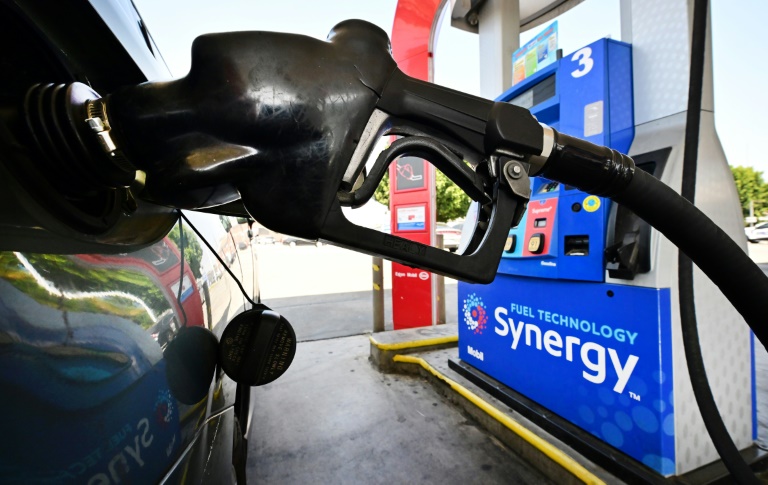
The closely-watched report showed more evidence of rising costs, including a rebound in gasoline prices, in a year when surging inflation was at the top of voter concerns, and as Americans headed to the polls in this week’s midterm elections.

But there were positive signs in the closely-watched consumer price index (CPI), which showed annual inflation slowed to 7.7 percent in October, even while underscoring the heightened cost of living that has squeezed many households, the Labor Department reported.

That was the lowest annual increase since January, fueling hopes that soaring costs will start to pull back and causing Wall Street stocks to rally.

Biden welcomed the data, saying it showed “a much-needed break in inflation at the grocery store as we head into the holidays.” 

But he cautioned in a statement that it will “take time to get inflation back to normal levels,” with potential setbacks along the way, and vowed to keep helping households with living costs.

While the annual inflation rate was down from a harsh 9.1 percent in June — the highest in 40 years — latest numbers are unlikely to bring quick reprieve from the Federal Reserve’s aggressive moves to cool the economy.

The Russia war in Ukraine has sent food and fuel prices soaring, and the energy index surged 17.6 percent over the past 12 months, according to the data.

Excluding volatile food and energy prices, “core” CPI rose 6.3 percent in October from a year ago, slightly below the rate in September.

– ‘Uncomfortably high’ –

As residents reel from soaring costs, the US central bank has moved forcefully to lower demand and bring prices down.

The Fed has raised the benchmark lending rate six times this year, including four consecutive giant rate hikes, despite fears it could trigger a recession.

Fed Chair Jerome Powell last week said it was premature to consider pausing the hikes, but there is a growing chorus of voices, including some Fed officials, advocating for smaller steps in coming months.

While headline data “surprised to the downside in October,” consumer prices “remain uncomfortably high,” said economist Rubeela Farooqi of High Frequency Economics.

Still, the numbers will be welcome news to Fed policymakers, with prices “finally showing some response” to the steep rate hikes, supporting a step-down in the pace moving forward, she said in an analysis.

Stephen Innes, managing partner at SPI Asset Management, said the inflation data “should mean the beginning of the end for inflation fears, and the Fed will feel much more comfortable ramping down” its policy moves.

Monthly CPI rose 0.4 percent in October, the same as in September, while the core rate slowed to 0.3 percent, half the pace of the prior month, the data showed.

Housing costs contributed to over half of the overall monthly increase in October, while the gasoline also resumed its upward move, the Labor Department said.

The energy index rose 1.8 percent in October, following three consecutive declines, including a 4.0 percent jump in gasoline.

But food prices, especially food at home, eased last month.

Ryan Sweet of Oxford Economics cautioned that the deceleration in the monthly CPI was likely affected by a methodology change in estimating health insurance prices, which created a “bigger drag” than expected.

But analysts are hopeful of some softening ahead as housing and other costs ease. 

Ian Shepherdson of Pantheon Macroeconomics said “the fever appears to be breaking in rents” and this should gradually transmit to headline numbers.

US equities climbed in early trading on the numbers, with the Dow Jones Industrial Average, broad-based S&P 500 and tech-rich Nasdaq Composite Index all surging.

“One good core CPI print proves nothing, but we see good reasons to think this one is the real deal,” Shepherdson said.
US inflation eases in October but still near decades-high

US consumer prices cooled in October but remained at decades-high levels, according to government data released Thursday, keeping the pressure on President Joe Biden as his Democratic party struggles to retain control of Congress.

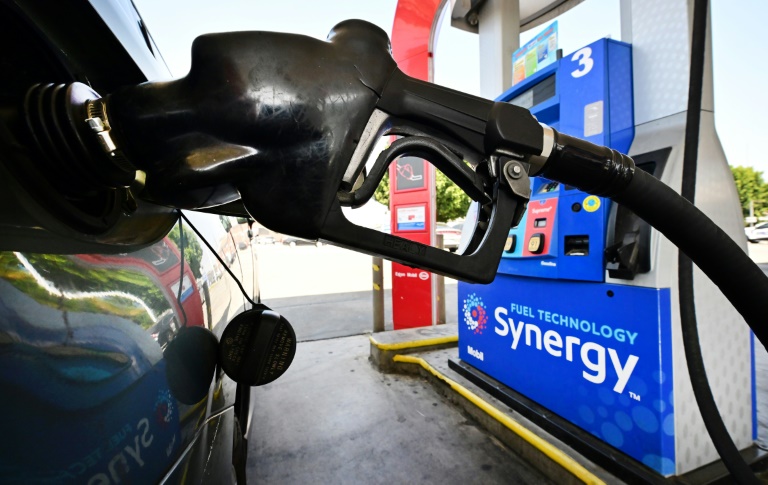
The closely-watched report showed more evidence of rising costs, including a rebound in gasoline prices, in a year when surging inflation was at the top of voter concerns, and as Americans headed to the polls in this week’s midterm elections.

But there were positive signs in the closely-watched consumer price index (CPI), which showed annual inflation slowed to 7.7 percent in October, even while underscoring the heightened cost of living that has squeezed many households, the Labor Department reported.

That was the lowest annual increase since January, fueling hopes that soaring costs will start to pull back and causing Wall Street stocks to rally.

Biden welcomed the data, saying it showed “a much-needed break in inflation at the grocery store as we head into the holidays.” 

But he cautioned in a statement that it will “take time to get inflation back to normal levels,” with potential setbacks along the way, and vowed to keep helping households with living costs.

While the annual inflation rate was down from a harsh 9.1 percent in June — the highest in 40 years — latest numbers are unlikely to bring quick reprieve from the Federal Reserve’s aggressive moves to cool the economy.

The Russia war in Ukraine has sent food and fuel prices soaring, and the energy index surged 17.6 percent over the past 12 months, according to the data.

Excluding volatile food and energy prices, “core” CPI rose 6.3 percent in October from a year ago, slightly below the rate in September.

– ‘Uncomfortably high’ –

As residents reel from soaring costs, the US central bank has moved forcefully to lower demand and bring prices down.

The Fed has raised the benchmark lending rate six times this year, including four consecutive giant rate hikes, despite fears it could trigger a recession.

Fed Chair Jerome Powell last week said it was premature to consider pausing the hikes, but there is a growing chorus of voices, including some Fed officials, advocating for smaller steps in coming months.

While headline data “surprised to the downside in October,” consumer prices “remain uncomfortably high,” said economist Rubeela Farooqi of High Frequency Economics.

Still, the numbers will be welcome news to Fed policymakers, with prices “finally showing some response” to the steep rate hikes, supporting a step-down in the pace moving forward, she said in an analysis.

Stephen Innes, managing partner at SPI Asset Management, said the inflation data “should mean the beginning of the end for inflation fears, and the Fed will feel much more comfortable ramping down” its policy moves.

Monthly CPI rose 0.4 percent in October, the same as in September, while the core rate slowed to 0.3 percent, half the pace of the prior month, the data showed.

Housing costs contributed to over half of the overall monthly increase in October, while the gasoline also resumed its upward move, the Labor Department said.

The energy index rose 1.8 percent in October, following three consecutive declines, including a 4.0 percent jump in gasoline.

But food prices, especially food at home, eased last month.

Ryan Sweet of Oxford Economics cautioned that the deceleration in the monthly CPI was likely affected by a methodology change in estimating health insurance prices, which created a “bigger drag” than expected.

But analysts are hopeful of some softening ahead as housing and other costs ease. 

Ian Shepherdson of Pantheon Macroeconomics said “the fever appears to be breaking in rents” and this should gradually transmit to headline numbers.

US equities climbed in early trading on the numbers, with the Dow Jones Industrial Average, broad-based S&P 500 and tech-rich Nasdaq Composite Index all surging.

“One good core CPI print proves nothing, but we see good reasons to think this one is the real deal,” Shepherdson said.

Transit strikes snarl London, Paris as workers seek raises

Commuters in London and Paris scrambled for alternatives Thursday — or just stayed home — as public transport workers went on strike for higher pay, the latest industrial action seeking relief from soaring prices in Europe.

Spreading labour unrest is a growing problem for governments that are already spending billions trying to blunt the worst effects of rising prices, at least for the most vulnerable.

“I took my car, the train and now I have to cycle,” said 36-year-old Nicco Hogg in London.

The action in Britain, by members of the Rail, Maritime and Transport (RMT) and Unite unions, followed several walkouts this year amid a long-running dispute over job cuts, pensions and working conditions.

Some commuters were sympathetic to their cause.

“They are defending their working conditions and their pay so it’s fair enough,” said 28-year-old Pema Monaghan, a writer also working in publishing.

Others doubted that the action would have much impact on politicians.

“They have loads of strikes,” said Daniel Osei, 26, who works in mental health for children in the London borough of Fulham.

“They’re not really affecting the government as much as they are affecting us.”

In France, the strike aims also to ratchet up pressure on President Emmanuel Macron before he brings a controversial pensions overhaul bill to parliament, which would require millions of people to work beyond the current retirement age of 62.

“It’s to show that if we want to take action, we know how to take action,” said Frederic Souillot, head of France’s FO union.

– ‘Calm and patient’ –

Five Paris Metro lines were completely shut down, with most others operating with only limited rush-hour service — one two automated lines without drivers were running normally.

Many commuters appeared to heed the call by transit operator RATP to postpone trips or work from home, making transport less chaotic than many had feared, while the city’s growing network of bike lanes saw a surge of cyclists.

Others decided to book a day off ahead of a long weekend thanks to Friday’s French bank holiday.

As a result, “apart from a few angry commuters, everybody is being calm and patient”, said Nolwenn, a 21-year-old transit agent deployed at Saint-Lazare station in Paris, one of Europe’s busiest commuter hubs.

But the two main suburban rail lines called RER A and B, which connect central Paris with Disneyland Paris and the Charles de Gaulle and Orly airports, saw more severe disruptions.

Trains on the metro lines still open were packed, with some running only every 15-20 minutes instead of the usual three-minute rhythm.

“It’s a mess,” said Sylvie, 46, after failing to board a metro on the number seven line because of the crowds.

Authorities in London also said the Underground system was “severely disrupted”, with limited or no services running, and advised people to avoid trying to use the network.

Reports said many buses were packed to capacity, while roads were more congested than usual.

– ‘Return to the roundabouts’ – 

French unions have staged strikes across several sectors in recent weeks seeking pay hikes or increased hiring as spiralling energy costs feed into widespread inflation.

Thursday’s strike included a protest march in the capital that shut down major traffic avenues.

But the Paris transport strike did not spill over into other sectors, with only the hard-line CGT union calling for general work stoppages.

“Let’s unite, let’s be as many as possible, even if we have to return to the roundabouts,” said Communist Party leader Fabien Roussel, a reference to the “Yellow Vests” movement starting in 2018 that had anti-government protesters gather at busy traffic circles. 

Unions representing the RATP’s nearly 70,000 employees say they are feeling the pinch of soaring prices, but are also overstretched because of insufficient hiring, resulting in increased sick leave.

That has led to more service delays or lower frequency on busy metro lines in recent months, causing headaches for the system’s roughly 12 million daily users.

In neighbouring Spain, meanwhile, an association of independent truck drivers called for an unlimited strike starting Monday to protest against delays in the implementation of a charter protecting their incomes.

The call comes eight months after an earlier strike in the sector had a major impact on the Spanish economy.

Moscow says Kherson pullout starts as Ukraine claims gains

Moscow announced Thursday it had begun retreating from Ukraine’s southern city of Kherson as Kyiv said it had recaptured a dozen villages in the strategic Black Sea region.

“The Russian troop units are manoeuvring to prepared position on the left bank of the Dnipro river in strict accordance with the approved plan,” the Russian defence ministry said.

Ukrainian officials have remained wary since Moscow signalled late Wednesday that it would pull forces from the west bank of the Dnipro river in Kherson, in what would be major Russian setback in a region Vladimir Putin claimed to have annexed.

Ukrainian troops have for weeks been capturing villages en route to the main city in the eponymous region, while Kremlin-installed leaders in Kherson have been pulling out civilians in what Kyiv has called illegal deportations.

Ukrainian general Valeriy Zaluzhny said on social media that Ukraine’s forces had recaptured six settlements after fighting near the Petropavlivka-Novoraisk front.

Kyiv’s army had taken another six in the Pervomaiske-Kherson direction, capturing a total of more than 200 square kilometres (77 square miles) from the Russians, he added.

Late Wednesday, Russia’s most senior defence officials responsible for Ukraine announced in a televised meeting that they had taken the “difficult decision” to withdraw from Kherson and set up defensive lines further back.

– Zero trust –

In the nearby southern city of Mykolaiv, which Russian forces have pounded with artillery and missiles for months, there was little belief the Russians would do as they said.

“How you can you trust a thing they say?” driver Volodymyr Vypritskiy demanded in between stalls selling vegetables and winter hats.

“How can you trust people that always told us they were our brothers? People who start killing their brothers — can you really believe them?” the 55-year-old asked.

Ukrainian President Volodymyr Zelensky has suggested Russia could be strategically feigning rather than experiencing a major setback.

Military officials in Kyiv reiterated that caution on Thursday.

“At this point, we can’t confirm or deny information about the retreat of Russian troops from Kherson,” said Oleksiy Gromov, from the Ukrainian armed forces’ general staff.

Russia losing the Kherson region would return to Ukraine important access to the Sea of Azov and leave Putin with little to show from a campaign that has turned him into a pariah in Western eyes.

The retreat will put pressure on Russian control of the rest of the Kherson region, which forms a land bridge from Russia to Crimea, the peninsula that Moscow annexed in 2014.

In the weeks leading up to the announcement from Russian Defence Minister Sergei Shoigu, Kremlin-installed officials said they were “evacuating” civilians and rendering the city a “fortress”.

As Ukrainian troops advance in the south, Russia’s commander in Ukraine, Sergei Surovikin, told Shoigu on Wednesday that around 115,000 people had been removed from the western bank of the Dnipro, which includes Kherson city.

– Bakhmut fight ‘harder’ –

Kherson was one of four Ukrainian regions that Russia declared it had annexed in September, shortly after being forced to withdraw from swathes of territory in the northeastern Kharkiv region.

In Moscow, Kremlin supporters rushed to justify the decision despite earlier setbacks in Ukraine spurring division and soul searching among Putin allies.

The head of Russian state media group RT, Margarita Simonyan, said the retreat was necessary to not leave Russian troops exposed on the west bank of the Dnipro River and “open the way to Crimea”.

Chechen strongman Ramzan Kadyrov said the decision was “difficult but fair”.

Moscow’s announced withdrawal came as the United States estimated more than 100,000 Russian military personnel have been killed or wounded in Ukraine.

Kyiv’s forces have likely suffered similar casualties, according to top US General Mark Milley, who shared the most precise figures released to date by Washington.

Russia has been pushing to capture the eastern Donbas city of Bakhmut, with the battered town famous for wine and salt mines coming under intensive fire for weeks.

“It has become harder these past three days. The Russians are pushing more and more. But our boys are holding their positions,” 26-year-old soldier Vitaliy told AFP in Bakhmut.

Around half of the 70,000 people living in the city have stayed despite the fighting, mostly in the east of the city, for the past four months.

But meanwhile in the neighbouring region of Lugansk, Kyiv’s troops advanced “up to 2 kilometres (1.2 miles) in the past day,” Gromov said.

Brussels under pressure to tighten car pollution rules

The European Commission on Thursday unveiled new proposals to tighten vehicle emissions standards, but immediately ran into fresh criticism that Brussels officials are too close to the car industry.

European Union capitals have already agreed to ban sales of new petrol and diesel cars from 2035 as part of the 27-nation bloc’s effort to build a carbon-neutral economy by 2050.

For the motor lobby, the investment needed to transition to electric cars is already a high enough cost to impose on a sector that employs millions of workers in the main EU economies.

But green groups, citing evidence that air pollution from road transport kills 70,000 Europeans per year, are pushing for tighter emissions standards to cover the final decade of internal combustion engines.

On Thursday, the EU executive unveiled its proposed Euro 7 vehicle emissions standards to apply from 2025.

These, it said, would reduce the emission of NOx — the nitric and nitrogen oxides that cause smog and acid rain — by 35 percent from cars and 56 percent from trucks and buses compared to the previous rules.

There will also be steep reductions in the permitted levels of particulate matter in exhaust gas and of metal particles from brake pad abrasion.

For green campaigners the proposed rules do not go far enough. For the motor industry, they are a step too far.

“Unfortunately, the environmental benefit of the commission’s proposal is very limited, whereas it heavily increases the cost of vehicles,” said BMW chief Oliver Zipse, president of the ACEA lobbying group.

ACEA argues that exhaust emissions are already at a “barely measurable level” and that it makes no sense to spend to improve petrol and diesel vehicle standards when manufacturers are transitioning to electric.

But campaigners like the environmental NGO Transport and Environment and Green MEP Karima Delli accused Brussels of backing down to pressure from automakers and their allies in Paris, Berlin and Rome.

“The negotiations are likely to be tough and complicated,” Delli said, predicting that the European Parliament could yet seek tougher rules than those set out by the commission.

“Nevertheless, we must save lives, we cannot afford to miss the boat. We in the European Parliament will therefore do our utmost to raise the ambitions of this proposal.”

US inflation eases in October but still near decades-high

US consumer prices cooled in October but remained at decades-high levels, according to government data released Thursday, keeping the pressure on President Joe Biden’s administration as Democrats struggle to retain control of Congress.

The closely-watched report showed more evidence of rising costs, including a rebound in gasoline prices, in a year when surging inflation was at the top of voter concerns, as Americans headed to the polls in this week’s midterm elections.

The consumer price index (CPI), a key measure of inflation, rose 7.7 percent from October 2021, easing from September’s pace but underscoring the heightened cost of living that has squeezed many households, the Labor Department reported.

Biden welcomed the data, saying that it showed “a much-needed break in inflation at the grocery store as we head into the holidays.” 

But he cautioned in a statement that it will “take time to get inflation back to normal levels,” with potential setbacks along the way, and vowed to keep helping households with living costs.

While the annual inflation rate was the lowest since January and down from a harsh 9.1 percent in June — the highest in 40 years — latest figures are unlikely to bring quick reprieve from the Federal Reserve’s aggressive moves to cool the economy.

The Russia war in Ukraine has sent food and fuel prices soaring, and the energy index surged 17.6 percent over the past 12 months, according to the data.

Excluding volatile food and energy prices, “core” CPI rose 6.3 percent in October from a year ago, slightly below the rate in September.

– ‘Uncomfortably high’ –

As residents reel from soaring costs, the US central bank has moved forcefully to lower demand and bring prices down.

The Fed has raised the benchmark lending rate six times this year, including four consecutive giant rate hikes, despite fears it could trigger a recession.

Fed Chair Jerome Powell last week said it was premature to consider pausing the hikes, but there is a growing chorus of voices, including some Fed officials, advocating for smaller steps in coming months.

While headline data “surprised to the downside in October,” consumer prices “remain uncomfortably high,” said economist Rubeela Farooqi of High Frequency Economics.

Still, the numbers will be welcome news to Fed policymakers, with prices “finally showing some response” to the steep rate hikes, she said in an analysis.

Stephen Innes, managing partner at SPI Asset Management, said the inflation data “should mean the beginning of the end… and the Fed will feel much more comfortable ramping down” its policy moves.

Prices rose 0.4 percent in October, the same as in September, while core CPI slowed to 0.3 percent, half the pace of the prior month, the data showed.

Housing costs contributed to over half of the overall monthly increase in October, while the gasoline also resumed its upward move, the Labor Department said.

The energy index rose 1.8 percent in October, following three consecutive declines, including a 4.0 percent jump in gasoline.

US inflation eases in October but still near decades-high

US consumer prices cooled in October but remained at decades-high levels, according to government data released Thursday, keeping the pressure on President Joe Biden’s administration as Democrats struggle to retain control of Congress.

The closely-watched report showed more evidence of rising costs, including a rebound in gasoline prices, in a year when surging inflation was at the top of voter concerns, as Americans headed to the polls in this week’s midterm elections.

The consumer price index (CPI), a key measure of inflation, rose 7.7 percent from October 2021, easing from September’s pace but underscoring the heightened cost of living that has squeezed many households, the Labor Department reported.

Biden welcomed the data, saying that it showed “a much-needed break in inflation at the grocery store as we head into the holidays.” 

But he cautioned in a statement that it will “take time to get inflation back to normal levels,” with potential setbacks along the way, and vowed to keep helping households with living costs.

While the annual inflation rate was the lowest since January and down from a harsh 9.1 percent in June — the highest in 40 years — latest figures are unlikely to bring quick reprieve from the Federal Reserve’s aggressive moves to cool the economy.

The Russia war in Ukraine has sent food and fuel prices soaring, and the energy index surged 17.6 percent over the past 12 months, according to the data.

Excluding volatile food and energy prices, “core” CPI rose 6.3 percent in October from a year ago, slightly below the rate in September.

– ‘Uncomfortably high’ –

As residents reel from soaring costs, the US central bank has moved forcefully to lower demand and bring prices down.

The Fed has raised the benchmark lending rate six times this year, including four consecutive giant rate hikes, despite fears it could trigger a recession.

Fed Chair Jerome Powell last week said it was premature to consider pausing the hikes, but there is a growing chorus of voices, including some Fed officials, advocating for smaller steps in coming months.

While headline data “surprised to the downside in October,” consumer prices “remain uncomfortably high,” said economist Rubeela Farooqi of High Frequency Economics.

Still, the numbers will be welcome news to Fed policymakers, with prices “finally showing some response” to the steep rate hikes, she said in an analysis.

Stephen Innes, managing partner at SPI Asset Management, said the inflation data “should mean the beginning of the end… and the Fed will feel much more comfortable ramping down” its policy moves.

Prices rose 0.4 percent in October, the same as in September, while core CPI slowed to 0.3 percent, half the pace of the prior month, the data showed.

Housing costs contributed to over half of the overall monthly increase in October, while the gasoline also resumed its upward move, the Labor Department said.

The energy index rose 1.8 percent in October, following three consecutive declines, including a 4.0 percent jump in gasoline.

Stocks rally, dollar slumps after US inflation slows

Stocks rallied while the dollar slumped against rival currencies after a drop in inflation dimmed expectations of more aggressive Federal Reserve rate hikes.

The consumer price index (CPI), a key measure of inflation, rose at annual pace of 7.7 percent in September.

That was below analyst expectations and a dip from the 8.2 percent rate in September.

The dollar plunged against the euro, pound and yen after the data was released, and US treasury bond yields also dropped.

European stocks, which had been lower in midday trading, shot higher.

Frankfurt stocks were up 2.9 percent in afternoon trading as Wall Street open, with Paris 1.6 percent higher and London rising 0.8 percent.

US stock futures also rocketed after the data was published, and at the opening bell the Dow jumped 2.5 percent higher.

The S&P 500 sprang up 3.7 percent and Nasdaq Composite soared 4.8 percent.

“Inflation has finally started to drop like a rock in the US and this is the best news that anyone can expect,” said AvaTrade analyst Naeem Aslam.

“The Fed will still continue to increase the interest rate but there is no need to be aggressive about this — which means that the pace of interest rate hikes will slow down now.”

The Fed’s main policy rate currently stands at between 3.75 to 4.0 percent, and investors have been keen on determining when policymakers will “pivot” away from aggressive hikes or “pause” them altogether.

Stuart Clark, portfolio manager at Quilter Investors, said the slowdown in inflation will provide some relief to consumers and investors, as well as “giving some momentum to the idea that the worst is now behind us.”

But we’re “not completely out of the woods yet,” he added, pointing food and housing costs continue to rise.

Clark said “the Federal Reserve is going to remain in a hawkish mood for some time to come… the market will have to wait for any indication of a pivot or pause from the central bank.”

– Covid and crypto –

Markets are grappling also with the impact of strict zero-Covid measures in China, with supply chains and activity slowed by harsh lockdowns and testing policies.

“China’s domestic demand is weak and their key trading partners are entering recession territory,” said Edward Moya at OANDA trading group.

Oil prices extended recent losses on weaker Chinese demand.

The crypto world has meanwhile been rocked by a surprise decision from Binance, the world’s biggest cryptocurrency platform, to scrap a possible acquisition of rival FTX.com a day after disclosing it had signed a non-binding letter of intent to buy it.

The near-collapse of FTX has plunged bitcoin to a two-year low.

“FTX’s slump from over a $32 billion valuation to zero in less than a few days raises numerous issues,” said Stephen Innes at SPI Asset Management.

“Prominent investors are wearing eggs on their faces after diving in head first.”

He added that gold and silver would be the biggest beneficiaries of the crypto fallout with investors looking to the trusted precious metals for stability.

– Key figures around 1330 GMT –

London – FTSE 100: UP 0.8 percent at 7,355.53 points 

Frankfurt – DAX: UP 2.9 percent at 14,057.12

Paris – CAC 40: UP 1.6 percent at 6,533.37 

EURO STOXX 50: UP 2.4 percent at 3,817.93

New York – Dow: UP 2.5 percent at 33,328.77

Tokyo – Nikkei 225: DOWN 1.0 percent at 27,446.10 (close) 

Hong Kong – Hang Seng Index: DOWN 1.7 percent at 16,081.04 (close)

Shanghai – Composite: DOWN 0.4 percent at 3,036.13 (close)

Euro/dollar: UP at $1.0131 from $1.0017 Wednesday 

Pound/dollar: UP at $1.1642 from $1.1352

Dollar/yen: DOWN at 143.15 yen from 146.37 yen

Euro/pound: DOWN at 87.20 pence from 88.19 pence

West Texas Intermediate: DOWN 0.5 percent at $85.41 per barrel

Brent North Sea crude: DOWN 0.1 percent at $92.55 per barrel

burs-rl/cdw

Surge of fossil fuel lobbyists at climate talks: watchdogs

Fossil fuel lobbyists have flooded UN climate talks in Egypt, a report by watchdog groups said Thursday, even as calls grow at the summit for a windfall tax on oil majors’ bumper profits.

More than 600 lobbyists from some of the world’s biggest polluters have registered to the climate talks in the Egyptian resort of Sharm el-Sheikh, up 25 percent from last year, the analysis by groups including Global Witness and Corporate Accountability found.

That is more than the number of representatives from the 10 most climate-affected countries combined, they said.

“There’s been a lot of lip service paid to this being the so-called African COP, but how are you going to address the dire climate impacts on the continent when the fossil fuel delegation is larger than that of any African country?” said Philip Jakpor of Corporate Accountability.  

The groups scoured the official list of registered participants looking for those either directly affiliated with oil and gas companies, or people who are attending as part of delegations that “act on behalf of the fossil fuel industry”.

Last year at the UN climate meeting in Glasgow, they counted 503 fossil fuel lobbyists registered.

The groups called on the United Nations to restrict access to the talks for fossil fuel firms, which the UN chief Antonio Guterres has said are “poisoning our planet”.

They added that there are more fossil fuel lobbyists than any single national delegation, except for the United Arab Emirates — the host of next year’s talks — which has registered over a thousand delegates, 70 of whom are directly linked to fossil fuel interests.

– ‘Planet is burning’ –

Oil companies have scored tens of billions of dollars in profits this year as crude prices soared in the wake of Russia’s invasion of Ukraine.

Barbados Prime Minister Mia Mottley called Monday for a 10 percent tax on oil companies to fund loss and damage.

Other small island nations threatened by rising seas caused by global warming joined her call on Tuesday.

“While they are profiting, the planet is burning,” said the prime minister of Antigua and Barbuda, Gaston Browne, adding that company profits should go towards the creation of a “loss and damage” fund to help vulnerable countries cope with the here-and-now impacts of climate change.

The Pacific island nation of Tuvalu became this week the second country to join calls for a fossil fuel non-proliferation treaty, an initiative that seeks to stop new investments in coal, oil and gas globally and phase out production.

Activists gathered for a small rally at the climate conference, calling for big emitters to be thrown out. 

“Polluters out! People in!” they chanted.  

COP presidency representative Ambassador Wael Aboulmagd said it was difficult to unpick exact numbers for lobbyists, adding that other high-emitting sectors such as the cement, fertilisers and steel industries were also present. 

The aim was to show that firms can cut their emissions, he said at the presidency’s “decarbonisation day”.

“The context isn’t going to be to allow anyone to come and pretend they’re doing something,” he told reporters. 

Some fossil fuel delegates said it was legitimate for them to represent their interests at the talks.  

“We have no apology for our position here,” Omar Farouk Ibrahim, head of the African petroleum producers organisation, told AFP. 

ArcelorMittal net profit plummets

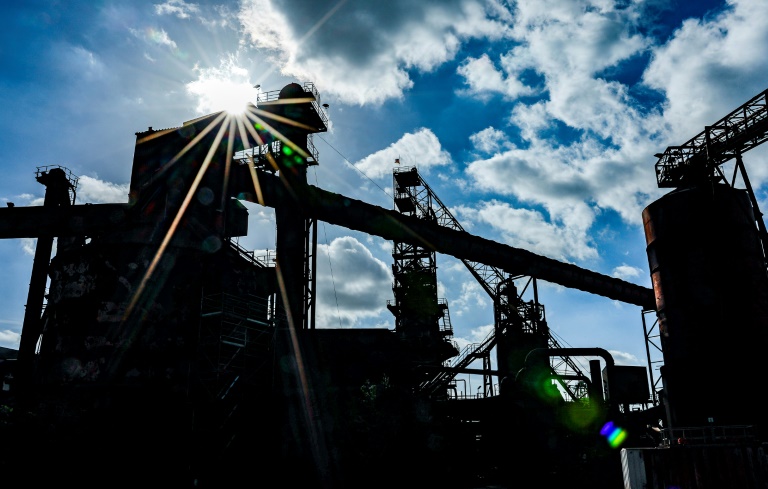
ArcelorMittal, the world’s number-two steel maker, saw its net profit tumble by 78 percent in the third quarter of 2022 as metal prices fell from “exceptional” levels during the post-Covid recovery and energy prices soared.

The global steel market is suffering both from the slowdown in China’s economic growth — the world’s largest user of steel — and from the fallout of the war in Ukraine and the surge in energy prices in Europe.

From July to September, ArcelorMittal said in a statement that it made a net profit of $993 million compared to $4.6 billion in the same quarter last year, bringing the profit for the first nine months of the year to $9 billion compared to $10.9 last year. 

“The strong market conditions enjoyed for much of the past two years deteriorated in the third quarter as seasonally lower shipments, a reduction in exceptional price levels, destocking and higher energy costs combined to put profits under pressure,” said Aditya Mittal, ArcelorMittal CEO. 

While expressing confidence in his group’s resilience he warned that the “short-term outlook for the industry remains uncertain and caution is appropriate.”

In September, ArcelorMittal said it would shut down two of its blast furnaces in Europe over high energy prices and lower demand.

Its furnaces in Bremen in northern Germany and near Gijon in northern Spain will cease to operate until further notice at the end of the month, it announced.

The CEO of the group’s partially-idled Hamburg site, Uwe Braun, told AFP in October that its gas bill had multiplied by seven compared to the period before Russia’s invasion of Ukraine.

In Thursday’s update the steelmaker said it had reduced European gas consumption by 30 percent amid soaring costs.

– Gas prices –

Total steel shipments in the third quarter were down just over seven percent compared with the same quarter the previous year, which the group said largely reflects weaker demand and seasonality in Europe.

But the group said shipments “remain broadly stable” — excluding ArcelorMittal Kryvyi Rig which is impacted by the war in Ukraine.

Work halted for a month when Russian forces approached Kryvyi Rig, but eventually restarted at a reduced tempo.

The steelmaker has also said that it continues towards a goal of decarbonisation for its future business strategy.

Mittal said in Thursday’s update that the group hoped the COP27 summit in Egypt would lead to the “scaling up of renewable energy, critical for both the decarbonisation of steel and enhanced energy security.”

The update said the group had broken ground on its first low-carbon emissions steelmaking project in Canada, which removes coal from the ironmaking process.

Close Bitnami banner
Bitnami