US Business

Moscow says Kherson pullout starts as Ukraine claims gains

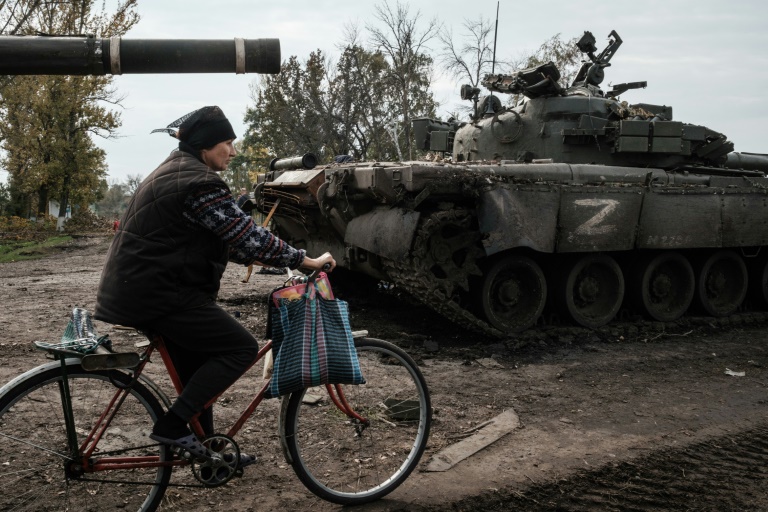
Moscow announced Thursday it had begun retreating from Ukraine’s southern city of Kherson as Kyiv said it had recaptured a dozen villages in the strategic Black Sea region.

“The Russian troop units are manoeuvring to prepared position on the left bank of the Dnipro river in strict accordance with the approved plan,” the Russian defence ministry said.

Ukrainian officials have remained wary since Moscow first signalled late Wednesday that it was pulling forces from the west bank of the Dnipro river in Kherson, in what would be major Russian setback in a region Vladimir Putin claimed to have annexed.

Ukrainian troops have for weeks been capturing villages en route to the main city in the eponymous region, while Kremlin-installed leaders in Kherson have been pulling out civilians in what Kyiv has called illegal deportations.

Ukrainian general Valeriy Zaluzhny said on social media that Ukraine’s forces had recaptured six settlements after fighting near the Petropavlivka-Novoraisk front.

Kyiv’s army had taken another six in the Pervomaiske-Kherson direction, capturing a total of more than 200 square kilometres (77 square miles) from the Russians, he added.

Late Wednesday, Russia’s most senior defence officials responsible for Ukraine announced in a televised meeting that they had taken the “difficult decision” to withdraw from Kherson and set up defensive lines further back.

In the nearby southern city of Mykolaiv, which Russian forces have pounded with artillery and missiles for months, there was little belief the Russians would do as they said.

“You cannot trust what they say. No one will give us anything back just like that,” Svitlana Kyrychenko, a 54-year-old store clerk, told AFP.

– ‘Don’t believe’ –

She said friends told her there were even more Russian troops in Kherson and that she believed that Moscow’s forces would not leave the city without a fight.

“I don’t believe that they will just give anything back,” she added.

Ukrainian President Volodymyr Zelensky has suggested Russia could be strategically feigning rather than experiencing a major setback.

Military officials in Kyiv reiterated that caution on Thursday.

“At this point, we can’t confirm or deny information about the retreat of Russian troops from Kherson,” said Oleksiy Gromov, from the Ukrainian armed forces’ general staff.

Russia losing the Kherson region would return to Ukraine important access to the Sea of Azov and leave Putin with little to show from a campaign that has turned him into a pariah in Western eyes.

The retreat will put pressure on Russian control of the rest of the Kherson region, which forms a land bridge from Russia to Crimea, the peninsula that Moscow annexed in 2014.

In the weeks leading up to the announcement from Russian Defence Minister Sergei Shoigu, Kremlin-installed officials said they were “evacuating” civilians and rendering the city a “fortress”.

As Ukrainian troops advance in the south, Russia’s commander in Ukraine, Sergei Surovikin, told Shoigu on Wednesday that around 115,000 people had been removed from the western bank of the Dnipro, which includes Kherson city.

– Bakhmut fight ‘harder’ –

Kherson was one of four Ukrainian regions that Russia declared it had annexed in September, shortly after being forced to withdraw from swathes of territory in the northeastern Kharkiv region.

In Moscow, Kremlin supporters rushed to justify the decision despite earlier setbacks in Ukraine spurring division and soul searching among Putin allies.

The head of Russian state media group RT, Margarita Simonyan, said the retreat was necessary to not leave Russian troops exposed on the west bank of the Dnipro River and “open the way to Crimea”.

Chechen strongman Ramzan Kadyrov said the decision was “difficult but fair”.

Moscow’s announced withdrawal came as the United States estimated more than 100,000 Russian military personnel have been killed or wounded in Ukraine.

Kyiv’s forces have likely suffered similar casualties, according to top US General Mark Milley, who shared the most precise figures released to date by Washington.

Russia has been pushing to capture the eastern Donbas city of Bakhmut, with the battered town famous for wine and salt mines coming under intensive fire for weeks.

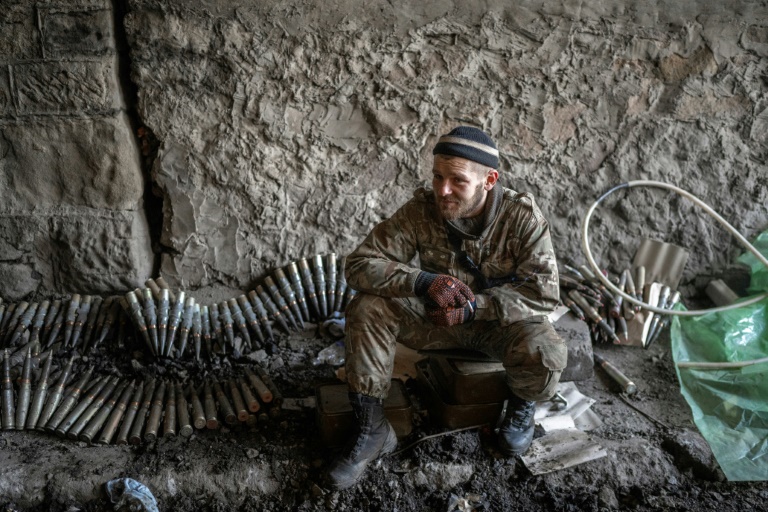
“It has become harder these past three days. The Russians are pushing more and more. But our boys are holding their positions,” 26-year-old soldier Vitaliy told AFP in Bakhmut.

Around half of the 70,000 people living in the city have stayed despite the fighting, mostly in the east of the city, for the past four months.


Stock markets drop before US inflation

Stock markets mostly fell Thursday looking ahead to key inflation data in the United States and as traders digested the country’s inconclusive midterm election results as well as a cryptocurrency crisis.

US inflation numbers due Thursday will help markets to gauge the speed of future rate hikes by the Federal Reserve. The dollar was mixed before the latest data. 

“US growth looks still too strong to bring inflation down,” noted Tapas Strickland of National Australia Bank.

“The ongoing resilience in the (consumer prices) data and stickiness in inflation continue to point to the Fed hiking rates closer to 5.0 percent or higher.” 

Rates currently stand at between 3.75 to 4.0 percent.

In US midterm elections, Republicans appeared likely to win a majority in the House of Representatives, but with a much smaller victory than they had hoped for — and that pollsters forecast.

Markets are grappling also with the impact of strict zero-Covid measures in China, with supply chains and activity slowed by harsh lockdowns and testing policies.

“China’s domestic demand is weak and their key trading partners are entering recession territory,” said Edward Moya at OANDA trading group.

Oil prices fell Thursday, extending recent losses on weaker Chinese demand.

The crypto world has meanwhile been rocked by a surprise decision from Binance, the world’s biggest cryptocurrency platform, to scrap a possible acquisition of rival FTX.com a day after disclosing it had signed a non-binding letter of intent to buy it.

The near-collapse of FTX has plunged bitcoin to a two-year low.

“FTX’s slump from over a $32 billion valuation to zero in less than a few days raises numerous issues,” said Stephen Innes at SPI Asset Management.

“Prominent investors are wearing eggs on their faces after diving in head first.”

He added that gold and silver would be the biggest beneficiaries of the crypto fallout with investors looking to the trusted precious metals for stability.

– Key figures around 1200 GMT –

London – FTSE 100: DOWN 0.1 percent at 7,291.54 points 

Frankfurt – DAX: FLAT at 13,667.53

Paris – CAC 40: DOWN 0.5 percent at 6,401.60 

EURO STOXX 50: DOWN 0.1 percent at 3,725.10

Tokyo – Nikkei 225: DOWN 1.0 percent at 27,446.10 (close) 

Hong Kong – Hang Seng Index: DOWN 1.7 percent at 16,081.04 (close)

Shanghai – Composite: DOWN 0.4 percent at 3,036.13 (close)

New York – Dow: DOWN 2.0 percent at 32,513.94 (close)

Euro/dollar: DOWN at $0.9945 from $1.0017 Wednesday 

Pound/dollar: UP at $1.1376 from $1.1352

Dollar/yen: UP at 146.49 yen from 146.37 yen

Euro/pound: DOWN at 87.42 pence from 88.19 pence

West Texas Intermediate: DOWN 0.6 percent at $85.33 per barrel

Brent North Sea crude: DOWN 0.4 percent at $92.29 per barrel

AstraZeneca returns to profit on higher drugs revenue

British pharmaceuticals giant AstraZeneca on Thursday announced a return to third-quarter profit on increased revenue from sales of its drugs.

Net profit for the Covid-vaccine maker came in at $1.64 billion in the July-September period, a statement said.

That compared with a loss after tax of $1.65 billion in the third quarter of last year, in part on costs linked to its takeover of US biotech company Alexion.

For the third quarter of this year, revenue jumped 11 percent to almost $11 billion as AstraZeneca began to profit from the Alexion purchase that cost it $39 billion.

AstraZeneca was benefitting also from “sustained investment in research and development (R&D)”, chief executive Pascal Soriot said in Thursday’s statement.

While overall sales jumped, driven by cancer drugs, revenue from its Covid jab Vaxzevria slumped 83 percent in the quarter to $173 million.

Revenue from AstraZeneca’s new drug Evusheld, developed for patients at risk of death from Covid, came in at $537 million.

“In all, required investment costs in drug development continue to weigh, and falling sales of its Vaxzevria Covid-19 vaccine have pushed emerging market sales down a tenth during the quarter,” noted Keith Bowman, investment analyst at Interactive Investor. 

“What’s more, Astra’s purchase of Alexion… is still to be fully justified.”

AstraZeneca’s share price jumped 2.1 percent to £110 ($125) on London’s top FTSE 100 index, down slightly overall in late morning deals.

Analysts said the shares were boosted by a positive earnings outlook.

“Progress in drug innovation and approvals is evident” for the group said Bowman, adding that “cancer treatment sales accounted for over a third of overall revenues during this latest period”.

Dash for gas imperils 1.5C climate goal: report

The global scramble for natural gas after Russia’s invasion of Ukraine threatens the Paris Agreement target of limiting global warming to 1.5 degrees Celsius, scientists said Thursday on the sidelines of UN climate talks in Egypt.

Projected emissions from Liquefied Natural Gas (LNG) projects under construction, approved and proposed up to 2050 would eat up a big chunk of humanity’s carbon budget for a 1.5C world, analysis from research NGO Climate Action Tracker showed.

The energy crisis spurred by restricted supply from Russia has seen a major push to expanded LNG production and import capacity in Europe, Africa, North America, Asia and Australia.

“The world has overreached in its bid to respond to the energy crisis,” said Bill Hare, CEO of Climate Analytics, which contributed to the report. 

“Our analysis shows proposed, approved and under construction LNG far exceeds what’s needed to replace Russian gas.”

In 2030, LNG could surge 500 million tonnes, equivalent to nearly five times the European Union’s 2021 Russian gas imports, and double total global Russian exports. 

The resulting emissions — some two billion tonnes of CO2 every year by 2030 — is incompatible with pathways to a carbon neutral world by mid-century, including one laid out by the intergovernmental International Energy Agency (IEA).  

– ‘Emergency mode’ –

“Increasing our reliance on fossil gas cannot be the solution to today’s climate and energy crises anywhere,” Hare said.

Annual projections of how much government plans and pledges will curb global warming show virtually no movement compared to year ago. 

Few governments have increased their short-term targets or made new longer horizon “net zero” commitments since the COP26 UN climate summit in Glasgow in November 2021. 

All countries honouring their carbon pledges so far under the 2015 Paris treaty would see the rise in global temperatures top out at 2.4C above pre-industrial levels.

With nearly 1.2C of warming to date, the world has seen a rapid crescendo of deadly and costly heat waves, floods, droughts and storm surges made worse by rising seas. 

2022 has been a year of climate havoc, with Pakistan still underwater after flooding submerged a third of the country in August. 

This year has also seen wildfires raging across Europe, Russia and North America, and record heatwaves on three continents. 

“With governments focussing on the energy crisis, this has been a year of little action on the climate,” said Niklas Hohne, an analyst at NewClimate Institute. 

“To limit warming to 1.5C, countries need to flip to emergency mode on climate as they do on the energy crisis.”

Transit strikes snarl London, Paris as workers seek raises

Commuters in London and Paris scrambled for alternatives Thursday — or simply stayed home — as public transport workers went on strike for higher pay, the latest industrial action seeking relief from soaring prices in Europe.

Spreading labour unrest poses a problem for governments that are already spending billions trying to blunt the worst effects of rising prices, at least for the most vulnerable.

“I am very deeply affected by the strike,” said 36-year-old Nicco Hogg in London. “I took my car, the train and now I have to cycle.”

The action in Britain, by members of the Rail, Maritime and Transport (RMT) and Unite unions, follows several walkouts this year amid a long-running dispute over job cuts, pensions and working conditions.

Some commuters were sympathetic to their cause, with 28-year-old Pema Monaghan in London, a writer also working in publishing, saying “they are defending their working conditions and their pay so it’s fair enough”.

Others doubted that the action would have much impact on politicians.

“They have loads of strikes,” said Daniel Osei, 26, who works in mental health for children in the London borough of Fulham. “They’re not really affecting the government as much as they are affecting us.”

In France, the strike aims also to ratchet up pressure on President Emmanuel Macron before he brings a controversial pensions overhaul bill to parliament, which would require millions of people to work longer before retiring.

“It’s to show that if we want to take action, we know how to take action,” said Frederic Souillot, head of France’s FO union.

The capital’s public transport operator RATP said nearly every Metro line would be shut down or operating with only limited rush-hour service, and urged people to work from home or postpone trips.

Many commuters appeared to heed the call, with the morning crush less chaotic than many feared, and the city’s growing network of bike lanes saw a surge of cyclists under a bright autumn sky.

But the two main suburban rail lines called RER A and B, which connect central Paris with Disneyland Paris and the Charles de Gaulle and Orly airports, saw more severe disruptions.

Many metros were packed, with some trains running only every 15-20 minutes instead of the usual three-minute rhythm.

“It’s a mess,” said Sylvie, 46, after failing to board a metro on the number seven line.

Authorities in London also said the Underground system was “severely disrupted”, with limited or no services running, and advised people to avoid trying to use the network.

Reports said many buses were packed to capacity and unable to pick up more passengers as many waited at stops, while roads were expected to be more congested than usual.

– New CEO awaited –

French unions have staged strikes across several sectors in recent weeks seeking pay hikes or increased hiring as spiralling energy costs feed into widespread inflation.

Thursday’s strike will also include a protest march in the capital in the afternoon that will shut down major traffic avenues.

But the Paris transport strike did not spill over into other sectors, with only the hard-line CGT union calling for general work stoppages. 

Unions representing the RATP’s nearly 70,000 employees say they are feeling the pinch of soaring prices, but are also overstretched because of insufficient hiring, resulting in increased sick leave.

That has led to more service delays or lower frequency on busy metro lines in recent months, causing headaches for the system’s roughly 12 million daily users.

The government is set to appoint former prime minister Jean Castex as RATP chief, with parliamentary panels giving their green light after questioning him this week.

“The most urgent issue… is the continuity and quality of service,” Castex told lawmakers. “The heart of our job is to meet the expectations of our users.”

Surge of fossil fuel lobbyists at climate talks: watchdogs

Fossil fuel lobbyists have flooded UN climate talks in Egypt, a report by watchdog groups said Thursday, as calls grow at the summit for a windfall tax on oil majors’ bumper profits.

More than 600 lobbyists from some of the world’s biggest polluters have registered to the climate talks in the Egyptian resort of Sharm el-Sheikh, up 25 percent from last year, the analysis by groups including Global Witness and Corporate Accountability found.

They said that is more than the number of lobbyists from the 10 most climate-affected countries combined.

“There’s been a lot of lip service paid to this being the so-called African COP, but how are you going to address the dire climate impacts on the continent when the fossil fuel delegation is larger than that of any African country?” said Phillip Jakpor of Corporate Accountability.  

The groups scoured the official list of registered participants looking for those either directly affiliated with oil and gas companies, or people who are attending as part of delegations that “act on on behalf of the fossil fuel industry”.

Last year at the UN climate meeting in Glasgow, they counted 503 fossil fuel lobbyists registered.

The groups called on the United Nations to restrict access to the talks for fossil fuel firms, which the UN chief Antonio Guterres has said are “poisoning our planet”.

Oil companies have scored tens of billions of dollars in profits this year as crude prices have soared in the wake of Russia’s invasion of Ukraine.

Barbados Prime Minister Mia Mottley called Monday for a 10 percent tax on oil companies to fund loss and damage.

Other small island nations threatened by the rise in seas caused by global warming joined her call on Tuesday.

“While they are profiting, the planet is burning,” said the prime minister of Antigua and Barbuda, Gaston Browne, adding that company profits should go towards the creation of a “loss and damage” fund to help vulnerable countries cope with the here-and-now impacts of climate change.

The Pacific island nation of Tuvalu became this week the second country to join calls for a fossil fuel non-proliferation treaty, an initiative that seeks to stop new investments in coal, oil and gas globally and phase out production.

Biden hits world stage with midterms spring in his step

US President Joe Biden returns to the world stage with a spring in his step after midterm elections he sees proving that, in the global contest between democracy and autocracy, good guys don’t always come last.

Biden is scheduled to leave Washington on Thursday for the COP27 climate summit in Egypt the next day, an ASEAN regional summit in Cambodia at the weekend and the gathering of G20 major economic powers in Indonesia next week.

The tense midterms campaign had left the world wondering which Biden would show up.

Would it be the “America is back” champion, passionately arguing that the United States is indispensable to steering democracies through competition with the likes of China and Russia?

Or would a diminished figure board Air Force One, a lame-duck president reduced to little better than a speed bump in the inexorable return of Donald Trump and eventual collapse of US democracy?

Biden still faces turmoil if Republicans are confirmed to have narrowly won the House of Representatives.

But he argues that US allies can breathe again after a mostly smooth election and the surprisingly strong Democratic results — limiting losses in the House, potentially holding the Senate, and chastening Trump’s far-right Make America Great Again wing.

“The rest of the world looks to us,” Biden told a news conference.

“They’re very concerned that we are still the open democracy we’ve been and that we have rules and the institutions matter,” he said. 

“With their votes, the American people have spoken and proven once again that democracy is who we are.”

– Test case –

At the G20, Biden will rub shoulders with key European and Asian allies as well as China’s Xi Jinping, who has just cemented his position as undisputed ruler of the superpower with a third term as president.

Ash Jain, at the Atlantic Council think tank, said the summit will prove a “kind of test case” for Biden’s twin-track policy of strengthening the democratic camp while negotiating with autocracies from a position of strength.

The likes of China and Russia are “looking gleefully at dysfunction” in US politics, Jain said.

The midterms results, however, give them a little less to crow about.

Biden says the Kremlin even seemed to have been waiting for the outcome of the election before announcing its humiliating retreat from the city of Kherson, the latest military setback in Russia’s botched invasion of pro-Western Ukraine.

“I found it interesting they waited until after the election to make that judgment, which we knew for some time that they were going to be doing,” Biden said.

The suggestion was that Moscow had been holding out to see whether Russia-sympathising Trump supporters could get a big majority in Congress.

– But for how long? –

Analysts say Biden will travel with other arrows in his quiver.

At COP27, he will flag the successful passage through Congress this year of the biggest US spending package to address climate change. The so-called Inflation Reduction Act includes $369 billion for such things as clean energy.

“For the first time, the US has some momentum on climate and a credible claim to something that looks like a climate policy,” said Joseph Majkut, energy expert at the Center for Strategic and International Studies (CSIS) think tank. He “will want to take something of a victory lap”.

In Asia, Biden will tout a resilient US economy, which despite high inflation continues to see low unemployment and a resurgence of manufacturing. With China “stumbling in terms of economic growth”, Biden enters with “some wind at his back”, said Matthew Goodman, an expert on economics at CSIS.

None of this, however, will dispel lingering questions in the minds of US democratic allies — and autocratic foes — over the durability of Biden’s vision.

He turns 80 this month and it remains unclear whether he will run again in 2024. Trump, meanwhile, is in vengeful mood and even if he fades before the next election, his isolationist instincts are widely shared in Washington.

In his news conference after the midterms, Biden repeated one of his favourite stories — how, at a G7 summit soon after becoming president, he told leaders of the six closest US allies: “America is back.”

“And one of them turned to me and said, ‘For how long? For how long?'”

“It was a deadly earnest question,” Biden said. “‘For how long?'” 

Nicole weakens to Tropical Storm, threatens NASA launch

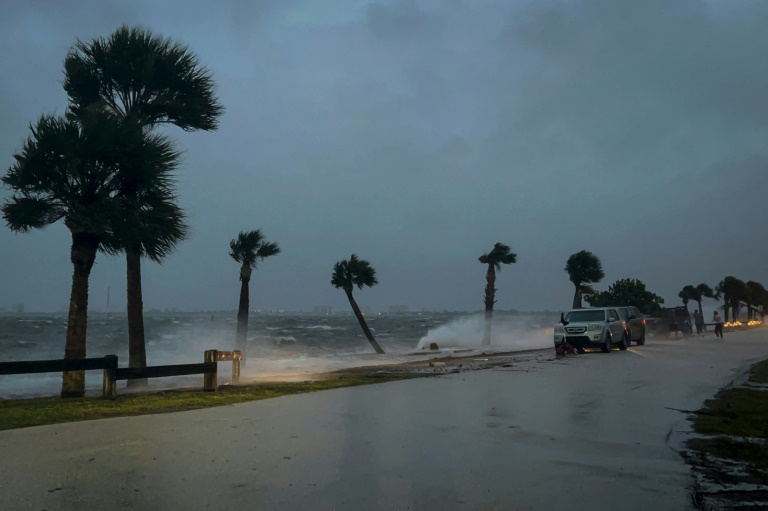
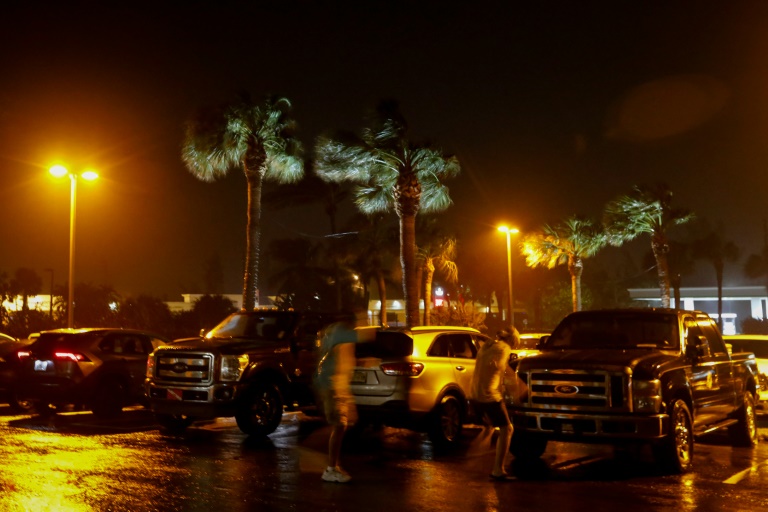
Tropical Storm Nicole slowed after making landfall in the US state of Florida, meteorologists said Thursday, with high winds raising concerns that a long-delayed NASA rocket launch could be disrupted.

The storm, a rare occurrence this late in the year, sparked mandatory evacuation orders just weeks after Florida was battered by Hurricane Ian.

But just an hour after Nicole made landfall as a Category 1 hurricane it was downgraded to a Tropical Storm, the US-based National Hurricane Center (NHC) said in a statement Thursday.

The NHC said Nicole was packing sustained maximum winds of up to 70 miles (110 kilometers) per hour and heading towards Georgia and South Carolina, which would also be affected.

The storm could also possibly hit Ohio, Pennsylvania and New York later in the week, it said.

Nicole passed over the Bahamas on Wednesday, with the level of destruction not immediately clear.

A tropical storm warning was issued for Florida’s eastern coast from the city of Boca Raton to the boundary between Flagler and Volusia counties, the NHC said.

“Strong winds, dangerous storm surge and waves, and heavy rains continue over a large area,” it said.

Forty-five of the state’s 67 counties were under a state of emergency, Governor Ron DeSantis said, while four counties were under mandatory evacuation orders, according to the state’s Division of Emergency Management.

More than 100,000 customers in the affected areas were without electricity, according to PowerOutage.us.

In preparation for the storm’s impact, DeSantis said 16,000 people had been recruited to respond to power outages and 600 national guardsmen had been activated.

The death toll from Ian, one of the most powerful storms ever to hit the United States, stands at more than 100 in Florida alone.

– NASA launch delay –

Nicole has also raised concerns that a long-delayed NASA rocket launch could be disrupted again.

The storm is heading towards NASA’s Kennedy Space Center, located near Florida’s eastern city of Orlando, having already disrupted plans to launch the agency’s most powerful rocket next week.

The Artemis 1 mission had been due to launch on November 14, but NASA said on Tuesday it would be delayed to November 16.

A backup launch date has been set for November 19.

NASA said it would leave the giant 322-foot (98-meter) SLS rocket on the launch pad, where it had been placed several days before.

Experts have voiced concern that the rocket, which is estimated to cost several billion dollars, could be damaged by debris from the hurricane if it remains exposed.

After two launch attempts were scrubbed this summer because of technical problems, the rocket had to be returned to the Vehicle Assembly Building to protect it from Hurricane Ian.

The uncrewed mission aims to bring the United States a step closer to returning astronauts to the Moon five decades after humans last walked on its surface.

Apple limits file-sharing for Chinese iPhone users after anti-govt protest

Apple limited file-sharing for Chinese iPhone users Thursday, a month after reports that anti-government protesters were using the function to share digital leaflets with strangers.

Under the update to the AirDrop function, users of smartphones sold by Apple in China can only opt in to receive files from non-contacts for a 10-minute window before it automatically shuts off. The feature did not previously have a time limit.

The update, rolled out in the operating system released overnight, makes it virtually impossible to receive unexpected files from strangers.

The change follows widespread reports of people using AirDrop to spread leaflets critical of the Chinese Communist Party in crowded public spaces, partly inspired by a protest in Beijing in which a man hung banners calling for the removal of President Xi Jinping.

Chinese censors quickly scrubbed online videos and posts referring to the protest, while hundreds of users on the popular payment and chat app WeChat had their accounts blocked after speaking about the rare act of rebellion.

Apple did not respond immediately to AFP’s request for comment and did not give a reason for the specific change.

It said in its update description for users the operating system now “includes bug fixes and security updates”.

Apple phones sold outside mainland China did not appear to be affected by the update, while iPhones sold in China displayed the limit regardless of which country the user’s App Store account was based in.

The California-based tech giant, which touts security and privacy protections as key features of its devices, has previously faced criticism for alleged concessions to Beijing.

That included opening a data centre in China, as well as removing an app in 2019 that allowed Hong Kong pro-democracy protesters to keep track of police.

It has also faced boycott threats in China as it stands in the crossfire of US-China tensions, with Beijing warning in 2020 that it could turn its citizens against Apple if Washington blocked Chinese apps.

Some Chinese social media users on Thursday hailed the iPhone update as a positive step in preventing unsolicited messages from strangers. One Weibo user said the change would “greatly reduce the probability of iPhone users being harassed”.

A handful questioned why the function was only being rolled out on Chinese iPhones, with one Weibo commenter joking about Apple CEO Tim Cook’s friendliness with Beijing: “So is Tim Cook a Party member or not?”

Nicole weakens to Tropical Storm after Florida landfall

Tropical Storm Nicole slowed after making landfall in the US state of Florida, meteorologists said Thursday, with high winds raising concerns that a long-delayed NASA rocket launch could be disrupted.

The storm, a rare occurrence this late in the year, sparked mandatory evacuation orders just weeks after Florida was battered by Hurricane Ian.

But just an hour after Nicole made landfall as a Category 1 hurricane it was downgraded to a Tropical Storm, the US-based National Hurricane Center (NHC) said in a statement Thursday at 0900 GMT.

The NHC said Nicole was packing sustained maximum winds of up to 70 miles (110 kilometers) per hour.

The storm had passed over the Bahamas on Wednesday, with the level of destruction not immediately clear.

A tropical storm warning was issued for Florida’s eastern coast from the city of Boca Raton to the boundary between Flagler and Volusia counties, the NHC said.

“Strong winds, dangerous storm surge and waves, and heavy rains continue over a large area,” it said.

Forty-five of the state’s 67 counties were under a state of emergency, Governor Ron DeSantis said, while four counties were under mandatory evacuation orders, according to the state’s Division of Emergency Management.

At least 60,000 customers in the affected areas were without electricity, according to PowerOutage.us, with Brevard county being the worst hit

In preparation for the storm’s impact, DeSantis said 16,000 people had been recruited to respond to power outages and 600 national guardsmen had been activated.

The death toll from Ian, one of the most powerful storms ever to hit the United States, stands at more than 100 in Florida alone.

– NASA launch delay –

Nicole has raised concerns that a long-delayed NASA rocket launch could be disrupted again.

The storm is heading towards NASA’s Kennedy Space Center, located near Florida’s eastern city of Orlando, having already disrupted plans to launch the agency’s most powerful rocket next week.

The Artemis 1 mission had been due to launch on November 14, but NASA said on Tuesday it would be delayed to November 16.

A backup launch date has been set for November 19.

NASA said it would leave the giant 322-foot (98-meter) SLS rocket on the launch pad, where it had been placed several days before.

Some experts have voiced concern that the rocket, which is estimated to cost several billion dollars, could be damaged by debris from the hurricane if it remains exposed.

After two launch attempts were scrubbed this summer because of technical problems, the rocket had to be returned to the Vehicle Assembly Building to protect it from Hurricane Ian.

The uncrewed mission aims to bring the United States a step closer to returning astronauts to the Moon five decades after humans last walked on its surface.

Close Bitnami banner
Bitnami