US Business

Biden, Trump target pivotal battleground in countdown to midterms

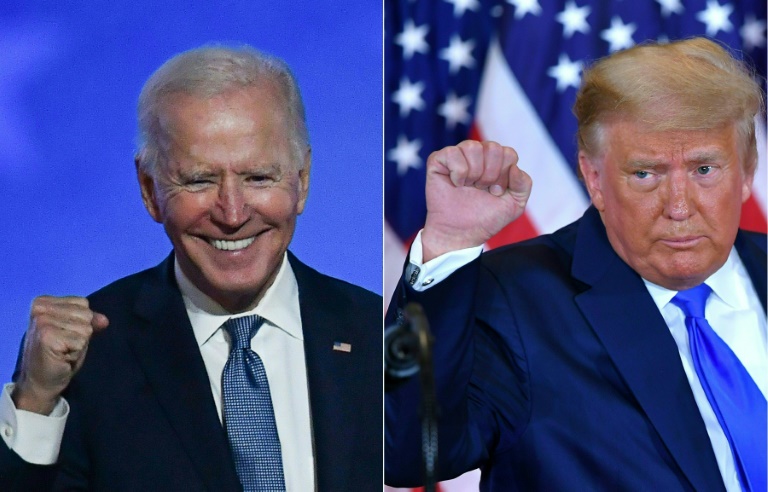
They have been shadowboxing at separate campaign stops across the United States for weeks but the Democratic and Republican leaders find themselves on the same battlefield Saturday as they make closing pitches in Pennsylvania for next week’s midterm election.

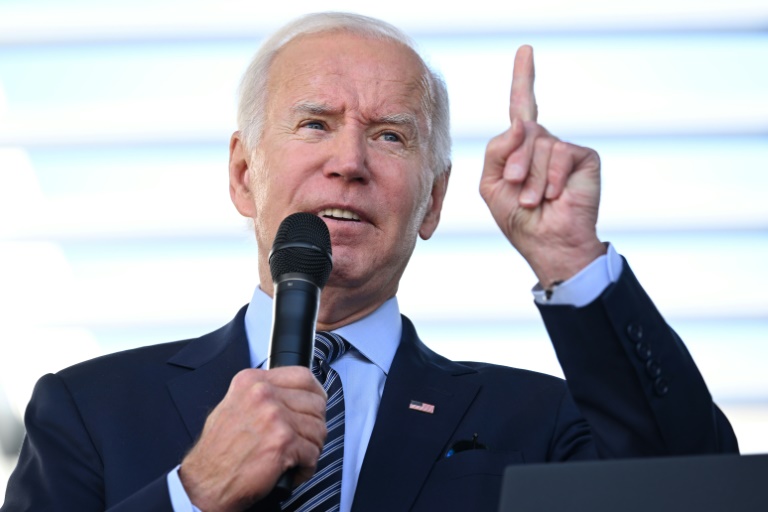
President Joe Biden will rally alongside his old boss Barack Obama as the Democrats deploy their big guns to build the energy they hope will spread nationwide and reverse the late rightward-shift in polling.

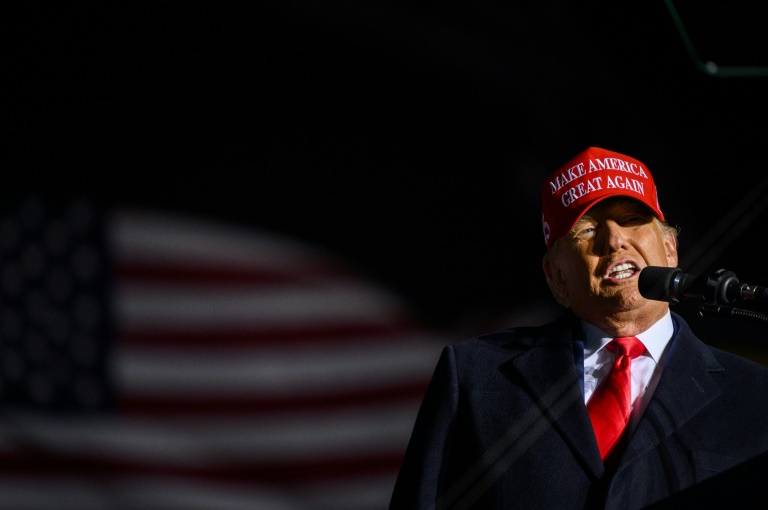
And in a split-screen preview of a potential rematch of the 2020 presidential contest, the midwestern state is also playing host to Biden’s predecessor and bitter political rival Donald Trump.

Obama — still the party’s most bankable star six years after leaving the White House — begins the day in Pittsburgh with Democratic candidate John Fetterman, who is in a dead heat against Republican TV medic Mehmet Oz in their crucial Senate race.

Biden and Obama then appear in Philadelphia, the historic cradle of US independence where the 44th and 46th presidents will woo voters from the suburbs that make for a crucial base of Democratic support.

The Keystone State backed Trump over Hillary Clinton for president in 2016 but preferred Biden to Trump in 2020.

Strategists from both parties believe the side that wins the post vacated by retiring Republican Pat Toomey will hold the majority in the upper chamber of Congress next year.

Fetterman and Oz sparred for an hour in state capital Harrisburg 10 days ago, with Fetterman still struggling with communication issues after a stroke in May upended his campaign.

– ‘Chipping away’ –

“The month-to-month shifts in support for Oz are not statistically significant,” said Patrick Murray, director of the independent Monmouth University Polling Institute.

“The overall trend suggests he has been chipping away with some voters who have not been completely comfortable with him, but that mainly happened prior to the debate.”

Just a few miles east of Pittsburgh in Latrobe, Trump — the one-term 45th president with ambitions to return as the 47th — will seek to firm up support in a region that delivered him big margins in 2016 and 2020. 

Pennsylvania is seen as a must-win not just for control of the Senate, but also for the balance of power among the country’s 50 state governors, influential officials that weigh in on most aspects of voters’ lives, from education and health care to voting rights.

Democratic gubernatorial nominee Josh Shapiro has been spotlighting the fringe views of state senator Doug Mastriano, his far-right opponent who was involved in Trump’s attempts to overturn the 2020 election.

A victory for Trump-backed Mastriano would give the prominent election denier oversight of the state’s voting system for the 2024 presidential race.

Like Biden, Trump has visited Pennsylvania twice this year, rallying for Oz and Mastriano most recently in Wilkes-Barre in early September.

The 76-year-old tycoon has already claimed baselessly that the state’s elections have been “rigged,” echoing his false claims that his own 2020 defeat was the result of widespread fraud. 

“As Biden’s approval rating plummets, Pennsylvania crime spikes, and Pennsylvanians grapple with a 74 percent hike in heating oil, coupled with record inflation, just weeks away from winter,” Trump’s office said in a statement. 

“The America First Movement offers the Keystone State an alternative vision for America: safe streets, cheap gas, low inflation, and a thriving American economy.”
US ups N.Korea pressure but fears no end to headache

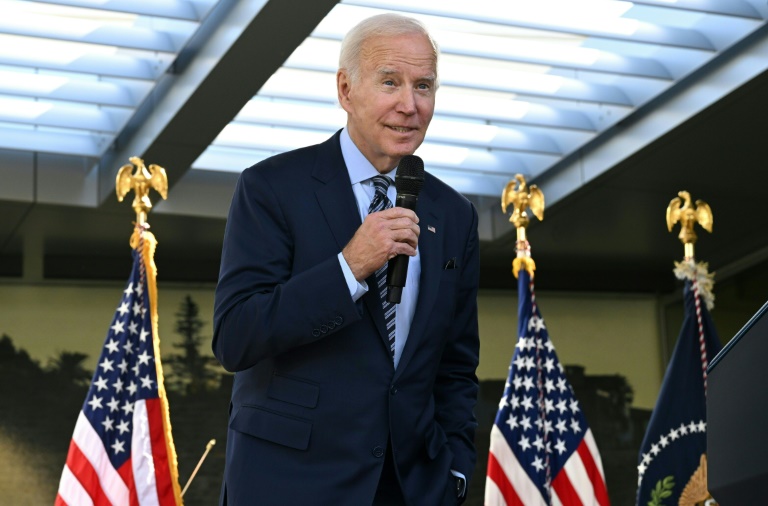
As North Korea fires a blitz of missiles, the United States is sticking to a mixture of pressure and offers of dialogue but US policymakers are resigned that little they do is likely to change Pyongyang’s course.

Eager to avoid another global crisis alongside Russia’s invasion of Ukraine, President Joe Biden’s administration has focused on a more narrow goal of reassuring allies that the United States will defend them.

North Korea, whose leader Kim Jong Un met three times with Biden’s predecessor Donald Trump but failed to reach a lasting accord, in recent days has fired a record number of missiles, and Western officials say Pyongyang has made preparations for a seventh nuclear weapons test.

“I don’t think there is anything we can do to stop North Korea,” said Sue Mi Terry, a former CIA analyst on Korean affairs who is now director of the Asia program at the Woodrow Wilson Center for International Scholars.

“If I were Kim Jong Un’s advisor, I would say, yeah, go ahead,” she said.

“They couldn’t get any kind of deal with Trump and so what are they going to get from the Biden administration? They know this. The only thing they can do is get their program to the next level.”

The United States has responded to North Korea by extending exercises with South Korea, including deploying a strategic bomber, and Biden will likely offer robust support for South Korean and Japanese leaders during summits this month in Southeast Asia.

Biden is also widely expected to meet President Xi Jinping of China, Pyongyang’s primary ally, which joined Russia in May in vetoing a US-led bid at the Security Council to tighten sanctions on North Korea.

Linda Thomas-Greenfield, the US ambassador to the United Nations, told an emergency session Friday that China and Russia had “enabled” North Korea but also reiterated the Biden administration’s willingness to talk to the totalitarian state.

US officials say North Korea has shown no interest in talks and, privately, some think the Kim regime may be in one of its periodic cycles of escalation and that there is no choice but to wait.

Under the last Democratic administration of Barack Obama, some concluded that the United States erred in timing by reaching an agreement in February 2012 that quickly collapsed as North Korea was already poised to go ahead with a satellite test. 

– High risk, low reward –

For Biden, focused on Ukraine and possibly facing a more hostile Congress after midterm elections, diplomacy with North Korea offers high risks and limited chances of success.

“They don’t really have an appetite for engaging with North Korea. There’s a lot of North Korea fatigue,” said Frank Aum, a former Pentagon advisor on Korean affairs who is now at the US Institute of Peace.

But Aum said that diplomacy, even if chances for a breakthrough are limited, has succeeded at least in easing tensions.

He said Biden could offer concrete gestures and incentives, such as declaring a moratorium on deploying further strategic military assets or proposing sanctions relief.

“Any conciliatory tactic would be perceived domestically in the US as appeasement or a reward for bad behavior,” Aum said.

“But empirical evidence clearly demonstrates that North Korea doesn’t respond well to pressure and, conversely, when we engage with North Korea, they tend to behave better.”

He doubted the efficacy of the Biden strategy of leaning in on China to exert pressure, noting that Beijing “absolutely disagrees with that approach.”

– Time for rethink? –

The rising tensions have led, at least among experts, to a once taboo discussion on whether to accept North Korea as a nuclear state. 

Arms control expert Jeffrey Lewis, in an opinion piece last month in The New York Times that generated wide debate, said the United States has already essentially accepted that North Korea will never get rid of its nuclear arsenal and should focus on discussing risk reduction.

“It’s time to cut our losses, face reality and take steps to reduce the risk of war on the Korean Peninsula,” he wrote.

The State Department reiterated its goal on North Korea was “complete denuclearization” and some experts said a shift would send the worrisome signal at a time when Russian President Vladimir Putin is threatening nuclear attack in Ukraine.

“It buys you nothing and it freaks out your allies,” said Victor Cha, senior vice president for Asia at the Center for Strategic and International Studies.

Cha, who advised former president George W. Bush, said the Biden team needed to lay out a North Korea policy that is beyond talking points.

“Maybe that would come after the seventh nuclear test,” he said.

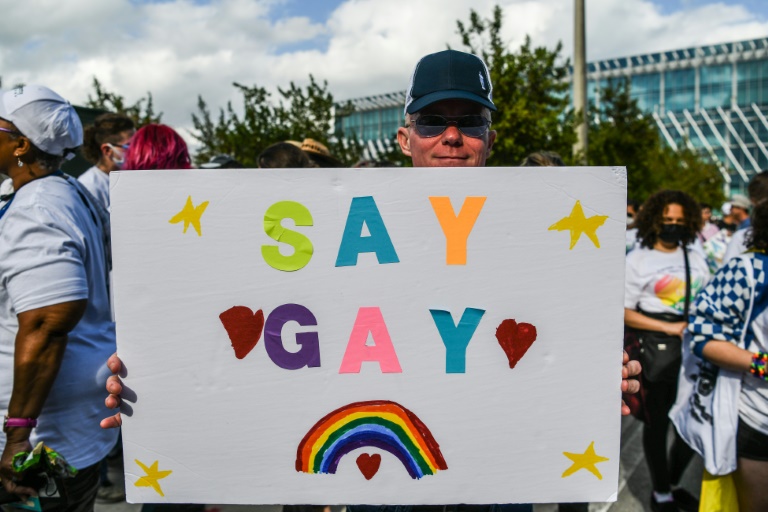
Florida bans gender treatments for minors

Florida’s medical boards on Friday voted for a rule that will ban doctors from providing gender-affirming treatment or surgeries to patients under the age of 18, media reports said.

The measure, which will take effect after a three-week period for public comment, will prevent doctors in the southern state from performing sex-reassignment surgeries on minors or prescribing them drugs, including puberty blockers, as part of a course of gender transition, the New York Times reported.

The decision by Florida’s boards of medicine and osteopathic medicine will not apply to patients who have already started one of those treatments.

The board of medicine’s 14 members were appointed by Republican state Governor Ron DeSantis, who in March signed a law prohibiting the discussion of sexual orientation or gender identity in elementary school classrooms.

Equality Florida criticized the move to ban treatment as putting transgender youth at risk.

“With young lives on the line, another state agency has placed the political ambitions of Ron DeSantis over its duty to protect Floridians,” Nikole Parker, the group’s director of transgender equality, said in a statement.

“These rules, as written, put transgender youth at higher risk of depression, anxiety, and suicidality.”

DeSantis, a darling of right-wing Republicans who is seeking re-election and is also believed to harbor presidential ambitions, has spent months criticizing gender transition treatments for adolescents.

During a televised debate last week with his Democratic rival Charlie Crist, DeSantis claimed that “a lot of the dysphoria resolves itself by the time they become adults” and compared gender treatments to “chemically castrating” teenagers.

In August, his administration banned funding for gender transition treatment through Medicaid, a major US government public health program for low-income people. 

In the United States, several medical organizations such as the American Academy of Pediatrics have defended current treatments for gender dysphoria.

The states of Arkansas and Alabama have passed laws prohibiting doctors from performing gender-affirming treatments on teenagers, but these measures are currently blocked by court rulings.

Trump, eyeing 2024, doubles down on vote conspiracy theories

Kicked off Twitter and Facebook after his supporters stormed the US Capitol, Donald Trump eventually set up his own platform Truth Social, declaring in April 2022 after a stumbling launch: “I’m Back! #COVFEFE.”

Yet to concede his loss to Joe Biden, Trump is now signaling he will seek the White House again in 2024.

And with midterm elections Tuesday, he is doubling down on voting conspiracy theories he has wielded ever since the 2016 election, which he won, and amplified since his defeat four years later.

In the past 58 days, Trump has shared about 100 posts on Truth Social casting doubt on the integrity of US elections, according to an AFP analysis of the former president’s more than 1,200 interactions in that period.

“Here we go again!” Trump wrote November 1, sharing a misleading headline about ballots in Pennsylvania, a swing state he lost to Biden but which next week could determine if Republicans win back the Senate.

“Rigged Election!” Trump added.

The tactics mirror his 2020 playbook, when he tweeted repeatedly before the election that mail-in ballots were rife with fraud. Dozens of court cases have since ruled otherwise.

But such misinformation could undermine confidence as Americans vote in the first national polls since the January 6, 2021 insurrection at the Capitol, experts say.

“If leaders tell their followers that elections are unreliable, their followers believe them,” Russell Muirhead, professor of politics and democracy at Dartmouth College, told AFP.

“Trump’s insistence that elections are flawed (when they’re not) is doing one thing: it is corroding American democracy.”

Trump posts often on Truth Social, sometimes dozens of times a day.

In the last two months, he has attacked Biden and Democrats, criticized ongoing investigations against him and glorified his own rallies and accomplishments.

Trump has also lavished praise on Republicans who support his stolen-election claims, such as Kari Lake, who has signaled she may reject the results if she loses her bid to become Arizona governor. 

And he has engaged more brazenly than ever with extremist content, including dozens of posts from promoters of the QAnon conspiracy theory.

Although Trump’s reach on Truth Social is relatively small — 4.46 million compared to the 88.8 million he enjoyed on Twitter — experts say the misinformation he spreads reverberates across the internet.

“After Trump puts the toxin in the water, the whole lake is spoiled,” said Muirhead, who was elected to the New Hampshire House of Representatives as a Democrat in 2020 after writing a book about conspiracism entitled “A Lot Of People Are Saying” — a play on a Trump catchphrase.

Trump’s office and main political action committee, Save America, did not respond to requests for comment.

– Trump’s influence – 

The former president has boosted hundreds of pro-Trump articles, polls and memes — including some that reference QAnon and come from accounts with names such as “Patriotic American Alpha Sauce.” One post he shared called Biden “#PedoHitler.”

“Trump still has an outsized impact on the Republican Party and on the right-wing media ecosystem more broadly, and every claim he makes gets amplified,” said Rebekah Tromble, director of George Washington University’s Institute for Data, Democracy, and Politics.

In October, Trump promoted several posts from Melody Jennings, founder of a group that organized stakeouts of ballot drop boxes in Arizona to catch suspected fraud.

The posts included Jennings’ claim of “mules” at a box near Phoenix — a reference to a discredited film’s conspiracy theory about people smuggling illegal votes — and a picture of a voter.

The voter in question was depositing ballots for himself and his wife, who was in the car, according to a witness statement he provided in a lawsuit against Jennings’ group, Clean Elections USA. He also filed a state voter intimidation complaint.

The incident is reminiscent of Trump’s false 2020 claims that Georgia election workers were caught counting “suitcases” of fraudulent ballots in the dead of night. The video Trump retweeted showed normal processing of legal votes, state officials concluded.

But the damage was done.

Election workers Ruby Freeman and her daughter Shaye Moss received death threats. At the FBI’s urging, Freeman left her home for two months.

Twitter’s new owner Elon Musk has indicated he plans to lift the ban on Trump — though not before the midterms. 

If Trump announces another presidential bid, both Twitter and Facebook may feel pressure to give back the megaphone to the once-prolific ex-president.

“This is not a game,” said Ben Berwick, counsel at Protect Democracy, a non-profit group that backed the lawsuit against Clean Elections USA. “Debunked conspiracy theories like those about so-called ballot mules cause real harm to innocent Americans.”

Twitter layoffs before US midterms fuel misinformation concerns

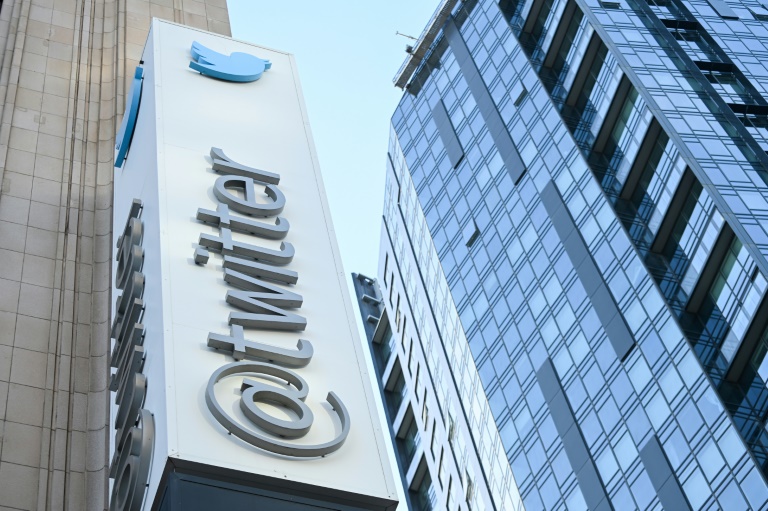
Twitter’s new owner Elon Musk has pledged the platform will not devolve into a “free-for-all hellscape,” but experts warn that mass layoffs on Friday may deeply impair the social network’s ability to curb misinformation.

Twitter fired roughly half of its 7,500-strong workforce, only days before next week’s midterm elections in the United States, when a spike in fake content is expected across social media.

The cuts, which comes after Musk’s blockbuster $44 million buyout of the company, hit multiple divisions, including trust and safety teams that manage content moderation as well as engineering and machine learning, US reports said.

“I would be real careful on this platform in the coming days… about what you retweet, who you follow, and even your own sense of what’s going on,” said Kate Starbird, a disinformation researcher and assistant professor at the University of Washington.

Starbird warned in her own Twitter post of an increased risk of “impersonation” attempts, “coordinated disinformation by manipulators” and “hoaxes that attempt to get you to spread falsehoods.”

Jessica Gonzalez, co-chief executive officer at the nonpartisan group Free Press, said she was concerned about Twitter potentially loosening its content-moderation efforts prior to the election, “when we know social media goes off the rails to misinform, intimidate and harm voters of color.”

“Twitter was already a hellscape before Musk took over, and his actions… will only make it worse,” said Gonzalez.

– ‘Deeply troubling’ –

Free Press is part of a coalition of more than 60 civil society groups that on Friday called on advertisers to boycott the platform until it committed to being a “safe place.”

Members of the coalition met with Musk earlier this week after academic studies reported a dramatic increase in hate speech, Nazi memes and racist slurs after his acquisition of the company.

One study by Montclair State University found that Musk’s purchase had “created the perception by extremist users that content restrictions would be alleviated.” 

“We  met with Elon Musk earlier this week to express our profound concerns about some of his plans and the spike in toxic content after his acquisition,” said the coalition, which uses the hashtag “Stop Toxic Twitter.”

“Since that time, hate and disinformation have continued to proliferate, and Musk has taken actions that make us fear that the worst is yet to come,” the group said in a statement.

But Musk rejected that assessment, tweeting that “we have actually seen hateful speech at times this week decline *below* our prior norms,” though he offered up no data to back up this assertion.

“To be crystal clear, Twitter’s strong commitment to content moderation remains absolutely unchanged,” Musk wrote on Friday.

Separately, Yoel Roth, Twitter’s head of safety and integrity, said that combating harmful misinformation during the midterms was a “top priority” for the company.

Musk, a self-professed free-speech absolutist, had promised to reduce Twitter’s content restrictions, and since the acquisition has announced plans to create a “content moderation council” that will review company policies.

“While Musk has publicly committed to transparency, his decision to lay off the staff members dedicated to this work is deeply troubling,” said Zeve Sanderson, executive director of the New York University’s Center for Social Media and Politics.

Musk insisted that the layoffs were necessary as the company was losing more than $4 million per day.

Twitter has long struggled to generate profit and has failed to keep pace with Facebook, Instagram and TikTok in gaining new users.

Twitter layoffs before US midterms fuel misinformation concerns

Twitter’s new owner Elon Musk has pledged the platform will not devolve into a “free-for-all hellscape,” but experts warn that mass layoffs on Friday may deeply impair the social network’s ability to curb misinformation.

Twitter fired roughly half of its 7,500-strong workforce, only days before next week’s midterm elections in the United States, when a spike in fake content is expected across social media.

The cuts, which comes after Musk’s blockbuster $44 million buyout of the company, hit multiple divisions, including trust and safety teams that manage content moderation as well as engineering and machine learning, US reports said.

“I would be real careful on this platform in the coming days… about what you retweet, who you follow, and even your own sense of what’s going on,” said Kate Starbird, a disinformation researcher and assistant professor at the University of Washington.

Starbird warned in her own Twitter post of an increased risk of “impersonation” attempts, “coordinated disinformation by manipulators” and “hoaxes that attempt to get you to spread falsehoods.”

Jessica Gonzalez, co-chief executive officer at the nonpartisan group Free Press, said she was concerned about Twitter potentially loosening its content-moderation efforts prior to the election, “when we know social media goes off the rails to misinform, intimidate and harm voters of color.”

“Twitter was already a hellscape before Musk took over, and his actions… will only make it worse,” said Gonzalez.

– ‘Deeply troubling’ –

Free Press is part of a coalition of more than 60 civil society groups that on Friday called on advertisers to boycott the platform until it committed to being a “safe place.”

Members of the coalition met with Musk earlier this week after academic studies reported a dramatic increase in hate speech, Nazi memes and racist slurs after his acquisition of the company.

One study by Montclair State University found that Musk’s purchase had “created the perception by extremist users that content restrictions would be alleviated.” 

“We  met with Elon Musk earlier this week to express our profound concerns about some of his plans and the spike in toxic content after his acquisition,” said the coalition, which uses the hashtag “Stop Toxic Twitter.”

“Since that time, hate and disinformation have continued to proliferate, and Musk has taken actions that make us fear that the worst is yet to come,” the group said in a statement.

But Musk rejected that assessment, tweeting that “we have actually seen hateful speech at times this week decline *below* our prior norms,” though he offered up no data to back up this assertion.

“To be crystal clear, Twitter’s strong commitment to content moderation remains absolutely unchanged,” Musk wrote on Friday.

Separately, Yoel Roth, Twitter’s head of safety and integrity, said that combating harmful misinformation during the midterms was a “top priority” for the company.

Musk, a self-professed free-speech absolutist, had promised to reduce Twitter’s content restrictions, and since the acquisition has announced plans to create a “content moderation council” that will review company policies.

“While Musk has publicly committed to transparency, his decision to lay off the staff members dedicated to this work is deeply troubling,” said Zeve Sanderson, executive director of the New York University’s Center for Social Media and Politics.

Musk insisted that the layoffs were necessary as the company was losing more than $4 million per day.

Twitter has long struggled to generate profit and has failed to keep pace with Facebook, Instagram and TikTok in gaining new users.

Biden insists Democrats can win US midterms

President Joe Biden insisted on Friday that Democrats will win next week’s US midterm elections, but warned of a difficult two years if polls showing Republican victories prove correct.

The 79-year-old, on a multi-state push in the final days before Tuesday’s ballot, said he was optimistic his Democratic Party could prevail.

“Folks, I’m not buying the notion that we’re in trouble,” he told an audience in Chicago. “I think we’re going to win. I really do.”

Polls show Republicans poised for potentially big victories in Tuesday’s congressional election, hoping to win control not only in the House of Representatives but the Senate.

That would turn the last two years of Biden’s first term into a dogfight and set the stage for a tense 2024 presidential election, with questions over whether Biden, who turns 80 this month, will want to run again.

“If we lose the House and Senate it’s going to be a horrible two years,” he said.

“The good news is that I’ll have the veto pen,” he added, referring to his power to block bills from becoming law.

Biden has hit the road as his vanquished 2020 rival has also got back on the campaign trail.

Donald Trump, who has spent much of the last two years fulminating over his loss, and pushing the discredited theory that there was election fraud, used a rally appearance to send the strongest signal so far that he’s planning a comeback bid.

At a rally Thursday in Iowa, the first state to hold its Republican nominating contest in presidential elections, Trump said: “In order to make our country successful and safe and glorious, I will very, very, very probably do it again, OK? Very, very, very probably.”

“Get ready. That’s all I’m telling you. Very soon. Get ready. Get ready,” he said.

According to a report in Axios on Friday, aides are firming up plans for a November 14 announcement.

That, however, is likely to depend on how well the right-wing candidates promoted by Trump do on Tuesday. Another factor in play is the threat hanging over Trump from an investigation into his hoarding of top secret documents at his Florida golf resort — and potential indictment on serious criminal charges.

For now, Republicans are confident they can at minimum get the one state they need to move the Senate from 50-50 to their own narrow majority, while expecting solid gains in the House of 12 to 25 seats, overcoming the Democrats’ current eight-member advantage.

– ‘I’ve got a plan’ –

The final weeks of campaigning have seen Republicans even looking beyond the country’s swing states to Democratic bastions that once seemed out of reach. 

Strategists from both parties are seeing districts across New York, Oregon and Connecticut that went for Biden by double digits in 2020 coming back into play. 

Hillary Clinton campaigned on Thursday in New York to boost the faltering fortunes of Governor Kathy Hochul while former president Barack Obama speaks in Pennsylvania Saturday. Biden himself was set to campaign in Democratic stronghold New York on Sunday.

Democrats have concentrated their message on the assault on democracy they say Republican election-deniers are mounting, and the violence they say this has provoked.

Paul Pelosi was released from hospital on Friday, a week after he was attacked by a hammer-wielding man who had broken into his home searching for House Speaker Nancy Pelosi.

David DePape, who denies charges against him, allegedly told police he intended to break Nancy Pelosi’s kneecaps if she did not confess to Democratic Party “lies.”

“The Pelosi family is thankful for the beautiful outpouring of love, support and prayers from around the world,” Nancy Pelosi said in a video after her husband’s release from hospital.

The White House got some good economic news with official figures for October showing 261,000 new jobs and unemployment at low levels.

“I’ve got a plan to bring costs down, especially for health care, energy and other everyday expenses… The Republican plan is very different,” Biden said in a statement. 

“They want to increase prescription drug costs, health insurance costs and energy costs, while giving more tax breaks to big corporations and the very wealthy.”

In another glimmer of hope for the Democrats, Oprah Winfrey endorsed Pennsylvania Senate candidate John Fetterman during a virtual get-out-the-vote event Thursday.

It was a notable snub of Fetterman’s Republican rival, celebrity surgeon Mehmet Oz, who rose to fame largely through appearances on Winfrey’s show. 

But with the Republicans confident of flipping Georgia and Nevada, the Keystone State might not even be needed for a takeover of the Senate. 

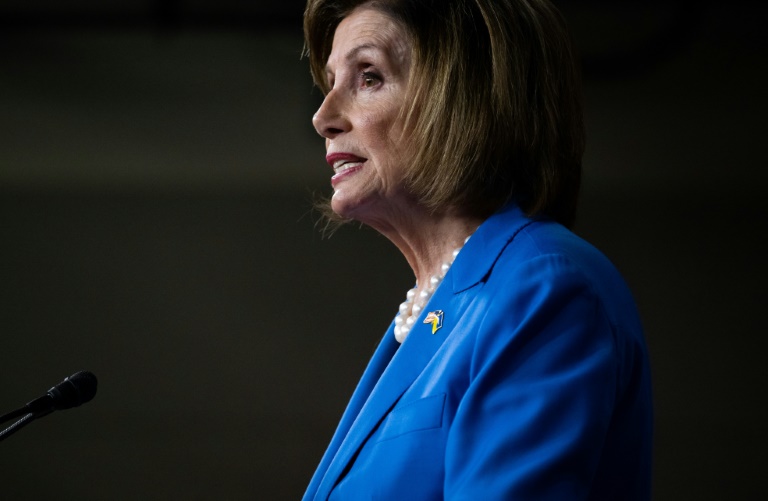
Pelosi says husband's attack highlights 'fear' in tense US political climate

House Speaker Nancy Pelosi said Friday a violent attack on her husband had highlighted the “fear” felt by poll workers and other Americans in the heated political climate ahead of next week’s midterm elections.

The comments come one day after her husband, Paul, was released from hospital following an attack in which a man broke into the couple’s California home and hit him on the head with a hammer.

The man accused of the attack, David DePape, 42, allegedly intended to tie up Pelosi and break her kneecaps, but found only her 82-year-old husband.

“That has driven home to me the fear that some people have about what’s out there, coming at poll workers and the rest,” Pelosi said in a video posted to her Facebook page.

“The message is clear, there is reason to be concerned. But we can’t be fearful, we have to be courageous,” Pelosi said.

Conspiracy theories born in the 2020 election are fueling harassment of poll workers across the United States, while unconstrained disinformation and toxic political partisanship are raising concerns of potential election-related violence.

In a speech this week, US President Joe Biden linked the attack on Pelosi to the political assault unleashed by ex-president Donald Trump’s supporters against Congress on January 6, 2021, calling emboldened violence “the path to chaos in America.”

In her video, Pelosi said “it’s going to be a long haul,” but that her husband “will be well.”

As for Tuesday’s midterm elections, in which polls show Republicans poised for potentially heavy victories, Pelosi said that “there is no question that our democracy is on the ballot.”

US Latinos: less predictable at the polls, more focused on pocketbook

While Latino voters lean Democratic in the run-up to US midterm elections, soaring inflation makes their support less predictable and may compel a shift toward Republican candidates, analysts say.

Inflation now at eight percent troubles Latinos, as it does all Americans, according to polls released before the November 8 vote, in which President Joe Biden’s Democratic Party faces heavy possible losses.

Other issues — the right to abortion, gun control and a crisis over undocumented migrants — are secondary, polls show.

More than half of Latinos intend to vote Democratic in the vote for legislative seats, while 30 percent support Republicans, higher than four years ago, the surveys indicate.

“What matters most to Latino voters is inflation, and many… are ready to give Republicans a chance,” Rodrigo Dominguez-Villegas, director of research at the Latino Policy & Politics Institute at the University of California at Los Angeles, told AFP.

– Sounding an alarm –


But “a stampede of Latino voters toward Republicans hasn’t been perceived” in the election, in which the 435-seat House of Representatives, a third of the 100-seat Senate and some 30 state governorships are up for grabs, he said.

“The alarm for the Democratic Party is that if it doesn’t retain its margin of support among Latino voters, it runs the risk of losing key, tightly-contested elections,” Dominguez-Villegas added.

While Latinos have historically supported Democrats, “there is a large group who are swing voters” who change preferences with each election, and the Republican Party is targeting them, he said.

“Latinos are not a monolithic group. We have different origins, with different aspirations and different problems,” said Jaime Florez, Hispanic communications director for the Republican National Committee.

Florez cited three key areas: the economy, education and public safety, but above all else at the moment is inflation.

“Economic issues affect us all independently of our country of origin, the language that we speak, many times even our economic condition because even rich people have lost enormous sums with the fall of the stock market,” he said.

– ‘A wrong assumption’ –


The Republican Party enjoys a perception that it handles economic issues better — while some Democratic leaders are accused of believing Latinos will simply fall into line behind them.

“They only run these get-out-the-vote operations in the weeks before the election, and expect that Latinos will show up and support them and I think that’s a wrong assumption,” Geraldo Cadava, a history professor at Northwestern University, told AFP.

While Republics still trail Democrats among Latinos, “Latinos have both voted for Republicans in increasing numbers over the past few years, and they have left the Democratic Party over the last few years,” Cadava said. 

The dynamic is complex, he said, but in part Latinos “are drawn to particular Republican policies at the same time that they’re abandoning Democratic policies.” 

On a number of issues Latinos are in sync with the Democratic Party, said Stephen Nuno-Perez, analyst and pollster with BSP Research.

“In terms of data points, we continue to see strong support for policies that the Democrats are pushing, whether it’s immigration reform, abortion rights — upwards of 70 percent — taking action against climate change, student debt relief, gun safety, all of these,” he said.

“None of these are issues that we would call Republican issues.”

Latinos are increasingly favor restrictive immigration reforms, including building border walls, Cadava added.

“Historically, say over the past 20 or 25 years, about 15 percent of Latinos would say that they support restrictive immigration reform,” Cadava said, but now support has climbed to 36 percent.

“That’s a pretty big jump.”

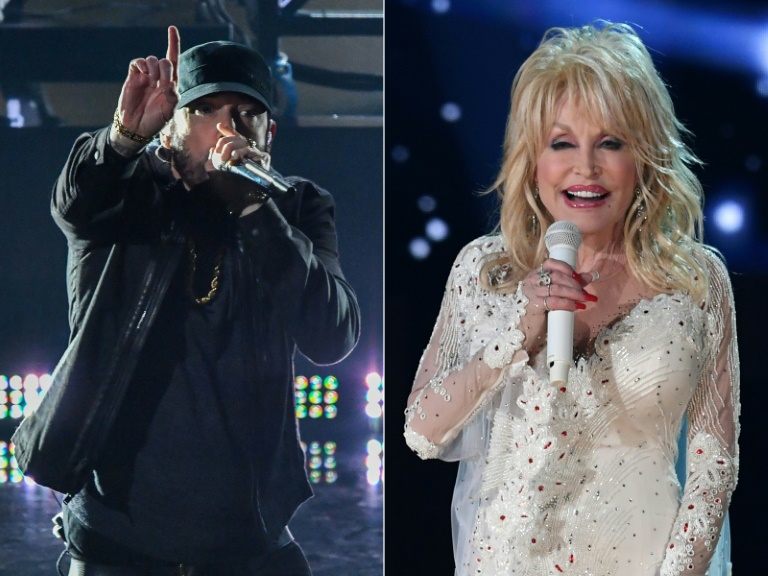
Music world set to celebrate Dolly Parton, Eminem at Rock Hall of Fame

The music world is gathering in Los Angeles to honor some of its finest acts on Saturday, inducting the latest class of luminaries including Dolly Parton and Eminem into the prestigious Rock and Roll Hall of Fame.

The country queen and rap agitator are joined by pop futurists Eurythmics, smooth rocker Lionel Richie, new wave Brits Duran Duran, confessional lyricist Carly Simon and enduring rock duo Pat Benatar and Neil Giraldo in entering the music pantheon.

The Cleveland-based Hall of Fame — which surveyed more than 1,000 musicians, historians and industry members to choose the entrants — will honor the seven acts in a star-studded gala at Los Angeles’s Microsoft Theater.

More supergroup concert than ceremony, the evening will see music legends honor their peers with performances of their time-tested hits — the lineup is usually kept under wraps until showtime.

But Rock Hall Chairman John Sykes spilled some of the guest appearances in an interview this week with Forbes, telling the outlet that attendees will including Olivia Rodrigo and Alanis Morissette while Bruce Springsteen and Sheryl Crow are set to figure among those introducing the honorees.

– ‘Sound of young America’ –

Sykes emphasized the institution’s fluid definition of “rock” that is more about spirit than genre.

Over the years a number of rappers, pop, R&B and country stars have been brought into the hall’s fold.

“Rock and roll, like music culture itself, never stays in one place. It’s an ever-evolving sound to reflect culture,” Sykes said. 

“So you look at these different artists that you’re going to see inducted this year — they’re different genders, they’re different colors, they’re different sounds but they have one thing in common, they created the sound of young America.”

This year’s inclusion of Parton, 76, prompted a characteristically humble response from the beloved icon, who initially requested her name be taken out of the running, saying that she was far from a rock star.

But voting had already begun, and the organization explained to Parton, whose prolific body of work includes the classics “Jolene” and “I Will Always Love You,” that her body of work was worthy.

“When she understood what the true meaning of rock and roll is, then she embraced it and is going to not only attend the ceremony but she’s making a rock and roll album and is going to debut a song, specifically from that record, at the ceremony,” Sykes revealed.

– Eclectic group –

The 2022 group of hall of famers is among the organization’s most eclectic in years.

Detroit rapper Eminem burst onto the world stage in the late 1990s with darkly comical hits off his major label debut “The Slim Shady LP” including “My Name Is.”

“The Marshall Mathers LP” cemented his superstar status, becoming one of the best-selling albums of all time and setting up the rapper as one of pop’s master provocateurs with a blistering flow.

He joins fellow rappers including Jay-Z, Tupac Shakur, Ice Cube and Grandmaster Flash along with his loyal producer and mentor Dr Dre in the hall.

Eminem gained the recognition in his first year of eligibility: acts can be inducted 25 years after their first commercial music release.

Lionel Richie, the crooner behind enduring love songs “All Night Long” and “Hello,” earned the distinction after already scoring the majority of music’s top honors.

The 73-year-old artist has been inducted into the Songwriters Hall of Fame as well as designated a Kennedy Center Honoree and a winner of the Gershwin Prize for Popular Song.

Eurythmics — the duo comprised of Annie Lennox and Dave Stewart — earlier this year also entered the Songwriters Hall of Fame.

The synthpop innovators behind “Sweet Dreams (Are Made Of This)” will now take their place among rock’s greatest.

Duran Duran is set to reunite with their former guitarists Andy Taylor and Warren Cuccurullo.

Simon, the singer-songwriter behind the 1970s classic “You’re So Vain,” will finally be inducted following almost two decades of eligibility.

And power couple Benatar and Giraldo, who dominated the 1980s with hits like “Hit Me With Your Best Shot,” will also finally get rock hall recognition for their vast output.

Judas Priest along with Jimmy Jam and Terry Lewis will also receive awards for musical excellence, while Harry Belafonte and Elizabeth Cotten will be recognized for early influence prizes.

The gala will begin at 7:00 pm (0200 GMT Sunday), and will be broadcast on November 19 on HBO.

Close Bitnami banner
Bitnami