US Business

Crime bedevils US shopkeepers in run-up to election

When an upmarket clothing brand shuttered its San Francisco store last month, its boss said the west coast destination was a “city of chaos” where gangs of criminals roam free, robbing businesses at will.

The closure of Cotopaxi seemed to confirm everything the Republican Party has been saying about rising crime in the United States in the run up to the midterm elections.

“Our store is hit by organized theft rings several times per week,” wrote CEO Davis Smith in a viral social media post.

“They brazenly enter the store and grab thousands of dollars of product and walk out.

“Our team is terrified. They feel unsafe,” he wrote.

The swanky Hayes Valley neighborhood of San Francisco where Cotopaxi’s now-closed storefront sits is a mix of cozy cafes, antique shops, designer jewelry stores and tony restaurants, where well-heeled tech entrepreneurs and visiting celebrities like Michelle Obama hang out.

Dozens of stores fill the three leafy blocks, selling everything from top-of-the-range electric bikes to one-of-a-kind designer clothes.

So a business saying it is closing its doors because the area is a crime-ridden free-for-all certainly got attention, says Lloyd Silverstein, president of the Hayes Valley Merchants Association.

“I think he wanted to make a statement,” Silverstein told AFP.

Silverstein, who runs a designer eyewear store, said association members have seen a big upswing in broken storefronts and thefts.

A message group they set up to alert fellow merchants to danger was quickly swamped.

“I was receiving messages every ten minutes,” he says.

“We’ve been waving our hands with the police for a long time saying, ‘Hey, pay attention to us. We’ve got a problem here.'”

But nothing seemed to concentrate the minds of public officials until the fireworks of Cotopaxi’s closure.

“That was I think what tipped the scales. Now this is front page news. The squeaky wheel gets the grease.”

Two police officers now patrol Hayes Valley, and the merchants’ association message board is much quieter.

– Lack of police –

Security concerns are not unique to Hayes Valley, nor to San Francisco, which this year voted to recall its progressive attorney general after a campaign accusing him of being weak on crime.

For Robert Barnwell of the Hayes Valley public safety committee, the problems are state- and nationwide, and boil down to a lack of police — a deficit caused by what he says is their loss of prestige and their relatively poor salaries.

As the two beat officers walk by, returning his wave, Barnwell says their presence is a major deterrent for wrongdoers, but it also helps remind merchants to take their own precautions.

“You have to put cameras in, train employees how to prevent shoplifting,” he says. 

“You have to teach them how to have proper protection because they (criminals) are going to keep coming back.” 

– Nuanced –

With America heading to the polls on November 8 to elect national, state, county and city leaders, crime is the number two issue on people’s minds, according to polling by Gallup, which found 71 percent say it is a very or extremely important factor in deciding their ballot.

According to the Council on Criminal Justice, a think tank, 29 cities — including Democratic bastions San Francisco, Los Angeles and New York — have logged an increase in property crimes this year.

Republican candidates up and down the ballot in every race are hammering the issue, accusing their Democratic opponents of being soft on crime.

“We are a nation where… crime is rampant and out of control,” former president Donald Trump told supporters in Iowa on Thursday.

But the Republican message distilled by Trump’s customary hyperbole masks a more nuanced reality.

Homicides and armed robberies, for example, are falling.

And, say Democrats, it’s a message designed simply to spook voters.

“They don’t want to solve a problem… They are just trying to gin up all kinds of fear and anxiety in people,” former presidential candidate Hillary Clinton told CNN this week. 

While dyed-in-the-wool supporters of both parties might subscribe to what their side is saying, other voters feel caught in the crossfire between politicians who refuse to look at the bigger picture.

“How can we live like this? you tell me,” said Anthony Jackson, gesturing to a sidewalk in the Tenderloin district of San Francisco where more than a dozen homeless people huddled.

“This is not an easy fix; it’s not just the police, it’s not just the district attorney, it’s us, all of us working together,” the 58-year-old teacher said.

“But instead we just have politicians pointing fingers, ‘it’s your fault, it’s your fault, it’s your fault.'”
Twitter sacks half of staff as Musk launches overhaul

Twitter sacked half of its 7,500-strong staff on Friday as new owner Elon Musk launched his major overhaul of the troubled company just a week after his blockbuster takeover.

An internal document seen by AFP said “roughly 50 percent” of employees were impacted and would be denied access to company computers and email on an immediate basis.

Workers around the world were shown the door and took to Twitter to vent their frustration or disbelief and say goodbye to one of Silicon Valley’s most iconic companies.

“Woke up to the news that my time working at Twitter has come to an end. I am heartbroken. I am in denial,” said Michele Austin, Twitter’s director of public policy for the United States and Canada.

“Regarding Twitter’s reduction in force, unfortunately there is no choice when the company is losing over $4M/day,” Musk tweeted Friday evening in his first comment on the subject, 24 hours after the company’s initial email notifying employees of forthcoming layoffs. 

Ahead of the layoffs, Twitter closed access to its offices worldwide, asking employees to stay at home to await news of their fate through an email.

“It’s a pretty inhumane way to treat people. It seems like a mercenary effort, they’re trying to save money at all cost,” said one dismissed employee who spoke on the condition of anonymity.

The cull is part of Musk’s push to find ways to pay for the mammoth $44 billion deal for which he took on billions of dollars in debt and sold $15.5 billion worth of shares in Tesla, his electric car company.

Company sources said that Musk’s teams were imposing a furious pace on the remaining employees, bringing in Tesla developers to oversee the work of “Tweeps,” the inhouse name for Twitter workers. 

Musk, the Tesla and SpaceX chief, is said to owe $1 billion in annual interest alone to pay for a deal he tried to wiggle out from almost as soon as he made it in April. 

Musk has been scrambling to find new ways for Twitter to make money after his mammoth buyout, including an idea to charge users $8 a month for verified accounts.

The moves would help overcome the potential loss of advertisers, Twitter’s main source of revenue, with many of the world’s top brands putting their ad buys on hold, spooked by Musk’s well-known disdain for content controls.

– ‘Messed up!-

The mercurial tycoon on Friday complained on Twitter of a “massive drop in revenue” that he blamed on “activist groups” that were pressuring advertisers.

“We did everything we could to appease the activists. Extremely messed up! They’re trying to destroy free speech in America,” he added.

This appeared to refer to Musk’s recent meeting with civil rights groups in which he heard concerns that Twitter would open the floodgates to hate speech a week before midterm election in the United States.

In an effort to soothe nerves, Musk had vowed that Twitter will not become a “free-for-all hellscape,” but since taking over the company he also has shared a tweet relaying a conspiracy theory about an assault on the husband of US House Speaker Nancy Pelosi.

“We are witnessing the real time destruction of one of the world’s most powerful communication systems. Elon Musk is an erratic billionaire who is dangerously unqualified to run this platform,” said Nicole Gill, Executive Director of Accountable Tech.

She was part of a coalition of 60 rights groups calling on Friday for a boycott by advertisers of the Musk-owned platform.

Derrick Johnson, president of the NAACP, a leading civil rights organization, said it would be “immoral, dangerous, and highly destructive to our democracy for any advertiser to fund a platform that fuels hate speech, election denialism and conspiracy theories.”

“Until actions are taken to make this a safe space, we call on companies to pause all advertising on Twitter,” he added.

Twitter head of safety and integrity Yoel Roth tried to soothe concerns, saying that about 15 percent of his department had been let go in comparison to the 50-percent cuts company-wide. 

The site’s “core moderation capabilities remain in place,” he tweeted.

Though extremely influential with opinion-makers and celebrities, the California company has long struggled to generate profit and has failed to keep pace with Facebook, Instagram and TikTok in gaining new users.

In the sign that matters were not improving, data showed Twitter may have lost more than a million users since Musk took over. 

Estimates from Bot Sentinel, a firm that tracks Twitter accounts, suggested that more than 875,000 users deactivated their accounts between October 27 and November 1, while half a million more were suspended.

Twitter sacks half of staff as Musk launches overhaul

Twitter sacked half of its 7,500-strong staff on Friday as new owner Elon Musk launched his major overhaul of the troubled company just a week after his blockbuster takeover.

An internal document seen by AFP said “roughly 50 percent” of employees were impacted and would be denied access to company computers and email on an immediate basis.

Workers around the world were shown the door and took to Twitter to vent their frustration or disbelief and say goodbye to one of Silicon Valley’s most iconic companies.

“Woke up to the news that my time working at Twitter has come to an end. I am heartbroken. I am in denial,” said Michele Austin, Twitter’s director of public policy for the United States and Canada.

“Regarding Twitter’s reduction in force, unfortunately there is no choice when the company is losing over $4M/day,” Musk tweeted Friday evening in his first comment on the subject, 24 hours after the company’s initial email notifying employees of forthcoming layoffs. 

Ahead of the layoffs, Twitter closed access to its offices worldwide, asking employees to stay at home to await news of their fate through an email.

“It’s a pretty inhumane way to treat people. It seems like a mercenary effort, they’re trying to save money at all cost,” said one dismissed employee who spoke on the condition of anonymity.

The cull is part of Musk’s push to find ways to pay for the mammoth $44 billion deal for which he took on billions of dollars in debt and sold $15.5 billion worth of shares in Tesla, his electric car company.

Company sources said that Musk’s teams were imposing a furious pace on the remaining employees, bringing in Tesla developers to oversee the work of “Tweeps,” the inhouse name for Twitter workers. 

Musk, the Tesla and SpaceX chief, is said to owe $1 billion in annual interest alone to pay for a deal he tried to wiggle out from almost as soon as he made it in April. 

Musk has been scrambling to find new ways for Twitter to make money after his mammoth buyout, including an idea to charge users $8 a month for verified accounts.

The moves would help overcome the potential loss of advertisers, Twitter’s main source of revenue, with many of the world’s top brands putting their ad buys on hold, spooked by Musk’s well-known disdain for content controls.

– ‘Messed up!-

The mercurial tycoon on Friday complained on Twitter of a “massive drop in revenue” that he blamed on “activist groups” that were pressuring advertisers.

“We did everything we could to appease the activists. Extremely messed up! They’re trying to destroy free speech in America,” he added.

This appeared to refer to Musk’s recent meeting with civil rights groups in which he heard concerns that Twitter would open the floodgates to hate speech a week before midterm election in the United States.

In an effort to soothe nerves, Musk had vowed that Twitter will not become a “free-for-all hellscape,” but since taking over the company he also has shared a tweet relaying a conspiracy theory about an assault on the husband of US House Speaker Nancy Pelosi.

“We are witnessing the real time destruction of one of the world’s most powerful communication systems. Elon Musk is an erratic billionaire who is dangerously unqualified to run this platform,” said Nicole Gill, Executive Director of Accountable Tech.

She was part of a coalition of 60 rights groups calling on Friday for a boycott by advertisers of the Musk-owned platform.

Derrick Johnson, president of the NAACP, a leading civil rights organization, said it would be “immoral, dangerous, and highly destructive to our democracy for any advertiser to fund a platform that fuels hate speech, election denialism and conspiracy theories.”

“Until actions are taken to make this a safe space, we call on companies to pause all advertising on Twitter,” he added.

Twitter head of safety and integrity Yoel Roth tried to soothe concerns, saying that about 15 percent of his department had been let go in comparison to the 50-percent cuts company-wide. 

The site’s “core moderation capabilities remain in place,” he tweeted.

Though extremely influential with opinion-makers and celebrities, the California company has long struggled to generate profit and has failed to keep pace with Facebook, Instagram and TikTok in gaining new users.

In the sign that matters were not improving, data showed Twitter may have lost more than a million users since Musk took over. 

Estimates from Bot Sentinel, a firm that tracks Twitter accounts, suggested that more than 875,000 users deactivated their accounts between October 27 and November 1, while half a million more were suspended.

Biden tries sunny message, but Trump signals 2024 comeback

An “optimistic” President Joe Biden insisted on Friday that Democrats would win next week’s midterm elections but polls showed Republicans likely to deliver a drubbing, spurring Donald Trump to signal plans for a White House comeback bid.

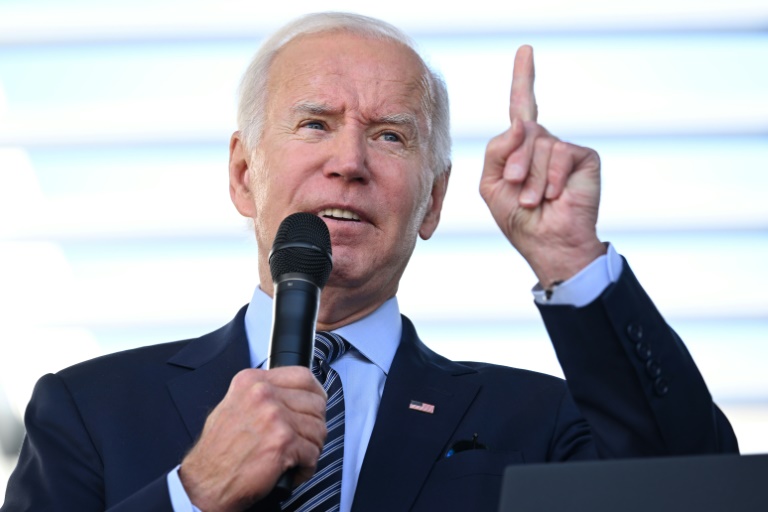
At a communications company in San Diego, Biden highlighted his successes in passing legislation to pour federal funding into semiconductors and other high-tech industries, as well as strong employment figures.

While acknowledging that voters were “struggling with inflation,” now at the highest rate in four decades, Biden focused on “the bright spots we’re seeing across the country.”

“Our best days are ahead of us, they’re not behind us,” he said.

Later, he told journalists he was “optimistic” and said “we’re going to win this time. I feel really good about our chances.”

However, polls show Republicans poised for potentially heavy victories in Tuesday’s congressional election, hoping to win control not only in the House of Representatives but the Senate.

That would turn the last two years of Biden’s first term into an almost certain maelstrom of political fighting and set the stage for a tense 2024 presidential election, with questions over whether Biden, who turns 80 this month, will want to run again.

Trump, who has championed a widespread, far-right conspiracy theory that he really beat Biden in 2020, sent his strongest signal so far that he’s planning a comeback bid.

At a rally Thursday in Iowa, the first state to hold its Republican nominating contest in presidential elections, Trump said: “In order to make our country successful and safe and glorious, I will very, very, very probably do it again, OK? Very, very, very probably.”

“Get ready. That’s all I’m telling you. Very soon. Get ready. Get ready,” he said.

According to a report in Axios on Friday, aides are firming up plans for a November 14 announcement.

That, however, is likely to depend on how well the right-wing candidates promoted by Trump do on Tuesday. Another factor in play is the threat hanging over Trump from an investigation into his hoarding of top secret documents at his Florida golf resort — and potential indictment on serious criminal charges.

For now, Republicans are confident they can at minimum get the one state they need to move the Senate from 50-50 to their own narrow majority, while expecting solid gains in the House of 12 to 25 seats, overcoming the Democrats’ current eight-member advantage.

– ‘I’ve got a plan’ –

The final weeks of the campaign have seen Republicans even looking beyond the country’s swing states to Democratic bastions that once seemed out of reach. 

Strategists from both parties are seeing districts across New York, Oregon and Connecticut that went for Biden by double digits in 2020 coming back into play. 

Hillary Clinton campaigned on Thursday in New York to boost the faltering fortunes of Governor Kathy Hochul while former president Barack Obama speaks in Pennsylvania Saturday. Biden himself was set to campaign in Democratic stronghold New York on Sunday.

The White House did get some good news Friday, with official figures for October showing the economy added 261,000 jobs and unemployment at low levels.

“I’ve got a plan to bring costs down, especially for health care, energy and other everyday expenses… The Republican plan is very different,” Biden said in a statement. 

“They want to increase prescription drug costs, health insurance costs and energy costs, while giving more tax breaks to big corporations and the very wealthy.”

In another glimmer of hope for the Democrats, Oprah Winfrey endorsed Pennsylvania Senate candidate John Fetterman during a virtual get-out-the-vote event Thursday.

It was a notable snub of Fetterman’s Republican rival, celebrity surgeon Mehmet Oz, who rose to fame largely through appearances on Winfrey’s show. 

But with the Republicans confident of flipping Georgia and Nevada, the Keystone State might not even be needed for a takeover of the Senate. 

Indigenous people free tourists taken in Peruvian Amazon

Members of an Indigenous group on Friday freed more than 100 tourists whom they had abducted in the Peruvian Amazon a day earlier to protest what they called government inaction after an oil spill, officials said.

The group of detained tourists — some 27 from the United States, Spain, France, Britain, Switzerland and 80 from Peru itself — included several children.

“They are already returning to their places of origin,” Tourism Minister Roberto Sanchez told reporters in Lima.

Travelling on a river boat, the tourists were kidnapped Thursday by members of the Cuninico community pressing for government intervention following a September 16 spill of 2,500 tons of crude oil into the Cuninico river.

Community leader Watson Trujillo said Thursday the community took the “radical measure” to try to convince the government to send a delegation to assess the environmental damage to a region home to about 2,500 Indigenous people.

On Friday, the office of Peru’s human rights ombudsman said negotiations had led to the Cuninico “accepting our request to release” the tourists.

“They are freeing us all,” Angela Ramirez, a Peruvian cyclist who was among the tourists, later told AFP via WhatsApp.

She added there had been “a lot of anxiety, much fatigue” as the group awaited news on their fate and slowly started running out of water and food during the 28-hour ordeal.

The September spill was caused by a rupture in the Norperuano oil pipeline owned by state-owned Petroperu to transport crude oil from the Amazon region to the ports of Piura, on the coast.

According to Petroperu, the spill was the result of an intentional 21-centimeter cut in the pipeline pipe.

Stocks, oil prices rally on China hopes

Stock markets and oil prices rallied Friday on hopes China would roll back some of its economically-painful policies surrounding Covid.

Equities also got a boost from the latest US jobs data, which showed that hiring remained resilient and wages continued to rise, though at a slower pace, raising hopes of a soft landing of the economy despite rising interest rates aimed at quelling inflation.

“Asia markets bounced back strongly today on more unsubstantiated reports that the Chinese government is looking at a reopening strategy as it looks to navigate a path out of the straitjacket of its current zero-Covid policy,” said CMC Markets analyst Michael Hewson. 

“These reports, which still haven’t been confirmed in any official capacity, have prompted a huge relief rally in equity markets, despite concerns that any reopening is unlikely to happen in the immediate future, and the very real risk that it is merely a sucker’s rally,” he added.

The rally continued into Europe, where London, Paris and Frankfurt all rose at least two percent.

Wall Street stocks climbed as well, with major indices all finishing more than one percent higher after a volatile day of trading.

The optimism lifted oil prices, with Brent crude jumping 4.1 percent and West Texas Intermediate bouncing five percent as traders eyed rising demand for crude on the news out of China.

The pound also won back some ground against the dollar, rising nearly two percent after tumbling after the Bank of England said the UK economy could face a two-year-long recession that it believes has already begun.

The BoE raised its main interest rate by 0.75 percentage point on Thursday, the most in 33 years in efforts to contain runaway inflation.

This came after the US Federal Reserve hiked its key rate by the same amount — the sixth increase this year — as central banks try to cool decades-high inflation.

The Fed has pointed to a still-strong labor market as a key reason for not easing up on its  aggressive tightening.

The addition of 261,000 US jobs last month — far more than economists had forecast — likely will reinforce the determination of policymakers to continue the hawkish stance, even if they slow the pace of increases.

That would normally see equities tumble as higher interest rates are bad for most businesses.

But the figures are “consistent with achieving a soft landing for the economy,” said market analyst Patrick O’Hare at Briefing.com, who also cited a “buy-the-dip” dynamic after US stocks fell four straight sessions earlier in the week.

While Fed Chair Jerome Powell said it is premature to think about pausing rate hikes, Boston Fed President Susan Collins added on Friday she sees a chance to achieve the goal of reining in price increases without putting the brakes on growth entirely.

But Chris Beauchamp, chief market analyst at online trading platform IG, pointed to one indicator in the report that suggests a drop of 300,000 jobs was the reason why the unemployment rate inched higher.

“This might be a case of cherry-picking par excellence, but markets have taken it as the first sign that the hitherto-unstoppable US market is weakening, thus perhaps bringing forward the chances of that fabled Fed pivot we keep hearing so much about,” said Beauchamp.

Markets have been looking for any data that would help the Fed “pivot” away from its aggressive rate hikes.

– Key figures around 2030 GMT –

New York – Dow: UP 1.3 percent at 32,403.22 (close)

New York – S&P 500: UP 1.4 percent at 3,770.55 (close)

New York – Nasdaq: UP 1.3 percent at 10,475.25 (close)

London – FTSE 100: UP 2.0 percent at 7,334.84 (close)

Frankfurt – DAX: UP 2.5 percent at 13,459.85 (close)

Paris – CAC 40: UP 2.8 percent at 6,416.44 (close)

EURO STOXX 50: UP 2.7 percent at 3,688.33 (close)

Tokyo – Nikkei 225: DOWN 1.7 percent at 27,199.74 (close)

Hong Kong – Hang Seng Index: UP 5.4 percent at 16,161.14 (close)

Shanghai – Composite: UP 2.4 percent at 3,070.80 (close)

Pound/dollar: UP at $1.1376 from $1.1160 Thursday

Euro/dollar: UP at $0.9964 from $0.9751

Dollar/yen: DOWN at 146.62 yen from 148.25 yen

Euro/pound: DOWN at 87.56 from 87.73 pence

Brent North Sea crude: UP 4.1 percent at $98.57 per barrel

West Texas Intermediate: UP 5.0 percent at $92.61 per barrel

burs-rl-bys/

US sees strong job gains in October as wages move higher

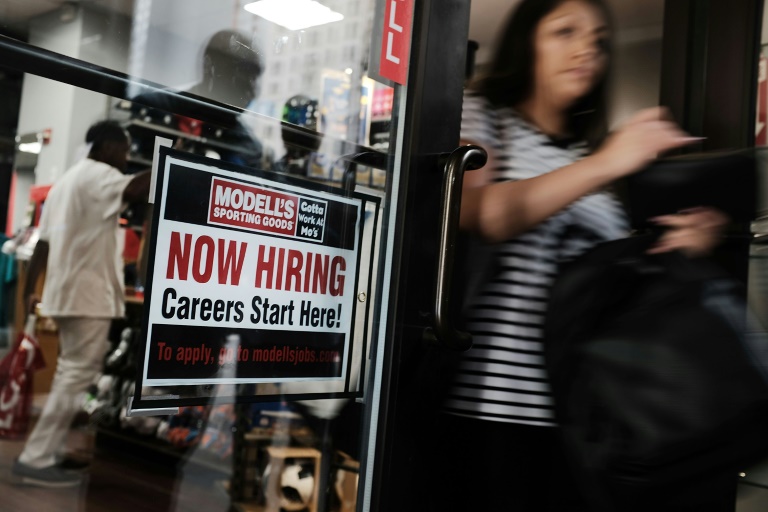
US job gains topped expectations in October, according to official data released Friday, as hiring remained resilient and wages moved ever higher, underscoring the challenges in lowering rampant inflation.

The data comes days ahead of critical midterm elections, where decades-high inflation has propelled economic issues to the top of voters’ minds and President Joe Biden faces a battle to avoid losing control of both chambers of Congress.

The figures will provide little comfort to the Federal Reserve, which has been battling to cool the economy, as policymakers fear high prices will become entrenched and rising pay will create an upward spiral — inflicting more harm on families and businesses.

American employers added 261,000 workers last month, far more than economists had forecast, though the pace was lower than the 315,000 increase in September, which was revised much higher than originally reported by the Labor Department.

The jobless rate rose two-tenths to 3.7 percent, according to the closely-watched US employment report.

Biden cheered the data which showed 10 million jobs have been created since he took office in January 2020, but he recognized the hardship Americans face due to higher prices.

“Inflation is our top economic challenge… The global inflation that is raging in other countries is hitting us as well,” Biden said in a statement on Friday.

He said policymakers will “do what it takes to bring inflation down.”

Average hourly earnings for private sector workers jumped another 12 cents or 0.4 percent last month, to $32.58, the report said.

Wages have increased 4.7 percent over the last 12 months as firms have had to compete to find and retain workers in the tight labor market. 

That pace is slightly slower than in September, which the Fed will welcome, but many employees are pushing for increases to avoid losing ground to elevated consumer costs.

US markets rallied following the latest data, which raised hopes of a soft landing for the economy. Major indices closed higher on Friday, despite the Fed’s pledge that interest rates will need to rise further to quell inflation.

– ‘Softening’ –

“The bottom line here is that the labor market is softening, but has not yet reached the point where the data are screaming at the Fed to stop tightening,” said Ian Shepherdson, chief economist at Pantheon Macroeconomics, in an analysis.

But if employment trends continue, markets will start to push policymakers to “rethink the idea of continued hikes next year,” he added.

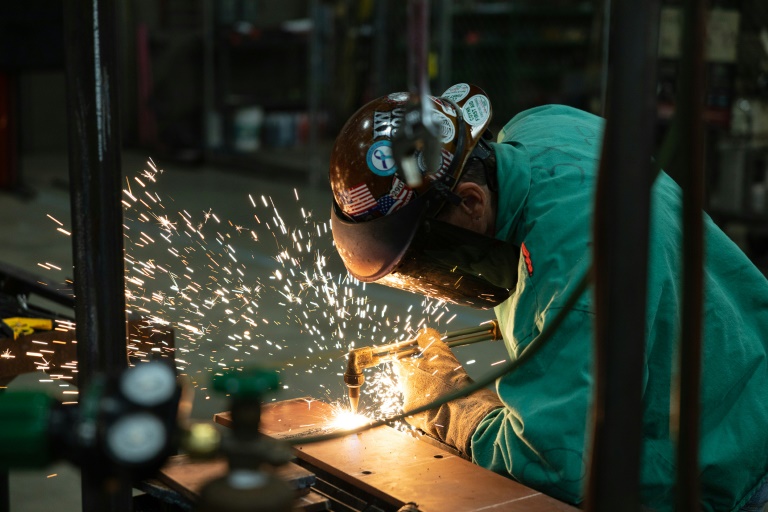
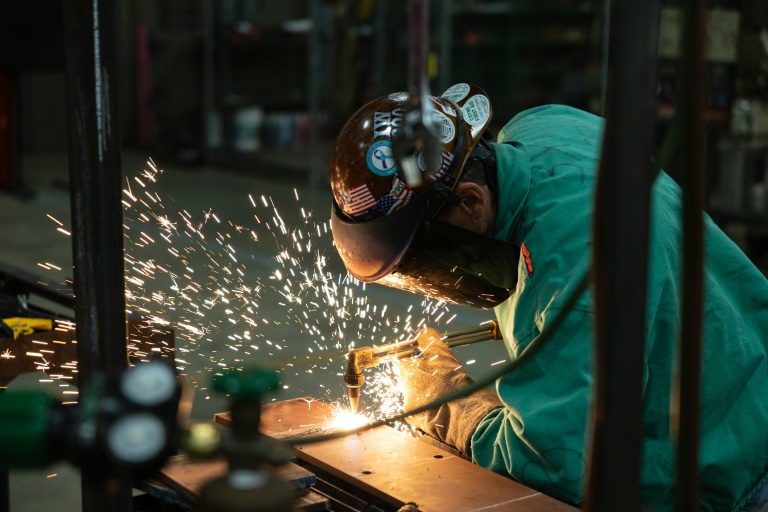
The data showed notable job gains in health care, professional and technical services, and manufacturing.

The Fed has raised borrowing rates six times this year to cool demand, but there have been few signs it is having an impact on consumer spending or inflation.

The central bank said this week that it would have to continue hiking rates, although that has raised the risk that the world’s biggest economy will suffer a downturn.

But Susan Collins, president of the Boston Federal Reserve Bank said she sees a chance to accomplish the task of reining in price increases without completely putting the brakes on growth.

While inflation so far is only slowly drifting down, “I do not believe a significant slowdown is required to accomplish our goal,” she said in a speech in Washington on Friday.

But she stressed that the Fed must continue to act as “current levels of inflation are simply too high, and are taking a significant toll on households and firms.”

While the policy tightening normally would be expected to lead to job losses, economists say employers are reluctant to shed workers that they struggled to find.

“The data are still showing strong positive momentum in the labor market which is not yet showing much adjustment in response to a rapid tightening of monetary policy,” said Rubeela Farooqi of High Frequency Economics. 

“These data will keep the Fed on track to keep raising rates into restrictive territory,” she said in an analysis.

US sees strong job gains in October as wages move higher

US job gains topped expectations in October, according to official data released Friday, as hiring remained resilient and wages moved ever higher, underscoring the challenges in lowering rampant inflation.

The data comes days ahead of critical midterm elections, where decades-high inflation has propelled economic issues to the top of voters’ minds and President Joe Biden faces a battle to avoid losing control of both chambers of Congress.

The figures will provide little comfort to the Federal Reserve, which has been battling to cool the economy, as policymakers fear high prices will become entrenched and rising pay will create an upward spiral — inflicting more harm on families and businesses.

American employers added 261,000 workers last month, far more than economists had forecast, though the pace was lower than the 315,000 increase in September, which was revised much higher than originally reported by the Labor Department.

The jobless rate rose two-tenths to 3.7 percent, according to the closely-watched US employment report.

Biden cheered the data which showed 10 million jobs have been created since he took office in January 2020, but he recognized the hardship Americans face due to higher prices.

“Inflation is our top economic challenge… The global inflation that is raging in other countries is hitting us as well,” Biden said in a statement on Friday.

He said policymakers will “do what it takes to bring inflation down.”

Average hourly earnings for private sector workers jumped another 12 cents or 0.4 percent last month, to $32.58, the report said.

Wages have increased 4.7 percent over the last 12 months as firms have had to compete to find and retain workers in the tight labor market. 

That pace is slightly slower than in September, which the Fed will welcome, but many employees are pushing for increases to avoid losing ground to elevated consumer costs.

US markets rallied following the latest data, which raised hopes of a soft landing for the economy. Major indices closed higher on Friday, despite the Fed’s pledge that interest rates will need to rise further to quell inflation.

– ‘Softening’ –

“The bottom line here is that the labor market is softening, but has not yet reached the point where the data are screaming at the Fed to stop tightening,” said Ian Shepherdson, chief economist at Pantheon Macroeconomics, in an analysis.

But if employment trends continue, markets will start to push policymakers to “rethink the idea of continued hikes next year,” he added.

The data showed notable job gains in health care, professional and technical services, and manufacturing.

The Fed has raised borrowing rates six times this year to cool demand, but there have been few signs it is having an impact on consumer spending or inflation.

The central bank said this week that it would have to continue hiking rates, although that has raised the risk that the world’s biggest economy will suffer a downturn.

But Susan Collins, president of the Boston Federal Reserve Bank said she sees a chance to accomplish the task of reining in price increases without completely putting the brakes on growth.

While inflation so far is only slowly drifting down, “I do not believe a significant slowdown is required to accomplish our goal,” she said in a speech in Washington on Friday.

But she stressed that the Fed must continue to act as “current levels of inflation are simply too high, and are taking a significant toll on households and firms.”

While the policy tightening normally would be expected to lead to job losses, economists say employers are reluctant to shed workers that they struggled to find.

“The data are still showing strong positive momentum in the labor market which is not yet showing much adjustment in response to a rapid tightening of monetary policy,” said Rubeela Farooqi of High Frequency Economics. 

“These data will keep the Fed on track to keep raising rates into restrictive territory,” she said in an analysis.

German leader calls for equal trade ties in controversial China summit

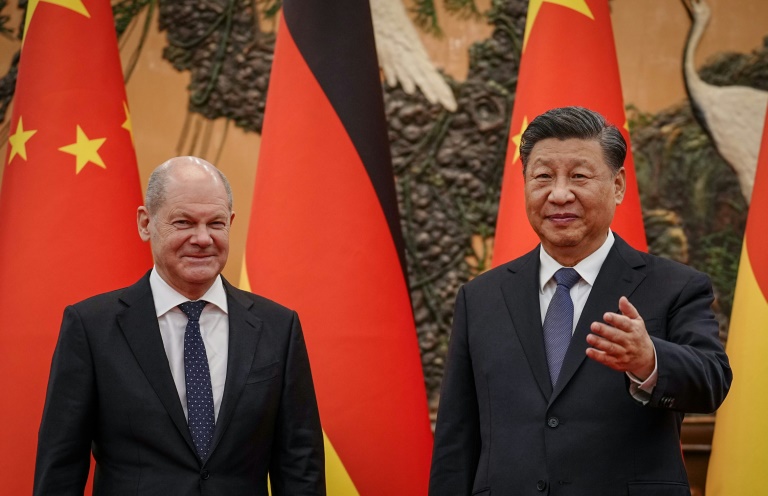
German Chancellor Olaf Scholz told Chinese leaders in Beijing on Friday that Berlin expected equal treatment on trade as he tried to drum up greater economic cooperation despite growing distrust of the Asian superpower in the West.

Scholz is under pressure to push Beijing to get tough on Russia over the war in Ukraine, and he said Friday that Germany and China had agreed they both opposed any use of nuclear weapons in the conflict.

The German chancellor is the first G7 leader to visit China since the start of the coronavirus pandemic, which led the world’s number two economy to close its borders and President Xi Jinping to largely eschew in-person diplomacy.

But his trip has prompted criticism at home over Berlin’s growing economic reliance on Beijing, and sparked controversy for coming so soon after Xi strengthened his hold on power in China just last month.

Tensions are also running high between the West and Beijing on issues ranging from Taiwan to alleged human rights abuses.

Scholz held talks with human rights lawyers critical of the regime in Beijing ahead of the trip, a source in his entourage told AFP.

Received by a smiling Xi at Beijing’s Great Hall of the People shortly after arriving, Scholz said he hoped to “further develop” economic cooperation — while alluding to areas of disagreement.

“It is good that we are able to have an exchange here about all questions, including those questions where we have different perspectives — that’s what an exchange is for,” Scholz said. 

“We also want to talk about how we can further develop our economic cooperation on other topics: climate change, food security, indebted countries.”

“Xi underscored the need for China and Germany, two major countries with great influence, to work together in times of change and instability and contribute more to global peace and development,” Beijing’s Xinhua News Agency reported.

Scholz also spoke with Chinese Premier Li Keqiang at a meeting in which he called for fair trade between the two countries. 

At a press briefing during which Chinese officials said there was “not enough time” for questions, Scholz urged Beijing to do more to “use its influence” on its ally Russia, currently engaged in a months-long war in Ukraine.

Both sides said they opposed the use of nuclear weapons in the conflict, with Scholz telling reporters: “Everyone says clearly that an escalation via the use of a tactical nuclear weapon is ruled out”.

China has steadfastly avoided criticising Russia for invading Ukraine and instead blames the United States and NATO for the war.

– ‘Keep doing business’ –

The German delegation of more than 60 people was met on the tarmac at Beijing airport by a military guard — as well as health workers in white hazmat suits who conducted mandatory PCR tests in buses converted into mobile laboratories. 

Scholz’s PCR test was taken in his plane by a German doctor he brought with him and supervised by Chinese health officials, according to the German government.

China’s economic importance is seen by some in Berlin as more crucial than ever, as Germany hurtles towards a recession battling an energy crisis triggered by the Ukraine war. 

China is a major market for German goods, from machinery to cars.

But German industry’s heavy dependence on China is facing fresh scrutiny after the over-reliance on Russian energy imports left it exposed when Moscow turned off the taps.

Scholz’s approach is still underpinned by the idea that “we want to keep doing business with China, no matter what that means for the dependence of our economy, and for our ability to act”, opposition lawmaker Norbert Roettgen told the Rheinische Post newspaper.

Concern about China has also come from within Germany’s ruling coalition, with Foreign Minister Annalena Baerbock saying past mistakes with Russia must not be repeated.

– ‘All the more important’ –

There are also concerns that the trip — coming on the heels of Xi securing a historic third term at a Communist Party Congress last month — may have unsettled the United States and the European Union.

“For Beijing, this is less about concrete outcomes and more about the symbolism of the German chancellor paying Xi a visit so soon after the party congress,” said Noah Barkin, visiting senior fellow in the Asia Program at the US German Marshall Fund.

“It gives international legitimacy to his leader-for-life status, and it shows that China is not isolated,” he added.

Berlin, however, says there have been consultations with key partners, and Scholz has insisted he is visiting China as a “European” as well as the leader of Germany.

In an article published before his departure, he said direct talks with Chinese leaders were “all the more important” after the long hiatus caused by the pandemic.

He promised to raise thorny topics such as respect for civil liberties and the rights of minorities in Xinjiang.

“We strongly agree with what he (Scholz) shared in that op-ed”, including “encouraging President Xi to press President Putin on never using a nuclear weapon of any kind”, US Secretary of State Antony Blinken said Friday after a meeting of G7 foreign ministers in Germany.

US to fund refurbishment of tanks, anti-air missiles for Ukraine

The United States will fund the refurbishment of T-72 tanks and HAWK surface-to-air missiles as part of a roughly $400 million security assistance package for Ukraine, the Pentagon announced Friday.

Air defense and armor capabilities are both high on the list of assistance desired by Ukraine, but the T-72s fall short of more modern tanks such as the German Leopard or US Abrams that have been sought by Kyiv.

The “tanks are coming from the Czech Republic defense industry, and the United States is paying for 45 of those to be refurbished, and the government of the Netherlands is matching our commitment” for a total of 90 T-72s, Deputy Pentagon Press Secretary Sabrina Singh told journalists.

The T-72s — a Soviet-era tank — will be equipped with “advanced optics, communications and armor packages,” with some ready by the end of December and others to be delivered in 2023, she said.

Asked why more modern tanks were not being provided, Singh cited factors including ease of use and cost.

“These are tanks that the Ukrainians know how to use on the battlefield,” she said, adding that “introducing a new main battle tank is extremely costly, is time sensitive, and it would be a huge undertaking for the Ukrainian forces.”

The package also funds the refurbishment of HAWK missiles from US inventories — an important asset as Ukraine seeks to counter Russian drone and missile strikes targeting its cities and energy infrastructure.

Singh declined to specify how many of the missiles were being refurbished, citing security concerns. 

– Drones, boats, infrastructure –

Spain previously agreed to provide four of the medium-range HAWK air defense systems to Ukraine — part of international efforts to assemble a patchwork of various surface-to-air capabilities to help the country defend against strikes.

US National Security Advisor Jake Sullivan acknowledged the urgency of the air defense issue on Friday in Kyiv, where he met President Volodymyr Zelensky and other senior officials.

“We recognize the acute need for air defense in this critical moment when Russia and Russian forces are raining missiles and Iranian drones down on the civilian infrastructure of this country,” Sullivan told a news conference.

The US assistance package also includes 1,100 Phoenix Ghost drone systems, as well as 40 armored boats and the refurbishment of 250 M1117 armored vehicles, among other items.

It falls under the Ukraine Security Assistance Initiative, which funds procurement of equipment from the defense industry, rather than taking items directly from existing military stocks.

The latest assistance brings Washington’s total commitment of security aid to Ukraine to more than $18.2 billion since Russia invaded in late February.

In addition to security assistance, the United States is examining options to address infrastructure damage from Russian strikes, which Zelensky said Thursday had left millions without power.

“We are looking to try to see what we can do in the short term to help Ukraine repair the damage done, particularly to their electrical infrastructure, the grid itself,” National Security Council spokesman John Kirby told journalists.

Washington is working with other countries on spare parts and technical assistance as well as the provision of fuel to help Ukraine during the coming winter, Kirby added.

Close Bitnami banner
Bitnami