US Business

Bank of England delivers biggest rate hike in 33 years

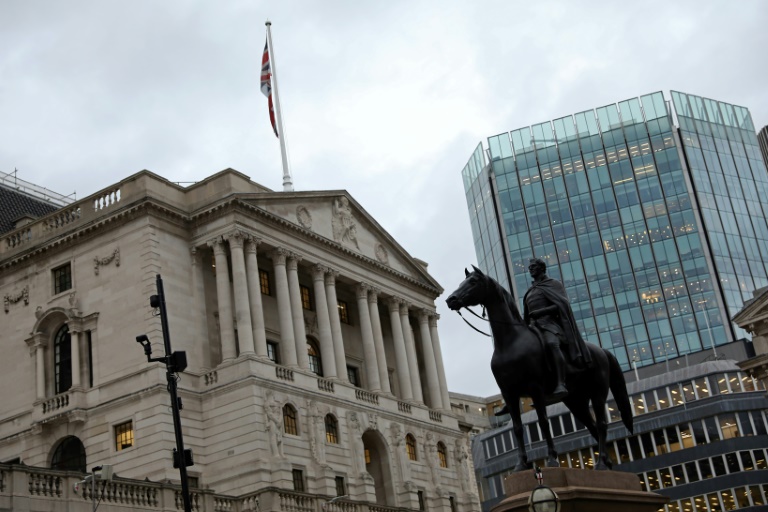
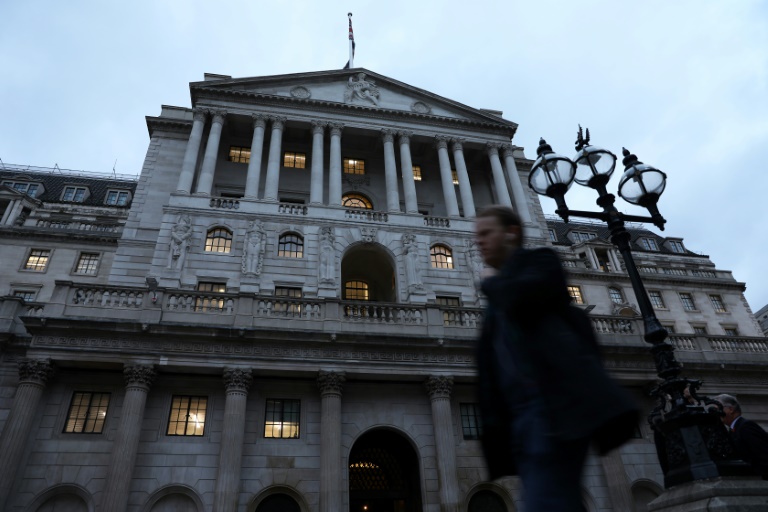
The Bank of England delivered Thursday its biggest interest rate hike since 1989 to combat soaring inflation and warned that Britain faced a recession set to last until mid-2024.

Britain’s economy has entered a recession set to last until mid-2024, the Bank of England said Thursday as it hiked its key interest rate by the biggest amount since 1989.

Following a regular meeting, the BoE said it was lifting borrowing costs by 0.75 percentage points to three percent — the highest level since the 2008 global financial crisis — with UK inflation at a four-decade high above 10 percent.

The latest rate hike mirrors aggressive rate-tightening by central banks worldwide as economies battle the highest prices in decades.

On Wednesday, the US Federal Reserve sprang a fourth consecutive hike of 0.75 percentage points — and its boss Jerome Powell suggested they would go higher than expected.

The BoE said British inflation would peak at 10.9 percent this year.

Minutes of its meeting said the economy was “likely to be entering recession”. 

They added: “Importantly, most of the tightening in policy over the past year was yet to feed through to the real economy.”

– Cost-of-living crisis –

The BoE rate increase is set to worsen a cost-of-living crisis for millions of Britons as hikes by central banks see retail lenders push up interest rates on their own loans.

“The central bank has had the unenviable job of fighting soaring inflation amid enormous economic and political uncertainty,” said Craig Erlam, analyst at trading platform OANDA.

Repayments on UK mortgages have surged in recent weeks also after the debt-fuelled budget of previous British prime minister Liz Truss spooked markets, forcing her to resign and triggering emergency buying of UK government bonds by the BoE.

Her successor Rishi Sunak has attempted to bring calm to markets by hinting at tax rises in a fresh budget on November 17, even if such a move further harms Britain’s economy.

“I think everyone knows we do face a challenging economic outlook and difficult decisions will need to be made,” Sunak, a former UK finance minister, told parliament on Wednesday.

British annual inflation stands at 10.1 percent, the highest level in 40 years, on soaring food prices and energy bills.

As the Covid-19 pandemic began in early 2020, the BoE slashed its key interest rate to a record-low 0.1 percent and also pumped massive sums of new cash into the economy.

The Bank of England started raising rates last December and Thursday’s hike was the eighth increase in a row.
Europe could face gas shortage next year: IEA

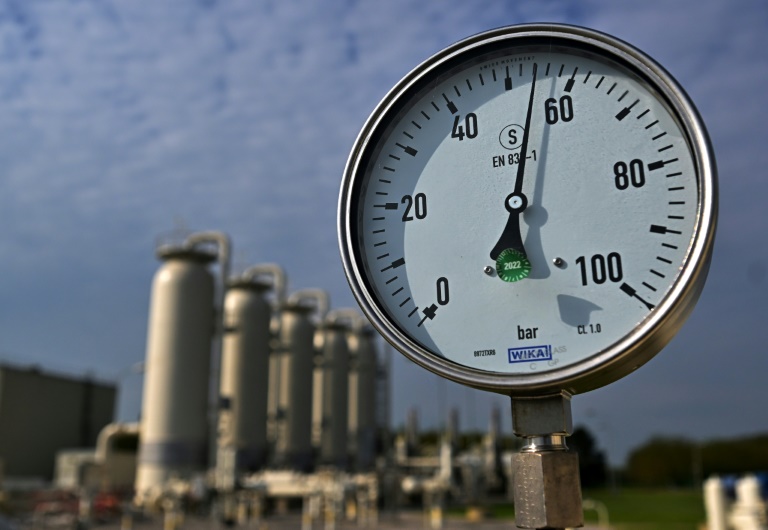
Europe must act immediately to prevent a shortage of natural gas next year as Russia slashes deliveries in the wake of the Ukraine war, the International Energy Agency warned Thursday.

The IEA said the shortfall would occur if Russia stops pipelines deliveries completely and China steps up its imports of liquefied natural gas, which Europe has relied upon to replace Russian supplies.

The region could lack 30 billion cubic metres that it needs “to fuel its economy and sufficiently refill storage sites during the summer of 2023, jeopardising its preparations for the winter of 2023-24,” the Paris-based agency said in a report.

Russia drastically cut supplies to Europe in suspected retaliation against Western sanctions over its invasion of Ukraine, but the region was able to fill storage sites for this upcoming winter.

Moscow delivered 60 billion cubic metres of gas to Europe this year, but the IEA said that it is “highly unlikely” that Russia will provide the same amount in 2023 and could cease deliveries entirely.

And while Chinese LNG imports were lower in the first 10 months of this year, the world’s second biggest economy could grab 85 percent of the expected increase in global LNG supplies if its purchases recover next year.

“With the recent mild weather and lower gas prices, there is a danger of complacency creeping into the conversation around Europe’s gas supplies, but we are by no means out of the woods yet,” IEA Executive Director Fatih Birol said in a statement.

Birol warned that Europe will face “an even sterner challenge” next winter.

“This is why governments need to be taking immediate action to speed up improvements in energy efficiency and accelerate the deployment of renewables and heat pumps — and other steps to structurally reduce gas demand,” he said.

Birol told reporters that Europe’s gas storage sites may only be 65 percent full in 2023, compared to 95 percent this year.

Stock markets sink, dollar jumps on central bank watch

Asian and European stock markets sank and the dollar rallied Thursday after the Federal Reserve warned US interest rates would go higher than previously expected in its fight against decades-high inflation.

The Fed on Wednesday unveiled a fourth straight 0.75-percentage-point increase as expected — the sixth hike this year to cool rampant prices.

The dollar on Thursday rose strongly against main rival including the pound and as the Bank of England was set to deliver its own bumper interest-rate hike in a decision due at 1200 GMT. 

The BoE is tipped to lift its key rate by 0.75 percentage points to three percent — the most in 33 years and putting British borrowing costs at the highest level since 2008.

Norway’s central bank raised its policy rate for a fourth consecutive time, with a quarter-point increase that took it to its highest level since 2009 at 2.5 percent.

Oil prices also fell heavily on Thursday as aggressive rate hikes increase expectations of a global recession.

Hong Kong led stock market losses as the city’s central bank hiked rates in line with the Fed, owing to their policy link via the dollar peg.

Traders gave back a chunk of the previous two days’ gains, which came on the back of speculation China was planning to roll back some of its painful zero-Covid policies.

Adding to the selling was confirmation from Beijing’s health authority that it intended to stick to the strategy.

– ‘Some way to go’ –

“Stocks fell… after the Federal Reserve raised benchmark interest rates and warned that there was still some ways to go in its efforts to tame inflation,” said Mark Haefele, chief investment officer at UBS Global Wealth Management.

Before the Fed announcement, stocks had rallied for more than a week on speculation the US central bank would indicate that its rate tightening could soon reach a peak as the world’s biggest economy showed signs of slowing.

Yet Powell poured cold water on those hopes, telling a news conference that “incoming data since our last meeting suggests that ultimate level of interest rates will be higher than previously expected”.

He added that “we still have some ways” until borrowing costs were at the necessary level and that it “is very premature to be thinking about pausing”.

Investors now expect Fed rates to top out at more than five percent, compared with four percent previously.

Global equities have slumped this year on mounting fears that rising borrowing costs will curtail consumer and business spending and spark a global recession.

“The Federal Reserve… didn’t offer any real crumbs of comfort for traders or indeed the global economy when it came to how rapidly the now relentless — and potentially damaging — run of rate hikes may conclude,” said Scope Markets analyst James Hughes.

– Key figures around 1030 GMT –

London – FTSE 100: DOWN 0.4 percent at 7,113.98 points

Frankfurt – DAX: DOWN 0.8 percent at 13,156.90

Paris – CAC 40: DOWN 0.6 percent at 6,238.31

EURO STOXX 50: DOWN 0.8 percent at 3,593.41

Hong Kong – Hang Seng Index: DOWN 3.1 percent at 15,339.49 (close)

Shanghai – Composite: DOWN 0.2 percent at 2,997.81 (close)

Tokyo – Nikkei 225: Closed for a holiday

New York – Dow: DOWN 1.6 percent at 32,147.76 (close)

Pound/dollar: DOWN at $1.1258 from $1.1390 Wednesday

Euro/dollar: DOWN at $0.9754 from $0.9816 

Dollar/yen: UP at 148.16 yen from 147.90 yen

Euro/pound: UP at 86.64 pence from 86.17 pence

Brent North Sea crude: DOWN 1.4 percent at $94.80 per barrel

West Texas Intermediate: DOWN 1.8 percent at $88.40 per barrel

Norway brings climate ambitions in line with EU

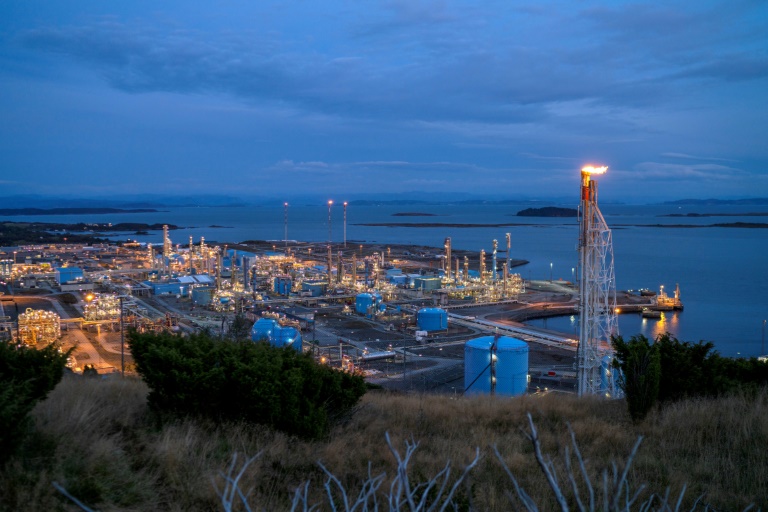
Norway, the largest oil producer in Western Europe, on Thursday announced it intended to cut 1990 emissions levels “at least 55 percent” by 2030, in line with EU goals.

Just days before the COP27 climate conference in Egypt, the announcement is in line with commitments made by the centre-left coalition government when it took power in 2021.

While not a member of the European Union, the Scandinavian country’s new target brings Oslo in line with the overall target set by the 27-member bloc. Oslo also announced that it would present climate plans each year going forward.

Norway’s climate target was previously to reduce emissions by between 50 and 55 percent of 1990 levels.

“This sends a strong signal to other countries, and we hope that more will up their targets,” Prime Minister Jonas Gahr Store said on Thursday.

Store’s Labour Party and its ally, the Centre Party, rule out dismantling the oil sector, which is a major part of the national economy.

The war in Ukraine and the reduction in Russian exports have seen Norway become the leading gas supplier to Britain and the European Union.

“The demand for fossil fuel energy will fall and renewable energy production must increase. This has to go hand in hand,” Store told a news conference.

He stressed that the planet would still need oil in years to come and argued it was “not a bad thing that some of it comes from the Norwegian continental shelf, which has the lowest emissions.” 

Last week, the United Nations said current country climate pledges leave the world on track to heat by as much as 2.6 degrees Celsius this century, warning that emissions must fall 45 percent this decade to limit disastrous global warming.

A day earlier, the UN’s climate change agency had said governments were doing “nowhere near” enough to keep global heating to 1.5C and would steer a world already wracked by increasing floods, heatwaves and storms towards “catastrophic” warming.

iPhone factory lockdown shows risks of China dependence, analysts say

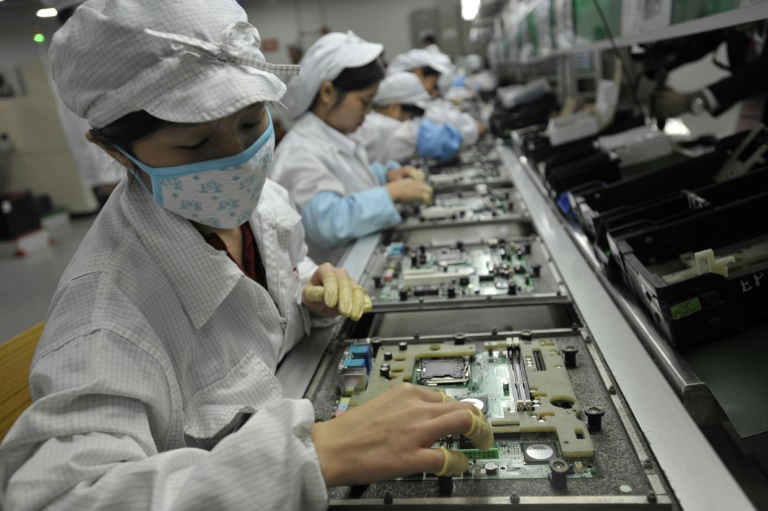
The lockdown of Foxconn’s Zhengzhou factory, the world’s biggest producer of iPhones, has highlighted some of the risks of relying on zero-Covid China’s manufacturing sector, analysts told AFP.

Foxconn, Apple’s principal subcontractor, has seen a surge in Covid-19 cases at its Zhengzhou site, leading the company to lock down the vast complex in a bid to keep the virus in check.

Images then emerged of panicking workers fleeing the site on foot in the wake of allegations of poor conditions at the facility, which employs hundreds of thousands of workers.

Foxconn is China’s biggest private sector employer, with over a million people working across the country in its around thirty factories and research institutes.

But Zhengzhou is the Taiwanese giant’s crown jewel, churning out iPhones in quantities not seen anywhere else.

“In a normal situation, almost all the iPhone production is happening in Zhengzhou,” said Ivan Lam, an analyst with specialist firm Counterpoint.

– Risk of ‘strong dependence’ –

Apple manufactures more than 90 percent of its products in China, which is also one of its most important markets.

“For Apple, it is once again a bad example in terms of the stability of production chains,” Alicia Garcia Herrero, Asia-Pacific manager for Natixis bank, told AFP.

Experts say the company’s heavy dependence on China “brings potential risks, especially when the US-China trade war shows no signs of de-escalating,” according to Dezan Shira & Associates, a consulting firm.

Opened in 2010, the Zhengzhou factory employs up to 300,000 people who live on-site all year round  — creating a sprawling tech hub known as “iPhone city”.

It is made up of three factories, one of which produces the iPhone 14 — Apple’s newest handset model.

Apple did not respond to AFP’s request for comment on how exactly the lockdown will affect its production.

Analyst Lam estimates the partial stopping of work at the site resulted in a loss of “10 to 30 percent” of output, but said part of the production has also been temporarily moved to other Foxconn sites in China.

According to Foxconn, the site is currently operating a “closed loop” with the workers avoiding all contact with the outside world, while their daily bonuses have been quadrupled.

“This incident may have a limited impact,” on worldwide iPhone production, estimated analyst Ming-Chi Kuo, who specialises in Apple products.

“But suppliers in China must learn to improve closed-loop production efficiency in response to the zero-Covid policy,” he added.

– Looking elsewhere –

China is the last major economy committed to a zero-Covid strategy, persisting with snap lockdowns, mass testing and lengthy quarantines in a bid to stamp out emerging outbreaks.

But new variants have tested local officials’ ability to snuff out flare-ups faster than they can spread, causing much of the country to live under an ever-changing mosaic of Covid curbs.

Apple has already begun outsourcing part of its production to India and is eyeing Vietnam in a bid to wean itself off Chinese manufacturing — a trend accelerated by Covid.

But that’s not so simple — last year, nearly 7.5 million iPhones were made in India, just three percent of Apple’s total production.

“Increasing the capacity of factories (in India) is difficult,” Lam said.

Turkish inflation tops 85%, highest since 1997

Turkish inflation surged past 85 percent in October, its highest level since 1997, official data showed Thursday, as President Recep Tayyip Erdogan sticks to unorthodox policies to combat a cost-of-living crisis.

Central banks worldwide are raising borrowing costs in efforts to tame soaring consumer prices, but Turkey has bucked the global trend, with Erdogan calling higher interest rates his “biggest enemy”.

Last month, Turkey’s central bank cut its policy rate for a third consecutive time, bringing it down to 10.5 percent from 12 percent.

With an election looming next year, Erdogan argues that high rates are the cause of inflation, not the opposite, in defiance of orthodox economic theories.

Turkey’s inflation has steadily risen since reaching a low of 16.6 percent in May 2021.

It hit 85.51 percent in October, according to state statistics agency TUIK, up from 83.45 percent in September.

Independent economists, however, say the rate is more than twice as high.

At the same time, the Turkish lira has plunged against the dollar.

Despite soaring consumer prices, Erdogan praised the state of the country’s economy in an address to his ruling AKP lawmakers in parliament on Wednesday.

“Thank God, the wheels of the economy are turning,” he said. 

“Our economic model, which we have summarised as growth through investment, employment, production, export and current account surplus, is bearing fruit.”

The head of the central bank, however, has said that success could not be declared.

“We cannot consider ourselves very successful in the fight against inflation,” central bank governor Sahap Kavcioglu said last month. 

“If there is inflation, there is a problem, it is not right to talk about success there, we know the distress of the citizens very closely, we take measures, we believe that we will see the result in a very short time,” he added. 

The October surge was fuelled by a 117 percent rise in transportation prices and a 99 percent jump for food.

The central bank has raised its inflation forecast for the full year from 60.4 percent to 65.2 percent.

– ‘Disguise the real figure’ –

Many Turks and the opposition question the credibility of the official government data. 

According to a respected monthly study released by independent economists from Turkey’s ENAG research institute, the annual rate of consumer price increases reached 185.34 percent in October.  

Opposition leader Kemal Kilicdaroglu accused the government of hiding the real inflation while setting public employees’ salaries. 

“Why does TUIK (statistics agency) disguise the real figure?” he asked last month.

“Because when it gives the real figure, the pensions will be determined accordingly. Workers’ wages will be determined accordingly. Civil servants’ salaries will be determined accordingly. If you show it low, it will give a low raise,” he argued.

Erdogan’s government blames inflation on outside factors such as the global spike in food and energy prices caused by Russia’s invasion of Ukraine.

The central bank is expected to cut rates again at its next policy meeting and then end the easing cycle, as Erdogan has said the rate should be in single digits.

Liam Peach, senior emerging markets economist at London-based Capital Economics, said the bank would remain “under pressure” from Erdogan for looser policy.

While the central bank has said that it will deliver one more 150-basis-point rate cut at its meeting later this month, “there is a risk of further easing beyond that, adding more downward pressure onto the lira,” he said in a note to clients. 

Bank of England set for biggest rate hike in 33 years

The Bank of England is widely expected to hike its key interest rate on Thursday by the biggest amount since 1989 as it bids to cool sky-high British inflation.

Following a regular meeting, the BoE is expected to lift borrowing costs by 0.75 percentage points to three percent, according to market consensus, which would be the highest level since the 2008 global financial crisis.

Some analysts, however, are predicting a rise of one percentage point, also a 33-year high.

The move would mirror aggressive rate-tightening by central banks worldwide as economies battle the highest prices in decades.

Ahead of the UK decision, the London stock market opened sharply lower after the US Federal Reserve sprang a fourth consecutive hike of 0.75 percentage points — and its boss Jerome Powell suggested they would go higher than expected.

– ‘Unenviable job’ –

The BoE rate call, due at 1200 GMT, is set to worsen a cost-of-living crisis for millions of Britons as hikes by central banks see retail lenders push up interest rates on their own loans.

“The Bank of England will likely join the Fed in raising rates by 75 basis points,” said Oanda analyst Craig Erlam.

“The central bank has had the unenviable job of fighting soaring inflation amid enormous economic and political uncertainty.”

Repayments on UK mortgages have surged in recent weeks also after the debt-fuelled budget of previous British prime minister Liz Truss spooked markets, forcing her to resign and triggering emergency buying of UK government bonds by the BoE.

Her successor Rishi Sunak has attempted to bring calm to markets by hinting at tax rises in a fresh budget on November 17, even if such a move further harms Britain’s economy.

“I think everyone knows we do face a challenging economic outlook and difficult decisions will need to be made,” Sunak, a former UK finance minister, told parliament on Wednesday.

British annual inflation stands above 10 percent, the highest level in 40 years, on soaring food prices and energy bills.

– Inflation update –

The BoE will also give its latest inflation and growth forecasts, with analysts indicating that the UK economy may already be in recession.

“The Bank of England is expected to hike its interest rate by no more than 75 basis points, on conviction that the Sunak government would opt for some fiscal austerity, and nothing too crazy to wreak havoc, again,” forecast Swissquote analyst Ipek Ozkardeskaya.

As the Covid-19 pandemic began in early 2020, the BoE slashed its key interest rate to a record-low 0.1 percent and also pumped massive sums of new cash into the economy.

The Bank of England started raising rates last December and another hike Thursday would be the eighth increase in a row.

Ruth Gregory, senior UK economist at Capital Economics, predicts that the BoE will raise its interest rate by one percentage point on Thursday and by the same amount in December.

“If we are right that domestic inflation will be sticky, it may mean that the Bank of England ultimately has to act more aggressively further ahead,” she added.

N. Korea ICBM launch appears to have failed, Seoul says

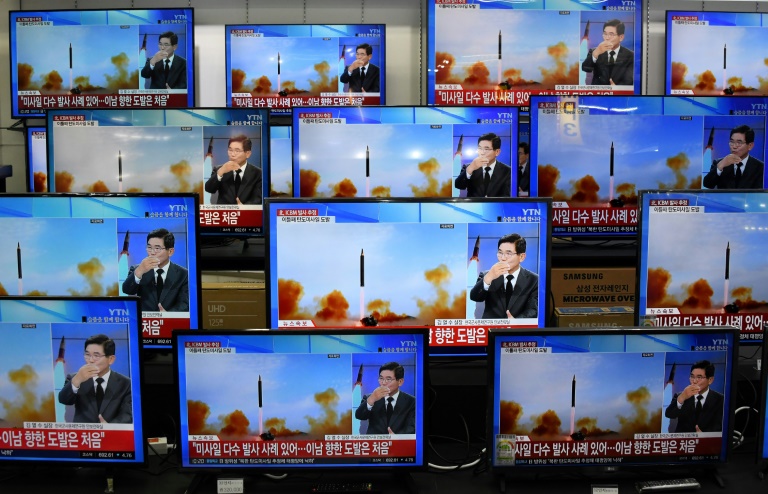
North Korea unsuccessfully fired an intercontinental ballistic missile during a new salvo of launches Thursday, the South Korean military said, with Washington urging all nations to enforce sanctions on Pyongyang.

The launches prompted South Korea and the United States to extend their ongoing joint air drills, the largest-ever such exercises, citing North Korea’s “provocations”.

People in parts of northern Japan were ordered to seek shelter during the North’s latest launches, which included two short-range missiles and followed a blitz of projectiles fired Wednesday.

The largest of Thursday’s launches, however, “is presumed to have ended in failure”, the South Korean military said.

The United States condemned the ICBM launch despite its apparent failure.

“This action underscores the need for all countries to fully implement DPRK-related UN Security Council resolutions,” US State Department spokesman Ned Price said, using the North’s official name of the Democratic People’s Republic of Korea.

Washington also confirmed information provided by the South Korean military, which said earlier it had detected the launch of the long-range ballistic missile at around 7:40 am (2240 GMT Wednesday) in the Sunan area of Pyongyang.

Seoul’s Joint Chiefs of Staff said the ICBM appeared to have failed during “second-stage separation”.

“The range of the long-range ballistic missile is around 760 kilometres, altitude of 1,920 kilometres at speed of Mach 15,” the military said.

It also detected what were “believed to be two short-range ballistic missiles fired at around 08:39 am from Kaechon, South Pyongan province.”

South Korea’s military “is maintaining a full readiness posture while closely cooperating with the US and strengthening surveillance and vigilance,” it said.

– ‘The most horrible price’ –

Pyongyang fired more than 20 missiles on Wednesday, including one that landed near South Korea’s territorial waters.

One short-range ballistic missile crossed the Northern Limit Line, the de facto maritime border, on Wednesday, prompting President Yoon Suk-yeol to call it “effectively a territorial invasion”.

The launches come as Seoul and Washington stage their largest-ever joint air drills, involving hundreds of warplanes from both sides.

Pyongyang has called the exercise, dubbed Vigilant Storm, “an aggressive and provocative military drill targeting the DPRK”, and warned that, if it continues, Seoul and Washington will “pay the most horrible price in history.”

The exercise had been due to end Friday, but South Korea’s air force said Thursday that it would extend its air drills with the United States in response to the latest launches.

“The joint air forces have agreed to extend the Vigilant Storm drill that kicked off on October 31 with respect to the North’s recent provocations,” the air force said in a statement.

Tokyo confirmed Thursday’s launches, with the Japanese government issuing a special warning to residents of northern regions to stay indoors or seek shelter.

Tokyo initially said the missile had flown over Japan, prompting a “J-Alert” to be issued, but defence minister Yasukazu Hamada later said that “the missile did not cross the Japanese archipelago, but disappeared over the Sea of Japan.”

– ‘Tactical nuclear drills’ –

Washington and Seoul have repeatedly warned that Kim Jong Un’s recent missile launches could culminate in another nuclear test — which would be Pyongyang’s seventh.

“Quite possible tactical nuclear weapons test(s) will be next. Possibly very soon,” Chad O’Carroll of Seoul-based specialist site NK News said on Twitter.

Ahn Chan-il, a North Korean studies scholar, agreed. 

“These are North Korea’s pre-celebration events ahead of their upcoming nuclear test,” he told AFP.

“They also seem like a series of practical tests for their tactical nuclear deployment.”

North Korea revised its laws in September to allow for pre-emptive nuclear strikes, with leader Kim declaring the country to be an “irreversible” nuclear power — effectively ending negotiations over its banned arms programs.

On October 4, North Korea fired a missile over Japan that also prompted evacuation warnings. Pyongyang later claimed it was a new type of “ground-to-ground intermediate-range ballistic missile”.

It was the first time North Korea had fired a missile over Japan since 2017.

Pyongyang later claimed that the launch and a blizzard of other tests around the same time were “tactical nuclear drills” that simulated showering South Korea with nuclear-tipped missiles.

Psychedelics show promise in treating depression: study

For years, scientists have been looking ever more seriously at the therapeutic effect of psychedelics, which are not legal under US federal law. However, despite this renewed interest, large-scale studies are still lacking.

On Wednesday, researchers took an important step to fill this gap.

Their work, published in the New England Journal of Medicine, is the largest clinical trial ever conducted to evaluate the effect of psilocybin, a psychoactive substance found naturally in  “magic” mushrooms.

A single dose of 25 milligrams reduced symptoms of depression in people for whom several conventional treatments had failed, they showed.

An estimated 100 million people worldwide suffer from treatment-resistant depression. Some experts view psychedelics as a possible way to help them.

The researchers tested a synthetic version of psilocybin developed by the start-up Compass Pathway, which also funded the trials.

A total of 233 people in 10 countries took part in the study, during which they halted ongoing treatment but received psychological support.

They were divided into three groups, randomly receiving 1 milligram, 10 milligrams or 25 milligrams of the treatment.

The sessions, in a dedicated room, lasted between six and eight hours during which the participants were never left alone. Some described being immersed in “a dream-like state” that could be remembered, study co-author James Rucker told a news conference.

One participant required a sedative during the session because of anxiety. But the side effects observed — headaches, nausea, anxiety — were generally moderate and disappeared quickly.

– Larger trials needed –

Three weeks later, patients who received 25 mg showed significant improvement compared to lower doses on a baseline measure for depression. Just under 30 percent were in remission.

“It is the strongest evidence so far to suggest that further, larger and longer randomized trials of psychedelics are justified, and that psilocybin may (one day) provide a potential alternative to antidepressants that have been prescribed for decades,” said Andrew McIntosh, professor of psychiatry at the University of Edinburgh.

McIntosh was not involved in the study.

The phase 2 trials were designed to determine the dosage and confirm the existence of an appropriate effect.

Phase 3 trials, involving more participants, are scheduled to begin this year and run until 2025. The startup is already in touch with the US Food and Drug Administration and regulators in Europe.

Another expert offered caution.

“We don’t yet know enough about the potential side effects, particularly whether some people may experience a worsening of some symptoms,” said Anthony Cleare, a professor of psychopharmacology in London, who was not involved in the study.

In the trials, three participants showed suicidal behavior among those who received 25 mg, compared with none in the other groups.

These events, however, occurred more than 28 days after treatment, noted Guy Goodwin, professor of psychiatry at Oxford and chief medical officer of Compass Pathways.

“Our hypothesis is that the differences are by chance… but we can only settle this by doing further experiments,” he said.

The matter of long-term impact also remains open, as it faded when the participants were followed up three months later. Repeated doses may be necessary. Two doses will be tested in future trials, Goodwin said.

– ‘More flexible state’ –

Taking psilocybin leads to an increase in dopamine (known to regulate mood) and another neurotransmitter that may promote brain plasticity, Rucker said.

“When the brain is in a more flexible state, it opens what we consider to be a therapeutic window of opportunity, in which –in the context… of psychotherapy — you may be able to elicit positive changes in the minds of people,” Rucker said.

Psilocybin promotes “more communication between brain regions,” added Nadav Liam Modlin, also a co-author of the study.

Psilocybin, which is not addictive, is also studied for other pathologies including post-traumatic stress, anorexia, anxiety and addictions.

In 2020, the state of Oregon voted in favor of the therapeutic use of psilocybin. Exemptions have also been granted in Canada. 

But at the US federal level, psilocybin is treated as a dangerous drug in the same category as heroin. 

Asia, Europe join Wall St plunge as Powell wrecks Fed pivot hopes

Asian and European markets sank Thursday after the Federal Reserve hiked interest rates and boss Jerome Powell suggested they would go higher than expected, blowing a hole in hopes for a more dovish pivot in its fight against inflation.

Equities have rallied for more than a week on speculation the US central bank would join others in tamping down its monetary-tightening campaign as the economy showed signs of slowing.

On Wednesday, the bank unveiled a fourth straight 75 basis-point increase — the sixth hike this year — and opened the door to a smaller increase at future meetings, giving a boost to Wall Street.

But Powell soon after sent traders scattering when he told a news conference that while it would be appropriate to lessen the size of the hikes, “incoming data since our last meeting suggests that ultimate level of interest rates will be higher than previously expected”.

He added that “we still have some ways” until borrowing costs were at the necessary level and that it “is very premature to be thinking about pausing”.

And while there is a building fear that the increasingly tight monetary conditions will send the world’s top economy into a recession, the Fed boss said it would take time for the effects of the measures to kick in.

“The historical record cautions strongly against prematurely loosening policy,” he warned. “We will stay the course, until the job is done.”

Investors now expect rates to top out at more than five percent, compared with four percent currently.

The comments hammered the narrative that had supported stocks, sending Wall Street’s three main indexes tanking — led by rate-sensitive tech giants — and pushing the dollar up against its peers.

“Every time the market gets a little bit of dovish hope, it gets smacked on the nose with a rolled-up newspaper,” Scott Rundell of Mutual Ltd said. “There’s a lot of volatility still ahead.”

Hong Kong led the losses as the city’s central bank hiked rates in line with the Fed, owing to their policy link via the dollar peg.

Traders gave back a chunk of the previous two days’ gains, which came on the back of speculation China was planning to roll back some of its painful zero-Covid policies. Adding to the selling was confirmation from Beijing’s health authority that it intended to stick to the strategy.

Shanghai, Sydney, Seoul, Wellington, Mumbai, Bangkok, Taipei and Manila were also well in the red. Tokyo was closed for a holiday.

London, Paris and Frankfurt extended the losses.

“While the market got what it wanted in the context of expectations of smaller rate rises, they probably weren’t expecting that rates might need to go quite a lot higher, thus removing any prospect of an imminent pause, or even a rate cut much before the end of 2024,” said Michael Hewson at CMC Markets.

The release Friday of US jobs figures will give another insight into the state of the economy and particularly the labour market, which has remained resilient in the face of decades-high inflation and rising rates.

As the Fed is basing its moves on data, a strong reading could give officials room to continue lifting. 

Before that, the Bank of England is tipped to lift its key rate by 0.75 percentage points to three percent — the most in 33 years and putting them at the highest since 2008 — though some analysts are even predicting a full percentage point hike.

The pound sank against the dollar ahead of the announcement.

– Key figures around 0815 GMT –

Hong Kong – Hang Seng Index: DOWN 3.1 percent at 15,339.49 (close)

Shanghai – Composite: DOWN 0.2 percent at 2,997.81 (close)

Tokyo – Nikkei 225: Closed for a holiday

London – FTSE 100: DOWN 0.8 percent at 7,087.64

Euro/dollar: DOWN at $0.9776 from $0.9816 on Wednesday

Pound/dollar: DOWN at $1.1325 from $1.1390

Dollar/yen: UP at 148.00 yen from 147.90 yen

Euro/pound: UP at 86.33 pence from 86.17 pence

West Texas Intermediate: DOWN 1.0 percent at $89.13 per barrel

Brent North Sea crude: DOWN 0.7 percent at $95.45 per barrel

New York – Dow: DOWN 1.6 percent at 32,147.76 (close)

Close Bitnami banner
Bitnami