US Business

Republican denial of election results a 'path to chaos': Biden

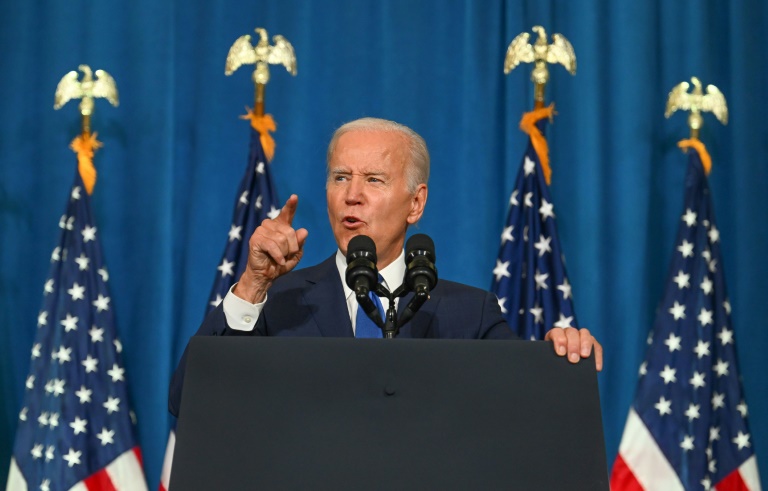
President Joe Biden warned US voters Wednesday that the future of democracy was at stake in next week’s midterms, with the steadfast refusal of some Republican candidates to accept election results opening a “path to chaos in America.”

With conservatives hammering his administration over the state of the economy, the 79-year-old Democrat aimed squarely at Republicans who have cast their lot with former president Donald Trump in denying Biden’s 2020 election victory.

“There are candidates running for every level of office in America… who won’t commit to accepting the results of the elections they’re in,” Biden said in a televised address to the nation.

Their goal, he said, was to follow Trump’s lead and try to “subvert the electoral system itself” — noting there are more than 300 Republican election deniers on the ballot in races across the country this year.

“They’ve emboldened violence and intimidation of voters and election officials,” he charged — less than two years after a mob of Trump supporters ransacked the US Capitol to try to overturn the 2020 result.

“That is the path to chaos in America,” he said. “It’s unprecedented. It’s unlawful. And, it is un-American.”

Biden’s dire warning of threats to democracy comes six days ahead of Tuesday’s vote, in which Republicans are heavily favored to capture the House of Representatives and possibly the Senate.

In the wake of a violent attack on the husband of the Democratic House speaker, Nancy Pelosi, which dramatically heightened concerns about heated political rhetoric, Biden urged Americans to unite in defense of democracy. 

“We must with an overwhelming voice stand against political violence and voter intimidation, period,” he said.

“We have to face this problem,” he said. “We can’t pretend it’s just going to solve itself.”

But nearly 22 months after the Capitol insurrection, polling shows that American voters are more concerned with the economy. 

More than half say the price of gas and consumer goods is the economic issue that worries them the most in a new Quinnipiac University national poll.

In response to Biden’s speech, House Republican Leader Kevin McCarthy accused the president of refusing “to address Americans top concerns.”

“In six days, Republicans will win convincingly and help put America back on track,” McCarthy, who stands to become House speaker if the Republicans win next week’s election, tweeted.

Democrats are being attacked on inflation and fears of a looming recession, with the Federal Reserve repeatedly hiking interest rates — and Biden acknowledged Wednesday that “inflation is still hurting” at a White House event with union workers and employers.

His admission came as the US central bank delivered another steep rate hike, raising the benchmark borrowing rate by 0.75 percentage points — the fourth straight increase of that size and the sixth hike this year.

– Balancing act –

Biden, whose approval rating has been underwater for more than a year, has been relatively inconspicuous on the campaign trail.

But he entered the fray in the home stretch with Wednesday’s address, ahead of stump speeches in Pennsylvania, New Mexico, California and Maryland.

Democrats have some major legislative victories to tout since Biden’s election win, but they have been hamstrung by internecine fights between progressives and moderates.

A huge row sparked by the party’s leftist flank calling on Biden to negotiate with President Vladimir Putin over Russia’s invasion of Ukraine was the most recent example of Democratic dysfunction.

Before settling on a “kitchen sink” strategy of talking about the cash in voters’ pockets, Democrats spent much of the campaign pulling in different directions on the importance of abortion rights, climate change, reproductive freedoms and the war in Ukraine.

But polling consistently shows voters more focused on their pocketbooks, and internal divisions left Democrats without a cohesive response to Republican attacks that they have mishandled the economy.

The nonpartisan Cook Political Report moved 10 House races toward the Republicans on Tuesday in the solidly Democratic states of New York, New Jersey, Oregon, California and Illinois.

If all of the races in Cook’s Republican column go as predicted, the party would need to win just six of the 35 “toss up” races to take the majority. Democrats would need 29. 
N. Korea ICBM launch appears to have failed, Seoul says

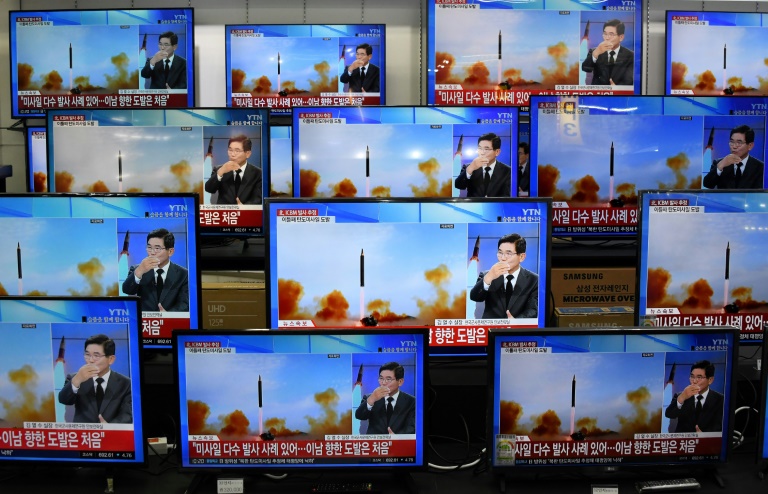
North Korea unsuccessfully fired an intercontinental ballistic missile during a new salvo of launches Thursday, the South Korean military said, with Washington urging all nations to enforce sanctions on Pyongyang.

The launches prompted South Korea and the United States to extend their ongoing joint air drills, the largest-ever such exercises, citing North Korea’s “provocations”.

People in parts of northern Japan were ordered to seek shelter during the North’s latest launches, which included two short-range missiles and followed a blitz of projectiles fired Wednesday.

The largest of Thursday’s launches, however, “is presumed to have ended in failure”, the South Korean military said.

The United States condemned the ICBM launch despite its apparent failure.

“This action underscores the need for all countries to fully implement DPRK-related UN Security Council resolutions,” US State Department spokesman Ned Price said, using the North’s official name of the Democratic People’s Republic of Korea.

Washington also confirmed information provided by the South Korean military, which said earlier it had detected the launch of the long-range ballistic missile at around 7:40 am (2240 GMT Wednesday) in the Sunan area of Pyongyang.

Seoul’s Joint Chiefs of Staff said the ICBM appeared to have failed during “second-stage separation”.

“The range of the long-range ballistic missile is around 760 kilometres, altitude of 1,920 kilometres at speed of Mach 15,” the military said.

It also detected what were “believed to be two short-range ballistic missiles fired at around 08:39 am from Kaechon, South Pyongan province.”

South Korea’s military “is maintaining a full readiness posture while closely cooperating with the US and strengthening surveillance and vigilance,” it said.

– ‘The most horrible price’ –

Pyongyang fired more than 20 missiles on Wednesday, including one that landed near South Korea’s territorial waters.

One short-range ballistic missile crossed the Northern Limit Line, the de facto maritime border, on Wednesday, prompting President Yoon Suk-yeol to call it “effectively a territorial invasion”.

The launches come as Seoul and Washington stage their largest-ever joint air drills, involving hundreds of warplanes from both sides.

Pyongyang has called the exercise, dubbed Vigilant Storm, “an aggressive and provocative military drill targeting the DPRK”, and warned that, if it continues, Seoul and Washington will “pay the most horrible price in history.”

The exercise had been due to end Friday, but South Korea’s air force said Thursday that it would extend its air drills with the United States in response to the latest launches.

“The joint air forces have agreed to extend the Vigilant Storm drill that kicked off on October 31 with respect to the North’s recent provocations,” the air force said in a statement.

Tokyo confirmed Thursday’s launches, with the Japanese government issuing a special warning to residents of northern regions to stay indoors or seek shelter.

Tokyo initially said the missile had flown over Japan, prompting a “J-Alert” to be issued, but defence minister Yasukazu Hamada later said that “the missile did not cross the Japanese archipelago, but disappeared over the Sea of Japan.”

– ‘Tactical nuclear drills’ –

Washington and Seoul have repeatedly warned that Kim Jong Un’s recent missile launches could culminate in another nuclear test — which would be Pyongyang’s seventh.

“Quite possible tactical nuclear weapons test(s) will be next. Possibly very soon,” Chad O’Carroll of Seoul-based specialist site NK News said on Twitter.

Ahn Chan-il, a North Korean studies scholar, agreed. 

“These are North Korea’s pre-celebration events ahead of their upcoming nuclear test,” he told AFP.

“They also seem like a series of practical tests for their tactical nuclear deployment.”

North Korea revised its laws in September to allow for pre-emptive nuclear strikes, with leader Kim declaring the country to be an “irreversible” nuclear power — effectively ending negotiations over its banned arms programs.

On October 4, North Korea fired a missile over Japan that also prompted evacuation warnings. Pyongyang later claimed it was a new type of “ground-to-ground intermediate-range ballistic missile”.

It was the first time North Korea had fired a missile over Japan since 2017.

Pyongyang later claimed that the launch and a blizzard of other tests around the same time were “tactical nuclear drills” that simulated showering South Korea with nuclear-tipped missiles.

Make glasses cool with new emojis, urges UK schoolgirl

British schoolgirl Lowri Moore is just 13 but has achieved a lot in her short life, championing children who like her wear glasses.

Aged nine, she persuaded Disney to create a bespectacled heroine for the first time, in the hit film “Encanto”.

Her #GlassesOn campaign has meanwhile struck a chord with thousands of young people and their parents around the world.

Now she has another US giant in her sights.

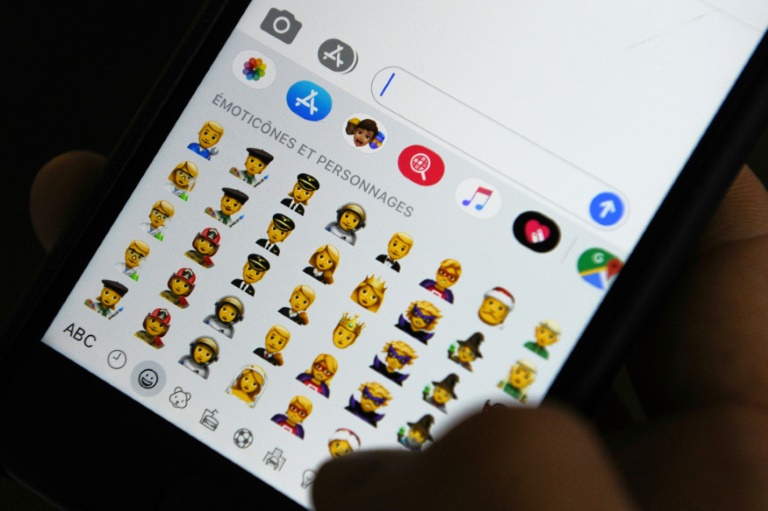
The teenager from Nottinghamshire, central England, is urging the body responsible for all new emojis to give people the option to put glasses on them.

She says many people believe that children being stigmatised for wearing glasses is a thing of the past.

But she argues many children still resist wearing their glasses for fear of appearing “different or uncool”.

Research shows children with spectacles are over 35 percent more likely to be bullied at school, and not wearing them can have far-reaching consequences.

“We are in touch with a professor who works in Botswana to give children glasses and he said that most of the children that get glasses don’t want to wear them for fear of being different and not cool,” Lowri told AFP.

– ‘Biggest fan’ –

She said that without glasses you need, “you won’t be able to learn and that will limit your job options and you will probably really struggle in life all because you didn’t wear your glasses. That’s not fair.”

Lowri’s latest campaign was sparked when her mother Cyrilyn tried to find an emoji relevant to her daughter.

“She was looking for an emoji that would represent me but all she found was a nerd.

“She kept on looking and there was a granny and a teacher but obviously that doesn’t represent me,” she said.

Lowri said it was great there were some bespectacled emojis, but three was not enough.

“It’s not really positive so we’re just asking for the option of putting glasses onto already existing emojis,” she said after handing in copies of her letter at the London offices of tech giants Google and Meta on Wednesday.

Lowri’s campaigning began in 2019 when she wrote to Disney calling for more characters with glasses in their films.

Two years later, the “Encanto” character Mirabel Madrigal hit the big screen.

Director Jared Bush revealed he had been inspired by the schoolgirl’s letter, telling her: “I am your biggest fan, I’m so impressed by you.”

The director also said he had wanted to let her know much earlier, but had to keep it secret until the movie was in the bag.

– ‘Negative stereotypes’ –

In her latest letter, Lowri praised the Unicode Consortium, the non-profit organisation based in California that oversees new emojis, for offering users more choice.

But she urged them to go further.

“I’d love to see the option to add glasses to face emojis, similar to changing skin colour or hair colour as you have already made available,” she wrote.

Having the current “nerd” emoji as the only one available for young people could be “damaging as it helps to confirm the negative stereotype and stigma that we are trying hard to destroy”, she added.

Lowri’s campaigning success was recognised earlier this year when she was named “Campaigner of the Year” by the International Agency for the Prevention of Blindness (IAPB).

Failing to wear glasses can prevent children’s eyes from developing normally and lead to avoidable eye conditions.

Jessica Thompson of the IAPB, which works in over 100 countries worldwide, said Lowri’s advocacy was helping to highlight the damage to children’s futures of not wearing glasses.

“If you struggle to see, you struggle to learn,” she told AFP.

Wearing glasses was the single “most effective” health intervention for schoolchildren, “reducing the odds of failing a class by 44 percent”, she added.

Parkland shooter jailed for life, confronted by victims' relatives

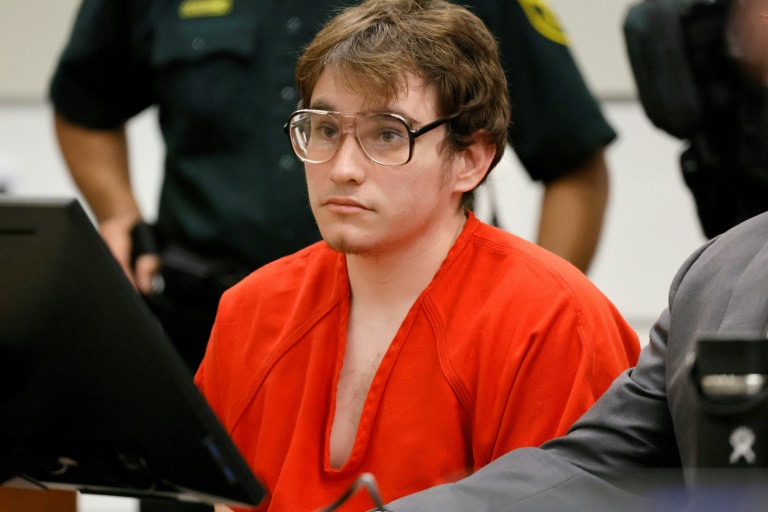
The gunman who murdered 17 people in a 2018 high school rampage was formally sentenced to life in prison Wednesday in a Florida court, where he was verbally confronted by furious parents.

Nikolas Cruz, now 24, avoided the death penalty last month when a jury could not unanimously agree that he deserved capital punishment for his shooting spree at Marjory Stoneman Douglas High School in Parkland.

Family members wept and held hands as Broward Circuit Judge Elizabeth Scherer read out the 17 sentences of first-degree murder, saying after each victim’s name that “the court imposes a mandatory life sentence without the possibility of parole.”

Cruz also received life sentences for each of the 17 people he wounded in the shooting.

The failure to mete out the death penalty shocked and angered several of the victims’ relatives last month. 

But over a two-day hearing that ended with Wednesday’s sentencing, multiple parents and other relatives of those killed were allowed to express their grief and anger by addressing Cruz directly.

“My hope for you is that the pain of what you did to my family burns and traumatizes you every day,” said Lori Alhadeff, whose 14-year-old daughter Alyssa was killed, in comments reported by National Public Radio.

Cruz pleaded guilty in October 2021. In the subsequent three-month penalty phase of the trial earlier this year, the jury saw graphic footage of the attack in which Cruz used an AR-15-style semiautomatic rifle, and they listened to harrowing testimony from survivors.

During the trial, relatives and survivors were not allowed to speak directly to Cruz. On Tuesday and Wednesday, they called him a monster and a “murdering bastard” who deserved to “burn in hell,” according to NPR.

In unadorned rage, some of them also excoriated the criminal justice system for sparing Cruz’s life, speaking to him from a lectern about 20 feet (six meters) away from the convict.

“The idea that you, a coldblooded killer, can actually live each day, eat your meals and put your head down at night seems completely unjust,” said teacher Stacey Lippel, who was wounded in the shooting, according to CBS News.

“The only comfort I have is that your life in prison will be filled with horror and fear.”

On February 14, 2018, then-19-year-old Cruz walked into the school carrying a semiautomatic rifle. He had been expelled a year earlier for disciplinary reasons.

In nine minutes, he killed 17 people and wounded another 17.

Cruz fled by mixing in with people frantically escaping the gory scene but was arrested by police shortly after as he walked along the street.

The Parkland shooting stunned the nation and reignited the debate on gun control since Cruz had legally purchased the weapon he used despite his mental health issues.

Asia joins Wall St plunge as Powell wrecks Fed pivot hopes

Asian markets sank Thursday after the Federal Reserve hiked interest rates and boss Jerome Powell suggested they would go higher than expected, blowing a hole in hopes for a more dovish pivot in its fight against inflation.

Equities have rallied for more than a week on speculation the US central bank would join others in tamping down its monetary-tightening campaign as the economy showed signs of slowing.

On Wednesday, the bank unveiled a fourth straight 75 basis-point increase — the sixth hike this year — and opened the door to a smaller increase at future meetings, giving a boost to Wall Street.

However, Powell soon after sent traders scattering when he told a news conference that while it would be appropriate to lessen the size of the hikes, “incoming data since our last meeting suggests that ultimate level of interest rates will be higher than previously expected”.

He added that “we still have some ways” until borrowing costs were at the necessary level and that it “is very premature to be thinking about pausing”.

And while there is a building fear that the increasingly tight monetary conditions will send the world’s top economy into a recession, the Fed boss said it would take time for the effects of the measures to kick in.

“The historical record cautions strongly against prematurely loosening policy,” he warned. “We will stay the course, until the job is done.”

Investors now expect rates to top out at more than five percent, compared with four percent currently.

The comments hammered the narrative that had supported stocks, sending Wall Street’s three main indexes tanking — led by rate-sensitive tech giants — and pushing the dollar up against its peers.

“Every time the market gets a little bit of dovish hope, it gets smacked on the nose with a rolled-up newspaper,” Scott Rundell, Mutual Ltd, said. “There’s a lot of volatility still ahead.”

Hong Kong led the losses as traders gave back a chunk of the previous two days’ gains that came on the back of speculation China was planning to roll back some of its painful zero-Covid policies. Adding to the selling was confirmation from Beijing’s health authority that it intended to stick to the strategy.

Shanghai, Sydney, Seoul, Wellington, Taipei, Manila and Jakarta were also well in the red. Tokyo was closed for a holiday.

The release Friday of US jobs figures will give another insight into the state of the economy and particularly the labour market, which has remained resilient in the face of decades-high inflation and rising rates.

As the Fed is basing its moves on data, a strong reading could give officials room to continue lifting. 

Before that, the Bank of England is tipped to lift its key rate 0.75 percentage points, though some analysts are predicting a full percentage point hike.

– Key figures around 0230 GMT –

Hong Kong – Hang Seng Index: DOWN 2.5 percent at 15,443.42

Shanghai – Composite: DOWN 0.3 percent at 2,993.76

Tokyo – Nikkei 225: Closed for a holiday

Euro/dollar: UP at $0.9836 from $0.9816 on Wednesday

Pound/dollar: UP at $1.1414 from $1.1390

Dollar/yen: DOWN at 147.27 yen from 147.90 yen

Euro/pound: UP at 86.18 pence from 86.17 pence

West Texas Intermediate: DOWN 0.8 percent at $89.32 per barrel

Brent North Sea crude: DOWN 0.5 percent at $95.64 per barrel

New York – Dow: DOWN 1.6 percent at 32,147.76 (close)

London – FTSE 100: DOWN 0.6 percent at 7,144.14 (close)

Race for Pennsylvania Senate seat is a bare-knuckle battle

One rose to prominence as a TV show host, the other is recognizable by his imposing stature: The candidates in Pennsylvania’s US Senate seat battle are almost as unforgettable as the race is consequential.

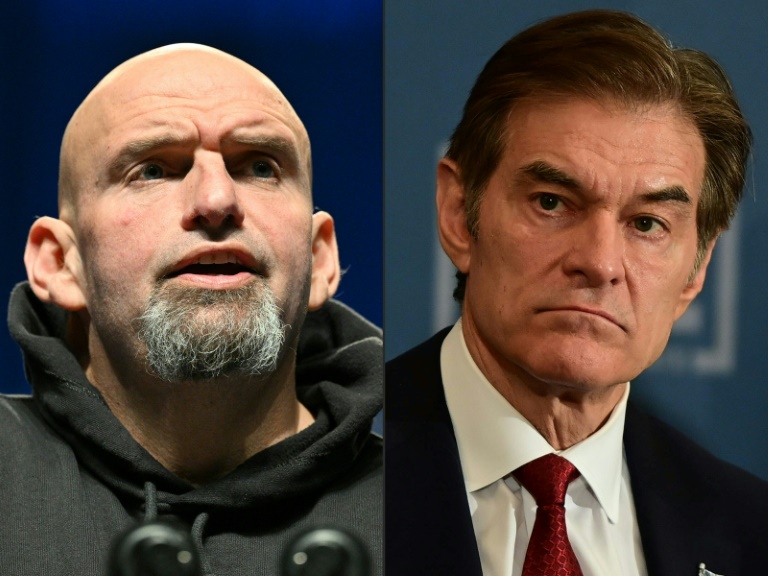
Republican Mehmet Oz and Democrat John Fetterman are facing off in a race that could prove decisive not only for control of the upper chamber but also for the outcome of the rest of President Joe Biden’s term.

A heart surgeon who became a TV personality before entering politics, “Dr. Oz,” as he is widely known, enjoys the enthusiastic support of ex-US president Donald Trump. 

“Brilliant and well-known,” he “will never let you down,” said Trump, a former reality TV star himself.

Fetterman, an imposing 6-foot-8 (2.03 meters) in height, is lieutenant governor of Pennsylvania, a key state that can swing the elections. 

He carries the hopes of the Democratic camp, and is this “great guy” with “integrity,” in Biden’s words. “We need John badly.”

A once-wide gap between the two candidates favored the Democrat, but the race has tightened in recent weeks. In May, Fetterman, 53, suffered a stroke that forced him to scale back.

The two men, who crossed swords last week in their only televised debate, have clashed frequently in recent months on social media, using dagger-sharp quips and memes to mock and troll each other. 

– Medical star –

To explain his entry into politics, the 62-year-old Oz spins a medical metaphor. “Today, America’s heartbeat is in a code red in need of a defibrillator to shock it back to life,” he says on his website.

Fetterman portrays Oz as a wealthy outsider from New Jersey, where he lived in mansions until recently, who is out of touch with the working class of Pennsylvania.

“I’ve got green bananas that have been in Pennsylvania longer than Dr. Oz lol,” Fetterman tweeted.

Although a supporter of the very divisive Trump, Oz says he brings “civility and balance.” He also says he supports America’s “energy independence” and wants to “fix” the health care system. 

While Fetterman defends the “non-negotiable” right to abortion, Oz believes that this explosive issue should be played out between “women, doctors (and) local political leaders.”

In the 2000s, his career was launched by Oprah Winfrey, the talk show queen who invited him on as an expert. From 2009 to early 2022, he had his own program, “The Dr. Oz Show,” which made him a celebrity and affable expert quick to offer anti-aging and weight-loss advice.

The son of Turkish immigrants, Oz has been married for 37 years, is the father of four children, and earlier this year won a coveted star on the famous Hollywood Walk of Fame.

But his health recommendations, sometimes described as “magic” or “miracle,” have earned him criticism from fellow medical doctors, who say he has promoted ineffective or potentially dangerous treatments and dietary supplements, including for Covid.

– ‘Coolest’ mayor –

Voters in Braddock, a former industrial town near Pittsburgh that fell on hard times with the decline of the steel industry, elected Fetterman their mayor in 2006, and he served in the post until 2019. 

A Pennsylvania native, Fetterman’s identity with the town is obvious to all: Its zip code is tattooed on his arm.

Once called the “coolest” mayor in America, Fetterman, who shaves his head and often wears hoodies, tried to revive the town with youth programs and green spaces.

He fosters an image as a  man of the people even though he grew up in an affluent family and has a master’s degree from Harvard University.

The Oz campaign points out that Fetterman’s parents helped him financially until he was 49 years old – his salary as mayor was $150 a month – even after he married and had three children.

For his part, Fetterman accuses the wealthy Oz of spending lavishly to “buy” the Senate seat.

Fetterman claims to have tackled crime during his tenure in Braddock, boasting that the town passed “five and a half years without a gun death.” Oz counters that Fetterman is soft on crime — a Republican leitmotif — and wants to “let murderers out of jail.”

Fetterman blames “corporate greed” for stoking inflation, and says he wants a fairer tax code to keep big business from “scamming the system.” He supports universal health coverage and the legalization of cannabis.

His campaign has been hampered by the stroke he had earlier this year and questions about his abilities, especially after television interviews in which he used a teleprompter to read the questions he was asked because of auditory problems.

“If John Fetterman had ever eaten a vegetable in his life, then maybe he wouldn’t have had a major stroke,” an aide to Oz said in a biting statement.

That came after Fetterman had mocked Oz for using the French word “crudites” in a television ad about inflation, which made the Republican seem out of touch with the more vernacular “veggie trays.” It was a tit-for-tat exchange typical of the bare-knuckle tone of the race.

Arizona Republican who crossed Trump sees bad omens

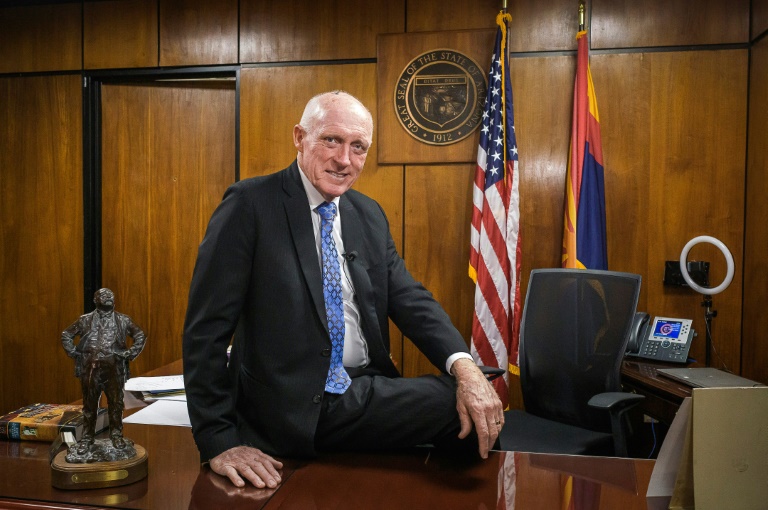
In three decades of involvement in conservative politics, Rusty Bowers has never been so worried by the gap between perception and reality that currently plagues Arizona’s Republican Party.

Ahead of the November 8 midterm elections, masked poll watchers, some of them armed, have been looming over ballot drop boxes in a bid to prevent a repeat of the vote-fixing they are convinced took Donald Trump’s presidency away from them in 2020.

No such conspiracy exists, says Bowers, and a party that was once more pragmatist than propagandist is now fully in thrall to unhinged theories — and it’s dangerous. 

“It’s intimidation,” Bowers — the 70-year-old speaker of the Arizona House of Representatives — says of the men and women wearing paramilitary gear who set up camp at ballot boxes in parts of the southwestern state.

“If you take voting away and make it insecure, and you increase the violence, to me that’s a fertile ground for fascism,” he tells AFP in an interview in Arizona’s state Capitol.

On Tuesday a judge this week ordered the self-appointed poll watchers to keep their distance from the drop boxes. But a toxic political climate that has swirled since the last election has persisted, and ensnared Bowers.

In November 2020, after campaigning for Trump in the presidential race, Bowers watched with dismay as Joe Biden’s vote tally in Arizona squeaked past those of the GOP incumbent.

A mere 10,000 ballots separated the two candidates, but under the first-past-the-post rules, the state’s electoral college votes all went to Biden, helping tip the Democrat over the national line and into the White House.

Multiple investigations, including a recount organized by the Republican Party, found no evidence of wrongdoing; nothing to throw any doubt on the results.

In line with his constitutional duty as leader of the state House, Bowers readied to certify the results. And that should have been that.

But then his phone rang.

On the other end, Trump and his lawyer Rudy Giuliani set about assuring Bowers that an old Arizona law — which he has never found — allowed the Republican-controlled assembly to change the state’s electors, the people responsible for formally electing the president after the election, in defiance of the popular vote.

“I said, ‘Mr. Trump, I voted for you, I walked for you, I campaigned for you, I was at your campaigns with you, but I will do nothing illegal for you,'” he recalls.

“When they asked me to break my vow to the Constitution, it’s like saying: ‘We want you to throw away your religion, your faith, the foundation of who you are.'”

– ‘RINO coward’? –

Bowers stuck to his guns, and Arizona’s electoral college votes went to Biden.

As it has for others before and since who have taken a principled stand in defiance of Trump, that decision tipped his world upside down.

Bowers is no wilting liberal; he is fiercely pro-life, wants the southern US border strictly controlled, and wears his Mormonism proudly.

Since Trump smeared him as a “RINO coward” — a Republican In Name Only — Bowers has been besieged by death threats and a torrent of abusive emails.

The father-of-seven was called to Washington to testify before the committee investigating the January 6 US Capitol assault about the pressure he came under to rig the election.

For weeks, Trump supporters and far-right militia members demonstrated in front of his home, sometimes armed, sometimes carrying signs that accused him of paedophilia and other insults favored by QAnon conspiracists.

Even as the physical intimidation died down, Bowers found himself the target of a political assassination.

Like many who cross Trump, he was faced with a far-right challenge in the Republican primary for a state senate seat.

He lost.

But until he leaves office in January, Bowers says he will keep fighting.

A Republican state bill introduced this session would have given the Arizona House authority to summarily dismiss the results of a popular election, Bowers said, calling it “dangerous legislation.”

“It doesn’t say they may ‘if….’, it doesn’t say they may ‘when….’, or why. Nothing, no criteria,” according to Bowers.

“I killed it,” he says. 

Whether it stays dead is another matter.

Arizona voters are being offered Republican candidates for governor, secretary of state and US senator who all subscribe wholly to Trump’s election denialism.

“The strength of the leadership of the current party is just anger,” Bowers says, adding it is “leaning towards the Mussolini model,” referring to Italy’s WWII-era Fascist leader.

And that, he concludes, is not good for the country as a whole, whose polity is hanging by a thread.

“It’s a very shallow civilization,” he says, gesturing with his thumb and his forefinger squeezed tightly together.

“About that thick.”

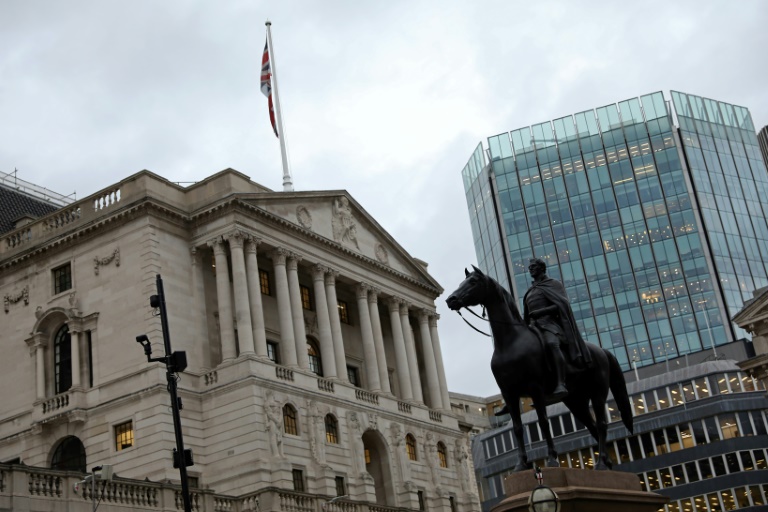
Bank of England set for biggest rate hike in 33 years

The Bank of England is widely expected to hike its key interest rate on Thursday by the biggest amount since 1989 as it bids to cool sky-high British inflation.

Following a regular meeting, the BoE is seen lifting borrowing costs by 0.75 percentage points to three percent, according to market consensus, which would be the highest level since the 2008 global financial crisis. 

Some analysts, however, are predicting a rise of one percentage point, also a 33-year high.

The move would mirror aggressive rate-tightening by central banks worldwide as economies battle the highest prices in decades.

The US Federal Reserve on Wednesday announced a fourth consecutive hike of 0.75 percentage points, taking its benchmark lending rate to 3.75-4.0 percent.

While calling further interest rate increases “appropriate” to tamp down inflation, the Fed also opened the door to smaller hikes.

The BoE decision at 1200 GMT is set to add to a cost-of-living crisis for millions of Britons as hikes by central banks see retail lenders push up the rate of interest on their own loans.

Repayments on UK mortgages have surged in recent weeks also after the debt-fuelled budget of previous British prime minister Liz Truss spooked markets, forcing her to resign and triggering emergency buying of UK government bonds by the BoE.

Her successor Rishi Sunak has attempted to bring calm to markets by hinting at tax rises in a fresh budget on November 17, even if such a move further harms Britain’s economy.

“I think everyone knows we do face a challenging economic outlook and difficult decisions will need to be made,” Sunak, a former UK finance minister, told parliament on Wednesday.

British annual inflation stands above 10 percent, the highest level in 40 years, on soaring food prices and energy bills.

– Inflation update –

Alongside its rate call, the BoE will give its latest inflation and growth forecasts, with analysts indicating that the UK economy may already be in recession.

“The BoE is expected to hike its interest rate by no more than 75 basis points, on conviction that the Sunak government would opt for some fiscal austerity, and nothing too crazy to wreak havoc, again,” forecast Swissquote analyst Ipek Ozkardeskaya.

As the Covid-19 pandemic began in early 2020, the BoE slashed its key interest rate to a record-low 0.1 percent and also pumped massive sums of new cash into the economy.

The Bank of England started raising rates last December and another hike Thursday would be the eighth increase in a row.

Ruth Gregory, senior UK economist at Capital Economics, predicts that the BoE will raise its interest rate by one percentage point on Thursday and by the same amount in December.

“If we are right that domestic inflation will be sticky, it may mean that the Bank of England ultimately has to act more aggressively further ahead,” she added.

Controversial monkey study reignites animal testing debate

Mother monkeys permanently separated from their newborns sometimes find comfort in plush toys: this recent finding from Harvard experiments has set off intense controversy among scientists and reignited the ethical debate over animal testing. 

The paper, “Triggers for mother love” was authored by neuroscientist Margaret Livingstone and appeared in the Proceedings of the National Academy of Sciences (PNAS) in September to little fanfare or media coverage.

But once news of the study began spreading on social media, it provoked a firestorm of criticism and eventually a letter to PNAS signed by over 250 scientists calling for a retraction.

Animal rights groups meanwhile recalled Livingstone’s past work, that included temporarily suturing shut the eyelids of infant monkeys in order to study the impact on their cognition.

“We cannot ask monkeys for consent, but we can stop using, publishing, and in this case actively promoting cruel methods that knowingly cause extreme distress,” wrote Catherine Hobaiter, a primatologist at the University of St Andrews, who co-authored the retraction letter.

Hobaiter told AFP she was awaiting a response from the journal before further comment, but expected news soon. 

Harvard and Livingstone, for their part, have strongly defended the research.

Livingstone’s observations “can help scientists understand maternal bonding in humans and can inform comforting interventions to help women cope with loss in the immediate aftermath of suffering a miscarriage or experiencing a still birth,” said Harvard Medical School in a statement. 

Livingstone, in a separate statement, said: “I have joined the ranks of scientists targeted and demonized by opponents of animal research, who seek to abolish lifesaving research in all animals.” 

Such work routinely attracts the ire of groups such as People for the Ethical Treatment of Animals (PETA), which opposes all forms of animal testing.

This controversy has notably provoked strong responses in the scientific community, particularly from animal behavior researchers and primatologists, said Alan McElligot of the City University of Hong Kong’s Centre for Animal Health and a co-signer of the PNAS letter.

He told AFP that Livingstone appears to have replicated research performed by Harry Harlow, a notorious American psychologist, from the mid-20th century. 

Harlow’s experiments on maternal deprivation in rhesus macaques were considered groundbreaking, but may have also helped catalyze the early animal liberation movement.

“It just ignored all of the literature that we already have on attachment theory,” added Holly Root-Gutteridge, an animal behavior scientist at the University of Lincoln in Britain.

– Harm reduction – 

McElligot and Root-Gutteridge argue the case was emblematic of a wider problem in animal research, in which questionable studies and papers continue to pass institutional reviews and are published in high impact journals.

McElligot pointed to a much-critiqued 2020 paper extolling the efficiency of foot snares to capture jaguars and cougars for scientific study in Brazil.

More recently, experiments on marmosets that included invasive surgeries have attracted controversy. 

The University of Massachusetts Amherst team behind the work says studying the tiny monkeys, which have 10-year-lifespans and experience cognitive decline in their old age, are essential to better understand Alzheimers in people.

Opponents argue results rarely translate across species.

When it comes to testing drugs, there is evidence the tide is turning against animal trials.

In September, the US Senate passed the bipartisan FDA Modernization Act, which would end a requirement that experimental medicines first be tested on animals before any human trials.

The vast majority of drugs that pass animal tests fail in human trials, while new technologies such as tissue cultures, mini organs and AI models are also reducing the need for live animals.

Opponents also say the vast sums of money that flow from government grants to universities and other institutes — $15 billion annually, according to watchdog group White Coat Waste — perpetuate a system in which animals are viewed as lab resources.

“The animal experimenters are the rainmaker within the institutions, because they’re bringing in more money,” said primatologist Lisa Engel-Jones, who worked as a lab researcher for three decades but now opposes the practice and is a science advisor for PETA.

“There’s financial incentive to keep doing what you’ve been doing and just look for any way you can to get more papers published, because that means more funding and more job security,” added Emily Trunnel, a neuroscientist who experimented on rodents and also now works for PETA.

Most scientists do not share PETA’s absolutist stance, but instead say they adhere to the “three Rs” framework — refine, replace and reduce animal use.

On Livingstone’s experiment, Root-Gutteridge said the underlying questions might have been studied on wild macaques who naturally lost their young, and urged neuroscientists to team up with animal behaviorists to find ways to minimize harm.

Non-binary category allows marathon runners to compete 'as authentic self'

Nick Dill is a veteran marathon runner, but this weekend’s race in New York will be the first time they participate in the non-binary category, after contest organizers added the option in response to demands for better representation and inclusion.

A professional dancer who now works as an acupuncturist, Dill has already run the 26.2-mile distance in less than three hours, previously racing in the men’s category.

“I was born a male, I identified as a male for many years,” the 28-year-old told AFP.

But since coming out as non-binary in January, Dill said they felt “discomfort” and “confusion” over having to decide between the races for men and women. 

“I’m kind of both and kind of neither… it feels really comforting to be able to race in the category that I identify with.”

Growing up as a dancer and gymnast, Dill didn’t take up running until adulthood. 

“I was nervous to get into racing because of this kind of toxic masculine energy,” they said. “Kind of still having those fears of like, not fitting in.”

A 2021 study from the Williams Institute at the University of California, Los Angeles found that approximately 1.2 million people identify as non-binary across the United States.

Notable figures including singers Sam Smith and Demi Lovato along with actress Emma Corrin, who played Princess Diana in “The Crown,” are among those who’ve adopted the terminology.

According to a list maintained by activist Jake Fedorowski, more than 200 road or trail racing events in the US now offer three gender categories.

“For somebody who doesn’t identify as either male or female, having to register with no other options already kind of creates either a mental barrier or just another obstacle for them being able to fully participate,” said Kerin Hempel, director of the New York Road Runners organization behind the city’s famed marathon, which was the first event of its kind to expand the categories.

– ‘More visibility’ –

In 2021 the New York marathon included 16 non-binary runners. This year it counts more than 60. Several other major races, including Boston and London, have since taken similar steps to expand options.

Jake Caswell, a 25-year-old clinical analyst who was a top athlete for Columbia University, said crossing the finish line earlier this year for the first time as a non-binary runner was “freeing.”

“I think it’s just being able to run as your authentic self” they said, to “create a space for, you know, a group of people that that space was never there before.”

This year the New York marathon has financially endowed its newest category, with a $5,000 prize for the first-place runner.

Nancy Hogshead-Makar of the organization ChampionWomen, sees this new category as “one step” towards inclusion, that could extend to “more categories” including one for transgender athletes “that have male-sport advantage.” 

She, along with other activists, favors limiting the women’s category to transgender athletes who “have taken steps to roll back their male puberty advantage with hormones and/or surgery” — a stance widely criticized within the LGBTQ community.

It’s a topic that’s provoked significant controversy in the US. Debate roiled after the transgender swimmer Lia Thomas won a university title in March, and the International Swimming Federation banned from women’s categories all athletes who have transitioned after the age of 12. 

And a number of states controversially have adopted legislation forbidding transgender athletes from participating in youth sports.

But so far, creating non-binary categories generally has provoked positive reaction.

Caswell did say they were booed during a race on Staten Island in New York, but took it in stride.

“It happens… welcome to America,” they said. “Not everybody is going to agree with the system. And some people were very vocal about it.”

Fellow athlete Dill said much of the criticism they’ve seen has been online.

“I think it’s just a lack of education… as people learn more and except more, and as there’s more visibility, I think it’ll be more accepted,” they said.

Much of the resistance to expanding inclusion comes from older people, Dill said, including within the LGBTQ community.

Older generations can be “stuck in this kind of black and white” concept, they said, whereas “non-binary is getting into that gray space.”

For Dill, the marathon on November 6 will be “a celebration,” citing “a sense of community.”

“We all kind of are really taking part in this like, uplifting of each other.”

Close Bitnami banner
Bitnami