US Business

Facebook adds way to remove misinformation from groups

Facebook on Thursday added a method for people running groups to automatically sift out claims that have been debunked since being posted.

The ability for group administrators to send misinformation to a “quarantine queue” comes ahead of midterm elections in the United States and as Facebook-parent Meta continues to fend off critics who say it doesn’t do enough to fight misinformation on its platforms.

The tool allows those running groups to automatically relegate into quarantine new posts tagged as containing false information, as well as previously posted claims that were subsequently proven untrue, according to Facebook.

“To help ensure content is more reliable for the broader community, group admins can automatically move posts containing information rated as false by third-party fact-checkers to pending posts so that the admins can review the posts before deleting them,” said head of Facebook Tom Alison.

Facebook in March began letting groups automatically reject fresh posts identified as containing false information, taking aim at a part of the massive network that has drawn particular concern from misinformation watchdogs.

More than 1.8 billion people per month use Facebook Groups, which allow members to gather around topics ranging from parenting to politics.

Yet critics have said the groups are ripe for the spread of misleading or false information because they have sometimes large audiences of like-minded users organized on a particular topic.

The misinformation sifting tool was among enhancements aimed at making it easier for administrators to manage groups.

“There are over 100 million new group memberships every day on Facebook — which is kind of incredible,” Meta chief Mark Zuckerberg said in a post, adding a promise to keep building new features for “even deeper connections around shared interests.”

The evolution of groups is part of Meta’s vision of a future in which life online plays out in virtual worlds referred to as the metaverse, according to Alison.

“Technology is evolving at a rapid pace,” Alison said at the summit.

“More specifically: we’re evolving it, investing in products and research that will help make the metaverse a reality.”

Son of late Iran shah voices solidarity with Ukraine over drones

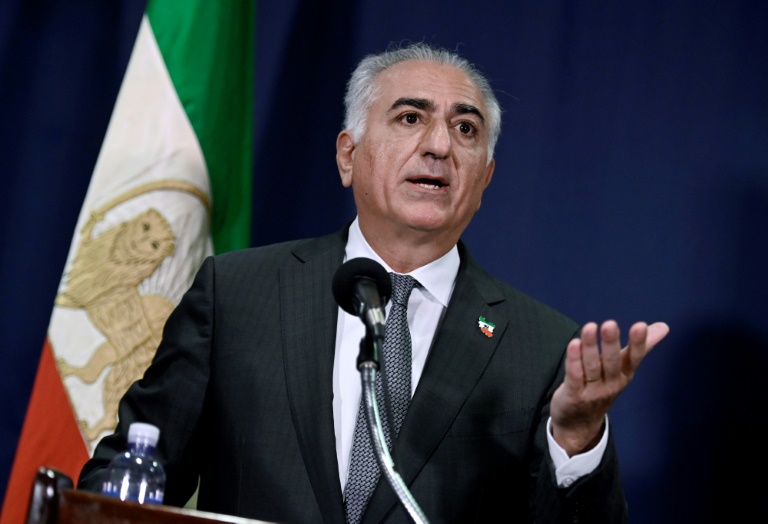
The son of Iran’s late shah on Thursday voiced solidarity with Ukrainians who have suffered from Russian-fired drones allegedly sold by Tehran and urged new, tough action against the clerical regime.

“Our hearts go out to the Ukrainian people who are defending their sovereignty,” Reza Pahlavi told reporters after delivering an address from his home in exile in Washington on protests that have swept Iran.

“We accuse the Islamic regime of not only having completely destroyed our freedom,” he said, but “now it is also cooperating with those who are putting at risk another nation’s sovereignty.”

The European Union and Britain on Thursday finalized sanctions on three Iranian generals and an arms firm over the drones in Ukraine, which killed five people in Kyiv on Monday and have destroyed power stations and other vital civilian infrastructure.

US and European officials say they have evidence that Russia has bought low-cost Iranian drones that explode on impact. Russia and Iran at a Security Council session called by Western nations Wednesday both denied that the drones came from Tehran.

Pahlavi said there was little question that Iran’s clerical state, which replaced his father’s Western-oriented monarchy following the 1979 revolution, has meddled around the world.

“The question isn’t what the Iranian regime is doing. The question is how will the world react and whether it will take clear action to condemn the regime’s actions through sanctions with painful consequences,” he said.

He called international pressure “a win-win — the only one who stands to lose is the Islamic regime and we don’t care about that.”

Pahlavi advocates the formation of a secular democracy in Iran and not necessarily the restoration of the centuries-old monarchy, an option that has limited appeal inside the country.

In his address, Pahlavi said that Iranians have “inspired the admiration of the world” through more than one month of protests triggered by the death of 22-year-old Mahsa Amini, who was arrested by the notorious “morality police,” which enforces dress codes for women.

“Your movement has also crippled the regime’s propaganda and narrative formation machine,” Pahlavi said.

“They wanted women to be slaves to men but you, Iran’s women, with the support of your husbands, brothers, fathers and sons have started the first women’s revolution in history.”

Pahlavi said he has made progress in working internationally to create a fund to assist Iranians who want to go on strike, although he said details were still being arranged.

Pahlavi reiterated calls on world powers to expel Iranian ambassadors and to stop negotiating with the clerical state, following months of failed efforts to restore a 2015 nuclear deal.

UK's PM Truss quits, Tories vow new leader next week

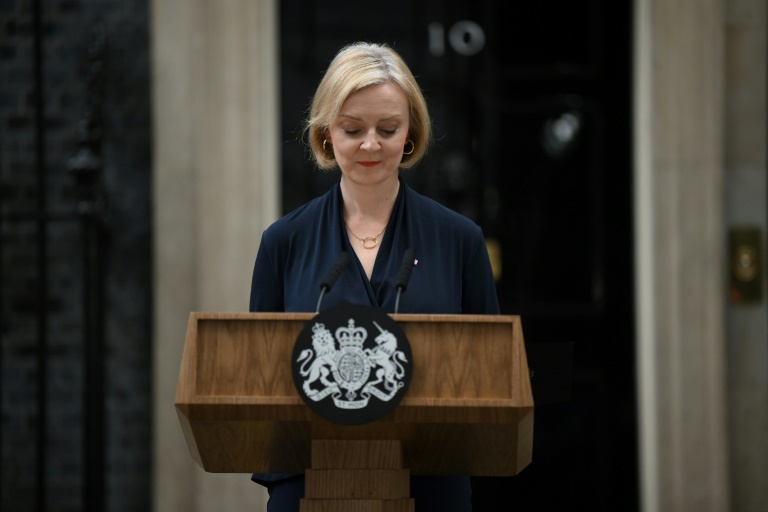
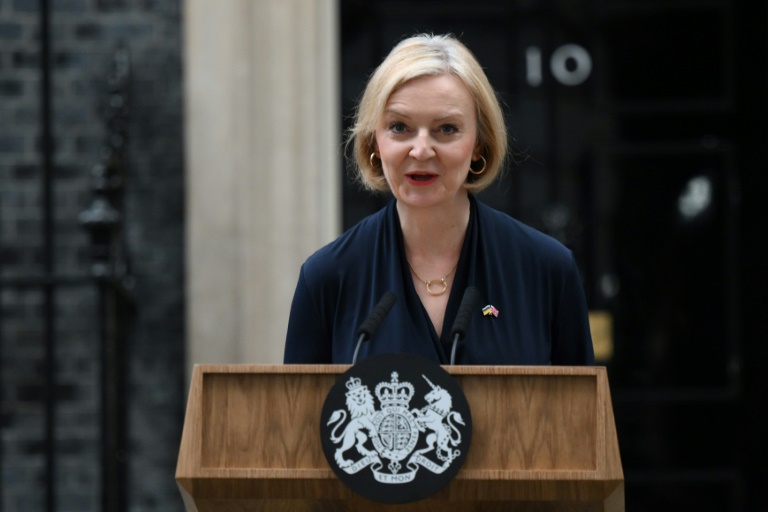
British Prime Minister Liz Truss on Thursday announced her resignation just six crisis-filled weeks after taking office, becoming the shortest-lived premier in UK history.

Her Conservative party detailed a rapid process to elect a new leader on October 28, setting a high bar of 100 nominations among its MPs for candidates — which might block any comeback by former premier Boris Johnson.

The race will be effectively limited to three candidates at the start, before the 357 Tory MPs vote on their preferred candidate on Monday.

Party members will then get an online vote, in an accelerated timetable that avoids the drawn-out contest in which Truss defeated Rishi Sunak over the summer following Johnson’s own resignation.

Truss admitted she “cannot deliver the mandate” on which she was elected by the members, after her right-wing platform of tax cuts disintegrated and as many Conservative MPs revolted.

Labour leader Keir Starmer, whose opposition party has surged in opinion polls on the back of Truss’s short, eventful tenure, demanded a general election “now”.

“This is not just a soap opera at the top of the Tory party,” he said, warning of “huge damage” to the UK economy, although the pound surged against the dollar after Truss’s dramatic announcement.

– Sunak the favourite –

Speaking outside 10 Downing Street, Truss said she would stay on as prime minister until a successor was chosen to serve as Tory leader.

“We’ve agreed that there will be a leadership election to be completed within the next week,” she said, after senior backbench MP Graham Brady told her the game was up.

“This will ensure that we remain on a path to deliver our fiscal plan and maintain our country’s economic stability and national security.”

The new leader will be in place in time for new finance minister Jeremy Hunt to deliver a crucial budget statement on October 31.

Hunt has already thrown out nearly all of debt-fuelled Truss’s tax promises, which Sunak had warned would bring about higher inflation and market turmoil.

Sunak’s warnings were vindicated, and the former finance minister quickly emerged as the bookmakers’ favourite. But he remains held in deep suspicion by Johnson loyalists.

Johnson himself was eyeing a comeback, the Times and Telegraph newspapers reported, despite remaining deeply unpopular with many Tory MPs and the electorate for the many scandals that brought him down.

“Time to come back,” trade minister James Duddridge, Johnson’s former parliamentary aide, tweeted with the hashtag #bringbackboris.

“Few issues at the office that need addressing.”

Another potential runner is senior cabinet member Penny Mordaunt, who narrowly failed to make the Truss-Sunak runoff this summer.

– Tory rebellion –

The end for Truss came after a key minister resigned and many Tory MPs rebelled over an important vote in chaotic scenes at the House of Commons late Wednesday.

By Thursday morning, more than a dozen Conservative MPs had publicly urged Truss to resign, after her tax-cutting plans caused a market meltdown during an already severe cost-of-living crisis.

Many more were reported to have submitted letters to Brady calling for Truss to be removed, although party rules would have forbidden another leadership campaign for 12 months.

“The prime minister acknowledges yesterday was a difficult day and she recognises the public wanted to see the government focusing less on politics and more on delivering their priorities,” her official spokesman told reporters.

Barely two hours later, she quit, and will fall well short of Tory predecessor George Canning who served 118 days as prime minister in 1827 before dying in office.

– Russia not impressed –

Amid Russia’s war in Ukraine and growing economic problems, Britain’s allies have been observing the tumult with concern, with political instability recurrent since the country voted in 2016 to quit the European Union.

US President Joe Biden vowed to “continue our close cooperation with the UK government” on shared challenges including Ukraine.

“It is important that Great Britain regains political stability very quickly, and that is all I wish,” French President Emmanuel Macron said.

Irish premier Micheal Martin said the need to resolve post-Brexit tensions in Northern Ireland was “ever more urgent” under Truss’s successor.

For its part, the Russian foreign ministry said Britain has “never known such a disgrace as prime minister”.

Events reached a head after what right-wing tabloid The Sun called “a day of extraordinary mayhem” on Wednesday.

Interior minister Suella Braverman left, apparently at Truss’s demand after she sent a government document in a personal email.

But Braverman, an arch right-winger who enjoys strong support among the Tory membership, used her resignation message to attack Truss in blistering terms.

There then followed farcical scenes in parliament as many Tory MPs rebelled against the government’s demand that they drop the party’s manifesto commitment to maintain a ban on fracking.

Dan Smith, American activist and son of a slave, dead at 90

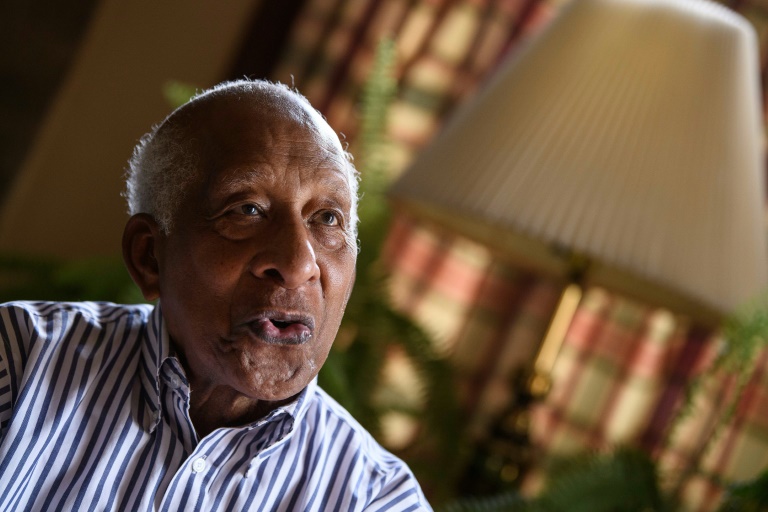
Dan Smith, an American civil rights activist and son of a former slave has died aged 90, his wife told AFP Thursday.

He passed away at a hospice center in Washington on Wednesday night, Loretta Neumann said. She was joined at his side by his daughter April and son Rob.

Smith’s rich life story included escaping the clutches of the Ku Klux Klan in the Deep South, marching on Washington with Martin Luther King Jr and attending the inauguration of the first Black president, Barack Obama.

He also represented a last link to the nation’s darkest chapter: his father Abram, born in 1863 in Virginia, was briefly the property of a white man, making Smith just one generation removed from slavery.

Daniel Smith was born in Winsted, Connecticut, on March 11, 1932, the fifth of six children Abram had with his second wife Clara. 

In an interview with AFP in 2020, he recalled sneaking out of bed and putting his ear to the door as his father transfixed his older children with the stories he grew up with. 

He told of the “hanging tree,” where two slaves who had tried to escape were lynched.

And the time a slave owner forced a tenant farmer to lick a wagon wheel in the dead of winter as punishment while his family watched.

The man’s tongue froze to the cold steel, forcing him to leave part of it behind when he was finally allowed to rip it off.

– Hometown hero –

Smith told AFP he was “petrified” that then-president Donald Trump would undo decades of racial progress, and urged the public to support the Black Lives Matter movement.

He remembered facing discrimination from a young age, but still surreptitiously dated some white girls at school — much to the horror of his mother, who feared the worst if their families found out.

After school he was drafted into the army, serving as a medic in Korea. Returning home, he became a hero in 1955 when he dove into a hurricane-swollen river to rescue a truck driver.

Thanks to the military, he put himself through college and was elected student body president by a mixed-race student body.

During this period, he also endured a tragedy that would remain with him the rest of his life.

Working at a summer camp, Smith took his young charges to see an old reservoir where he noticed a commotion: a girl had drifted too far and couldn’t be found. 

She was eventually pulled ashore, and Smith found a clear pulse. 

But when he went to begin mouth-to-mouth resuscitation on the girl, who was white, he heard a policeman cry out: “She’s already dead!”

Smith realized the cop would rather see her die than be saved by a Black man, and so he stopped.  

– March on Washington –

After graduating, Smith became drawn to the racial activism of the day along with a Jewish friend.

In 1963, the pair journeyed to Washington to attend a march. They found themselves standing on the steps of the Lincoln Memorial, where they witnessed King’s “I have a dream” speech.

Though he planned to become a veterinarian at graduate school in Alabama, his scholarly pursuits gave way to activism, and he was eventually placed in charge of a civil rights project.

Incensed white supremacists burned his office building to the ground and tried to run his car off a highway until he swung into a gas station full of Black customers, escaping his pursuers.

He settled in Washington in 1968 and began a career as a federal worker, founding a national training program for primary care physicians that runs to this day.

Smith retired in the 1990s. He served as an usher at the Washington National Cathedral, where he met presidents Bill Clinton, George W. Bush and Obama.

In 2006, the cathedral hosted his wedding to Neumann, an environmental activist and longtime federal worker.

Oklahoma man executed by lethal injection for murder of infant daughter

A 57-year-old man was executed in Oklahoma on Thursday for the murder of his infant daughter after the Supreme Court rejected last-minute appeals that his life be spared on the grounds that he was severely mentally ill.

Benjamin Cole was put to death by lethal injection at the Oklahoma State Penitentiary in McAlester, the Department of Corrections said.

Cole had been on Death Row in the south-central state since 2004 for the murder of his nine-month-old daughter, Brianna. He was accused of killing the crying child to silence her so he could continue playing a video game.

Media witnesses said Cole delivered a rambling, two-minute statement while he was strapped to a gurney in the execution chamber in which he said “Jesus is my personal lord and savior” and urged people to “choose Jesus while you still can.”

“I forgive everyone that I have done wrong,” the media witnesses quoted him as saying.

Cole’s lawyers had appealed to the Supreme Court for a stay of execution, arguing that he suffered from “debilitating mental illness” and that the US Constitution prohibits the execution of someone who is not mentally competent.

Cole had been diagnosed with paranoid schizophrenia and brain damage, his lawyers said, and his condition had deteriorated to the point where he was “largely catatonic.”

“(Cole) cannot manage his own basic hygiene, and crawls on the cell floor if without a wheelchair,” they said.

Lower courts rejected the claims that Cole was not mentally competent and the Supreme Court denied his last-minute appeals for a stay of execution without comment.

According to Oklahoma authorities, Cole identified as a “Messianic Jew” and “his refusal to speak to certain individuals appeared to be a choice on his part” motivated by his “extreme religiosity.”

“Cole’s claim of incompetency rests on experts who have not had actual conversations with him concerning his execution,” they said.

“In contrast, Cole willingly engaged with a neutral expert at a state-run hospital and very clearly expressed his rational understanding of his punishment,” they said.

There have been 12 executions in the United States this year, including four in Oklahoma.

Thai regulators approve controversial telecom merger

Thailand’s telecom regulator on Thursday approved the merger of Telenor’s Thai arm and a local rival that would create the kingdom’s biggest mobile services provider, despite concerns about competition and consumer harm.

Norwegian giant Telenor and Thai conglomerate Charoen Pokphand (CP) declared their plan to combine their respective mobile units — Dtac and True — last year.

That would create Thailand’s biggest mobile company with more than 51 percent of the market share — and critics say that would effectively result in a duopoly with AIS, which has 47 percent of the market.

While approving the merger, the National Broadcasting and Telecommunications Commission said in a statement that it had placed special conditions, including a price ceiling and rules on frequency sharing.

Telenor and CP said last year that they would each own 33.3 percent of the merged company, with the rest listed on the Thai stock exchange. China Mobile holds an 18 percent stake in CP’s True.

Opponents of the deal have warned that allowing it to go ahead would result in much higher prices for consumers.

“Several studies have suggested that if the merger gets a green light, the general public will be badly affected,” Thailand Development Research Institute president Somkiat Tangkitvanich said in a statement.

The Thailand Consumer Council expressed disappointment at the NBTC’s decision, and said it would seek an emergency hearing from an administrative court to try to stop the merger.

Former NBTC commissioner Supinya Klangnarong — a prominent campaigner against the merger — also flagged civil rights concerns.

“This deal would not only affect us in terms of pricing but it goes further by reflecting on our civil rights and freedom. In the context of Thailand, most capitalists are associated with politicians,” Supinya told AFP.

Active in Northern Europe and Southeast Asia, Telenor is also finalising the merger of its subsidiary in Malaysia, DiGi, with Celcom, controlled by Malaysian group Axiata.

Telenor exited Myanmar following the military coup there last year.

Pound, London stocks climb after Truss resignation

The London stock market and the pound bounced on Thursday after British Prime Minister Liz Truss announced her resignation following disastrous policies that rocked the markets for weeks.

The pound briefly surged more than one percent against the dollar to $1.1336 after Truss ended six tumultuous weeks in power — but analysts said gains were pared by the ongoing uncertainty.

The FTSE 100 index closed up 0.3 percent while the country’s borrowing costs eased on the news, as the yield on 30-year government bonds, known as gilts, fell to 3.90 percent.

“Sterling and gilts rallied as the sorry reign of Liz Truss came to an end,” said Markets.com analyst Neil Wilson.

“After a flurry of activity we are seeing retracement of these initial moves as markets realise that there’s still huge uncertainty about whether the Tory party can survive in power.”

Wilson warned the government’s “economic policies were already dead in the water so the market doesn’t have a huge amount of genuine new information to move on.”

The government had teetered on the brink of collapse after the resignation of home secretary Suella Braverman Wednesday.

On Thursday, Truss announced that she “cannot deliver the mandate on which I was elected.”

It comes days after the sacking of finance minister Kwasi Kwarteng and the dismembering of her government’s debt-fuelled budget that had sparked chronic markets turmoil.

“Although the resignation of Liz Truss as Prime Minister leaves the UK without a leader when it faces huge economic, fiscal and financial market challenges, the markets appear to be relieved,” said Paul Dales, chief UK economist at Capital Economics.

The recovery seen Thursday was due to “the markets… further pricing out the risk premium that the Truss government generated.”

There was still plenty of caution towards the UK.

“While this has brought about a brief respite to the political risk premium it’s hard to see how any replacement will be able to coalesce around any form of unity of policy in this dumpster fire of a government,” said Michael Hewson, chief market analyst at CMC Markets.

– Strong dollar, China fears –

Elsewhere, US and European markets rose a day after losses over persistent concerns over soaring inflation, interest rate hikes and looming recessions.

Wall Street stocks were buoyed by generally solid corporate earnings.

The haven dollar soared above 150 yen for the first time since 1990 before falling back slightly — stoking speculation that Japanese authorities could intervene again to support the battered currency.

The greenback also rallied to a record high at 7.2790 against the offshore yuan, with the US unit boosted by the Federal Reserve’s aggressive interest rate hikes.

Asian markets finished the day in the red, with selling also fuelled by concerns about the Chinese economy as Covid cases spike in the country and leaders stick to lockdown strategies.

A decision to delay the release of China’s third-quarter economic growth data this week added to unease.

Oil extended Wednesday’s rally that came in reaction to a drop in US petroleum stockpiles, and despite President Joe Biden’s decision to release 15 million barrels from US strategic reserves.

– Key figures around 1530 GMT –

New York – Dow: UP 0.9 percent at 30,700.29 points

EURO STOXX 50: UP 0.5 percent at 3,488.64

London – FTSE 100: UP 0.3 percent at 6,943.91 (close) 

Frankfurt – DAX: UP 0.2 percent at 12,767.41 (close)

Paris – CAC 40: UP 0.8 percent at 6,086.90 (close)

Tokyo – Nikkei 225: DOWN 0.9 percent at 27,006.96 (close)

Hong Kong – Hang Seng Index: DOWN 1.4 percent at 16,280.22 (close)

Shanghai – Composite: DOWN 0.3 percent at 3,035.05 (close)

Pound/dollar: UP at $1.1299 from $1.1219 on Wednesday

Dollar/yen: DOWN at 149.75 yen from 149.90 yen

Euro/dollar: UP at $0.9826 from $0.9773 

Euro/pound: DOWN at 86.96 pence from 87.11 pence

Brent North Sea crude: UP 1.0 percent at $93.36 per barrel

West Texas Intermediate: UP 1.2 percent at $85.58 per barrel

burs-rox/rl

Ukraine curbs energy use, warns of threat from Belarus

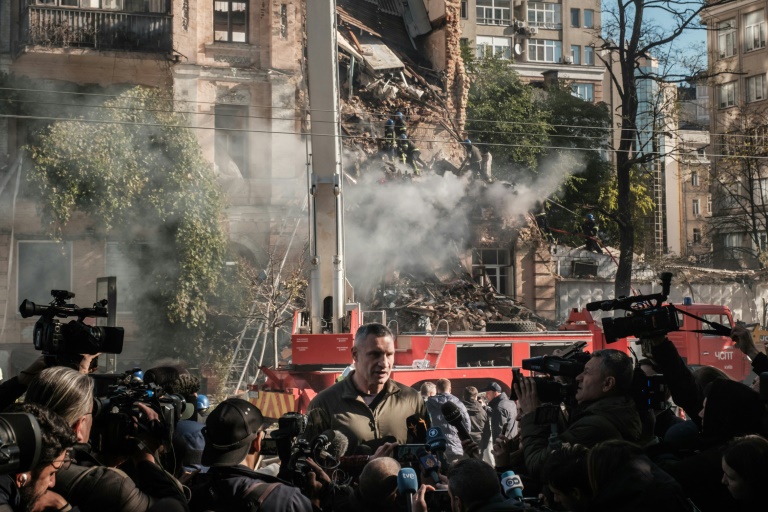
Ukraine began curbing electricity consumption on Thursday as it raced to repair infrastructure destroyed by Russian bombing as winter approaches.

Energy-saving measures were put in place across the country after Russian missile and drone strikes destroyed at least 30 percent of the country’s power stations in a week.

Ukraine also warned of a “growing” threat of a new Russian offensive from Belarus, after Minsk and Moscow last week announced a joint force to defend Belarusian borders.

Following blackouts in parts of the capital Kyiv overnight, the city’s mayor Vitali Klitschko urged businesses to limit screens and signage lights “as much as possible”.

“Even small savings and a reduction in electricity consumption in every home will help stabilise the operation of the national energy system,” he said on social media.

Ukrainians have responded defiantly to the attacks.

“It’s not going to change our attitude, maybe we will only hate them more,” said Olga, a resident of Dnipro in central Ukraine who declined to give her last name.

“I would rather sit in the cold, with no water and electricity than be in Russia,” she said.

– Sanctions on Iranian drones –

Russia invaded Ukraine in February and quickly seized more than 20 percent of the country but has lost ground after a series of battlefield defeats in recent weeks.

Moscow has retaliated by annexing the areas it holds and launching a wave of strikes on energy facilities, including with what Kyiv and Western powers said are Iranian drones.

Russia and Iran have denied the use of such drones in Ukraine, but the EU on Thursday imposed sanctions on three Iranian generals and an arms firm accused of supplying them.

“This is our clear response to the Iranian regime providing Russia with drones, which it uses to murder innocent Ukrainian citizens,” Czech Prime Minister Petr Fiala tweeted.

German Chancellor Olaf Scholz said Russia’s “scorched earth” attacks only strengthened the Western alliance against Moscow.

Russian President Vladimir Putin on Thursday visited a training centre for mobilised troops south-east of Moscow where he embraced soldiers and fired a gun.

– Northern front threat –

Ukraine meanwhile warned that Russian aviation units were deploying in bases in Belarus on the border with Ukraine.

“The threat of resuming the offensive on the northern front by the armed forces of the Russian Federation is growing,” Oleksiy Gromov, deputy chief of the Ukrainian General Staff, said during a briefing.

Russia used Belarus as a staging point for its assault on northern Ukraine towards the capital Kyiv which was repelled in March.

But Gromov said any new offensive could aim more towards western Ukraine “to cut the main logistical arteries for the supply of weapons and military equipment to Ukraine”.

Belarus says its new joint force with Russia will involve up to 9,000 Russian soldiers and around 170 tanks being sent to Belarus but has insisted its aims are only defensive.

Ukraine is unconvinced and President Volodymyr Zelensky accused Moscow of “trying to directly draw Belarus into this war” at a recent G7 meeting.

– ‘Equivalent of deportation’ –

Putin on Wednesday declared martial law in four annexed territories of Ukraine and heightened security in Russian regions on the border.

The move came after Kremlin proxies in the Russian-occupied Kherson region in southern Ukraine said they were leaving the area in the face of a Ukrainian counter-offensive.

The region’s main city, also called Kherson, has been in Moscow’s hands since the earliest days of the invasion.

Russian-installed officials said Thursday that around 15,000 people have also been pulled from the area so far.

Oleksiy Danilov, secretary of Ukraine’s National Security and Defense Council, denounced Moscow’s move as criminal.

“Putin’s martial law in the annexed regions of Ukraine is preparation for the mass deportation of the Ukrainian population to depressed areas of Russia in order to change the ethnic composition of the occupied territory,” Danilov said.

Pro-Russian officials in the town of Oleshky across the Dnieper said residents from Kherson city were already arriving.

Russia’s Rossiya 24 TV showed images of people waiting to board ferries, unable to use bridges damaged by Ukraine.

– ‘We deserve it’ –

Ukraine’s resilience has won plaudits internationally and the European Parliament on Wednesday awarded the annual Sakharov Prize for human rights to “brave” Ukrainians.

The award was welcomed by Natalya Boykiv, an engineer, walking in Kyiv city centre.

“We deserve it,” they said.

“The world should see who Ukrainians are. Thanks to this we attract the world’s attention,” the 24-year-old added.

Meanwhile, in parts of Ukraine recently recaptured from Russian forces, repairs were under way before the onset of winter. Many residents there are still depending on humanitarian aid.

“Apart from this, nothing is working,” said Ivan Zakharchenko, a 70-year-old resident of Izyum queueing for aid in the square where Zelensky celebrated the town’s liberation just over a month ago.


EU leaders clash over how to tackle energy prices

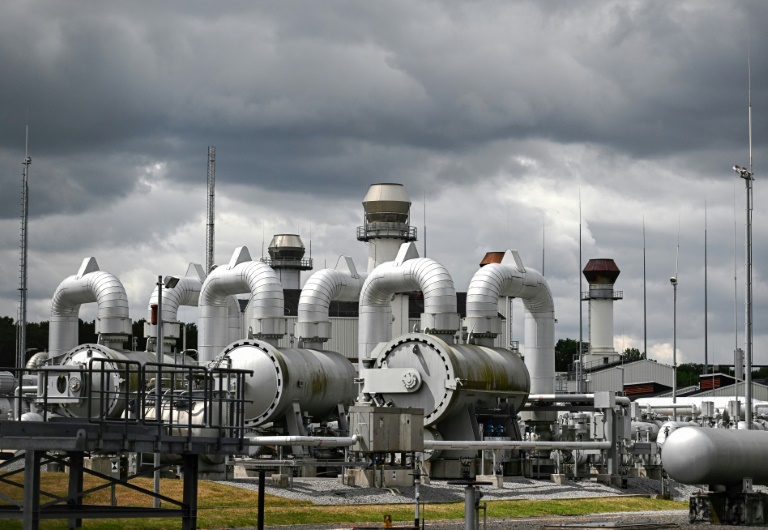
EU leaders clashed over how to ride out Europe’s energy shock Thursday, with France and Germany at loggerheads over imposing a cap on gas prices pushed skywards by the war in Ukraine.

The bloc’s 27 member states have been squabbling for months over measures to lower energy bills, and a Brussels summit began in a chilly mood.

Countries such as Italy are pushing hard for a swift and ambitious cap on prices, in the teeth of opposition from Germany, the EU’s biggest economy.

There is huge political pressure to act, with strikes and protests over the cost of living spreading across Europe — notably in France and Belgium — and businesses fearing bankruptcy.

Berlin risks finding itself isolated in the debate, with countries furious that the German government won’t back a gas cap and for going it alone in helping its citizens pay for high prices with a 200-billion-euro ($196-billion) spending bonanza.

German Chancellor Olaf Scholz shot back at his critics as he arrived for the talks saying that it was “quite clear that Germany has acted in solidarity” with his EU partners.

French President Emmanuel Macron warned against Berlin standing alone as the talks began.

“Our role is to do everything to ensure that there is European unity and that Germany is part of it,” Macron said.

On the table for leaders are proposals by the European Commission, the EU’s executive arm, that try to satisfy the diverging views.

But these have already been dismissed as timid by those wanting a clear ceiling on gas prices despite the opposing view — championed by Germany, but also Denmark and the Netherlands — that this would choke off supply or encourage consumption.

The push for a common approach has been further hampered by Franco-German discord which burst into the open Wednesday when they delayed a regular meeting between cabinet ministers.

Breakthroughs are difficult when the EU’s biggest powers do not see eye to eye and Macron and Scholz met ahead of the summit in a bid to find common ground.

In a sign of a possible easing of tensions, France on the sidelines of the summit agreed to build a green energy pipeline linking the Spain and Portugal to the rest of Europe.

Berlin is seeking an alternative to Russian gas supply it has relied on for decades, but it was not clear whether the new plan would satisfy them.

– ‘No cap’ –

The commission’s proposals include an idea to allow joint purchases by the EU energy giants in order to command cheaper prices to replenish reserves.

Another proposal is to give the EU’s executive arm the power to establish a pricing “corridor” on Europe’s main gas index to intervene when prices get out of control.

The EU leaders were expected to haggle for hours over the commission’s proposals, with some countries seeking something much more far-reaching than what is on offer.

But Scholz on Thursday again rejected any attempt by the EU to cap prices on gas imports, saying it “carries the risk that producers will then sell their gas elsewhere.”

However, Scholz welcomed the European Commission’s proposal for joint purchases in the EU.

A big problem in Europe is the link between gas and electricity prices. Under EU rules, a gas price index helps set the price of electric power across the continent, even if sourced from nuclear energy, renewables or coal.

But the index has skyrocketed since Ukraine was invaded by Russia, the country that supplied 40 percent of the EU’s gas imports before the war.

Several countries — including France with its nuclear power plants — are calling for an exception to the gas price mechanism while the commission draws up a new system that better reflects market reality.

This was already granted to Spain and Portugal earlier this year, giving them freer rein to keep electricity prices lower despite surging prices.

European Space Agency to launch two missions on SpaceX rockets

The European Space Agency announced Thursday it will use SpaceX’s Falcon 9 rockets to launch two scientific missions because of delays to its own Ariane 6 rocket and the cancellation of flights on Russia’s Soyuz launchers. 

The ESA’s space telescope Euclid had been planned to launch next year on a Soyuz rocket, but in February Russia pulled out in response to European sanctions over Moscow’s war in Ukraine. 

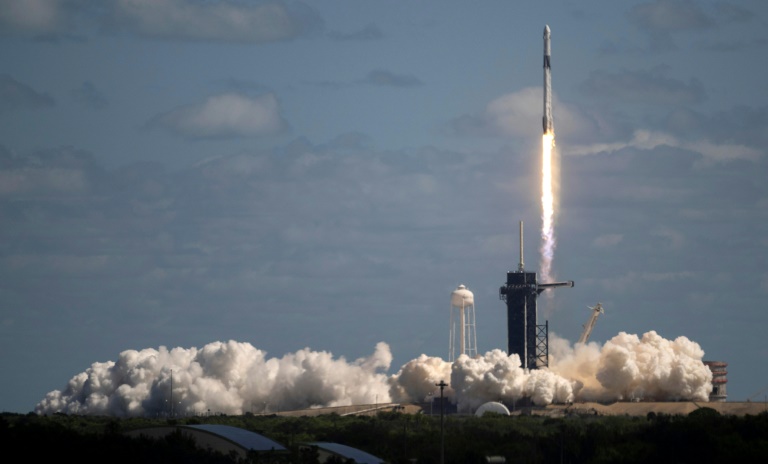
Euclid, which aims to better understand the mysteries of dark energy and dark matter, will now instead catch a ride into space on the Falcon 9 rocket of billionaire Elon Musk’s US company SpaceX.

The ESA’s Hera mission, which will probe the Didymos asteroid that NASA successfully knocked off course in September by smashing the DART spacecraft into it, will launch on a Falcon 9 in late 2024, ESA director general Josef Aschbacher said.

The use of other launchers was “a temporary measure” for the ESA due to the “drop out of Soyuz in particular,” but also over the Ariane 6 delay, Aschbacher told a press conference.

The ESA previously used a Falcon 9 to launch European-developed radar altimeter satellite Sentinel-6 Michael Freilich in 2020.

The European-Japanese EarthCARE observation satellite had also been planning to reach space on a Soyuz rocket, but will instead take the ESA’s lighter new Vega-C launcher in early 2024, Aschbacher said. 

Tensions over the war in Ukraine also led to a long postponement for the once joint European-Russian ExoMars mission. It had been scheduled to launch last month using a Soyuz rocket to put European rover Rosalind Franklin on Mars to drill for signs of life.

David Parker, the ESA’s director of human and robotic exploration, said a 2028 ExoMars launch date would be proposed to the agency’s 22 members states at a ministerial council in late November. 

“It is exactly one month since we would have been at the launch, which was scheduled for September 20,” he told the press conference.

“But now we will have to wait — if the ministers desire to go forward with the project — until launch in 2028, with a landing in 2030,” he said.

– Ariane 6 delayed again –

Thursday’s announcement came a day after the ESA revealed that Ariane 6’s maiden flight had been delayed again, and will now launch in the last quarter of next year.

Originally planned for 2020, the inaugural flight of the Ariane 6 has previously been postponed by the Covid-19 pandemic as well as development difficulties.

The replacement for the highly successful Ariane 5 is hoped to eventually take over the ESA’s Soyuz missions. Once in operation it is likely to compete with SpaceX rockets, particularly when it comes to sending small satellites into the sky. 

Some 18,500 satellites weighing less than 500 kilogrammes are expected to be launched into space over the next decade, according to advisory firm Euroconsult.

Progress has made in recent days on the Ariane 6, including a test of the new upper stage of the rocket’s engine at a German space site in Lampoldshausen.

Aschbacher said the first 45-second firing test was “extremely successful,” calling it an “important milestone”.

A test model of Ariane 6 was also recently successfully assembled on the launchpad of Europe’s spaceport in French Guiana’s Kourou. 

Close Bitnami banner
Bitnami