US Business

Energy firm starts tests at sensitive Israel-Lebanon border gas field

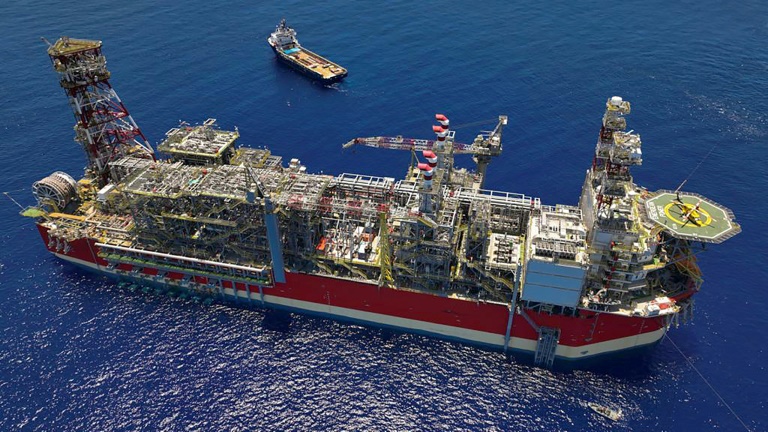
London-listed firm Energean on Sunday began testing pipes between Israel and the Karish offshore gas field, a key step towards production from the eastern Mediterranean site, a source of friction between neighbours Israel and Lebanon. 

Israel has maintained that Karish falls entirely within its territory and is not a subject of negotiation at ongoing, US-mediated maritime border talks with Lebanon. The two countries remain technically at war.

Lebanon has reportedly made claims to parts of Karish and the Iran-backed Shiite group Hezbollah, which holds huge influence in Lebanon, has previously threatened attacks if Israel began production from the field.

In a statement Sunday, Energean said that “following approval received from the Israeli Ministry of Energy to start certain testing procedures, the flow of gas from onshore to the FPSO has commenced”, referring to the Karish floating production storage offloading facility.

The tests, set to take a number of weeks, were “an important step” towards extracting gas from the Karish, Energean said. 

Lebanon and Israel have engaged in on-off indirect talks since 2020 to delineate their Mediterranean border, which could allow both countries to boost offshore natural gas exploration.

A draft agreement floated by US envoy Amos Hochstein aims to settle competing claims over offshore gas fields and was delivered to Lebanese and Israeli officials in recent days.

Israel had welcomed the terms set out by Hochstein and said they would be subjected to legal review, but gave no indication it sought substantive changes.

Lebanon presented its response to Washington’s proposal on Tuesday.

Israel said two days later that it planned to reject Beirut’s proposed amendment, even if that jeopardises a possible agreement. 

Israel reiterated this week that production at Karish would begin as soon as possible, regardless of Lebanon’s demands. 

On Saturday, the French foreign ministry said Paris was “actively contributing to the American mediation”. 

Under the terms of the US draft agreement leaked to the press, all of Karish would fall under Israeli control, while Qana, another potential gas field, would be divided but its exploitation would be under Lebanon’s control.

French company Total would be licensed to search for gas in the Qana field, and Israel would receive a share of future revenue.

New deadly strike hits Ukraine city after Crimea bridge blast

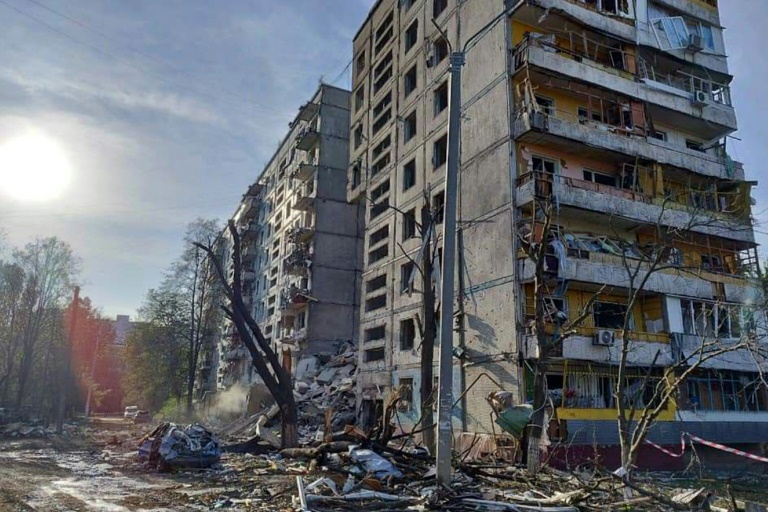
An overnight Russian missile strike killed at least 12 people in Zaporizhzhia, authorities said on Sunday, in the latest deadly attack to hit the southern Ukrainian city that President Volodymyr Zelensky called “absolute evil”.

The reports came a day after a key bridge linking Russia with the annexed Crimea peninsula was partially destroyed by an explosion, and as the Kremlin replaced its top general amid major battlefield setbacks in Ukraine.

Zelensky said 12 people had died and 49 people, including six children, were in hospital after Russian missiles again hit Zaporizhzhia.

City council secretary Anatoliy Kurtev, provided a higher death toll of 17.

At least 17 people including a child also died when seven Russian missiles hit the centre of the industrial city earlier this week.

Regional official Oleksandr Starukh posted pictures of heavily damaged apartment blocks on Telegram and said a rescue operation had been launched to find victims under the rubble.

Zelensky denounced the “merciless strikes on peaceful people” and residential buildings as “absolute evil” perpetrated by “savages and terrorists”.

Divers were to inspect the waters beneath the giant Crimea bridge Sunday a day after a truck bomb ignited a massive fire on the road and rail link, killing three people.

“We are ordering the examination by divers, they will start work from six in the morning,” Russia’s Deputy Prime Minister Marat Khusnullin announced.

“First results” of Russia’s inspection of the bridge were due Sunday, he added.

Russia on Saturday said traffic had resumed over the strategic link symbolising the Kremlin’s 2014 annexation of Crimea.

The 19-kilometre (12-mile) bridge was attacked at dawn, sparking celebrations from Ukrainians and others on social media, where dramatic footage showed it burning with a road section plunging into the water.

But Zelensky did not directly mention it in his nightly address and officials made no claim of responsibility. 

Following the blast, the bodies of an unidentified man and a woman were pulled out of the water, likely passengers in a car driving near the exploded truck, Moscow said.

Authorities had identified the owner of the truck as a resident of Russia’s southern Krasnodar region, saying his home was being searched.

– ‘Emergency situation’ –

The bridge is logistically crucial for Moscow, a vital transport link for carrying military equipment to Russian soldiers fighting in Ukraine.

It is also hugely symbolic. President Vladimir Putin personally inaugurated the structure in 2018 — even driving a truck across — and Moscow had maintained the link was safe despite the fighting.

While some in Moscow hinted at Ukrainian “terrorism”, state media continued to call it an “emergency situation”. 

Zelensky’s adviser Mykhailo Podolyak posted a picture on Twitter of a long section of the bridge half-submerged. “Crimea, the bridge, the beginning,” he wrote.

But in a later statement, he appeared to suggest Moscow had a hand in the blast, noting the truck that detonated “entered the bridge from the Russian side”.

The Kremlin’s spokesman said Putin had ordered a commission to be set up to look into the blast. 

Officials in Moscow stopped short of blaming Kyiv, but a Russian-installed official in Crimea pointed the finger at “Ukrainian vandals.”

“There is an undisguised terrorist war against us,” Russian ruling party deputy Oleg Morozov told the RIA Novosti news agency. 

Military analysts said the blast could have a major impact if Moscow saw the need to shift already hard-pressed troops to the Crimea from other regions or if it prompted a rush by residents to leave.

Mick Ryan, a retired Australian major general now with the Center for Strategic and International Studies in Washington, said that even if Ukrainians were not behind the blast, it constituted “a massive influence operation win for Ukraine”.

“It is a demonstration to Russians, and the rest of the world, that Russia’s military cannot protect any of the provinces it recently annexed,” he said on Twitter.

Authorities in Crimea tried to calm fears of food and fuel shortages in Crimea, dependent on the Russian mainland since annexation frm Ukraine.

– Moscow appoints new general –  

The blast came after Ukraine’s lightning territorial gains in the east and south that have undermined the Kremlin’s official annexation of Donetsk, neighbouring Lugansk and the southern regions of Zaporizhzhia and Kherson.

After weeks of military setbacks that triggered unprecedented domestic criticism of Russia’s army, Moscow on Saturday announced that a new general — Sergei Surovikin — would take over its forces in Ukraine. 

Surovikin previously led Russia’s military in southern Ukraine. He has combat experience in the 1990s conflicts in Tajikistan and Chechnya, as well as, more recently, in Syria.

'Sabotage' to blame for major German rail breakdown

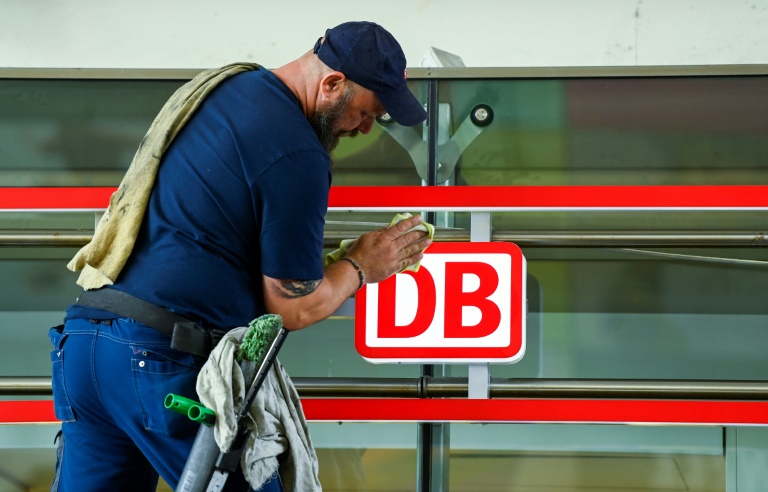
“Sabotage” targeting communications infrastructure was to blame for major disruption to the German railway network on Saturday, operator Deutsche Bahn said while the government said no motive had yet been identified.

“Cable sabotage” was the cause of the breakdown, which led to a three-hour suspension of train services throughout northern Germany, a spokesman for the company told AFP.

German Transport Minister Volker Wissing said essential cables “were deliberately and intentionally severed” in two places. 

“It is clear that this was a targeted and deliberate action,” he added, saying the motive was not “yet known”.

He described the incident as “clearly premeditated”.

Specifically, there was damage to the GSM-R, a radio network used for communication on the railway, Der Spiegel reported, quoting security sources.

Any damage to the cable would require “certain knowledge” of the rail system, the Bild daily said, adding that federal police were investigating. 

Traffic was completely interrupted for about three hours because of “a breakdown in the digital radio system for the trains”, before being restored, according to Deutsche Bahn. 

Services were affected between Berlin and regions in the west and north of the country including Schleswig-Holstein, the cities of Hamburg and Bremen, as well as Lower Saxony and parts of North Rhine-Westphalia. 

– Protection of critical infrastructure –

The Berlin-Amsterdam route was also suspended, and thouands of travellers were stranded at stations across the affected regions.

Cancellations and delays were still expected on Saturday despite the restoration of rail services, Deutsche Bahn warned. 

The attack comes just over two weeks after sabotage attacks on the Nord Stream 1 and 2 gas pipelines linking Russia and Germany. 

The German government has also stepped up protection of its critical infrastructure. 

Deutsche Bahn is regularly criticised for delays on its services. 

At the beginning of September, the company said it would carry out massive improvement works, including replacing 137,000 concrete sleepers.

An independent report pointed the finger at “production faults” in the sleepers.

The derailment of a train in the Bavarian Alps in early June, which killed five people and injured more than 40, highlighted the poor state of German rail infrastructure, linked to years of under-investment. 

The government has in recent months been encouraging car-loving Germans to take the train by offering cheap tickets.

Vietnam's VinFast targets US market in 'preposterously hard' gamble

Having conquered most industries at home, optimistic chiefs at conglomerate Vingroup are setting their sights much higher as they ramp up plans to sell the first ever Vietnamese car in the mighty US market.

The pivot is a bold move by chairman Pham Nhat Vuong — Vietnam’s richest man — who started out selling dried noodles in the former Soviet Union before amassing his $5 billion fortune in a range of sectors including real estate, tourism and education.

His firm’s auto unit VinFast already has electric vehicles (EVs) on the streets of Hanoi, though the attraction of the lucrative United States market is too good to ignore.

However, the firm admits that competing in the crowded and difficult US market, which is dominated by Tesla, will be a huge but worthwhile task.

“If we can make it there, we can make it anywhere,”  CEO Le Thi Thu Thuy told AFP from the factory site where the finishing touches were being made to the VF8, a mid-size SUV with a sleek design by Italy’s Pininfarina, which worked with Ferrari for decades. 

But, she added, “we want to show people who might not have the correct understanding of Vietnam that Vietnam today is quite different to Vietnam during the war, or even to Vietnam 10 years ago”.

While the aim of getting Americans driving its cars by Christmas may seem a huge ask, Vingroup — Vietnam’s biggest private firm — has a track record of delivering.

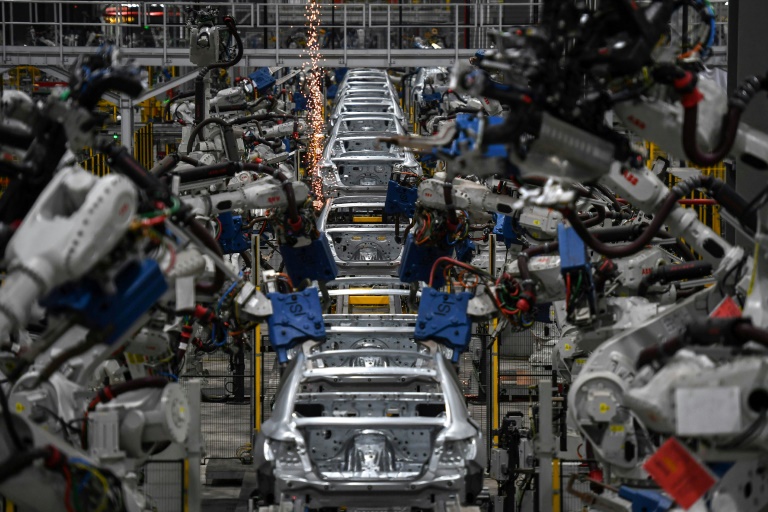
Within two years, Pham transformed a muddy patch of swampland near the northern port city of Haiphong into a state-of-the-art factory — complete with 1,200 robots, German, Japanese and Swedish machinery, and a global team from auto giants including BMW and General Motors. 

– Public scepticism –

The company has already invested heavily in its American dream.

In July, VinFast opened six showrooms in California, including a flagship store at one of the trendiest malls in upmarket Santa Monica, though for now it is only taking orders as vehicles are not yet available.

It plans 30 in total by the end of the year, while it has also broken ground on a $2 billion electric vehicle and battery plant in North Carolina that it says will produce 150,000 cars a year when it is fully up and running.

The factory aims to create more than 7,000 new jobs, prompting US President Joe Biden himself to tweet the announcement back in March.

“I always joke that he is the best salesperson we have,” says Thuy.

But the American public will likely be far more sceptical, said Karl Brauer, a Los Angeles-based analyst with iSeeCars.com, a vehicle comparison site.

“It’s been typical for it to take a couple of decades for brand new automakers to the US market to become ingrained,” he said, referencing South Korea’s Hyundai and Kia, which struggled through the 90s and early 2000s.

They are now among the most popular car makers in the United States. 

Americans’ perception may be “this is some unheard-of-brand I’ve never had any experience with, and I’m not sure I have any faith in the quality”, he added. 

– Push into Europe –

To hook customers, VinFast is pushing a highly unusual monthly battery-leasing model for the two cars headed to the United States — the VF8 and VF9 — lowering the cost of the upfront payment to $42,000 and $57,500 respectively. Tesla’s SUVs start at around $65,000.

Once the battery life goes down to 70 percent, VinFast replaces it for free, and aims to repurpose or recycle the old one.

“The theory behind that is we’re giving you a vehicle that is priced similarly to an internal combustion engine vehicle,” Thuy explained. 

The scale of VinFast’s ambition, which extends to Europe, where they plan to open the first of 20 showrooms by the end of the year, has stunned many in the business.

“It is preposterously hard to build a car and sell it, at least to a global audience, as seems to be the ambitions of VinFast,” said Matthew Degen, senior editor at Kelley Blue Book, a car shopping and research site. 

“It usually takes years and years to get a car from a design on paper into something that’s in your hands and you’re actually driving it.”

However, VinFast developed three cars in just 21 months.

And although the regular car market is already saturated, he says, there may be a “brief window” for them to make their mark in the still developing electric vehicle sector.

For Brauer, VinFast’s success will largely come down to millennials. 

They will “have trouble with people over 50 years old… but younger consumers in this country are getting more and more open to new vehicles”.

Hey big spenders: Qatar woos the rich with luxury World Cup

With deluxe match packages selling for thousands of dollars and five-star hotels doing a brisk trade, a sheen of glamour coats Qatar’s World Cup despite football’s working-class roots.

A penchant for luxury in the energy-rich Gulf state, which has one of the world’s highest GDPs per head, has rubbed off on an unusually high-end edition of a tournament for the masses.

If you’re able to spring $4,950 for a VIP ticket to a group game, you can enjoy drinks, a six-course meal and entertainment at a lounge overlooking the halfway line at Lusail Stadium, north of Doha.

Those with bottomless budgets in the resource-rich region have attractive accommodation options too, with one third-party site offering $4,000-a-night hotel rooms and $26,000 for a “head of state” suite — with a 30-night minimum stay.

Things are a little different for ordinary fans.

Cheaper options include a steel bed in a shared room in the semi-desert near the capital at $84 a night, or accommodation on docked cruise ships from $179 to $800.

Stadium crowds will include Qatar’s migrant labourers, who were offered some tickets at 40 riyals ($11) to watch a sport whose players and core supporters are traditionally blue-collar.

According to Ronan Evain, executive director of Football Supporters Europe, the onus on “premium” experiences has left some fans cold.

“It’s clear that there’s a focus on a type of premium tourism, but the vast majority that go to a World Cup are middle-class,” Evain told AFP.

“They’re not the sort of people who can afford to stay on a cruise liner at $5,000 a week.”

– ‘Solution is to cancel’ – 

The hordes of ticketless fans that usually descend on a World Cup will be reduced in number, as only ticket holders and up to three guests each can enter Qatar during the November 20 – December 18 tournament.

Many supporters will stay elsewhere in the Gulf and board the estimated 100-200 World Cup shuttle flights a day from the United Arab Emirates (UAE), Saudi Arabia, Kuwait and Oman.

Even those options do not come cheap.

In Dubai, an hour’s flight away and expected to be a major destination, an official World Cup package costs $1,500 for four nights in a shared room, including one return flight to Doha but no match tickets.

The Qatar World Cup is at least compact, with all eight stadiums in and around Doha — eradicating the cross-country travel needed at previous editions such as Brazil 2014 or Russia 2018.

“The problem with the World Cup in Qatar is that there are very few alternatives,” said Evain.

“At a World Cup in Brazil or Russia, you can take a train, hire a car, stay 200 kilometres (120 miles) away or come just for the day of the match.

“None of that is possible in Qatar. Either you can’t find accommodation or accommodation is too expensive,” he added.

“People are looking for a solution and for quite a few people the solution is to cancel, because they can’t afford this sort of budget.”

– High-end experiences –

However, Sue Holt, executive director of Expat Sport, the UAE agent for the official World Cup package provider, said there was a range of accommodation “to suit most budgets”.

The United States, Britain, France, Mexico, China and India were among the countries where fans were showing most interest in packages for the UAE, she said.

“Sports tourists generally tend to be older and travel in groups, which can be families, friends or sporting groups,” she said.

“Part of the appeal of this type of travel is that it is a collective, shared experience watching your favourite team or player together.”

These supporters “will include people who have never ventured to this region before”, added Holt.

According to Robert Mogielnicki, senior resident scholar at the Arab Gulf States Institute in Washington, hosting the World Cup is about “prestige” for Qatar, a monarchy of just 2.8 million people, overwhelmingly expatriate workers.

“What the Qataris don’t want to happen is get stuck with an oversupply of tourism infrastructure for a segment of tourists unlikely to be a regular, consistent presence in the country,” he said, explaining the limited options.

“I suspect that the Qataris will keep looking to attract wealthier tourists from elite circles,” added Mogielnicki, who is also adjunct assistant professor at Georgetown University and George Washington University.

“Lots of the momentum behind regional tourism projects, especially in Saudi Arabia, does seem to focus on high-end, luxury experiences these days.”

'Transformation' beckons for embattled Credit Suisse

Battered by a series of scandals, rumours of financial trouble and plunging shares, Credit Suisse is preparing “transformation plans” to restore confidence in the Swiss banking giant.

Ulrich Koerner, who took over as chief executive in August, is due to present the strategic review on October 27.

With Switzerland’s second-biggest bank refraining from revealing its intentions, speculation about its incoming strategy has been swirling.

– Divest or raise capital? –

Andreas Venditti, an analyst at Swiss investment firm Vontobel, said “a capital increase appears increasingly likely” for Credit Suisse.

In a note to clients, Venditti estimates that amount needed at four billion Swiss francs ($4 billion).

Investors fear that such a move would dilute the value of bank shares.

Its stock price has shed 70 percent since the March 2021 collapse of British financial firm Greensill. Credit Suisse was heavily exposed to the group.

Carlo Lombardini, a lawyer and professor of banking law at the University of Lausanne, said a capital injection would leave a “bitter taste” for shareholders.

“But they probably don’t have a choice,” Lombardini told AFP.

The bank will have to raise funds from shareholders to finance layoffs and the cost of restructuring, he said.

Another option would be for the bank to sell assets.

“It’s a tough choice,” said David Benamou, investment director at Axiom Alternative Investments, noting that it would hurt the bank’s future revenues.

“Market conditions are tight and a seller who is forced to sell usually does not get a favourable price,” Benamou said.

Analysts at Jefferies, a financial services firm, said “asset sales alone are unlikely to be the solution to the potential capital shortfall problem”.

But, they added, it “could be a first step and buy time until shares recover and the outlook gets better, at which time a capital raise, if needed, would be a less dilutive and more acceptable option”.

– Is it a takeover target? –

Credit Suisse shares have rebounded after sinking to a record low of 3.518 Swiss francs on Monday, showing that markets are giving it “a chance to put together a solid plan”, said Ipek Ozkardeskaya, analyst at Swissquote bank.

With its market value melting by 10 billion Swiss francs earlier this week, Credit Suisse became “a very attractive target for banks that would like to buy a nice wealth management branch”, said Benamou.

But Credit Suisse has the means to remain independent, he said, and any bid could face political resistance.

“I think the Swiss want Credit Suisse to remain Swiss,” Benamou said. 

– Is it a ‘Lehman moment’? –

In addition to the $10 billion exposure to Greensill, the implosion of US fund Archegos cost Credit Suisse $5 billion.

On top of that, Credit Suisse was fined $475 million by US and British authorities in October over loans to state-owned companies in Mozambique.

Koerner, who took the reins in August with the mammoth task of revitalising the bank, sent an internal message to reassure staff last week, saying Credit Suisse had a “strong capital base and liquidity position”.

But investors concerns reached fever pitch last weekend with rumours on social media that the bank may be on the brink of a “Lehman moment” — a reference to the US investment firm whose disintegration precipitated the 2008 global financial crisis.

This triggered Monday’s stock plunge as well as an increase in the cost of buying insurance against Credit Suisse defaulting on its debt.

Analysts, however, have played down concerns that the Swiss bank could follow in the footsteps of Lehman Brothers, stressing that it was “too big to fail” and the government would not let it to collapse.

The Swiss government rescued Credit Suisse rival UBS in 2008 when it teamed up with the central bank to set up a fund that absorbed the group’s toxic assets.

Benamou said a state intervention for Credit Suisse was unlikely as banks have been required to put aside enough cash to withstand a new crisis following the 2008 financial shock.

In an effort to reassure markets, Credit Suisse announced plans on Friday to buy back up to $3 billion of debt.

Along US Gulf Coast, huge gas plants jostle for space

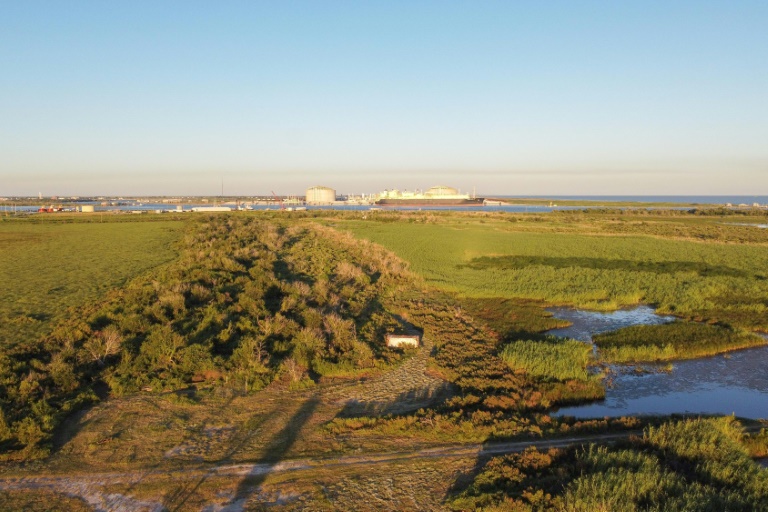
As war rages in Ukraine, and Europe thirsts for fuel, the liquified natural gas (LNG) industry along the US Gulf Coast is preparing to expand — a distressing development to some nearby neighbors.

“It’s our life they took here,” says Travis Dardar from the doorstep of his camper trailer.

An imposing LNG export terminal — a massive facility that receives and liquefies gas from pipelines, then transfers the LNG to ships for export — will soon loom next to his house, forcing him and his wife to move.

Another plant is also planned where he fishes, imperiling his shrimp and oyster business.

“This is way more catastrophic than any hurricane,” Dardar says, adding that people can rebuild after a hurricane.

In this marshy coastal region between Texas and Louisiana, the proliferation of LNG export terminal projects has unsettled residents, who consider the plants to be a threat to their coast, their serenity and their way of life. 

“We don’t know what they’re going to do next. We know one thing: We can’t live here,” Dardar says.

– The Ukraine fallout –

Last March, a few weeks after the first salvos of the Russian invasion of Ukraine, President Joe Biden pledged to increase LNG deliveries to Europe, which has traditionally been heavily dependent on Russian gas.

US suppliers have exported 1,574 billion cubic feet (44.6 billion cubic meters)of LNG to Europe so far in 2022, a sharp rise from the 917 billion cubic feet (26 billion cubic meters) in 2020, according to the Center for Liquefied Natural Gas, a Washington-based trade group that represents the sector.

The United States has become the world’s largest exporter of LNG, an industry centered around the energy-rich Gulf of Mexico, with its infrastructure and strategic location.

This area alone has five of the seven active US export terminals and 22 of the 24 projects submitted to the authorities for construction.

This activity, in turn, brings many jobs, promises Charlie Riedl, executive director of the Center for LNG. As long as the terminal construction projects meet environmental criteria, the government should “authorize them without delay,” he says.

– Noise, light and emissions –

But some residents see the coasts of Louisiana and Texas as “sacrifice zones,” says John Allaire, another resident.

“You’ve got the noise, you’ve got the light, you’ve got the air pollution. And you got the fact that they converted several hundred acres of wetlands into a big concrete pad over there,” adds Allaire from his boat, pointing to the new LNG export terminal near his home.

Allaire dejectedly watches the waves caused by the huge LNG tankers that erode the shoreline. Sludge from dredging covers his beach.

He is also concerned about the consequences on wildlife. The project planned for the land along his property is located on a wetland that is home to a critically endangered bird, the black rail.

“It’s really horrifying to see this (Biden) administration that came in touting environmental justice and the climate crisis… to be approving these kinds of facilities,” says Kelsey Crane, in charge of public policy at the association Earthworks.

– High cancer rates –

Many petrochemical facilities are already visible across the Sabine River in Port Arthur, Texas.

Near the Cheniere Energy terminal — which last year paid nearly $1.5 million in fines for cracks in its tanks — activist John Beard leads a “toxic tour” of the area, joined by other environmentalists.

In June, an explosion caused the temporary closure of the Freeport LNG terminal further south, reminding residents of the immediate risks posed by the plants. 

But Beard, head of the Port Arthur Community Action Network, also denounces the long-term effects on the health of residents who are largely minorities.

In Port Arthur, the population is predominantly African-American or Hispanic, and a quarter of them live below the poverty line, according to the US Census Bureau.

The county has a 25 percent higher cancer death rate than the rest of the state, according to the Texas Cancer Registry.

Beard believes that the gas industry did not choose this area by chance: “They take the path of least resistance and that is with the poor and those who don’t have access to lawyers, and who are not as educated or knowledgeable.”

Sex-scene experts help reshape Hollywood power dynamics in #MeToo era

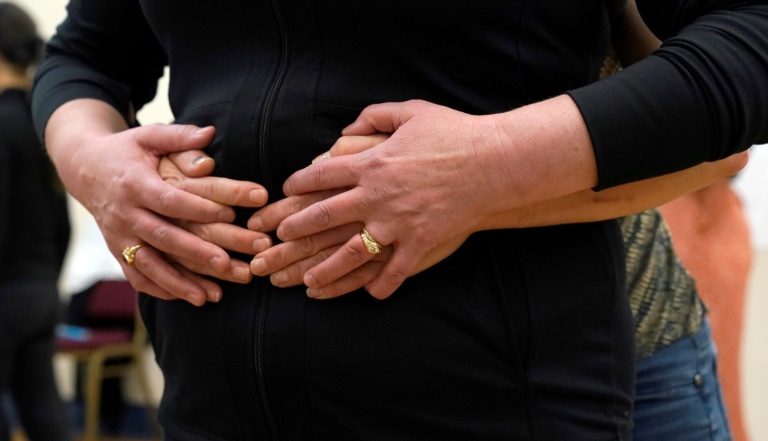
Since Hollywood sex abuse revelations ignited the #MeToo movement five years ago, demand for on-set “intimacy coordinators” has soared — but resistance, power imbalances and a fear of saying “no” to sex scenes are deeply rooted in showbusiness, experts say.

A fledgling industry of professionals who choreograph intimate scenes, provide equipment to safeguard actors’ privates and discuss consent with filmmakers has grown rapidly since a 2017 investigation into Harvey Weinstein forced a wider reckoning.

“It has been an amazing difference, in that when it was first introduced, there was a lot of resistance from the industry — from directors, some actors, producers,” said Claire Warden, a New York-based intimacy coordinator.

Warden estimates around 60-80 experts are now working on sets, and she is working with Intimacy Directors and Coordinators (IDC) to quickly train more.

“After years of yelling into the void and pushing as hard as we could in the industry to educate,” the industry has started listening, she said. 

Before 2017, intimacy directors existed primarily in theater, and were conspicuously absent in film and television, where actors were often isolated and reliant on wardrobe departments to improvise basic “modesty garments” to cover their genitalia in nude scenes.

One of the first major shifts came from HBO, which in the aftermath of the Weinstein allegations brought an intimacy expert onto the set of “The Deuce” — an explicit show about the porn industry in 1970s New York.

Since then, the network has expanded its policy to require intimacy coordinators on all its shows.

And at specialized equipment companies, strapless thongs, padded pouches and silicone “barriers,” as well as body tapes in various skin tones are all on offer.

In a recent Variety interview, 25-year-old “Euphoria” star Sydney Sweeney said she has “never felt uncomfortable” thanks to the constant presence of intimacy coordinators.

“It’s a very safe environment. I’m very fortunate that I am coming up during a time where there is so much thought in this process,” she said.

“Even if you have agreed to something, they ask you on the spot on the day, ‘Did you change your mind? Because you can.’ It’s really nice.”

– ‘Predators’ –

Like Warden, others in the industry argue the progress around consent is long-overdue, while recent events have shown that not all welcome the new roles.

In the same Variety interview, “Yellowjackets” actor Christina Ricci, 42, revealed that she once informed a movie set she was uncomfortable with an intimate scene, and “they threatened to sue me if I didn’t do it.”

“It’s not that actors suddenly started speaking up in 2017… We’ve been speaking for ages, just no one was listening,” said Warden.

“The industry was actively trying to silence those voices.”

Actors are often taught to ignore or forgo their right to consent, and that “no” is a “dangerous” word, she said.

“We are conditioned… that you will be called a diva. That you won’t get jobs, that no-one will work with you.” 

Intimacy coordinators also told AFP they are still overcoming fears that their presence could stifle creativity, or expose cast and crew to the perils of “cancel culture.”

“Because of the historical backdrop of Harvey Weinstein, a lot of people were afraid that they were being perceived as predators,” said Jessica Steinrock, who has amassed half-a-million followers discussing intimacy coordinator work on TikTok.

Rather than acting as an arm of human resources, intimacy coordinators exist to reduce risk and improve performances in the same way a stunt coordinator does, she said.

“I think the exponential growth in the last few years has been painful for many but really rewarding overall,” Steinrock said.

– ‘Toxic’ –

Still, there are high-profile hold-outs.

Earlier this year, actor Frank Langella was fired from Netflix’s “The Fall of the House of Usher” for alleged unacceptable conduct on set including sexual harassment of an actress.

In a column for Deadline, he blasted an intimacy coordinator’s instructions about where he could touch the actress on her leg during an intimate scene as “absurd” and “ludicrous.” 

“It undermines instinct and spontaneity,” he wrote.

But for Warden, reading that op-ed, “it is clear that his resistance does not come from lack of understanding.”

“That comes from a lack of willingness to consider other people’s consent. That comes from a toxic sense of entitlement.”

And, Steinrock said, intimacy coordinators alone cannot solve the type of harassment illustrated by Weinstein, whose abuses did not generally occur on film sets.

“The way we treat scenes of intimacy is going to have ripple effects in every other way, about how we talk consensually, how we prepare for things, how actors see their own bodily autonomy,” she said.

“But I think it’s important that we don’t treat intimacy coordinators as a panacea for all of the power and harassment and abuse of power that’s happened in the entertainment industry over the last century.”

US hurricane rebuilding rules must adapt to 'era of climate change': expert

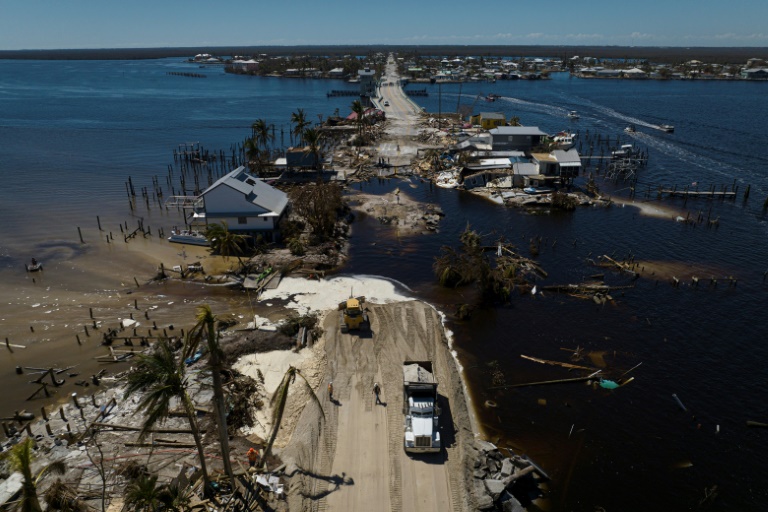
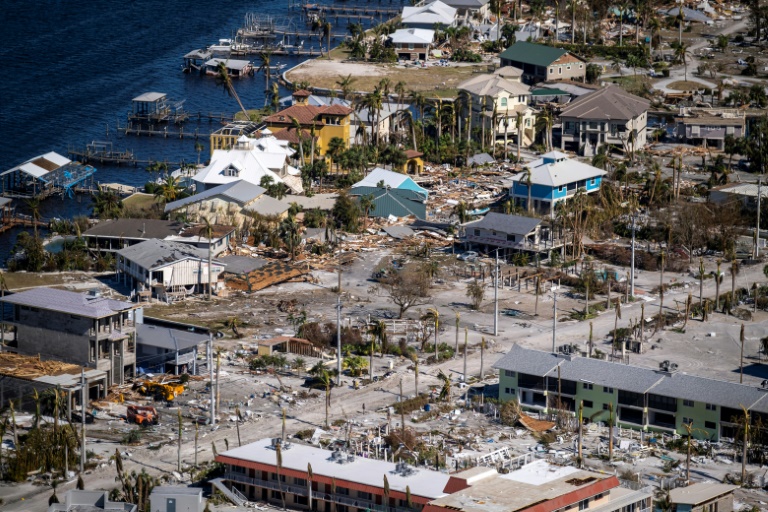
After an extreme weather event, such as Hurricane Ian which devastated parts of Florida last month, most Americans choose to rebuild rather than move to less hazardous areas.

But as climate change increases the frequency and scale of natural disasters, does US policy need to adapt?

Gavin Smith, a professor of environmental planning at the University of North Carolina, worked for several states following major hurricanes, including Katrina in Mississippi (2005) and Matthew in North Carolina (2016).

According to him, current reconstruction standards are not up to the challenges posed by climate change, but correcting them will require real “political will.”

Smith’s responses to AFP have been lightly edited and condensed for clarity.

– Current reconstruction rules –

Q: What are the rules for re-construction after a hurricane, and are they adapted to climate change?

A: Communities must comply with the local codes and standards in place in their jurisdiction before the storm struck.

In the US, we have the National Flood Insurance Program (NFIP), which has historically been subsidized by the federal government. 

For a community to join the program, it has to adopt certain flood risk reduction standards. They include building codes as well as land use plans. 

Then, if a home is damaged in the storm more than 50 percent of their value, it must be built back to the most recent code and standards in place.

Our standard for flood is rebuilding largely back to the “100 year flood,” more accurately termed the one percent annual chance flood event. But in an era of climate change, that “100 year” flood is happening more and more often.

Most risk reduction codes and standards often reflect a climate of the past.

For example, we spent $14 billion rebuilding the levee system in New Orleans after hurricane Katrina. That levee system was built back to the “100 year flood.” 

So you could make the argument that in the era of climate change, that levee system is already out of date. 

– Political will –

Q: What do you expect from government officials?

A: Disasters can present opportunities to rebuild communities safer.

What I’m suggesting is that if we’re going to spend hundreds of millions of dollars building these communities back, we need to require communities to adopt higher codes and standards. 

But that takes political will of both members of Congress and local elected officials.

These are really difficult trillion dollar questions.

You’ll also have builders and the private sector saying, “We should limit those kinds of regulations, as we need to quickly rebuild.”

It takes a lot of political will for a mayor or for a governor to say “No, we’ve got to do what’s right in the long run.:

Unfortunately, people don’t get elected by saying “I am going to require higher standards.”

That’s not a winning slogan. It takes political will to say, enough is enough, we need to adopt higher standards, it’s going to take time, cost more, and people may have to pay more to do it.

That said, we also need to make sure we include equity in processes adopted to develop those standards. 

The shrimpers and the crabbers that live in a very modest house on the water, if we make them adopt higher standards, can they afford it?

– Rules for resilience – 

Q: Concretely, what would be these better standards?

A: A really simple way to think about it is “where” and “how” you build in relation to natural hazards, including those exacerbated by climate change.

The “how” include elevating structures, more stringent standards for wind performance, like better roof shingles, hardening our infrastructure — communication systems, bridges, roads, levees… We can also do this by protecting natural systems like dunes and wetlands.

The “where” is what we would often refer to as land use planning.

Should we be putting a hospital, or a school, in an area subject to storm surge? Probably not. 

A community may choose to say, we’re not going to build a house within 200 meters of the beach. 

Or adopt a gradual disinvestment strategy in extremely risky areas (managed retreat). It’s very difficult to do politically, but it’s happening on a small scale.

Resilience is really about a series of protective measures or choices. It’s not just one. A levee, if that’s your only protection and it fails, to me that’s not resilience. 

Why more Americans are flocking to Florida, even as hurricanes intensify

There’s nothing in the world that would convince Cape Coral resident Kenneth Lowe to leave — not even having to empty his home of flood water a week after Hurricane Ian pummeled the city.

“Southwest Florida is my heaven on earth and hurricanes come with South Florida. So you just have to take it,” the 28-year-old tells AFP, standing in a street strewn with debris.

“It’s my favorite place, it’s worth it.”

Experts warn the frequency of supercharged hurricanes and floods in this climate-prone region is only expected to increase over time — but the population of the southeastern United States continues to rise.

The paradox is especially striking in Cape Coral. 

Between 2010 and 2021, its population grew by 33 percent to 204,000 people, according to census data. Founded in 1958, it embodies the Florida dream that many come looking for.

Navigable canals criss-cross the region, connecting to the Caloosahatchee River, which gives way to the Gulf of Mexico. This affords many people the chance to enjoy a house on the water, and even space for a small boat.

But developing Cape Coral meant first draining the swamp it was built on — and destroying the mangroves and coral reefs that acted as natural defenses against waves and storm surges.

The city was pulverized by Ian, which intensified especially rapidly, fueled by warm waters and high humidity.

A study in Nature Communications earlier this year found that due to climate change, Atlantic hurricanes dump around 10 percent more water during their rainiest three-hours.

In the streets of Cape Coral, dozens of residents are now piling up their belongings in front of their homes: beds, cupboards, refrigerators that have become unusable.

“We will just rebuild and, hopefully, it will be another 100 years before the next big one,” said Tamara Lang, 56.

Lang moved from Chicago and bought her house in Cape Coral just a few months ago — and says she didn’t factor hurricanes into her decision. But she too has no intention of leaving. 

“We love it here,” she said. “This has been our happy place since we got it.”

– Rapid growth –

According to sociologist Mathew Hauer, who studies the impacts of climate change on society, people are not adequately informed about the risks they are taking on.

“If people really understood the flood risk of properties, we’d see changes in where people are purchasing homes and where they’re choosing to live,” said Hauer, an assistant professor at Florida State University.

Another problem: flood zone maps drawn up by the Federal Emergency Management Agency (FEMA) are out of date, says Gavin Smith, a professor of landscape architecture and environmental planning at North Carolina State University.

“It should be viewed as a minimum standard, but they’re often used to regulate the where and how of development,” he told AFP.

Census data reveals a population explosion in the coastal counties of North and South Carolina, as well as Georgia. Florida itself added 2.7 million residents between 2010 and 2020.

“It’s one of the fastest growing regions in the US,” said Hauer, adding: “I don’t see any sign yet that the trend toward migration down into the Sunbelt is going to turn.”

But according to a paper he published in Nature Climate Change, if sea levels rise around three feet (0.9 meters) between now and the end of the century, some 4.3 million people in the continental United States would be forced to move.

Coastal residents of Florida make up about half that figure.

– ‘Immobility paradox’ – 

Retirees from northern climes — including seasonal migrants known as snowbirds — have long been drawn to the “Sunshine State.”

In addition to their beauty, the state’s coastlines are a vital economic resource, supporting a massive tourism industry.

And once you’re settled, it’s not easy to relocate.

Sixty-seven percent of Americans would rather rebuild than leave an area impacted by a severe weather event, according to a 2021 Marist Poll.

“This is what we call the immobility paradox,” said Hauer. 

A psychological tendency against giving up surely factors into the decision-making — but there are also social dimensions like leaving loved ones, and the harsh economic constraint of having to find a new job, he added.

Smith notes that discounting the true risks one faces is a “universal human trait.”

“I don’t think we are going to leave because we have nowhere to go,” said Irene Giordano, 56, who moved south in 2019 from Virginia to Cape Coral.

During Ian, water rose a foot-and-a-half high in her house.

“I’m praying that this is the last one in my lifetime,” she said.

Close Bitnami banner
Bitnami