US Business

Thousands in US join abortion rights protests ahead of elections

Thousands marched in cities across the United States on Saturday to protest the Supreme Court’s overturning of the federal right to abortion and to urge voters to turn out in a Democratic “blue wave” in next month’s key midterm elections.

In Washington, a crowd of mostly women chanted “We won’t go back” as they marched.

They carried posters calling for a “feminist tsunami” and urging people to “vote to save women’s rights.”

“I don’t want to have to go back to a different time,” Emily Bobal, an 18-year-old student, told AFP.  

“It’s kind of ridiculous that we still have to do this in 2022,” she said, adding that she is concerned that the conservative-dominated high court might next target same-sex marriage.

“The majority of us are ready to get out and fight for democracy and fight for people’s bodily autonomy, women and men,” said Kimberly Allen, 70. 

With Democrats battling to maintain their narrow control of Congress, the midterm elections could have a decisive impact on the future of such rights, she said.

Several marchers wore armbands or scarves of green, a color symbolizing abortion rights.

Others wore blue — the color of the Democratic Party — and carried huge flags and banners calling for a symbolic “blue wave” of voters to go to the polls on November 8.

A few counter-protesters made their presence known, some of them urging the crowd to “find Jesus Christ,” while others shouted that “abortion is murder.” They were met with boos.

Similar rallies took place in cities including New York and Denver, Colorado.

“The #WomensWave is coming for EVERY anti-abortion politician, no matter where they live,” Rachel O’Leary Carmona, executive director of the nonprofit Women’s March organization, said on Twitter.  

She urged people to elect “more women” as well as male candidates who support abortion rights. 

Polls show Democrats only have a slim possibility of maintaining control of the House of Representatives, but their chances are better in the evenly-divided Senate, where Democratic Vice President Kamala Harris is the tie-breaking vote.

While Republicans have been campaigning largely on soaring prices, immigration concerns and urban crime, Democrats led by President Joe Biden want to shift the debate to abortion rights and the defense of American democracy.

The Supreme Court in June ended the decades-long federal protection of abortion rights, leaving it to individual states to set their own rules.

Since then, several Republican-led states have banned or severely curtailed access to the procedure, provoking a series of legal challenges.

In the latest development, an appeals court in the southwestern state of Arizona on Friday blocked — at least for now — a near-total ban on abortions.

US midterms: Four pivotal Senate battlegrounds

The US midterm elections were once seen as a likely landslide victory for Republicans, as President Joe Biden’s approval ratings slumped amid spiraling inflation, record migrant arrivals and rising violent crime.

With a month to go, Democrats are banking on a much closer contest amid a series of legislative wins, improving gas prices and the nomination of a slate of Trumpist candidates who have been struggling in winnable seats.   

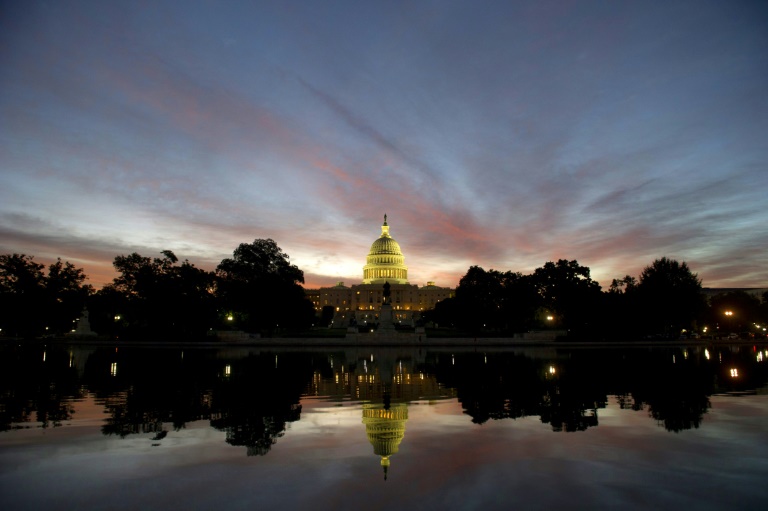
The biennial midterms don’t get the attention that presidential elections command, but they are crucial in determining which party has control of Congress — and the power to advance or frustrate the president’s agenda. 

Every seat in the House of Representatives — the lower chamber — is up for grabs, while a third of the Senate vies for reelection. 

The evenly-divided 100-member upper chamber — controlled by Democrats thanks to Vice President Kamala Harris’s tie-breaking vote — is considered the more powerful and prestigious, with its statewide constituencies and six-year terms.

Senators have the unique authority to approve treaties, try officials impeached by the House and confirm Cabinet secretaries, ambassadors and federal judges. 

At least eight of the 35 Senate races are considered competitive, but the battle for control of the chamber is likely to come down to four key states. 

– Pennsylvania –

Recent polling suggests Democrat John Fetterman’s commanding lead over Republican celebrity medic Mehmet Oz has all but evaporated, turning the race into a margin-of-error tussle. 

The pair are duking it out for the seat held by a retiring Republican, in what remains Democrats’ top target for flipping a seat.

Most September polls showed Fetterman with a narrow lead of between two and five points, down from an average of nine points in August.

Democrats have characterized Oz as an opportunistic New Jersey carpet-bagger with tenuous local ties and a penchant for gaffes that demonstrate he is out of touch.

Fetterman, meanwhile, faces scrutiny over his health following a stroke, and he has come under fire about his law enforcement record as lieutenant governor, when there was a significant increase in the number of people serving life sentences who were recommended for early release.

“John gave a second chance to those who deserve it: nonviolent offenders, marijuana users… John Fetterman has the courage to do what’s right,” a police officer says in a recent ad from the Fetterman camp.

– Wisconsin –

In Wisconsin, Republican Senator Ron Johnson struggled in summer but pulled ahead of Democratic challenger Mandela Barnes in mid-September and is up by three points in an average of the last dozen polls.

The latest Fox News poll found that 44 percent of Wisconsin voters think Barnes’s political positions are “too extreme” — against 43 percent for Johnson. 

Notably, Barnes’s figure was 14 points higher than a month earlier. 

Like Fetterman, Barnes is a lieutenant governor who has been accused of being soft on crime, primarily because of his advocacy for making bail conditions less onerous.

“Under Mandela Barnes, Wisconsin has released 784 violent criminals back into our communities,” Johnson tweeted on Monday.

“Including 270 murders and attempted murderers. Mandela Barnes’ policies make our communities more dangerous. He is too extreme for Wisconsin.” 

– Nevada –

In Nevada, Republican challenger Adam Laxalt leads Democratic Senator Catherine Cortez Masto by a narrow two points in the polling average compiled by RealClearPolitics.

Democratic strategists have sounded the alarm over turnout, with many Latinos threatening to sit out the election despite Cortez Masto being the first-ever Latina elected to the US Senate.    

“It’s what’s keeping me up at night,” Melissa Morales, president of the pro-Cortez Masto Somos PAC, told NBC.

“What I’m looking at is: Do Latinos actually turn out to vote this year? If we see high turnout, we win in Nevada.”

Laxalt, who lost a gubernatorial race in 2018, has argued that a floundering economy, rampant crime and sky-high inflation were dampening Latino enthusiasm for the Democrats. 

The National Republican Senatorial Committee launched its latest Spanish language ad last week, again focusing on the Democratic candidate’s criminal justice record when she was the state’s attorney general.

“Catherine Cortez Masto’s track record of releasing convicted criminals, blocking funding to stop drug trafficking, and sending millions of dollars to criminals behind bars shows that her focus is not on the well-being of Nevada,” said NRSC Hispanic press secretary Juan Arias. 

– Georgia –

In Georgia, Republican challenger Herschel Walker was looking like the Republicans’ best bet for a pick-up against incumbent freshman Democrat and pastor Raphael Warnock.

Walker’s name recognition as a former football star has kept him in the race despite a series of missteps overshadowing his campaign, and he trails Warnock by four points in the latest Fox News poll.

Georgia’s electorate is more trenchantly partisan than in other battleground states, and the race has been about juicing turnout rather than winning swing voters.  

Warnock has focused on cutting prescription drug charges, addressing climate change and helping restore abortion rights. 

“Senate Republicans’ plan to ban abortion nationwide is on the ballot this November — and we are ensuring that it remains front and center for voters,” the Democratic Senatorial Campaign Committee said.

Walker has focused on the economy and anti-abortion activism. 

But the anti-abortion hardliner has been accused of paying for a girlfriend to terminate her pregnancy in 2009, and lying about the number of children he has and about having worked in law enforcement.

He has also faced allegations of domestic violence and criticism over policy gaffes. 

He's not even running — but US midterms could make or break Trump

After losing the 2020 presidential election, Donald Trump could have worked on his golf swing or produced another book by the pool at his south Florida beach club.

Instead he threw himself into the midterm election campaign with unprecedented gusto, staking his kingmaker reputation on a slew of controversial candidates in key primary races.

His US Senate picks in open races — mostly anti-abortion hardliners, backers of his election fraud conspiracy theories or out-of-towners with tenuous local ties — have been struggling however.

And with exactly a month to go until Election Day, many Republicans are laying the blame at the gates of Mar-a-Lago. 

“Donald Trump is not on any ballot in 2022, but his political future is,” John Hudak, a senior fellow at the Brookings Institution, wrote in a recent blog post.

Trump’s project to reshape the Republican Party in his image via the midterms will likely “either make Donald Trump an also-ran or the commanding force in party politics for years to come,” Hudak argued.

Many of Trump’s primary endorsements have been seen as undermining more electable, mainstream alternatives, and potentially squandering easy victories in key battlegrounds seen as ripe for flipping from the Democrats.

Among his controversial picks are celebrity physician Mehmet Oz in Pennsylvania — seen by many as an out-of-touch “carpetbagger,” prone to rhetorical gaffes — and Ohio’s J.D. Vance, a venture capitalist who has spent most of his adult life in Silicon Valley and faces similar issues. 

The story is the same in Georgia, where ex-football star Herschel Walker faces questions over domestic abuse, dishonesty about his past and mental fitness. 

And in Arizona, Blake Masters is struggling in what should be a winnable seat with a campaign that Politico has described as “hardline nationalist.”

– ‘Little to gain’ –

Senate Minority Leader Mitch McConnell — who needs just one gain to take the upper chamber from the Democrats — has offered oblique hints that he sees “candidate quality” as a problem. 

Hudack put it more starkly.

“(If) Senate candidates like Walker, Oz, Vance or Blake Masters ultimately lose in numbers that maintains Democrats’ Senate majority, Mr Trump will be widely blamed,” he said. 

A poor election night for Trump candidates would be chum in the water for his 2024 rivals, a list that potentially includes outspoken anti-Trumpist Liz Cheney, Florida’s firebrand governor Ron DeSantis and ex-vice president Mike Pence. 

Cheney aside, Republican presidential hopefuls have largely continued to genuflect to Trump through his post-presidency. 

But figures such as ex-secretary of state Mike Pompeo, estranged Trump ally Chris Christie and one-time UN ambassador Nikki Haley could be emboldened by poor results on November 8.

David Greenberg, a media and history professor at Rutgers University, said the former president — for now the clear frontrunner for the 2024 Republican nomination — had “little to gain” in the midterms.

“But Trump has a lot to lose because if his candidates flame out, then he will be seen as having lost his magic,” Greenberg told AFP. 

“Some primary voters in 2024 may think twice about supporting him again, especially if a popular alternative such as DeSantis also runs.”

A note of caution: the polls are expected to tighten before November and all of Trump’s most divisive candidates could yet triumph in photo finishes. 

– ‘Clear leader’ –

Expect some of the circling sharks to back off if this happens — and for Trump to look suddenly like a political genius with a bold vision rather than a liability.   

Trump watchers often point out that much of the former president’s die-hard base cares little about the Senate or Washington politics in any case. 

“Despite losing reelection, two impeachments, nearly a dozen serious criminal probes, and countless scandals that would have long ago sunk most any other politician, Trump remains the clear leader of the Republican Party,” said political analyst Nicholas Creel, of Georgia College and State University. 

“Trump’s support in the Republican Party is far too resilient to be damaged by a poor showing by the party this November.”

Other observers though expect the tycoon’s many legal woes, including the mushrooming scandal over his mishandling of classified government secrets, to be as a big a drag on his political prospects as the performance of his midterm picks.

Irina Tsukerman, a New York-based national security lawyer and geopolitical analyst, said Trump was increasingly perceived as a “political liability” — incapable of winning a future presidential election even against a weak Democrat.

“Overall, it looks like he will be strongly discouraged from running in 2024, which he may not do for his own reasons — such as avoiding embarrassment and keeping the money he is currently raising,” she told AFP.

Trump’s office did not respond to a request for comment.

'Sabotage' to blame for major German rail breakdown

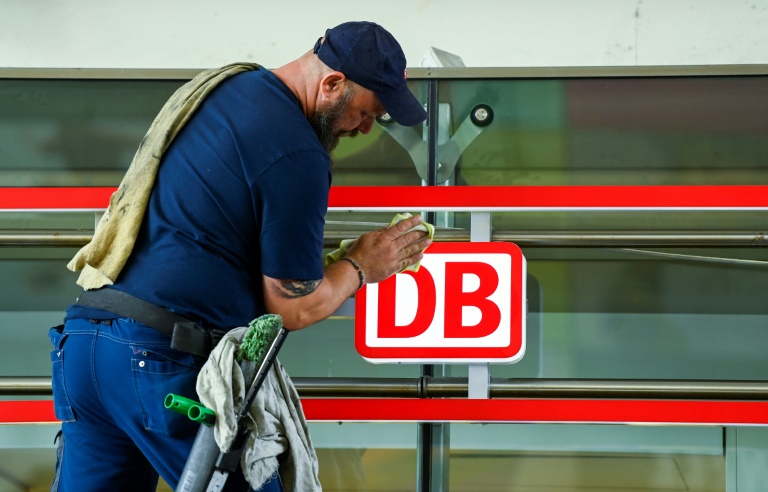
“Sabotage” targeting communications infrastructure was to blame for major disruption to the German railway network on Saturday, operator Deutsche Bahn said while the government said no motive had yet been identified.

“Cable sabotage” was the cause of the breakdown, which led to a three-hour suspension of train services throughout northern Germany, a spokesman for the company told AFP.

German Transport Minister Volker Wissing said essential cables “were deliberately and intentionally severed” in two places. 

“It is clear that this was a targeted and deliberate action,” he added, saying the motive was not “yet known”.

He described the incident as “clearly premeditated”.

Specifically, there was damage to the GSM-R, a radio network used for communication on the railway, Der Spiegel reported, quoting security sources.

Any damage to the cable would require “certain knowledge” of the rail system, the Bild daily said, adding that federal police were investigating. 

Traffic was completely interrupted for about three hours because of “a breakdown in the digital radio system for the trains”, before being restored, according to Deutsche Bahn. 

Services were affected between Berlin and regions in the west and north of the country including Schleswig-Holstein, the cities of Hamburg and Bremen, as well as Lower Saxony and parts of North Rhine-Westphalia. 

– Protection of critical infrastructure –

The Berlin-Amsterdam route was also suspended, and thouands of travellers were stranded at stations across the affected regions.

Cancellations and delays were still expected on Saturday despite the restoration of rail services, Deutsche Bahn warned. 

The attack comes just over two weeks after sabotage attacks on the Nord Stream 1 and 2 gas pipelines linking Russia and Germany. 

The German government has also stepped up protection of its critical infrastructure. 

Deutsche Bahn is regularly criticised for delays on its services. 

At the beginning of September, the company said it would carry out massive improvement works, including replacing 137,000 concrete sleepers.

An independent report pointed the finger at “production faults” in the sleepers.

The derailment of a train in the Bavarian Alps in early June, which killed five people and injured more than 40, highlighted the poor state of German rail infrastructure, linked to years of under-investment. 

The government has in recent months been encouraging car-loving Germans to take the train by offering cheap tickets.

Air France, Airbus face trial over 2009 Rio-Paris disaster

Air France and aircraft maker Airbus go on trial in Paris on Monday on charges of involuntary manslaughter in the 2009 crash of a flight from Brazil, killing all 228 people aboard.

The case focuses on alleged insufficient pilot training and a defective speed monitoring probe, which was quickly replaced on planes worldwide in the months after the accident.

Flight AF 447 from Rio de Janeiro to Paris plunged into the Atlantic Ocean during a storm in the early hours of June 1, 2009, when it stalled after entering a zone of strong turbulence.

The Airbus A330 was carrying 12 crew members and 216 passengers, including 61 French. It was the carrier’s deadliest crash.

Debris was found in the following days but it took nearly two years to locate the bulk of the fuselage and recover the “black box” flight recorders.

Air France and Airbus were charged as the inquiry progressed, with experts determining the crash resulted from mistakes made by pilots disorientated by so-called Pitot speed-monitoring tubes that had frozen over in thick cloud.

Both companies have denied any criminal negligence, and investigating magistrates overseeing the case dropped the charges in 2019, attributing the crash mainly to pilot error.

That decision infuriated victims’ families, and in 2021 a Paris appeals court ruled there was sufficient evidence to allow a trial to go ahead. 

“Air France… will continue to demonstrate that it did not commit any criminal negligence that caused this accident, and will request an acquittal,” the airline said in a statement.

Airbus, maker of the A330 jet that had been put into service just four years before the accident, declined to comment ahead of the trial but has also denied any criminal negligence.

They each face a maximum fine of 225,000 euros ($220,000).

– ‘Lost our speeds’ –

The court will hear testimony from dozens of aviation experts and pilots, along with second-by-second details of the final minutes in the cockpit before the plane went into free-fall.

As it approached the Equator en route for Paris, the plane entered a so-called “intertropical convergence zone” that often produces volatile storms with heavy precipitation.

Around this time the captain, 58, handed over to his 32-year-old senior co-pilot and went to bed, with the second co-pilot sharing the controls.

To avoid the worst of the storm they veered off route to the left and slowed their speed, having warned the crew of coming turbulence.

Shortly after the automatic pilot functions stopped working, just as the Pitot tubes froze over, leaving the pilots with no clear speed readings.

“We’ve lost our speeds,” one co-pilot is heard saying in the flight recordings, before other indicators mistakenly show a loss of altitude, and a series of alarm messages appear on the cockpit screens. 

The pilots quickly point the nose of the plane higher to start climbing, but soon a “STALL” alert sounds once, then pauses, then sounds nonstop for 54 seconds.

The plane keeps climbing, engines at the max, and reaches 11,600 metres (38,060 feet) before the stall begins. “I don’t know what’s happening,” one of the pilots says.

At this point the captain is back in the cockpit trying to help but the plane is falling rapidly, at 3,000 metres per minute. “Am I descending?” the senior co-pilot asks. “No, now you’re climbing,” the captain answers.

The recordings then stop, four minutes and 30 seconds after the Pitot tubes froze.

– ‘The human element’ –

Testimony will also be heard from some of the victims’ family members, 476 of whom are civil plaintiffs in the case.

“It’s going to be a very technical trial… but our goal is also to re-introduce the human element,” said Alain Jakubowicz, a lawyer for the victims’ group Entraide et Solidarite (Mutual Aid and Solidarity).

Its president, Daniele Lamy, said that instead of trying to pin the blame on the pilots, “We want this trial to be that of Airbus and Air France.”

“We expect an impartial and exemplary trial so that this never happens again, and that as a result the two defendants will make safety their priority instead of only profitability,” she said.

But Nelson Faria Marinho, president of the Brazilian association of victims’ relatives, said, “I’m not expecting anything from this trial.”

His 40-year-old son, also named Nelson, perished on his way to an oil industry job in Angola.

“Even if there is a conviction, who will be punished? The CEOs? They were changed at Airbus and Air France a long time ago,” he told AFP during an interview at his Rio home.

Despite having travelled to France 18 times to meet authorities and investigators, Faria Marinho will not be at the trial.

He will be represented by former French pilot Gerard Arnoux, who has advised several of the victims’ families and wrote a book titled “Rio-Paris Is Not Responding: AF447, the Crash that Should Not Have Happened”.

“The French government isn’t going to pay for the trip, and the tickets are much too expensive. I’m retired and don’t have the resources,” he said. “But if I could, I would.”

UK train commuters hit by further strikes over pay

Train passengers in Britain faced severe disruption on Saturday, with only one in five services running as railway workers staged another walkout over wages.

People were urged to “only travel by train if absolutely necessary on Saturday” as 40,000 members of the Rail, Maritime and Transport (RMT) union at Network Rail and 15 train operating companies took action demanding higher pay and better working conditions.

Those affected include thousands of football fans travelling to support their teams.

Railway workers are demanding wage increases to keep pace with decades-high inflation amid a cost-of-living crisis. 

The sector has spearheaded a wave of industrial action in recent months.

Tens of thousands of staff in various industries — from the postal and legal systems to ports and telecommunications — have also gone on strike across Britain since the summer.

RMT General Secretary Mick Lynch urged the government to “unshackle” the railway companies and allow them to negotiate a deal with the unions.

“I am also hopeful that a negotiated settlement between the RMT and the employers can be reached,” he wrote to the government.

For this to be achieved, the government “must unshackle the train operators who currently take their mandate directly from yourself,” he added.

Railway workers staged another walkout on Wednesday and also took strike action last Saturday, resulting in only 11 percent of trains running nationwide.

Some parts of the country were left without any services.

The strikes come as workers face a huge hike in energy prices, rising interest rates and food costs. They have been the sector’s biggest stoppages in decades with more expected.

Prime Minister Liz Truss’s government on Wednesday vowed to take on “militant unions”, characterising them as part of an “anti-growth coalition” holding the country back.

Political paralysis in Iraq hampers economic growth

A year since Iraq’s last elections, it remains without not only a new government but a budget too, obstructing much-needed reforms and infrastructure projects in the oil-rich but war-ravaged country.

Iraq has raked in huge revenues from oil exports this year, but the profits are locked up in the central bank’s coffers, which have amassed a colossal $87 billion in foreign exchange reserves.

The government can’t invest that money without an annual state budget — which Prime Minister Mustafa al-Kadhemi is not authorised to submit to parliament in his capacity as caretaker.

“Infrastructure projects require years of steady financial planning by government,” said Yesar al-Maleki, Gulf analyst at the Middle East Economic Survey (MEES).

“The political situation has caused a massive disruption that has further weakened Iraq’s poor standing with investors.”

Iraqis voted on October 10, 2021 in an early election triggered by a wave of protests that began two years earlier, condemning endemic corruption, rampant unemployment and decaying infrastructure.

The country has been mired in a seemingly impenetrable political deadlock since then, with rival Shiite factions in parliament vying for power and the right to select a new prime minister and government.

The impasse pits the powerful cleric Moqtada Sadr, who wants snap elections, against the Iran-backed Coordination Framework, which has been pushing to appoint a new head of government before any new polls are held.

– ‘Highly volatile’ –

Tensions boiled over on August 29, and more than 30 Sadr supporters were killed in clashes with Iran-backed factions and the army in Baghdad’s fortified Green Zone, which houses government buildings and diplomatic missions.

“The situation remains highly volatile,” the United Nations envoy to Iraq, Jeanine Hennis-Plasschaert, told the Security Council on Tuesday.

“Too many Iraqis have lost faith in the ability of Iraq’s political class to act in the interest of the country and its people.”

While the World Bank has offered projections of average annual growth of 5.4 percent between 2022 and 2024, it has also warned of the many challenges ahead.

“Further delays in government formation and in the ratification of the 2022 budget could restrict the use of the country’s revenue windfall from oil,” it said in a report issued in June, stressing that “new investment projects are put on hold”.

Without a budget for 2022, the government is bound by the provisions and rates set out in the 2021 budget, meaning public spending is extremely limited.

An emergency finance bill totalling 25 trillion Iraqi dinars (about $17 billion) was approved by parliament in June to ensure gas supplies and purchase grain for “food security”.

– ‘There’s money and gold’ –

But the ongoing deadlock hinders “the creation of opportunities for economic growth”, Mazhar Saleh, the prime minister’s financial adviser, told AFP.

Still, some gas flaring projects launched by the oil ministry together with foreign companies are “moving at a slow pace”, economist Maleki said.

A $10-billion contract signed last year with French giant TotalEnergies is still in its early stages.

“The government is working to accelerate the work and remove obstacles” for the project, which includes processing facilities for flared gas and a solar power plant, said a source close to the project.

Former finance minister Ali Allawi, who had prepared a reform plan that never materialised, blamed the “political framework” for obstructing progress.

“The government’s plans and programmes were always constrained by the need to have broad agreement from a fractured political class,” said Allawi, who resigned in August.

Much of Iraq’s population of 42 million — a third of whom live in poverty, according to the United Nations — is left hanging.

Thousands of people took to the streets last week to mark three years since the October 2019 anti-government protests.

Amin Salman, who retired after a career in the army, had joined them. His two sons are unemployed and Salman, in his 60s, receives a monthly pension equivalent to $274.

“There are billions in Iraq. There’s money and there’s gold,” he said.

“But the politicians only worry about their own parties and their own pockets.”

Phony heiress Anna Sorokin released from US immigration detention

Fake heiress Anna Sorokin, whose breathtaking deception of New York’s financial elite inspired a hit Netflix series, was released Friday from an immigration detention center but still faces deportation from the United States.

Sorokin, who used the name Anna Delvey while scamming more than a quarter of a million dollars from hotels, banks and friends, was granted conditional release by a judge after posting a bond, a spokesperson for the US Immigration and Customs Enforcement agency (ICE), told AFP.

The 30-year-old German national was released in February 2021 for good behavior after serving a portion of a four-to-12-year prison sentence, only to be arrested again the next month for overstaying her visa.

Sorokin will be confined to her home in New York City for a time after posting a $10,000 bond, will have to wear an electronic bracelet and is prohibited from using social media, US media reported.

Sorokin has spent the past 18 months fighting her deportation order to Germany, lodging a series of appeals.

Last November, the Board of Immigration Appeals (BIA) granted Sorokin an emergency request to remain in the United States while her removal was being processed, something she will now be able to do outside the walls of the detention center.

Born near Moscow, Sorokin is the daughter of a Russian truck driver who emigrated to Germany.

She assumed the name Anna Delvey and posed as the heiress to a fortune of $60 million to open the door to New York high society after arriving for Fashion Week in 2013.  

Instantly recognizable thanks to her large designer glasses, Sorokin used her extraordinary ability to weave skillful lies to obtain tens of thousands of dollars in bank loans, travel free by private jet and live on credit in Manhattan hotels.

Arrested in 2017 and convicted two years later, she inspired television producer Shonda Rhimes (“Grey’s Anatomy”, “Scandal”) to make her the subject of the hit Netflix mini-series “Inventing Anna”, with Julia Garner in the title role.

Google looks to raise its smartphone game with latest Pixel 7

Google is looking to up its smartphone game with the Pixel 7, the latest entrant in a competitive corner of personal electronics where it has traditionally been a bit player.

The device was unveiled this week in Brooklyn, where representatives from the Mountain View, California giant highlighted top-flight features that can silence background noise on the phone. 

First introduced in 2016, the Pixel was a late-comer to the portable phone trend, arriving nearly a decade after Apple’s iPhone and seven years after Samsung’s Galaxy model, the two products that dominate today’s market.

In 2020, global deliveries of the Google phone were just 2.7 million, next to more than 200 million for both the Apple and Samsung options.

Those paltry sales figures are partly due to the Google phone’s limited availability, with the Pixel 5 sold in less than 10 countries as the tech giant has focused its smartphone investment on software rather than its own hardware.

While Google’s phones are comparable in terms of quality to the top sellers, the product “has often lacked backing from Google” in terms of marketing, said Runar Bjørhovde, a research analyst at market research firm Canalys.

Google has instead focused on boosting its Android operating system, which was launched in 2008 and included more than 80 percent of the smartphones sold in the first half of 2022, according to Canalys.

Maurice Klaehne of Counterpoint Research said that “Google certainly has the capability and resources to become a major smartphone player, but that is not Pixel’s strategy,” noting that growing Android remains Google’s main objective.

But “Selling more Pixel devices might mean taking away share from other Android players, and this would go against Pixel’s goal,” he said.

Bjørhovde noted that, with the latest version of the phone, Google has pivoted somewhat, releasing a product that is compatible with wearables, earbuds and other devices produced by the company.

– Wonders of AI –

The prior phone version, the Pixel 6, was the first to employ Tensor processing developed by Google to enable more sophisticated artificial intelligence and machine learning. 

The Pixel 7 has a second-generation Tensor, the G2, which can make blurry photos more clear, excise distracting extras from photos and remove the background noise on telephone calls.

The upgraded system also can translate language in real-time, including idioms, and transmit more nuanced photos of  different skin tones.

At a launch event, Google vice president Rick Osterloh said the new product “represents years of development across Google, and a long-term investment in the Pixel portfolio.”

The company has seen an uptick in sales, reaching 6.2 million Pixels in the 12 months ending June 30, 2022, up 129 percent from the prior 12-month stretch, according to figures from Canalys.

This includes a doubling in market share in the United States, where Pixel now only accounts for two percent of smartphone sales.

Priced at $599 in the United States, the Pixel 7 is being positioned as relatively affordable. The latest versions of the iPhone and Samsung Galaxy are both around $800.

Google has been bolstering its Pixel marketing, partnering with the NBA professional basketball league. 

The company also plans to distribute Pixel 7 in 17 countries, compared to 13 markets for the prior version.

“Google has the potential to become a long-term player in the smartphone market,” said Bjørhovde. “However, it will be dependent upon global scale and breaking into new markets to achieve this and create a profitable business that can last.”

Google looks to raise its smartphone game with latest Pixel 7

Google is looking to up its smartphone game with the Pixel 7, the latest entrant in a competitive corner of personal electronics where it has traditionally been a bit player.

The device was unveiled this week in Brooklyn, where representatives from the Mountain View, California giant highlighted top-flight features that can silence background noise on the phone. 

First introduced in 2016, the Pixel was a late-comer to the portable phone trend, arriving nearly a decade after Apple’s iPhone and seven years after Samsung’s Galaxy model, the two products that dominate today’s market.

In 2020, global deliveries of the Google phone were just 2.7 million, next to more than 200 million for both the Apple and Samsung options.

Those paltry sales figures are partly due to the Google phone’s limited availability, with the Pixel 5 sold in less than 10 countries as the tech giant has focused its smartphone investment on software rather than its own hardware.

While Google’s phones are comparable in terms of quality to the top sellers, the product “has often lacked backing from Google” in terms of marketing, said Runar Bjørhovde, a research analyst at market research firm Canalys.

Google has instead focused on boosting its Android operating system, which was launched in 2008 and included more than 80 percent of the smartphones sold in the first half of 2022, according to Canalys.

Maurice Klaehne of Counterpoint Research said that “Google certainly has the capability and resources to become a major smartphone player, but that is not Pixel’s strategy,” noting that growing Android remains Google’s main objective.

But “Selling more Pixel devices might mean taking away share from other Android players, and this would go against Pixel’s goal,” he said.

Bjørhovde noted that, with the latest version of the phone, Google has pivoted somewhat, releasing a product that is compatible with wearables, earbuds and other devices produced by the company.

– Wonders of AI –

The prior phone version, the Pixel 6, was the first to employ Tensor processing developed by Google to enable more sophisticated artificial intelligence and machine learning. 

The Pixel 7 has a second-generation Tensor, the G2, which can make blurry photos more clear, excise distracting extras from photos and remove the background noise on telephone calls.

The upgraded system also can translate language in real-time, including idioms, and transmit more nuanced photos of  different skin tones.

At a launch event, Google vice president Rick Osterloh said the new product “represents years of development across Google, and a long-term investment in the Pixel portfolio.”

The company has seen an uptick in sales, reaching 6.2 million Pixels in the 12 months ending June 30, 2022, up 129 percent from the prior 12-month stretch, according to figures from Canalys.

This includes a doubling in market share in the United States, where Pixel now only accounts for two percent of smartphone sales.

Priced at $599 in the United States, the Pixel 7 is being positioned as relatively affordable. The latest versions of the iPhone and Samsung Galaxy are both around $800.

Google has been bolstering its Pixel marketing, partnering with the NBA professional basketball league. 

The company also plans to distribute Pixel 7 in 17 countries, compared to 13 markets for the prior version.

“Google has the potential to become a long-term player in the smartphone market,” said Bjørhovde. “However, it will be dependent upon global scale and breaking into new markets to achieve this and create a profitable business that can last.”

Close Bitnami banner
Bitnami