US Business

US judge blocks new New York gun controls

A US federal judge blocked the enforcement of New York’s new gun law Thursday, undermining for the second time this year the state’s efforts to control a key factor in rising homicides.

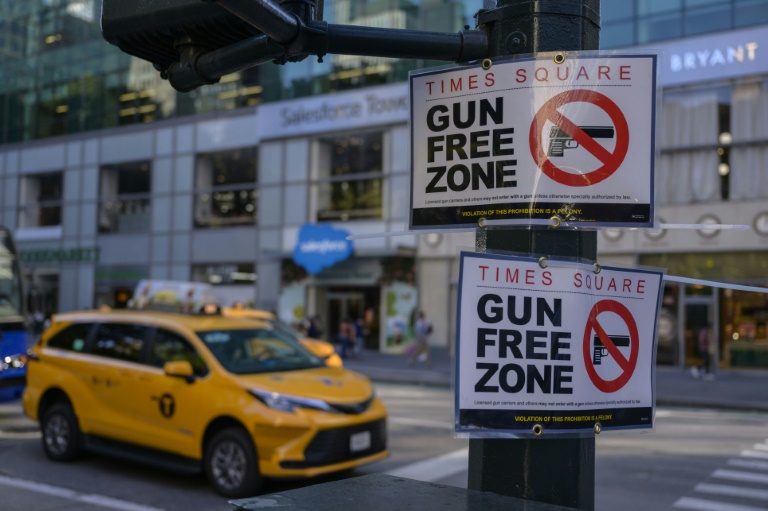
The judge accepted a petition to place a temporary stay on the state law passed on July 1 and implemented on September 1 that tightly restricted carrying guns in “sensitive places” such as Times Square in New York City, bars, schools and playgrounds.

The new law was passed after the Supreme Court — in a landmark ruling on June 23 — overturned New York’s previous gun laws, saying they unlawfully limited a person’s right to carry a firearm in public.

But gun rights advocates said the new law, even though tailored to follow the Supreme Court ruling, in practice impinged on their constitutional rights to free speech and to possess firearms.

Judge Glenn Suddaby apparently agreed, awarding the gun rights advocates a stay, or temporary block, on the new law while their lawsuit over it proceeds.

The ruling is the latest chapter in the fight over the state’s gun laws tightly limiting permission to carry a firearm outside the home. 

In the newest version after the Supreme Court ruling, the state law required a person seeking a public handgun license to demonstrate “good moral character,” a process that included vetting their social media accounts, providing four character references and taking 18 hours of firearms training.

It also set a long list of “sensitive locations” where firearms could not be carried.

The judge agreed that these requirements were unlawfully onerous and broad, and that Times Square and other sensitive locations did not merit special protection.

Suddaby said the new law still gives New York officials too much power to reject gun permit applicants by forcing them to go to lengths to prove they were of good moral character, rather than assuming they were in the absence of contradictory information.

“We are grateful to Judge Suddaby for his quick action to restore the right of the people to keep and bear arms,” said Erich Pratt, the senior vice president of Gun Owners of America.

New York Governor Kathy Hochul said they were weighing an appeal against the stay. 

“I will continue to do everything in my power to combat the gun violence epidemic and protect New Yorkers,” she said in a statement.

But the plaintiffs in the case, supported by Gun Owners of America, could then pursue their arguments to the Supreme Court, where the majority justices have already made clear they generally endorse a constitutional right to carry arms.
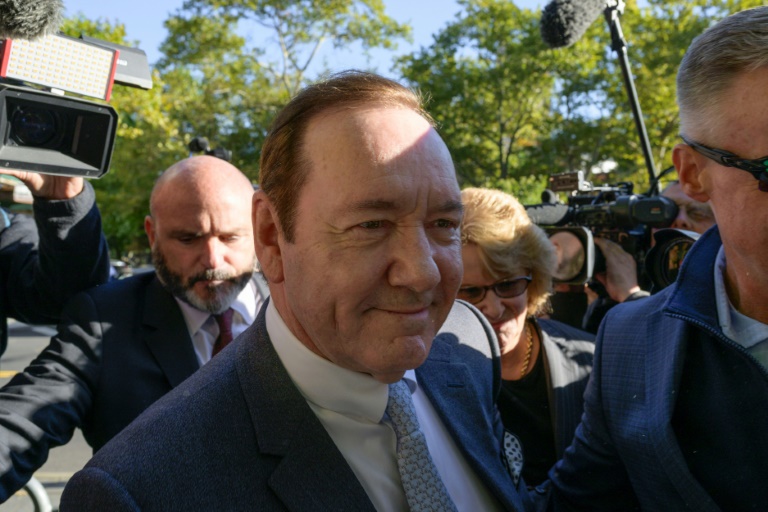

Kevin Spacey in court over 1980s sex misconduct claim

Five years after misconduct allegations ended his Hollywood career, Kevin Spacey appeared in a New York court Thursday to face fellow actor Anthony Rapp’s accusation that the disgraced Oscar winner sexually assaulted Rapp in 1986 when he was a minor.

One of the first stars to be caught up in the global #MeToo reckoning over sexual abuse, the 63-year-old Spacey smiled as he sat in a blue suit, white shirt and light blue tie just steps away from his accuser in federal court in Manhattan.

“Star Trek: Discovery” star Rapp, now 50, filed a complaint in September 2020 against Spacey for advances and an alleged sexual assault at a party in Manhattan in 1986, when Rapp was 14 and Spacey was in his late 20s. He is seeking $40 million in damages.

The “House of Cards” actor, who built his worldwide fame since the 1980s in movies such as “The Usual Suspects” and “American Beauty,” has always denied allegations of sexual abuse.

But during arguments in the case presided over by Judge Lewis Kaplan, Rapp’s lawyer Peter Saghir told a jury of six men and six women that Spacey committed “unacceptable” acts against the teen Rapp “intentionally to satisfy the drive of his sexual desires.”

The alleged assault against Rapp “never should have happened,” Saghir continued. “He was 14 years old.”

– Global fame –

Spacey, whose full name is Kevin Spacey Fowler, has disappeared from public view after becoming caught up in the early days of #MeToo.

The movement exploded in October 2017, when more than 80 women in the movie industry accused — and ultimately brought down — the previously untouchable producer Harvey Weinstein.

At the end of the month, Rapp accused Spacey for the first time, in great detail, in an interview with BuzzFeed News.

The next day, on Twitter, Spacey presented his “sincerest apology” to Rapp for any “deeply inappropriate drunken behavior,” saying he did not recall the incident.

After a 2020 criminal charge of sexual assault was dismissed by a judge, Rapp filed a civil suit.

According to a court document, Rapp claims that during the 1986 party, Spacey lifted him up, and that his hand “grazed” his buttocks while doing so. Rapp claims Spacey then placed him back down on a bed and “briefly placed his own clothed body partially beside and partially across” the 14-year-old’s.

During his testimony 35 years after the incident, Rapp agreed there had been “no kissing, no undressing, no reaching under clothes, and no sexualized statements or innuendo,” during an incident that had lasted no more than two minutes. 

In court though, Rapp’s lawyer pressed the case, describing Spacey’s behavior as “wrong and frankly unacceptable.”

“This was not horseplay,” Saghir said.

– ‘An impartial jury’ –

Spacey’s lawyer Jennifer Keller told the jury, however, that such an assault “never happened at all.”

Keller said that in the decades since the encounter at Spacey’s apartment, Rapp “repeated the same false story (but) never repeated it to the police.”

Rapp repeated it for “attention, sympathy” because he never became an international star, according to Spacey’s lawyer.

Before the trial, Keller said Spacey would attend through its duration, expected to be less than two weeks.

“We look forward to his vindication by an impartial jury,” Keller previously told AFP in an email.

If found guilty, Spacey faces significant damages.

Kaplan had dropped Rapp’s initial charge of sexual assault, ruling it had been brought too late and was not covered by a New York state law on child protection, implemented in 2019.

Spacey has pleaded not guilty to charges of sexual assault of three men between March 2005 and April 2013 in Britain, and in 2019, charges against the actor of indecent assault and sexual assault were dropped in Massachusetts. 

US flies Russian cosmonaut to ISS as Ukraine conflict rages

A SpaceX capsule carrying a Russian crew member docked Thursday with the International Space Station on a NASA mission that carries significant symbolism amid the war in Ukraine.

The Crew Dragon spaceship “Endurance” blasted off Wednesday from Florida and rendezvoused with the orbiting research outpost some 30 hours later, docking at 5:01 pm Eastern Time (2301 GMT). 

“Crew-5 is happy to have finally arrived at the International Space Station,” said commander Nicole Mann, the first Native American woman in space. “We are looking forward to getting to work.”

Also aboard: Koichi Wakata of Japan, Josh Cassada of the United States and Anna Kikina of Russia, the only female cosmonaut currently in service.

Around two hours after docking, hatches will open allowing the crew to join seven others already on the station: two Russians, four Americans, and an Italian.

Two weeks ago, an American astronaut took off on a Russian Soyuz rocket for the orbital platform.

The long-planned astronaut exchange program has been maintained despite soaring tensions between the United States and Russia since Moscow’s invasion of Ukraine in February.

Ensuring the operation of the ISS has become one of the few remaining areas of cooperation between the United States and Russia.

During a post-launch briefing, Sergei Krikalev, head of the human space program at Roscosmos, hailed the occasion as the start of a “new phase of our cooperation,” evoking the historic Apollo-Soyuz mission of 1975, a symbol of detente at the height of the Cold War. 

Krikalev, a former cosmonaut respected by his American colleagues, has been on something of a charm offensive after the last head of Roscosmos, Dmitry Rogozin, earlier this year threatened to withdraw cooperation and let the ISS crash over US or European territory.

While Russia has announced plans for its own station, analysts believe it would be difficult to build in the next few years, and withdrawing from the ISS would effectively ground Moscow’s once-proud civilian space program.

US to rename military bases that honor Confederate figures by 2024

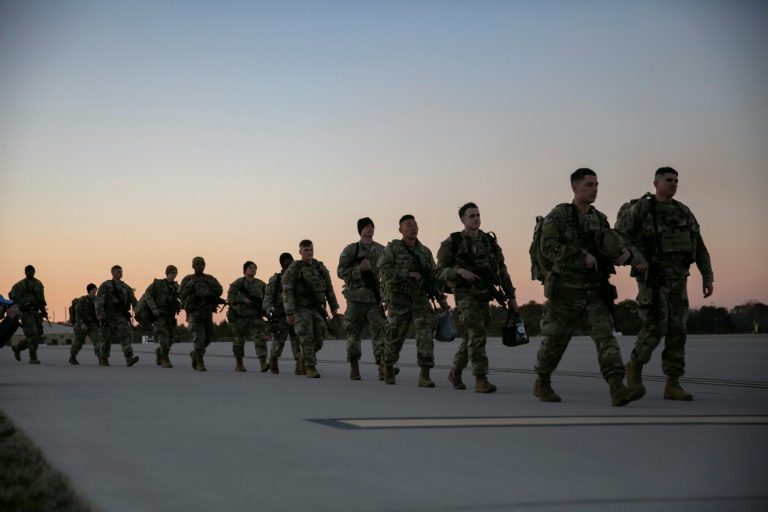
The United States will rename nine army bases that honor figures from the pro-slavery Confederacy by the beginning of 2024, Defense Secretary Lloyd Austin said on Thursday.

Nationwide protests against racism and police brutality that were sparked by the 2020 murder of George Floyd reignited calls to rename the bases, and Congress mandated that they be changed despite opposition from then-president Donald Trump.

“The names of these installations and facilities should inspire all those who call them home, fully reflect the history and the values of the United States, and commemorate the best of the republic that we are all sworn to protect,” Austin wrote in a memo on the decision.

The 2021 defense budget required the establishment of a commission to plan for the removal of Confederate-linked “names, symbols, displays, monuments, or paraphernalia” from defense department property, and gave the secretary three years to carry out its recommendations.

“I am committed to implementing all of the commission’s recommendations as soon as possible,” Austin said in the memo, adding that this will happen when a 90-day waiting period expires in December and will be completed “no later than January 1, 2024.”

The changes “will give proud new names that are rooted in their local communities and that honor American heroes whose valor, courage, and patriotism exemplify the very best of the United States military,” he wrote.

Trump opposed the renaming effort, tweeting in 2020 that his administration “will not even consider” changing the names of the bases, which “have become part of a Great American Heritage, and a history of Winning, Victory, and Freedom.”

He vetoed the defense bill, but Congress overrode it in a blow to the president, who by then had lost the 2020 election to Joe Biden.

All of the bases being renamed are located in Southern states that seceded from the United States and formed the Confederacy, which lost the 1861-1865 Civil War.

They include Fort Benning in Georgia, home to the US Army Infantry School, and Fort Bragg in North Carolina, home to the US Special Forces Command and the storied 82nd Airborne Division.

Fort Benning is currently named after brigadier general Henry Benning, an ardent secessionist who argued for the “superiority” of the white race.

The commission recommended it be renamed Fort Moore to honor US lieutenant general Hal Moore — who commanded American troops during their first major battle with North Vietnamese forces — and his wife Julia.

Fort Bragg, named for major general Braxton Bragg, an inept general who was relieved of command, is recommended to become Fort Liberty.

Bringing down inflation will take time, more rate hikes: Fed officials

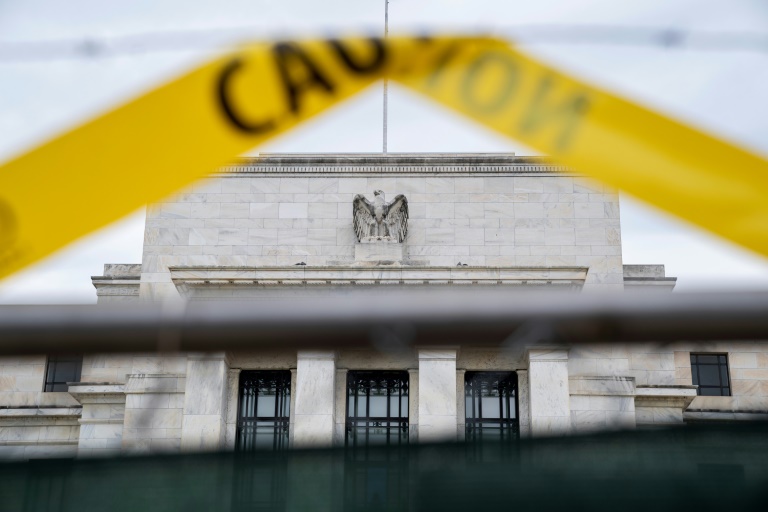
The United States will require further interest rate hikes in order to cool the world’s largest economy and rein in high prices, Federal Reserve Governor Lisa Cook said Thursday.

As US annual inflation has soared to the fastest in 40 years, the Fed has moved aggressively this year to tamp down demand, raising the interest rates five times, for a total of three percentage points.

And the central bank has said more increases are likely to come this year.

“Inflation remains stubbornly and unacceptably high, and data over the past few months show that inflationary pressures remain broad-based,” Cook said in her first speech as a member of the US central bank’s board.

Prices have surged over the past year, partly due to global supply chain problems that created shortages of key parts such as semiconductors needed for cars and electronics, as well as a shortage of workers.

The situation was exacerbated with Russia’s invasion of Ukraine in February — spurring a surge in energy prices and affecting global food markets — along with China’s adherence to a strict zero-Covid policy.

While the Fed cannot act directly on supply, it can moderate demand by tightening monetary policy, Cook said in the appearance at the Peterson Institute for International Economics.

“We will keep at it until the job is done,” she said.

– No ‘meaningful progress’ –

Her fellow Fed board member Christopher Waller warned that given ongoing price pressures, including from the US housing market, inflation is “not likely to fall quickly.”

“We haven’t yet made meaningful progress on inflation, and until that progress is both meaningful and persistent, I support continued rate increases,” Waller said in a speech Thursday.

Both officials expressed concern about the widespread and persistent forces pushing up prices and said the Fed must remain focused on that threat.

“Restoring price stability likely will require ongoing rate hikes and then keeping policy restrictive for some time until we are confident that inflation is firmly on the path toward our two percent goal,” Cook said.

Waller said that in addition to likely increases in November and December, “I anticipate additional rate hikes into early next year.”

He also downplayed speculation that sharp movements in financial markets might cause the Fed to ease off its aggressive stance.

“This is not something I’m considering or believe to be a very likely development,” he said, noting that “markets are operating effectively” and the Fed has tools to address any strains.

Stocks mostly retreat, pound drops

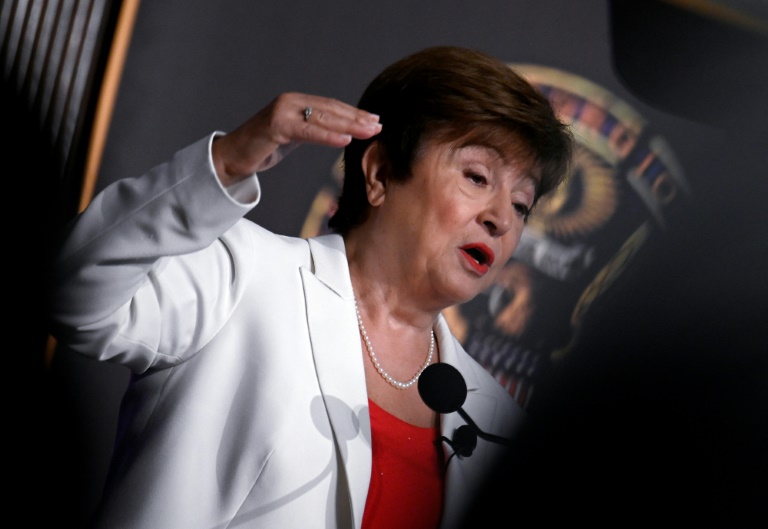
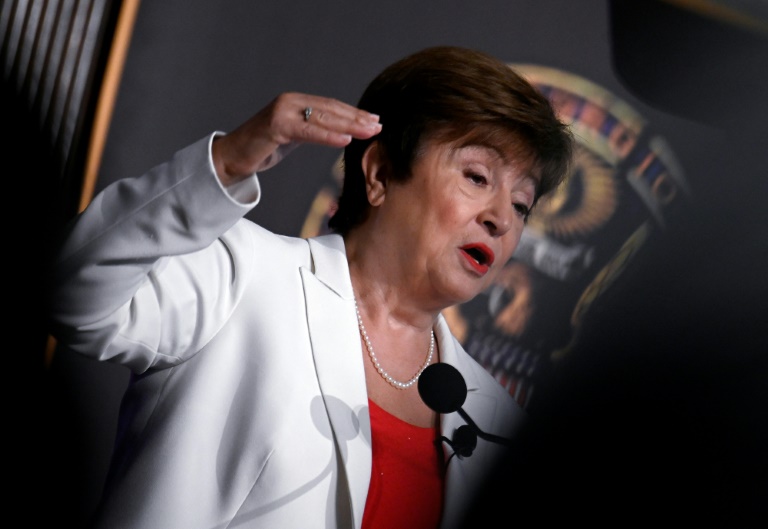
Global equity markets mostly fell Thursday and the pound retreated once more against the dollar ahead of key US jobs data as IMF chief Kristalina Georgieva warned of rising global recession risks.

Oil prices advanced, building on gains made before OPEC and other major producers led by Russia decided to slash output by two million barrels a day.

OANDA market analyst Craig Erlam said European markets erased early gains as “investors take a cautious approach” ahead of Friday’s release of the critical US jobs report that could influence the Federal Reserve’s next move.

Wall Street also endured a dreary session, with the S&P 500 losing one percent on worries that a better-than-expected employment data could send stocks lower due to expectations for more aggressive interest rate hikes.

“You’d have to be very courageous to make a big bet today before the jobs data,” said Gregori Volokhine of Meeschaert Financial Services. “Today people are playing the waiting game.”

Stocks snapped higher at the start of the week after disappointing US economic data fueled hopes of a moderation in the Fed’s efforts to counter inflation.

“The narrative in recent days of weaker data being positive as it could be a precursor to slower tightening didn’t seem sustainable and it’s already proving to be the case,” added Erlam.

Instead, he said he believed the rally to be a response to the sharp drop in shares in the previous weeks as the Fed made clear it would keep raising rates until inflation is brought down, even if that triggers a recession.

In a speech ahead of the IMF’s annual meetings next week, IMF chief Kristalina Georgieva urged policymakers to address rampant inflation.

She acknowledged that if central banks move too aggressively to tamp down price pressures, it could trigger a “prolonged” economic downturn.

But in an interview with AFP, she said policymakers “have to stay the course,” because right now “The risk of doing not enough is bigger than the risk of doing too much.”

– Oil prices steady –

Oil prices advanced further after the announcement from OPEC+ nations on the biggest reduction in output since the Covid-19 pandemic.

The move should support crude prices, but as high oil prices have been stoking the inflation that is driving central banks to raise interest rates, the move will further exacerbate the situation.

“The oil producing nations want to support the oil market, but a high oil price hurts most nations, so in a roundabout way, the move will probably add to global inflation,” said analyst David Madden at Equiti Capital.

The pound tumbled against the dollar after Fitch ratings agency lowered the outlook for British debt to negative from stable.

This comes after the government of new Prime Minister Liz Truss recently announced a budget packed with debt-fueled tax cuts.

“The large and unfunded fiscal package announced as part of the new government’s growth plan could lead to a significant increase in fiscal deficits over the medium term,” Fitch said in a statement.

“We consider that statements by the Chancellor (finance minister) hinting at the possibility of additional tax cuts and the likely modification of fiscal rules legislated in January reduce the predictability of fiscal policy.”

– Key figures around 2050 GMT –

New York – Dow: DOWN 1.2 percent at 29,926.94 (close)

New York – S&P 500: DOWN 1.0 percent at 3,744.52 (close)

New York – Nasdaq: DOWN 0.7 percent at 11,073.31 (close)

London – FTSE 100: DOWN 0.8 percent at 6,997.27 (close) 

Frankfurt – DAX: DOWN 0.4 percent at 12,470.78 (close)

Paris – CAC 40: DOWN 0.8 percent at 5,936.42 (close)

EURO STOXX 50: DOWN 0.4 percent at 3,433.45 (close)

Tokyo – Nikkei 225: UP 0.7 percent at 27,311.30 (close)

Hong Kong – Hang Seng Index: DOWN 0.4 percent at 18,012.15 (close)

Shanghai – Composite: Closed for a holiday

Pound/dollar: DOWN at $1.1161from $1.1326 on Wednesday

Euro/dollar: DOWN at $0.9794 from $0.9884

Euro/pound: UP at 87.74 pence from 87.27 pence

Dollar/yen: UP at 145.11 yen from 144.64 yen

Brent North Sea crude: UP 1.1 percent at $94.42 per barrel

West Texas Intermediate: UP 0.8 percent at $88.45 per barrel

burs-jmb

World Bank spent almost $15 bn on fossil fuel projects since Paris deal: report

The World Bank has pumped $14.8 billion into fossil fuel projects globally in the period following the landmark Paris climate accord, a report said Thursday.

Though the multilateral lender pledged in 2018 to end financing for upstream oil and gas, and direct funding had declined, the move failed to include indirect financing, according to the report compiled by an NGO coalition called The Big Shift Global.

It comes amid growing pressure on US President Joe Biden to fire World Bank chief David Malpass, a Trump appointee who has dodged questions about the reality of human-driven climate change.

“Each time the World Bank invests in another fossil fuel project, it fuels more climate disaster,” said Sophie Richmond of Big Shift. “There is no justification for using taxpayers’ money to exacerbate the climate crisis.”

One of the main ways the Bank continued to fund fossil fuels was by exploiting a “major loophole” by lending to intermediaries such as banks or financial institutions and by acting as a guarantor in case a country did not meet its obligations, the report said.

Under the 2015 Paris deal, world leaders committed to limiting long-term warming to 1.5 Celsius (2.7 degrees Fahrenheit) to avert devastating outcomes for the planet’s future habitability. 

The biggest project listed in the report, called “Investing in Climate Disaster: World Bank Finance for Fossil Fuels,” was the Trans-Anatolian Pipeline in Azerbaijan, funded in 2018 to the tune of $1.1 billion, with the Bank acting as a guarantor. 

“It serves to perpetuate on-going use of fossil gas in Europe,” the report said, while noting that while the pipeline may increase gas export revenues, market volatility makes it an unreliable source of income.

The World Bank Group’s own assessment stated the project was “expected to have potentially significant adverse social and environmental impacts that are diverse, irreversible, or unprecedented” — but it gave a green light anyway.

– Coal plants –

Another project highlighted was the construction of two coal plants in Indonesia called Java 9 and 10, where the Bank supplied $65 million in indirect funds — despite the fact that the Java and Bali grid is already experiencing 40 percent oversupply of electricity.

“It is obvious that the new Java 9 & 10 coal-fired power plants will bring more disaster in terms of environmental, social and health issues, in an area already covered with coal plants and industries,” said Yuyun Indradi of Trend Asia, an NGO that promotes clean energy. 

The report’s authors also rejected the Bank’s treatment of natural gas as a “bridge” between fossil fuels and renewable energy, saying it crowded out needed investments in clean energy.

In a statement to AFP, the World Bank said, “We dispute the findings of the report: it makes inaccurate assumptions about the World Bank Group’s lending. 

“In fiscal year 2022, the Bank Group delivered a record $31.7 billion for climate-related investments, to help communities around the world respond to the climate crisis, and build a safer and cleaner future.”

A separate report published by Oxfam earlier this week said the World Bank “supplies very little evidence to support its claims about the amount of climate finance it provides,” leaving the public to take their figures “on faith.”

'Bad football' behind NFL parity, says Brady

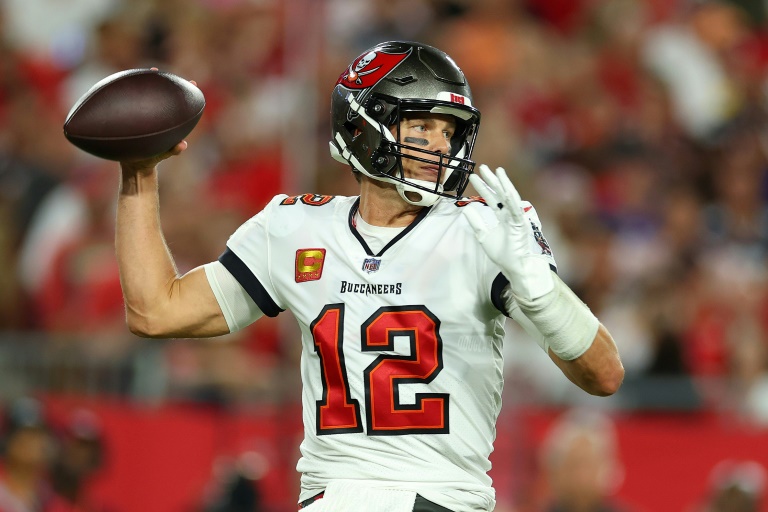
Tom Brady believes “a lot of bad football” is behind an uneven start to the NFL season that has left just eight of 32 teams with winning records heading into week five of the campaign.

Brady’s Buccaneers are one of 15 teams with a 2-2 record after four games, which includes Tampa Bay’s opponents on Sunday, the Atlanta Falcons.

While the parity is no doubt partly down to NFL rules designed to ensure competitive balance year-after-year, seven-time Super Bowl champion Brady says it is more easily explained by a drop-off in quality.

“I think there’s a lot of bad football from what I watch,” Brady said.

“I’ve watched a lot of bad football, poor quality of football. That’s what I see,” the veteran quarterback added.

Brady counts his own Buccaneers amongst the teams who have failed to perform this season.

The 2020 season Super Bowl champions started their campaign with scratchy road wins over the Dallas Cowboys and New Orleans Saints, but have since been beaten twice at home, first by Green Bay before Kansas City romped to a 41-31 victory in Florida last weekend.

“0-2 at home sucks,” Brady said. “That’s the reality. There’s no excuses. We haven’t got the job done. “It’s a production business –- you either win or you lose.”

Brady meanwhile heads into Sunday’s game against a backdrop of tabloid gossip about the state of his marriage to Brazilian supermodel Gisele Bundchen. According to one report this week, the couple have both recently hired divorce lawyers.

Brady was not asked directly about the reports during a press conference on Thursday, but acknowledged that maintaining his singular focus on the sport in what is his 22nd season had been “challenging”.

“I think, you know, football has its challenges in different ways for everybody at different times,” Brady said. “So, it’s work. Everyone has different challenges and you deal with it the best way you can.”

– Packers’ London debut –

With so many teams struggling for form, this weekend’s fixture list will feature only one clash between two teams with winning records, when the Green Bay Packers (3-1) face the New York Giants (3-1) in London.

Packers head coach Matt LaFleur has made no secret of the fact that he is no fan of the overseas fixtures.

“I’m not going to give you my honest answer. I’d rather refrain,” LaFleur said when asked for his views on the fixture.

“It feels like a Thursday night game for us as coaches just in terms of all the preparation you’ve got to do. But you just do it, so it is what it is.”

But Packers quarterback Aaron Rodgers offered a more upbeat take, insisting Green Bay were relishing the journey to Britain.

“Listen, coaches are creatures of habit, even more than players. Anytime there’s a minute adjustment to the schedule, it throws them all out of whack,” Rodgers said in reaction to LaFleur’s remarks.

Had it been up to Rodgers, Green Bay would have traveled earlier to London instead of flying into the British capital on Friday.

“We’re all excited,” Rodgers said. “I think the reason I said I wanted to go over early was just to experience a little bit of that culture, to be able to get out and see some sights and interact with fans, go to a pub and have a Guinness or whatever the local brew is.

“That’s what we all want to do, those of us that want to go over early.”

While so many teams are mired in mediocrity, the Philadelphia Eagles will look to extend their unbeaten 4-0 start to the season on the road against the Arizona Cardinals (2-2).

Eagles quarterback Jalen Hurts however is adamant the Cardinals defense has the ability to disrupt Philadelphia’s in-form offense.

“This is a really good team we’re about to play,” Hurts said. “They have a really good defense — disruptive up front.

“They have speed on the backend. So, let’s not set the precedent for that. This is a good football team.”

Elsewhere on Sunday, Josh Allen and the Buffalo Bills aim to improve to 4-1 when they host the Pittsburgh Steelers, who have struggled to a 1-3 record in the opening weeks of the season.

Bills quarterback Allen says there is no chance of the Steelers being taken lightly.

“It’s the Pittsburgh Steelers we’re talking about,” Allen said. 

“They’ve been a very good team for a very long time and it’s no secret why. The coaching staff that they’ve got in place there and continuing to develop those players.

“It’s been not fun to watch on defense knowing how many different things they can do and show you.”

IMF chief says world better prepared for this crisis

The global economy is at a difficult crossroads, buffeted by multiple shocks including soaring inflation, rising interest rates and a growing threat of broad debt crisis, but IMF Managing Director Kristalina Georgieva told AFP that institutions are better prepared to weather this storm.

Below is an excerpt from an interview conducted ahead of the IMF and World Bank annual meetings in Washington next week:

Could the fallout in 2023 be worse than the 2008 global financial crisis?

What we had today is (a) much stronger banking sector than we had then, and that has proven to be a source of resilience for the world economy. We also have something very important: stronger central banks, truly independent with the experience that they have built since the global financial crisis. And that shows in how central banks are reacting to the signs of inflation.

Does the IMF have enough tools and financial resources?

During the last year since Covid, we have extended lending of about $270 billion. We have a lending capacity of $1 trillion. So we have space to continue to support the members. We do see an increase in requests for fund programs, not surprisingly. Just since Russia invaded Ukraine, we have provided financial support to 16 countries of about $90 billion and we are currently looking at some 21 requests… My message to countries: act early. Come to us for precautionary instruments so you can build your position in this very difficult time to sustain your economy against the risks to come.

China is a major creditor, are they doing enough to help with debt relief?

We have got… very substantive engagement with China in the context of the countries that ask for treatment under the Common Framework. And we have made good progress with China stepping up to co-chair the creditors committee for Zambia and to reach an agreement on Zambia, and now we expect the same for Chad. What we need to recognize is that the Chinese institutions are still working their way through debt issues. There are many lenders in China. Only recently the Ministry of Finance and central bank, the People’s Bank of China, got the mandate to coordinate, and it takes some time to reach that coordination. 

But time is not our friend. And this is what we have conveyed clearly, that we do not want to see individual defaults turning into opening a gateway for a debt crisis. And it is not in China’s interest. 

IMF chief says world better prepared for this crisis

The global economy is at a difficult crossroads, buffeted by multiple shocks including soaring inflation, rising interest rates and a growing threat of broad debt crisis, but IMF Managing Director Kristalina Georgieva told AFP that institutions are better prepared to weather this storm.

Below is an excerpt from an interview conducted ahead of the IMF and World Bank annual meetings in Washington next week:

Could the fallout in 2023 be worse than the 2008 global financial crisis?

What we had today is (a) much stronger banking sector than we had then, and that has proven to be a source of resilience for the world economy. We also have something very important: stronger central banks, truly independent with the experience that they have built since the global financial crisis. And that shows in how central banks are reacting to the signs of inflation.

Does the IMF have enough tools and financial resources?

During the last year since Covid, we have extended lending of about $270 billion. We have a lending capacity of $1 trillion. So we have space to continue to support the members. We do see an increase in requests for fund programs, not surprisingly. Just since Russia invaded Ukraine, we have provided financial support to 16 countries of about $90 billion and we are currently looking at some 21 requests… My message to countries: act early. Come to us for precautionary instruments so you can build your position in this very difficult time to sustain your economy against the risks to come.

China is a major creditor, are they doing enough to help with debt relief?

We have got… very substantive engagement with China in the context of the countries that ask for treatment under the Common Framework. And we have made good progress with China stepping up to co-chair the creditors committee for Zambia and to reach an agreement on Zambia, and now we expect the same for Chad. What we need to recognize is that the Chinese institutions are still working their way through debt issues. There are many lenders in China. Only recently the Ministry of Finance and central bank, the People’s Bank of China, got the mandate to coordinate, and it takes some time to reach that coordination. 

But time is not our friend. And this is what we have conveyed clearly, that we do not want to see individual defaults turning into opening a gateway for a debt crisis. And it is not in China’s interest. 

Close Bitnami banner
Bitnami