US Business

World Bank spent almost $15 bn on fossil fuel projects since Paris deal: report

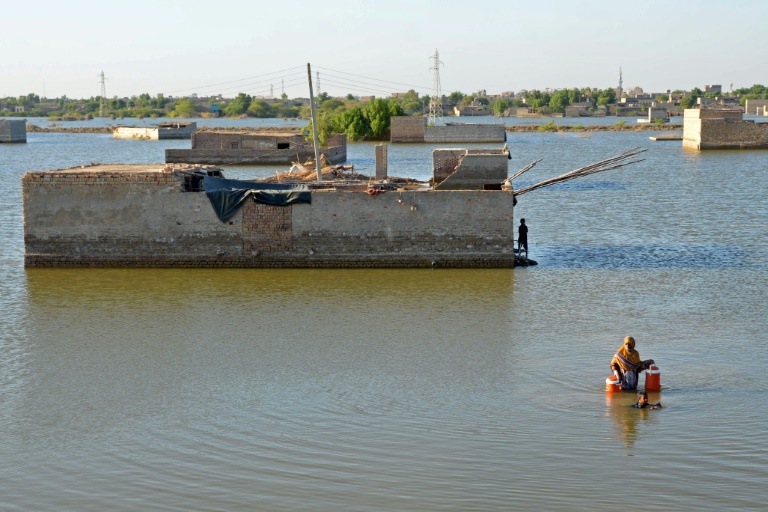
The World Bank has pumped $14.8 billion into fossil fuel projects globally in the period following the landmark Paris climate accord, a report said Thursday.

Though the multilateral lender pledged in 2018 to end financing for upstream oil and gas, the move failed to include indirect financing via intermediaries, according to the report compiled by an NGO coalition called The Big Shift Global.

It comes amid growing pressure on US President Joe Biden to fire World Bank chief David Malpass, a Trump appointee who has dodged questions about the reality of human-driven climate change.

“Each time the World Bank invests in another fossil fuel project, it fuels more climate disaster,” said Sophie Richmond of the Big Shift Campaign. “There is no justification for using taxpayers’ money to exacerbate the climate crisis.”

Under the 2015 Paris deal, world leaders committed to limiting long-term warming to 1.5 Celsius (2.7 degrees Fahrenheit) to avert devastating outcomes for the planet’s future habitability. 

The biggest project listed in the report, called “Investing in Climate Disaster: World Bank Finance for Fossil Fuels,” was the Trans-Anatolian Pipeline in Azerbaijan, funded in 2018 to the tune of $1.1 billion.

“It serves to perpetuate on-going use of fossil gas in Europe,” the report said, while noting that while the pipeline may increase gas export revenues, market volatility makes it an unreliable source of income.

The World Bank Group’s own assessment stated the project was “expected to have potentially significant adverse social and environmental impacts that are diverse, irreversible, or unprecedented.”

These impacts included “landscape, water quality, air quality, noise levels, waste water, solid waste, hazardous waste, biodiversity, worker health and safety and communities health and safety during construction and operation and physical and economic resettlement.”

Despite this, the project was given the green light. 

Another project highlighted was the construction of two coal plants in Indonesia called Java 9 and 10, where the Bank supplied $65 million in indirect funds — despite the fact that the Java and Bali grid is already experiencing 40 percent oversupply of electricity.

“It is obvious that the new Java 9 & 10 coal-fired power plants will bring more disaster in terms of environmental, social and health issues, in an area already covered with coal plants and industries,” said Yuyun Indradi of Trend Asia, an NGO that promotes clean energy. 

The report’s authors also rejected the Bank’s treatment of natural gas as a “bridge” between fossil fuels and renewable energy, saying it crowded out needed investments in clean energy.

In a statement to AFP, the World Bank said, “We dispute the findings of the report: it makes inaccurate assumptions about the World Bank Group’s lending. 

“In fiscal year 2022, the Bank Group delivered a record $31.7 billion for climate-related investments, to help communities around the world respond to the climate crisis, and build a safer and cleaner future.”
Biden hails IBM's $20 bln investment announcement

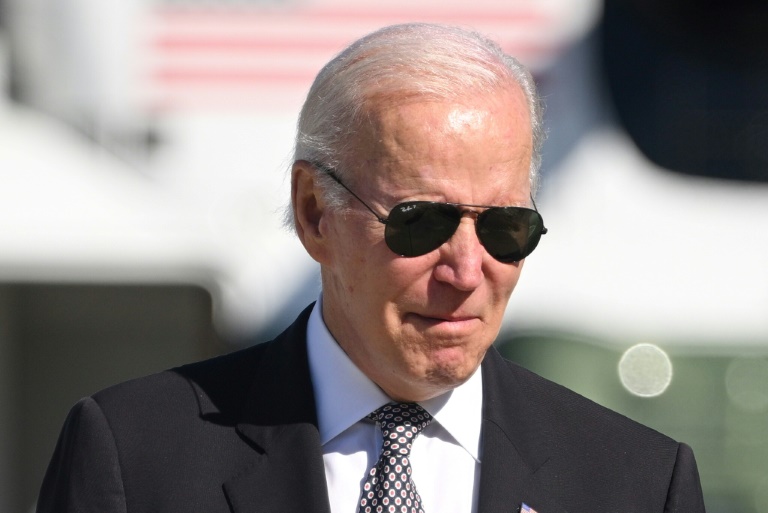
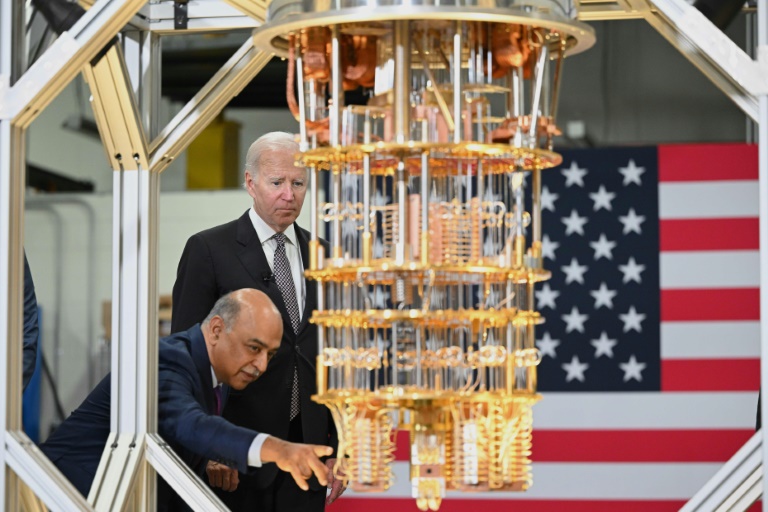
IBM hosted US President Joe Biden Thursday to celebrate the announcement of a $20-billion investment in semiconductors, quantum computing and other cutting-edge technology in New York state.

CEO Arvind Krishna unveiled the spending, which will take place over a decade, in a speech alongside Biden in the tech giant’s Poughkeepsie facility.

“We are proud to announce that IBM is pledging to invest $20 billion across the region,” he told cheering workers.

“This investment includes breakthroughs in semiconductor technology, mainframe computers, quantum computers and artificial intelligence,” Krishna said.

Biden, who flew in to Poughkeepsie earlier for a tour of the site, hailed the pledge from the “iconic American company” as another sign that his strategy of rebuilding the US innovative edge is working.

“It’s here at this factory and the factories of other companies across America where America’s future is literally being built,” he said.

The Democrat has made a priority of encouraging growth in high-tech manufacturing, hoping to rebuild domestic supply chains in crucial components such as microchips that for years have been left to foreign companies based as far away as Taiwan.

Other major projects currently underway include Micron’s announcement of a $100-billion investment to manufacture semiconductors in New York and Wolfspeed’s pledge to spend $5 billion on a new semiconductor plant in North Carolina.

In early September, Biden visited the nascent site of Intel’s future $20-billion facility in Ohio.

“We’re better positioned globally than any time in a long time,” Biden said, hailing the US investment climate created by “the most productive workers in the world,” the “best research universities,” dynamic venture capitalists and his administration’s pushing through of the biggest federal infrastructure spending plans in decades.

Biden hails IBM's $20 bln investment announcement

IBM hosted US President Joe Biden Thursday to celebrate the announcement of a $20-billion investment in semiconductors, quantum computing and other cutting-edge technology in New York state.

CEO Arvind Krishna unveiled the spending, which will take place over a decade, in a speech alongside Biden in the tech giant’s Poughkeepsie facility.

“We are proud to announce that IBM is pledging to invest $20 billion across the region,” he told cheering workers.

“This investment includes breakthroughs in semiconductor technology, mainframe computers, quantum computers and artificial intelligence,” Krishna said.

Biden, who flew in to Poughkeepsie earlier for a tour of the site, hailed the pledge from the “iconic American company” as another sign that his strategy of rebuilding the US innovative edge is working.

“It’s here at this factory and the factories of other companies across America where America’s future is literally being built,” he said.

The Democrat has made a priority of encouraging growth in high-tech manufacturing, hoping to rebuild domestic supply chains in crucial components such as microchips that for years have been left to foreign companies based as far away as Taiwan.

Other major projects currently underway include Micron’s announcement of a $100-billion investment to manufacture semiconductors in New York and Wolfspeed’s pledge to spend $5 billion on a new semiconductor plant in North Carolina.

In early September, Biden visited the nascent site of Intel’s future $20-billion facility in Ohio.

“We’re better positioned globally than any time in a long time,” Biden said, hailing the US investment climate created by “the most productive workers in the world,” the “best research universities,” dynamic venture capitalists and his administration’s pushing through of the biggest federal infrastructure spending plans in decades.

UN Human Rights Council rejects debate on Xinjiang

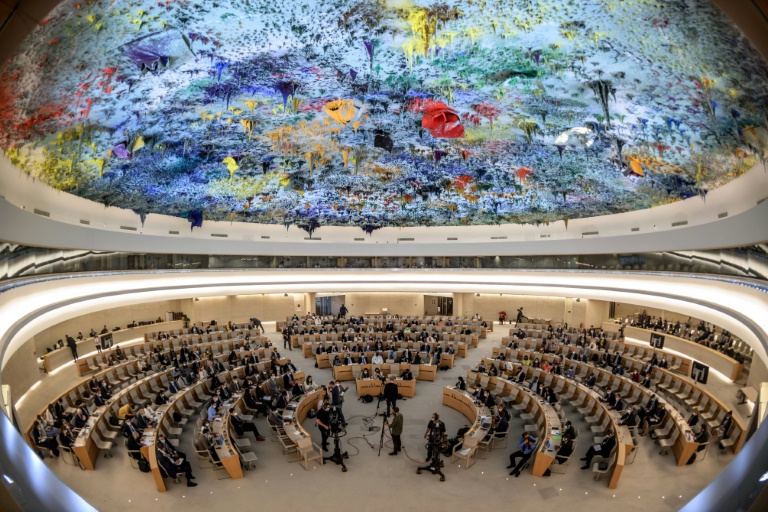
The UN Human Rights Council on Thursday voted against debating alleged widespread abuses in China’s Xinjiang region after intense lobbying by Beijing, in a heavy setback for Western nations.

The United States and allies last month brought a draft decision targeting China to the UN’s top rights body, seeking as a bare minimum a discussion on Xinjiang.

The move came after former UN rights chief Michelle Bachelet released her long-delayed Xinjiang report, citing possible crimes against humanity against Uyghurs and other Muslim minorities in the far-western region.

Western countries thought that by going no further than simply seeking to talk about the findings, enough other nations would not block putting it on the agenda.

But in a moment of knife-edge drama, countries on the 47-member council in Geneva voted 19-17 against holding a debate on human rights in Xinjiang, with 11 nations abstaining.

“This is a victory for developing countries and a victory for truth and justice,” tweeted Chinese foreign ministry spokeswoman Hua Chunying.

Amnesty International branded the vote farcical, while Human Rights Watch (HRW) said it betrayed abuse victims.

“The United States condemns today’s vote preventing a discussion about Xinjiang,” US ambassador to the council Michele Taylor tweeted.

Inaction “shamefully suggests some countries are free from scrutiny and allowed to violate human rights with impunity”.

– ‘Western plot failed’ –

The nations voting against a debate were Bolivia, Cameroon, China, Cuba, Eritrea, Gabon, Indonesia, Ivory Coast, Kazakhstan, Mauritania, Namibia, Nepal, Pakistan, Qatar, Senegal, Sudan, the United Arab Emirates, Uzbekistan and Venezuela.

Argentina, Armenia, Benin, Brazil, The Gambia, India, Libya, Malawi, Malaysia, Mexico and Ukraine abstained.

Washington and some Western countries have used Xinjiang “to spread rumours and cause trouble, engaging in political manipulation under the guise of human rights, attempting to smear China’s image,” a Chinese foreign ministry spokesperson said in a statement.

“The plot by the US and some Western countries has once again failed.

“Xinjiang-related issues are fundamentally not human rights issues, but are counter-terrorism, deradicalisation and anti-separatism issues.”

The draft decision was put forward by the United States, Australia, Canada, France, Germany, Norway, Sweden and Turkey, among others.

One Western diplomat stressed that regardless of the outcome, “the number one objective has been fulfilled” in putting Xinjiang in the spotlight.

– ‘Dreadful message’ –

Bachelet’s report, published minutes before her term ended on August 31, highlighted “credible” allegations of widespread torture, arbitrary detention and violations of religious and reproductive rights.

It brought UN endorsement to long-running allegations that Beijing detained more than one million Uyghurs and other Muslims and forcibly sterilised women.

Beijing vehemently rejected the charges, insisting it was running vocational training centres in the region to counter extremism.

Amnesty secretary general Agnes Callamard said Thursday’s vote put the council in “the farcical position of ignoring the findings of the UN’s own human rights office”.

“For council member states to vote against even discussing a situation where the UN itself says crimes against humanity may have occurred makes a mockery of everything the Human Rights Council is supposed to stand for.”

HRW’s China director Sophie Richardson called it an “abdication of responsibility and a betrayal of Uyghur victims”.

The International Service for Human Rights’ China advocate Raphael Viana David said: “Council members sent today a dreadful message: China remains so far untouchable.”

– Muslim countries’ position ‘shameful’ –

ISHR executive director Phil Lynch said it was “shameful” that “Muslim countries… have overwhelmingly failed to even support a UN discussion on rights abuses against Uyghurs.”

Indonesian ambassador Febrian Ruddyard said: “As the world’s largest Muslim country and a vibrant democracy, we cannot close our eyes to the plight of our Muslim brothers and sisters.”

But, as China did not consent, a discussion “will not yield meaningful progress”, hence Indonesia voted ‘no’.

The sentiment was echoed by Qatari ambassador Hend Al-Muftah.

China launched an all-out offensive to dismiss Bachelet’s report.

African countries, where China is the leading creditor after making massive infrastructure investments, faced particularly heavy lobbying, observers said.

In the end, only Somalia voted ‘yes’ out of 13 countries.

Britain’s ambassador Simon Manley said the close result nonetheless showed Beijing that “a significant number of countries will not be silenced when it comes to egregious human rights violations”, whoever the perpetrator.

'All options' on table in US response to OPEC+ cuts: W.House

The White House on Thursday said “all options” are being considered after the OPEC+ group’s decision to cut oil production, despite US arguments that this will raise fuel costs and endanger world economies.

President Joe Biden’s administration is angry at ally Saudi Arabia for overseeing Wednesday’s move by the OPEC cartel and an additional group of 10 exporters led by Russia to cut production by two million barrels a day in a bid to boost oil prices.

The decision came as Biden leads international efforts to isolate major energy producer Russia over its invasion of Ukraine, while also working to tamp down US consumer prices ahead of midterm elections next month.

“Disappointment. We’re looking at what alternatives we may have” to counter the expected price hikes, Biden told reporters.

Biden said there were “a lot of alternatives.”

These could include further releases from the US Strategic Petroleum Reserve, potentially increased US domestic drilling, and more drastic measures, including limits on exports.

Officials remain guarded on what the next move will be but Biden’s chief economic advisor, Brian Deese, told reporters aboard Air Force One that “we need to look at… what tools are necessary.”

Asked whether this could include a ban or limit on exports of US production, Deese said “the president has directed that we have all options on the table — and that will continue to be the case. And so that’s how we’re approaching this question.”

Deese also declined to rule out an idea being debated in Congress for a law stripping sovereign immunity in antitrust suits, something which would potentially allow the US government to take the oil cartel members to court.

“We will be assessing and consulting closely with Congress around a range of issues,” he said.

Deese said the OPEC+ decision is “unwarranted” at a time when the global economy is in such weak condition and that “the lack of supply continues to be a significant challenge” for consumers.

But he said the production cuts may not have as much effect on markets as feared because members of the cartel have already been struggling to meet their output quotas, meaning the headline figure of two million barrels fewer per day does not meet reality.

“We’re going to have to see the actual impact of this,” Deese said. “Certainly the impact on production will be significantly lower than that.”

IMF chief urges action as global recession risks rise

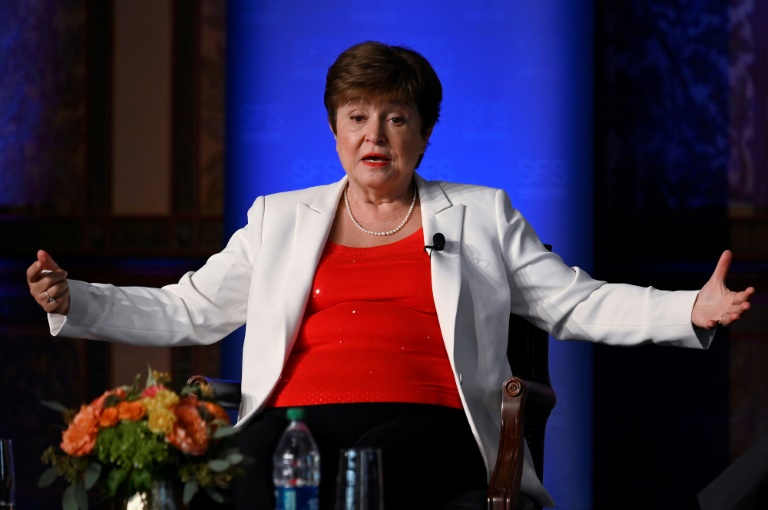
IMF chief Kristalina Georgieva urged global policymakers Thursday to take concerted action to avoid a “dangerous ‘new normal,'” as the risks of a worldwide recession are driven ever higher by repeated economic shocks.

In a speech ahead of the fund’s annual meetings next week, the IMF’s managing director said it was critical to “stabilize the global economy by addressing the most immediate challenges” — including rampant inflation.

Policymakers need to act together to “prevent this period of heightened fragility from becoming a dangerous ‘new normal,'” Georgieva said.

But she warned the process will be painful — and acknowledged that if central banks move too aggressively to tamp down price pressures, it could trigger a “prolonged” economic downturn.

Finance ministers and central bank governors from more than 180 nations will gather next week in Washington for the first fully in-person meeting of the International Monetary Fund and World Bank since 2019, prior to the Covid-19 pandemic.

The meetings come at a difficult time for the global economy, with the pandemic largely under control, but soaring prices and rising interest rates now threatening to reverberate around the globe and choke off nascent recoveries.

But the IMF chief said it is too soon for major central banks to pull back in the battle against inflation that has reached its highest in four decades.

Inflation remains “still stubborn, still persistent,” Georgieva told AFP in an interview.

“The risk of doing not enough is bigger than the risk of doing too much,” she said. “Clearly they have to do more. They have to stay the course.”

– ‘Shock, after shock’ –

Amid a “darkening global outlook … the risks of recession are rising,” Georgieva said in her speech, noting that a third of countries are expected to see at least two quarters of contraction.

And “even when growth is positive, it will feel like a recession” because of rising prices eroding incomes.

The crisis lender plans to once again downgrade its 2023 forecast for the world economy, in the report due to be published next week for the annual meeting.

The fund in July slashed its growth forecast for this year to 3.2 percent, and for next year to 2.9 percent — the third consecutive downgrade.

“In less than three years we lived through shock, after shock, after shock,” Georgieva said in her speech at Georgetown University.

Global supply snarls already were a challenge as demand surged following the pandemic slowdown, fueling inflation worldwide, and strains worsened in the wake of the Russian invasion of Ukraine — Georgieva called it a “senseless war” — sending food and fuel prices soaring, which has spread to rising costs for other items.

“Far from being transitory, inflation has become more persistent,” and acting before high prices become entrenched is a key challenge for policymakers, Georgieva said.

Failure to win the battle will “undermine the foundation for growth” as rising prices create a tax on the poor, she told AFP.

But she warned, “the cost of a policy misstep can be enormous.”

“Not tightening enough would cause inflation to become deanchored and entrenched,” but central banks moving “too much and too fast — and doing so in a synchronized manner across countries — could push many economies into prolonged recession,” she said in the speech.

“This is not easy, and it will not be without pain in the near term,” she cautioned.

– Debt distress –

Georgieva stressed the need for fiscal policies to help the most vulnerable segments of society, but warned that efforts must be targeted “with a laser-sharp focus on lower-income households,” to avoid acting against the current of monetary policy.

She cautioned against relying on price controls which are not affordable nor effective.

The pandemic forced many countries to take on more borrowing, and now many are already facing or at risk of debt distress amid rising interest rates. That “raises the risk of a widening debt crisis” which could further harm global growth.

To reduce the risk “large creditors such as China and private-sector creditors have a responsibility to act,” she said, calling for “faster and more predictable” action on debt restructuring.

IMF chief urges action as global recession risks rise

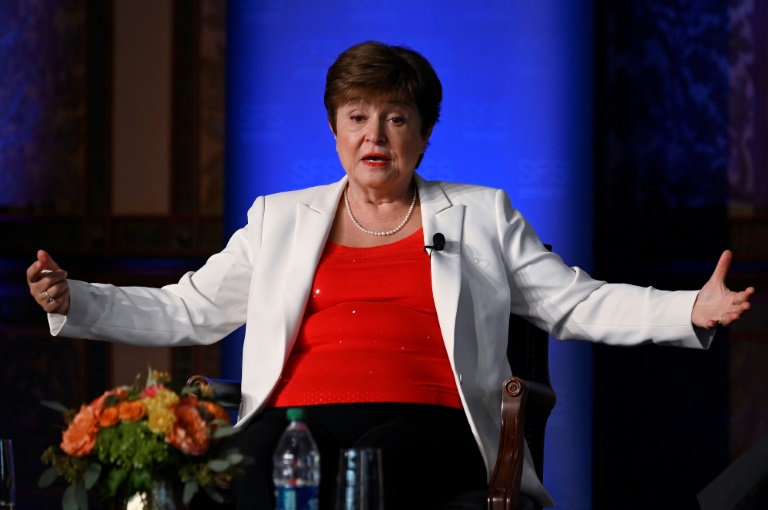
IMF chief Kristalina Georgieva urged global policymakers Thursday to take concerted action to avoid a “dangerous ‘new normal,'” as the risks of a worldwide recession are driven ever higher by repeated economic shocks.

In a speech ahead of the fund’s annual meetings next week, the IMF’s managing director said it was critical to “stabilize the global economy by addressing the most immediate challenges” — including rampant inflation.

Policymakers need to act together to “prevent this period of heightened fragility from becoming a dangerous ‘new normal,'” Georgieva said.

But she warned the process will be painful — and acknowledged that if central banks move too aggressively to tamp down price pressures, it could trigger a “prolonged” economic downturn.

Finance ministers and central bank governors from more than 180 nations will gather next week in Washington for the first fully in-person meeting of the International Monetary Fund and World Bank since 2019, prior to the Covid-19 pandemic.

The meetings come at a difficult time for the global economy, with the pandemic largely under control, but soaring prices and rising interest rates now threatening to reverberate around the globe and choke off nascent recoveries.

But the IMF chief said it is too soon for major central banks to pull back in the battle against inflation that has reached its highest in four decades.

Inflation remains “still stubborn, still persistent,” Georgieva told AFP in an interview.

“The risk of doing not enough is bigger than the risk of doing too much,” she said. “Clearly they have to do more. They have to stay the course.”

– ‘Shock, after shock’ –

Amid a “darkening global outlook … the risks of recession are rising,” Georgieva said in her speech, noting that a third of countries are expected to see at least two quarters of contraction.

And “even when growth is positive, it will feel like a recession” because of rising prices eroding incomes.

The crisis lender plans to once again downgrade its 2023 forecast for the world economy, in the report due to be published next week for the annual meeting.

The fund in July slashed its growth forecast for this year to 3.2 percent, and for next year to 2.9 percent — the third consecutive downgrade.

“In less than three years we lived through shock, after shock, after shock,” Georgieva said in her speech at Georgetown University.

Global supply snarls already were a challenge as demand surged following the pandemic slowdown, fueling inflation worldwide, and strains worsened in the wake of the Russian invasion of Ukraine — Georgieva called it a “senseless war” — sending food and fuel prices soaring, which has spread to rising costs for other items.

“Far from being transitory, inflation has become more persistent,” and acting before high prices become entrenched is a key challenge for policymakers, Georgieva said.

Failure to win the battle will “undermine the foundation for growth” as rising prices create a tax on the poor, she told AFP.

But she warned, “the cost of a policy misstep can be enormous.”

“Not tightening enough would cause inflation to become deanchored and entrenched,” but central banks moving “too much and too fast — and doing so in a synchronized manner across countries — could push many economies into prolonged recession,” she said in the speech.

“This is not easy, and it will not be without pain in the near term,” she cautioned.

– Debt distress –

Georgieva stressed the need for fiscal policies to help the most vulnerable segments of society, but warned that efforts must be targeted “with a laser-sharp focus on lower-income households,” to avoid acting against the current of monetary policy.

She cautioned against relying on price controls which are not affordable nor effective.

The pandemic forced many countries to take on more borrowing, and now many are already facing or at risk of debt distress amid rising interest rates. That “raises the risk of a widening debt crisis” which could further harm global growth.

To reduce the risk “large creditors such as China and private-sector creditors have a responsibility to act,” she said, calling for “faster and more predictable” action on debt restructuring.

Chagall painting stolen by Nazis to be auctioned in New York

A painting by Marc Chagall, which was among 15 works stolen by Nazis and eventually returned by France to the heirs of the affected families, will go on sale next month in New York, the Phillips auction house said Thursday.

The 1911 oil on canvas, “The Father,” set for auction on November 15, was purchased in 1928 by a Polish-Jewish violin maker, David Cender, who lost his possessions when he was forced to move to the Lodz ghetto.

Deported to Auschwitz, where his wife and daughter were killed, the violin maker survived and moved to France in 1958, where he died in 1966 without regaining possession of the painting — now estimated to be worth $6 million to $8 million.

In the meantime, the work had reappeared in exhibitions and it turned out that it was Marc Chagall himself who had bought it, probably between 1947 and 1953 — without knowing its provenance, according to Phillips and the French culture ministry.

After the Russian-born artist died in France in 1985, “The Father” entered the national collections in 1988, and was then assigned to the Pompidou Center and deposited in the Museum of Jewish Art and History in Paris.

The French parliament unanimously adopted a law at the beginning of the year to return 15 works of Jewish families looted by the Nazis. The then culture minister, Roselyne Bachelot, had called it a historic “first step” — noting that other looted works of art and books were still kept in public collections.

Cender’s heirs decided to sell the painting, a common scenario “when a work is restituted so long after it has been stolen,” because “you’ve got multiple heirs and the work itself cannot be split,” said Phillips deputy chairman Jeremiah Evarts.

Chagall painted the portrait of his father the year he arrived in Paris. He was “electrified by the modernism” of the city at the time and his works from that period are rare.

“Many of them were destroyed when he left Paris to return to Russia in 1914,” Evarts noted, saying he was certain “The Father” would attract interest from museums and collectors.

The sale will take place during the autumn auction season in New York. Phillips, the New York-based auction house owned by Russian luxury goods retailer Mercury, condemned the invasion of Ukraine days after the war began in late February.

Revamp of World Bank and lenders needed to tackle global problems: Yellen

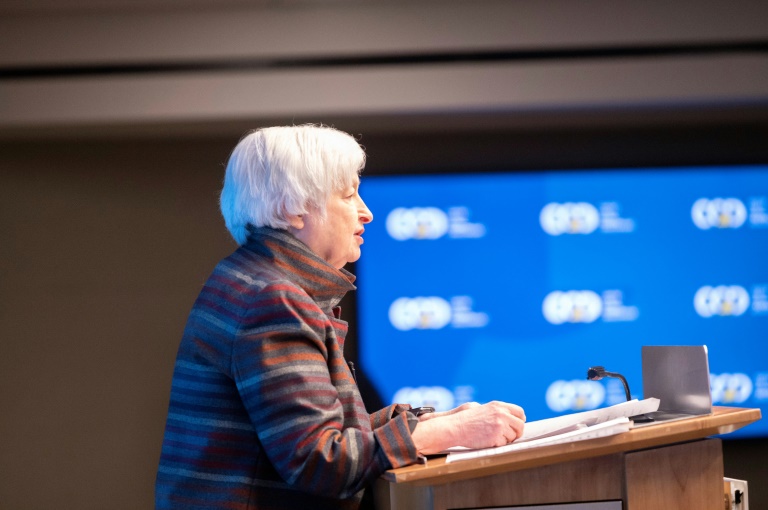
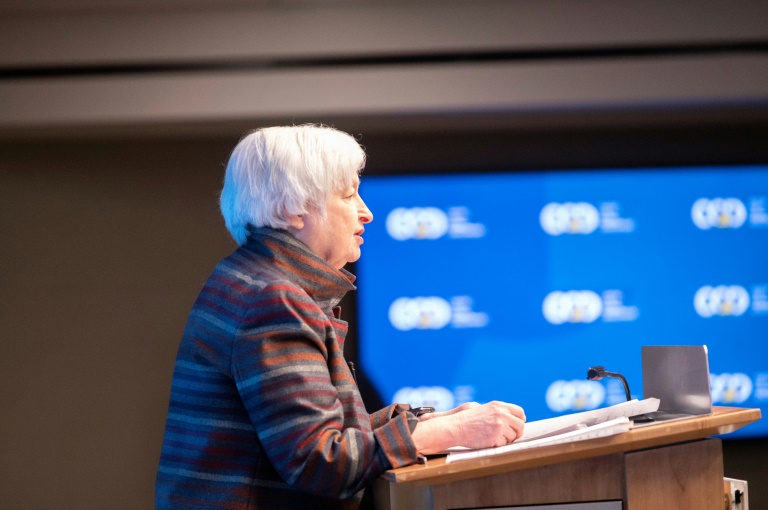
The World Bank and development lenders need to evolve to tackle the complex challenges that the world is facing, such as by going beyond country-based lending, US Treasury Secretary Janet Yellen said Thursday.

Her comments, delivered at the Center for Global Development think tank, follow warnings that global recession risks are growing on the back of shocks like the coronavirus pandemic and Russia’s invasion of Ukraine.

“Emerging markets and developing countries are often most acutely affected both by global shocks and by spillovers from the policies of advanced countries,” said Yellen.

While efforts to combat poverty have mostly been country-focused in the past, a different approach is needed in the face of problems such as climate change and pandemics, she said.

Yellen’s remarks come days before policymakers gather in Washington for the annual meetings of the International Monetary Fund and World Bank.

“I, along with leaders from a broad group of countries, will be calling on World Bank management at the annual meetings next week… to develop a World Bank evolution roadmap by December,” she said.

The meetings come at a tough time for the global economy, which has largely controlled the virus but faces surging inflation and rising interest rates that threaten to choke off nascent recoveries.

“We welcome the discussion on capital adequacy and Secretary Yellen’s leadership on the evolution of international financial institutions,” said a World Bank spokesman.

He noted the conversation comes as developing countries face a severe shortage of resources, risk of global recession, capital outflows and heavy debt service burdens.

While multilateral development banks have a strong record of financing national projects like infrastructure, there is not yet a “sufficiently robust toolkit” to quickly address cross-border challenges, said Yellen.

For example, there could be moves to lower costs of financing for investments where benefits are shared broadly by the world, like in clean energy projects, the Treasury official added.

Apart from the traditional country-based lending model, Yellen called for considering expanded options, such as for development banks to support both global and regional entities.

She noted that global organizations like Covax were key to speeding up the rollout of Covid-19 vaccines to developing countries.

Development banks should deploy more tools to mobilize greater private capital into their projects as well, Yellen added.

On Thursday, the Treasury also announced a new nearly $1 billion contribution to the Clean Technology Fund, a climate investment fund.

Yellen also urged for major bilateral creditors to “meaningfully participate in debt relief” to help lower- and middle-income countries, noting that China in particular has delayed providing debt treatments to borrowers in distress.

Revamp of World Bank and lenders needed to tackle global problems: Yellen

The World Bank and development lenders need to evolve to tackle the complex challenges that the world is facing, such as by going beyond country-based lending, US Treasury Secretary Janet Yellen said Thursday.

Her comments, delivered at the Center for Global Development think tank, follow warnings that global recession risks are growing on the back of shocks like the coronavirus pandemic and Russia’s invasion of Ukraine.

“Emerging markets and developing countries are often most acutely affected both by global shocks and by spillovers from the policies of advanced countries,” said Yellen.

While efforts to combat poverty have mostly been country-focused in the past, a different approach is needed in the face of problems such as climate change and pandemics, she said.

Yellen’s remarks come days before policymakers gather in Washington for the annual meetings of the International Monetary Fund and World Bank.

“I, along with leaders from a broad group of countries, will be calling on World Bank management at the annual meetings next week… to develop a World Bank evolution roadmap by December,” she said.

The meetings come at a tough time for the global economy, which has largely controlled the virus but faces surging inflation and rising interest rates that threaten to choke off nascent recoveries.

“We welcome the discussion on capital adequacy and Secretary Yellen’s leadership on the evolution of international financial institutions,” said a World Bank spokesman.

He noted the conversation comes as developing countries face a severe shortage of resources, risk of global recession, capital outflows and heavy debt service burdens.

While multilateral development banks have a strong record of financing national projects like infrastructure, there is not yet a “sufficiently robust toolkit” to quickly address cross-border challenges, said Yellen.

For example, there could be moves to lower costs of financing for investments where benefits are shared broadly by the world, like in clean energy projects, the Treasury official added.

Apart from the traditional country-based lending model, Yellen called for considering expanded options, such as for development banks to support both global and regional entities.

She noted that global organizations like Covax were key to speeding up the rollout of Covid-19 vaccines to developing countries.

Development banks should deploy more tools to mobilize greater private capital into their projects as well, Yellen added.

On Thursday, the Treasury also announced a new nearly $1 billion contribution to the Clean Technology Fund, a climate investment fund.

Yellen also urged for major bilateral creditors to “meaningfully participate in debt relief” to help lower- and middle-income countries, noting that China in particular has delayed providing debt treatments to borrowers in distress.

Close Bitnami banner
Bitnami