US Business

Biden tours Florida hurricane clean-up zone — and opponent's territory

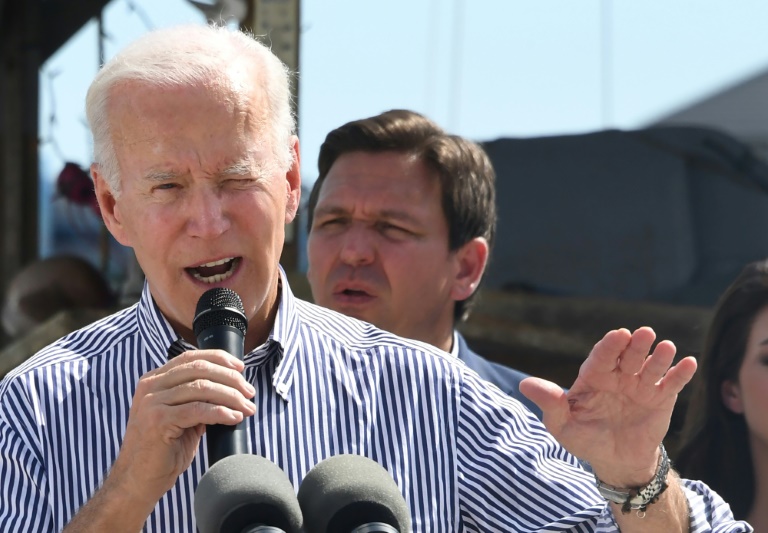
US President Joe Biden flew over the devastation left by Hurricane Ian in Florida on a politically charged trip Wednesday that marked a truce with bitter Republican critic and potential 2024 opponent, Governor Ron DeSantis.

The Democrat, accompanied by First Lady Jill Biden, boarded a helicopter at Fort Myers for an aerial inspection of the havoc wreaked in one of the worst storms ever to hit the country.

“Everything — this historic and titanic, unimaginable storm ripped it to pieces,” Biden said in a speech after witnessing the destruction. “You’ve got to start from scratch.”

Authorities say at least 93 people — more than 100 according to US television networks citing local officials — died in Hurricane Ian.

The Category 4 storm flattened whole neighborhoods on the Sunshine State’s west coast, knocking out power for millions of people, and then weakened before tearing into South Carolina and up the East Coast.

For Biden, who visited hurricane-hit Puerto Rico on Monday, the Florida trip also had an inescapable political dimension, taking him into the stronghold of both DeSantis and Biden’s scandal-plagued predecessor in the White House, Donald Trump.

The Democrat, who says he wants to seek a second term despite already being the oldest man ever in the job at 79, could realistically end up facing a rematch with Trump in two years or a challenge from the up-and-coming DeSantis.

DeSantis has been a caustic critic, as he builds his brand of muscular right-wing politics in a bid to replace Trump as the biggest name in the Republican party. Biden has returned fire, painting DeSantis as part of what he says is an increasingly extreme right.

The hurricane, however, has prompted a ceasefire, with phone calls between the two men and acknowledgement from DeSantis that the federal government was quick to provide assistance.

“Mr President, welcome to Florida. We appreciate working together,” DeSantis said at the damaged waterfront neighborhood of Fisherman’s Pass.

Biden returned the warm words, saying DeSantis had “done a good job.”

“We have very different political philosophies, but we’ve worked hand in glove.”

– ‘Above politics’ — for now –

Biden’s main goal, White House Press Secretary Karine Jean-Pierre said, is to check that “the people of Florida have what they need.”

In addition to getting briefings from federal emergency management chief Deanne Criswell and DeSantis, Biden met small business owners and local storm survivors.

In his remarks, he emphasized togetherness — something rarely celebrated in today’s gladiatorial Democrat vs Republican politics.

“This is the United States,” he said in his remarks, stressing the word “united.”

Biden’s visit to Puerto Rico earlier in the week covered similar ground, although there he was updated on recovery from Hurricane Fiona, which hit the island last month.

Again, Biden stressed the unity message, telling the Caribbean territory — which often feels overlooked by the mainland and the federal government — that “all of America’s with you.”

The disagreements with DeSantis, however, are many and will likely resurface as soon as Floridians recommence a semblance of their previous lives.

DeSantis opposed Biden on his Covid-19 policies during the pandemic, accusing the president of overreach. He has likewise made himself the standard bearer of the conservative backlash to growing tolerance for LGBT issues — something Biden has championed.

Another right-wing Florida Republican who often comes under fire from Biden, Senator Rick Scott, was also present for the visit. But again, Biden held his tongue.

The visit was “above politics,” Jean-Pierre said.

“There will be plenty of times, plenty of time to discuss differences between the president and the governor. Now is not the time.”


Judge says Twitter-Musk trial still on track

The judge presiding over Twitter’s legal battle to hold Elon Musk to his $44-billion buyout deal said Wednesday the case was still on course for trial — despite the billionaire’s apparent U-turn.

Neither Twitter nor Musk have asked the court to put the case on hold, so “I, therefore, continue to press on toward our trial” set to start on October 17, Judge Kathaleen McCormick said in a ruling.

McCormick ruled on motions regarding efforts by Twitter to get hold of messages, documents or depositions that could be used as trial evidence in Delaware’s Chancery Court.

McCormick said in the ruling that Musk’s side had failed to provide Twitter with copies of all the messages he exchanged about the buyout deal, and “likely” let some Slack messages be automatically deleted.

“If Defendants deleted documents after they were under a duty to preserve, some remedy is appropriate, but the appropriate remedy is unclear to me at this stage,” McCormick said in her ruling.

She added that she will reserve judgement on the matter until after the trial, when she has “a fuller understanding of the record.”

Musk on Tuesday offered to push through with his buyout of Twitter at the original agreed price, as the trial over his efforts to withdraw from the deal loomed.

The Tesla founder said in a filing with the Securities and Exchange Commission that he sent Twitter a letter vowing to honor the contract.

Conditions of his offer included halting the litigation, but McCormick made it clear she had received no such request.

Given that Musk has already tried to walk away from the deal once, the judge is expected to seek assurances that he will keep to his word this time around.

Judge says Twitter-Musk trial still on track

The judge presiding over Twitter’s legal battle to hold Elon Musk to his $44-billion buyout deal said Wednesday the case was still on course for trial — despite the billionaire’s apparent U-turn.

Neither Twitter nor Musk have asked the court to put the case on hold, so “I, therefore, continue to press on toward our trial” set to start on October 17, Judge Kathaleen McCormick said in a ruling.

McCormick ruled on motions regarding efforts by Twitter to get hold of messages, documents or depositions that could be used as trial evidence in Delaware’s Chancery Court.

McCormick said in the ruling that Musk’s side had failed to provide Twitter with copies of all the messages he exchanged about the buyout deal, and “likely” let some Slack messages be automatically deleted.

“If Defendants deleted documents after they were under a duty to preserve, some remedy is appropriate, but the appropriate remedy is unclear to me at this stage,” McCormick said in her ruling.

She added that she will reserve judgement on the matter until after the trial, when she has “a fuller understanding of the record.”

Musk on Tuesday offered to push through with his buyout of Twitter at the original agreed price, as the trial over his efforts to withdraw from the deal loomed.

The Tesla founder said in a filing with the Securities and Exchange Commission that he sent Twitter a letter vowing to honor the contract.

Conditions of his offer included halting the litigation, but McCormick made it clear she had received no such request.

Given that Musk has already tried to walk away from the deal once, the judge is expected to seek assurances that he will keep to his word this time around.

Under-fire UK PM Truss fails to calm markets with growth pledge

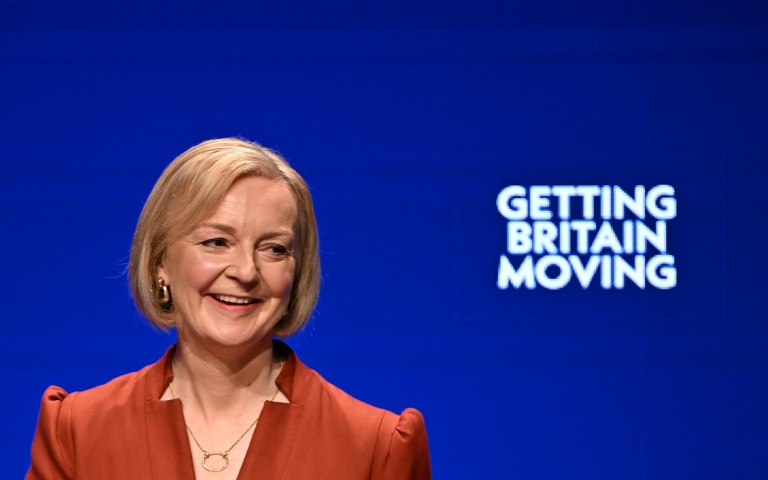
Prime Minister Liz Truss vowed to steer the UK “through the tempest” as she closed her party’s tumultuous annual conference on Wednesday, making an unapologetic pitch for economic “growth, growth, growth”.

Since succeeding Boris Johnson, Truss has alienated voters, financial markets and many in the ruling Conservative party with a crash programme of debt-fuelled tax cuts to boost Britain’s stagnant economy.

But she argued in her speech that the status quo was not an option, despite the botched rollout of her fiscal plan leading to a humiliating U-turn on a pledge to cut income tax for the highest earners.

“In these tough times, we need to step up,” she told delegates, taking aim at what she said was an “anti-growth coalition” holding back attempts to revive the economy.

“I’m determined to get Britain moving, to get us through the tempest and put us on a stronger footing as a nation,” she added, mentioning the word “growth” 27 times during the speech.

But her failure to flesh out her economic plan did not calm the jittery markets, and the pound slid 2.01 percent against the dollar, falling to as low as $1.1241. Early Thursday it traded at 1.1336.

“She may have hoped that her triple promise of growth would have calmed markets further but with nothing new to offer the table, her words have not had the desired effect so far,” said Susannah Streeter, an analyst at Hargreaves Landsdown.

Global ratings agency Fitch on Wednesday lowered its outlook for British government debt from stable to negative, warning of “a significant increase in fiscal deficits over the medium term”. 

– Protest –

Despite only being leader for exactly a month, Truss’s calamitous start, with a 10-day hiatus because of the death of Queen Elizabeth II, has already seen her fighting to keep her job.

Former minister Grant Shapps, who supported Truss’s leadership rival Rishi Sunak, said she could face a no-confidence vote by MPs if the keynote speech fails to start reviving the party’s dismal standing in opinion polls.

“In the end, I don’t think members of parliament, Conservatives, if they see the polls continue as they are, are going to sit on their hands,” he told Times Radio.

“A way would be found to make that change.”

The speech wasn’t without its hiccups, with Greenpeace protesters holding a banner saying “who voted for this?” until they were ejected.

Truss’s critics, including allies of Johnson, have accused her of lacking a national mandate for her unpopular reforms after she won the Tory leadership.

But she insisted Britain needed to “do things differently”, with no time for “more drift and delay”.

“Whenever there is change, there is disruption. Not everyone will be in favour. 

“But everyone will benefit from the result — a growing economy and a better future,” she said. 

– ‘Keep faith’ –

It remains to be seen whether the speech has the effect 10 Downing Street wants. 

Truss’s media interviews in the build-up to Wednesday focussed unrelentingly on the U-turn she and Chancellor of the Exchequer Kwasi Kwarteng were forced to stage on the signature element of their reform overhaul.

Cabinet splits emerged in Birmingham on indications that despite the impact of the crisis on the poor, the pair will next cut welfare benefits.

Truss denied she had lost control of her cabinet after putting on a show of unity with the beleaguered Kwarteng on a visit to a construction site in Birmingham on Tuesday.

But there was little team spirit on display from Home Secretary Suella Braverman, who accused party critics of seeking to stage a “coup” against Truss.

Dissident ringleader Michael Gove was one of Braverman’s targets. But he kept up his running criticism of Truss, stressing all Conservative MPs had been elected on Johnson’s manifesto of 2019.

“We’ve got to keep faith with what Boris wanted,” Gove said, underlining the point that Truss has yet to face the UK electorate herself.

But asked by reporters if Truss would survive beyond the end of the year, the former minister said: “Yes.”

Foreign minister James Cleverly also distanced himself from Braverman’s comments, though he did urge colleagues to air their disagreements in Cabinet.

Opinion polls have shown the main opposition Labour party breaching 50 percent as the Tories slump under Truss, fraying nerves in Birmingham over the four days of the conference.

“Polls do move up and down,” Kwarteng said Tuesday, stressing the two years remaining to the next election was an “eternity in politics”. 

Putin says war to 'stabilise', Ukraine presses counterattack

Russian President Vladimir Putin said Wednesday that he expected the situation to “stabilise” in Ukrainian regions annexed by the Kremlin after Moscow suffered military setbacks and lost several key towns to Kyiv.

He also ordered his government to seize control over Europe’s largest nuclear power plant in the Russian-controlled region of Zaporizhzhia, with IAEA head Rafael Grossi en route to Kyiv for consultations on the facility.

Ukraine earlier claimed victories over Russian troops in the eastern region of Lugansk, as the Kremlin vowed to recapture territory lost in a lightning Ukrainian counteroffensive.

In recent weeks, Ukraine’s forces — bolstered by Western weapons — have wrested Russian troops out of a string of towns and villages in the southern Kherson region and the eastern separatist strongholds of Lugansk and Donetsk.

And Ukrainian President Volodymyr Zelensky late Wednesday said his forces had recaptured three villages in the Kherson region from Russian troops. 

“We are working on the assumption that the situation in the new territories will stabilise,” Putin told Russian teachers during a televised video call.

Just hours earlier, the Ukrainian-appointed head of Lugansk Sergiy Gaiday announced that the “de-occupation of the Lugansk region has already officially started”.

A senior Russian lawmaker called on military officials to tell the truth about developments on the ground in Ukraine following the string of bruising defeats.

“We need to stop lying,” the chairman of the lower house of parliament’s defence committee, Andrei Kartapolov, told a journalist from state-run media.

“The reports of the defence ministry do not change. The people know. Our people are not stupid. This can lead to loss of credibility.”

– Regions to be ‘Russian forever’ –

Putin on Wednesday signed into legislation his annexation of four Ukrainian territories — including Lugansk — as the European Union agreed a new round of sanctions against Moscow in response.

Kremlin spokesman Dmitry Peskov said Moscow would take back land it lost to Kyiv within the annexed regions, vowing they would be “Russian forever and will not be returned”.

Putin initially inked agreements with the Moscow-installed leaders of the four regions to become subjects of the Russian Federation, despite condemnation from Kyiv and the West.

The four territories — Donetsk, Kherson, Lugansk and Zaporizhzhia — create a land corridor between Russia and the Crimean peninsula, which was annexed by Moscow in 2014.

Together, the five regions make up around 20 percent of Ukraine.

The Kremlin annexed the territories after hastily conducting referendums, denounced as void by Kyiv and its Western allies, but has yet to confirm what areas exactly of those regions are being annexed.

Russian forces do not have full control over Kherson or Zaporizhzhia and recently lost control of several settlements in Donetsk.

The latest battlefield maps from Moscow showed that Russian troops had left many areas in Kherson, including along the west bank of the Dnipro River.

– ‘Lived like rats’ –

In Kharkiv, the maps indicated that Moscow’s forces had almost entirely abandoned the east bank of the Oskil River, potentially giving the Ukrainians space to shell key Russian troop transportation and supply corridors.

While Russian authorities remain largely silent about the extent of the setbacks, war correspondents of pro-Kremlin media admitted that troops were in trouble. 

“There won’t be any good news in the near future. Not from the Kherson front nor from Lugansk,” newspaper journalist Alexander Kots wrote on his Telegram channel with more than 640,000 followers.

In the town of Lyman, Ukrainian police officers were moving back into the station used until last week by the Russian occupation force.

“They lived like rats,” said the town’s police chief, Igor Ugnivenko, returning to his pre-invasion office and surveying the debris.

In front of the central administration building, queues of mainly elderly residents built up for two ambulances distributing meagre humanitarian aid.

“I don’t know if the situation is better or worse,” said 62-year- old Tatiana Slavuta of the town’s recapture by Ukrainian forces.

“All the shops are closed, we don’t have money, we don’t have light. Nothing.

“We don’t see any change,” she said before correcting herself and brightening.

– ‘Now there’s silence’ –

“At least now there’s silence — no shelling.”

Putin’s decision to wrest control of the Zaporizhzhia plant comes after months of tensions around the facility, with both sides blaming each other for strikes that had raised fears of a radiation disaster.

On Tuesday, US President Joe Biden told Zelensky that another $625 million in military assistance was on the way.

The new batch includes more HIMARS multiple rocket launchers, which have allowed Ukraine to strike Russian command depots and arms stockpiles far behind the frontline.

In a powerful show of solidarity, Ukraine was added to the joint bid of Spain and Portugal to host the World Cup in 2030.

Zelensky called this “more than a symbol of faith in our joint victory”.

“Ukraine will endure, prevail and be rebuilt thanks to the solidarity of its partners,” Zelensky said on Twitter.

Oil prices climb as OPEC+ cuts output

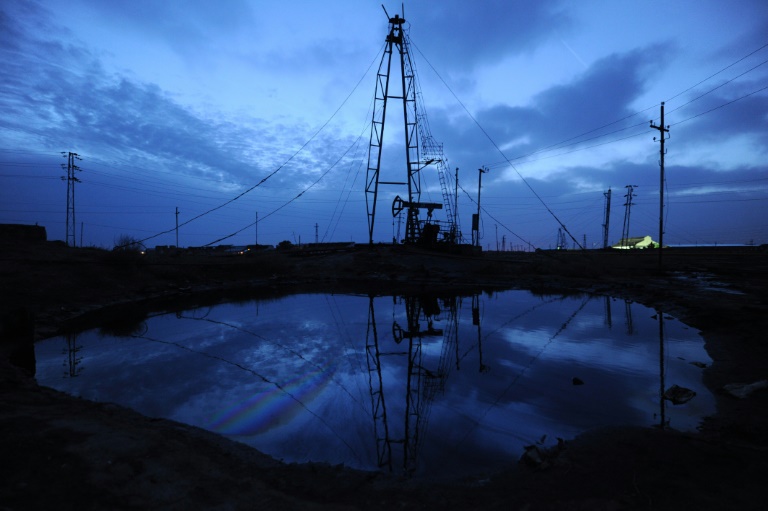
Oil prices climbed Wednesday as OPEC and its Russia-led allies announced a major cut in output, while a stocks rally ran out of gas.

In Vienna, ministers from the 13-nation OPEC cartel and a group of 10 exporters led by Russia agreed to reduce production by two million barrels a day from November.

It is the biggest cut since the height of the Covid pandemic in 2020 and came despite concerns it could fuel inflation further and push central banks to hike interest rates even more.

Oil prices had slid in recent weeks back to the levels before the war in Ukraine on concerns of a global slowdown, but have surged in recent days on expectations of the production cut.

The main international crude contract, Brent, jumped two percent following the decision before finishing at $93.37 a barrel, up 1.7 percent.

“Oil futures are expected to continue their rally in the short and medium term, but continued concerns over a global recession and rising inflation are likely to limit the long-term upside,” said Srijan Katyal of the international brokerage ADSS.

Swissquote analyst Ipek Ozkardeskaya warned that the big cut could “backfire” on OPEC+ if investors fear it will push inflation higher and force central banks to hike interest rates so much that it triggers a recession.

“The higher the energy prices, the sharper the central banks must kill demand to pull the prices lower,” she said before the decision was announced.

– Rally loses steam –

Meanwhile, a stocks rally triggered by hopes the US Federal Reserve could let up in its campaign of aggressive interest rate hikes to tame inflation has petered out.

European stocks finished lower across the board while Wall Street’s main indices saw modest declines following a volatile session.

US economic reports Wednesday were solid, with private-sector hiring in September topping expectations and services industry activity moderating slightly, but still robust.

“Market participants are being forced to contend with the possibility that the Fed won’t acquiesce to the stock market’s hopeful wishes,” said analyst Patrick O’Hare at Briefing.com.

In currency trading, the pound took another beating as a speech by British Prime Minister Liz Truss failed to reassure investors about her controversial fiscal plans. 

“As Prime Minister Liz Truss took to the stage to try and shore up her support among her party and the country, the pound fell further back and government borrowing costs rose slightly,” said market analyst Susannah Streeter at Hargreaves Lansdown brokerage. 

“The speech will do little to quell dissent over worries that public services will bear the brunt of the tax cuts plans” she added.

– Key figures around 2030 GMT –

Brent North Sea crude:  UP 1.7 percent at $93.37 per barrel

West Texas Intermediate: UP 1.4 percent at $87.76 per barrel

New York – Dow: DOWN 0.1 percent at 30,273.87 (close)

New York – S&P 500: DOWN 0.2 percent at 3,783.28 (close)

New York – Nasdaq: DOWN 0.3 percent at 11,148.64 (close)

London – FTSE 100: DOWN 0.5 percent at 7,051.60 (close) 

Frankfurt – DAX: DOWN 1.2 percent at 12,516.22 (close)

Paris – CAC 40: DOWN 0.9 percent at 5,985.46 (close)

EURO STOXX 50: DOWN 1.1 percent at 3,447.72 (close)

Tokyo – Nikkei 225: UP 0.5 percent at 27,120.53 (close)

Hong Kong – Hang Seng Index: UP 5.9 percent at 18,087.97 (close)

Shanghai – Composite: Closed for a holiday

Pound/dollar: DOWN at $1.1326 from $1.1476 on Tuesday

Euro/dollar: DOWN at $0.9889 from $0.9986

Euro/pound: UP at 87.29 pence from 87.01 pence

Dollar/yen: UP at 144.59 yen from 144.13 yen

burs-jmb

Amid Ukraine war, US flies Russian cosmonaut to ISS

A SpaceX rocket carrying a Russian crew member blasted off from Florida Wednesday on a voyage that carries significant symbolism as war rages in Ukraine.

Anna Kikina, the only female cosmonaut in service, is part of the Crew-5 mission, which also includes one Japanese and two American astronauts.

“Let’s do this,” said Nicole Mann, commander of the Crew Dragon capsule and the first Native American woman in space, shortly before liftoff from the Kennedy Space Center in Florida at noon.

Docking is scheduled for Thursday at 4:57 pm Eastern Time (2057 GMT).

Two weeks ago, an American astronaut took off on a Russian Soyuz rocket for the orbital platform.

The long-planned astronaut exchange program has been maintained despite soaring tensions between the United States and Russia since Moscow’s invasion of Ukraine in February.

Ensuring the operation of the ISS has become one of the few remaining areas of cooperation between the United States and Russia.

In a post-launch briefing, Sergei Krikalev, head of the human space program at Roscosmos, hailed the occasion as the start of a “new phase of our cooperation,” evoking the historic Apollo-Soyuz mission of 1975, a symbol of detente at the height of the Cold War. 

Krikalev, a former cosmonaut respected by his American colleagues, has been on something of a charm offensive after the last head of Roscosmos, Dmitry Rogozin, earlier this year threatened to withdraw cooperation and let the ISS crash over US or European territory.

While Russia has announced plans for its own station, analysts believe it would be difficult to build in the next few years, and withdrawing from ISS would effectively ground Moscow’s civilian space program.

– Fifth female cosmonaut, first female Native American – 

Kikina, 38 and an engineer by training, is the fifth Russian female professional cosmonaut to go into space.

“I hope in the near future we have more women in the cosmonaut corps,” the Novosibirsk native told AFP in August.

The Soviet Union put the first woman in space, Valentina Tereshkova, in 1963, nearly 20 years before the first American woman, Sally Ride. Since then, the United States has flown dozens more women.

It is also the first spaceflight for American astronauts Mann and Josh Cassada, but the fifth for Japan’s Koichi Wakata.

Mann is the first indigenous woman to go to space with NASA. According to her NASA biography she is registered with the Wailacki of the Round Valley Indian Tribes.

She holds a master’s degree in mechanical engineering from Stanford, served as a test pilot in the F/A-18 Hornet and Super Hornet, and flew 47 combat missions in Iraq and Afghanistan.

– ISS future unclear – 

Kikina is the first Russian to fly with Elon Musk’s SpaceX which, along with Boeing, has a “taxi service” contract with NASA.

Musk himself waded into the conflict by proposing on Twitter a peace deal that involved re-running, under UN supervision, annexation referendums in Moscow-occupied regions of Ukraine and acknowledging Russian sovereignty over the Crimean peninsula. 

The post enraged Ukrainians, including the country’s envoy to Germany, who responded with an expletive. 

Tensions between Moscow and Washington have increased considerably in the space field after the announcement of American sanctions against the Russian aerospace industry, in response to the invasion of Ukraine.

Russia announced this summer that it wanted to leave the ISS “after 2024” in favor of creating its own station, albeit without setting a precise date.

Krikalev declared Monday he hoped to extend that date. 

On Wednesday he went further still, telling reporters: “We are thinking about building (a) new space station. We start preliminary design of it. 

“And there is no final decision yet but we are going to keep flying International Space Station as long as our new infrastructure will build.”

The United States, for its part, wants to continue operating until at least 2030, then transition to commercially run stations.

As things stand, the ISS cannot function without joint cooperation, as the US side is responsible for power and life support and the Russian side for propulsion and maintaining orbit.

Amid Ukraine war, US flies Russian cosmonaut to ISS

A SpaceX rocket carrying a Russian crew member blasted off from Florida Wednesday on a voyage that carries significant symbolism as war rages in Ukraine.

Anna Kikina, the only female cosmonaut in service, is part of the Crew-5 mission, which also includes one Japanese and two American astronauts.

“Let’s do this,” said Nicole Mann, commander of the Crew Dragon capsule and the first Native American woman in space, shortly before liftoff from the Kennedy Space Center in Florida at noon.

Docking is scheduled for Thursday at 4:57 pm Eastern Time (2057 GMT).

Two weeks ago, an American astronaut took off on a Russian Soyuz rocket for the orbital platform.

The long-planned astronaut exchange program has been maintained despite soaring tensions between the United States and Russia since Moscow’s invasion of Ukraine in February.

Ensuring the operation of the ISS has become one of the few remaining areas of cooperation between the United States and Russia.

In a post-launch briefing, Sergei Krikalev, head of the human space program at Roscosmos, hailed the occasion as the start of a “new phase of our cooperation,” evoking the historic Apollo-Soyuz mission of 1975, a symbol of detente at the height of the Cold War. 

Krikalev, a former cosmonaut respected by his American colleagues, has been on something of a charm offensive after the last head of Roscosmos, Dmitry Rogozin, earlier this year threatened to withdraw cooperation and let the ISS crash over US or European territory.

While Russia has announced plans for its own station, analysts believe it would be difficult to build in the next few years, and withdrawing from ISS would effectively ground Moscow’s civilian space program.

– Fifth female cosmonaut, first female Native American – 

Kikina, 38 and an engineer by training, is the fifth Russian female professional cosmonaut to go into space.

“I hope in the near future we have more women in the cosmonaut corps,” the Novosibirsk native told AFP in August.

The Soviet Union put the first woman in space, Valentina Tereshkova, in 1963, nearly 20 years before the first American woman, Sally Ride. Since then, the United States has flown dozens more women.

It is also the first spaceflight for American astronauts Mann and Josh Cassada, but the fifth for Japan’s Koichi Wakata.

Mann is the first indigenous woman to go to space with NASA. According to her NASA biography she is registered with the Wailacki of the Round Valley Indian Tribes.

She holds a master’s degree in mechanical engineering from Stanford, served as a test pilot in the F/A-18 Hornet and Super Hornet, and flew 47 combat missions in Iraq and Afghanistan.

– ISS future unclear – 

Kikina is the first Russian to fly with Elon Musk’s SpaceX which, along with Boeing, has a “taxi service” contract with NASA.

Musk himself waded into the conflict by proposing on Twitter a peace deal that involved re-running, under UN supervision, annexation referendums in Moscow-occupied regions of Ukraine and acknowledging Russian sovereignty over the Crimean peninsula. 

The post enraged Ukrainians, including the country’s envoy to Germany, who responded with an expletive. 

Tensions between Moscow and Washington have increased considerably in the space field after the announcement of American sanctions against the Russian aerospace industry, in response to the invasion of Ukraine.

Russia announced this summer that it wanted to leave the ISS “after 2024” in favor of creating its own station, albeit without setting a precise date.

Krikalev declared Monday he hoped to extend that date. 

On Wednesday he went further still, telling reporters: “We are thinking about building (a) new space station. We start preliminary design of it. 

“And there is no final decision yet but we are going to keep flying International Space Station as long as our new infrastructure will build.”

The United States, for its part, wants to continue operating until at least 2030, then transition to commercially run stations.

As things stand, the ISS cannot function without joint cooperation, as the US side is responsible for power and life support and the Russian side for propulsion and maintaining orbit.

Amid high US inflation, online insurance offers mislead elderly

One advertisement on Facebook promises zero-cost dental care for elderly Americans hit hard by rising medical bills. Another, on Instagram, offers free groceries in exchange for an email and phone number.

But the ads are misleading, at best.

So bad is the problem of deceptive Medicare marketing that a US congressional committee has asked 15 states to investigate. Big insurance companies, worried about their reputations and potential fines, have started to take note.

“If there’s money to be made in finding customers for a particular product or service, chances are there will be a firm trying to get people to click on links on Facebook,” said John Breyault, an expert on fraud and scams at the National Consumers League.

Between 2020 and 2021, complaints from the tens of millions of Americans aged 65 and older who qualify for federal health insurance more than doubled, according to the Centers for Medicare and Medicaid Services (CMS).

Many complaints mention firms that hawk Medicare Advantage plans, which are provided by private companies.

The online offers examined by AFP allude to genuine benefits in some of those plans. “Flex cards,” for example, are offered to some chronically ill beneficiaries to help pay for out-of-pocket expenses.

“With inflation taking a bigger bite out of people’s pocketbooks for things like groceries and gas and other day-to-day expenses, an ad promising you help with that could be particularly enticing,” Breyault said.

Claims of free dental care and grocery cards have circulated widely on social media since January 2022, when enrollment for Medicare Advantage began.

But the benefits are only available to a comparatively small audience. And as older, typically unwaged citizens are hit by rising prices, watchdogs say they could be misled into changing their plans during traditional Medicare enrollment in October.

– ‘Money at stake’ –

Over the past nine months, dozens of Facebook pages have promoted free grocery cards and dental care in hundreds of English- and Spanish-language posts — some of which were boosted as ads and later removed for violating platform policies, an AFP analysis shows.

One Facebook page called Senior Savings Club promoted a webpage promising a “spending card for free groceries” in dozens of posts, according to the Facebook Ad Library, a public archive of paid advertisements on Meta platforms.

The site’s terms and conditions link to another website owned by Assurance IQ, a subsidiary of US insurance firm Prudential Financial. Bill Launder, a spokesperson for the Fortune 500 company, said a marketing firm created the video ad.

“Prudential, through its business unit Assurance IQ, terminated that affiliate marketing relationship due to concerns about misleading marketing practices,” he told AFP.

Other marketing companies also appear to be publishing Facebook ads and posts laced with misleading claims.

A Facebook account sharing a webpage that advertises “no-cost vision and dental benefits” — which Medicare does not usually provide — is run by WeCall Media. The North Carolina company says on its website that it generates leads for clients such as Assurance and State Farm, another insurance firm.

David Lipschutz, associate director of the Center for Medicare Advocacy, said there are “very heavy incentives” for companies to push Medicare Advantage plans over other kinds of federal health insurance because agents can make more commission.

“There’s a lot of money to be made and a lot of money at stake,” he said.

AFP contacted WeCall for comment, but no response was forthcoming.

– ‘Do your research’ –

In comments on dozens of posts reviewed by AFP, Facebook users said they never received the promised grocery cards or dental care — and chasing those offers can have unintended consequences.

In a May 2022 letter to US congressional leaders, the National Association of Insurance Commissioners said states had seen an uptick in consumer complaints about “inappropriate or confusing marketing practices” that lead people to enroll in plans “without adequately understanding the coverage.”

“It is possible for some people to get some of the stuff that’s being advertised,” Lipschutz said. “But what’s completely left out is that you have to join plan X in order to do it, which could completely disrupt your health coverage.”

To avoid getting duped, Amy Nofziger, director of fraud victim support with AARP, once known as the American Association of Retired Persons, suggested people “tread lightly and do your research.”

“A lot of ads that are on social media are not vetted the way that people think they are,” she said.

Amid high US inflation, online insurance offers mislead elderly

One advertisement on Facebook promises zero-cost dental care for elderly Americans hit hard by rising medical bills. Another, on Instagram, offers free groceries in exchange for an email and phone number.

But the ads are misleading, at best.

So bad is the problem of deceptive Medicare marketing that a US congressional committee has asked 15 states to investigate. Big insurance companies, worried about their reputations and potential fines, have started to take note.

“If there’s money to be made in finding customers for a particular product or service, chances are there will be a firm trying to get people to click on links on Facebook,” said John Breyault, an expert on fraud and scams at the National Consumers League.

Between 2020 and 2021, complaints from the tens of millions of Americans aged 65 and older who qualify for federal health insurance more than doubled, according to the Centers for Medicare and Medicaid Services (CMS).

Many complaints mention firms that hawk Medicare Advantage plans, which are provided by private companies.

The online offers examined by AFP allude to genuine benefits in some of those plans. “Flex cards,” for example, are offered to some chronically ill beneficiaries to help pay for out-of-pocket expenses.

“With inflation taking a bigger bite out of people’s pocketbooks for things like groceries and gas and other day-to-day expenses, an ad promising you help with that could be particularly enticing,” Breyault said.

Claims of free dental care and grocery cards have circulated widely on social media since January 2022, when enrollment for Medicare Advantage began.

But the benefits are only available to a comparatively small audience. And as older, typically unwaged citizens are hit by rising prices, watchdogs say they could be misled into changing their plans during traditional Medicare enrollment in October.

– ‘Money at stake’ –

Over the past nine months, dozens of Facebook pages have promoted free grocery cards and dental care in hundreds of English- and Spanish-language posts — some of which were boosted as ads and later removed for violating platform policies, an AFP analysis shows.

One Facebook page called Senior Savings Club promoted a webpage promising a “spending card for free groceries” in dozens of posts, according to the Facebook Ad Library, a public archive of paid advertisements on Meta platforms.

The site’s terms and conditions link to another website owned by Assurance IQ, a subsidiary of US insurance firm Prudential Financial. Bill Launder, a spokesperson for the Fortune 500 company, said a marketing firm created the video ad.

“Prudential, through its business unit Assurance IQ, terminated that affiliate marketing relationship due to concerns about misleading marketing practices,” he told AFP.

Other marketing companies also appear to be publishing Facebook ads and posts laced with misleading claims.

A Facebook account sharing a webpage that advertises “no-cost vision and dental benefits” — which Medicare does not usually provide — is run by WeCall Media. The North Carolina company says on its website that it generates leads for clients such as Assurance and State Farm, another insurance firm.

David Lipschutz, associate director of the Center for Medicare Advocacy, said there are “very heavy incentives” for companies to push Medicare Advantage plans over other kinds of federal health insurance because agents can make more commission.

“There’s a lot of money to be made and a lot of money at stake,” he said.

AFP contacted WeCall for comment, but no response was forthcoming.

– ‘Do your research’ –

In comments on dozens of posts reviewed by AFP, Facebook users said they never received the promised grocery cards or dental care — and chasing those offers can have unintended consequences.

In a May 2022 letter to US congressional leaders, the National Association of Insurance Commissioners said states had seen an uptick in consumer complaints about “inappropriate or confusing marketing practices” that lead people to enroll in plans “without adequately understanding the coverage.”

“It is possible for some people to get some of the stuff that’s being advertised,” Lipschutz said. “But what’s completely left out is that you have to join plan X in order to do it, which could completely disrupt your health coverage.”

To avoid getting duped, Amy Nofziger, director of fraud victim support with AARP, once known as the American Association of Retired Persons, suggested people “tread lightly and do your research.”

“A lot of ads that are on social media are not vetted the way that people think they are,” she said.

Close Bitnami banner
Bitnami