US Business

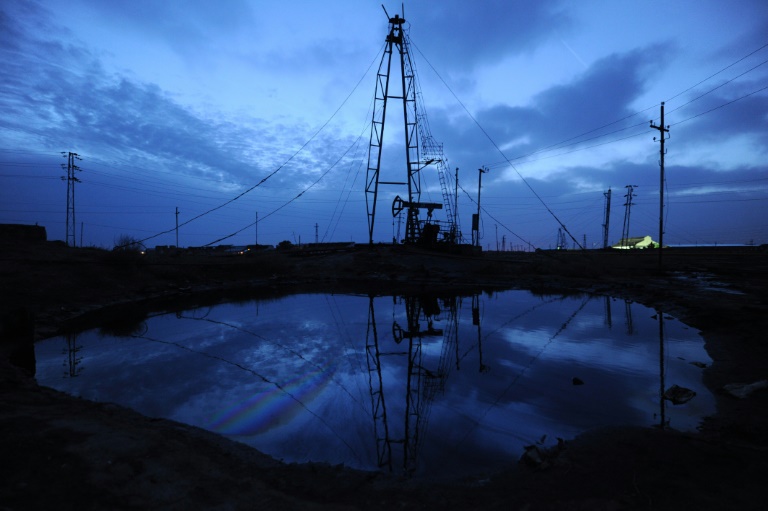
OPEC+ delivers Biden diplomatic slap with output cut

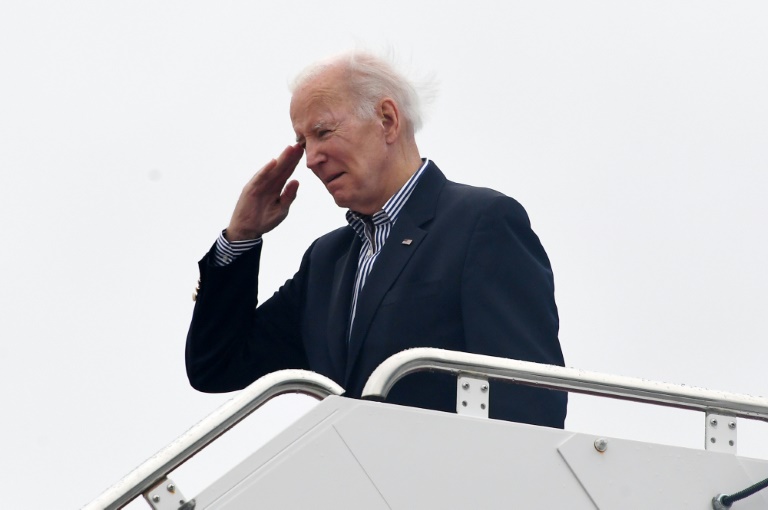
President Joe Biden got a diplomatic slap in the face Wednesday with the OPEC+ cartel’s decision to ignore both his efforts at isolating Russia and desperate attempts to hold down fuel prices ahead of midterm elections.

“The president is disappointed by the shortsighted decision by OPEC+,” National Security Advisor Jake Sullivan and top economic advisor Brian Deese said in a statement.

That sounded like understatement.

Biden has been trying for months to walk an economic and geopolitical tightrope in which he lowers fuel costs for Americans while simultaneously cutting major energy exporter Russia from revenues needed to finance its war on Ukraine.

And with just five weeks before midterm elections where the Democrats hope to cling on to control of Congress, Biden was having some success. Average gasoline costs have fallen by more than $1 a gallon from politically damaging highs earlier this year, while the US-led Western coalition confronting Russia remains solid going into winter.

So the decision by Saudi-led OPEC and a set of Russian-dominated allies, collectively known as OPEC+, was a shock.

Saudi Arabia is one of the closest US allies and the biggest single purchaser of top-end US weaponry. Biden himself spent considerable political capital in July by visiting the kingdom and meeting with de facto leader Crown Prince Mohammed bin Salman, the man US intelligence has identified as approving the 2018 murder of Washington Post journalist Jamal Khashoggi.

White House Press Secretary Karine Jean-Pierre reflected the administration’s frustration, saying “it’s clear that OPEC+ is aligning with Russia with today’s announcement.”

Senator Chris Murphy, an ally of Biden, was blunter.

“I thought the whole point of selling arms to the Gulf States despite their human rights abuses, nonsensical Yemen War, working against US interests in Libya, Sudan etc, was that when an international crisis came, the Gulf could choose America over Russia/China,” he tweeted.

– Price rise looms –

Higher fuel prices have already inflicted severe damage on Biden’s standing this year. Unlike other areas of inflation, fuel prices are literally emblazoned on large signs at gas stations, while motorists in many cases have no option other than to pay up.

As president, however, there are limits on what Biden can do to fight the trend.

The White House said Biden was ordering another dip into the country’s Strategic Petroleum Reserve, with 10 million barrels set to be put on the market next month in an attempt to dampen prices rises.

However, those reserves are fast emptying out after record withdrawals ordered by the administration, starting back in March. The reserves are now at their lowest level since July 1984 and it is not clear when the administration plans to purchase a refill.

The next releases will continue “as appropriate to protect American consumers and promote energy security, and (Biden) is directing the secretary of energy to explore any additional responsible actions to continue increasing domestic production in the immediate term,” a White House statement said.

In addition, the administration will “consult with Congress on additional tools and authorities to reduce OPEC’s control over energy prices,” the statement said.

But Andy Lipow, from Lipow Oil Associates, said Wednesday’s decision by OPEC+ demonstrates “the waning influence of the US on OPEC to maintain an adequate supply of oil.”

“The US can’t release strategic petroleum reserves forever, and eventually it will run out and OPEC knows it,” he said.

The only solution, in his view, is to get “more oil out of the ground.” 

That, however, runs against Biden’s climate crisis priorities and a major effort to move the country away from oil and gas.

“Today’s announcement is a reminder of why it is so critical that the United States reduce its reliance on foreign sources of fossil fuels,” the White House said.
OPEC+ angers US with major oil output cut

Saudi Arabia, Russia and other top oil producers agreed on a major cut in production on Wednesday to boost crude prices — a move denounced by the United States as a concession to Moscow that will further hurt the global economy.

The 13-nation OPEC cartel headed by Riyadh and its 10 allies led by Moscow agreed to reduce output by two million barrels per day from November at a meeting in Vienna, the group said in a statement.

It is the biggest cut since the height of the Covid pandemic in 2020, raising fears that it will turbocharge oil prices at a time when countries are already facing soaring energy-fuelled inflation.

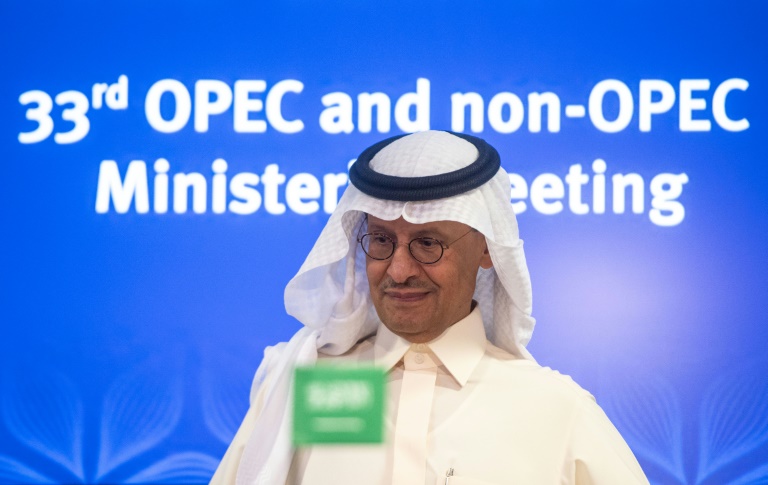
Saudi Arabia’s energy minister, Prince Abdulaziz bin Salman, defended the move, saying the cartel’s priority was “to maintain a sustainable oil market”, at a press conference following OPEC+’s first in-person meeting since March 2020.

But the decision drew a swift rebuke from US President Joe Biden, who had made a controversial trip to Saudi Arabia in July under pressure as Americans faced rising prices at fuel stations.

The timing is also bad for Biden’s political agenda as it comes ahead of US midterm elections next month.

“It’s clear that OPEC+ is aligning with Russia with today’s announcement,” White House Press Secretary Karine Jean-Pierre said aboard Air Force One.

National Security Advisor Jake Sullivan and top economic advisor Brian Deese said in a statement that Biden was “disappointed by the shortsighted decision by OPEC+”.

Western allies led by the United States have tried to isolate Russia’s economy, which relies heavily on energy exports, in retaliation for the invasion of Ukraine.

– Oil prices rise –

OPEC+ decided to slash its output as oil prices fell below $90 per barrel in recent months over concerns about the global economy, after soaring to $140 in the wake of Russia’s invasion of Ukraine earlier this year.

The international benchmark, Brent North Sea crude, was up at $93.43 following Wednesday’s announcement.

The oil production cut could give sanctions-hit Russia a boost ahead of a European Union ban on most of its crude exports later this year and as the Group of Seven wealthy democracies mull a cap on the country’s oil prices.

Russian deputy prime minister Alexander Novak, who is under US sanctions and attended the OPEC+ meeting, said a price cap would have a “detrimental effect” on the global oil sector.

He warned that Russian companies would “not supply oil to those countries” that introduce such a cap.

“There is a reason why Russia is ready to participate with an OPEC cut — because they are not sure whether they will find somebody to buy this oil,” Patrick Pouyanne, chairman of French oil giant TotalEnergies, said at a London oil industry conference.

Collectively known as OPEC+, the alliance drastically slashed output by almost 10 million barrels per day (bpd) in April 2020 to reverse a massive drop in crude prices caused by Covid lockdowns.

OPEC+ began to raise production last year after the market improved. Output returned to pre-pandemic levels this year, but only on paper as some members have struggled to meet their quotas.

The group agreed last month on a small, symbolic cut of 100,000 bpd from October, the first in more than a year.

Consumer countries had pushed for months for OPEC+ to open taps more widely to bring down prices, but the group ignored them again.

Biden travelled to Saudi Arabia in July in part to convince the kingdom to loosen the production taps. The trip saw Biden meet Crown Prince Mohammed bin Salman despite his promise to make Riyadh a “pariah” following the 2018 killing of journalist Jamal Khashoggi.

While the cut was not welcomed by the United States, several OPEC+ nations have struggled to meet their quotas in the first place.

The next ministerial OPEC meeting will be on December 4. In recent months, the cartel and its partners met online each month. 

burs-jza/

Biden tours Florida hurricane clean-up zone — and opponent's territory

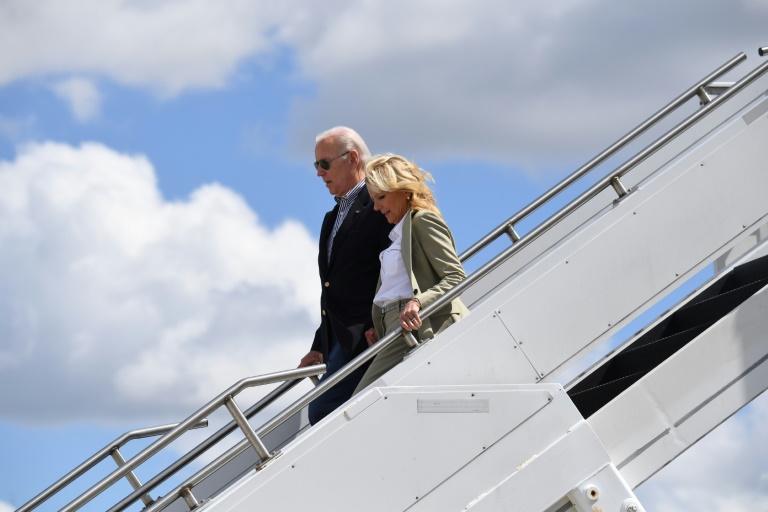
President Joe Biden made a politically charged visit Wednesday to inspect the aftermath of deadly Hurricane Ian in Florida while striking a united front with bitter Republican critic and potential 2024 opponent, Governor Ron DeSantis.

The Democrat, accompanied by First Lady Jill Biden, boarded a helicopter at Fort Myers for an aerial inspection of the havoc wreaked in one of the worst storms ever to hit the country.

“They will survey the damage, receive an operational briefing on ongoing recovery efforts, and thank federal, state and local officials working around the clock,” White House Press Secretary Karine Jean-Pierre said aboard Air Force One flying down from Washington.

Authorities say at least 76 people —  more than 100 according to US television networks citing local officials — died in Hurricane Ian.

The Category 4 storm flattened whole neighborhoods on the Sunshine State’s west coast, knocking out power for millions of people — with hundreds of thousands still waiting for electricity to be restored Tuesday — and then weakened before tearing into South Carolina and up the East Coast.

For Biden, who visited hurricane-hit Puerto Rico on Monday, the Florida trip also has an inescapable political dimension, taking him into the stronghold of both DeSantis and Biden’s scandal-plagued predecessor in the White House, Donald Trump.

The Democrat, who says he wants to seek a second term despite already being the oldest man ever in the job at 79, could realistically end up facing a rematch with Trump in two years or a challenge from the up-and-coming DeSantis.

DeSantis has been a caustic critic, as he builds his brand of muscular right-wing politics in a bid to replace Trump as the biggest name in the Republican party. Biden has returned fire, painting DeSantis as part of what he says is an increasingly extreme right.

The hurricane, however, has prompted a truce, with phone calls between the two men and acknowledgement from DeSantis that the federal government was quick to provide assistance.

The visit is “above politics,” Jean-Pierre said ahead of the trip.

“There will be plenty of times, plenty of time to discuss differences between the president and the governor,” she said. “Now is not the time.”

– Disaster briefing –

Biden’s main goal, Jean-Pierre said, is to check that “the people of Florida have what they need.”

In addition to getting briefings from federal emergency management chief Deanne Criswell and DeSantis, Biden will meet small business owners and local storm survivors, then give televised remarks.

He will “confirm his commitment to the people of Florida as they recover and rebuild,” Jean-Pierre said.

Biden’s visit to Puerto Rico earlier in the week covered similar ground, although there he was updated on recovery from Hurricane Fiona, which hit the island last month.

Again, Biden stressed the unity message, telling the territory — which often feels overlooked by the mainland and the federal government — that “all of America’s with you.”

The disagreements with DeSantis, however, are many and will likely resurface as soon as Floridians recommence a semblance of their previous lives.

DeSantis opposed Biden on his Covid-19 policies during the pandemic, accusing the president of overreach. He has likewise made himself the standard bearer of the conservative backlash to growing tolerance for LGBT issues — something Biden has championed.

Another right-wing Florida Republican who often comes under fire from Biden, Senator Rick Scott, was also due to meet the president during his visit.

Putin says war to 'stabilise', Ukraine presses counterattack

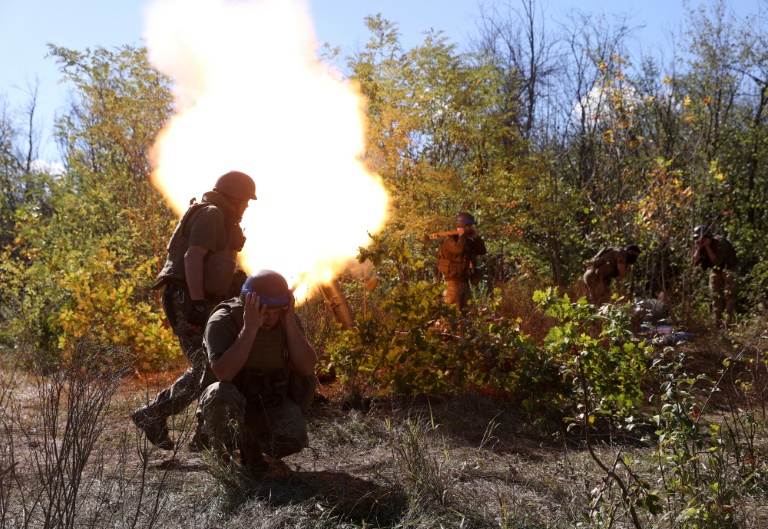
Russian President Vladimir Putin said Wednesday that he expected the situation to “stabilise” in Ukrainian regions annexed by the Kremlin after Moscow suffered military setbacks and lost several key towns to Kyiv.

He also ordered his government to seize control over Europe’s largest nuclear power plant in the Russian-controlled region of Zaporizhzhia with IAEA head Rafael Grossi en route to Kyiv for consultations on the facility.

Ukraine earlier claimed victories over Russian troops in the eastern region of Lugansk as the Kremlin vowed to recapture territory lost in a lightning Ukrainian counteroffensive.

In recent weeks, Ukraine’s forces, bolstered by Western weapons, have wrested Russian troops out of a string of towns and villages in the southern Kherson region and the eastern separatist strongholds of Lugansk and Donetsk.

“We are working on the assumption that the situation in the new territories will stabilise,” Putin told Russian teachers during a televised video call.

Just hours earlier, the Ukrainian-appointed head of Lugansk Sergiy Gaiday announced that the “de-occupation of the Lugansk region has already officially started”.

A senior Russian lawmaker called on military officials to tell the truth about developments on the ground in Ukraine following the string of bruising defeats.

“We need to stop lying,” the chairman of the lower house of parliament’s defence committee, Andrei Kartapolov, told a journalist from state-run media.

“The reports of the defence ministry do not change. The people know. Our people are not stupid. This can lead to loss of credibility.”

– Regions to be ‘Russian forever’ –

Putin on Wednesday signed into legislation his annexation of four Ukrainian territories — including Lugansk — as the European Union agreed a new round of sanctions against Moscow in response.

Kremlin spokesman Dmitry Peskov said Moscow would take back land it lost to Kyiv within the annexed regions, vowing they would be “Russian forever and will not be returned”.

Putin initially inked agreements with the Moscow-installed leaders of the four regions to become subjects of the Russian Federation, despite condemnation from Kyiv and the West.

The four territories — Donetsk, Kherson, Lugansk and Zaporizhzhia — create a land corridor between Russia and the Crimean peninsula, which was annexed by Moscow in 2014.

Together, the five regions make up around 20 percent of Ukraine.

The Kremlin annexed the territories after hastily conducting referendums, denounced as void by Kyiv and its Western allies, but has yet to confirm what areas exactly of those regions are being annexed.

Russian forces do not have full control over Kherson or Zaporizhzhia and recently lost control of several settlements in Donetsk.

The latest battlefield maps from Moscow showed that Russian troops had left many areas in Kherson, including along the west bank of the Dnipro River.

– ‘Lived like rats’ –

In Kharkiv, the maps indicated that Moscow’s forces had almost entirely abandoned the east bank of the Oskil River, potentially giving the Ukrainians space to shell key Russian troop transportation and supply corridors.

While Russian authorities remain largely silent about the extent of the setbacks, war correspondents of pro-Kremlin media admitted that troops were in trouble. 

“There won’t be any good news in the near future. Not from the Kherson front nor from Lugansk,” newspaper journalist Alexander Kots wrote on his Telegram channel with more than 640,000 followers.

In the town of Lyman, Ukrainian police officers were moving back in to the station used until last week by the Russian occupation force.

“They lived like rats,” said the town’s police chief, Igor Ugnivenko, returning to his pre-invasion office and surveying the debris.

In front of the central administration building queues of mainly elderly residents built up for two ambulances distributing meagre humanitarian aid.

“I don’t know if the situation is better or worse,” said 62-year- old Tatiana Slavuta of the town’s recapture by Ukrainian forces.

“All the shops are closed, we don’t have money, we don’t have light. Nothing.

“We don’t see any change,” she added before correcting herself and brightening.

– ‘Now there’s silence’ –

“At least now there’s silence — no shelling.”

Putin’s decision to wrest control of the Zaporizhzhia plant comes after months of tensions around the facility with both sides blaming each other for strikes that had raised fears of a radiation disaster.

“On our way to Kyiv for important meetings,” International Atomic Energy Agency head Rafael Grossi wrote on Twitter, saying the need for a protection zone around the site was “more urgent than ever”.

On Tuesday, US President Joe Biden told Zelensky that another $625 million in military assistance was on the way.

The new batch includes more HIMARS multiple rocket launchers, which have allowed Ukraine to strike Russian command depots and arms stockpiles far behind the frontline.

From the EU, there were no details about the nature of fresh sanctions agreed against Russia.

The latest package — the eighth since Russia’s invasion in February — is now going through a final approval procedure which, if no objections emerge, will be published and come into effect on Thursday, the Czech Republic’s EU ambassador said on Twitter.

EU signals shifts towards gas price cap

The EU is “ready to discuss” a price cap on gas within the bloc to bring down soaring energy costs, European Commission chief Ursula von der Leyen said Wednesday.

Her comment to the European Parliament signalled a shift in tone after EU powerhouse Germany had expressed worries a broad price cap might divert supplies away from Europe.

It comes as 15 EU countries — more than half the bloc — are pushing for the EU to impose a price ceiling on how much it would pay for gas piped or shipped in, as the northern hemisphere winter sets in.

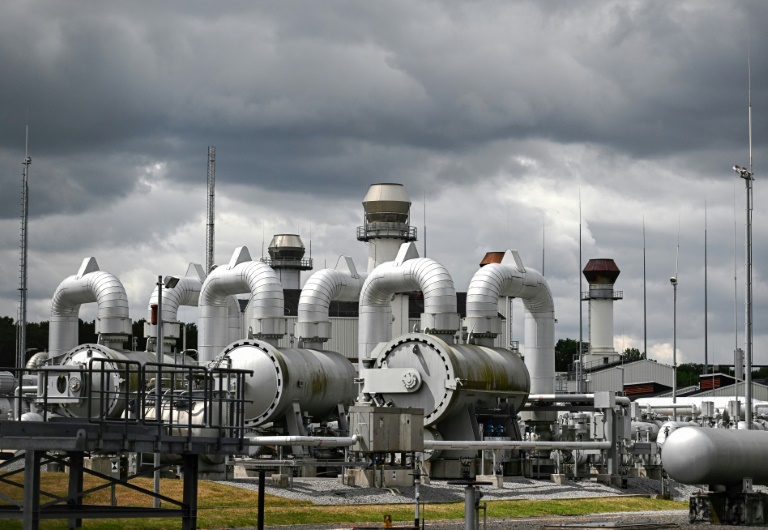
Europe is facing an energy crunch as the price of electricity generation skyrockets because of a massive surge in gas prices.

Russia, which used to be Europe’s main supplier, has largely turned off the taps after being hit by EU sanctions over the war in Ukraine that, while not touching gas, crimped sales of its more lucrative oil exports.

“We are ready to discuss a cap on the price of gas that is used to generate electricity,” Von der Leyen told MEPs sitting in Strasbourg, France.

“This cap would also be a first step on the way to a structural reform and overall reform of our electricity market.”

She added, “We also have to look at gas prices beyond the electricity market”.

– Still being ‘fleshed out’ –

Her spokesman, Eric Mamer, explained the proposal was still being “fleshed out” and “related to the wholesale market of gas trading in Europe” and not directly on the price paid for imported gas.

He acknowledged however “links between the price of gas traded within Europe and the price of the gas that we buy from outside”.

Norway, which has become Europe’s main gas supplier as Russian deliveries have fallen, reiterated Wednesday its opposition to a price cap saying it would not resolve the problem of a shortage of gas.

“It would rather make the situation worse because you can expect such a solution to contribute to increased consumption and fewer deliveries,” said the non-EU nation’s energy minister Terje Aasland.

“No one can use more gas or energy than exists,” he told AFP by email.   

Brussels has been amenable to a cap on pipeline gas to hurt Russia and deprive it of cash.

But it has resisted a cap on liquified natural gas (LNG), fearing that sellers might simply divert shipments to higher-paying markets, further starving Europe of gas.

Germany, traditionally the biggest beneficiary of Russian gas, had also rebuffed the idea. But it has come under pressure from other EU members after announcing a 200-billion-euro ($199-billion) fund to protect consumers.

Von der Leyen admitted a price cap “entails drawbacks in terms of security of supply of gas”.

In a letter to EU leaders for them to consider at a Prague summit on Friday, she said her “roadmap” included negotiating a “corridor” for gas supplies from trusted partners such as Norway and the United States.

She stressed also, in apparent allusion to the criticism of Germany’s go-it-alone approach, that, “to avoid serious fragmentation (in the EU), we need a united and common European response” to avoid “distortions of the single market”

While gas storage ahead of winter has hit 90 percent — exceeding targets — there remained “a heavy burden on people and our economy”.

She said her commission would present its outline for a structural reform of the EU’s electricity market by the end of the year, incorporating the ambition of “a more decarbonised future”.

Amid Ukraine war, US flys Russian cosmonaut to ISS

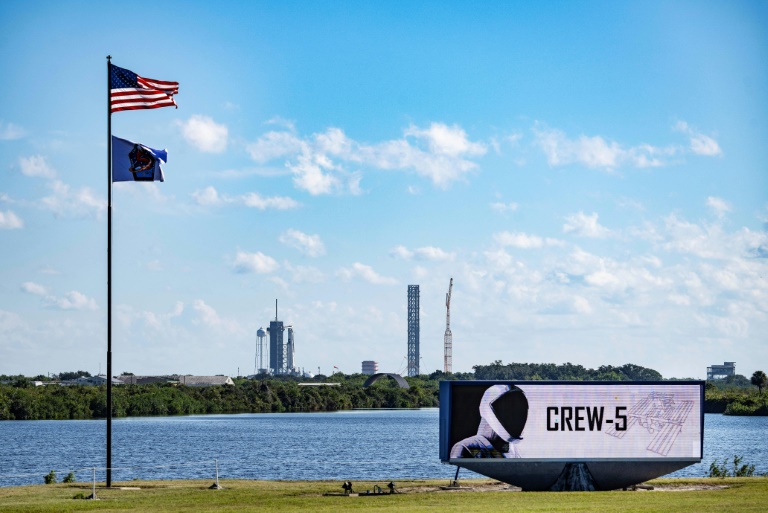
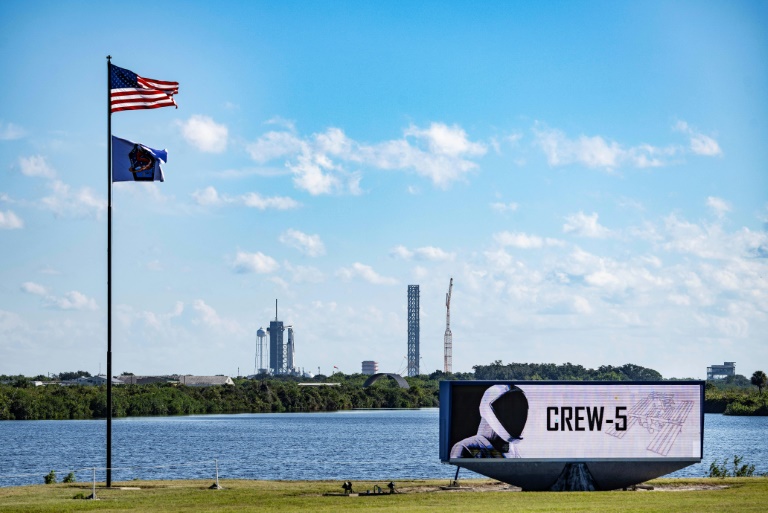
A SpaceX spaceship blasted off from Florida Wednesday, headed for the International Space Station and carrying a Russian crewmate, in a voyage that carries symbolic significance amid the Ukraine war.

Anna Kikina, the only female cosmonaut in service, is part of the Crew-5 mission, which also includes one Japanese and two American astronauts.

“Let’s do this,” said Crew-5 mission commander Nicole Mann, the first Native American in space, shortly before liftoff from the Kennedy Space Center in Florida at noon.

Two weeks ago, an American astronaut took off on a Russian Soyuz rocket for the orbital platform.

The long-planned astronaut exchange program has been maintained despite soaring tensions between the United States and Russia since Moscow’s invasion of Ukraine in February.

Ensuring the operation of the ISS has become one of the few remaining areas of cooperation between the United States and Russia.

“When you each are flying other’s crew members, you know that you have a huge responsibility that you’re promising to the other country,” NASA associate administrator Kathy Lueders told reporters in a recent press conference.

“At a working level, we really appreciated the constancy in the relationship, even during some really, really tough times geopolitically.”

– Fifth female cosmonaut, first Native American – 

Kikina, 38 and an engineer by training, will become the fifth Russian female professional cosmonaut to go into space.

“I hope in the near future we have more women in the cosmonaut corps,” the Novosibirsk native told AFP in August.

The Soviet Union put the first woman in space, Valentina Tereshkova, in 1963, nearly 20 years before the first American woman Sally Ride. Since then, the United States has flown dozens more women.

It is also the first spaceflight for American astronauts Mann and Josh Cassada, but the fifth for Japan’s Koichi Wakata.

Mann is the first indigenous woman to go to space with NASA. According to her NASA biography she is registered with the Wailacki of the Round Valley Indian Tribes.

She holds a Master’s degree in mechanical engineering from Stanford, served as a test pilot in the F/A-18 Hornet and Super Hornet, and flew 47 combat missions in Iraq and Afghanistan.

– ISS future unclear – 

Kikina will be the first Russian to fly with Elon Musk’s SpaceX which, along with Boeing, has a “taxi service” contract with NASA.

Musk himself waded into the conflict by proposing on Twitter a peace deal that involved re-running, under UN supervision, annexation referendums in Moscow-occupied regions of Ukraine and acknowledging Russian sovereignty over the Crimean peninsula. 

The post enraged Ukrainians, including the country’s envoy to Germany, who responded with an expletive. 

Tensions between Moscow and Washington have increased considerably in the space field after the announcement of American sanctions against the Russian aerospace industry, in response to the invasion of Ukraine.

Russia thus announced this summer that it wanted to leave the ISS “after 2024” in favor of creating its own station, albeit without setting a precise date.

The director of manned flights at Roscosmos, Sergei Krikaliov, declared Monday he hoped the Russian government agrees to extend participation in the ISS after 2024.

The United States, for its part, wants to continue operating until at least 2030, then transition to commercially run stations.

As things stand, the ISS cannot function without joint cooperation, as the US side is responsible for power and life support and the Russian side for propulsion and maintaining orbit.

Amid Ukraine war, US flys Russian cosmonaut to ISS

A SpaceX spaceship blasted off from Florida Wednesday, headed for the International Space Station and carrying a Russian crewmate, in a voyage that carries symbolic significance amid the Ukraine war.

Anna Kikina, the only female cosmonaut in service, is part of the Crew-5 mission, which also includes one Japanese and two American astronauts.

“Let’s do this,” said Crew-5 mission commander Nicole Mann, the first Native American in space, shortly before liftoff from the Kennedy Space Center in Florida at noon.

Two weeks ago, an American astronaut took off on a Russian Soyuz rocket for the orbital platform.

The long-planned astronaut exchange program has been maintained despite soaring tensions between the United States and Russia since Moscow’s invasion of Ukraine in February.

Ensuring the operation of the ISS has become one of the few remaining areas of cooperation between the United States and Russia.

“When you each are flying other’s crew members, you know that you have a huge responsibility that you’re promising to the other country,” NASA associate administrator Kathy Lueders told reporters in a recent press conference.

“At a working level, we really appreciated the constancy in the relationship, even during some really, really tough times geopolitically.”

– Fifth female cosmonaut, first Native American – 

Kikina, 38 and an engineer by training, will become the fifth Russian female professional cosmonaut to go into space.

“I hope in the near future we have more women in the cosmonaut corps,” the Novosibirsk native told AFP in August.

The Soviet Union put the first woman in space, Valentina Tereshkova, in 1963, nearly 20 years before the first American woman Sally Ride. Since then, the United States has flown dozens more women.

It is also the first spaceflight for American astronauts Mann and Josh Cassada, but the fifth for Japan’s Koichi Wakata.

Mann is the first indigenous woman to go to space with NASA. According to her NASA biography she is registered with the Wailacki of the Round Valley Indian Tribes.

She holds a Master’s degree in mechanical engineering from Stanford, served as a test pilot in the F/A-18 Hornet and Super Hornet, and flew 47 combat missions in Iraq and Afghanistan.

– ISS future unclear – 

Kikina will be the first Russian to fly with Elon Musk’s SpaceX which, along with Boeing, has a “taxi service” contract with NASA.

Musk himself waded into the conflict by proposing on Twitter a peace deal that involved re-running, under UN supervision, annexation referendums in Moscow-occupied regions of Ukraine and acknowledging Russian sovereignty over the Crimean peninsula. 

The post enraged Ukrainians, including the country’s envoy to Germany, who responded with an expletive. 

Tensions between Moscow and Washington have increased considerably in the space field after the announcement of American sanctions against the Russian aerospace industry, in response to the invasion of Ukraine.

Russia thus announced this summer that it wanted to leave the ISS “after 2024” in favor of creating its own station, albeit without setting a precise date.

The director of manned flights at Roscosmos, Sergei Krikaliov, declared Monday he hoped the Russian government agrees to extend participation in the ISS after 2024.

The United States, for its part, wants to continue operating until at least 2030, then transition to commercially run stations.

As things stand, the ISS cannot function without joint cooperation, as the US side is responsible for power and life support and the Russian side for propulsion and maintaining orbit.

Oil prices climb as OPEC+ cuts output

Oil prices climbed Wednesday as OPEC and Russia-led allies announced a major cut in output, while a stocks rally ran out of gas.

The pound, meanwhile, continued to suffer against the dollar over fears for Britain’s recession-threatened economy, falling around two percent to slide under $1.13.

In Vienna, ministers from the 13-nation OPEC cartel and its 10 Russian-led allies agreed to reduce two million barrels per day from November.

It is the biggest cut since the height of the Covid pandemic in 2020, and came despite concerns it could fuel inflation further and push central banks to further hike interest rates and therefore increase the chances of a global recession.

Oil prices had slid back to their levels before the war in Ukraine in recent weeks on concerns of a global slowdown, but have surged in recent days on expectations of the production cut.

The main international crude contract, Brent, jumped two percent following the decision.

“Oil futures are expected to continue their rally in the short and medium term, but continued concerns over a global recession and rising inflation are likely to limit the long-term upside,” said Srijan Katyal, Global Head of Strategy and Trading Services at the international brokerage ADSS.

Swissquote analyst Ipek Ozkardeskaya warned that the big cut could “backfire” on OPEC+ if investors fear that it will push inflation higher and force central banks to hike interest rates so much that it will trigger a recession.

“The higher the energy prices, the sharper the central banks must kill demand to pull the prices lower,” she said before the decision was announced.

“Therefore, a big cut in OPEC production could well backfire, and trigger profit taking and fall in oil prices today,” she added.

– Rally loses steam –

Meanwhile, a stocks rally triggered by disappointing US data on Monday that fuelled hopes the US Federal Reserve could let up in its campaign of aggressive interest rate hikes to tame inflation has petered out.

European stocks finished lower across the board, and Wall Street’s main indices were down sharply in late morning trading.

“Market participants are being forced to contend with the possibility that the Fed won’t acquiesce to the stock market’s hopeful wishes,” said analyst Patrick O’Hare at Briefing.com.

In currency trading, the pound took another beating as a speech by British Prime Minister Liz Truss failed to reassure investors about her controversial fiscal plans. 

“As Prime Minister Liz Truss took to the stage to try and shore up her support among her party and the country, the pound fell further back and government borrowing costs rose slightly,” said market analyst Susannah Streeter at Hargreaves Lansdown brokerage. 

“The speech will do little to quell dissent over worries that public services will bear the brunt of the tax cuts plans” she added.

– Key figures around 1530 GMT –

Brent North Sea crude:  UP 1.8 percent at $93.46 per barrel

West Texas Intermediate: UP 1.6 percent at $87.93 per barrel

New York – Dow: DOWN 1.1 percent at 29,994.41 points

EURO STOXX 50: DOWN 1.1 percent at 3,445.42

London – FTSE 100: DOWN 0.5 percent at 7,051.60 (close) 

Frankfurt – DAX: DOWN 1.2 percent at 12,516.22 (close)

Paris – CAC 40: DOWN 1.0 percent at 5,981.06 (close)

Tokyo – Nikkei 225: UP 0.5 percent at 27,120.53 (close)

Hong Kong – Hang Seng Index: UP 5.9 percent at 18,087.97 (close)

Shanghai – Composite: Closed for a holiday

Pound/dollar: DOWN at $1.1249 from $1.1477 on Tuesday

Euro/dollar: DOWN at $0.9858 from $0.9992

Euro/pound: UP at 87.61 pence from 87.03 pence

Dollar/yen: UP at 144.79 yen from 144.09 yen

burs-rl/lcm

US duo and Dane win Nobel for 'click chemistry'

A trio of scientists from the United States and Denmark won the Nobel Chemistry Prize on Wednesday for laying the foundation for a more functional form of chemistry where molecules are linked together.

Americans Carolyn Bertozzi and Barry Sharpless, together with Denmark’s Morten Meldal, were honoured “for the development of click chemistry and bioorthogonal chemistry”, the jury said.

Bertozzi is the only woman among the seven Nobel laureates honoured so far this year, with women vastly under-represented in the history of the prizes, especially in the science disciplines.

The chemist — who as an undergraduate at Harvard played keyboards in a band called Bored of Education with future Rage Against the Machine guitarist Tom Morello — is only the eighth woman to win a Nobel Chemistry Prize, out of 189 recipients.

Speaking to AFP, Bertozzi conceded she didn’t have the musical talent of her former bandmate.

“So I think I chose the right path. Especially today,” she said.

Benjamin Schumann, a chemist as London’s Imperial College and former student in Bertozzi’s lab, however said she was still known as “the rock star of sciences”.

The award marks the second Nobel for 81-year-old Sharpless, who won in chemistry in 2001. 

Only four other individuals have achieved the feat of winning two Nobel Prizes, including Polish-born Frenchwoman Marie Curie, who won the chemistry prize in 1911 after first winning the physics prize in 1903.

– Like Lego –

Click chemistry “is an elegant and efficient chemical reaction that is now in widespread use,” the jury said in a statement.

“Among many other uses, it is utilised in the development of pharmaceuticals,for mapping DNA and creating materials that are more fit for purpose,” it added.

Sharpless, a professor at Scripps Research in California, “started the ball rolling” and “coined the concept of click chemistry” around 2000, the jury said.

Afterwards, Sharpless and Meldal, a professor at the University of Copenhagen, independently of each other, presented “what is now the crown jewel of click chemistry: the copper catalysed azide-alkyne cycloaddition”.

The process allows chemists to “snap” molecules together “with the help of some copper ions”, which among other things allow for the production of new materials.

It is possible to click in substances that conduct electricity, capture sunlight, are antibacterial, protect from ultraviolet radiation or have other desirable properties, it said.

“The discovery that we did was more or less by serendipity” Meldal told AFP, calling his win a “big surprise”.

Speaking to reporters, the Danish professor said the application of click chemistry could be likened to Lego — the iconic plastic blocks that also hail from Denmark.

“You can make a house or bike or car or whatever functionality you want. By combining differently these building blocks… in chemistry, we do the same thing,” Meldal explained.

– ‘A new level’ –

Bertozzi, 55, a professor at Stanford in the United States, was highlighted for then taking “click chemistry to a new level”.

“She developed click reactions that work inside living organisms. Her bioorthogonal reactions take place without disrupting the normal chemistry of the cell,” the jury said.

Her research is now being used to investigate how these reactions can be used to diagnose and treat cancer.

“I’m absolutely stunned, I’m sitting here and I can hardly breathe,” Bertozzi told reporters via telephone, minutes after the announcement.

Silvia Diez-Gonzalez, a chemist who works on click chemistry at Imperial College, London, welcomed the win.

“Thank goodness” that the days of women not being allowed in chemistry labs are over, she told AFP, though “there is a lot of bias still out there”.

“I want to believe that it’s just a matter of time that as women and non-white people get more opportunities to achieve their potential, then eventually the recognition they get will be spread more widely.”

The Royal Swedish Academy of Sciences, which awards the Nobels in the science disciplines, has refused to introduce quotas despite the dearth of women laureates.

Goran Hansson, then-secretary general of the academy, told AFP last year after all of the science nods went to men, that it wanted every laureate to be accepted “because they made the most important discovery, and not because of gender or ethnicity”. 

The lack of women laureates “reflects the unfair conditions in society, particularly in years past but still existing”, he acknowledged.

burs-jll/po/jmm

US duo and Dane win Nobel for 'click chemistry'

A trio of chemists from the United States and Denmark who laid the foundation for a more functional form of chemistry where molecules are snapped together on Wednesday won the Nobel Chemistry Prize.

Americans Carolyn Bertozzi and Barry Sharpless, together with Denmark’s Morten Meldal, were honoured “for the development of click chemistry and bioorthogonal chemistry”, the jury said.

Bertozzi is the only woman among the seven Nobel laureates honoured so far this year, with women vastly under-represented in the history of the prizes, especially in the science disciplines.

The chemist — who as an undergraduate at Harvard played keyboards in a band called Bored of Education with future Rage Against the Machine guitarist Tom Morello — is only the eighth woman to win a Nobel Chemistry Prize, out of 189 recipients.

The award marks the second Nobel for 81-year-old Sharpless, who won the chemistry Nobel in 2001. 

Only four other individuals have achieved the feat of winning two Nobel Prizes, including Polish-born Frenchwoman Marie Curie, who won the chemistry prize in 1911 after first winning the physics prize in 1903.

She was followed by American Linus Pauling who won for chemistry in 1954 and peace in 1962. American John Bardeen won the physics prize in 1956 and 1972, and Britain’s Frederick Sanger won the chemistry prize in 1958 and 1980.

– To make drugs, map DNA –

Click chemistry “is an elegant and efficient chemical reaction that is now in widespread use,” the jury said in a statement.

“Among many other uses, it is utilised in the development of pharmaceuticals, for mapping DNA and creating materials that are more fit for purpose,” it added.

Sharpless, a professor at Scripps Research in California, “started the ball rolling” and “coined the concept of click chemistry” around 2000, the jury said.

Afterwards, Sharpless and Meldal, a professor at the University of Copenhagen, “independently of each other, presented what is now the crown jewel of click chemistry: the copper catalysed azide-alkyne cycloaddition”.

The process allows chemists to “snap” molecules together like Lego bricks “with the help of some copper ions”, which among other things allow for the production of new materials.

“If a manufacturer adds a clickable azide to a plastic or fibre, changing the material at a later stage is straightforward,” the Nobel committee explained.

It is possible to click in substances that conduct electricity, capture sunlight, are antibacterial, protect from ultraviolet radiation or have other desirable properties, it said.

While there is widespread application of his research, Meldal said he was “very surprised and very proud” to receive the honour.

“There are so many good discoveries and developments in the world, it’s incredible to be in this situation,” Meldal told Swedish public radio.

– ‘A new level’ –

Bertozzi, 55, a professor at Stanford in the United States, was highlighted for then taking “click chemistry to a new level”.

“She developed click reactions that work inside living organisms. Her bioorthogonal reactions take place without disrupting the normal chemistry of the cell,” the jury said.

Her research is now being used to investigate how these reactions can be used to diagnose and treat cancer.

“I’m absolutely stunned, I’m sitting here and I can hardly breathe,” Bertozzi told reporters via telephone, minutes after the announcement.

Silvia Diez-Gonzalez, a chemist who works on click chemistry at Imperial College, London, welcomed the win.

“Thank goodness” that the days of women not being allowed in chemistry labs are over, she told AFP, though “there is a lot of bias still out there”.

“I want to believe that it’s just a matter of time that as women and non-white people get more opportunities to achieve their potential, then eventually the recognition they get will be spread more widely.”

The Royal Swedish Academy of Sciences, which awards the Nobels in the science disciplines, has refused to introduce quotas despite the dearth of women laureates.

Goran Hansson, then-secretary general of the academy, told AFP last year after all of the science nods went to men, that it wanted every laureate to be accepted “because they made the most important discovery, and not because of gender or ethnicity”. 

The lack of women laureates “reflects the unfair conditions in society, particularly in years past but still existing”, he acknowledged.

This year’s laureates will share the Nobel award sum of 10 million Swedish kronor (more than $910,000), and will receive the prize from King Carl XVI Gustaf at a ceremony in Stockholm on December 10, the anniversary of the 1896 death of scientist Alfred Nobel who created the prizes in his last will and testament.

Close Bitnami banner
Bitnami