US Business

What's next for the Musk-Twitter deal?

With Twitter and Elon Musk edging towards finalizing a deal, here’s what may come next in the billionaire’s on-again, off-again bid to buy the influential social media platform.

– Where it stands –

After seeking for months to back out of the purchase, Musk did an about-face and informed Twitter that he would proceed with the $44 billion deal at the original $54.20 share price.

Twitter simply confirmed receipt of Musk’s proposal, but if the company does manage to reach an agreement it would avert a bitterly contested trial that had been slated to begin in Delaware on October 17.

Some experts believe the level of mistrust between the parties is so high that Twitter will likely seek further legal assurances that Musk will really follow through this time before it agrees to call off the trial.

“They thought they had a deal before,” said Adam Badawi, a law professor at the University of California, Berkeley. “So to actually accept something from him, it’s going to have to be as ironclad as it possibly can.

“But if details (can be) worked out, litigation will be off.”

“I imagine Twitter will want to put the $44 billion in escrow, or a very large amount of money, to show his good faith and commitment to actually getting this done,” Badawi said.

– Why the U-turn? –

Expert consensus is that Musk realized he was unlikely to prevail in court and his claim that Twitter had not revealed enough about the number of bots on the platform would have been hard to prove.

“We continue to believe Musk saw the writing on the wall and knew his chances of a victory in Delaware were slim to none with the best path accepting the current deal and move forward,” said Daniel Ives, a technology analyst at Wedbush Securities. 

Carl Tobias, a law professor at the University of Richmond, said “the standard Musk faced in court was proving a material adverse effect — it now looks like the bots were not enough to meet the standard.”

“I think this deal will stick, mostly because walking away a second time could be very damaging,” Tobias said. “What was to be gained in a trial that was an uphill fight?”

– The state of Twitter –

Twitter’s share price surged 22 percent on news of Musk’s U-turn.

But the takeover saga has reportedly created a lot of uncertainty within the San Francisco-based company and damaged staff morale.

Twitter’s brand has also recently been damaged by whistleblower testimony from a former security chief who delivered scathing criticism of privacy and security failures at the company.

Musk’s original offer also coincided with a plunge in online advertising revenue.

“For Musk, the irony is the easy part of this deal was buying Twitter,” said Wedbush’s Ives. “The hard part will be fixing it with monetization and subscriber engagement.”

– Concern over a Musk-owned Twitter –

The likelihood that a deal will be reached has reignited strong concerns about what a Musk-owned Twitter would look like.

The initial deal announced in April sparked fears the platform would see a surge in abuse and disinformation after Musk — a self-proclaimed free speech absolutist — said he would largely let anyone say anything allowed by law on Twitter.

Progressive groups were particularly concerned that Musk may permit a return to the platform by former US president Donald Trump, who was banned from Twitter after last year’s assault on the US Capitol by his supporters seeking to overturn the 2020 presidential election result.
What's next for the Musk-Twitter deal?

With Twitter and Elon Musk edging towards finalizing a deal, here’s what may come next in the billionaire’s on-again, off-again bid to buy the influential social media platform.

– Where it stands –

After seeking for months to back out of the purchase, Musk did an about-face and informed Twitter that he would proceed with the $44 billion deal at the original $54.20 share price.

Twitter simply confirmed receipt of Musk’s proposal, but if the company does manage to reach an agreement it would avert a bitterly contested trial that had been slated to begin in Delaware on October 17.

Some experts believe the level of mistrust between the parties is so high that Twitter will likely seek further legal assurances that Musk will really follow through this time before it agrees to call off the trial.

“They thought they had a deal before,” said Adam Badawi, a law professor at the University of California, Berkeley. “So to actually accept something from him, it’s going to have to be as ironclad as it possibly can.

“But if details (can be) worked out, litigation will be off.”

“I imagine Twitter will want to put the $44 billion in escrow, or a very large amount of money, to show his good faith and commitment to actually getting this done,” Badawi said.

– Why the U-turn? –

Expert consensus is that Musk realized he was unlikely to prevail in court and his claim that Twitter had not revealed enough about the number of bots on the platform would have been hard to prove.

“We continue to believe Musk saw the writing on the wall and knew his chances of a victory in Delaware were slim to none with the best path accepting the current deal and move forward,” said Daniel Ives, a technology analyst at Wedbush Securities. 

Carl Tobias, a law professor at the University of Richmond, said “the standard Musk faced in court was proving a material adverse effect — it now looks like the bots were not enough to meet the standard.”

“I think this deal will stick, mostly because walking away a second time could be very damaging,” Tobias said. “What was to be gained in a trial that was an uphill fight?”

– The state of Twitter –

Twitter’s share price surged 22 percent on news of Musk’s U-turn.

But the takeover saga has reportedly created a lot of uncertainty within the San Francisco-based company and damaged staff morale.

Twitter’s brand has also recently been damaged by whistleblower testimony from a former security chief who delivered scathing criticism of privacy and security failures at the company.

Musk’s original offer also coincided with a plunge in online advertising revenue.

“For Musk, the irony is the easy part of this deal was buying Twitter,” said Wedbush’s Ives. “The hard part will be fixing it with monetization and subscriber engagement.”

– Concern over a Musk-owned Twitter –

The likelihood that a deal will be reached has reignited strong concerns about what a Musk-owned Twitter would look like.

The initial deal announced in April sparked fears the platform would see a surge in abuse and disinformation after Musk — a self-proclaimed free speech absolutist — said he would largely let anyone say anything allowed by law on Twitter.

Progressive groups were particularly concerned that Musk may permit a return to the platform by former US president Donald Trump, who was banned from Twitter after last year’s assault on the US Capitol by his supporters seeking to overturn the 2020 presidential election result.
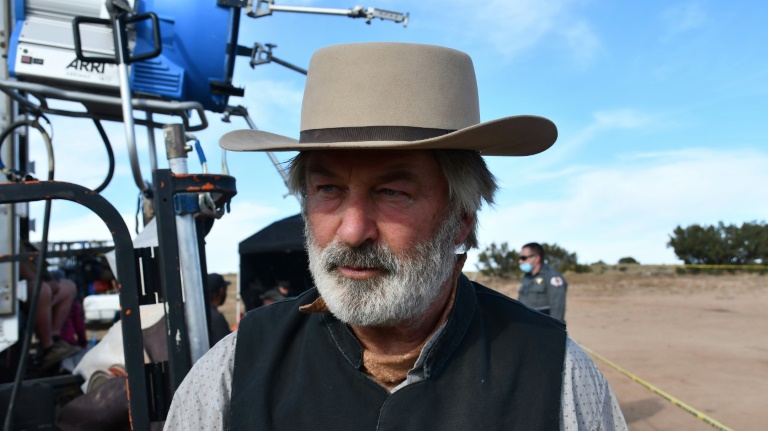
Alec Baldwin reaches settlement with family over 'Rust' death

Actor Alec Baldwin has reached a civil settlement with the family of the woman he shot dead on a film set last year, he said Wednesday, as it was announced production on the movie would restart in January.

The US actor was holding a Colt gun during a rehearsal for “Rust,” a low-budget Western being filmed in New Mexico last October when it discharged a live round, killing 42-year-old Halyna Hutchins.

“We are pleased to announce today the settlement of the civil case filed on behalf of the family of cinematographer Halyna Hutchins,” Baldwin said in an Instagram post.

“Throughout this difficult process, everyone has maintained the specific desire to do what is best for Halyna’s son,” he said.

Details of the settlement, which also includes Rust Movie Productions, the limited liability company formed to make the movie, were not disclosed.

Baldwin, who was a producer as well as the star of “Rust,” had been told the gun was safe and has previously said he did not pull the trigger, though an FBI report determined the gun could not have gone off otherwise.

Production on the movie will resume in January, filmmakers said in a statement Wednesday, with Hutchins’ husband Matthew Hutchins taking on the role of executive producer.

“I have no interest in engaging in recriminations or attribution of blame (to the producers or Mr. Baldwin),” Matthew Hutchins said in the statement. “All of us believe Halyna’s death was a terrible accident.”

According to Matthew Hutchins, “all the original principal players” will return to the set. 

“Rust” director Joel Souza, who was also injured in the shooting, said he would devote his work on the film “to honoring Halyna’s legacy and making her proud.”

“Though certainly bittersweet, I am pleased that together, we will now complete what Halyna and I started,” he said.

The family’s lawsuit was one of a series of civil proceedings over the fatal shooting, which sent shockwaves through Hollywood, and led to calls for guns to be permanently banned from sets.

Almost a year on from the tragedy, investigators in New Mexico have filed no criminal charges, but have not ruled them out against anybody, including Baldwin.

In August, Baldwin said he did not believe he would be charged, telling CNN he had hired a private investigator to assess possible culpability.

While there has never been any doubt that the gun was in Baldwin’s hands when it went off, the central question that remains unresolved is how it came to be loaded with a live round.

Film sets are supposed to have stringent rules around prop weapons.

That has brought a focus on Hannah Gutierrez-Reed, the movie’s young armorer and props assistant, and on assistant director Dave Halls, who handed Baldwin the gun, apparently declaring it “cold” — industry speak for inert.

Gutierrez-Reed has sued the film’s ammunition supplier, accusing him of leaving real bullets among the dummy cartridges.

The German town where boats take the elevator

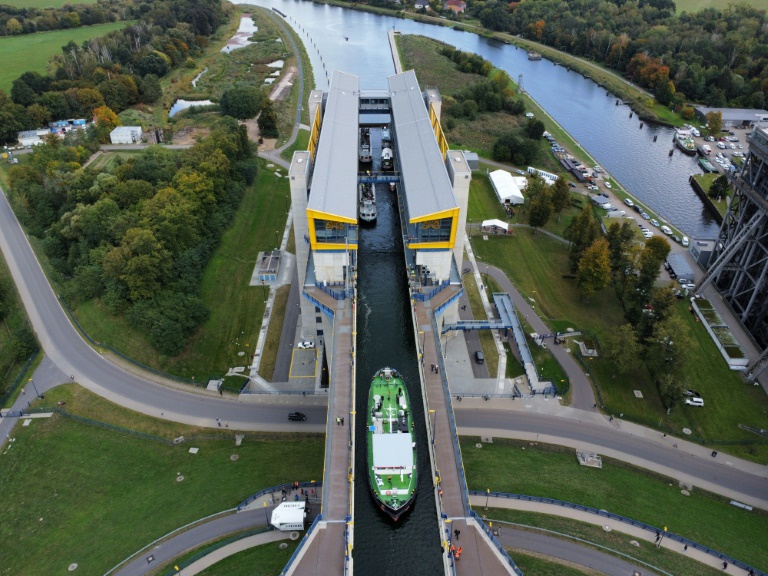
Germany’s whopping new boat lift could lug the weight of 50 blue whales over a stretch of canal between Poland and Berlin.

The powerful concrete elevator — the country’s largest — is designed for big modern barges, and began welcoming ships for the first time on Wednesday.

The engineering feat in Niederfinow, eastern Germany, measures 133 by 46 metres (145 by 50 yards) and stands at 55 metres tall.

German Transport Minister Volker Wissing said it was “taking inland waterway transport into the future”.

The lift around 50 kilometres (31 miles) from Berlin takes a few minutes to hoist boats over a height of 36 metres — allowing them to travel smoothly from the Polish port of Szczecin to the German capital. 

With its mesh of metal cables, the huge concrete structure rises up against a backdrop of green fields by the Oder-Havel Canal in the state of Brandenburg.

The lift was built to replace an old one in the same location, commissioned in 1934 but no longer sufficient for modern maritime traffic.

– Tourist attraction –

The new version is 30 metres longer than its predecessor and can carry nearly twice as much weight — equivalent to “50 adult blue whales or 1,600 elephants”, Wissing said at the official opening on Tuesday.

Building the structure was not plain sailing, though — the process was delayed eight years by late deliveries, a supplier going bankrupt, worker shortages and the coronavirus pandemic.

Local media dubbed the project the maritime BER, a reference to Berlin’s long-delayed airport which finally opened in 2020.

The old structure was the tallest boat lift in the world when it was built.

That record has long since fallen to a mighty lift at the Three Gorges Dam in China, which raises and lowers boats over a distance of 113 metres.

Niederfinow’s old lift will continue operating until 2025, and live on as the main tourist attraction in the rural village of around 600 inhabitants.

OPEC+ agrees major oil output cut

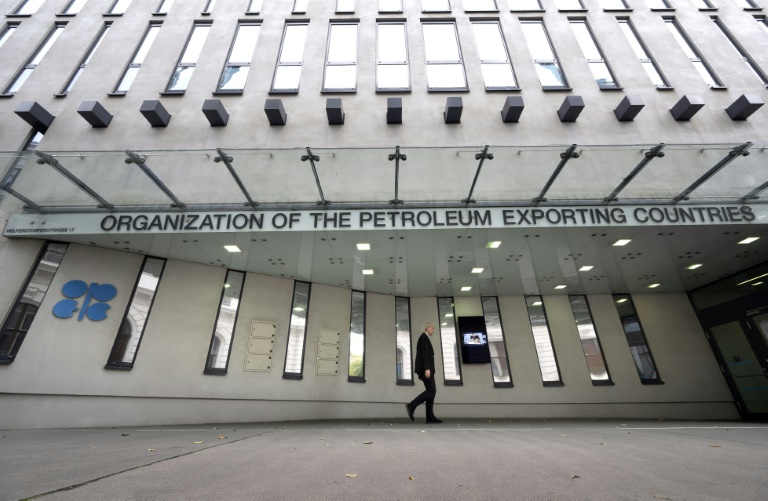
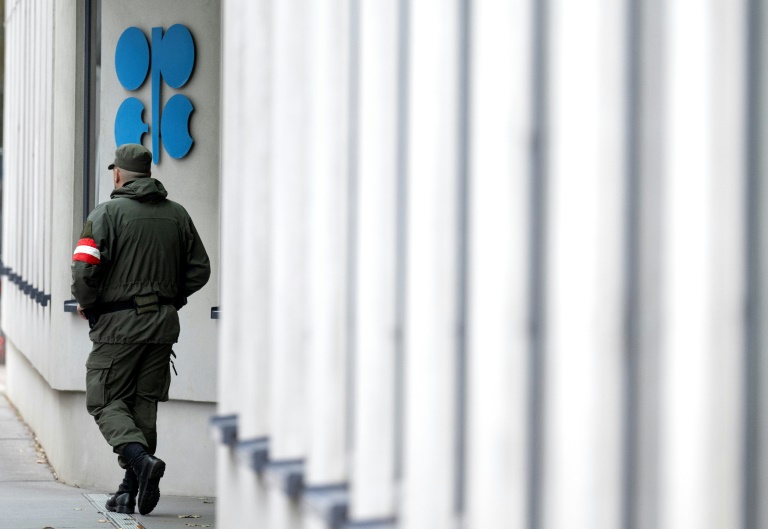
OPEC and its Russia-led allies agreed on a major cut in oil production on Wednesday, a move to prop up prices that could bolster sanction-hit Moscow’s coffers and irk Washington.

The 13-nation OPEC cartel and its 10 Russian-led allies agreed to reduce two million barrels per day from November at a meeting in Vienna, said Iran’s OPEC Governor Amir Hossein Zamaninia.

It is the biggest cut since the height of the Covid pandemic in 2020.

Such a move could turbocharge crude prices, further aggravating inflation which has reached decades-high levels in many countries and is contributing to a global economic slowdown.

It could also give Russia a boost ahead of a European Union ban on most of its crude exports later this year and a bid by the Group of Seven wealthy democracies to cap the country’s oil prices.

US President Joe Biden personally appealed to Saudi leaders in July to boost production in order to tame prices which soared following Russia’s invasion of Ukraine earlier this year. 

But crude price have fallen in recent months on concerns over dwindling demand and fears over a possible global recession.

“With consumers only just breathing a sigh of relief after being forced to pay record prices at the pump, today’s cut is not going to go down well,” said Craig Erlam, an analyst at trading platform OANDA, ahead of the meeting. 

When asked how the United States would react to a cut, the energy minister of the United Arab Emirates, Suhail al-Mazrouei, insisted that OPEC was merely a “technical organisation”.

Alexander Novak, the Russian deputy prime minister in charge of energy who is under US sanctions, remained mum as he arrived for the group’s first in-person meeting at its Vienna headquarters since March 2020.

– Geopolitical tensions –

Collectively known as OPEC+, the alliance drastically slashed output by almost 10 million barrels per day (bpd) in April 2020 to reverse a massive drop in crude prices caused by Covid lockdowns.

OPEC+ began to raise production last year after the market improved. Output returned to pre-pandemic levels this year, but only on paper as some members have struggled to meet their quotas.

The group agreed last month on a small, symbolic cut of 100,000 bpd from October, the first in more than a year.

Consumer countries had pushed for months for OPEC+ to open taps more widely to bring down prices, but the group ignored them again.

“Knowing that Russia is willing to cut output, the move could also be perceived as another escalation of the geopolitical tensions” between Moscow and the West, said Ipek Ozkardeskaya, a Swissquote bank analyst.

– US elections –

Biden made a controversial trip to Saudi Arabia in July in part to convince the kingdom to loosen the production taps. The trip saw Biden meet Crown Prince Mohammed bin Salman despite his promise to make Riyadh a “pariah” following the 2018 killing of journalist Jamal Khashoggi.

The OPEC+ decision comes ahead of a midterm congressional elections in the United States next month, and a surge in prices for Americans at fuel stations would not help Biden’s cause.

White House press secretary Karine Jean-Pierre said on Tuesday that “we will continue to take steps to protect American consumers”, declining to comment on the OPEC discussions directly.

While the cut will not be welcomed by the United States, several OPEC+ nations have struggled to meet their quotas in the first place.

Prices soared close to $140 per barrel in the aftermath of Russia’s invasion of Ukraine in late February but fell as low as below $90 more recently.

After rallying earlier this week on speculation over the OPEC+ cut, the international benchmark, Brent North Sea crude, seesawed on Wednesday at around $92.

burs-jza/lth

Putin says Ukraine fight to 'stabilise,' Kyiv presses counterattack

Russian President Vladimir Putin said Wednesday that he expected the situation to “stabilise” in Ukrainian regions annexed by the Kremlin after Moscow suffered military setbacks and lost several key towns to Kyiv.

Ukraine earlier claimed victories over Russian troops in the eastern region of Lugansk as the Kremlin vowed to recapture territory lost in a lightning Ukrainian counteroffensive.

In recent weeks, Ukraine’s forces, bolstered by Western weapons, have wrested Russian troops out of a string of towns and villages in the southern Kherson region and the eastern separatist strongholds of Lugansk and Donetsk.

“We are working on the assumption that the situation in the new territories will stabilise,” Putin told Russian teachers during a televised video call.

Just hours earlier, the Ukrainian-appointed head of Lugansk Sergiy Gaiday announced that the “de-occupation of the Lugansk region has already officially started”.

A senior Russian lawmaker called on military officials to tell the truth about developments on the ground in Ukraine following the string of bruising defeats.

“We need to stop lying,” the chairman of the lower house of parliament’s defence committee, Andrei Kartapolov, told a journalist from state-run media.

“The reports of the defence ministry do not change. The people know. Our people are not stupid. This can lead to loss of credibility.”

– ‘Not be returned’ –

Putin on Wednesday signed into legislation his annexation of four Ukrainian territories — including Lugansk — as the European Union agreed a new round of sanctions against Moscow in response.

Kremlin spokesman Dmitry Peskov said Moscow would take back land it lost to Kyiv within the annexed regions, vowing they would be “Russian forever and will not be returned.” 

Putin last week signed agreements with the Moscow-installed leaders of the four regions to become subjects of the Russian Federation, despite condemnation from Kyiv and the West.

The four territories — Donetsk, Kherson, Lugansk and Zaporizhzhia — create a land corridor between Russia and the Crimean Peninsula, which was annexed by Moscow in 2014.

Together, the five regions make up around 20 percent of Ukraine.

The Kremlin annexed the territories after hastily conducting referendums, denounced as void by Kyiv and its Western allies, but has yet to confirm what areas exactly of those regions are being annexed.

Russian forces do not have full control over Kherson or Zaporizhzhia and recently lost control of several settlements in Donetsk.

– ‘Strike back’ –

“The way we are regrouping (our forces) along the front means that we can gather strength and strike back,” Kirill Stremousov, the Moscow-appointed deputy head of Kherson region, told the RIA Novosti news agency.

Ukraine’s forces “won’t enter Kherson. Its impossible,” he said referring to the region’s eponymous main city.

On Tuesday, Ukrainian President Volodymyr Zelensky said his forces were making “rapid and powerful” gains and had retaken “dozens” of villages in the east and south.

The latest battlefield maps from Moscow showed that Russian troops had left many areas in Kherson, including along the west bank of the Dnipro River.

In Kharkiv, the maps indicated that Russian forces had almost entirely abandoned the east bank of the Oskil River, potentially giving the Ukrainians space to shell key Russian troop transportation and supply corridors.

While Russian authorities remain largely silent about the extent of the setbacks, war correspondents of pro-Kremlin media admitted that troops were in trouble. 

“There won’t be any good news in the near future. Not from the Kherson front nor from Lugansk,” newspaper journalist Alexander Kots wrote on his Telegram channel with over 640,000 followers.

Near Lyman, a strategic transport hub in Donetsk that Kyiv recaptured over the weekend, a Ukrainian paratrooper told AFP that forces were “exhausted”. 

– ‘Chase them’ –

“We’ll rest for a bit and then we will go further,” said the young, bearded soldier. “We will chase them,” he added.

On Tuesday, US President Joe Biden told Zelensky that another $625 million in military assistance was on the way.

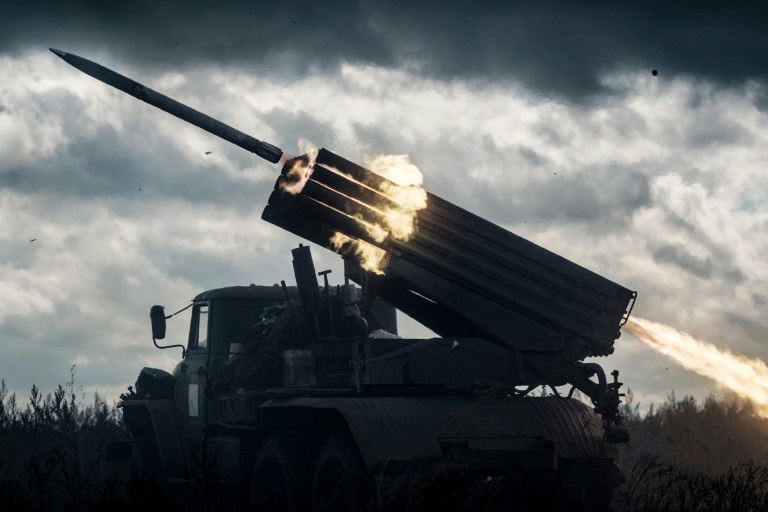
The new batch includes more HIMARS multiple rocket launchers, which have allowed Ukraine to strike Russian command depots and arms stockpiles far behind the front line.

From the EU, there were no details about the nature of fresh sanctions agreed against Russia.

The latest package — the eighth since Russia’s invasion in February — is now going through a final approval procedure which, if no objections emerge, will be published and come into effect on Thursday, the Czech Republic’s EU ambassador said on Twitter.

Otherwise, Russia insisted that it should be part of an international probe into leaks in the Nord Stream pipeline that carries gas from Russia to Europe. Sweden has blocked off the area pending an investigation.

Moscow has accused the West of being behind blasts that lead to four leaks on the Baltic Sea pipelines.

Both Moscow and Washington have denied involvement.

UK rail workers stage latest strike over pay

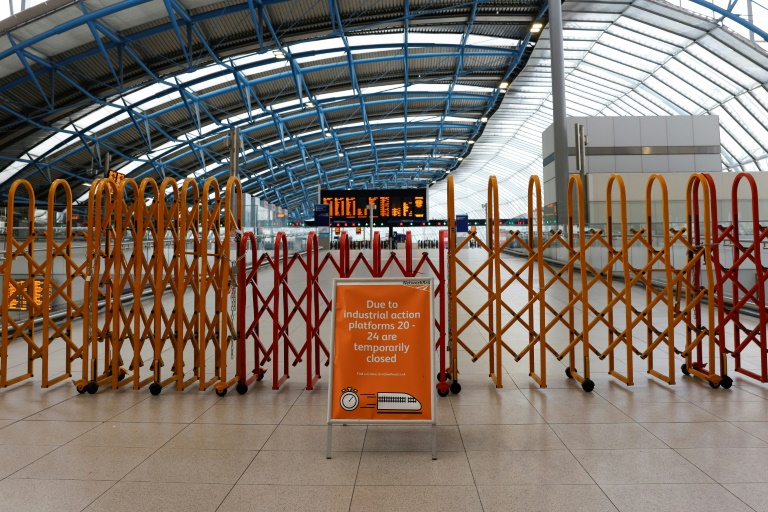
Train travel in Britain was disrupted on Wednesday by the latest in a string of strikes by railway workers over wages.

Picket lines appeared at stations including London’s Kings Cross and Euston as workers from the Aslef and TSSA trade unions and thousands of drivers walked out.

The strike affected around a dozen rail companies.

Railway workers are demanding wage increases to keep pace with decades-high inflation amid a cost-of-living crisis. 

The sector has spearheaded a wave of industrial action in recent months.

Tens of thousands of staff in various industries — from the postal and legal systems to ports and telecommunications — have also gone on strike across Britain since the summer.

Mick Whelan, general secretary of Aslef, which represents train drivers, said it the first railway dispute he had been involved in where transport unions had “the approval of the public”.

“That’s because it is barristers, it is teachers, it is lecturers, it is everybody across all sectors all feeling the pinch at the same time and this can only be down to the government,” he said on a picket line at Euston.

RMT union general secretary Mick Lynch added that negotiations with the rail companies were continuing but had not produced anything “tangible” so far.

He pledged more strike action over the next six months if a settlement between transport unions and rail companies was not reached.

Railway workers from four unions — RMT, Unite, Aslef and TSSA — all walked out last Saturday resulting in only 11 percent of trains running nationwide.

Some parts of the country were left without any services.

The strikes come as workers face a huge hike in energy prices, rising interest rates and food costs. They have been the sector’s biggest stoppages in decades with more expected this coming Saturday.

Prime Minister Liz Truss’s government on Wednesday vowed to take on “militant unions”, characterising them as part of an “anti-growth coalition” holding the country back.

EU signals shifts towards gas price cap

The EU is “ready to discuss” a price cap on gas within the bloc to bring down soaring energy costs, European Commission chief Ursula von der Leyen said Wednesday.

Her comment to the European Parliament signalled a shift in tone after EU powerhouse Germany had expressed worries a broad price cap might divert supplies away from Europe.

It comes after 15 EU countries — more than half the bloc — made a joint call for the EU to impose a price ceiling on how much it would pay for gas piped or shipped in, as the northern hemisphere winter sets in.

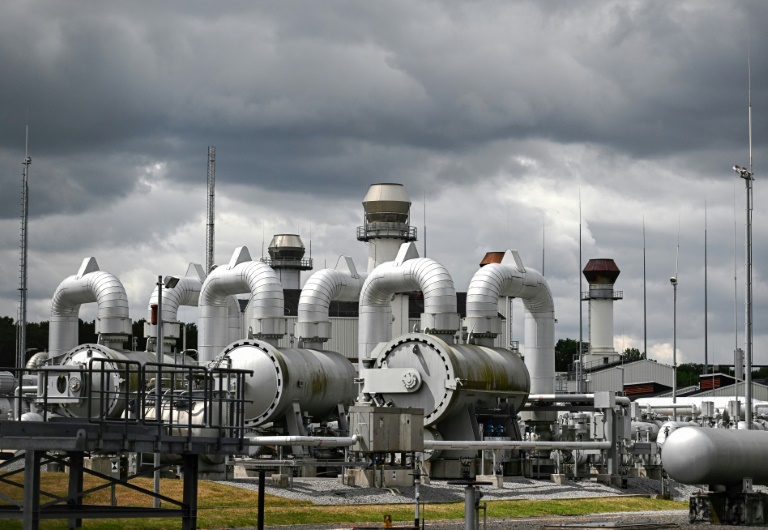
Europe is facing an energy crunch as the price of electricity generation skyrockets because of a massive surge in gas prices.

Russia, which used to be Europe’s main supplier, has largely turned off the taps after being hit by EU sanctions over the war in Ukraine that, while not touching gas, crimped sales of its more lucrative oil exports.

“We are ready to discuss a cap on the price of gas that is used to generate electricity,” Von der Leyen told MEPs sitting in Strasbourg, France.

“This cap would also be a first step on the way to a structural reform and overall reform of our electricity market.”

She added, “We also have to look at gas prices beyond the electricity market”.

– Still being ‘fleshed out’ –

Her spokesman, Eric Mamer, explained the proposal was still being “fleshed out” and would be detailed in a letter to EU leaders ahead of a Friday summit in Prague.

But he did say the idea was “related to the wholesale market of gas trading in Europe” and not directly on the price paid for imported gas.

He acknowledged however “links between the price of gas traded within Europe and the price of the gas that we buy from outside”.

Euro MPs voted Wednesday for a “tariff ceiling on gas imports” and an immediate and complete embargo on Russian (energy) imports”.

Norway, which has become Europe’s main gas supplier as Russian deliveries have fallen, reiterated Wednesday its opposition to a price cap saying it would not resolve the problem of a shortage of gas.

“It would rather make the situation worse because you can expect such a solution to contribute to increased consumption and fewer deliveries,” said the non-EU nation’s energy minister Terje Aasland.

“No one can use more gas or energy than exists,” he told AFP by email.   

Brussels has been amenable to a cap on pipeline gas to hurt Russia and deprive it of cash.

But it has resisted a cap on liquified natural gas (LNG), fearing that sellers might simply divert shipments to higher-paying markets, further starving Europe of gas.

Germany, traditionally the biggest beneficiary of Russian gas, had also rebuffed the idea. But it has come under pressure from other EU members after announcing a 200-billion-euro ($199-billion) fund to protect consumers.

Von der Leyen admitted a price cap “entails drawbacks in terms of security of supply of gas”.

But she argued “the situation has critically evolved” and now, “more member states are open for it and we are better prepared”.

She noted that Europe’s stockpile of gas for winter had reached 90 percent of capacity, exceeding the target set.

She also said any price cap would be “a temporary solution” and that “exceptional times require exceptional emergency measures”.

Oil prices wobble awaiting OPEC output cut

Oil prices wobbled Wednesday as investors waited to learn the amount of an expected major cut in output by OPEC and Russia-led allies.

In equity action, a stocks rally that had been fuelled by hopes the US Federal Reserve could ease off rate hikes ran out of gas.

The pound, meanwhile, continued to suffer against the dollar over fears for Britain’s recession-threatened economy, losing around 1.6 percent to slide under $1.13.

In Vienna, ministers from the OPEC+ alliance gathered for their first in-person meeting since March 2020 to discuss a cut in oil production, a move that could anger the United States as nations battle energy-fuelled inflation.

“There will be a lot of attention on just how big this cut is,” said AJ Bell investment director Russ Mould.

“Speculation they could be double the volume previously flagged… has been behind the recent surge in crude.”

Crude prices have shot higher in recent days following reports that OPEC+  is considering a reduction of up to two million barrels per day.

But crude oil prices began to wobble as oil ministers began to meet, amid reports that US officials are lobbying Middle Eastern officials against making a big production cut that would boost inflation and increase risks of a global recession.

A White House official played down the reports.

“We are always talking to partners on supply meeting demand and OPEC+ meetings happen once every month like clock work,” the official told AFP on condition of anonymity.

Swissquote analyst Ipek Ozkardeskaya warned that a big cut could “backfire” on OPEC+ if investors fear that it will push inflation higher and force central banks to hike interest rates so much that it will trigger a recession.

“The higher the energy prices, the sharper the central banks must kill demand to pull the prices lower,” she said.

“Therefore, a big cut in OPEC production could well backfire, and trigger profit taking and fall in oil prices today,” she added.

– Rally loses steam –

In other markets, European stocks were down across the board in afternoon trading, and Wall Streets main indices opened lower.

Stocks had rallied after disappointing US data on Monday fuelled hopes that the US Federal Reserve could let up in its campaign of aggressive interest rate hikes to tame inflation.

“Market participants are being forced to contend with the possibility that the Fed won’t acquiesce to the stock market’s hopeful wishes,” said analyst Patrick O’Hare at Briefing.com.

“That is sapping some of the rebound momentum and feeding a reversal in other markets, too,” he added.

In a reminder of the global economic turmoil, the World Trade Organization dramatically lowered its global trade forecast for 2023.

“Today the global economy faces multi-prong crises. Monetary tightening is weighing on growth across much of the world,” WTO Director-General Ngozi Okonjo-Iweala told reporters in Geneva.

Presenting a revision of their annual trade forecast, WTO economists said they still anticipated global economic growth rising 2.8 percent this year.

– Key figures around 1330 GMT –

Brent North Sea crude:  UP 0.8 percent at $92.55 per barrel

West Texas Intermediate: UP 0.7 percent at $87.12 per barrel

London – FTSE 100: DOWN 0.7 percent at 7,039.04 points

Frankfurt – DAX: DOWN 1.3 percent at 12,509.72

Paris – CAC 40: DOWN 1.0 percent at 5,977.64

EURO STOXX 50: DOWN 1.2 percent at 3,443.25

New York – Dow: DOWN 0.9 percent at 30,030.14

Tokyo – Nikkei 225: UP 0.5 percent at 27,120.53 (close)

Hong Kong – Hang Seng Index: UP 5.9 percent at 18,087.97 (close)

Shanghai – Composite: Closed for a holiday

Pound/dollar: DOWN at $1.1291 from $1.1477 on Tuesday

Euro/dollar: DOWN at $0.9880 from $0.9992

Euro/pound: UP at 87.49 pence from 87.03 pence

Dollar/yen: UP at 144.54 yen from 144.09 yen

burs-rl/lth

Canada trade surplus drops in August to lowest 2022 level

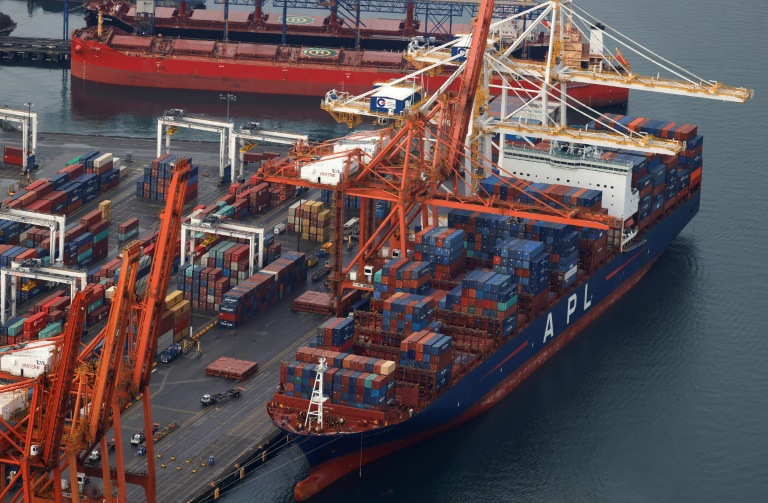
Canada’s trade surplus fell in August to Can$1.5 billion (US$1.1 billion) — its lowest level so far this year — as both exports and imports slumped, the government statistical agency said Wednesday.

The surplus narrowed from a revised Can$2.4 billion in July (previously Can$4 billion) and was “slimmer-than-expected,” according to CIBC analyst Andrew Grantham.

Exports decreased 2.9 percent to Can$65.4 billion, led by lower exports of energy products, while imports fell 1.7 percent to Can$63.9 billion, mainly on lower imports of motor vehicles and parts, said Statistics Canada. 

Energy exports accounted for more than 28 percent of total exports in August. The drop in this segment was led by crude oil.

Wheat exports also fell, but production was forecast to bounce back in 2022/2023 after a poor harvest this year. 

Canola exports were also down, as were shipments of gold bars to the United States following peak exports in May and June.

Imports of passenger cars and light trucks as well as parts, meanwhile, continued to be affected by supply chain woes.

Also down were imports of basic and industrial chemical, plastic and rubber product, metal and non-metallic mineral product, electronic and electrical equipment and parts, and energy products.

Those were partially offset by higher imports of industrial machinery linked to a new liquefied natural gas terminal currently being built in British Columbia. 

Trade with the United States declined, but Canada still managed to maintain a surplus with its largest trading partner, while a deficit with all other countries widened for the first time in four months.

Close Bitnami banner
Bitnami