US Business

Kevin Spacey due in New York court for sexual abuse of teen in 1986

Kevin Spacey will appear in a New York court from Thursday to face a civil lawsuit brought by US actor Anthony Rapp, who has accused the disgraced Hollywood star of sexually abusing him when he was 14. 

The two-time Oscar-winning star of the stage, cinema and television  — whose full name is Kevin Spacey Fowler — has disappeared from public view since he became one of the first performers to be caught up in the freshly minted #MeToo movement in October 2017.

Rapp, who currently stars in the “Star Trek: Discovery” series, turns 51 this month. He filed a complaint in September 2020 against Spacey for advances and an alleged sexual assault at a party in Manhattan in 1986.

Rapp was 14 years old at the time, while Spacey — now 63 — was almost twice his age.

– Global fame –

Spacey, who built his worldwide fame since the 1980s in movies such as “The Usual Suspects” and “American Beauty” and on to the Netflix hit “House of Cards,” has always denied allegations of sexual abuse. 

The #MeToo movement exploded in October 2017, when more than 80 women in the movie industry accused — and ultimately brought down — the previously untouchable producer Harvey Weinstein.

At the end of the month, Rapp accused Spacey for the first time, in great detail, in an interview with BuzzFeed News.

The next day, on Twitter, Spacey presented his “sincerest apology” to Rapp for any “deeply inappropriate drunken behavior,” saying he did not recall the incident.

After a 2020 criminal charge of sexual assault was dismissed by a judge, Rapp filed a civil suit that will see Spacey in a Manhattan courtroom starting Thursday at 9:30 am (1330 GMT), in a case to be heard by a jury and presided over by Judge Lewis Kaplan.

– ‘An impartial jury’ –

“Mr Spacey will appear Thursday and throughout the trial. We look forward to his vindication by an impartial jury,” his lawyer Jennifer Keller told AFP in an email.

If found guilty, Spacey faces significant damages.

Kaplan had dropped Rapp’s initial charge of sexual assault, ruling it had been brought too late and was not covered by a New York state law on child protection, implemented in 2019.

However, the judge acknowledged that during the party in 1986, Spacey had fondled the 14-year-old boy’s buttocks, lifted him onto a bed and laid partially on top of him while fully clothed.

– Other lawsuits –

During his testimony 35 years after the incident, Rapp agreed there had been “no kissing, no undressing, no reaching under clothes, and no sexualized statements or innuendo,” during an incident that had lasted no more than two minutes. 

Spacey has been hit by other charges in both the United States and Britain. 

In August, a California judge ordered him to pay almost $31 million to the production company responsible for making the “House of Cards” series, from which he was fired when accusations of sexual harassment against him emerged. 

In London, he is being prosecuted for sexual assault against three men between March 2005 and April 2013, when he was a theater director, and to which he pleaded not guilty last July. 

And in Massachusetts, Spacey was charged with indecent assault and sexual assault on an 18-year-old bar worker in July 2016. The charges were dropped in July 2019.
Amid Ukraine war, US set to fly Russian cosmonaut to ISS

The United States will on Wednesday carry a Russian to the International Space Station aboard a SpaceX ship, in a voyage that carries symbolic significance amid the Ukraine war.

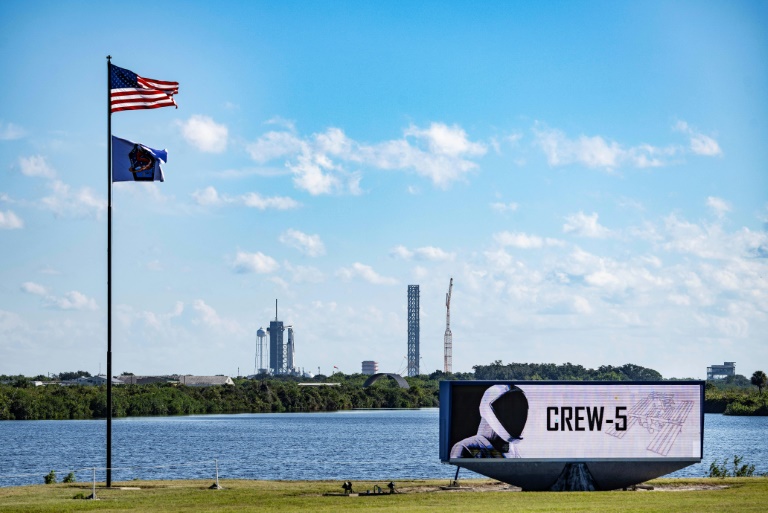
Anna Kikina, the only female cosmonaut in service, is part of the Crew-5 mission, which also includes one Japanese and two American astronauts.

Blast-off is set for noon from the Kennedy Space Center, with the weather forecast so far promising.

Two weeks ago, an American astronaut took off on a Russian Soyuz rocket for the orbital platform.

The long-planned astronaut exchange program has been maintained despite soaring tensions between the two countries since Moscow’s invasion of Ukraine in February.

Ensuring the operation of the ISS has become one of the few remaining areas of cooperation between the United States and Russia.

“When you each are flying other’s crew members, you know that you have a huge responsibility that you’re promising to the other country,” NASA associate administrator Kathy Lueders told reporters in a recent press conference.

“At a working level, we really appreciated the constancy in the relationship, even during some really, really tough times geopolitically.”

– Fifth female cosmonaut – 

Kikina, 38 and an engineer by training, will become the fifth Russian female professional cosmonaut to go into space.

“I hope in the near future we have more women in the cosmonaut corps,” the Novosibirsk native told AFP in August.

The Soviet Union put the first woman in space, Valentina Tereshkova, in 1963, nearly 20 years before the first American woman Sally Ride. Since then, America has flown dozens more women.

It will also be the first spaceflight for American astronauts Nicole Mann and Josh Cassada, but the fifth for Japan’s Koichi Wakata.

After a journey of about 30 hours, their ship will dock with the station on Thursday, ready to begin a five-month science mission and relieve the four members of Crew-4, who will stay a few days for handover.

Crew-5’s arrival will bring the total number of astronauts on the ISS to 11, including two other Russians and an American who arrived on the recent Soyuz.

– ISS future unclear – 

Kikina will be the first Russian to fly with Elon Musk’s SpaceX which, along with Boeing, has a “taxi service” contract with NASA.

Musk himself waded into the conflict Thursday by proposing a peace deal that involved re-running, under UN supervision, annexation referendums in Moscow-occupied regions of Ukraine and acknowledging Russian sovereignty over the Crimean peninsula. 

The post enraged Ukrainians, including the country’s envoy to Germany, who responded with an expletive. 

Tensions between Moscow and Washington have increased considerably in the space field after the announcement of American sanctions against the Russian aerospace industry, in response to the invasion of Ukraine.

Russia thus announced this summer that it wanted to leave the ISS “after 2024” in favor of creating its own station, albeit without setting a precise date.

The director of manned flights at Roscosmos, Sergei Krikaliov, declared Monday he hoped the Russian government agrees to extend participation in the ISS after 2024.

The United States, for its part, wants to continue operating until at least 2030, then transition to commercially run stations.

As things stand, the ISS cannot function without joint cooperation, as the US side is responsible for power and life support and the Russian side for propulsion and maintaining orbit.

Between 2011 — when the Space Shuttle program ended — and SpaceX’s first flight to the ISS in 2020, the United States was dependent on Russia for flying its crew to the station, paying tens of millions of dollars per seat.

The loss of this monopoly represents a significant income reduction for the Russian space program. The current crew exchange program, by contrast, is a barter-based agreement with no exchange of money.

Amid Ukraine war, US set to fly Russian cosmonaut to ISS

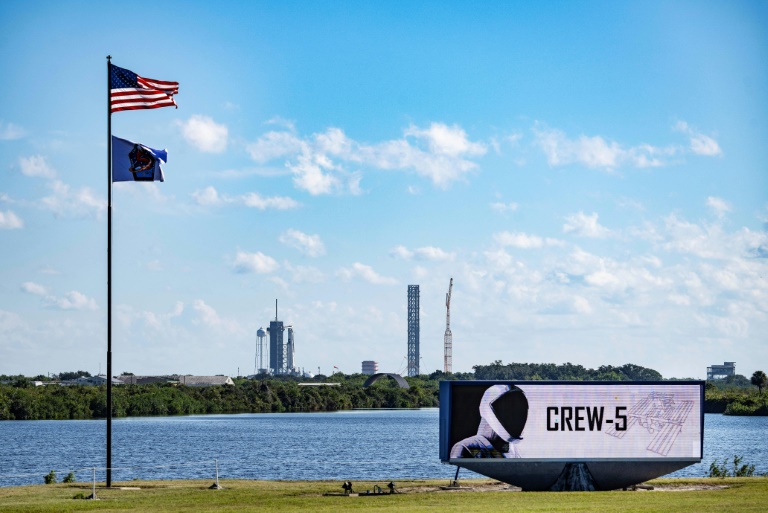
The United States will on Wednesday carry a Russian to the International Space Station aboard a SpaceX ship, in a voyage that carries symbolic significance amid the Ukraine war.

Anna Kikina, the only female cosmonaut in service, is part of the Crew-5 mission, which also includes one Japanese and two American astronauts.

Blast-off is set for noon from the Kennedy Space Center, with the weather forecast so far promising.

Two weeks ago, an American astronaut took off on a Russian Soyuz rocket for the orbital platform.

The long-planned astronaut exchange program has been maintained despite soaring tensions between the two countries since Moscow’s invasion of Ukraine in February.

Ensuring the operation of the ISS has become one of the few remaining areas of cooperation between the United States and Russia.

“When you each are flying other’s crew members, you know that you have a huge responsibility that you’re promising to the other country,” NASA associate administrator Kathy Lueders told reporters in a recent press conference.

“At a working level, we really appreciated the constancy in the relationship, even during some really, really tough times geopolitically.”

– Fifth female cosmonaut – 

Kikina, 38 and an engineer by training, will become the fifth Russian female professional cosmonaut to go into space.

“I hope in the near future we have more women in the cosmonaut corps,” the Novosibirsk native told AFP in August.

The Soviet Union put the first woman in space, Valentina Tereshkova, in 1963, nearly 20 years before the first American woman Sally Ride. Since then, America has flown dozens more women.

It will also be the first spaceflight for American astronauts Nicole Mann and Josh Cassada, but the fifth for Japan’s Koichi Wakata.

After a journey of about 30 hours, their ship will dock with the station on Thursday, ready to begin a five-month science mission and relieve the four members of Crew-4, who will stay a few days for handover.

Crew-5’s arrival will bring the total number of astronauts on the ISS to 11, including two other Russians and an American who arrived on the recent Soyuz.

– ISS future unclear – 

Kikina will be the first Russian to fly with Elon Musk’s SpaceX which, along with Boeing, has a “taxi service” contract with NASA.

Musk himself waded into the conflict Thursday by proposing a peace deal that involved re-running, under UN supervision, annexation referendums in Moscow-occupied regions of Ukraine and acknowledging Russian sovereignty over the Crimean peninsula. 

The post enraged Ukrainians, including the country’s envoy to Germany, who responded with an expletive. 

Tensions between Moscow and Washington have increased considerably in the space field after the announcement of American sanctions against the Russian aerospace industry, in response to the invasion of Ukraine.

Russia thus announced this summer that it wanted to leave the ISS “after 2024” in favor of creating its own station, albeit without setting a precise date.

The director of manned flights at Roscosmos, Sergei Krikaliov, declared Monday he hoped the Russian government agrees to extend participation in the ISS after 2024.

The United States, for its part, wants to continue operating until at least 2030, then transition to commercially run stations.

As things stand, the ISS cannot function without joint cooperation, as the US side is responsible for power and life support and the Russian side for propulsion and maintaining orbit.

Between 2011 — when the Space Shuttle program ended — and SpaceX’s first flight to the ISS in 2020, the United States was dependent on Russia for flying its crew to the station, paying tens of millions of dollars per seat.

The loss of this monopoly represents a significant income reduction for the Russian space program. The current crew exchange program, by contrast, is a barter-based agreement with no exchange of money.

Biden heads into Florida hurricane clean-up zone — and opponent's territory

President Joe Biden makes a politically charged visit Wednesday to inspect the aftermath of deadly Hurricane Ian in Florida while also presenting a united front despite bitter disagreements with Republican critic and potential 2024 opponent, Governor Ron DeSantis.

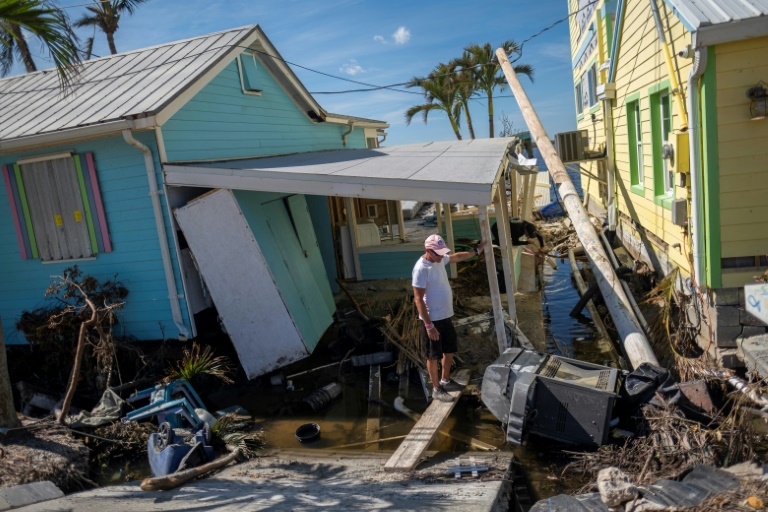
Authorities say at least 76 people —  more than 100 according to US television networks citing local officials — died in one of the most powerful storms to hit the United States.

The Category 4 hurricane flattened whole neighborhoods on the Sunshine State’s west coast, knocking out power for millions of people, with hundreds of thousands still waiting for electricity to be restored Tuesday, and then tore up into North Carolina.

For Biden, who visited hurricane-hit Puerto Rico on Monday, the Florida trip also has an inescapable political dimension, taking him into the stronghold of both DeSantis and Biden’s scandal-plagued predecessor in the White House, Donald Trump.

The Democrat, who says he wants to seek a second term despite already being the oldest man ever in the job at 79, could realistically end up facing a rematch with Trump in two years or a challenge from the up-and-coming DeSantis.

DeSantis has been a caustic critic, as he builds his brand of muscular right-wing politics in a bid to replace Trump as the biggest name in the Republican party. Biden has returned fire, painting DeSantis as part of what he says in an increasingly extreme right.

The hurricane, however, has prompted a truce, with phone calls between the two men and acknowledgement from DeSantis that the federal government was quick to provide assistance.

The visit is “above politics,” White House press secretary Karine Jean-Pierre said.

“There will be plenty of times, plenty of time to discuss differences between the president and the governor,” she said. “Now is not the time.”

– Disaster briefing –

Biden’s main goal, Jean-Pierre said, is to check that “the people of Florida have what they need.”

Biden is set to view ravaged areas in southwestern Florida from a helicopter, then receive a briefing from federal emergency management chief Deanne Criswell and DeSantis, among other officials.

Biden, accompanied by First Lady Jill Biden, will also meet with small business owners and local survivors of the storm, before making a televised address at Fishermans Wharf, Fort Myers.

He will “confirm his commitment to the people of Florida as they recover and rebuild,” Jean-Pierre said.

Biden’s visit to Puerto Rico covered similar ground, although there he was updated on recovery from Hurricane Fiona, which hit the island last month.

Again, Biden stressed the unity message, telling the territory — which often feels overlooked by the mainland and the federal government — that “all of America’s with you.”

The disagreements with DeSantis, however, are many and will likely resurface as soon as Floridians recommence a semblance of their previous lives.

DeSantis opposed Biden on many of his Covid-19 policies during the pandemic, accusing the president of overreach. He has likewise made himself the standard bearer of the conservative backlash to growing tolerance for LGBT issues — something Biden has championed.

Hong Kong 'Rick and Morty' fans spot protest codes in new episode

Eagle-eyed Hong Kong fans of the adult cartoon sitcom “Rick and Morty” have spotted oblique references to the city’s democracy movement in the latest episode of the cult sci-fi show.

“Final DeSmithation”, the fifth episode of the sixth season, aired on Sunday and featured a characteristically chaotic storyline involving an imprisoned alien making fortune cookies.

Towards the climax a series of numbers and letters flash up on the screen that, to the uninitiated, might look random. 

But the codes — GFHG19SDGM, 721DLLM and 19HK831 — were quickly seized on by Hong Kongers who spotted and explained their significance this week on Reddit and the local forum LIHKG.

The first is widely used as shorthand for the Cantonese protest chant “Liberate Hong Kong, revolution of our times” — a slogan that has since been declared illegal in the Chinese financial hub.

The other two reference significant dates in the 2019 pro-democracy protest movement — namely a July 21 attack on protesters by government supporters, and police beating democracy supporters inside a subway station on August 31. 

DLLM is also internet shorthand for the most popular curse in Hong Kong — an insult to the recipient’s mother — which was frequently shouted by police and protesters at each other.

“Thank you to the producers of Rick and Morty,” wrote one user under a post on LIHKG that had received nearly 5,000 upvotes.

Others fretted the episode might get removed in Hong Kong, which has embraced greater censorship since the 2019 protests. 

“If this receives exposure and the company kowtows, someone might lose their job,” one user wrote.

Created by Cartoon Network’s nighttime programming block Adult Swim, “Rick and Morty” has become a cult hit. 

The show centres around a selfish, alcoholic grandfather who takes his grandson on bizarre interdimensional adventures.

It is distributed internationally by Warner Brothers and is currently viewable in Hong Kong on HBO Go.

AFP contacted both Adult Swim and Warner Brothers for comment but did not receive a reply.

Hong Kong’s 2019 democracy protests raged for months but were eventually quelled, and China has responded with a widespread crackdown that has transformed the once-outspoken city.

Censorship laws have been strengthened, with multiple films and documentaries failing to get clearance although the city does not currently have the same level of restrictions as the Chinese mainland.

'Inevitable': Views on US bases shift in Japan's Okinawa

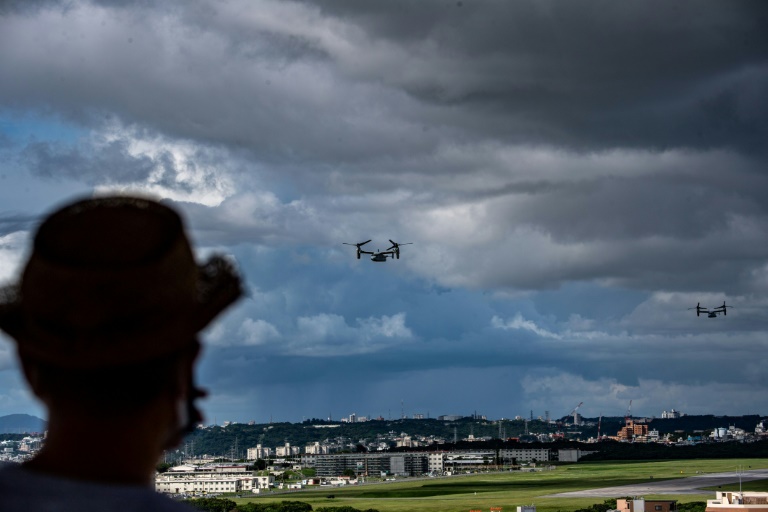
For decades, residents of Japan’s Okinawa have strongly opposed the US military bases that dot the region but a subtle shift is under way, driven by Chinese sabre-rattling and economic challenges.

The bases are often seen as a disproportionate burden for Japan’s sub-tropical southernmost region.

Okinawa comprises 0.6 percent of the Japanese archipelago’s territory but contains 70 percent of the land used for US bases, and over half the 50,000-strong troop presence.

Base-related crime, accidents and pollution are potent irritants for Okinawa’s 1.5 million residents.

But with Okinawa now a front line in the burgeoning confrontation between China and regional US allies, the bases are increasingly important for American and Japanese defence strategies.

“Okinawa has been given an excessive burden,” said 39-year-old Ryo Matayoshi, a municipal councillor in the Okinawan city of Ginowan.

But “if we think about the security of Japan and of east Asia, the presence of bases on Okinawa is inevitable in a way,” he told AFP.

“A lot of people of our generation recognise that reality.”

Japan has long been wary of China’s growing military, but the stakes have risen as Beijing hardens its rhetoric on Taiwan and riles Tokyo with incursions around disputed islands.

In August, Chinese drills in response to US House Speaker Nancy Pelosi’s trip to Taiwan spotlighted the issue, with several missiles landing in waters near Okinawa.

“China’s reaction to the Pelosi visit and the Russian invasion of Ukraine… have elevated the threat perception,” said Yoichiro Sato, a professor and foreign affairs expert at Ritsumeikan Asia Pacific University.

– Crime, noise, pollution –

Anti-base opposition is deeply rooted in Okinawa, which was an independent kingdom before Japanese annexation in the 19th century.

Tokyo used it as a buffer to slow US forces during World War II and over a quarter of the population died in the 1945 Battle of Okinawa.

US occupation only ended in 1972, under a mutual treaty that left American bases in place.

And persistent flight noise, pollution and crime have kept anti-base sentiment strong, according to 82-year-old politician and peace activist Suzuyo Takazato.

Between 1972 and 2020, Okinawa’s government recorded 582 violent crimes involving base residents, and the kidnap and rape of a 12-year-old girl by three US soldiers in 1995 drew more than 80,000 protesters.

The treaty governing US forces limits Japanese legal oversight — a persistent sore point, said Takazato.

“When a helicopter crashed in the Okinawa International University, US soldiers surrounded it and wouldn’t allow any inspection,” she said.

In recent years, opposition has crystallised around the planned relocation of Futenma air base in Ginowan, sometimes called the world’s most dangerous base because of its proximity to homes.

The government wants it shifted north to the less-populated Henoko, but base opponents want it removed altogether.

That is the position of governor Denny Tamaki, a prominent anti-base politician who was recently re-elected.

But at the local level, candidates backed by the pro-base Liberal Democratic Party, Japan’s ruling party, are gaining ground, including in the areas where Futenma and Henoko are located.

– ‘Economic realities’ –

The shift reflects security concerns, but also financial challenges, said councillor Matayoshi.

“More than just focusing on the question of the bases… people are concentrating on economic realities.”

Okinawa is Japan’s poorest prefecture and its tourist-dependent economy was hit hard by the pandemic.

Polling before Tamaki’s re-election found the economy was most voters’ top concern, and the share calling the bases their main priority went from 45 percent in 2014 to 32 percent this year.

The bases contributed just six percent to Okinawa’s GDP in 2017 but they bring lucrative government subsidies.

Conservatives woo Okinawan voters by telling them the LDP “brings those benefits from the mainland,” Sato said.

Politician Takazato points out that “three generations have grown up” with the US presence, which is now so established that some think “they have no choice but to accept it”.

But Matayoshi sees real ties being built, thanks to US military outreach and friendships between Okinawans and troops.

“We are becoming good neighbours,” he said.

Traditional anti-base sentiment makes it “hard in Okinawa to say publicly that you accept their presence”.

But “I think the opposition is gradually fading”.

Beaten and robbed: Vietnamese fisherman recounts China attacks

Vietnamese fisherman Nguyen Van Loc has been attacked by Chinese coast guard vessels so many times, he has lost count.

One summer day in 2020, while sailing through the Paracel Islands — resource-rich waters in the South China Sea claimed by both Hanoi and Beijing — his boat was rammed by a Chinese ship repeatedly until it capsized.

Thirteen of his crewmen were left clinging to a fishing basket in the water, desperately awaiting help.

Loc, 43, was beaten over and over, while his boat was stripped of their catch, tools and fishing gear.

Some years before that, two Chinese vessels with large machine guns — and crew armed with axes — slammed into Loc’s boat and followed them closely as they tried to make their way home.

Now swathes of the disputed sea – where he began fishing as a boy aged 15 — are no-go zones, while other parts are so overfished that he spends just an hour where he used to pass the whole day.

“We used to get scared,” Loc told AFP. “But now this is just our normal life.”

Vietnam’s ministry of foreign affairs asked Beijing to investigate the incident — widely reported in Vietnamese media — at the time, and other fishermen from Ly Son island told AFP of similar experiences of harassment at sea.

Since 2014, 98 Vietnamese boats have been destroyed by Chinese vessels, according to figures from the local fishing association on Ly Son, home to hundreds of fishermen and their families whose livelihoods depend on trips out to sea.

Beijing claims almost the entirety of the South China Sea, a waterway of immense strategic importance through which trillions of dollars worth of trade transits every year.

There are rival claims to part of the sea from neighbours including Vietnam, but China has become increasingly aggressive in asserting itself in the area under President Xi Jinping, who is expected to secure a record third consecutive term this month.

– Flags shot down –

Close to the water’s edge, where a line of women wearing traditional conical hats sorts the day’s catch, lies Ly Son’s ship repair yard. But it is ill-equipped to handle the hefty damage inflicted on the boats.

Many are forced to sail to the mainland, putting them out of action for days.

Beijing gained control of the Paracel Islands in 1974 after clashes with the South Vietnamese Navy that left 75 Vietnamese troops dead.

Today, Chinese coast guard vessels shoot down the Vietnamese flags that flutter over the cabin of each fishing boat, according to Ly Son’s fishing association, and mostly the crew have no choice but to sail away, fearful of the consequences if they stand their ground. 

Over the last three decades, 120 fishermen from Ly Son have died due to attacks by Chinese vessels or because boats from China refused to come to their aid during poor weather, the local fishing association said.

“Our vessels are small,” said Loc. “If we are chased, then we run.”

But Loc, like many of his fellow fishermen, remains committed to the waters, where his grandfather and father fished before him. 

“This fishing ground belonged to our ancestors, we will never give it up.”

OPEC+ expected to slash oil output

Major oil producers led by Saudi Arabia and Russia were set to meet Wednesday as reports said they were mulling an output cut of up to two million barrels per day in a bid to prop up slumping prices.

If implemented, it would be the first such major cut since a landmark curb on production at the start of the Covid pandemic.

Energy prices soared after Russia invaded Ukraine earlier this year, pushing inflation to decades-high levels that have put pressure on economies across the world.

But they have fallen in recent months on concerns over dwindling demand and a slowdown in the global economy.

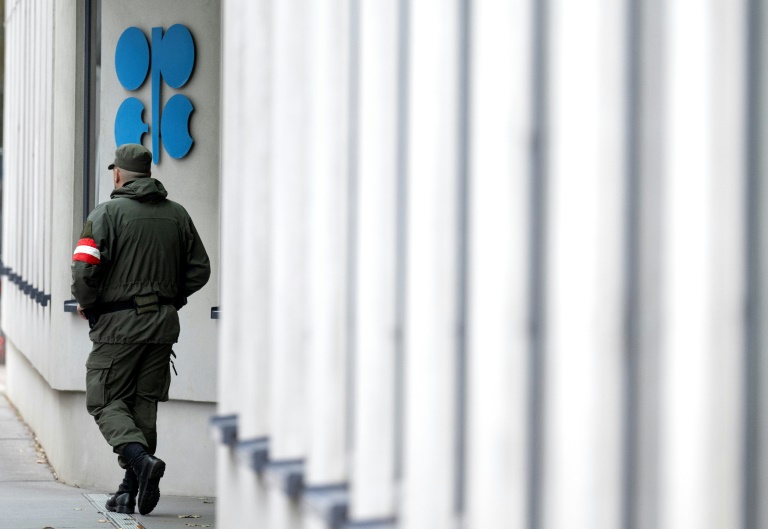
The 13 members of the Organization of the Petroleum Exporting Countries (OPEC), led by Saudi Arabia, and their 10 allies headed by Russia will hold their first in-person meeting since March 2020 at the group’s headquarters in Vienna.

Collectively known as OPEC+, the alliance drastically slashed output by almost 10 million barrels per day (bpd) in April 2020 to reverse a massive drop in crude prices caused by Covid lockdowns.

OPEC+ began to raise production last year after the market improved. Output returned to pre-pandemic levels this year, but only on paper as some members have struggled to meet their quotas.

The group agreed last month on a small, symbolic cut of 100,000 bpd from October, the first in more than a year.

– ‘Sizeable cut’? –

Most oil ministers were reluctant to divulge information on possible output cuts as they started to arrive in Vienna.

UAE Energy Minister Suhail al-Mazrouei said Tuesday that the group was still reviewing market data.

“Let’s wait… We will have to listen to the technical team,” he told journalists.

But Bloomberg said officials were discussing the removal of about two million bpd out of the market from November, twice as much as earlier predictions.

“A sizeable cut now looks on the cards, the question is whether it will be large enough to offset the demand destruction caused by the impending economic downturn,” said Craig Erlam, an analyst at trading platform OANDA.

After soaring close to $140 per barrel in the aftermath of Russia’s invasion of Ukraine in late February, oil prices have dropped below the $90 mark.

According to the UBS bank, a cut of at least 500,000 bpd would be necessary to stop the price plunge.

In anticipation of Wednesday’s meeting, oil prices jumped further on Tuesday, with Brent above $90 and WTI around $86, though still far below their March peak.

– Tighter taps ‘unwelcome’ –

Consumer countries have pushed for OPEC+ to open taps more widely to bring down prices — calls that the group has largely ignored.

US President Joe Biden made a controversial trip to Saudi Arabia in July in part to convince the kingdom to loosen the production taps. The trip saw Biden meet Crown Prince Mohammed bin Salman despite his promise to make Riyadh a “pariah” following the 2018 killing of journalist Jamal Khashoggi.

“Any cut would be unwelcome as it’s not the right time for cutting oil supplies to push prices higher,” said Ipek Ozkardeskaya, a Swissquote analyst.

“The global energy crisis, soaring inflation and looming recession already worry the Western leaders,” she said ahead of the Vienna gathering.

“Knowing that Russia is willing to cut output, the move could also be perceived as another escalation of the geopolitical tensions” between Moscow and the West.

Observers have cast doubt on how much more OPEC+ could possibly pump, with some of its members already struggling to meet quotas.

Bjarne Schieldrop, chief commodities analyst at SEB research group, predicted it would be “very easy for the group to implement cuts given that most members are stretched to the limit of what they can produce”.

He said Saudi Arabia was currently producing 11 million bpd.

“It hasn’t maintained such a high production more than twice in history and then only for 1-2 months,” he said.

Energy crisis feared by Europe long a reality in Iraq

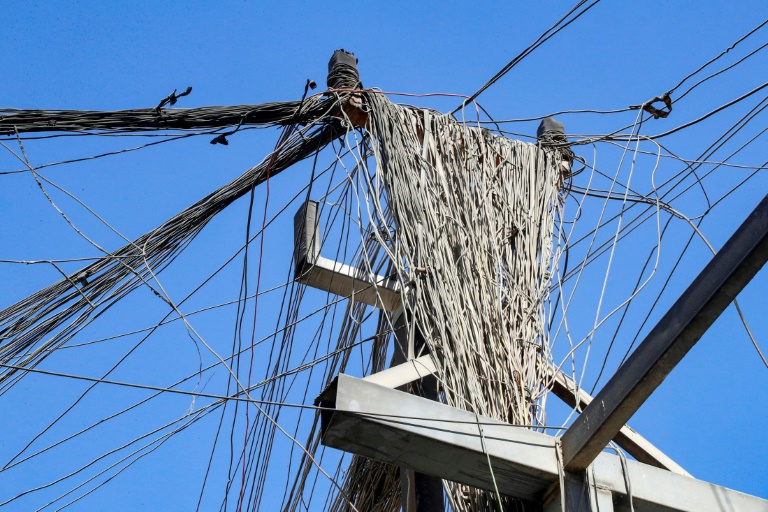
Europe may fear an energy crisis over the coming winter, but for Iraqis an unstable power supply and frequent blackouts have been a reality during decades of war and turmoil.

The Middle Eastern country is rich in oil, but endemic corruption and devastating conflict have taken a heavy toll on its infrastructure and forced most of its 42 million people to adapt. 

The noise of privately owned generators can be heard all over the country as households and businesses try to make up for supply shortfalls from the national electricity company.

“Without generators, Iraq would go completely dark,” Mohammed Jabr, a retired public servant, told AFP in his yard in Sadr City, a working-class district of the capital Baghdad.

Ensuring a stable power supply, he said, requires resourcefulness and money when the national grid can go down for four to 10 hours a day in peak summer consumption, according to electricity ministry data.

Generators “provide the electricity we need for the television, fridge, air cooler”, said the 62-year-old former accountant.

He pays $50 a month in generator subscription fees — but even that isn’t always enough to keep a whole house running.

“A client may have to turn the fridge off to keep the air conditioner on,” explained Khaled al-Shablawi, who has worked for a generator service for 13 years.

– ‘Plunged into darkness’ –

Soaring energy prices fuelled by Russia’s war in Ukraine have forced a new reality upon European nations, where people are asked to limit the electricity they use for heating, lighting and cooking.

Some cities keep street lights on for shorter lengths of time, and in Paris, the lights illuminating the Eiffel Tower are switched off an hour earlier now to save energy.

But to Jabr, such a step “is normal”. 

“When there’s a technical problem, the whole area could be left without power for a day or two before they fix it,” he said.

Jabr recalled how immediately after the 2003 US-led invasion that toppled longtime dictator Saddam Hussein, “houses were plunged into darkness” after fighting destroyed infrastructure.

“There was very little electricity, only two or three hours” a day, he said. “People had their own generators. They would buy fuel and it would last a day or two.”

In Iraq’s long summer months, when temperatures can peak around 50 degrees Celsius (122 degrees Fahrenheit) and air-conditioner use surges, overloaded generator providers hike up prices.

Some regions were deprived of power altogether in the summer of 2021, triggering sporadic street protests by frustrated residents.

– Europe ‘destabilised’ –

Despite its oil wealth, the country relies heavily on energy supply from neighbouring Iran. 

With its mighty Tigris and Euphrates rivers, Iraq has some hydro-electric power but no nuclear plants, and is just beginning to explore renewable energy options such as solar panels.

In a bid to overcome the common blackouts, Baghdad has nonetheless moved to increase domestic power production. 

It now generates more than 24,000 megawatts per day, said electricity ministry spokesman Ahmed Moussa.

To secure stable nationwide power supply, however, 32,000 megawatts would be needed daily, he said.

For now, the national grid provides most regions with 14-20 hours of electricity a day in summer, Moussa added.

In one Sadr City avenue, private generators line the street, each feeding electricity to some 300 homes and a similar number of shops.

Ali al-Aaraji, who owns a private college for around 300 students, decried “astronomical” generator costs, which he estimated at $600 a month.

“Electricity is a constant problem for Iraqis,” said Aaraji, 58, pinning the blame on “the American occupation” of years past.

“Iraqis have managed to put up with the situation for three decades,” he added, questioning how Europe would cope with its looming power problem.

“Energy is the source of economic prosperity,” Aaraji said. 

“Europe is now destabilised. It’s going to impact their economy, industry and commerce. They’ll go backwards.”

Equities extend rally on rate hopes, traders await OPEC decision

Asian investors joined their Wall Street and European counterparts in an equity buying spree Wednesday as more data pointing to weakness in the US economy further fanned hopes the Federal Reserve could temper its rate hike campaign.

The much-needed dose of optimism has also put pressure on the dollar, pushing it down against most of its peers and adding to the upward march in oil prices fuelled by expectations OPEC will announce a massive output cut later in the day.

The mood on trading floors was lightened Monday by data showing US factory activity slowed more than forecast in September to a two-year low, suggesting the Fed’s rate hike campaign against decades-high inflation could be kicking in.

That was followed Tuesday by news that US job openings had also dropped by almost 10 percent in August, its fastest fall since April 2020.

“Rate hikes are really beginning to take a bite out of the US employment numbers,” said Matt Simpson, of City Index.

He added that the figures put more emphasis on jobs reports out later in the week, with weak readings likely to provide more support to stocks as investors bet the Fed will temper its tightening campaign.

However, officials at the central bank continue to flag their determination to crush inflation, even if that means sparking a recession.

“For the market to continue higher, the jobs data will have to be in-line with, or short of expectations,” said Lindsey Bell, of Ally Financial.

The market is currently anticipating a “Goldilocks” labour market report that’s “not too hot and not too cold”.

All three main indexes on Wall Street rallied Tuesday, with the S&P 500 and Nasdaq up more than three percent, while European markets also thundered higher.

And Asia continued the run, with Hong Kong rocketing more than five percent as investors there returned from a one-day break, while there were also healthy performances in Tokyo, Singapore, Sydney, Taipei, Jakarta and Manila.

The gains were also helped by a smaller-than-expected rate hike by the Reserve Bank of Australia.

That came after the Bank of England last week pledged to pump billions of dollars into supporting financial markets after they were hammered by the UK government’s big-borrowing mini-budget.

The BoE pivot “seems to have convinced investors that the Fed now must give more weight to financial stability, which means that the current monetary tightening cycle might end sooner rather than later”, Ed Yardeni, president of Yardeni Research, said.

Focus is now on the meeting later Wednesday of OPEC and other major producers, who are reportedly considering a two million barrels cut in output — double what had earlier been flagged — after prices plunged to their January lows owing to recession concerns.

Both main contracts have bounced this week on talk of the reductions, while the weaker dollar makes the commodity cheaper for buyers using other currencies.

While WTI and Brent dipped slightly, analysts said they may have more road to run up as supplies tighten and the dollar softens.

– Key figures around 0230 GMT –

Tokyo – Nikkei 225: UP 0.4 percent at 27,085.97 (break)

Hong Kong – Hang Seng Index: UP 5.2 percent at 17,960.10

Shanghai – Composite: Closed for a holiday

Pound/dollar: DOWN at $1.1430 from $1.1477 on Tuesday

Euro/dollar: DOWN at $0.9961 from $0.9992

Euro/pound: UP at 87.26 pence from 87.03 pence

Dollar/yen: UP at 144.26 yen from 144.09 yen

West Texas Intermediate: DOWN 0.5 percent at $86.10 per barrel

Brent North Sea crude: DOWN 0.4 percent at $91.44 per barrel

New York – Dow: UP 2.8 percent at 30,316.32 (close)

London – FTSE 100: UP 2.6 percent at 7,086.46 (close)

— Bloomberg News contributed to this story —

Close Bitnami banner
Bitnami