US Business

Stocks and oil drop as dollar gains on recession, Ukraine fears

Equities and crude prices fell while the dollar held at multi-year highs Wednesday as recession fears mount and traders grow increasingly concerned about tensions between Russia and the West.

Investors are keeping a close eye on London, after new finance minister Kwasi Kwarteng’s tax-cutting last week sent shock waves through markets, pushing the pound to a record low and leading to dire warnings for Britain’s economy.

While Asia saw small gains Tuesday, New York and Europe ended mostly in the red again, with Wall Street jolted by data showing a surprise improvement in US consumer confidence — likely because of a dip in petrol prices — and a jump in home sales.

The figures pointed to resilience in the world’s top economy despite three successive bumper Federal Reserve rate hikes — and expectations for another in November — as it tries to tame four-decade-high inflation.

Several Fed officials have lined up this week to reassert their determination to keep hiking until prices are brought under control, even at the cost of a recession.

Observers are now betting that borrowing costs will top out at around 4.75 percent next year, and some policymakers have suggested they could remain elevated for some time.

The prospect of such tight monetary policy has battered equities, as US 10-year Treasury yields — a gauge of future rates — hit four percent for the first time since 2010.

The Dow and S&P 500 ended down Tuesday, though the Nasdaq enjoyed a slight uptick. 

Asia resumed its downtrend Wednesday, with Hong Kong down more than three percent, while Seoul, Taipei and Manila sank more than two percent. Tokyo, Shanghai and Singapore were off more than one percent.

There were also losses in Sydney, Wellington, Bangkok and Mumbai, while London, Paris and Frankfurt were also sharply lower.

– Russia nuclear warning –

The dollar remains the go-to unit as the Fed leads the way in central bank tightening.

“The fact we have such a strong increase in US yields is attracting flows into the US dollar,” said Nannette Hechler-Fayd’herbe, of Credit Suisse Group AG.

“As long as monetary and fiscal policy worldwide are really not coming to strengthen their own currencies, we should be anticipating a very strong dollar.”

The greenback rose against sterling, with the British currency battered by concerns that Kwarteng’s spending plan would ramp up borrowing just as the Bank of England was trying to hike rates to fight inflation, causing consternation among many observers.

The dollar was also approaching 145 yen, having sunk from a high close to 146 yen after the Japanese government intervened last week to support its currency. 

Sentiment was also rattled by worries about developments in Ukraine, after Kremlin-installed authorities in four regions under Russian control claimed victory in annexation votes, with Moscow warning it could use nuclear weapons to defend the territories.

Ukraine and its allies have denounced the so-called referendums as a sham, saying the West would never recognise the results.

In response, Kyiv on Wednesday called for the West to “significantly” increase its military aid to Ukraine.  

But former Russian leader Dmitry Medvedev — an ally of President Vladimir Putin and now deputy chairman of the country’s security council — issued a stark warning that Moscow was ready to act decisively.

“I want to remind you — the deaf who hear only themselves: Russia has the right to use nuclear weapons if necessary,” he said on social media.

On crude markets, both main contracts were down more than two percent on recession worries and as Bloomberg quoted sources saying that US inventories increased more than four million barrels last week.

The drop comes despite a report that Moscow is calling on OPEC and other major groups to slash output by a million barrels a day when they meet next week.

“With Brent trading only a little above $80 and WTI below, you have to wonder how much more OPEC+ will tolerate, and the size of (any) output cut they may be considering next week in light of the new economic outlook and price,” said OANDA’s Craig Erlam.

– Key figures at around 0810 GMT –

Tokyo – Nikkei 225: DOWN 1.5 percent at 26,173.98 (close)

Hong Kong – Hang Seng Index: DOWN 3.4 percent at 17,250.88 (close)

Shanghai – Composite: DOWN 1.6 percent at 3,045.07 (close)

London – FTSE 100: DOWN 2.0 percent at 6,845.82

Pound/dollar: DOWN at $1.0680 from $1.0730 on Tuesday

Euro/dollar: DOWN at $0.9562 from $0.9595

Euro/pound: UP at 89.50 pence from 89.39 pence 

Dollar/yen: DOWN at 144.60 yen from 144.81 yen

West Texas Intermediate: DOWN 2.2 percent at $76.76 per barrel

Brent North Sea crude: DOWN 2.1 percent at $84.50 per barrel

New York – Dow: DOWN 0.4 percent at 29,134.99 (close)

Stocks and oil drop as dollar gains on recession, Ukraine fears

Equities and crude prices fell while the dollar held at multi-year highs Wednesday as recession fears mount and traders grow increasingly concerned about tensions between Russia and the West.

Investors are keeping a close eye on London, after new finance minister Kwasi Kwarteng’s tax-cutting last week sent shock waves through markets, pushing the pound to a record low and leading to dire warnings for Britain’s economy.

While Asia saw small gains Tuesday, New York and Europe ended mostly in the red again, with Wall Street jolted by data showing a surprise improvement in US consumer confidence — likely because of a dip in petrol prices — and a jump in home sales.

The figures pointed to resilience in the world’s top economy despite three successive bumper Federal Reserve rate hikes — and expectations for another in November — as it tries to tame four-decade-high inflation.

Several Fed officials have lined up this week to reassert their determination to keep hiking until prices are brought under control, even at the cost of a recession.

Observers are now betting that borrowing costs will top out at around 4.75 percent next year, and some policymakers have suggested they could remain elevated for some time.

The prospect of such tight monetary policy has battered equities, as US 10-year Treasury yields — a gauge of future rates — hit four percent for the first time since 2010.

The Dow and S&P 500 ended down Tuesday, though the Nasdaq enjoyed a slight uptick. 

Asia resumed its downtrend Wednesday, with Hong Kong down more than three percent, while Seoul, Taipei and Manila sank more than two percent. Tokyo, Shanghai and Singapore were off more than one percent.

There were also losses in Sydney, Wellington, Bangkok and Mumbai, while London, Paris and Frankfurt were also sharply lower.

– Russia nuclear warning –

The dollar remains the go-to unit as the Fed leads the way in central bank tightening.

“The fact we have such a strong increase in US yields is attracting flows into the US dollar,” said Nannette Hechler-Fayd’herbe, of Credit Suisse Group AG.

“As long as monetary and fiscal policy worldwide are really not coming to strengthen their own currencies, we should be anticipating a very strong dollar.”

The greenback rose against sterling, with the British currency battered by concerns that Kwarteng’s spending plan would ramp up borrowing just as the Bank of England was trying to hike rates to fight inflation, causing consternation among many observers.

The dollar was also approaching 145 yen, having sunk from a high close to 146 yen after the Japanese government intervened last week to support its currency. 

Sentiment was also rattled by worries about developments in Ukraine, after Kremlin-installed authorities in four regions under Russian control claimed victory in annexation votes, with Moscow warning it could use nuclear weapons to defend the territories.

Ukraine and its allies have denounced the so-called referendums as a sham, saying the West would never recognise the results.

In response, Kyiv on Wednesday called for the West to “significantly” increase its military aid to Ukraine.  

But former Russian leader Dmitry Medvedev — an ally of President Vladimir Putin and now deputy chairman of the country’s security council — issued a stark warning that Moscow was ready to act decisively.

“I want to remind you — the deaf who hear only themselves: Russia has the right to use nuclear weapons if necessary,” he said on social media.

On crude markets, both main contracts were down more than two percent on recession worries and as Bloomberg quoted sources saying that US inventories increased more than four million barrels last week.

The drop comes despite a report that Moscow is calling on OPEC and other major groups to slash output by a million barrels a day when they meet next week.

“With Brent trading only a little above $80 and WTI below, you have to wonder how much more OPEC+ will tolerate, and the size of (any) output cut they may be considering next week in light of the new economic outlook and price,” said OANDA’s Craig Erlam.

– Key figures at around 0810 GMT –

Tokyo – Nikkei 225: DOWN 1.5 percent at 26,173.98 (close)

Hong Kong – Hang Seng Index: DOWN 3.4 percent at 17,250.88 (close)

Shanghai – Composite: DOWN 1.6 percent at 3,045.07 (close)

London – FTSE 100: DOWN 2.0 percent at 6,845.82

Pound/dollar: DOWN at $1.0680 from $1.0730 on Tuesday

Euro/dollar: DOWN at $0.9562 from $0.9595

Euro/pound: UP at 89.50 pence from 89.39 pence 

Dollar/yen: DOWN at 144.60 yen from 144.81 yen

West Texas Intermediate: DOWN 2.2 percent at $76.76 per barrel

Brent North Sea crude: DOWN 2.1 percent at $84.50 per barrel

New York – Dow: DOWN 0.4 percent at 29,134.99 (close)

US will operate 'undaunted, unafraid' in Taiwan Strait: Harris

Washington will operate “undaunted and unafraid” throughout Asia, including the Taiwan Strait, US Vice President Kamala Harris said Wednesday as she addressed American troops in Japan.

Speaking after attending Tuesday’s funeral for assassinated former Japanese leader Shinzo Abe, Harris accused China of “disturbing behaviour” in the East China Sea and South China Sea and “provocations across the Taiwan Strait”.

“The United States believes that peace and stability in the Taiwan Strait is an essential feature of a free and open Indo-Pacific,” she said, using Washington’s term for the Asia-Pacific region.

“We will continue to fly, sail and operate, undaunted and unafraid, wherever and whenever international law allows,” she added.

Beijing claims both democratic Taiwan and the narrow body of water separating the island from mainland China — one of the world’s busiest shipping channels.

The United States has long used “freedom of navigation” passages through the Taiwan Strait to push back against Chinese claims, and Western allies have increasingly joined these operations.

Harris restated Washington’s longstanding opposition to any unilateral attempt by Beijing to take control of Taiwan and pledged ongoing US support for the island’s self-defence.

In recent months, US President Joe Biden has said American troops would come to Taiwan’s aid in the event of a Chinese invasion, despite Washington’s official policy of “strategic ambiguity” on the matter.

The White House has said there is no change to that policy and Harris did not address Biden’s comments in her remarks to troops on the USS Howard at the Yokosuka Naval Base outside Tokyo.

She also slammed Russia for “attempting to annex the territory of another sovereign nation” in a reference to votes organised by Moscow in occupied areas of Ukraine.

And she accused North Korea of threatening regional stability with fresh missile launches.

Washington “does not seek conflict with China”, Harris said, but “we anticipate continued aggressive behaviour from Beijing as it attempts to unilaterally undermine the status quo”.

Harris leaves Japan later Wednesday for South Korea, where she will visit the Demilitarized Zone.

China's offshore yuan hits record low against dollar

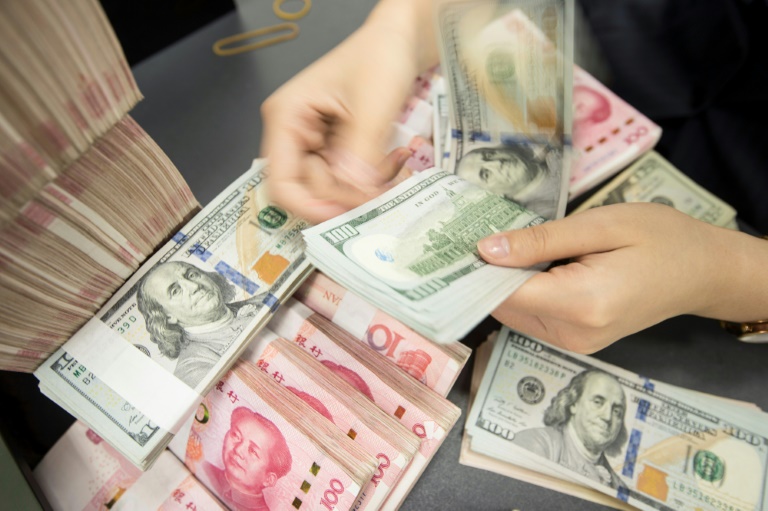
China’s yuan hit a record low against the surging US dollar in offshore trading Wednesday, despite recent efforts by the country’s central bank to shore up the currency.

The offshore yuan — which is circulated outside mainland China and is more freely traded than currency in the domestic market — fell to 7.2386 against the dollar on Wednesday, according to Bloomberg. 

That is its weakest level since clearing banks in Hong Kong were given the go-ahead to open renminbi accounts freely in 2010.

The US Federal Reserve’s increasingly hawkish tone and expectations of further interest rate hikes to fight soaring inflation have seen investors pile into the dollar, sending it to record or multi-decade peaks against other major currencies.

The onshore yuan, which is not freely convertible and limited to a two percent range on either side of a central parity rate set each day, also extended its slump to a 14-year low of 7.2297 per dollar Wednesday.

The depreciation comes despite recent efforts by the Chinese central bank to protect the currency’s value without directly intervening, including a decision to raise the foreign exchange risk reserve ratio.

The move, announced by the People’s Bank of China on Monday, effectively makes it more expensive for financial institutions to sell yuan and buy dollars.

The Chinese economy has been hammered in recent months by Covid-related curbs, extreme weather, and a property market slump.

The sharp slowdown in economic growth had led officials to announce a series of easing measures in recent months to provide support, but putting pressure on the yuan as the US Federal Reserve continues to tighten policy.

But the yuan’s depreciation could mean “the central bank will have to at least pay more attention than in the past” to balancing domestic stimulus and its foreign exchange policies, Tianfeng Securities analysts wrote in a note Tuesday. 

China's offshore yuan hits record low against dollar

China’s yuan hit a record low against the surging US dollar in offshore trading Wednesday, despite recent efforts by the country’s central bank to shore up the currency.

The offshore yuan — which is circulated outside mainland China and is more freely traded than currency in the domestic market — fell to 7.2386 against the dollar on Wednesday, according to Bloomberg. 

That is its weakest level since clearing banks in Hong Kong were given the go-ahead to open renminbi accounts freely in 2010.

The US Federal Reserve’s increasingly hawkish tone and expectations of further interest rate hikes to fight soaring inflation have seen investors pile into the dollar, sending it to record or multi-decade peaks against other major currencies.

The onshore yuan, which is not freely convertible and limited to a two percent range on either side of a central parity rate set each day, also extended its slump to a 14-year low of 7.2297 per dollar Wednesday.

The depreciation comes despite recent efforts by the Chinese central bank to protect the currency’s value without directly intervening, including a decision to raise the foreign exchange risk reserve ratio.

The move, announced by the People’s Bank of China on Monday, effectively makes it more expensive for financial institutions to sell yuan and buy dollars.

The Chinese economy has been hammered in recent months by Covid-related curbs, extreme weather, and a property market slump.

The sharp slowdown in economic growth had led officials to announce a series of easing measures in recent months to provide support, but putting pressure on the yuan as the US Federal Reserve continues to tighten policy.

But the yuan’s depreciation could mean “the central bank will have to at least pay more attention than in the past” to balancing domestic stimulus and its foreign exchange policies, Tianfeng Securities analysts wrote in a note Tuesday. 

Cyprus drivers fill up in breakaway north as prices soar

The queue of Greek Cypriot motorists waiting to cross a checkpoint into breakaway northern Cyprus is much longer than it used to be — a plummeting Turkish lira means cheaper petrol prices there.

For many Greek Cypriots, buying goods in the north of the divided Mediterranean island is tantamount to treason.

Turkish troops invaded in 1974 after a Greek-engineered coup seeking to unite the island with Greece, and tens of thousands of soldiers from mainland Turkey are still posted in its northern third.

The self-proclaimed Turkish Republic of Northern Cyprus was unilaterally declared in 1983 and is recognised by Turkey alone.

But now more and more people are giving in to temptation and driving north to buy cheaper fuel from the Turkish Cypriots.

“My salary is only 700 euros ($680)” monthly, said Fanourios Michail, a 60-year-old carpenter waiting at a Nicosia crossing. “I save about 200 euros a month by refuelling in the north.”

The internationally recognised Republic of Cyprus — the European Union’s easternmost member — uses the euro.

But the Turkish Cypriots use the lira, which has sunk to historic lows this year. And the north also has much lower taxes on fuel.

– Checkpoint congestion –

According to police figures collated between January and August this year and compared with 2021, the number of cars going north through one of the island’s vehicle crossings has more than tripled from 197,230 to 601,749.

Normally, moving between the two sides should not take more than a few minutes.

Drivers present their passport or ID card to police on the Greek Cypriot side, and then drive a few dozen metres (yards) to do the same with Turkish Cypriot police, who also verify that the car has valid insurance for the north.

But for the past several months, congestion at the checkpoints means it is now more common to have to wait half an hour to cross the narrow UN-controlled buffer zone.

“Half of my customers are now Greek Cypriots, representing half of my turnover,” said Turkish Cypriot Mehmet Tel, who runs a petrol station about 500 metres from one of Nicosia’s crossing points.

A litre of fuel in the north is about 25 percent cheaper than in the south.

“With four kids and a relatively low salary, I just can’t make ends meet otherwise,” admitted a 45-year-old Greek Cypriot woman who asked not to be identified.

– Lost tax revenues –

Christodoulos Christodoulou, spokesman for the association of petrol station owners in the south, estimated their annual losses at seven million euros.

The rush for cheaper fuel in the north also costs the republic 80 million euros in lost tax revenues every year, he said.

“We want this illegal activity stopped.” 

He accused the government of failing to enforce regulations put in place in 2004 when Cyprus joined the EU to regulate the transfer of goods across the Green Line separating the two sides of the island.

This is not a government-recognised border, but Christodoulou said that the 2004 EU regulations ban the transfer of fuel from the Turkish-held north into the south.

Regular checks at crossing points are carried out “to reduce the illegal movement of fuel, protect tax revenues and curb the impact on legitimate fuel suppliers”, government spokesman Marios Pelekanos told AFP.

Cyprus government regulations cap the value of goods transferred by individuals at 260 euros a day, and some products, such as tobacco and alcohol, face strict limitations.

Christodoulou told reporters that his association has not ruled out contacting Frontex, the EU agency that regulates borders, despite the government not recognising the Green Line as such.

Hurricane Ian leaves Cuba without power, takes aim at Florida

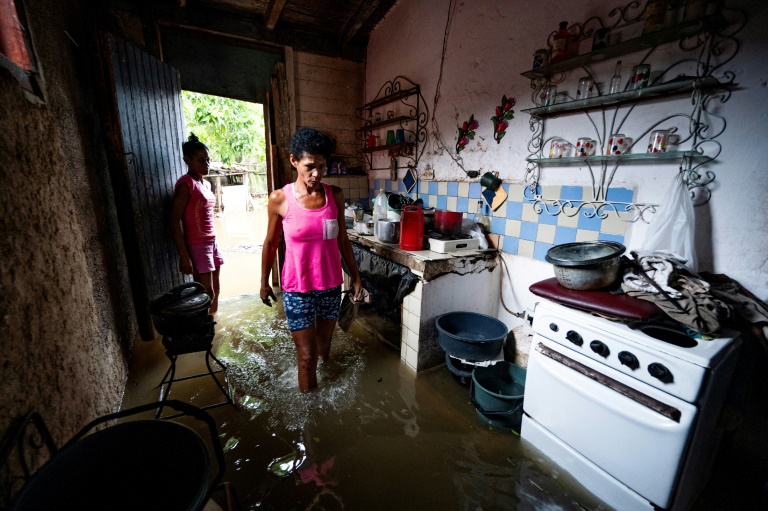
Powerful Hurricane Ian left a trail of destruction and caused a widespread blackout in Cuba on Tuesday, while Florida residents braced for a direct hit from the “extremely dangerous” storm that is already pummeling the US state with high winds.

Ian hit Cuba’s western regions for more than five hours early Tuesday morning, before moving out over the warm waters of the Gulf of Mexico, the Insmet meteorological institute said.

The storm damaged Cuba’s power network and plunged the island into darkness, leaving it “without electrical service,” state electricity company Union Electrica said on Twitter.

Only the few people with gasoline-powered generators had access to electricity on the island of more than 11 million people. Others had to make do with flashlights or candles at home, and lit their way with cell phones as they walked the streets.

In the western city of Pinar del Rio, AFP footage showed downed power lines, flooded streets and a scattering of damaged rooftops.

“Desolation and destruction. These are terrifying hours. Nothing is left here,” a 70-year-old resident of the city was quoted as saying in a social media post by his journalist son, Lazaro Manuel Alonso.

About 40,000 people were evacuated across Pinar del Rio province, which bore the brunt of the storm, local authorities said.

The US National Hurricane Center (NHC) said it expects Ian to gain strength before hitting the west coast of Florida on Wednesday as an “extremely dangerous” major hurricane.

Calls to heed evacuation warnings were echoed from local Florida officials on up to US President Joe Biden, who said Ian “could be a very severe hurricane, life-threatening and devastating in its impact.”

In its latest bulletin, the NHC said to be prepared for “life-threatening storm surge, catastrophic winds and flooding” in the Florida peninsula.

Tropical-storm-force winds are already battering the Florida Keys, the chain of islands off the southern tip of the state’s mainland, the NHC said.

– ‘Apocalyptic’ –

In Cuba, authorities are just beginning to assess the damage, but residents described “destruction” and posted images on social media of flooded streets and felled trees.

At the time of impact, the NHC reported Ian’s maximum wind speeds at 125 miles (205 kilometers) per hour, making it a Category 3 storm on the Saffir-Simpson scale. Wind speeds have since dropped slightly to 120 miles per hour.

No deaths or injuries have yet been reported.

In Consolacion del Sur, southwest of Havana, Caridad Fernandez, 65, said her roof was seriously damaged and water came through her front door.

“Everything we have is damaged,” she said. “But we’ll get through this, we’ll just keep moving forwards.”

In San Juan y Martinez, a growing hub for Cuba’s vital cigar industry, “it was apocalyptic, a real disaster,” Hirochi Robaina, from the Robaina tobacco plantation, said on Facebook.

– ‘Life and death’ –

In Florida, Governor Ron DeSantis said 2.5 million people were under evacuation orders as officials scrambled to prepare for the storm’s landfall.

DeSantis warned that although Ian’s exact path was still uncertain “the impacts will be far far broader.”

“When you have five to ten feet (1.5 to 3 meters) of storm surge that is not something that you want to be a part of. Mother Nature is a very fearsome adversary,” DeSantis said.

White House Press Secretary Karine Jean-Pierre said Biden spoke with DeSantis — a potential 2024 election challenger — on Tuesday evening to discuss preparations for the storm.

The NHC warned that “widespread catastrophic flash, urban, and river flooding is expected across central and west Florida beginning midweek.”

Thirty-year-old Chelsea Thompson, who was helping her parents board up their home in a mandatory evacuation zone southwest of Tampa, said that “the closer it gets, obviously with the unknown, your anxiety gets a little higher.” 

The Pentagon said 3,200 national guardsmen had been called up in Florida, with an additional 1,800 coming later.

Authorities in several municipalities, including Miami, Fort Lauderdale and Tampa, were distributing free sandbags to help residents protect their homes from flooding.

And Tampa International Airport suspended operations from Tuesday at 5:00 pm (2100 GMT).

Biden has preemptively approved emergency aid in Florida through the Federal Emergency Management Agency (FEMA), while even NASA on the state’s east coast took precautions, rolling back its massive Moon rocket into a storage hanger for protection.

Like DeSantis, FEMA administrator Deanne Criswell highlighted the danger of storm surge, saying it was the agency’s “biggest concern.”

“If people are told to evacuate by their local officials, please listen to them. The decision you choose to make may be the difference between life and death,” she said.

The Caribbean and parts of eastern Canada are still counting the cost of powerful storm Fiona, which tore through last week, claiming several lives.

Half a million residents in the US territory of Puerto Rico were still without power, according to a tracking website.

Stocks and oil drop as dollar gains on recession, Ukraine fears

Equities and crude prices fell, while the dollar held at multi-year highs Wednesday as recession fears mount, while traders are also growing increasingly concerned about tensions with Russia after it declared victory in controversial Ukraine annexation polls.

Investors are also keeping a close eye on London, after new finance minister Kwasi Kwarteng’s tax-cutting mini-budget last week sent shock waves through markets, pushing the pound to a record low and leading to dire warnings for Britain’s economy.

While Asia saw small gains Tuesday, New York and Europe ended mostly in the red again, with Wall Street jolted by data showing a surprise improvement in US consumer confidence — likely because of a dip in petrol prices — and a jump in home sales.

The figures pointed to resilience in the world’s top economy despite three successive bumper Federal Reserve rate hikes — and expectations for another in November — as it tries to tame four-decade-high inflation.

Several Fed officials have lined up this week to reassert their determination to keep hiking until prices are brought under control, even at the cost of a recession.

Observers are now betting that borrowing costs will top out at around 4.75 percent next year, and some policymakers have suggested they could remain elevated for some time.

The prospect of such tight monetary policy has battered equities, as US 10-year Treasury yields — a gauge of future rates — approach four percent for the first time since 2010.

The Dow and S&P 500 ended down Tuesday, though the Nasdaq enjoyed a slight uptick. 

Asia resumed its downtrend, with Tokyo, Hong Kong and Seoul all down more than two percent, while Shanghai, Sydney, Singapore, Wellington, Taipei, Manila and Jakarta were also off.

– Russia nuclear warning –

And the dollar remains the go-to unit as the Fed leads the way in central bank tightening.

“The fact we have such a strong increase in US yields is attracting flows into the US dollar,” said Nannette Hechler-Fayd’herbe, of Credit Suisse Group AG.

“As long as monetary and fiscal policy worldwide are really not coming to strengthen their own currencies, we should be anticipating a very strong dollar.”

The greenback rose against sterling, with the British currency battered by concerns that Kwarteng’s spending plan would ramp up borrowing just as the Band of England was trying to hike rates to fight inflation, causing consternation among many observers.

The dollar was also approaching 145 yen, having sunk from a high close to 146 yen after the Japanese government intervened last week to support its currency. 

Sentiment was also rattled by worries about developments in Ukraine, after Kremlin-installed authorities in four regions under Russian control claimed victory in annexation votes, with Moscow warning it could use nuclear weapons to defend the territories.

Ukraine and its allies have denounced the so-called referendums as a sham, saying the West would never recognise the results of the ballots.

But former Russian leader Dmitry Medvedev — an ally of President Vladimir Putin and now deputy chairman of the country’s security council — issued a stark warning that Moscow was ready to act decisively.

“I want to remind you — the deaf who hear only themselves: Russia has the right to use nuclear weapons if necessary,” he said on social media.

On crude markets both main contracts were down more than one percent on recession worries and as Bloomberg quoted sources as saying that US inventories increased more than four million barrels last week.

The drop comes despite a report that Moscow is calling on OPEC and other major groups to slash output by a million barrels a day when they meet next week.

– Key figures at around 0230 GMT –

Tokyo – Nikkei 225: DOWN 2.2 percent at 25,984.51 (break)

Hong Kong – Hang Seng Index: DOWN 2.4 percent at 17,433.43

Shanghai – Composite: DOWN 0.8 percent at 3,069.22

Pound/dollar: DOWN at $1.0663 from $1.0730 on Tuesday

Euro/dollar: DOWN at $0.9551 from $0.9595

Euro/pound: UP at 89.71 pence from 89.39 pence 

Dollar/yen: UP at 144.83 yen from 144.81 yen

West Texas Intermediate: DOWN 1.9 percent at $76.99 per barrel

Brent North Sea crude: DOWN 1.9 percent at $84.67 per barrel

New York – Dow: DOWN 0.4 percent at 29,134.99 (close)
London – FTSE 100: DOWN 0.5 percent at 6,984.59 (close)

Stocks and oil drop as dollar gains on recession, Ukraine fears

Equities and crude prices fell, while the dollar held at multi-year highs Wednesday as recession fears mount, while traders are also growing increasingly concerned about tensions with Russia after it declared victory in controversial Ukraine annexation polls.

Investors are also keeping a close eye on London, after new finance minister Kwasi Kwarteng’s tax-cutting mini-budget last week sent shock waves through markets, pushing the pound to a record low and leading to dire warnings for Britain’s economy.

While Asia saw small gains Tuesday, New York and Europe ended mostly in the red again, with Wall Street jolted by data showing a surprise improvement in US consumer confidence — likely because of a dip in petrol prices — and a jump in home sales.

The figures pointed to resilience in the world’s top economy despite three successive bumper Federal Reserve rate hikes — and expectations for another in November — as it tries to tame four-decade-high inflation.

Several Fed officials have lined up this week to reassert their determination to keep hiking until prices are brought under control, even at the cost of a recession.

Observers are now betting that borrowing costs will top out at around 4.75 percent next year, and some policymakers have suggested they could remain elevated for some time.

The prospect of such tight monetary policy has battered equities, as US 10-year Treasury yields — a gauge of future rates — approach four percent for the first time since 2010.

The Dow and S&P 500 ended down Tuesday, though the Nasdaq enjoyed a slight uptick. 

Asia resumed its downtrend, with Tokyo, Hong Kong and Seoul all down more than two percent, while Shanghai, Sydney, Singapore, Wellington, Taipei, Manila and Jakarta were also off.

– Russia nuclear warning –

And the dollar remains the go-to unit as the Fed leads the way in central bank tightening.

“The fact we have such a strong increase in US yields is attracting flows into the US dollar,” said Nannette Hechler-Fayd’herbe, of Credit Suisse Group AG.

“As long as monetary and fiscal policy worldwide are really not coming to strengthen their own currencies, we should be anticipating a very strong dollar.”

The greenback rose against sterling, with the British currency battered by concerns that Kwarteng’s spending plan would ramp up borrowing just as the Band of England was trying to hike rates to fight inflation, causing consternation among many observers.

The dollar was also approaching 145 yen, having sunk from a high close to 146 yen after the Japanese government intervened last week to support its currency. 

Sentiment was also rattled by worries about developments in Ukraine, after Kremlin-installed authorities in four regions under Russian control claimed victory in annexation votes, with Moscow warning it could use nuclear weapons to defend the territories.

Ukraine and its allies have denounced the so-called referendums as a sham, saying the West would never recognise the results of the ballots.

But former Russian leader Dmitry Medvedev — an ally of President Vladimir Putin and now deputy chairman of the country’s security council — issued a stark warning that Moscow was ready to act decisively.

“I want to remind you — the deaf who hear only themselves: Russia has the right to use nuclear weapons if necessary,” he said on social media.

On crude markets both main contracts were down more than one percent on recession worries and as Bloomberg quoted sources as saying that US inventories increased more than four million barrels last week.

The drop comes despite a report that Moscow is calling on OPEC and other major groups to slash output by a million barrels a day when they meet next week.

– Key figures at around 0230 GMT –

Tokyo – Nikkei 225: DOWN 2.2 percent at 25,984.51 (break)

Hong Kong – Hang Seng Index: DOWN 2.4 percent at 17,433.43

Shanghai – Composite: DOWN 0.8 percent at 3,069.22

Pound/dollar: DOWN at $1.0663 from $1.0730 on Tuesday

Euro/dollar: DOWN at $0.9551 from $0.9595

Euro/pound: UP at 89.71 pence from 89.39 pence 

Dollar/yen: UP at 144.83 yen from 144.81 yen

West Texas Intermediate: DOWN 1.9 percent at $76.99 per barrel

Brent North Sea crude: DOWN 1.9 percent at $84.67 per barrel

New York – Dow: DOWN 0.4 percent at 29,134.99 (close)

London – FTSE 100: DOWN 0.5 percent at 6,984.59 (close)

Kremlin proxies claim victory in 'sham' annexation votes

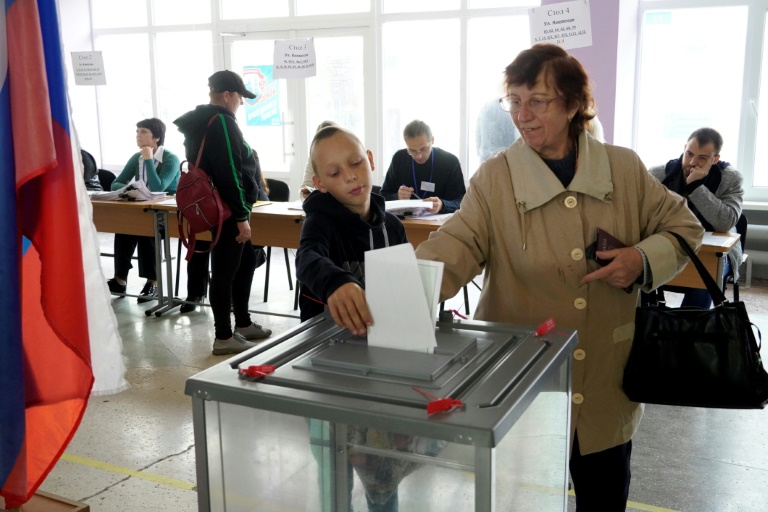
Kremlin-installed authorities in four Ukrainian regions under Russian control claimed victory Tuesday in annexation votes, drawing global outrage, as Moscow warned it could use nuclear weapons to defend the territories.

Ukraine and its allies have denounced the so-called referendums as a sham, saying the West would never recognise the results of the ballots, which have dramatically ratcheted up the stakes of Russia’s seven-month invasion.

Pro-Russian authorities in Zaporizhzhia said 93.11 percent of voters backed joining Russia, according to preliminary results on Tuesday evening.

In Kherson, another Moscow-occupied region in southern Ukraine, officials said more than 87.05 percent of electors supported the move after all the ballots were counted.

In the eastern Lugansk region controlled by pro-Russia separatists, local authorities said more than 98.42 percent voted in favour of annexation, according to local authorities.

Officials in the Moscow-held Donetsk region claimed victory as well, with the local poll body saying 99.23 percent of the vote was for annexation.

“Saving people in the territories where this referendum is taking place… is the focus of the attention of our entire society and of the entire country,” Russian President Vladimir Putin said earlier during a televised meeting with officials.

His spokesman Dmitry Peskov said the votes would have “radical” legal implications and that the so-called referendums “will also have consequences for security”, referring to Moscow’s threats to use nuclear weapons to defend its territory.

– ‘Nothing to talk about’ –

Ukraine’s President Volodymyr Zelensky vowed Tuesday that Kyiv would defend its citizens in Moscow-held regions and rejected the referendums as a “farce”.

He said the votes mean Kyiv will not negotiate with Moscow.

“There is nothing to talk about with (the) current Russian president,” Zelensky said.

Russian forces this month have suffered serious setbacks in Ukraine’s east and south, which observers say pushed Putin to rush ahead with the vote to cement Moscow’s authority there.

Putin said Russia would use all available means to defend its territory, implying that after annexation, Moscow could deploy nuclear weapons to repulse Ukrainian attempts to retake the territory.

“I want to remind you — the deaf who hear only themselves: Russia has the right to use nuclear weapons if necessary,” former leader Dmitry Medvedev — a Putin ally who is now deputy chairman of Russia’s security council — said on social media Tuesday.

Pentagon spokesman Brigadier General Patrick Ryder said the United States was taking the reiterated threat “seriously” but had seen nothing to cause Washington to change its nuclear posture.

NATO chief Jens Stoltenberg said that “Russia must know that the nuclear war cannot be won and must never be fought.”

The four Russian-occupied regions of Ukraine announced that they would hold the elections just days before voting began last Friday. 

Together, they form a crucial land connection for the Kremlin between Russia and the Crimean peninsula, which Moscow annexed in 2014 and is otherwise only connected to the mainland by bridge.

– ‘Diabolical scheme’ –

US Secretary of State Antony Blinken vowed that the West would never recognise Russian annexations of the territories, threatening Moscow with “additional swift and severe costs” for its “diabolical scheme”.

French Foreign Minister Catherine Colonna, in Kyiv for a surprise visit to meet Zelensky, called the polls a “masquerade” that would trigger further Western sanctions.

At the United Nations, top official Rosemary DiCarlo told a meeting of the Security Council the body “remains fully committed” to Ukraine’s territorial integrity “within its internationally recognised borders.” 

The United States intends to submit a resolution urging UN member states “not to recognise any altered status of Ukraine and obligating Russia to withdraw its troops from Ukraine,” said US envoy Linda Thomas-Greenfield.

However, there is no chance of the Security Council reaching a united stance on the annexation move.

Vassily Nebenzia, Russia’s UN ambassador, made clear Russia would wield its Security Council veto again, criticising the move as “temper tantrums of the Western delegations.”

“The referendums were conducted exclusively transparently, with upholding of all the electoral norms,” Nebenzia argued, adding that the West’s only aim was to “weaken and bleed dry Russia as much as possible”.

Polling stations were open in Crimea for people who fled fighting after the Russian invasion in February.

“With my voice I want to try to make a small contribution to stopping the war,” 63-year-old Galina Korsakova from Donetsk told AFP. 

“I really want to go home.”

The so-called referendums follow a pattern that Moscow utilised in Crimea after nationwide street demonstrations saw Ukraine’s Kremlin-friendly president ousted.

As in Crimea, observers saw the outcome as a foregone conclusion. Election officials brought ballot boxes door-to-door, in many cases accompanied by armed Russian forces.

According to Russian state media, the next step is for Russia’s parliament, the State Duma, to approve an annexation bill formally incorporating the four regions into Russian territory. This could happen Wednesday and would be followed by Russian upper house approval.

Putin is then expected on Friday to formally declare the Ukrainian regions part of Russia, according to Russian news agencies.

Ukrainian forces are pursuing their counter-offensive in the east.

The governor of the eastern Kharkiv region announced Tuesday its forces had recaptured Kupiansk-Vuzlovyi, “one of the largest logistical and railway junctions” in the region. It is not participating in this week’s vote. 

Close Bitnami banner
Bitnami