US Business

US embassy in Cuba to resume 'full visa processing' in 2023

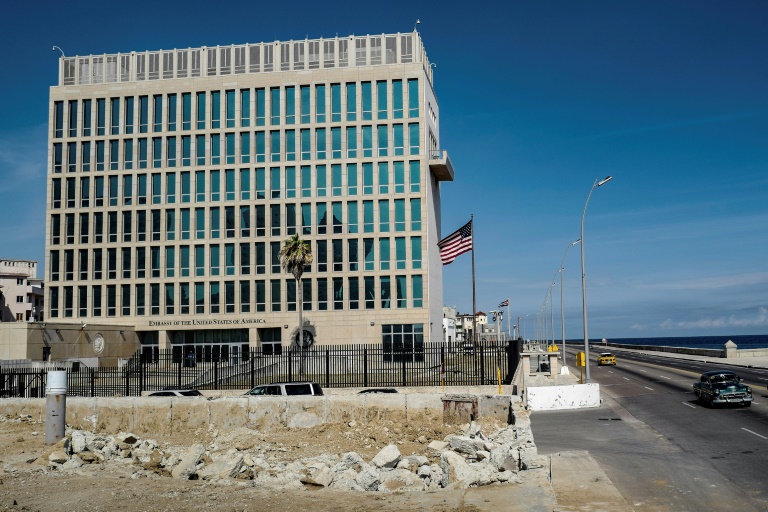
The US embassy in Cuba said Wednesday it would resume “full immigrant visa processing” next year for the first time since 2017, when the mission was closed over alleged sonic attacks on diplomatic staff.

The announcement came as Cuba is experiencing an unprecedented exodus of undocumented migrants amid the communist country’s worst economic crisis in 30 years due to ramped-up US sanctions and the coronavirus pandemic.

“This change will… eliminate the need for Cubans applying for immigrant visas in family preference categories to travel outside of Cuba to Georgetown, Guyana for their interviews,” the embassy said in a statement.

The United States evacuated its diplomatic staff and their families in 2017 after at least two dozen people suffered brain injuries that resembled concussion, but with no exterior signs of trauma.

US officials accused Cuba of carrying out “health attacks” using some sort of acoustic or microwave device, a charge Havana angrily rejected.

A US government report in 2020 said the illnesses suffered by staff and their families were most likely caused by “directed, pulsed radio frequency (RF) energy.”

The embassy closure made obtaining a visa an expensive nightmare for Cubans, who now had to travel to a third country, at their own cost, to put in an application.

Many have sought to make it to US shores even without a visa, many trying their luck without travel documents on long, dangerous journeys by sea or by road via Central America.

According to US border police, a record 198,000 Cubans illegally entered the United States in the last 11 months.

The US embassy resumed limited visa services in Havana in May, but announced “full resumption” from early 2023, enabled by an increase in embassy personnel.

According to existing immigration agreements, the United States is supposed to authorize at least 20,000 immigrant visas a year to Cubans.

However those agreements were suspended in 2018 by former president Donald Trump, whose administration also refused to meet with the Cuban government.

Annual migration talks between Havana and Washington resumed earlier this year.
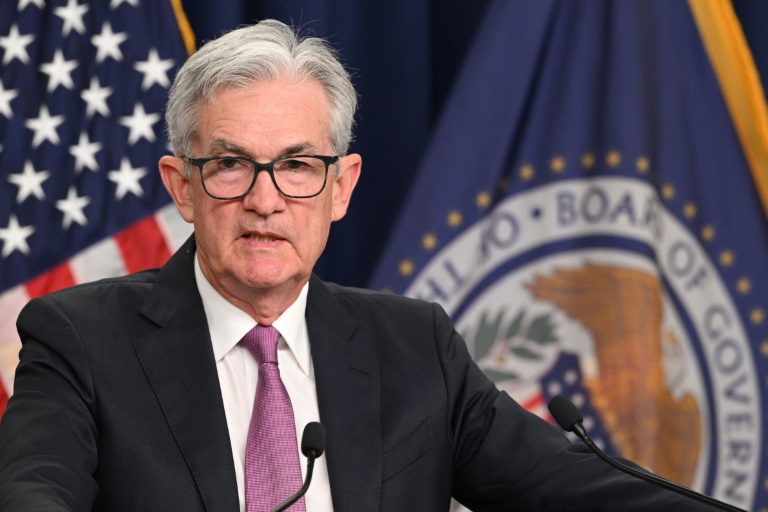
US stocks fall, dollar gains as Fed unveils latest big rate hike

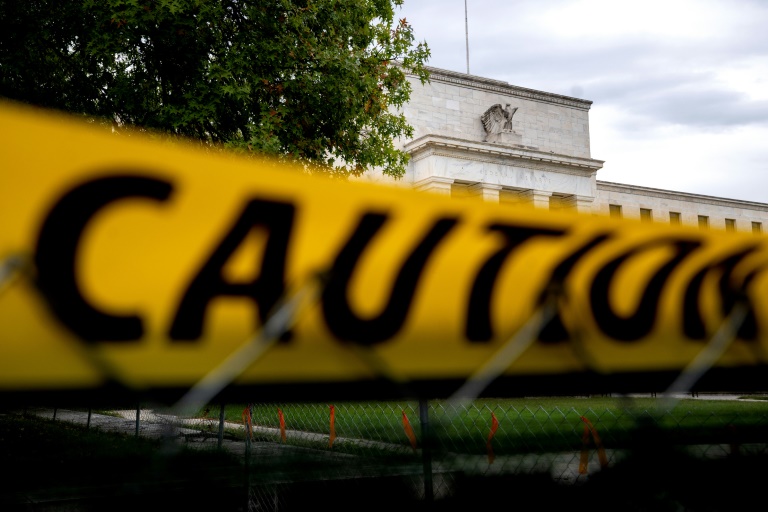
Wall Street stocks tumbled and the dollar rallied Wednesday after the Federal Reserve announced another large interest rate increase and signaled it expects more monetary tightening ahead to fight inflation.

The US central bank announced its third consecutive interest rate increase of 0.75 percentage point, continuing the forceful action to tamp down inflation that has surged to the highest in 40 years.

US stocks had climbed ahead of the announcement, following positive sessions on leading European bourses and declines in Asia. 

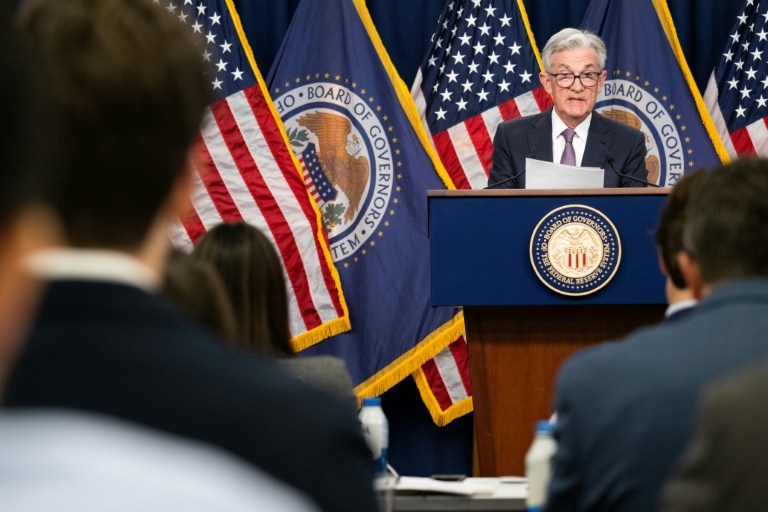
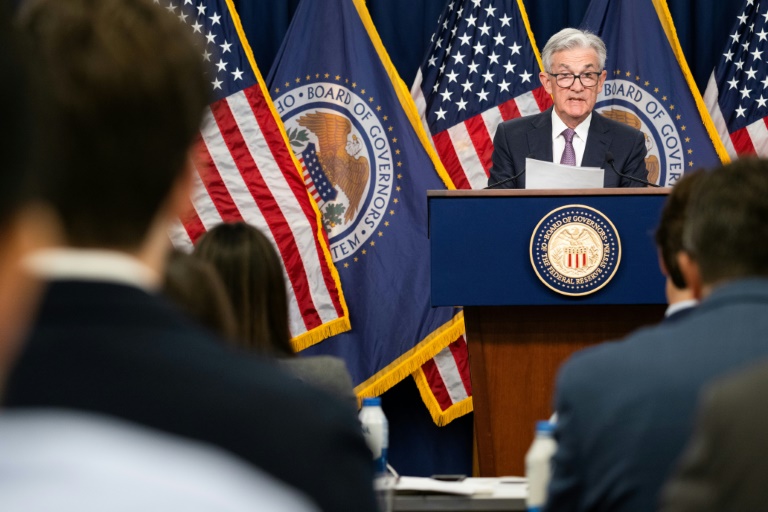
Equities gyrated after the Fed press release before taking a final decisive push lower during Fed Chair Jerome Powell’s news conference. The S&P 500 ended down 1.7 percent.

“The higher-for-longer narrative kicked in,” Art Hogan, analyst of B. Riley Wealth Management, said of the market’s reaction to an announcement that was more “hawkish” than expected.

Markets had been expecting another big interest rate increase, but were caught off guard by the Fed’s outlook as far as the need for additional hikes. 

The latest Fed statement included interest rate projections for the end of 2023 and 2024 that are higher than the previous forecasts, signaling the US central bank now sees the need for a more prolonged monetary tightening cycle in light of inflation trends.

Powell emphasized the need for a “restrictive” monetary policy.

He acknowledged that bringing inflation down will require a period of slower growth and higher unemployment, noting that the job market is out of sync, with far more openings than workers.

“We have got to get inflation behind us,” Powell said. “I wish there were a painless way to do that. There isn’t.”

“The Fed is having to be cruel in order to restore price stability,” noted Russ Mould, investment director at AJ Bell.

“Higher rates will cause pain to households and businesses, with the jobs market being closely watched for signs of redundancies and hiring freezes.”

The Fed announcement also boosted the dollar, which hit a near 20-year peak against the euro.

“Once again, the Fed’s hawkish rate guidance kept the dollar biased higher as it distinguishes America’s central bank from its less aggressive counterparts abroad,” said Convera’s Joseph Manimbo.

The British pound also tumbled, even as the Bank of England prepares to announce its own large interest rate hike Thursday.

Although European and US equity indices were advancing ahead of the Fed’s decision, City Index analyst Fawad Razaqzada said he believes “the path of least resistance is to the downside and the selling pressure will likely resume amid a bearish macro-outlook.”

Elsewhere, oil prices finished lower on worries about weakening US demand, reversing a rally earlier on worries about the escalating Russia-Ukraine conflict after President Vladimir Putin called up Russian military reservists.

– Key figures at around 2030 GMT –

New York – Dow: DOWN 1.7 percent at 30,183.78 (close)

New York – S&P 500: DOWN 1.7 percent at 3,789.93 (close)

New York – Nasdaq: DOWN 1.8 percent at 11,220.19 (close)

London – FTSE 100: UP 0.6 percent at 7,237.64 (close)

Frankfurt – DAX: UP 0.8 percent at 12,6767.15 (close)

Paris – CAC 40: UP 0.9 percent at 6,031.33 (close)

EURO STOXX 50: UP 0.7 percent at 3,491.87 (close)

Tokyo – Nikkei 225: DOWN 1.4 percent at 27,313.13 (close)

Hong Kong – Hang Seng Index: DOWN 1.8 percent at 18,444.62 (close)

Shanghai – Composite: DOWN 0.2 percent at 3,117.18 (close)

Pound/dollar: DOWN at $1.1275 from $1.1381 Tuesday

Euro/dollar: DOWN at $0.9847 from $0.9971

Euro/pound: DOWN at 87.31 pence from 87.61 pence 

Dollar/yen: UP at 144.02 yen from 143.75 yen

Brent North Sea crude: DOWN 0.9 percent at $89.83 per barrel

West Texas Intermediate: DOWN 1.2 percent at $82.94 per barrel

burs-jmb/bfm

US leads new pledges to fight child malnutrition

The United States on Wednesday announced new pledges for $280 million to fight childhood malnutrition through the supply of ready-to-eat packets in nations suffering from acute food shortages.

At an event on the sidelines of the UN General Assembly, the US Agency for International Development said the new funds were raised to stop childhood wasting, the low weight-for-height caused by poor nutrition.

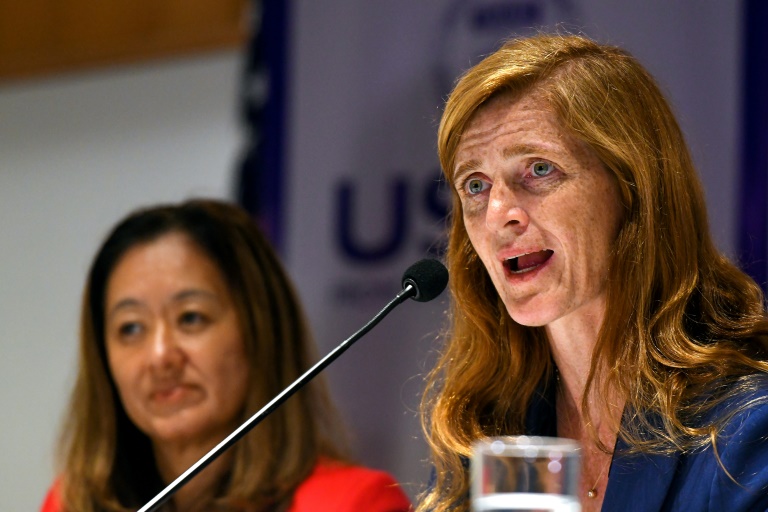
USAID chief Samantha Power said that on a recent visit to Kenya, she had seen babies “just a few months old, born into hunger, who are too weak to cry.”

“The truth is, wasting is treatable,” Power said at the event with the United Nations children’s agency UNICEF. 

“Complex cases require more specialized medical attention, but for straightforward cases caught early, treatment is cost-effective and can be done at home,” she said.

“Yet only a third of children suffering from wasting today receive the treatment they need. And with more funding, better delivery systems and improved access to health care, we can empower communities to save their children’s lives.”

USAID had promised $200 million in July. The latest contributions, which bring the total to $280 million, include commitments by non-governmental foundations and member states including Canada, Ireland and the Netherlands.

So-called ready-to-use therapeutic foods are pastes of high nutritional value that are given to children who suffer severe wasting.

Invented by French researcher Andre Briend, they can be consumed directly and have long shelf lives.

Power said a full course of the therapeutic packets takes several weeks and requires monitoring by a health worker, with the treatment costing a little more than $100 per child.

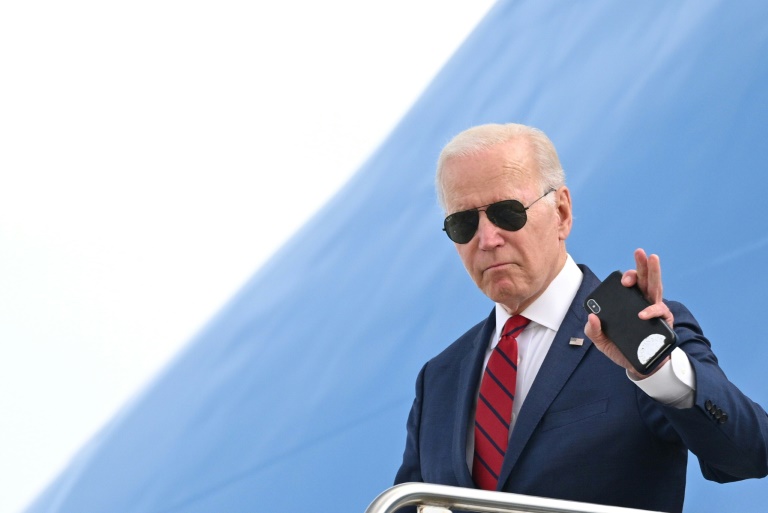
The event, also organized with non-governmental organizations and Senegal, came hours after US President Joe Biden promised $2.9 billion in new funding to fight global food insecurity.

Food shortages have been worsened by Russia’s invasion of Ukraine, a major grain exporter, with Somalia threatened by famine following successive failed rainy seasons.

Fed hikes rates again, warns inflation fight can't be 'painless'

The Federal Reserve rolled out another steep increase in the key US interest rate Wednesday and said more hikes are coming as part of the battle to rein in soaring prices — an aggressive stance that has raised fears of a recession.

And Federal Reserve Chair Jerome Powell warned that the process of conquering the highest inflation in 40 years will involve some pain.

It was the third consecutive increase of 0.75 percentage point by the Fed’s policy-setting Federal Open Market Committee (FOMC), continuing the forceful action that has included five hikes this year.

The increase takes the policy rate to 3.0-3.25 percent, and the FOMC said it anticipates that “ongoing increases… will be appropriate.”

Soaring prices are putting the squeeze on American families and businesses, and have become a political liability for President Joe Biden as he faces midterm congressional elections in early November.

But a contraction of the world’s largest economy would be a more damaging blow to Biden, and the world at large.

Powell has made it clear officials will continue to act aggressively to cool the economy and avoid a repeat of the 1970s and early 1980s, the last time US inflation got out of control.

It took tough action — and a recession — to finally bring prices down in the 1980s, and the Fed is unwilling to give up its hard-won, inflation-fighting credibility.

Amid criticism the Fed waited too long to move, Powell said the US central bank is committed to raising interest rates and keeping them high until inflation comes down, and he warned against reversing course too soon.

“The historical record cautions strongly against prematurely loosening policy,” Powell told reporters.

He said there is no room for complacency and the Fed will “keep at it until the job is done,” although at some point it will be appropriate to slow the pace of rate increases, depending on the data.

– Pain –

He acknowledged that bringing inflation down will require a period of slower growth and higher unemployment, noting that the job market is out of sync, with far more openings than workers.

“We have got to get inflation behind us. I wish there were a painless way to do that. There isn’t.”

But he said continued high inflation would be even more painful, especially on those least able to withstand it.

Economist Diane Swonk of KPMG said Powell “has stopped sugar-coating” what the battle to tame inflation will entail: “Growth will weaken and the unemployment rate will move up.”

The Fed’s quarterly forecasts released with the rate decision Wednesday show FOMC members expect US GDP growth to virtually flatline this year, rising just 0.2 percent. But they see a return to expansion in 2023, with annual growth of 1.2 percent.

They project further rate hikes this year — totaling 1.25 percentage points — and more in 2023, with no cuts until 2024.

While the FOMC noted continued “robust” job gains in recent months and low unemployment, the forecasts project the jobless rate will rise to 4.4 percent next year and hold around that level through 2025 from 3.7 percent in August.

Inflation is a global phenomenon amid the Russian war in Ukraine on top of global supply chain snarls and Covid lockdowns in China, and other major central banks are taking action as well.

Despite a welcome drop in gasoline prices at the pump in recent weeks, the disappointing consumer price report for August showed widespread increases. 

The FOMC statement noted the “broader price pressures” beyond food and energy, and stressed that officials are “strongly committed to returning inflation to its 2 percent objective.”

The rate hikes raise the cost of borrowing and cool demand, and it is having an impact: The housing market has slowed as mortgage rates have surged.

Many economists say at least a short period of negative US GDP in the first half of 2023 will be needed before inflation starts coming down.

Nancy Vanden Houten of Oxford Economics said the updated Fed forecasts acknowledge “the toll that higher rates will take on the economy,” but she said “their projections are more optimistic than our own.”

Stocks on Wall Street turned negative following the announcement and closed the day with steep losses, with all three major indices dropping at least 1.7 percent.

Meanwhile the US dollar soared to a 20-year high.

Fed hikes rates again, warns inflation fight can't be 'painless'

The Federal Reserve rolled out another steep increase in the key US interest rate Wednesday and said more hikes are coming as part of the battle to rein in soaring prices — an aggressive stance that has raised fears of a recession.

And Federal Reserve Chair Jerome Powell warned that the process of conquering the highest inflation in 40 years will involve some pain.

It was the third consecutive increase of 0.75 percentage point by the Fed’s policy-setting Federal Open Market Committee (FOMC), continuing the forceful action that has included five hikes this year.

The increase takes the policy rate to 3.0-3.25 percent, and the FOMC said it anticipates that “ongoing increases… will be appropriate.”

Soaring prices are putting the squeeze on American families and businesses, and have become a political liability for President Joe Biden as he faces midterm congressional elections in early November.

But a contraction of the world’s largest economy would be a more damaging blow to Biden, and the world at large.

Powell has made it clear officials will continue to act aggressively to cool the economy and avoid a repeat of the 1970s and early 1980s, the last time US inflation got out of control.

It took tough action — and a recession — to finally bring prices down in the 1980s, and the Fed is unwilling to give up its hard-won, inflation-fighting credibility.

Amid criticism the Fed waited too long to move, Powell said the US central bank is committed to raising interest rates and keeping them high until inflation comes down, and he warned against reversing course too soon.

“The historical record cautions strongly against prematurely loosening policy,” Powell told reporters.

He said there is no room for complacency and the Fed will “keep at it until the job is done,” although at some point it will be appropriate to slow the pace of rate increases, depending on the data.

– Pain –

He acknowledged that bringing inflation down will require a period of slower growth and higher unemployment, noting that the job market is out of sync, with far more openings than workers.

“We have got to get inflation behind us. I wish there were a painless way to do that. There isn’t.”

But he said continued high inflation would be even more painful, especially on those least able to withstand it.

Economist Diane Swonk of KPMG said Powell “has stopped sugar-coating” what the battle to tame inflation will entail: “Growth will weaken and the unemployment rate will move up.”

The Fed’s quarterly forecasts released with the rate decision Wednesday show FOMC members expect US GDP growth to virtually flatline this year, rising just 0.2 percent. But they see a return to expansion in 2023, with annual growth of 1.2 percent.

They project further rate hikes this year — totaling 1.25 percentage points — and more in 2023, with no cuts until 2024.

While the FOMC noted continued “robust” job gains in recent months and low unemployment, the forecasts project the jobless rate will rise to 4.4 percent next year and hold around that level through 2025 from 3.7 percent in August.

Inflation is a global phenomenon amid the Russian war in Ukraine on top of global supply chain snarls and Covid lockdowns in China, and other major central banks are taking action as well.

Despite a welcome drop in gasoline prices at the pump in recent weeks, the disappointing consumer price report for August showed widespread increases. 

The FOMC statement noted the “broader price pressures” beyond food and energy, and stressed that officials are “strongly committed to returning inflation to its 2 percent objective.”

The rate hikes raise the cost of borrowing and cool demand, and it is having an impact: The housing market has slowed as mortgage rates have surged.

Many economists say at least a short period of negative US GDP in the first half of 2023 will be needed before inflation starts coming down.

Nancy Vanden Houten of Oxford Economics said the updated Fed forecasts acknowledge “the toll that higher rates will take on the economy,” but she said “their projections are more optimistic than our own.”

Stocks on Wall Street turned negative following the announcement and closed the day with steep losses, with all three major indices dropping at least 1.7 percent.

Meanwhile the US dollar soared to a 20-year high.

Global Fund seeks $18 billion to end HIV, TB and malaria

The Global Fund to Fight AIDS, Tuberculosis and Malaria on Wednesday sought to raise at least $18 billion at a donor conference led by US President Joe Biden, as decades of progress against the three diseases are set back by Covid.

It is the highest ever “replenishment” goal set by the organization, which brings together governments, multilateral agencies, civil society groups and the private sector.

“Setbacks are not destiny,” USAID administrator Samantha Power told attendees. “We have the knowledge, the tools, and in the Global Fund, the right mechanism to regain ground and continue our push to end these diseases. What we need is the will.”

Before the event, Global Fund spokeswoman Francoise Vanni told AFP she was encouraged by early pledges — including $6 billion from the United States, 1.3 billion euros from Germany and $1.08 billion from Japan — that had brought the fund “about halfway” to its target.

“There’s a lot at stake, and the $18-billion target is very much based on getting back on track to end AIDS, TB and malaria by 2030, recovering ground lost during the Covid pandemic and saving no less than 20 million lives over the next three years,” she said.

The amount is 30 percent more than that raised during the organization’s sixth and most recent replenishment, hosted by President Emmanuel Macron of France in 2019, which raised a then-record $14 billion.

The Global Fund was created in 2002, with new funding cycles usually every three years.

World Health Organization head Tedros Adhanom Ghebreyesus highlighted how life expectancy in Japan was 84 years, while in Lesotho it was just 50 years. 

“Much of that difference is due to the fact that HIV, TB and malaria still kill millions in the poorest communities of the poorest countries,” he said.  

“Thanks in large part to the Global Fund, these diseases kill half as many people now as they did 20 years ago. That’s quite a progress. However, those gains are at risk.”

– Signs of recovery – 

Last year, the Global Fund warned that the pandemic was having a “devastating” impact on its work, leading to declining results across the board for the first time in the fund’s history.

But it said last week that the massive resources it had pumped to counter the downturn had paid off and “recovery is underway” against all three diseases.

For example, the number of people dying from TB rose for the first time in a decade in 2020, when it caused an estimated 1.5 million deaths, making it the world’s second-biggest infectious disease killer behind Covid.

But the Global Fund, which provides 76 percent of all international financing for fighting TB, said the programs had shown signs of recovery last year.

Similarly, the number of people provided with HIV prevention services rose again after dropping in 2020, reaching 12.5 million people worldwide, the organization said. The fund provides nearly a third of all international financing to battle HIV.

Interruptions in health services during the pandemic also extracted a heavy toll on the battle against malaria, sending deaths soaring 12 percent in 2020, to an estimated 627,000.

But the Global Fund said a rapid scale-up of programs had allowed them to bounce back, with some 280 million suspected cases tested and 148 million cases treated last year.

Per an act of Congress, the United States cannot provide more than one-third of funding for the Global Fund — a limit that serves as a matching challenge to other nations to double the American pledge.

Twitch curbs gambling streams as addiction fears mount

Twitch on Wednesday announced a ban on sites that stream unlicensed roulette, dice, or slots games as the platform is hit with concerns about getting users hooked on gambling.

The decision by the Amazon-owned company to tighten its policy beginning October 18 comes after a popular streamer scammed fans and peers out of money to fuel what he claimed was a gambling addiction.

“Gambling content on Twitch has been a big topic of discussion in the community,” Twitch, known for live streaming of video games, said in a tweet.

Twitch already bans links or referral codes to sites that feature slots, roulette or dice games, but some users have gotten around that by live streaming play, the platform said.

Streaming of most gambling games will be barred, though it will continue to allow websites that focus on sports betting, fantasy sports, and poker, Twitch said.

Popular Twitch personalities such as Pokimane have called for the platform to ban gambling, and a tweet by Pokimane repeating that message had more than 316,000 likes as of Wednesday.

Meanwhile, a #TwitchStopGambling hashtag has gained traction at Twitter.

A streamer using the handle ItsSliker posted a video over the weekend saying that he had borrowed money from friends and colleagues on Twitch, lying about his reasons but really using it for gambling.

“This is the epitome of a gambling addict,” ItsSliker said in the video.

Twitch curbs gambling streams as addiction fears mount

Twitch on Wednesday announced a ban on sites that stream unlicensed roulette, dice, or slots games as the platform is hit with concerns about getting users hooked on gambling.

The decision by the Amazon-owned company to tighten its policy beginning October 18 comes after a popular streamer scammed fans and peers out of money to fuel what he claimed was a gambling addiction.

“Gambling content on Twitch has been a big topic of discussion in the community,” Twitch, known for live streaming of video games, said in a tweet.

Twitch already bans links or referral codes to sites that feature slots, roulette or dice games, but some users have gotten around that by live streaming play, the platform said.

Streaming of most gambling games will be barred, though it will continue to allow websites that focus on sports betting, fantasy sports, and poker, Twitch said.

Popular Twitch personalities such as Pokimane have called for the platform to ban gambling, and a tweet by Pokimane repeating that message had more than 316,000 likes as of Wednesday.

Meanwhile, a #TwitchStopGambling hashtag has gained traction at Twitter.

A streamer using the handle ItsSliker posted a video over the weekend saying that he had borrowed money from friends and colleagues on Twitch, lying about his reasons but really using it for gambling.

“This is the epitome of a gambling addict,” ItsSliker said in the video.

US Fed raises key interest rate as recession fears mount

The Federal Reserve raised the key US interest rate again Wednesday and said more hikes are coming as it battles soaring prices — an aggressive stance that has raised fears of a recession.

It was the third consecutive increase of 0.75 percentage point by the Fed’s policy-setting Federal Open Market Committee (FOMC), continuing the forceful action to tamp down inflation that has surged to the highest in 40 years.

The increase takes the policy rate to 3.0-3.25 percent, and the FOMC said it “anticipates that ongoing increases… will be appropriate.”

Soaring prices are putting the squeeze on American families and businesses and have become a political liability for President Joe Biden, as he faces midterm congressional elections in early November.

But a contraction of the world’s largest economy would be a more damaging blow to Biden, to the Fed’s credibility and the world at large.

Federal Reserve Chair Jerome Powell has made it clear that officials will continue to act aggressively to cool the economy and avoid a repeat of the 1970s and early 1980s, the last time US inflation got out of control.

It took tough action — and a recession — to finally bring prices down in the 1980s, and the Fed is unwilling to give up its hard-won, inflation-fighting credibility.

The Fed’s quarterly forecasts released with the rate decision Wednesday show FOMC members expect a sharp slowdown with US GDP growth of just 0.2 percent this year, but a return to expansion in 2023, with annual growth of 1.2 percent.

Powell’s press conference after the meeting will be closely scrutinized for clues on how much more he thinks the Fed will have to do before it declares victory in the inflation fight.

FOMC members see further rate hikes this year and next, with no cuts until 2024.

– Doubts, pressure –

Economist Diane Swonk of KPMG warned the central bank will come under increasing pressure, especially if unemployment begins to rise, and Fed officials “will become political pinatas.”

While the FOMC noted continued “robust” job gains in recent months and low unemployment, the forecasts project the jobless rate will rise to 4.4 percent next year and hold around that level through 2025.

Powell and other central bankers have been sending the same message: An economic downturn is better than continued high inflation given the pain that would inflict, especially on those least able to withstand it.

Inflation is a global phenomenon amid the Russian war in Ukraine on top of global supply chain snarls and Covid lockdowns in China, and other major central banks are taking action as well.

Many economists say at least a short period of negative US GDP in the first half of 2023 will be needed before inflation starts coming down.

Despite a welcome drop in gasoline prices at the pump in recent weeks, the disappointing consumer price report for August showed widespread increases. 

The FOMC statement said noted the “broader price pressures” beyond food and energy, and stressed that officials are “strongly committed to returning inflation to its 2 percent objective.”

The Fed has front-loaded its rate hikes, cranking up the benchmark lending rate four times this year, including two straight three-quarter-point hikes in June and July.

The aim is to raise the cost of borrowing and cool demand, and it is having an impact: The housing market has slowed as mortgage rates have surged.

“The irony here is that just as the Fed is ratcheting-up the anti-inflation rhetoric to fever-pitch, the forces needed to drive down inflation over the next year are now in place,” said Ian Shepherdson of Pantheon Macroeconomics.

US stocks turned negative following the announcement.

US Fed raises key interest rate as recession fears mount

The Federal Reserve raised the key US interest rate again Wednesday and said more hikes are coming as it battles soaring prices — an aggressive stance that has raised fears of a recession.

It was the third consecutive increase of 0.75 percentage point by the Fed’s policy-setting Federal Open Market Committee (FOMC), continuing the forceful action to tamp down inflation that has surged to the highest in 40 years.

The increase takes the policy rate to 3.0-3.25 percent, and the FOMC said it “anticipates that ongoing increases… will be appropriate.”

Soaring prices are putting the squeeze on American families and businesses and have become a political liability for President Joe Biden, as he faces midterm congressional elections in early November.

But a contraction of the world’s largest economy would be a more damaging blow to Biden, to the Fed’s credibility and the world at large.

Federal Reserve Chair Jerome Powell has made it clear that officials will continue to act aggressively to cool the economy and avoid a repeat of the 1970s and early 1980s, the last time US inflation got out of control.

It took tough action — and a recession — to finally bring prices down in the 1980s, and the Fed is unwilling to give up its hard-won, inflation-fighting credibility.

The Fed’s quarterly forecasts released with the rate decision Wednesday show FOMC members expect a sharp slowdown with US GDP growth of just 0.2 percent this year, but a return to expansion in 2023, with annual growth of 1.2 percent.

Powell’s press conference after the meeting will be closely scrutinized for clues on how much more he thinks the Fed will have to do before it declares victory in the inflation fight.

FOMC members see further rate hikes this year and next, with no cuts until 2024.

– Doubts, pressure –

Economist Diane Swonk of KPMG warned the central bank will come under increasing pressure, especially if unemployment begins to rise, and Fed officials “will become political pinatas.”

While the FOMC noted continued “robust” job gains in recent months and low unemployment, the forecasts project the jobless rate will rise to 4.4 percent next year and hold around that level through 2025.

Powell and other central bankers have been sending the same message: An economic downturn is better than continued high inflation given the pain that would inflict, especially on those least able to withstand it.

Inflation is a global phenomenon amid the Russian war in Ukraine on top of global supply chain snarls and Covid lockdowns in China, and other major central banks are taking action as well.

Many economists say at least a short period of negative US GDP in the first half of 2023 will be needed before inflation starts coming down.

Despite a welcome drop in gasoline prices at the pump in recent weeks, the disappointing consumer price report for August showed widespread increases. 

The FOMC statement said noted the “broader price pressures” beyond food and energy, and stressed that officials are “strongly committed to returning inflation to its 2 percent objective.”

The Fed has front-loaded its rate hikes, cranking up the benchmark lending rate four times this year, including two straight three-quarter-point hikes in June and July.

The aim is to raise the cost of borrowing and cool demand, and it is having an impact: The housing market has slowed as mortgage rates have surged.

“The irony here is that just as the Fed is ratcheting-up the anti-inflation rhetoric to fever-pitch, the forces needed to drive down inflation over the next year are now in place,” said Ian Shepherdson of Pantheon Macroeconomics.

US stocks turned negative following the announcement.

Close Bitnami banner
Bitnami