US Business

Five bank 'heists' in a day as Lebanese demand their frozen savings

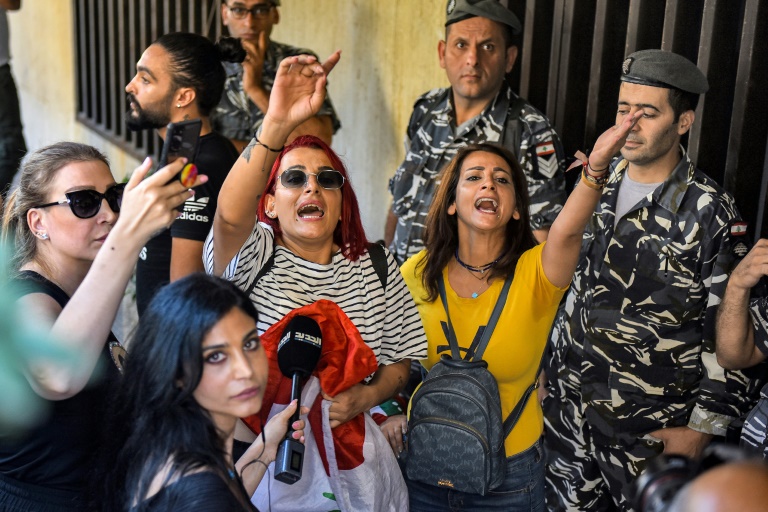
Five Lebanese banks were stormed Friday by depositors seeking to unlock frozen savings, the latest in a string of such “heists” in the crisis-hit country that have garnered wide public support.

Lebanon has been mired in an economic crisis for more than two years, since the value of its currency began plummeting and banks started imposing draconian restrictions on withdrawals.

In the past week, seven bank branches have been targeted by “depositor heists”, prompting lenders to announce a three-day closure starting Monday, according to the Association of Banks in Lebanon.

As the incidents snowballed on Friday, Interior Minister Bassam Mawlawi called for an emergency meeting in the afternoon.

“Reclaiming rights in this way… can break the system and make the rest of the depositors lose their rights,” he told reporters after the meeting.

The holdup of a Beirut bank on Wednesday by an activist who filmed herself using a toy gun appears to have sparked a series of copycat raids by angry depositors.

On Friday there were another three such incidents in Beirut and two in south Lebanon, AFP correspondents and a security source said.

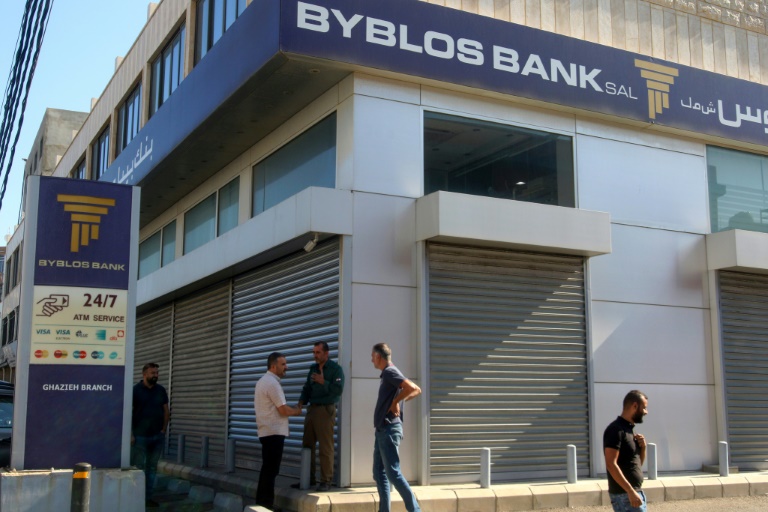
In one case, a man carrying a gun and jerrycan of fuel demanded staff at a branch of the Byblos bank in the southern town of Ghaziyeh hand over his money.

Accompanied by his son, he threatened bank staff with the gun, which a Lebanese television channel said may have been a toy, before making his demand.

“He emptied a jerrycan of fuel on the floor,” a bank security guard told an AFP correspondent.

The man walked away with about $19,000 in cash but turned himself in to police moments later as a crowd formed in front of the bank to support him.

– Not ‘a bank robber’ –

A few hours later in the Beirut neighbourhood of Tariq al-Jdideh, a tense security situation developed around a branch of Blom Bank, although details were unclear.

Witnesses outside the bank said a shop-owner had demanded access to his trapped savings to pay off debts.

He was locked inside the bank together with police officers, the witnesses told AFP at the scene, but was thought to be unarmed.

Another man armed with a hunting rifle stormed a bank in Beirut’s Ramlet el-Baida neighbourhood on Friday, witnesses told an AFP photographer at the scene.

The spate of heists comes two days after a young activist stormed a central Beirut bank with fuel and a plastic gun to demand the deposits of her sister, who needed to pay for cancer treatment.

The woman identified as Sali Hafiz made off with around $13,000 and became an instant hero on social media.

“She had every right to do this. I would do the same if I was as brave as her,” said Carla Chehab, a 28-year-old Beirut resident.

“The thieves are the banks, the government and all rich people protecting them,” she added.

– Emergency meeting –

The severity of Lebanon’s crisis has been widely blamed on a self-serving political elite and decades of corruption. 

The currency has lost more than 90 percent of its value on the black market in recent years, while poverty and unemployment have soared.

Banks have been widely accused of operating like a cartel and of spiriting large amounts out of the country for senior Lebanese officials at a time when foreign transfers were already blocked for ordinary citizens.

A parliament session to approve the 2022 budget, a key reform needed for Lebanon to unlock billions of dollars from international lenders, was adjourned to September 26 on Friday after quorum was lost when some lawmakers walked out.

Last month, a man drew widespread sympathy after he stormed a Beirut bank with a rifle and held employees and customers hostage for hours, to demand some of his $200,000 in frozen savings to pay hospital bills for his sick father.

He was detained but swiftly released and was present Friday outside the bank in Tariq al-Jdideh to express his support.

The raids of recent weeks are seen as mostly acts of desperation by Lebanese depositors who do not have criminal records, garnering sympathy from the country’s main depositors’ association.

“We call on every depositor who refuses injustice, oppression and theft to support any depositor who asks for what is rightfully theirs,” association member Tala Khalil told AFP.
Prices soaring everywhere: from beans in Brazil to pork in China

Consumers and businesses around the world are facing steeper prices for everything from Mexico’s beloved tortillas to the aluminium cans used by beer companies.

Inflation jumped after countries emerged from Covid lockdowns and it has soared since Russia invaded Ukraine, with the IMF expecting consumer prices to rise by 8.3 percent globally this year.

Here is a look at how higher prices are affecting the world:

– Fuel –

The invasion of Ukraine by Russia, the world’s third largest oil producer, sent crude oil prices through the roof.

The main international contract, Brent North Sea, almost hit $140 per barrel, but has now dropped back below $100.

Prices at the pump have followed suit, surging to over two euros per litre in eurozone countries and above five dollars per gallon in the United States, before falling back in recent weeks.

Natural gas has also become more expensive, especially in Europe, where electricity prices hit record levels in Germany and France.

Energy prices were up 38.6 percent in the eurozone in August from the same month last year, according to revised official data published Friday.

Higher energy prices ripple throughout the economy as they affect the production and transportation costs of companies.

– Pasta, beans and tortillas –

The war sent food prices soaring as the war disrupted grain exports from Ukraine, a major supplier of wheat and sunflower oil to countries around the world.

In May, Allianz estimated that pasta prices had risen 19 percent in the eurozone over the previous 18 months.

In Canada, another large exporter of wheat, a 500-gram package had risen by 60 cents in July from the same month last year, to CAN$3.16, according to official data.

In Thailand, the price for instant noodles, which is controlled by the state, rose for the first time in 14 years in August — a 17 percent increase to seven bahts (20 US cents).

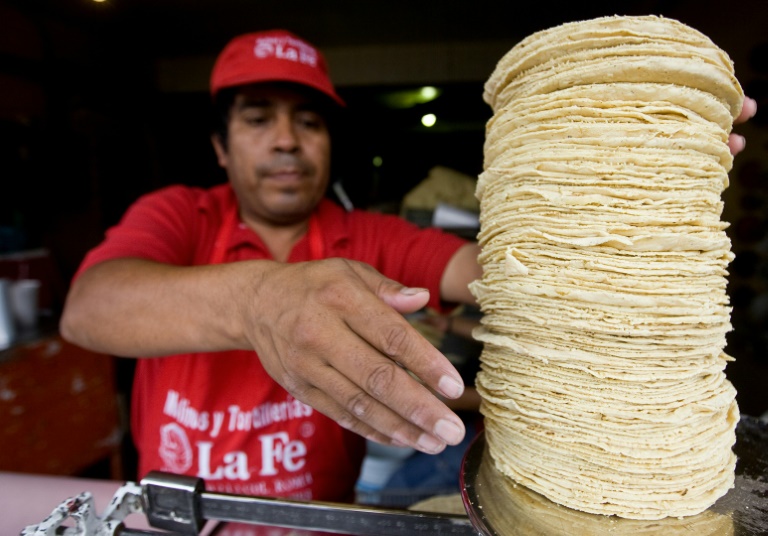
The price of the corn flour used to make tortillas in Mexico — a staple used for tacos and other dishes — is up by around 13 percent from last year and contributing to two-decade high inflation.

Pinto beans, a Brazilian staple, cost nearly 23 percent more in August than at the same time last year.

– Meat –

With grain more expensive, feeding livestock has become costlier and farmers have in turn raised their prices.

Pork, the most popular meat in China, cost 22 percent more in August than last year. 

Chinese authorities will tap into their strategic reserves of pork for a second time this year in order to stabilise prices, the official Xinhua news agency said Friday.

In Argentina, ground beef patties are popular as their prices have traditionally been low, but these have shot up by three quarters in the past 12 months. 

The country currently has one of the highest inflation rates in the world at 56.4 percent over the first eight months of the year.

In Europe, it is chicken prices that have taken wing as farmers have had to contend with bird flu in addition to cost pressures. Wholesale prices were up by a third in August from the same month last year.

– Beer –

Brewers have been hit with not only rising grain prices, but also for the aluminium cans and glass bottles for their beer.

These are 70 percent more expensive than before the war in Ukraine, according to the trade association of European brewers. 

Heineken, the world’s second-largest brewery group, hiked its prices by an average of 8.9 percent over the first half of this year. 

According to estimates by Bloomberg, AB InBev, the world’s top brewer whose beers include Budweiser and Corona, has increased its prices by eight percent.

In Britain, the cost of a pint has risen above four pounds ($4.6), the highest price since 1987, according to Britain’s Office for National Statistics.

– Newspapers –

Paper prices have climbed as demand has risen following the end of Covid lockdowns. Printing is an energy-intensive process.

Several French dailies raised their prices earlier this year, as have a number British newspapers like the Sun, the Times and Sunday Mail.

Others have reduced their number of pages.

In Europe overall, the prices of newspapers were 6.5 percent higher in July, according to official data.

US, S.Africa leaders vow cooperation after Ukraine discord

The leaders of South Africa and the United States called Friday for close cooperation on health, security and climate, as President Joe Biden puts a new focus on African powers after their reluctance to take on Russia.

President Cyril Ramaphosa was set to meet President Joe Biden weeks after Secretary of State Antony Blinken paid his own trip to South Africa and promised that the United States will do more to listen to Africa.

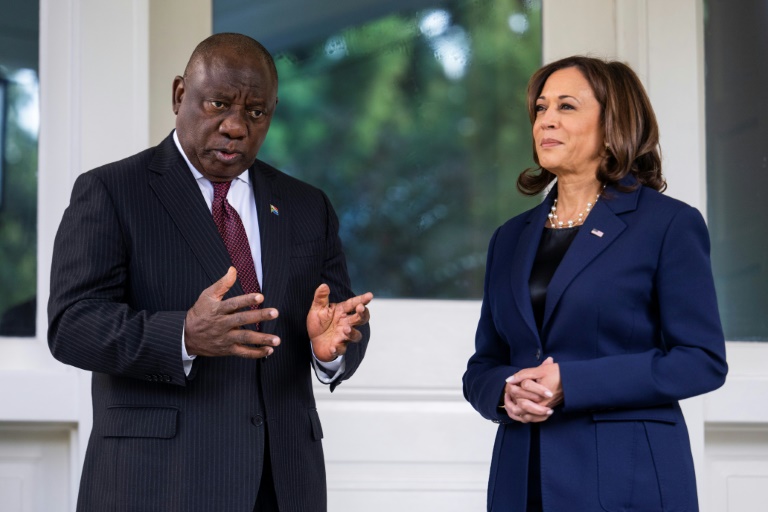
Starting his visit over breakfast with Vice President Kamala Harris, Ramaphosa voiced gratitude to the United States for its “considerable support” on the Covid pandemic as the Biden administration donates 1.1 billion vaccine doses around the world.

“The visit really is about strengthening the relationship between South Africa and the United States,” Ramaphosa said, adding that Washington had a “key role” to play on security issues across Africa.

Harris hailed the leadership of Ramaphosa — who is under growing pressure at home over a scandal — and said she would discuss working together on fighting climate change, a key priority for the Biden administration.

“I cannot emphasize enough how important the relationship between our countries is to the people of the United States both in terms of our security and our prosperity,” she said.

Like other developing nations, South Africa — whose eastern Mpumalanga province has one of the world’s largest concentrations of coal — argues that industrialized nations should bear the brunt of efforts to cut emissions due to their historic responsibility for climate change.

Wealthy nations at last year’s Glasgow climate conference promised $8.5 billion of financing to South Africa to transition away from coal.

– ‘Histories’ behind Russia stance –

Successive US administrations have focused much of their energy in Africa on countering the growing influence of China, which has become the continent’s dominant trading partner.

But Russia’s invasion of Ukraine has triggered a new front in the battle for influence in Africa, where many nations have been reluctant to embrace the West in its campaign to punish and pressure Moscow.

South Africa’s Foreign Minister Naledi Pandor denied being neutral but said “there are reasons for the perspectives that exist and one should never, I think, try to pretend that there aren’t histories.”

She pointed to the former Soviet Union’s championing of anti-apartheid forces compared with periods of Western cooperation with South Africa’s former white supremacist regime.

“I think we’ve been fairly clear, in our view, that war doesn’t assist anyone and that we believe the inhumane actions we have seen against the people of Ukraine can’t be defended by anybody,” she said this week at the Council on Foreign Relations in Washington.

“But what we have said is that a lot of the public statements that are made by leading politicians are not assisting in ameliorating the situation, because the first prize must be to achieve peace.”

The United States has sought to highlight the invasion’s role in soaring food prices, as Ukraine was one of Africa’s largest suppliers of grain.

Russia has sought to blame food scarcities on Western sanctions, an argument dismissed by the United States, which says it is not restricting agricultural or humanitarian shipments.

South Africa’s top diplomat broke with the usual polite bipartisanship of foreign dignitaries visiting Washington, not mincing words on Biden’s Republican predecessor Donald Trump, who notoriously referred to nations in the developing world with an epithet.

“We relate very well, I think probably better, with the Democrats than the Republicans,” she said. “You will recall how President Trump described Africa and no one has apologized for that as yet.”

Trump was the first US president in decades not to visit sub-Saharan Africa. Biden has not yet visited but has pledged a renewed interest, including with a summit of African leaders planned in Washington this December.

Ukraine finds graves and 'torture centres' in recaptured east

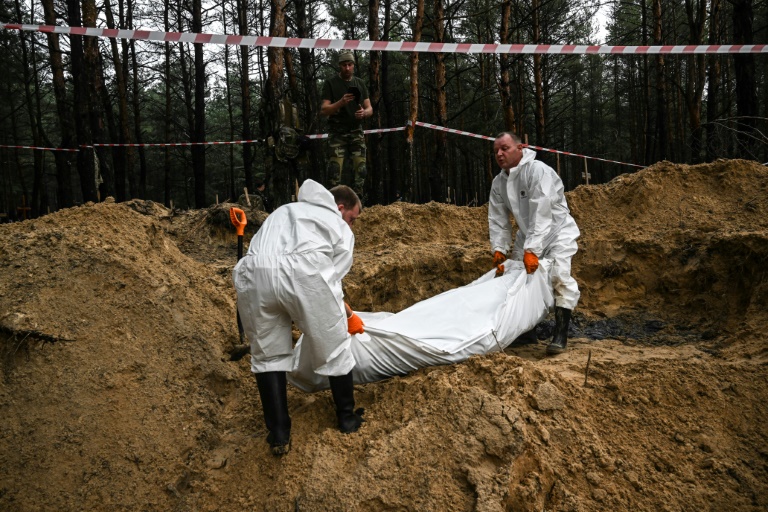
Ukrainian investigators descended on a pine forest outside the recaptured town of Izyum on Friday and began pulling hundreds of hastily buried bodies from the sandy soil.

At least one of the corpses had been buried with bound hands, an AFP journalist saw.

Kyiv officials said they had counted 450 graves at the mass burial site and found 10 alleged “torture centres” after the Kharkiv region was recaptured from Russian invaders.

In the forest outside Izyum, AFP journalists saw graves topped with makeshift crosses and marked with numbers, with one inscription reading: “Ukrainian army, 17 people. Izyum morgue.”

“Russia leaves only death and suffering. Murderers. Torturers,” said Ukraine’s President Volodymyr Zelensky. Some of the remains exhumed, he said, included children and people who were likely tortured before dying.

Kyiv’s forces recovered a swathe of territory in recent days in a lightning counter-offensive in the east, liberating several towns from Russian forces but also uncovering what they say is a grim legacy of occupation.

Police chief Igor Klymenko said torture rooms were found in the town of Balakliya and elsewhere in Karkhiv, while presidential aide Mykhaylo Podolyak said the Izyum mass grave site alone held at least 450 bodies.

“In the occupied territories, rampant terror, violence, torture and mass murders have been reigning for months,” Podolyak said.

On the main road from Izyum to Kharkiv, a small dirt road leads into a pine forest. On the right-hand side of the lane, about 100 metres (330 feet) into the trees, two men in white overalls were digging the sandy soil.

Soon they reached the first body, exhumed it and placed it in a white plastic body bag. As more bodies appeared, the strong smell of decay spread among the trees and rough wooden crosses.

– ‘Witnesses’ –

Where identification had been possible, names were attached to the crosses along with dates between early March, when Izyum was still held by Ukraine, and early September, a period of Russian control.

On some of the graves, small offerings of flowers were placed in homage to the deceased.

According to Oleg Kotenko, the government official in charge of the search for missing persons nationwide, a family with a young child was buried there.

“They were killed. There are witnesses from the same building. They saw what happened and buried these people here,” he said.

According to Kotenko: “The graves without names are for those found dead in the street.”

The United Nations in Geneva said it hopes to send a team to determine the circumstances of the deaths in the forest graves.

Russia has been accused of carrying out attacks on civilians that could amount to war crimes, notably in suburban towns outside the capital of Kyiv after fighting in March.

Dozens of civilians bearing signs of extrajudicial killings were found in places like Bucha, outside Kyiv, after they were recaptured by Ukraine’s forces earlier this year.

– German military revamp –

The grim discoveries have coincided with fresh developments on the international front, including a White House announcement of a new package of up to $600 million in US military aid for Ukraine.

Since Russia’s invaded in Ukraine in February, the United States has provided Kyiv with more than $15 billion in military support, including long-range precision rocket systems.

German Chancellor Olaf Scholz warned that Europe must shoulder far more of NATO’s burden as he branded President Vladimir Putin’s Russia the “biggest threat” currently posed to the alliance.

“NATO remains responsible for the collective defence of the entire alliance with a focus on Europe. Credible deterrence remains the core element,” Scholz told army officers.

Germany was ready to take on a leading role in ensuring Europe’s security, Scholz said, vowing to turn the country’s armed forces into the “best-equipped” on the continent.

Haunted by two world wars, Germany has always trod lightly and quietly on the world stage when it comes to conflicts and armament.

Kyiv gained EU candidacy status in June, angering Moscow which has tried to retain political and military influence since the collapse of the Soviet Union three decades ago.

– ‘New centres of power’ –

Many European countries have joined the United States in supplying Kyiv with advanced weapons, enabling its forces to push the Russians out of thousands of square kilometres (miles) of territory.

EU countries have also hit Russia with economic penalties. 

Berlin, for example, on Friday took control of the German operations of Russian oil firm Rosneft to secure energy supplies disrupted by the invasion.

Rosneft’s German subsidiaries, which account for about 12 percent of oil refining capacity in the country, were placed under trusteeship of the Federal Network Agency, the economy ministry said.

The seizures come as Germany is scrambling to wean itself off its dependence on Russian fossil fuels. Moscow has stopped natural gas deliveries to Germany via the Nord Stream 1 pipeline.

Putin and Chinese leader Xi Jinping meanwhile called for a shake-up of the world order as they met with Asian leaders for a summit challenging Western influence.

Putin hailed what he called the growing influence of “new centres of power” at the meeting of the Shanghai Cooperation Organisation (SCO) in ex-Soviet Uzbekistan.

bur-emp-dc-jbr/raz

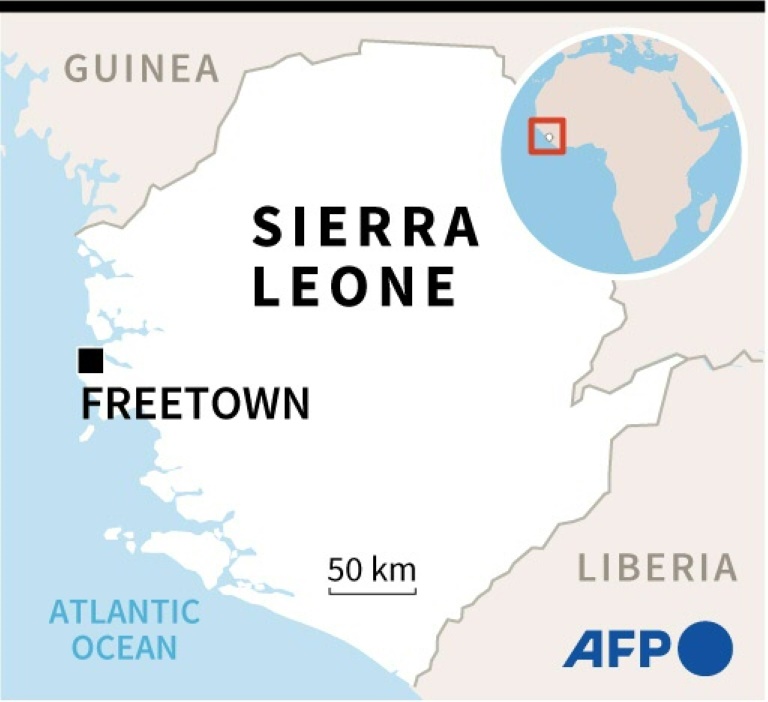
Sierra Leone delays full switchover to new currency

Sierra Leone is to delay the phaseout of its old currency until next spring, the central bank said.

On July 1, the West African country stripped three noughts off its banknotes in a bid to restore confidence in the inflation-hit currency, the leone.

The old and new notes both remain in circulation for the moment.

The transition period was due to end on October 1, when the old leone ceased to be legal tender, but has now been extended for six months, the bank announced late Thursday.

“The transition period of 1st July, 2022 to 30th September, 2022 (wherein both the Old Leone and the New Leone shall be legal tender) is hereby extended to 31st March, 2023,” it said on social media, without elaborating.

The public will be able to swap the old currency for the new one between April 1 and 15, 2023, it said.

President Julius Maada Bio introduced the re-denominated currency this summer in a bid to stop its freefall.

Shoppers needed huge quantities of the old banknotes for the simplest transactions, and unscrupulous bank tellers sometimes pilfered notes from sealed bundles of bills.

The new 10-leone note is the equivalent of 10,000 old leones and is worth around 70 US cents.

Sierra Leone’s eight million people live in one of the poorest nations in the world. The former British colony ranks 182 out of 189 countries on the United Nations’s Human Development Index.

The economy, which is heavily dependent on its diamonds and other mineral wealth, was devastated by a civil war that ran from 1991 to 2002 and left about 120,000 dead.

Efforts at rebuilding were set back by an Ebola epidemic in 2014-2016, a fall in world commodity prices, the coronavirus epidemic and the war in Ukraine.

Germany seizes Russian energy firm's subsidiaries

Berlin on Friday took control of the German operations of Russian oil firm Rosneft to secure energy supplies which have been disrupted after Moscow invaded Ukraine.

Rosneft’s German subsidiaries, which account for about 12 percent of oil refining capacity in the country, were placed under trusteeship of the Federal Network Agency, the economy ministry said in a statement.

“The trust management will counter the threat to the security of energy supply,” it said.

Chancellor Olaf Scholz said his government “did not take this action lightly but it was inevitable” for the “protection of our country”.

The seizures come as Germany is scrambling to wean itself off its dependence on Russian fossil fuels, while Moscow has stopped natural gas deliveries to Germany via the Nord Stream 1 pipeline.

The move covers the companies Rosneft Deutschland GmbH (RDG) and RN Refining & Marketing GmbH (RNRM) and thereby their corresponding stakes in three refineries: PCK Schwedt, MiRo and Bayernoil.

Fears had been running high particularly for PCK Schwedt, which is close to the Polish border and supplies around 90 percent of the oil used in Berlin and the surrounding region, including Berlin-Brandenburg international airport.

The region could have “found itself in a position, due to the refinery in Schwedt, where security of supply was no longer a given”, Economy Minister Robert Habeck said at a press conference.

– ‘Sufficient supply’ –

The refineries’ operations had been disrupted as the German government decided to slash Russian oil imports, with an aim to halt them completely by year’s end.

By taking control of the sites, the German authorities can then run the refining operations using crude from countries other than Russia.

New supplies of oil for Schwedt have been shipped in via the northeastern port of Rostock, with plans to also tap supplies imported through the Polish city of Gdansk.

The government plans to “strengthen” the pipeline between the Schwedt refinery and Rostock, while advancing discussions with officials in Warsaw about establishing a link — an option which was not available “so long as it was possible that any profits would go to Rosneft, to Russia”, said Habeck.

“There is a good chance that there will be a sufficient supply of oil for the refinery to keep working,” said Scholz.

In early April, Germany also took the unprecedented step of temporarily taking control of Gazprom’s German subsidiary, after an opaque transfer of ownership of the company set alarm bells ringing in Berlin.

– Energy earthquake –

Russia’s war in Ukraine has set off an energy earthquake in Europe and especially in Germany, with prices skyrocketing as Moscow dwindled supplies.

Germany has found itself severely exposed given its heavy reliance on Russian gas.

Moscow had also built up a grip over Germany’s oil refineries, pipelines and other gas infrastructure through energy giants Rosneft and Gazprom over the years.

Energy deals with Russia were long seen as part of a German policy of keeping the peace through cooperation with Russian President Vladimir Putin’s regime.

The cheap energy supplied by Russia was also key in keeping German exports competitive. As a result, the share of Russian gas in Germany had grown to 55 percent of total imports before the Ukraine war.

But that approach has come back to haunt officials in Berlin, forcing Scholz’s coalition to take drastic measures to ensure energy supplies are not disrupted in Europe’s biggest economy. 

With winter approaching, Germany has fired up mothballed coal power plants. It is also putting two of its nuclear power plants on standby until April, rather than phasing them out completely as planned by year’s end. 

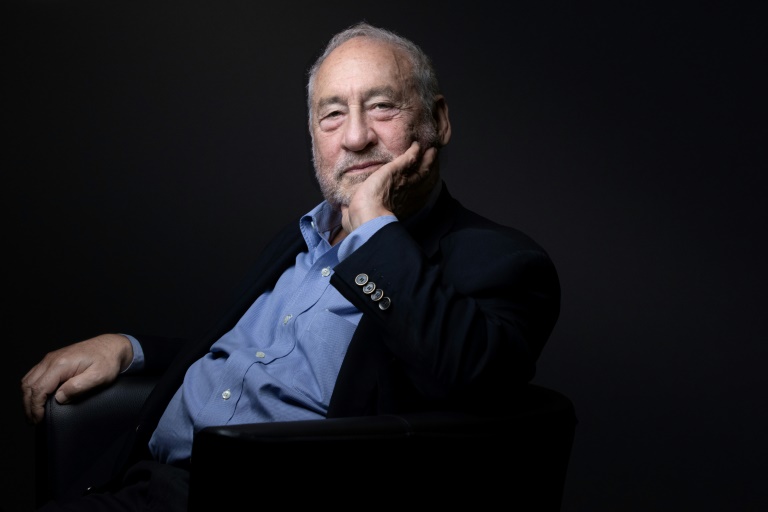
Stiglitz says oil firms did nothing to deserve windfall profits

Nobel laureate economist Joseph Stiglitz says the world’s energy giants should pay a special tax on their massive profits. To him, the companies “didn’t do anything to deserve” the windfall.

Oil and gas firms have raked in huge profits this year as energy prices have surged over supply fears after Russia, a major producer of the fossil fuels, invaded Ukraine in late February.

“Sometimes we have this discussion: are profits exploitation or are profits the just deserts of having invested more, putting out more effort,” Stiglitz said in an interview with AFP in Paris.

“This is a particular case where there is no debate,” the 2001 Nobel winner said.

“It is very clear that the oil companies didn’t do anything to deserve the high oil prices. It was (Russian President Vladimir) Putin’s invasion of Ukraine that was at the source of the problem,” Stiglitz said.

The main international oil contract reached almost $140 per barrel in March, though it has since fallen under $100. Gas prices jumped to a record 345 euros per megawatt hours that same month.

US oil giants ExxonMobil and Chevron reported record profits in the second quarter, pulling $17.9 billion and $11.6 billion, respectively.

British oil major Shell enjoyed a fivefold increase in its net profit to $18 billion in the same period.

France’s TotalEnergies and Italy’s Eni have also posted banner earnings. 

“There is an obvious answer. Tax the windfall profits and use some of the revenues to help those suffering,” Stiglitz told AFP at the Paris School of Economics.

– Inflation crisis –

The 79-year-old American economist has championed reforms of international tax rules for years to ensure major corporations pay their fair share.

He is the co-chair of the Independent Commission for the Reform of International Corporate Taxation (ICRICT), an organisation that seeks to put an end to tax havens.

The ICRICT, which held a conference in Paris on Friday, released a report calling for emergency tax measures, “especially on companies profiting from the (inflation) crisis”.

Some countries have taken their own measures.

Spain’s government announced in July temporary taxes on banks and energy firms to cover the cost of state measures to help Spaniards grapple with red-hot inflation.

Britain unveiled in May a temporary windfall tax at a rate of 25 percent on big energy companies that should bring in five billion pounds.

Italy has a similar rate in place.

The European Commission this week announced plans to raise 140 billion euros through a cap on revenues of electricity producers.

While the United States is not dependent on Russian energy like Europe, fuel prices have surged there, too, and oil firms have made huge profits.

“All that is going on is a redistribution from consumers to rich fossil fuel companies,” said Stiglitz, a former chief economist of the World Bank and White House economic adviser during Bill Clinton’s presidency.

– Global tax –

But Stiglitz says energy firms are not the only companies that should face new taxes.

The ICRICT’s report says international firms — “particularly in fuels” but also food, pharmaceuticals and finance — have increased prices “well beyond” their higher costs.

These companies “thereby experienced significantly greater than normal profits”, the report says.

There is “something more going on than just passing on increased costs” to consumers, Stiglitz told AFP.

More than 130 countries have signed an international agreement to impose a 15-percent minimum tax on major corporations.

But implementation of the OECD-brokered deal “still seems far from reality” as it is “stuck in a political impasse both in the US and in the EU”, the ICRICT says.

Last week, Europe’s top five economies, including Germany and France, said they would implement the tax in the face of Hungary’s opposition to an EU-wide agreement.

“I have to say it doesn’t look like it’s going to be adopted, sadly, as weak as it is, as pro-advanced countries as it is, as distorted as it is,” Stiglitz said.

Stocks mostly slide; pound hits 37-year dollar low

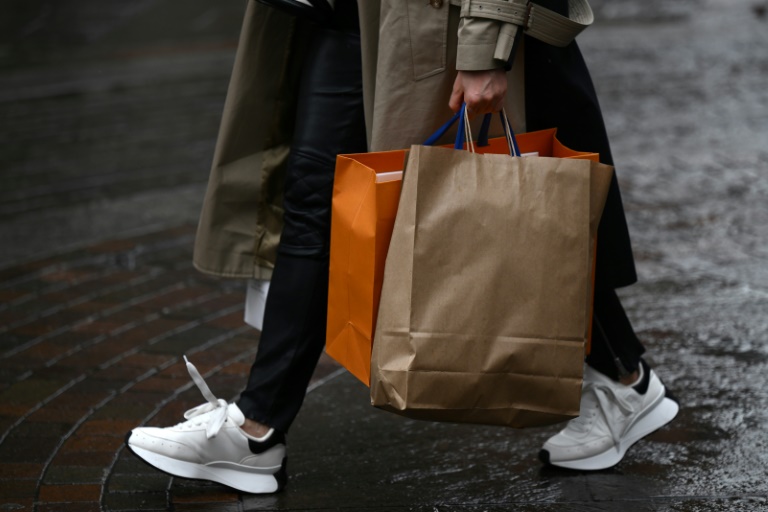
Stock markets mostly slumped Friday, while the British pound tanked to a 37-year dollar low as weak UK retail sales stoked global recession fears.

Sterling slid to $1.1351, the lowest level since 1985, on news that British retail sales tumbled by far more than forecast in August as shoppers faced rampant inflation.

Sales by volume dived 1.6 percent last month, more than triple expectations.

Eurozone and Asian stock markets tumbled but London pushed into positive territory as the weak pound boosted exporters.

Sterling has hit a series of 1985 lows in recent weeks, also as the US Federal Reserve implements aggressive hikes interest rate hikes.

– ‘Markets in pain’ –

“Markets are in a lot of pain, and the UK’s retail data has made things only worse for traders as it clearly pointed out one thing: an imminent recession,” said AvaTrade analyst Naeem Aslam.

“When you look at the sterling against the dollar, it seems like there are no buyers out there.”

Elsewhere, Frankfurt equities dived 1.5 percent and Paris shed 1.2 percent as investors digested confirmation of record-high inflation in the eurozone.

“Data for August confirm that price pressures are very strong and broad-based” with eurozone inflation at 9.1 percent, said Capital Economics analyst Jack Allen-Reynolds.

“The European Central Bank will need to continue hiking interest rates aggressively at forthcoming meetings.”

The ECB had last week hiked its key rate by a historic 75 basis points, and markets expect a similar-sized move at the October policy meeting.

Asian equities also dropped Friday, tracking Wall Street losses as investors express concern over persistently high consumer prices and the increasing likelihood of further interest rate hikes.

The Fed and Bank of England are widely expected to ramp up borrowing costs next week.

The US central bank has lifted borrowing costs by 75 basis points at each of its last two meetings. 

Asian investors meanwhile shrugged off brighter data from powerhouse economy China.

China’s factory output and retail sales beat expectations in August, new data released on Friday showed, despite the economy being hammered by Covid-related curbs, heatwaves and a deepening property market slump.

– Key figures at around 1030 GMT –

London – FTSE 100: UP 0.1 percent at 7,292.21 points

Frankfurt – DAX: DOWN 1.5 percent at 12,764.90

Paris – CAC 40: DOWN 1.2 percent at 6,082.93

EURO STOXX 50: DOWN 1.1 percent at 3,502.91

Tokyo – Nikkei 225: DOWN 1.1 percent at 27,567.75 (close)

Shanghai – Composite: DOWN 2.3 percent at 3,126.40 (close)

Hong Kong – Hang Seng Index: DOWN 0.9 percent at 18,761.69 (close)

New York – Dow: DOWN 0.6 percent to 30,961.82 (close)

Pound/dollar: DOWN at $1.1388 from $1.1467 on Thursday

Euro/pound: UP at 87.59 pence from 87.21 pence 

Euro/dollar: DOWN at $0.9974 from $1.0001

Dollar/yen: DOWN at 143.25 yen from 143.45 yen

Brent North Sea crude: UP 0.4 percent at $91.18 per barrel

West Texas Intermediate: UP at $85.21 per barrel

burs/rfj/bcp/lth

Wave of Lebanon bank 'heists' to seize back frozen savings

A man held up a Lebanese bank to withdraw his frozen savings Friday, the latest in a string of “depositor heists” in the crisis-hit country that have garnered wide public support.

Lebanon has been mired in an economic crisis for more than two years, since the value of its currency began plummeting and banks started imposing draconian restrictions on withdrawals.

The holdup of a Beirut bank on Wednesday by an activist who filmed herself using a toy gun appears to have sparked a series of copycat raids by people fed up at being unable to withdraw their savings.

There were another three such incidents in the country on Friday.

In one of them, a man carrying a gun and jerrycan of fuel demanded staff at a branch of the Byblos bank in the southern town of Ghaziyeh hand over his deposit.

Accompanied by his son, the man in his 50s threatened bank staff with the gun, which a Lebanese television channel said may have been a toy, before making his demand.

“He emptied a jerrycan of fuel on the floor,” a bank security guard told an AFP correspondent.

The man walked away with about $19,000 in cash but turned himself in to police moments later as a crowd formed in front of the bank to support him.

– Not ‘a bank robber’ –

A few hours later in the Beirut neighbourhood of Tariq al-Jdideh, a tense security situation developed around a branch of Blom Bank, although details were unclear.

Witnesses outside the bank said an indebted shop-owner had demanded access to his trapped savings.

He was locked inside the bank together with police officers, the witnesses told AFP at the scene, but was thought to be unarmed.

Another man armed with a hunting rifle stormed a bank in Beirut’s Ramlet el-Baida neighbourhood on Friday, witnesses told an AFP photographer at the scene.

The spate of heists comes two days after a young activist stormed a central Beirut bank with fuel and plastic gun to demand the deposits of her sister, who needed to pay for cancer treatment.

The woman identified as Sali Hafiz made off with around $13,000 and became an instant hero on social media with a picture of her standing on a desk inside the bank during the raid going viral on social media.

“She had every right to do this. I would do the same if I was as brave as her,” said Carla Chehab, a 28-year-old Beirut resident.

“And don’t let anyone call her a bank robber. The thieves are the banks, the government and all rich people protecting them,” she added.

Also on Wednesday, a man held up a bank in the city of Aley northeast of Beirut, the official National News Agency reported.

– Emergency meeting –

As the bank heists snowballed on Friday, the Lebanese interior minister called for an emergency meeting in the afternoon.

The raids are seen as mostly acts of desperation by Lebanese depositors who do not have criminal records and are trying to settle bills, drawing wide sympathy from the general public.

Last month, a man received widespread sympathy after he stormed a Beirut bank with a rifle and held employees and customers hostage for hours, to demand some of his $200,000 in frozen savings to pay hospital bills for his sick father.

He was detained but swiftly released and was present Friday outside the bank in Tariq al-Jdideh to express his support.

Lebanon has been battered by one of its worst-ever economic crises.

Its currency has lost more than 90 percent of its value on the black market, while poverty and unemployment have soared.

Banks have been widely accused of operating like a cartel and of spiriting large amounts out of the country for senior Lebanese officials at a time when foreign transfers were already blocked for ordinary citizens.

The country’s main depositors’ association voiced its support for desperate bank clients.

“We call on every depositor who refuses injustice, oppression and theft to support any depositor who asks for what is rightfully theirs,” association member Tala Khalil told AFP.
According to local media, the bankers association called an emergency meeting to defuse the risk of further attacks by deciding a three-day nationwide closure next week.

French traffic controllers' strike disrupts European air travel

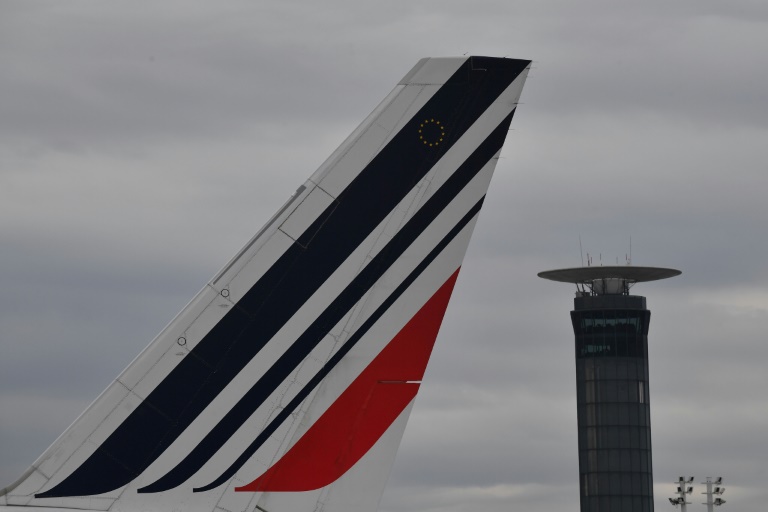
Around 1,000 flights to and from France were cancelled Friday as the country’s air traffic controllers went on strike, with their action also causing delays across European airspace.

France’s DGAC civil aviation authority said 16 airports were operating a skeleton service, as were traffic control centres guiding planes overflying French territory at high altitude.

But several regional airports were closed and the DGAC warned of “cancellations and significant delays across the country”.

At Paris’ enormous Charles de Gaulle hub, only a few cancellations were listed on departures boards among morning flights mostly going ahead, and staff in high-visibility vests were directing passengers.

“I thought we’d have lots of travellers coming to see us, but it hasn’t turned out that way, I’m surprised… I suppose most people were forewarned,” one worker told AFP, asking not to be named.

But Christina Sharikadze, waiting at the Air France ticket desk, said “we didn’t get any message, nothing at all… we’re trying to figure something out” to replace a cancelled flight home to Georgia.

European air traffic body Eurocontrol said it was seeing “significant disruption”, with delays totalling over 500,000 minutes by 8:30 am (0630 GMT).

That was more than three times the level across the whole of last Friday when air traffic was moving normally.

Delays of an average 25 minutes per flight were mostly down to the strike, Eurocontrol said.

Around 21,000 planes are expected to pass through Eurocontrol airspace on Friday, down by around one third.

Air France dropped around half its 800 planned services Friday, while Europe’s largest airline Ryanair said it had cancelled 420 flights overflying or landing in France.

The DGAC said it was working with Eurocontrol to divert planes around French airspace.

The SNCTA air traffic controllers’ union said its members are concerned that pay is not keeping up with soaring inflation.

Air traffic controllers are among France’s best-paid civil servants, earning an average of 5,000 euros ($4,985) per month according to a parliamentary report.

The union also warns that recruitment is falling short, risking gaps in the profession’s ranks.

One-third of existing air traffic controllers are expected to retire between 2029 and 2035, and training new ones takes at least five years.

The SNCTA says the long wait for new recruits means fresh funding is needed for additional training capacity.

It has filed notice of a further strike on September 28-30.

Close Bitnami banner
Bitnami