US Business

Prices soaring everywhere: from beans in Brazil to pork in China

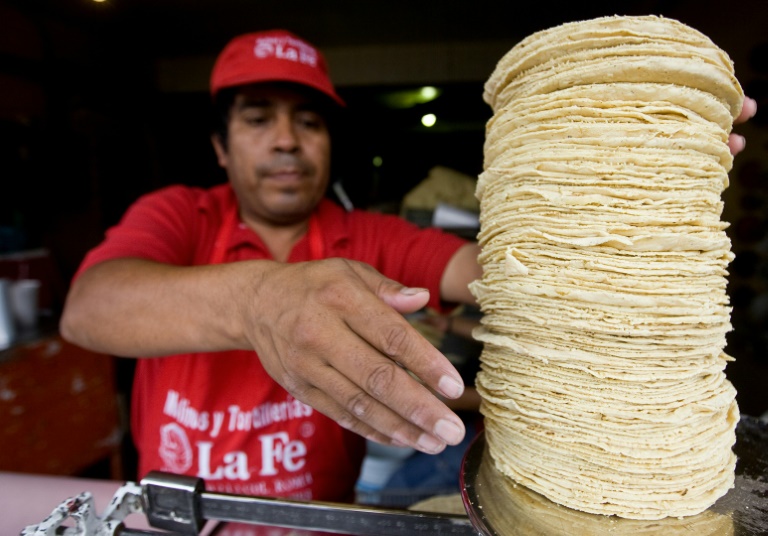
Consumers and businesses around the world are facing steeper prices for everything from Mexico’s beloved tortillas to the aluminium cans used by beer companies.

Inflation jumped after countries emerged from Covid lockdowns and it has soared since Russia invaded Ukraine, with the IMF expecting consumer prices to rise by 8.3 percent globally this year.

Here is a look at how higher prices are affecting the world:

– Fuel –

The invasion of Ukraine by Russia, the world’s third largest oil producer, sent crude oil prices through the roof.

The main international contract, Brent North Sea, almost hit $140 per barrel, but has now dropped back below $100.

Prices at the pump have followed suit, surging to over two euros per litre in eurozone countries and above five dollars per gallon in the United States, before falling back in recent weeks.

Natural gas has also become more expensive, especially in Europe, where electricity prices hit record levels in Germany and France.

Energy prices were up 38.3 percent in the eurozone in August from the same month last year.

Higher energy prices ripple throughout the economy as they affect the production and transportation costs of companies.

– Pasta, beans and tortillas –

The war sent food prices soaring as the war disrupted grain exports from Ukraine, a major supplier of wheat and sunflower oil to countries around the world.

In May, Allianz estimated that pasta prices had risen 19 percent in the eurozone over the previous 18 months.

In Canada, another large exporter of wheat, a 500-gram package had risen by 60 cents in July from the same month last year, to CAN$3.16, according to official data.

In Thailand, the price for instant noodles, which is controlled by the state, rose for the first time in 14 years in August — a 17 percent increase to seven bahts (20 US cents).

The price of the corn flour used to make tortillas in Mexico — a staple used for tacos and other dishes — is up by around 13 percent from last year and contributing to two-decade high inflation.

Pinto beans, a Brazilian staple, cost nearly 23 percent more in August than at the same time last year.

– Meat –

With grain more expensive, feeding livestock has become costlier and farmers have in turn raised their prices.

Pork, the most popular meat in China, cost 22 percent more in August than last year. 

Chinese authorities are considering tapping into their strategic reserves of pork for a second time this year in order to stabilise prices.

In Argentina, ground beef patties are popular as their prices have traditionally been low, but these have shot up by three quarters in the past 12 months. 

The country currently has one of the highest inflation rates in the world at 56.4 percent over the first eight months of the year.

In Europe, it is chicken prices that have taken wing as farmers have had to contend with bird flu in addition to cost pressures. Wholesale prices were up by a third in August from the same month last year.

– Beer –

Brewers have been hit with not only rising grain prices, but also for the aluminium cans and glass bottles for their beer.

These are 70 percent more expensive than before the war in Ukraine, according to the trade association of European brewers. 

Heineken, the world’s second-largest brewery group, hiked its prices by an average of 8.9 percent over the first half of this year. 

According to estimates by Bloomberg, AB InBev, the world’s top brewer whose beers include Budweiser and Corona, has increased its prices by eight percent.

In Britain, the cost of a pint has risen above four pounds ($4.6), the highest price since 1987, according to Britain’s Office for National Statistics.

– Newspapers –

Paper prices have climbed as demand has risen following the end of Covid lockdowns. Printing is an energy-intensive process.

Several French dailies raised their prices earlier this year, as have a number British newspapers like the Sun, the Times and Sunday Mail.

Others have reduced their number of pages.

In Europe overall, the prices of newspapers were 6.5 percent higher in July, according to official data.
India's Adani briefly listed as world's second-richest person

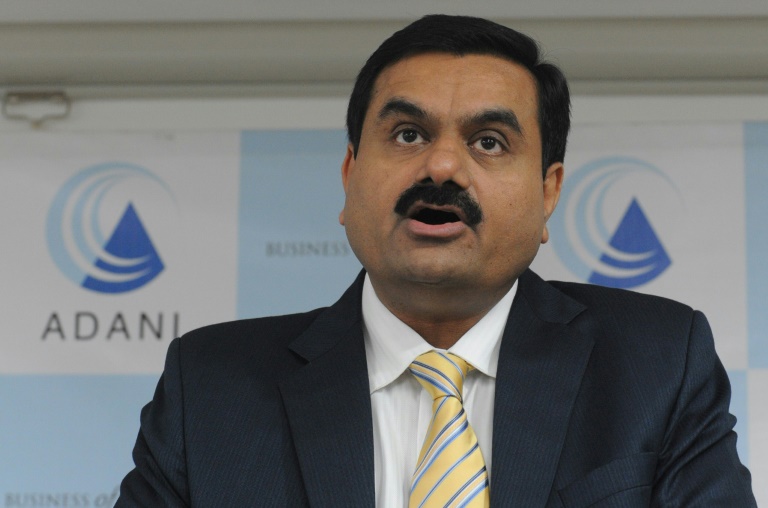
Indian industrialist Gautam Adani briefly became the world’s second-richest person on the Forbes real-time billionaire tracker on Friday, weeks after becoming the first Asian to break into the top three.

The self-made billionaire’s net worth surged $4 billion overnight to $154 billion, according to Forbes, ranking him ahead of LVMH’s Bernard Arnault and Amazon’s Jeff Bezos.

Tesla founder Elon Musk remained well out in front with a fortune of more than $270 billion.

Arnault — who at times held the top spot in May 2021 — and Adani traded the number two position during the day as the share prices of their companies fluctuated.

Adani, 60, made his fortune in ports and commodities trading and now operates India’s second-largest conglomerate with interests ranging from coal mining and edible oils to airports and news media.

His ballooning net worth reflects a stratospheric rise in the market capitalisation of his publicly listed companies, as investors back the Adani Group’s aggressive expansion of old and new businesses.

Shares in the flagship Adani Enterprises — of which the billionaire owns 75 percent — have soared more than 2,700 percent since March 2020, and doubled in value in the past six months.

Stock price surges in other group companies including Adani Transmission, Adani Power, Adani Ports and Adani Green Energy catapulted Adani past fellow Indian billionaire Mukesh Ambani this year.

Analyst estimates indicated the market capitalisation of Adani’s seven listed companies also briefly overtook those of the Tata group on Friday morning, making the Adani Group India’s largest conglomerate.

Born in the city of Ahmedabad in the western state of Gujarat to a middle-class family, Adani dropped out of college to work in the diamond industry before starting his export business in 1988.

In 1995, he won a contract to build and operate a commercial shipping port at Mundra in Gujarat, which has since grown to become India’s largest port.

At the same time, Adani expanded into thermal power generation and coal mining in India and overseas.

In recent years, the conglomerate has forayed into petrochemicals, cement, data centres and copper refining, in addition to establishing a renewable energy business with ambitious targets.

Recent investments in Indian news media and a bid for 5G airwaves this year have raised speculation that the billionaire’s empire could soon impinge on sectors dominated by Ambani’s Reliance Industries.

But Adani’s rapid expansion into capital-intensive businesses has also raised financial alarms, with Fitch Group’s CreditSights last week reiterating that they “remain concerned over the Adani Group’s leverage”.

Germany seizes Russian energy firm's subsidiaries

Berlin on Friday took control of the German operations of Russian oil firm Rosneft to secure energy supplies which have been disrupted after Moscow invaded Ukraine.

Rosneft’s German subsidiaries, which account for about 12 percent of oil refining capacity in the country, were placed under trusteeship of the Federal Network Agency, the economy ministry said in a statement.

“The trust management will counter the threat to the security of energy supply,” it said.

The seizures come as Germany is scrambling to wean itself off its dependence on Russian fossil fuels. Moscow has stopped natural gas deliveries to Germany via the Nord Stream 1 pipeline.

The move covers the companies Rosneft Deutschland GmbH (RDG) and RN Refining & Marketing GmbH (RNRM) and thereby their corresponding stakes in three refineries: PCK Schwedt, MiRo and Bayernoil.

Fears had been running high particularly for PCK Schwedt, which is close to the Polish border and supplies around 90 percent of the oil used in Berlin and the surrounding region, including Berlin-Brandenburg international airport.

The refineries’ operations had been disrupted as the German government decided to slash Russian oil imports, with an aim to halt them completely by year’s end.

By taking control of the sites, the German authorities can then run the refining operations using crude from countries other than Russia.

– Energy earthquake –

Russia’s war in Ukraine has set off an energy earthquake in Europe and especially in Germany, with prices skyrocketing as Moscow dwindled supplies.

Germany has found itself severely exposed given its heavy reliance on Russian gas.

Moscow had also built up a grip over Germany’s oil refineries, pipelines and other gas infrastructure through energy giants Rosneft and Gazprom over the years.

Energy deals with Russia were long seen as part of a German policy of keeping the peace through cooperation with Russian President Vladimir Putin’s regime.

The cheap energy supplied by Russia was also key in keeping German exports competitive. As a result, the share of Russian gas in Germany had grown to 55 percent of total imports before the Ukraine war.

But that approach has come back to haunt Germany. 

In early April, the German government took the unprecedented step of temporarily taking control of Gazprom’s German subsidiary, after an opaque transfer of ownership of the company sent alarm bells ringing in Berlin.

Germany has also been scrambling to find new sources of energy as deliveries from Russia have dwindled in the wake of the invasion of Ukraine.

The German government has also taken the stark step of firing up mothballed coal power plants, while putting two of its nuclear power plants on standby through April, rather than phasing them out completely as planned by year’s end. 

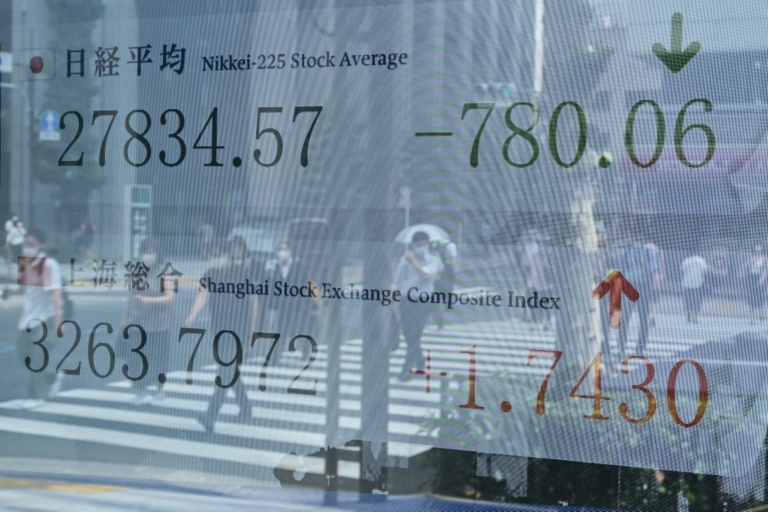
Asian stocks lose ground as investors eye Fed decision next week

Asian markets dropped on Friday, tracking Wall Street losses as investors continue to show concern over persistently high global inflation and the likelihood of further interest rate hikes.

Major markets in Tokyo, Shanghai, Hong Kong, Seoul, Taipei, Mumbai and Sydney were lower, in line with overall market sentiment ahead of a decision from the US Federal Reserve next week.

Asian stocks were on course to extend their weekly declines into a fifth straight week, following on from continuing weakness in US and European equities.

The Nikkei in Tokyo lost 1.1 percent at the close, as investors “found it difficult to aggressively take positions” ahead of a long weekend and the Fed’s upcoming decision, Seiichi Suzuki, chief equity market analyst at Tokai Tokyo Research Institute, told AFP.

China’s factory output and retail sales beat expectations in August, new data released on Friday showed, despite the economy being hammered by Covid-related curbs, heatwaves and a deepening property market slump.

The data did little to buoy China’s main stock market, however, with Shanghai closing down 2.3 percent. Hong Kong closed down 0.9 percent. 

Europe’s main stock markets slid at the open on Friday, with London’s FTSE 100 index particularly impacted by disappointing UK retail sales data.

Wall Street’s three main indices rallied briefly on Thursday, but the gains fizzled. Traders took little comfort from US President Joe Biden’s announcement of a tentative deal to avert a potentially damaging railroad strike.

All eyes remain on the Fed, which has already instituted two consecutive 75-basis-point hikes and is widely expected to carry out a third. 

On Thursday, US retail sales data showed a surprising increase in August, but the report also downgraded sales in the month prior, tempering the good news.

Weekly US jobless claims retreated once again, and industrial production fell modestly in August.

The new data was not enough, however, to offset the widespread bearish sentiment following higher-than-expected US inflation data released earlier in the week, which showed yearly inflation slowing by less than forecast and monthly inflation rising.

– Fed expectations –

Analysts expect the Fed to continue raising interest rates, in a bid to cool an overheating economy and combat inflation, which remains near decades-highs in major economies.

“Because of the dramatic rise in Treasury yields, the Fed is going to have to keep raising rates beyond (next week),” said prominent investor Louis Navellier in his podcast on Thursday.

“I think they might now raise rates in November just before the (US) midterm elections and possibly December.”

Other commentators echoed that view. OANDA’s senior market analyst Edward Moya addressed the concern that further hikes could send the world’s largest economy into a recession.

“The latest round of data suggest the Fed can stick to aggressive rate hikes as the labour market remains strong and as the economy slowly softens,” he said.

“The risks of the Fed sending the economy into a severe recession are growing but right now the data doesn’t support that argument.”

Now that the data is in, markets are fully focused on the Fed’s decision as their next potential pivot, said Fiona Cincotta, senior financial markets analyst at City Index.

“This is a market waiting for the next catalyst,” she told Bloomberg News. 

“What we saw in the selloff on Tuesday is the repricing of expectations of the Fed. Until we really hear from the Fed we are not going to get a very clear direction.”

– Key figures at around 0815 GMT –

Tokyo – Nikkei 225: DOWN 1.1 percent at 27,567.75 (close)

Shanghai – Composite: DOWN 2.3 percent at 3,126.40 (close)

Hong Kong – Hang Seng Index: DOWN 0.9 percent at 18,761.69 (close)

EURO STOXX 50: DOWN 1.5 percent at 3,488.36

London – FTSE 100: DOWN 0.3 percent at 7,261.92

Frankfurt – DAX: DOWN 1.8 percent at 12,727.57

Paris – CAC 40: DOWN 1.5 percent at 6,068.11

New York – Dow: DOWN 0.6 percent to 30,961.82 points (close)

Euro/dollar: DOWN at $0.9960 from $0.9997 

Pound/dollar: DOWN $1.1369 at from $1.1472 

Euro/pound: UP 87.61 pence from 87.14 pence 

Dollar/yen: DOWN at 143.44 yen from 143.45 yen 

Brent North Sea crude: DOWN 0.6 percent at $90.30 per barrel

West Texas Intermediate: DOWN 0.9 percent to $84.34 per barrel

Indonesia investigating Google over app store payment system

Indonesia has launched an anti-trust investigation into Google over the tech firm’s insistence that its payment system be used for purchases from its app store, authorities said Thursday, accusing it of unfair business practices.

The US internet giant has been under legal scrutiny in a number of countries over its stipulation that its billing system be used by all buyers on Google Play.

Authorities in Jakarta said in a statement they suspected “Google has abused its dominant position by imposing conditional sales and discriminatory practices in digital application distribution in Indonesia”.

Google Play is the largest app distribution platform in Indonesia, a country of around 270 million people.

Third-party developers offering their apps on Google Play are charged a 15 to 30 percent service fee, higher than the five percent imposed by other payment systems, according to an initial probe by the nation’s anti-trust agency.

“The respective developers cannot refuse the obligation because Google can impose sanctions by removing their applications from the Google Play store and preventing them from making updates to their applications,” the agency said.

Google Indonesia said on Friday that it would work with the Indonesian authorities “to demonstrate how Google Play supports developers”.

It added that since early this month, it has started a pilot billing system, allowing an alternative payment system alongside the one used on Google Play.

The American multinational has faced a barrage of legal cases in the United States, Europe and Asia based on similar accusations.

Google has also faced claims that it unfairly forced its search engine and Chrome internet browser on phone makers using the Android operating system.

On Wednesday, the European Union’s second-highest court ruled that “Google imposed unlawful restrictions on manufacturers of Android mobile devices”.

The court upheld the EU’s record fine of more than four billion euros ($4 billion) against Google

That case was the third of three major cases brought against Google by the EU’s competition czar Margrethe Vestager, whose legal challenges were the first worldwide to directly take on Silicon Valley tech giants.

South Korea fined Google nearly $180 million last year for abusing its dominant market position in a similar case regarding the Android system.

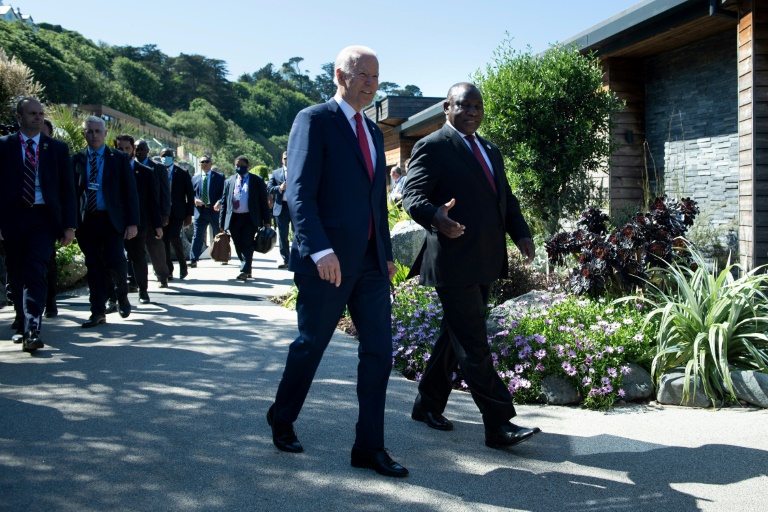
Biden to welcome S.Africa leader as Ukraine raises Africa priority

President Joe Biden on Friday will welcome South African leader Cyril Ramaphosa to the White House, part of a renewed US courting of the developing world power after its caution in condemning Russia.

The visit by Ramaphosa comes a month after US Secretary of State Antony Blinken made his own trip to South Africa, where he vowed that the United States will do more to listen to Africans.

Successive US administrations have focused much of their energy in Africa on countering the growing influence of China, which has become the continent’s dominant trading partner.

But Russia’s invasion of Ukraine has triggered a new front in the US battle for influence in Africa, where many nations have been reluctant to embrace the West in its campaign to punish and pressure Moscow.

“There are reasons for the perspectives that exist and one should never, I think, try to pretend that there aren’t histories,” said South Africa’s Foreign Minister Naledi Pandor.

She pointed to the former Soviet Union’s championing of anti-apartheid forces compared with periods of Western cooperation with South Africa’s former white supremacist regime.

“I think we’ve been fairly clear, in our view, that war doesn’t assist anyone and that we believe the inhumane actions we have seen against the people of Ukraine can’t be defended by anybody,” she said this week at the Council on Foreign Relations in Washington.

“But what we have said is that a lot of the public statements that are made by leading politicians are not assisting in ameliorating the situation, because the first prize must be to achieve peace.”

The United States has sought to highlight the invasion’s role in soaring food prices, as Ukraine was one of Africa’s largest suppliers of grain.

Russia has sought to blame food scarcities on Western sanctions, an argument dismissed by the United States, which says it is not restricting agricultural or humanitarian shipments.

– Common ground –

South Africa’s top diplomat broke with the usual polite bipartisanship of foreign dignitaries visiting Washington, not mincing words on Biden’s Republican predecessor Donald Trump, who notoriously referred to nations in the developing world with an epithet.

“We relate very well, I think probably better, with the Democrats than the Republicans,” she said. “You will recall how President Trump described Africa and no one has apologized for that as yet.”

Trump was the first US president in decades not to visit sub-Saharan Africa. Biden has not yet visited but has pledged a renewed interest, including with a summit of African leaders planned in Washington this December.

White House Press Secretary Karine Jean-Pierre said that Biden would speak to Ramaphosa about increasing trade and investment as well as efforts to combat climate change, a key priority for the US administration.

Like other developing nations, South Africa — whose eastern Mpumalanga province has one of the world’s largest concentrations of coal — argues that industrialized nations should bear the brunt of efforts to cut emissions due to their historic responsibility for climate change.

Wealthy nations at last year’s Glasgow climate conference promised $8.5 billion of financing to South Africa to transition away from coal.

Ramaphosa’s Washington visit comes amid political woes at home, three months before a party conference at which he will seek a new term.

The South African leader risks impeachment if a new independent panel established by parliament finds that he took part in an alleged cover-up of a heist at his luxury farmhouse.

Indonesia investigating Google over app store payment system

Indonesia has launched an anti-trust investigation into Google over the etch firm’s insistence that its payment system be used for purchases from its app store, authorities said Thursday, accusing it of unfair business practices.

The US internet giant has been under legal scrutiny in a number of countries over its stipulation that its billing system be used by all buyers on Google Play.

Authorities in Jakarta said in a statement they suspected “Google has abused its dominant position by imposing conditional sales and discriminatory practices in digital application distribution in Indonesia”.

Google Play is the largest app distribution platform in Indonesia, a country of around 270 million people.

Third-party developers offering their apps on Google Play are charged a 15 to 30 percent service fee, higher than the five percent imposed by other payment systems, according to an initial probe by the nation’s anti-trust agency.

“The respective developers cannot refuse the obligation because Google can impose sanctions by removing their applications from the Google Play store and preventing them from making updates to their applications,” the agency said.

Google Indonesia said on Friday that it would work with the Indonesian authorities “to demonstrate how Google Play supports developers”.

It added that since early this month, it has started a pilot billing system, allowing an alternative payment system alongside the one used on Google Play.

The American multinational has faced a barrage of legal cases in the United States, Europe and Asia based on similar accusations.

Google has also faced claims that it unfairly forced its search engine and Chrome internet browser on phone makers using the Android operating system.

On Wednesday, the European Union’s second-highest court ruled that “Google imposed unlawful restrictions on manufacturers of Android mobile devices”.

The court upheld the EU’s record fine of more than four billion euros ($4 billion) against Google

That case was the third of three major cases brought against Google by the EU’s competition czar Margrethe Vestager, whose legal challenges were the first worldwide to directly take on Silicon Valley tech giants.

South Korea fined Google nearly $180 million last year for abusing its dominant market position in a similar case regarding the Android system.

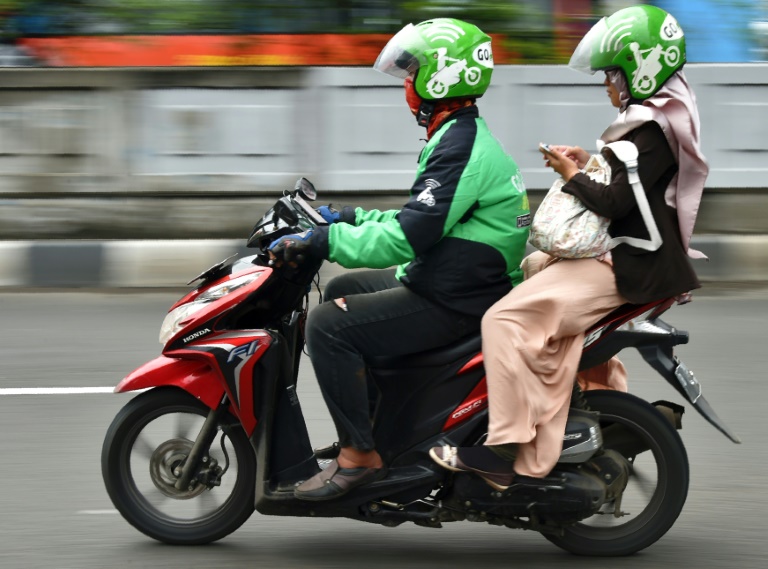
Indonesian gig drivers fear hardship after fuel price hike

Sitting on the side of a Jakarta road anxiously waiting for his phone to ping, driver Muhammad Ridwan says it is now barely worth hurtling through thick smog every day to ferry passengers.

A 30 percent hike in fuel prices spurred hundreds of drivers of the most popular ride-hailing apps to hold protests across Indonesia as they struggle to make ends meet.

“I sometimes don’t eat a proper meal the whole day to allocate my cash for fuel. If I don’t have fuel, how can I work?,” asked Ridwan, a contractor for Gojek — which alongside Singapore’s Grab is among Asia’s most valuable start-ups.

The drivers operate in an unregulated market and critics say the firms exploit them as “partners” or contractors, taking large cuts of their daily income.

To cut Indonesia’s deficit during rising global inflation and soaring energy prices due to the war in Ukraine, President Joko Widodo slashed fuel subsidies.

It pushed the price of Petralite — Indonesia’s cheapest fuel choice — from about 7,650 rupiah (50 cents) to 10,000 (67 cents) per litre.

– ‘Cannot accept’ cost –

On-demand drivers say the two ride-hailing giants have only hiked fares slightly — to the tune of 800 rupiah (5 cents) per kilometre — to cover the additional costs.

Both Gojek and Grab told AFP they imposed a rate change in line with government regulation.

Gojek, which earlier this year merged with e-commerce platform Tokopedia in a multibillion-dollar deal, said the objective of the rate change was to “support driver partners”.

Grab said it was “designed to protect and maintain our driver-partners’ welfare”.

They both declined to disclose the rate increase but union leaders said it fell short of drivers’ expectations.

“Drivers across Indonesia cannot accept the fare adjustment,” said Igun Wicaksono, who heads a union of more than 100,000 drivers.

On a good day, drivers can earn up to 150,000 rupiah ($10). But where a re-fuelling stop once cost 20,000 rupiah ($1.35), it can now cost up to 35,000 rupiah ($2.35).

Drivers sometimes have to refuel twice in a shift, leaving them with a threadbare profit.

– ‘Don’t just throw promises’ –

More competition from cheaper delivery apps is adding further pressure on Gojek and Grab drivers, leading to fears they won’t be able to provide for their families.

“It significantly burdens me whenever I buy fuel these days,” said 38-year-old Grab driver Iwan Nur Akbar, who had waited an hour for an order to ping on his phone.

“Thankfully I can still afford food for my family as we regularly get rice from government schemes,” he said.

The gig economy, with its complex rewards-based system, has been in the spotlight globally in recent years with workers in several countries holding protests against their tech employers. 

Anger was already bubbling in Indonesia before the fuel price hike with claims of unfair practices and poor working conditions.

In July, one driver sewed his lips shut to signal how drivers’ concerns on go unheard.

Gig drivers warn that the lack of action could result in mass protests across the country. So far, protests have been limited to a few hundred, and met with a huge deployment of around 8,000 police officers in Jakarta.

With Grab and Gojek accounting for more than four million drivers, that is a daunting prospect for the government.

“Don’t just throw promises,” said Gojek driver Saiful Ridwan, 38, referring to government assurances of help as he waited outside Jakarta’s Pasar Senen wholesale market.

“Don’t let poor people become poorer.”  

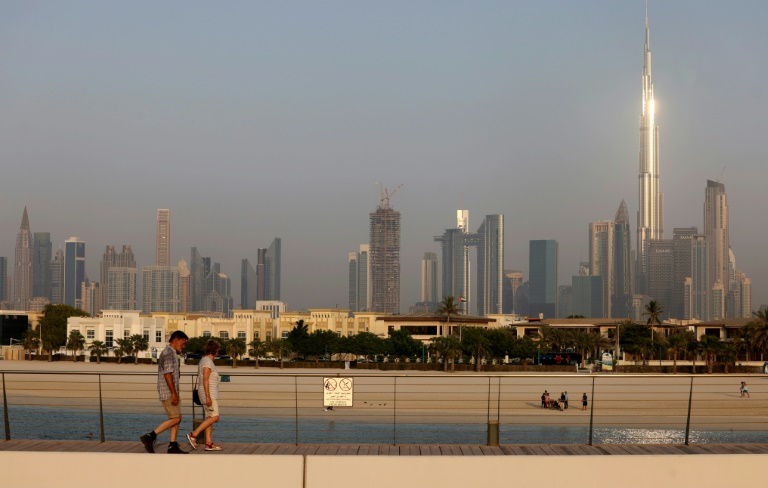
Away game: Qatar World Cup looms as money-spinner for Dubai

The United Arab Emirates did not qualify for the Qatar World Cup but it will be a winner anyway if an overspill of fans floods its hotels, restaurants and planes.

With little investment the UAE, and in particular Dubai, stands to gain if, as expected, supporters opt to stay in the tourism hotspot instead of tiny Gulf neighbour Qatar during the November-December tournament.

High accommodation prices in the Qatari capital Doha and Dubai’s more permissive environment — including a wider availability of alcohol — could entice fans, experts say.

Budget airline flydubai will run at least 30 return flights a day to Doha, just an hour away, part of a daily airlift of 160 shuttle services from cities in the resource-rich Gulf.

Dubai “has relatively relaxed social standards with respect to certain aspects of culture, such as alcohol consumption and clothing codes”, said James Swanston, a Middle East and North Africa economist at Capital Economics.

Any economic windfall, and reflected glory from the first World Cup on Arab soil, will come less than two years after Doha and the UAE were daggers-drawn over a regional blockade that isolated Qatar from its neighbours.

Dubai Sports Council has estimated about a million World Cup fans could arrive in the city. Given that Qatar is expecting a similar number, the prediction may be ambitious.

Nonetheless, Dubai is gearing up with fan zones announced at parks, beaches and in the financial centre, while hotels are offering special packages.

Such deals include shuttle flights and transport to the airport and fan zones.

The UAE is also offering multiple-entry visas at the nominal fee of 100 dirhams ($27) to people with tickets for World Cup matches.

– World Cup commuters –

Visiting fans won’t be Dubai’s only World Cup commuters. Firas Yassin, a French-Lebanese Dubai resident, booked a day-trip to see France’s opening game after being “shocked” by the price of Doha hotel rooms.

Yassin will fly in with his wife five hours before the clash with Denmark on November 26, and leave a few hours after the final whistle having realised a life-long dream to see “Les Bleus” play live.

“I’m going to visit the city, watch the match and then go back to my place in Dubai,” the 34-year-old told AFP.

Expat Sport, which is licensed by FIFA to sell match hospitality packages for the games in Doha, noted that “convenience” was a key factor in people choosing to stay in Dubai. 

It cited “the regular shuttle flights operating between the two cities and it only being an hour flight”.

One Dubai hotel, on the man-made, frond-shaped Palm island, will be given over entirely to football fans.

“We have had a surge of bookings from Mexico, UK, Europe and India,” Expat Sport said. “Room nights are going fast and we expect to be fully booked at this rate.”

The UAE’s hotel occupancy this year is already more than 40 percent higher than Covid-hit 2019, with a “strong tourism performance” expected this winter, Dubai emir and UAE Vice President Sheikh Mohammed bin Rashid Al Maktoum said on Sunday.

As of May, Dubai had 769 hotels with more than 140,000 rooms, a significant rise from early 2019, according to official figures.

Shuttle flights will also run from Saudi Arabia, Kuwait and Oman to relieve pressure on accommodation in Doha, a city of 2.4 million.

But “relative to other Gulf states, Dubai does hold an advantage with its standing as a major tourist destination already”, Swanston said.

Asian stocks open lower as all eyes on Fed decision next week

Asian markets dropped at the open on Friday, tracking Wall Street losses as investors continue to exhibit concern over persistently high global inflation and the likelihood of further interest rate hikes.

Major markets in Tokyo, Shanghai, Hong Kong and Sydney opened lower, in line with overall market sentiment ahead of a decision from the United States Federal Reserve next week.

Asian stocks look set to extend their weekly declines into a fifth straight week, following on from continuing weakness in US and European equities.

Wall Street’s three main indices rallied briefly on Thursday, but the gains fizzled, with traders taking little comfort from US President Joe Biden’s announcement of a tentative deal to avert a potentially damaging railroad strike.

The broad-based S&P 500 fell 1.1 percent Thursday and London rose less than a tenth of a percent, but both Frankfurt and Paris fell.

The Nasdaq was particularly weighed down by Adobe, which dropped a precipitous 16.9 percent after agreeing to acquire Figma, an Internet-based collaborative design platform, for $20 billion in cash and stock.

All eyes remain on the Fed, which has already instituted two consecutive 75-basis-point hikes and is widely expected to carry out a third. 

On Thursday, US retail sales data showed a surprising increase in August, but the report also downgraded sales in the month prior, tempering the good news.

Weekly US jobless claims retreated once again, and industrial production fell modestly in August.

The new data was not enough, however, to offset the widespread bearish sentiment following higher-than-expected US inflation data released earlier in the week, which showed yearly inflation slowing by less than forecast and monthly inflation rising.

– Fed expectations –

Analysts expect the Fed to continue raising interest rates, in a bid to cool an overheating economy and combat sky-high inflation, which remains near decades-highs in major economies.

“Because of the dramatic rise in Treasury yields, the Fed is going to have to keep raising rates beyond (next week),” said prominent investor Louis Navellier in his podcast on Thursday.

“I think they might now raise rates in November just before the (US) midterm elections and possibly December.”

Other commentators echoed that view, with OANDA’s senior market analyst Edward Moya addressing the concern that further hikes could send the world’s largest economy into a recession.

“The latest round of data suggest the Fed can stick to aggressive rate hikes as the labour market remains strong and as the economy slowly softens,” he said.

“The risks of the Fed sending the economy into a severe recession are growing but right now the data doesn’t support that argument.”

Now that the data is in, markets are fully focused on the Fed’s decision as their next potential pivot, said Fiona Cincotta, senior financial markets analyst at City Index.

“This is a market waiting for the next catalyst,” she told Bloomberg News. 

“What we saw in the selloff on Tuesday is the repricing of expectations of the Fed. Until we really hear from the Fed we are not going to get a very clear direction.”

– Key figures at around 0230 GMT –

Tokyo – Nikkei 225: DOWN 1.1 percent at 27,567.75 

Hong Kong – Hang Seng Index: DOWN 0.7 percent at 18,798.57

Shanghai – Composite: DOWN 0.9 percent at 3,169.73

New York – Dow: DOWN 0.6 percent to 30,961.82 points (close)

London – FTSE 100: DOWN less than 0.1 percent at 7,274.08 (close)

Euro/dollar: DOWN at $0.9995 from $0.9997 

Pound/dollar: DOWN $1.1461 at from $1.1472 

Euro/pound: UP 87.22 pence from 87.14 pence 

Dollar/yen: DOWN at 143.29 yen from 143.45 yen 

Brent North Sea crude: UP 0.3 percent at $91.13 per barrel

West Texas Intermediate: UP 0.3 percent to $85.33 per barrel

Close Bitnami banner
Bitnami