US Business

US jogger's death sparks emotional outcry and political debate

Eliza Fletcher left her home in Memphis, Tennessee for an early morning jog two weeks ago when she disappeared.

Her body was found a few days later, and since then, the tragedy has rekindled two distinct debates: one on women’s public safety, the other over racial tensions in the United States.

Authorities said the 34-year-old kindergarten teacher and mother of two was “abducted” around 4:20 am on September 2, by a man who forced her into his vehicle.

Her alleged attacker was arrested the next day, but Fletcher wasn’t found until September 5, behind an abandoned building.

The case has sparked a nationwide outpouring of sadness and anger.

Last week in cities across the country, hundreds of joggers met at the same morning hour Fletcher was kidnapped, to “finish her run” in her honor and make clear that “women should be able to run safely any time of day,” organizers said.

To those who say Fletcher was tempting fate by going out alone so early, in a city considered unsafe, “it’s time to stop blaming women for getting murdered while running,” said Christa Sgobba in a story in Self Magazine.

Melissa A. Sullivan, a marathon runner, described in The Washington Post how she was tired of constantly having to be on alert.

“Like so many other women, I’m angry. I’m frustrated. I’m exhausted by the expectation that the onus to prevent the harassment and intimidation of female runners is, should be and always will be on us,” she wrote in an op-ed.

– Culture wars –

The violent death of Fletcher, a mother with a big smile who has been described as an exemplary Christian, was quickly branded by some right-wing commentators as a sign of social decay under the left’s leadership.

Tucker Carlson, a star anchor at conservative-favored Fox News, made Fletcher an allegory for “the fall of Memphis, law and order.”

Conservative influencer Candace Owens, known for denouncing “wokeness” among other things to her four million Instagram followers, urged Fox News viewers living in inner city areas to flee, insisting those neighborhoods are infested with criminals.

“This is not a joke,” she said. “Do not wait for politicians to rescue you. Rescue yourself, and get out of these Democrat-controlled cities.”

For some conservatives, Fletcher’s case is a reflection of the “culture wars” brewing in the United States in the wake of the 2020 Black Lives Matter movement.

Fletcher was white, but her suspected killer, Cleotha Henderson — also known as Cleotha Abston — is Black.

– Violence against Black women ‘habitual’ –

Some internet users, insisting that Fletcher’s murder did not get enough attention because she was not Black, have taken up a traditional Black Lives Matter rallying cry: “Say her name.”

These words are often chanted at anti-racism rallies to remember the Black victims of police brutality.

Right-wing commentator Ann Coulter charged in her newsletter that the mainstream media has a policy of “no stories that would make Black people — or more to the point, white liberals — feel uncomfortable.”

But this belief grossly misinterprets the situation, argues Kari J. Winter, an American studies professor at the University at Buffalo.

“Anyone who imagines that Eliza Fletcher’s murder would have received more attention if she had been Black or brown is living in a fantasy world radically disconnected from the real world,” she told AFP.

“In the United States, violence against Black and brown women is far more habitual, extreme and ignored than violence against white women.”

Apart from these debates, Fletcher’s death has also resurfaced a recurring problem in the United States: a DNA sample from an unrelated rape case turned out to match Henderson.

The rape occurred in September 2021, but the sexual assault kit was only processed in June.

Without the delay, it’s possible that Henderson and Fletcher might never have crossed paths.
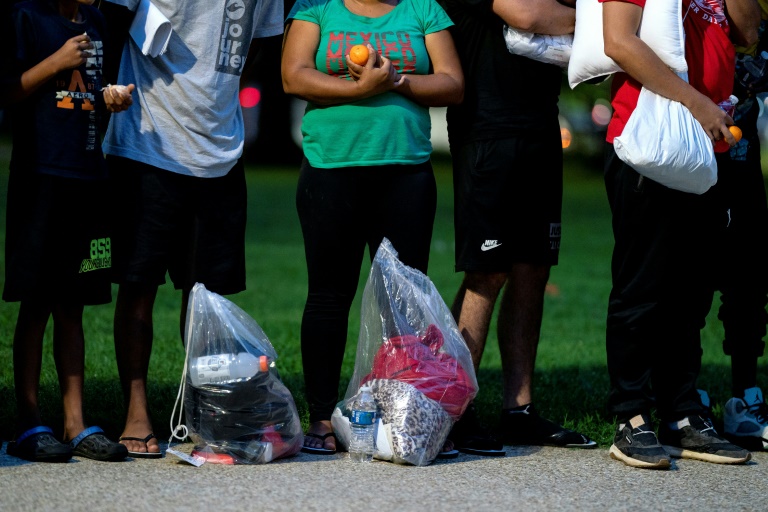
Florida governor flies migrants to wealthy Martha's Vineyard

Florida Governor Ron DeSantis took credit Thursday for sending two planeloads of undocumented Venezuelans from Texas to wealthy Martha’s Vineyard, Massachusetts, as Republicans play up immigration issues before November midterm elections.

Around 50 of the migrants, including children, landed Wednesday on the island, where Democratic presidents from John F. Kennedy to Bill Clinton have summered, and former president Barack Obama owns an estate.

“Immigrants are being dropped off on Martha’s Vineyard by chartered flights from Texas. Many don’t know where they are. They say they were told they would be given housing and jobs,” said Dylan Fernandes, a local state legislator. 

Half-a-day later two buses also from Texas deposited dozens of migrants in front of the Washington residence of Vice President Kamala Harris, part of a five-month-old operation by Texas Republican Governor Greg Abbott to pressure Democrats on the immigration issue.

“We are not a sanctuary state. . . We will help facilitate that transport for you to be able to go to greener pastures,” DeSantis said at an official event in Florida Thursday.

“In Florida, we take what is happening at the southern border seriously,” he said.

President Joe Biden slammed the moves as Republicans “playing politics with human beings.” 

“What they’re doing is simply wrong,” said Biden at a Congressional Hispanic Caucus event Thursday evening. “It’s un-American. It’s reckless.” 

– Busing thousands of migrants –

The moves came as DeSantis and Abbott, two of the country’s most prominent and combative Republican governors, have sought to highlight the issue of tens of thousands of migrants trying to cross the southern border into the United States each month.

Abbott, whose state is the first destination for most of the migrants crossing from Mexico, has since April sent about 10,000 of them northward, mainly to Washington, Chicago and New York. These cities have declared themselves “sanctuaries” for migrants — meaning they will not be arrested solely for not having legal immigrant status.

Yet most of those being transported have been permitted to stay in the country by border officials after officially requesting asylum until their cases are reviewed.

The Texas governor, who is seeking re-election in November, said Thursday that Vice President Harris claims the border is secure and denies the existence of an immigration crisis.

“We’re sending migrants to her backyard to call on the Biden administration to do its job & secure the border,” he tweeted.

– Immigration politics –

DeSantis, also in a re-election battle, has supported Abbott, and is also a top contender to run for president under the Republican banner in 2024.

Charlie Crist, the Democrat challenging DeSantis for the Florida governorship, said sending the migrants to Martha’s Vineyard was a wholly political move.

“Florida is spending $12 million to fly innocent migrant children out of our state when that money could be spent on fighting to help Floridians and lower costs,” Crist said on Twitter.

“Everything Ron DeSantis does is to score political points and feed red meat to his base in his thinly veiled attempt to run for president.”

Christina Pushaw, a spokesperson for DeSantis, taunted the Martha’s Vineyard community, which announced efforts to house and feed the migrants.

“Residents of Martha’s Vineyard overwhelmingly support illegal immigration and call for more diversity. Governor DeSantis was kind enough to grant their wishes,” she wrote on Twitter.

“There may be space at the Obamas’ mansion for a few dozen illegal aliens,” she said.

US judge appoints 'special master' in Trump document case

A US judge on Thursday named an independent arbiter to sort through thousands of documents seized from Donald Trump’s Florida estate and determine if any of them are protected by executive privilege.

This so-called special master will be Raymond Dearie, a federal judge in New York, Judge Aileen Cannon ruled.

The US Justice Department last week accepted this choice of candidate by Trump, who is behind the drive for a special master in the unprecedented case of the August 8 FBI raid on his seaside mansion.

Cannon last week issued an injunction that barred the Justice Department from using any of the documents — including the ones marked classified — for its investigation while the special master conducted their review.

The department argued that a smaller set of 100 or so classified documents that are part of the reams of papers taken from Mar-a-Lago should first be given to criminal prosecutors investigating Trump, before they go to the special master. 

The department filed suit to be able to resume looking at the classified papers right away.

But in her ruling Thursday, Cannon refused to lift any part of her injunction. 

She rejected the Justice Department’s argument that her injunction freezing the probe harmed national security.

Trump is facing mounting legal pressure, with the Justice Department saying top-secret documents were “likely concealed” to obstruct an FBI probe into his potential mishandling of classified materials.

He has denied all wrongdoing, saying the raid was “one of the most egregious assaults on democracy in the history of our country.”

Government attorneys previously opposed Trump’s special master request altogether, arguing that an independent screening for privileged material could harm national security, and was also unnecessary as a team had already completed a screening.

In addition to the documents probe, Trump faces investigations in New York into his business practices, as well as legal scrutiny over his efforts to overturn results of the 2020 election, and for the January 6, 2021, attack on the US Capitol by his supporters. 

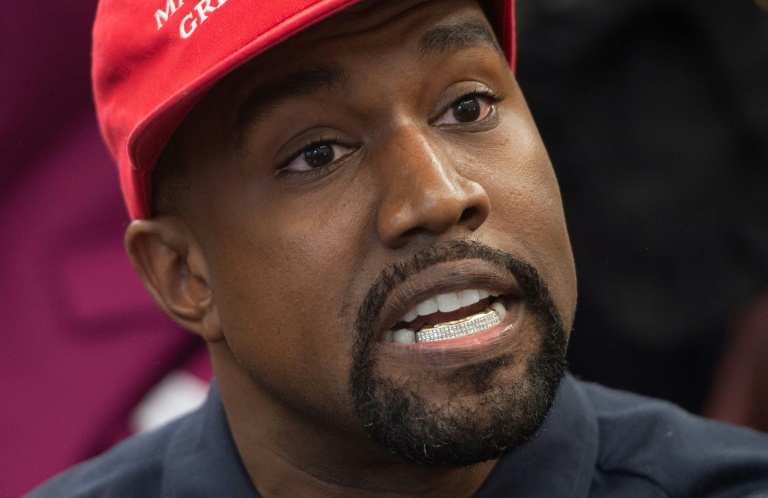
Kanye West ends Gap partnership, aims to open own boutiques

Kanye West and retail brand Gap announced an end to their partnership on Thursday, with the artist now known as Ye saying he plans to open his own stores.

“GAP left Ye no choice but to terminate their collaboration agreement because of GAP’s substantial noncompliance,” wrote the artist’s lawyer, Nicholas Gravante, in a letter, elements of which were seen by AFP.

The rapper, producer, fashion designer and mercurial personality inked a much-touted deal with Gap in 2020, with plans to marry the struggling retailer’s clothing classics with West’s Yeezy designs.

In a letter to employees on Thursday, a copy of which was obtained by AFP, Gap brand CEO Mark Breitbard said that management had decided to “wind down the partnership” with West.

“While we share a vision of bringing high-quality, trend-forward, utilitarian design to all people… how we work together to deliver this vision is not aligned,” he said.

Breitbard clarified that several Yeezy Gap branded products already in development before the breakup would continue to be released, “as planned.”

Wall Street took the news badly, with Gap shares dropping nearly three percent by around 1700 GMT.

The announcement caps months of social media complaints from West, which include accusations that he’s been left out of the creative process and criticisms of marketing delays.

Gravante said West has “diligently” tried to work through issues with the company but “he has gotten nowhere.”

“GAP’s substantial noncompliance with its contractual obligations has been costly,” he continued. “Ye will now promptly move forward to make up for lost time by opening Yeezy retail stores.”

Gap had been expecting $1 billion from Yeezy products alone within five years of the ten-year signed partnership, according to The New York Times.

West saw the collaboration as a way to increase the accessibility of his products, having previously put out limited series at high price points with financing from the German brand Adidas — which the rapper has also criticized in recent months.

His collection, launched in 2022, echoed West’s own style — dark, baggy clothes and variations on the hooded sweatshirt that was once Gap’s signature garment.

Gap Inc also owns the Banana Republic, Old Navy and Athleta brands.

Fading in popularity for years, the company has closed some 350 Gap and Banana Republic stores since October 2020.

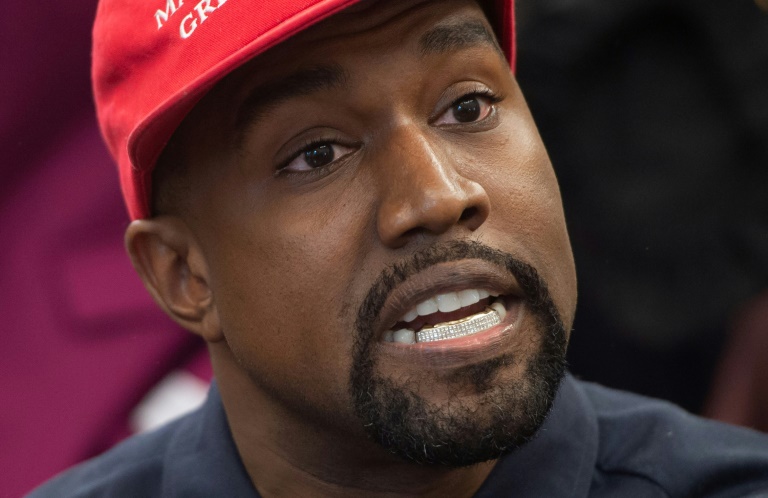
Kanye West ends Gap partnership, aims to open own boutiques

Kanye West and retail brand Gap announced an end to their partnership on Thursday, with the artist now known as Ye saying he plans to open his own stores.

“GAP left Ye no choice but to terminate their collaboration agreement because of GAP’s substantial noncompliance,” wrote the artist’s lawyer, Nicholas Gravante, in a letter, elements of which were seen by AFP.

The rapper, producer, fashion designer and mercurial personality inked a much-touted deal with Gap in 2020, with plans to marry the struggling retailer’s clothing classics with West’s Yeezy designs.

In a letter to employees on Thursday, a copy of which was obtained by AFP, Gap brand CEO Mark Breitbard said that management had decided to “wind down the partnership” with West.

“While we share a vision of bringing high-quality, trend-forward, utilitarian design to all people… how we work together to deliver this vision is not aligned,” he said.

Breitbard clarified that several Yeezy Gap branded products already in development before the breakup would continue to be released, “as planned.”

Wall Street took the news badly, with Gap shares dropping nearly three percent by around 1700 GMT.

The announcement caps months of social media complaints from West, which include accusations that he’s been left out of the creative process and criticisms of marketing delays.

Gravante said West has “diligently” tried to work through issues with the company but “he has gotten nowhere.”

“GAP’s substantial noncompliance with its contractual obligations has been costly,” he continued. “Ye will now promptly move forward to make up for lost time by opening Yeezy retail stores.”

Gap had been expecting $1 billion from Yeezy products alone within five years of the ten-year signed partnership, according to The New York Times.

West saw the collaboration as a way to increase the accessibility of his products, having previously put out limited series at high price points with financing from the German brand Adidas — which the rapper has also criticized in recent months.

His collection, launched in 2022, echoed West’s own style — dark, baggy clothes and variations on the hooded sweatshirt that was once Gap’s signature garment.

Gap Inc also owns the Banana Republic, Old Navy and Athleta brands.

Fading in popularity for years, the company has closed some 350 Gap and Banana Republic stores since October 2020.

US targets Russia tech industry, proxies in Ukraine with sanctions

The US slapped sanctions Thursday on a long list of Russian officials and companies, ramping up pressure over the invasion of Ukraine and hoping to hobble any attempt to rebuild its heavily damaged defense sector.

Top officials overseeing Russian securities markets operations, a neo-Nazi fighter group, Russian and pro-Russian officials in occupied parts of Ukraine, and a children’s rights official who allegedly directs the removal of Ukrainian children to Russia were all named to the US sanctions blacklist.

The GRU intelligence agency and a top economic advisor to President Vladimir Putin, Maxim Oreshkin, were placed on sanctions lists.

In a parallel action, US sanctions were targeted at Russian space, computing and technology firms, in an effort to cripple Russia’s technology development and stifle its ability to refurbish and modernize its military after broad losses in Ukraine.

And five Russian officials were blacklisted for allegedly supporting or enabling the theft by Russians of Ukrainian grain.

“The United States continues to hold the Russian government to account for its war against Ukraine,” said Secretary of State Antony Blinken.

“Those designated today — from perpetrators of violence to an official facilitating the purposeful removal of children from Ukraine — provide examples of the behavior that has become synonymous with the Government of Russia’s unprovoked war,” he said.

US Treasury sanctions aim to freeze any assets those designated might have under US jurisdiction and forbid any US individuals or companies — including international banks with US operations — to do business with them, effectively limiting their access to global financial networks.

The sanctions singled out justice officials in occupied Crimea and members of Chechen Republic leader Ramzan Kadyrov’s family, including three of his wives.

The Treasury blacklisted Maria Alexeyevna Lvova-Belova, Russia’s Presidential Commissioner for Children’s Rights. 

Working directly under Putin, the Treasury said, Lvova-Belova has overseen the deportation of thousands of Ukrainian children to Russia.

“Lvova-Belova’s efforts specifically include the forced adoption of Ukrainian children into Russian families, the so-called ‘patriotic education’ of Ukrainian children, legislative changes to expedite the provision of Russian Federation citizenship to Ukrainian children, and the deliberate removal of Ukrainian children by Russia’s forces,” it said.

The Treasury also put sanctions on Task Force Rusich, a neo-Nazi paramilitary group fighting in Ukraine and associated with the Wagner mercenary army controlled by close Putin advisor Yevgeny Prigozhin.

– Targeting Russian tech industry –

The United States also stepped up its efforts to cut off Russian industry and particularly high-technology entities from the global market, seeking to deprive them of capital and components from abroad.

The State Department named 31 companies to its sanctions list, including three involved in building space instrumentation, satellites and space-defense equipment.

Others on the list are involved in semiconductor development, nanotechnologies, quantum computing and engine technologies, 

In addition, the US Commerce and Treasury departments issued bans on the export of quantum computing technology and related software and hardware to Russia and Belarus.

The Treasury said that would degrade Moscow’s ability to rebuild its military after heavy losses in the continuing war.

“As Ukraine presses forward with defending its freedom, today we’re taking steps to further degrade Russia’s ability to rebuild its military, hold perpetrators of violence accountable, and further financially isolate Putin,” said Treasury Secretary Janet Yellen in a statement.

In the Russian financial sector, sanctions included the heads of key institutions including NSPK, which runs the Mir payment card network; the National Settlement Depository; CCP NCC, which manages settlement for the Moscow stock exchange; and the Deposit Insurance Agency.

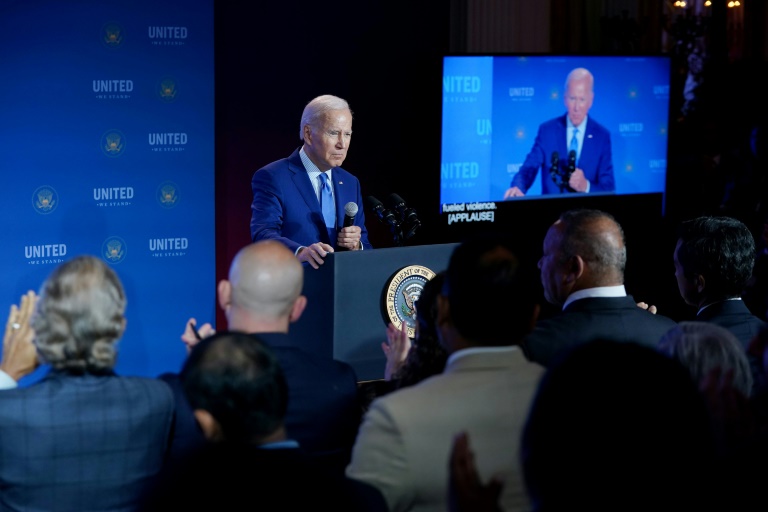
Biden appeals for unity in anti-extremism 'summit'

US President Joe Biden appealed Thursday for a united front against hate-crimes and political violence in a speech building on his bid to present himself as champion of moderate values at a time of rising extremism.

“We have to face the good, the bad and the truth. That’s what great nations do and we’re a great nation,” Biden told a packed hall at the White House’s United We Stand Summit. “You must choose to be a nation of hope, unity and optimism — or a nation of fear and division and hate.”

Biden recounted, as often before, how he took the decision to challenge then president Donald Trump in the 2020 election after the Republican initially declined to condemn a 2017 neo-Nazi march in Charlottesville, Virginia.

“Charlottesville changed everything, because I believe our story is to unite as people in one nation, in one America.”

But he said that a spate of racist violence — including a deadly attack on a Black church in Charleston, South Carolina, in 2015, a mass shooting targeting Latinos in El Paso, Texas, in 2019, and another gun massacre, this time targeting African Americans, in Buffalo, New York, in May — had left the country reeling.

“Many of you have lost part of your heart and soul,” he told the audience, which included a cross-section of civil rights activists, religious leaders, academics and elected officials.

The White House described the day-long conference, with Biden giving the keynote speech, as a chance to highlight “the corrosive effects of hate-fueled violence on our democracy and public safety.”

The summit comes just eight weeks ahead of midterm elections in which Republicans are seeking to take control of Congress.

It also comes two weeks after Biden delivered a fiery speech denouncing the “extreme ideology” of Trump, whose supporters overran the Capitol to try to overturn the 2020 election and who continues to promote far-right conspiracy theories.

A White House official told reporters that Thursday’s event, which featured a panel with both Republican and Democratic mayors, was not political and would “demonstrate that we can unite across partisan lines.”

However, Republicans have painted Biden as a divider for calling out Trump supporters, noting that the former president remains hugely popular with the party’s voters.

Biden defended himself in his White House speech, saying he was right to speak up.

“There are those who say that when we bring this up we divide the country,” he said. But “silence is complicity.”

Among some of the practical measures discussed at the conference was Biden’s suggestion that Congress should “get rid of special immunity for social media companies and impose much strong transparency requirements on all of them” regarding extremist content.

The provision known as Section 230 shields platforms from liability for content and has long been targeted by some in Congress.

Donations surge for US teen ordered to pay rapist's family

Donations poured in on Thursday for a teenager in the midwestern US state of Iowa who killed her accused rapist and was ordered by a court to pay $150,000 to his family.

Pieper Lewis, 17, was sentenced in Polk County earlier this week to five years of probation and community service for the June 2020 stabbing death of Zachary Brooks.

Lewis, who was 15 at the time and had run away from home, accused the 37-year-old Brooks of raping her repeatedly.

She was initially charged with murder but pleaded guilty to manslaughter.

Judge David Porter delivered the probation sentence on Lewis but also ordered her to pay $150,000 in restitution to Brooks’ family, saying state law gave him no other choice.

The ruling provoked an uproar and a former teacher of Lewis, Leland Schipper, organized a GoFundMe to raise funds for the former student.

“A child who was raped, under no circumstances, should owe the rapist’s family money,” Schipper said in an online post.

As of Thursday afternoon, the GoFundMe had raised nearly $390,000.

Schipper said the funds will be used to pay off the $150,000 debt and $4,000 due to the state.

The additional money will be used to “remove financial barriers for Pieper in pursuing college/university or starting her own business,” Schipper said.

Large part of Ukraine grain storage lost in war: report

Ukraine has lost nearly 15 percent of its grain storage capacity in the war with Russia, threatening its role as a key food supplier to the world, a new report said Thursday.

The US government-backed Conflict Observatory said Russians had seized 6.24 million tonnes’ worth of food storage capacity, and that another 2.25 million tonnes of capacity in Ukrainian hands had been destroyed.

In total, the war has removed around 8.5 million of Ukraine’s 58-million-tonne storage capacity, threatening the country’s future ability to get crucial supplies of wheat, corn and sunflower oil to the world market, according to the report.

As a result, farmers are running out of room to store their output for shipment, which could discourage plantings for the next crop, especially winter wheat, the report said.

“Russia and Russia-aligned forces’ damage and seizure of Ukrainian crop storage capacity threatens to turn Ukraine’s current agricultural crisis into catastrophe,” the report said.

“Millions of people around the world rely on Ukrainian agricultural products and are directly impacted by price spikes in global commodities markets caused by shortages linked to Russia’s invasion of Ukraine.”

The report, which was drawn up for the Conflict Observatory by the humanitarian research lab at Yale University’s School of Public Health and the government’s Oak Ridge National Laboratory, used satellite photography and object detection algorithms to assess the damage of storage facilities such as silos and grain elevators across Ukraine.

It noted that even partial damage at a facility can spoil stored crops.

Most of the captured and damaged facilities are in Mykolayiv, Zaporizhzhia and Donetsk Oblast, and the largest parts were near transportation hubs, suggesting they were damaged in deliberately targeted attacks.

“Indiscriminate targeting of crop storage infrastructure can constitute a war crime and a crime against humanity under international law,” the report said.

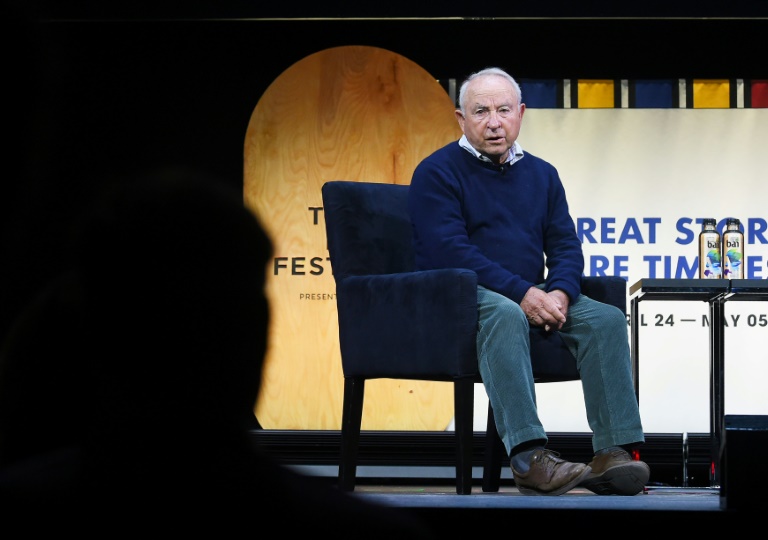
Patagonia founder Yvon Chouinard, the reluctant businessman

Yvon Chouinard built an empire with his outdoor gear brand Patagonia, but the nature enthusiast has never done business like anyone else. And now, aged 83, he’s just taken his most drastic step: he has decided to give away the company to fight climate change.

It’s an unusual move in the United States, a thoroughly capitalist society, but it’s completely on brand for the California resident.

“I’ve been a businessman for almost sixty years,” Chouinard wrote in a book in 2006. “It’s as difficult for me to say those words as it is for someone to admit being an alcoholic or a lawyer.”

“Yet business can produce food, cure disease, control population, employ people, and generally enrich our lives. And it can do these good things and make a profit without losing its soul.”

Chouinard has worked hard to make Patagonia a socially responsible enterprise.

The company has given the equivalent of one percent of its sales to environmental groups every year since 1985, and it was one of the first clothing brands to switch entirely to organic cotton in 1996.

Patagonia also became the first to adopt California’s public benefit corporation status in 2012, meaning it became a company structured for charitable purposes, not private gain. 

In 2018, Patagonia made saving the planet its official purpose.

And now, almost 50 years after launching the company, Chouinard agreed with his wife and their two children to transfer 100 percent of their stock shares to a trust dedicated to making sure their values are respected, and a nonprofit dedicated to fighting climate change and protecting nature.

The latter will receive all of Patagonia’s profits, which are currently valued at about $100 million per year.

“Earth is now our only shareholder,” Chouinard said in a letter posted on the Patagonia website.

– Unwavering vision –

Kristine McDivitt Tompkins, a member of Patagonia’s board of directors, has known Chouinard since he was 24. And since then, “his vision has never wavered,” she said in a statement announcing Patagonia’s next phase.

“While he is in good health now, he wanted to have a plan in place for the future of the company and the future of the planet.”

Chouinard was born in 1938 in the northeastern US state of Maine, to a French-Canadian father from Quebec and a mother he described as “adventurous.” He moved to California in 1946.

It was there, in a falcon-watching club, that a few years later he discovered his passion for rock climbing.

He began making his own pitons, metal anchors for climbing ropes, and learned some metalworking in the process. Other climbers began to want their own.

And so, his business began, even if it barely brought in enough money to live on in the first few years.

He created Chouinard Equipment in 1965 with a partner, which quickly became a reference group in the climbing world.

During a trip to Scotland, Chouinard bought a rugby jersey for climbing. The fabric was strong, and the shirt’s collar helped protect his neck from the ropes.

Back in the United States, others asked where they could get one. Sensing another opportunity, he began to sell rugby shirts, among other clothing items. Patagonia officially launched in 1973.

The group has since diversified, with subsidiaries in food, media, surfboards, investments in like-minded startups and recycling used clothes.

Forbes magazine recently put Chouinard’s net worth at $1.2 billion.

But the entrepreneur drives a beat-up old Subaru. He doesn’t own a computer or cell phone and splits his time between two modest houses in California and Wyoming, The New York Times reported.

Speaking about his latest decision, Chouinard told the paper: “Hopefully this will influence a new form of capitalism that doesn’t end up with a few rich people and a bunch of poor people.”

Close Bitnami banner
Bitnami