US Business

US retail sales see surprise bounce in August

US consumers buying cars and going to restaurants and bars in August drove a surprise bounce in retail sales, even as spending on gasoline fell as prices at the pump dropped, according to government data Thursday.

Americans flush with savings have been a key driver of the US pandemic recovery and the Federal Reserve is keeping a careful eye on economic data as it battles to quash red-hot inflation without tipping the world’s largest economy into recession.

Retail sales last month rose 0.3 percent compared to July, to $683.3 billion, the Commerce Department said.

But while the headline gain was much better than the flat result economists had projected, the figure for July was revised down to show a 0.4 percent drop, so the August increase means the total remains below the level in June.

The 3.0 percent jump in auto sales was the main factor behind the increase, and when that segment is excluded, retail sales would have declined 0.3 percent, according to the report.

Gasoline stations saw sales drop 4.2 percent following weeks of declining energy costs.

US gas prices at the pump soared in the wake of the Russian invasion of Ukraine in late February, but in recent weeks have been trending down and have fallen by more than $1 a gallon after hitting an all-time high of over $5 in mid-June, squeezing family budgets.

Meanwhile, restaurants and bars rose 1.1 percent, as did building supplies, the report said, but online sales fell.

“Households continue to spend, supported by strong job growth and rising nominal incomes. However, households face headwinds from elevated inflation that is not yet showing any significant sign of abating,” said Rubeela Farooqi of High Frequency Economics.

The data are seasonally adjusted but do not take into account changes in prices, so as costs rise, a shopping dollar does not stretch as far and American families have had to use more of their earnings on staple goods.

The latest consumer price data showing widespread inflation has solidified expectations that the Federal Reserve will announce a third consecutive three-quarter-point interest rate increase at its policy meeting next week.

The central bank has raised the benchmark borrowing rate four times this year, including two massive three-quarter point increases in June and July after US annual inflation spiked to 9.1 percent in June.

While the annual pace slowed to 8.3 percent in August, Fed officials have made it clear they will continue to hike borrowing costs until inflation moves down.


US retail sales see surprise bounce in August

US consumers buying cars and going to restaurants and bars in August drove a surprise bounce in retail sales, even as spending on gasoline fell as prices at the pump dropped, according to government data Thursday.

Americans flush with savings have been a key driver of the US pandemic recovery and the Federal Reserve is keeping a careful eye on economic data as it battles to quash red-hot inflation without tipping the world’s largest economy into recession.

Retail sales last month rose 0.3 percent compared to July, to $683.3 billion, the Commerce Department said.

But while the headline gain was much better than the flat result economists had projected, the figure for July was revised down to show a 0.4 percent drop, so the August increase means the total remains below the level in June.

The 3.0 percent jump in auto sales was the main factor behind the increase, and when that segment is excluded, retail sales would have declined 0.3 percent, according to the report.

Gasoline stations saw sales drop 4.2 percent following weeks of declining energy costs.

US gas prices at the pump soared in the wake of the Russian invasion of Ukraine in late February, but in recent weeks have been trending down and have fallen by more than $1 a gallon after hitting an all-time high of over $5 in mid-June, squeezing family budgets.

Meanwhile, restaurants and bars rose 1.1 percent, as did building supplies, the report said, but online sales fell.

“Households continue to spend, supported by strong job growth and rising nominal incomes. However, households face headwinds from elevated inflation that is not yet showing any significant sign of abating,” said Rubeela Farooqi of High Frequency Economics.

The data are seasonally adjusted but do not take into account changes in prices, so as costs rise, a shopping dollar does not stretch as far and American families have had to use more of their earnings on staple goods.

The latest consumer price data showing widespread inflation has solidified expectations that the Federal Reserve will announce a third consecutive three-quarter-point interest rate increase at its policy meeting next week.

The central bank has raised the benchmark borrowing rate four times this year, including two massive three-quarter point increases in June and July after US annual inflation spiked to 9.1 percent in June.

While the annual pace slowed to 8.3 percent in August, Fed officials have made it clear they will continue to hike borrowing costs until inflation moves down.

How the tide turned on data centres in Europe

Every time we make a call on Zoom, upload a document to the cloud or stream a video, our computers connect to vast warehouses filled with servers to store or access data.

Not so long ago, European countries were falling over each other to welcome the firms that run these warehouses, known as data centres or bit barns.

Wide-eyed politicians trumpeted investments and dreamt of creating global tech hubs.

But then the dream went sour.

The sheer amount of energy and water needed to power and cool these server farms shocked the public.

The industry sucked up 14 percent of Ireland’s power last year, London warned home builders that power shortages caused by bit barns could affect new projects, and Amsterdam said it simply had no more room for the warehouses.

Then things got worse.

The war in Ukraine helped spark an energy crisis across the continent, leaving consumers facing rocketing bills and countries contemplating energy shortages.

“Data centres will be a target,” critical blogger Dwayne Monroe told AFP, saying the focus would only grow if Europe cannot fix its energy crisis.

Grassroots campaigns and local opposition have already helped to halt projects this year by Amazon in France, Google in Luxembourg and Meta in the Netherlands.

The Irish government, while reaffirming support for the industry, put strict limits on new developments until 2028.

The data industry says it feels unfairly targeted, stressing its efforts to source green energy and arguing that outsourcing storage to bit barns has helped slash consumption.

– ‘Veil of shadow’ –

These arguments are playing out most spectacularly in Ireland.

Activists are campaigning on a broad range of topics and using local forums to push their case.

“They take up a huge amount of space but provide basically no employment,” says Madeleine Johansson, a Dublin councillor for the People Before Profit party, which is campaigning on the issue.

Johansson recently had a motion passed in her council area banning the centres, sparking an almighty row with the national government that is yet to be resolved.

Dylan Murphy of Not Here, Not Anywhere, one of several climate groups pushing the issue in Ireland, has filed a motion in his local council in Fingal calling for companies to reveal the kind of information they are holding.

“There’s a complete lack of transparency… about what data is actually being stored in these data centres,” he said, calling it a “veil of shadow”. 

The data industry says revealing that information would be impossible.

Michael McCarthy of Cloud Infrastructure Ireland, a lobby group, said activists had lost the argument on sustainability and were now throwing everything at the wall. 

“Data centres definitely are large energy users but they’re part of a cohort of larger energy users,” he said.

McCarthy and industry figures in other countries say the real problem is years of underinvestment in national energy infrastructure. 

He also pointed out that the industry in Europe had pledged to become carbon neutral by 2030.

And there are still countries hankering to get data firms to locate there — particularly Iceland and Norway.

– Questions over metaverse –

Against this backdrop, the tech industry continues to innovate new products that invariably require vast amounts of processing power and data storage.

Machine-learning tools, for example, are hugely energy hungry — Google said earlier this year they accounted for between 10 and 15 percent of its total energy usage.

The metaverse, an emerging concept for a 3D internet championed by Facebook owner Meta, would also be hugely energy intensive. 

Critical blogger Monroe reckons the metaverse will buckle under its own weight, partly because of its data requirements.  

“The construction of the metaverse would require Facebook to build out a distribution of data centres that would rival what Amazon, Microsoft and Google have done for their clouds,” he said.

Meta did not respond directly to questions about the metaverse but told AFP that it was “proud to build some of the most energy and water efficient data centres in the world”.

As far as the carbon footprint of such innovation goes, energy experts interviewed by AFP said it would be difficult to assess.

The metaverse, for example, could help to reduce emissions in other areas by reducing the need for travel.

An energy official who did not want to be named questioned whether data centres were the best target for criticism when cryptocurrencies were so wasteful.

While data centres accounted for one percent of global electricity use in 2020, cryptocurrency mining used about half that amount, according to the International Energy Agency.

McCarthy said those who opposed data centres needed to reckon with just how embedded they had become in everyday life, particularly since the coronavirus pandemic.

“They facilitate how we can work and live online, that’s the reality of it,” he said.

Path clear for Swiss purchase of US F-35 fighters

Swiss lawmakers voted Thursday to proceed with the controversial purchase of F-35 fighter jets without holding a referendum sought by opponents of the deal.

The lower house National Council gave the government the go-ahead to buy the 36 aircraft from US manufacturer Lockheed Martin by a large majority.

The upper house, the Council of States where Switzerland’s cantons are represented, has already approved the acquisition.

The Swiss government said last month it planned to go ahead with the acquisition of the combat aircraft despite a petition to hold a popular vote on the issue.

The left-leaning “Stop-F-35” alliance handed over the 100,000 signatures required under Switzerland’s direct democracy system to take any subject to a vote.

But the government said there would not be enough time to hold a vote before Lockheed Martin’s offer for the F-35A aircraft expired, which would have left Switzerland unable to replace its ageing fleet of fighter jets.

Switzerland decided in June 2021 to acquire F-35s and has until March 2023 to sign the contract.

In September 2020, Swiss voters narrowly approved six billion Swiss francs ($6.3 billion) to replace the country’s fleet of F/A-18 Hornets.

The selection of the F-35 sparked some controversy, particularly in light of the cost-overruns of the fighter programme in the United States, but a Swiss parliamentary investigation did not call into question the selection of the fighter.

Switzerland will join a growing number of European countries which have opted for the stealth multi-role combat aircraft, including Belgium, Britain, Denmark, Finland, Italy, Greece, Germany, the Netherlands, Norway, and Poland.

Thai Supreme Court dismisses final Toyota appeal over tax bill

Thailand’s Supreme Court on Thursday dismissed a final appeal by the local subsidiary of car giant Toyota over a disputed $270 million import tax bill following a decade of legal wrangling.

The case relates to Toyota Motor Thailand’s importation of parts for its Prius model at a reduced tax rate between 2010 and 2012 under a Japan-Thailand trade agreement.

Thai authorities said Toyota’s imports were not included under that agreement and estimate the company owes roughly 10 billion baht ($270 million).

While the country’s Central Tax Court ruled in favour of Toyota in 2017, the decision was later overturned.

On Thursday the Supreme court issued a final ruling against Toyota, stating the firm was not eligible for the 30 percent import duty reduction. 

In a statement Toyota Motor Thailand said it “respects the Supreme Court’s ruling”.

But it noted that a 2012 customs ruling — later upheld by the Supreme Court — reinterpreted previously agreed import rules, “resulting in a much higher tax on TMT”.

“Once TMT has obtained the Supreme Court’s full, written decision, we will study the ruling and comply with its requirements,” the statement said.

“We are committed to ensuring that our business practices comply with all applicable government regulations,” the firm added.

The dispute centres on whether the imports should be classified as car parts or fully assembled cars.

The 10 billion baht is comprised of import duty, value-added tax, excise tax, and municipal tax, explained customs department senior official Chaiyut Khumkhun.

“We have yet to see the exact amount Toyota has to pay because we are waiting for the full document of the ruling,” he said.

United States officials are also examining allegations that consultants hired by Toyota Motor Thailand may have attempted to bribe officials over the tax dispute.

In April 2020, Toyota reported possible anti-bribery violations related to its Thai subsidiary to the US Securities and Exchange Commission and the US Department of Justice.

Those two bodies oversee America’s Foreign Corrupt Practices Act — a law that aims to stop businesses from bribing public officials in foreign countries.

The company said it is cooperating with the investigations.

“The investigations could result in the imposition of civil or criminal penalties, fines or other sanctions, or litigation by the DOJ or the SEC,” the company said in a filing made public in March last year.

“Toyota cannot predict the scope, duration or outcome of the matter at this time.”

The firm has operated in Thailand since 1962 and runs three plants employing 13,500 people.

It manufactures about 760,000 vehicles in the Southeast Asian country annually.

Europe stocks waver after inflation-driven rout

European stock markets wavered Thursday after recent heavy losses triggered by higher-than-expected US inflation.

London rose, Paris fell and Frankfurt flatlined nearing the half-way stage.

The yen was under pressure as weak Japanese data further fuelled speculation of possible intervention from the Bank of Japan to support the unit.

Traders were awaiting US retail sales data released later in the day.

Equities suffered a rout on Wednesday as higher-than-expected US inflation stoked concern of more hefty Federal Reserve interest rate hikes.

– ‘Rollercoaster week’ –

“Stock markets are a bit mixed on Thursday following a rollercoaster week in the run-up to, and aftermath of, the US inflation report,” said analyst Craig Erlam at trading platform OANDA.

The data showed US annual consumer price inflation slowing by 8.3 percent in August from 8.5 percent in July but markets had expected a bigger fall.

Asian bourses mostly logged cautious gains Thursday, but Shanghai and Seoul dipped.

Analysts said traders have priced in an expected 75 basis-point interest rate hike by the Fed at a meeting next week.

The data “reinforced expectations that the Fed is going to… proceed with further aggressive hikes until inflation comes back under control,” said Forex.com analyst Fawad Razaqzada.

US producer price data also affected market sentiment, showing costs dropping for the second straight month, mainly driven by falling US fuel prices.

Global consumer prices have soared this year on Russia’s invasion of Ukraine — which has hiked energy and food costs — and because of supply chain strains worsened by Covid lockdowns in China.

Central banks are aggressively hiking interest rates to try and cool prices but this is putting the brakes on economic output, increasing expectations of a global recession.

– Key figures at around 1100 GMT –

London – FTSE 100: UP 0.4 percent at 7,315.50 points

Frankfurt – DAX: FLAT at 13,022.23

Paris – CAC 40: DOWN 0.4 percent at 6,197.47

EURO STOXX 50: DOWN 0.2 percent at 3,561.43

Tokyo – Nikkei 225: UP 0.2 percent at 27,875.91 (close) 

Hong Kong – Hang Seng Index: UP 0.4 percent at 18,930.38 (close)

Shanghai – Composite: DOWN 1.2 percent at 3,199.92 (close)

New York – Dow: UP 0.1 percent to 31,135.09 points (close)

Dollar/yen: UP at 143.46 yen from 143.08 yen late Wednesday

Euro/dollar: DOWN at $0.9976 from $0.9981

Pound/dollar: DOWN at $1.1504 from $1.1539

Euro/pound: UP at 86.73 pence from 86.49 pence 

Brent North Sea crude: DOWN 0.6 percent at $93.51 per barrel

West Texas Intermediate: DOWN 0.6 percent at $87.95 per barrel

burs/rfj/bcp/lth

Ethereum blockchain completes 'monumental' overhaul

Leading cryptocurrency figures hailed on Thursday the completion of one of the biggest software upgrades the sector has ever attempted, an overhaul of the Ethereum blockchain aimed at reducing its massive energy consumption.

Developers had spent years working on an energy-efficient version of Ethereum, a digital ledger that underpins tens of billions of dollars worth of cryptocurrencies, digital tokens (NFTs), games and apps.

Ethereum is the second most important blockchain after bitcoin, but it has faced criticism for burning through more power each year than New Zealand.

“And we finalized!” tweeted Ethereum’s co-creator Vitalik Buterin, calling it a “big moment for the Ethereum ecosystem”.

Buterin quoted research claiming that the “merge”, as developers have called the software upgrade, would reduce global electricity consumption by 0.2 percent.

Enthusiasts hope a more energy efficient Ethereum will spur wider adoption of blockchain technology, particularly for banks and financial firms to automate backend processes.

But so far the technology has been used largely to create speculative financial products.

And critics remain sceptical of the energy saving claims, pointing out that it is unclear how much energy the new system will need.

– Trading resumes –

Blockchain company Consensys called it a “monumental technological milestone” but the scale of the work and potential for glitches led several companies and major exchanges to halt trading during the merge process.

The biggest exchange, Binance, said on Thursday it had resumed trading in ether, the native currency of Ethereum, tweeting: “The Ethereum Merge is complete.”

Ether was down slightly in early trading and has lost more than half of its value since the start of the year, suffering a rout along with the rest of the crypto world as investors shied away from risky assets.

But ether has recovered better than most crypto assets and Edouard Hindi of Geneva-based crypto hedge fund Tyr Capital told AFP the currency was now likely to rise against the dollar and bitcoin as cautious investors begin to buy.

Ether accounts for almost 20 percent of a cryptocurrency market valued at around $1 trillion, according to the site CoinGecko.

The upgrade changes the way transactions are logged on the Ethereum blockchain.

From the start of Ethereum in 2015, so-called crypto miners competed for the prize of adding entries to the blockchain.

They used vast computer power to solve complex equations with only the winners getting the reward, a mechanism known as “proof of work”.

The new system scraps the competition element and eliminates the miners and their energy-guzzling computer stacks.

Instead, potential “validators” need to put up 32 ether (worth $55,000) with the winner chosen in a lottery-style system to update the chain and receive the reward, a system known as “proof of stake”.

“It makes Ethereum much easier to understand conceptually and far less controversial,” Charlie Erith of ByteTree Asset Management told AFP.

He said it would make it harder for investors and regulators to take a tough line on the technology.

However, the upgraded blockchain could face a rocky start.

Some crypto mining companies have already promised to keep running the old mechanism on a smaller blockchain, “forked” from the main Ethereum chain.

And even if the “merge” is successful, Ethereum will remain expensive and slow compared with non-blockchain alternatives.

Putin, Xi gather with Asian leaders for talks defying West

Russia’s Vladimir Putin and China’s Xi Jinping gathered with other Asian leaders in the ancient Silk Road city of Samarkand on Thursday for a summit touted as a challenge to Western global influence.

Putin and Xi were being joined by the leaders of India, Iran, Pakistan, Turkey and several other countries for the meeting of the Shanghai Cooperation Organisation (SCO) in the Uzbek city on Thursday and Friday.

The main summit day will be Friday, but a meeting of the Chinese and Russian leaders later Thursday is set to be closely watched, with talks about the conflict in Ukraine expected.

Earlier on Thursday, the two first held separate meetings with leaders of ex-Soviet Central Asian nations. Putin sat down with the presidents of Kyrgyzstan and Turkmenistan while Xi met Uzbek President Shavkat Mirziyoyev.

Putin then saw Iranian President Ebrahim Raisi, announcing that ties were “developing positively” between Moscow and Tehran, and giving his full backing to Iran’s application to become a member of the SCO.

Raisi told Putin that US-backed sanctions on both countries would only make their relationship “stronger”.

“The Americans think whichever country they impose sanctions on, it will be stopped, their perception is a wrong one,” Raisi said.

For Putin, the summit is a chance to show that Russia is not isolated internationally, at a time when Moscow’s forces are facing major battlefield setbacks in Ukraine.

– Rare trip abroad for Xi –

For Xi — on his first trip abroad since the early days of the coronavirus pandemic — it is an opportunity to shore up his credentials as a global statesman ahead of a pivotal congress of the ruling Communist Party in October.

The summit is also a chance for both leaders to thumb their noses at the West, especially the United States, which has led the charge in imposing sanctions on Russia over Ukraine and angered Beijing with recent shows of support for Taiwan.

Entry to Samarkand, a city of grand tiled mosques that was one of the hubs of Silk Road trade routes between China and Europe, has been restricted for days, with its airport shut to commercial flights. 

Security was tight across the city, with a huge police presence on the streets and armoured vehicles parked downtown.

Residents told AFP of their joy at hosting the meeting, pointing to Samarkand’s long history as an international crossroads.

“We are proud that so many leaders of various countries are gathering in our city. Samarkand from ancient times was a legendary city,” said 26-year-old Shakhboz Kombarov.

The SCO — made up of China, India, Pakistan, Russia and the ex-Soviet Central Asian nations of Kazakhstan, Kyrgyzstan, Tajikistan and Uzbekistan — was set up in 2001 as a political, economic and security organisation to rival Western institutions.

Much of the focus, however, will be on bilateral talks.

– ‘No-limits’ friendship –

Besides Xi, Putin was also set Thursday to meet Pakistani Prime Minister Shehbaz Sharif, then on Friday to hold talks with Indian premier Narendra Modi and Turkish leader Recep Tayyip Erdogan.

It was not clear who else Xi might meet, although talks with Modi would be their first since 2019. China-India relations turned frosty over deadly fighting in 2020 on their disputed Himalayan border.

Formerly Cold War allies with a tempestuous relationship, China and Russia have drawn closer in recent years as part of what they call a “no-limits” relationship acting as a counterweight to the global dominance of the United States.

Xi and Putin last met in Beijing in early February for the Winter Olympic Games, days before Putin launched the military offensive in Ukraine.

Beijing has not explicitly endorsed Moscow’s military action but has steadily built economic and strategic ties with Russia during the nearly seven-month conflict. Xi has assured China’s support of Russian “sovereignty and security”.

Russia has in turn backed China over Taiwan, calling US House Speaker Nancy Pelosi’s visit to the island this summer a “clear provocation”.

The two countries have also stepped up military cooperation in recent years, with China sending hundreds of troops to take part in military exercises last month in Russia’s Far East.

The defence ministry in Moscow said Thursday that Russian and Chinese warships were on a joint patrol in the Pacific and planning a live-fire artillery exercise at sea. 

Poorest nations to push on compensation at climate talks

The world’s poorest countries say they will insist that the UN’s upcoming climate talks push ahead with proposals for a fund to compensate vulnerable nations for climate-inflicted damage.

Ministers and experts from the 46-nation Least Developed Countries (LDC) bloc, meeting in Dakar, said their countries were most exposed to climate impact but least to blame for the carbon emissions that cause it.

In a statement issued late Wednesday ahead of the November climate talks, they said that setting up a funding mechanism for loss and damage was of “crucial importance.”

They also reiterated a call for “all parties, particularly major emitters” to make swift and deep cuts in carbon emissions, and for rich economies to honour past pledges on climate aid.

COP27 — the 27th Conference of the Parties to the UN Framework Convention on Climate Change (UNFCCC) — runs in the Egyptian resort of Sharm el-Sheikh from November 6-18.

The annual parlays are dominated by often fierce debate on national pledges on emissions curbs and on funding.

Wealthy countries have previously promised billions of dollars to help poorer nations avert carbon emissions and build resilience against climate change.

The LDC bloc, gathering countries mainly from Africa and Asia, is campaigning in particular for compensation for vulnerable countries which suffer from climate-related damage such as floods and rising seas.

It wants the upcoming talks to establish a mechanism to provide funding.

“Countries are being left to fend for themselves” in the face of climate damage, Senegalese Environment Minister Abdou Karim Sall told reporters.

“It is imperative for a fund to be set up which takes care of loss and damage, especially for least developed countries.”

The pre-COP meeting among LDC representatives in the Senegalese capital was to be followed by talks on Thursday among African environment ministers, attended by US climate envoy John Kerry.

Shell CEO to step down, hand reins to renewables chief

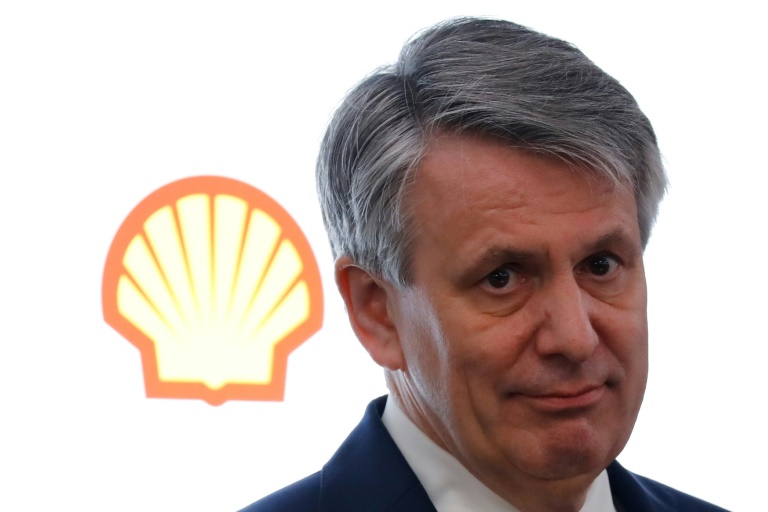
Shell on Thursday announced the exit of chief executive Ben van Beurden as the British oil and gas giant looks to reinvent itself under group renewables boss Wael Sawan.

Dutchman van Beurden, 64, will step down at the end of 2022 after nine years in charge of the energy major and nearly four decades as a Shell employee.

Van Beurden has presided over rollercoaster oil prices fuelled by the Covid pandemic and Russian invasion of Ukraine, as well as overseeing a major corporate overhaul that saw it ditch “Royal Dutch” from its name.

The outgoing CEO “can look back with great pride on an extraordinary 39-year Shell career”, chairman Andrew Mackenzie said in a statement.

He said van Beurden had been “in the vanguard for the transition of Shell to a net zero emissions energy business by 2050”, adding that he “leaves a financially strong and profitable company”.

Oil and gas prices have rocketed this year, leaving Shell “with a robust balance sheet, very strong cash generation capability and a compelling set of options for growth”, Mackenzie added.

Shell has faced strong criticism over its net-zero plans from the environmental lobby, which accuses it of “greenwashing”, or marketing a company as overly climate-friendly.

Energy companies and businesses generally are seeking to slash carbon emissions in line with government targets on tackling climate change.

– Strategy ‘tweaks’ –

Shell hopes Beirut-born Sawan, 48, will boost the transition plans.

“For a group whose renewable strategy has been somewhat vague, though grand sounding, this is a clear marker that Shell intends to change this,” said Hargreaves Lansdown analyst Sophie Lund-Yates.

“Change won’t happen overnight, but it’s reasonable to think that at least tweaks to the existing renewable strategy could be on the cards.”

Mackenzie called Sawan “an exceptional leader, with all the qualities needed to drive Shell safely and profitably through its next phase of transition and growth”.

The incoming boss had a “track record of commercial, operational and transformational success” and a deep understanding of Shell and the broader energy sector, the chairman added.

A dual Lebanese-Canadian national, Sawan has worked at Shell for 25 years in various roles in Europe, Africa, Asia and the Americas.

He is currently director of integrated gas, renewables and energy solutions.

“I’m looking forward to… grasp the opportunities presented by the energy transition,” Sawan said in a statement.

– Oil price boom –

Van Beurden’s tenure included oil prices collapsing into negative territory in 2020, as Covid lockdowns ravaged demand.

Shell dived into a net loss of $21.7 billion in 2020 as factories shut and planes were grounded. 

That resulted in the group shedding thousands of jobs, mirroring the likes of British rival BP.

Oil prices have since rebounded sharply after economies reopened from pandemic lockdowns and following the attack on Ukraine by major crude producer Russia.

Gas prices have also surged owing to the conflict, resulting in Shell’s net profits rocketing more than five-fold to $18 billion in the second quarter of this year.

This even as van Beurden carried out Shell’s costly withdrawal from Russian gas and oil.

Soaring profits for Shell and BP come as Britain’s faces a cost-of-living crisis, igniting calls for the pair to be slapped with a far higher windfall tax than unveiled earlier this year by former finance minister Rishi Sunak.

Last year, Van Beurden ushered in a simplification of Shell’s complex structure, switching headquarters from the Netherlands to the UK and axing Royal Dutch from the front of its name.

Van Beurden, appointed CEO in January 2014, will continue to work as advisor to the board until mid-2023. 

Shell’s share price was largely flat in morning deals on London’s rising stock market.

Close Bitnami banner
Bitnami