US Business

Heatwaves and wildfires to worsen air pollution: UN

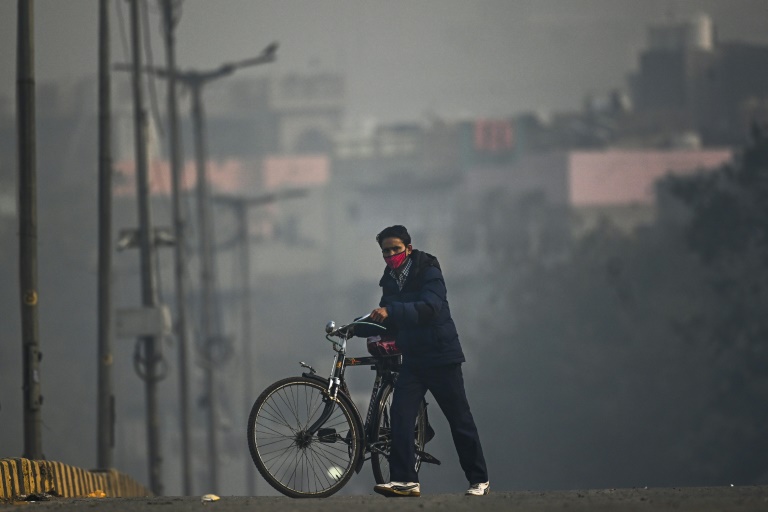
More frequent and intense heatwaves and wildfires driven by climate change are expected to worsen the quality of the air we breathe, harming human health and ecosystems, the UN warned Wednesday.

A new report from the UN’s World Meteorological Organization (WMO) cautioned that the interaction between pollution and climate change would impact hundreds of millions of people over the coming century, and urged action to rein in the harm.

The WMO’s annual Air Quality and Climate Bulletin examined the impacts of large wildfires across Siberia and western North America in 2021, finding that they produced widespread increases in health hazards, with concentrations in eastern Siberia reaching “levels not observed before”.

Tiny particles with a diameter of less than 2.5 micrometres (PM2.5) are considered particularly harmful since they can penetrate deep into the lungs or cardiovascular system.

“As the globe warms, wildfires and associated air pollution are expected to increase, even under a low emissions scenario,” WMO chief Petteri Taalas said in a statement.

“In addition to human health impacts, this will also affect ecosystems as air pollutants settle from the atmosphere to Earth’s surface.”

– ‘Foretaste of the future’ –

At the global scale, there has been a reduction over the past two decades in the total burned area, as a result of decreasing numbers of fires in savannas and grasslands.

But WMO said that some regions like western North America, the Amazon and Australia were seeing far more fires.

Even beyond wildfires, a hotter climate can drive up pollution and worsen air quality.

Taalas pointed out that severe heatwaves in Europe and China this year, coupled with stable high atmospheric conditions, sunlight and low wind speeds, had been “conducive to high pollution levels,” warning that “this is a foretaste of the future.”

“We expect a further increase in the frequency, intensity and duration of heatwaves, which could lead to even worse air quality,” he said.

This phenomenon is known as the “climate penalty”, which refers to how climate change amplifies ground-level ozone production, which negatively impacts air quality. 

In the stratosphere, ozone provides important protection from cancer-causing ultraviolet rays, but closer to the ground it is very hazardous for human health.

If emission levels remain high, this climate penalty is expected to account for “a fifth of all surface ozone concentration increase,” WMO scientific officer Lorenzo Labrador told reporters.

He warned that most of that increase will happen over Asia, “and there you have about one quarter of the entire world population.”

The WMO called for action, stressing that “a worldwide carbon neutrality emissions scenario would limit the future occurrence of extreme ozone air pollution episodes.”

The report points out that air quality and climate are interconnected, since chemicals that worsen air quality are normally co-emitted with greenhouse gases.

“Changes in one inevitably cause changes in the other,” it said.
Stocks tank, dollar rises as traders prepare for big rate hikes

Equity markets suffered more losses in Asia on Wednesday and the dollar extended a rally after a forecast-beating US economic report gave new life to talk of a third straight blockbuster interest rate hike next month.

The services sector data showed the world’s top economy remained resilient in the face of surging prices and borrowing costs, highlighting the job the Federal Reserve has in taming inflation while trying to prevent a recession — a goal many observers doubt can be achieved.

The reading added to the gloom blanketing trading floors as investors face a range of headwinds including a worsening energy crisis in Europe, Russia’s war in Ukraine and Chinese economic woes caused by Covid-19 lockdowns.

“Overall, the (services) survey paints a picture of solid activity in the services sector of the US economy supported by wages growth suggesting the Fed still has more work to do in order to cool the economy,” said National Australia Bank’s Rodrigo Catril.

All three main indexes on Wall Street finished in the red Tuesday as they reopened after a long weekend, with expectations growing that the Fed will announce a third successive 75 basis-point rate hike later this month.

Several top Fed officials — including head Jerome Powell — have lined up in recent weeks to say their main focus is bringing inflation down from four-decade highs, even if that means tipping the economy into recession.

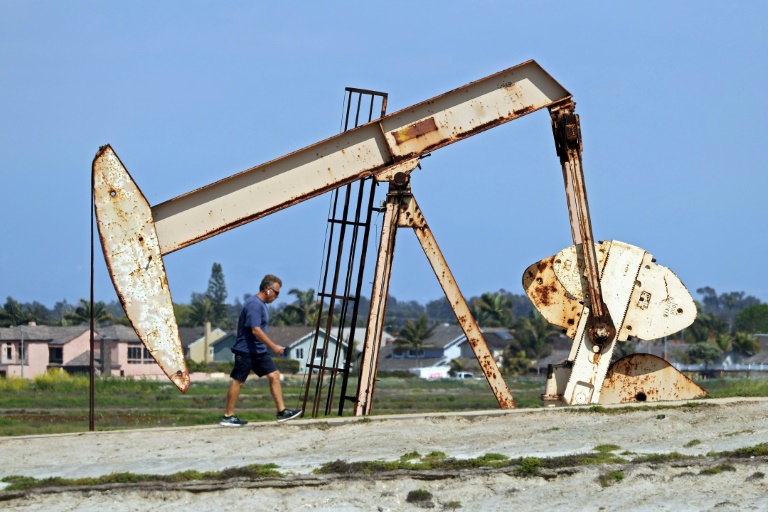
The prospect of more big rate hikes has sent the dollar soaring this year, and on Wednesday it hit a new 24-year high of 143.71 yen, leading to speculation the Bank of Japan will step in to support its currency.

The euro remained lodged below parity with the dollar, even as the European Central Bank prepares to ramp up rates, having done so in July for the first time in eight years.

And the greenback was also pushing towards a 37-year peak against sterling, which saw a brief rally Tuesday on reports new UK Prime Minister Liz Truss was planning a £130 billion ($150 billion) package to freeze energy bills.

The losses in New York were tracked by Asia, where Hong Kong, Tokyo, Sydney, Seoul and Taipei all lost at least one percent. Singapore, Wellington and Manila also fell, though Shanghai and Jakarta edged up.

“The September swoon is in play as a resilient economy paves the way for more Fed tightening,” said OANDA’s Edward Moya. 

“Stocks are going to struggle because too much of the (US) economy is doing well. The dovish pivot and the end of interest rate hikes with the December (Fed meeting) is not how this will play out.”

Expectations that leading economies will tip into recession, China’s lockdown of millions across the country and the stronger dollar continue to push oil prices lower, with both main contracts down more than one percent Wednesday.

Bets on a plunge in demand have seen the commodity tank about 20 percent in recent months, putting them below the levels seen just before Russia invaded Ukraine and sent prices skyrocketing.

And while concerns remain about supplies, OANDA’s Moya added: “The short-term crude demand outlook appears to be poised for another wave of China Covid-related lockdowns.

“Despite some better-than-expected US services data, global growth isn’t looking good at all and that is trouble for crude prices.”

– Key figures at around 0230 GMT –

Tokyo – Nikkei 225: DOWN 1.0 percent at 27,362.83 (break)

Hong Kong – Hang Seng Index: DOWN 1.4 percent at 18,943.18

Shanghai – Composite: UP 0.2 percent at 3,249.72

Euro/dollar: DOWN at $0.9892 from $0.9905 on Tuesday

Pound/dollar: DOWN at $1.1480 from $1.1519

Dollar/yen: UP at 143.40 yen from 142.80 yen

Euro/pound: UP at 86.16 pence from 85.97 pence

West Texas Intermediate: DOWN 1.6 percent at $85.50 per barrel

Brent North Sea crude: DOWN 1.2 percent at $92.69 per barrel

New York – Dow: DOWN 0.6 percent at 31145.30 (close)

London – FTSE 100: UP 0.2 percent at 7,300.44 (close) 

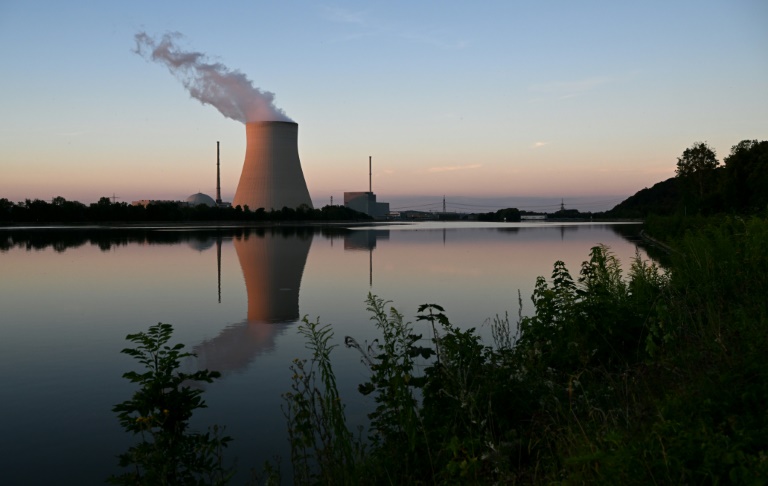
Germany's nuclear stay fails to quell debate

Germany’s decision to keep two atomic plants on standby through the winter amid a power crunch has exposed cracks in the government and unleashed criticism from economic and energy experts.

The major u-turn in government policy was made after a second stress test to assess Germany’s energy security as Russia reduces gas supplies to Europe.

Germany’s three remaining nuclear plants were set to be retired at the end of the year. Instead, two of the fleet will be kept in reserve “until mid-April 2023 in case needed”, Economy Minister Robert Habeck said on Monday.

But the decision has become a “stress test for the coalition” of Chancellor Olaf Scholz’s Social Democrats, Habeck’s Greens and the liberal FDP, according to the Sueddeutsche Zeitung daily.

Finance Minister Christian Lindner of the FDP has made no attempts to hide his push for the three plants to remain in use rather than just kept on standby.

“We shouldn’t be too picky, but instead do everything that makes our lives easier,” he told the Sueddeutsche Zeitung Monday ahead of the nuclear announcement.

That included “the continued operation of the nuclear power plants until at least 2024”, the FDP boss said.

In a sign that he has not shifted his position, Lindner also retweeted several voices in his party criticising Monday evening’s decision as not going far enough.

– ‘Kept running’ – 

Habeck’s decision partly delays the nuclear exit decided under former chancellor Angela Merkel after the Fukushima disaster in 2011.

He said the subject of nuclear energy was “bound with a lot of emotions” but that the partial extension was needed to avoid an “extremely unlikely” electricity crisis.

But in light of skyrocketing electricity bills, all possible resources needed to be mobilised, according to Veronika Grimm, a member of the government’s council of economic advisors.

“That means not just coal plants but nuclear power plants too,” she told daily FAZ on Tuesday. 

“The plants should be kept running, not just be on standby, as is currently planned, because only then will it lower the price of electricity,” she said.

The government should examine extending the lifetime of the plants by five years and even bringing recently closed plants back online to keep prices “within limits”, she said.

By contrast, Claudia Kemfert of the economic research institute DIW pointed out that “nuclear plants are not adapted to act as network reserves because they cannot be fired up and shut down easily”.

Meanwhile, the financial daily Handelsblatt wrote that the partial extension was simply “the worst of all possible decisions”.

– ‘Completely absurd’ –

“We are heading towards an energy supply crisis,” opposition CDU leader Friedrich Merz told German public radio.

Shutting down electricity generating capacity at a time of crisis was “completely absurd”, he said, adding that the war-related crisis was being aggravated by “the decisions of the federal government”.

Habeck had “ducked the risk of coming into conflict with a part of his party”, Handelsblatt wrote. 

The extension is a touchy issue for the Greens, which has its roots in Germany’s anti-nuclear movement.

The decision was “hard to take but necessary as it stands”, Green party chief Omid Nouripour told public television.

Habeck stressed Monday that Germany would not waver from its plan to move on from atomic energy.

“New fuel rods will not be put in,” he said, adding that the issues this winter “cannot be compared” with the next one. 

Habeck’s ministry has chartered five floating terminals for the import of liquefied natural gas (LNG) to substitute for Russian supplies, the first of which are scheduled to come online at the end of the year.

At the same time, it has also moved to restart mothballed coal power plants and fill gas storage ahead of the winter to guard against an energy shortfall.

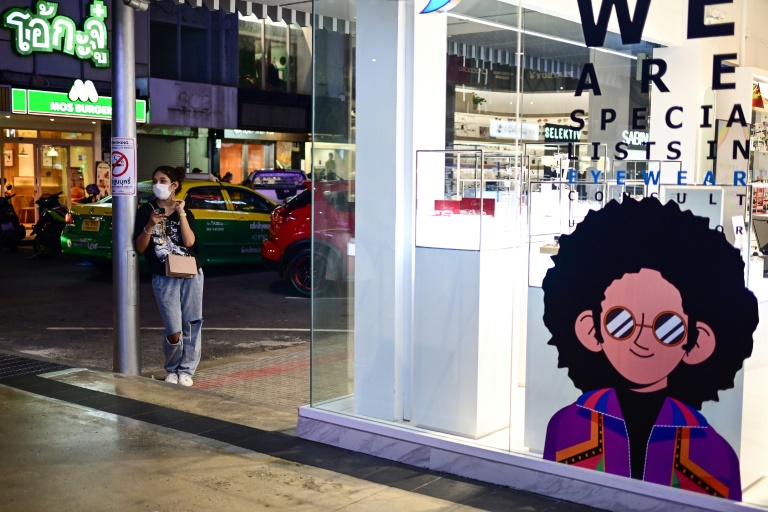
Real life, right now — photo app claims to capture authenticity

It’s not all sunsets and selfie smiles — people are flocking to a new social network app that calls on users to share true glimpses of their lives rather than cherry-picked moments.

Once a day, BeReal simultaneously prompts users to take photos of what they are doing, giving them two minutes. The app uses front and rear facing cameras on phones, putting shared “selfies” into context.

The app shuns software filters that add glossy special effects or touch-up effects.

The approach is a sharp contrast to the carefully cultivated images common on Instagram and Facebook that often focus on parties, holidays, fancy food and perfect weather.

“The ideal of BeReal is you are just in a moment — where are you and what are you doing right now,” said Jennifer Stromer-Galley, a professor at Syracuse University school of information studies in the United States.

“Our lived lives, not our best lives — maybe you are walking the dog or in your pajamas eating cereal.”

Launched two years ago by French entrepreneurs, BeReal has seen its popularity surge in recent months.

It was the most downloaded app in the United States at start of September, and ranked among the top three in Britain and France, according to figures provided by market tracker Data.ai.

BeReal has been downloaded nearly 35 million times worldwide and is proving popular with Gen Z, people born between the late 1990s and about 2010, Data.ai figures showed.

“It does seem to have really taken off as the next potential social media application,” Stromer-Galley said of BeReal, though cautioning that the same was once said for ephemeral photo sharing app Snapchat.

BeReal creator Alexis Barreyat was at a mountain bike event when it struck him how social media users focused more on perfecting content than what was happening around them, according to venture capitalist Jean de La Rochebrochard, who invested in the startup.

“While he was in the moment, he was surprised to see so many influencers busy staging their life with multiples shots, stories, trying out dozens of filters while completely missing the show,” the investor wrote in a blog.

“It was even making some of them and their audience miserable.”

– Done with perfect? –

BeReal’s rise in popularity signals that people are tired of polished online images that don’t reflect actual life, Creative Strategies tech analyst Carolina Milanesi told AFP.

“I think the younger generation is done with fake and perfect, because life isn’t,” Milanesi said.

“Gen Z seems a bit of a sweet spot; the fact they want to be who they are and they want to be portraying how real life is and how they navigate through it.”

One BeReal user posted a playful video of her scrambling about her home in a frenzy to stage a flattering photo with just two minutes to get ready. Another lamented on Twitter about a friend abruptly ending a phone call to take a selfie after getting a BeReal alert.

“The app is called BeReal NOT wait until I think I look cute enough to post,” read a tweet by the account of @garrett_parker1.

It remains to be seen whether BeReal’s popularity will endure.

“It is not quite clear what there is to stick around for after you get the voyeurism of seeing other people’s lived experiences,” Stromer-Galley said.

BeReal’s use of front and back smartphone cameras also raises questions of privacy and risk of stalkers or hackers.

“Let’s say the back camera shows a friend or your children or where you live — or your desk or computer screen at work,” Stromer-Galley said.

LinkIn profiles show that BeReal, which has not been granting media interviews, was founded by Barreyat and Kevin Perreau, and has 126 employees.

Instagram told AFP it has worked internally on a BeReal-like prototype feature but is not testing it.

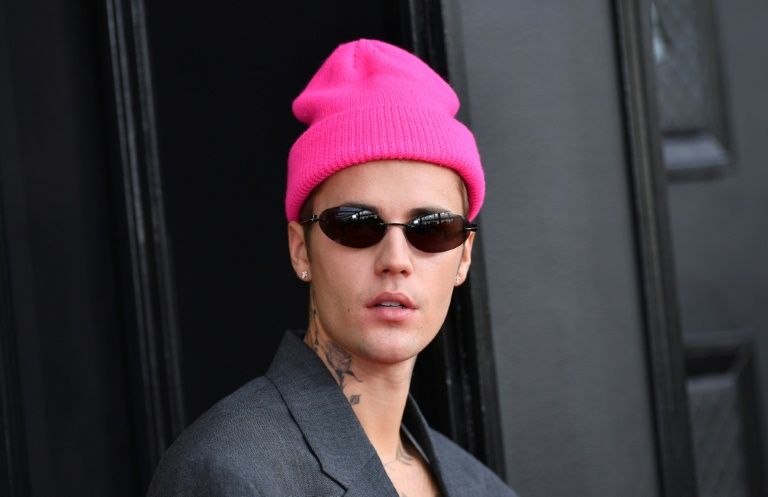
Justin Bieber scraps world tour over health issues

Justin Bieber said Tuesday he is once again taking a break from touring, months after revealing he’d been diagnosed with a syndrome that caused him partial facial paralysis.

In June the 28-year-old megastar had pushed back the North American leg of his “Justice” tour due to Ramsay Hunt Syndrome, a complication of shingles.

Bieber recently went back on the road, performing six live shows in Europe as well as the Rock in Rio festival in Brazil this weekend.

But he said Tuesday his return to the stage had been premature.

“This past weekend I performed at Rock in Rio and I gave everything I have to the people in Brazil. After getting off stage, the exhaustion overtook me and I realized that I need to make my health the priority right now,” Bieber said.

“So I’m going to take a break from touring for the time being,” the “Peaches” singer continued. 

“I’m going to be OK, but I need time to rest and get better. I’ve been so proud to bring this show and our message of justice to the world.”

Ramsay Hunt Syndrome is a rare neurological disorder that can inflame and paralyze the facial nerve, and cause a painful rash around the ear or mouth. In addition to facial paralysis, it can cause hearing loss.

Bieber had dozens of performances across the globe scheduled through March 2023.

The superstar did not give an estimated timeline of recovery or indicate whether the “Justice” tour would ever resume.

Covid-19 had forced two postponements even before the singer’s health began suffering.

Juul agrees to pay $438 mn in US over marketing vapes to youth

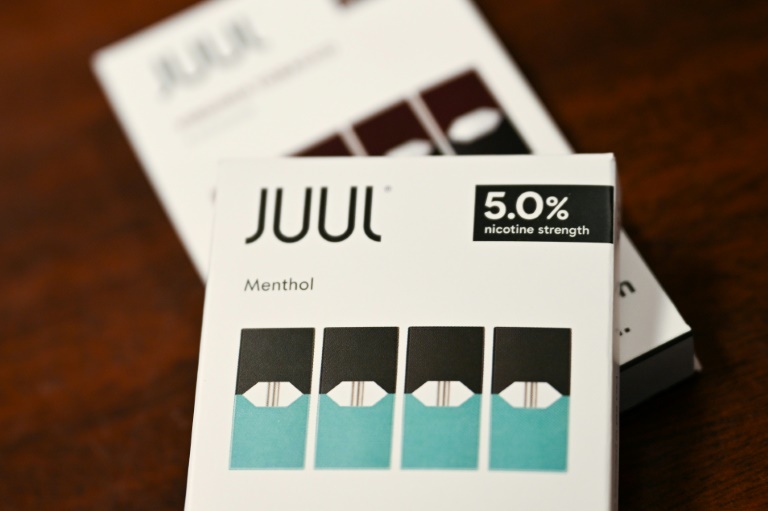
Juul Labs will pay $438.5 million to settle a probe by 34 US states that found the vaping company marketed to underage smokers, state officials announced Tuesday.

Under the agreement, which is still being finalized, Juul would provide payments over the next 6-10 years to individual US states and pledge to not employ cartoons in ads or otherwise market to younger consumers.

The probe was led two years ago by state officials in Connecticut, Oregon and Texas and joined by other states.

The investigation “revealed that Juul wilfully engaged in an advertising campaign that appealed to youth, even though its e-cigarettes are both illegal for them to purchase and unhealthy for children,” according to a press release from the Oregon Department of Justice.

Juul “relentlessly marketed to underage users with launch parties, advertisements using young and trendy-looking models, social media posts and free samples,” the press release said, adding that the company used age verification techniques “that it knew were ineffective.”

“The conduct that led to this settlement was reprehensible and demonstrates pure corporate greed at its most damaging,” said Oregon Attorney General Ellen Rosenblum.

“Just when we were starting to make serious progress reducing tobacco use among our young people, Juul came along and hooked another generation.”

Juul called the settlement “a significant part of our ongoing commitment to resolve issues from the past,” a Juul spokesman said.

“We remain focused on the future as we work to fulfill our mission to transition adult smokers away from cigarettes — the number one cause of preventable death — while combating underage use.”

Juul has argued that vaping products can provide a solution to the harmful health impacts from conventional combustible cigarettes.

Juul has been blamed for a surge in youth vaping over its marketing of fruit and candy flavored e-cigarettes, which it stopped selling in 2019.

In January 2020, the US Food and Drug Administration said sale of e-cigarettes in flavors other than tobacco or menthol would be illegal unless specifically authorized by the government.

More than two million American middle and high schoolers reported they were vapers in 2021, with eight in ten using flavored e-cigarettes, according to a September 2021 government report.

On June 23, the FDA said it was ordering all products made by Juul Labs off the market after finding the vaping giant had failed to address certain safety concerns.

The following day, a US Court suspended the FDA’s action following a Juul appeal.

The Juul spokesman said the agency has submitted an appeal to the FDA, adding that “we continue to offer our products to adult smokers throughout the US.”

Juul maintains that its products meet US public health standards.

Juul products that remain on sale include the Juul smoking device and cartridges in Menthol and “Virginia Tobacco.”

Juul agrees to pay $438 mn in US over marketing vapes to youth

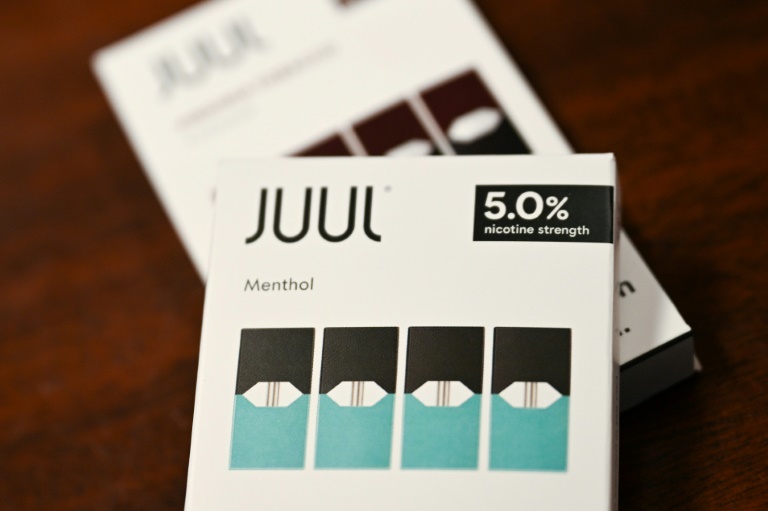
Juul Labs will pay $438.5 million to settle a probe by 34 US states that found the vaping company marketed to underage smokers, state officials announced Tuesday.

Under the agreement, which is still being finalized, Juul would provide payments over the next 6-10 years to individual US states and pledge to not employ cartoons in ads or otherwise market to younger consumers.

The probe was led two years ago by state officials in Connecticut, Oregon and Texas and joined by other states.

The investigation “revealed that Juul wilfully engaged in an advertising campaign that appealed to youth, even though its e-cigarettes are both illegal for them to purchase and unhealthy for children,” according to a press release from the Oregon Department of Justice.

Juul “relentlessly marketed to underage users with launch parties, advertisements using young and trendy-looking models, social media posts and free samples,” the press release said, adding that the company used age verification techniques “that it knew were ineffective.”

“The conduct that led to this settlement was reprehensible and demonstrates pure corporate greed at its most damaging,” said Oregon Attorney General Ellen Rosenblum.

“Just when we were starting to make serious progress reducing tobacco use among our young people, Juul came along and hooked another generation.”

Juul called the settlement “a significant part of our ongoing commitment to resolve issues from the past,” a Juul spokesman said.

“We remain focused on the future as we work to fulfill our mission to transition adult smokers away from cigarettes — the number one cause of preventable death — while combating underage use.”

Juul has argued that vaping products can provide a solution to the harmful health impacts from conventional combustible cigarettes.

Juul has been blamed for a surge in youth vaping over its marketing of fruit and candy flavored e-cigarettes, which it stopped selling in 2019.

In January 2020, the US Food and Drug Administration said sale of e-cigarettes in flavors other than tobacco or menthol would be illegal unless specifically authorized by the government.

More than two million American middle and high schoolers reported they were vapers in 2021, with eight in ten using flavored e-cigarettes, according to a September 2021 government report.

On June 23, the FDA said it was ordering all products made by Juul Labs off the market after finding the vaping giant had failed to address certain safety concerns.

The following day, a US Court suspended the FDA’s action following a Juul appeal.

The Juul spokesman said the agency has submitted an appeal to the FDA, adding that “we continue to offer our products to adult smokers throughout the US.”

Juul maintains that its products meet US public health standards.

Juul products that remain on sale include the Juul smoking device and cartridges in Menthol and “Virginia Tobacco.”

Heatwaves and wildfires to worsen air pollution: UN

More frequent and intense heatwaves and wildfires driven by climate change are expected to worsen the quality of the air we breathe, harming human health and ecosystems, the UN warned Wednesday.

A new report from the UN’s World Meteorological Organization (WMO) cautioned that the interaction between pollution and climate change would impact hundreds of millions of people over the coming century, and urged action to rein in the harm.

The WMO’s annual Air Quality and Climate Bulletin examined the impacts of large wildfires across Siberia and western North America in 2021, finding that they produced widespread increases in health hazards, with concentrations in eastern Siberia reaching “levels not observed before”.

Tiny particles with a diameter of less than 2.5 micrometres (PM2.5) are considered particularly harmful since they can penetrate deep into the lungs or cardiovascular system.

“As the globe warms, wildfires and associated air pollution are expected to increase, even under a low emissions scenario,” WMO chief Petteri Taalas said in a statement.

“In addition to human health impacts, this will also affect ecosystems as air pollutants settle from the atmosphere to Earth’s surface.”

– ‘Foretaste of the future’ –

At the global scale, there has been a reduction over the past two decades in the total burned area, as a result of decreasing numbers of fires in savannas and grasslands.

But WMO said that some regions like western North America, the Amazon and Australia were seeing far more fires.

Even beyond wildfires, a hotter climate can drive up pollution and worsen air quality.

Taalas pointed out that severe heatwaves in Europe and China this year, coupled with stable high atmospheric conditions, sunlight and low wind speeds, had been “conducive to high pollution levels,” warning that “this is a foretaste of the future.”

“We expect a further increase in the frequency, intensity and duration of heatwaves, which could lead to even worse air quality,” he said.

This phenomenon is known as the “climate penalty”, which refers to how climate change amplifies ground-level ozone production, which negatively impacts air quality. 

In the stratosphere, ozone provides important protection from cancer-causing ultraviolet rays, but closer to the ground it is very hazardous for human health.

If emission levels remain high, this climate penalty is expected to account for “a fifth of all surface ozone concentration increase,” WMO scientific officer Lorenzo Labrador told reporters.

He warned that most of that increase will happen over Asia, “and there you have about one quarter of the entire world population.”

The WMO called for action, stressing that “a worldwide carbon neutrality emissions scenario would limit the future occurrence of extreme ozone air pollution episodes.”

The report points out that air quality and climate are interconnected, since chemicals that worsen air quality are normally co-emitted with greenhouse gases.

“Changes in one inevitably cause changes in the other,” it said.
Theranos founder Elizabeth Holmes seeks new fraud trial

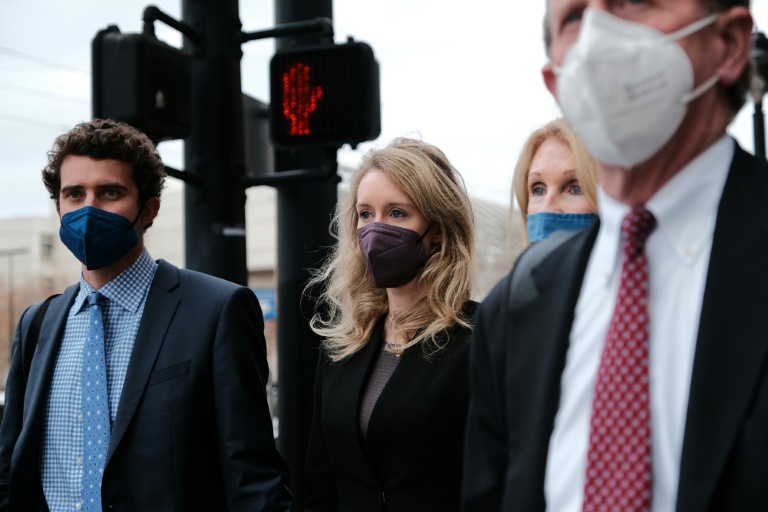
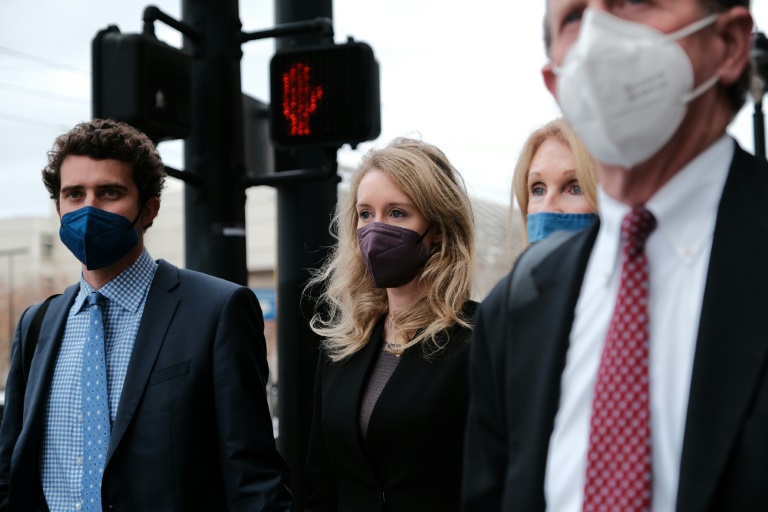
Convicted Theranos founder Elizabeth Holmes on Monday asked for a new trial, saying a star prosecution witness showed up at her home saying he felt he had “done something wrong.”

Holmes is scheduled to be sentenced in October after a jury early this year found her guilty of defrauding investors in her blood-testing startup Theranos.

Holmes is a rare example of a tech exec being brought to book over a company flaming out, in a sector littered with the carcasses of money-losing businesses that once promised untold riches.

Her case shone a spotlight on the blurred line between the hustle that characterizes the industry and outright criminal dishonesty.

But attorneys for Holmes said that former Theranos lab manager Adam Rosendorff, who was part of the prosecution’s case, arrived unannounced at her California home in August looking disheveled and saying he needed to speak with her.

“He said he feels guilty, it seemed like he was hurting,” Holmes’s partner William Evans said of Rosendorff in an exhibit with the court.

“He said when he was called as a witness he tried to answer the questions honestly but that the prosecutors tried to make everybody look bad (in the company).”

Evans said he turned Rosendorff away from the home he shares with Holmes and their young son, telling Rosendorff that Holmes could not speak with him.

“He said he thought it would be healing for both himself and Elizabeth to talk,” said Evans.”

– Different verdict? –

Evans recounted Rosendorff saying that both he and Holmes were just starting out in their careers when they worked together at Theranos, and that “everyone was working so hard to do something good and meaningful.”

Holmes had vowed to revolutionize health diagnostics with self-service machines that could run an array of tests on just a few drops of blood, a vision that drew high-profile backers and made her a billionaire on paper by the age of 30.

She was hailed as the next tech visionary on magazine covers and collected mountains of investors’ cash, but it all collapsed after Wall Street Journal reporting revealed the machines did not work as promised.

Jurors found her guilty of four counts of tricking investors.

But the jury also acquitted her on four charges and could not reach a verdict on three others.

The 38-year-old now faces the possibility of decades behind bars.

Attorneys for Holmes argued that Rosendorff was a star witness for prosecutors, and that his statements put the guilty verdict in doubt.

“If the jury had heard from Dr. Rosendorff that the government cherry-picked evidence to make things seem worse than they were and that everyone was doing their best and working hard to do something good and meaningful, the jury would have viewed this case very differently,” Holmes attorney Amy Mason Saharia argued in the filing.

Holmes is asking for a new trial, or at least a hearing in federal court in Silicon Valley to dig deeper into what Rosendorff meant to tell her at her home, attorneys said.

“He said he wants to help her,” Evans said of Rosendorff.

Theranos founder Elizabeth Holmes seeks new fraud trial

Convicted Theranos founder Elizabeth Holmes on Monday asked for a new trial, saying a star prosecution witness showed up at her home saying he felt he had “done something wrong.”

Holmes is scheduled to be sentenced in October after a jury early this year found her guilty of defrauding investors in her blood-testing startup Theranos.

Holmes is a rare example of a tech exec being brought to book over a company flaming out, in a sector littered with the carcasses of money-losing businesses that once promised untold riches.

Her case shone a spotlight on the blurred line between the hustle that characterizes the industry and outright criminal dishonesty.

But attorneys for Holmes said that former Theranos lab manager Adam Rosendorff, who was part of the prosecution’s case, arrived unannounced at her California home in August looking disheveled and saying he needed to speak with her.

“He said he feels guilty, it seemed like he was hurting,” Holmes’s partner William Evans said of Rosendorff in an exhibit with the court.

“He said when he was called as a witness he tried to answer the questions honestly but that the prosecutors tried to make everybody look bad (in the company).”

Evans said he turned Rosendorff away from the home he shares with Holmes and their young son, telling Rosendorff that Holmes could not speak with him.

“He said he thought it would be healing for both himself and Elizabeth to talk,” said Evans.”

– Different verdict? –

Evans recounted Rosendorff saying that both he and Holmes were just starting out in their careers when they worked together at Theranos, and that “everyone was working so hard to do something good and meaningful.”

Holmes had vowed to revolutionize health diagnostics with self-service machines that could run an array of tests on just a few drops of blood, a vision that drew high-profile backers and made her a billionaire on paper by the age of 30.

She was hailed as the next tech visionary on magazine covers and collected mountains of investors’ cash, but it all collapsed after Wall Street Journal reporting revealed the machines did not work as promised.

Jurors found her guilty of four counts of tricking investors.

But the jury also acquitted her on four charges and could not reach a verdict on three others.

The 38-year-old now faces the possibility of decades behind bars.

Attorneys for Holmes argued that Rosendorff was a star witness for prosecutors, and that his statements put the guilty verdict in doubt.

“If the jury had heard from Dr. Rosendorff that the government cherry-picked evidence to make things seem worse than they were and that everyone was doing their best and working hard to do something good and meaningful, the jury would have viewed this case very differently,” Holmes attorney Amy Mason Saharia argued in the filing.

Holmes is asking for a new trial, or at least a hearing in federal court in Silicon Valley to dig deeper into what Rosendorff meant to tell her at her home, attorneys said.

“He said he wants to help her,” Evans said of Rosendorff.

Close Bitnami banner
Bitnami