US Business

US foresees annual Covid boosters, just like flu: officials

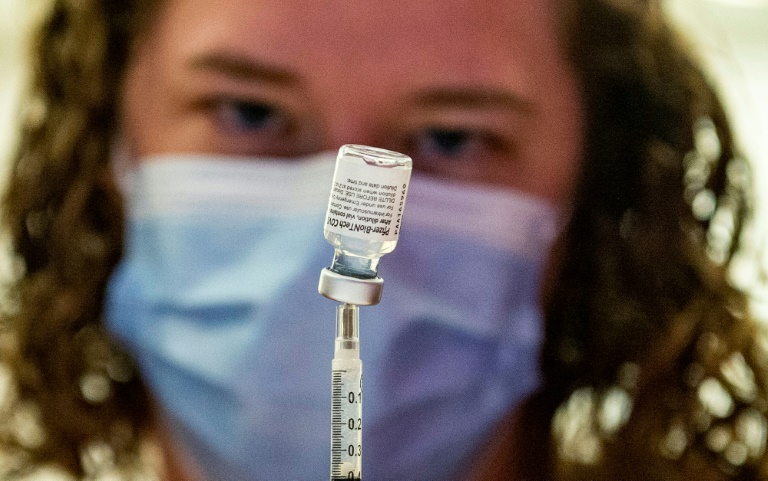
Barring the emergence of drastically different variants, Covid boosters will likely be recommended annually in a similar manner to influenza vaccines, US health officials said Tuesday.

The announcement came after the Food and Drug Administration last week authorized updated bivalent shots against both the original strain of the coronavirus and the BA.4 and BA.5 lineages of the Omicron variant, which are predominant.

“We likely are moving towards a path with a vaccination cadence similar to that of the annual influenza vaccine, with annual updated Covid-19 shots matched to the currently circulating strains,” President Joe Biden’s chief medical advisor Anthony Fauci told reporters.

However, the elderly and immunocompromised may require more frequent shots — and the annual strategy would have to be reviewed in case of a “curveball” such as a dangerous new variant that differs dramatically from predictions.

Ashish Jha, the White House Covid coordinator, added the message was “simple” — if you are 12 or older, and have been previously vaccinated, now is the time to get boosted. 

If you were recently infected or vaccinated, “it’s reasonable to wait a few months,” he added.

People can get their Covid booster at the same time as the flu booster, he said. “I really believe this is why God gave us two arms, one for the flu shot and the other one for the Covid shot.”

Officials expect millions of people to receive their bivalent boosters, made by Pfizer and Moderna, in the month of September, and are focused especially on people aged 50 and up.

“Winter is not that far away. The past two years, we have seen COVID-19 cases and deaths soar. It does not have to be that way this year,” Biden said in a statement. “If you are 12 and older, go get your new Covid-19 shot this fall.” 

US Centers for Disease Control and Prevention director Rochelle Walenksky said projections showed that uptake of Covid boosters at rates similar to annual flu coverage could prevent as many as 100,000 hospitalizations and 9,000 deaths.

The updated vaccines were recommended by the CDC last week on the basis of favorable animal data, which showed they produced a greater immune response and lowered levels of the virus in the lungs, compared to older shots.

The Omicron variant BA.4 and BA.5 lineages comprise 99 percent of circulating coronavirus in the United States and are predicted to continue to dominate this fall and winter.
Fossil fuel investment in Africa dwarfs clean air funding

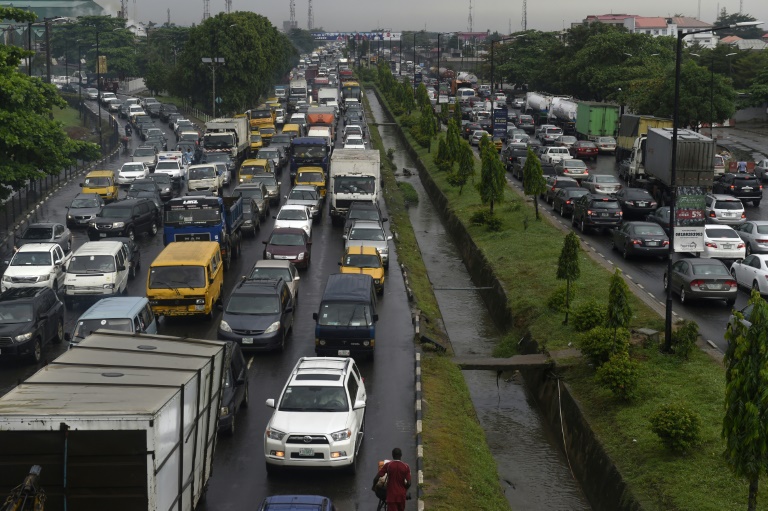
Foreign governments are spending more than 30 times more on fossil fuel projects in Africa than on initiatives to lessen the impacts of the continent’s second-biggest killer, air pollution, research showed Wednesday.

The report, released on the International Day of Clean Air, showed how little donor nations spend on improving air quality while ploughing money into dirty energy and infrastructure projects across Africa. 

The United Nations estimates that air pollution kills around nine million people globally each year, with fossil fuels accounting for two-thirds of the levels of harmful particulates humans are exposed to. 

The financial benefits of improving air quality alone would far exceed the costs of slashing emissions to meet the Paris Agreement temperature goals, according to a landmark United Nations climate science assessment this year. 

Yet, as Wednesday’s analysis by the Clean Air Fund shows, US, European and Asian governments are still going ahead with fossil fuel-based development projects that will likely worsen already poor air quality in cities and along highways across Africa.

The fund found that just 0.3 percent of African countries’ development assistance received between 2015-2021 had been specifically earmarked for air quality projects, despite pollution being responsible for some one in five deaths continent-wide. 

During the same period, donor nations provided 36 times more funding for prolonging fossil fuel use in Africa. 

“That difference alone is extremely startling,” Dennis Appiah, head of the fund’s Ghana office and a co-author of the report. 

“I think it’s also highlighted that most often governments are not paying attention to the issue of air pollution,” he told AFP. 

“Either they are not conscious of the impact of it, or they do not see it as a problem.” 

Appiah called air pollution a “silent killer” as its effects are far harder to see and message to communities compared with other climate-linked phenomena such as flooding.

– ‘Death sentence’ –

An ongoing population boom means Africa will be — on current birth rates — home to some 2.5 billion people by 2050, with the UN estimating that 26 countries will double their populations by then. 

The vast majority of population growth will occur in urban areas, with much of the infrastructure needed to support increases yet to be built.

The continent is virtually blameless for climate change yet continues to be a hotspot for extreme events linked to global heating. 

Appiah said that while Africa’s development needs were huge, governments needed to prioritise sustainable ways of electrifying and connecting communities. 

“Policymakers are stuck in going through the same traditional chain for development that we see in the West, and also in some of the Asian countries that are now suffering the consequences of some of those decisions,” he said. 

“I think Africa is positioned to take advantage of some of the technology which exists. We don’t have to go through the same process (as developed countries), we can leapfrog to new technologies.”

With renewable energy such as wind and solar already frequently cheaper than oil and fossil gas per kilowatt hour, the hope is that African governments can factor in the economic benefits of avoiding air pollution into their development plans.

In a preface to Wednesday’s report, Ugandan activist Vanessa Nakate said that policies featuring new fossil fuel infrastructure in Africa were “a death sentence for people in communities like mine”.

“It’s time for governments to hear the voices of people all around the world who are calling for leaders to clean up our air and protect our health,” she said.

Biden rejects branding Russia 'state sponsor of terrorism'

US President Joe Biden’s administration on Tuesday said it would be counterproductive to brand Russia a “state sponsor of terrorism,” rejecting calls from Ukraine and lawmakers to take the far-reaching action.

Biden, asked by a reporter on Monday if he would blacklist Russia as a terrorist state, said simply, “no,” after months of non-committal answers from senior officials.

Asked Tuesday whether a decision had been made, White House Press Secretary Karine Jean-Pierre said a terrorism designation was “not the most effective or strongest path forward” to “hold Russia accountable.”

She said the designation would hamper aid delivery to parts of war-ravaged Ukraine or prevent aid groups and companies from participating in a deal brokered by the United Nations and Turkey to ship badly needed grain from Ukraine’s blockaded ports.

“It would also undercut our unprecedented multilateral (coalition) that has been so effective to holding Putin accountable and could also undermine our ability to support Ukraine” in negotiations, she told reporters.

A label of “state sponsor of terrorism” by the United States, the world’s largest economy, has wide-ranging ramifications, with many businesses and banks unwilling to incur the risk of legal action by US prosecutors.

Ukrainian President Volodymyr Zelensky has called on the West to label Russia formally as a terrorist state following a series of attacks that killed civilians, notably a strike on a shopping mall in Kremenchuk in June in which at least 18 people died.

Foreign Minister Dmytro Kuleba, asked about Biden’s decision, said the lack of a designation now “does not mean that it can never be made.”

“We are grateful to the US for everything they continue to do for Ukraine, but on this particular issue, we will not back down and will continue to insist on our position, as it will be the right decision indeed,” he said.

– Stepping up pressure –

At the United Nations, Ukraine’s envoy also renewed calls for the designation as he lamented Russia’s occupation of the Zaporizhzhia nuclear power plant, saying Moscow was deliberately trying to raise dangers.

“This can be corrected only by strengthening sanctions — only by officially recognizing Russia as a terrorist state at all levels,” Ambassador Sergiy Kyslytsya told the UN Security Council.

Latvia’s parliament in August declared Russia a “state sponsor of terrorism,” saying it was carrying out “genocide” against Ukrainians, but French President Emmanuel Macron in June also explicitly ruled out the label.

US lawmakers across party lines including House Speaker Nancy Pelosi have urged Biden to brand Russia a state sponsor of terrorism, seeing it as a way to step up pressure after months of economic sanctions over Moscow’s February 24 invasion of Ukraine.

The United States only brands four nations as state sponsors of terrorism, all US nemeses with much smaller economies than Russia’s — Iran, Syria, North Korea and Cuba.

Cuba was added controversially back to the list in the final days of former president Donald Trump’s administration, which took a hardline approach to the communist-ruled island.

The Biden administration on taking office reversed a Trump decision to brand Yemen’s Iranian-backed Huthi rebels as a terrorist group, also out of concern for hampering aid.

Dollar weighs on yen and euro as US stocks extend slump

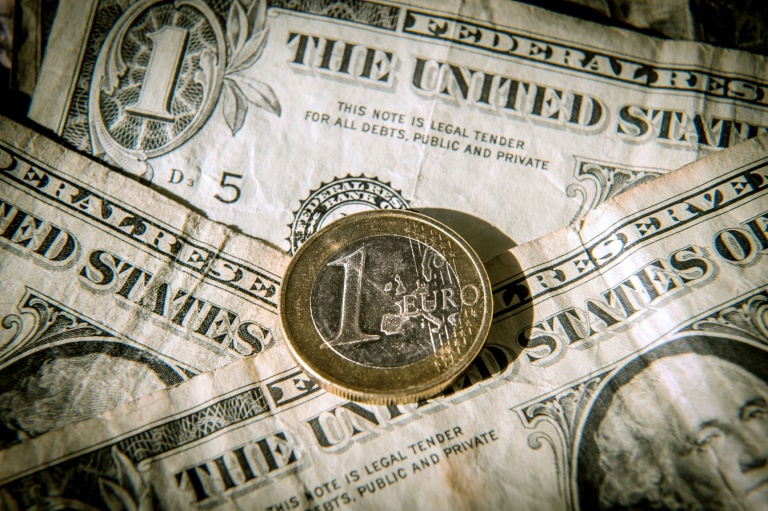
The euro and yen sunk to new multi-year lows against the dollar on Tuesday as investors focused on central bank efforts to contain surging inflation and fears of an economic slowdown.

The dollar struck a 24-year high of $142.98 yen, while the euro sank to $0.9864, a level unseen since December 2002.

“Recession concerns around the world continue to boost the appetite for US dollar, even at these levels,” said City Index and FOREX.com analyst Fawad Razaqzada.

“Investors are becoming more and more convinced that the Fed is going to hike by 75 basis points this month and proceed with further aggressive hikes until inflation comes back under control,” he added.

The Fed has increased the key lending rate four times this year, including two supersized 75 basis points (0.75 percentage point) hikes in June and July, with Fed chief Jerome Powell indicating another similar increase is possible this month.

Yields on US government debt continue to rise as investors expect further hikes.

The Fed’s earlier start to raising interest rates, and pledge to continue to aggressively raise them until it has tamed surging inflation, has boosted the attractiveness of the dollar for investors.

The European Central Bank brought an end to eight years of negative interest rates with a surprisingly-aggressive 0.50 percentage point hike in July, and is expected to hike interest rates on Thursday by at least the same amount to tackle surging eurozone inflation.

Meanwhile the Bank of Japan has dug in its heels on its easy-money policies as it seeks to ensure inflation is here to stay after a long deflationary period. 

In the first session back after the Labor Day holiday, Wall Street fell again, extending an equity downturn as worries about tightening central bank policy and Europe’s energy woes offset good US services industry data.

European stocks ended the day higher despite poor German data, a day after tumultuous trading as Russia curbed gas supplies to Europe.

– ‘Wait-and-see mood’ –

Nevertheless, traders are still wary.

“Investors remain cautious amid worries about the slowing global economy,” noted Hargreaves Lansdown analyst Susannah Streeter.

“There is a wait-and-see mood hanging over markets.”

Russia’s decision over the weekend to halt gas supplies to Germany in retaliation for sanctions over Ukraine sent shock waves through European trading floors on Monday as it ramped up expectations of a painful recession in major economies.

That continues to bedevil the euro, as well as measures that European governments are taking to prop up their economies in face of the energy crisis.

Razaqzada said these measures are likely to fuel inflation even further. This would require the ECB to hike interest rates even more aggressively, meaning a sharper recession.

“So, it is a catch-22 situation for the ECB,” he said.

“For this reason, traders are reluctant to buy the euro.”

Similarly, the yield on 10-year British government bonds surged to the highest level since 2011 after Britain’s new Prime Minister Liz Truss unveiled a 130-billion-pound package to freeze consumer energy bills. 

– Key figures at around 2050 GMT –

New York – Dow: DOWN 0.6 percent at 31145.30 (close)

New York – S&P 500: DOWN 0.4 percent at 3,908.19 (close)

New York – Nasdaq: DOWN 0.7 percent at 11,544.91 (close)

London – FTSE 100: UP 0.2 percent at 7,300.44 (close) 

Frankfurt – DAX: UP 0.9 percent at 12,871.44 (close)

Paris – CAC 40: UP 0.2 percent at 6,104.61 (close)

EURO STOXX 50: UP 0.3 percent at 3,572.76 (close)

Tokyo – Nikkei 225: FLAT at 27,626.51 (close)

Hong Kong – Hang Seng Index: DOWN 0.1 percent at 19,202.73 (close)

Shanghai – Composite: UP 1.4 percent at 3,243.45 (close)

Euro/dollar: DOWN at $0.9905 from $0.9929 on Monday

Pound/dollar: UP at $1.1519 from $1.1517

Dollar/yen: UP at 142.80 yen from 140.60 yen

Euro/pound: DOWN at 85.97 pence from 86.21 pence

West Texas Intermediate: UP less than 0.1 percent at $86.88 per barrel

Brent North Sea crude: DOWN 3.0 percent at $92.93 per barrel

burs-jmb/jh

Brazil fines Apple $2.4 mn, prohibits sale of iPhone without charger

Apple has been barred from selling iPhones without a charger in Brazil and fined more than $2 million over the issue, the government said Tuesday, after accusing the US tech giant of “discriminatory practices.”

In an official notice, Brazilian authorities ordered “the immediate suspension of the distribution of iPhone brand smartphones, regardless of model or generation, that are not accompanied by a battery charger.”

The Ministry of Justice and Public Security ordered the California company to pay a fine of 12.28 million reais (nearly $2.4 million).

The measure from the Department of Consumer Protection and Defense effectively prohibits the sale of all iPhone 12 and 13 models.

Apple has been under investigation in Brazil since December for “the sale of an incomplete product,” “discrimination against the consumer” and “the transfer of responsibility to third parties” by offering iPhone 12s and newer versions without chargers for power outlets, according to an official statement. 

The company has faced fines from Brazilian state agencies before, but “did not take any measures to minimize the harm and until now continued to sell the cellular devices without chargers,” the statement said. 

According to Brazilian authorities, Apple alleges that the decision to exclude chargers from iPhone sales comes from an “environmental commitment.”

But the ministry determined “there is no effective demonstration of environmental protection on Brazilian soil as a consequence” of Apple’s policy, and accused the company of “deliberate discriminatory practices against consumers.”

“There is no justification for an operation which, in aiming to reduce carbon emissions, leads to the introduction into the consumer market of a product whose use depends on the acquisition of another (product) which is also marketed by the company,” the official notice added. 

Juul agrees to pay $438 mn in US over marketing vapes to youth

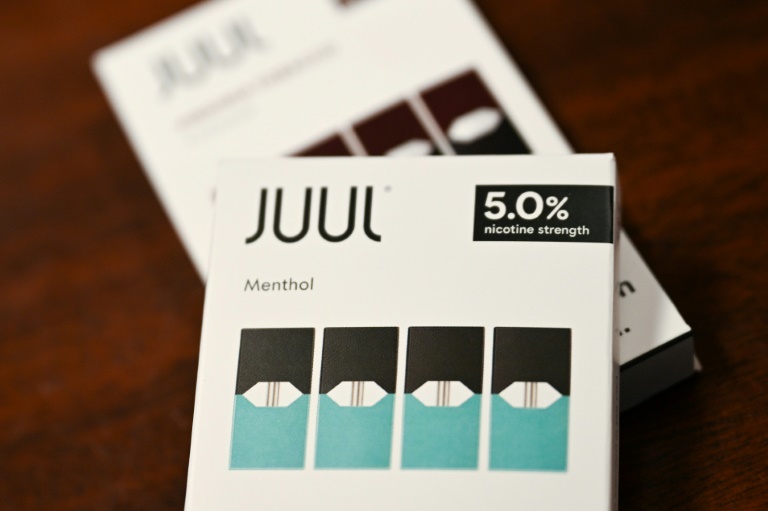
Juul Labs will pay $438.5 million to settle a probe by 34 US states that found the vaping company marketed to underage smokers, state officials announced Tuesday.

Under the agreement, which is still being finalized, Juul would provide payments over the next 6-10 years to individual US states and pledge to not employ cartoons in ads or otherwise market to younger consumers.

The probe was launched two years ago by state officials in Connecticut, Oregon and Texas.

The investigation “revealed that Juul wilfully engaged in an advertising campaign that appealed to youth, even though its e-cigarettes are both illegal for them to purchase and unhealthy for children,” according to a press release from the Oregon Department of Justice.

Juul “relentlessly marketed to underage users with launch parties, advertisements using young and trendy-looking models, social media posts and free samples,” the press release said, adding that the company used age verification techniques “that it knew were ineffective.”

Juul called the settlement “a significant part of our ongoing commitment to resolve issues from the past,” a Juul spokesman said.

“We remain focused on the future as we work to fulfill our mission to transition adult smokers away from cigarettes — the number one cause of preventable death — while combating underage use.”

Juul has argued that vaping products can provide a solution to the harmful health impacts from conventional combustible cigarettes.

Juul has been blamed for a surge in youth vaping over its marketing of fruit and candy flavored e-cigarettes, which it stopped selling in 2019.

In January 2020, the US Food and Drug Administration said sale of e-cigarettes in flavors other than tobacco or menthol would be illegal unless specifically authorized by the government.

On June 23, the FDA said it was ordering all products made by Juul Labs off the market after finding the vaping giant had failed to address certain safety concerns.

The following day, a US Court suspended the FDA’s action following a Juul appeal.

The Juul spokesman said the agency has submitted an appeal to the FDA, adding that “we continue to offer our products to adult smokers throughout the US.”

Justin Bieber scraps world tour over health issues

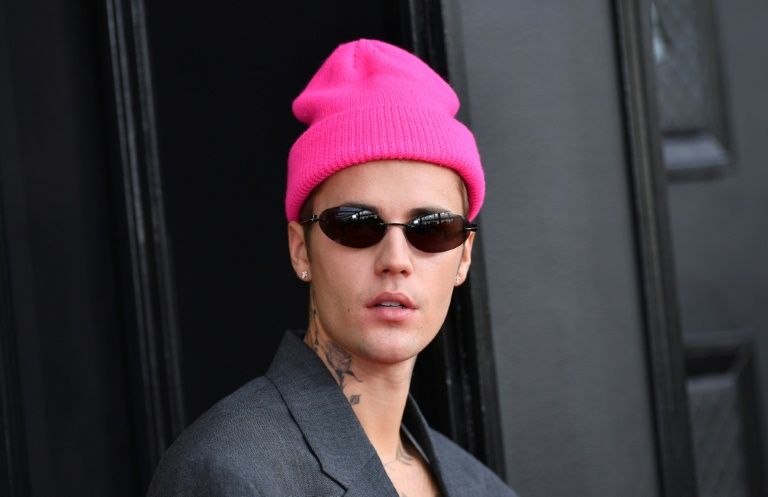
Justin Bieber said Tuesday he is once again taking a break from touring, months after revealing he’d been diagnosed with a syndrome that caused him partial facial paralysis.

In June the 28-year-old megastar had pushed back the North American leg of his “Justice” tour due to Ramsay Hunt Syndrome, a complication of shingles.

Bieber recently went back on the road, performing six live shows in Europe as well as the Rock in Rio festival in Brazil this weekend.

But he said Tuesday his return to the stage had been premature.

“This past weekend I performed at Rock in Rio and I gave everything I have to the people in Brazil. After getting off stage, the exhaustion overtook me and I realized that I need to make my health the priority right now,” Bieber said.

“So I’m going to take a break from touring for the time being,” the “Peaches” singer continued. 

“I’m going to be OK, but I need time to rest and get better. I’ve been so proud to bring this show and our message of justice to the world.”

Ramsay Hunt Syndrome is a rare neurological disorder that can inflame and paralyze the facial nerve, and cause a painful rash around the ear or mouth. In addition to facial paralysis, it can cause hearing loss.

Bieber had dozens of performances across the globe scheduled through March 2023.

The superstar did not give an estimated timeline of recovery or indicate whether the “Justice” tour would ever resume.

Covid-19 had forced two postponements even before the singer’s health began suffering.

Markets brace as UK's new PM readies 'bold' economic action

Britain’s new Prime Minister Liz Truss is getting down to business fast with plans for a big-spending offensive to rein in soaring energy prices, putting her on collision course with nervous financial markets.

In the Conservative race to succeed Boris Johnson, Truss overcame warnings from former finance minister Rishi Sunak that her plans for debt-financed tax cuts risked inflaming double-digit inflation.

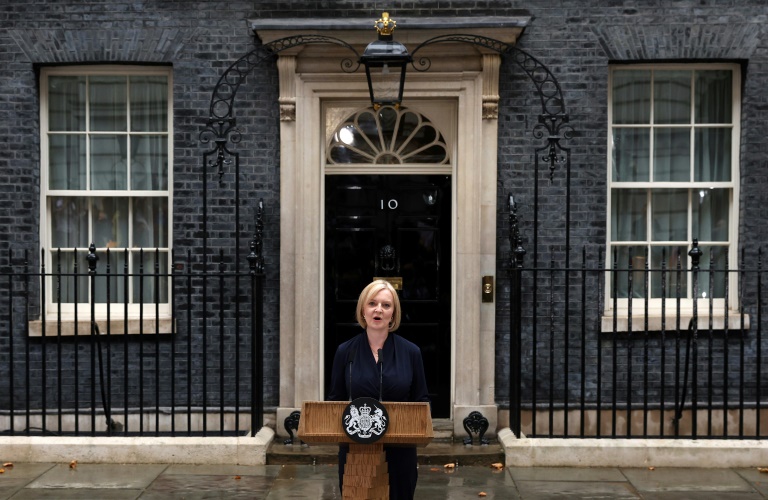
Undaunted, Truss declared from the steps of 10 Downing Street Tuesday that tax cuts would indeed form part of her package to address economic turmoil stoked by Russia’s war in Ukraine and the pandemic aftermath.

“I have a bold plan to grow the economy through tax cuts and reform,” she told the nation. 

“I am confident that together we can ride out the storm,” she added, after heavy rain almost forced her speech indoors.

But another kind of storm, imperilling Britain’s ability to borrow cheaply, awaits if the markets reject Truss’s plans.

Those plans reportedly include a pandemic-sized package worth up to £130 billion ($150 billion) to freeze energy bills for households and businesses, many of whom risk going to the wall this winter.

On the bond markets, the UK’s 10-year borrowing rate rose above 3.0 percent on Tuesday, for the first time since 2014.

The pound, weighed by fears of a looming recession in Britain, has been falling against the dollar faster than other major currencies.

The sterling has lost more than six percent against the dollar since early August as surveys showed Truss on track to beat Sunak.

Deutsche Bank strategist Shreyas Gopal warned of the potential for a debt crisis similar to the 1970s, when the UK had to turn to the International Monetary Fund (IMF) for a bailout.

That helped destroy the political credibility of the then Labour government, ushering in more than a decade of Conservative rule under Margaret Thatcher.

“If investor confidence erodes further, this dynamic could become a self-fulfilling balance-of-payments crisis whereby foreigners would refuse to fund the UK external deficit,” Gopal said.

– ‘Serious questions’ –

Geoffrey Yu from BNY Mellon Markets said: “This sets the UK up for some serious questions on fiscal credibility -– it is already being tested in bond markets.

“However, we think fears of unfunded tax cuts and energy subsidies precipitating a fiscal collapse are not justified,” he added.

Kwasi Kwarteng, before he was named as Truss’s chancellor of the exchequer, sought to placate the markets on Monday in the Financial Times.

“I want to provide reassurance that this will be done in a fiscally responsible way,” he wrote of her plans.

“Liz is committed to a lean state and, as the immediate shock subsides, we will work to reduce the debt-to-GDP ratio over time,” Kwarteng added, after the ratio ballooned to over 95 percent during the pandemic.

Some in the markets are willing to give Truss and Kwarteng the benefit of the doubt, arguing the energy plan expected on Thursday could prove the right fix for a pressing emergency.

“For the near-term this seems an effective way to bring greater certainty and relieve the (interest rate) pressure on the Bank of England,” IG senior market analyst Joshua Mahony said.

“But the long-term consequence will undoubtedly result in another pile of debt that will ultimately need paying through higher taxes,” he cautioned.

Two dead, thousands told to flee California wildfire

At least two people are dead and thousands have been ordered to flee a rapidly spreading fire in California, with the region’s oppressive heatwave expected to peak Tuesday.

Several buildings were destroyed as the Fairview fire erupted southeast of Los Angeles, racing to consume 2,400 acres (1,000 hectares) in less than 24 hours.

Firefighters said two people were known to have died in the blaze, and one person had been hospitalized with burn injuries.

More than 3,000 homes are under orders to evacuate, and all local schools have been shuttered.

The blaze was “spreading very quickly before firefighters even got on scene,” a local fire department spokesman said on Twitter.

California is in the middle of a ferocious heatwave, with temperatures of 110 Fahrenheit (43 Celsius) being recorded in several areas.

That, coupled with a two-decade drought that has left the countryside tinder dry, is creating ideal conditions for explosive wildfires.

The heat hit the state, as well as parts of neighboring Arizona and Nevada, last week, and is forecast to continue until around Thursday.

– Flex Alert –

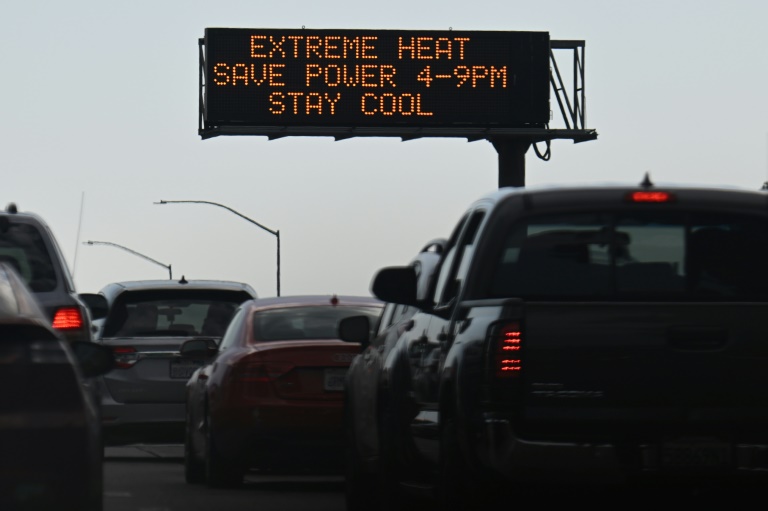
The California Independent System Operator (ISO), which runs the state’s power grid, has issued several consecutive “Flex Alerts.”

These call on households to limit power consumption between 4:00 pm and 9:00 pm to avoid straining the over-burdened system.

That typically means turning up the thermostat on air conditioning systems, avoiding using major appliances, and not charging electric vehicles during this time.

But California ISO president Elliot Mainzer warned Monday that an incredibly hot Tuesday would put even more pressure on the grid, and called for consumers to redouble their efforts.

“This is an extraordinary heat event we are experiencing, and the efforts by consumers to lean in and reduce their energy use after 4:00 pm are absolutely essential,” said Mainzer.

“Over the last several days we have seen a positive impact on lowering demand because of everyone’s help, but now we need a reduction in energy use that is two or three times greater than what we’ve seen so far as this historic heat wave continues to intensify.”

California has abundant solar installations, including on homes, which typically provide for around a third of the state’s power requirements during daylight.

But when the sun goes down, that supply falls quickly, leaving traditional generation to plug the gap. The problem is particularly acute in the early evening when temperatures are still high, but solar starts dropping out of the power mix.

Scientists say global warming, which is being driven chiefly by humanity’s unchecked burning of fossil fuels, is making natural weather variations more extreme.

Heat waves are getting hotter and more intense, while storms are getting wetter and, in many cases, more dangerous.

US forsees annual Covid boosters, just like flu: officials

Barring the emergence of drastically different variants, Covid boosters will likely be recommended annually in a similar manner to influenza vaccines, US health officials said Tuesday.

The announcement came after the Food and Drug Administration last week authorized updated bivalent shots against both the original strain of the coronavirus and the BA.4 and BA.5 lineages of the Omicron variant, which are predominant.

“We likely are moving towards a path with a vaccination cadence similar to that of the annual influenza vaccine, with annual updated Covid-19 shots matched to the currently circulating strains,” President Joe Biden’s chief medical advisor Anthony Fauci told reporters.

However, the elderly and immunocompromised may require more frequent shots — and the annual strategy would have to be reviewed in case of a “curveball” such as a dangerous new variant that differs dramatically from predictions.

Ashish Jha, the White House Covid coordinator, added the message was “simple” — if you are 12 or older, and have been previously vaccinated, now is the time to get boosted. 

If you were recently infected or vaccinated, “it’s reasonable to wait a few months,” he added.

People can get their Covid booster at the same time as the flu booster, he said. “I really believe this is why God gave us two arms, one for the flu shot and the other one for the Covid shot.”

Officials expect millions of people to receive their bivalent boosters, made by Pfizer and Moderna, in the month of September, and are focused especially on people aged 50 and up.

Centers for Disease Control and Prevention director Rochelle Walenksky said projections showed that uptake of Covid boosters at rates similar to annual flu coverage could prevent as many as 100,000 hospitalizations and 9,000 deaths.

The updated vaccines were recommended by the CDC last week on the basis of favorable animal data, which showed they produced a greater immune response and lowered levels of the virus in the lungs, compared to older shots.

The Omicron variant BA.4 and BA.5 lineages comprise 99 percent of circulating coronavirus in the United States and are predicted to continue to dominate this fall and winter.
Close Bitnami banner
Bitnami