US Business

US military announces plan to test ICBM

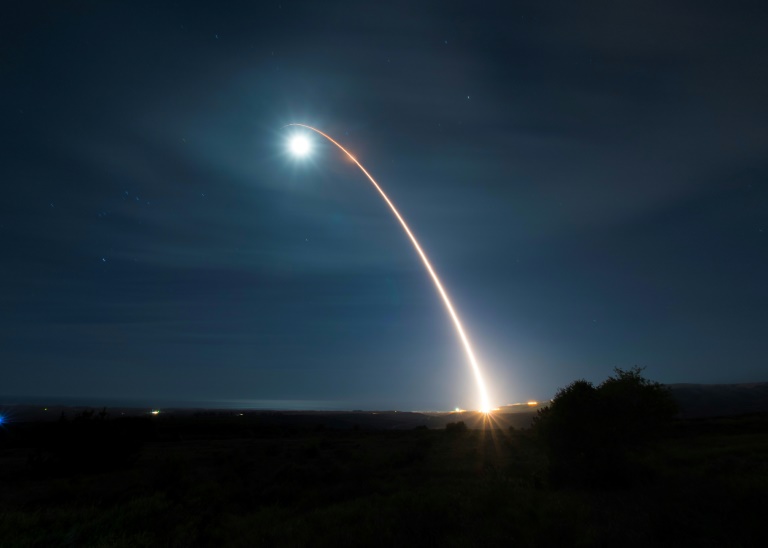
The US military will test-launch an intercontinental ballistic missile on Wednesday, the Pentagon announced, in the second such practice operation of the country’s nuclear defense in less than a month.

“There will be an operational test launch of an Air Force Global Strike command unarmed Minuteman III intercontinental ballistic missile early tomorrow morning, September 7, from Vandenberg Space Force Base in California,”  Pentagon spokesman Brigadier General Pat  Ryder said Tuesday.

The announcement ahead of the launch was unusual; the Pentagon has not confirmed recent tests until after they take place.

Ryder stressed the test would be “routine,” adding that it had been long-scheduled and that the US had notified Russia and other countries of the plans.

The aim of the test “is to demonstrate the readiness of US nuclear forces and provide confidence in the security and effectiveness of the nation’s nuclear deterrent,” Ryder told reporters.

The US Air Force successfully launched a Minutemen III ICBM August 16, after having postponed the test twice to avoid stoking tensions over Ukraine and Taiwan.

The missile carried a test re-entry vehicle, which in a strategic conflict could be armed with a nuclear warhead.

The re-entry vehicle traveled about 4,200 miles (6,760 kilometers) to the Kwajalein Atoll in the Marshall Islands in the western Pacific.

Ryder said the two tests were scheduled long in advance and are occurring close together because of the first one’s postponement.

G7 corporate climate plans spell 2.7C heating: analysis

The decarbonisation plans of some of the biggest corporations from G7 nations put Earth on course to heat a potentially catastrophic 2.7 degrees Celsius — blowing Earth well past the Paris Agreement temperature goals, analysis showed Tuesday.

As more and more firms announce their intention to become carbon neutral by mid-century at the latest, scrutinising corporate claims of green action is increasingly important to check whether they are aligned with the latest climate science. 

CDP, a non-profit that runs a global disclosure system for companies to manage their environmental impacts, looked at the climate plans of more than 4,000 firms across the world’s seven largest economies.

They found that current plans would lead to a world by 2100 that is 2.7C hotter than currently — a far cry from the temperature goals of the 2015 Paris deal, which enjoins nations to limit warming to “well below” 2C above pre-industrial levels. 

Europe was the best performer, with rapid action since 2021 likely to have “cooled” the temperature prediction some 0.3C, the analysis showed. 

Businesses in Canada, on the other hand, were the worst performing in terms of decarbonisation plans, with 88 percent of reported greenhouse gas emissions coming from firms that have no disclosed net zero plans.

Across all regions and sectors, only the European power generation sector achieved a temperature rating below 2C, driven by targets from renewable and nuclear energy companies.

Many companies have plans in place to reduce emissions directly produced from their business operations, such as vehicle exhausts and office heating.

Far fewer have plans covering emissions produced by the consumption or use of their products and which often count for most of their carbon footprints.

Companies in Germany, Italy and the Netherlands had policies to reduce their emissions across their entire value chain, which equated with a 2.2C temperature rise, according to the CDP.

“However, despite this progress, the average temperature ratings for corporates remain well above 1.5C across all major European economies,” it said.

Dollar weighs on yen and euro

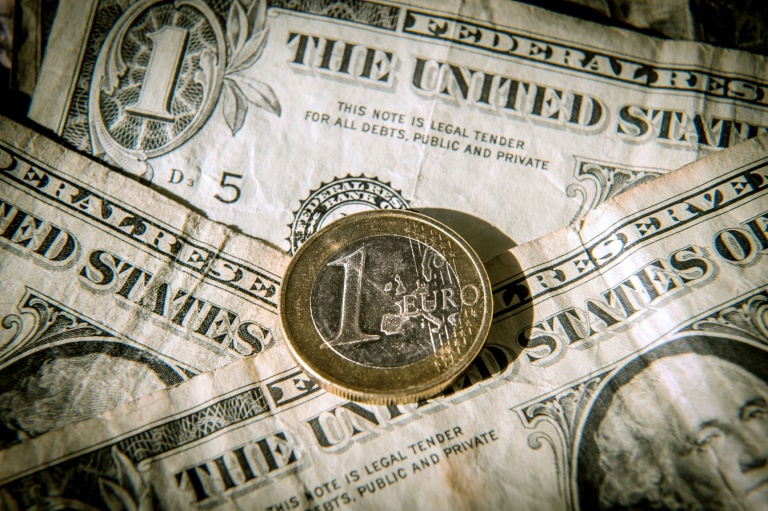
The euro and yen sunk new multi-year lows against the dollar on Tuesday as investors focused on central bank efforts to contain surging inflation and fears of an economic slowdown.

The dollar struck a 24-year high of $142.98 yen, while the euro sank to $0.9864, a level unseen since December 2002.

“Recession concerns around the world continue to boost the appetite for US dollar, even at these levels,” said City Index and FOREX.com analyst Fawad Razaqzada.

“Investors are becoming more and more convinced that the Fed is going to hike by 75 basis points this month and proceed with further aggressive hikes until inflation comes back under control,” he added.

The Fed has increased the key lending rate four times this year, including two supersized 75 basis points (0.75 percentage point) hikes in June and July, with Fed chief Jerome Powell indicating another similar increase is possible this month.

Yields on US government debt continue to rise as investors expect further hikes.

The Fed’s earlier start to raising interest rates, and pledge to continue to aggressively raise them until it has tamed surging inflation, has boosted the attractiveness of the dollar for investors.

The European Central Bank brought an end to eight years of negative interest rates with a surprisingly-aggressive 0.50 percentage point hike in July, and is expected to hike interest rates on Thursday by at least the same amount to tackle surging eurozone inflation.

Meanwhile the Bank of Japan has dug in its heels on its easy-money policies as it seeks to ensure inflation is here to stay after a long deflationary period. 

Wall Street stocks wobbled during morning trading after a three-day holiday weekend, with the Dow down 0.1 percent approaching midday.

European stocks ended the day higher despite poor German data, a day after tumultuous trading as Russia curbed gas supplies to Europe.

– ‘Wait-and-see mood’ –

Nevertheless, traders are still wary.

“Investors remain cautious amid worries about the slowing global economy,” noted Hargreaves Lansdown analyst Susannah Streeter.

“There is a wait-and-see mood hanging over markets.”

Russia’s decision over the weekend to halt gas supplies to Germany in retaliation for sanctions over Ukraine sent shock waves through European trading floors on Monday as it ramped up expectations of a painful recession in major economies.

That continues to bedevil the euro, as well as measures that European governments are taking to prop up their economies in face of the energy crisis.

Razaqzada said these measures are likely to fuel inflation even further. This would require the ECB to hike interest rates even more aggressively, meaning a sharper recession.

“So, it is a catch-22 situation for the ECB,” he said.

“For this reason, traders are reluctant to buy the euro.”

Similarly, the yield on 10-year British government bonds surged to the highest level since 2011 after Britain’s new Prime Minister Liz Truss unveiled a 130-billion-pound package to freeze consumer energy bills. 

“UK gilt yields have pushed above three percent for the first time since 2014, in anticipation that the Bank of England may have to adopt a slightly more aggressive rate posture,” said CMC Markets analyst Michael Hewson.

In Asia on Tuesday, Shanghai advanced after China unveiled fresh economy-boosting measures, but the overall picture was mixed.

Sydney dipped after the Reserve Bank of Australia lifted interest rates to a near eight-year high and warned of more pain ahead.

– Key figures at around 1530 GMT –

New York – Dow: DOWN 0.1 percent at 31,287.54 points

EURO STOXX 50: UP 0.2 percent at 3,496.77

London – FTSE 100: UP 0.2 percent at 7,300.44 (close) 

Frankfurt – DAX: UP 0.9 percent at 12,871.44 (close)

Paris – CAC 40: UP 0.2 percent at 6,104.61 (close)

Tokyo – Nikkei 225: FLAT at 27,626.51 (close)

Hong Kong – Hang Seng Index: DOWN 0.1 percent at 19,202.73 (close)

Shanghai – Composite: UP 1.4 percent at 3,243.45 (close)

Euro/dollar: DOWN at $0.9913 from $0.9929 on Monday

Pound/dollar: UP at $1.1532 from $1.1517

Dollar/yen: UP at 142.90 yen from 140.60 yen

Euro/pound: DOWN at 85.94 pence from 86.21 pence

West Texas Intermediate: DOWN 0.2 percent at $86.66 per barrel

Brent North Sea crude: DOWN 3.2 percent at $92.70 per barrel

burs-rl/rox

Texas school shooting survivors head back to class

Students from a Texas school that was hit by one of the worst mass shootings in US history returned to class Tuesday under tight security, American media reported.

The May massacre at Robb Elementary in Uvalde — in which an 18-year-old shot and killed 19 students and two teachers as police waited more than an hour to confront him — sent shockwaves throughout the country. 

Classes did not resume after the attack, and the start of the new school year was delayed by a month to allow still-traumatized students more time to prepare. 

The children will not be returning to the original Robb Elementary building and instead began their new classes at another school — still with the same name — about half a mile (one kilometer) away.  

In an effort to reassure shaken parents and families, administrators have implemented several security measures at the new building, including a perimeter fence, surveillance cameras and guards. 

The school has also said it is making mental health counselors available to students, and local media reported that 10 comfort dogs will be present at schools throughout the Uvalde district for the first few weeks of the year. 

Despite these efforts, some families remain wary, with several telling CNN they hesitated to send their kids back because the emotional pain of the last several months is still too strong. 

Ex-Pentagon chiefs warn of political interference in military

Former Pentagon chiefs warned Tuesday that the deep divisions in US politics are putting unwanted pressure on the armed forces and expressed concern that civilian political interference in the military could worsen.

Eight former defense secretaries and five ex-joint chiefs chairmen signed a statement on 16 “Best Practices of Civil-Military Relations” that came after several years — particularly under former president Donald Trump — in which the Pentagon became enmeshed in political machinations.

“We are in an exceptionally challenging civil-military environment,” they wrote.

“Politically, military professionals confront an extremely adverse environment characterized by the divisiveness of affective polarization that culminated in the first election in over a century when the peaceful transfer of political power was disrupted and in doubt,” they said.

“Looking ahead, all of these factors could well get worse before they get better.”

The statement, published by the defense-focused “War on the Rocks” website, did not cite any examples to illustrate civil-military tensions.

But it did make reference to the challenge to the 2020 election results by Trump and his supporters that led to the violent January 6, 2021 assault on the US Capitol.

The Pentagon has been accused of stalling the deployment of National Guard troops to confront the attackers.

Also during the Trump years, military personnel were asked to help in a number of non-traditional activities, including building a border wall and guarding the border against undocumented migrants, and helping police cities hit by violent protests.

– Legal orders –

In one incident, Trump had then-defense secretary Mark Esper and General Mark Milley, who is still the chairman of the Joint Chiefs of Staff, walk alongside him in front of the White House after police cleared the street of people protesting the murder of Black man George Floyd by police.

Both later expressed regrets they took part in what was widely labelled a political “photo op” for the president.

Under President Joe Biden, the military has been forced to undertake a haphazard and deadly withdrawal from Afghanistan that senior Pentagon leaders did not agree with.

And Biden was widely criticized last week for giving a deeply political speech attacking Trump’s supporters while two Marine guards stood behind him.

The officials stressed that the military leadership must accept orders even when they disagree with them, but said the orders must be legal.

“Regardless of the process, it is the responsibility of senior military and civilian leaders to ensure that any order they receive from the president is legal.”

The statement was signed by defense chiefs under both Democratic and Republican administrations, including Robert Gates, Leon Panetta, Mark Esper and James Mattis. The latter two served under Trump and were both fired after they clashed with the president.

100% compostable coffee balls bid to take on Nespresso

Switzerland’s biggest retailer launched a new coffee machine invention on Tuesday — fully compostable coffee balls which it hopes will shake up the global market and take on Nespresso’s global dominance.

The Migros supermarket chain hopes its innovation will cash in on consumers’ environmental concerns by eliminating the aluminium and plastic waste of regular coffee capsules.

Rather than capsules, the new pods are balls of compressed coffee covered with a thin film made from algae. 

With its new system, which took five years to develop, Migros is parking its tanks on the lawns of its Swiss compatriot Nestle, the giant in the coffee pod sector with its Nespresso brand.

The machines and coffee balls went on sale in Switzerland and France from Tuesday, but interest in other countries is “already huge”, chief executive Fabrice Zumbrunnen said at the launch in Zurich, eyeing a wider rollout.

There are other compostable coffee pods on the market but Migros believes that this is the first system to use biodegradable balls.

The balls have to be used in the Migros CoffeeB system and are not compatible with other coffee machines.

Switzerland’s largest employer said the new development was in response to the growing environmental consciousness of consumers, saying that some 63 billion coffee capsules are sold each year around the world, generating around 100,000 tonnes of waste.

Migros is currently a small player in the market.

According to market researchers Euromonitor International, the market share of its Cafe Royal brand was limited to 0.3 percent in western Europe in 2021, compared to 12.1 percent for Nespresso alone, while Nestle also owns the Nescafe and Dolce Gusto labels. 

But Migros is hoping its compostable coffee system will gain it some market share. 

It points out that the coffee beans used to make the biodegradale balls are sourced from sustainable crops, with fair trade and organic certification.

The cases the balls come in look like egg cartons and are made of recyclable materials. The coffee machines themselves are largely made from recycled materials, Migros said. 

'I am innocent', mining magnate says at end of Swiss appeal

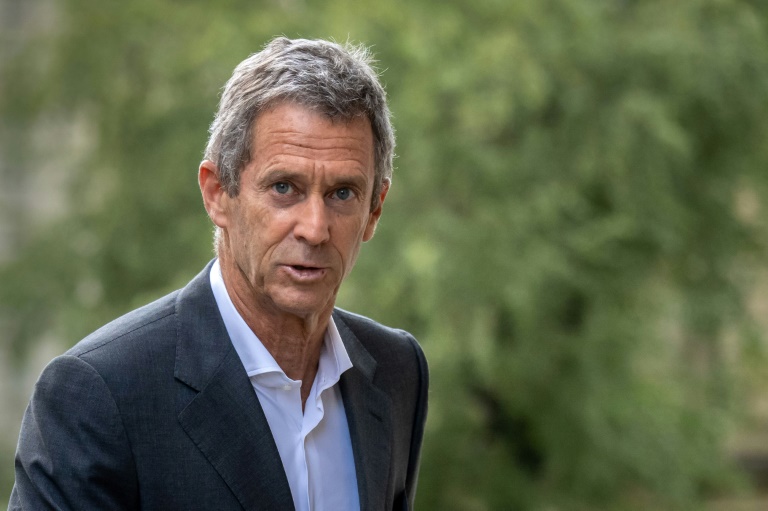
A French-Israeli businessman appealing against his conviction in one of the mining sector’s biggest-ever corruption cases insisted Tuesday on his innocence and hoped the Swiss court would give him justice.

Mining tycoon Beny Steinmetz was found guilty in 2021 of setting up a complex financial web to pay bribes to ensure his company could obtain permits in Guinea’s southeastern Simandou region, which is estimated to contain the world’s biggest untapped iron ore deposits.

“I am innocent,” the 66-year-old told AFP at the end of seven days of intense hearings.

The businessman, who made his fortune in diamonds, was sentenced by a Geneva court to five years in prison and ordered to pay 50 million Swiss francs ($52 million) in compensation.

But he insisted during the appeals court hearings that that verdict was deeply unfair, with his lawyers arguing the prosecution’s case was “very weak”.

“I have done nothing wrong,” Steinmetz said shortly before the court adjourned, telling the judges he had been “devastated” to hear how he was being portrayed.

Steinmetz — who lives in Israel and was granted a free-passage to attend the trial — is free to leave Switzerland but will be asked to return to serve his sentence if he loses.

He has not served any prison time due to the appeal process, with the judges expected to take weeks or even months to render their verdict. 

The prosecutors doubled down on the picture painted during the original trial, of Steinmetz leading the charge to bribe a wife of then-Guinean president Lansana Conte and others in order to win lucrative mining rights in Simandou.

Beny Steinmetz Group Resources (BSGR) obtained the rights — which had been stripped from mining giant Rio Tinto — shortly before Conte died in 2008, after about $10 million was allegedly paid in bribes over a number of years through different channels.

BSGR received the rights against an investment of $160 million, but 18 months later sold 51 percent of its stake in the concession to Vale of Brazil for $2.5 billion.

In 2013, Guinean president Alpha Conde reviewed the permits allotted under Conte and stripped the VBG consortium formed by BSGR and Vale of its permit.

Prosecutors claim Steinmetz and his associates entered a “pact of corruption” with Conte and his fourth wife Mamadie Toure to obtain the exploration rights — a charge he flatly rejects.

Toure, who has admitted to having received payments, has protected status in the United States as a state witness.

Steinmetz’s lawyer repeatedly complained that the defence had no access to Toure or insight into her US deal, and decried Tuesday that the prosecutor’s case relied heavily on “a witness who is not credible.”

The defence maintained there was nothing inappropriate about how BSGR obtained the permits, and that Rio Tinto lost half the concessions for failing to develop them.

Filtered ferry engines hailed for tackling air pollution

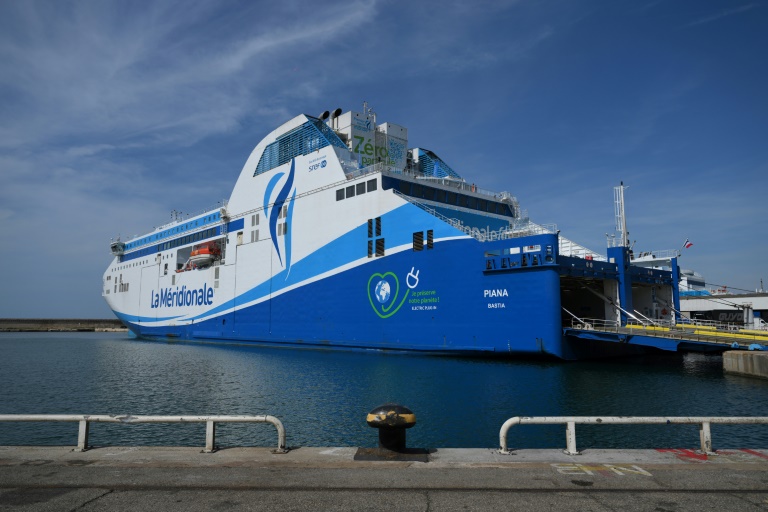
A French ferry company has launched what it claims is the first vessel that uses filters to capture almost all air pollutants from the boat’s exhaust fumes, sparking praise from campaigners and local authorities.

La Meridionale, based in the southern French port of Marseille, showed off its innovative ship on Monday to the media.

“It’s an unprecedented solution, a world first,” company chairman Marc Reverchon told reporters on board the blue-and white Piana which sails between Marseille and the French island of Corsica.

The company said the filters captured 99 percent of sulphur oxides emitted by the ferry’s four engines, as well as 99.9 percent of particulate matter created from the burning of its heavy fuel.

The filters use technology already found in power stations or incineration plants in which sodium bicarbonate is injected into the exhaust fumes, causing a chemical reaction with the tiny particles produced during the combustion process.

The pollutants can then be captured by a type of industrial air filter that has been around for more than 30 years, company technical director Christophe Seguinot told reporters.

“We didn’t have to look too far. We didn’t invent anything,” Seguinot explained. “The challenge for us was to make it suitable for a marine setting.”

The ferry group has an agreement with chemicals supplier Solvay, which will dispose of the toxic filter residue — with a view to recycling it in the future, Seguinot said.

Heavy fuel oil, also known as bunker fuel, is one of the cheapest but most polluting transportation fuels, resulting in the thick plumes of dirty brown smoke seen above most ships.

It is also high in sulphur which can cause respiratory problems and acid rain.

– Regulation –

Regulations on the amount of sulphur authorised vary, with ultra-clean fuel mandated in areas such as the North Sea and Baltic Sea in Europe, as well as around North American ports.

Marseille, which hosts cruise and container ships as well as ferries, has struggled with increased smog in recent years and the shipping sector is thought to be responsible for a large part of the problem.

“Let’s hope that the big polluters follow the example of La Meridionale,” Marseille’s Socialist mayor Benoit Payan tweeted on Monday after attending the company event.

He has been battling ship operators over the summer with a petition calling for the dirtiest vessels to be barred during peak pollution times.

Shipping companies are under pressure from regulators and tightening industry standards to tackle their emissions of greenhouse gases as well as atmospheric pollutants, but campaigners want faster action.

La Meridionale “is going much further than current regulations require by treating all of their particulate matter,” Damien Piga from Atmosud, a regional air quality surveillance group, told AFP. 

Some ship owners favour the use of so-called “scrubbing” technology which sees water sprayed into the exhaust fumes, which captures some of the pollutants.

Environmentalists point out that in many cases the water is then discharged into the sea, however.

Other groups are experimenting with engines that run on cleaner liquefied natural gas (LNG) or methanol, while electric and sail powered vessels are also being developed.

US services sector expands in August as prices ease: survey

The American services sector expanded at a slightly faster pace in August amid signs of easing supply issues and slowing price gains, according to an industry survey released Tuesday.

The Institute for Supply Management’s services index rose to 56.9 percent, just slightly above the July level, defying expectations of a slowdown.

The new orders index jumped 1.9 percentage points, and employment rose 1.1 points, ISM said, while prices slipped 0.8.

“The services sector had a slight uptick in growth for the month of August due to increases in business activity, new orders and employment,” ISM survey chair Anthony Nieves said in a statement.

Firms responding to the survey noted “some supply chain, logistics and cost improvements; however, material shortages remain a challenge,” he said.

On the plus side, “employment improved slightly despite a restricted labor market.”

The sector accounts for two-thirds of the US economy and comprises a wide variety of services, from education to IT to medicine.

Even amid soaring US inflation, the sector has grown steadily for 151 months, except for a two-month contraction as the United States grappled with the beginning of the coronavirus pandemic in April and May 2020.

In contrast, growth in the manufacturing sector was flat in August. 

The Federal Reserve is on an aggressive campaign to combat the highest US inflation in four decades, fueled by global supply chain challenges, raising interest rates to cool demand.

Rubeela Farooqi of High Frequency Economics said despite the upside surprise in the services sector, “momentum is likely to moderate as economic activity continues to adjust to Fed rate hikes.”

Stocks push higher, but yen and euro under pressure

European and US stocks rose Tuesday, but gains were capped by economic slowdown fears and central bank efforts to contain surging inflation.

Frankfurt, London and Paris equities carved out gains despite poor German data, a day after tumultuous trading as Russia curbed gas supplies to Europe.

Wall Street stocks opened higher after a three-day holiday weekend, with the Dow adding 0.4 percent

The euro approached a 20-year low versus the dollar that it struck on Monday, while sterling was lifted by reports that new UK Prime Minister Liz Truss could freeze a looming surge in energy bills, and the yen struck a new 24-year dollar low.

– ‘Wait-and-see mood’ –

Briefing.com analyst Patrick O’Hare said the positive start on Wall Street was primarily due to the fact that main indices are down around 10 percent from the highs they struck on August 16.

There is “an expectation that it is due for a bounce from a short-term oversold condition.”

Nevertheless, traders are still wary.

“Investors remain cautious amid worries about the slowing global economy,” noted Hargreaves Lansdowne analyst Susannah Streeter.

“There is a wait-and-see mood hanging over markets.”

Frankfurt rebounded somewhat despite news that Germany’s industrial orders slumped for the sixth consecutive month in July.

That again raised the spectre that recession was looming in Europe’s biggest economy.

The European Central Bank is expected to hike interest rates on Thursday to tackle surging eurozone inflation.

Eurozone stocks had tumbled Monday on heightened energy concerns after Russia said it would not restart gas flows to Germany and effectively most of the continent.

– ‘Catch-22’ for euro –

Russia’s decision — in retaliation for sanctions over Ukraine — sent shock waves through trading floors as it ramped up expectations of a painful recession in major economies.

That continues to bedevil the euro, as well as the measures that European governments take to prop up their economies. 

City Index and FOREX.com analyst Fawad Razaqzada said these measures are likely to fuel inflation even further. This would require the ECB to hike interest rates even more aggressively, meaning a sharper recession.

“So, it is a catch-22 situation for the ECB,” he said.

“For this reason, traders are reluctant to buy the euro.”

In Asia on Tuesday, Shanghai advanced after China unveiled fresh economy-boosting measures, but the overall picture was mixed.

Sydney dipped after the Reserve Bank of Australia lifted interest rates to a near eight-year high and warned of more pain ahead.

– Key figures at around 1330 GMT –

London – FTSE 100: UP 0.4 percent at 7,312.85 points

Frankfurt – DAX: UP 1.0 percent at 12,891.67

Paris – CAC 40: UP 0.4 percent at 6,115.12

EURO STOXX 50: UP 0.5 percent at 3,505.67

New York – Dow: UP 0.4 percent at 31,428.94 

Tokyo – Nikkei 225: FLAT at 27,626.51 (close)

Hong Kong – Hang Seng Index: DOWN 0.1 percent at 19,202.73 (close)

Shanghai – Composite: UP 1.4 percent at 3,243.45 (close)

Euro/dollar: DOWN at $0.9899 from $0.9929 on Monday

Pound/dollar: UP at $1.1539 from $1.1517

Dollar/yen: UP at 142.46 yen from 140.60 yen

Euro/pound: DOWN at 85.79 pence from 86.21 pence

West Texas Intermediate: UP 1.0 percent at $87.71 per barrel

Brent North Sea crude: DOWN 1.9 percent at $93.91 per barrel

burs-rl/lth

Close Bitnami banner
Bitnami