US Business

Gender identity gets starring role at Venice Film Festival

Transgender issues have taken centre stage at the Venice Film Festival this year, with Italian director Emanuele Crialese, there to present his new film starring Penelope Cruz, even using the platform to reveal he was born a woman. 

The revelation by Crialese came at a press conference for his new film, “L’Immensita”, which is inspired by his difficult adolescence. 

“I am never going to be like any other man… I was born biologically a woman,” Crialese said. 

He added that, despite his transition, there was still a “huge part of my character that is female”. 

In the film, Cruz’s character attempts to protect her teenage daughter, who identifies as a boy, in a bourgeois household dominated by an abusive, unfaithful husband.

It is not alone at this year’s festival in embracing artists who reject traditional gender roles or tackle issues around sexual identity. 

Another film in the main competition, “Monica” by Italian director Andrea Pallaoro, stars a transgender actress in the leading role — a first in 79 editions of the festival. 

Trace Lysette, known for her role in Amazon Prime series “Transparent”, plays a transgender woman who returns to Ohio after a long absence to care for her dying mother. 

“It’s very rare that you see a script where there’s a trans character at the centre and the movie is told through her lens,” Lysette told reporters. 

“Usually trans characters are more a sidebar vehicle for someone else’s story.”

Besides exploring the title character’s emotional and psychological world, the movie reflects on “the precarious nature of each of our identities when faced with the need to survive and transform”, said Pallaoro.

– Struggling for decades –

Themes of gender identity are also the subject of various documentaries in the festival.

In “All the Beauty and the Bloodshed”, director Laura Poitras centres on the art and activism of US photographer Nan Goldin, whose early work focused on gay culture and volatile male-female relationships.

Meanwhile, a documentary by French director Sebastien Lifshitz, “Casa Susanna”, recounts the story of a clandestine community of cross-dressers in the conservative America of the 1950s and 1960s, relying on archival footage and surviving members of this “pre-queer” history.

“It’s been a struggle for decades to try to break out of the archetypes,” Lifshitz told AFP.  

Prejudice against homosexuals in 1960s Italy is the premise of Gianni Amelio’s film, based on true events and set to premiere on Tuesday.

“Il Signore delle Formiche” (The Lord of the Ants) tells the story of Aldo Braibanti, a playwright and poet convicted of submitting his student and lover to his will, a crime under the Fascist penal code that had never been invoked before and was later revoked.  

In “Three Nights a Week,” French director Florent Gouelou offers up “a declaration of love” to the art form of drag, with his protagonist Baptiste discovering the Parisian world of drag queens and falling in love with one of them, Cookie.

“Through the character of Baptiste you see my own fascination and through the character of Cookie you see my own experience as a drag queen,” said Gouelou.
Dozens of pools closed in France over soaring energy costs

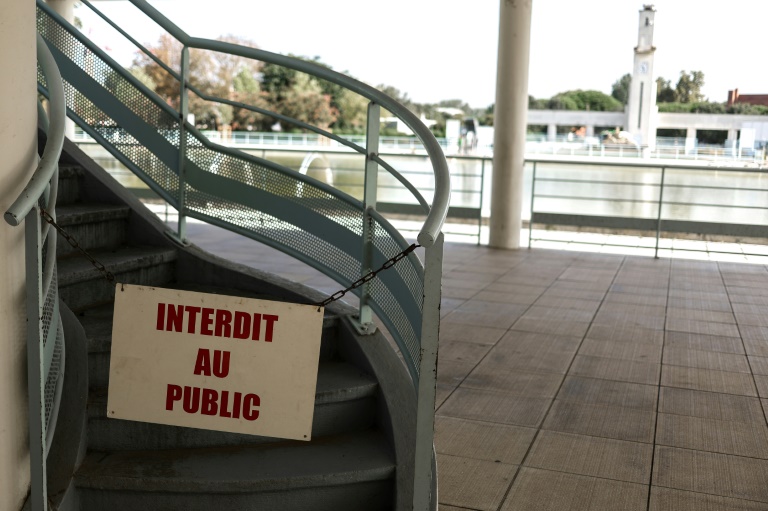
French sports and education groups expressed outrage Tuesday at the closure of around 30 swimming pools, after their operator said surging heating costs made them no longer viable.

“These closures directly impact all children and adults who won’t be able to learn to swim,” the French Swimming Federation (FFN) said in a statement, demanding the pools’ “immediate” reopening.

Vert Marine, which operates pools and ice rinks across France, said Monday that its annual energy bill had jumped to 100 million euros ($99 million) from 15 million euros — a figure it said equalled “the company’s entire annual revenue”.

The company said it was up to “local authorities and the government to take necessary and unprecedented decisions to get back to bearable energy costs”.

But local governments are themselves struggling to meet surging bills, which have doubled in some places, according to France Urbaine, a federation of large towns and cities.

Physical education union SNEP warned that pool closures during the coronavirus crisis meant there was already “a generation of 800,000 school pupils who were unable to learn to swim in 2020 and 2021”.

The sports ministry has also heavily promoted swimming as a way of preventing accidental drownings.

“Balancing the books for private companies that manage some pools shouldn’t come before the public interest,” the SNEP said, highlighting swimming’s “educational, health, leisure and safety benefits”.

Many of France’s pools and ice rinks are old and energy-intensive, and they are set to be studied in more detail by a government working group on saving energy.

Berlin tech show facing up to era of energy scarcity

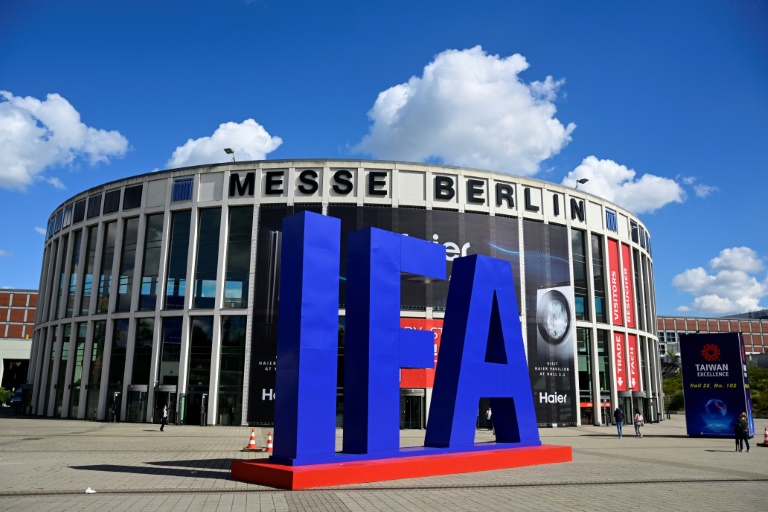
From portable solar panels to smart thermostats and “intelligent” radiators, exhibitors at the IFA tech show in Berlin are touting smart solutions for an energy-starved world.

But the clever gadgets sometimes belie their hefty carbon footprint.

The motto for the 2022 edition of the German fair for cutting-edge technology — the first since the outbreak of the coronavirus pandemic — is “energy efficiency”, a timely mission with prices for electricity soaring. 

One such exhibitor which believes it has the answer is Busch-Jaeger, whose stand is carpeted in switches and small blank screens.

The German company, owned by the Swiss group ABB, has become a specialist in “smart home” technologies. 

Their idea: to regulate energy consumption at home on the basis of a stream of data, including the current ambient temperature, the light in the room and the quality of the air.

Such devices are “more and more sought after” as the cost of energy skyrockets in Europe, says Ulf Ehling, who is tasked with presenting the company’s technology at IFA. 

– ‘Crazy’ –

A few hundred metres away, the Norwegian company Mill is offering black and white “intelligent” radiators.

Thanks to a smartphone app, users can control the temperature in their homes over the course of the day.

According to Bashir Naimy, Mill’s technical director, the device can help save “37 percent of a household’s energy”.

IFA also boasts regular displays of eccentric gadgets, among them a fridge that cools a drink in “two minutes” or an odour generator for buying perfume online.

The French company Y-Brush has descended on IFA to tout a “sonic” toothbrush that looks like dentures, which is “capable of brushing all teeth at once in 5, 10, or 15 seconds”. 

Visitors to the fair, which closes on Tuesday, are, however, preoccupied by the question of energy usage.

“When you see how much all these devices consume it is crazy,” says Justin, 23, a tech enthusiast, who came to Berlin specifically for the show.

“We’re always thinking about that,” says Christoph Boettger, 39, who has come with his partner.

European energy prices have soared over recent months in the wake of the Russian invasion of Ukraine and the subsequent throttling of gas supplies to Germany from Moscow.

The German government has launched an energy-saving campaign and tried to lead by example by reducing the temperature in public buildings, among other moves.

The energy conundrum worsened last week, as Russian energy giant Gazprom said it would not restart gas deliveries via the Nord Stream 1 pipeline after a planned three-day maintenance, pinning the blame on Western sanctions.

– ‘Internet of things’ –

“Smart home technologies can help save energy,” Sara Warneke, the director of IFA’s organisers, said Friday.

But what is the real toll of these new energy technologies?

According to a 2020 report by the French Senate the “growth in greenhouse gas emissions” from digital technologies is driven by “the internet of things” — household electronics connected to the web — and the “storage of data”.

The two together could lead to a 60 percent leap “in the carbon impact of digital technologies by 2040”.

Despite the individual energy saving potential, the total impact of these technologies may be bigger than they first appear.

The Chinese company Ecoflow, which has offices across Europe, hopes to resolve the contradiction with mini solar panels.

The long, foldable rectangles that are carried around in a special case can be used to charge a lithium battery.

Their portability means users “do not need administrative authorisation to install them”, says Franko Fischer, Ecoflow’s spokesman.

The panels can generate 2,700 Wh, enough to charge a computer, a mobile phone or a hairdryer.

“We expect consumers in Europe to have high demand for solutions like ours, because people want to be independent, especially in a crisis,” says Fischer.

In Germany, the cost of electricity has risen on average by 31 percent in the year to August, according to price comparison site Check24.

South African GDP shrinks, hit by floods, energy crisis

South Africa’s economy shrank in the second quarter, as floods and an energy crisis put a halt to months of growth, official data showed Tuesday.

The dip in output after two consecutive quarters of modest growth dragged Africa’s most industrialised economy back below pre-coronavirus pandemic levels.

The official statistics agency StatsSA said gross domestic product retreated by 0.7 percent in the second quarter.

“The economy took almost two years to recover from the impact of COVID-19,” the agency said in a statement. “The recovery was short lived”.

Devastating floods that killed more than 450 people in the southeastern KwaZulu-Natal province and power cuts caused by a prolonged energy crisis contributed to the decline, “weakening an already fragile national economy”, the agency said.

“The flooding had a negative impact on a number of industries, most notably manufacturing,” StatsSA said. 

Damages to factories and plants, and disruptions to logistics and supply chains caused by the torrential rains, pulled national manufacturing output down by 5.9 percent, it said. 

Mining and the electricity, gas and water supply industry were hampered by weeks of severe rolling blackouts, known locally as load shedding, it said. 

More European energy firms get state aid as prices soar

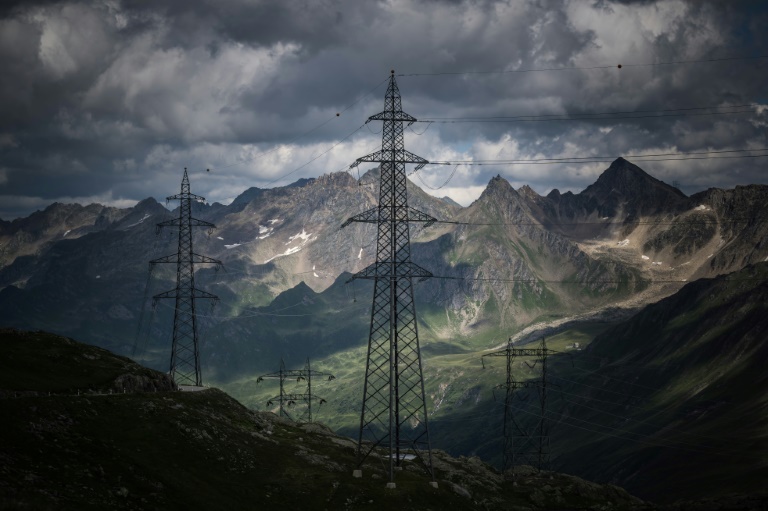
Finland and Switzerland offered financial backing to utility companies on Tuesday, the latest energy firms in Europe to receive state support as gas prices have spiked since Russia invaded Ukraine.

The conflict has created a cash crunch for power companies in Europe, prompting governments in several countries to open credit lines in recent months.

The Swiss Federal Energy office said Tuesday that Axpo, a publicly-owned Swiss electricity group, will have access to four billion Swiss francs ($4.1 billion) in credit to ensure liquidity after it requested the temporary aid last week.

“The government responded favourably to avoid putting Switzerland’s energy supply in jeopardy,” the office said in a statement, adding that Axpo was an electricity firm of “systemic importance” for the country.

In Finland, utility group Fortum said it had agreed on a bridge financing arrangement with the state — which is also the majority owner — to “ensure access to sufficient liquidity resources” if power prices continue to rise.

The liquidity facility gives Fortum access to 2.35 billion euros ($2.34 billion) through state-owned holding company Solidium, but Fortum said “utilisation of the arrangement is a last resort.”

“The European energy crisis is a result of Russia’s decision to use energy as a weapon,” Fortum CEO Markus Rauramo said, adding that this has put his company and other Nordic energy suppliers “in a difficult situation.”

“There is great uncertainty in the market and energy prices have been record high,” Rauramo said.

Gas prices have soared since Russia invaded Ukraine.

Utilities rely on futures markets to guarantee a certain price for their supplies. Under the contracts, they are required to put collateral upfront.

But if prices rise, a company is required to put up more collateral, creating a potential cash crunch.

Fortum said the collateral tied up Nordic commodities exchange Nasdaq amounted to around 3.5 billion euros as of September 5.

“Regulatory changes are urgently needed to curb the unreasonably high margining and collateral requirements,” Rauramo said.

– Europe-wide problem –

Other governments in Europe have offered billions of euros in loans to energy firms.

German energy giant Uniper said last week it would need an additional four billion euros in state-backed loans after already having used a nine-billion-euro credit line, following a July deal.

Fortum, which is the majority owner of Uniper, clarified in its statement that its arrangement with the Finnish state could not be used to cover Uniper’s needs.

Also last week, Austria announced a two-billion-euro loan for Wien Energie, the country’s main electricity provider.

At the weekend, Sweden said it would provide liquidity guarantees to Nordic and Baltic energy companies worth up to $23 billion in a bid to prevent a financial crisis sparked by Europe’s energy crunch. 

Independently of the agreement with Fortum, the Finnish government also proposed Sunday a rescue package of up to 10 billion euros in loans and guarantees for energy companies facing insolvency.

burs-jll/po/lth

European stocks climb, euro steadier

European stocks rose Tuesday but gains were capped by Europe’s worsening energy crisis, economic slowdown fears and central bank efforts to contain surging inflation.

Frankfurt, London and Paris equities carved out gains nearing the half-way stage, despite poor German data and after tumultuous trading the previous day as Russia curbed gas supplies to Europe.

The euro climbed a day after hitting a 20-year low versus the dollar, while sterling was lifted by reports that new UK Prime Minister Liz Truss could freeze a looming surge in energy bills.

World oil prices slid on demand concerns, one day after jumping as OPEC and allies trimmed production in an attempt to lift the market. 

– ‘Wait-and-see mood’ –

“Investors remain cautious amid worries about the slowing global economy,” noted Hargreaves Lansdowne analyst Susannah Streeter.

“There is a wait-and-see mood hanging over markets.”

Frankfurt rebounded somewhat despite news that Germany’s industrial orders slumped for the sixth consecutive month in July.

That again raised the spectre that recession was looming in Europe’s biggest economy.

The European Central Bank was Thursday expected to hike interest rates to tackle surging eurozone inflation.

Eurozone stocks had tumbled Monday on heightened energy concerns after Russia said it would not restart gas flows to Germany and effectively most of the continent.

Russia’s decision — in retaliation for sanctions over Ukraine — sent shock waves through trading floors as it ramped up expectations of a painful recession in major economies.

In Asia on Tuesday, Shanghai advanced after China unveiled fresh economy-boosting measures, but the overall picture was mixed.

Sydney dipped after the Reserve Bank of Australia lifted interest rates to a near eight-year high and warned of more pain ahead.

Wall Street reopens Tuesday following a long US holiday weekend.

– Key figures at around 1010 GMT –

London – FTSE 100: UP 0.3 percent at 7,309.63 points

Frankfurt – DAX: UP 1.2 percent at 12,914.47

Paris – CAC 40: UP 0.7 percent at 6,133.90

EURO STOXX 50: UP 0.8 percent at 3,518.27

Tokyo – Nikkei 225: FLAT at 27,626.51 (close)

Hong Kong – Hang Seng Index: DOWN 0.1 percent at 19,202.73 (close)

Shanghai – Composite: UP 1.4 percent at 3,243.45 (close)

New York – Dow: Closed for public holiday

Euro/dollar: UP at $0.9938 from $0.9929 on Monday

Pound/dollar: UP at $1.1598 from $1.1517

Dollar/yen: UP at 141.62 yen from 140.60 yen

Euro/pound: DOWN at 85.69 pence from 86.21 pence

West Texas Intermediate: DOWN 0.2 percent at $86.74 per barrel

Brent North Sea crude: DOWN 2.8 percent at $93.06 per barrel

burs-rfj/bcp/cdw

Asian markets mostly rise as bargain-buying offsets fears over outlook

Asian investors squeezed out gains Tuesday as they tried to recover from the previous day’s losses, but they remain gripped by fears over Europe’s worsening energy crisis, China’s economic slowdown and central bank efforts to contain surging inflation.

The dollar lost some momentum, with the euro supported ahead of an expected European Central Bank interest rate hike and sterling lifted by reports that new UK Prime Minister Liz Truss will unveil plans to cut energy bills.

Russia’s decision not to resume gas supplies to Europe — in retaliation for sanctions over Ukraine — sent shock waves through trading floors Monday as it ramped up expectations of a painful recession in major economies.

“This shouldn’t have been a surprise to most people, given that it was widely expected that Putin would play this card at some point,” said CMC Markets analyst Michael Hewson. 

“Now that he has, Russia doesn’t really have anywhere else to go, and while natural gas prices did shoot higher, they closed well off the highs of the day.”

With Wall Street closed for a holiday, Asia had few new catalysts to drive buying.

Markets fluctuated between gains and losses in the morning but managed to clamber up as the day progressed.

Shanghai enjoyed a healthy bounce after China unveiled fresh economy-boosting measures. 

But analysts warned that while a stimulus was welcomed as growth dwindles, traders were only looking for signs of an easing in the country’s zero-Covid strategy, which has left millions in lockdown and threatens economic activity.

Singapore, Seoul, Taipei, Manila, Mumbai, Bangkok and Jakarta all rose, while Tokyo was marginally up and Hong Kong inched down. 

Sydney dipped after the Reserve Bank of Australia lifted interest rates to a near eight-year high and warned of more pain ahead. Wellington also slipped.

London, Paris and Frankfurt enjoyed small gains.

– Global recession risk –

“A lot of clients are asking, have we seen the bottom yet and are we going into a global recession?” Grace Tam, of BNP Paribas Wealth Management Hong Kong, told Bloomberg Television.

“We do think the risk of a global recession, especially next year, is actually quite high” and that the energy crisis “is not fully priced” into markets, she said.

The next key event for investors is the ECB rate decision Thursday, with some observers tipping a 75 basis point hike to bring down record-high inflation.

That is followed later in the month by the Federal Reserve’s meeting, where policymakers will debate a similar move, which would be the third rise in a row.

However, while central banks are lifting borrowing costs to fight surging prices, they have little power over the cost of oil, a key driver of the rises.

And on Monday, OPEC and other major producers announced a surprise cut in output, sending both main contracts rising. The move came after the crude market fell in recent months on demand fears caused by a possible recession.

“In absolute terms, the 100,000 barrels a day supply cut doesn’t matter that much to global supply balances,” said Noah Barrett of Janus Henderson Investors.

“However, in terms of signalling, the move is important as it indicates that OPEC+ is watching demand very closely and is trying to manage supply to keep a floor on oil prices.”

Several countries including the United States had earlier called for a rise in production, which was followed by a small lift of 100,000 barrels.

“The modest increase we got a month ago is now gone, so OPEC+ is clearly sending a message that they are not bowing to external demands,” said Barrett.

“We should expect continued volatility in oil prices, with global demand indicators driving price movements.”

Brent and WTI were both down from Monday’s levels.

– Key figures at around 0810 GMT –

Tokyo – Nikkei 225: FLAT at 27,626.51 (close)

Hong Kong – Hang Seng Index: DOWN 0.1 percent at 19,202.73 (close)

Shanghai – Composite: UP 1.4 percent at 3,243.45 (close)

London – FTSE 100: UP 0.3 percent at 7,305.39

Euro/dollar: UP at $0.9967 from $0.9921 on Monday

Pound/dollar: UP at $1.1568 from $1.1507

Dollar/yen: UP at 141.65 yen from 140.53 yen

Euro/pound: DOWN at 86.10 pence from 86.22 pence

West Texas Intermediate: DOWN 0.2 percent at $89.30 per barrel

Brent North Sea crude: DOWN 0.1 percent at $95.69 per barrel

New York – Dow: Closed for public holiday

Belarus exiles find home from home in 'travelling' bar

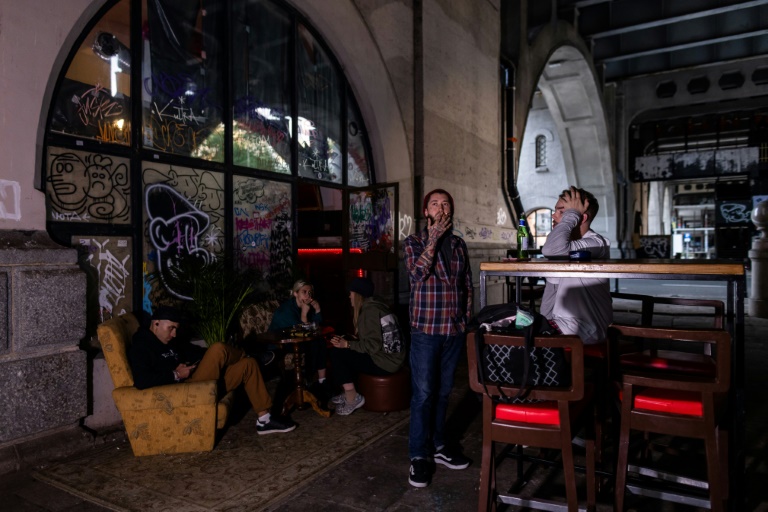
Tucked under a bridge in downtown Warsaw is a bar like no other. Over the years, Karma has relocated from Belarus to Ukraine and Poland, in the face of repression and war.

Along the way, the watering hole has become a home away from home where tattooed young people drink beer, roll cigarettes and mix and mingle in their mother tongue. 

“This bar never wanted to be a travelling bar… It was just to keep our community together,” said co-owner Gleb Kovalev, sporting a dark scraggly beard and inked from head to ankle.

“After things became much more political, we had to move and we had to stay together,” the hyperactive 31-year-old told AFP over a hotdog and a whiskey and coke.

The Belarusian regime staged a brutal crackdown on historic protests in 2020.

More recently, the country has served as a springboard for its ally Russia’s assault on Ukraine.

The events have led thousands of Belarusians and Ukrainians to take refuge in neighbouring Poland — a staunch critic of both the regime in Minsk and the Kremlin.

Some of the new arrivals end up at Karma.

Kovalev, who speaks seven languages, is sitting in a makeshift living room on the pavement behind the bar. There are a couple of armchairs, a tattered rug and potted plants.

It is a weekday and the night is young but already a dozen Belarusians are standing around with drinks, their laughter intermingling with the traffic overhead.  

“I was in every Karma bar,” said Anton Lutsevich, a 3D artist from the central town of Bobruisk, noting the familiar faces from the original location.

“Many of them are now here, many of them were in Kyiv… Karma is like a sitcom. You come here and you see the same characters,” the tall 23-year-old told AFP.

His friend Andrey Makarevich once hightailed it from riot police across a Minsk cemetery. 

“You know, your motherland is not a place — it’s the people from your country,” said Makarevich, a 27-year-old quality assurance engineer from the northeastern city of Vitebsk.

“So here I feel like I’m at home.” 

– Police ‘smashing faces’ – 

Karma first opened in the Belarusian capital in late 2017 as an art bar with music and free tattoos raffled off every Monday, a place to “make parties” as Kovalev puts it.

Then came August 9, 2020, when veteran strongman Alexander Lukashenko crushed the protests that erupted after allegations of fraud in his election to a sixth term.

“It was the night that changed everything in our lives… My bar was assaulted by riot police,” Kovalev said.

“I was inside hiding people and I saw police being out of control, just like smashing faces,” he added.

“I was like two metres from being arrested. So yeah, I decided to leave absolutely.”

Kovalev opened another Karma in the Ukrainian capital last year, before he was again forced to pack his bags when Russia invaded. 

The Warsaw edition of Karma has been up and running since June, mainly drawing Belarusians but also Ukrainians, Russian oppositionists, other foreigners and the occasional Pole.

“It’s pretty much a migrant bar now… We welcome everyone who shares our values,” Kovalev said.

“Like art, music, tattoos, a certain way of democracy and freedom that we didn’t have in the places we escaped, and also peace.”

Alex Chekonov, a regular, describes Karma as a safe place where “everybody will help you”. 

“It’s always happy, always joy. Always funny and everybody is beautiful here,” the 32-year-old IT guy told AFP. 

– ‘Russian roulette’ –

While young and cheerful, many in the crowd have a traumatic tale or two from back home. 

“I’m not going back because, yeah, I’m afraid,” said Veronika Lindorenko, 32, who wore white and carried flowers at women’s protests after the Belarusian election.

“There is a high risk of me being imprisoned, as I was quite active, and it’s like Russian roulette — you never know,” she said, firing with her thumb and index finger like a gun.

The start-up consultant has reason to be scared: she spent 10 days locked up after one tense run-in with police while supporting striking factory workers in court.

“I don’t want to remember all this stuff because for me it’s quite painful,” she told AFP.

Lindorenko left for Ukraine when she heard the powers-that-be wanted to interview her — and then again started from scratch in Poland. 

Kovalev has a theory about being an immigrant.  

“You know, it’s very hard to lose everything only for the first time. Then the second time, it’s fine. And the third,” he said. 

“It’s going to be even easier now because there are so many people who lost everything, like me.

“You just have to unite and recreate it.”

Asian markets mixed as bargain-buying tempers fears over outlook

Asian investors struggled Tuesday to recover from the previous day’s losses on growing fears over Europe’s worsening energy crisis, China’s economic slowdown and central bank efforts to contain surging inflation.

However, the dollar lost some of its momentum against its major peers on profit-taking, with the euro finding some support ahead of an expected European Central Bank interest rate hike and sterling lifted by the election of a new prime minister.

Russia’s decision not to resume gas supplies to Europe — in retaliation for sanctions over Ukraine — sent shock waves through trading floors Monday as it ramped up expectations of a painful recession in major economies.

European bourses took the brunt of the selling, though they pared their earlier losses as commentators said the shutoff had been expected to come at some point.

With Wall Street closed for a holiday, Asia had few new catalysts to drive buying.

In early trade, markets fluctuated between gains and losses, with Hong Kong, Seoul and Wellington down, while Shanghai, Sydney, Singapore, Taipei and Jakarta edged up. Tokyo and Manila were flat.

“A lot of clients are asking, have we seen the bottom yet and are we going into a global recession?” Grace Tam, of BNP Paribas Wealth Management Hong Kong, told Bloomberg Television.

“We do think the risk of a global recession, especially next year, is actually quite high” and that the energy crisis “is not fully priced” into markets, she said.

The next key event for investors is the ECB rate decision Thursday, with some observers tipping a 75 basis point hike to bring down record-high inflation.

That is followed later in the month by the Federal Reserve’s meeting, where policymakers will debate a similar move, which would be the third rise in a row.

However, while central banks are lifting borrowing costs to fight surging prices, they have little power over the cost of oil, a key driver of the rises.

And on Monday OPEC and other major producers announced a surprise cut in output, sending both main contracts rising. The move came after the crude market fell in recent months on demand fears caused by a possible recession.

“In absolute terms, the 100,000 barrels a day supply cut doesn’t matter that much to global supply balances,” said Noah Barrett of Janus Henderson Investors.

“However, in terms of signalling, the move is important as it indicates that OPEC+ is watching demand very closely and is trying to manage supply to keep a floor on oil prices.”

Several countries including the United States had earlier called for a rise in production, which was followed by a small lift of 100,000 barrels.

“The modest increase we got a month ago is now gone, so OPEC+ is clearly sending a message that they are not bowing to external demands,” said Barrett.

“We should expect continued volatility in oil prices, with global demand indicators driving price movements.”

Brent and WTI were both down from Monday’s levels.

– Key figures at around 0230 GMT –

Tokyo – Nikkei 225: FLAT at 17,624.96 (break)

Hong Kong – Hang Seng Index: DOWN 0.3 percent at 19177.54

Shanghai – Composite: UP 0.4 percent at 3213.31

Euro/dollar: UP at $0.9960 from $0.9921 on Monday

Dollar/yen: DOWN at 140.40 yen from 140.53 yen

Pound/dollar: UP at $1.1587 from $1.1507

Euro/pound: DOWN at 85.96 pence from 86.22 pence

West Texas Intermediate: DOWN 1.0 percent at $88.54 per barrel

Brent North Sea crude: DOWN 1.0 percent at $94.80 per barrel

New York – Dow: Closed for public holiday

London – FTSE 100: UP 0.1 percent at 7,287.43 (close)

Gender identity gets starring role at Venice Film Festival

Transgender issues have taken centre stage at the Venice Film Festival this year, with Italian director Emanuele Crialese even using the platform to reveal he was born a woman as he presented his new film starring Penelope Cruz. 

The revelation by Crialese came at a press conference for his new film, “L’Immensita”, which is inspired by his difficult adolescence. 

“I am never going to be like any other man… I was born biologically a woman,” Crialese said. 

He added that, despite his transition, there was still a “huge part of my character that is female”. 

In the film, Cruz’s character attempts to protect her teenage daughter, who identifies as a boy, in a bourgeois household dominated by an abusive, unfaithful husband.

It is not alone at this year’s festival in embracing artists who reject traditional gender roles or tackle issues around sexual identity. 

Another film in the main competition, “Monica” by Italian director Andrea Pallaoro, stars a transgender actress in the leading role — a first in 79 editions of the festival. 

Trace Lysette, known for her role in Amazon Prime series “Transparent”, plays a transgender woman who returns to Ohio after a long absence to care for her dying mother. 

“It’s very rare that you see a script where there’s a trans character at the centre and the movie is told through her lens,” Lysette told reporters. 

“Usually trans characters are more a sidebar vehicle for someone else’s story.”

Besides exploring the title character’s emotional and psychological world, the movie reflects on “the precarious nature of each of our identities when faced with the need to survive and transform”, said Pallaoro.

– Struggling for decades –

Themes of gender identity are also the subject of various documentaries in the festival.

In “All the Beauty and the Bloodshed”, director Laura Poitras centres on the art and activism of US photographer Nan Goldin, whose early work focused on gay culture and volatile male-female relationships.

One of the breakout performances has been Quintessa Swindell, a non-binary actor, who stars alongside Sigourney Weaver and Joel Edgerton in “Master Gardener”, playing out of competition. 

Meanwhile, a documentary by French director Sebastien Lifshitz, “Casa Susanna”, recounts the story of a clandestine community of cross-dressers in conservative America of the 1950s and 1960s, relying on archival footage and surviving members of this “pre-queer” history.

“It’s been a struggle for decades to try to break out of the archetypes,” Lifshitz told AFP.  

Another French director, Florent Gouelou, presented “Three Nights a Week”, a film he described as “a declaration of love” to the art form of drag.

In the film, Baptiste, a man in a relationship with a woman, discovers the Parisian world of drag queens and falls in love with one of them, Cookie.

“Through the character of Baptiste you see my own fascination and through the character of Cookie, you see my own experience as a drag queen,” said Gouelou.
Close Bitnami banner
Bitnami