US Business

Starbucks names outgoing Reckitt leader as next CEO

Starbucks named Laxman Narasimhan, a veteran of PepsiCo and other consumer brands, as its next chief executive on Thursday.

Narasimhan, who was most recently chief executive of Anglo-Dutch multinational Reckitt, will relocate to Seattle from London and join Starbucks on October 1, the company said in a news release.

Following a stretch working with longtime Starbucks CEO and interim boss Howard Schultz, Narasimhan will take over the top spot on April 1, 2023.

The transition comes as Starbucks navigates a burgeoning US unionization push following a difficult stretch for workers during Covid-19.

Starbucks has responded to the drive by boosting investments in worker pay and stores as Schultz has undertaken a “listening tour” to hear out employee concerns.

Narasimhan “is uniquely positioned to shape this work and lead the company forward with his partner-centered approach,” Schultz said, calling him “the right leader to take Starbucks into its next chapter.”

Starbucks Workers United organizing member Michelle Eisen called on Narasimhan to end the company’s “scorched earth union-busting campaign and work with all Starbucks partners to make Starbucks a better company and better place to work.”

Neil Saunders, analyst at GlobalData Retail, said the appointment was a “good move” in light of  Narasimhan’s record in overseas markets and experience in retail operations.

“One of Mr Narasimhan’s tasks will be to ensure that Starbucks remains on the front foot. Howard Schultz has already set out some embryonic plans for doing this,” Saunders said. 

“Given that Mr Schultz has been involved in the recruitment process we believe the transition will be relatively seamless as Starbucks moves to its next chapter.”

Reckitt had announced Narasimhan’s departure earlier Thursday, saying he had been motivated to relocate back to the United States for “personal and family reasons.”

Yen tumbles to 24-year low against dollar as stocks mostly fall

Global stock markets mostly fell Thursday, while the yen tumbled to a 24-year low against the dollar as markets grappled with inflation fears and another major Chinese city went into lockdown.

Frankfurt, London and Paris equities closed down between 1.5 and two percent as record-high eurozone inflation fueled fears that borrowing costs are set to climb even higher even as the region faces rocketing winter energy costs due to Russia’s war on Ukraine.

The European Central Bank will announce its latest monetary policy decision next Thursday, after delivering its first rate hike in a decade in July.

“More pain is likely for investors as Europe’s energy crunch gets worse,” said City Index analyst Fawad Razaqzada.

US monetary policy was also expected to remain in focus Friday with the release of the August jobs report, data expected to strengthen the Federal Reserve’s commitment to raising interest rates.

Analysts expect the US economy added a solid 300,000 jobs in August and that unemployment remained 3.5 percent.

“We’re in this world where we’re afraid that good news is going to embolden the Fed to be even more aggressive,” said Art Hogan, chief market strategist at B Riley Wealth Management.

After a downcast open, US stocks rallied later in the day, to lift the Dow and S&P 500 higher, snapping a four-day losing streak.

Meanwhile the yen plunged to a new 24-year low against the dollar on Thursday as Japan sticks with its long-standing monetary easing policies in contrast to tightening by the Fed.

One dollar was worth more than 140 yen for the first time since 1998 in afternoon deals in Europe, as the greenback also strengthened against other currencies.

The greenback was also at its strongest level against the pound since the height of the pandemic in 2020, with sterling buying less than $1.16.

Asian equities weakened further Thursday as traders continued to digest shrinking factory activity in powerhouse economy China.

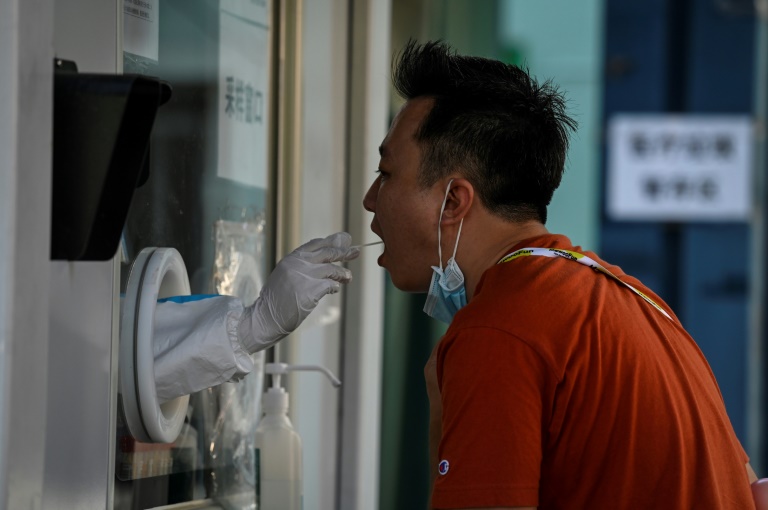
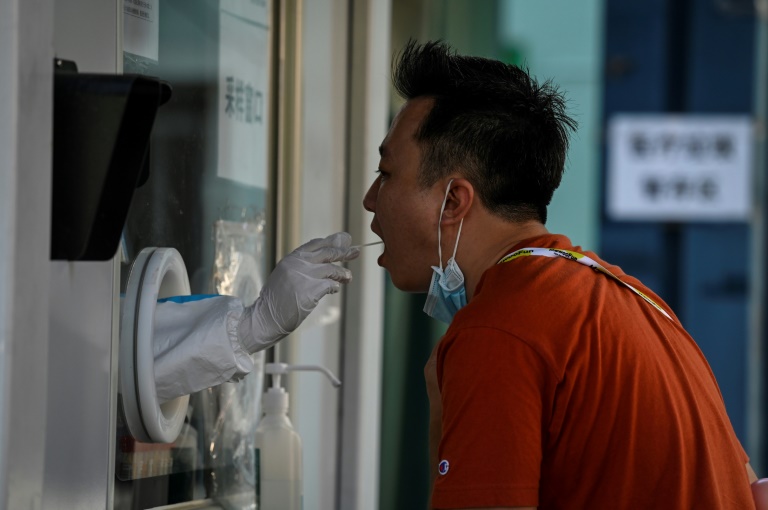
Shanghai also dropped after news that the Chinese city of Chengdu would effectively lock down around 16 million people in a bid to contain a Covid-19 outbreak, likely dealing another blow to a stuttering economy.

“With Covid outbreaks unlikely to diminish as we head into winter, the prospects for a China rebound this side of next year have virtually disappeared, raising concerns over a prolonged global slowdown,” said CMC Markets analyst Michael Hewson.

Oil prices slumped more than three percent on growth worries as well as concerns easing about a possible decision by OPEC+ members to cut production to support prices that Saudi officials had posited last month.

“I’m not sure Saudi Arabia expected markets to test their nerve so quickly but it seems the suggestion that a reduction next week won’t be considered has removed the production cut risk for now,” said analyst Craig Erlam at OANDA trading platform.

– Key figures at around 2030 GMT –

New York – Dow: UP 0.5 percent at 31,656.42 (close)

New York – S&P 500: UP 0.3 percent at 3,966.85 (close)

New York – Nasdaq: DOWN 0.3 percent at 11,785.13 (close)

London – FTSE 100: DOWN 1.9 percent at 7,148.50 (close)

Frankfurt – DAX: DOWN 1.6 percent at 12,630.23 (close)

Paris – CAC 40: DOWN 1.5 percent at 6,034.31 (close)

EURO STOXX 50: DOWN 1.7 percent at 3,456.70 (close)

Tokyo – Nikkei 225: DOWN 1.5 percent at 27,661.47 (close)

Hong Kong – Hang Seng Index: DOWN 1.8 percent at 19,597.31 (close)

Shanghai – Composite: DOWN 0.5 percent at 3,184.98 (close)

Euro/dollar: DOWN at $0.9947 from $1.0054 on Wednesday

Pound/dollar: DOWN at $1.1542 from $1.1622

Euro/pound: DOWN at 86.16 pence from 86.50 pence

Dollar/yen: UP at 140.20 yen from 138.96 yen

West Texas Intermediate: DOWN 3.2 percent at $86.69 per barrel

Brent North Sea crude: DOWN 3.4 percent at $92.36 per barrel

burs-jmb/bfm

The investigations involving Donald Trump

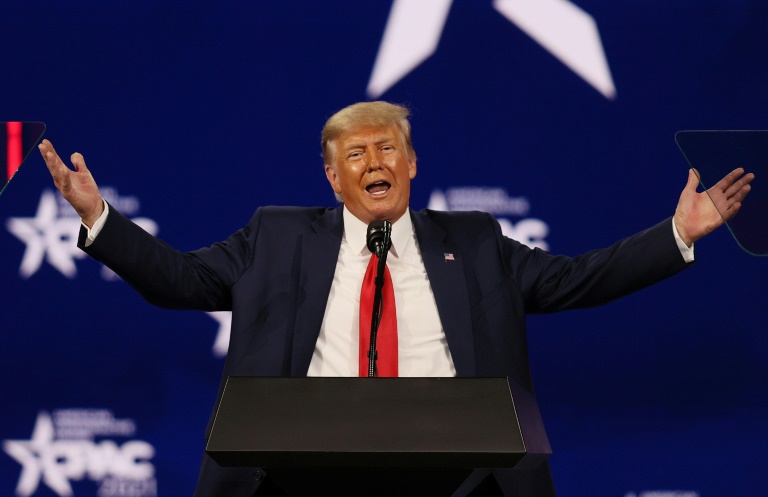
Donald Trump’s legal team argued in court for the first time Thursday about the search of his Florida residence for government secrets removed from the White House — asking for an independent watchdog to review the documents seized last month by FBI agents.

It was the latest development in multiple criminal, civil and congressional probes into the former president’s role in last year’s US Capitol attack and plot to overturn the 2020 US election, as well as his family firm’s business practices.

Here are some of the key investigations weighing on the one-term president as he eyes a third run for the White House in 2024.

– Capitol assault –

A series of explosive hearings by the House of Representatives panel probing the attack on the US Capitol by Trump supporters on January 6, 2021 offered a roadmap for potentially charging the ex-president with a crime.

The lawmakers leading the hearings presented their case that Trump knew he lost the 2020 presidential election to Joe Biden, yet pressed his claims of fraud and ultimately brought his supporters to Washington for a rally that ended with a violent assault on Congress.

The House select committee has also uncovered dramatic evidence of Trump’s alleged misconduct leading up to the insurrection, including his attempt to co-opt government departments into his bid to overturn the election.

The lawmakers’ work is separate from the criminal probe that the Justice Department has launched into the unrest and the events leading up to it.

Former White House counsel Pat Cipollone — a key witness to Trump’s behavior during his last days in office, is expected to appear Friday before a grand jury in Washington.

Besides the legal ramifications, an unprecedented prosecution of a former chief executive would likely cause a political earthquake in a country already starkly divided along partisan Democratic and Republican lines.

– ‘Find’ the votes –

Trump is being investigated for pressuring officials in the southern swing state of Georgia to overturn Joe Biden’s 2020 victory — including a now-infamous taped phone call in which he asked them “find” enough votes to reverse the result.

Fulton County’s top prosecutor Fani Willis has assembled a special grand jury as part of a potentially year-long process that could end in Trump facing a raft of solicitation and conspiracy charges connected to election fraud and interference.

Willis has already amassed significant testimony from Trump’s inner circle, including his former personal lawyer, ex-New York mayor Rudy Giuliani, who has been informed he is the target of criminal investigators.

The former president’s Senate ally Lindsey Graham, who denies accusations that he improperly suggested Georgia toss out lawful mail-in ballots, has failed in a legal bid to avoid testifying.

– The Trump Organization –

Authorities in New York state have been looking into the business practices of the Trump Organization, including whether the firm misled lenders and tax authorities on the value of the company’s real estate holdings.

However, in March the prosecutor leading a probe into the former president’s finances quit over the decision by new Manhattan district attorney Alvin Bragg not to move ahead with prosecution of the Republican billionaire. 

The investigation had probed whether Trump fraudulently overvalued multiple assets to secure loans and then undervalued them to minimize taxes.

It was launched by Bragg’s predecessor Cyrus Vance, with Bragg taking over the case when he took office in January.

The prosecutor Mark Pomerantz alleged Trump is “guilty of numerous felony violations,” according to his resignation letter published by the New York Times.

New York state Attorney General Letitia James is also pushing ahead with a civil probe of the Trump family firm’s practices on property valuations and tax reporting.

– ‘Raid’ on Florida residence –

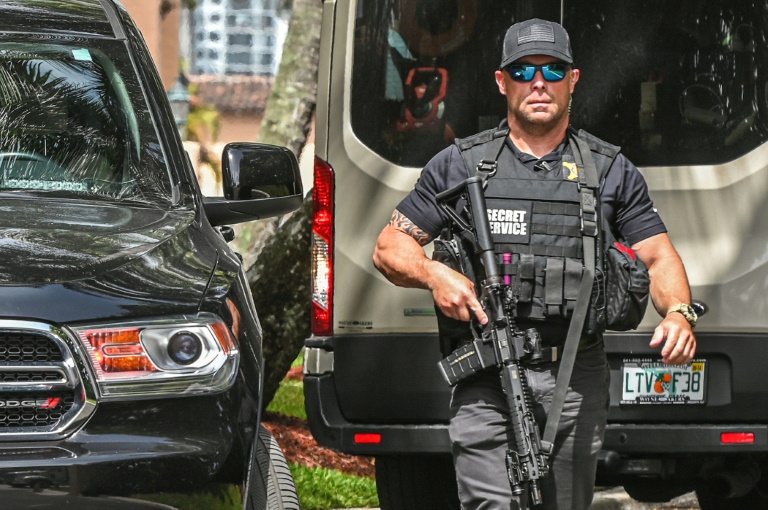
An FBI search of Trump’s Florida home in August turned up top secret documents improperly taken to Trump’s Mar-a-Lago estate when he left office in January 2021.

Government officials said in a filing Tuesday they had evidence of efforts to hide classified documents despite a grand jury demand in May that Trump produce records removed from the White House.

The filing also stated that FBI agents located classified documents in Trump’s desk drawers with his passports.

The August 8 raid was triggered by a review of “highly classified” records that Trump finally surrendered to authorities in January this year — after months of back and forth with the National Archives.

The Justice Department began investigating after the 15 boxes were found to contain national defense information, including 184 documents marked as confidential, secret or top secret, a government affidavit showed.

The former president has taken legal action to seek the appointment of an independent party, or “special master,” to screen the seized files for materials protected by law from being investigated.

A judge in southern Florida said Thursday she would consider the request “in due course” after the federal government opposed the move. 

IAEA chief says integrity of Ukraine nuclear plant 'violated'

The head of the UN nuclear agency on Thursday said the “physical integrity” of a Russian-held Ukrainian nuclear plant had been “violated” following frequent shelling, on his team’s first visit to the facility.

Russian forces seized control of the Zaporizhzhia nuclear plant in southern Ukraine, Europe’s largest, and the surrounding region shortly after the February 24 invasion.

Both sides have traded blame for recent shelling near the plant lying on the frontline, sparking fears of a nuclear disaster. 

A 14-strong team of inspectors from the International Atomic Energy Agency arrived at the facility on Thursday to conduct “security and safeguards activities” after a risky journey across the frontline and early-morning shelling of the area.

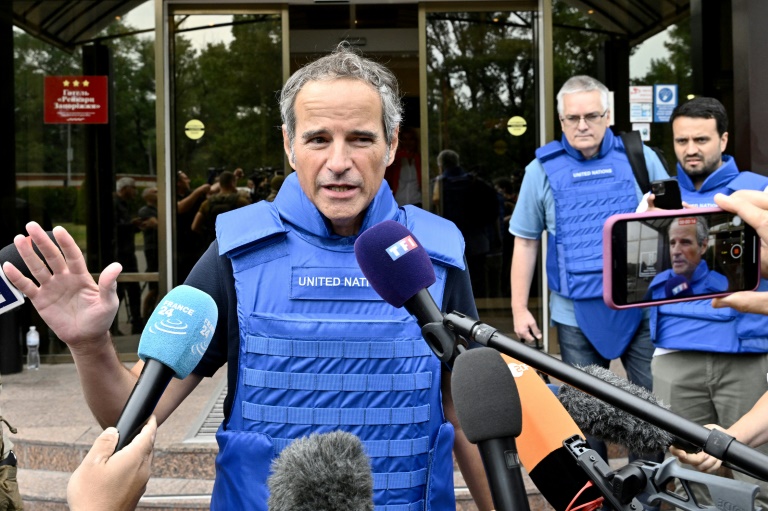
“It is obvious that the plant and physical integrity of the plant has been violated several times,” IAEA head Rafael Grossi told reporters after returning to Ukrainian-controlled territory.

Grossi said part of the IAEA mission will stay at Zaporizhzhia “until Sunday or Monday” to continue the assessment, without specifying their number.

The Argentine described the visit as productive and said he gathered lots of information.

Wearing bright blue flak jackets and helmets, the IAEA team crossed into Russian-held territory, reaching the facility at around 1200 GMT. 

After the inspection, in a video released by the Russian RIA Novosti news agency, Grossi said: “We have achieved something very important today and the important thing is the IAEA is staying here.”

A dawn shelling attack on the area had forced one of the plant’s six reactors to close.

Energoatom, Ukraine’s nuclear agency, said it was “the second time in 10 days” that Russian shelling had forced the closure of a reactor. 

It said the plant’s emergency protection system kicked in shortly before 5:00 am (0200 GMT), shutting reactor five, with the attack damaging a back-up power supply. 

– ‘Stop playing with fire’ –

“It is high time to stop playing with fire and instead take concrete measures to protect this facility… from any military operations,” Robert Mardini, chief of the International Committee of the Red Cross, told reporters in Kyiv.

He warned the consequences of hitting the plant could be “catastrophic”, saying “the slightest miscalculation could trigger devastation that we will regret for decades.”

After Russian forces seized the plant on March 4, Energoatom shut two reactors, followed by a third after shelling on August 5. With a fourth undergoing repairs, Thursday’s incident leaves only one of the six reactors working. 

Mardini said it was “encouraging” the IAEA team was inspecting the plant because the stakes were “immense”.

On leaving Zaporizhzhia, Grossi said his team would be travelling through areas where “the risks are significant” but had decided to go ahead anyway due to the “very important mission to accomplish”. 

– Shelling and saboteurs –

The neighbouring town of Energodar came under sustained attack at dawn, with Russian troops firing “mortars and using automatic weapons and rockets”, its mayor Dmytro Orlov said. 

But Moscow accused Kyiv of smuggling in up to 60 military “saboteurs” who reached the area near the plant at dawn, prompting Russian troops to take “measures to annihilate the enemy”. 

Ukraine has accused Russia of deploying hundreds of soldiers and storing ammunition at the plant. 

Kyiv also suspects that Moscow intends to divert power from the plant to the nearby Crimean peninsula, annexed by Russia in 2014 — a view held by other international figures including British Prime Minister Boris Johnson. 

Meanwhile, Ukrainian troops pressed ahead with a counter-offensive in the nearby region of Kherson to retake areas seized by Russia at the start of the invasion.

In its morning update, the presidency said “heavy explosions continued for the last 24 hours” across Kherson, while five people were killed and 12 others wounded in the eastern Donetsk region. 

– Back-to-school gunfire soundtrack –

Despite the conflict, now in its seventh month, September 1 marked the start of a new school year for children across Ukraine.

In the southern Mykolaiv region, children were back in front of screens for online classes as all school attendance was cancelled due to the ongoing fighting.

On her first day back, nine-year-old Antonina Sidorenko, who lives in a hamlet near the frontline, was doing her online lessons with the distant crackle of gunfire in the background. 

“I’m happy to be back at school but I would be even happier if there was no war because I miss my teacher and my friends,” she told AFP, saying her best friend had fled to Poland. 

Four-year-old takes gun to school in Texas

A four-year-old in Texas brought a loaded handgun to school, officials said, as the end of summer vacation in America reignites fears of school shootings.

The scare on Wednesday in Corpus Christi came two days after a similar incident in Arizona, that time involving a child aged seven. 

In the Texas case, an off-duty police officer working at the school “called in for assistance advising that a four-year-old student was in possession of a loaded handgun on campus,” police said in a statement.

The officer took possession of the weapon.

The parents of the child were identified as the owners of the gun and the father, aged 30, was arrested and charged with making a firearm accessible to children and abandoning or endangering a child.

Americans have become tragically accustomed to periodic mass shootings at schools. In May, 19 small children and two teachers were killed at a massacre at an elementary school in Uvalde, Texas.

On Monday in Arizona a seven-year-old child was found to have a non-loaded gun, along with a fully-loaded magazine in their backpack at a school in the town of Cochise, the sheriff’s office said.

Alerted to the incident, the child’s father went home from work to check on his guns — and found a second one was also missing.

The second weapon was discovered in the administrative offices of the school, where the child apparently hid it while waiting for the authorities.

“The parents were interviewed and advised that the weapons had been placed in what they believed to be a secure location away from the children after a recent camping trip, but it appears that the second grader was able to gain access and take the handguns to school,” the sheriff’s office statement added.

The child faces disciplinary proceedings under laws for dealing with juveniles.

Nearly 400 million guns are in circulation in the United State, more than its population.

S.African court confirms Shell seismic exploration ban

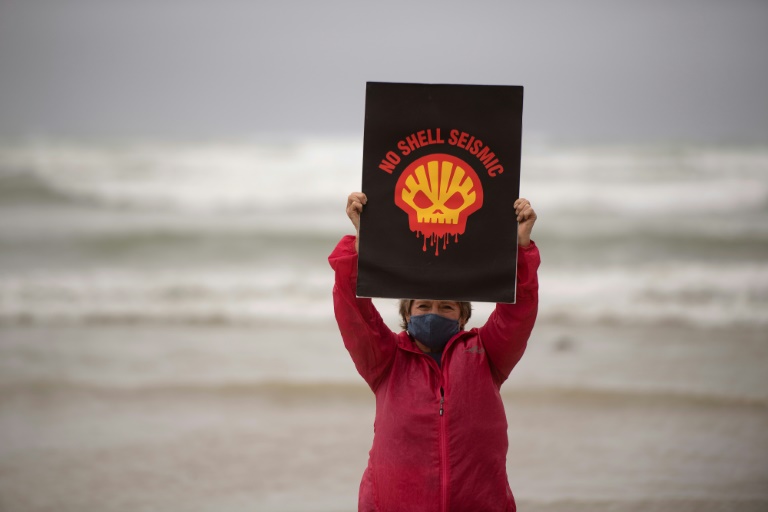
A South African court on Thursday upheld a ban imposed on energy giant Shell from using seismic waves to explore for oil and gas off the Indian Ocean coast.

The judgement was a major victory for environmentalists who had argued the technique would affect whales and other marine life.

In a ruling seen by AFP, the high court in the southern city of Makhanda said authorisation granted in 2014 to search for oil and gas in the Transkei and Algoa areas “is reviewed and set aside.”

Last December the same court had issued an interim order prohibiting Shell from going ahead with its plans.

Civil rights organisations and civilians celebrated outside the courthouse, according to local media. 

“We live off the land and the ocean. The government tells us that oil and gas will bring job opportunities, but we know full well that it will destroy our livelihoods,” Nonhle Mbuthuma from the local environmental lobby group Amadiba said in a statement.

A Shell spokesperson told AFP they “respect the court’s decision” and would review the judgment to “determine our next steps”.

Shell did not say if it would appeal the judgment.

“We remain committed to South Africa and our role in the just energy transition,” he said.

Green Connection, one of the environmental and rights groups which had filed the case, said in a statement “civil society, traditional communities and small-scale (fishermen) have once again been vindicated by the courts”.

Shell planned to map more than 6,000 square kilometres (2,300 square miles) by bouncing sonic waves off the sea floor and using the reflection to build up a 3D image.

The area lies off South Africa’s so-called Wild Coast. The 300-kilometre (185-mile) stretch boasts rich waters housing exquisite marine life and natural reserves.

Campaigners argued that the research would have sent an “extremely” loud shockwaves every 10 seconds, 24 hours a day for five months, potentially harming migration, feeding and other routines for marine mammals and other species.

“This court victory shows that the fossil-fuel companies are required to follow the law, include all affected people in public participation processes and consider all the harms to the environment,” Pooven Moodly of Natural Justice said in a statement.

South Africa’s energy ministry had backed the scheme, and lashed those who opposed it as thwarting investment in the country’s development.

Nearly 150 oil and gas projects are underway in Africa. Greenpeace Africa’s programme chief Melita Steele expressed the hope that Thursday’s “victory will reverse the trend”.

'Cosmoss': Supermodel Kate Moss launches wellness brand

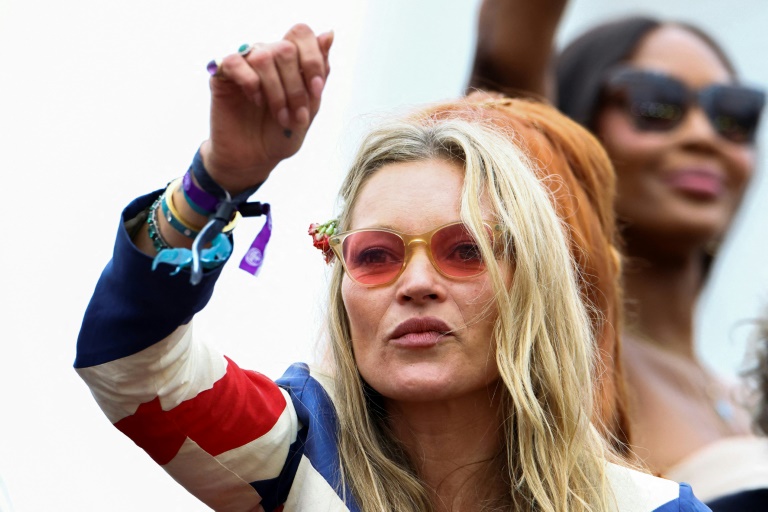
British supermodel Kate Moss on Thursday launched a website selling her own beauty and lifestyle products called Cosmoss, becoming the latest star to venture into branded e-commerce.

Moss follows celebrities such as US actress Gwyneth Paltrow who has forged a second career marketing wellness products on her Goop website.

With her sculpted cheek bones, grungy style and famous boyfriends including US actor Johnny Depp and British musician Pete Doherty, Moss epitomised the 1990s-era fashion scene and its hard-partying lifestyle.

But in an interview on BBC radio’s “Desert Island Discs” in July, Moss said that she now prefers trips to the garden centre and meditation to clubbing, and is “not into being out of control anymore”.

Vogue magazine reported that Moss, 48, spent two-and-a-half years developing the products for her new brand.

So far the Cosmossbykatemoss.com website sells a small range of vegan-friendly products including tins of herbal teabags for £20 ($23), facial oil containing CBD (£105) — an active ingredient in cannabis — and perfume with essential oils (£120).

Moss recommends using the products in combination in “rituals” that “balance body and soul with the natural environment and the circadian cycles”.

Cosmoss is not Moss’s first venture into personal branding.

She designed a line of clothing for teen fashion chain Topshop — which closed its physical stores during the pandemic — and gave her name to lipsticks by Rimmel.

In 2016 she launched a talent agency, Kate Moss Agency, signing her own daughter, Lila Moss, as well as other offspring of stars such as Ella Richards (granddaughter of Keith) and artists such as Rita Ora.

In May, Moss testified at former boyfriend Depp’s defamation trial against his ex-wife Amber Heard.

The model said that reports that Depp once threw her down a flight of stairs were untrue.

Yen sinks to new 24-year low against dollar

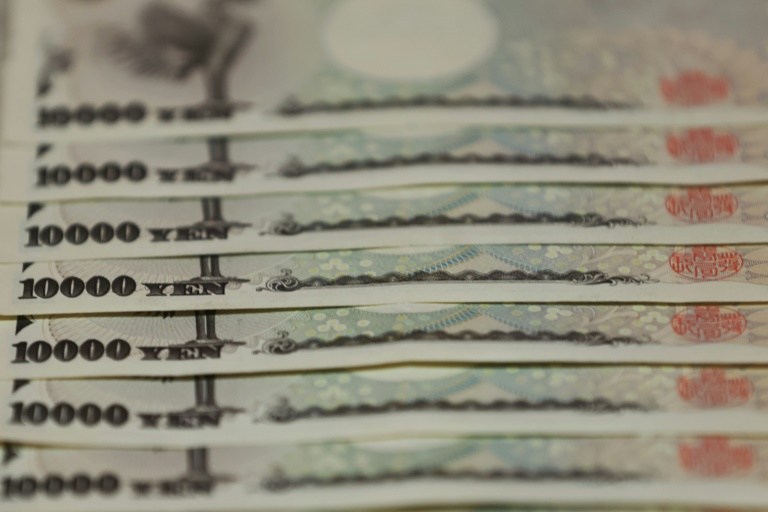
The yen plunged to a new 24-year low against the dollar on Thursday as Japan sticks with its long-standing monetary easing policies in contrast to tightening by the US Federal Reserve.

One dollar was more worth more than 140 yen for the first time since 1998 in European afternoon deals, as the greenback also strengthened against other currencies.

The yen has been falling against the dollar from around 115 in March, prompting analysts to point to the possibility of government intervention.

The steep decline has mainly been driven by the differing approaches of the Bank of Japan and other central banks including the Fed, which have raised interest rates to tackle soaring inflation fuelled by the Ukraine war.

David Forrester, senior FX strategist at Credit Agricole CIB in Hong Kong, said breaching 140 yen per dollar marked an “important technical level”.

“Previously, if you look at when the Bank of Japan has intervened to buy the yen, it’s usually been around these levels,” he told AFP.

The Japanese currency fell 0.6 percent to hit 140.13 yen per dollar at around 1425 GMT.

Earlier on Thursday, Japan’s top government spokesman repeated comments about the importance of stability in forex markets, saying that “rapid changes are undesirable”.

But he did not give any indication that special measures, like the finance ministry instructing the BoJ to buy the yen against other currencies to bolster its value, were on the cards.

With volatility increasing, “the government plans to monitor the trend of the foreign exchange market carefully with a high sense of urgency,” Hirokazu Matsuno told reporters.

– Government intervention? –

Last week, Fed Chair Jerome Powell declared his commitment to aggressive rate hikes, eliminating hope that the US central bank may soften its position to avoid an economic slowdown.

But policymakers at the Bank of Japan have refused to abandon easy-money measures put in place a decade ago, aimed at generating growth in the world’s third-largest economy and sustained price rises of around two percent.

Also, “higher energy prices throughout the year have been a big weight on Japan’s trade balance and current account balance… but that has eased a little bit recently,” Forrester said.

Inflation in Japan is at its highest in seven years, and prices for items excluding fresh products rose 2.4 percent on-year in July — but the BoJ sees these increases as temporary, and says it is committed to its current policy.

“Inflation in Japan is not only accelerating but broadening out beyond just food and energy price inflation,” which is starting to indicate “that maybe the BoJ does have to shift its stance a little”, Forrester said. 

“If they’re stubborn on that front, then the ministry of finance may have to intervene, to reduce imported inflation due to the weaker yen,” he added.

Although it makes imported goods more expensive in Japan, a weaker yen can also inflate the profits of Japanese companies selling products overseas, including major firms such as Toyota and Nintendo.

On Wednesday, Prime Minister Fumio Kishida announced a further relaxation of the country’s strict border rules to allow tourists on package tours, but without a guide.

The decision was made partly “from the viewpoint of taking advantage of a cheap yen”, he told reporters.

js-kaf-hih-lth/rl

Global stocks selloff intensifies on recession fears

Global stock markets sank Thursday, propelled by rampant inflation and growing recession fears as another major Chinese city went into lockdown.

Frankfurt, London and Paris equities closed down between 1.5 and two percent as record-high eurozone inflation fuelled fears that borrowing costs are set to climb even higher even as the region faces rocketing winter energy costs due to Russia’s war on Ukraine.

The European Central Bank will announce its latest monetary policy decision next Thursday, after delivering its first rate hike in a decade in July.

“More pain is likely for investors as Europe’s energy crunch gets worse”, said City Index analyst Fawad Razaqzada.

Meanwhile the yen plunged to a new 24-year low against the dollar on Thursday as Japan sticks with its long-standing monetary easing policies in contrast to tightening by the US Federal Reserve.

One dollar was more worth more than 140 yen for the first time since 1998 in afternoon deals in Europe, as the greenback also strengthened against other currencies.

The greenback was also at its strongest level against the pound since the height of the pandemic in 2020, with sterling buying less than $1.16.

On Wall Street, the Dow was down 0.5 percent at 31,358.97 points in late morning trading.

– ‘Outlook is poor’ –

“Markets remain unable to snap their recent losing streak, with investors still positioning for tougher times ahead,” said Interactive Investor analyst Richard Hunter.

“Central to current concerns are recessionary fears in the US and a beleaguered China. 

“With the world’s two largest economies under pressure, the immediate outlook is poor.”

Asian equities weakened further Thursday as traders continued to digest shrinking factory activity in powerhouse economy China.

Shanghai also dropped after news that the Chinese city of Chengdu would effectively lock down around 16 million people in a bid to contain a Covid-19 outbreak, likely dealing another blow to a stuttering economy.

“With Covid outbreaks unlikely to diminish as we head into winter, the prospects for a China rebound this side of next year have virtually disappeared, raising concerns over a prolonged global slowdown”, said CMC Markets analyst Michael Hewson. 

Meanwhile on Wall Street the tech-heavy Nasdaq was down around two percent, with investors taking a fright over the fortunes of NVIDIA, a California-based maker of high-performance graphics cards popular with gamers.

Shares in the company were down 11.4 percent nearing midday trading.

“NVIDIA shares have slumped sharply on the open after the US government ordered the company to halt sales of its top AI chips to China and Russia, with the company saying it cost them up to $400m in the current quarter”, Hewson said.

“With Chengdu also going into lockdown and China being one of its biggest markets, the next quarter is likely to be a big headwind for the rest of the sector,” he added.

Oil prices slumped more than two percent on growth worries as well as concerns easing about a possible decision by OPEC+ members to cut production to support prices that Saudi officials had posited last month.

“I’m not sure Saudi Arabia expected markets to test their nerve so quickly but it seems the suggestion that a reduction next week won’t be considered has removed the production cut risk for now,” said analyst Craig Erlam at OANDA trading platform.

– Key figures at around 1530 GMT –

New York – Dow: DOWN 0.5 percent at 31,358.97 points

EURO STOXX 50: DOWN 1.7 percent at 3,456.70 

London – FTSE 100: DOWN 1.9 percent at 7,148.50 (close)

Frankfurt – DAX: DOWN 1.6 percent at 12,630.23 (close)

Paris – CAC 40: DOWN 1.5 percent at 6,034.31 (close)

Tokyo – Nikkei 225: DOWN 1.5 percent at 27,661.47 (close)

Hong Kong – Hang Seng Index: DOWN 1.8 percent at 19,597.31 (close)

Shanghai – Composite: DOWN 0.5 percent at 3,184.98 (close)

Euro/dollar: DOWN at $0.9940 from $1.0054 on Wednesday

Pound/dollar: DOWN at $1.1534 from $1.1622

Euro/pound: DOWN at 86.13 pence from 86.50 pence

Dollar/yen: UP at 139.95 yen from 138.96 yen

West Texas Intermediate: DOWN 2.7 percent at $87.14 per barrel

Brent North Sea crude: DOWN 2.5 percent at $93.12

burs-lcm/rl

Trump confronts US government in court battle over seized secrets

An increasingly high-stakes standoff between Donald Trump and federal investigators lands in court Thursday, after days of headline-grabbing revelations surrounding highly classified documents seized by the FBI from the former president’s Florida home.

Trump’s lawyers are asking that an outside party — a “special master” — be named to reassess the government’s screening of sensitive documents to determine if any were “highly personal information” that should be returned or protected by claims of privilege. 

The federal court has already indicated its “preliminary intent” to agree to the independent review, meaning there is little intrigue with respect to the stated purpose of the hearing.

But the request has significantly upped the ante.

Some analysts see the move as an attempt by Team Trump to complicate the probe.

It also prompted a searing disclosure by the Justice Department of the evidence against the Republican former president recovered from the search of his Mar-a-Lago residence in south Florida last month. 

Government officials said in a filing Tuesday they had evidence of efforts to hide classified documents despite a grand jury demand in May that Trump produce records removed from the White House in January 2021.

Some of the files were so sensitive, they noted, that federal agents and Justice Department personnel needed their security clearances elevated to even look at the material.

The filing also stated that FBI agents located classified documents in Trump’s desk drawers with his passports.

“The location of the passports is relevant evidence in an investigation of unauthorized retention and mishandling of national defense information,” the department said.

The filing provided the most detailed account yet of a year-and-a-half long effort to recover hundreds of classified files that were improperly taken to Mar-a-Lago when Trump left office.

And the claim of obstructing the FBI search piles further legal pressure on the former president, who denies all wrongdoing.

– ‘Give-and-take’ –

The two sides are expected to wrangle over the scope of the review and whether it will determine if parts of the cache are covered by “privilege” that can shield some presidential and attorney-client communications from investigation.

Prosecutors say Trump “has no property interest in any presidential records (including classified records) seized from the premises” and that he cannot assert executive privilege against the executive branch itself.

But the real drama could emerge in US District Judge Aileen Cannon’s questioning of the 76-year-old billionaire’s attorneys, when she will have the opportunity to quiz them over whether he declassified some of the documents, as he has claimed.

Trump’s latest legal filing on Wednesday didn’t address the most damaging aspects of the government’s potential obstruction case and did not claim that he declassified the documents while he was in office. 

Cannon, a Trump appointee, may also scrutinize the certification that his lawyers delivered to the Justice Department on June 3, falsely stating that all files with classified markings had been returned. 

Trump appeared to admit in a posting on his online platform Truth Social on Wednesday that he knew sensitive documents were contained in boxes at Mar-a-Lago at the time of the FBI’s August 8 search. 

His legal team says the raid was unnecessary and occurred in “the midst of the standard give-and-take” between Trump and the National Archives about the material he was allowed to take with him. 

The Justice Department “gratuitously” made public information including a photograph of classified documents seized from the residence, the former president’s lawyers argue.   

Close Bitnami banner
Bitnami