US Business

Japan vows billions at Africa investment conference

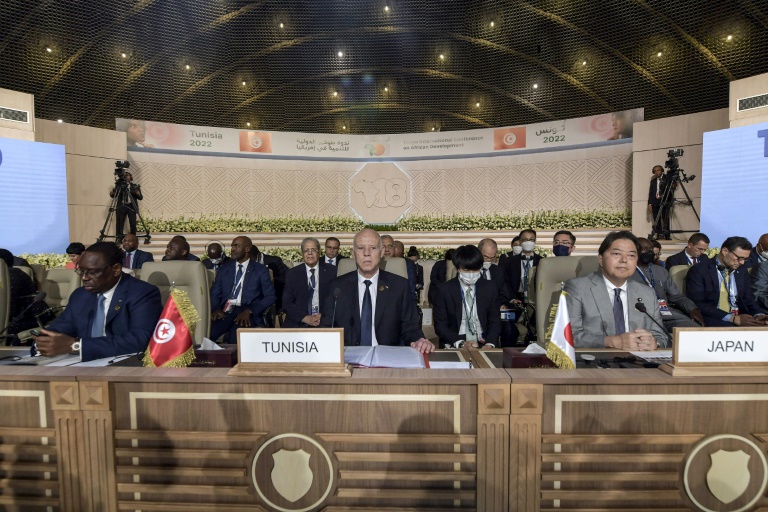
Japanese Prime Minister Fumio Kishida Saturday pledged $30 billion over three years for Africa in a virtual address to a development conference in Tunis aiming to counter China’s growing continental influence.

The eighth Tokyo International Conference on African Development (TICAD8) takes place amid a “complex” international environment caused by the coronavirus pandemic and the war in Ukraine, the Japanese foreign ministry said.

Host country Tunisia is among the countries bearing the brunt of global supply chain disruptions and price spikes unleashed by these two factors, since it is heavily import dependent and is not an energy player.

In his opening speech, Tunisian President Kais Saied urged delegates to “search together for ways for African peoples to achieve the hopes and dreams of the first generation after independence”.

Praising Japan’s strong track record of development and “preserving” its culture, he said that “the world cannot continue as it was. With all its wealth and assets, Africa cannot watch its people live through poverty.”

Kishida, speaking over live video from Tokyo after testing positive for Covid-19 days earlier, pledged that “Japan will invest both public and private funds worth $30 billion over the next three years” across Africa.

“To improve the lives of Africans, we will provide up to $5 billion in co-financing with the African Development Bank,” he said.

The pledge come as China cements its influence on the continent with its “Belt and Road” infrastructure initiative, and as experts express concern about the long-term sustainability of some African nations’ borrowing from Beijing. 

– Rabat-Tunis tensions –

Japan’s initiative “includes up to $1 billion in a new special quota to be established by Japan to promote debt consolidation reforms” in Africa, the Japanese premier said.

He also pledged $300 million in co-financing with the African Development Bank to boost food production, vowing to help African countries weather grain shortages caused by the war in Ukraine, a major wheat producer.

Senegalese President Macky Sall, the current chairman of the African Union, paid tribute to Africa’s “partnership” with Japan, praising “concrete results in the agriculture, health, education and water” sectors.

He also urged a suspension of interest on debt owed to G20 countries, calling for a seat for the continent at the next G20 summit.

On the eve of TICAD, Morocco withdrew from the event and recalled its ambassador from Tunisia for consultations, after Saied hosted the head of Western Sahara’s Polisario secessionist movement.

Tunis in turn said it would recall its own ambassador from Rabat, pointing to its “total neutrality” on Western Sahara, a territory Rabat sees as an integral part of Morocco. 

Sall said he “regrets Morocco’s absence”, expressing hopes for a solution to the disagreement.

It is the first TICAD — held every three years either in Japan or an African country — since the coronavirus pandemic began.

The Japanese delegation is led by Foreign Minister Yoshimasa Hayashi, with about 5,000 participants set to attend.

Among those are 48 representatives of African countries, including at least 20 heads of state or government, according to Tunisian diplomatic sources.

A slick promotional video said the conference aims to promote “African development led by African people”.

But no journalists from African news outlets were given access to delegates ahead of the event, except Tunisian state media, alongside Japanese journalists.

The conference has sparked anger among Tunisians as major road closures threatened traffic disruptions in the capital.

Authorities spruced up parts of the city likely to be seen by delegates and dug in roadside plants, but these efforts also drew ire from social media users.

“I feel deeply insulted by the clean-up of Tunis for the TICAD,” one Tunisian wrote on Twitter, arguing that “those we pay to make our lives easier” should instead focus on making the capital livable for citizens all year round.
Diamond magnate appeals Swiss corruption verdict

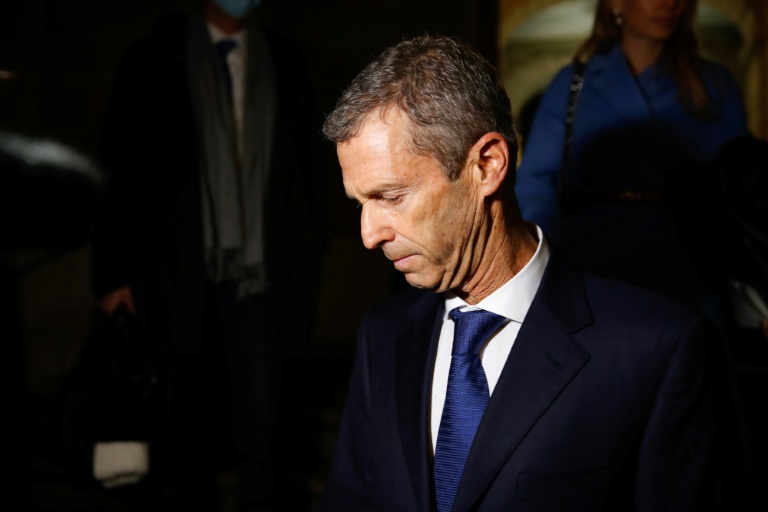
French-Israeli diamond magnate Beny Steinmetz will be back in court in Switzerland on Monday to appeal against a corruption sentence linked to mining rights in Guinea.

A Geneva court convicted the 66-year-old businessman in January 2021 of setting up a complex financial web to pay bribes to ensure his company could obtain permits in an area estimated to contain the world’s biggest untapped deposits of iron ore.

He was sentenced to five years in prison and also ordered to pay 50 million Swiss francs ($52 million) in compensation to the canton of Geneva.

Two of his alleged co-conspirators, who were slapped with shorter jail terms, are also appealing.

Steinmetz maintained his innocence throughout that trial and immediately appealed against the ruling, decrying it as a “big injustice”.

He has changed his legal and communications team for the appeal, and they are preparing to argue that the lower court had not fully heard his arguments and had misunderstood the situation.

“We expect that the tribunal recognises that Beny Steinmetz did not bribe anyone,” his new lawyer Daniel Kinzer told AFP in an email ahead of the appeals trial. 

“I am confident the appeals Court can be convinced,” he said, saying a deeper look at the case revealed “a totally different picture than the one painted by the first verdict.”

Far from being corrupt, Beny Steinmetz Group Resources (BSGR) had legitimately obtained the mining rights in question, and had striven in difficult and complex circumstances to set up an operation that would have benefited Guinea’s national interests, his team said.

– ‘Pact of corruption’ –

Swiss prosecutors painted a far different picture during the first trial, which was the culmination of a drawn-out international investigation that kicked off in Switzerland in 2013.

They accused Steinmetz and two partners of bribing a wife of the then Guinean president Lansana Conte and others in order to win mining rights in the southeastern Simandou region.

The prosecutors said Steinmetz obtained the rights shortly before Conte died in 2008 after about $10 million was paid in bribes over a number of years, some through Swiss bank accounts.

Conte’s military dictatorship ordered global mining giant Rio Tinto to relinquish two concessions to BSGR for around $170 million in 2008.

Just 18 months later, BSGR sold 51 percent of its stake in the concession to Brazilian mining giant Vale for $2.5 billion.

But in 2013, Guinea’s first democratically-elected president Alpha Conde launched a review of permits allotted under Conte and later stripped the VBG consortium formed by BSGR and Vale of its permit.

To secure the initial deal, prosecutors claimed Steinmetz and representatives in Guinea entered a “pact of corruption” with Conte and his fourth wife Mamadie Toure.

Toure, who has admitted to having received payments, has protected status in the United States as a state witness. 

She and a number of other key witnesses in the case failed to appear in the first trial, and it remained unclear if they would attend the appeal.

– ‘Totally false’ –

Steinmetz, who lived in Geneva during the years when the bribes were allegedly paid, continues to maintain that the bribery allegations are “totally false”, according to a document released by his team.

It insisted that Rio Tinto had lost the rights to half of its concessions in Simandou over its failure to develop them, in accordance with Guinean mining laws, and that BSGR later legitimately bid for and obtained exploration rights.

“The mining rights were withdrawn from a competitor because it was hoarding them and then awarded to BSGR on the basis of a solid and convincing business case with no need to bribe a public official,” Kinzer said.

Steinmetz, who was granted a legal free-passage guarantee in order to participate in the first trial, left Switzerland without serving his sentence.

He will be back in the Geneva court from Monday to argue his case after receiving another free-passage, with the appeal hearing due to last through September 7. The verdict will come at a later date.

Tunis hosts Japan-Africa investment conference

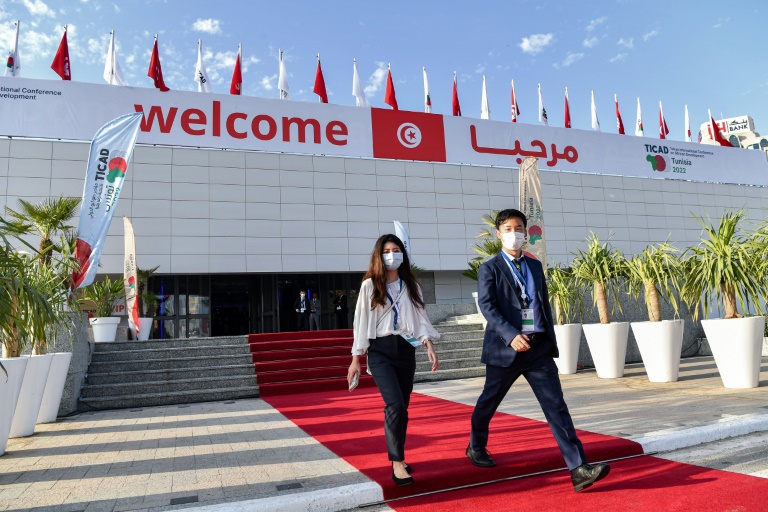
Tunisia and Japan launched a pan-African investment conference on Saturday, seeking to counter the influence of rival China whose economic imprint on the continent has steadily grown.

The conference takes place amid a “complex” international environment caused by the coronavirus pandemic and the war in Ukraine, the Japanese foreign ministry has said.

Some 30 heads of state and government are attending the event in the capital Tunis, at a time when the import-dependent North African nation is grappling with a deepening economic malaise.

In his opening speech, Tunisian President Kais Saied urged delegates to “search together for ways for African peoples to achieve the hopes and dreams of the first generation after independence”.

He praised Japan’s success in “achieving development at the same time as preserve its culture and social traditions”.

“The world cannot continue as it was. With all its wealth and assets, Africa cannot watch its people live through poverty,” he said.

The eighth Tokyo International Conference on African Development (TICAD8) also comes as Beijing cements its influence on the continent with its “Belt and Road” infrastructure initiative.

It is the first TICAD — held every three years either in Japan or an African country — since the pandemic began.

Prime Minister Fumio Kishida will be attending remotely after testing positive for Covid-19.

The Japanese delegation is being led by Foreign Minister Yoshimasa Hayashi, with about 5,000 participants set to attend.

Morocco withdrew from the event and recalled its ambassador from Tunisia for consultations, after Saied hosted the head of Western Sahara’s Polisario independence movement.

The conference will focus on three pillars: economy, society, and peace and stability.

A slick promotional video said the conference aims to promote “African development led by African people”.

But no journalists from African news outlets had been given access to delegates ahead of the event, except Tunisian state media, alongside Japanese journalists.

Japanese economic paper Nikkei reported that aid to Africa could increase by 40 percent over the next three years, in response to other powers that have boosted their presence on the continent.

– Beware of ‘excessive’ debt –

At the last TICAD in 2019, former premier Shinzo Abe — who was assassinated at a campaign event last month — warned investors in Africa they must beware of burdening countries with “excessive” debt, an apparent swipe at China.

Tunisian authorities hope their struggling economy will benefit from hosting the conference by attracting Japanese investment, particularly in the health, automotive and renewable energy sectors.

The conference has sparked anger among Tunisians as major road closures threatened traffic disruptions in the capital.

Authorities also drew widespread mockery after detaining Japanese satellite engineers — TICAD delegates — at Tunis airport for hours because they were in possession of a model satellite that they intend to use to showcase technology.

Authorities have spruced up parts of the city likely to be seen by delegates and dug in roadside plants, but these efforts have also drawn the ire of social media users.

“I feel deeply insulted by the clean-up of Tunis for the TICAD,” one Tunisian wrote on Twitter, arguing that “those we pay to make our lives easier” should instead focus on making the capital livable for citizens all year round.
Tunis hosts Japan-Africa investment conference

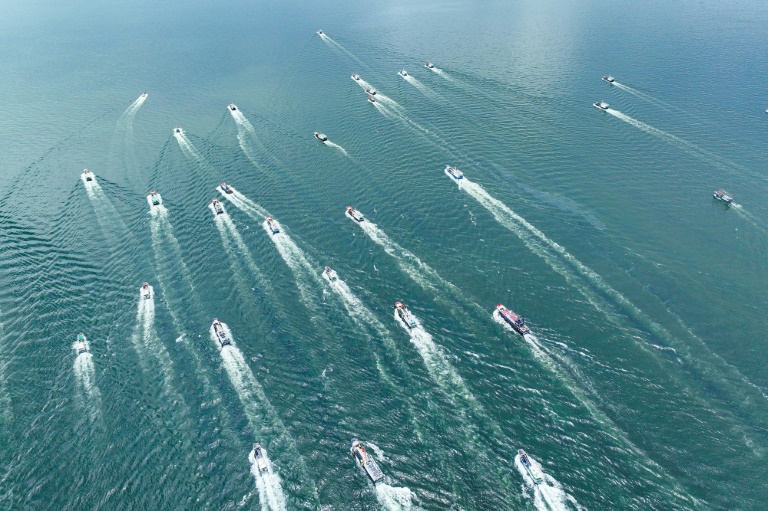
Japan opens an African investment conference in Tunisia on Saturday, seeking to counter the influence of rival China which has steadily grown its economic imprint on the continent.

The conference takes place amid a “complex” international environment caused by the coronavirus pandemic and the war in Ukraine, the Japanese foreign ministry has noted.

Some 30 heads of state and government are expected to attend the event in the capital Tunis, at a time when the import-dependent North African nation is grappling with a deepening economic malaise.

The eighth Tokyo International Conference on African Development (TICAD8) also comes as Beijing cements its influence on the continent with its “Belt and Road” infrastructure initiative.

It is the first TICAD — held every three years either in Japan or an African country — since the pandemic began.

Prime Minister Fumio Kishida will be attending remotely after testing positive for Covid-19.

The Japanese delegation will be led by Foreign Minister Yoshimasa Hayashi, with about 5,000 participants set to attend.

But the opening risks being overshadowed by Morocco withdrawing from the event and recalling its ambassador from Tunisia for consultations, after Tunisia’s President Kais Saied hosted the head of Western Sahara’s Polisario independence movement.

Since 1993, TICAD conferences backed by the United Nations and other international agencies have generated 26 development projects in 20 African countries.

Most are funded by the Japan International Cooperation Agency (JICA).

The conference will focus on three pillars: economy; society; and peace and stability.

A slick promotional video said the conference aims to promote “African development led by African people”.

But no journalists from African news outlets have been given access to delegates ahead of the event, except Tunisian state media, alongside Japanese journalists.

Japanese economic paper Nikkei reported that aid to Africa could increase by 40 percent over the next three years, in response to other powers that have boosted their presence on the continent.

At the last TICAD in 2019, former premier Shinzo Abe — who was assassinated at a campaign event last month — warned investors in Africa that they must beware of burdening countries with “excessive” debt, an apparent swipe at China.

Tunisian authorities hope their struggling economy will benefit from hosting the conference by attracting Japanese investment, particularly in the health, automotive and renewable energy sectors.

The conference has sparked anger among Tunisians as major road closures threatened traffic disruptions in the capital.

Authorities also drew widespread mockery after detaining Japanese satellite engineers — TICAD delegates — at Tunis airport for hours because they were in possession of a model satellite that they intend to use to showcase technology.

Authorities have spruced up parts of the city likely to be seen by delegates and dug in roadside plants, but these efforts have also drawn the ire of social media users.

“I feel deeply insulted by the clean-up of Tunis for the TICAD,” one Tunisian wrote on Twitter, arguing that “those we pay to make our lives easier” should instead focus on making the capital livable for citizens all year round.
UN session on high seas biodiversity ends without agreement

UN member states ended two weeks of negotiations Friday without a treaty to protect biodiversity in the high seas, an agreement that would have addressed growing environmental and economic challenges.

After 15 years, including four prior formal sessions, negotiators have yet to reach a legally binding text to address the multitude of issues facing international waters — a zone that encompasses almost half the planet.

“Although we did make excellent progress, we still do need a little bit more time to progress towards the finish line,” said conference chair Rena Lee.

It will now be up to the UN General Assembly to resume the fifth session at a date still to be determined.

Many had hoped the session, which began on August 15 at the United Nations headquarters in New York, would be the last and yield a final text on “the conservation and sustainable use of marine biodiversity beyond national jurisdiction,” or BBNJ for short.

“While it’s disappointing that the treaty wasn’t finalized during the past two weeks of negotiations, we remain encouraged by the progress that was made,” said Liz Karan of the NGO Pew Charitable Trusts, calling for a new session by the end of the year.

One of the most sensitive issues in the text revolved around the sharing of possible profits from the development of genetic resources in international waters, where pharmaceutical, chemical and cosmetic companies hope to find miracle drugs, products or cures.

Such costly research at sea is largely the prerogative of rich nations, but developing countries do not want to be left out of potential windfall profits drawn from marine resources that belong to no one.

-‘Missed opportunity’-

Similar issues of equity arise in other international negotiations, such as on climate change, in which developing nations that feel outsized harm from global warming have tried in vain to get wealthier countries to help pay to offset those impacts.

The high seas begin at the border of a nation’s exclusive economic zone (EEZ) — which by international law reaches no more than 200 nautical miles (370 kilometers) from its coast — and are under no state’s jurisdiction.

Sixty percent of the world’s oceans fall under this category.

And while healthy marine ecosystems are crucial to the future of humanity, particularly to limit global warming, only one percent of international waters are protected.

One of the key pillars of an eventual BBNJ treaty is to allow the creation of marine protected areas, which many nations hope will cover 30 percent of the Earth’s ocean by 2030.

“Without establishing protections in this vast area, we will not be able to meet our ambitious and necessary 30 by 30 goal,” US State Department official Maxine Burkett said at an earlier press conference.

But delegations still disagree on the process for creating these protected areas as well as how required environmental impact assessments will be implemented before new high seas activity begins.

“What a missed opportunity…”, tweeted Klaudija Cremers, a researcher at the IDDRI think tank, which, like multiple other NGOs, has a seat with observer status at the negotiations.

The delegate from Samoa, addressing the conference on behalf of the smaller developing island nations of the Pacific, said they were “disappointed.”

“We live very far and it is not cheap to travel all this way. This money was not spent on roads, on medicine, schools,” she added.

“The Pacific came here in good faith and will continue to do so until we conclude this conference in the very near future,” she said on the verge of tears, to applause from the room.

Laura Meller, of Greenpeace’s Protect the Oceans campaign, said: “Time has run out. Further delay means ocean destruction. We are sad and disappointed. While countries continue to talk, the oceans and all those who rely on them will suffer.”

Diamond magnate appeals Swiss corruption verdict

French-Israeli diamond magnate Beny Steinmetz will be back in court in Switzerland on Monday to appeal against a corruption sentence linked to mining rights in Guinea.

A Geneva court convicted the 66-year-old businessman in January 2021 of setting up a complex financial web to pay bribes to ensure his company could obtain permits in an area estimated to contain the world’s biggest untapped deposits of iron ore.

He was sentenced to five years in prison and also ordered to pay 50 million Swiss francs ($52 million) in compensation to the canton of Geneva.

Steinmetz maintained his innocence throughout that trial and immediately appealed against the ruling, decrying it as a “big injustice”.

Two of his alleged co-conspirators, who were slapped with shorter jail terms, are also appealing.

Steinmetz has changed his legal and communications team for the appeal, and they are preparing to argue that the lower court had not fully heard his arguments and had misunderstood the situation.

The first trial had painted Steinmetz in a way that “does not at all correspond to reality,” his spokesman Marc Comina said in a document detailing the diamond magnate’s case. 

Far from being corrupt, Beny Steinmetz Group Resources (BSGR) had legitimately obtained the mining rights in question, and had striven in difficult and complex circumstances to set up an operation that would have benefited Guinea’s national interests, the document said.

– ‘Pact of corruption’ –

Swiss prosecutors painted a far different picture during the first trial, which was the culmination of a drawn-out international investigation that kicked off in Switzerland in 2013.

They accused Steinmetz and two partners of bribing a wife of the then Guinean president Lansana Conte and others in order to win mining rights in the southeastern Simandou region.

The prosecutors said Steinmetz obtained the rights shortly before Conte died in 2008 after about $10 million was paid in bribes over a number of years, some through Swiss bank accounts.

Conte’s military dictatorship ordered global mining giant Rio Tinto to relinquish two concessions to BSGR for around $170 million in 2008.

Just 18 months later, BSGR sold 51 percent of its stake in the concession to Brazilian mining giant Vale for $2.5 billion.

But in 2013, Guinea’s first democratically-elected president Alpha Conde launched a review of permits allotted under Conte and later stripped the VBG consortium formed by BSGR and Vale, of its permit.

To secure the initial deal, prosecutors claimed Steinmetz and representatives in Guinea entered a “pact of corruption” with Conte and his fourth wife Mamadie Toure.

Toure, who has admitted to having received payments, has protected status in the United States as a state witness. 

She and a number of other key witnesses in the case failed to appear in the first trial, and it remained unclear if they would attend the appeal.

– ‘Totally false’ –

Steinmetz, who lived in Geneva during the years when the bribes were allegedly paid, continues to maintain that the bribery allegations are “totally false”, according to the document released by his team.

It insisted that Rio Tinto had lost the rights to half of its concessions in Simandou over its failure to develop them, in accordance with Guinean mining laws, and that BSGR later legitimately bid for and obtained the rights.

There was “nothing illegal or arbitrary” about that decision, the document said.

It also argued that the lower court had misunderstood the nature of the deal with Vale, and that BSGR had wanted to create a lasting partnership and business in Guinea.

“BSGR never intended to leave Guinea once the partnership with Vale was signed,” it said.

“Had it not been driven out of the country, BSGR would still be operating in Guinea today and would be a major player in the country’s economic rise.”

Steinmetz, who was granted a legal free-passage guarantee in order to participate in the first trial, left Switzerland without serving his sentence.

He will be back in the Geneva court from Monday to argue his case after receiving another free-passage, with the appeal hearing due to last through September 7. The verdict will come at a later date.

UN session on high seas biodiversity ends without agreement

UN member states ended two weeks of negotiations Friday without a treaty to protect biodiversity in the high seas, an agreement that would have addressed growing environmental and economic challenges.

After 15 years, including four prior formal sessions, negotiators have yet to reach a legally binding text to address the multitude of issues facing international waters — a zone that encompasses almost half the planet.

“Although we did make excellent progress, we still do need a little bit more time to progress towards the finish line,” said conference chair Rena Lee.

It will now be up to the UN General Assembly to resume the fifth session at a date still to be determined.

Many had hoped the session, which began on August 15 at the United Nations headquarters in New York, would be the last and yield a final text on “the conservation and sustainable use of marine biodiversity beyond national jurisdiction,” or BBNJ for short.

“While it’s disappointing that the treaty wasn’t finalized during the past two weeks of negotiations, we remain encouraged by the progress that was made,” said Liz Karan of the NGO Pew Charitable Trusts, calling for a new session by the end of the year.

One of the most sensitive issues in the text revolved around the sharing of possible profits from the development of genetic resources in international waters, where pharmaceutical, chemical and cosmetic companies hope to find miracle drugs, products or cures.

Such costly research at sea is largely the prerogative of rich nations, but developing countries do not want to be left out of potential windfall profits drawn from marine resources that belong to no one.

-‘Missed opportunity’-

Similar issues of equity arise in other international negotiations, such as on climate change, in which developing nations that feel outsized harm from global warming have tried in vain to get wealthier countries to help pay to offset those impacts.

The high seas begin at the border of a nation’s exclusive economic zone (EEZ) — which by international law reaches no more than 200 nautical miles (370 kilometers) from its coast — and are under no state’s jurisdiction.

Sixty percent of the world’s oceans fall under this category.

And while healthy marine ecosystems are crucial to the future of humanity, particularly to limit global warming, only one percent of international waters are protected.

One of the key pillars of an eventual BBNJ treaty is to allow the creation of marine protected areas, which many nations hope will cover 30 percent of the Earth’s ocean by 2030.

“Without establishing protections in this vast area, we will not be able to meet our ambitious and necessary 30 by 30 goal,” US State Department official Maxine Burkett said at an earlier press conference.

But delegations still disagree on the process for creating these protected areas as well as how required environmental impact assessments will be implemented before new high seas activity begins.

“What a missed opportunity…”, tweeted Klaudija Cremers, a researcher at the IDDRI think tank, which, like multiple other NGOs, has a seat with observer status at the negotiations.

The delegate from Samoa, addressing the conference on behalf of the smaller developing island nations of the Pacific, said they were “disappointed.”

“We live very far and it is not cheap to travel all this way. This money was not spent on roads, on medicine, schools,” she added.

“The Pacific came here in good faith and will continue to do so until we conclude this conference in the very near future,” she said on the verge of tears, to applause from the room.

Laura Meller, of Greenpeace’s Protect the Oceans campaign, said: “Time has run out. Further delay means ocean destruction. We are sad and disappointed. While countries continue to talk, the oceans and all those who rely on them will suffer.”

UN session on high seas biodiversity ends without agreement

UN member states ended two weeks of negotiations Friday without a treaty to protect biodiversity in the high seas, an agreement that would have addressed growing environmental and economic challenges.

After 15 years, including four prior formal sessions, negotiators have yet to reach a legally binding text to address the multitude of issues facing international waters — a zone that encompasses almost half the planet.

“Although we did make excellent progress, we still do need a little bit more time to progress towards the finish line,” said conference chair Rena Lee.

It will now be up to the UN General Assembly to resume the fifth session at a date still to be determined.

Many had hoped the session, which began on August 15 at the United Nations headquarters in New York, would be the last and yield a final text on “the conservation and sustainable use of marine biodiversity beyond national jurisdiction,” or BBNJ for short.

“While it’s disappointing that the treaty wasn’t finalized during the past two weeks of negotiations, we remain encouraged by the progress that was made,” said Liz Karan with the NGO Pew Charitable Trusts, calling for a new session by the end of the year.

One of the most sensitive issues in the text revolved around the sharing of possible profits from the development of genetic resources in international waters, where pharmaceutical, chemical and cosmetic companies hope to find miracle drugs, products or cures.

Such costly research at sea is largely the prerogative of rich nations, but developing countries do not want to be left out of potential windfall profits drawn from marine resources that belong to no one.

-‘Missed opportunity’-

Similar issues of equity arise in other international negotiations, such as on climate change, in which developing nations that feel outsized harm from global warming have tried in vain to get wealthier countries to help pay to offset those impacts.

The high seas begin at the border of a nation’s exclusive economic zone (EEZ) — which by international law reaches no more than 200 nautical miles (370 kilometers) from its coast — and are under no state’s jurisdiction.

Sixty percent of the world’s oceans fall under this category.

And while healthy marine ecosystems are crucial to the future of humanity, particularly to limit global warming, only one percent of international waters are protected.

One of the key pillars of an eventual BBNJ treaty is to allow the creation of marine protected areas, which many nations hope will cover 30 percent of the Earth’s ocean by 2030.

“Without establishing protections in this vast area, we will not be able to meet our ambitious and necessary 30 by 30 goal,” US State Department official Maxine Burkett said at an earlier press conference.

But delegations still disagree on the process for creating these protected areas, as well as on how to implement a requirement for environmental impact assessments before new activity on the high seas.

“What a missed opportunity…”, tweeted Klaudija Cremers, a researcher at the IDDRI think tank, which, like multiple other NGOs, has a seat with observer status at the negotiations.

Pipeline operator to pay $13m over California coast leak

The operators of a pipeline that leaked crude oil onto California beaches has agreed to plead guilty to environmental pollution charges and pay $13 million, these companies said Friday.

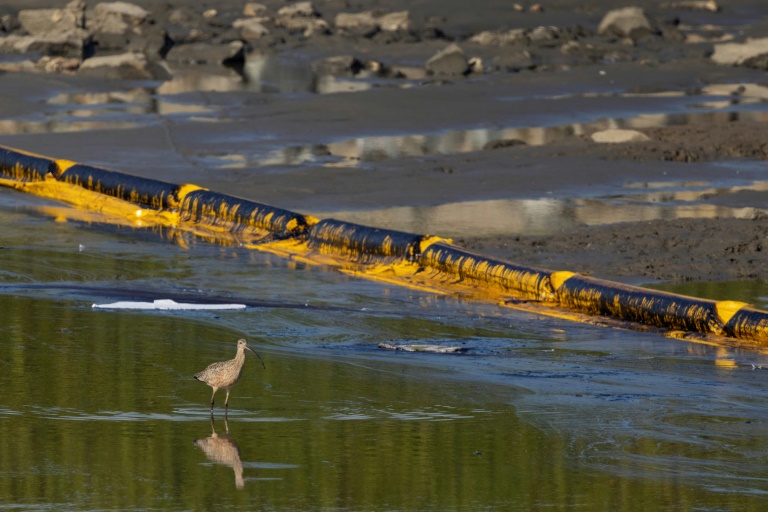
Amplify Energy, a Texas company operating the pipeline off Huntington Beach, and two of its subsidiaries — Beta Operating Co. and San Pedro Bay Pipeline Co. — said they will admit to allowing oil to foul the waters off southern California in October last year.

As part of plea agreements entered in federal court, they will pay a $7.1 million fine and hand over $5.8 million to compensate federal agencies involved in cleaning up 25,000 gallons of crude oil that spewed from their pipeline.

The spill blackened 18 miles (24 kilometers) of coast south of Los Angeles between Huntington Beach and Laguna Beach, spots popular with surfers and a habitat for dolphins.

Underwater inspections revealed that a large segment of the pipeline had been displaced and showed a rupture in the pipe. 

Investigators said last year they suspected the damage could have been caused by the anchor of a ship, as the area is often packed with cargo vessels waiting to enter the busy ports of Los Angeles and Long Beach. 

Martyn Willsher, Amplify’s president and chief executive officer, said the company had worked “cooperatively” to resolve the problem as soon as it was discovered. 

“We believe this resolution, which is subject to court review and approval, reflects the commitments we made immediately following the incident to impacted parties and is in the best interest of Amplify and its stakeholders. 

“We are committed to safely operating in a way that ensures the protection of the environment and the surrounding communities.”

Amplify has also agreed to install a new leak detection system and to increase inspections along sections of the pipeline.

“This oil spill affected numerous people, businesses and organizations who use the Southern California coastal waters,” said Acting US Attorney Stephanie Christensen. 

“The companies involved are now accepting their responsibility for criminal conduct and are required to make significant improvements that will help prevent future oil spills.”

The October disaster reignited the debate over the presence of oil platforms just a few miles from the densely populated southern California shore. 

A total of 23 oil and gas platforms operate in federal waters just off the coast.

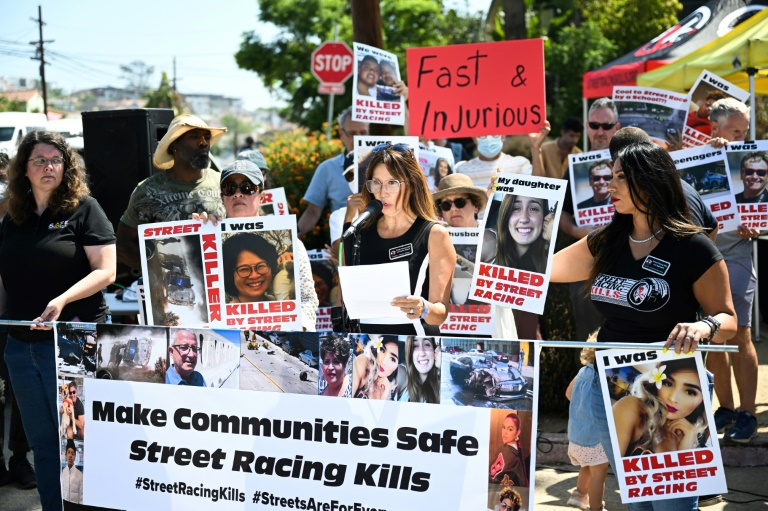
Los Angeles residents protest 'Fast and Furious' street races

A Los Angeles neighborhood featured in the “Fast and Furious” movies held protests against the filming of the franchise’s latest installment Friday, claiming the community has been blighted by a spate of illegal and dangerous street racing.

Residents voiced anger at this weekend’s planned taping of “Fast X” in Angelino Heights, a historic area near downtown Los Angeles which is home to Vin Diesel’s fictional character Dominic Toretto in the wildly popular, long-running film series.

The movies depict the underground world of street racing, helping to popularize practices such as “street takeovers” in which crowds gather — usually at night — to watch cars rev their engines and screech at high speeds around city streets.

Damian Kevitt, a local resident and founder of Streets Are For Everyone (SAFE), said the Hollywood film series “glorifies an illegal activity” and as a result Angelino Heights had become “a tourist destination for illegal street racing.”

“Friday, Saturday, Sunday nights, there’ll be three, four, five, six cars coming through here, doing burnouts, doing donuts,” said Kevitt.

“There was not street racing in this community before ‘Fast and Furious’ was filmed here,” he added.

Bella, another resident who declined to give her last name, said her children were traumatized from being constantly awoken by the sound of cars outside her home at night, and were now too scared to play outside the house.

“They’ve seen when the car spins out of control and practically hits the pedestrian that’s standing right on the corner,” she said.

Los Angeles has seen a 30 percent increase in fatalities and a 21 percent increase in serious injuries due to traffic violence over the last year, according to the Los Angeles Police Department.

Bella called for Universal Pictures to move future filming elsewhere, while SAFE has asked the city to install speed humps and implement a zero-tolerance policy on street racing.

The group has also asked Universal to add a disclaimer to the “Fast and Furious” movies discouraging street racing.

The studio did not immediately respond to an AFP request for comment. 

The first installment, “The Fast and the Furious,” was released by Universal Pictures in 2001, and the franchise has become the eighth-highest grossing film series in history, taking over $6.6 billion worldwide across ten movies.

“Fast X” is due to be released next May.

Close Bitnami banner
Bitnami