US Business

Boeing profit falls as CEO eyes resumption of 787 deliveries

Boeing reported a drop in second-quarter profits on Wednesday due to the continued travails of the 787, but the company said it was close to receiving regulatory approval to resume deliveries of the plane.

“We’re on the verge,” Chief Executive Dave Calhoun said on CNBC, although he declined to set a date when asked about when he expects Federal Aviation Administration approval to resume deliveries on the Dreamliner aircraft.

Deliveries on the top-selling widebody jet have been suspended for more than a year, a factor that again dragged down revenues.

The aviation giant reported a 67 percent plunge in quarterly profits to $193 million, as revenues declined 1.9 percent to $16.7 billion.

The company missed analyst estimates for revenues and earnings-per-share, but stock prices rose after the report, as Boeing confirmed it still expects to have positive cash flow in 2022. 

Calhoun told CNBC the company was at a “bit of a turning point” in terms of getting past key obstacles.

On the 787, the company has been working with the Federal Aviation Administration to address a series of manufacturing issues uncovered in 2020 and since.

The company took a $3.5 billion charge for additional rework costs on the 787 in the fourth quarter of 2021. It said in April it expects another $2 billion in “abnormal costs” for the 787.

At the end of March, Boeing had 115 Dreamliner planes in inventory and was producing the jet “at very low rates.”

On Wednesday, the company said it was working with US air safety officials on “final actions” to resume 787 deliveries. 

The enhanced regulatory scrutiny of the 787 and other Boeing planes comes on the heels of a pair of crashes in 2018 and 2019 on the 737 MAX, which led to a lengthy global grounding of the plane.

But the MAX has since returned to service, enabling Boeing to ramp up production of the planes, collect meaningful revenues and announce significant new orders at the Farnborough Airshow earlier this month.

Even so, Boeing’s backlog of orders in the pipeline lags that of archrival Airbus, but Calhoun told CNBC he is not worried about the difference.

“We don’t need to close that gap,” Calhoun said, adding that aviation industry is “supply constrained for as far as I can see.”

Boeing’s job is “to deliver against our backlog,” he said. “My job is to make sure I’ve got a big enough backlog to continue to increase my rate, stay stable in production and satisfy our customers every step of the way.”

Shares climbed 2.0 percent to $159.11 in morning trading.

Boeing profit falls as CEO eyes resumption of 787 deliveries

Boeing reported a drop in second-quarter profits on Wednesday due to the continued travails of the 787, but the company said it was close to receiving regulatory approval to resume deliveries of the plane.

“We’re on the verge,” Chief Executive Dave Calhoun said on CNBC, although he declined to set a date when asked about when he expects Federal Aviation Administration approval to resume deliveries on the Dreamliner aircraft.

Deliveries on the top-selling widebody jet have been suspended for more than a year, a factor that again dragged down revenues.

The aviation giant reported a 67 percent plunge in quarterly profits to $193 million, as revenues declined 1.9 percent to $16.7 billion.

The company missed analyst estimates for revenues and earnings-per-share, but stock prices rose after the report, as Boeing confirmed it still expects to have positive cash flow in 2022. 

Calhoun told CNBC the company was at a “bit of a turning point” in terms of getting past key obstacles.

On the 787, the company has been working with the Federal Aviation Administration to address a series of manufacturing issues uncovered in 2020 and since.

The company took a $3.5 billion charge for additional rework costs on the 787 in the fourth quarter of 2021. It said in April it expects another $2 billion in “abnormal costs” for the 787.

At the end of March, Boeing had 115 Dreamliner planes in inventory and was producing the jet “at very low rates.”

On Wednesday, the company said it was working with US air safety officials on “final actions” to resume 787 deliveries. 

The enhanced regulatory scrutiny of the 787 and other Boeing planes comes on the heels of a pair of crashes in 2018 and 2019 on the 737 MAX, which led to a lengthy global grounding of the plane.

But the MAX has since returned to service, enabling Boeing to ramp up production of the planes, collect meaningful revenues and announce significant new orders at the Farnborough Airshow earlier this month.

Even so, Boeing’s backlog of orders in the pipeline lags that of archrival Airbus, but Calhoun told CNBC he is not worried about the difference.

“We don’t need to close that gap,” Calhoun said, adding that aviation industry is “supply constrained for as far as I can see.”

Boeing’s job is “to deliver against our backlog,” he said. “My job is to make sure I’ve got a big enough backlog to continue to increase my rate, stay stable in production and satisfy our customers every step of the way.”

Shares climbed 2.0 percent to $159.11 in morning trading.
Lufthansa strike causes travel turmoil in Germany

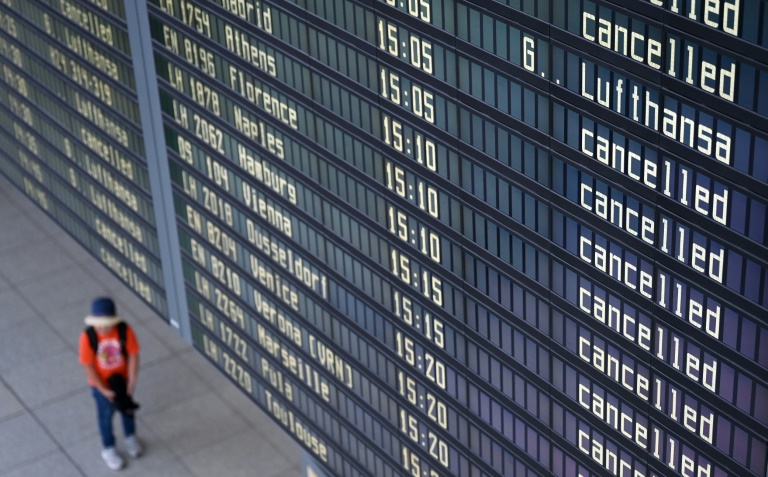
Lufthansa passengers faced massive travel disruption Wednesday as a strike led the German airline group to cancel almost all its flights from its domestic hubs in Frankfurt and Munich.

Lufthansa axed more than 1,000 flights after the one-day walkout by ground staff was called by the powerful Verdi union earlier in the week. 

The stoppage promises to bring more pain to a turbulent summer for air travel across Europe.

Lufthansa had already cancelled thousands of flights over the summer as the airline industry contends with ground-side disruptions.

The relaxation of coronavirus rules has boosted demand, but chronic staff shortages have left passengers facing flight disruptions, long queues and lost luggage.

“Lufthansa reduced its staffing during the (coronavirus) crisis, despite being saved by the taxpayer, and now there are personnel shortages in all corners,” said Verdi Lufthansa representative Marvin Reschinsky.

“We now need financial investments in personnel to make sure air travel is still possible in the future,” he told AFP.

Participation in the strike was “enormous”, he said, reflecting the financial pressure employees feel from a recent surge in inflation, which stood at 7.6 percent in Germany last month. 

Ground staff had “earned” a raise, said Katharina Horn, a Lufthansa employee.

After two years of the pandemic which battered the industry and led to long work stoppages for employees “all the savings are used up”, she told AFP.

“We would have liked not to have to go out into the streets today. Lufthansa could have avoided that by making a reasonable offer,” she said.

The strike was “wholly unnecessary” and had destroyed the “holiday dreams of more than 100,000 people”, said Lufthansa spokesman, Martin Leutke.

Lufthansa was seeking to find alternatives for stranded passengers but Leutke warned that the process was “not easy in the peak travel period because all the flights are full”.

“I wanted to go to Tunis but the flight is cancelled,” Adel Zayani said to AFP, adding that he would now have to wait for a flight tomorrow.

The strike was “good for people, workers” who needed to earn money but “not easy” for passengers, said the 56-year-old.

Spotify losses widen as costs and subscribers increase

The world’s most popular streaming service Spotify on Wednesday recorded wider losses on rising costs even though subscriber numbers beat expectations in the second quarter. 

Between April and June, the Swedish giant suffered a net loss of 125 million euros ($126 million), compared to 20 million euros in the second quarter of 2021.

In the same period, the number of paying subscribers rose by 14 percent to 188 million out of a total of 433 million including non-paying users.

The 19 percent increase in overall users is the largest ever in the second quarter, the company said.

Analysts had expected a loss of 127 million euros ($128 million) and a rise in paying subscribers to 187 million, Bloomberg reported.

The rise in paying subscribers confounded concerns that the rising cost of living would push consumers to cut back on non-essential spending such as entertainment.

Spotify’s operating losses hit 194 million in the second quarter, compared with operating profits of 12 million euros a year earlier.

Spotify blamed the losses on higher staff costs after expanding its team and new acquisitions as it widens its reach into the world of podcasts.

Spotify raised hackles earlier this year with a $100 million multi-year deal with controversial star podcaster Joe Rogan.

At the end of the second quarter, Spotify listed 4.4 million podcasts on its platform, a rise of 400,000 from the end of March.

The number of users that engaged with podcasts grew in the “substantial double-digits” year-on-year and “per user podcast consumption rates continued to rise”, it said.

Spotify expects operating losses of 218 million euros in the third quarter due to unfavourable exchange rates.

The euro has slumped against the dollar in recent months, triggered by the war in Ukraine and the mounting risks to the European Union’s economy, as well as a relatively slow increase of interest rates by the ECB.

Spotify shares rose 16 percent in morning trading on the New York Stock Exchange. 

Stocks advance ahead of US rate decision, dollar dips

European and US stock markets advanced while the dollar retreated on Wednesday as attention switched to the Federal Reserve and the size of its upcoming interest rate hike.

Tuesday saw a steep drop on Wall Street as traders pored over more company earnings that pointed to fallout caused by decades-high inflation.

After markets closed both Google and Microsoft reported disappointing earnings, but shares in both companies shot higher as trading got under way.

“The takeaway for many apparently is that their results and/or guidance was better than feared,” said market analyst Patrick J. O’Hare at Briefing.com.

Shares in Google climbed 3.3 percent and Microsoft stock jumped 4.0 percent.

While traders will continue to sift over company results and economic data early in the US trading session, attention will later shift to the Fed’s rate decision.

Central banks are seeking to combat runaway prices by hiking interest rates, even though that risks pushing economies into recession.

The US central bank is widely tipped to announce a 0.75-percentage-point increase in interest rates, with traders particularly interested in any indications whether it will keep up this pace of rate hikes.

“This increase in the interest rate is already very much priced in,” noted Naeem Aslam, chief market analyst at Avatrade.

He added that should the Fed indicate a plan to raise rates by another 75 basis points at its next meeting, “that would be highly bullish for the dollar”. 

Focus was also on gas prices as Russian energy giant Gazprom slashed deliveries of the fuel to Europe via the Nord Stream pipeline.

EU states have accused Russia of squeezing supplies in retaliation for Western sanctions over Moscow’s war in Ukraine.

The price of natural gas reference, Dutch TTF, rose 3.5 percent to 210.25 euros per megawatt hour, building on Tuesday gains.

On the corporate front, Switzerland’s scandal-hit banking giant Credit Suisse appointed a new chief executive as higher litigation costs and financial market volatility pushed it deeper into the red.

Ulrich Koerner, head of asset management at the bank, takes the reins from Thomas Gottstein on Monday.

The bank has been hit by a series of scandals and crises including the implosions of financial services firms Greensill and Archegos last year.

After starting the day lower on the Swiss stock exchange, Credit Suisse shares rallied more than two percent.

– Key figures at around 1330 GMT –

London – FTSE 100: UP 0.6 percent at 7,349 points

Frankfurt – DAX: UP 0.2 percent at 13,128.54 

Paris – CAC 40: UP 0.4 percent at 6,235.00

EURO STOXX 50: UP 0.6 percent at 3,595.85

New York – Dow: UP 0.5 percent at 31,915.08

Tokyo – Nikkei 225: UP 0.2 percent at 27,715.75 (close)

Hong Kong – Hang Seng Index: DOWN 1.1 percent at 20,670.04 (close)

Shanghai – Composite: DOWN 0.1 percent at 3,275.76 (close)

Euro/dollar: UP at $1.0143 from $1.0126 Tuesday

Pound/dollar: UP at $1.2049 from $1.2030 

Euro/pound: UP at 84.20 pence from 84.09 pence

Dollar/yen: DOWN at 136.87 yen from 136.95 yen

Brent North Sea crude: UP 0.8 percent at $105.23 per barrel

West Texas Intermediate: UP 1.0 percent at $95.92 per barrel

burs-rl/lcm

Fed poised to attack inflation with another interest rate hike

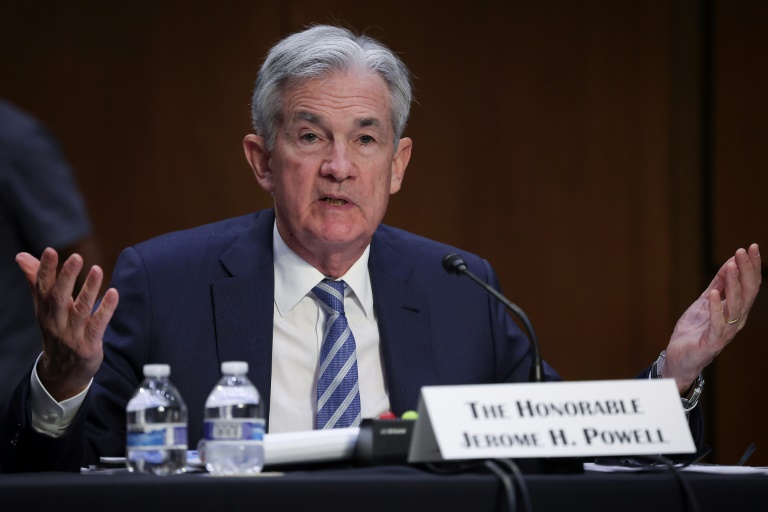
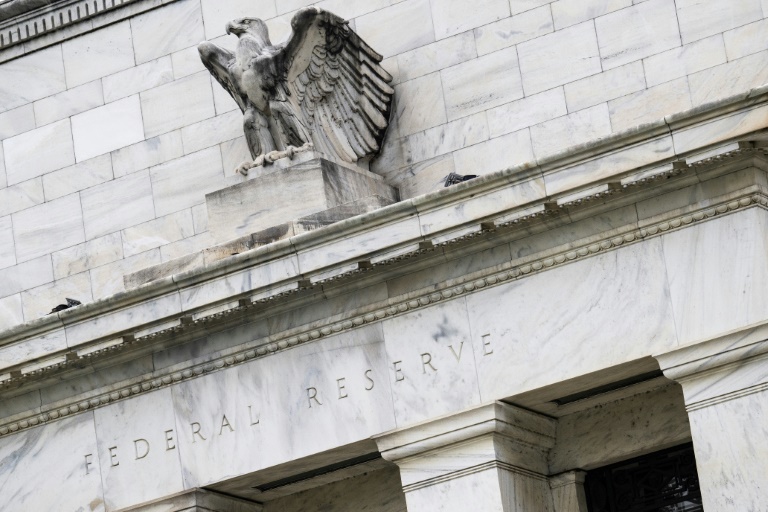
The Federal Reserve opened on Wednesday the second day of its policy meeting where it is set to announce another big interest rate increase, the fourth this year, in its ongoing battle to tamp down price pressures squeezing American families.

US central bankers are hoping their aggressive stance will cool red-hot inflation that topped nine percent in June, the highest in more than 40 years, without derailing the world’s largest economy.

President Joe Biden is facing political costs for surging prices, which he blames mostly on the Russian invasion of Ukraine that has sent global food and energy prices soaring. 

Biden insists the US economy will avoid a recession, but even as his approval ratings have cratered, he has supported the Fed in its battle to quell inflation.

Fed Chair Jerome Powell and others have made it clear they are willing to risk a downturn and will keep raising interest rates until they see clear evidence inflation is moving back towards the two percent goal.

The policy-setting Federal Open Market Committee is widely expected to announce another three-quarter-point increase in the benchmark borrowing rate at the conclusion of its two-day policy meeting at 1800 GMT.

From zero at the start of the year, the Fed has raised the policy lending rate to a range of 1.5 to 1.75 percent, which has pushed mortgage rates higher and slowed housing sales for five straight months.

Economists say this has been the most aggressive Fed tightening cycle since the 1980s, when stagflation — a wage-price spiral and stagnant growth — crippled the US economy.

The challenge for policymakers is to quell inflation before it becomes dangerously entrenched without sending the world’s largest economy into a recession that would reverberate around the globe.

While prices have continued to rise, with home prices hitting a new record, there are signs the pace of the increases has begun to slow, which may allow the central bank to ease up on its rate hikes.

Global oil prices are trending down, with the US benchmark WTI falling to below $95 a barrel from its peak of more than $123 in March, and gasoline prices at the pump have fallen 69 cents from the record of just over $5 a gallon in mid-June.

– Recession risk –

Meanwhile, the job market has remained strong, and surveys show inflation expectations in the months ahead have started to trend lower.

But consumer demand has not fallen dramatically, and data Wednesday showed new orders for big-ticket manufactured items continues to rise, even when discounting the massive increase in military aircraft.

Policymakers want to engineer a “soft landing,” taming inflation without causing a downturn, but economists warn they face an increasingly narrow path to success and it would be easy to overshoot by being too aggressive.

“The Fed is now stuck between a rock and a hard place, with no easy way out without the economy feeling pain,” KPMG chief economist Diane Swonk said in an analysis, noting that “Powell has started to underscore that reality by admitting a recession could occur.”

In fact, it is rare that the central bank moves so decidedly without causing a downturn, and there are signs of concern among Fed policymakers.

“Brace yourself,” Swonk said on Twitter, likening the surge in inflation to a cancer that will spread if left untreated. She said the policy rate will have to rise to a 3.75-4.0 percent range, which would mean another 150 basis points of increase in coming months.

Kansas City Fed President Esther George dissented at the June meeting, warning that going too fast could be “unsettling” and raise recession fears.

GDP in the first quarter contracted 1.6 percent, and the first reading on the April-June period is due out Thursday. Though the consensus forecast calls for modest growth, many economists expect a downturn. 

Two quarters of negative growth are generally considered a recession, although that is not the official criteria.

But Fed Governor Christopher Waller said he was prepared to move even faster, with an unheard-of full point increase if inflation continues to accelerate.

Fed poised to attack inflation with another interest rate hike

The Federal Reserve opened on Wednesday the second day of its policy meeting where it is set to announce another big interest rate increase, the fourth this year, in its ongoing battle to tamp down price pressures squeezing American families.

US central bankers are hoping their aggressive stance will cool red-hot inflation that topped nine percent in June, the highest in more than 40 years, without derailing the world’s largest economy.

President Joe Biden is facing political costs for surging prices, which he blames mostly on the Russian invasion of Ukraine that has sent global food and energy prices soaring. 

Biden insists the US economy will avoid a recession, but even as his approval ratings have cratered, he has supported the Fed in its battle to quell inflation.

Fed Chair Jerome Powell and others have made it clear they are willing to risk a downturn and will keep raising interest rates until they see clear evidence inflation is moving back towards the two percent goal.

The policy-setting Federal Open Market Committee is widely expected to announce another three-quarter-point increase in the benchmark borrowing rate at the conclusion of its two-day policy meeting at 1800 GMT.

From zero at the start of the year, the Fed has raised the policy lending rate to a range of 1.5 to 1.75 percent, which has pushed mortgage rates higher and slowed housing sales for five straight months.

Economists say this has been the most aggressive Fed tightening cycle since the 1980s, when stagflation — a wage-price spiral and stagnant growth — crippled the US economy.

The challenge for policymakers is to quell inflation before it becomes dangerously entrenched without sending the world’s largest economy into a recession that would reverberate around the globe.

While prices have continued to rise, with home prices hitting a new record, there are signs the pace of the increases has begun to slow, which may allow the central bank to ease up on its rate hikes.

Global oil prices are trending down, with the US benchmark WTI falling to below $95 a barrel from its peak of more than $123 in March, and gasoline prices at the pump have fallen 69 cents from the record of just over $5 a gallon in mid-June.

– Recession risk –

Meanwhile, the job market has remained strong, and surveys show inflation expectations in the months ahead have started to trend lower.

But consumer demand has not fallen dramatically, and data Wednesday showed new orders for big-ticket manufactured items continues to rise, even when discounting the massive increase in military aircraft.

Policymakers want to engineer a “soft landing,” taming inflation without causing a downturn, but economists warn they face an increasingly narrow path to success and it would be easy to overshoot by being too aggressive.

“The Fed is now stuck between a rock and a hard place, with no easy way out without the economy feeling pain,” KPMG chief economist Diane Swonk said in an analysis, noting that “Powell has started to underscore that reality by admitting a recession could occur.”

In fact, it is rare that the central bank moves so decidedly without causing a downturn, and there are signs of concern among Fed policymakers.

“Brace yourself,” Swonk said on Twitter, likening the surge in inflation to a cancer that will spread if left untreated. She said the policy rate will have to rise to a 3.75-4.0 percent range, which would mean another 150 basis points of increase in coming months.

Kansas City Fed President Esther George dissented at the June meeting, warning that going too fast could be “unsettling” and raise recession fears.

GDP in the first quarter contracted 1.6 percent, and the first reading on the April-June period is due out Thursday. Though the consensus forecast calls for modest growth, many economists expect a downturn. 

Two quarters of negative growth are generally considered a recession, although that is not the official criteria.

But Fed Governor Christopher Waller said he was prepared to move even faster, with an unheard-of full point increase if inflation continues to accelerate.

Ukraine moves closer to grain exports, strikes Russian-held bridge

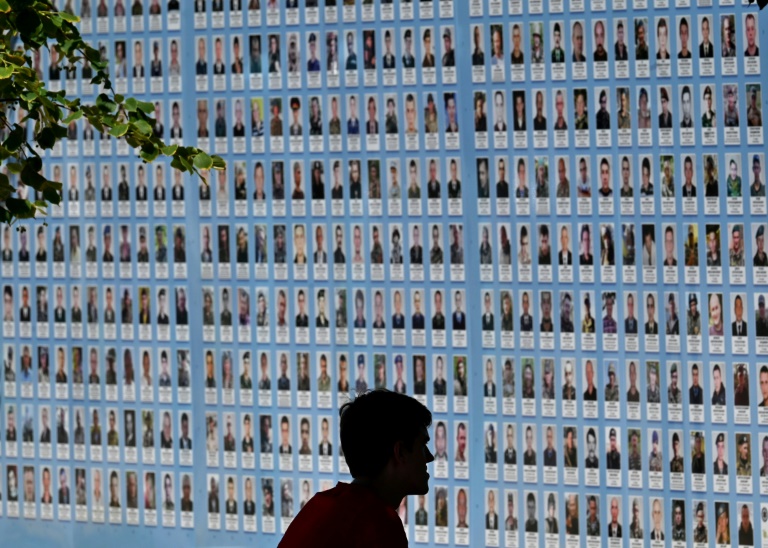
Ukraine on Wednesday said it had restarted operations at its blockaded Black Sea ports as it moved closer to resuming grain exports with the opening of a coordination centre to oversee a UN-backed deal. 

Progress towards fulfilling the landmark agreement came as Kyiv’s artillery struck a key bridge in Moscow-controlled territory in south Ukraine, damaging an important supply route as Ukrainian forces look to wrest back the Kherson region.

German authorities said Russia’s state giant Gazprom drastically cut gas deliveries to Europe via the Nord Stream pipeline to about 20 percent of capacity in a move decried in the EU as revenge for Western sanctions over the invasion.

Ukraine and Russia last week agreed a plan with the help of Turkey and the United Nations to allow grain stranded by Moscow’s naval blockade to be exported from three ports.

Kyiv has said it hopes to begin sending out the first of millions of tonnes of grain “this week” despite a missile strike by Russia over the weekend on the port in Odessa. 

Ukraine’s navy said “work has resumed” at the export hubs to prepare for ships to be escorted through the mine-infested waters to reach world markets.

As part of the deal, a coordination centre involving Ukrainian and Russian representatives opened in Istanbul to monitor the safe passage for shipping along established routes and oversee inspections for banned weapons. 

The blockage of deliveries from two of the world’s biggest grain exporters has contributed to a spike in prices that has made food imports prohibitively expensive for some of the world’s poorest countries.

– ‘Leave Kherson’ –

Fighting has continued to rage on the ground in Ukraine despite the push to get the grain out, and Kyiv struck back by hitting the vital Antonivskiy bridge over the Dnipro river in a move that threatens to cut supply lines to Russian troops. 

Kirill Stremousov, the deputy head of the Russian-installed regional administration in Kherson, confirmed the bridge had been hit overnight and traffic had been halted.

But he sought to downplay the damage, insisting that the attack would not affect the outcome of the hostilities “in any way.”  

Ukrainian forces in recent weeks have been clawing back territory in the Kherson region, which fell to Russian forces easily and early after their invasion launched on February 24.

Their counter-offensive supported by Western-supplied long-range artillery has seen its forces push closer to Kherson city, which had a pre-war population of under 300,000 people.

Russian forces “should leave Kherson while it is still possible. There may not be a third warning,” Ukrainian presidential advisor Mykhaylo Podolyak said on Twitter after the attack.

In the bludgeoned Donetsk region to the east — a key focus of Russia’s war — AFP journalists saw a house hit in an intense artillery exchange around the ravaged frontline city of Bakhmut.

A worker was inside the courtyard when the shell hit and he was saved by emergency rescuers who cut a hole in a steel fence using an axe. 

“I heard a whistle. And I don’t remember anything. It exploded and I was thrown into the barn by the explosion,” 51-year-old Roman told AFP.

Ukraine’s emergency services said that Russian artillery had hit a hotel in Bakhmut, leaving two people dead and three injured.

– Gas ‘power play’ –

Deepening an energy crisis in Europe sparked by the war, Germany’s energy regulator said gas flows via the key Nord Stream pipeline had dropped to 20 percent of capacity on Wednesday from 40 percent.

EU states have rejected Gazprom’s claims of technical problems and accuse the Kremlin of squeezing supplies in retaliation for Western sanctions over Moscow’s war in Ukraine.

Kremlin spokesman Dmitry Peskov blamed EU sanctions for the limited supply.

“Technical pumping capacities are down, more restricted. Why? Because the process of maintaining technical devices is made extremely difficult by the sanctions adopted by Europe,” Peskov said. 

But Berlin has dismissed the explanation and government spokeswoman Christiane Hoffmann called the reductions a “power play” by Moscow.

The European Union has been bracing for the cutbacks and on Tuesday agreed a plan to reduce gas consumption by 15 percent this winter to break its dependence on Russia.

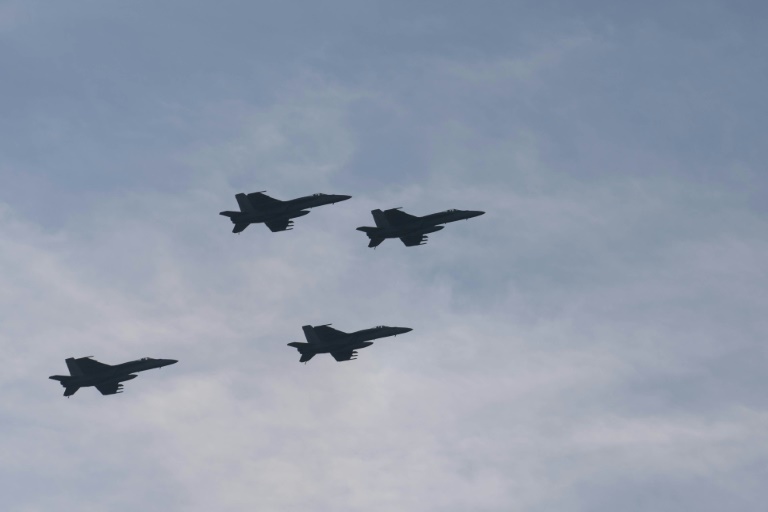
Military aircraft drive US goods orders higher in June

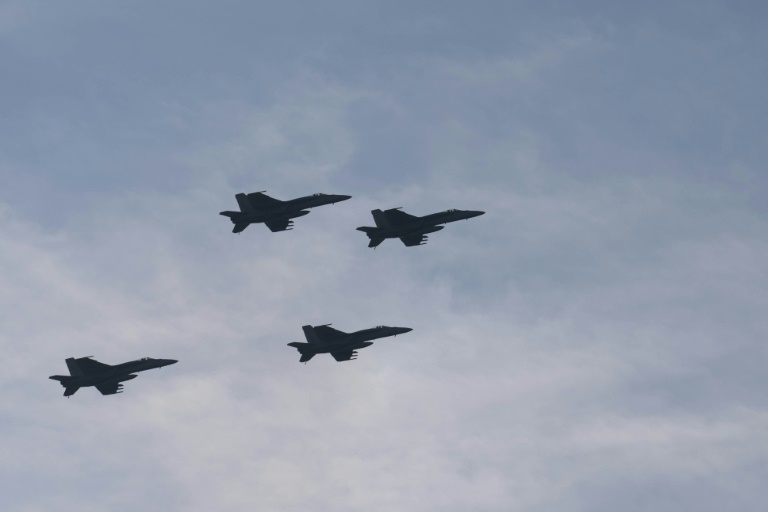
An eye-popping surge in new orders for US military aircraft in June drove a surprise increase in demand for big-ticket manufactured goods, according to government data released Wednesday.

New orders for defense aircraft and parts surged 80.6 percent compared to May, pushing the total for all durable goods up 1.9 percent in the month to $272.6 billion, the Commerce Department reported.

Economists were projecting a 0.5 percent drop in the key data point that feeds into quarterly economic growth calculations. 

Orders have increased in eight of the past nine months, and even excluding the volatile transportation segment, new orders still gained 0.3 percent.

The increase points to solid demand even as US inflation rages at a 40-year high, but economists warn uncertainty caused by the war in Ukraine may cool business investment plans, which could tamp down orders in coming months.

The US Federal Reserve is on an aggressive campaign to raise interest rates and to cool the economy and douse inflation fires — with another hike expected later Wednesday. 

Even as borrowing costs rise, firms and households still have plenty of cash and pent up demand, in part due to supply snarls throughout the recovery from the pandemic downturn.

Gregory Daco, chief economist at EY Parthenon, called it “very encouraging news from the business side,” saying “orders were still growing strongly” for goods outside the defense aircraft sector.

While civilian aircraft declined in the month, orders for vehicles and parts gained 1.5 percent.

Ian Shepherson of Pantheon Macroeconomics said he expects the volatile numbers to slow in coming months.

“The surge in the headline does not change the bigger picture of a slowdown in spending, but it has not reached recession-type proportions,” he said in an analysis.

Military aircraft drive US goods orders higher in June

An eye-popping surge in new orders for US military aircraft in June drove a surprise increase in demand for big-ticket manufactured goods, according to government data released Wednesday.

New orders for defense aircraft and parts surged 80.6 percent compared to May, pushing the total for all durable goods up 1.9 percent in the month to $272.6 billion, the Commerce Department reported.

Economists were projecting a 0.5 percent drop in the key data point that feeds into quarterly economic growth calculations. 

Orders have increased in eight of the past nine months, and even excluding the volatile transportation segment, new orders still gained 0.3 percent.

The increase points to solid demand even as US inflation rages at a 40-year high, but economists warn uncertainty caused by the war in Ukraine may cool business investment plans, which could tamp down orders in coming months.

The US Federal Reserve is on an aggressive campaign to raise interest rates and to cool the economy and douse inflation fires — with another hike expected later Wednesday. 

Even as borrowing costs rise, firms and households still have plenty of cash and pent up demand, in part due to supply snarls throughout the recovery from the pandemic downturn.

Gregory Daco, chief economist at EY Parthenon, called it “very encouraging news from the business side,” saying “orders were still growing strongly” for goods outside the defense aircraft sector.

While civilian aircraft declined in the month, orders for vehicles and parts gained 1.5 percent.

Ian Shepherson of Pantheon Macroeconomics said he expects the volatile numbers to slow in coming months.

“The surge in the headline does not change the bigger picture of a slowdown in spending, but it has not reached recession-type proportions,” he said in an analysis.

Close Bitnami banner
Bitnami