US Business

Rolls-Royce champions energy transition at Farnborough

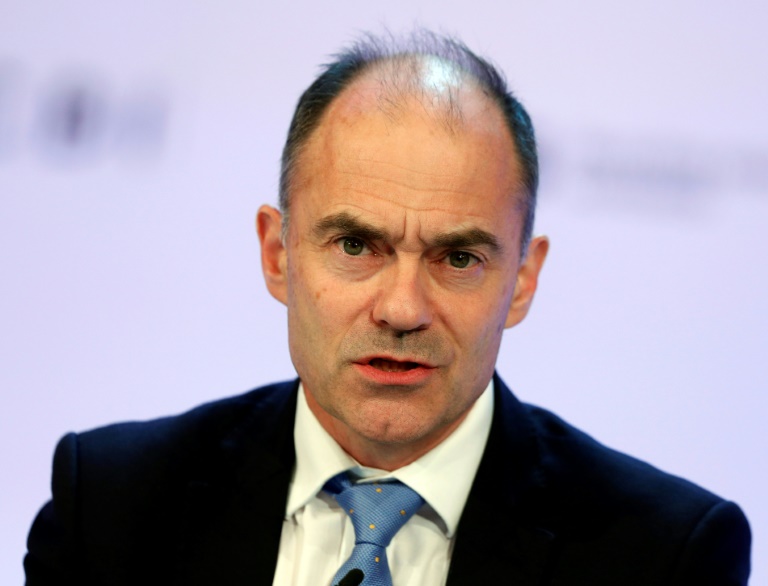
British aircraft engine maker Rolls-Royce is “championing” the energy transition and the decarbonisation of aviation, its outgoing chief executive Warren East told AFP on Tuesday at the Farnborough airshow.

This year’s Farnborough spectacle, returning from a four-year absence, is set against the backdrop of air travel’s nascent post-pandemic recovery but as economic turmoil hampers manufacturing.

Yet the airshow’s focus is on decarbonisation and sustainability in a sector often criticised for its impact on the climate, amid Europe’s blistering heatwave with record temperatures in England.

– Energy transition –

“The big theme is energy transition,” East told AFP in an interview at the company’s airshow chalet.

“This is the number one issue for the sector. We’ve been championing that for some time — and saying it’s absolutely necessary and we embrace that as an opportunity.”

East, 60, is retiring after more than seven years at the helm of the aerospace behemoth, with his tenure marked by historic corruption fines for the group, Trent engine troubles and Brexit.

Rolls, whose products power Airbus and Boeing aircraft, then axed 9,000 jobs and offloaded assets in a drastic restructuring after the Covid pandemic grounded jets and sparked a collapse air traffic.

East then guided it back to profit in 2021 from Covid-driven losses after slashing costs.

The titan, based in the city of Derby in central England, is now reaping the benefits of aviation’s post-Covid recovery, defence growth, a record power systems order book — and a long-standing focus on sustainability.

“I’m quite pleased with my time at Rolls-Royce,” added East, who took the reins in July 2015.

“We’ve really sort of modernised Rolls Royce in terms of culture.

“We’ve put in place a lot of efficiency and productivity improvements, which then crystallised during the Covid pandemic.

“And that’s created a very firm platform for the future (with) great operational and financial gearing now.”

– Cleaner fuel –

Aviation accounts for between 2-3 percent of the world’s total damaging carbon dioxide emissions, according to industry estimates.

Airlines and manufacturers alike have meanwhile committed to achieving net zero emissions — or carbon neutrality — by 2050.

Yet global air traffic is forecast to more than double by that point.

Rolls-Royce, which specialises in engines for long-haul aircraft, military jets and helicopters, is as a result ramping up its research into a wide range of technologies including electric and hydrogen power.

At the first Farnborough airshow since Covid, Rolls-Royce has announced a partnership, named H2ZERO, with British low-cost carrier Easyjet to test cleaner hydrogen engine combustion technology. 

Rolls also signed a deal with South Korea’s Hyundai to explore all-electric propulsion and hydrogen fuel cell technology for flying taxis of the future.

The company in addition unveiled a new research programme on hydrogen propulsion technology that emits no carbon dioxide.

Rolls is meanwhile working to develop a fuel-efficient future engine named UltraFan, which emits less damaging pollutants.

UltraFan aims for 25 percent fuel savings  compared with traditional long-haul engine.

“We are a group that is very focused on power and we do power across multiple sectors and one of the sectors in which we obviously have decades of experience in is aviation and aerospace,” said East.

– Cost –

The CEO cautioned however that it would take “decades” before hydrogen was deployed in aircraft engines.

The global aerospace industry would meanwhile need to harness technology such as sustainable aviation fuels derived from biomass, in order to curb its reliance on high-polluting kerosene.

SAF is however between three and four times more expensive than normal jet fuel. 

“I think as we go forward — maybe we’ll get to hydrogen in a gas turbine — but we’re not going to get there for at least a couple of decades,” East told AFP.

“There is a huge amount of work to do to make that practical, safe and economic and we need to have some transition technologies in the meantime and that’s why we talk about sustainable aviation fuel.”

He added: “Essentially, we’re just saying instead of kerosene we’ve got batteries, hydrogen, and synthetic kerosene.”


Rolls-Royce champions energy transition at Farnborough

British aircraft engine maker Rolls-Royce is “championing” the energy transition and the decarbonisation of aviation, its outgoing chief executive Warren East told AFP on Tuesday at the Farnborough airshow.

This year’s Farnborough spectacle, returning from a four-year absence, is set against the backdrop of air travel’s nascent post-pandemic recovery but as economic turmoil hampers manufacturing.

Yet the airshow’s focus is on decarbonisation and sustainability in a sector often criticised for its impact on the climate, amid Europe’s blistering heatwave with record temperatures in England.

– Energy transition –

“The big theme is energy transition,” East told AFP in an interview at the company’s airshow chalet.

“This is the number one issue for the sector. We’ve been championing that for some time — and saying it’s absolutely necessary and we embrace that as an opportunity.”

East, 60, is retiring after more than seven years at the helm of the aerospace behemoth, with his tenure marked by historic corruption fines for the group, Trent engine troubles and Brexit.

Rolls, whose products power Airbus and Boeing aircraft, then axed 9,000 jobs and offloaded assets in a drastic restructuring after the Covid pandemic grounded jets and sparked a collapse air traffic.

East then guided it back to profit in 2021 from Covid-driven losses after slashing costs.

The titan, based in the city of Derby in central England, is now reaping the benefits of aviation’s post-Covid recovery, defence growth, a record power systems order book — and a long-standing focus on sustainability.

“I’m quite pleased with my time at Rolls-Royce,” added East, who took the reins in July 2015.

“We’ve really sort of modernised Rolls Royce in terms of culture.

“We’ve put in place a lot of efficiency and productivity improvements, which then crystallised during the Covid pandemic.

“And that’s created a very firm platform for the future (with) great operational and financial gearing now.”

– Cleaner fuel –

Aviation accounts for between 2-3 percent of the world’s total damaging carbon dioxide emissions, according to industry estimates.

Airlines and manufacturers alike have meanwhile committed to achieving net zero emissions — or carbon neutrality — by 2050.

Yet global air traffic is forecast to more than double by that point.

Rolls-Royce, which specialises in engines for long-haul aircraft, military jets and helicopters, is as a result ramping up its research into a wide range of technologies including electric and hydrogen power.

At the first Farnborough airshow since Covid, Rolls-Royce has announced a partnership, named H2ZERO, with British low-cost carrier Easyjet to test cleaner hydrogen engine combustion technology. 

Rolls also signed a deal with South Korea’s Hyundai to explore all-electric propulsion and hydrogen fuel cell technology for flying taxis of the future.

The company in addition unveiled a new research programme on hydrogen propulsion technology that emits no carbon dioxide.

Rolls is meanwhile working to develop a fuel-efficient future engine named UltraFan, which emits less damaging pollutants.

UltraFan aims for 25 percent fuel savings  compared with traditional long-haul engine.

“We are a group that is very focused on power and we do power across multiple sectors and one of the sectors in which we obviously have decades of experience in is aviation and aerospace,” said East.

– Cost –

The CEO cautioned however that it would take “decades” before hydrogen was deployed in aircraft engines.

The global aerospace industry would meanwhile need to harness technology such as sustainable aviation fuels derived from biomass, in order to curb its reliance on high-polluting kerosene.

SAF is however between three and four times more expensive than normal jet fuel. 

“I think as we go forward — maybe we’ll get to hydrogen in a gas turbine — but we’re not going to get there for at least a couple of decades,” East told AFP.

“There is a huge amount of work to do to make that practical, safe and economic and we need to have some transition technologies in the meantime and that’s why we talk about sustainable aviation fuel.”

He added: “Essentially, we’re just saying instead of kerosene we’ve got batteries, hydrogen, and synthetic kerosene.”

China to fine ride-hailing giant Didi more than $1 bn: reports

China is preparing to hit ride-hailing giant Didi with a fine of more than $1 billion to wrap up a long-running probe, media reports said, boosting investor hopes that the country’s tech crackdown is winding down.

Didi, once known as China’s answer to Uber, has been one of the highest-profile targets of the widespread clampdown on the sector, which saw years of runaway growth and supersized monopolies before regulators stepped in.

The fine — imposed over Didi’s cybersecurity practices — would amount to more than four percent of its $27.3 billion total revenue last year and pave the way for its new share listing in Hong Kong, The Wall Street Journal reported Tuesday.

Citing unnamed sources familiar with the matter, the Journal said that once the fine is announced, the government will ease its restrictions on Didi’s operations.

The firm was prevented from adding new users and its apps were removed from online stores in China by regulators.

The WSJ report triggered a rally in Chinese tech shares in Hong Kong on Wednesday, with investors hopeful that the two-year regulatory storm that swept the sector was nearing its end.

E-commerce giant Alibaba soared four percent, while gaming titan Tencent gained 2.5 percent in early trade.

Didi got into hot water in June last year after it pressed ahead with an IPO in the United States, reportedly against Beijing’s wishes.

Days after it raised $4.4 billion in New York, Chinese authorities launched a cybersecurity probe into the company, sending its shares plunging.

If confirmed, Didi’s fine would be the biggest imposed on a Chinese tech company since Alibaba was told to pay $2.75 billion in April 2021 as punishment for anti-competitive practices.

Didi did not respond immediately to an emailed request for comment.

Its shareholders voted to delist the firm from New York in May.

That move is expected to pave the way for a Hong Kong listing that was reportedly put on hold after China’s top internet watchdog told executives their proposals to prevent security and data leaks were insufficient.

China’s regulatory crackdown has eased this year as it grapples with the economic fallout from its zero-Covid strategy, with the country struggling to reach its 5.5 percent growth target.

However, there is still a strict regulatory environment for tech firms: President Xi Jinping last month called for stronger oversight and better security in the financial tech arena.

Police arrest 17 US lawmakers at abortion rights protest outside Supreme Court

At least 17 Democratic lawmakers, including prominent progressives Alexandria Ocasio-Cortez and Ilhan Omar, were arrested at an abortion rights protest outside the Supreme Court in Washington on Tuesday, police said.

The US Capitol police said on Twitter that the demonstrators had blocked traffic on a nearby road and were been given three warnings before officers made the arrests.

“We made a total of 35 arrests for Crowding, Obstructing or Incommoding,” the police said. “That arrest number includes 17 Members of Congress.”

The small demonstration came three weeks after a controversial ruling by the Supreme Court that overturned the 1973 landmark decision of Roe v. Wade, which had guaranteed women’s access to abortion.

“Today I was arrested while participating in a civil disobedience action with my fellow Members of Congress outside the Supreme Court,” Omar, representative from Minnesota, said on Twitter. 

“I will continue to do everything in my power to raise the alarm about the assault on our reproductive rights!” she tweeted.

Representative Carolyn Maloney of New York was also arrested, and issued a statement saying, “There is no democracy if women do not have control over their own bodies and decisions about their own health, including reproductive care.” 

“The Republican Party and the right-wing extremists behind this decision are not pro-life, but pro-controlling the bodies of women, girls, and any person who can become pregnant.”

Footage from the protest showed Ocasio-Cortez, Omar and others being led away, not in handcuffs, and waving to supporters.

Netflix subscriber numbers drop two quarters in a row

Netflix reported losing subscribers for the second quarter in a row Tuesday as the streaming giant battles fierce competition and viewer belt tightening, but the company assured investors of better days ahead.

The loss of 970,000 paying customers in the most recent quarter was not as big as expected, and left Netflix with just shy of 221 million subscribers.

“Tough in some ways, losing a million and calling it success, but really we are set up very well for the next year,” the company’s co-chief and founder Reed Hastings said in an earnings presentation.

The company said in its earnings report that it had expected to gain a million paid subscribers in the current quarter.

Netflix shares were up slightly in after-market trades — a sign that investors were remaining faithful.

Analysts noted that the results, even if not as poor as feared, were still troubling.

“Netflix’s subscriber loss was expected but it remains a sore point for a company that is wholly dependent on subscription revenue from consumers,” said analyst Ross Benes.

Benes added that “unless it finds more franchises that resonate widely, it will eventually struggle to stay ahead of competitors that are after its crown.”

– Fewer free rides –

Netflix executives have made it clear the company will get tougher on sharing logins and passwords, which allow many to access the platform’s content without paying.

“It’s great that our members love Netflix movies and TV shows so much they want to share them more broadly,” director of product innovation Chengyi Long said Monday in a blog post.

“But today’s widespread account sharing between households undermines our long term ability to invest in and improve our service.”

Long said that an “add a home” subscription feature that Netflix in March began testing in Chile, Costa Rica, and Peru will be expanded to Argentina, the Dominican Republic, Honduras, El Salvador, and Guatemala.

Netflix said it is aiming to have an account-sharing payment system deployed broadly by next year.

Meanwhile, Netflix is working with Microsoft to launch a cheaper subscription plan that includes advertisements, which The New York Times has reported could launch by the end of this year.

Netflix opted to develop the lower-cost offering after a disappointing first quarter in which it lost subscribers for the first time in a decade — and after years of resistance against the very idea of running ads. 

Microsoft will be responsible for designing and managing the platform for advertisers who want to serve ads to Netflix users.

“These earning results buy them time, and they need time to focus on stopping the bleeding,” analyst Rob Enderle of Enderle Group told AFP.

“Netflix is facing a significant amount of competition; to hold on as well as they have is an example of how resilient they are but they are not out of the woods.”

– ‘Stranger Things’ –

Netflix has been investing heavily in original content such as hit shows “Squid Game” and “Stranger Things” to fend off powerhouse competitors such as Disney, with its Marvel and Star Wars franchises.

The recently released fourth season of “Stranger Things” racked up 1.3 billion hours of viewing in just four weeks at Netflix, making it the platform’s biggest-ever English language television release, according to the company.

Meanwhile, some 284 million hours were spent watching the latest season of “The Umbrella Academy,” executives said.

Action-thriller film “The Gray Man” — based on a novel of the same name, and set for release on Netflix on Friday — is “mind-blowing,” co-chief Ted Sarandos said in the earnings presentation.

“Netflix’s ability to produce smash hit content is undoubted,” said GlobalData managing director Neil Saunders.

“However, with the loss of almost one million members since the prior quarter, translating this into commercial success is proving to be more of a challenge.”

Challenges facing Netflix include changing habits, as house-bound people who signed on for the service during the height of the pandemic are re-evaluating their subscriptions now that they are resuming their former lifestyles, Saunders noted.

The analyst pointed out that Netflix had about 27.7 million more paid subscribers in the recently ended quarter than it did in the same period a year earlier.

“Despite the slowdown, Netflix isn’t in trouble,” Saunders said.

“However, to get back into growth it will need to change — but that change needs to be more about evolution than revolution.”

Netflix subscriber numbers drop two quarters in a row

Netflix reported losing subscribers for the second quarter in a row Tuesday as the streaming giant battles fierce competition and viewer belt tightening, but the company assured investors of better days ahead.

The loss of 970,000 paying customers in the most recent quarter was not as big as expected, and left Netflix with just shy of 221 million subscribers.

“Tough in some ways, losing a million and calling it success, but really we are set up very well for the next year,” the company’s co-chief and founder Reed Hastings said in an earnings presentation.

The company said in its earnings report that it had expected to gain a million paid subscribers in the current quarter.

Netflix shares were up slightly in after-market trades — a sign that investors were remaining faithful.

Analysts noted that the results, even if not as poor as feared, were still troubling.

“Netflix’s subscriber loss was expected but it remains a sore point for a company that is wholly dependent on subscription revenue from consumers,” said analyst Ross Benes.

Benes added that “unless it finds more franchises that resonate widely, it will eventually struggle to stay ahead of competitors that are after its crown.”

– Fewer free rides –

Netflix executives have made it clear the company will get tougher on sharing logins and passwords, which allow many to access the platform’s content without paying.

“It’s great that our members love Netflix movies and TV shows so much they want to share them more broadly,” director of product innovation Chengyi Long said Monday in a blog post.

“But today’s widespread account sharing between households undermines our long term ability to invest in and improve our service.”

Long said that an “add a home” subscription feature that Netflix in March began testing in Chile, Costa Rica, and Peru will be expanded to Argentina, the Dominican Republic, Honduras, El Salvador, and Guatemala.

Netflix said it is aiming to have an account-sharing payment system deployed broadly by next year.

Meanwhile, Netflix is working with Microsoft to launch a cheaper subscription plan that includes advertisements, which The New York Times has reported could launch by the end of this year.

Netflix opted to develop the lower-cost offering after a disappointing first quarter in which it lost subscribers for the first time in a decade — and after years of resistance against the very idea of running ads. 

Microsoft will be responsible for designing and managing the platform for advertisers who want to serve ads to Netflix users.

“These earning results buy them time, and they need time to focus on stopping the bleeding,” analyst Rob Enderle of Enderle Group told AFP.

“Netflix is facing a significant amount of competition; to hold on as well as they have is an example of how resilient they are but they are not out of the woods.”

– ‘Stranger Things’ –

Netflix has been investing heavily in original content such as hit shows “Squid Game” and “Stranger Things” to fend off powerhouse competitors such as Disney, with its Marvel and Star Wars franchises.

The recently released fourth season of “Stranger Things” racked up 1.3 billion hours of viewing in just four weeks at Netflix, making it the platform’s biggest-ever English language television release, according to the company.

Meanwhile, some 284 million hours were spent watching the latest season of “The Umbrella Academy,” executives said.

Action-thriller film “The Gray Man” — based on a novel of the same name, and set for release on Netflix on Friday — is “mind-blowing,” co-chief Ted Sarandos said in the earnings presentation.

“Netflix’s ability to produce smash hit content is undoubted,” said GlobalData managing director Neil Saunders.

“However, with the loss of almost one million members since the prior quarter, translating this into commercial success is proving to be more of a challenge.”

Challenges facing Netflix include changing habits, as house-bound people who signed on for the service during the height of the pandemic are re-evaluating their subscriptions now that they are resuming their former lifestyles, Saunders noted.

The analyst pointed out that Netflix had about 27.7 million more paid subscribers in the recently ended quarter than it did in the same period a year earlier.

“Despite the slowdown, Netflix isn’t in trouble,” Saunders said.

“However, to get back into growth it will need to change — but that change needs to be more about evolution than revolution.”

Russian fire pounds Ukraine, as Putin announces 'progress' on grain exports

Russian shelling pounded eastern and southern Ukraine Tuesday as President Vladimir Putin said Moscow would only ease the path for Black Sea exports of Ukrainian grain if the West lifts sanctions on Russian shipments.

Russian strikes hit the eastern city of Kramatorsk on Tuesday, killing one person, local authorities said.

AFP journalists said a four-story residential building had been hit in the city in the Donbas region. One man with a bloodied head lay on the ground, before being taken away by the emergency services.

“He was just walking by and was hit,” said one woman, who declined to give her name, visibly shaken after the bombardment.

Russia’s invasion of Ukraine in February has killed thousands and displaced millions from their homes, but also hampered shipments from one of the world’s biggest exporters of wheat and other grain, sparking fears of global food shortages.

Putin, in Tehran for talks with his Turkish counterpart Recep Tayyip Erdogan, on Tuesday said “progress” had been made in discussions towards exporting grain from Ukraine.

After talks with both Erdogan and Iran’s president, Putin told reporters that any deal hinged on the West’s willingness to yield some ground.

“We will facilitate the export of Ukrainian grain, but we are proceeding from the fact that all restrictions related to air deliveries for the export of Russian grain will be lifted,” he said.

NATO member Turkey has been using its good relations with both the Kremlin and Kyiv to try to broker an agreement on a safe way to deliver the grain.

– ‘Victory before winter’ –

On Wednesday, Russian and Ukrainian delegations are due to meet in Istanbul alongside Turkish and UN representatives, with hopes rising for an announced accord.

The EU’s foreign policy chief Josep Borrell warned this week that the grain impasse was “an issue of life and death for many human beings”.

And a document consulted by AFP Tuesday showed that the European Commission is proposing to unblock assets at Russian banks linked to trade in food and fertiliser.

Along the Black Sea coast, Kyiv said that a barrage of seven cruise missiles had wounded at least six people, including a child, in the southern and coastal region of Odessa.

The Russian defence ministry claimed that strikes on Odessa had destroyed a stockpile of Western-supplied weapons.

Russian Defence Minister Sergei Shoigu ordered Russian troops earlier this week to prioritise the destruction of long-range artillery supplied by the United States and Ukraine’s other Western allies.

Observers credit the weapons with altering battlefield dynamics, giving Ukraine the capacity to hit Russian arms depots and command posts deep inside territory controlled by Moscow.

Ukrainian Defence Minister Oleksiy Reznikov, during a visit to the United States, urged the West to drastically step up its supply of precision rocket systems, calling them a “game-changer”.

In Washington, National Security Council spokesman John Kirby said the United States believes that Russia is moving ahead with plans to annex more Ukrainian territory. 

“Russia is beginning to roll out a version of what you could call an annexation playbook, very similar to the one we saw in 2014,” when it invaded and eventually annexed Crimea, Kirby said.

Zelensky’s chief of staff Andriy Yermak underlined in an interview published Tuesday that Ukraine had to win its war with Russia before winter, telling Ukrainian weekly Novoye Vremya that if Moscow has time to regroup, it will be “more difficult”.

– Suspected treason –

Ukrainian lawmakers earlier on Tuesday endorsed the president’s decision to sack the country’s top prosecutor and security chief, backing Ukraine’s largest political shake-up since Russia invaded.

Several Ukrainian deputies writing on social media said lawmakers at the parliamentary session in Kyiv had overwhelmingly backed President Volodymyr Zelensky’s shock call to remove the senior officials.

“Parliament voted to dismiss Iryna Venediktova as prosecutor general,” said David Arakhamia, a lawmaker affiliated with Zelensky.

Other deputies said the plea to remove security chief Ivan Bakanov had secured the required 226 votes.

Zelensky late Sunday said he was suspending the senior law enforcement officials — and that 650 cases of suspected treason were under investigation.

He replaced Bakanov on Monday and described the shake-up in the security services as an “audit”, saying 28 security officials were facing dismissal.

The governor of Mykolaiv, a southern region under constant Russian rocket fire, meanwhile on Tuesday promised a $100 reward for anyone who could help to identify people who have been collaborating with Russia by providing it with the locations of Ukrainian troops or coordinates of potential targets. 

burs-sst-ah/je

US House passes bill to protect same-sex marriage

The US House of Representatives passed a bill on Tuesday that would provide federal protection for same-sex marriage amid fears that the Supreme Court could roll back recognition of such unions.

The Respect for Marriage Act was approved in the Democratic-controlled chamber by a vote of 267 to 157, but its prospects are uncertain in the Senate.

Forty-seven Republican lawmakers joined Democrats in voting for the bill, which was met with scattered applause on the House floor when it passed.

Democrats have 50 seats in the 100-member Senate and 10 Republican votes would be needed to bring the measure to the floor.

The Respect for Marriage Act would force US states to recognize a valid marriage performed in another state, providing protection for not only same-sex unions but also interracial marriages.

The bill repeals the 1996 Defense of Marriage Act that defined a marriage as a union between one man and one woman.

The Supreme Court, in a 5-4 ruling, struck down part of the Defense of Marriage Act, which denied federal benefits to married same-sex couples, in 2013 but the law had remained on the books.

“The bipartisan Respect for Marriage Act will enshrine and protect marriage equality and make sure legal, same-sex and interracial marriages are recognized,” said Senator Tammy Baldwin of Wisconsin.

The Supreme Court overturned Roe v Wade, the 1973 ruling enshrining nationwide abortion rights, on June 24, sparking forecasts that conservative justices could revisit other landmark decisions.

Same-sex marriage remains a high-value target for some Republicans and the religious right in the United States, although 71 percent of Americans in a Gallup poll in May said they support such relationships.

By bringing the Respect for Marriage Act to a vote in the House, Democrats forced Republicans to go on the record on the issue ahead of the November midterm elections.

Clarence Thomas, one of the most conservative justices on the court, in his concurring opinion overturning abortion rights, ignited fears that other progressive gains could also be in danger.

Thomas argued that the court should also examine its rulings on contraception and same-sex marriage.

Thomas — whose wife Ginni Thomas has pushed false claims that Donald Trump won the last election — was the only judge making such arguments out of the nine who sit on America’s highest court.

But the court’s shift to the right under Trump, who appointed three new conservative justices, has Democrats, activists and progressive groups fearing its future rulings.

The House plans to vote later this week on the Right to Contraception Act, which would protect access to contraceptives.

Stocks advance, euro rallies ahead of ECB meeting

Stock markets mostly advanced on Tuesday, while the euro rallied against the dollar as traders looked ahead to a key European Central Bank meeting later this week.

US indices piled on more than two percent on optimism about the earnings season, following the upbeat tone of the companies that have reported so far.

“So far we’ve heard good earnings from the banks and the financials,” said Jack Ablin, chief investment officer of Cresset Asset Management. “We have to hear from other sectors before we make a conclusion. But the results we’ve seen so far are impressive.”

European stocks also had a good day, with Frankfurt’s DAX jumping 2.7 percent on hopes that Russia will resume gas deliveries by pipeline later this week. 

Russia has halted gas deliveries to Germany via the Nord Stream 1 pipeline, ostensibly due to technical problems, but there have been widespread concerns Moscow won’t restart deliveries on Thursday as scheduled in retaliation for European sanctions over the invasion of Ukraine.

Deliveries via the pipeline are critical for Europe to fill its reserves to a sufficient level to make it through the winter without supply disruptions.

Markets have been worried Russia turning off the taps will push European economies into recession, particularly Germany, where several major industrial sectors are heavily dependent upon gas imports.

Citing people familiar with the matter, Bloomberg News reported Tuesday that Russian company Gazprom was poised to resume deliveries through the pipeline at reduced capacity.

The euro, meanwhile, rose against the dollar and the British pound, as traders mulled whether the European Central Bank could hike interest rates more than expected to fight runaway inflation.

The ECB has signaled it would raise eurozone interest rates on Thursday for the first time in more than a decade but is under pressure to do more to tackle spiraling prices.

It intends to raise borrowing costs by a quarter point, the first such move since 2011. 

“In all likelihood, the ECB will raise interest rates by 25 basis points this week and follow this up with a 50-basis-point move in September,” noted Matthew Ryan, head of market strategy at financial firm Ebury.

“That said, we do not rule out a 50-basis-point rate hike at this week’s meeting. 

“We have already seen most major central banks deliver bumper rate increases in recent weeks in an attempt to control rampant price growth,” Ryan added.

The Federal Reserve’s aggressive rate tightening this year has sent the dollar soaring against most other currencies in recent weeks.

Last week, the euro fell below parity with the dollar for the first time in nearly 20 years, also on growing fears of a eurozone recession as high inflation hampers growth. 

– Key figures at around 2040 GMT –

New York – Dow: UP 2.4 percent at 31,827.05 (close)

New York – S&P 500: UP 2.8 percent at 3,936.69 (close)

New York – Nasdaq: UP 3.1 percent at 11,713.15 (close)

London – FTSE 100: UP 1.0 percent at 7,296.28 (close) 

Frankfurt – DAX: UP 2.7 percent at 13,308.41 (close)

Paris – CAC 40: UP 1.8 percent at 6,201.22 (close)

EURO STOXX 50: UP 2.2 percent at 3,587.44 (close)

Tokyo – Nikkei 225: UP 0.7 percent at 26,961.68 (close)

Hong Kong – Hang Seng Index: DOWN 0.9 percent at 20,661.06 (close)

Shanghai – Composite: FLAT percent at 3,279.43 (close)

Euro/dollar: UP at $1.0226 from $1.0143 on Monday

Pound/dollar: UP at $1.2002 from $1.1953 

Euro/pound: UP at 85.19 pence from 84.86 pence

Dollar/yen: UP  at 138.21 yen from 138.14 yen

West Texas Intermediate: UP 1.6 percent at $104.22 per barrel

Brent North Sea crude: UP 1.0 percent at $107.35 per barrel

burs-jmb/to

Delaware: small US state is the stage for Musk, Twitter battle

A high-stakes court battle between Elon Musk and Twitter began Tuesday in Delaware, a tiny slice of America’s east coast best known as the nation’s oldest state.

Yet it’s also the legal home for many corporations, drawn by its reputation as a tax haven and expertise in settling business disputes.

Here’s a closer look at Delaware:

– Fortune 500 –

Twitter chose in 2007 to incorporate in Delaware, less than two hours’ drive northeast of Washington, instead of California, where the social network has its headquarters.

The one-to-many messaging platform is not alone: beverage giant Coca-Cola, mega-retailer Walmart and aerospace titan Boeing are all registered in Delaware.

In fact, more than 1.6 million companies have taken up legal residence in the state, according to official data from the Delaware Business Service. 

That’s far more than the state’s population of about 970,000.

More than two-thirds of businesses on the Fortune 500 list of the largest US companies have chosen Delaware as their legal base.

A post office box is often the only physical presence many of those companies have in the state.

– Taxes and transparency –

Among the reasons that companies register in Delaware is the state’s reputation for the ease and speed with which it can process a business registration.

For $1,000, the Delaware government’s division of corporations can register a new entity in one hour. 

In other states, the average processing fee is $100-$200 but takes a full business day.

This procedural ease also comes with limited transparency: Delaware does not require the name of the actual beneficiary at the time of registration, thus allowing companies to guarantee almost total secrecy to their owners.

As a result, shell companies flourish on US soil, as revealed by the Panama Papers in 2016.

The lack of transparency is matched by an advantageous tax policy for companies.

If a company does not conduct its operations in the state — which is the case for a majority of major names registered there — then it does not have to pay income tax. 

Instead, the organization pays a much more modest franchise tax.

As a result, Delaware is often considered a tax haven for companies — despite the state’s insistence to the contrary.

– Legal system –

With this glut of businesses, a whole legal system has developed in Delaware, giving it a reputation for expertise in handling corporate litigation.

The Musk-Twitter case will be heard in the Delaware Court of Chancery, a court specializing in business law that was established in 1792, modeled on a British court of the same name.

“The Delaware Court of Chancery is widely recognized as the nation’s preeminent forum for the determination of disputes involving the internal affairs of the thousands upon thousands of Delaware corporations and other business entities,” the court says on its website.

The court notes that its decisions largely turn on the concept of fiduciary duty, which is the commitment to act in the best interest of someone or something else.

And, most notably in the United States, the court does not use a jury to decide a case.

During the first hearing Tuesday, Judge Kathaleen McCormick set the Musk-Twitter trial to begin in October.

Close Bitnami banner
Bitnami