US Business

Russian shelling in east Ukraine kills at least 15

A Russian missile struck an apartment building in eastern Ukraine Sunday, killing at least 15 people as Moscow’s forces sought to consolidate their control over the Donbas region. 

“During the rescue operation, 15 bodies were found at the scene and five people were pulled out of the rubble” alive in the town of Chasiv Yar, the local emergency service said on Facebook.

“At least 30 others are under the rubble” of the four-storey building after it was hit by a Russian Uragan missile, Donetsk regional governor Pavlo Kyrylenko said earlier on Telegram.

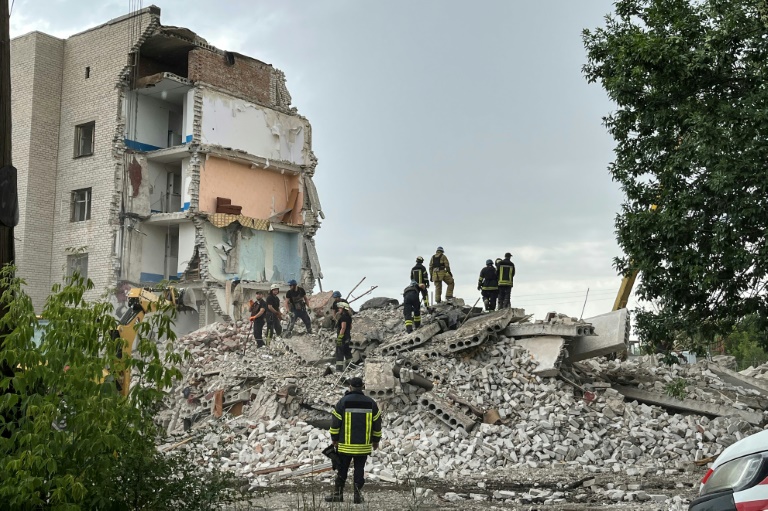
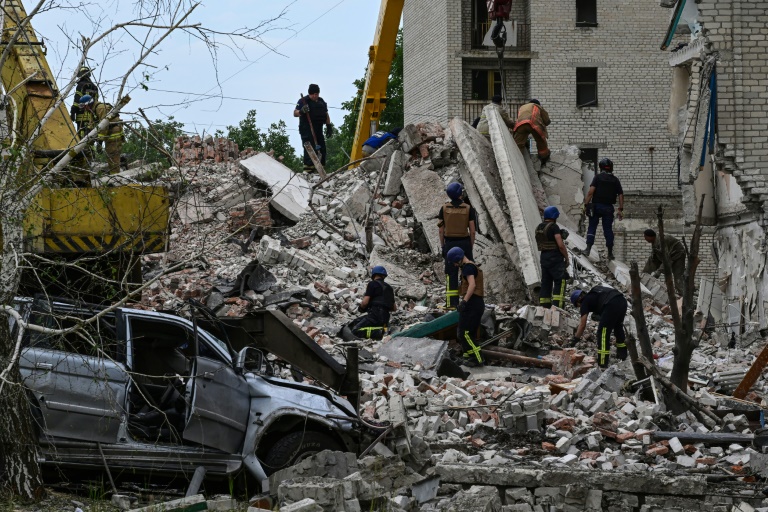
The building was partially destroyed in the strike, AFP correspondents saw at the scene where dozens of rescuers were sifting through the rubble with a mechanical digger.

Rescuers had so far been able to establish contact with three people under the rubble, emergency services said.

Having fought long battles to capture the last areas of the neighbouring region of Lugansk, Russian troops are now turning their focus to Donetsk as they look to take control of the whole Donbas region.

One Chasiv Yar resident, who did not give her name, showed AFP journalists around the wreckage of her apartment.

“Yesterday, 11 or 10 o’clock in the evening, I was in the bedroom, and when I was leaving, everything started thundering and cracking…,” she said.

“The only thing that saved me was when I ran here, because immediately afterwards all of this crashed down.”

Another woman who had ventured inside to see what she could salvage from her apartment retrieved a blue bird, still perched in its cage.

Looking down from her balcony, where her pet had escaped the blast, she lifted up the cage with a brief, triumphant flourish.

Hours earlier, Ukrainian President Volodymyr Zelensky had condemned what he said was Russia’s deliberate shelling of civilian targets.

– ‘Absolutely deliberately’ –

The Donetsk region was under persistent shelling, while Russian ground attacks were all but paused, the Ukrainian army general staff said Sunday.

Ukraine’s forces had hit a Russian base in the occupied southern region of Kherson, they added, without elaborating.

On Saturday, three people were killed and 23 wounded by shelling in Donetsk, governor Kyrylenko said. 

Strikes were also reported in Kharkiv, Ukraine’s second city in the northeast, where a “teaching establishment” and a house were hit, wounding one, according to regional governor Oleg Sinegubov.

Zelensky condemned the widespread Russian bombardments in an address Saturday night.

“In just one day, Russia hit Mykolaiv, Kharkiv, Kryvyi Rih, the communities of the Zaporizhzhia region,” Zelensky said. 

Russian strikes “absolutely deliberately” and “purposefully” targeted the residential sector, hitting “ordinary houses, civilian objects, people”, he said.

“Such terrorist actions can really only be stopped with weapons, modern and powerful,” Zelensky added, thanking the United States for its latest military aid package.

Washington has signed off on a $400-million package, including four additional High Mobility Artillery Rocket Systems to add to eight already in place and high-precision artillery ammunition not previously sent to Ukraine. 

“It’s a further evolution in our support for Ukraine in this battle in the Donbas,” a senior defence official was quoted by the US Department of Defense as saying.

On Sunday, US Secretary of State Antony Blinken said Russia’s restriction on Ukrainian grain exports may have contributed to turmoil in Sri Lanka triggered by severe shortages of food and fuel.

“We’re seeing the impact of this Russian aggression playing out everywhere,” Blinken told reporters in Bangkok.

Renewing a demand that he has made repeatedly, Blinken called on Russia to let an estimated 20 million tonnes of grain leave Ukraine, which Moscow invaded in February.

Russian officials in the eastern Ukrainian region of Kharkiv meanwhile announced the start of the harvest “in the liberated territories of the region”, Russian news agency RIA Novosti announced Sunday.

Ukraine has repeatedly accused Russia of having stolen its wheat harvest in the occupied eastern regions, to illegally sell it on the international market.

– Turbine return –

Russia continued its crackdown on news coverage critical of its conduct in the war, blocking the website of the German daily Die Welt Sunday, the latest in a growing list.

Since the start of the Russian military operation in Ukraine, the German newspaper has published content in Russian.

Canada agreed Saturday to deliver to Germany turbines needed to maintain the Nord Stream 1 gas pipeline, despite sanctions in place against Russia and appeals from Ukraine.

The turbines were undergoing maintenance at a Canadian site owned by German industrial giant Siemens, and Gazprom blamed its absence for cuts to deliveries via the pipeline, raising fears of a gas shortage in Germany.

Canada also announced on Saturday its intention to extend economic sanctions against Russia to industrial manufacturing. 

burs-jj/imm

'Thor' hammers competition at North American box office

Marvel’s latest superhero installment “Thor: Love and Thunder” enjoyed a summer blockbuster debut, hammering competition to top this weekend’s North American box office with an estimated $143 million haul, industry watcher Exhibitor Relations reported Sunday.

“This is another excellent Marvel opening for a series that started in 2011 and has grown with each episode,” said analyst David A. Gross of Franchise Entertainment Research, adding that the film nearly doubled the average take for a 4th episode superhero movie.

The comedic follow-up to 2017’s “Thor: Ragnarok” stars a muscle-clad, self-parodying Chris Hemsworth as the space viking who wields the mallet Mjolnir, but also finds himself pining for his ex-girlfriend Jane Foster (Natalie Portman), whose help he enlists to battle god butcher Gorr (Christian Bale).

Thor easily beat out “Minions: The Rise of Gru,” which slipped to second spot after a phenomenal opening weekend over the July 4th holiday. 

The latest goofy installment in Universal’s animated “Despicable Me” franchise about the reformed super-villain Gru and his yellow Minions took in $45.5 million in the Friday-to-Sunday period.

Holding steady in third was Paramount’s “Top Gun: Maverick,” the crowd-pleasing sequel to the original 1986 film that once again features Tom Cruise as cocky US Navy test pilot Pete “Maverick” Mitchell.

The fighter ace feature, in its seventh week in theaters, has now grossed more than $597 million worldwide.

Baz Luhrmann’s music biopic “Elvis” — starring Austin Butler as the King alongside Tom Hanks as his exploitative manager, Colonel Tom Parker — slipped one spot to fourth in the Warner Bros film’s third weekend of release, at $11 million.

Rounding out the top five was “Jurassic World: Dominion,” Universal’s sixth installment in the “Jurassic Park” franchise, at $8.4 million.

The latest dinosaur frightfest stars Chris Pratt and Bryce Dallas Howard alongside franchise originals Sam Neill, Laura Dern and Jeff Goldblum.

Completing the top 10 were:

“The Black Phone” ($7.6 million)

“Lightyear” ($2.9 million)

“Marcel the Shell with Shoes On” ($340,000)

“Doctor Strange in the Multiverse of Madness” ($262,000)

“Mr Malcolm’s List” ($245,000)

Leaked Uber docs reveal bare-knuckle expansion tactics: investigation

A leaked cache of confidential files from ride-sharing app Uber illustrates ethically dubious and potentially illegal tactics the company used to fuel its frenetic global expansion beginning nearly a decade ago, a joint media investigation showed Sunday.

Dubbed “the Uber files,” the investigation based on 124,000 records and involving dozens of news organizations, found that early in the San Francisco start-up’s history as it looked to conquer new markets, company officials leveraged sometimes violent backlash from the taxi industry against drivers to garner support and evaded regulatory authorities.

Uber in a statement Sunday acknowledged “mistakes,” but laid the blame on previous leadership under former chief executive Travis Kalanick, who was forced to resign in 2017 following revelations accusing him of brutal management practices and multiple episodes of sexual and psychological harassment at the company.

“We’ve moved from an era of confrontation to one of collaboration, demonstrating a willingness to come to the table and find common ground with former opponents, including labor unions and taxi companies,” it said.

The investigation found that as Uber’s subsidized drivers and discounted fares threatened the taxi industry, the company’s drivers faced violent retaliation, including protests in Paris in 2016.

“In some instances, when drivers were attacked, Uber executives pivoted quickly to capitalize” to seek public and regulatory support as it entered new markets, “often without seeking licenses to operate as a taxi and livery service,” reported the Washington Post, one of the media outlets involved in the probe.

Kalanick had called for a counter-protest in Paris and appeared to suggest violence would help the cause in a text to other officials saying, “Violence guarantee success.”

Kalanick denies the findings, with a spokesperson saying he “never suggested that Uber should take advantage of violence at the expense of driver safety” and that he “never authorized any actions or programs that would obstruct justice in any country.”

The investigation also accuses Uber of having worked to evade regulatory investigations by leveraging a technological edge, the Post wrote, describing an instance when Kalanick implemented a “kill switch” to remotely cut off access of devices in an Amsterdam office to Uber’s internal systems as regulators raided.

Another finding, according to the Post, indicated that between 2014 and 2016 Uber found an ally in France’s then-economy minister Emmanuel Macron, now the country’s president, who the company believed would encourage regulators “to be ‘less conservative’ in their interpretation of rules limiting the company’s operations.”

Leaked Uber docs reveal bare-knuckle expansion tactics: investigation

A leaked cache of confidential files from ride-sharing app Uber illustrates ethically dubious and potentially illegal tactics the company used to fuel its frenetic global expansion beginning nearly a decade ago, a joint media investigation showed Sunday.

Dubbed “the Uber files,” the investigation based on 124,000 records and involving dozens of news organizations, found that early in the San Francisco start-up’s history as it looked to conquer new markets, company officials leveraged sometimes violent backlash from the taxi industry against drivers to garner support and evaded regulatory authorities.

Uber in a statement Sunday acknowledged “mistakes,” but laid the blame on previous leadership under former chief executive Travis Kalanick, who was forced to resign in 2017 following revelations accusing him of brutal management practices and multiple episodes of sexual and psychological harassment at the company.

“We’ve moved from an era of confrontation to one of collaboration, demonstrating a willingness to come to the table and find common ground with former opponents, including labor unions and taxi companies,” it said.

The investigation found that as Uber’s subsidized drivers and discounted fares threatened the taxi industry, the company’s drivers faced violent retaliation, including protests in Paris in 2016.

“In some instances, when drivers were attacked, Uber executives pivoted quickly to capitalize” to seek public and regulatory support as it entered new markets, “often without seeking licenses to operate as a taxi and livery service,” reported the Washington Post, one of the media outlets involved in the probe.

Kalanick had called for a counter-protest in Paris and appeared to suggest violence would help the cause in a text to other officials saying, “Violence guarantee success.”

Kalanick denies the findings, with a spokesperson saying he “never suggested that Uber should take advantage of violence at the expense of driver safety” and that he “never authorized any actions or programs that would obstruct justice in any country.”

The investigation also accuses Uber of having worked to evade regulatory investigations by leveraging a technological edge, the Post wrote, describing an instance when Kalanick implemented a “kill switch” to remotely cut off access of devices in an Amsterdam office to Uber’s internal systems as regulators raided.

Another finding, according to the Post, indicated that between 2014 and 2016 Uber found an ally in France’s then-economy minister Emmanuel Macron, now the country’s president, who the company believed would encourage regulators “to be ‘less conservative’ in their interpretation of rules limiting the company’s operations.”

Russian shelling in east Ukraine kills at least 15

A Russian missile struck an apartment building in eastern Ukraine Sunday, killing at least 15 people as Moscow’s forces sought to consolidate their control over the Donbas region. 

“During the rescue operation, 15 bodies were found at the scene and five people were pulled out of the rubble” alive in the town of Chasiv Yar, the local emergency service said on Facebook.

“At least 30 others are under the rubble” of the four-storey building after it was hit by a Russian Uragan missile, Donetsk regional governor Pavlo Kyrylenko said earlier on Telegram.

The building was partially destroyed in the strike, AFP correspondents saw at the scene where dozens of rescuers were sifting through the rubble with a mechanical digger.

Rescuers had so far been able to establish contact with three people under the rubble, emergency services said.

Having fought long battles to capture the last areas of the neighbouring region of Lugansk, Russian troops are now turning their focus to Donetsk as they look to take control of the whole Donbas region.

One Chasiv Yar resident, who did not give her name, showed AFP journalists around the wreckage of her apartment.

“Yesterday, 11 or 10 o’clock in the evening, I was in the bedroom, and when I was leaving, everything started thundering and cracking…,” she said.

“The only thing that saved me was when I ran here, because immediately afterwards all of this crashed down.”

Another woman who had ventured inside to see what she could salvage from her apartment retrieved a blue bird, still perched in its cage.

Looking down from her balcony, where her pet had escaped the blast, she lifted up the cage with a brief, triumphant flourish.

Hours earlier, Ukrainian President Volodymyr Zelensky had condemned what he said was Russia’s deliberate shelling of civilian targets.

– ‘Absolutely deliberately’ –

The Donetsk region was under persistent shelling, while Russian ground attacks were all but paused, the Ukrainian army general staff said Sunday.

Ukraine’s forces had hit a Russian base in the occupied southern region of Kherson, they added, without elaborating.

On Saturday, three people were killed and 23 wounded by shelling in Donetsk, governor Kyrylenko said. 

Strikes were also reported in Kharkiv, Ukraine’s second city in the northeast, where a “teaching establishment” and a house were hit, wounding one, according to regional governor Oleg Sinegubov.

Zelensky condemned the widespread Russian bombardments in an address Saturday night.

“In just one day, Russia hit Mykolaiv, Kharkiv, Kryvyi Rih, the communities of the Zaporizhzhia region,” Zelensky said. 

Russian strikes “absolutely deliberately” and “purposefully” targeted the residential sector, hitting “ordinary houses, civilian objects, people”, he said.

“Such terrorist actions can really only be stopped with weapons, modern and powerful,” Zelensky added, thanking the United States for its latest military aid package.

Washington has signed off on a $400-million package, including four additional High Mobility Artillery Rocket Systems to add to eight already in place and high-precision artillery ammunition not previously sent to Ukraine. 

“It’s a further evolution in our support for Ukraine in this battle in the Donbas,” a senior defence official was quoted by the US Department of Defense as saying.

On Sunday, US Secretary of State Antony Blinken said Russia’s restriction on Ukrainian grain exports may have contributed to turmoil in Sri Lanka triggered by severe shortages of food and fuel.

“We’re seeing the impact of this Russian aggression playing out everywhere,” Blinken told reporters in Bangkok.

Renewing a demand that he has made repeatedly, Blinken called on Russia to let an estimated 20 million tonnes of grain leave Ukraine, which Moscow invaded in February.

Russian officials in the eastern Ukrainian region of Kharkiv meanwhile announced the start of the harvest “in the liberated territories of the region”, Russian news agency RIA Novosti announced Sunday.

Ukraine has repeatedly accused Russia of having stolen its wheat harvest in the occupied eastern regions, to illegally sell it on the international market.

– Turbine return –

Canada agreed Saturday to deliver to Germany turbines needed to maintain the Nord Stream 1 gas pipeline, despite sanctions against Russia.

Ukraine had urged Canada not to return the turbines, undergoing maintenance at a Canadian site owned by German industrial giant Siemens.

Gazprom reduced deliveries via the pipeline, blaming that on the delayed return of the components and raising fears of a gas shortage in Germany.

Canada would “grant a time-limited and revocable permit for Siemens Canada to allow the return of repaired Nord Stream 1 turbines”, said Natural Resources Minister Jonathan Wilkinson.

Canada also announced on Saturday its intention to extend economic sanctions against Russia to industrial manufacturing. 

burs-jj/imm

Russian shelling in east Ukraine kills at least 15

A Russian missile struck an apartment building in eastern Ukraine on Sunday, killing at least 15 people as Moscow’s forces sought to consolidate their control over the Donbas region. 

“During the rescue operation, 15 bodies were found at the scene and five people were pulled out of the rubble” alive in the town of Chasiv Yar, the local branch of the Ukrainian emergency service said on Facebook.

“At least 30 others are under the rubble” of the four-storey after it was hit by a Russian Uragan missile, Donetsk regional governor Pavlo Kyrylenko said earlier on Telegram.

The building was partially destroyed in the strike, AFP correspondents saw at the scene where rescuers were sifting through the rubble with a mechanical digger.

Rescuers had so far been able to establish contact with three people under the rubble, emergency services said.

Having fought long battles to capture the last areas of the neighbouring region of Lugansk, Russian troops are now turning their focus to Donetsk as they look to take control of the whole Donbas region.

“I was in the bedroom, I came out and everything started shaking, collapsing,” a Chasiv Yar resident who did not wish to give her name told AFP.

“What saved me was the force of the explosion pushing me into the bathroom, covered in blood. I barely got out,” she said.

– ‘Absolutely deliberately’ –

The Donetsk region was under persistent shelling, while Russian ground attacks were all but paused, the Ukrainian army general staff said Sunday.

On Saturday, three people were killed and a further 23 injured by shelling in Donetsk, governor Kyrylenko said. 

Strikes were also reported in Kharkiv, Ukraine’s second city in the northeast, where a “teaching establishment” and a house were hit, injuring one, according to regional governor Oleg Sinegubov.

Ukrainian President Volodymyr Zelensky condemned the widespread Russian bombardments in an address Saturday night.

“In just one day, Russia hit Mykolaiv, Kharkiv, Kryvyi Rig, the communities of the Zaporizhzhia region,” Zelensky said. 

Russian strikes “absolutely deliberately” and “purposefully” targeted the residential sector, hitting “ordinary houses, civilian objects, people”, he said.

“Such terrorist actions can really only be stopped with weapons, modern and powerful,” Zelensky added, thanking the United States for its latest military aid package.

In a boost to Kyiv, Washington has signed off on a $400 million package, including four additional High Mobility Artillery Rocket Systems to add to eight already in place and high-precision artillery ammunition not previously sent to Ukraine. 

“It’s a further evolution in our support for Ukraine in this battle in the Donbas,” a senior defence official was quoted by the US Department of Defense as saying.

On Sunday, US Secretary of State Antony Blinken said Russia’s restriction on Ukrainian grain exports may have contributed to  turmoil in Sri Lanka triggered by severe shortages of food and fuel.

“We’re seeing the impact of this Russian aggression playing out everywhere,” Blinken told reporters in Bangkok.

Renewing a demand that he has made repeatedly, Blinken called on Russia to let an estimated 20 million tonnes of grain leave Ukraine, which Moscow invaded in February. 

– Turbine return –

On Saturday, Canada agreed to deliver to Germany turbines needed to maintain the Nord Stream 1 gas pipeline, despite sanctions against Russia.

Ukraine had urged Canada not to return the turbines, currently undergoing maintenance at a Canadian site owned by German industrial giant Siemens.

Gazprom reduced deliveries via the pipeline, putting the move down to the delayed return of the components and raising fears of a gas shortage in Germany.

Canada would “grant a time-limited and revocable permit for Siemens Canada to allow the return of repaired Nord Stream 1 turbines”, said Natural Resources Minister Jonathan Wilkinson.

The Canadian minister also accused Russian President Vladimir Putin of wanting to “sow division” among Western allies by squeezing supplies.

In addition, Canada announced on Saturday its intention to extend its economic sanctions against Russia to industrial manufacturing. 

“These new sanctions will apply to land and pipeline transport and the manufacturing of metals and of transport, computer, electronic and electrical equipment, as well as of machinery,” Foreign Minister Melanie Joly said in a statement.

burs-sea/bp

Fixing the UK's wealth divide: flagship policy veers off-track

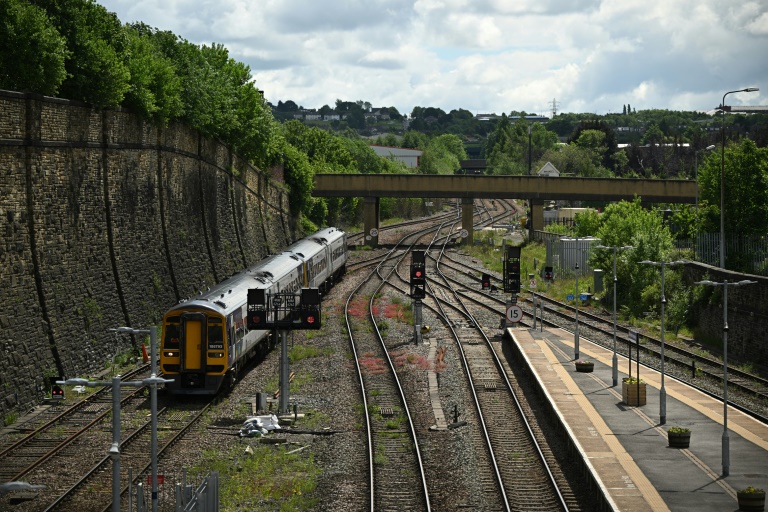
Every 10 to 20 minutes a train rolls into Bradford’s main station. On the platform, the driver then gets out and walks to the other end of the carriages before continuing the journey.

The time-consuming routine occurs daily because Bradford — England’s sixth biggest city — has no through-station, forcing trains to reverse to continue along the line.

Regional leaders have long demanded a solution to shortcomings in infrastructure like this one, which highlight the wealth gap between places in the north like Bradford and more affluent areas in the south.

When Prime Minister Boris Johnson won a landslide election in 2019 vowing to “level up” places like Bradford, it appeared poised to happen.

But two years later his government announced rail modernisation plans without the planned through-station on a proposed high-speed line between nearby Manchester and Leeds — disappointing locals.

More modest upgrades were approved instead.

It fuelled suspicions Johnson could not be trusted over the pledge.

“I was just really disappointed,” said Mandy Ridyard, finance director at Produmax, a Bradford-based aerospace engineering firm eager for better connectivity to attract workers.

“We’re asking for what the rest of Europe and the south (of England) expect,” she told AFP.

“We’re trying to catch up. So not investing… is madness really because there’s such an opportunity.”

– Short-changed –

In 2019, Johnson’s “levelling up” pledge helped his Conservatives win in more deprived, post-industrial parts of central and northern England traditionally held by the main opposition Labour party.

But critics argue there has been little tangible progress since, with some analyses showing the situation worsening.

Fresh doubt was sown this week when Johnson sacked the minister in charge of delivering the policy, before himself quitting as ruling party leader.

Mike Cartwright, of West Yorkshire’s chamber of commerce, called “levelling up” a “wonderful catchphrase or slogan” — but said there was a lack of material action.

A much-anticipated government policy paper last year was a “missed opportunity” and the region felt “short-changed” so far, he said, praising the ambition but emphasising the importance of outcomes.

The Labour leader of the city council, Susan Hinchcliffe, agreed, saying investment in places like Bradford was key “if levelling up is to mean anything”.

– ‘Forgotten’ –

Bradford and surrounding towns have received some extra resources, including “levelling up funds” and being designated an “education investment area”.

The wider West Yorkshire region also got its own directly elected mayor last year and is set for further devolution.

But as London in May saw the opening of a new £18.9 billion ($22.7 billion) cross-city rail line, Bradford locals are furious at their cancelled project.

“It just felt a bit like we’ve got forgotten about again,” said Josie Barlow, a food bank manager who received a levelling up grant to help buy the building it operates from.

She added they were “really grateful” for the £225,000 but that the city needed bigger infrastructure investment.

Bradford — once a wool-producing powerhouse — is now the fifth most income-deprived city nationwide, the government’s last poverty index in 2019 showed.

– ‘Squalor’ –

In Redcar, 70 miles (110 kilometres) northeast of Bradford, levelling up funds have helped refurbish housing previously plagued by crime.

Clare Harrigan, development director of Beyond Housing, which rents out many of the low-rise properties, called the £711,000 grant “the green shoots” of levelling up. 

“This is just an example of where it has made a difference,” she told AFP.

Sandra Cottrell, 64, who has lived in the Church Lane Estate for decades, said it had become “a mess”, and the wider region had been neglected by successive governments.

“We were living in squalor until all this started,” she said, as workers fitted insulation and landscaped the grounds.

Despite the new investment, and ambitious plans to turn the nearby Teesside Steelworks into a hub for industries including offshore wind, Cottrell is sceptical of Johnson’s lofty aims.

“I don’t believe anything he says,” she told AFP, mirroring countless polls showing most Britons now mistrust him after lockdown-breaking parties at Downing Street. 

“I just think he talks a load of rubbish.”

Johnson will soon be talking as a former prime minister. Whether his signature policy lives on remains to be seen.

jj/phz/jit/gw

Levelling up the UK: 'I'll believe it when I see it'

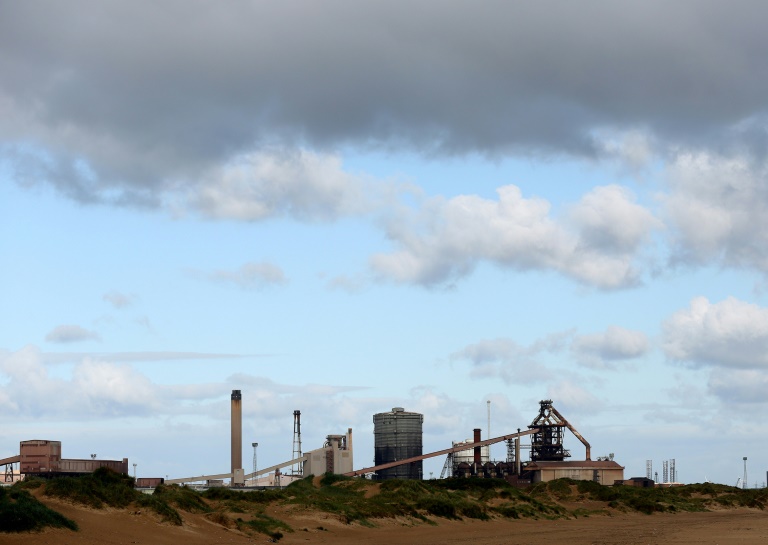
In Redcar, northeast England, the remnants of the nearby Teesside Steelworks are an enduring sign of the town’s proud former place at the heart of industrial Britain.

The plant — once one of the country’s largest — is a forlorn reminder of when its metal was used all over the world, including for the Sydney Harbour Bridge.

As prime minister, Boris Johnson vowed to bring long-neglected post-industrial areas level with other, more prosperous places.

But people in Redcar and elsewhere have long memories — and faint hopes for success.

“When the steelworks went down it was just awful,” said Sandra Cottrell, 64, who has seen the complex’s gradual demise from her home on the Church Lane Estate, a public housing complex.

“My son and everybody worked there… (he) had only ever known working in the steelworks, then he had to go work in Manchester,” a drive of two and half hours away, she told AFP.

Cottrell said Redcar’s town centre, where many shops have either shut or been turned into charity or discount stores, sums up its demise.

Yet there are tentative signs of renewal.

Work is progressing to regenerate the housing estate — which had earned a reputation locally for crime, poverty and neglect — paid for in part by Johnson’s flagship “levelling up” agenda.

“It’s what we need round here. I just think that we got left out a bit, but they’re sort of on to us now,” said Cottrell’s neighbour Cath Smith, 60.

Smith has lived on the estate since her teens and remembers its better days. 

“Everybody worked,” she said of the area’s 1970s heyday, when state-owned British Steel employed her father and most other local men.

The firm was privatised in 1988, and the steelworks gradually declined under the ownership of several successive companies.

Governments since were blamed for failing to help replace the thousands of lost jobs.

“They haven’t bothered,” Smith added. “It’s as if we didn’t exist.”

Neither neighbour was convinced that places like Redcar can bounce back under Johnson’s plans.

– ‘Forgotten’ –

In Bradford, some 70 miles (112 kilometres) to the southwest, it’s a similar story but involves the loss of the once-mighty woollen industry.

“When I was a young girl, it was just fantastic,” Judith Holmes, 69, said near the 19th-century Venetian Gothic-style town hall and landmark clock tower which dominate the city centre.

“Trade, woollen… every shop was open. It was thriving… it was buzzing, it was fabulous, absolutely fabulous.

“But it just seems to have gone downhill these last few years, unfortunately.”

The city — the sixth biggest in England, with one of the youngest populations in Europe and set to be the UK “city of culture” in 2025 — also suffers from some of its most persistent deprivation and unemployment issues.

“I do think Bradford’s been forgotten, definitely,” said Holmes, echoing her contemporaries in Redcar. 

“We’ve had a lot of promises and it’s never come through. 

“It’ll take a lot to bring it back. I think they could do it, but they need to start doing it now, rather than saying maybe and they plough money here and there.”

A one-time Royal Mail postal service employee in its former city centre hub, Holmes now cleans an office twice a week to get by.

Holmes is sceptical that Johnson and the government truly understand the daily struggle of those caught up in the city’s decline.

“I’ll believe it when I see it,” she said of the transformation promises, now in jeopardy with Johnson’s looming departure. 

“I might not see it at my age. But I hope it comes for everybody else, for my grandchildren. Hopefully it’ll be a brighter future for them.” 

More means less for Zimbabweans battling hyperinflation

With runaway inflation eating into incomes, staple foods have vanished from the tables of Zimbabweans like Emina Chishangwe, who lives in a poor dormitory town south of the capital Harare.

“I can’t remember the last time I ate meat. It has become a luxury for some of us,” said the 57-year-old single mother of two adult sons.

Zimbabwe has the highest inflation rate in the world, according to Steve Hanke, a professor of Applied Economics at Johns Hopkins University, who believes it can only be remedied by the full adoption of the US dollar. 

The situation has quickly worsened this year as the Russian invasion of Ukraine compounded with black market foreign exchange has depleted the value of the Zimbabwe dollar.

“The parallel market is to blame to a large degree for the spiralling inflation,” AgriBank chief economist Joseph Mverecha told AFP.

Zimbabwe’s economy has been on a downturn for nearly two decades, marked by shortages of cash and food. 

Distrust has led people to exchange their cash for US dollars, further driving down the local currency.

Inflation soared to 191.6 percent in June, up from 60 percent at the beginning of the year, driving prices of goods ever upwards. 

The rate dwarfs even the 41 percent inflation in war-torn Ukraine.

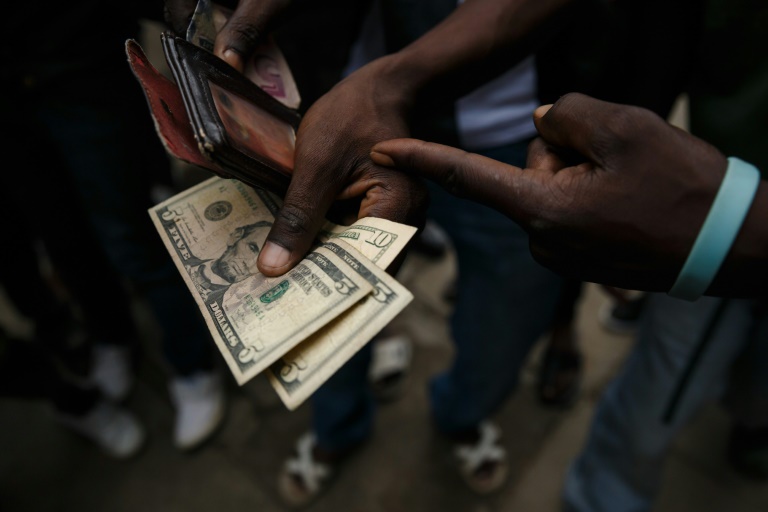
A kilo of choice beef now costs ZWL8,768 ($21.92) and five kilos of chicken drumsticks ZWL21,000 (US$65.22) — the equivalent to a civil servant’s average monthly salary.

Chishangwe, who runs a vegetable stall in Chitungwiza town, and her sons have two meals a day instead of three, usually a thick cornmeal porridge called sadza and kale or tiny dried sardines.

– ‘Anguish’ –

Rising fuel prices forced Edwin Matsvai to downgrade from a fuel-guzzling Toyota Land Cruiser to a more economic Honda Fit.

“My friends made jokes about me ‘stepping down’ when I made the change but now some of them are considering following suit,” said Matsvai, a car salesman.

Petrol rose to US$1.77 per litre this month from US$1.41 in January.

Zimbabweans endured and survived some of the worst hardships of 2008 when hyperinflation saw the central bank mint a one-trillion-dollar note.

Growing discrepancies between incomes and cost of living, forcing people to make tough decisions of how and where they live, is taking a toll on mental health, according to specialist psychiatrist Isabel Chinoperekwei. 

“I see many of them coming with depression, anxiety disorder and also alcohol abuse,” said Chinoperekwei, who has a private practice in Harare. 

It’s not just working professionals feeling the anguish. 

“I have seen adolescents who have changed schools because their parents could no longer afford the schools they were going to,” Chinoperekwei said. “They find it hard to cope.”

Many blame the country’s leaders. 

“The old men have failed us,” said Matsvai, referring to the government. “If they don’t act swiftly and fix the economy, it will cost them in next year’s general elections.”

Already in the March by-elections, the long-ruling Zanu-PF party lost to the opposition Citizens’ Coalition for Change (CCC) which was formed barely three months earlier.

The southern African nation is due to hold general elections in 2023. 

– ‘Hand to mouth’ –

Analysts say the current political and economic landscape now mirrors the crisis leading into the 2008 election, which saw ex-ruler Robert Mugabe nearly fall from power.

“People who are earning starvation wages, those without jobs and all those who are feeling the pinch of the rising cost of living have lost faith in Zanu-PF,” said Takavafira Zhou, a political scientist at Masvingo State University.

“The only hope lies in a new government that will give (the public) reprieve.”

Zanu-PF has been in power since 1980, when British colonial rule ended. Current president Emmerson Mnangagwa took over from Mugabe in a 2017 military coup, pledging to fix the moribund economy he inherited. 

The risk of losing power in upcoming polls is now pushing Zanu-PF to “frantic measures” to halt price hikes that have plunged millions into deeper poverty, said economist Prosper Chitambara.

“The world over, no ruling party is expected to do well in an environment of chronic high inflation,” said Chitambara, of the think-tank Labour and Economic Development Research Institute of Zimbabwe.

Last month Finance Minister Mthuli Ncube announced a raft of monetary policies including maintaining the dual use of the US dollar, adopted after the 2008 hyperinflation, and the Zimbabwe dollar reintroduced in 2019.

Minimum interest rates more than doubled to 200 percent last week. 

The country is also introducing gold coins “as a store of value” starting July 25.

But those are for the rich.

“The ordinary citizens, those who are struggling and living from hand to mouth are not going to afford it,” said Chitambara.

Musk's hyperloop still captivates despite decade of setbacks

A decade ago, Elon Musk proposed a new form of transport that would shoot passengers through vacuum tunnels in levitating pods at almost the speed of sound — he called it “hyperloop”. 

Since then, cities from Abu Dhabi to Zurich have been touted as destinations, research projects have gobbled up millions of dollars and a host of commercial ventures have sprung up — even Richard Branson got involved.

“The transportation network has not had a new mode for over 100 years,” said Rick Geddes, a transport infrastructure expert at Cornell University in the United States, who compared the excitement to the early days of aviation.

But nobody has come close to making the hyperloop work.

The difficulties have ranged from costs and finding suitable locations, to simply persuading people that travelling through a narrow tunnel at speeds faster than a jet plane is a good idea.

Musk’s initial proposal would have been a “barf ride”, transport blogger Alon Levy wrote at the time.

Despite all the problems, though, the hyperloop idea still energises university campuses, corporate board rooms and city halls across the world.

Hidde de Bos, a 22-year-old engineering student, first heard of it four years ago.

His university at Delft in the Netherlands excelled in competitions run by Musk’s SpaceX firm, which invited students to develop pods to fire through vacuum tunnels.

– Musk returns –

“It made me really excited to see what the possibilities were,” he told AFP.

He is now chief engineer of Delft Hyperloop, a non-profit university spin-off.

De Bos said the SpaceX competitions, which were discontinued in 2019, were too focused on speed and became like “drag races in a tunnel”.

Now, his team is taking part in a student-led competition, European Hyperloop Week, which he hopes will refocus on sustainable energy and developing levitation systems.

And Musk himself recently gave a jolt to the hyperloop fraternity by tweeting that his tunnelling firm The Boring Company would “attempt to build a working Hyperloop” in the coming years.

Musk first mentioned the idea in a 2012 media interview before publishing a white paper about it a year later.

But his direct involvement has been sporadic, and he has always encouraged others to develop the idea.

Los Angeles-based firm Hyperloop TT, among the first and most enthusiastic firms to run with Musk’s idea, welcomed his return.

Rob Miller, the firm’s chief marketing officer, told AFP it was “further validation” for the concept.

– ‘More cautious’ –

But he stressed that hyperloop was now much bigger than just one man.

Bearing out his point, new proposals have emerged in recent months from local authorities ranging from Italy to India.

However, proposals are one thing, and revolutionising public transport is quite another.

In its early years, Hyperloop TT signed exploratory deals in India, China and beyond.

In 2019, the firm promised a 10-kilometre (six-mile) track would open in the UAE the following year.

None of these projects has come to fruition.

“We’re a little more cautious now about those types of announcements,” said Miller. 

Virgin Hyperloop, a firm briefly helmed by Richard Branson but majority-owned by DP World, which runs Dubai’s ports, has also had to scale back its promises.

– Prestige vs price –

It was the first company to fire humans along a hyperloop test track back in 2020. 

Branson had mooted a 45-minute journey between London and Scotland.

But Virgin Hyperloop recently abandoned the idea of carrying passengers altogether, shed half its staff and is now focused on a potential freight line in UAE.

Musk has also promised various hyperloop projects that failed to materialise.

Virgin Hyperloop and The Boring Company did not respond to AFP requests for comment. 

Critic Alon Levy says the hyperloop is caught between unrealistic prestige projects across short distances and longer routes that cost too much.

The Abu Dhabi-Dubai route promised by Hyperloop TT is just 130 kilometres, “not even a distance for high-speed rail”, he said.

But potential routes like New York to Miami or Chicago would need around $50 billion just to get started, Levy reckons.

– ‘Bring it to life’ –

“You don’t get that from private investors,” he told AFP.

Levy does see one ray of light — newer designs featuring longer bends seem to have resolved the “barf” problem.

And enthusiasts still radiate positivity.

“We’ll keep doing what we’re doing and we’ll bring it to life,” said Miller.

But he conceded his firm had been “overly optimistic about timelines”.

He now predicts the first city-to-city track within five years but won’t divulge the location.

Geddes is also optimistic about the future, though he also reflected that past promises weighed heavy.

“We used to say five to 10 years,” he said. “That was five years ago. Maybe it’s five to 10 years now.”

Close Bitnami banner
Bitnami