US Business

Hot water wells in Hungary fuel switch from Russian gas

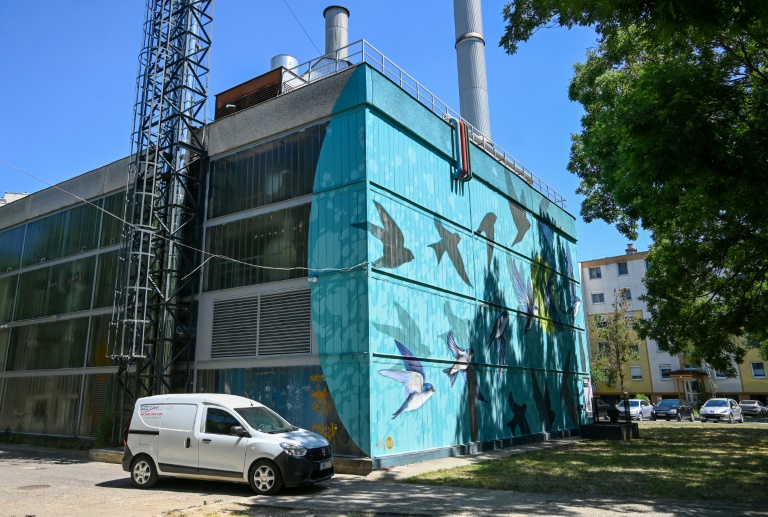
At plants painted with birds and hedgehogs, hot water from deep underground is being channelled to produce energy and heat for thousands of households in Hungary’s third largest city Szeged.

Experts say the project — billed as Europe’s biggest urban heating system overhaul — can serve as a model for other cities across the continent as EU nations scramble to wean themselves off Russian gas after Moscow’s invasion of Ukraine.

“Geothermal energy is local, accessible and renewable so why not use it,” geologist Tamas Medgyes told AFP beside a recently completed well in the middle of a residential neighbourhood.

The city of 160,000 people, located some 170 kilometres (110 miles) south of Budapest, is one of 12 in the landlocked central European country with geothermal district heating.

When the system is fully built out next year, 27 wells and 16 heating plants will push geothermally heated water through 250 kilometres of pipes to heat 27,000 flats and 400 non-residential consumers. 

– ‘Blueprint’ –

This will make it Europe’s biggest geothermal urban heating system outside of Iceland.

But unlike in the Icelandic capital, Szeged’s heating systems were built to run on gas. 

EU member Hungary covers 65 percent of its oil needs and 80 percent of its gas needs with imports from Russia.

“This housing project was built in the 1980s. Since then we have burnt millions of cubic metres of imported Russian gas to heat cold water in these apartments,” Medgyes said. 

But now, “we drilled down and got the hot water beneath our feet,” he said about the project, whose cost of more than 50 million euros ($51 million) is partially covered by EU funds.

He added the project can be a “blueprint” for cities in parts of France, Germany, Italy or Slovakia that are rich in geothermal deposits.

Experts says geothermal energy is an underutilised source of renewable heat in Europe. 

“The geothermal urban heating development in Szeged is an easy-to-adopt example in many regions of Europe,” said Ladislaus Rybach, an expert at the Institute of Geophysics in Zurich, Switzerland.

Lajos Kerekes of the Regional Centre of Energy Policy Research told AFP that more than 25 percent of the EU’s population lives in areas suitable for geothermal district heating.

Long before the Ukraine war, Balazs Kobor, director at Szeged heating firm Szetav, began exploring how cities can use geothermal energy and “knocking on doors of decision-makers”. 

In 2015, the city municipality appointed him and Medgyes to initiate the integration of renewables into district heating.

“To heat the city annually the firm was burning 30 million cubic metres of gas and producing around 55,000 tonnes of carbon emissions every year,” said Kobor. 

“The city itself was its biggest carbon emitter,” he added. 

Replacing gas by geothermal energy will slash the city’s greenhouse gas emissions by 60 percent — around 35,000 tonnes — annually, according to Kobor.

If similar small-to-medium-sized cities switched their district heating to geothermal it would be “a major step towards a carbon neutral, sustainable Europe,” he said.

– 2,000 metres below ground –

Surrounded by the Carpathian and Alps mountain ranges, Hungary and especially the area around Szeged forms a basin where 92-93 degree Celsius (198-199 degree Fahrenheit) hot water collects as deep as 2,000 metres (6,600 feet) below ground. 

In facilities adjacent to the wells, “heat exchangers” comprising hundreds of metal panels transfer the heat to water in pipeline circuits that serve different neighbourhoods. 

The geothermal water itself does not enter the circuits but re-enters the earth through a “reinjection” well nearby, explained Medgyes. 

In another neighbourhood, a noisy drill is gradually working its way deeper and deeper into the ground, adding sections of pipe as it goes.

The drilling period takes around three months, said Medgyes.  

And while residents can see and hear the drills as they work, after the work is done, they don’t notice the change of heat source in their homes.  

“The radiators and tap water are as warm as before. I don’t feel any difference,” Gabriella Maar Pallo, a 50-year-old clerk, told AFP in her nearby apartment. 
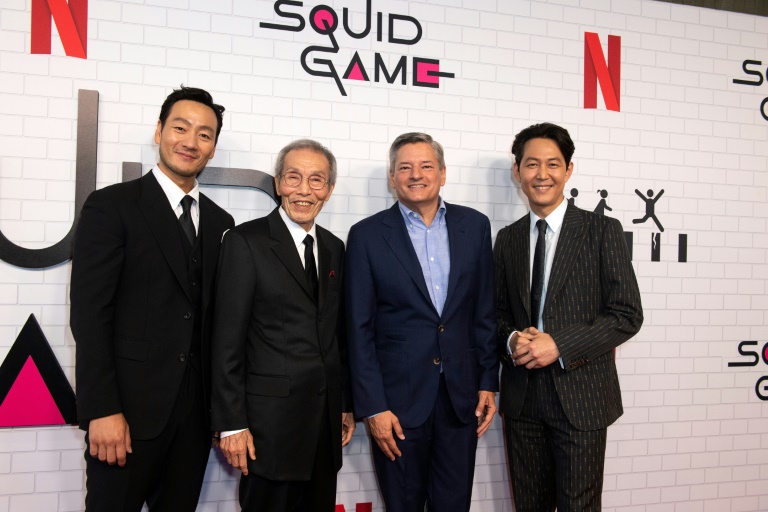
Emmy nominations to be revealed as 'Squid Game' eyes history

This year’s Emmy contenders will be unveiled Tuesday, with “Squid Game” tipped to become the first non-English-language drama series ever nominated at television’s equivalent of the Oscars.

Netflix’s dystopian South Korean smash hit is expected to compete with returning heavy hitters such as HBO’s “Succession,” as TV productions delayed by early-pandemic lockdowns returned to our screens.

Nominees will be announced in a live-streamed ceremony starting at 1530 GMT, after which final-round voting begins for the 74th Emmy Awards, set for September 12.

Here are five things to look out for as the nominations are unveiled:

– ‘One-inch barrier’ no more? –

Three years ago, South Korean film “Parasite” won best picture at the Oscars, overcoming what its director Bong Joon-ho called the “one-inch barrier of subtitles.”

Could this be the year television does the same?

“Squid Game,” a violent satire in which society’s marginalized compete for cash in fatal versions of children’s games, is Netflix’s most-watched series ever.

“It’s formidable,” said Deadline awards columnist Pete Hammond. 

“I’d be surprised if it’s not among the two or three top vote-getters in terms of nominations.”

Also shot largely in Korean is Apple TV+’s acclaimed series “Pachinko.”

A separate International Emmys ceremony has been held since 1973, but no foreign-language show has ever broken into the prestigious Primetime Emmys drama ranks.

– Crowded drama, comedy fields –

The total number of dramas and comedies competing for Emmys this year is much higher than it was last year, when the pandemic delayed production of many award-winning shows.

After skipping a year, 2020 best drama winner “Succession” — the saga of a powerful, backstabbing family — returns in drama, as do Netflix’s crime series “Ozark” and AMC’s spin-off “Better Call Saul.”

In comedy, Amazon Prime’s former winner “The Marvelous Mrs Maisel” — about a 1950s housewife-turned-comedian — and HBO’s Bill Hader vehicle “Barry” both come back.

They will collide with last year’s big winner “Ted Lasso,” — following the uplifting antics of an out-of-his-depth soccer coach — and the acclaimed second season of Jean Smart’s “Hacks.”

– Can ‘Yellowstone’ rope in voters? –

Soapy neo-Western “Yellowstone” — which stars Kevin Costner and racked up 11 million views for its fourth season premiere — is an undeniable juggernaut.

But it has only ever earned one Emmy nomination, in a minor technical category.

Voters may have been put off by its slot on Paramount’s relatively small cable network, or its ostensible conservative leanings — though the show has recently gripped the more liberal US coasts as well.

“We’ll see if pure popularity plays in this race this year,” said Hammond.

“If it does, ‘Yellowstone’ will have its day in the sun. It’s watched everywhere. We’ll see if it’s being watched by the Television Academy.”

– High hopes for Hulu –

HBO and Netflix tend to dominate the nominations, but 2022 could be a banner year for Disney-owned Hulu.

The US-only streamer, specializing in more adult-oriented content than Disney+, creates originals such as 2017 drama winner “The Handmaid’s Tale,” and has been ramping up production.

This year, it has limited series frontrunner “Dopesick,” in which Michael Keaton plays a doctor embroiled in the US opioid epidemic.

In the same category, Amanda Seyfried plays disgraced biotech star Elizabeth Holmes in “The Dropout,” and “Pam and Tommy” recounts the theft of Pamela Anderson and Tommy Lee’s infamous 1990s sex tape.

Comedy “Only Murders in the Building,” starring Selena Gomez, Steve Martin and Martin Short as an unlikely trio of true-crime podcasters, is also tipped to rack up nominations for Hulu.

– Limited slots for limited series – 

Once the neglected distant cousin of drama and comedy, the limited series category at the Emmys becomes more competitive and stuffed with quality each year.

Alongside Hulu’s contenders, HBO’s “The White Lotus” — a satirical look at hypocrisy and wealth among the visitors to a luxury Hawaii hotel — is wildly popular, while Netflix offers heartbreaking domestic abuse saga “Maid.”

Despite the wealth of riches, limited series categories typically offer just five nomination slots, compared to eight in drama and comedy.

“They need to change the rules,” said Hammond.

“It’s the strongest area of the Emmys, and this year is no exception.”

Biden aims to 'strengthen a strategic partnership' with Saudi Arabia

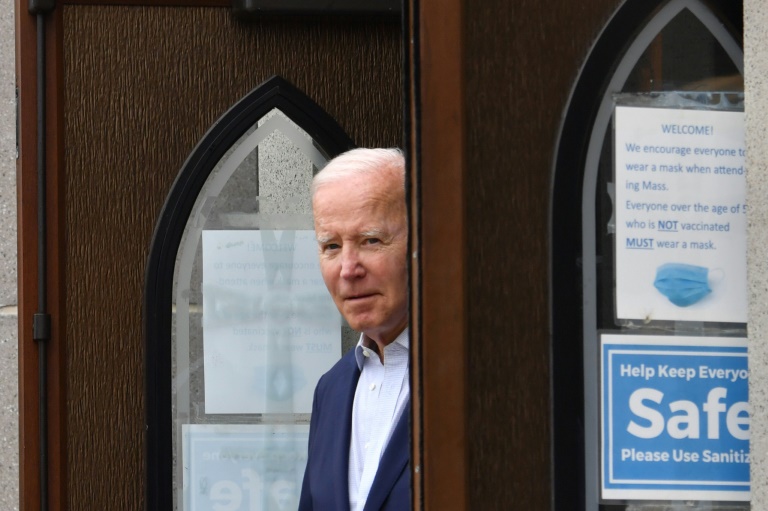
US President Joe Biden said Saturday he aims to “strengthen a strategic partnership” with Saudi Arabia during a controversial visit there next week, but added that he will hold true to “fundamental American values.”

“I know that there are many who disagree with my decision to travel to Saudi Arabia. My views on human rights are clear and long-standing, and fundamental freedoms are always on the agenda when I travel abroad, as they will be during this trip,” Biden wrote in a Washington Post opinion piece published Saturday.

While Biden is expected to press for increased Saudi oil production in the hope of taming spiraling fuel costs and inflation at home, his visit signals a shift: an apparent abandoning of efforts to ostracize the kingdom’s de facto leader, Crown Prince Mohammed bin Salman, over the horrific murder of a dissident.

As a presidential candidate, Biden said the 2018 murder and dismemberment of Jamal Khashoggi — a Saudi-born US resident known for writing critical articles about the kingdom’s rulers for The Washington Post — had made the country a “pariah.”

US intelligence findings released by the Biden administration identified bin Salman, often referred to as MBS, as mastermind of the operation.

Last month Biden had sought to distance himself from the upcoming encounter, stressing to reporters he was going to meet with King Salman and his team.

But the White House confirmed earlier this week that he will meet MBS as part of that larger delegation during the trip. 

“As president, it is my job to keep our country strong and secure,” the US leader wrote Saturday in the Washington Post.

“We have to counter Russia’s aggression, put ourselves in the best possible position to outcompete China, and work for greater stability in a consequential region of the world,” he continued.

“To do these things, we have to engage directly with countries that can impact those outcomes. Saudi Arabia is one of them, and when I meet with Saudi leaders on Friday, my aim will be to strengthen a strategic partnership going forward that’s based on mutual interests and responsibilities, while also holding true to fundamental American values.”

Biden will also visit Israel and the West Bank during his July 13-16 trip, which he wrote will “start a new and more promising chapter of America’s engagement” in the Middle East.

He said the region was “more stable and secure” than when he took over the US presidency in January 2021, citing in particular recent thaws in relations between Israel and some Arab nations.

“These are promising trends, which the United States can strengthen in a way no other country can,” Biden said. 

And he touched on the Iran nuclear deal, agreed with world powers in 2015 but abandoned by his predecessor Donald Trump three years later.

“My administration will continue to increase diplomatic and economic pressure until Iran is ready to return to compliance with the 2015 nuclear deal, as I remain prepared to do,” Biden wrote.

Twitter's future uncertain as it faces messy breakup with Musk

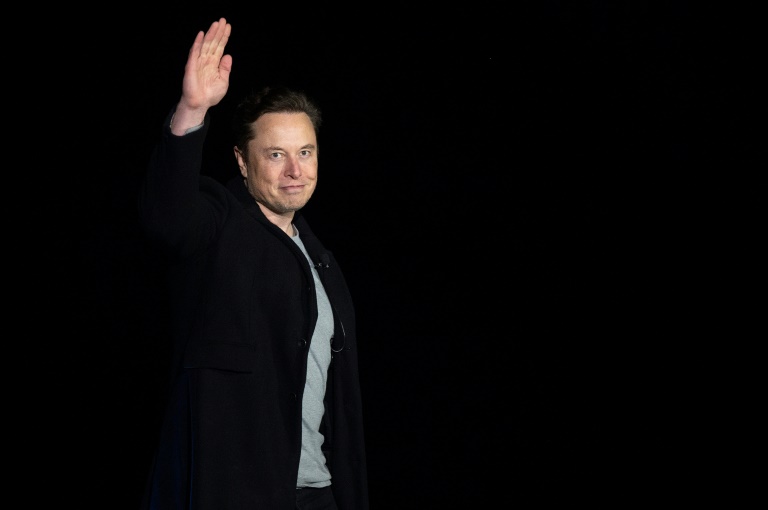
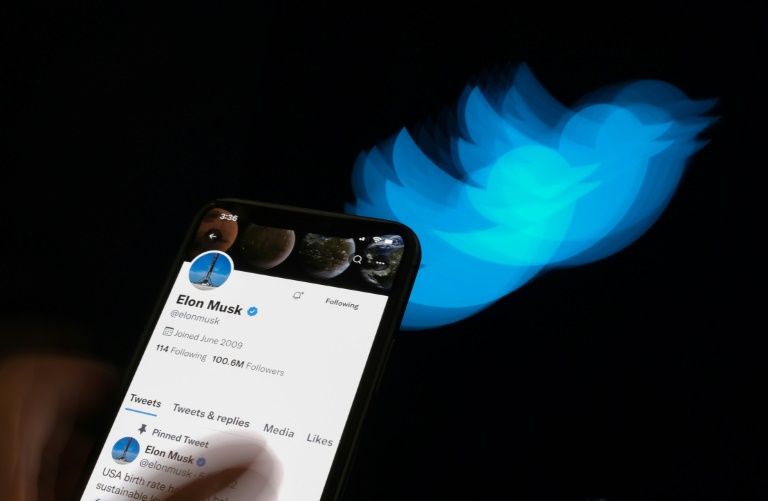
Courted and then jilted by the world’s richest person, Twitter looks well positioned to win a court battle with Elon Musk over a $1 billion breakup fee and more — but the company will not emerge unscathed.

The entire saga has left observers baffled by what Wedbush analyst Dan Ives described as “one of the craziest business stories ever.”

“I think it starts off as a circus show and it’s ending as a circus show,” Ives told AFP. 

Musk, the founder of electric car company Tesla, sent a letter to Twitter on Friday saying he was pulling out of the controversial deal he made in April to buy the platform for $54.20 per share, or $44 billion in total. 

But such merger agreements are “designed to prevent buyers from getting cold feet and deciding they want to walk away,” explains Ann Lipton, a professor of law at Tulane University who specializes in corporate litigation.

Musk, who also heads SpaceX, has accused the social media giant of “false and misleading representations” about the number of fake accounts on its platform.

His lawyers also point to recent Twitter employee layoffs and hiring freezes, which they say are contrary to the company’s obligation to continue operating normally. 

Those arguments may be valid, but they do not merit pulling out of the deal, says Lipton, dismissing them as “nitpicky.”

“It’s not enough, unless he can show that the representations (about fake accounts) are not just false, but also that they dramatically call the fundamentals of the deal into question,” she explains. 

“Looks very much like Musk is legally wrong.”

– ‘Twitter would die off’ –

That leaves the possibility that the multi-billionaire is actually trying to renegotiate the price down. 

This tactic has been used successfully elsewhere, such as by LVMH: two years ago, the global luxury giant broke off a deal to acquire Tiffany before getting a discount. 

But experts don’t see how Musk and Twitter could agree on a different price at this point, given that the platform’s stock has lost more than a quarter of its value since late April. 

“Both have a lot to lose,” Lipton points out. 

If Twitter wins in court, the mercurial entrepreneur will, at a minimum, have to pay a few billion dollars in damages. 

At worst, he could be forced to honor his commitment and buy Twitter at a price that has become exorbitant, while his fortune has melted down by tens of billions of dollars in recent months.

But though this would be a victory for shareholders, it would still leave Twitter in Musk’s hands — and his libertarian vision of absolute free speech is not aligned with that of many of the employees, users and advertisers on whom the platform’s business model depends.

“Twitter is worse off than six months ago, but in the long run, it’s better off without him,” says Creative Strategies analyst Carolina Milanesi. 

“It feels like a toy that a spoiled kid wants, but doesn’t really know what to do with, so he would get bored of it, and not give it the attention it deserves, and forget it in a corner … Twitter would die off slowly and painfully,” she predicts.

– ‘Battle on all fronts’ –

Any court proceedings are expected to last for months, especially since Musk “will drag it out,” according to Lipton. 

“Twitter is in a strong position,” she says.

But Musk, followed by more than 100 million people on the platform, “will try to embarrass them — it will be distracting and demoralizing for employees,” she argues.

He has already harassed the platform with highly critical tweets, mockery and outlandish suggestions, encouraged by his many fans. 

For Twitter, “it’s going be a battle on all fronts — keeping employees, competitors going after their business, brand issues, investors believing the numbers,” says Ives, the Wedbush analyst. 

Unlike its Silicon Valley neighbors, Twitter has never been a money-making machine, able to turn users’ attention into astronomical advertising revenues. 

“The past few months have been a huge distraction for Twitter, keeping it from focusing on its business fundamentals,” notes Debra Williamson of eMarketer. 

“If Musk is able to terminate the deal, Twitter will still be left with the same problems it had before he came on the scene,” she says.

“Its user growth is slowing. And while ad revenue is still growing marginally, Twitter is now dealing with a slowing economy that could squeeze ad spending on all social platforms.”

Twitter's future uncertain as it faces messy breakup with Musk

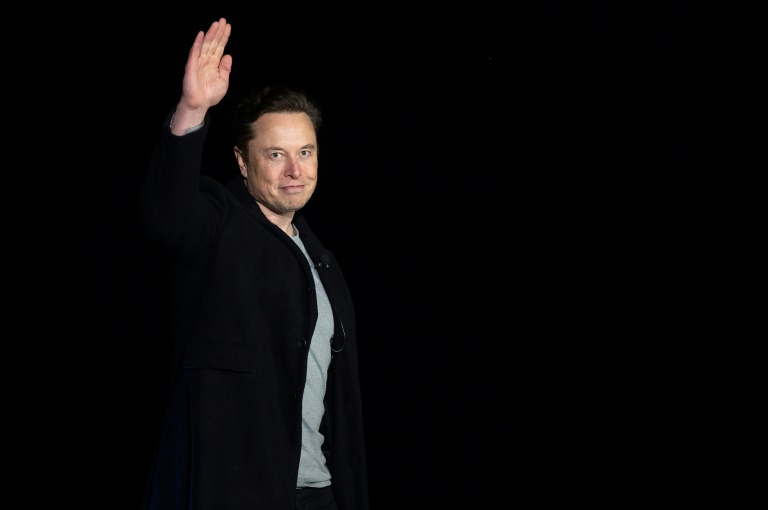
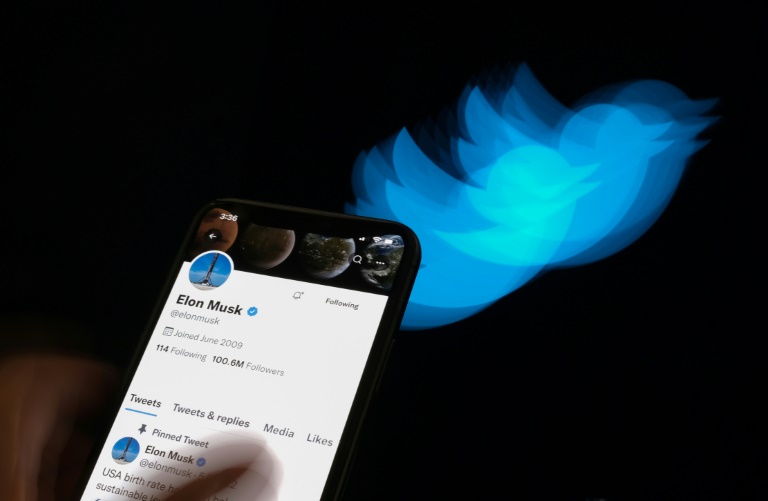
Courted and then jilted by the world’s richest person, Twitter looks well positioned to win a court battle with Elon Musk over a $1 billion breakup fee and more — but the company will not emerge unscathed.

The entire saga has left observers baffled by what Wedbush analyst Dan Ives described as “one of the craziest business stories ever.”

“I think it starts off as a circus show and it’s ending as a circus show,” Ives told AFP. 

Musk, the founder of electric car company Tesla, sent a letter to Twitter on Friday saying he was pulling out of the controversial deal he made in April to buy the platform for $54.20 per share, or $44 billion in total. 

But such merger agreements are “designed to prevent buyers from getting cold feet and deciding they want to walk away,” explains Ann Lipton, a professor of law at Tulane University who specializes in corporate litigation.

Musk, who also heads SpaceX, has accused the social media giant of “false and misleading representations” about the number of fake accounts on its platform.

His lawyers also point to recent Twitter employee layoffs and hiring freezes, which they say are contrary to the company’s obligation to continue operating normally. 

Those arguments may be valid, but they do not merit pulling out of the deal, says Lipton, dismissing them as “nitpicky.”

“It’s not enough, unless he can show that the representations (about fake accounts) are not just false, but also that they dramatically call the fundamentals of the deal into question,” she explains. 

“Looks very much like Musk is legally wrong.”

– ‘Twitter would die off’ –

That leaves the possibility that the multi-billionaire is actually trying to renegotiate the price down. 

This tactic has been used successfully elsewhere, such as by LVMH: two years ago, the global luxury giant broke off a deal to acquire Tiffany before getting a discount. 

But experts don’t see how Musk and Twitter could agree on a different price at this point, given that the platform’s stock has lost more than a quarter of its value since late April. 

“Both have a lot to lose,” Lipton points out. 

If Twitter wins in court, the mercurial entrepreneur will, at a minimum, have to pay a few billion dollars in damages. 

At worst, he could be forced to honor his commitment and buy Twitter at a price that has become exorbitant, while his fortune has melted down by tens of billions of dollars in recent months.

But though this would be a victory for shareholders, it would still leave Twitter in Musk’s hands — and his libertarian vision of absolute free speech is not aligned with that of many of the employees, users and advertisers on whom the platform’s business model depends.

“Twitter is worse off than six months ago, but in the long run, it’s better off without him,” says Creative Strategies analyst Carolina Milanesi. 

“It feels like a toy that a spoiled kid wants, but doesn’t really know what to do with, so he would get bored of it, and not give it the attention it deserves, and forget it in a corner … Twitter would die off slowly and painfully,” she predicts.

– ‘Battle on all fronts’ –

Any court proceedings are expected to last for months, especially since Musk “will drag it out,” according to Lipton. 

“Twitter is in a strong position,” she says.

But Musk, followed by more than 100 million people on the platform, “will try to embarrass them — it will be distracting and demoralizing for employees,” she argues.

He has already harassed the platform with highly critical tweets, mockery and outlandish suggestions, encouraged by his many fans. 

For Twitter, “it’s going be a battle on all fronts — keeping employees, competitors going after their business, brand issues, investors believing the numbers,” says Ives, the Wedbush analyst. 

Unlike its Silicon Valley neighbors, Twitter has never been a money-making machine, able to turn users’ attention into astronomical advertising revenues. 

“The past few months have been a huge distraction for Twitter, keeping it from focusing on its business fundamentals,” notes Debra Williamson of eMarketer. 

“If Musk is able to terminate the deal, Twitter will still be left with the same problems it had before he came on the scene,” she says.

“Its user growth is slowing. And while ad revenue is still growing marginally, Twitter is now dealing with a slowing economy that could squeeze ad spending on all social platforms.”

W.House protesters demand Biden do more to defend US abortion rights

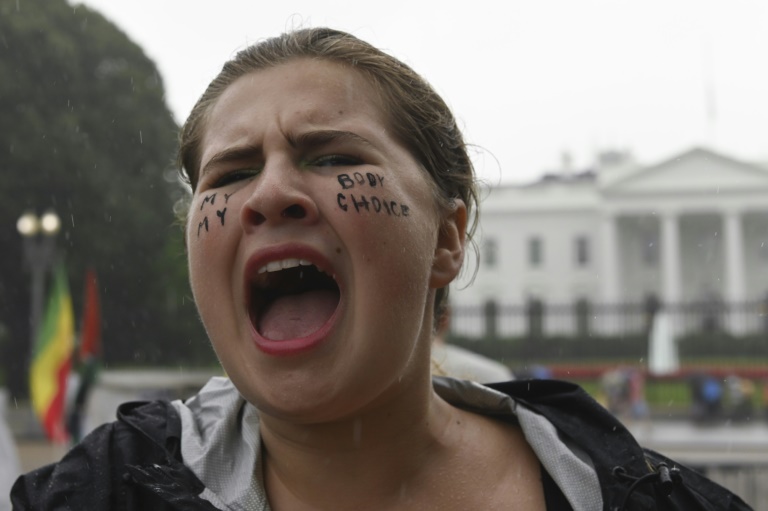
Hundreds of abortion rights protesters waved banners and chanted Saturday outside the White House to demand the president take stronger action to protect access to the procedure recently revoked by the Supreme Court.

The estimated 1,000-strong crowd of mainly women shouted slogans like “My body, my choice” and some sat down on the sidewalk in pouring rain, with police standing by.

With President Joe Biden spending the weekend at his vacation home in Rehoboth Beach, Delaware a few hours away, demonstrators called on him to do more to combat the June 24 Supreme Court ruling overturning the Roe v Wade decision of 1973, which enshrined the right to abortion in the United States.

“Stand up, Joe Biden,” said Becca, 37, who traveled more than two hours to Washington from Virginia. She carried a banner reading, “Abortion on demand without apology.”

She said an executive order Biden signed on Friday aiming to help women access abortion pills and travel to states where they can still get an abortion was insufficient.

“Fix this! This executive order that he put out wasn’t enough,” said Becca, who declined to give her last name.

“I want a world that wasn’t the world that my grandmother had to live in. My mom already fought for this in the streets. We shouldn’t have to be here,” she added.

Another woman, Christine, came to the rally with her three daughters, one in her 20s and the other two in their teens.

“We really feel that he needs to explore the fullest extent of his power of the executive branch to ensure that women retain their rights, their reproductive rights,” Christine, 50, said.

“And I am here to ensure that my daughters don’t have to go back 50 years in time to the days where abortions were happening in back alleys,” added Christine, who also declined to give her last name.

Biden, whose room for maneuver on the issue is limited, has come under fire for perceived inaction since the court ruling.

As he signed the executive order Friday, he called on Americans to vote en masse and elect pro-choice lawmakers in November and give him firm control of Congress, so he can codify abortion rights into federal law and bypass the Supreme Court ruling.

Relief, disappointment as Musk abandons Twitter deal

Elon Musk’s move to abandon his purchase of Twitter has been greeted with a mix of relief and disappointment across the political spectrum, with many criticizing the Tesla founder but others applauding his “exposure” of the influential messaging platform.

The announcement of the deal valued at $44 billion in late April sparked fears the platform would see a surge in abuse and disinformation after Musk — a self-proclaimed free speech absolutist — said he would largely let anyone say anything allowed by law on Twitter.

Musk’s announcement Friday that he no longer wants to buy Twitter triggered celebration by advocacy groups that had launched a campaign to stop the wealthiest man in the world from going through with the purchase. 

“A Twitter under Musk’s leadership would have ripped open Pandora’s box and reopened the floodgates for hate and baseless conspiracy theories — making the platform, and the country a more dangerous place,” said Bridget Todd, communications director at UltraViolet, an advocacy group.

The deal breakdown “is a welcome reprieve for women, people of color and members of the LGBTQ+ community.” 

Nicole Gill, co-founder and executive director of the left-leaning watchdog Accountable Tech, slammed Musk’s bid as “a chaotic crusade.”

“Our information ecosystem, safety, and democracy cannot remain at the whim of unaccountable billionaires,” she said.

But hopes were dashed for others who believed Musk’s stearing of the platform would lead to a decrease in measures aimed at curbing bullying, lies and other abuses deemed politically motivated and anti-free speech.  

“The party is really over here. The purge is coming,” tweeted conservative commentator Dave Rubin. 

Donald Trump Jr, the son of the former president, predicted “censorship” at Twitter “will be back tenfold.”

“Zero chance of free thought or speech there at this point,” he said on his father’s fledgling Truth Social platform, launched after he was booted from his preferred medium where he’d amassed some 88.7 million followers.

The former president was banned from Twitter following accusations he had used it to incite his followers to assault the US Capitol on January 6 last year.

While Musk said he would lift the ban on the elder Trump, the fellow billionaire said he would stick to Truth Social — a message he reiterated on Friday.

“THE TWITTER DEAL IS DEAD, LONG LIVE THE ‘TRUTH’,” he posted on Truth Social.

Another conservative Twitter competitor, GETTR, also took the opportunity to tout itself as an alternative platform that would “protect online freedom of expression.”

CEO Jason Miller praised Musk “for further exposing the incurable, rotting, politically discriminatory culture” within Twitter.

The deal may be off but the Musk-Twitter tug-of-war is far from over, as the company says it will pursue legal action to enforce the agreement.

Relief, disappointment as Musk abandons Twitter deal

Elon Musk’s move to abandon his purchase of Twitter has been greeted with a mix of relief and disappointment across the political spectrum, with many criticizing the Tesla founder but others applauding his “exposure” of the influential messaging platform.

The announcement of the deal valued at $44 billion in late April sparked fears the platform would see a surge in abuse and disinformation after Musk — a self-proclaimed free speech absolutist — said he would largely let anyone say anything allowed by law on Twitter.

Musk’s announcement Friday that he no longer wants to buy Twitter triggered celebration by advocacy groups that had launched a campaign to stop the wealthiest man in the world from going through with the purchase. 

“A Twitter under Musk’s leadership would have ripped open Pandora’s box and reopened the floodgates for hate and baseless conspiracy theories — making the platform, and the country a more dangerous place,” said Bridget Todd, communications director at UltraViolet, an advocacy group.

The deal breakdown “is a welcome reprieve for women, people of color and members of the LGBTQ+ community.” 

Nicole Gill, co-founder and executive director of the left-leaning watchdog Accountable Tech, slammed Musk’s bid as “a chaotic crusade.”

“Our information ecosystem, safety, and democracy cannot remain at the whim of unaccountable billionaires,” she said.

But hopes were dashed for others who believed Musk’s stearing of the platform would lead to a decrease in measures aimed at curbing bullying, lies and other abuses deemed politically motivated and anti-free speech.  

“The party is really over here. The purge is coming,” tweeted conservative commentator Dave Rubin. 

Donald Trump Jr, the son of the former president, predicted “censorship” at Twitter “will be back tenfold.”

“Zero chance of free thought or speech there at this point,” he said on his father’s fledgling Truth Social platform, launched after he was booted from his preferred medium where he’d amassed some 88.7 million followers.

The former president was banned from Twitter following accusations he had used it to incite his followers to assault the US Capitol on January 6 last year.

While Musk said he would lift the ban on the elder Trump, the fellow billionaire said he would stick to Truth Social — a message he reiterated on Friday.

“THE TWITTER DEAL IS DEAD, LONG LIVE THE ‘TRUTH’,” he posted on Truth Social.

Another conservative Twitter competitor, GETTR, also took the opportunity to tout itself as an alternative platform that would “protect online freedom of expression.”

CEO Jason Miller praised Musk “for further exposing the incurable, rotting, politically discriminatory culture” within Twitter.

The deal may be off but the Musk-Twitter tug-of-war is far from over, as the company says it will pursue legal action to enforce the agreement.

Sri Lanka's president to resign after being chased from home

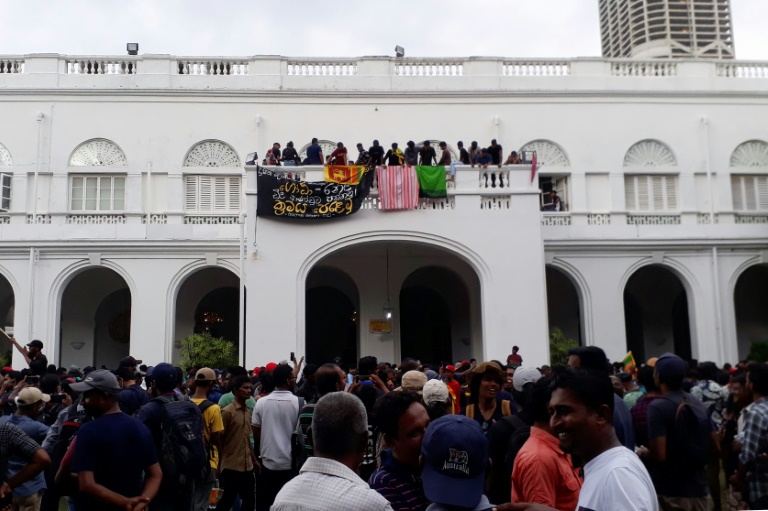
Sri Lanka’s President Gotabaya Rajapaksa announced his resignation on Saturday, hours after a crowd of angry protesters chased him from his residence, as months of frustration brought on by an unprecedented economic crisis boiled over.

Hundreds of thousands of people massed in the capital Colombo to demand the government take responsibility for mismanaging the nation’s finances, and for crippling food and fuel shortages.

After storming the gates of the presidential palace, a throng of protesters walked through its rooms, with some among the boisterous crowd jumping into the compound’s pool.

Others were seen laughing and lounging in the stately bedrooms of the residence, with one pulling out what he claimed was a pair of Rajapaksa’s underwear.

At around the same time, the leader had boarded a naval craft at the Colombo port and was taken to the island’s southern waters, where he let it be known he was finally bowing to months of calls for his resignation. 

“To ensure a peaceful transition, the president said he will step down on July 13,” parliamentary speaker Mahinda Abeywardana said in a televised statement.

Rajapaksa had to be extracted from his residence by troops who fired into the air to keep the crowd outside at bay. 

Soon after they stormed the presidential palace, Rajapaksa’s nearby seafront office also fell into the hands of protesters.

Prime Minister Ranil Wickremesinghe, the first person in line to succeed Rajapaksa, called a meeting with political leaders and said he was willing to step down to pave the way for a unity government.

But that failed to placate protesters, who stormed the premier’s private residence and set it alight after night fell. 

Footage shared on social media showed a crowd cheering the blaze, which broke out shortly after a security detachment guarding Wickremesinghe attacked several journalists outside the home. 

No casualties have been reported in the fire so far, and police said Wickremesinghe and his family were away at the time.

Security forces attempted to disperse the huge crowds that had mobbed Colombo’s administrative district earlier in the day, with dozens injured in the resulting clashes. 

A spokeswoman for Colombo’s main hospital said three people were being treated for gunshot wounds, along with 36 others suffering breathing difficulties after being caught up in tear gas barrages.

– ‘Not a deterrent’ –

Sri Lanka has suffered through months of shortages of basic goods, lengthy blackouts and galloping inflation after running out of foreign currency to import necessities.

The government has defaulted on its $51 billion external debt and is seeking an International Monetary Fund bailout.

Thousands of people had poured into the capital for Saturday’s demonstration, the latest outbreak of unrest sparked by the crisis.

Police had withdrawn a curfew issued on Friday after opposition parties, rights activists and the bar association threatened to sue the police chief.

Thousands of anti-government protesters ignored the stay-home order and even forced railway authorities to operate trains to take them to Colombo for Saturday’s rally, officials said.

“The curfew was not a deterrent. In fact, it encouraged more people to get on the streets in defiance,” the defence official said.

Sri Lanka has nearly exhausted its already scarce supplies of petrol, and people unable to travel to the capital held protests in other cities across the island. 

Demonstrators had already maintained a months-long protest camp outside Rajapaksa’s office demanding his resignation. 

The camp was the scene of clashes in May when a gang of Rajapaksa loyalists attacked peaceful protesters gathered there. 

Nine people were killed and hundreds were wounded after the violence sparked reprisals against pro-government mobs and arson attacks on the homes of lawmakers. 

– Cricket goes on –

The unrest comes at the tail end of Australia’s ongoing cricket tour of Sri Lanka, with Pakistan’s squad also on the island for their upcoming series. 

Cricket officials said there were no plans to change their schedules, adding that the sport was unaffected by the political turmoil.

“The Australian Test is coming to an end and we are due to start the Pakistan series,” a cricket board official told AFP. 

“There is no opposition to having the games. In fact, fans are supportive and we have no reason to reschedule.”

Russian missiles pound east Ukraine, hit Kharkiv

Russian troops shelled Ukraine’s eastern Donetsk region on Saturday as Ukrainian officials accused Moscow of preparing further attacks and Washington promised new military aid to Kyiv.

Having endured long battles to capture cities in the neighbouring Lugansk region, Russia is now seeking to push deeper into Donetsk to consolidate its hold over the entire Donbas region in the east.

Four and a half months into the war, residents in the town of Druzhkivka, in northern Donetsk, woke up Saturday to a suspected missile attack which ripped apart a supermarket and gouged a crater into the ground.

Five people were killed in the Donetsk region in the past 24 hours while seven were injured, Ukrainian officials said Saturday.

Sergiy Gaiday, the governor of Lugansk, said the Russians were attacking Donetsk from bases in his region.

“We are trying to contain their armed formations along the entire frontline… Where it is inconvenient for them to go forward, they create real hell, shelling the territories on the horizon,” he said.

Oleksandr Vilkul, mayor of President Volodymyr Zelensky’s hometown of Kryvyi Rih in central Ukraine, said Russia had attacked the city with cluster munitions, killing at least one person and injuring two.

Russia’s defence ministry said Saturday it had inflicted heavy losses in the Mykolaiv and Dnepropetrovsk regions, in southern and central Ukraine respectively, and claimed strikes on Donetsk and the Kharkiv region.

Ukrainian emergency services said six civilians were wounded, four of whom were taken to hospital, in Ukraine’s second city of Kharkiv, when a rocket tore through a two-storey residential building on Saturday.

– ‘Massive fighting’ –

“The eyes of all aggressive political movements and regimes in the world are now focused on what Russia is doing against us, against Ukraine,” Zelensky said in an Instagram post.

“Will the world be able to bring real war criminals to justice?” he asked, warning failure to do so would lead to “hundreds of other aggressions”.

Away from the Donbas, the mayor of Mykolaiv begged citizens not to leave shelters, as he said explosions were heard throughout the night. 

Deputy Prime Minister Iryna Vereshchuk was quoted by Ukrainian media as urging civilians in occupied areas to evacuate by any means possible. 

“Massive fighting is going to happen,” she said.

“The entire frontline is under relentless shelling,” Donetsk military administration chief Pavlo Kyrylenko said in a Telegram message late Friday. 

He accused Russian troops of shelling “day and night” the city of Sloviansk and of torching agricultural fields in a bid to “destroy the harvest by all means”.

Kyrylenko warned the Russians were in the process of replenishing troops in the region to prepare for further assaults.

In a boost to Kyiv, Washington announced $400 million of further military aid, including a type of artillery ammunition with “greater precision”, and that has previously not been sent. 

– Recruits train in England –

“It’s a further evolution in our support for Ukraine in this battle in the Donbas,” a senior defence official was quoted by the US Department of Defense as saying. 

Also included in the aid package are four additional High Mobility Artillery Rocket Systems to add to eight already in place. 

Britain’s defence ministry on Saturday said the first group of up to 10,000 inexperienced Ukrainian military recruits began training in England as part of a UK-led programme.

The United States also put pressure on Russia at a meeting of Group of 20 foreign ministers in Indonesia. 

Washington and allies condemned Russia’s assault ahead of the gathering before Russian Foreign Minister Sergei Lavrov faced what US Secretary of State Antony Blinken called a barrage of Western criticism at the closed-door talks.

Blinken on Saturday called for China to distance itself from Russia after talks with his Chinese counterpart in Indonesia.

Blinken said he told Wang Yi: “This really is a moment where we all have to stand up, as we heard country after country in the G20 do, to condemn the aggression, to demand among other things that Russia allow access to food that is stuck in Ukraine”.

He added there were “no signs” Moscow was willing to engage after the G20 talks.

“If there is an opportunity for diplomacy, we will seize it,” he said.

burs-jm/imm

Close Bitnami banner
Bitnami