US Business

Sri Lanka leader flees as protesters storm home, office

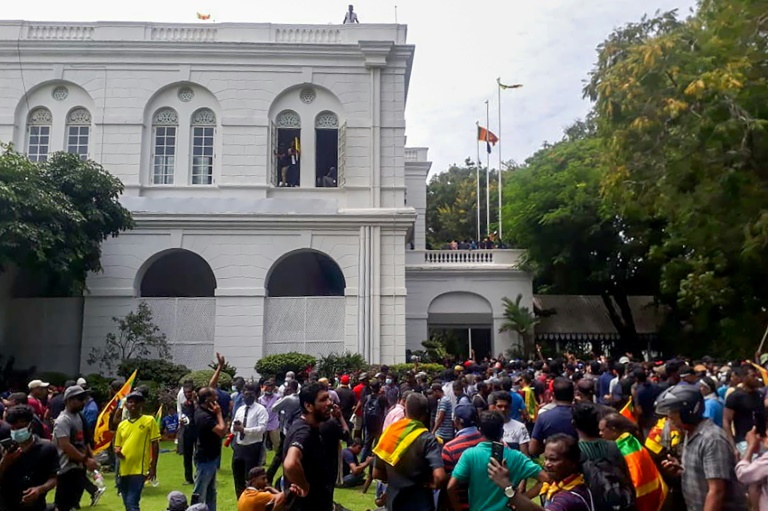
Sri Lanka’s President Gotabaya Rajapaksa fled his official residence on Saturday shortly before protesters, angered by an unprecedented economic crisis, overran the compound and stormed his nearby office.

Hundreds of thousands of people massed on the streets around the leader’s home, according to police estimates, to demand he step down over the government’s mismanagement of the unprecedented downturn.

After storming the gates of the presidential palace, hundreds of people could be seen in live broadcasts on social media walking through its rooms, with some among the boisterous crowd jumping into the compound’s pool.

Some were seen laughing and lounging in the stately bedrooms of the residence, with one pulling out what he claimed was a pair of the president’s underwear.

Not long earlier, troops guarding the residence fired in the air to hold the crowd back until Rajapaksa was safely removed.

“The president was escorted to safety,” a top defence source told AFP on condition of anonymity. “He is still the president, he is being protected by a military unit.”

The colonial-era mansion he left is one of Sri Lanka’s key symbols of state power, and officials said Rajapaksa’s departure raised questions as to whether he intended to remain in office.

“We are awaiting instructions,” a top civil servant told AFP. “We still don’t know where he is, but we know he is with the Sri Lanka navy and is safe.”

Soon after the crowd stormed the presidential palace, Rajapaksa’s nearby seafront office also fell into the hands of protesters.

Security forces attempted to disperse the huge crowds that had mobbed Colombo’s administrative district.

Three people were hospitalised after being shot, along with 36 others who suffered breathing difficulties following intense tear gas barrages, a spokeswoman for the main hospital in Colombo said.

Prime Minister Ranil Wickremesinghe, the first person in line to succeed Rajapaksa, called a meeting with political leaders and said he was willing to step down to pave the way for a unity government.

Media minister Bandula Gunawardana announced his resignation from the cabinet, as well as Rajapaksa’s political party, after the meeting. The president’s media director, Sudewa Hettiarachchi, also resigned.

– ‘Not a deterrent’ –

Sri Lanka has suffered through months of food and fuel shortages, lengthy blackouts and galloping inflation after running out of foreign currency to import vital goods.

The government has defaulted on its $51 billion external debt and is seeking an International Monetary Fund bailout.

Thousands of people had poured into the capital for Saturday’s demonstration, the latest outbreak of unrest sparked by the crisis.

Police had withdrawn a curfew issued on Friday after opposition parties, rights activists and the bar association threatened to sue the police chief.

Thousands of anti-government protesters ignored the stay-home order and even forced railway authorities to operate trains to take them to Colombo for Saturday’s rally, officials said.

“The curfew was not a deterrent, in fact it encouraged more people to get on the streets in defiance,” the defence official said.

Sri Lanka has nearly exhausted already scarce supplies of petrol, but protesters backed by the main opposition parties hired private buses to travel to the capital.

Other Sri Lankans unable to travel to the capital held protests in cities across the island. 

Demonstrators had already maintained a months-long protest camp outside Rajapaksa’s seafront office demanding his resignation. 

The camp was the scene of clashes in May when a gang of Rajapaksa loyalists attacked peaceful protesters gathered there. 

Nine people were killed and hundreds were wounded after the violence sparked reprisals against pro-government mobs and arson attacks on the homes of lawmakers. 

– Cricket goes on –

The unrest comes at the tail end of Australia’s ongoing cricket tour of Sri Lanka, with Pakistan’s squad also on the island for their upcoming series. 

Cricket officials said there were no plans to change their schedules, adding that the sport was unaffected by the political turmoil.

“The Australian Test is coming to an end and we are due to start the Pakistan series,” a cricket board official told AFP. 

“There is no opposition to having the games. In fact, fans are supportive and we have no reason to reschedule.”
Sri Lanka leader flees as protesters storm home, office

Sri Lanka’s President Gotabaya Rajapaksa fled his official residence on Saturday shortly before protesters, angered by an unprecedented economic crisis, overran the compound and stormed his nearby office.

Hundreds of thousands of people massed on the streets around the leader’s home, according to police estimates, to demand he step down over the government’s mismanagement of the unprecedented downturn. 

After storming the gates of the presidential palace, hundreds of people could be seen in live broadcasts on social media walking through its rooms, with some among the boisterous crowd jumping into the compound’s pool. 

Some were seen laughing and lounging in the stately bedrooms of the residence with one pulling out what he claimed was a pair of the president’s underwear.

Not long earlier, troops guarding the residence fired in the air to hold the crowd back until Rajapaksa was safely removed.

“The president was escorted to safety,” a top defence source told AFP on condition of anonymity. “He is still the president, he is being protected by a military unit.”

The colonial-era mansion he left is one of Sri Lanka’s key symbols of state power, and officials said Rajapaksa’s departure raised questions as to whether he intended to remain in office.

“We are awaiting instructions,” a top civil servant told AFP. “We still don’t know where he is, but we know he is with the Sri Lanka navy and is safe.”

Soon after the crowd stormed the presidential palace, Rajapaksa’s nearby seafront office also fell into the hands of protesters.

Three people were hospitalised after being shot along with 36 others who suffered breathing difficulties following intense tear gas barrages near the president’s house, a spokeswoman for the main hospital in Colombo said.

Security forces attempted to disperse the huge crowds that had mobbed Colombo’s administrative district.

Prime Minister Ranil Wickremesinghe, who would assume the presidency in the event of Rajapaksa’s resignation, called an urgent cabinet meeting to discuss a “swift resolution” to the political crisis.

– ‘Not a deterrent’ –

Sri Lanka has suffered through months of food and fuel shortages, lengthy blackouts and galloping inflation after running out of foreign currency to import vital goods.

The government has defaulted on its $51 billion external debt and is seeking an International Monetary Fund bailout.

Thousands of people had poured into the capital for Saturday’s demonstration, the latest outbreak of unrest sparked by the crisis.

Police had withdrawn a curfew issued on Friday after opposition parties, rights activists and the bar association threatened to sue the police chief.

Thousands of anti-government protesters ignored the stay-home order and even forced railway authorities to operate trains to take them to Colombo for Saturday’s rally, officials said.

“The curfew was not a deterrent, in fact it encouraged more people to get on the streets in defiance,” the defence official said.

Sri Lanka has nearly exhausted already scarce supplies of petrol, but protesters backed by the main opposition parties hired private buses to travel to the capital.

Other Sri Lankans unable to travel to the capital held protests in cities across the island. 

Demonstrators had already maintained a months-long protest camp outside Rajapaksa’s seafront office demanding his resignation. 

The camp was the scene of clashes in May when a gang of Rajapaksa loyalists attacked peaceful protesters gathered there. 

Nine people were killed and hundreds were wounded after the violence sparked reprisals against pro-government mobs and arson attacks on the homes of lawmakers. 

– Cricket goes on –

The unrest comes at the tail end of Australia’s ongoing cricket tour of Sri Lanka, with Pakistan’s squad also on the island for their upcoming series. 

Cricket officials said there were no plans to change their schedules, adding that the sport was unaffected by the political turmoil.

“The Australian Test is coming to an end and we are due to start the Pakistan series,” a cricket board official told AFP. 

“There is no opposition to having the games. In fact, fans are supportive and we have no reason to reschedule.”
'Relentless' Russian shelling pounds east Ukraine

Russian troops pursued their “relentless” shelling of Ukraine’s eastern Donetsk region on Saturday as Ukrainian officials warned Moscow was preparing for further attacks and Washington promised new military aid to Kyiv.

Having endured long battles to capture cities in the neighbouring Lugansk region, Russia is now seeking to push deeper into Donetsk to consolidate its hold over the entire Donbas region. 

Air raid sirens sounded overnight throughout the country’s east and south.

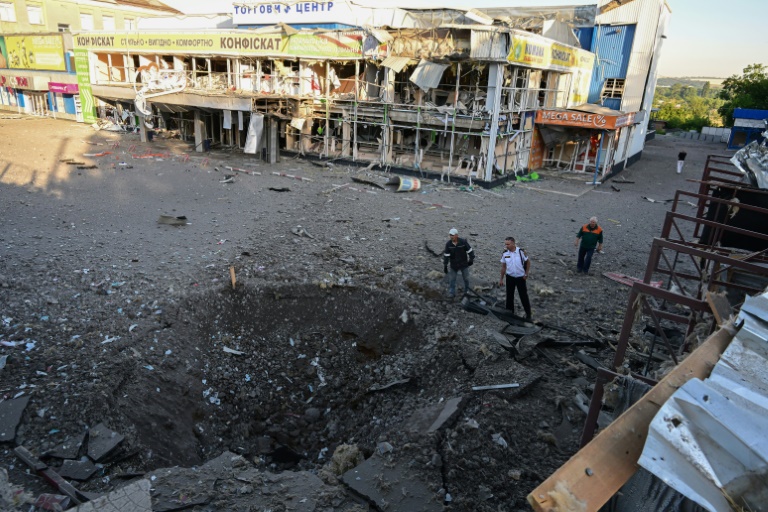
Residents in the small town of Druzhkivka, south of the eastern Ukrainian industrial city of Kramatorsk, woke up to a suspected missile attack on Saturday which ripped apart a supermarket and left a massive crater outside.

Ukrainian officials said on Saturday five people were killed in the Donetsk region in the past 24 hours while seven were injured.

“The entire frontline is under relentless shelling,” Donetsk military administration chief, Pavlo Kyrylenko said in a Telegram message on Friday night. 

He said the city of Sloviansk, on which Moscow’s troops have now set their sights, is being “shelled day and night”. 

He also accused Russian forces of setting agricultural fields on fire, saying they were “trying to destroy the harvest by all means”.  

Lugansk governor Sergiy Gaiday, said on Saturday the Russians were attacking Donetsk from their bases in his region.

“We are trying to contain their armed formations along the entire frontline… Where it is inconvenient for them to go forward, they create real hell, shelling the territories on the horizon,” he said.

Kyrylenko warned the Russians were in the process of replenishing troops in the region to prepare for further assaults.

Oleksandr Vilkul, the mayor of President Volodymyr Zelensky’s hometown of Kryvyi Rih in central Ukraine, said on Saturday Russia had attacked the city with cluster munitions, killing at least one person and injuring two.

– ‘Terrorising cities’ –

Zelensky said in his nightly address on Friday he had spent the day on the frontlines in the eastern Dnipropetrovsk region, where he met civilian and military leaders. 

“The eyes of all aggressive political movements and regimes in the world are now focused on what Russia is doing against us, against Ukraine,” Zelensky  said Saturday in an Instagram post.

“Will the world be able to bring real war criminals to justice?” he asked, warning failure to do so would lead to “hundreds of other aggressions”.

But in a Telegram message on Saturday, an official from the region’s military administration warned Russia had “intentionally shelled residential areas”, and had not stopped “terrorising” cities and villages.

The Ukrainian general staff said the majority of bombardments took place in east Ukraine and the second-largest city of Kharkiv but there was no ground offensive.

In the south, the mayor of Mykolaiv begged citizens not to leave shelters, as he said explosions were heard throughout the night. 

Ukraine’s Deputy Prime Minister Iryna Vereshchuk was quoted by Ukrainian media as urging people in occupied areas to evacuate by any means possible. 

“Massive fighting is going to happen,” she said.

Kharkiv governor Oleg Sinegubov on Saturday said four people were injured in attacks on the region, adding that the Russians were “engaged in defensive actions”.

– ‘Further evolution of support’ –

In a boost to Kyiv, Washington announced $400 million of further military aid, including a type of artillery ammunition with “greater precision”, and that has previously not been sent. 

“It’s a further evolution in our support for Ukraine in this battle in the Donbas,” a senior defence official was quoted by the US Department of Defense as saying. 

Also included in the aid package are four additional High Mobility Artillery Rocket Systems to add to eight already in place. 

“From a security assistance perspective, this is a steady drumbeat now, and it is a long-term commitment to Ukraine,” the same official was quoted as saying. 

Britain’s defence ministry on Saturday said the first group of up to 10,000 inexperienced Ukrainian military recruits began training in England as part of a UK-led programme.

– US urges China to condemn ‘aggression’ –

The United States also put pressure on Russia diplomatically at a meeting of Group of 20 foreign ministers in Indonesia. 

Washington and allies condemned Russia’s assault ahead of the gathering before Russian Foreign Minister Sergei Lavrov faced what US Secretary of State Antony Blinken called a barrage of Western criticism at the closed-door talks.

Blinken on Saturday called for China to distance itself from Russia after talks with his Chinese counterpart in Indonesia.

Blinken said he told Wang Yi “this really is a moment where we all have to stand up, as we heard country after country in the G20 do, to condemn the aggression, to demand among other things that Russia allow access to food that is stuck in Ukraine”.

He added there were “no signs” Moscow was willing to engage after the G20 talks.

“If there is an opportunity for diplomacy, we will seize it,” he said.

Lavrov was defiant Friday and accused Western nations of avoiding “talking about global economic issues” instead of the war.

burs-raz/bp

Sri Lanka leader flees as protesters storm home

Sri Lanka’s President Gotabaya Rajapaksa fled his official residence on Saturday shortly before protesters, angered by an unprecedented economic crisis, stormed and overran the compound. 

Huge crowds had surrounded the leader’s home to demand his resignation, blaming government mismanagement for the painful downturn.

As protesters surged at the gates of the President’s Palace, troops guarding the compound fired in the air to hold back the tide until Rajapaksa was safely removed, a top defence source told AFP on condition of anonymity. 

“The president was escorted to safety,” the source added. “He is still the president, he is being protected by a military unit.”

Prime Minister Ranil Wickremesinghe, who would assume the presidency in the event of Rajapaksa’s resignation, has called an urgent cabinet meeting to discuss a “swift resolution” to the political crisis, his office said.

Members of the crowd broadcast live footage on social media showing hundreds of people walking through the President’s Palace.

The colonial-era state mansion is one of Sri Lanka’s key symbols of state power and officials said Rajapaksa’s departure raised questions as to whether he intended to remain in office.

“We are awaiting instructions,” a top civil servant told AFP. “We still don’t know where he is, but we know he is with the Sri Lanka navy and is safe.”

Colombo’s main hospital said 14 people were being treated there after being hit by tear gas canisters.

– ‘Not a deterrent’ –

Sri Lanka has suffered through months of food and fuel shortages, lengthy blackouts and galloping inflation after running out of foreign currency to import vital goods.

Thousands of people had poured into the capital for the demonstration, the latest expression of unrest sparked by the crisis.

Police had withdrawn a curfew order issued on Friday after opposition parties, rights activists and the bar association threatened to sue the police chief.

Thousands of anti-government protesters ignored the order and even forced railway authorities to operate trains to take them to Colombo for Saturday’s rally, officials said.

“The curfew was not a deterrent, in fact it encouraged more people to get on the streets in defiance,” the defence official said.

“Passengers had commandeered trains to reach Colombo.”

The country has nearly exhausted already scarce supplies of petrol, but protesters backed by the main opposition parties hired private buses to travel to the capital. 

Demonstrators have camped outside Rajapaksa’s seafront office to demand his resignation over the government’s mismanagement of the crisis.

Soldiers armed with assault rifles were bussed into Colombo on Friday to reinforce police guarding Rajapaksa’s official residence.

Authorities said they had deployed nearly 20,000 troops and police officers for a security operation to protect the president.

Sri Lanka has defaulted on its $51 billion external debt and has been in bailout talks with the International Monetary Fund. 

Nine people were killed and hundreds wounded when clashes erupted across the country after Rajapaksa loyalists attacked peaceful protesters outside the president’s office in May.

'Relentless' Russian shelling in east Ukraine as US promises new aid

Russian troops pursued their “relentless” shelling of Ukraine’s eastern Donetsk region on Saturday, as the United States promised new military aid to Kyiv including powerful rocket launchers. 

Having endured long battles to capture cities in the neighbouring Lugansk region, Russia is now seeking to push deeper into Donetsk to consolidate its hold over the entire Donbas region. 

Air raid sirens sounded overnight throughout the country’s east and south.

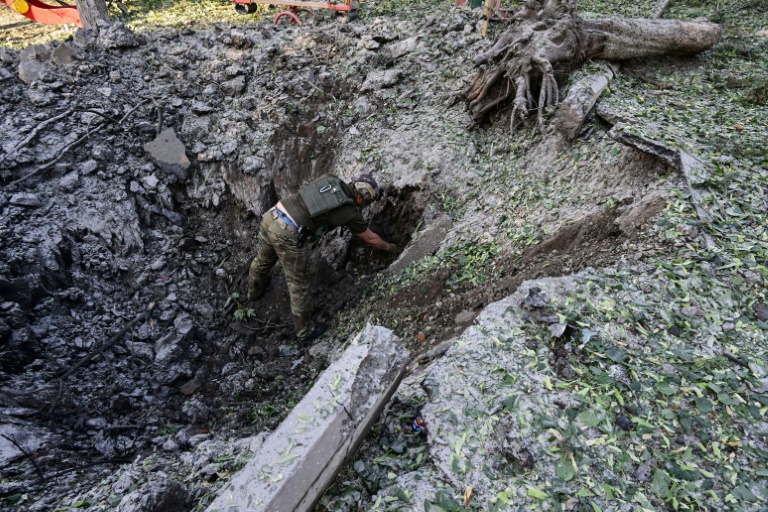
Residents in the small town of Druzhkivka, south of the eastern Ukrainian industrial city of Kramatorsk, woke up to a suspected missile attack on Saturday which ripped apart a supermarket’s shop front and left a massive crater in front of the store.

“The entire frontline is under relentless shelling,” the head of the Donetsk military administration, Pavlo Kyrylenko, said in a Telegram message on Friday night. 

He said the city of Sloviansk, on which Moscow’s troops have now set their sights, is being “shelled day and night”. 

He also accused Russian forces of setting agricultural fields on fire, saying they were “trying to destroy the harvest by all means”.  

In a message on Saturday, he said five civilians had been killed the day before.

The governor of the Lugansk region, Sergiy Gaiday, said on Saturday the Russians were attacking Donetsk from their bases in Lugansk.

“We are trying to contain their armed formations along the entire frontline… Where it is inconvenient for them to go forward, they create real hell, shelling the territories on the horizon,” he said.

Kyrylenko warned the Russians were in the process of replenishing their troops in the region to prepare for further assaults. 

– ‘Terrorising cities’ –

Ukrainian President Volodymyr Zelensky said in his nightly address he had spent the day on the frontlines in the eastern Dnipropetrovsk region, where he met civilian and military leaders. 

“Officials must do not just everything possible, but much more than even possible, to guarantee people a normal standard of living even in such wartime conditions,” he said. 

But in a Telegram message on Saturday, an official from the region’s military administration warned Russia had “intentionally shelled residential areas”, and had not stopped “terrorising” the cities and villages.

In the country’s south, the mayor of Mykolaiv begged citizens not to leave shelters, as he said explosions were heard throughout the night. 

Ukraine’s Deputy Prime Minister Iryna Vereshchuk was quoted by Ukrainian media as urging people in occupied areas to evacuate by any means possible. 

“Massive fighting is going to happen,” she said. 

– ‘Further evolution of support’ –

In a boost to Kyiv, Washington announced $400 million of further military aid, including a type of artillery ammunition with “greater precision” that has previously not been sent. 

“It’s a further evolution in our support for Ukraine in this battle in the Donbas,” a senior defence official was quoted by the US Department of Defence as saying. 

Also included in the aid package are four additional High Mobility Artillery Rocket Systems to add to eight already in place. 

“From a security assistance perspective, this is a steady drumbeat now, and it is a long-term commitment to Ukraine,” the same official was quoted as saying. 

“We’ll be ready for whatever the experts tell us is required for the battlefield.” 

The United States was also putting the pressure on Russia diplomatically at a meeting of Group of 20 foreign ministers in Indonesia. 

Washington and allies condemned Russia’s assault ahead of the gathering before Russian Foreign Minister Sergei Lavrov faced what US Secretary of State Antony Blinken called a barrage of Western criticism at the closed-door talks.

Lavrov stormed out of a morning session as German counterpart Annalena Baerbock criticised Moscow over the invasion, diplomats said.

He also left an afternoon session before Ukrainian Foreign Minister Dmytro Kuleba addressed the ministers virtually, and was not present as Blinken condemned Russia.

– ‘Strong chorus’ –

“What we’ve heard today already is a strong chorus from around the world… about the need for the aggression to end,” Blinken said on Friday from the meeting on the resort island of Bali.

Speaking outside the Mulia hotel, Lavrov remained defiant and accused Western nations of avoiding “talking about global economic issues” instead of the war.

One official told AFP even Moscow’s ally China had not offered “any full-throated endorsement” of the Russian position.

Blinken shunned a bilateral meeting with Lavrov and instead accused Russia of triggering a global food crisis, demanding Moscow allow grain shipments out of war-battered Ukraine.

“To our Russian colleagues: Ukraine is not your country. Its grain is not your grain. Why are you blocking the ports? You should let the grain out,” Blinken said in the closed-door talks, according to a Western official present.

Indonesian farmers pay price of foot and mouth outbreak before Eid sacrifice

Indonesian farmer Okky Pratama usually sells dozens of cattle for Eid al-Adha, making his biggest earnings around the Islamic day of sacrifice, but this year he has sold just five.

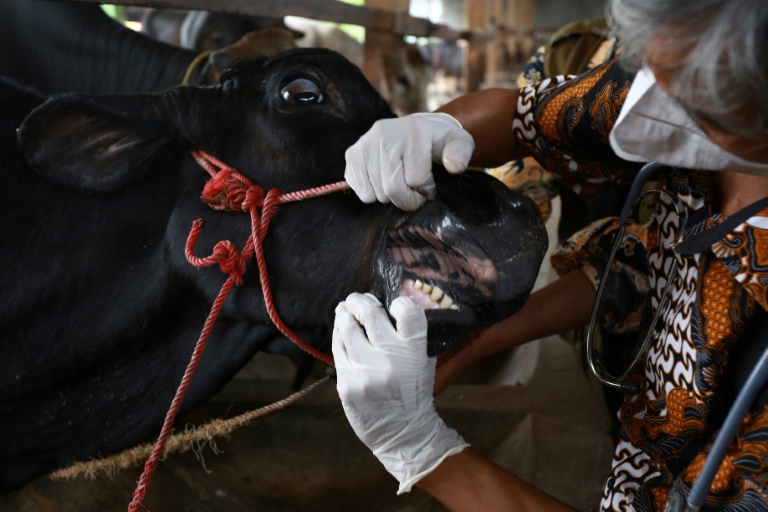
A foot-and-mouth disease outbreak has ripped through two Indonesian provinces since April, killing thousands of cows and infecting hundreds of thousands more, raising consumer fears before the July 10 festival.

Clusters of the highly infectious animal virus in East Java and Aceh provinces have rattled cattle farmers and their output during the most profitable time of year in a country with the world’s biggest Muslim population.

“I am pessimistic about the sales. Regular buyers unusually did not send me any purchase inquiries,” said Pratama, whose cow farm in the mountainous Batu City is situated in the hardest-hit East Java province. 

“When I contacted them, they said they did not (want to) sacrifice any livestock this year because of the foot-and-mouth disease.”  

Profits from the holiday season — around 60 million rupiah ($4,000) — account for 75 percent of his annual earnings, 31-year-old Pratama told AFP. 

But he has so far lost two of his cattle to the disease — which was first detected in early May. 

Thirty-three others were infected but recovered after intensive care.

As of July 6, the disease had spread to 21 provinces across Indonesia and infected more than 320,000 livestock, according to official data. 

Over 2,100 of them have died from the disease.

– Sales struggle – 

Indonesia had been outbreak-free for 30 years, but farmers are reeling from a fresh blow to their business after the coronavirus pandemic shuttered restaurants and food stalls.

Cow-farmer Masrizal said he has struggled to sell his cattle because of sluggish demand for meat and shuttered livestock markets in Aceh province. 

“As markets are closed, I had to proactively offer the sacrificial livestock to mosques and people in villages,” he said.

The disease specifically attacks cloven-hoofed animals such as cattle, swine, sheep and goats, and the policy in Europe — such as during the British outbreak in 2001 -– has typically been to slaughter herds of animals as a precaution. 

But farmers in Indonesia are trying to keep their precious assets alive despite the risk of the disease spreading through close contact between animals, contaminated feed and farm equipment. 

Animals infected by the disease usually lose their appetite and temporarily cannot walk as they develop blisters inside the mouth and on the feet. 

– Swift vaccination key –  

The government has stepped in, setting up a task force and ordering the culling of more than 2,800 livestock.

The country’s religious affairs minister has told Muslims they “should not force themselves” to sacrifice cattle during the outbreak.

Suharyanto, the head of the government’s new task force, compared the outbreak to the Covid-19 pandemic, and Jakarta said it would attempt to administer 800,000 vaccine shots to healthy cattle by July 7, before the day of sacrifice.

“As long as the livestock are well-treated and well-fed, God willing, they can recover,” the agriculture ministry’s director of livestock production Agung Suganda said in a webinar last week. 

Suharyanto said small farmers whose cattle were culled will receive up to 10 million rupiah ($666) in compensation — well short of the thousands of dollars farmers earned from Eid sales last year. 

And the cancellation of pre-outbreak orders and demands for refunds have left farmers with “extraordinary” losses, the Indonesian Cattle and Buffalo Breeders Association (PPSKI) chairman Nanang Purus Subendro said. 

“We need to accelerate the process because we are in a race against the virus.”

The Cold War on a chessboard 50 years ago

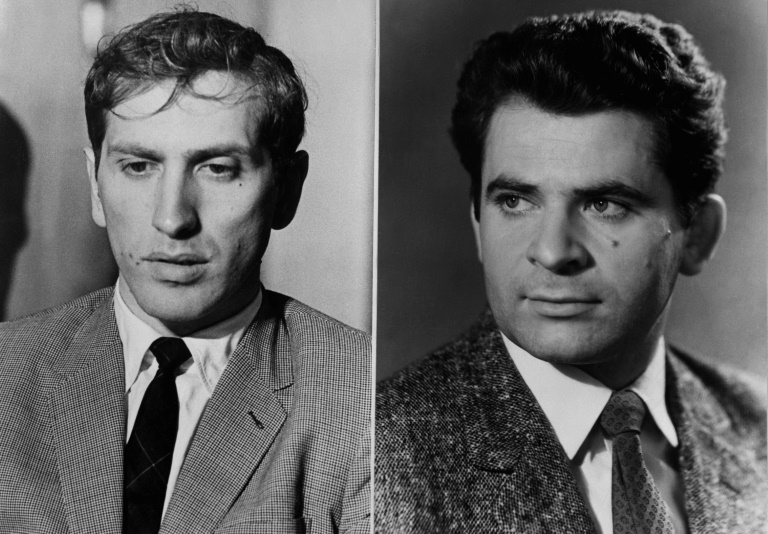
Fifty years ago, the Cold War was transposed to a chessboard as Bobby Fischer of the United States took on defending world champion Boris Spassky of the Soviet Union in a thrilling East-West clash dubbed the “match of the century”.

Some 50 million TV viewers tuned into the two-month-long tussle in the Icelandic capital Reykjavik, where chess’s enfant terrible Fischer set out to wrest the championship from the Soviet Union, which had dominated the game for decades.

AFP reported daily from the competition. This account is based on its reporting.

– Polar opposites –

On one side of the table is Fischer, an eccentric, fiercely competitive 29-year-old former boy wonder, who was holding his own among America’s greats by the age of 12 and has already won eight US chess championships. 

Born in Chicago, Fischer grew up in the New York suburb of Brooklyn where his older sister taught him chess at the age of six.

He became the world’s youngest ever chess grand master at the age of 15 and dropped out of school to focus on the game.

AFP’s correspondent in Reykjavik says “he has few friends and doesn’t care to make any” and that his motto is: “It’s not enough to defeat an adversary, you have to crush them.”

He goes into the competition having won 101 out of his previous 120 games.

In the other seat is 35-year-old Boris Spassky, a trained journalist and married father of two children who has been world champion for three years. 

Born in Leningrad (now Saint Petersburg) in 1937 he was sent to an orphanage in Siberia during the Nazi German siege of the city during World War II.

A pure product of the Soviet chess machine, he began playing at five and became world champion at 19.

A likeable, modest character, he is the antithesis of the cantankerous Fischer. 

– Temper tantrums –

Fischer is the first US-born player to have a stab at the title (since 1946, the two finalists have always been Soviet).

Neutral countries vie to host the match, which is eventually awarded to Iceland.

Fischer makes a series of demands before agreeing to participate. The venue, a sports hall, must be sound-proofed, fitted with a new carpet and the room temperature kept to 22.5 degrees Celsius.

But on the eve of the competition, he has still not shown up and Spassky is growing impatient. 

Henry Kissinger, who is US national security advisor at the time under President Richard Nixon, calls Fischer and convinces him to take part.

AFP reports that the US champion “appears tired” when he lands in Reykjavik on July 4. He ducks out of the opening ceremony. An outraged Spassky demands an apology.

The competition finally gets underway on July 11, nine days late.

– ‘Scandal of the century’ –

Spassky arrives 20 minutes early to the opening game to “vigorous applause” from the 2,500 spectators in the packed hall. Fischer dashes in at the last minute, “pushes past the photographers, rushes towards Spassky, shakes his hand” and sits down. The game is finally on.

The two proceed cautiously and at the 28th move, the game looks headed for a draw. But Fischer then makes two bad moves and resigns on the 56th move.

Stung by his loss, he demands that all cameras be removed from the hall. When the request is denied, he refuses to show up to the second game, forfeiting it. 

“The spectators are disappointed and exasperated,” AFP reports. 

Icelandic daily Timinn declares that the match of the century has turned into the “scandal of the century”. 

As the third game looms Fischer is nowhere to be found. Kissinger again picks up the phone. “Please, continue the game,” Fischer later quotes him as pleading.

The hall is packed when the competition resumes on July 16, but the stage is empty. Spassky has accepted Fischer’s demand that they play in a small back room normally used for ping pong (with a camera in the ceiling broadcasting the events to the main hall outside).

Some commentators see Spassky’s concession as a bad omen for the Russian, who goes on to lose the game.

The fourth is a draw and Spassky resigns the fifth.

The two are now neck-and-neck.

– Games for the history books –

The 6th game is one of the toughest of the competition. Spassky throws in the towel at the 41st move.

“I’m proud of this game, it was one of my best,” Fischer tells AFP, adding: “When Spassky joined the crowd in applauding my victory I thought ‘what a gentleman’.”

Spassky also resigns the 13th game, a chess masterclass, according to AFP’s correspondent, who reported that, after congratulating his opponent, Spassky “sits back down in contemplation for six minutes, his gaze lost in the chessboard”. 

Fischer is looking increasingly assured of victory. “He will be champion,” his sister Joan tells AFP after the seventh game.

The Russian asks that the 14th game be postponed and the next seven are all draws. 

Game 21, which goes to Fischer, turns out to be the last. The next day Spassky resigns the game, making Fischer, who is still asleep, the 11th world chess champion, with a final score of 12.5-8.5.

– From hero to zero –

With the chessboard seen as a metaphor for great power politics, Fischer’s win is feted in the United States as a symbolic victory of capitalism over communism. 

Nixon invites Fischer to the White House.

A broken Spassky returns to an icy reception in the Soviet Union, where he is banned from taking part in chess competitions and placed under surveillance by the KGB, the secret police. 

In 1976, he marries a Frenchwoman and moves to Paris, but the self-professed Russian nationalist later returns to Moscow.

Fischer never plays another chess competition. 

In 1975, he refuses to defend his title against the Soviet Union’s Anatoly Karpov and therefore loses it. A conspiracy theorist with a visceral hatred of “world Jewry” he disappears for years at a time, re-emerging in 1992 for a rematch against Spassky in Yugoslavia, despite the war-torn country being under US sanctions.

In 2004 he renounces his US citizenship and later moves to Iceland where he dies on January 17, 2008 at the age of 64 — the number of squares on a chessboard.

Musk and Twitter: From volatile courtship to messy divorce

Elon Musk’s pursuit of Twitter was a melodrama from beginning to end — a volatile courtship between a mercurial billionaire and the massively influential social media platform.

That relationship — an obvious love-hate affair from Musk’s side — now seems set to end in an acrimonious divorce.

– The courtship –

It all began with an expensive first date: Musk — a longtime Twitter user known for inflammatory tweets — snapped up 73.5 million shares at a cost of nearly $2.9 billion.

The purchase, which was revealed in an April 4 regulatory filing and gave him a 9.2 percent stake in the company, sent Twitter shares soaring and sparked speculation that Musk was seeking an active role in the social media company’s operations.

It also earned him a seat on the board. CEO Parag Agrawal announced the offer — in a tweet, of course — and called Musk “a passionate believer and intense critic of the service which is exactly what we need.”

But the honeymoon didn’t last long: Agrawal said on April 10 that Musk had decided against joining the board, a move the Twitter CEO believed was “for the best.”

Rather than amicably parting ways, Musk launched a hostile takeover bid for the company, offering $54.20 a share, an April 13 filing showed.

After saying it would “carefully review” the offer, Twitter adopted a “poison pill” defense, announcing a plan that would allow shareholders to purchase additional stock.

– The engagement –

Then came the plans for a walk down the corporate aisle: Twitter reversed course and said on April 25 that it was selling to Musk in a deal valued at $44 billion.

But weddings can be expensive, so Musk took action to cover the cost, parting with $8.4 billion in shares in electric carmaker Tesla. He pledged up to $21 billion from his personal fortune, with the rest financed by debt.

Musk was already planning his new life with Twitter, saying a few days later that he would lift the ban on Donald Trump, which was handed down after the January 2021 riot at the US Capitol by the then-president’s supporters.

– The breakup –

But Musk soon began showing signs of cold feet, saying on May 13 that the deal to buy Twitter was “temporarily on hold” pending details on spam and fake accounts on the platform.

In early June, advocacy groups decided to speak now instead of forever holding their peace, launching a campaign to stop Musk from going through with the purchase, which they said would allow him to “hand a megaphone to demagogues and extremists.”

Musk meanwhile accused Twitter of failing to provide data on fake accounts, and threatened to withdraw his bid.

On June 16, however, he offered signs that the match was still a go, pitching a vision to Twitter staff of a one-billion-user platform. But he was hazy on issues such as potential layoffs and free speech limits.

It all came crashing down on July 8, when Musk called off the wedding and accused Twitter of making “misleading” statements about the number of fake accounts.

The breakup between the billionaire and the social media platform is set to be far from friendly.

Twitter’s chairman tweeted that the company will pursue legal action to enforce the deal, setting up a pricey showdown as the divorce heads to court.

Musk and Twitter: From volatile courtship to messy divorce

Elon Musk’s pursuit of Twitter was a melodrama from beginning to end — a volatile courtship between a mercurial billionaire and the massively influential social media platform.

That relationship — an obvious love-hate affair from Musk’s side — now seems set to end in an acrimonious divorce.

– The courtship –

It all began with an expensive first date: Musk — a longtime Twitter user known for inflammatory tweets — snapped up 73.5 million shares at a cost of nearly $2.9 billion.

The purchase, which was revealed in an April 4 regulatory filing and gave him a 9.2 percent stake in the company, sent Twitter shares soaring and sparked speculation that Musk was seeking an active role in the social media company’s operations.

It also earned him a seat on the board. CEO Parag Agrawal announced the offer — in a tweet, of course — and called Musk “a passionate believer and intense critic of the service which is exactly what we need.”

But the honeymoon didn’t last long: Agrawal said on April 10 that Musk had decided against joining the board, a move the Twitter CEO believed was “for the best.”

Rather than amicably parting ways, Musk launched a hostile takeover bid for the company, offering $54.20 a share, an April 13 filing showed.

After saying it would “carefully review” the offer, Twitter adopted a “poison pill” defense, announcing a plan that would allow shareholders to purchase additional stock.

– The engagement –

Then came the plans for a walk down the corporate aisle: Twitter reversed course and said on April 25 that it was selling to Musk in a deal valued at $44 billion.

But weddings can be expensive, so Musk took action to cover the cost, parting with $8.4 billion in shares in electric carmaker Tesla. He pledged up to $21 billion from his personal fortune, with the rest financed by debt.

Musk was already planning his new life with Twitter, saying a few days later that he would lift the ban on Donald Trump, which was handed down after the January 2021 riot at the US Capitol by the then-president’s supporters.

– The breakup –

But Musk soon began showing signs of cold feet, saying on May 13 that the deal to buy Twitter was “temporarily on hold” pending details on spam and fake accounts on the platform.

In early June, advocacy groups decided to speak now instead of forever holding their peace, launching a campaign to stop Musk from going through with the purchase, which they said would allow him to “hand a megaphone to demagogues and extremists.”

Musk meanwhile accused Twitter of failing to provide data on fake accounts, and threatened to withdraw his bid.

On June 16, however, he offered signs that the match was still a go, pitching a vision to Twitter staff of a one-billion-user platform. But he was hazy on issues such as potential layoffs and free speech limits.

It all came crashing down on July 8, when Musk called off the wedding and accused Twitter of making “misleading” statements about the number of fake accounts.

The breakup between the billionaire and the social media platform is set to be far from friendly.

Twitter’s chairman tweeted that the company will pursue legal action to enforce the deal, setting up a pricey showdown as the divorce heads to court.

'Sopranos' star Tony Sirico dies aged 79: family

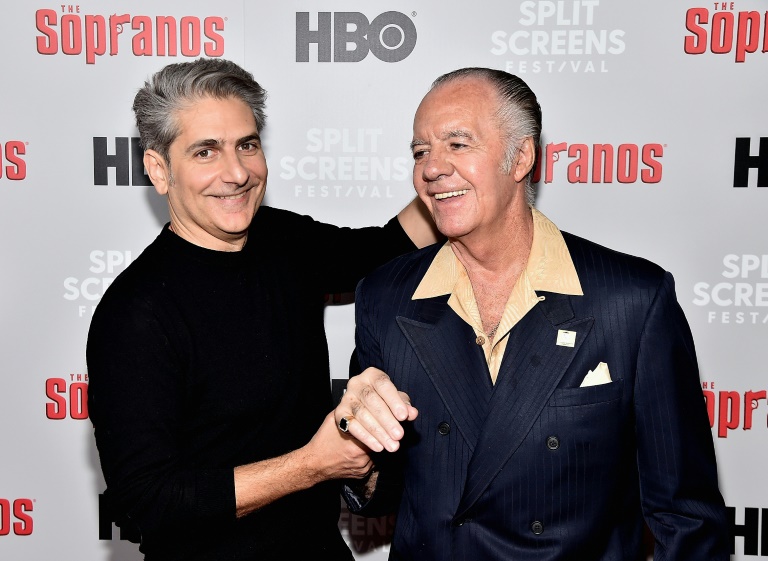
US actor Tony Sirico, best known for portraying Paulie “Walnuts” Gualtieri in “The Sopranos,” has died aged 79, his family and a former castmate said Friday.

Sirico played minor mobster roles in television and film for decades before being cast in his fifties as the eccentric and sometimes brutal Paulie on HBO’s hit show — becoming one of the series’ most memorable characters.

“It is with great sadness, but with incredible pride, love and a whole lot of fond memories, that the family of Gennaro Anthony ‘Tony’ Sirico wishes to inform you of his death on the morning of July 8, 2022,” his family said in a statement on Facebook.

His “Sopranos” co-star Michael Imperioli added: “It pains me to say that my dear friend, colleague and partner in crime, the great Tony Sirico has passed away today.”

“Tony was like no one else: he was as tough, as loyal and as big hearted as anyone I’ve ever known… Heartbroken today,” Imperioli — who played Christopher Moltisanti — wrote on Instagram.

Sirico’s representatives did not immediately respond to an AFP request for comment.

Born in Brooklyn, New York in 1942, Sirico was frequently arrested as a youth, but caught the acting bug in prison after seeing a troupe of ex-convicts perform.

He took multiple small parts as thugs and wise guys from the late 1970s onward, appearing in TV shows such as “Kojak” and “Miami Vice,” and mob-themed films including “Goodfellas” and “Mickey Blue Eyes.”

Sirico was in his fifties when he was cast for his best-known part in “Sopranos,” the ground-breaking HBO series which explored the private lives of a New Jersey crime group.

His character Paulie delivered many of the show’s most memorable lines, displaying both a playful humor and a vicious loyalty to boss Tony Soprano. 

Close Bitnami banner
Bitnami