US Business

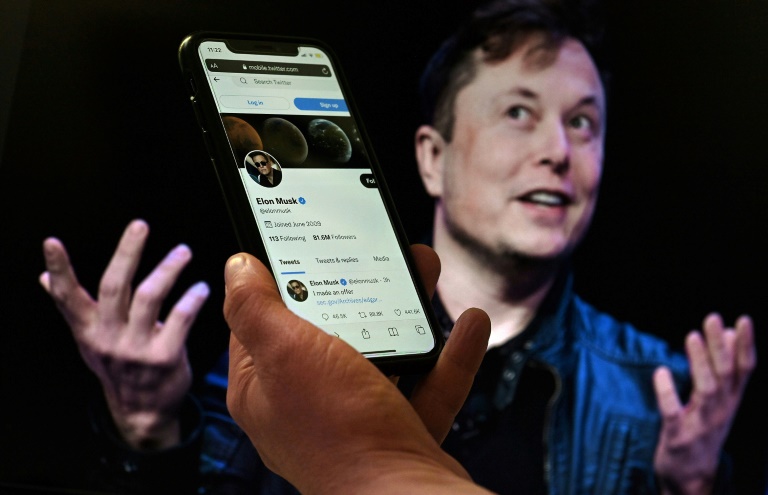
Elon Musk: smasher of elites or self-serving pragmatist?

He has scorned organized labor, mocked political correctness and espoused small government — so conservatives may be disappointed that he wants to pull out of his deal to buy Twitter.

Yet smoking marijuana during interviews, courting Hollywood with movie cameos and musing about nuking Mars make Elon Musk an improbable talisman for political traditionalists.

In polarized America, the 51-year-old triple divorcee’s opposition to Covid-19 restrictions is often taken to demonstrate Republican sympathies, although his disdain for draconian immigration control suggests the opposite.

The world’s richest man has berated President Joe Biden for proposing a tax credit for electric cars produced by unionized workers. He has even called for an end to all US federal subsidies.

Yet he has aggressively pursued government support himself, taking billions in handouts for his own companies.

James Hickman, founder of the libertarian-leaning Sovereign Man newsletter, sees Musk as a check on the “tyranny of the minority” — a supposed cabal of elites in tech, media and academia who make decisions for the rest of us and “consistently get it wrong.”

“What makes someone a true libertarian is an outright rejection of labels and being completely independent in one’s thinking,” Hickman told AFP.

“Musk clearly qualifies in this regard.”

Other analysts have suggested that, as inconsistent as his political philosophy appears, Musk rarely diverges from his business interests.

Meanwhile his political donations don’t cleave to one party or point of view either.

A self-styled “moderate” independent — although he has described himself as a “socialist” too — Musk ostentatiously moved to deeply conservative Texas from ultra-liberal California in 2020.

He has given donations to the governors of both states, despite criticizing Texas anti-abortion laws and a “complacent” business environment in California.

– Free speech, or not? –

Other donations have gone to Democratic grandees Hillary Clinton and Barack Obama, right-wing House Minority Leader Kevin McCarthy and the Republican Party itself. 

He is also not averse to lashing out on social media at Washington establishment figures, from one-time presidential nominee Elizabeth Warren (“Senator Karen”) to Biden himself.

And then there’s the issue of free speech, which he has called “the bedrock of a functioning democracy.”

Musk has complained that Twitter is too censorious, simultaneously illustrating and undermining his point in a tweet depicting the company’s CEO Parag Agrawal as brutal Soviet dictator Joseph Stalin.

Critics say his passion for unfettered conversation has often appeared less profound when his own interests are at stake.  

Some media outlets have raised questions over Musk’s reaction to journalists writing stories critical of Tesla.

Accused of unleashing his army of supporters on individual reporters, he once mulled creating a website for the profession as a whole called Pravda — presumably a tribute to the Soviet propaganda outlet.

“Going to create a site where the public can rate the core truth of any article & track the credibility score over time of each journalist, editor & publication,” he tweeted in 2018. Nothing came of it.

– ‘Pragmatic’ and ‘self-interested’ –

Former Hillary Clinton campaign staffer Judd Legum has pointed to a tweet — also 2018 — in which Musk appeared to threaten to rescind employee stock options at Tesla if workers decided to join a union.

Critics say there is a pattern of suppressing less powerful voices that has also included forcing workers to sign restrictive non-disclosure agreements (NDAs).

A Tesla NDA reportedly warned employees that “they were not allowed to speak with media without explicit written permission” — but the company neglected to add that labor laws protected them from reprisals when discussing work conditions.

Baruch Labunski, an internet marketing expert and web consultancy CEO, says that, amid much “contradictory evidence,” it’s safest to describe Musk’s politics as “pragmatic.”

“He is frequently characterized as a libertarian but that designation doesn’t accurately describe the man whose businesses have benefited from government tax breaks and business subsidies,” Labunski told AFP.

Musk is a “fundamentally self-interested” celebrity, says Labunski.

“Musk gets to play in and around politics because he’s rich and he’s outspoken.”

Elon Musk: smasher of elites or self-serving pragmatist?

He has scorned organized labor, mocked political correctness and espoused small government — so conservatives may be disappointed that he wants to pull out of his deal to buy Twitter.

Yet smoking marijuana during interviews, courting Hollywood with movie cameos and musing about nuking Mars make Elon Musk an improbable talisman for political traditionalists.

In polarized America, the 51-year-old triple divorcee’s opposition to Covid-19 restrictions is often taken to demonstrate Republican sympathies, although his disdain for draconian immigration control suggests the opposite.

The world’s richest man has berated President Joe Biden for proposing a tax credit for electric cars produced by unionized workers. He has even called for an end to all US federal subsidies.

Yet he has aggressively pursued government support himself, taking billions in handouts for his own companies.

James Hickman, founder of the libertarian-leaning Sovereign Man newsletter, sees Musk as a check on the “tyranny of the minority” — a supposed cabal of elites in tech, media and academia who make decisions for the rest of us and “consistently get it wrong.”

“What makes someone a true libertarian is an outright rejection of labels and being completely independent in one’s thinking,” Hickman told AFP.

“Musk clearly qualifies in this regard.”

Other analysts have suggested that, as inconsistent as his political philosophy appears, Musk rarely diverges from his business interests.

Meanwhile his political donations don’t cleave to one party or point of view either.

A self-styled “moderate” independent — although he has described himself as a “socialist” too — Musk ostentatiously moved to deeply conservative Texas from ultra-liberal California in 2020.

He has given donations to the governors of both states, despite criticizing Texas anti-abortion laws and a “complacent” business environment in California.

– Free speech, or not? –

Other donations have gone to Democratic grandees Hillary Clinton and Barack Obama, right-wing House Minority Leader Kevin McCarthy and the Republican Party itself. 

He is also not averse to lashing out on social media at Washington establishment figures, from one-time presidential nominee Elizabeth Warren (“Senator Karen”) to Biden himself.

And then there’s the issue of free speech, which he has called “the bedrock of a functioning democracy.”

Musk has complained that Twitter is too censorious, simultaneously illustrating and undermining his point in a tweet depicting the company’s CEO Parag Agrawal as brutal Soviet dictator Joseph Stalin.

Critics say his passion for unfettered conversation has often appeared less profound when his own interests are at stake.  

Some media outlets have raised questions over Musk’s reaction to journalists writing stories critical of Tesla.

Accused of unleashing his army of supporters on individual reporters, he once mulled creating a website for the profession as a whole called Pravda — presumably a tribute to the Soviet propaganda outlet.

“Going to create a site where the public can rate the core truth of any article & track the credibility score over time of each journalist, editor & publication,” he tweeted in 2018. Nothing came of it.

– ‘Pragmatic’ and ‘self-interested’ –

Former Hillary Clinton campaign staffer Judd Legum has pointed to a tweet — also 2018 — in which Musk appeared to threaten to rescind employee stock options at Tesla if workers decided to join a union.

Critics say there is a pattern of suppressing less powerful voices that has also included forcing workers to sign restrictive non-disclosure agreements (NDAs).

A Tesla NDA reportedly warned employees that “they were not allowed to speak with media without explicit written permission” — but the company neglected to add that labor laws protected them from reprisals when discussing work conditions.

Baruch Labunski, an internet marketing expert and web consultancy CEO, says that, amid much “contradictory evidence,” it’s safest to describe Musk’s politics as “pragmatic.”

“He is frequently characterized as a libertarian but that designation doesn’t accurately describe the man whose businesses have benefited from government tax breaks and business subsidies,” Labunski told AFP.

Musk is a “fundamentally self-interested” celebrity, says Labunski.

“Musk gets to play in and around politics because he’s rich and he’s outspoken.”
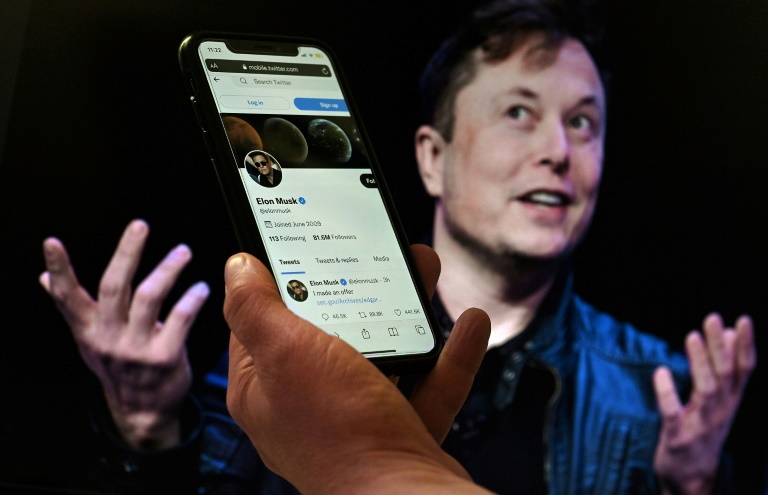
Musk ditches Twitter deal, triggering defiant response

Elon Musk on Friday pulled the plug on his $44 billion deal to buy Twitter, accusing the social media giant of “misleading” statements about the number of fake accounts, a regulatory filing showed.

Musk’s effort to terminate the deal that he inked in April sets the stage for an epic court battle over a billion-dollar breakup fee and more.

“Mr. Musk hereby exercises (the) right to terminate the Merger Agreement and abandon the transaction,” his lawyers said in a letter to Twitter, a copy of which was filed with the Securities and Exchange Commission.

Musk’s change of heart appeared to suggest some “buyer’s remorse” for offering a price of $54.20 per share that now appears “laughable,” CFRA Research senior equity analyst Angelo Zino said in a note to investors before the deal was officially nixed.

Twitter has held firm that no more than five percent of accounts are run by software instead of people, while Musk has said he believes the number to be much higher.

Immediately after the news broke, Twitter board chair Bret Taylor vowed to sue Musk to hold him to the terms of the buyout deal, saying “we are confident we will prevail.”

The clock was ticking for Musk to make a decision, with Twitter’s board recommending shareholders approve the buyout at a special vote expected to be held in August.

Musk — the world’s richest man — used a chunk of his fortune in Tesla shares to back loans to buy Twitter, but the tumult and market factors have pushed down the electric car maker’s stock price.

“The Twitter deal has clearly caused chaos at Twitter and has resulted in an overhang on Tesla’s stock since April given the Musk financing angle, coupled by a brutal market backdrop for risk,” Wedbush analyst Dan Ives said in a note to investors.

“This soap opera has seen many twists and turns… this was always a head scratcher to go after Twitter at a $44 billion price tag for Musk and never made much sense to (Wall) Street, now it ends in a Twilight Zone.”

– ‘Erratic behavior’ –

Concerns about Tesla included worries that its chief executive was being distracted by the Twitter saga, and that the tech platform would certainly demand his attention if he owned it.

“I am sure Musk thought he could come out of the gate strong, generate a wave of buzz and then ride it to get investors who want a piece of something that looks like it is going to be big,” said Angelo Carusone, president of nonprofit group Media Matters for America.

“His erratic behavior obviously affected the price of Tesla shares, which undermined the financing everything was set on.”

Musk, 51, proclaimed in May that he would largely let anyone say anything allowed by law on Twitter, becoming a hero to ultra-conservatives offended by attempts to curb bullying, lies and other abuses on the platform.

His comments came during an annual event at which Twitter and other social media companies typically lock in bulk ad contracts worth hundreds of millions of dollars.

But a Twitter free-for-all would scrap precautions that brands want in place to make sure their ads aren’t associated with abusive posts, Carusone said.

“Musk couldn’t control himself long enough,” Carusone said. “He opened his mouth and pushed the first domino that has cascaded into blowing up the deal.”

Musk also faces a lawsuit accusing him of pushing down Twitter’s stock price in order to give himself an escape hatch from his buyout bid.

Twitter shares jumped to $51.70 in April when Musk’s deal was announced, only to plunge to $35.76 a month later as his commitment came into doubt. Twitter was priced at just below $37 a share in after-market trades on Friday.

Carusone believed Twitter shareholders should be furious with the company board as well as Musk.

“They got into bed with a madman and significantly harmed shareholder value as a result,” he said.

Musk ditches Twitter deal, triggering defiant response

Elon Musk on Friday pulled the plug on his $44 billion deal to buy Twitter, accusing the social media giant of “misleading” statements about the number of fake accounts, a regulatory filing showed.

Musk’s effort to terminate the deal that he inked in April sets the stage for an epic court battle over a billion-dollar breakup fee and more.

“Mr. Musk hereby exercises (the) right to terminate the Merger Agreement and abandon the transaction,” his lawyers said in a letter to Twitter, a copy of which was filed with the Securities and Exchange Commission.

Musk’s change of heart appeared to suggest some “buyer’s remorse” for offering a price of $54.20 per share that now appears “laughable,” CFRA Research senior equity analyst Angelo Zino said in a note to investors before the deal was officially nixed.

Twitter has held firm that no more than five percent of accounts are run by software instead of people, while Musk has said he believes the number to be much higher.

Immediately after the news broke, Twitter board chair Bret Taylor vowed to sue Musk to hold him to the terms of the buyout deal, saying “we are confident we will prevail.”

The clock was ticking for Musk to make a decision, with Twitter’s board recommending shareholders approve the buyout at a special vote expected to be held in August.

Musk — the world’s richest man — used a chunk of his fortune in Tesla shares to back loans to buy Twitter, but the tumult and market factors have pushed down the electric car maker’s stock price.

“The Twitter deal has clearly caused chaos at Twitter and has resulted in an overhang on Tesla’s stock since April given the Musk financing angle, coupled by a brutal market backdrop for risk,” Wedbush analyst Dan Ives said in a note to investors.

“This soap opera has seen many twists and turns… this was always a head scratcher to go after Twitter at a $44 billion price tag for Musk and never made much sense to (Wall) Street, now it ends in a Twilight Zone.”

– ‘Erratic behavior’ –

Concerns about Tesla included worries that its chief executive was being distracted by the Twitter saga, and that the tech platform would certainly demand his attention if he owned it.

“I am sure Musk thought he could come out of the gate strong, generate a wave of buzz and then ride it to get investors who want a piece of something that looks like it is going to be big,” said Angelo Carusone, president of nonprofit group Media Matters for America.

“His erratic behavior obviously affected the price of Tesla shares, which undermined the financing everything was set on.”

Musk, 51, proclaimed in May that he would largely let anyone say anything allowed by law on Twitter, becoming a hero to ultra-conservatives offended by attempts to curb bullying, lies and other abuses on the platform.

His comments came during an annual event at which Twitter and other social media companies typically lock in bulk ad contracts worth hundreds of millions of dollars.

But a Twitter free-for-all would scrap precautions that brands want in place to make sure their ads aren’t associated with abusive posts, Carusone said.

“Musk couldn’t control himself long enough,” Carusone said. “He opened his mouth and pushed the first domino that has cascaded into blowing up the deal.”

Musk also faces a lawsuit accusing him of pushing down Twitter’s stock price in order to give himself an escape hatch from his buyout bid.

Twitter shares jumped to $51.70 in April when Musk’s deal was announced, only to plunge to $35.76 a month later as his commitment came into doubt. Twitter was priced at just below $37 a share in after-market trades on Friday.

Carusone believed Twitter shareholders should be furious with the company board as well as Musk.

“They got into bed with a madman and significantly harmed shareholder value as a result,” he said.

US shares flat on strong job growth, euro closes in on dollar parity

Global stock markets finished mostly higher Friday, though Wall Street was flat following a surprisingly strong jobs report, while the euro was near parity with the dollar as traders bet on the prospect of a eurozone recession caused by soaring inflation.

The yen initially strengthened against the dollar following the assassination of Japan’s former prime minister, Shinzo Abe, before falling back.

Major US indices see-sawed throughout the day but still notched solid gains for the week, with investors weighing optimism that the US economy can withstand higher borrowing costs against fears the Fed will do too much to choke off growth and cause a downturn.

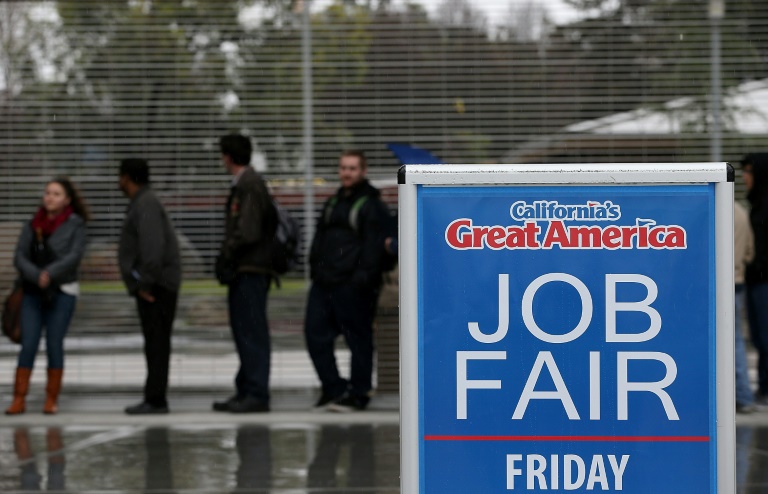
American employers added 372,000 new positions in the month, the Labor Department reported, far more than economists expected, while wage growth slowed slightly. 

The resilient US labor market gives the Federal Reserve more of a free hand to raise interest rates sharply to combat soaring inflation, although some investors still fear policymakers could do too much, choking off growth and causing a downturn.

Gregori Volokhine of Meeschaert Financial Services said the hope is the US economy avoids the “worst-case scenario,” where the economy slows but inflation stays high and the Fed continues to hike rates.

The jobs report was “not necessarily ideal but it offers comfort about the economy and gives the impression that the Fed will not do too much damage too quickly,” Volokhine said.

Fed officials have signaled they are still on target for another aggressive 75 basis point interest rate increase later this month, matching the move in June — the biggest since 1994 — but they will reassess later in the year.

– Dollar parity? –

The euro on Friday slumped to $1.0072, a fresh 20-year low, before recovering back above $1.018.

“The depreciation in the euro to its lowest level in almost two decades against the dollar this week in large part reflects investors’ view that the ECB will tighten less aggressively than the Fed,” said Jessica Hinds, senior Europe economist at Capital Economics.

Meanwhile, world oil prices rose following the US jobs report, comforted about the health of the world’s top economy and demand for oil.

Asian stock markets closed higher, boosted by hopes that US President Joe Biden would remove some tariffs from Chinese goods, and amid reports Beijing was considering a huge stimulus push to aid the struggling Chinese economy.

– Political upheaval –

Markets are also tracking political unrest in Britain and Japan.

London’s benchmark FTSE 100 index edged 0.1 percent higher — and the pound was mixed — one day after Prime Minister Boris Johnson said he was stepping down later this year following a string of scandals.

In Japan, Abe was assassinated by a gunman who opened fire at close range as the hugely influential politician delivered a campaign speech ahead of upper house elections. 

The murder of the 67-year-old, who had been Japan’s longest-serving leader, stunned the nation and prompted an international outpouring of grief and condemnation.

The killing “could be negative for markets if the government’s policy, including its stance on monetary easing, is affected, as it was evident that he was pulling the strings behind the scenes in many ways,” said Masahiro Yamaguchi at SMBC Trust Bank.

“If it becomes possible for (current Prime Minister Fumio) Kishida to carry out policies he wanted to, such as financial tax and regulations on share buy-back, that would be negative for markets.”

– Key figures at around 2100 GMT –

New York – Dow: UP 1.1 percent at 31,384.55 (close)

New York – S&P 500: UP 1.5 percent at 3,902.62 (close)

New York – Nasdaq: UP 2.3 percent at 11,621.35 (close)

Euro/dollar: UP at 1.0183 from $1.0162 on Thursday

Pound/dollar: UP at 1.2034 from $1.2024 

Euro/pound: UP at 84.59 pence from 84.49 pence

Dollar/yen: UP at 136.10 yen from 136.01 yen

EURO STOXX 50: UP 0.5 percent at 3,505.40 (close)

London – FTSE 100: UP 0.1 percent at 7,196.24 (close)

Frankfurt – DAX: UP 1.3 percent at 13,105.23 (close)

Paris – CAC 40: UP 0.4 percent at 6,033.13 (close)

Tokyo – Nikkei 225: UP 0.1 percent at 26,517.19 (close)

Hong Kong – Hang Seng Index: UP 0.4 percent at 21,725.78 (close)

Shanghai – Composite: DOWN 0.4 percent at 3,356.08 (close)

Brent North Sea crude: UP 2.4 percent at $107.12 per barrel

West Texas Intermediate: UP 2.0 percent at $104.78 per barrel

US border guards on horseback acted unprofessionally: probe

US border guards on horseback acted in an unprofessional manner toward Haitians trying to enter the country, but did not strike migrants with their reins, an official investigative released Friday found.

Photos of guards seeking to tackle migrants near Del Rio, Texas last year sparked a firestorm of criticism. In one shot, an agent on horseback grabbed a man by his shirt, while another shows him holding a group at bay by twirling his reins.

“A careful review and analysis of videos photos and eyewitness accounts” found “no evidence Border Patrol agents involved in this incident struck any person with their reins, intentionally or otherwise,” Customs and Border Patrol Commissioner Chris Magnus told a news conference, presenting the findings of the probe.

But “several agents engaged in unprofessional or dangerous behavior, including one instance in which an agent used denigrating and offensive language,” he said in a statement.

“Failures to maintain command and control over Horse Patrol Units, lack of appropriate policies and training, and the overall chaotic nature of the situation at Del Rio at the time contributed to the incident,” he said.

Customs and Border Protection said that “discipline has been proposed in the cases of four agents.”

In the immediate aftermath of the September 2021 confrontation, President Joe Biden described the agents’ conduct as “outrageous” and said: “I promise you: those people will pay.”

Biden hits back on abortion, calls Supreme Court 'out of control'

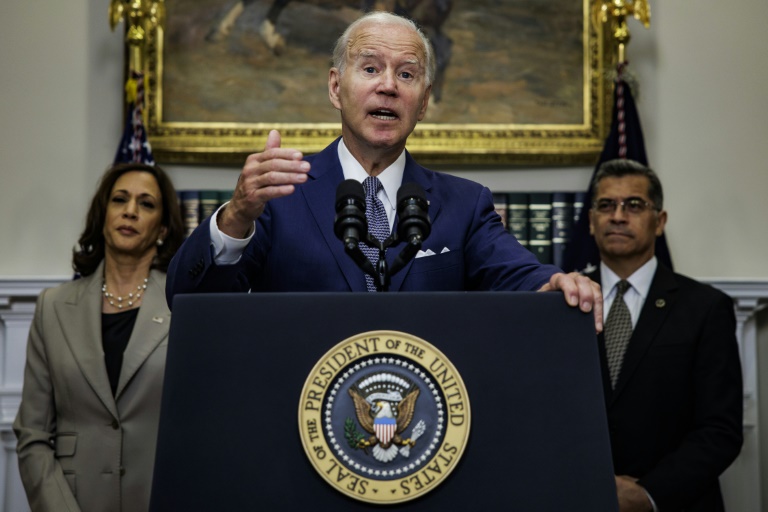
President Joe Biden said Friday that federal legislation offered the fastest route to restoring US abortion rights and urged voters to elect pro-choice legislators in upcoming elections in defiance of an “out of control” Supreme Court.

Under pressure to take a tougher line on defending women’s reproductive rights, Biden signed an executive order aimed at shoring up access to abortion after what he described as the court’s “terrible, extreme” decision to remove the constitutional right to terminate a pregnancy.

But the president, whose room for manoeuvre on the issue is limited, said the most effective response would be made through the ballot box in the November mid-term elections by handing him firm control of the legislature.

“Vote, vote, vote,” he said in an appeal particularly aimed at American women.

“The fastest route to restore Roe is to pass a national law codifying Roe, which I will sign immediately upon its passage at my desk. We cannot wait,” Biden said, referring to the 1973 Roe v Wade ruling that established the right to abortion.

If Republicans were to take control of Congress, he also vowed to veto any effort to pass a federal ban on abortion.

“We cannot allow an out of control Supreme Court working in conjunction with extremist elements of the Republican Party to take away freedoms and our personal autonomy,” he said.

Biden has been criticized from within his own Democratic Party for perceived inaction since the Supreme Court ruling on June 24.

After the ruling, several states have banned or severely restricted abortion and others are expected to follow suit. 

– ‘Not nearly enough’ –

Many Democrats, often speaking anonymously in the press, have complained that Biden and his team have failed to respond adequately to the bombshell judgment by the Supreme Court.

Seeking to recover, Biden on Friday signed an executive order designed to protect women’s sensitive health-related data and “fight digital surveillance related to reproductive health care services.”

Advocacy groups are warning of the risks posed by women’s online data such as their geolocation and apps that monitor their menstrual cycles, which they say could be used to go after women who have had abortions.

Biden’s order also seeks to protect mobile clinics deployed to the borders of states that have banned abortion.

The administration wants to guarantee access to contraception and abortion medication and set up a network of volunteer lawyers to help women on abortion issues, the White House said.

“The executive actions being undertaken are needed first steps, but it’s not nearly enough,” said Women’s March director Rachel O’Leary Carmona in a statement.

“I call on the administration to recognize the true emergency we are in. Get creative. Get caught trying.  Don’t let norms, or decency, or ‘tradition’ stand in your way. Lives are on the line.”

But Biden cannot do much to battle the Supreme Court, or the states hostile to him when he lacks a solid majority in Congress.

So he is calling on Americans to turn out in droves and vote Democrat in the midterm elections.

The goal is to codify the right to abortion as a federal law, which would nullify state decisions to ban the procedure.

Many Democrats fear this drive to get out the vote will flop. Biden is now an unpopular president and Americans’ biggest worry these days is sky-high inflation. 

And beyond the abortion issue some Democrats wonder if Biden, 79, a centrist who shuns headline-grabbing action, has the ability to take on an aggressively conservative American right in an era of acute political tension.

All he has to do is look at press editorials of recent days, including in news outlets seen as sympathetic.

“Is Joe Biden the wrong president at the wrong time?” read a headline Thursday in The Washington Post, while The Atlantic magazine asked “Is Biden a Man out of Time?”

NASA reveals Webb telescope's first cosmic targets

NASA said Friday the first cosmic images from the James Webb Space Telescope will include unprecedented views of distant galaxies, bright nebulae, and a faraway giant gas planet.

The US, European and Canadian space agencies are gearing up for a big reveal on July 12 of early observations by the $10 billion observatory, the successor to Hubble that is set to reveal new insights into the origins of the universe.

“I’m looking very much forward to not having to keep these secrets anymore, that will be a great relief,” Klaus Pontoppidan, an astronomer at the Space Telescope Science Institute (STSI) that oversees Webb, told AFP last week.

An international committee decided the first wave of full-color scientific images would include the Carina Nebula, an enormous cloud of dust and gas 7,600 light years away, as well as the Southern Ring Nebula, which surrounds a dying star 2,000 light years away.

Carina Nebula is famous for its towering pillars that include “Mystic Mountain,” a three-light-year-tall cosmic pinnacle captured in an iconic image by Hubble.

Webb has also carried out a spectroscopy — an analysis of light that reveals detailed information — on a faraway gas giant called WASP-96 b, which was discovered in 2014.

Nearly 1,150 light-years from Earth, WASP-96 b is about half the mass of Jupiter and zips around its star in just 3.4 days.

Next comes Stephan’s Quintet, a compact galaxy 290 million light years away. Four of the five galaxies within the quintet are “locked in a cosmic dance of repeated close encounters,” NASA said.

Finally, and perhaps most enticing of all, Webb has gathered an image using foreground galaxy clusters called SMACS 0723 as a kind of cosmic magnifying glass for the extremely distant and faint galaxies behind it. 

This is known as “gravitational lensing” and uses the mass of foreground galaxies to bend the light of objects behind them, much like a pair of glasses.

Dan Coe, an astronomer at STSI, told AFP on Friday that even in its first images, the telescope had broken scientific ground.

“When I first saw the images… of this deep field of this galaxy cluster lensing, I looked at the images, and I suddenly learned three things about the universe that I didn’t know before,” he said.

“It’s totally blown my mind.”

Webb’s infrared capabilities allow it to see deeper back in time to the Big Bang, which happened 13.8 billion years ago, than any instrument before it.

Because the Universe is expanding, light from the earliest stars shifts from the ultraviolet and visible wavelengths it was emitted in, to longer infrared wavelengths — which Webb is equipped to detect at an unprecedented resolution.

Fed's Brainard says recent upheavel shows need for crypto rules

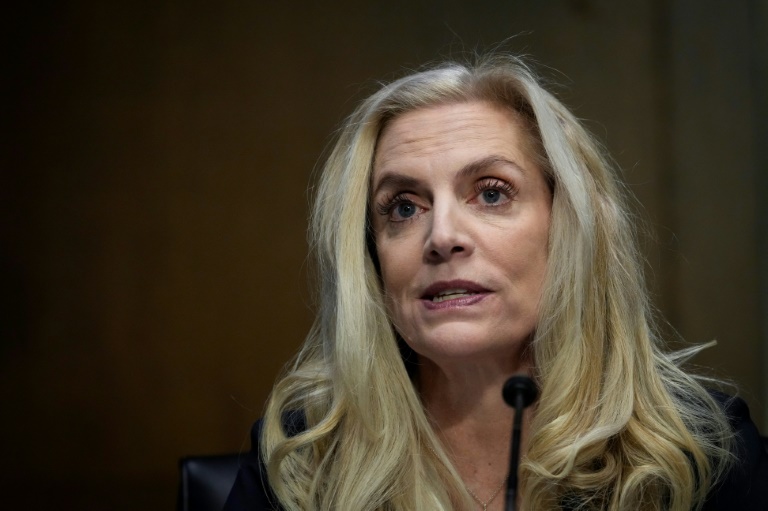
Recent upheaval in the cryptocurrency markets shows the sector is subject to similar risks as conventional investments, underscoring the need for regulation to protect against the “false allure” of a quick profit, Federal Reserve Vice Chair Lael Brainard said Friday.

“The crypto financial system turns out to be susceptible to the same risks that are all too familiar from traditional finance,” Brainard said at a Bank of England conference.

“So this is the right time to ensure that like risks are subject to like regulatory outcomes and like disclosure so as to help investors distinguish between genuine, responsible innovation and the false allure of seemingly easy returns that obscures significant risk.”

The comments come as the slump in bitcoin and other digital currencies continues to reverberate across the industry, denting players in the fledgling financial universe.

This includes a bankruptcy filing by US crypto lender Voyager Digital, the crash of the Terra cyptocurrency, the liquidation of Singapore-based cryptocurrency hedge fund Three Arrows Capital, and moves by crypto lender Celsius to suspend customer redemptions.

Brainard said despite investment losses so far, “the crypto financial system does not yet appear to be so large or so interconnected with the traditional financial system as to pose a systemic risk.”

Her remarks came a day after Fed Governor Christopher Waller also highlighted risks from cryptocurrencies, while saying that the turbulence had not yet threatened major financial institutions.

“That doesn’t mean if it was 10 times bigger wouldn’t have had an impact,” Waller said in a discussion with the National Association for Business Economics.

“It is important that the foundations for sound regulation of the crypto financial system be established now before the crypto ecosystem becomes so large or interconnected that it might pose risks to the stability of the broader financial system.”

Waller said the recent decline in virtual currencies has exposed the falsity of claims that such investments can be a hedge against inflation, or a way to offset other risky assets.

“Crypto-assets have plummeted in value and have proven to be highly correlated with riskier equities and with risk appetite more generally,” Waller said.

Euro closes in on dollar parity, stocks rise

The euro neared parity with the dollar on Friday, as traders bet on the prospect of a eurozone recession caused by soaring inflation.

The haven yen firmed against the dollar following the assassination of Japan’s former prime minister, Shinzo Abe, before falling back.

Wall Street and European equity markets were higher although data showing the US job market is holding up well also raised the chances of further aggressive interest rate hikes to combat inflation.  

There were 372,000 new positions added in the month, the Labor Department reported, far more than economists expected. 

The strong health of the jobs market gives the US Federal Reserve more of a free hand to raise interest rates sharply to combat soaring inflation.

“In our view, today’s payrolls report, which shows only a mild slowing in the labour market, increases the chances of the Fed hiking by 75 basis points at its next meeting on 26-27 July,” said Daniel Vernazza, chief international economist at UniCredit Bank.

Last month, the Fed raised interest rates by an aggressive 75 basis points, or 0.75 percentage points.

Concern by investors that the fast pace of monetary tightening by the Fed will tip the world’s top economy into recession has seen stocks swoon in recent weeks.

While the prospect of higher interest rates usually pushes stocks down, and Wall Street did open lower, equities pushed higher as the morning continued.

That was in part relief by investors that the jobs report shows the economy is holding up better than many feared, said Edward Moya at Oanda trading platform.

“Traders couldn’t remain that bearish over news that the consumer is better-off than what many were fearing,” he said.

The euro on Friday slumped to $1.0072, a fresh 20-year low, before recovering back above $1.01.

“The depreciation in the euro to its lowest level in almost two decades against the dollar this week in large part reflects investors’ view that the ECB will tighten less aggressively than the Fed,” said Jessica Hinds, senior Europe economist at Capital Economics.

In commodities trading on Friday, world oil prices rose following the publication of the US jobs report comforted worries about the health of the world’s top economy, and demand for oil.

The rise comes at the end of yet another volatile week for crude and assets in general as investors fear recession fears aggravated and faded.

Asian stock markets closed higher, boosted by hopes that US President Joe Biden would remove some tariffs from Chinese goods.

Equities won a lift also from reports Beijing was considering a huge stimulus push to the struggling Chinese economy by allowing local governments to raise billions of dollars through bond issuance for infrastructure projects.

– Political upheaval –

Markets are also tracking political unrest in Britain and Japan.

London’s benchmark FTSE 100 index edged 0.1 percent higher — and the pound was mixed — one day after Prime Minister Boris Johnson said he was stepping down later this year following a string of scandals.

In Japan, Abe was assassinated on Friday by a gunman who opened fire at close range as the hugely influential politician delivered a campaign speech ahead of upper house elections. 

The murder of the 67-year-old, who had been Japan’s longest-serving leader, stunned the nation and prompted an international outpouring of grief and condemnation.

The killing “could be negative for markets if the government’s policy, including its stance on monetary easing, is affected, as it was evident that he was pulling the strings behind the scenes in many ways”, noted Masahiro Yamaguchi at SMBC Trust Bank.

“If it becomes possible for (current Prime Minister Fumio) Kishida to carry out policies he wanted to, such as financial tax and regulations on share buy-back, that would be negative for markets.”

– Key figures at around 1530 GMT –

Euro/dollar: UP at 1.0182 from $1.0162 on Thursday

Pound/dollar: UP at $1.2032 from $1.2024 

Euro/pound: UP at 84.62 pence from 84.49 pence

Dollar/yen: UP at 136.11 yen from 136.01 yen

New York – Dow: UP 0.3 percent at 31,489.46 points

EURO STOXX 50: UP 0.5 percent at 3,506.55

London – FTSE 100: UP 0.1 percent at 7,196.24 (close)

Frankfurt – DAX: UP 1.3 percent at 13,105.23 (close)

Paris – CAC 40: UP 0.4 percent at 6,033.13 (close)

Tokyo – Nikkei 225: UP 0.1 percent at 26,517.19 (close)

Hong Kong – Hang Seng Index: UP 0.4 percent at 21,725.78 (close)

Shanghai – Composite: DOWN 0.4 percent at 3,356.08 (close)

Brent North Sea crude: UP 2.3 percent at $107.08 per barrel

West Texas Intermediate: UP 1.9 percent at $104.67 per barrel

Close Bitnami banner
Bitnami