US Business

US sees big job gains in June, fueling inflation worries

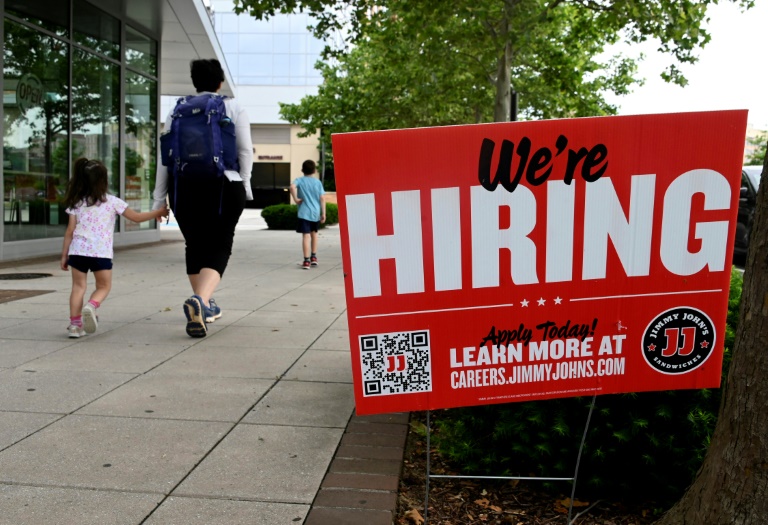
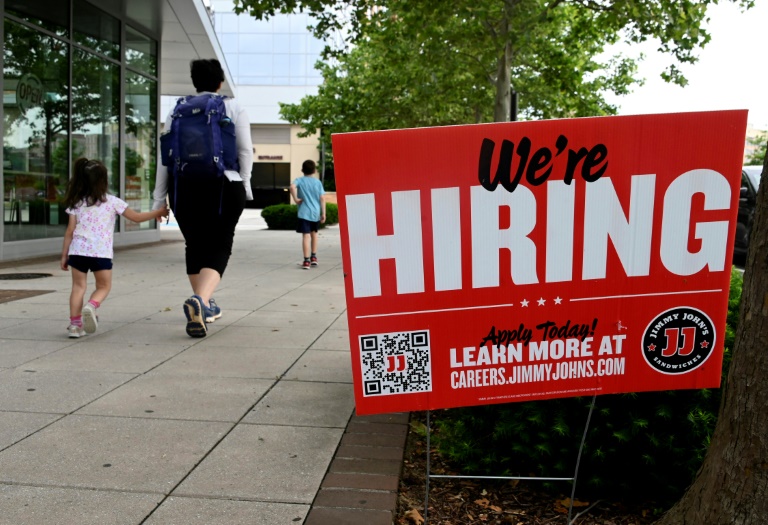
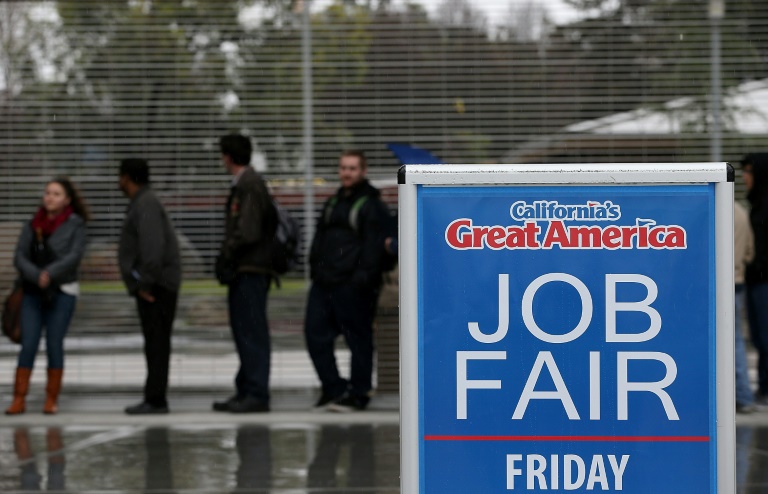
The US economy added far more jobs than expected in June and wages rose, adding fuel to worries about accelerating inflation, but giving President Joe Biden a reason to cheer.

Biden has seen his approval ratings plummet as Americans face the worst inflation surge in more than 40 years, but after the latest data Friday, he underscored the rapid jobs recovery in the wake of the pandemic.

But the closely-watched Labor Department report gave few indications the economy is slowing, which likely cements the central bank’s resolve to continue its aggressive interest rate hikes.

US employers added 372,000 net new jobs last month, nearly 100,000 more than economists forecast, and the unemployment rate held steady at 3.6 percent for the fourth month, the Labor Department reported.

The economy gained 2.74 million jobs in the first half of the year, more than most full years dating back to 2000.

“We have more Americans working today in the private sector then any day under my predecessor. More today than any time in American history … at a time when our critics said the economy was too weak,” Biden said at the White House.

He acknowledged that “Families are facing the cost of living crunch,” but said “today’s economic news confirms the fact that my economic plan is moving this country in a better direction.”

But with firms struggling to fill open positions and many potential workers staying on the sidelines, wages have been pushing higher, which economists fear could provoke a wage-price spiral.

– War on inflation –

The report showed average hourly earnings rose again to secure a 5.1 percent increase over the past 12 months, though that was slightly slower than in May and below the 5.6 percent peak in March.

And the share of adults in the labor force was little changed, but Diane Swonk of Grant Thornton noted that the number of people prevented from looking for work or working less due to the pandemic is rising, which could be holding back an influx of workers.

The data will provide little comfort to the Federal Reserve, which has declared war on inflation and launched a series of interest rate hikes to try to cool demand.

Atlanta Federal Reserve Bank President Raphael Bostic said the strong labor market is a good thing, but he stressed that he is “fully supportive” of another super-sized increase in the benchmark borrowing rate later this month, matching the three-quarter percentage point hike in June.

“We’re starting to see those first signs of slowdown, which is what we need because what we have right now is a great imbalance between supply and demand that’s driving the inflation,” Bostic said on CNBC.

That imbalance will have to come into alignment “if we’re going to get that inflation under control.”

The Fed’s efforts to tamp down price pressures has fueled fears it will push the world’s largest economy into recession.

Fed Chair Jerome Powell has argued that the strong US job market means the economy is well-positioned to withstand the rapid ramp up in borrowing rates, although he and other policymakers acknowledge the process may inflict some pain.

Biden said job growth is likely to slow in coming months following the rapid rebound, but “No country is better positioned than America to bring down inflation, without giving up all of the economic gains we have made over the last 18 months.”

– ‘Fanciful’ recession fears –

Total nonfarm employment remains just slightly below the pre-pandemic level in February 2020, but the private sector has recovered fully and has more jobs than before Covid-19 hit, according to the report.

Big gains in the month came in the health care and leisure and hospitality sectors, while retail rebounded after a big decline in May, the data showed. Manufacturing added 29,000 positions.

“June’s strong job growth, especially in the teeth of high inflation, shows that the expansion remains on solid ground,” said Robert Frick, corporate economist with Navy Federal Credit Union.

Strong consumer demand has anchored the post-pandemic recovery and defied expectations of a slowdown, but economists still believe job creation will start to slow.

Ian Shepherdson of Pantheon Macroeconomics said the recent data “support our view that talk of the economy being in recession right now is fanciful.”
US sees big job gains in June, fueling inflation worries

The US economy added far more jobs than expected in June and wages rose, adding fuel to worries about accelerating inflation, but giving President Joe Biden a reason to cheer.

Biden has seen his approval ratings plummet as Americans face the worst inflation surge in more than 40 years, but after the latest data Friday, he underscored the rapid jobs recovery in the wake of the pandemic.

But the closely-watched Labor Department report gave few indications the economy is slowing, which likely cements the central bank’s resolve to continue its aggressive interest rate hikes.

US employers added 372,000 net new jobs last month, nearly 100,000 more than economists forecast, and the unemployment rate held steady at 3.6 percent for the fourth month, the Labor Department reported.

The economy gained 2.74 million jobs in the first half of the year, more than most full years dating back to 2000.

“We have more Americans working today in the private sector then any day under my predecessor. More today than any time in American history … at a time when our critics said the economy was too weak,” Biden said at the White House.

He acknowledged that “Families are facing the cost of living crunch,” but said “today’s economic news confirms the fact that my economic plan is moving this country in a better direction.”

But with firms struggling to fill open positions and many potential workers staying on the sidelines, wages have been pushing higher, which economists fear could provoke a wage-price spiral.

– War on inflation –

The report showed average hourly earnings rose again to secure a 5.1 percent increase over the past 12 months, though that was slightly slower than in May and below the 5.6 percent peak in March.

And the share of adults in the labor force was little changed, but Diane Swonk of Grant Thornton noted that the number of people prevented from looking for work or working less due to the pandemic is rising, which could be holding back an influx of workers.

The data will provide little comfort to the Federal Reserve, which has declared war on inflation and launched a series of interest rate hikes to try to cool demand.

Atlanta Federal Reserve Bank President Raphael Bostic said the strong labor market is a good thing, but he stressed that he is “fully supportive” of another super-sized increase in the benchmark borrowing rate later this month, matching the three-quarter percentage point hike in June.

“We’re starting to see those first signs of slowdown, which is what we need because what we have right now is a great imbalance between supply and demand that’s driving the inflation,” Bostic said on CNBC.

That imbalance will have to come into alignment “if we’re going to get that inflation under control.”

The Fed’s efforts to tamp down price pressures has fueled fears it will push the world’s largest economy into recession.

Fed Chair Jerome Powell has argued that the strong US job market means the economy is well-positioned to withstand the rapid ramp up in borrowing rates, although he and other policymakers acknowledge the process may inflict some pain.

Biden said job growth is likely to slow in coming months following the rapid rebound, but “No country is better positioned than America to bring down inflation, without giving up all of the economic gains we have made over the last 18 months.”

– ‘Fanciful’ recession fears –

Total nonfarm employment remains just slightly below the pre-pandemic level in February 2020, but the private sector has recovered fully and has more jobs than before Covid-19 hit, according to the report.

Big gains in the month came in the health care and leisure and hospitality sectors, while retail rebounded after a big decline in May, the data showed. Manufacturing added 29,000 positions.

“June’s strong job growth, especially in the teeth of high inflation, shows that the expansion remains on solid ground,” said Robert Frick, corporate economist with Navy Federal Credit Union.

Strong consumer demand has anchored the post-pandemic recovery and defied expectations of a slowdown, but economists still believe job creation will start to slow.

Ian Shepherdson of Pantheon Macroeconomics said the recent data “support our view that talk of the economy being in recession right now is fanciful.”
Item A on next British PM's agenda: inflation crisis

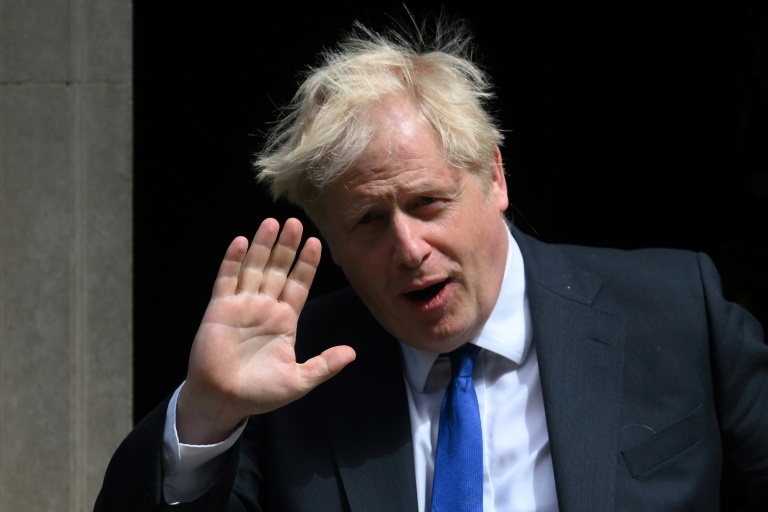
Prime Minister Boris Johnson’s government is in suspended animation, including on economic policy, just as a cost-of-living crisis worsens for millions of Britons. 

But tax cuts are inevitable under a new leader, to confront the financial pain that is rapidly spreading in the world’s fifth-largest economy, analysts say.

Low taxes are an article of faith for the Conservative rank and file who will elect Johnson’s successor in the coming months, after he announced his resignation as party leader on Thursday.

“The cost-of-living crisis is forefront of voters’ minds,” Hargreaves Lansdown economist Sarah Coles told AFP.

“A new leader will have to provide effective support for those who are facing the toughest challenges, or they risk being punished at the ballot box,” she said.

Johnson was expressing defiance as late as Wednesday night, when aides said that he was planning a tax-cutting statement next week with his new finance minister, Nadhim Zahawi. 

The resignation statement put paid to that plan. 

Johnson’s new-look cabinet appointed Thursday agreed that “major fiscal decisions should be left for the next prime minister”, Downing Street said.

Zahawi’s predecessor Rishi Sunak quit on Tuesday along with Johnson’s health minister, sparking an exodus of other ministers fed up with his premiership’s many scandals.

Sunak had sought to prioritise balancing the books after spending billions on Britain’s costly Covid support measures.

He had ramped up taxation on corporate profits, and on paid employment, in order to help pay the pandemic bill and fund elderly social care.

But Britons, like others in many countries, are also grappling with soaring consumer prices fuelled partly by fallout from Russia’s war on Ukraine, which has destabilised energy markets. 

UK inflation sits at a 40-year peak, driven also by elevated food prices, and is tipped to hit double figures soon with the average domestic energy bill set to top £3,000 ($3,600) a year.

– Heat or eat –

Many Britons say that this winter, they will have to choose between heating or eating.

The nation also faces nationwide strikes — particularly in the transport sector — as the purchasing power of wages is rapidly eroded.

The next Conservative premier will therefore face a challenge to survive beyond the next general election, when this parliament’s term ends in late 2024. 

But first they must win over the Tory grassroots.

“Johnson’s replacement will probably have to show some intention of cutting taxes in order to be voted in by Conservative party members,” agreed Capital Economics analyst Kieran Tompkins.

Added to the gloom, the Bank of England warns that the economic outlook at home and abroad has deteriorated due to the high inflation.

The BoE has ramped up interest rates five times since December to tackle inflation — but this also lifts loan repayments such as mortgages, and has further stretched household budgets.

Some economists warn that tax cuts, while stimulating consumer demand and economic growth, could fuel the inflationary price pressures.

“Tax cuts are a staple Conservative policy and can be a vote-winner, although on this occasion care may be needed,” cautioned AJ Bell investment director Russ Mould.

UK businesses also face fallout from Britain’s departure from the European Union, as well as a global supply-chain crunch and staff shortages as demand picks up after the pandemic.

“Tax cuts won’t help those and could make them worse, fuelling inflation and forcing the Bank of England to increase interest rates faster and further,” said Mould.

The government’s fiscal spending watchdog, the Office for Budget Responsibility, this week added to doubts about the wisdom of any sharp reduction in taxes.

The OBR warned that Britain’s public finances were “on an unsustainable path in the long term”.

US sees big job gains in June, fueling inflation worries

The US economy added far more jobs than expected in June and wages rose, adding fuel to worries about accelerating inflation, but giving President Joe Biden a reason to cheer.

Biden has seen his approval ratings plummet as Americans face the worst inflation surge in more than 40 years, but after the latest data Friday, he underscored the rapid jobs recovery in the wake of the pandemic.

But the closely-watched Labor Department report gave few indications the economy is slowing, which likely cements the central bank’s resolve to continue its aggressive interest rate hikes.

US employers added 372,000 net new jobs last month, nearly 100,000 more than economists forecast, and the unemployment rate held steady at 3.6 percent for the fourth month, the Labor Department reported.

The economy gained 2.74 million jobs in the first half of the year, more than most full years dating back to 2000.

“This has been the fastest and strongest jobs recovery in American history,” Biden said in a statement.

“We have more Americans working in the private sector today than any day during Donald Trump’s Presidency — more people than any time in our history.”

But with firms struggling to fill open positions and many potential workers staying on the sidelines, wages have been pushing higher, which economists fear could provoke a wage-price spiral.

– War on inflation –

The report showed average hourly earnings rose again to secure a 5.1 percent increase over the past 12 months — slightly slower than in May — while the share of adults in the labor force was little changed.

The data will provide little comfort to the Federal Reserve, which has declared war on inflation and launched a series of interest rate hikes to try to cool demand.

Atlanta Federal Reserve Bank President Raphael Bostic said the strong labor market is a good thing, but he stressed that he is “fully supportive” of another super-sized increase in the benchmark borrowing rate later this month, matching the three-quarter percentage point hike in June.

“We’re starting to see those first signs of slowdown, which is what we need because what we have right now is a great imbalance between supply and demand that’s driving the inflation,” Bostic said on CNBC.

That imbalance will have to come into alignment “if we’re going to get that inflation under control.”

There are growing fears that the Fed’s efforts to tamp down price pressures will push the world’s largest economy into recession.

Fed Chair Jerome Powell has argued that the strong US job market means the economy is well-positioned to withstand the rapid ramp up in borrowing rates, although he and other policymakers acknowledge the process may inflict some pain.

Biden said job growth is likely to slow in coming months following the rapid rebound, but “No country is better positioned than America to bring down inflation, without giving up all of the economic gains we have made over the last 18 months.”

– ‘Fanciful’ recession fears –

Total nonfarm employment remains just slightly below the pre-pandemic level in February 2020, but the private sector has recovered fully and has more jobs than before Covid-19 hit, according to the report.

Big gains in the month came in the health care and leisure and hospitality sectors, while retail rebounded after a big decline in May, the data showed. Manufacturing added 29,000 positions.

“June’s strong job growth, especially in the teeth of high inflation, shows that the expansion remains on solid ground,” said Robert Frick, corporate economist with Navy Federal Credit Union.

Strong consumer demand has anchored the post-pandemic recovery and defied expectations of a slowdown, but economists still believe job creation will start to slow.

Ian Shepherdson of Pantheon Macroeconomics said the recent data “support our view that talk of the economy being in recession right now is fanciful.”
US sees big job gains in June, fueling inflation worries

The US economy added far more jobs than expected in June and wages rose, adding fuel to worries about accelerating inflation, but giving President Joe Biden a reason to cheer.

Biden has seen his approval ratings plummet as Americans face the worst inflation surge in more than 40 years, but after the latest data Friday, he underscored the rapid jobs recovery in the wake of the pandemic.

But the closely-watched Labor Department report gave few indications the economy is slowing, which likely cements the central bank’s resolve to continue its aggressive interest rate hikes.

US employers added 372,000 net new jobs last month, nearly 100,000 more than economists forecast, and the unemployment rate held steady at 3.6 percent for the fourth month, the Labor Department reported.

The economy gained 2.74 million jobs in the first half of the year, more than most full years dating back to 2000.

“This has been the fastest and strongest jobs recovery in American history,” Biden said in a statement.

“We have more Americans working in the private sector today than any day during Donald Trump’s Presidency — more people than any time in our history.”

But with firms struggling to fill open positions and many potential workers staying on the sidelines, wages have been pushing higher, which economists fear could provoke a wage-price spiral.

– War on inflation –

The report showed average hourly earnings rose again to secure a 5.1 percent increase over the past 12 months — slightly slower than in May — while the share of adults in the labor force was little changed.

The data will provide little comfort to the Federal Reserve, which has declared war on inflation and launched a series of interest rate hikes to try to cool demand.

Atlanta Federal Reserve Bank President Raphael Bostic said the strong labor market is a good thing, but he stressed that he is “fully supportive” of another super-sized increase in the benchmark borrowing rate later this month, matching the three-quarter percentage point hike in June.

“We’re starting to see those first signs of slowdown, which is what we need because what we have right now is a great imbalance between supply and demand that’s driving the inflation,” Bostic said on CNBC.

That imbalance will have to come into alignment “if we’re going to get that inflation under control.”

There are growing fears that the Fed’s efforts to tamp down price pressures will push the world’s largest economy into recession.

Fed Chair Jerome Powell has argued that the strong US job market means the economy is well-positioned to withstand the rapid ramp up in borrowing rates, although he and other policymakers acknowledge the process may inflict some pain.

Biden said job growth is likely to slow in coming months following the rapid rebound, but “No country is better positioned than America to bring down inflation, without giving up all of the economic gains we have made over the last 18 months.”

– ‘Fanciful’ recession fears –

Total nonfarm employment remains just slightly below the pre-pandemic level in February 2020, but the private sector has recovered fully and has more jobs than before Covid-19 hit, according to the report.

Big gains in the month came in the health care and leisure and hospitality sectors, while retail rebounded after a big decline in May, the data showed. Manufacturing added 29,000 positions.

“June’s strong job growth, especially in the teeth of high inflation, shows that the expansion remains on solid ground,” said Robert Frick, corporate economist with Navy Federal Credit Union.

Strong consumer demand has anchored the post-pandemic recovery and defied expectations of a slowdown, but economists still believe job creation will start to slow.

Ian Shepherdson of Pantheon Macroeconomics said the recent data “support our view that talk of the economy being in recession right now is fanciful.”
Slammed as passive on abortion rights, Biden fights back

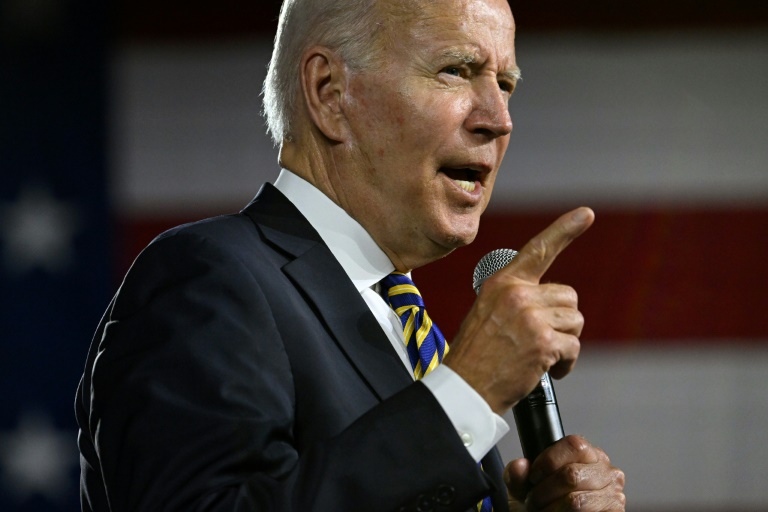
US President Joe Biden, under pressure to take a harder line on defending abortion access, will sign an executive order Friday offering fresh but limited measures to bolster women’s reproductive rights.

Biden has been criticized from within his own Democratic Party for perceived inaction since the landmark Supreme Court ruling that overturned the nationwide right to abortion, in force since the Roe v Wade decision of 1973.

After the court ruling late last month, several states have banned or severely restricted abortion and others are expected to follow suit. 

Many Democrats, often speaking anonymously in the press, have complained that Biden and his team have failed to respond adequately to the bombshell judgment by the Supreme Court, which is now firmly in the hands of conservative justices.

On the day of the ruling on June 24, the administration seemed caught off guard even though a draft had been leaked weeks before.

Biden’s first statement on the ruling came late in the day, after even some foreign heads of state had issued official reactions. He eventually gave a short speech in which he called the ruling a “tragic error.”

The president also announced two packages of regulatory measures: on access to abortion pills and the rights of women to travel to another state for an abortion if their own state bans the procedure.

But, in a rare move, press secretary Karine Jean-Pierre cancelled her daily briefing on the day.

Biden left shortly after on a trip to Europe, frustrating abortion-rights activists and lawmakers who were eager for more decisive action from the president or at least some assertive words. 

Seeking to recover, Biden, will sign an executive order and give a speech that vowing to protect women’s sensitive health-related data and “fight digital surveillance related to reproductive health care services,” the White House said.

Advocacy groups are warning of the risks posed by women’s online data such as their geolocation and apps that monitor their menstrual cycles, which they say could be used to go after women who have had abortions.

Biden’s order also seeks to protect mobile clinics deployed to the borders of states that have banned abortion.

The administration also wants to guarantee access to contraception and abortion medication and set up a network of volunteer lawyers to help women on abortion issues, the White House said.

– ‘A man out of time?’ –

But these measures will have limited effect. Biden cannot do much to battle the Supreme Court or states hostile to him when he lacks a solid majority in Congress.

So Biden is calling on Americans to turn out in droves and vote Democrat in the midterm elections of November.

The goal is to codify the right to abortion as a federal law, which would nullify state decisions to ban the procedure.

But many Democrats fear this drive to get out the vote will flop. Biden is now an unpopular president and Americans’ biggest worry these days is sky-high inflation. 

And beyond the abortion issue some Democrats wonder if Biden, 79, a centrist who shuns headline-grabbing action, has the ability to take on an aggressively conservative American right in an era of acute political tension.

All he has to do is look at press editorials of recent days, including ones in news outlets seen as sympathetic.

“Is Joe Biden the wrong president at the wrong time?” read a headline Thursday in The Washington Post, while The Atlantic magazine asked “Is Biden a Man out of Time?”

Lavrov walks out of G20 talks as West presses Moscow on Ukraine

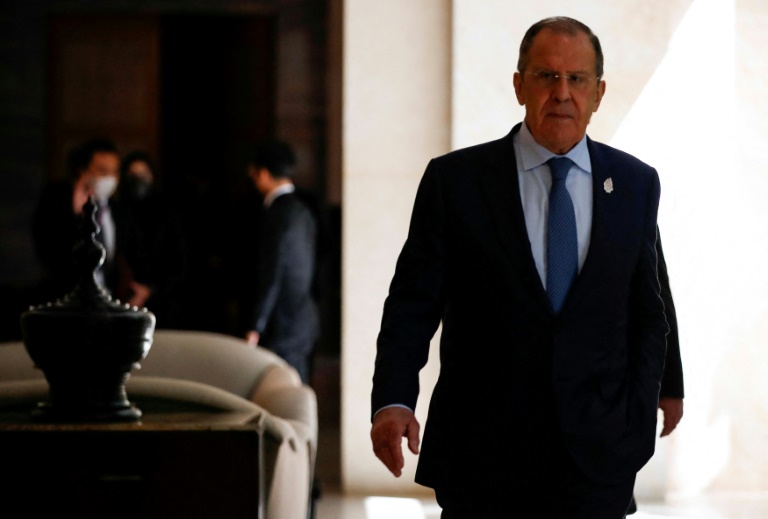
Russia’s top diplomat stormed out of talks with G20 foreign ministers meeting in Indonesia on Friday as Western powers criticised Moscow over its invasion of Ukraine.

Washington and allies condemned Russia’s assault ahead of the meeting before Foreign Minister Sergei Lavrov faced what US Secretary of State Antony Blinken called a barrage of Western criticism at the closed-door talks.

“What we’ve heard today already is a strong chorus from around the world… about the need for the aggression to end,” Blinken said from the meeting on the resort island of Bali.

Blinken and Lavrov had joined colleagues for day-long talks in their first meeting since the outbreak of war, with the host immediately telling them the conflict must end through negotiations.

But Lavrov walked out of a morning session as German counterpart Annalena Baerbock criticised Moscow over its invasion, diplomats said.

He also left an afternoon session before Ukrainian Foreign Minister Dmytro Kuleba addressed the ministers virtually and was not present as Blinken condemned Russia.

“Russia was so isolated that Lavrov left the conference at midday after speaking,” French Foreign Minister Catherine Colonna said in an interview with AFP. 

“There was not a state to defend the Russian attitude, to subscribe to the Russian logic.”

EU foreign policy chief Josep Borrell told AFP Lavrov “wasn’t listening to others” in the meeting. 

“That’s not the most constructive way to attend a G20 meeting,” he said.

Western diplomats said Lavrov heard no unambiguous support during the session, even from nations that do not staunchly back the US and European position on Ukraine.

“I think Russia was surprised by how many G20 participants made forceful statements about Russian aggression,” a Western official said on condition of anonymity.

Another Western official predicted President Vladimir Putin would think twice about attending the summit later this year after the criticism faced by Lavrov.

– Abe killing overshadows meet –

Speaking outside the Mulia hotel, Lavrov remained defiant and accused Western nations of avoiding “talking about global economic issues” instead of the war.

“From the moment they speak, they launch into fevered criticism of Russia,” he told reporters.

Blinken shunned a bilateral meeting with Lavrov and instead accused Russia of triggering a global food crisis, demanding Moscow allow grain shipments out of war-battered Ukraine.

“To our Russian colleagues: Ukraine is not your country. Its grain is not your grain. Why are you blocking the ports? You should let the grain out,” Blinken said in the closed-door talks, according to a Western official present.

Lavrov earlier told reporters he would not “go running” after Washington for talks.

“It was not us who abandoned contact, it was the United States,” he said.

Before the meeting, Blinken sat down with his French and German counterparts and a senior British official to discuss “Russia’s unprovoked and unjustifiable war of choice” in Ukraine, the State Department said in a statement.

But the gathering was soon overshadowed by the killing of former Japanese Prime Minister Shinzo Abe at a campaign event on Friday.

After news of Abe’s death emerged, Blinken mourned the longtime ally of Washington as a “leader with great vision” who boosted US-Japan relations.

“It is a shock. It’s profoundly disturbing,” he said.

– No family photo –

In closing remarks, Indonesian Foreign Minister Retno Marsudi said “participants expressed deep concern about the humanitarian impacts of the war” in Ukraine, and “some members expressed condemnation” of the invasion.

A US official indicated Washington did not want to embarrass Indonesia at the meeting by walking out on Lavrov, who last met Blinken in July.

But there was no family photo of the G20 ministers as is customary.

The hosts have addressed US concerns about Lavrov attending in part by inviting Ukrainian President Volodymyr Zelensky to the G20 summit in November.

In his address on Friday, Ukraine’s Kuleba told ministers to “remember about 344 families who have lost their children when listening to Russian lies”.

– British FM leaves –

Blinken’s efforts to have a powerful Western stance against Russia at the meeting were diluted after British Foreign Minister Liz Truss pulled out following Prime Minister Boris Johnson’s resignation as leader of his party on Thursday.

While in Bali, Blinken will also seek to reopen dialogue with Beijing in talks on Saturday with his Chinese counterpart Wang Yi, the first in months after tensions became strained over issues including Taiwan.

The meeting comes as US President Joe Biden voices hope for a conversation in the coming weeks with Chinese President Xi Jinping, with whom he last spoke in March.

Lavrov met Wang on Thursday to discuss Russia’s invasion, which Moscow says it launched to stop Ukraine from joining the NATO military alliance.

The United States has condemned Beijing’s support for Russia, and Blinken is expected to reiterate those warnings in talks with Wang.

Euro closes in on dollar parity

The euro neared parity with the dollar on Friday, as traders bet on the prospect of a eurozone recession caused by soaring inflation.

The haven yen firmed against the dollar following the assassination of Japan’s former prime minister, Shinzo Abe, before falling back.

Wall Street stocks opened lower after a report that showed that the US economy continued to add jobs in June at a rapid pace.

There were 372,000 new positions added in the month, the Labor Department reported, far more than economists expected. 

The strong health of the jobs market gives the US Federal Reserve more of a free hand to raise interest rates sharply to combat soaring inflation without worrying about the economy tipping into recession.

Concern by investors that the fast pace of monetary tightening by the Fed will tip the world’s top economy into recession has seen stocks swoon in recent weeks.

US Treasury yields rose following the publication of the US jobs report, an indication of an expectation of higher interest rates.

“That move is the reaction to an employment situation report for June that did nothing to deter the market from thinking that the Fed is going to remain on an aggressive rate-hike path,” said market analyst Patrick J. O’Hare at Briefing.com.

The euro on Friday slumped to $1.0072, a fresh 20-year low, before recovering back above $1.01.

“The depreciation in the euro to its lowest level in almost two decades against the dollar this week in large part reflects investors’ view that the ECB will tighten less aggressively than the Fed,” said Jessica Hinds, senior Europe economist at Capital Economics.

In commodities trading on Friday, world oil prices rose following the publication of the US jobs report comforted worries about the health of the economy, and demand for oil.

The rise comes at the end of yet another volatile week for crude and assets in general as investors fears recession fears aggravated and faded.

Asian stock markets closed higher, boosted by hopes that US President Joe Biden would remove some tariffs from Chinese goods.

Equities won a lift also from reports Beijing was considering a huge stimulus push to the struggling Chinese economy by allowing local governments to raise billions of dollars through bond issuance for infrastructure projects.

But surging inflation, rising interest rates and a fresh flare-up of Covid infections in Shanghai continued to keep investor sentiment grounded.

– Political upheaval –

Markets are also tracking political unrest in Britain and Japan.

London’s benchmark FTSE 100 index was down 0.1 percent in afternoon deals — and the pound retreated — one day after Prime Minister Boris Johnson said he was stepping down later this year following a string of scandals.

In Japan, Abe was assassinated on Friday by a gunman who opened fire at close range as the hugely influential politician delivered a campaign speech ahead of upper house elections. 

The murder of the 67-year-old, who had been Japan’s longest-serving leader, stunned the nation and prompted an international outpouring of grief and condemnation.

The killing “could be negative for markets if the government’s policy, including its stance on monetary easing, is affected, as it was evident that he was pulling the strings behind the scenes in many ways”, noted Masahiro Yamaguchi at SMBC Trust Bank.

“If it becomes possible for (current Prime Minister Fumio) Kishida to carry out policies he wanted to, such as financial tax and regulations on share buy-back, that would be negative for markets.”

– Key figures at around 1330 GMT –

Euro/dollar: UNCHANGD from Thursday at $1.0162

Pound/dollar: DOWN at $1.2007 from $1.2024 

Euro/pound: UP at 84.62 pence from 84.49 pence

Dollar/yen: UP at 136.41 yen from 136.01 yen

London – FTSE 100: DOWN 0.1 percent at 7,179.84 points

Frankfurt – DAX: UP 0.7 percent at 12,935.13

Paris – CAC 40: DOWN less than 0.1 percent at 6,004.75

EURO STOXX 50: DOWN less than 0.1 percent at 3,485.26

New York – Dow: DOWN 0.2 percent at 31,336.43

Tokyo – Nikkei 225: UP 0.1 percent at 26,517.19 (close)

Hong Kong – Hang Seng Index: UP 0.4 percent at 21,725.78 (close)

Shanghai – Composite: DOWN 0.4 percent at 3,356.08 (close)

Brent North Sea crude: UP 2.1 percent at $106.81 per barrel

West Texas Intermediate: UP 2.2 percent at $104.96 per barrel

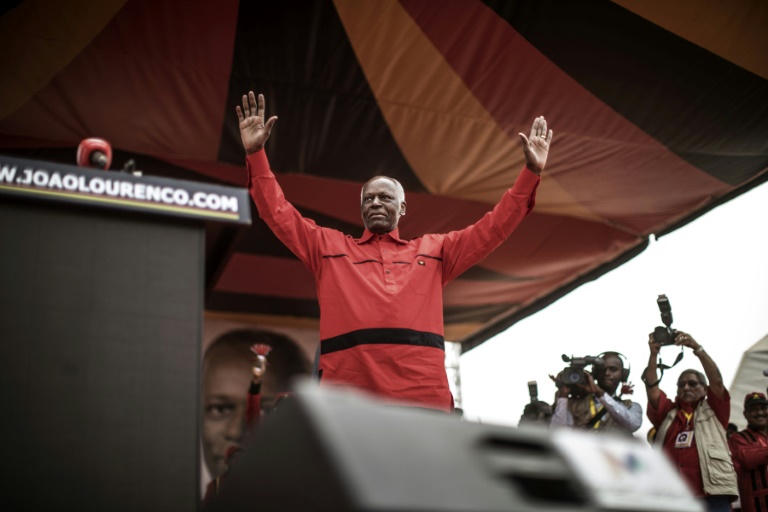
Angolan Dos Santos's crumbling family business empire

Critics of Angola’s former president Jose Eduardo dos Santos, who died Friday, accused him of stripping the country of much of its vast oil wealth to enrich himself and his family.

Dos Santos, who stepped down in 2017 after 38 years of iron-fisted rule, appointed family members to key economic jobs during his presidency.

Banking, telecoms, media and most significantly oil were among the industries that felt the far-reaching influence of the Dos Santos brood.

He “privatised the state to benefit his family and a handful of associates,” said investigative journalist Rafael Marques de Morais, who was highly critical of Dos Santos’ alleged plunder.

Here is a review of the principal figures in the “family business”:

– Isabel, the daughter –

Known derisively as “the princess”, 49-year-old Isabel was the public face of the Dos Santos business empire.

Her father appointed her to head the state oil giant Sonangol, but she was dismissed shortly after his  successor Joao Lourenco took office.

Isabel dos Santos described herself as an “entrepreneur” on her Twitter account and the US-based Forbes magazine once ranked her Africa’s richest woman.

It estimated her personal fortune to be as much as $3.5-billion.

She was active in the telecoms sector and controlled Unitel, Angola’s leading mobile phone operator, which she quit in 2020.

She also held shares in Portuguese media giant NOS, while investing heavily in the banking sector, sitting on the boards of Banco de Fomento Angola, Banco BIC — as well as its Portuguese affiliate — and the market leader BFA.

And along with her now late husband Sindika Dokolo, she owned the luxury Swiss celebrity jeweller De Grisogono, which went bust in 2020.

But that business empire has been largely dismantled since a 2020 ICIJ investigation into the shady origins of her fortune.

She is being probed for a long list of crimes in Angola, including mismanagement, embezzlement and money laundering during her stewardship of the state-run oil giant Sonangol.

She has vehemently denied the accusations against her as a politically-motivated “witch-hunt”.   

Last year she was ordered to surrender a stake in the Portuguese energy company Galp worth an estimated $500 million

– Jose Filomeno, the son –

In 2013, Jose Filomeno de Sousa dos Santos, nicknamed Zenu, was appointed by his father to head up a sovereign wealth fund. At 35, Filomeno was controlling the fund worth $5 billion.

Six years later, he was arrested for fraud, money laundering and influence peddling. He was found guilty of trying to embezzle up to $1.5 billion from the sovereign wealth fund, which he oversaw from 2013 to 2018.

In 2020 he was jailed for five years, making him one of the first members of the former presidential family to be prosecuted as part of an anti-graft campaign led by Lourenco since he came to power in 2017.

– ‘Tchize’, the other daughter – 

Married to a Portuguese businessman, Welwitschia dos Santos was a leading figure in the Angolan media landscape.

Now in her mid 40s, she held different positions at TPA, a public broadcaster and led two tabloid-style print titles.

Lower profile than her half-sister Isabel, Welwitschia — whose nickname is “Tchize” — controlled one of Angola’s leading multimedia and advertising agencies.

She also became the first Angolan woman to lead a major football club after she took the reins at Benfica de Luanda.

Following her brother’s conviction, she accused Lourenco of unjustly targeting the dos Santos family for political reasons.  

“Lourenco (is) using the children to harm the politically stronger father,” she told AFP.


– Ana Paula, the wife –

Ana Paula, a former air hostess who became Jose Eduardo dos Santos’ second wife and according to the local media was involved in several diamond miners.

According to Angola’s monthly economics journal Expensao, Ana Paula Cristovao Lemos also directly held five percent of Sol bank in addition to the 10 percent stake she had in the business through her foundation.

Biden moves to protect privacy after abortion ruling

US President Joe Biden, under pressure to take a harder line on defending abortion access, will sign an executive order Friday offering fresh but limited measures to bolster women’s reproductive rights.

Biden has been criticized from within his own Democratic Party for his perceived inaction since the landmark Supreme Court ruling late last month that overturned the nationwide to abortion.

Biden will sign an order that seeks to “protect patient privacy, including by addressing the transfer and sales of sensitive health-related data (and) combatting digital surveillance related to reproductive health care services,” the White House said.

The president’s hands are largely tied on the hot button issue, as some conservative-run states have already banned or severely restricted abortion after the Supreme Court overturned the right to abortion set out 50 years ago in the Roe v Wade ruling.

Biden’s order also seeks to protect mobile clinics deployed to the borders of states that have banned abortion, guarantee access to contraception and abortion medication and set up a network of volunteer lawyers, the White House said.

When the ruling was released, Biden called it a “tragic error” and announced two packages of regulatory measures: on access to abortion pills and the rights of women to travel to another state for an abortion if their own state bans the procedure.

But since then Biden has been largely silent on the divisive issue.

Members of his own party have criticized Biden, pushing for more aggressive action or at least a more assertive stance on protecting access to abortion.

Biden will respond Friday with a speech on the latest measures, starting with a promise to protect women’s sensitive health-related data and fight digital surveillance, the White House said.

Advocacy groups are warning of the risks posed by women’s online data such as their location and apps that monitor their menstrual cycles, which they say could be used to go after women who have had abortions.

Close Bitnami banner
Bitnami