US Business

Mixed fortunes of celebrities who leapt on NFT craze

Sports, film and music stars have all flocked to the NFT market to buy pictures of apes, endorse corporate partners or even launch their own art collections.

Even as the crypto sector suffers a rout with sales and values plunging and scams proliferating, celebrities continue to sign up to the craze for so-called Non-Fungible Tokens.

– Gone Ape –

The Bored Ape Yacht Club is the ground zero of NFT “collectables”. 

It features cartoon images replicated thousands of times with algorithm-generated variations.

The initial collection of 10,000 computer generated images has been followed by several other generations and many millions of fakes.

To fans, they are a status symbol, a key to an exclusive club where ordinary folk can mix with the famous and wealthy.

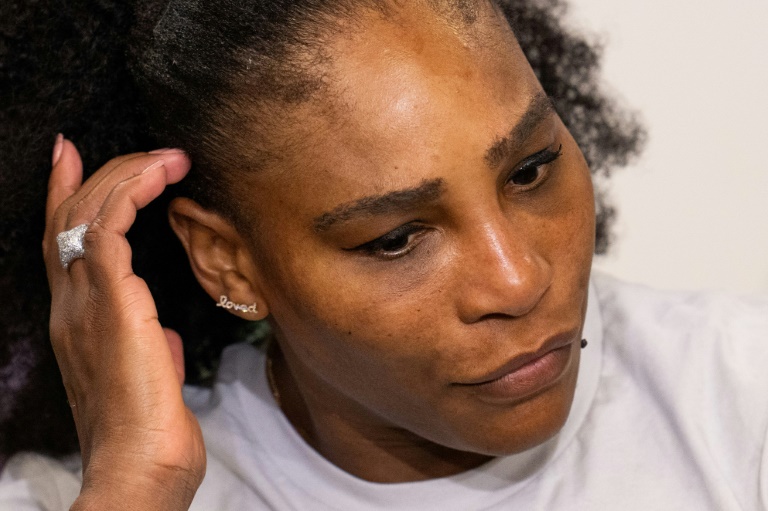
Brazilian footballer Neymar and tennis legend Serena Williams tweeted out their ape images on the same day in January.

US talk show host Jimmy Fallon and socialite Paris Hilton showed off their apes on TV.

Madonna declared on Instagram in March that she had “entered the MetaVerse” with a purchase of an ape, reportedly for more than $500,000.

She was following the likes of musicians Justin Bieber, Eminem and Snoop Dogg, basketball luminaries Shaquille O’Neal and Stephen Curry, and actors including Gwyneth Paltrow. 

To NFT critics, these apes symbolise all that is wrong in the crypto world — fundamentally worthless yet selling for vast sums with valuations based on hype.

And ultimately these celebrities don’t own the ape pictures in any traditional sense — anyone can download and use the images.

What they own is essentially a digital receipt linked to the picture.

But celebrity backing is vital.

The apes, along with cartoon collections like CryptoPunks, appear to be weathering the crash better than other parts of the crypto sector.

– Solo missions –

Celebrity NFT enthusiasts have gone a lot deeper into the industry than just buying ape images — plenty have created their own NFT collections, with mixed results.

US musician Grimes got in early, managing to bag almost $6 million for some fantasy-inspired art last year.

However, many of these NFTs are now all but worthless, selling for fractions of their original prices — when they sell at all.

Other collections have failed even to get off the ground. Wrestler John Cena sold just a handful of NFTs from a collection he put together last year with the WWE.

He admitted it was a “catastrophic failure”.

Skateboarder Tony Hawk has been more successful with sales, but at the cost of the admiration of some of his fans.

He announced on Twitter last year he would sell versions of his famous tricks as NFTs, prompting responses ranging from “Stop this Tony” to “Tony, no, not you too”.

Hawk has not mentioned the project on Twitter since, though he has continued to deal in NFTs.

– Just business –

One of the mainstays of the celebrity-NFT relationship is the old-fashioned brand endorsement. 

This week, French megastar footballer Kylian Mbappe became the latest star to sign on as an “ambassador” and invest in French start-up Sorare.

The firm runs a fantasy football game where players can buy sports-card style NFTs.

Serena Williams, along with footballers Gerard Pique and Rio Ferdinand, have already invested in the game.

And not to be outdone, the world’s most famous footballer, Cristiano Ronaldo, last week announced a partnership with Binance, the world’s biggest crypto firm.

The offerings will apparently include designs created in collaboration with Ronaldo, who said in a statement he looked forward to “bringing unprecedented experiences and access through this NFT platform”.
In mine-infested sea, Romania aims to cut Russia gas reliance

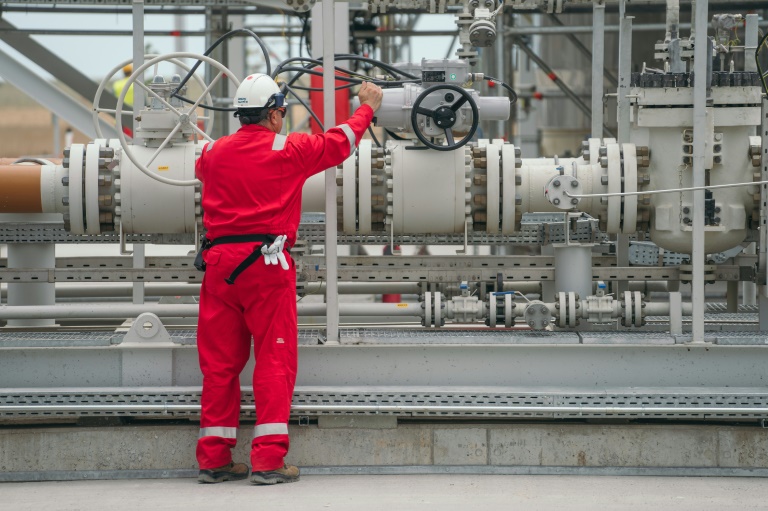
Gas now flows to Romania from a new Black Sea platform operating in waters where mines and warships have been spotted.

The dangerous reminders of the war raging nearby in Ukraine underscore Romania’s determination to cut its reliance on Russian natural gas imports.

With fears growing across the European Union that Moscow will cut gas shipments in retaliation for EU support to Ukraine, countries are scrambling to find alternative supplies.

“Romania is taking a decisive step to ensure its energy security… at a time when international gas supplies are threatened by the war in Ukraine,” Prime Minister Nicolae Ciuca said on Tuesday as he inaugurated a processing plant belonging to Black Sea Oil & Gas (BSOG) in the southeastern village of Vadu.

While Romania has significant reserves on land and at sea, it still has to turn to Russia in winter to cover around 20 percent of its consumption.

Backed by American private equity firm Carlyle Group LP and the European Bank for Reconstruction and Development, BSOG began two weeks ago to tap into underwater deposits, becoming the first new offshore Black Sea development in the past 30 years.

The $400-million platform extracts three million cubic metres of gas per day. It is due to recover one billion cubic metres per year for 10 years, or around 10 percent of Romania’s needs.

“Today we are facing an emergency in terms of energy supply. We must put our old devils in the closet… and start producing locally,” said Thierry Bros, an expert on energy and the climate at Sciences Po university.

“We must relaunch the projects in the Black Sea, relaunch the growth of production in Norway, in the United Kingdom we must think of launching the production of shale gas and in France the production of mine gas” he told AFP.

– Mines and warships –

In Vadu, BSOG CEO Mark Beacom said he hopes that the “state-of-the-art” infrastructure put in place by his company will be used for future gas or renewable energy projects in the Black Sea.

But the invasion of neighbouring Ukraine by Russia has complicated the situation. 

“We are not in a war zone, but we are close enough and it clearly has an impact,” he said.

“We’ve had mines detected close to the platform, we’ve had warships that go close to our platform and we’ve had airplanes circling our platform,” he added.

BSOG holds two concessions about 120 kilometres (65 nautical miles) from the Romanian coast, part of which, ironically, was recovered in 2009 by Bucharest from Ukraine, following a decision by the International Court of Justice in The Hague. 

While Romania is counting on offshore gas reserves estimated at 200 billion cubic metres of gas, investors nevertheless remain cautious. 

The Austrian group OMV and its Romanian partner Romgaz have yet to decide whether they will go ahead with the Neptun Deep project to tap between 42 billion and 84 billion cubic metres of gas. 

– End of guaranteed energy? –

Bucharest hopes the two groups will launch extraction as soon as 2026, which would allow Romania to “become completely independent in terms of gas” and export the excess to its neighbours, said Energy Minister Virgil Popescu.

According to a 2018 study by auditing firm Deloitte, offshore gas could bring in $26 billion in tax revenue to Romania’s government over a planned 23-year period of operation. 

After much delay, parliament finally amended in May a law unfavourable to offshore investments, which had notably prompted ExxonMobil to withdraw from the Neptun Deep project at the end of 2021, after having invested around $2 billion there jointly with OMV.

“If we want to win against the Russians, we need energy,” said Bros, warning that the time when “energy was guaranteed” within the EU may be over.

US funds software for Russians to slip past censors

A US-backed campaign is giving Russians access to anti-censor software to dodge Moscow’s crackdown on dissent against its invasion of Ukraine, involved groups told AFP.

Russia has intensified its restrictions on independent media since attacking its neighbor in February, with journalists under threat of prosecution for criticizing the invasion or for even referring to it as a war.

The US government-backed Open Technology Fund is paying out money to a handful of American firms providing virtual private networks (VPNs) free of charge to millions of Russians, who can then use them to visit websites blocked by censors. 

Traditional VPN software creates what is effectively a private tunnel on the internet for data, typically encrypted, to flow safeguarded from snooping — and their use has boomed in Russia since the invasion.

“Our tool is primarily used by people trying to access independent media, so that funding by the OTF has been absolutely critical,” said a spokesman for Lantern, one of the involved companies.

Tech firms Psiphon and nthLink have also been providing sophisticated anti-censorship applications to people in Russia, with OTF estimating that some four million users in Russia have received VPNs from the firms.

Psiphon saw a massive surge in Russian users, with the number soaring from about 48,000 a day prior to the February 24 invasion to more than a million a day by mid-March, said a company senior advisor Dirk Rodenburg.

The firm’s tools in Russian now average nearly 1.5 million users daily, he added.

While some, like Ukraine’s leadership, have called for Russia to be cut off from the internet, others have noted access is key for opposition groups. 

“It’s so very important for Russians to be connected to the whole world wide web, to keep resistance going,” said Natalia Krapiva, tech legal counsel at rights group Access Now, which is not involved in the OTF effort.

“All kinds of initiatives are happening and to keep them alive you need the internet because you can’t gather in person, or because activists are scattered around the world,” she added.

Keeping VPNs running and accessible was relatively straightforward in the early days of the war, said Lucas, the spokesman for Lantern, who spoke on condition that only his first name be used.

“They weren’t ready to block anything,” Lucas said. “Over time, Russia learned how to block the easy stuff but Lantern and Psiphon are still up and running.”

– Lesson from China, Myanmar –

Censors try to cut VPN software off from servers they rely on to function or stop people from getting to websites where the tools can be downloaded.

As a result, crackdowns on internet freedom typically result in people sharing VPNs through guerrilla tactics such as word-of-mouth.

However, groups like Lantern have adopted methods like hiding VPN installers in online platforms too vital for the government to block, and building a network so users can share the technology with others, Lucas said.

“Lantern and Psiphon are different in that we do all sorts of much more sophisticated stuff to hide our traffic and get around our servers being detected,” he said.

People in Russia are benefitting from the VPN makers honing their tools while battling censorship in countries such as China and Myanmar.

“There was a moment about two years ago when China really upped the level of their game, when it came to the lengths they were going to block stuff,” Lucas said. 

“We raised the level of our game a whole lot,” he added.

US government funding provided through OTF has been important to the operations since costs jumped and revenue vanished for VPN makers in Russia, as sanctions kicked in and companies pulled out of the country.

OTF said it typically spends $3-4 million annually funding VPNs, but that figure was ramped up due to censorship in Russia.

Psiphon has been receiving US government funding for more than 14 years, with the money generally going to improve tools to counter new tactics used by authoritarian regimes, the company told AFP.

Despite the efforts to get VPN technology to those who want it, many people still don’t have access.

“The use of virtual private networks and other methods have increased significantly in Russia, but it still only represents a small percentage of the population,” Krapiva, from Access Now, told AFP.

US funds software for Russians to slip past censors

A US-backed campaign is giving Russians access to anti-censor software to dodge Moscow’s crackdown on dissent against its invasion of Ukraine, involved groups told AFP.

Russia has intensified its restrictions on independent media since attacking its neighbor in February, with journalists under threat of prosecution for criticizing the invasion or for even referring to it as a war.

The US government-backed Open Technology Fund is paying out money to a handful of American firms providing virtual private networks (VPNs) free of charge to millions of Russians, who can then use them to visit websites blocked by censors. 

Traditional VPN software creates what is effectively a private tunnel on the internet for data, typically encrypted, to flow safeguarded from snooping — and their use has boomed in Russia since the invasion.

“Our tool is primarily used by people trying to access independent media, so that funding by the OTF has been absolutely critical,” said a spokesman for Lantern, one of the involved companies.

Tech firms Psiphon and nthLink have also been providing sophisticated anti-censorship applications to people in Russia, with OTF estimating that some four million users in Russia have received VPNs from the firms.

Psiphon saw a massive surge in Russian users, with the number soaring from about 48,000 a day prior to the February 24 invasion to more than a million a day by mid-March, said a company senior advisor Dirk Rodenburg.

The firm’s tools in Russian now average nearly 1.5 million users daily, he added.

While some, like Ukraine’s leadership, have called for Russia to be cut off from the internet, others have noted access is key for opposition groups. 

“It’s so very important for Russians to be connected to the whole world wide web, to keep resistance going,” said Natalia Krapiva, tech legal counsel at rights group Access Now, which is not involved in the OTF effort.

“All kinds of initiatives are happening and to keep them alive you need the internet because you can’t gather in person, or because activists are scattered around the world,” she added.

Keeping VPNs running and accessible was relatively straightforward in the early days of the war, said Lucas, the spokesman for Lantern, who spoke on condition that only his first name be used.

“They weren’t ready to block anything,” Lucas said. “Over time, Russia learned how to block the easy stuff but Lantern and Psiphon are still up and running.”

– Lesson from China, Myanmar –

Censors try to cut VPN software off from servers they rely on to function or stop people from getting to websites where the tools can be downloaded.

As a result, crackdowns on internet freedom typically result in people sharing VPNs through guerrilla tactics such as word-of-mouth.

However, groups like Lantern have adopted methods like hiding VPN installers in online platforms too vital for the government to block, and building a network so users can share the technology with others, Lucas said.

“Lantern and Psiphon are different in that we do all sorts of much more sophisticated stuff to hide our traffic and get around our servers being detected,” he said.

People in Russia are benefitting from the VPN makers honing their tools while battling censorship in countries such as China and Myanmar.

“There was a moment about two years ago when China really upped the level of their game, when it came to the lengths they were going to block stuff,” Lucas said. 

“We raised the level of our game a whole lot,” he added.

US government funding provided through OTF has been important to the operations since costs jumped and revenue vanished for VPN makers in Russia, as sanctions kicked in and companies pulled out of the country.

OTF said it typically spends $3-4 million annually funding VPNs, but that figure was ramped up due to censorship in Russia.

Psiphon has been receiving US government funding for more than 14 years, with the money generally going to improve tools to counter new tactics used by authoritarian regimes, the company told AFP.

Despite the efforts to get VPN technology to those who want it, many people still don’t have access.

“The use of virtual private networks and other methods have increased significantly in Russia, but it still only represents a small percentage of the population,” Krapiva, from Access Now, told AFP.

US multinationals grapple with soaring dollar

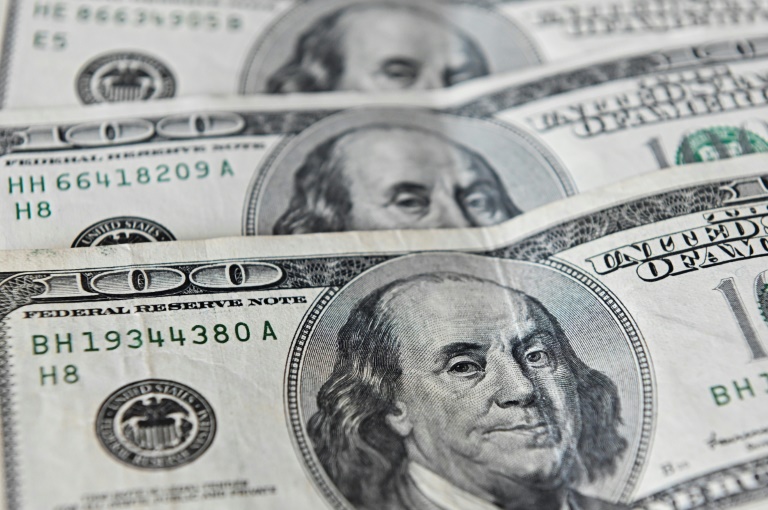
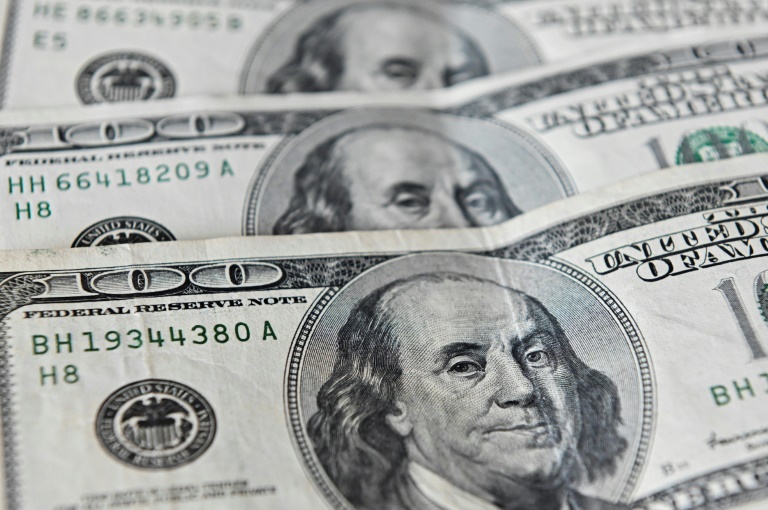
The rapid rise of the US dollar since the start of the year is a double-edged sword for American multinational companies, pushing some of them to decide whether to hedge or reposition their activities abroad to avoid fallout.

For an importer, the surge in the greenback against the euro, yen or British pound is a plus, because it makes the products they buy cheaper.

But for a US export company, products sold in dollars have become more expensive, which increases the risk of losing clients and seeing sales decline. 

And they also lose money when converting foreign revenue back into to dollars.

Many firms already revised their earnings forecasts for the year to account for the changing exchange rate, including computing giant Microsoft, which warned its quarterly sales will fall by $460 million and its net profit by $250 million due to the currency hit.

Adobe, Salesforce, Biogen and Pfizer have all warned that the dollar’s rapid rise will have a greater impact on their accounts than expected.

– $40 billion hit –

Companies that generate most of their revenue outside of the United States are the most exposed, starting with tech giants, medical equipment makers and service companies, according to Kyriba, a corporate cash management platform.

Kyriba estimates the currency effects could mean a $40 billion hit to earnings of S&P 500 firms in the first half of the year.

The Federal Reserve’s decision to aggressively hike interest rates to combat rampant inflation, combined with an influx of funds into the country from investors looking for a safe haven in uncertain times, have combined to boost the US dollar.

The greenback has risen 13 percent compared to the euro over the last 12 months, approaching parity, and gained 22 percent against the yen.

“Short term, that’s a good thing for the United States because it means all the imports are cheaper and it puts downward pressure on inflation,” said Desmond Lachman of the American Enterprise Institute think tank.

But further out, the effect on the US economy is more nuanced, because if exports fall, “the United States trade deficit widens and then we get more external debt.”

But multinationals “don’t have control over these big items,” he explained.

They can, however, mitigate the effect of fluctuations in foreign currencies in which they price and invoice goods by adopting hedging strategies — using financial instruments that provide a kind of insurance against losses caused by the changing exchange rate.

Most corporations already have hedging programs in place, and they change their plans on a quarterly or even monthly basis, sometimes trying to predict currency movements, Kyriba’s Bob Stark said.

But it’s not an exact science, he noted, especially in a time of great uncertainty about the direction of inflation, interest rates and the possibility of a recession.

– Changing countries to cut costs –

But “since the start of the pandemic, CFOs have gotten very good at looking at multiple scenarios and building on them,” Stark said.

Sporting goods giant Nike, for instance, warned Monday that currency effects would cut annual revenue by several percentage points. But the profit hit is much lower because of the hedging.

The current high volatility in foreign exchange markets also means it costs more to hedge, so some firms are choosing not to use those instruments.

Among the other tools at their disposal, multinationals can reduce their exposure with other techniques, such as by paying their Japanese suppliers in dollars, by renegotiating prices, or even by buying their supplies from different countries.

Or they can simply wait for the US currency to weaken before repatriating their profits.

However, once the exchange rate has strengthened, there is limited room to maneuver, according to Nikolai Roussanov, a finance professor at the University of Pennsylvania — especially when prices are also rising because of supply chain issues and energy costs.

“If you try to react to something already happening, it might come to bite you later because some of these movements are quite transitory,” he told AFP.

US multinationals grapple with soaring dollar

The rapid rise of the US dollar since the start of the year is a double-edged sword for American multinational companies, pushing some of them to decide whether to hedge or reposition their activities abroad to avoid fallout.

For an importer, the surge in the greenback against the euro, yen or British pound is a plus, because it makes the products they buy cheaper.

But for a US export company, products sold in dollars have become more expensive, which increases the risk of losing clients and seeing sales decline. 

And they also lose money when converting foreign revenue back into to dollars.

Many firms already revised their earnings forecasts for the year to account for the changing exchange rate, including computing giant Microsoft, which warned its quarterly sales will fall by $460 million and its net profit by $250 million due to the currency hit.

Adobe, Salesforce, Biogen and Pfizer have all warned that the dollar’s rapid rise will have a greater impact on their accounts than expected.

– $40 billion hit –

Companies that generate most of their revenue outside of the United States are the most exposed, starting with tech giants, medical equipment makers and service companies, according to Kyriba, a corporate cash management platform.

Kyriba estimates the currency effects could mean a $40 billion hit to earnings of S&P 500 firms in the first half of the year.

The Federal Reserve’s decision to aggressively hike interest rates to combat rampant inflation, combined with an influx of funds into the country from investors looking for a safe haven in uncertain times, have combined to boost the US dollar.

The greenback has risen 13 percent compared to the euro over the last 12 months, approaching parity, and gained 22 percent against the yen.

“Short term, that’s a good thing for the United States because it means all the imports are cheaper and it puts downward pressure on inflation,” said Desmond Lachman of the American Enterprise Institute think tank.

But further out, the effect on the US economy is more nuanced, because if exports fall, “the United States trade deficit widens and then we get more external debt.”

But multinationals “don’t have control over these big items,” he explained.

They can, however, mitigate the effect of fluctuations in foreign currencies in which they price and invoice goods by adopting hedging strategies — using financial instruments that provide a kind of insurance against losses caused by the changing exchange rate.

Most corporations already have hedging programs in place, and they change their plans on a quarterly or even monthly basis, sometimes trying to predict currency movements, Kyriba’s Bob Stark said.

But it’s not an exact science, he noted, especially in a time of great uncertainty about the direction of inflation, interest rates and the possibility of a recession.

– Changing countries to cut costs –

But “since the start of the pandemic, CFOs have gotten very good at looking at multiple scenarios and building on them,” Stark said.

Sporting goods giant Nike, for instance, warned Monday that currency effects would cut annual revenue by several percentage points. But the profit hit is much lower because of the hedging.

The current high volatility in foreign exchange markets also means it costs more to hedge, so some firms are choosing not to use those instruments.

Among the other tools at their disposal, multinationals can reduce their exposure with other techniques, such as by paying their Japanese suppliers in dollars, by renegotiating prices, or even by buying their supplies from different countries.

Or they can simply wait for the US currency to weaken before repatriating their profits.

However, once the exchange rate has strengthened, there is limited room to maneuver, according to Nikolai Roussanov, a finance professor at the University of Pennsylvania — especially when prices are also rising because of supply chain issues and energy costs.

“If you try to react to something already happening, it might come to bite you later because some of these movements are quite transitory,” he told AFP.

Like none other: profound impact of conservative US Supreme Court

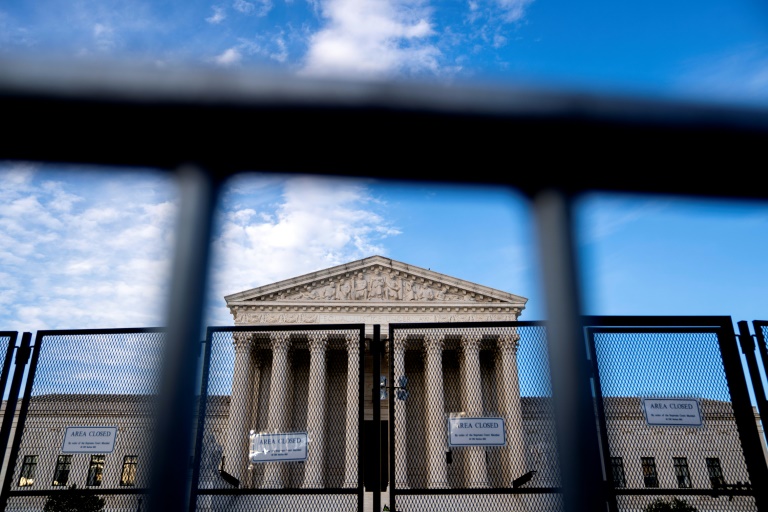
Two years after President Donald Trump filled its ranks with conservatives, the US Supreme Court has engineered a sharp turn in US constitutional law that could have a profound effect on American life for decades.

Key decisions that rescinded abortion rights, permit Americans to tote their guns freely in public, expand religion in schools, remove voting rights protections, and impede the government’s ability to set controls on greenhouse gases, have turned long-accepted rules of justice on their heads.

With a 6-3 majority on the bench, the conservatives led by Chief Justice John Roberts represent a mighty swing of the judicial pendulum from decades of a modestly progressive course.

Politically, the Roberts court is effectively payback by the Republican right, which has since the 1970s endeavored to claim control of the high court to reverse key decisions they view as excessive.

But analysts say the just-closed annual court season has revealed a set of judges more hard-line than anyone anticipated.

They have brashly tossed out the decisions of their respected predecessors, including, as with abortion, rights that previous courts said were guaranteed by the constitution.

“It’s not unusual to see the pendulum swinging, and to have what might be considered course-corrections,” said American University constitutional law professor Stephen Wermiel.

But in the term just ended, he said, the court took “a dramatic and sudden shift in a far more conservative direction.”

“Two generations of Americans, maybe more, have grown up knowing certain sets of rights,” Wermiel said.

“This is the rare instance in which the Supreme Court has dramatically taken back constitutional rights,” he said.

– Political alignment –

“The last time there was an ideologically cohesive court was the Warren court, and that court pursued liberal objectives” said Neal Devins, a Supreme Court expert at the William & Mary University law school.

Led by Chief Justice Earl Warren,  over 16 years from 1953 to 1969 that court made transformative decisions that expanded civil rights and civil liberties.

It effectively ended segregation of whites and Blacks, increased the power of the federal government, curtailed official Christian prayer sessions in public schools, and laid the ground for the 1973 decision that made abortion a constitutional right.

Warren’s team overturned plenty of precedents, and was viewed with as much outrage by conservatives as liberals see the Roberts court.

But Devins points to stark differences. Four of the Warren court’s conservative members were appointed by a Democratic president, and two liberal justices were chosen by a Republican.

On many crucial decisions, justices from both sides were in the majority and the dissenting minority. Their decisions did not cleanly align with the political divide between Republicans and Democrats.

Indeed, five of the seven justices who backed the 1973 abortion decision were appointed by Republicans.

In the current court, the conservatives were all appointed by Republican presidents — three by Trump — and there is far less crossover between the two sides, said Devins. 

While the justices might not be consciously thinking in terms of Republican or Democratic politics, “This court is divided not just along ideological but along political party lines,” said Devins.

Moreover, the decisions of the conservative six hew farther to the right than many Republicans appear to support. 

“This court is willing to go further doctrinally than other courts,” Devins said.

– Not our job –

Noteworthy about the Roberts court is its deep belief that the Supreme Courts of the past, like Warren’s, took on issues that they had no business deciding.

For example, they said abortion is not a right in the constitution but a moral issue to be decided by the voters of each state. 

And only Congress, not an independent government agency, has the broad power to establish things like regulatory caps for greenhouse gases, they said.

The current way government functions, Justice Neil Gorsuch wrote critically, reflects “the explosive growth of the administrative state since 1970.” 

However, critics say that ignores the reality that the states themselves are deeply divided over abortion, creating a deeply unequal environment for women. 

And they say that government cannot function if regulatory agencies cannot implement policy.

“The court knows that Congress is effectively dysfunctional,” said Harvard University law professor Richard Lazarus.

Yet it “threatens to upend the national government’s ability to safeguard the public health and welfare at the very moment when the United States, and all nations, are facing our greatest environmental challenge of all.”

– Just getting going –

There is little sign that the conservative bloc will slow down. They have accepted more potentially landmark cases for the next term beginning in September, on affirmative action, election laws, and more on regulation of business.

“This court is just getting going. What they accomplish remains to be seen,” said Devins.

Conservatives “now have an opportunity for the direction, after 50 years, to dramatically change,” noted Wermiel. “And their view is they’re not going to blow that opportunity.”

US mega drought makes boating rough on Lake Mead

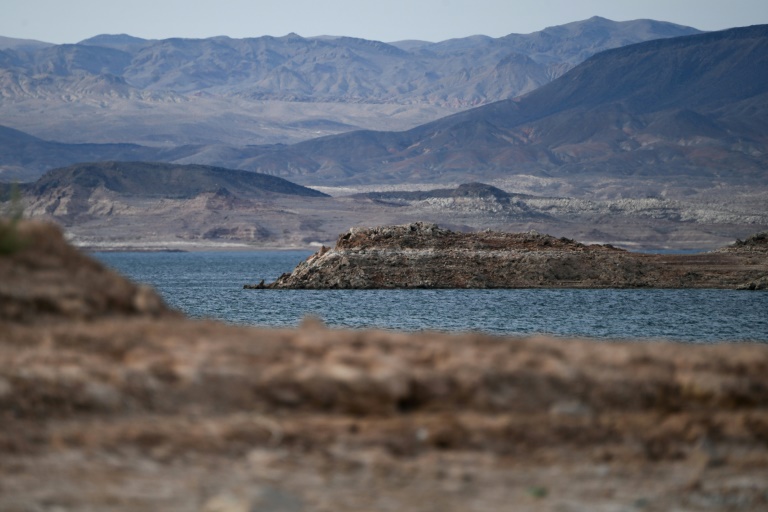
In the 15 years since Adam Dailey began boating on Lake Mead, the shoreline has receded hundreds of meters, the result of more than two decades of punishing drought that is drying out the western United States.

Launch spots that lined the edge of the lake, located outside Las Vegas, have been abandoned, and a single ramp is now the only way to get a boat in the water.

“We used to have more. So everyone’s fighting to use one ramp… and still trying to figure out how to get along,” said Dailey.

“It’s kind of sad, what’s going on. But we still come out and try to enjoy it when we can.”

Lake Mead is the largest reservoir in the United States, a huge man-made body of water formed by the construction of the Hoover Dam in the early 1930s.

Its 247-square-mile (640-square-kilometer) surface area stores water for tens of millions of people and countless acres of farmland in the southwest.

But it’s shrinking at a terrifying rate and now stands at just one-quarter full.

The National Park Service (NPS), which manages access to the lake, has spent more than $40 million since 2010 trying to keep the water open to boaters.

It costs them $2-3 million dollars to reconfigure the boat launch ramp every time the water levels fall another four feet (120 centimeters).

“Declining water levels due to climate change and 20 years of ongoing drought have reshaped the park’s shorelines,” the NPS says on its website. 

“As Lake Mead continues to recede, extending launch ramps becomes more difficult and more expensive due to the topography and projected decline in water levels.” 

– Bathtub ring –

A series of NPS signs show the shoreline at various points since 2001. The sign marking the level in 2021 is 300 paces from the water.

In the mud, the receding waters leave behind bottles, cans, fire extinguishers and other detritus that somehow made its way overboard in years gone by.

The rocks that form the hard edges of the reservoir offer a stark illustration of just how far water levels have fallen.

A white band of mineral deposits stains the mountainsides like the ring on a bathtub, showing where the water was at its high point after a flood in 1983.

“We used to water ski race here,” Jaxkxon Zacher told AFP.

“And the island — only the tip… was out 25 years ago. So now we can’t even race here anymore. It’s dropping drastically.”

The growing islands in the middle of the lake point to the uneven topography of the valley that was flooded — and the hazards that await.

“Every day someone’s ripping a drive off, because last week, where there was no rock, it’s now a foot down or two feet down so things are exposed,” boatseller Jason Davis said.

“You’ve got houseboats getting beached and stuck, and people are ripping their lower units off.”

And with vessels that can retail at hundreds of thousands of dollars, a weekend outing can turn into a costly mistake.

– A new job –

For some people, the risk of an accident and the sheer hassle of having to wait so long to get a boat into the water and then out again at the end of the day means Lake Mead is no longer a viable recreation option.

Below the Hoover Dam, stretches of river remain relatively unscathed by the dropping water levels.

At Willow Beach, across the state line in Arizona, kayakers frolic in the shallows, unloading water pistols on each other as 104 Fahrenheit (40 Celsius) sunshine beats down.

A small marina there offers Steve McMasters a place to stage his pontoon, just a short distance from his home in Boulder City.

“It can be a four-to-five-hour wait on weekends to get your boat out of the water (at Lake Mead), so this is big to have,” he said.

“I waited like four months on a waiting list to get it. I got lucky here.”

Climatologists say two decades of drought is not unheard of in the western United States, but combined with human-caused global warming, it is transforming the region.

Higher temperatures mean less moisture falls as snow on the Rocky Mountains, and what snowpack does form melts more quickly.

This leaves the Colorado River without the slow and steady feed that supplied it year-round in the centuries and millennia before the region was settled.

In climatic terms, Lake Mead is a baby; in existence for less than 90 years.

But in human terms, it is vanishing at a startling pace.

Jason Davis, the boatseller, says more people need to witness the stark changes for themselves. 

“If you haven’t come to see these rings, you know, you don’t quite comprehend,” he said. 

And if the water keeps dropping?

“I’ll need a new job.”

Argentine economy minister who renegotiated IMF debt resigns

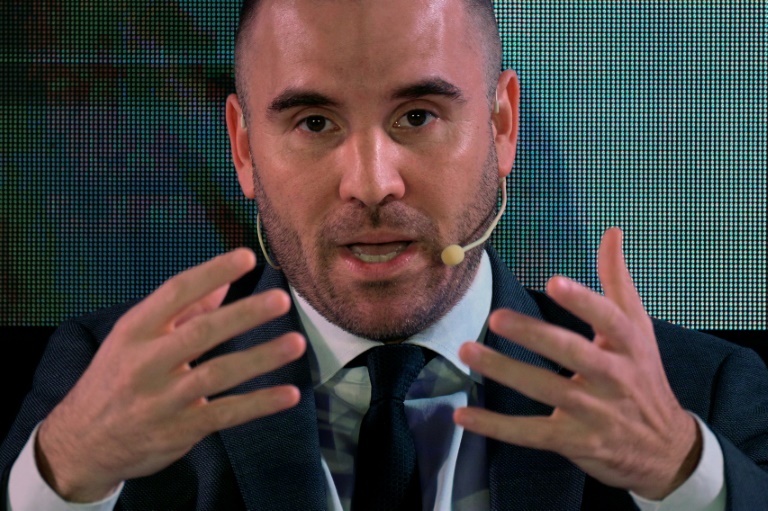
Argentine economy minister Martin Guzman, who led debt renegotiations with the International Monetary Fund, announced his resignation Saturday, sparking fresh uncertainty in Latin America’s third largest economy.

Guzman did not say why he resigned in his statement addressing President Alberto Fernandez, but called on the center-left leader to mend internal divisions so that “the next minister does not suffer” the same difficulties he did.

“It will be essential that you work on an agreement within the ruling coalition,” he added in the statement shared on Twitter.

His resignation comes two weeks after Vice President Cristina Kirchner, a former president who has been a constant critic of the government, gave a speech attacking Fernandez’s economic management.

Political analyst Carlos Fara told AFP that Guzman’s resignation was “a check mate for the president’s autonomy” and had given Kirchner the upper hand in their power struggle.

“The resignation will have a very bad effect in the markets. Even if the president and vice president reach a consensus on managing the economy, from now on everything will be conditioned by Cristina Kirchner’s pressure.”

As economy minister, the 39-year-old Guzman was tasked with renegotiating a $44 billion debt with the IMF that Argentina insisted it could not afford to repay.

The original debt of $57 billion — the last tranche of which Fernandez declined after succeeding his liberal predecessor Mauricio Macri, who had solicited the loan — was the largest ever issued by the IMF.

Despite resistance from Kirchner, Guzman managed to agree a deal and save Argentina from defaulting.

But Guzman was often faced with hostility from the Peronist Justicialist Party, the major force in the Frente de Todos (Everyone’s Front) ruling coalition that counts both Fernandez and Kirchner as high profile members.

Kirchner’s faction has gone after Guzman ever since Everyone’s Front lost control of the senate during last year’s midterm legislative elections.

The IMF deal was only ratified by parliament thanks to support from the center-right opposition, as a group of legislators in the ruling coalition led by the vice president’s son Maximo Kirchner boycotted the vote.

– ‘Growth crisis’ –

Guzman said whoever replaces him will need “centralized management of the necessary macroeconomic political instruments to consolidate the progress made and face the challenges ahead.”

While agricultural powerhouse Argentina has the third largest economy in Latin America, it has been in economic crisis for years, with inflation of more than 60 percent in the last 12 months.

The country was already struggling with rising poverty, unemployment and a depreciating currency before the coronavirus pandemic exacerbated matters.

Earlier this week, Fernandez admitted the country was facing “a growth crisis” due to a shortage of foreign exchange.

The IMF deal included provisions to contain inflation and reduce the budget deficit from three percent in 2021 to parity by 2025.

Guzman’s detractors within the ruling coalition hit out at him over perceived excessive zeal in tackling the budget deficit and his monetary policy.

He complained several times that these criticisms sent worrying signs to already jittery markets, making his job ever harder.

In a recent report, the Eurasia Group political risk consultancy said the internal divisions would not be resolved any time soon.

“Infighting within the administration will continue to worsen, further hurting the administration’s ability to develop a coherent policy plan,” said Eurasia.

Although he did not reveal what his next post would be, Guzman said he would “continue working and striving for a fairer, freer and sovereign homeland.”

Fernandez has yet to comment on the resignation of Guzman, who is one of his closest allies.

Hundreds of flights axed as US kicks off long holiday weekend

Airlines struggling to staff their planes cancelled hundreds of US flights Saturday at the start of a long and almost certainly messy holiday travel weekend.

As of mid-afternoon, with Americans gearing up for July 4 Independence Day celebrations, more than 600 flights within, into, or out of the United States had been cancelled, and more than 3,300 were delayed, according to flight tracking service flightaware.com.

The numbers on Friday were grim as well, with 587 US flights scrapped among a global total of 3,061 cancellations, the site said. Sunday was also looking problematic, with more than 100 flights already cancelled.

The airport chaos is prompting a record level of road travel by Americans seeking to dodge flight trouble, a travel industry group said. 

For days, amid a surge in travel as summer rolls in, horror stories have abounded as travelers were stranded at airports, enduring odysseys to reach their destinations.

The airline industry was devastated in the early stages of the Covid-19 pandemic as people stayed close to home, but air travel has rebounded as health measures were eased.

And although federal Covid-19 relief spared airlines from laying off staff, tens of thousands of workers left the industry after carriers urged early retirement.

Today’s industry has about 15 percent less staff compared with the pre-pandemic period to handle around 90 percent of pre-2020 passenger volume, analysts at Third Bridge consultancy estimated.

– ‘Pilots are getting fatigued’ –

The travel chaos has drawn scrutiny from Transportation Secretary Pete Buttigieg and others in Washington.

On Saturday, Buttigieg tweeted a series of tips on what to do if one’s flight is cancelled, such as whether to accept travel points or miles as compensation, or demand a cash refund.

“You can often negotiate on this. That’s between you and the airline,” Buttigieg wrote.

The travel season is at full speed, with 2,490,490 people screened at airport checkpoints nationwide on Friday, the most since February 2020 right before the Covid shutdown in the US, the Transportation Security Administration said.

“We are back to pre-pandemic checkpoint volume,” the TSA tweeted.

Delta pilots walked informational picket lines at several airports Thursday to demand a new contract and complain of overwork, among other issues.

“Quite frankly, it’s irresponsible scheduling, over scheduling. Coming out of the pandemic, we’re scheduling more flights than we have people to fly them,” Delta pilots association union leader Jason Ambrosi told CNN on Saturday.

“The pilots are getting fatigued, quite honestly,” Ambrosi said. 

They do not want to strand travelers or crew members, he added, “but it’s a safety issue.”

Lack of pilots is the most acute problem in a broad airline industry labor crunch, said Third Bridge analyst Peter McNally.

“There’s no short-term fix,” McNally told AFP. “The issue becomes most pronounced during these seasonal peaks.”

Airlines say they’re working to address the situation, recruiting pilots and other staff and trimming summer seat capacity by 15 percent.

While acknowledging the pilot shortage, airline industry officials point to other exacerbating factors, including turbulent weather, increased staff absences due to Covid and insufficient flight traffic control personnel at some sites.

For the long Independence Day weekend, a record 42 million Americans will also travel by road at least 50 miles (80 kilometers) from home, despite soaring gasoline prices, the American Automobile Association said.

The travel hassles affecting the airline industry may be fueling the heavy road traffic, it noted.

“Traveling by car does provide a level of comfort and flexibility that people may be looking for given the recent challenges with flying,” said AAA Travel senior vice president Paula Twidale. 

Close Bitnami banner
Bitnami