US Business

Hundreds of flights axed as US kicks off long holiday weekend

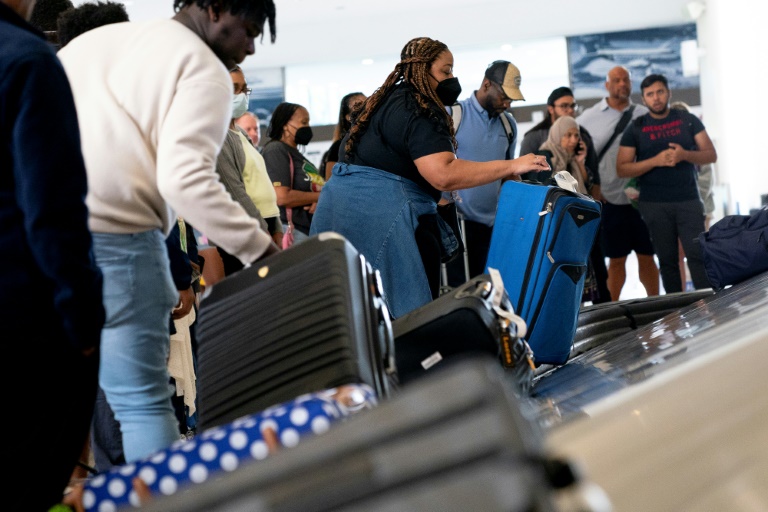
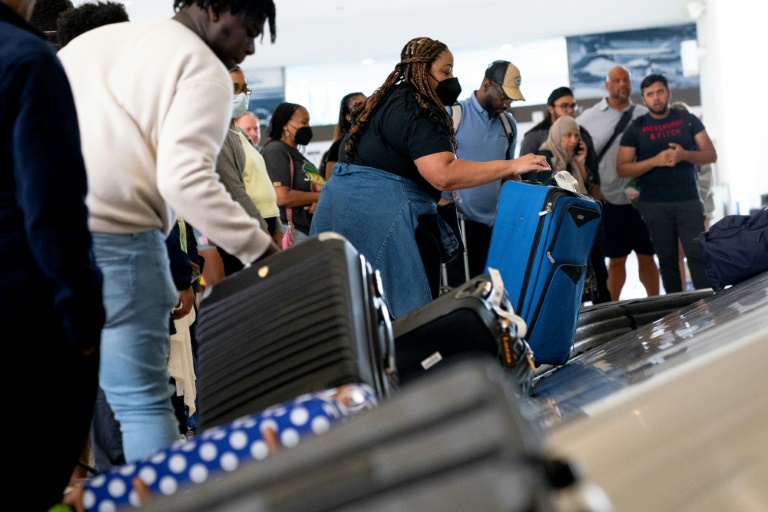
Airlines struggling to staff their planes cancelled hundreds of US flights Saturday at the start of a long and almost certainly messy holiday travel weekend.

As of mid-afternoon, with Americans gearing up for July 4 Independence Day celebrations, more than 600 flights within, into, or out of the United States had been cancelled, and more than 3,300 were delayed, according to flight tracking service flightaware.com.

The numbers on Friday were grim as well, with 587 US flights scrapped among a global total of 3,061 cancellations, the site said. Sunday was also looking problematic, with more than 100 flights already cancelled.

The airport chaos is prompting a record level of road travel by Americans seeking to dodge flight trouble, a travel industry group said. 

For days, amid a surge in travel as summer rolls in, horror stories have abounded as travelers were stranded at airports, enduring odysseys to reach their destinations.

The airline industry was devastated in the early stages of the Covid-19 pandemic as people stayed close to home, but air travel has rebounded as health measures were eased.

And although federal Covid-19 relief spared airlines from laying off staff, tens of thousands of workers left the industry after carriers urged early retirement.

Today’s industry has about 15 percent less staff compared with the pre-pandemic period to handle around 90 percent of pre-2020 passenger volume, analysts at Third Bridge consultancy estimated.

– ‘Pilots are getting fatigued’ –

The travel chaos has drawn scrutiny from Transportation Secretary Pete Buttigieg and others in Washington.

On Saturday, Buttigieg tweeted a series of tips on what to do if one’s flight is cancelled, such as whether to accept travel points or miles as compensation, or demand a cash refund.

“You can often negotiate on this. That’s between you and the airline,” Buttigieg wrote.

The travel season is at full speed, with 2,490,490 people screened at airport checkpoints nationwide on Friday, the most since February 2020 right before the Covid shutdown in the US, the Transportation Security Administration said.

“We are back to pre-pandemic checkpoint volume,” the TSA tweeted.

Delta pilots walked informational picket lines at several airports Thursday to demand a new contract and complain of overwork, among other issues.

“Quite frankly, it’s irresponsible scheduling, over scheduling. Coming out of the pandemic, we’re scheduling more flights than we have people to fly them,” Delta pilots association union leader Jason Ambrosi told CNN on Saturday.

“The pilots are getting fatigued, quite honestly,” Ambrosi said. 

They do not want to strand travelers or crew members, he added, “but it’s a safety issue.”

Lack of pilots is the most acute problem in a broad airline industry labor crunch, said Third Bridge analyst Peter McNally.

“There’s no short-term fix,” McNally told AFP. “The issue becomes most pronounced during these seasonal peaks.”

Airlines say they’re working to address the situation, recruiting pilots and other staff and trimming summer seat capacity by 15 percent.

While acknowledging the pilot shortage, airline industry officials point to other exacerbating factors, including turbulent weather, increased staff absences due to Covid and insufficient flight traffic control personnel at some sites.

For the long Independence Day weekend, a record 42 million Americans will also travel by road at least 50 miles (80 kilometers) from home, despite soaring gasoline prices, the American Automobile Association said.

The travel hassles affecting the airline industry may be fueling the heavy road traffic, it noted.

“Traveling by car does provide a level of comfort and flexibility that people may be looking for given the recent challenges with flying,” said AAA Travel senior vice president Paula Twidale. 
Tesla deliveries fall with temporary closure of China factory

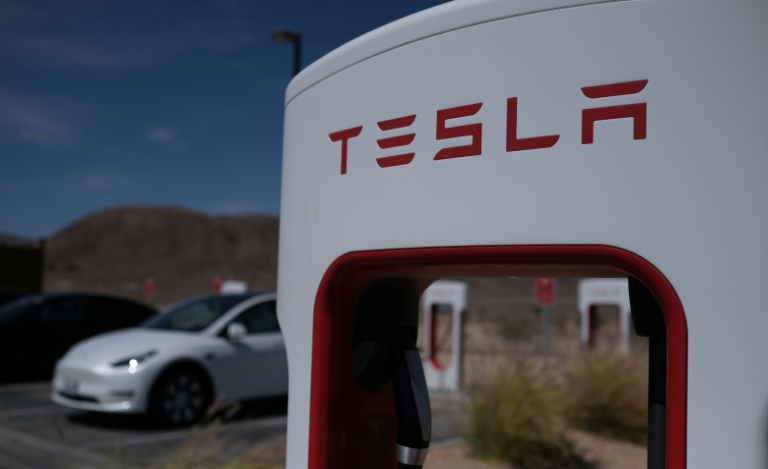
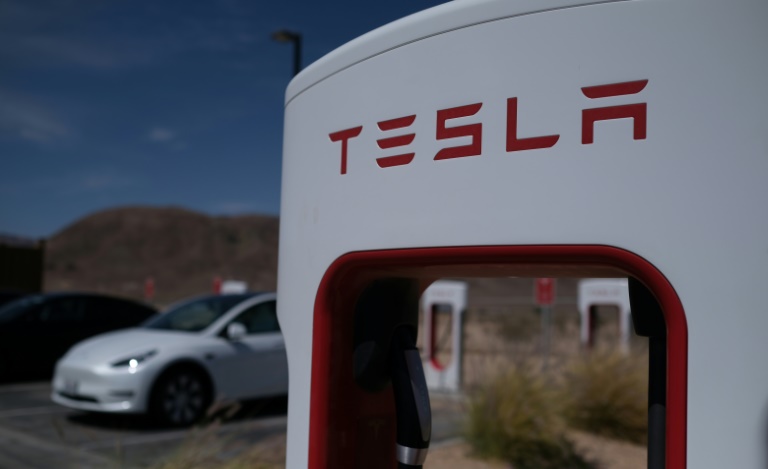
Tesla’s deliveries of electric vehicles fell in the second quarter compared to the previous one due mainly to a weeks-long closure of its factory in China, the company said Saturday.

Elon Musk’s enterprise delivered 254,695 vehicles from April to June, it said in a statement.

That’s 27 percent more than the same period a year ago but down 18 percent from the January-to-March quarter of 2022 and the first such decline in more than two years.

This marks a disappointment for a company that says it is posting strong growth, touting the opening of two new factories this year, in Germany and Texas.

The drop in deliveries was bigger than that anticipated by analysts, who had expected 264,000 vehicles to be handed over to buyers, according to FactSet, a financial data and software company.

Tesla warned in April that supply chain snarls hitting the auto industry in general would keep disrupting the company’s production until the end of the year.

Still, it delivered a record number of cars in the first quarter of 2022.

But in the second quarter Tesla had to grapple with the closure of its Shanghai factory for several weeks because of strict lockdown measures in China due to a surge in Covid-19 cases.

In its statement Saturday the company said it produced 258,000 vehicles in the second quarter “despite ongoing supply chain challenges and factory shutdowns beyond our control.”

It also said June was the highest vehicle production month in Tesla’s history.

Elsewhere in the industry, General Motors and Toyota saw their second quarter sales in the United States drop by 15 percent and 23 percent respectively, compared to the same period in 2021.

Tesla deliveries fall with temporary closure of China factory

Tesla’s deliveries of electric vehicles fell in the second quarter compared to the previous one due mainly to a weeks-long closure of its factory in China, the company said Saturday.

Elon Musk’s enterprise delivered 254,695 vehicles from April to June, it said in a statement.

That’s 27 percent more than the same period a year ago but down 18 percent from the January-to-March quarter of 2022 and the first such decline in more than two years.

This marks a disappointment for a company that says it is posting strong growth, touting the opening of two new factories this year, in Germany and Texas.

The drop in deliveries was bigger than that anticipated by analysts, who had expected 264,000 vehicles to be handed over to buyers, according to FactSet, a financial data and software company.

Tesla warned in April that supply chain snarls hitting the auto industry in general would keep disrupting the company’s production until the end of the year.

Still, it delivered a record number of cars in the first quarter of 2022.

But in the second quarter Tesla had to grapple with the closure of its Shanghai factory for several weeks because of strict lockdown measures in China due to a surge in Covid-19 cases.

In its statement Saturday the company said it produced 258,000 vehicles in the second quarter “despite ongoing supply chain challenges and factory shutdowns beyond our control.”

It also said June was the highest vehicle production month in Tesla’s history.

Elsewhere in the industry, General Motors and Toyota saw their second quarter sales in the United States drop by 15 percent and 23 percent respectively, compared to the same period in 2021.

Hundreds of flights axed as US kicks off long holiday weekend

Airlines cancelled several hundred US flights Saturday at the start of a long and almost certainly messy holiday travel weekend as carriers struggled to staff their planes.

As of mid-day, with Americans gearing up for July 4 Independence Day celebrations, some 600 flights within, into or out of the United States had been cancelled and more than 2,500 were delayed, according to flight tracking service flightaware.com.

The numbers on Friday were awful as well, with 587 US flights scrapped among a global total of 3,060 cancellations, the site said.

For days, amid a surge in travel as summer rolls in and people sick of cooped up pandemic life look to go places again, horror stories have abounded as travelers got stranded at airports, enduring odysseys to get where they are going.

The airline industry was devastated in the early stages of the pandemic as people stayed close to home.

And although federal Covid-19 relief spared airlines from laying off staff, tens of thousands of workers left the industry after carriers urged early retirements.

Today’s industry has about 15 percent less staff compared with the pre-pandemic period to handle about 90 percent of pre-2020 passenger volume, analysts at Third Bridge consultancy estimated.

The travel chaos has drawn scrutiny from Transportation Secretary Pete Buttigieg and others in Washington.

On Saturday Buttigieg put out a series of tweets that were essentially consumer tips on what to do if one’s flight is cancelled, like whether to accept travel points or miles as compensation or demand a cash refund.

“You can often negotiate on this. That’s between you and the airline,” Buttigieg wrote.

Delta pilots walked informational picket lines at several airports Thursday to demand a new contract and complain of overwork, among other gripes.

“Quite frankly, it’s irresponsible scheduling, over scheduling. Coming out of the pandemic, we’re scheduling more flights than we have people to fly them,” Delta pilots association union leader Jason Ambrosi told CNN on Saturday.

“The pilots are getting fatigued, quite honestly,” Ambrosi said. They do not want to strand travelers or crew members, he said, “but it’s a safety issue.”

Pilots are the most acute issue in a broad airline industry labor crunch, said Third Bridge analyst Peter McNally.

“There’s no short-term fix,” McNally told AFP. “The issue becomes most pronounced during these seasonal peaks.”

Airlines say they’re working to address the situation, recruiting pilots and other staff and trimming summer seat capacity by 15 percent.

While acknowledging the pilot supply problem, airline industry officials point to other exacerbating factors, including turbulent weather, increased staff absences due to Covid and insufficient personnel at flight traffic control at some sites.

Hundreds of flights axed as US kicks off long holiday weekend

Airlines cancelled several hundred US flights Saturday at the start of a long and almost certainly messy holiday travel weekend as carriers struggled to staff their planes.

As of mid-day, with Americans gearing up for July 4 Independence Day celebrations, some 600 flights within, into or out of the United States had been cancelled and more than 2,500 were delayed, according to flight tracking service flightaware.com.

The numbers on Friday were awful as well, with 587 US flights scrapped among a global total of 3,060 cancellations, the site said.

For days, amid a surge in travel as summer rolls in and people sick of cooped up pandemic life look to go places again, horror stories have abounded as travelers got stranded at airports, enduring odysseys to get where they are going.

The airline industry was devastated in the early stages of the pandemic as people stayed close to home.

And although federal Covid-19 relief spared airlines from laying off staff, tens of thousands of workers left the industry after carriers urged early retirements.

Today’s industry has about 15 percent less staff compared with the pre-pandemic period to handle about 90 percent of pre-2020 passenger volume, analysts at Third Bridge consultancy estimated.

The travel chaos has drawn scrutiny from Transportation Secretary Pete Buttigieg and others in Washington.

On Saturday Buttigieg put out a series of tweets that were essentially consumer tips on what to do if one’s flight is cancelled, like whether to accept travel points or miles as compensation or demand a cash refund.

“You can often negotiate on this. That’s between you and the airline,” Buttigieg wrote.

Delta pilots walked informational picket lines at several airports Thursday to demand a new contract and complain of overwork, among other gripes.

“Quite frankly, it’s irresponsible scheduling, over scheduling. Coming out of the pandemic, we’re scheduling more flights than we have people to fly them,” Delta pilots association union leader Jason Ambrosi told CNN on Saturday.

“The pilots are getting fatigued, quite honestly,” Ambrosi said. They do not want to strand travelers or crew members, he said, “but it’s a safety issue.”

Pilots are the most acute issue in a broad airline industry labor crunch, said Third Bridge analyst Peter McNally.

“There’s no short-term fix,” McNally told AFP. “The issue becomes most pronounced during these seasonal peaks.”

Airlines say they’re working to address the situation, recruiting pilots and other staff and trimming summer seat capacity by 15 percent.

While acknowledging the pilot supply problem, airline industry officials point to other exacerbating factors, including turbulent weather, increased staff absences due to Covid and insufficient personnel at flight traffic control at some sites.

On the US border, migrants' desperation outweighs fear

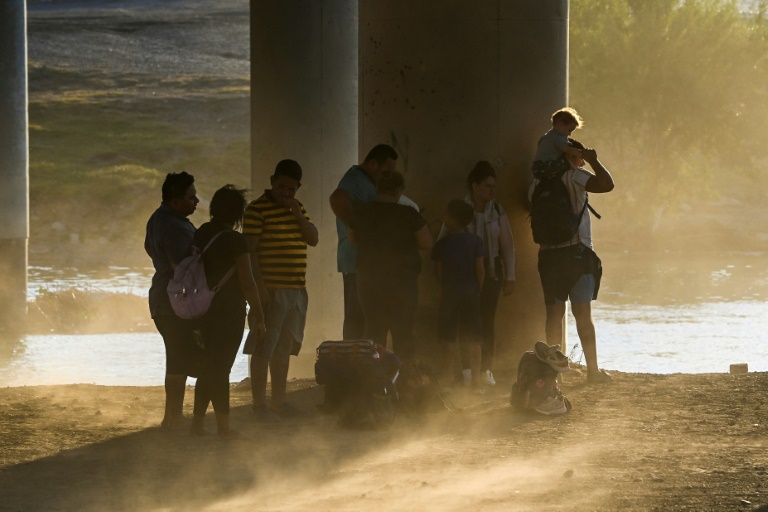
Selvin Allende is worn out. With his one-year-old daughter on his shoulders and his pregnant wife beside him, he crossed the Rio Grande from the Mexican city of Piedras Negras into Eagle Pass, Texas — a dangerous journey that thousands of migrants undertake every year seeking a better future. 

“I was afraid for my daughter in the river. I feel tired, defeated, but with the dream of working if the immigration services listen to us with their hearts,” says the 30-year-old Guatemalan.

The family left their home in Honduras because of crime and a lack of work, and made the long trip by train and on foot to get here.

He and his wife, walking with a painful gait and eyes half-closed, make their way over to the border patrol waiting for them under one of the bridges that link Mexico and the United States. Their belongings fit in a pair of plastic bags. 

The agents look over their passports and those of other people who recently arrived, and take them into custody to study their asylum claims. 

The scene repeats itself several times a day under the resigned gaze of the security forces. “This never stops. They can cross wherever and whenever,” said one National Guard soldier, who did not want to be named. 

The reinforcement of security in the last few months has not stemmed the arrival of migrants without visas. In May, authorities detained more than 239,000 people on the Mexican border, a record, though the figure also includes those who tried to enter the US multiple times.  

And yet, the journey comes with serious risks, as demonstrated by the case of 53 migrants found dead after being abandoned in a sweltering tractor trailer in San Antonio on Monday.  

The man suspected of driving the truck has said he was unaware the trailer’s air conditioning had failed, according to media reports.  

– ‘Crying with happiness’ –

On the Mexican bank of the river trucks come and go, letting off people crossing to the other side. 

This afternoon the temperature hits 37 degrees Celsius (99 degrees Fahrenheit), and some migrants cool off in the water as they wait for more people to arrive with whom they can cross the treacherous river, which has claimed many lives. 

One Venezuelan family – five men, two women and two children – decide the moment has come. Their crossing lasts 10 minutes, and halfway through, they grab onto each other to brace themselves against the strong currents. 

When they arrive on the American side, they shout with happiness before turning themselves over to the border patrol. 

The relief can be seen in every face. Alejandro Galindo, another Venezuelan crossing the river nearby, is emotional after 26 days of traveling with two companions. 

“I’m crying with happiness. I want to help my family. In Venezuela we have no future,” the 28-year-old says. 

– A changing profile –

Eagle Pass, a city of 22,000 people about 230 kilometres (143 miles) from San Antonio, has learned to live with the daily presence of the migrants. 

A few meters from the bridge over the border, several men play golf in the yellowish grass, paying no mind to the people crossing the river. 

Valeria Wheeler, the director of the shelter Mission Border Hope, witnesses every day the challenges of the wave of migration. 

In two years, her facilities have gone from taking in between 20 migrants a week to up to 600 a day. 

The recent arrivals spend a few hours there, in a large warehouse with benches, bathrooms and showers, waiting for a relative to pay for their transportation to another city. 

The migrants’ economic profile has changed in recent times, explains Wheeler, 35. 

Before, they were usually people who could buy an airplane ticket to somewhere near the border. But now they are poorer, and arrive after walking from Mexico or Central America. 

“They come with physical and emotional wounds,” says Wheeler, whose shelter receives only those released by the border patrol and able to seek asylum after getting around Title 42. 

The measure, invoked under the administration of former president Donald Trump, applies to all Mexicans and Central Americans, and allows for the deportation of migrants without visas, even if they are seeking asylum, under the pretext of stopping the spread of Covid-19. 

For those who try to elude the border patrol and deportation, the journey is even more dangerous than for others. 

So-called coyotes, or traffickers, are one option, but the price can climb as high as $10,000, and that’s not the worst part, as seen in the case of the 53 people found dead in San Antonio. 

“We’re here so the people who arrive at the shelter don’t have to go through the same thing,” says Wheeler. “That’s what we’re working for.” 

Google to delete user location history on US abortion clinic visits

Google announced Friday it would delete users’ location history when they visit abortion clinics, domestic violence shelters and other places where privacy is sought.

“If our systems identify that someone has visited one of these places, we will delete these entries from Location History soon after they visit,” Jen Fitzpatrick, a senior vice president at Google, wrote in a blog post. “This change will take effect in the coming weeks.” 

Other places from which Google will not store location data include fertility centers, addiction treatment facilities, and weight loss clinics.

The announcement comes a week after the US Supreme Court made the tectonic decision to strip American women of constitutional rights to abortion, leading a dozen states to ban or severely restrict the procedure and prompting mass protests across the country.

Activists and politicians have been calling on Google and other tech giants to limit the amount of information they collect to avoid it being used by law enforcement for abortion investigations and prosecutions.

Fitzpatrick also sought to reassure users that the company takes data privacy seriously.

“Google has a long track record of pushing back on overly broad demands from law enforcement, including objecting to some demands entirely,” she wrote. 

“We take into account the privacy and security expectations of people using our products, and we notify people when we comply with government demands.”

Concerns over smartphone data and reproductive rights arose even before the Supreme Court ruling, when several conservative US states in recent months passed laws that give members of the public the right to sue doctors who perform abortions — or anyone who helps facilitate them.

That led a group of top Democratic lawmakers in May to send a letter to Google chief executive Sundar Pichai, asking him to stop collecting smartphone location data lest it become “a tool for far-right extremists looking to crack down on people seeking reproductive health care.”

Google to delete user location history on US abortion clinic visits

Google announced Friday it would delete users’ location history when they visit abortion clinics, domestic violence shelters and other places where privacy is sought.

“If our systems identify that someone has visited one of these places, we will delete these entries from Location History soon after they visit,” Jen Fitzpatrick, a senior vice president at Google, wrote in a blog post. “This change will take effect in the coming weeks.” 

Other places from which Google will not store location data include fertility centers, addiction treatment facilities, and weight loss clinics.

The announcement comes a week after the US Supreme Court made the tectonic decision to strip American women of constitutional rights to abortion, leading a dozen states to ban or severely restrict the procedure and prompting mass protests across the country.

Activists and politicians have been calling on Google and other tech giants to limit the amount of information they collect to avoid it being used by law enforcement for abortion investigations and prosecutions.

Fitzpatrick also sought to reassure users that the company takes data privacy seriously.

“Google has a long track record of pushing back on overly broad demands from law enforcement, including objecting to some demands entirely,” she wrote. 

“We take into account the privacy and security expectations of people using our products, and we notify people when we comply with government demands.”

Concerns over smartphone data and reproductive rights arose even before the Supreme Court ruling, when several conservative US states in recent months passed laws that give members of the public the right to sue doctors who perform abortions — or anyone who helps facilitate them.

That led a group of top Democratic lawmakers in May to send a letter to Google chief executive Sundar Pichai, asking him to stop collecting smartphone location data lest it become “a tool for far-right extremists looking to crack down on people seeking reproductive health care.”

New York moves to enshrine abortion rights in state constitution

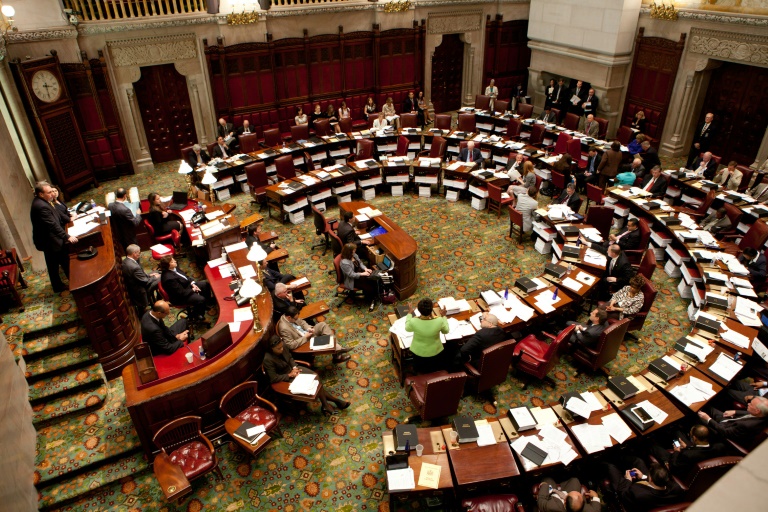
The US state of New York moved to enshrine abortion rights and access to contraception in its constitution Friday, becoming a vanguard in the pushback against a seismic ruling by the country’s Supreme Court that upended reproductive rights nationwide.

The state Senate “advanced the first passage of an amendment to codify the right to an abortion and the right to contraception in the State Constitution,” it said in a statement.

New York state law already permits abortions, so the move would add an extra layer of legal protection for the procedure.

The amendment also seeks to “update the existing Equal Rights Amendment to extend current protections to several new classes, including on the basis of sex, disability, national origin, ethnicity, and age,” it said.

After passing the Senate, the legislation will next go to the state Assembly, where it is expected to be passed.

Voters will then cast their ballot on it directly in a referendum.

Conservatives in the United States have been working for decades to overturn Roe v. Wade, the 1973 Supreme Court ruling that said the US constitution provides for a right to an abortion.

Last month they got their wish when the court’s new conservative majority overturned Roe with a decision that was widely expected, but nonetheless ignited nationwide protests and brought international condemnation.

The decision handed power back to the states to make their own rules on abortion, and up to half are expected to ban or severely restrict it.

Others have declared themselves abortion “sanctuaries” and vowed to protect the right, as well as other rights such as gay marriage which progressives now fear are in the court’s sights.

“The reversal of Roe v. Wade made it clear that New York State must continue to stand up and be a national leader to protect women and individual rights,” said New York Senate Majority Leader Andrea Stewart-Cousins, a Democrat, in the statement.

Kerry vows US to meet climate goal despite court setback

US climate envoy John Kerry vowed Friday the United States will meet goals it submitted to the United Nations on slashing greenhouse gas emissions, despite a Supreme Court ruling that curtailed the government’s powers.

“We are determined to achieve our goals. We can achieve our goals,” Kerry told AFP.

“But obviously it would help if we had a majority of the Supreme Court in the United States of America that actually understood the gravity of the situation and was more willing to try to be helpful rather than present a hurdle of one kind or another,” he said.

President Joe Biden, after defeating the climate-skeptic Donald Trump, in April last year said the United States would reduce greenhouse gas emissions by 50 to 52 percent by 2030 from 2005 levels, dramatically increasing the climate ambitions of the world’s largest economy.

He submitted the so-called nationally determined contribution to the UN climate body in line with the 2015 Paris Agreement, the landmark deal brokered by Kerry when he was secretary of state.

China, the world’s largest carbon emitter, called Friday on all nations to live up to Paris commitments, with foreign ministry spokesman Zhao Lijian saying of the United States, “it is not enough to just chant slogans.”

Kerry, who has worked with Chinese officials in his climate role despite soaring tensions between Beijing and Washington, said that he was “not surprised by the messaging” from the Asian power.

“We will show China precisely how we’re going to get the job done,” Kerry said.

Stephane Dujarric, the spokesman for UN Secretary-General Antonio Guterres, called the Supreme Court decision “a setback in our fight against climate change.”

– Biden proposes drilling –

Despite Biden’s pledges to wean the United States off fossil fuels, the Interior Department on Friday released a five-year proposal that would authorize offshore oil and gas drilling in federal waters in the Gulf of Mexico and Alaska, although it would still ban drilling in the Atlantic and Pacific Oceans.

The proposal comes amid soaring gas prices and as Biden seeks to woo Senator Joe Manchin, a Democrat from coal-producing West Virginia with the crucial vote, to back a package that would also boost clean energy. 

Environmentalists see the legislation as a last hope amid expectations that Trump’s Republican Party will make advances in November congressional elections.

The Supreme Court, finishing a term in which three justices nominated by Trump pushed it sharply to the right, on Thursday cut the wings off a key way in which the government could have tackled climate change without fresh legislation.

In a 6-3 ruling branded “devastating” by Biden, the top court said the Environmental Protection Agency did not have authority to order sweeping cuts on emissions from coal-fired power plants.

“I am convinced — and our legal people are looking at it very carefully — that this decision leaves plenty of latitude for us to be able to do a lot of things that we need to do,” Kerry said.

Asked about calls by some lawmakers from his Democratic Party for Biden to declare a climate emergency, Kerry said, “I think the president needs to evaluate every option available.”

– ‘Pin into balloon’ –

Coal accounts for around 20 percent of US electricity generation — still roughly on par with renewables. China, despite investing heavily in wind and solar, has also kept building coal production capacity.

But Kerry said that the marketplace showed that coal was not the future.

“Nobody’s going to fund any new coal power in the United States — no bank, no private lender. Coal is the dirtiest fuel in the world,” he said.

Scientists warn that the world is far off track in avoiding the worst ravages of climate change including severe heatwaves, floods, droughts, rising sea levels and storm surges. 

The Paris accord set the goal of limiting end-of-century warming to two degrees Celsius (3.6 Fahrenheit) above pre-industrial levels — and preferably not beyond 1.5 degrees — but the planet has already warmed by nearly 1.2 Celsius.

Ruth Greenspan Bell, a climate expert at the Woodrow Wilson International Center for Scholars, said it was difficult for the United States to show climate leadership while also fighting internally on whether it is a priority.

“It’s kind of putting a pin into a balloon. There’s a little bit less air in the balloon than there was before,” she said of the court decision. 

“The times call for a moonshot but imagine trying to pull off a moonshot when you are at the same time in a defensive crouch.”

Close Bitnami banner
Bitnami