US Business

Recession fears weigh on European, Asian stocks

Asian and European stock markets nursed losses Wednesday on resurgent fears that sharp interest rate hikes aimed at tackling runaway inflation could spark recession.

Bourses in Paris, Frankfurt, Tokyo and Hong Kong all lost around one percent or more, taking their cues from Tuesday’s rout on Wall Street following a gloomy US consumer confidence report.

US stocks stabilized on Wednesday, with the Dow adding 0.3 percent while the S&P 500 and the tech-heavy Nasdaq dipped slightly..

European sentiment also was rocked by data showing Spanish inflation rocketed to a 37-year peak of 10.2 percent in June on rising energy and food prices. 

The news sent the Madrid stock market down 1.6 percent, with Frankfurt falling 1.7 percent. Paris gave up 0.9 percent and London shed 0.2 percent.

“So much for the big stock market comeback. Another day, another sea of red on the market,” said AJ Bell investment director Russ Mould.

The selloff followed more than a week of global gains caused by hopes that any signs of contraction could give central banks room to ease up on the aggressive pace of monetary tightening.

“It does look like we are still in the first phase of this bear market, where indices are prepared to drop on the slightest bit of bad news, and any rally is short-lived,” said Chris Beauchamp at online trading platform IG.

New York stocks tanked Tuesday on data showing confidence among US consumers — a key driver of the world’s top economy — had fallen to its lowest level in more than a year, re-igniting worries over the strength of the world economy.

The data eclipsed news of a surprise move by China to slash the quarantine period for incoming travelers that had raised hopes for further relaxations that can allow the giant economy to recover more quickly.

Updated first quarter US GDP data released Wednesday chopped the personal consumption growth figure to 1.8 percent, from 3.1 percent, an indication that even at the beginning of the year consumers were feeling crimped by rising prices.

– ‘Down the drain’ –

“With signs that consumer confidence is seeping away, worries that global growth will go down the drain have returned to rattle financial markets,” said Susannah Streeter, senior investment and markets analyst at Hargreaves Lansdown.

“Covid restrictions may have eased for international travelers to China as infections rates slow, but one global problem is being replaced by another — fear that recessions are looming around the world.”

City Index analyst Fawad Razaqzada said there is a threat of high inflation and recession, a phenomenon economists call stagflation.

“That is where the global economy is headed, and central banks won’t be able to do much about it,” he said in a note to clients. 

“If they fasten their belts too tightly, this will hit GDP, while if they loosen their belts again, this will only fuel inflationary pressures further.”

– Key figures at around 2020 GMT –

New York – Dow: UP 0.3 percent at 31,029.31 (close)

New York – S&P 500: DOWN 0.1 percent at 3,818.83 (close)

New York – Nasdaq: DOWN less than 0.1 percent at 11,177.89 (close)

London – FTSE 100: DOWN 0.2 percent at 7,312.32 (close)

Frankfurt – DAX: DOWN 1.7 percent at 13,003.35 (close)

Paris – CAC 40: DOWN 0.9 percent at 6,031.48 (close)

EURO STOXX 50: DOWN 1.0 percent at 3,514.32 (close)

Tokyo – Nikkei 225: DOWN 0.9 percent at 26,804.60 (close)

Hong Kong – Hang Seng Index: DOWN 1.9 percent at 21,996.89 (close)

Shanghai – Composite: DOWN 1.4 percent at 3,361.52 (close)

Brent North Sea crude: DOWN 1.5 percent at $116.26 per barrel

West Texas Intermediate: DOWN 1.8 percent at $109.78 per barrel

Euro/dollar: DOWN at $1.0444 from $1.0519 Tuesday

Pound/dollar: DOWN at $1.2119 from $1.2184

Euro/pound: DOWN at 86.15 pence from 86.33 pence

Dollar/yen: UP at 136.66 yen from 136.14 yen

burs-jmb/hs
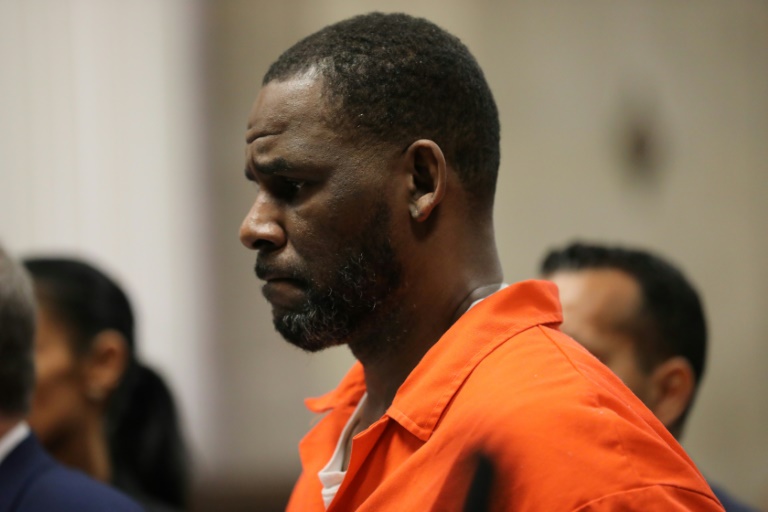
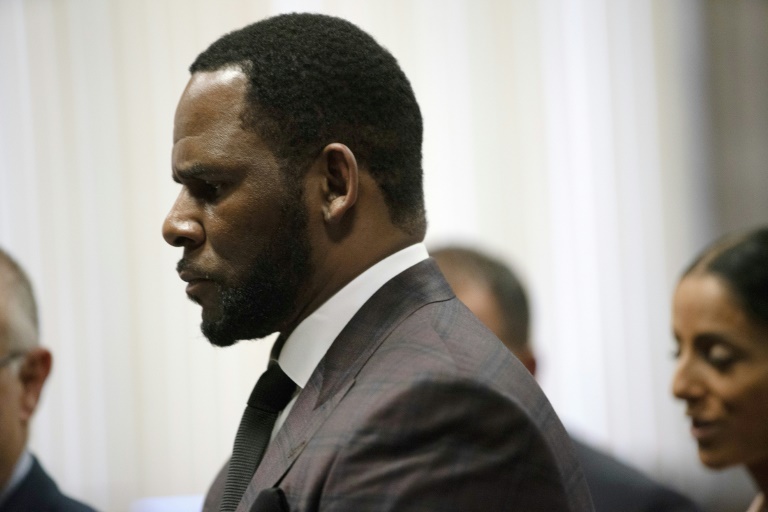
Singer R. Kelly gets 30 years in jail over sex crimes

Disgraced R&B singer R. Kelly was sentenced to 30 years behind bars on Wednesday for leading a decades-long effort to recruit and trap teenagers and women for sex.

The sentence, stiffer than the 25 years in prison that prosecutors had sought, caps a long downfall for the 55-year-old former superstar.

“I’m grateful that Robert Sylvester Kelly is away and will stay away and will not be able to harm anyone else,” victim Lizzette Martinez told reporters outside the Brooklyn federal court.

In September, the “I Believe I Can Fly” artist was found guilty on all nine charges he faced, including the most serious of racketeering.

“The public has to be protected from behaviors like this,” judge Ann Donnelly said, handing down the term.

Breon Peace, the US attorney for the Eastern District of New York hailed the sentence as a “significant outcome” for the 11 victims who testified about the “horrific and sadistic abuse they endured.”

Kelly’s lawyers called for a lighter sentence with a maximum of approximately 17 years.

Attorney Jennifer Bonjean told the judge that her client was the product of a “chaotic” upbringing that included being sexually abused as a child.

“Mr Kelly rejects that he’s this monster,” Bonjean said, later telling reporters outside court that she would appeal.

Kelly, a three-time Grammy Award-winner, chose not to speak at the hearing due to pending litigation.

The sentence comes just over a month before jury selection is due to start in Kelly’s separate, long-delayed federal trial in Chicago on August 15. 

In that case, Kelly and two of his former associates are alleged to have rigged the singer’s 2008 pornography trial and hid years of sexual abuse of minors.

The musician who once dominated R&B also faces prosecution in two other state jurisdictions.

– #MeToo milestone –

Kelly’s conviction in New York was widely seen as a milestone for the #MeToo movement: It was the first major sex abuse trial where the majority of accusers were Black women.

It was also the first time Kelly faced criminal consequences for the abuse he for decades was rumored to have inflicted on women and children.

Prosecutors were tasked with proving Kelly guilty of racketeering, a federal charge commonly associated with organized crime syndicates that depicted Kelly as the boss of an enterprise of associates who facilitated his abuse.

Calling 45 witnesses including 11 victims to the stand, they painstakingly presented a pattern of crimes they say the artist born Robert Sylvester Kelly carried out for years with impunity, capitalizing on his fame to prey on the less powerful.

To convict Kelly of racketeering, jurors had to find him guilty of at least two of 14 “predicate acts” — the crimes elemental to the wider pattern of illegal wrongdoing.

Lurid testimony intended to prove those acts included rape, druggings, imprisonment and child pornography.

His accusers described events that often mirrored one another: Many of the alleged victims said they had met the singer at concerts or mall performances and were then handed slips of paper with Kelly’s contact details by members of his entourage.

Several said they were told he could bolster their music industry aspirations.

But prosecutors argued all were instead “indoctrinated” into Kelly’s world — groomed for sex at his whim and kept in line by “coercive means of control,” including isolation and cruel disciplinary measures, recordings of which were played for the jury.

Core to the state’s case was Kelly’s relationship with the late singer Aaliyah.

Kelly wrote and produced her first album — “Age Ain’t Nothin’ But A Number” — before illegally marrying her when she was just 15 because he feared he had impregnated her.

His former manager admitted in court to bribing a worker to obtain fake identification allowing the union, which was later annulled.

R. Kelly, the top-selling R&B star who dodged sex allegations for years

A Chicago native who soared to global celebrity on a burst of megahits in the 1990s, for years R. Kelly endured as one of R&B’s top stars, even as he faced a slew of sex abuse allegations.

But now, three decades after he was first documented to have abused a minor, the 55-year-old artist will spend 30 years in prison after a New York jury convicted him of running a criminal ring that trapped teenagers and women in a web of sexual, emotional and physical abuse.

The three-time Grammy winner born Robert Sylvester Kelly has sold over 75 million records globally, making him one of the most commercially successful R&B musicians ever, with hits like “I Believe I Can Fly” and “Ignition (Remix).”

But Kelly’s success always included an asterisk: rumors of criminal sexual activity swirled for decades and the artist periodically settled sex crime allegations out of court.

In a pre-#MeToo world that saw victims far less empowered, Kelly acted with impunity, multiple indictments said.

Prosecutors for the trial in Brooklyn federal court detailed a “Robert Kelly-centric universe” that saw his associates support the singer’s predatory behavior. 

The musician’s defense dubbed Kelly a “playboy” and a “sex symbol” who was merely living the hedonistic, jet-set life international superstars are accustomed to.

But the jury of five women and seven men found him guilty on all charges in September 2021, convicting him of using his fame to systematically recruit victims for sex, buttressed by his entourage.

– Child porn acquittal –

Born January 8, 1967, in Chicago, Kelly was the third of four children raised by his mother.

In his 2012 memoir, he describes sexual experiences as early as eight years old, saying he sometimes watched older couples have sex, and was instructed to photograph them.

He said an older woman raped him, also when he was eight, and that an older man in the neighborhood sexually abused him when he was a pre-teen.

Kelly has long been rumored to be illiterate, which was repeatedly raised during the Brooklyn trial, despite 14 solo albums to his name.

His former attorney said Kelly writes in phonetic notes rather than standard English.

Jive Records signed him in 1991, after a label executive reportedly heard him singing at a barbeque in Chicago.

Kelly released his first solo album “12 Play” in 1993, featuring sexed up jams such as “Bump N’ Grind,” a record that topped the R&B charts for nine weeks.

Despite his tumultuous personal life — including his ultimately annulled marriage to 15-year-old protege Aaliyah — Kelly’s fame skyrocketed.

But in the early 2000s, Chicago reporter Jim DeRogatis anonymously received two tapes that appeared to show Kelly having sex with young girls, the second of which led to the artist’s indictment for child pornography.

After years of trial delays, during which he continued to tour and record, Kelly was acquitted on all counts in that controversial trial.

– ‘Mute R. Kelly’ –

For years, the accusations had little impact on Kelly’s fame. 

From 2005 to 2012, he wrote, produced, directed and performed in the notorious “hip hopera” entitled “Trapped in the Closet,” an absurdist tale of sex and lies that bewildered and impressed critics.

In July 2017, BuzzFeed published a lengthy investigation by DeRogatis, which alleged Kelly was operating a “sex cult” and holding six women hostage between Chicago and Atlanta.

At the same time, two women in Atlanta, Kenyette Barnes and Oronike Odeleye, founded the “Mute R. Kelly” movement, which encouraged boycotting his music.

“Someone had to stand up for Black women,” Odeleye said at the time.

– More trials ahead –

In January 2019, a Lifetime docu-series again said the quiet part loud, interviewing women who cast Kelly as manipulative, violent and hyper-focused on young girls, who he allegedly demanded call him “daddy.”

This time, the renewed scrutiny appeared to prompt a sea change.

His label dropped him and as outrage boiled over, fresh legal action brewed.

Not long after Chicago prosecutors levelled 10 counts of aggravated criminal sexual abuse against him, federal prosecutors in both Illinois and New York indicted Kelly in 2019.

Disgraced and reportedly facing financial ruin, Kelly has been imprisoned without bail since the federal charges came out.

But he still has yet to be tried for crimes in the three other jurisdictions, including Chicago federal court, where a trial is due to begin August 15.

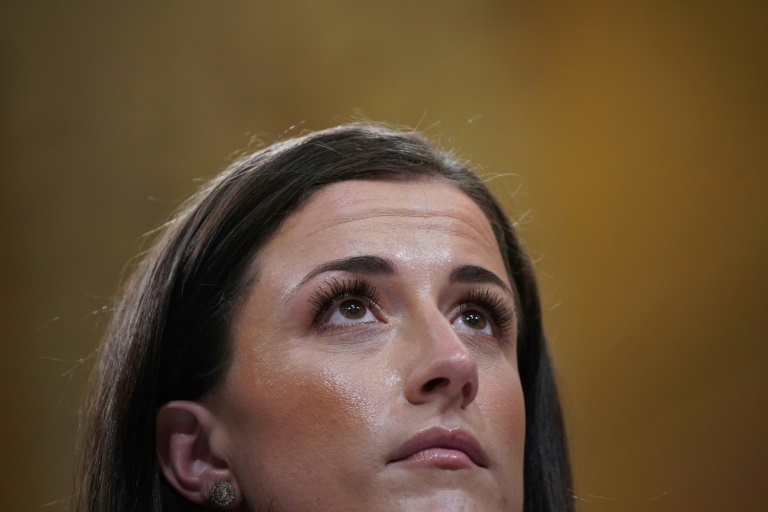
Cassidy Hutchinson: The ex-Trump footsoldier with a 'smoking gun'

Her name evokes an outlaw in the American Old West, and Cassidy Hutchinson did not disappoint as the young gunslinger gave it to Donald Trump with both barrels.

Once an ardently loyal footsoldier in the former commander-in-chief’s posse, Hutchinson turned sheriff Tuesday as she fired off a volley of allegations without historical parallel against an American president.

In a blockbuster appearance before the House committee investigating last year’s attack on the US Capitol, the top former White House aide delivered what opponents hope will be the evidence needed to run Trump out of town.

“This is the smoking gun,” Sol Wisenberg, a former deputy to Bill Clinton impeachment investigator Ken Starr, told The New York Times of Hutchinson’s testimony. 

“There isn’t any question this establishes a prima facie case for his criminal culpability on seditious conspiracy charges.”

There may have been no “wanted” poster for Trump but Hutchinson painted her own portrait — of an unhinged president unable to cope with defeat, bidding at any cost to halt the peaceful transfer of power.

Crucially, she offered what critics of the investigation say has so far been lacking — testimony that Trump not only knew his election fraud claims were false but that he was aware of the potential violence they would cause, and encouraged it.

An erratic leader who often overturned tableware in fits of rage, Trump demanded to be driven to the Capitol to be with the insurrectionist mob after the violence had already broken out, assaulting his Secret Service detail when the order was refused, according to a second-hand anecdote Hutchinson relayed. 

– ‘Broken porcelain’ –

David Greenberg, a journalism and history professor at Rutgers University-New Brunswick, called Hutchinson’s testimony “riveting and revelatory.”

“Historical accounts of January 6 won’t fail to include her vivid descriptions of ketchup oozing down the wall and the broken porcelain plate — a result of an enraged Trump having hurled his lunch across the room,” he told AFP.

“Substantively, it was damning, especially in revealing how ready Trump was to unleash armed protesters on the Capitol.”

Hutchinson said Trump knew his supporters were armed, including with Glock pistols and AR-15-style semi-automatic rifles, and didn’t care, telling them to march to the Capitol and “fight like hell” anyway.

“Cassidy Hutchinson’s testimony was credible, chilling and highly damaging to former president Trump and his allies,” Mike Hernandez, a political analyst for Miami-based Telemundo 51, told AFP.

Although it won’t move the needle much among Trump’s ultra-loyal base, according to Hernandez, it could convince sufficient numbers of Republicans that he should not be the nominee in 2024.

The march on the Capitol, as lawmakers were certifying Trump’s defeat to Joe Biden, had been characterized as a spontaneous idea but Trump’s plan to join his supporters was premeditated, according to Hutchinson’s testimony.

She recounted that White House counsel Pat Cipollone told her to ensure that the motorcade did not make the trip because they’d get “charged with every crime imaginable.”

– ‘She’s seen everything’ –

The Secret Service is reportedly prepared to deny the assault anecdote under oath, and some Republicans have dismissed parts of Hutchinson’s testimony as “hearsay,” but few have pushed back against the core allegations.

The first live witness from the West Wing to testify, Hutchinson was something of an unknown quantity to the public.

What seemed clear was that her loyalty to Trump had never been in question. The ex-president himself said after her testimony that she was a “big Trump fan long after January 6.”

The New Jersey native had honed her interest in the business of government, studying for a political science degree in Virginia before interning for senior Republicans in Congress. 

She took a role at the White House’s legislative affairs office and was promoted to be the principal aide to Meadows in March 2020, allocated a desk just a few steps from the Oval Office. 

Working daily with lawmakers and White House officials at all levels, she was “in a position to know a great deal about the happenings in the White House,” committee chair Liz Cheney said in her introduction. 

Trump took to his Truth Social app, to fire off a 12-post rant dismissing Hutchinson as low-level and calling her a “total phony.”

But several of her former colleagues vouched for her, arguing she was perfectly placed to report on activity at the very top.

Alyssa Farah Griffin, the White House director of strategic communications in Trump’s final year in office, told CNN that Hutchinson was on a first-name basis with most members of congressional leadership. 

“She would text with them. So she’s seen everything,” Farah Griffin said. “She’s been in so many rooms.”   

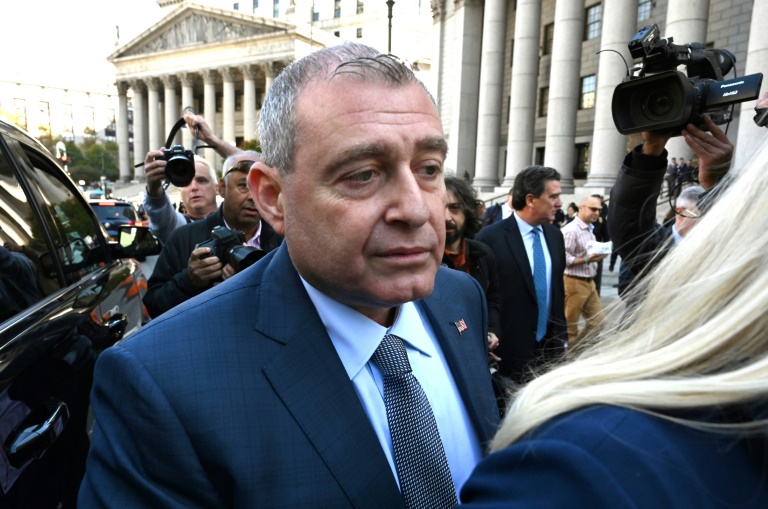
Ex-Giuliani associate gets 20 months for illegal campaign financing

Lev Parnas, a former associate of Donald Trump’s ex-lawyer Rudy Giuliani, was sentenced to 20 months in prison Wednesday for violating campaign financing laws in the 2018 election.

Parnas, a US citizen born in Soviet Ukraine, was found guilty by a Manhattan federal court jury in October.

Alongside associate Andrey Kukushkin, the two were convicted of “conspiring to manipulate the United States political system for their own financial gain.”

“Not content to defraud investors in his business out of more than $2 million, Parnas also defrauded the American public by pumping Russian money into US elections and lying about the source of funds for political contributions,” Damian Williams, the US attorney for the Southern District of New York, said in a statement.

Parnas was arrested at a Washington airport in October 2019, as Trump and associates such as Giuliani were facing scrutiny over attempts to pressure authorities in Kyiv to deliver compromising information about Joe Biden.

That investigation eventually led to Trump’s first impeachment proceedings, which ended with him being acquitted by the Republican-controlled Senate.

Parnas, who pleaded not guilty, was accused of concealing the real origin of contributions he made to several candidates in US local and federal elections in 2018, including a $325,000 donation to America First Action, a political organization supporting Trump.

Prosecutors also charged that some of the contributions to Republican campaigns in the state of Nevada made by Parnas were actually from a Russian businessman, in violation of a ban on accepting election financing from foreign nationals.

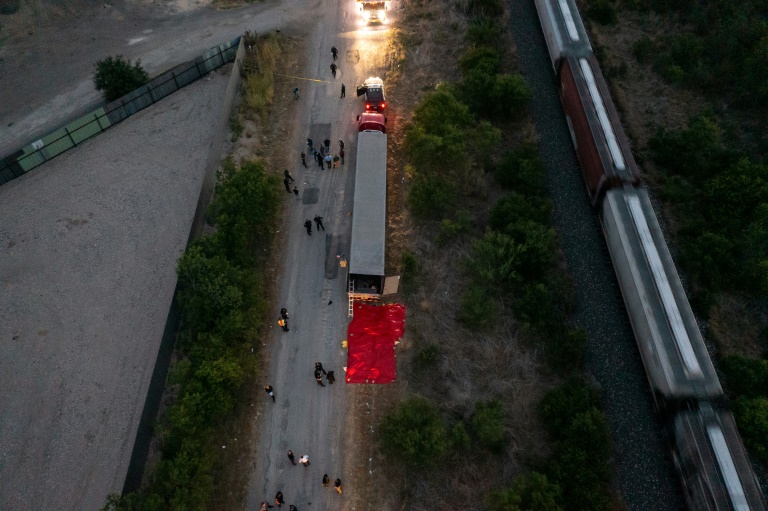
Toll in migrant trailer tragedy rises to 53

The number of migrants who died in San Antonio, Texas after they were abandoned in a red-hot trailer rose to 53 Wednesday,  US immigration authorities said.

Eleven others remained under treatment in local hospitals, Immigration and Customs Enforcement said, without specifying their conditions.

That was up from Tuesday, when local officials put the number of dead at 51, including 39 men and 12 women.

According to Francisco Garduno, head of Mexico’s National Migration Institute, the dead included 27 Mexicans, 14 Hondurans, seven Guatemalans, and two Salvadorans.

The nationalities of the other three were not yet revealed.

San Antonio police were first alerted to the trailer by an emergency call at about 5:50 pm local time (2250 GMT) on Monday.

A worker near an isolated road in San Antonio heard a cry for help, went to investigate the trailer and found a number or corpses inside.

Federal law enforcement agents on Tuesday arrested two men at the address linked to the tractor-trailer’s registration, court documents showed.

Juan Francisco D’Luna-Bilbao and Juan Claudio D’Luna-Mendez, both Mexican nationals whose US tourist visas had expired, were illegally in possession of multiple firearms, the documents alleged.

A third person, suspected of being the driver of the tractor-trailer, was arrested nearby while “very high on meth,” reported the local daily San Antonio Express-News, citing a law enforcement officer.

Turkey seeks extraditions from Finland, Sweden under NATO deal

Turkey said Wednesday it would seek the extradition of 33 alleged Kurdish militants and coup plot suspects from Sweden and Finland under a deal to secure Ankara’s support for the Nordic countries’ NATO membership bids.

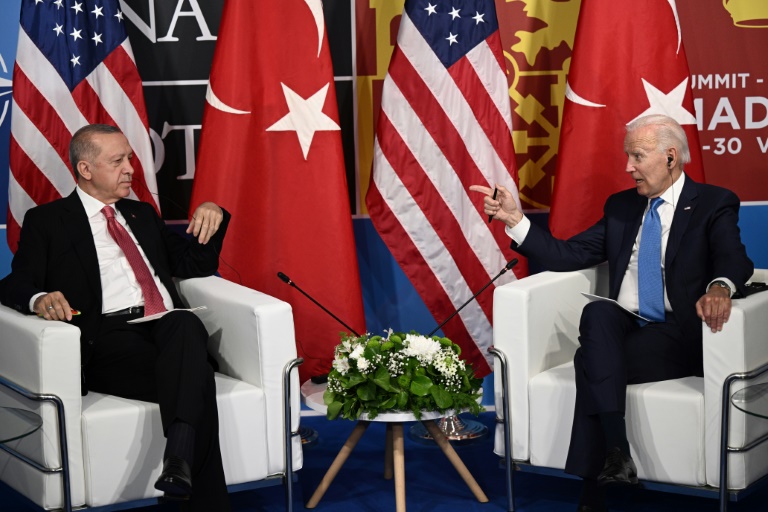
Turkish President Recep Tayyip Erdogan dropped weeks of resistance to Sweden and Finland joining NATO after crunch talks ahead of Wednesday’s NATO summit in Madrid, focused on Russia’s invasion of Ukraine.

Erdogan emerged from Tuesday’s talks declaring victory, after securing a 10-point agreement under which the two countries vowed to join Turkey’s fight against banned Kurdish militants and to swiftly extradite suspects.

Turkey put the deal to the immediate test by announcing that it would seek the extradition of 12 suspects from Finland and 21 from Sweden.

“We ask them to fulfil their promises,” Justice Minister Bekir Bozdag said in a statement.

The unnamed suspects were identified as being members of the outlawed Kurdistan Workers’ Party (PKK) and a group led by a US-based Muslim preacher that Erdogan blames for a failed 2016 coup attempt.

The European Union and Washington both recognise the PKK as a “terrorist” organisation because of the brutal tactics it employed during a decades-long insurgency against the Turkish state.

But the agreement also stipulates that Sweden and Finland vow to “not provide support” to the YPG — a PKK offshoot in Syria that played an instrumental role in the US-led alliance against the Islamic State group.

Sweden and Finland abandoned decades of military non-alignment in response to Russia’s invasion of Ukraine and were formally invited into the alliance at Wednesday’s summit in Madrid.

– ‘Got what it wanted’ –

Their applications had appeared to be headed for swift approval until Erdogan stepped in.

The Turkish leader accused Finland and particularly Sweden of providing a haven to Kurdish fighters and financing terror.

Erdogan also wanted the two countries to lift arms embargoes they imposed in response to Turkey’s 2019 military incursion into Syria.

The non-binding memorandum covers many of Erdogan’s concerns.

It restores full arms exports and pledges to “address Turkey’s pending deportation or extradition requests of terror suspects expeditiously and thoroughly”.

“Finland and Sweden commit to prevent activities of the PKK and all other terrorist organisations and their extensions, as well as activities by individuals… linked to these terrorist organisations,” it adds.

Erdogan’s office hailed the agreement as a full victory.

“Turkey got what it wanted,” his office declared in a statement.

Erdogan also secured a long-sought meeting with US President Joe Biden on the sidelines of the NATO talks.

Washington further signalled support for Turkey’s plans to buy F-16s warplanes that had been put on hold during the Erdogan’s dispute with the two Nordic states.

– Finnish resistance –

Most of Turkey’s demands and past negotiations have involved Sweden because of its more robust ties with the Kurdish diaspora.

Sweden keeps no official ethnicity statistics but is believed to have 100,000 Kurds living in the nation of 10 million people.

Stockholm recognised the PKK as a “terrorist” organisation in the 1980s but has adopted a more supportive stance toward the YPG.

Pro-government Turkish media were outraged by two meetings Swedish Foreign Minister Ann Linde held last year with Ilham Ahmad — the leader of the political wing of the YPG-led forces that expelled IS from a large swathe of Syria.

Linde called her two meetings “good” and “fruitful” on Twitter.

It was not immediately apparent whose extradition Turkey is seeking.

But Finnish President Sauli Niinisto said Turkey appeared to be referring to cases that had already been turned down by the courts.

“I would guess that all of these cases have been solved in Finland. There are decisions made, and those decisions are partly made by our courts,” he told reporters in Madrid.

“I see no reason to take them up again.”

The Brookings Institution warned that additional problems may arise from Turkey’s “loose and often aggressive framing” of the term “terrorist”.

“The complication arises from a definition of terrorism in Turkish law that goes beyond criminalising participation in violent acts and infringes on basic freedom of speech,” the US-based institute said in a report.

China's image slips further in developed world: survey

Increasingly large majorities in the developed world see China unfavorably, with record levels of criticism in the United States, Germany and South Korea, a survey said Wednesday.

A 19-nation survey by the Pew Research Center showed a further deterioration of China’s reputation over the past several years, as concerns grow about Beijing’s rising military and economic power, its human rights record and the origins of the Covid-19 pandemic.

Eighty-two percent of Americans, 80 percent of South Koreans and 74 percent of both Germans and Canadians viewed China unfavorably, the survey said — record levels in each country.

China’s unfavorability also hovered around near-record highs of 87 percent in Japan, 86 percent in Australia and 83 percent in Sweden.

China’s reputation eroded especially sharply in South Korea, against which Beijing in 2017 launched a campaign of economic retaliation after Seoul and the United States set up an anti-missile system that the two allies say is in response to North Korea, not China.

Beijing has also imposed economic punishment over actions by Australia, where concerns have been heightened in recent months after the country spotted Chinese spy ships near its waters.

China’s image fell even in some nations with which it has comparatively warm relationships. A record 50 percent saw China unfavorably in Greece, which has welcomed major Chinese investment since its economic crisis.

One outlier was Israel, where opinions on China were almost evenly divided and, in contrast to Western nations, most people called for prioritizing economic relations even without addressing human rights.

The survey took answers from 24,525 adults from February 14 to June 3.

Subscription version of Snapchat makes its debut

US tech firm Snap on Wednesday launched a subscription version of Snapchat as it looks to generate more money from the image-centric, ephemeral messaging app.

Snapchat+ is priced at $4 a month and will provide access to exclusive features, the California-based company said in a blog post. It said that these would include priority tech support and early access to experimental features.

The subscription version of the service is making its debut in Australia, Britain, Canada, France, Germany, New Zealand, Saudi Arabia, the United Arab Emirates, and the United States, Snap said.

Snap in February reported its first quarterly profit, but two months later warned that it saw the economic outlook as having darkened considerably.

The company said that more than 332 million people around the world use Snapchat daily.

“This subscription will allow us to deliver new Snapchat features to some of the most passionate members of our community,” Snap said in the blog post.

Expanding NATO squares up to Russia threat

The United States vowed on Wednesday to shore up Europe’s defences in the wake of Russia’s invasion of Ukraine, as NATO declared Moscow the West’s greatest threat.

Meeting in Madrid, alliance leaders said Russia “is the most significant and direct threat to allies’ security and to peace and stability in the Euro-Atlantic area”.

This came as NATO welcomed Sweden and Finland as invitees to join the alliance and US President Joe Biden announced new deployments of US troops, ships and planes.

Biden boasted the US announcement was exactly what President Vladimir Putin “didn’t want” and Moscow, facing fierce resistance from Ukrainian forces equipped with Western arms, reacted with predictable fury.

Deputy Foreign Minister Sergei Ryabkov denounced the US military build-up, and warned NATO members that the shifting balance of power “would lead to compensatory measures on our part”.

“I think that those who propose such solutions are under the illusion that they will be able to intimidate Russia, somehow restrain it — they will not succeed,” he said.

NATO leaders have funnelled billions of dollars of arms to Ukraine and faced a renewed appeal from President Volodymyr Zelensky for more long-range artillery.

“Ukraine can count on us for as long as it takes,” NATO chief Jens Stoltenberg said, announcing a new NATO strategic overview that focuses on the Moscow threat.

“We cannot discount the possibility of an attack against allies’ sovereignty and territorial integrity,” the document, updated for the first time since 2010, said. 

In a summit statement, they said: “Russia’s appalling cruelty has caused immense human suffering and massive displacements, disproportionately affecting women and children.”

Zelensky had earlier addressed the NATO chiefs by videoconference, calling for stricter economic sanctions, but afterwards his foreign minister Dmytro Kuleba thanked Ukraine’s western friends.

– ‘What needs to be done’ –

“Today in Madrid, NATO proved it can take difficult but essential decisions. We welcome a clear-eyed stance on Russia, as well as the accession for Finland and Sweden,” he said. 

“An equally strong and active position on Ukraine will help protect Euro-Atlantic security and stability.”

While US and European chiefs expressed backing for Ukraine in Madrid, Indonesian President Joko Widodo became the first Asian leader to visit Kyiv since the war began.

Zelensky said he had accepted an invitation to attend the upcoming G20 summit in Bali, depending “on the security situation in the country and on the composition of the summit’s participants”.

It is not clear whether Putin will also be on the guest list in November, with some capitals pushing for his exclusion. 

As Western leaders met in Madrid, in Ukraine officials complained that Russian missiles had hit civilian housing and businesses in and around the cities of Dnipro, Mykolaiv and Kharkiv, leaving at least seven dead and 14 wounded.

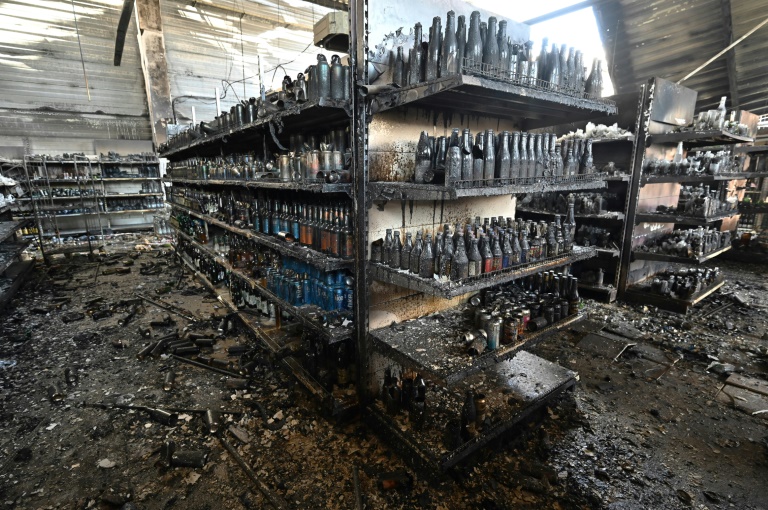
In Kremenchuk, the town where a Russian missile on Monday destroyed a shopping centre and — according to local officials — killed at least 18 civilians, clearing operations continued.

A giant crane was working near the site of the impact and in the rubble-strewn parking area shopping trolleys piled with clothes and household goods lay abandoned.

Western leaders have dubbed the Kremenchuk strike a war crime, and Zelensky has demanded that UN investigators visit. Russia says it hit a depot storing Western arms. 

– Foreign ‘mercenaries’ –

Ukrainian officials said that 144 of their soldiers, most of them former defenders of the Azovstal steelworks in the southern port city of Mariupol, had been freed in a prisoner swap with Moscow.

The Russian defence ministry said it had inflicted severe casualties on Ukrainian troops defending the town of Lysychansk, in the eastern Donbas region, and said the Kharkiv attack had hit Ukrainian command centres and a training base for foreign “mercenaries”.

Moscow’s February 24 invasion of pro-Western Ukraine triggered massive economic sanctions and a wave of support for Zelensky’s government, including deliveries of advanced weapons. 

At NATO, two formerly military non-aligned European countries — Sweden and Russia’s north-western neighbour Finland — will be accepted as candidates and Washington has announced that it will shift the headquarters of its 5th Army Corps to Poland.

An army brigade will rotate in and out of Romania, two squadrons of F-35 fighters will deploy to Britain, US air defence systems will be sent to Germany and Italy and the fleet of US Navy destroyers in Spain will grow from four to six.

“That’s exactly what he didn’t want but exactly what needs to be done to guarantee security for Europe,” Biden said, of Putin’s efforts to roll back Western influence and re-establish influence or control over territories of the former Russian empire.

– Missile artillery –

Sweden and Finland’s path to NATO membership was opened after Turkey’s President Recep Tayyip Erdogan agreed to lift his threat of a veto — the ally accuses Stockholm and Helsinki of harbouring wanted Kurdish militants.

Turkey announced Wednesday that it would request the extradition of 33 alleged “terrorists” under the terms of the agreement signed Tuesday with Sweden and Finland to allow them to make membership bids.

A sanctions task force of leading Ukraine allies has frozen more than $330 billion in financial resources owned by Russia’s elite and its central bank since Moscow’s invasion, it announced Wednesday. 

The Russian Elites, Proxies, and Oligarchs Task Force (REPO) said the allies had blocked $30 billion in assets belonging to Russian oligarchs and officials, and immobilised $300 billion owned by the Russian central bank.

Norway said it would donate three multiple-launch rocket systems to Ukraine, following similar decisions made by Britain, Germany and the United States.

burs-dc/kjm

Close Bitnami banner
Bitnami