US Business

US central bank ponders huge rate hike to combat price surge

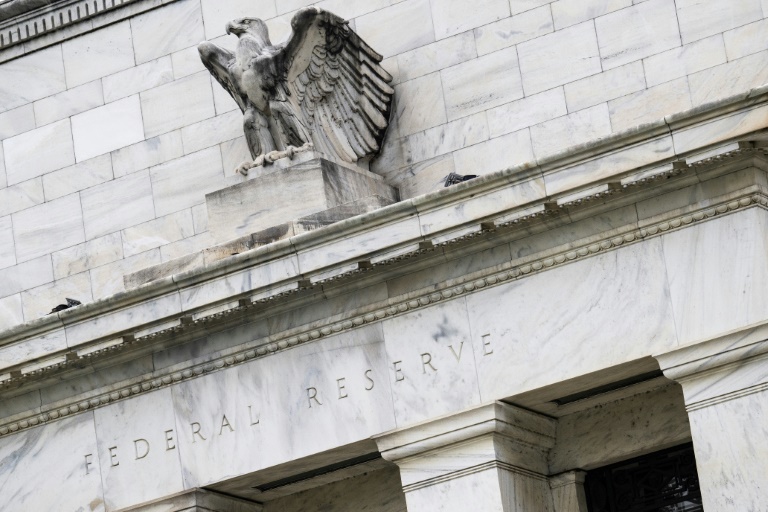
The US Federal Reserve is set to announce a sharp increase in borrowing costs on Wednesday amid the troubling acceleration of inflation, and forecasters now expect officials to opt for the biggest rate hike in nearly three decades.

Until recently, the central bank seemed set to again increase the benchmark interest rate by 0.5 percentage points, but a resurgence of consumer and producer prices in May has fueled growing speculation of a 75-basis-point hike.

Economists say the rapidly changing situation means the Fed is behind the curve and needs to react strongly to prove its resolve to combat inflation

“It is possible that by Wednesday the only way for the Fed to surprise markets would be to raise rates by 50 bp,” Harvard economist and former White House advisor Jason Furman tweeted.

If policymakers decide on a giant step, it would be the first 75-basis-point increase since November 1994.

The Federal Open Market Committee resumed discussions on the second day of its policy meeting and is due to announce the rate decision at 1800 GMT. 

Fed Chair Jerome Powell will hold a press conference after the meeting to provide more details on the central bank’s plans, including signals on how aggressive policymakers will be in coming meetings.

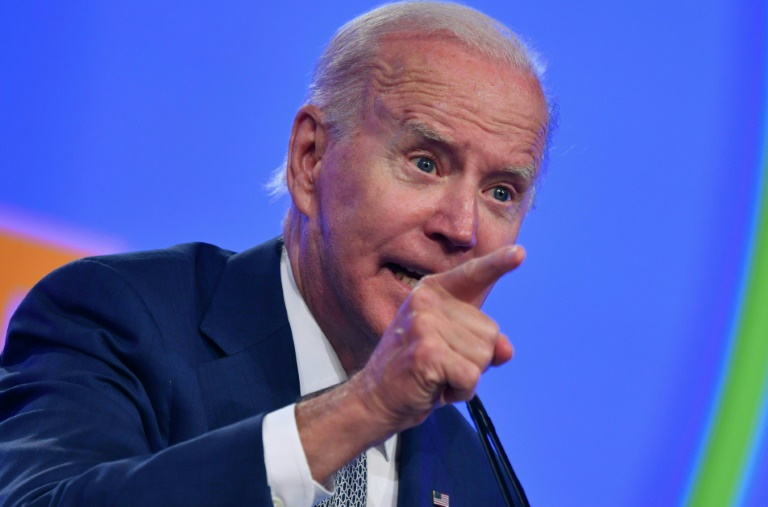
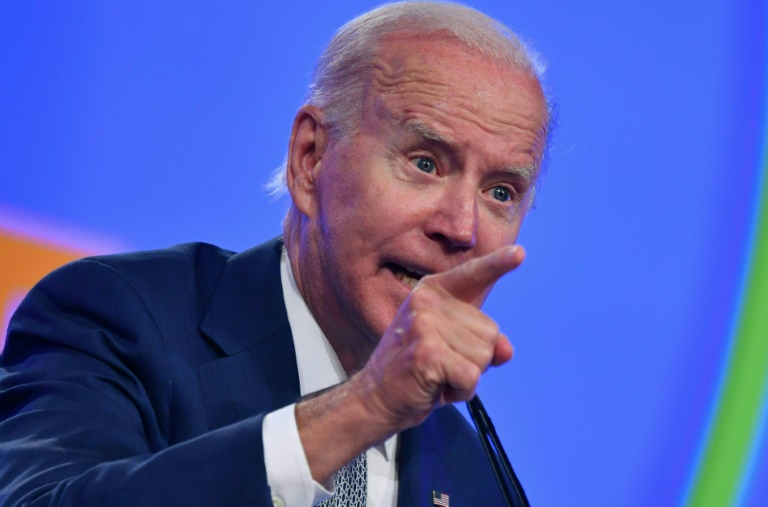
President Joe Biden has fully endorsed the Fed’s battle against the steepest rise in prices in more than 40 years, as he watches inflation erode his popularity and deflect attention from other milestones, including a rapid recovery of the world’s largest economy and record job growth.

– Clear signals –

US central bankers began raising interest rates off zero in March as buoyant demand from American consumers for homes, cars and other goods clashed with transportation and supply chain snarls in parts of the world where Covid-19 remained — and remains — a challenge.

That fueled inflation, which got dramatically worse after Russia invaded Ukraine in late February and Western nations imposed steep sanctions on Moscow, sending food and fuel prices up at a blistering rate.

US gasoline prices have topped $5.00 a gallon for the first time ever and are setting new records daily.

Economists thought March was the peak for consumer price hikes, but the rate spiked again in May, jumping 8.6 percent in the latest 12 months, and wholesale prices surged as well, almost entirely due to soaring costs for energy, especially gasoline.

The Fed was caught off guard with the speed of the price increases, and while policymakers usually prefer to clearly telegraph any policy shift to financial markets, the latest data likely changed the calculus.

Powell had indicated policymakers were poised to implement another half-point increase in the benchmark borrowing rate this week and yet another next month, aiming to douse red-hot inflation without tipping the economy into recession and avoid a bout of 1970s-style stagflation.

“The 75bp hike… will be about making people/markets believe that they’re serious about continuing to have higher rates in 2023,” Furman said.

However, the central bank cannot influence supply issues, and rate hikes only work by cooling demand and slowing the economy — meaning policymakers are walking a fine line between having an impact and doing too much.

And the impact won’t be immediate.

“Monetary policy operates with lags, today’s inflation reflects decisions taken a year ago,” said Adam Posen, head of the Peterson Institute for International Economics and a former central banker.

“Had Fed hiked in 2021Q2/Q3, then inflation now would be different — not least (because) the current global shocks wouldn’t be piling on already high inflation,” he said on Twitter.

Biden has been scrambling to find a way to ease the pain on American families, including lambasting oil companies that are pulling in record profits.

In a letter to oil executives, he called the high windfall “unacceptable” and demanded ExxonMobil, Chevron and others “take immediate actions to increase the supply of gasoline, diesel, and other refined product,” according to media reports.

Biden on Tuesday again blamed Russia for inflation, which is afflicting countries worldwide, and criticized Republicans for blocking his efforts to provide help to families bearing the brunt of the impact.

European equities rebound as ECB vows to avoid bond stress

Europe’s equities pushed higher Wednesday as the European Central Bank pledged to ease the stress in volatile eurozone bond markets, while investors also braced for a major US rate hike.

Frankfurt, London and Paris stocks rallied, as investors were reassured by news of an emergency ECB meeting.

All three main indices had slid Tuesday, joining a global slide in equities on growing expectations that the US Federal Reserve will move aggressively to combat inflation at the conclusion of its latest scheduled monetary policy meeting on Wednesday.

Bitcoin extended this week’s precipitous slide to approach the key level of $20,000 as investors continued to shun risky crypto assets, while oil prices retreated further on lower energy demand expectations.

– ECB move ‘somewhat underwhelming’ –

The ECB said after its surprise meeting that it would use “flexibility” to ease stress on in sovereign debt markets and design a new instrument to ward off a fresh crisis in the eurozone.

The borrowing costs of some eurozone countries have risen faster than those of others as the ECB tightens its monetary policy. The bank has vowed to prevent such “fragmentation” which occured during the eurozone debt crisis a decade ago.

The yield on 10-year Italian bonds fell on Wednesday.

The euro rose against the dollar before giving up gains after the ECB announcement.

Markets.com analyst Neil Wilson called the announcement “somewhat underwhelming” and did not merit a special meeting.

Earlier, Wilson had said the emergency meeting “smacks of panic and a lack of control — but the market is happy to see it happen”.

The ECB is due to raise eurozone interest rates and end its massive bond-buying stimulus programme in July.

Asian stock markets closed mixed Wednesday with investors on edge over a looming Fed decision that has taken on greater significance since forecast-busting US inflation recently sent shockwaves through world markets.

Wall Street opened higher, with the Dow climbing 0.8 percent.

Traders’ screens were awash with red at the start of the week after data on Friday revealed that US consumer prices had soared at the fastest pace in four decades.

That confounded hopes that US inflation was stabilising and intensified pressure on policymakers to act.

The news ramped up bets that the Fed would hike interest rates at a steeper and faster pace than expected as it struggles to retain credibility.

Before Friday’s data, the Fed had been tipped to lift borrowing costs by half a point at Wednesday’s meeting, but investors are now widely anticipating a three-quarter point increase, with some even suggesting one percentage point.

The moves fuelled worries that the tighter monetary conditions will deal a blow to the US economy and potentially send it into recession next year.

“There is no shortage of pessimism in the market and traders are on the edge as they know that central banks have made the biggest blunder by calling inflation transitory — and their current policy is going to cause a great deal of pain,” AvaTrade analyst Naeem Aslam told AFP.

– Key figures at around 1330 GMT –

London – FTSE 100: UP 1.4 percent at 7,285.30 points

Frankfurt – DAX: UP 1.6 percent at 13,515.84 

Paris – CAC 40: UP 1.4 percent at 6,035.77

EURO STOXX 50: UP 1.2 percent at 3,447.02

New York – Dow: UP 0.8 percent at 30,595.77

Tokyo – Nikkei 225: DOWN 1.1 percent at 26,326.16 (close)

Hong Kong – Hang Seng Index: UP 1.1 percent at 21,308.21 (close)

Shanghai – Composite: UP 0.5 percent at 3,305.41 (close)

Euro/dollar: DOWN at $1.0415 from $1.0416 late Tuesday

Pound/dollar: UP at $1.2067 from $1.1997

Euro/pound: DOWN at 86.34 pence from 86.83 pence

Dollar/yen: DOWN at 134.71 yen from 135.47 yen

Brent North Sea crude: DOWN 0.5 percent at $120.58 per barrel

West Texas Intermediate: DOWN 0.6 percent at $118.20 per barrel

ECB moves to ease bond stress after surprise meeting

The European Central Bank said Wednesday it would “apply flexibility” to quell rising borrowing costs for more indebted eurozone members after an emergency meeting aimed at soothing market jitters.

A week after its regular policy gathering, the Frankfurt-based institution held a surprise “ad hoc meeting” to address the development in “market conditions”.

With inflation soaring, the ECB drew a line under years of ultra-loose monetary policy last Thursday, ending its massive bond-buying stimulus at the end of the month and announcing a long-awaited interest rate hike for July.

Consumer prices rose in the eurozone at an 8.1-percent pace in May, an all-time high for the currency club and well above the ECB’s own two-percent target.

But following the switch, the spread between yields of German government bonds and those of more indebted eurozone members — a measure of bond market stress — began to rise.

The coronavirus pandemic had “left lasting vulnerabilities in the euro area economy which are indeed contributing to the uneven transmission” of its policy, the ECB said in a statement.

In response, the ECB said it would “apply flexibility” to the reinvestment of maturing bonds under its pandemic-era debt purchasing programme to target at-risk countries, widely considered to include Italy, Spain, Greece and Portugal. 

It would also speed up work on “a new anti-fragmentation instrument”, which could be used to tackle further bond market stress.

– Crisis tool –

On Tuesday, ECB executive board member Isabel Schnabel said the bank would “not tolerate” unwarranted increases in borrowing costs that would “undermine” the bank’s policy. 

Schnabel said the ECB’s response to the risks of fragmentation would “depend on the situation we are facing”, but insisted that the bank’s commitment had “no limits”.

Hanging over the decision are memories of the eurozone debt crisis, when primarily southern states came under intense pressure as their borrowing costs soared, making their debts harder to finance.

Since the meeting last week, the spread between Italian and German government debt had risen to levels not seen since the very start of the pandemic in March 2020.

But yields on Italian 10-year bonds dipped following the announcement of the meeting, reducing the spread with German government debt.

Eurozone stock markets also rose after falling this week ahead of a regular US Federal Reserve meeting where policymakers could hike rates even higher than expected to combat decades-high inflation.

The ECB’s announcement was the “minimum” policymakers could come away with from Wednesday’s meeting, said Jack Allen-Reynolds, senior Europe economist at Capital Economics. 

The planned sums from the pandemic-era programme were “too small to halt a full-blown market panic”, he said.

– ‘A lot further’ –

The ECB brought an end to net purchases under the 1.85-trillion-euro ($1.94-trillion) scheme in March this year, but only a fraction will be available for reinvestment.

The tool being designed by the ECB “will need to go a whole lot further”, Allen-Reynolds said, warning that “debt sustainability will be a much bigger issue” if interest rates rise further than currently expected.

The ECB’s plan to up interest rates by a quarter percentage point at its meeting on July 21 would be its first hike in over a decade.

The central bank’s interest rates currently sit at historic lows, including a minus 0.5 deposit rate that effectively charges banks to park their cash at the ECB overnight.

The ECB has plotted out another hike at its September meeting, but a number of policymakers are eager to move faster to quash inflation and catch up with other major central banks. 

Biden chastises oil industry over fuel costs

US President Joe Biden on Wednesday chastised the oil industry over soaring fuel prices at the heart of 40-year high inflation, warning of unspecified emergency measures.

The letter, sent to seven major oil corporations, was Biden’s most direct salvo yet in a campaign to blame the industry for stoking price increases. 

Average fuel prices are now $5 a gallon for drivers in the United States, up from $3 a year ago, and the spike is reverberating through the entire economy, helping to sink Biden’s approval ratings to below 40 percent.

“Refinery profit margins well above normal being passed directly onto American families are not acceptable,” Biden wrote in the letter to executives from Shell, Marathon Petroleum Corp, Valero Energy Corp, ExxonMobil, Phillips 66, Chevron and BP.

Biden said the economy is in “a time of war,” referring to the global fallout from President Vladimir Putin’s invasion of Ukraine and subsequent sanctions against energy exporter Russia.

“My administration is prepared to use all reasonable and appropriate federal government tools and emergency authorities to increase refinery capacity and output in the near term, and to ensure that every region of this country is appropriately supplied,” Biden said, without detailing what kind of actions he could take.

Biden has regularly lambasted the oil industry for what he says is a failure to tap into already approved wells and increase output. 

However, the letter, accompanied by a graph depicting rising producer profits, marked an escalation in the war of words.

In the letter he asked for “explanation of any reduction in your refining capacity since 2020 and any concrete ideas that would address the immediate inventory, price, and refining capacity issues in the coming months — including transportation measures to get refined product to market.”

“The crunch that families are facing deserves immediate action. Your companies need to work with my Administration to bring forward concrete, near-term solutions that address the crisis,” he wrote.

Biden’s Democratic Party risks a heavy defeat, losing control of Congress, in November elections and polls show that fears over the economy dominate.

In a fiery speech Tuesday, Biden blamed Republican obstruction in Congress and Russia’s war in Ukraine for price increases that he said are “sapping the strength of a lot of families.”

The Federal Reserve was due Wednesday to raise interest rates again in an aggressive effort to tamp down inflation, amid fears that the unintended result will be recession.

Biden chastises oil industry over fuel costs

US President Joe Biden on Wednesday chastised the oil industry over soaring fuel prices at the heart of 40-year high inflation, warning of unspecified emergency measures.

The letter, sent to seven major oil corporations, was Biden’s most direct salvo yet in a campaign to blame the industry for stoking price increases. 

Average fuel prices are now $5 a gallon for drivers in the United States, up from $3 a year ago, and the spike is reverberating through the entire economy, helping to sink Biden’s approval ratings to below 40 percent.

“Refinery profit margins well above normal being passed directly onto American families are not acceptable,” Biden wrote in the letter to executives from Shell, Marathon Petroleum Corp, Valero Energy Corp, ExxonMobil, Phillips 66, Chevron and BP.

Biden said the economy is in “a time of war,” referring to the global fallout from President Vladimir Putin’s invasion of Ukraine and subsequent sanctions against energy exporter Russia.

“My administration is prepared to use all reasonable and appropriate federal government tools and emergency authorities to increase refinery capacity and output in the near term, and to ensure that every region of this country is appropriately supplied,” Biden said, without detailing what kind of actions he could take.

Biden has regularly lambasted the oil industry for what he says is a failure to tap into already approved wells and increase output. 

However, the letter, accompanied by a graph depicting rising producer profits, marked an escalation in the war of words.

In the letter he asked for “explanation of any reduction in your refining capacity since 2020 and any concrete ideas that would address the immediate inventory, price, and refining capacity issues in the coming months — including transportation measures to get refined product to market.”

“The crunch that families are facing deserves immediate action. Your companies need to work with my Administration to bring forward concrete, near-term solutions that address the crisis,” he wrote.

Biden’s Democratic Party risks a heavy defeat, losing control of Congress, in November elections and polls show that fears over the economy dominate.

In a fiery speech Tuesday, Biden blamed Republican obstruction in Congress and Russia’s war in Ukraine for price increases that he said are “sapping the strength of a lot of families.”

The Federal Reserve was due Wednesday to raise interest rates again in an aggressive effort to tamp down inflation, amid fears that the unintended result will be recession.

EU takes legal action against UK for breaching N.Ireland agreement

The European Commission launched new legal action against Britain on Wednesday, accusing London of putting peace in Northern Ireland at risk by trying to overhaul the post-Brexit trade deal.

“The UK government tabled legislation confirming its intention to unilaterally break international law,” EU commission vice-president Maros Sefcovic said.

“More precisely to break an agreement that protects peace and stability in Northern Ireland,” he said.

“Opening the door to unilaterally changing an international agreement is a breach of international law, as well. So let’s call a spade a spade. This is illegal.”

In London, Prime Minister Boris Johnson’s spokesman told journalists: “We are disappointed that the EU has taken this legal action today.” 

And he insisted that European proposals to resolve the impasse were a “step backwards”.

On Monday, the British government introduced legislation to rip up post-Brexit trading rules for Northern Ireland, in an attempt to override the EU withdrawal treaty that it had signed.

Johnson’s government insists it is not breaking international law, citing a “necessity” to act to restore Northern Ireland’s power-sharing institutions.

– ‘Radio silence’ –

But Brussels rejects this argument, and Sefcovic said that legal action would be taken, with two new cases joining one the commission had suspended.

Sefcovic said the EU would revive a case it launched last year to control the export of certain food products from Great Britain to Northern Ireland.

“If the UK doesn’t reply within two months, we may take them to the Court of Justice,” he warned.

“Second, we are launching two new infringements against the UK,” he said, announcing cases that could see the British government brought before the European Court of Justice.  

“One for failing to carry out the necessary controls at the border control posts in Northern Ireland by ensuring adequate staffing and infrastructure.

“And one for failing to provide the EU with essential trade statistics data to enable the EU to protect its single market.”

The cases brought by the EU do not directly tackle the proposed UK legislation, but rather seek to compel Britain to implement the existing agreements.

Johnson’s government has said it would still prefer a negotiated outcome with the European Union to reform the Northern Ireland Protocol.

But it accuses Brussels of failing to engage on its concerns about measures to control goods moving from Great Britain to Northern Ireland.

Brussels counters that, with Northern Ireland remaining in the EU single market, European law must ultimately apply to goods arriving in the territory.

And Sefcovic says that attempts to negotiate a compromise with Britain within the terms of the agreement Johnson himself hailed and signed have been met with “radio silence” since February.

– ‘Grave peril’ –

The spat comes at a bad time for the UK economy, with inflation at 40-year highs and rising household bills that have left many Britons struggling to make ends meet.

But there are economic headwinds in the European Union too, and warnings that the West must not fall out over trade when trying to present a united front against Russia’s invasion of Ukraine.

Irish Minister for Foreign Affairs Simon Coveney said Wednesday’s EU action is “the result of a deliberate UK Government strategy of provocation over partnership”.

“Reckless UK decisions this week have forced the EU into responding to a threatened breach of international law with serious consequences.”

Jonathan Jones, the former head of the UK government legal service scoffed at Number 10’s argument.

Jones resigned after Northern Ireland minister Brandon Lewis admitted that unilaterally breaking the deal would “break international law in a very specific and limited way”. 

“The concept of ‘necessity’ is an extremely high test. It applies only where a state must act to safeguard its essential interests against ‘grave and imminent peril’,” Jones said.

“How can an agreement willingly entered into only in 2020, at what the Prime Minister described as a ‘fantastic moment’, be already proving so disastrous as to represent ‘grave peril’ to the country?”

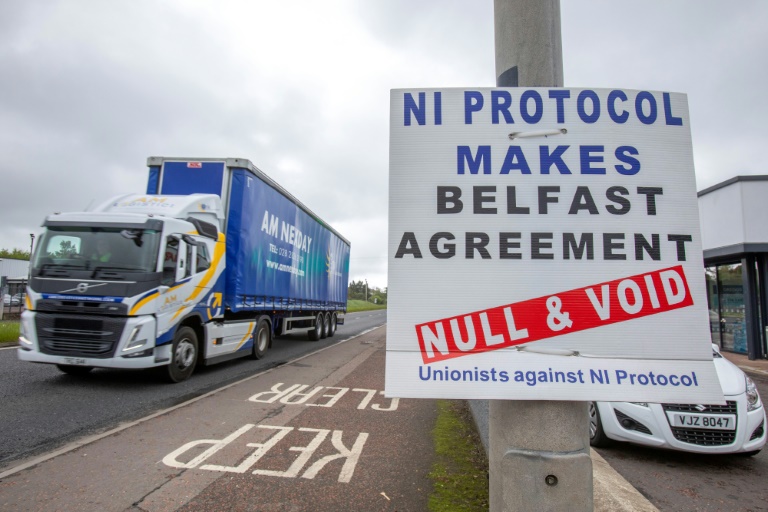
Meanwhile, the Democratic Unionist Party argues the protocol’s creation of an effective border in the Irish Sea jeopardises Northern Ireland’s status in the wider UK.

The pro-British party is boycotting the local government in Belfast until the deal is scrapped or dramatically overhauled, putting at risk the power-sharing agreement that underlies the Northern Ireland peace agreement.

Ikea to 'scale down' Russia, Belarus operations over Ukraine war

Swedish furniture giant Ikea said Wednesday it would “scale down” its activities in Russia and Belarus, after putting them on hold following the Russian invasion of Ukraine.

Along with a slew of Western companies, Ikea announced in early March that it was suspending its Russian and Belarusian activities, affecting nearly 15,000 employees.

“Unfortunately, the circumstances have not improved, and the devastating war continues,” Ingka Group, which manages the majority of Ikea’s stores, said in a statement Wednesday.

“Businesses and supply chains across the world have been heavily impacted and we do not see that it is possible to resume operations any time soon,” the company said, adding that it and the Inter Ikea Group had “decided to enter a new phase to further scale down the Ikea business in Russia and Belarus.”

The group said the retail business “will remain stopped, and the workforce will be reduced, meaning that many co-workers will be affected.” 

Ikea has a total of 15,000 employees in Russia, including 12,500 employed by Ingka Group, the company said.

An Ingka Group spokesman said the company was not yet able to provide details on how many would be let go.

The company added that it planned “to sell out its home furnishing inventory in Russia,” and that the production side in Russia will “reduce the workforce and start the process of finding new ownership for all four factories.”

Two purchasing and logistics offices in Moscow and Minsk would also be permanently closed.

The Russian invasion of Ukraine, along with triggering unprecedented sanctions, sparked an exodus of foreign corporations including H&M, Starbucks and McDonalds.

Ukraine pleads for western arms as Russia chokes frontline city

Ukraine pleaded with Western governments Wednesday to decide quickly on sending heavy weapons to shore up its faltering defences, as Russia said it would evacuate civilians from a frontline chemical plant. 

The industrial city of Severodonetsk is under intense bombardment as Russia focuses its offensive on the Donbas region in an effort to secure a swathe of eastern and southern Ukraine.

Moscow’s forces have intensified efforts to cut off beleaguered Ukrainian troops remaining in the city, and have said that they will open a corridor to allow civilians to flee the besieged factory.

Western defence ministers, including US Defense Secretary Lloyd Austin, were meeting at NATO headquarters in Brussels, under pressure to step up weapons shipments to Ukraine. 

“Brussels, we are waiting for a decision,” Mykhaylo Podolyak, senior aide to President Volodymyr Zelensky posted on social media, warning that Ukraine’s artillery is outgunned by 10 to one. 

“Daily, I receive a message from the defenders: ‘We are holding on, just say: when to expect the weapons?'” he said.

– ‘Critical situation’ –

But NATO chief Jens Stoltenberg, hosting the meeting of around 50 allies and partners, warned it would take time to get the latest hardware into service with trained Ukrainian troops.

“Ukraine is really in a very critical situation and therefore, it’s an urgent need to step up,” Stoltenberg told journalists ahead of a gathering of NATO ministers. 

The West has poured arms into Ukraine, but Kyiv complains it has only received a tenth of what it needs and is clamouring for heavier weaponry.

Stoltenberg said the allies had moved from sending older equipment to delivering “more long-range, more advanced air defence systems, more advanced artillery, more heavy weapons”.   

But he added “there will also be some time needed to just make the Ukrainians ready to use and operate these systems”.  

He said NATO members, such as the Netherlands, plan to offer training to Ukrainian forces to get them up to speed on the new heavy guns going in. 

Stoltenberg said alliance leaders should agree a “comprehensive assistance package” for Ukraine at a summit in Madrid later this month.

About 500 civilians are taking shelter in Severodonetsk’s Azot chemical plant, according to the head of the city’s administration.

The Russian defence ministry announced a humanitarian corridor would be established on Wednesday for evacuations from the plant, saying it was “guided by the principles of humanity”.

Evacuees would be transported to the city of Svatovo in the separatist-held region of Lugansk, Moscow said, urging those holding out at the plant to cease their “senseless resistance”.

There was no response from Kyiv to the announcement, and in a video address Tuesday, Zelensky lamented “painful losses” in the ongoing fighting. 

“But we must stay strong. This is our nation… Hanging in there in Donbas is crucial. Donbas is the key to deciding who will dominate in the coming weeks.”

After its February invasion, Russia was repelled from Kyiv, prompting it to focus its offensive on Donbas, a mainly Russian-speaking region partly held by pro-Kremlin separatists since 2014.

Capturing Severodonetsk has become a key goal, as it would open the road to Sloviansk and another major city, Kramatorsk.

– NATO urges heavy weapons –

Kyiv’s forces face an increasingly desperate situation in Severodonetsk, with Ukrainian authorities estimating the Russians now control up to 80 percent of the city as they seek to encircle it. 

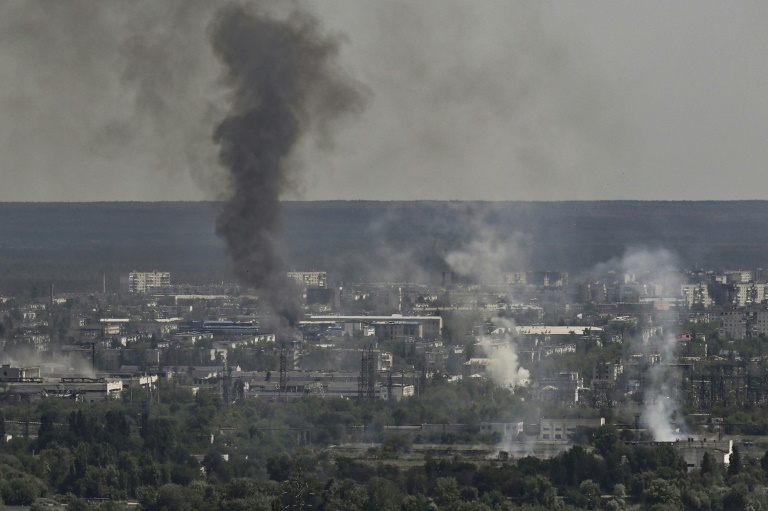
From an elevated position in Lysychansk, an AFP team saw black smoke rising from the Azot factory in Severodonetsk and another area in the city.

The Ukrainian military is using the high ground to exchange fire with Russian forces fighting for control of Severodonetsk, just across the water.

Lysychansk pensioner Valentina sat on the porch of her ground-floor apartment, where she lives alone, her two walking sticks to hand.

“It’s scary, very scary,” said the 83-year-old former farm worker. 

“Why can’t they agree at last, for God’s sake, just shake hands?”

Along the road from Lysychansk to Kramatorsk, Ukrainian forces were transporting more weapons systems to the front, while specialist vehicles carried tanks for repair.

In the town of Novodruzhesk, close to Lysychansk, there was still a smell of burning and smoke from houses that had been destroyed by fire from shelling at the weekend.

“It’s not safe anywhere, it just depends on the time of day, that’s all,” said a soldier standing at a fire station with a skull logo on his sleeve.

The Kremlin, meanwhile, said it had not received a request from London to intervene in the case of two Britons sentenced to death by pro-Moscow separatist authorities in eastern Ukraine.

Aiden Aslin and Shaun Pinner, along with Moroccan Brahim Saadun, were convicted of acting as mercenaries for Ukraine by the self-proclaimed Donetsk People’s Republic.

WTO talks extended in bid to seal elusive deals

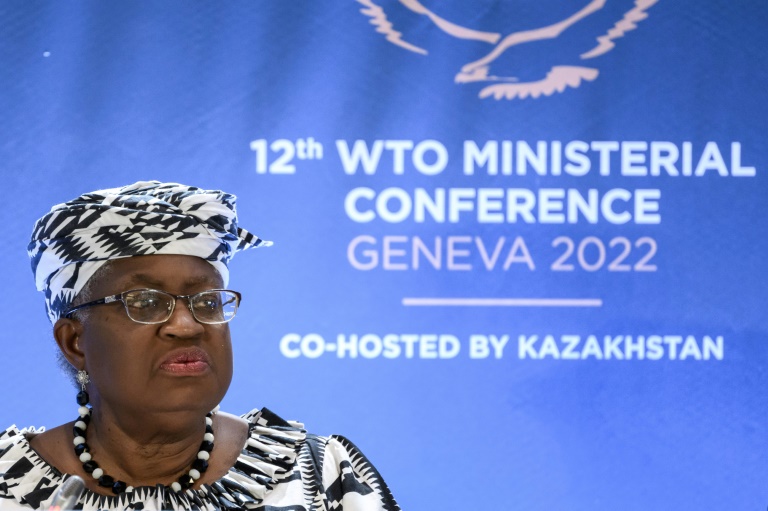
The World Trade Organization’s ministerial conference will run over into a fifth day Thursday in the hope of striking thus-far elusive deals on fishing subsidies, food security and combating Covid-19.

The gathering of trade ministers at the WTO’s headquarters in Geneva was due to wrap up on Wednesday, with the global trade body hoping to conclude landmark deals to prove it still has a role to play in tackling big global challenges.

But WTO chief Ngozi Okonjo-Iweala, who has staked her leadership on breathing new life into the sclerotic organisation, said it seemed remaining sticking points could be resolved if ministers ploughed on.

“Progress is being made but it needs a little more work and more time,” the director-general said.

The gathering is the first WTO ministerial conference in nearly five years. The global trade body only takes decisions by consensus among its 164 members.

“It requires that we work harder and work nights, whatever it takes,” Okonjo-Iweala said.

“It is really time for ministers to make the requisite decisions that need to be made.”

She said countries “feel that we really can cross the line on some of these things if we gave it a bit more time”.

The former finance and foreign minister of Nigeria, who took office in March 2021, is keen to make the WTO a relevant player on the international stage.

The last WTO ministerial conference, in December 2017 in Buenos Aires, was widely considered a flop, closing without a major agreement.

– Fishing reform sunk? –

Okonjo-Iweala was hoping to pull off a coup by securing a long-sought deal on curbing harmful fishing subsidies.

Negotiations towards banning subsidies that encourage overfishing and threaten the sustainability of the planet’s fish stocks have been going on at the WTO for more than two decades.

The mood music on Monday was that a deal was now closer than ever.

But India threw a spanner in the works late Tuesday, insisting it would not sign up without a 25-year exemption — far longer than many are comfortable with.

“The transition period of 25 years sought by India is not intended as a permanent carve-out. It is a must-have for us and for other similarly placed non-distant water fishing countries,” Commerce and Industry Minister Piyush Goyal said in a statement.

“Without agreeing to the 25-year transition period, it will be impossible for us to finalise the negotiations.

“This is completely unacceptable! And that is the reason India is opposed to the current text.”

Besides fisheries, the WTO conference is trying to strike deals on e-commerce, agriculture, food security, Covid-19 vaccine patents, the WTO’s response to pandemics, and reform of the organisation itself.

– ‘Crunch time’ –

But some emerging from the negotiating rooms are pointing the finger at Indian intransigence on not just fisheries but on every topic.

“India is being obstructive across the piece… In no negotiation are they playing a constructive part,” said one Geneva-based diplomat.

Conference chairman Timur Suleimenov said it was “crunch time” as members were thus far not being as flexible as he had hoped.

The Kazakhstani official urged delegations to “start blessing outcomes”.

Ministers are discussing the possibility of imposing a temporary waiver on Covid-19 vaccine patents.

But serious objections remain from some countries that host major pharmaceutical companies, like Britain and Switzerland, notably on the scope of the proposals.

NGOs believe the text does not go nearly far enough.

A second pandemic-related text being negotiated seeks to tackle supply constraints faced by certain countries in getting hold of Covid-fighting tools.

WTO spokesman Daniel Pruzin said the closing ceremony was now tentatively scheduled for 3:00 pm (1300 GMT) on Thursday, with ministers spending Wednesday in intensive talks.

“There is the possibility of advancement on all these issues,” he told reporters.

“Significant progress has been made: we’re not far from agreements on many of these topics.”

European equities rebound as ECB holds emergency meet

Europe’s equities rebounded Wednesday as the European Central Bank began an emergency meet to discuss volatile eurozone bond markets and soaring inflation, while investors also braced for a major US rate hike.

Frankfurt, London and Paris stocks rallied and the euro rose against the dollar, as investors were reassured by news of the ad-hoc ECB gathering that started at 1000 GMT.

All three main indices had slid Tuesday on growing expectations that the Federal Reserve will move aggressively to combat inflation at the conclusion of its latest scheduled monetary policy meeting on Wednesday.

Bitcoin extended this week’s precipitous slide to approach the key level of $20,000 as investors continued to shun risky crypto assets, while oil prices retreated further on lower energy demand expectations.

– ‘Smacks of panic’ –

Markets.com analyst Neil Wilson said the ECB meeting “smacks of panic and a lack of control — but the market is happy to see it happen”.

The borrowing costs of some eurozone countries have risen faster than those of others as the ECB tightens its monetary policy. The bank has vowed to prevent such “fragmentation”.

The ECB is not to due to raise eurozone interest rates or to end its massive bond-buying stimulus programme until July.

However, eurozone countries are already facing higher borrowing costs on government bonds.   

Asian stock markets closed mixed Wednesday with investors on edge over a looming Fed decision that has taken on greater significance since forecast-busting US inflation recently sent shockwaves through world markets.

Traders’ screens were awash with red at the start of the week after data on Friday revealed that US consumer prices had soared at the fastest pace in four decades.

That confounded hopes that US inflation was stabilising and intensified pressure on policymakers to act.

The news ramped up bets that the Fed would hike interest rates at a steeper and faster pace than expected as it struggles to retain credibility.

Before Friday’s data, the Fed had been tipped to lift borrowing costs by half a point when its policy meeting ends Wednesday but investors are now widely anticipating a three-quarter point increase, with some even suggesting one percentage point.

The moves fuelled worries that the tighter monetary conditions will deal a blow to the US economy and potentially send it into recession next year.

“There is no shortage of pessimism in the market and traders are on the edge as they know that central banks have made the biggest blunder by calling inflation transitory — and their current policy is going to cause a great deal of pain,” AvaTrade analyst Naeem Aslam told AFP.

– Key figures at around 1015 GMT –

London – FTSE 100: UP 1.3 percent at 7,282.83 points

Frankfurt – DAX: UP 1.1 percent at 13,455.95 

Paris – CAC 40: UP 1.0 percent at 6,010.17

EURO STOXX 50: UP 1.1 percent at 3,513.45

Tokyo – Nikkei 225: DOWN 1.1 percent at 26,326.16 (close)

Hong Kong – Hang Seng Index: UP 1.1 percent at 21,308.21 (close)

Shanghai – Composite: UP 0.5 percent at 3,305.41 (close)

New York – Dow: DOWN 0.5 percent at 30,364.83 (close)

Euro/dollar: UP at $1.0488 from $1.0416 late Tuesday

Pound/dollar: UP at $1.2084 from $1.1997

Euro/pound: DOWN at 86.76 pence from 86.83 pence

Dollar/yen: DOWN at 134.46 yen from 135.47 yen

Brent North Sea crude: DOWN 1.2 percent at $119.74 per barrel

West Texas Intermediate: DOWN 1.2 percent at $117.48 per barrel

Close Bitnami banner
Bitnami