US Business

Tesla driver-assistance involved in 273 US crashes: report

Tesla vehicles have been involved in most of the crashes involving “Level 2” driver-assistance systems reported to the government, according to US data released Wednesday.

The electric autos accounted for 273 of 392 crashes reported under a June 2021 National Highway Traffic Safety Administration directive requiring manufacturers to submit data on crashes for Level 2 driver-assistance programs, which aid with braking and steering but require the driver to remain fully engaged at all times.

NHTSA last week expanded a probe into Tesla’s “Autopilot” system, which Tesla Chief Executive Elon Musk has argued reduces the risk of accidents when used properly.

Crashes are reportable if the assistance system was used within 30 seconds of the incident and if the episode resulted in a fatality, a vehicle tow-away, airbag deployment or injury to a pedestrian or other “vulnerable” road user. 

“The data released today are part of our commitment to transparency, accountability and public safety,” said NHTSA Administrator Steven Cliff.

“As we gather more data, NHTSA will be able to better identify any emerging risks or trends and learn more about how these technologies are performing in the real world.”

NHTSA did not criticize Tesla or other automakers in the report and cautioned of imperfections in the data.

Some of the incidents may have been reported multiple times by the same entity.

“Consequently, the overall number of reports submitted does not equate to the total number of incidents and is not a meaningful safety metric,” NHTSA said in the report.

Another issue is that the manufacturers who are required to report the incidents can only do so if and when the vehicle owner reports the incident. As a result, some incidents may not have been reported, NHTSA said.

NHTSA last week said it widened a probe of Tesla to whether “Autopilot and associated Tesla systems may exacerbate human factors or behavioral safety risks by undermining the effectiveness of the driver’s supervision.”

The action moves NHTSA a step closer to a potential recall of Tesla vehicles.

Tesla driver-assistance involved in 273 US crashes: report

Tesla vehicles have been involved in most of the crashes involving “Level 2” driver-assistance systems reported to the government, according to US data released Wednesday.

The electric autos accounted for 273 of 392 crashes reported under a June 2021 National Highway Traffic Safety Administration directive requiring manufacturers to submit data on crashes for Level 2 driver-assistance programs, which aid with braking and steering but require the driver to remain fully engaged at all times.

NHTSA last week expanded a probe into Tesla’s “Autopilot” system, which Tesla Chief Executive Elon Musk has argued reduces the risk of accidents when used properly.

Crashes are reportable if the assistance system was used within 30 seconds of the incident and if the episode resulted in a fatality, a vehicle tow-away, airbag deployment or injury to a pedestrian or other “vulnerable” road user. 

“The data released today are part of our commitment to transparency, accountability and public safety,” said NHTSA Administrator Steven Cliff.

“As we gather more data, NHTSA will be able to better identify any emerging risks or trends and learn more about how these technologies are performing in the real world.”

NHTSA did not criticize Tesla or other automakers in the report and cautioned of imperfections in the data.

Some of the incidents may have been reported multiple times by the same entity.

“Consequently, the overall number of reports submitted does not equate to the total number of incidents and is not a meaningful safety metric,” NHTSA said in the report.

Another issue is that the manufacturers who are required to report the incidents can only do so if and when the vehicle owner reports the incident. As a result, some incidents may not have been reported, NHTSA said.

NHTSA last week said it widened a probe of Tesla to whether “Autopilot and associated Tesla systems may exacerbate human factors or behavioral safety risks by undermining the effectiveness of the driver’s supervision.”

The action moves NHTSA a step closer to a potential recall of Tesla vehicles.

WTO talks extended in bid to seal elusive deals

The World Trade Organization’s ministerial conference will run over into a fifth day Thursday in the hope of striking thus-far elusive deals on fishing subsidies, food security and combating Covid-19.

The gathering of trade ministers at the WTO’s headquarters in Geneva was due to wrap up on Wednesday, with the global trade body hoping to prove it still has a role to play in tackling big global challenges.

But WTO chief Ngozi Okonjo-Iweala, who has hinged her leadership on breathing new life into the sclerotic organisation, said landmark deals were within reach if ministers ploughed on.

“Progress is being made but it needs a little more work and more time,” the director-general said.

“It requires that we work and work nights; whatever it takes.”

She said countries “feel that we really can cross the line on some of these things if we gave it a bit more time”.

The last WTO ministerial conference, in December 2017 in Buenos Aires, was widely considered a flop, closing without a major agreement.

The global trade body only takes decisions by consensus among all 164 members.

Okonjo-Iweala, who took office in March 2021, is keen to make the WTO a relevant player on the international stage.

– Fishing reform sunk? –

The former finance and foreign minister of Nigeria was hoping to pull off a coup by securing a long-sought deal on curbing harmful fishing subsidies.

Negotiations towards banning subsidies that encourage overfishing and threaten the sustainability of the planet’s fish stocks have been going on at the WTO for more than two decades.

Diplomats say a deal is closer now than ever before.

But India threw a spanner in the works late Tuesday, insisting it would not sign up without a 25-year exemption — far longer than many are comfortable with.

“Without agreeing to the 25-year transition period, it will be impossible for us to finalise the negotiations,” Commerce and Industry Minister Piyush Goyal said in a statement.

“This is completely unacceptable! And that is the reason India is opposed to the current text.”

Besides fisheries, the WTO conference is trying to strike deals on agriculture, food security, Covid-19 vaccine patents, the WTO’s response to pandemics, and reform of the organisation itself.

Despite the overtime, one diplomatic source close to the negotiations said it was “not yet clear that there is a deal to be had”.

Some emerging from the negotiating rooms are blaming Indian intransigence on not just fisheries but on every topic.

Citing their “destructive tactics”, the source said: “The question is are they really going to pull the whole edifice down, or whether they’re willing to go along with the views of the vast majority of members,” the source said.

On fishing, the source added: “Now is the time… civil society wants this, fishing communities want it, and our fish need it.”

– ‘Saving WTO, not lives’ –

Ministers are discussing the possibility of imposing a temporary waiver on Covid-19 vaccine patents.

But serious objections remain from some countries that host major pharmaceutical companies, like Britain and Switzerland, notably on the scope of the proposals.

NGOs believe the text does not go nearly far enough.

Civil society activists staged a “die-in” protest in the WTO’s atrium, accusing the EU, Britain, Switzerland and the United States of scuppering a meaningful Covid intellectual property waiver.

“The proposal on the table is intended to save the reputation of the WTO but it will not save a human life from the pandemic,” demonstration organiser Deborah James told AFP.

Swiss economy minister Guy Parmelin insisted he remained against a wide-ranging waiver, adding that “patents have not slowed access to vaccines — quite the opposite”.

As for whether the Swiss were isolated, he said many other nations were simply “hiding their cards”, with a touch of “hypocrisy in certain countries”.

A second pandemic-related text being negotiated seeks to tackle supply constraints faced by certain countries in getting hold of Covid-fighting tools.

WTO spokesman Daniel Pruzin said ministers were spending Wednesday in intensive talks.

“Significant progress has been made: we’re not far from agreements on many of these topics,” he told reporters.

Spanish airline to fly UK-made helium airships

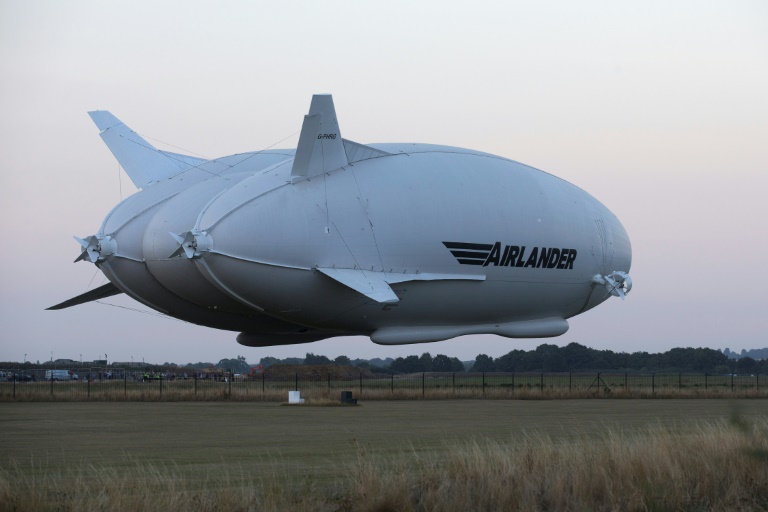
Spain’s Air Nostrum has become the first airline to reserve 100-seat helium airships that emit just one tenth of harmful emissions produced by jet planes, their British manufacturer said Wednesday.

A spokesperson for Hybrid Air Vehicles told AFP that Air Nostrum signed a deal to lease 10 Airlanders scheduled for delivery from 2026 onwards in a transaction worth over $600 million.

The Spanish regional carrier aims to become HAV’s launch customer while also diversifying its domestic fleet, using the Airlander on domestic routes.

The UK group will create 1,800 jobs at its facility in South Yorkshire, northern England, when it starts production later this year.

The hybrid ship — which looks like two blimps stuck together — has a helium-filled hull and will be propelled by a hybrid of electric and fuel-burning engines, with the goal of going all-electric by 2030.

It can stay in the air for five days and travel at maximum speeds of 130 kilometres (80 miles) per hour, with a range of more than 7,000 kilometres.

“Airlander is designed to deliver a better future for sustainable aviation services, enable new transport networks and provide rapid growth options for our customers,” said HAV chief executive Tom Grundy in a statement.

“Our partnership with Air Nostrum Group, as the launch Airline for Airlander 10, leads the way towards that future.”

The airline said in a separate statement on Wednesday that the planned aircraft, which has not yet been certified by regulators, will use far less fuel than regular jets.

“We are exploring each and every possible way to reduce our carbon footprint,” added Air Nostrum boss Carlos Bertomeu.

“The Airlander 10 will drastically reduce emissions and for that reason we have made this agreement with HAV.”

Delivery will be staggered over a five-year period.

The first prototype, developed with US aerospace giant Northrop Grumman, took flight in 2012 as part of a project with Pentagon, which was cancelled due to technical and budgetary issues.

HAV transferred the 92-metre-long vehicle to Britain in 2013 to turn it into a civilian model, bigger than an A380 jumbo jet.

It was presented to the public for the first time in 2016, but it nosedived while landing on its second test flight, without causing any injuries.

US slaps sanctions on Russian, Swedish far-right extremists

The United States on Wednesday slapped sanctions on white nationalists from Russia and Sweden, warning they posed a threat and that one raised funds for Moscow’s invasion of Ukraine.

After decades focused on Islamist extremism, the United States has increasingly identified a threat from the far right, classifying in 2020 the Russian Imperial Movement as a terrorist organization, the first such action against a white supremacist group.

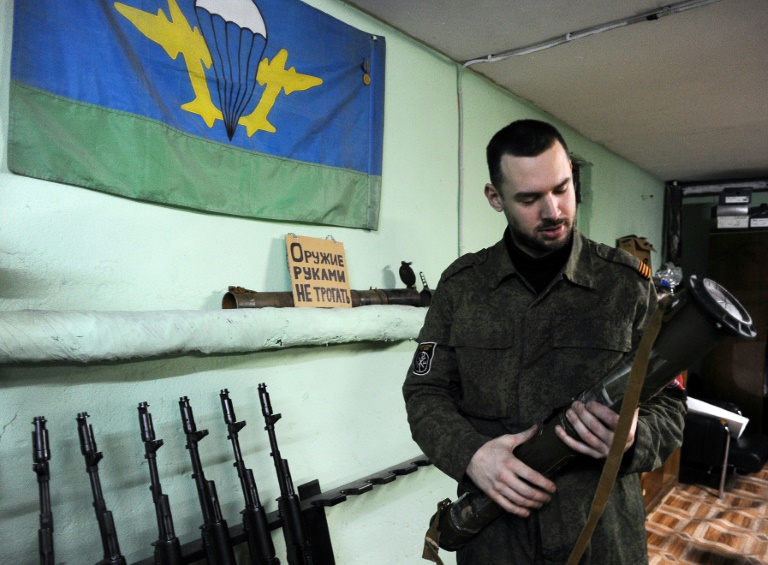
The State Department on Wednesday designated as a terrorist Anton Thulin, a Swede who allegedly traveled to Saint Petersburg for paramilitary instruction by the Russian group.

He was sentenced to prison in 2017 for setting off a bomb near a refugee center in Sweden and, after his release, was expelled by Poland, where authorities said he was seeking further training.

“The US government remains deeply concerned about the evolving racially or ethnically motivated violent extremist threat worldwide,” State Department spokesman Ned Price said.

“An element of it entails violent white supremacists traveling internationally to train and fight with likeminded individuals.”

The Treasury Department also blocked any US assets and criminalized financial transactions with two members of the Russian Imperial Movement, identified as Stanislav Shevchuk and Alexander Zhuchkovsky.

Shevchuk has traveled to the United States and Europe to unite far-right extremists, while Zhuchkovsky has used social media and online payment systems to buy military supplies for Russian troops in Ukraine, the Treasury Department said.

The Russian group denounced the US terrorist designation in 2020, insisting that it was only helping volunteers fighting on behalf of pro-Russian separatists in Ukraine.

Canada earlier this year followed suit by banning the Russian Imperial Movement as a terrorist organization along with the Proud Boys, a far-right group involved in the January 6, 2021, attack on the US Capitol.

Twitter holds firm on completing Musk buyout: board chairman

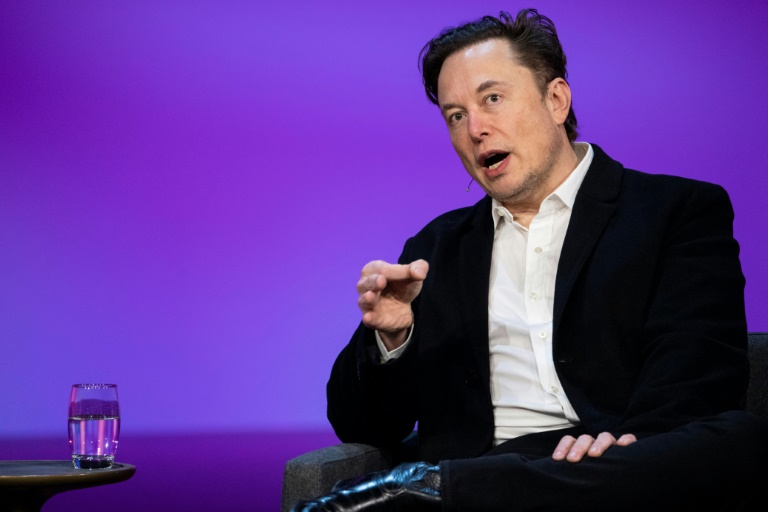
Twitter remains committed to closing Elon Musk’s $44 billion buyout bid, the firm’s board chairman said Wednesday, as doubts swirl about the billionaire’s intentions for the troubled deal. 

Bret Taylor, who is also co-CEO of the software company Salesforce, reiterated the Twitter position that the agreement should be finalized.

“The board is committed to the transaction,” Taylor said at a Paris tech conference, refusing to elaborate further.

Musk and Twitter have been in a standoff in recent weeks over the true number of users on the social media network, which has led to speculation the mercurial Tesla boss is trying to renegotiate or back away from the deal. 

He has threatened to withdraw his bid, accusing Twitter of failing to provide data on fake accounts, but the company has since reportedly agreed to give him access.

Musk is set to address Twitter employees for the first time on Thursday, as questions mount over the deal and the impact of his potential leadership of the platform.

US panel weighs authorizing Covid vaccines for youngest children

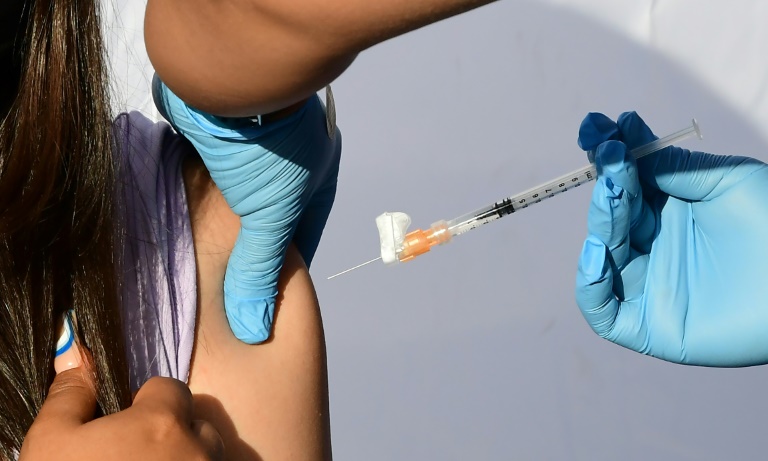
After months of anxious waiting for many parents, a panel of experts convened by the US Food and Drug Administration met Wednesday to weigh recommending Covid vaccines for the nation’s youngest children.

Children under five are the only age group not yet eligible for Covid immunization in the United States and most other countries. 

If, as expected, panelists vote in favor of greenlighting the Pfizer and Moderna vaccines, formal authorizations should follow quickly, with the first shots in arms expected by next week.

Opening the meeting, senior FDA scientist Peter Marks said that despite studies showing the majority of children have now been infected with the coronavirus, the high rate of hospitalizations among babies, infants and toddlers during last winter’s Omicron wave underscored the urgent need for vaccination.

“We are dealing with an issue where we have to be careful we don’t become numb to the pediatric deaths because of the overwhelming number of older deaths,” he said. “Every life is important and vaccine-preventable deaths are something we would like to try to do something about.”

The United States has recorded 480 Covid-19 deaths in the 0-4 age group so far in the pandemic, according to latest official data — far higher than even a “terrible flu season,” such as that of 2009-2010, when the H1N1 influenza strain caused 78 deaths in that age range, Marks said.

Ahead of the meeting, the FDA posted its independent analyses of the pharmaceutical companies’ vaccines, deeming both safe and effective.

Both vaccines are based on messenger RNA, which delivers genetic code for the coronavirus spike protein to human cells, training the immune system to be ready for when it encounters the real virus. The technology is now considered the leading Covid vaccination platform.

Pfizer is seeking authorization for three doses at three micrograms given to children aged six months through four years, while Moderna has asked for the FDA to approve its vaccine as two doses of a higher 25 micrograms for ages six months through five years.

Both vaccines were tested in trials of thousands of children. They were found to cause similar levels of mild side effects as in older age groups and triggered similar levels of antibodies.

– High protection against severe disease –

Efficacy against infection was higher for Pfizer, with the company placing it at 80 percent, compared to Moderna’s estimates of 51 percent for children aged six-months to two years old and 37 percent for those aged two to five years. 

But the Pfizer figure is provisional and Moderna is studying adding a third dose later that may increase overall efficacy. 

Moderna’s Rituparna Das said during her presentation the figures were also similar to efficacy for two doses in adults during the Omicron wave.

Even with modest efficacy against symptomatic disease, the shots should provide strong protection against severe disease and death, as they have done in other age groups.

There are some 20 million US children aged four years and under. 

Obesity, neurological disorders and asthma are associated with increased risk of severe disease among young children.

However, the FDA noted in a briefing document that “a majority of children hospitalized for Covid-19 have no underlying medical conditions.”

Children can also go on to contract multisystem inflammatory syndrome in children (MIS-C), a rare but serious post-viral condition. 

If the FDA-appointed experts recommend the two vaccines, then the matter will go to another committee convened by the Centers for Disease Control and Prevention for a final say.

White House officials last week said the rollout of millions of shots at pharmacies and doctors’ offices could begin as soon as June 21.

Inflation latest tough dish for US hospitality industry

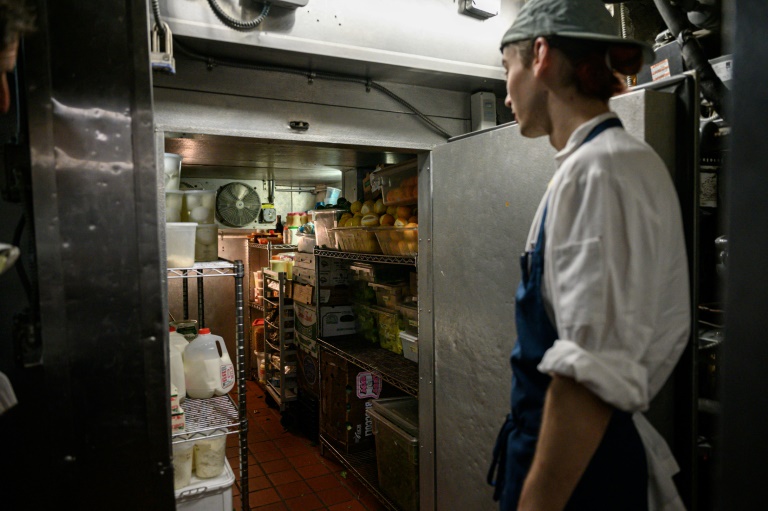
New York restaurateur James Mallios has long prided himself on culinary authenticity, spending more for sunflower oil because it is used in Greece to fry foods.

But prices of the product more than tripled after Russia’s invasion of Ukraine, which sidelined a major sunflower oil exporter, requiring a pivot to canola oil if Mallios’s small restaurant and catering business was going to survive. 

Canola oil isn’t the same at all, but “there are bigger problems in the world,” Mallios says with a shrug.

More than two years into Covid-19, hospitality companies are no longer shocked by the pandemic’s upheaval and the shape-shifting nature of the chaos.

They have been through the lockdown phase and its relaxation; the optimism of the post-vaccine period and the subsequent Omicron surge that reduced consumers and dashed hopes the pandemic was over; and the ongoing debates over whether Covid has become “endemic” and what that could mean for business.

Now they are dealing with inflation, a vexing monster in a consumer-facing industry at a time when shoppers are frustrated by higher gasoline prices. 

At Amali, Mallios’s Manhattan restaurant, canola oil is no bargain either, in part because of increased demand from other restaurateurs who are also substituting for sunflower oil. Prices of canola oil have roughly tripled to $65 a jug, a major drag for an essential ingredient that isn’t even the main course.

“When you talk about things like butter, salt, fat that goes into pretty much every dish and those prices are increasing two and three and four times,” Mallios says. “That’s really where we see the pain the most.”

Companies in the hospitality industry are trying to be creative as they ride out the inflation wave, hoping for relief but not really expecting it anytime soon.

“There’s absolutely no way to conquer this with price,” Mallios says. “The market will not bear raising the price of a hamburger by $30.”

After decades of anemic inflation in a dynamic that baffled economists, consumer price pressures have returned with a vengeance over the last year, the result of factors that include supply chain backlogs, the Ukraine war, Covid-19 manufacturing halts and strong consumer demand.

The Federal Reserve is under pressure to aggressively respond later this week after last Friday’s ugly consumer price index report that showed an 8.6 percent rise compared with a year earlier.

– Accepting lower profits –

May’s grim price action included the largest 12-month increase in the food-at-home index since 1979 and the biggest monthly increase in dairy products since 2007. Cereals, meats and fruits all had significant increases.

While inflation is a drag on all companies, hospitality has many small businesses with fewer means to offset losses on one product with profits from another good.

Olivier Dessyn, who owns three bakeries in New York, has raised prices — but not by much, only five or 10 cents on a pain au chocolat.

“If you’re a bakery, you can’t raise prices that high for something like a croissant,” he said. “The market won’t allow it. Nobody will come.”

Surging butter prices have necessitated a pivot.

“You can’t skimp on quality with butter,” said Dessyn. “If you change the butter, you need to change the recipe.”

But a part of the solution is simply to accept lower profit margins for now and survive the latest problem, Dessyn said. 

At Blush, a San Francisco wine bar, the price range has shifted since the pandemic from about $10 to $14 per glass to around $12 to $16.

“At first, it was because of Covid, now it’s definitely more inflation,” said manager Vincent Nicolas, whose biggest worry right now is the supply chain for products.

“European beers and wines, it’s very, very up and down,” he said. “Sometimes we have to change, stop doing one wine and switch to something else.”

– Raising prices carefully –

Amali’s Mallios, too, remains anxious about the supply chain. 

He understands the dynamics behind a price surge like for sunflower oil, but suspects “gouging” with some other price increases and wonders whether the government could do more in response.

Mallios is looking at ways to lower costs, perhaps by shifting some of the delivery items in-house. He is also spending on marketing in an effort to boost overall revenues as a way to maintain profits.

But raising prices takes dexterity. Perhaps a $13 Caesar Salad could be $14 instead? Or a glass of wine that was $14 might be lifted to $16?

Of his four restaurants, which include a spot in the tony Hamptons, Mallios is most worried about his newest entrant, Bar Marseille in Queens, where more consumers are feeling the pinch of higher prices.

“It’s a middle-class neighborhood,” he said. “There’s only so much you can charge for a hamburger. Period, end of story.”

Ukraine parades new French Caesar howitzer

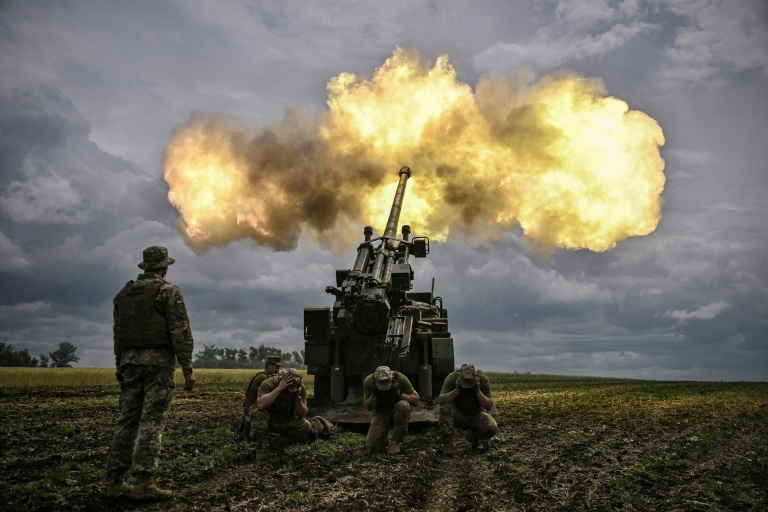
Ukraine on Wednesday showed off one of its new French-made self-propelled howitzers, firing towards Russian-controlled areas, as Kyiv urges Western countries to provide more military hardware.

At a secret frontline location in eastern Ukraine, soldiers from the 55th brigade artillery unit drove the camouflaged truck-mounted Caesar into a muddy field and fired off three rounds, accompanied by deafening booms and bright flashes.

A watching military officer said the target was also a secret, while saying it would be within the range of 38 kilometres (24 miles). 

The heavy artillery system highly prized for its accuracy is part of the new arsenal of modern weaponry provided to Ukraine by multiple countries since Russia invaded on February 24.   

President Emmanuel Macron pledged to send several systems in April, later telling Ukrainian President Volodymyr Zelensky that arms supplies from Paris would “increase in intensity”.

The firing session watched by AFP journalists came as Macron on Wednesday called for “new in-depth discussions” with Ukraine, without confirming if he would travel this week to Kyiv as several media have reported.

While the US and other allies have also provided long-range howitzers, Kyiv has complained that it is still outgunned and pleaded for more heavy weapons. 

Built by France’s partly state-owned arms maker Nexter, the Caesar is a 155mm howitzer mounted on a six-wheeled truck chassis, capable of firing shells at ranges of more than 40 kilometres (25 miles).

– ‘Modern warfare’ –

The commander of the system, who gave his name only as Glib, said it helped make Ukraine’s defences more agile.

“This system is primarily very manoeuvrable and mobile,” he said. 

“In modern warfare, this is a crucial factor. 

“Our old systems are stationary, so to speak. This is truck-mounted artillery to put in the field,” he added. 

The soldier said the weapons will allow Ukrainian troops to “gain a lot of time, so that the enemy cannot attack us and fire back”.

Other similar systems, such as the US M777s that Ukraine has also received, need to be towed. 

Glib said he underwent a week of training in France on how to use the weapon, although there was “very limited time” and “I had to train fast and remember everything quickly”.

The officer said he could not disclose where in the country Kyiv was using the French howitzers.

Russian-backed separatists have claimed this month that Kyiv is using weaponry with 155-mm ammunition — standard for NATO artillery — to fire on the large city of Donetsk, which they control, and other nearby towns.

Glib denied such targeting.

“Security of civilians is one of our priorities so we do not fire on residential areas,” he said. 

US central bank ponders huge rate hike to combat price surge

The US Federal Reserve is set to announce a sharp increase in borrowing costs on Wednesday amid the troubling acceleration of inflation, and forecasters now expect officials to opt for the biggest rate hike in nearly three decades.

Until recently, the central bank seemed set to again increase the benchmark interest rate by 0.5 percentage points, but a resurgence of consumer and producer prices in May has fueled growing speculation of a 75-basis-point hike.

Economists say the rapidly changing situation means the Fed is behind the curve and needs to react strongly to prove its resolve to combat inflation

“It is possible that by Wednesday the only way for the Fed to surprise markets would be to raise rates by 50 bp,” Harvard economist and former White House advisor Jason Furman tweeted.

If policymakers decide on a giant step, it would be the first 75-basis-point increase since November 1994.

The Federal Open Market Committee resumed discussions on the second day of its policy meeting and is due to announce the rate decision at 1800 GMT. 

Fed Chair Jerome Powell will hold a press conference after the meeting to provide more details on the central bank’s plans, including signals on how aggressive policymakers will be in coming meetings.

President Joe Biden has fully endorsed the Fed’s battle against the steepest rise in prices in more than 40 years, as he watches inflation erode his popularity and deflect attention from other milestones, including a rapid recovery of the world’s largest economy and record job growth.

– Clear signals –

US central bankers began raising interest rates off zero in March as buoyant demand from American consumers for homes, cars and other goods clashed with transportation and supply chain snarls in parts of the world where Covid-19 remained — and remains — a challenge.

That fueled inflation, which got dramatically worse after Russia invaded Ukraine in late February and Western nations imposed steep sanctions on Moscow, sending food and fuel prices up at a blistering rate.

US gasoline prices have topped $5.00 a gallon for the first time ever and are setting new records daily.

Economists thought March was the peak for consumer price hikes, but the rate spiked again in May, jumping 8.6 percent in the latest 12 months, and wholesale prices surged as well, almost entirely due to soaring costs for energy, especially gasoline.

The Fed was caught off guard with the speed of the price increases, and while policymakers usually prefer to clearly telegraph any policy shift to financial markets, the latest data likely changed the calculus.

Powell had indicated policymakers were poised to implement another half-point increase in the benchmark borrowing rate this week and yet another next month, aiming to douse red-hot inflation without tipping the economy into recession and avoid a bout of 1970s-style stagflation.

“The 75bp hike… will be about making people/markets believe that they’re serious about continuing to have higher rates in 2023,” Furman said.

However, the central bank cannot influence supply issues, and rate hikes only work by cooling demand and slowing the economy — meaning policymakers are walking a fine line between having an impact and doing too much.

And the impact won’t be immediate.

“Monetary policy operates with lags, today’s inflation reflects decisions taken a year ago,” said Adam Posen, head of the Peterson Institute for International Economics and a former central banker.

“Had Fed hiked in 2021Q2/Q3, then inflation now would be different — not least (because) the current global shocks wouldn’t be piling on already high inflation,” he said on Twitter.

Biden has been scrambling to find a way to ease the pain on American families, including lambasting oil companies that are pulling in record profits.

In a letter to oil executives, he called the high windfall “unacceptable” and demanded ExxonMobil, Chevron and others “take immediate actions to increase the supply of gasoline, diesel, and other refined product,” according to media reports.

Biden on Tuesday again blamed Russia for inflation, which is afflicting countries worldwide, and criticized Republicans for blocking his efforts to provide help to families bearing the brunt of the impact.

Close Bitnami banner
Bitnami