US Business

US inflation skyrockets, prolonging pain for consumers

US inflation resurged in May, defying hopes price pressures would slow, and posting the largest increase since December 1981 as Americans continue to shell out ever more for food and gas, according to data released Friday.

Consumer prices in the world’s largest economy have soared by the fastest pace in more than four decades, with gas prices at the pump hitting new records daily amid the fallout from Russia’s invasion of Ukraine as well as ongoing supply chain challenges due to the Covid-19 pandemic.

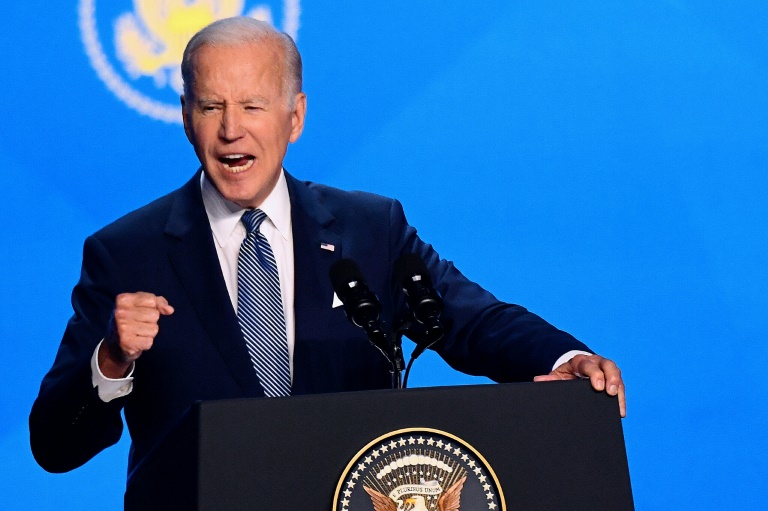
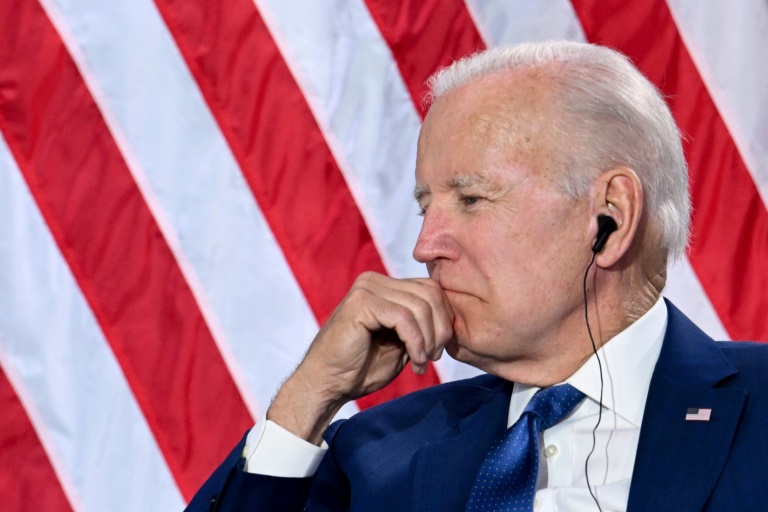
US President Joe Biden, whose popularity has taken a hit as prices surge, has made fighting inflation his top domestic priority, but is finding he has few tools to directly impact prices.

Biden has tried to hammer home his optimistic message about the economic progress in the wake of the pandemic, including rapid GDP growth and record job creation, while pressing Congress to take action to lower costs on specific products.

But the latest inflation data dealt a crushing blow, as the consumer price index (CPI) jumped 8.6 percent compared to May 2021, up from 8.3 percent in the 12 months ending in April and topping what most economists thought was the peak of 8.5 percent in March.

Prices continued to rise last month for a range of goods, including housing, groceries, airline fares and used and new vehicles, with annual gains setting new records in multiple categories, according to the Labor Department report.

“The headline inflation numbers are dreadful. Strip away some special factors & they’re merely bad,” Harvard economist and former White House advisor Jason Furman said on Twitter.

Some economists expected the easing of pandemic restrictions to cause shift of US consumer demand towards services and away from goods, which they said would ease inflation pressures, but prices for services increased as well.

“This report tells a pessimistic story of a broader rise in prices, and the shift in price pressures from goods (which reflects many pandemic-related pressures) to services (where inflation was yet to really emerge),” said Justin Wolfers, an economics professor at the University of Michigan, on Twitter.

– Soaring energy –

CPI rose one percent compared to April, after the modest 0.3 percent gain in the prior month, the Labor Department reported, far higher than expected by analysts who were looking for inflation pressures to ebb slightly.

Energy has soared 34.6 percent over the past year, the fastest since September 2005, while food jumped 10.1 percent — the first increase of more than 10 percent since March 1981, the report said.

Fuel oil in particular more than doubled, jumping 106.7 percent, the largest increase in the history of CPI, which dates to 1935, according to the report.

Food and fuel prices have accelerated in recent weeks since the Russian invasion of Ukraine sent global oil and grain prices up, and American drivers are facing daily record gas prices, with the national average hitting $4.99 a gallon on Friday, according to AAA.

The United States has come roaring back from the economic damage inflicted by the Covid-19 pandemic, helped by bargain borrowing costs and massive government stimulus measures.

But with the pandemic still gripping other parts of the world, global supply chain snarls have caused demand to far outstrip resources. Meanwhile, the conflict in Ukraine has sent global oil prices above $100 a barrel.

The Federal Reserve has begun raising interest rates aggressively, with another big hike expected next week, as policymakers attempt to combat inflationary pressures without triggering a recession.

“This report kills any last vestiges of hope that the Fed could pivot to 25bp in July,” said Ian Shepherdson of Pantheon Economics, referring to a quarter-point rate hike. “But we remain hopeful” to see such a shift in September.
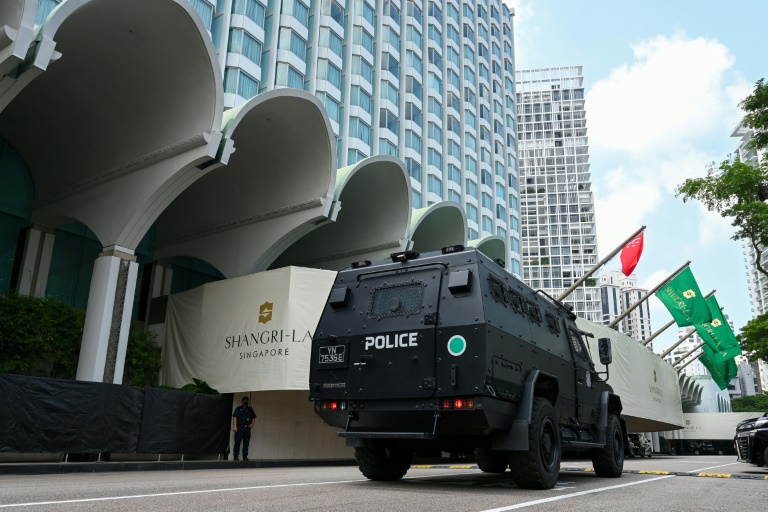
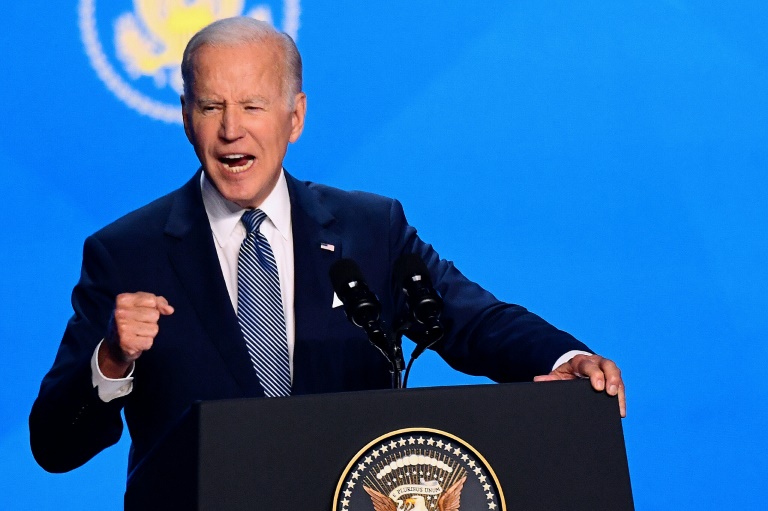
China will 'not hesitate to start war' over Taiwan, Beijing tells US

Beijing will “not hesitate to start a war” if Taiwan declares independence, China’s defence minister warned his US counterpart Friday, the latest salvo between the superpowers over the island. 

The warning came as Wei Fenghe held his first face-to-face meeting with US Defence Secretary Lloyd Austin on the sidelines of the Shangri-La Dialogue security summit in Singapore.

US-China tensions have been soaring over democratic, self-ruled Taiwan, which lives under constant threat of invasion by China. Beijing views the island as its territory and has vowed to one day seize it, by force if necessary.

Wei warned Austin that “if anyone dares to split Taiwan from China, the Chinese army will definitely not hesitate to start a war no matter the cost”, defence ministry spokesman Wu Qian quoted the minister as saying during the meeting. 

The Chinese minister vowed that Beijing would “smash to smithereens any ‘Taiwan independence’ plot and resolutely uphold the unification of the motherland”, according to the Chinese defence ministry.

He “stressed that Taiwan is China’s Taiwan… Using Taiwan to contain China will never prevail”, the ministry said. 

Austin “reaffirmed the importance of peace and stability across the (Taiwan) Strait, opposition to unilateral changes to the status quo, and called on (China) to refrain from further destabilising actions toward Taiwan”, according to the US Department of Defense.

Tensions over Taiwan have escalated, in particular due to increasing Chinese aircraft incursions into the island’s air defence identification zone (ADIZ).

– Troubled waters –

US President Joe Biden, during a visit to Japan last month, appeared to break decades of US policy when, in response to a question, he said Washington would defend Taiwan militarily if it is attacked by China. 

The White House has since insisted its policy of “strategic ambiguity” over whether or not it would intervene has not changed. 

Austin is the latest senior US official to visit Asia as Washington seeks to shift its foreign policy focus back to the region from the Ukraine war.

As well as on Taiwan, China and the United States have been locked in a range of other disputes. 

They have been at loggerheads over Russia’s invasion of Ukraine, with Washington accusing Beijing of providing tacit support for Moscow.

China has called for talks to end the war, but has stopped short of condemning Russia’s actions and has repeatedly criticised American arms donations to Ukraine.

China’s expansive claims in the South China Sea have also stoked tensions with Washington.

Beijing claims almost all of the resource-rich sea, through which trillions of dollars in shipping trade passes annually, with competing claims from Brunei, Malaysia, the Philippines, Taiwan and Vietnam.

Austin arrived in Singapore late Thursday, and held a series of meetings with his counterparts on Friday. 

At a meeting with Southeast Asian defence ministers, he spoke about Washington’s “strategy in maintaining an open, inclusive and rules-based regional security environment”, according to a statement from the Singapore government. 

His comments were a veiled reference to countering China’s increasing assertiveness in the region. 

Austin will deliver a speech at the forum on Saturday, followed by Wei on Sunday. The summit runs from June 10 to 12 and is taking place for the first time since 2019 after twice being postponed due to the Covid-19 pandemic.

US seeks migration policy agreement at close of contested summit

The United States was Friday seeking a unified declaration on migration at the close of a week-long Americas summit that has been beset by disputes.

Mexico and several Central American nations — who are key players, along with Haiti, on migration to the United States — declined to send their leaders to the week-long Summit of the Americas held in Los Angeles.

But US officials said they worked with neighboring nations and expected wide support Friday for a “Los Angeles declaration” on migration.

The statement, officials said, will formalize many of the arrangements already in place amid a surge of migration into the United States.

The countries will agree to reinforce systems to process claims for asylum on their soil and also to share costs with nations that have been on the frontlines of taking in migrants.

“Each one of our countries has been impacted by unprecedented migration, and I believe it’s our shared responsibility to meet this challenge,” US President Joe Biden told the summit on Thursday.

Countries across the Americas will seek to boost “safe and orderly migration” and to “coordinate specific, concrete actions to secure our borders,” Biden said.

Migration has been a hot-button political issue in Washington as poverty, violence and national disasters have led to a rise in Central Americans and Haitians seeking to enter the United States.

Lawmakers of former president Donald Trump’s Republican Party have seized on the issue, denouncing many migrants and accusing Biden of failing to act effectively.

Migration has increasingly been felt across the hemisphere, with millions of Venezuelans also fleeing a crumbling economy.

– Friction over invitations –

The Summit of the Americas was hit by discord even before it began, as Biden refused to invite the leftist leaders of Cuba, Nicaragua and Venezuela on the grounds that they are authoritarians.

Mexican President Andres Manuel Lopez Obrador boycotted the summit to protest the exclusions, and leaders criticized the decision to Biden’s face in a plenary session on Thursday.

“Being the host country of the summit doesn’t grant the ability to impose a right of admission on member countries of the continent,” said Argentina’s center-left president, Alberto Fernandez, who attended after a personal appeal by Biden.

The prime minister of tiny Belize, John Briceno, directly criticized Biden and told him that longstanding US sanctions on communist Cuba were a “crime against humanity.”

Biden, who applauded politely and greeted each leader, returned to the podium to say that his agenda was on track.

“Notwithstanding some of the disagreements relating to participation, on the substantive matters, what I heard was almost unity and uniformity,” the US president said.

Biden called the summit in the face of rising Chinese influence in a region that the United States has long considered its home turf.

But the Biden administration has steered clear of big-dollar announcements and instead focused on broad declarations and pledged to work out specifics later.

The administration promised during the week-long summit to work to train 500,000 health workers in the Americas and unveiled $1.9 billion in private funding for Central America to create jobs and stem some of the push factors of migration.

Biden also met at the summit with Brazilian President Jair Bolsonaro, a first encounter with a leader who has questioned not only the legitimacy of upcoming elections at home but also of the US polls in which Biden defeated Trump.

Bolsonaro, who was one of Trump’s closest international allies, is trailing in polls ahead of October elections.

But he said that he was pleasantly surprised by his meeting Thursday with Biden and looked forward to further talks.

US seeks migration policy agreement at close of contested summit

The United States was Friday seeking a unified declaration on migration at the close of a week-long Americas summit that has been beset by disputes.

Mexico and several Central American nations — who are key players, along with Haiti, on migration to the United States — declined to send their leaders to the week-long Summit of the Americas held in Los Angeles.

But US officials said they worked with neighboring nations and expected wide support Friday for a “Los Angeles declaration” on migration.

The statement, officials said, will formalize many of the arrangements already in place amid a surge of migration into the United States.

The countries will agree to reinforce systems to process claims for asylum on their soil and also to share costs with nations that have been on the frontlines of taking in migrants.

“Each one of our countries has been impacted by unprecedented migration, and I believe it’s our shared responsibility to meet this challenge,” US President Joe Biden told the summit on Thursday.

Countries across the Americas will seek to boost “safe and orderly migration” and to “coordinate specific, concrete actions to secure our borders,” Biden said.

Migration has been a hot-button political issue in Washington as poverty, violence and national disasters have led to a rise in Central Americans and Haitians seeking to enter the United States.

Lawmakers of former president Donald Trump’s Republican Party have seized on the issue, denouncing many migrants and accusing Biden of failing to act effectively.

Migration has increasingly been felt across the hemisphere, with millions of Venezuelans also fleeing a crumbling economy.

– Friction over invitations –

The Summit of the Americas was hit by discord even before it began, as Biden refused to invite the leftist leaders of Cuba, Nicaragua and Venezuela on the grounds that they are authoritarians.

Mexican President Andres Manuel Lopez Obrador boycotted the summit to protest the exclusions, and leaders criticized the decision to Biden’s face in a plenary session on Thursday.

“Being the host country of the summit doesn’t grant the ability to impose a right of admission on member countries of the continent,” said Argentina’s center-left president, Alberto Fernandez, who attended after a personal appeal by Biden.

The prime minister of tiny Belize, John Briceno, directly criticized Biden and told him that longstanding US sanctions on communist Cuba were a “crime against humanity.”

Biden, who applauded politely and greeted each leader, returned to the podium to say that his agenda was on track.

“Notwithstanding some of the disagreements relating to participation, on the substantive matters, what I heard was almost unity and uniformity,” the US president said.

Biden called the summit in the face of rising Chinese influence in a region that the United States has long considered its home turf.

But the Biden administration has steered clear of big-dollar announcements and instead focused on broad declarations and pledged to work out specifics later.

The administration promised during the week-long summit to work to train 500,000 health workers in the Americas and unveiled $1.9 billion in private funding for Central America to create jobs and stem some of the push factors of migration.

Biden also met at the summit with Brazilian President Jair Bolsonaro, a first encounter with a leader who has questioned not only the legitimacy of upcoming elections at home but also of the US polls in which Biden defeated Trump.

Bolsonaro, who was one of Trump’s closest international allies, is trailing in polls ahead of October elections.

But he said that he was pleasantly surprised by his meeting Thursday with Biden and looked forward to further talks.

Stocks slump further before key US inflation update

Stock markets tumbled further Friday as investors worried about recession risks stemming from decades-high inflation and rising interest rates.

With major global equity indices shedding about 1.5 percent, focus turned to the release later in the day of US consumer price figures.

“There is little respite at present from inflationary concerns, giving investors little room for manoeuvre in navigating the darkening economic clouds,” noted Richard Hunter, head of markets at Interactive Investor.

The European Central Bank on Thursday said it would raise interest rates next month to combat strong inflation, finally catching up with other major central banks that are tightening borrowing costs to try and cool the pace of consumer price rises.

Economists warn that surging inflation, driven by rocketing energy prices, could push top economies into recession.

Adding to the unease was news that officials in China had once again locked down millions of people for Covid testing owing to another flare-up in cases, dealing a blow to hopes for an economic reopening.

“Warning signs about the economy are emerging as weekly (US) jobless claims are starting to rise, China’s Covid situation will prove troublesome for supply chains over the next couple of quarters, and as inflationary pressures broaden and show no sign of easing,” said Edward Moya, analyst at OANDA trading group.

“It seems reductions in global growth forecasts will become a steady theme over the next few months and that should complicate how much more tightening we see from central banks,” he added.

Moya said the darkening economic outlook could provide an argument for the Fed to apply the brakes to hiking US interest rates later in the year.

With prices having surged for much of this year, central banks have been forced to withdraw the vast pandemic stimulus that helped fuel a rally across stock markets to record or multi-year highs.

The US Labor Department is set to release the May consumer price index (CPI) data on Friday, with analysts saying the data may show a modest slowdown in the torrid annual pace.

US consumer prices jumped 8.3 percent in the 12 months ending in April.

One bright note Friday was data showing that China’s producer price inflation eased last month to its lowest level in more than a year.

– Key figures at around 1045 GMT –

London – FTSE 100: DOWN 1.3 percent at 7,382.24 points

Frankfurt – DAX: DOWN 1.5 percent at 13,980.12

Paris – CAC 40: DOWN 1.6 percent at 6,257.33

EURO STOXX 50: DOWN 1.8 percent at 3,657.84

Tokyo – Nikkei 225: DOWN 1.5 percent at 27,824.29 (close)

Hong Kong – Hang Seng Index: DOWN 0.3 percent at 21,806.18 (close)

Shanghai – Composite: UP 1.4 percent at 3,284.83 (close)

New York – Dow: DOWN 1.9 percent at 32,272.79 (close)

Euro/dollar: DOWN at $1.0600 from $1.0620 late Thursday

Euro/pound: UP at 85.13 pence from 84.98 pence

Dollar/yen: DOWN at 133.84 yen from 134.40 yen

Pound/dollar: DOWN at $1.2450 from $1.2495

Brent North Sea crude: UP 0.8 percent at $124.09 per barrel

West Texas Intermediate: UP 0.5 percent at $122.17 per barrel

Textile industry set to unravel under Pakistan's power crisis

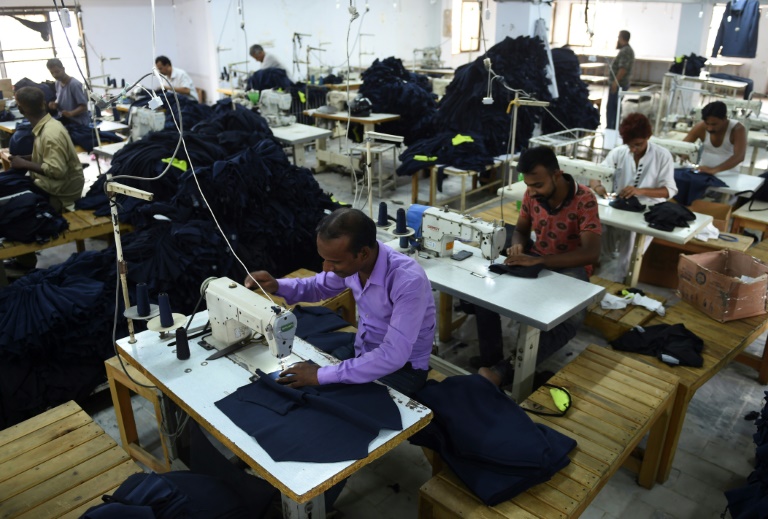
Pakistan’s textile exports are set to dramatically dip as the sector is hobbled by a nationwide energy crisis forcing daily power cuts on factories, with an industry leader warning about “a state of emergency” for the manufacturing hub.

The South Asian nation is in the midst of a dire economic crisis, with runaway inflation, a depleted rupee and dwindling foreign exchange reserves hampering energy imports.

Meanwhile a heatwave has caused a surge in electricity demand, leaving a shortfall of over 7,000 megawatts — one-fifth of Pakistan’s generation capacity — on some days this month, according to government figures.

The energy shortage has hit Pakistan’s vital textile industry, which supplies everything from denim to bed linen towards markets in the US and Europe, and accounts for 60 percent of the country’s exports.

“The textile industry is in a state of emergency,” Qasim Malik, the vice president of the Chamber of Commerce in the manufacturing hub of Sialkot, told AFP.

With authorities forced to ration the power supply with staggered blackouts, Malik said the “unannounced and unscheduled” outages disrupt the textile supply chain, which is “causing millions of rupees of losses”. 

“Should the power cuts persist there could be a decline of more than 20 percent in exports,” warned Sheikh Luqman Amin of the Pakistan Readymade Garments Manufacturers and Exporters Association. 

Larger factories tend to have independent power plants, leaving small- and medium-sized factories in cities such as Lahore, Faisalabad and Sialkot most exposed.

Owners have complained of power cuts of eight to 12 hours on a daily basis and face the dilemma of lower production or installing generators powered by petrol, which is also sharply rising in cost.

“We can’t accept new orders because we are already behind on previous ones,” said Sialkot garment factory owner Usman Arshad. 

“Things can’t continue to go on this way.”

Despite the nation’s economic woes, textile exports surged 28 percent to a record $17.67 billion in the fiscal year July-May 2021/22, the All Pakistan Textile Mills Association reported this week.

The Pakistani industry was buoyed by the tail end of the coronavirus pandemic, when it was freed of restrictions earlier than regional rivals India and Bangladesh.

The new government of Prime Minister Shehbaz Sharif is set to announce a budget on Friday attempting to turn around Pakistan’s dire finances.

It is expected the ledger will include a raft of measures to convince the International Monetary Fund to revive a stalled $6 billion bailout package.

Italy to kill 1,000 pigs in swine fever outbreak

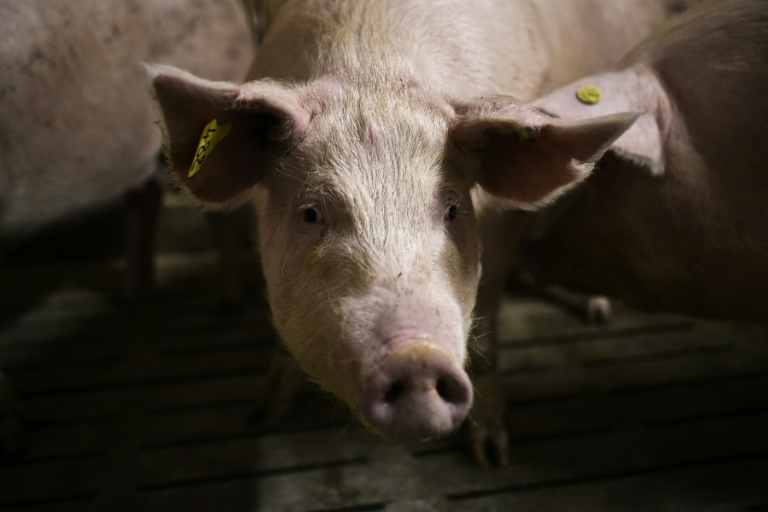
A thousand pigs will be slaughtered after two cases of swine fever were detected on a farm in Rome’s Lazio region, officials said Friday, spurring fears of a blow to the country’s pork industry.

“We have to slaughter all the pigs in the contaminated area very quickly,” Angelo Ferrari, tasked with managing the crisis, told AGI news agency.

The local health agency estimated 1,000 pigs would have to be culled to stem the spread, he said.

“The sooner we act decisively and incisively, the greater our hope that the commercial damage will be reduced,” he said.

Italy, with about 8.9 million pigs, is the seventh biggest pork producer in the European Union, representing an eight-billion-euro ($9.1 billion) industry, according to the agricultural association Confagricoltura.

The two case of African swine fever detected in Lazio are the first among farmed pigs in Italy. Before that, cases were detected in wild boar in January in northern Italy, then in the Lazio region.

African swine fever (ASF) does not affect humans but is contagious and fatal for pigs and their wild relatives and an outbreak is potentially devastating for the pork industry, experts say.

A 2018 outbreak in China — the world’s largest pork producer — caused millions of pigs to be slaughtered to stop the spread.

The disease has existed in Africa for decades. In a December 3 report on the virus, the World Organisation for Animal Health (OIE) said ASF had been reported in 32 countries in five world regions since January 2020. 

In Italy, it has been endemic on the island of Sardinia since first appearing in 1978.

In western Europe, the virus was reported in Belgium in 2018, prompting China to ban all imports of Belgian pork.

After Germany confirmed its first case in a dead wild boar in 2020, China, Japan and South Korea, alongside Brazil and Argentina, also suspended German pork imports.

Italy’s main agricultural association Coldiretti called on the government last month for the “rapid culling” of boars throughout the country to help stop the spread of the disease.

Images of boar walking through residential areas of Rome and feeding at overflowing rubbish bins regularly do the rounds on social media networks.

China, US defence ministers hold talks in Singapore

The US and Chinese defence ministers held their first face-to-face talks in Singapore Friday, as the superpowers lock horns over security disputes ranging from Taiwan to contested waters. 

The relationship between the two countries has deteriorated due to myriad issues in recent years. As well as Taiwan and the South China Sea, they have clashed over cybersecurity and human rights in Hong Kong and Xinjiang.

US Defence Secretary Lloyd Austin met Wei Fenghe on the sidelines of the Shangri-La Dialogue security summit, which is attended by defence ministers and senior officials from around the world.

Austin is the latest senior US official to visit Asia as Washington seeks to shift its foreign policy focus back to the region from the Ukraine war.

A Pentagon spokesman confirmed the talks were underway in Singapore, and Chinese state broadcaster CCTV said it was the pair’s first meeting since Austin took office. They previously held talks on the phone in April. 

A major issue on the agenda could be Taiwan, a self-ruled, democratic island that lives under the constant threat of invasion by China. 

Beijing views the island as its territory and has vowed to one day seize it, by force if necessary.

Tensions have been stoked by increasing Chinese aircraft incursions into the island’s air defence identification zone (ADIZ).

President Joe Biden, during a visit to Japan last month, appeared to break decades of US policy when, in response to a question, he said Washington would defend Taiwan militarily if it is attacked by China. 

The White House has since insisted its policy of “strategic ambiguity” over whether or not it would intervene has not changed. 

– Troubled waters –

The two sides have also been at loggerheads over Russia’s invasion of Ukraine, with Washington accusing Beijing of providing tacit support for Moscow.

China has called for talks to end the war, but has stopped short of condemning Russia’s actions and has repeatedly criticised American arms donations to Ukraine.

In their April phone call, Wei told Austin not to use the invasion to “smear, frame, threaten or pressure China”.

China’s expansive claims in the South China Sea have also stoked tensions with Washington.

Beijing claims almost all of the resource-rich sea, through which trillions of dollars in shipping trade passes annually, with competing claims from Brunei, Malaysia, the Philippines, Taiwan and Vietnam.

Austin arrived in Singapore late Thursday, and held a series of meetings with his counterparts on Friday. 

At a meeting with Southeast Asian defence ministers, he spoke about Washington’s “strategy in maintaining an open, inclusive and rules-based regional security environment”, according to a statement from the Singapore government. 

His comments were a veiled reference to countering China’s increasing assertiveness in the region. 

Wei meanwhile visited Singapore Prime Minister Lee Hsien Loong, and the pair reaffirmed their countries’ “long-standing, warm and friendly bilateral defence relations”, according to a statement from Singapore officials.

Austin will deliver a speech at the forum on Saturday, followed by Wei on Sunday. The summit runs from June 10 to 12 and is taking place for the first time since 2019 after twice being postponed due to the Covid-19 pandemic.

UK banks no longer 'too big to fail': BoE

Britain’s biggest banks are no longer “too big to fail” in any future financial shocks, with shareholders rather than taxpayers ready to bear the cost, the Bank of England said Friday.

Following a major review of eight lenders — including Barclays, HSBC, Lloyds and NatWest — the BoE concluded “that if a major UK bank failed today it could do so safely: remaining open and continuing to provide vital banking services to the economy.

“Shareholders and investors, not taxpayers, will be first in line to bear the costs, overcoming the ‘too big to fail’ problem,” the central bank added.

Following the financial global crisis more than a decade ago, the UK taxpayer pumped £137 billion ($171 billion) into the country’s banks, while also being able to benefit from significant BoE support.

The government also took control of Royal Bank of Scotland — rebranded as NatWest ahead of its recent return to the private sector.

Despite the bailouts, “the disruption to the financial system contributed to the UK and global recession that followed. We cannot forget these lessons”, the BoE added Friday.

The central bank was publishing its first assessment of the eight major UK banks’ preparations for resolution under the Resolvability Assessment Framework.

RAF “is a core part of the UK’s response to the global financial crisis, and demonstrates how the UK has overcome the problem of ‘too big to fail'”, said Dave Ramsden, deputy governor for markets and banking at the BoE.

“The UK authorities have developed a resolution regime that successfully reduces risks to depositors and the financial system and better protects the UK’s public funds.”

The other four banks assessed were Nationwide, Santander UK, Standard Chartered and Virgin Money UK.

Markets extend global sell-off on inflation, rate fears

Markets extended a global sell-off Friday after the European Central Bank laid the groundwork to join others in a programme of interest rate hikes, while attention turns to the release of key US inflation data.

After a largely positive start to the week, Asian investors tracked their US and European colleagues in selling up as they contemplate higher borrowing costs and surging prices, which many fear could lead to a recession.

Adding to the unease was news that officials in China had once again locked down millions of people for Covid testing due to another flare-up in cases, dealing a blow to hopes for an economic reopening.

Still, the move helped push down oil prices — a key driver of global inflation — owing to concerns about the impact on demand.

With prices rising at a decades-high pace, central banks have been forced to withdraw the vast financial support measures put in place to combat the impact of the pandemic that helped fuel a rally across markets to record or multi-year highs.

The ECB became the latest to join the tightening campaign, announcing Thursday the end of its bond-buying programme and signalling it will hike rates several times this year.

It also sharply upgraded its inflation forecasts for this year and next while lowering the economic growth outlook.

Focus now turns to the release of US consumer price figures later Friday, with a strong reading likely to give the Federal Reserve more room to be aggressive.

“A robust May… print will probably prompt (policymakers) to hint at a 50 basis point hike for the September meeting,” said SPI Asset Management’s Stephen Innes.

“The tone will remain hawkish and the tough talk on inflation will continue.”

However, he added that “the significant upward revisions to core inflation projections are close to ending. Risk markets could take solace if one or two participants shift to seeing the inflation outlook is more balanced”.

Expectations are that the Fed will hike by half a point for at least three more meetings before January. 

Other commentators also suggested that traders were looking for signs inflation may be close to its highs.

“The big question is whether inflation has peaked or not,” said Matthew Simpson of StoneX Financial. 

“Inflation may have softened to a degree in April, but traders really want to see further evidence that inflation is pointing lower to call ‘peak inflation’ with confidence.

“Besides, one single month of data doesn’t define a trend.”

And OANDA’s Edward Moya said the darkening outlook could provide an argument for the Fed to apply the brakes to hiking later in the year.

“Warning signs about the economy are emerging as weekly jobless claims are starting to rise, China’s Covid situation will prove troublesome for supply chains over the next couple of quarters, and as inflationary pressures broaden and show no sign of easing.

“It seems reductions in global growth forecasts will become a steady theme over the next few months and that should complicate how much more tightening we see from central banks.”

Tokyo, Hong Kong, Sydney, Seoul, Singapore, Taipei, Mumbai, Bangkok, Wellington, Manila and Jakarta were all down.

London, Paris and Frankfurt were also lower in early trade.

However, data showing Chinese producer price inflation eased last month to its lowest level in more than a year provided some cheer and gave officials a little room to unveil fresh stimulus measures for the beleaguered economy.

That helped Shanghai brush off the targeted lockdowns and buck the regional trend to rally more than one percent.

On currency markets the euro continued to struggle against the dollar after the ECB flagged a quarter-point hike, while the yen remained around two-decade lows to the greenback.

– Key figures at around 0810 GMT –

Tokyo – Nikkei 225: DOWN 1.5 percent at 27,824.29 (close)

Hong Kong – Hang Seng Index: DOWN 0.3 percent at 21,806.18 (close)

Shanghai – Composite: UP 1.4 percent at 3,284.83 (close)

London – FTSE 100: UP 1.0 percent at 7,405.26

Euro/dollar: UP at $1.0630 from $1.0620 late Thursday

Euro/pound: UP at 85.15 pence from 84.98 pence

Dollar/yen: DOWN at 133.71 yen from 134.40 yen

Pound/dollar: DOWN at $1.2482 from $1.2495

Brent North Sea crude: DOWN 0.7 percent at $122.27 per barrel

West Texas Intermediate: DOWN 0.6 percent at $120.76 per barrel

New York – Dow: DOWN 1.9 percent at 32,272.79 (close)

Close Bitnami banner
Bitnami