US Business

At US border hole, asylum is still possible

When a young Colombian man and his family arrived at the US border early one morning, they helped themselves to bananas and water, then sat down in the shade and waited for American patrol officers.

Like dozens of others who enter the United States every day through this gap in the fence, they are not trying sneak into the country unnoticed.

“We don’t want to cross illegally, we want to ask for asylum,” says the 30-year-old, who asked to remain anonymous and said he was fleeing violence in his home country.

In the United States, the stream of impoverished migrants flowing up through Mexico remains a potent topic in the public discourse, dividing the nation’s politics and coloring relations with countries to the south.

The issue of migration is set to loom large at the Summit of the Americas in Los Angeles this week, even without the presence of Mexican President Andres Manuel Lopez Obrador, who is boycotting the gathering in protest at the exclusion of Venezuela, Nicaragua and Cuba.

Pandemic-era restrictions that allow the summary rejection of an asylum claim remain in force at the border, despite plans by US President Joe Biden to scrap them.

The so-called Title 42 can automatically bar entry to anyone without a visa, but at an informal border crossing in sun-scorched Yuma, the vast majority of those arriving are still able to lodge a claim for asylum, either because of the makeup of their family, the country they came from or the danger they face.

– Buses –

“We’re seeing immigrants from a lot of different countries,” says Customs and Border Protection officer Fidel Cabrera.

The gap in the fence — literally a hole where there is no barrier — is one factor, but the infrastructure on the Mexican side is another.

“The type of migrants we see here now is different from years ago.” Most have the resources to travel by plane, says Cabrera.

“We’re very close to a couple of international airports… (then they) take some kind of public transportation… and they’re here usually within an hour.”

Buses ply the route from airports in Mexicali and Tijuana to Algodones, a Mexican border enclave nicknamed “Molar City” because of its hundreds of dentists offering cut-price fillings to Americans.

From the highway there is a short trudge through scrub and sand to the border.

But with desert temperatures regularly hitting 40 degrees Celsius (104 degrees Fahrenheit), even this walk is unpleasant.

US border guards leave fruit and water for hungry migrants who wait for a patrol to process them.

Since last September, only 11 percent of those who presented themselves to border officials in the Yuma sector have been rejected under Title 42, according to US government data.

The rest of the nearly 150,000 are not automatically granted asylum, but are at least given the chance to present their case.

– ‘Moving on’ –

For Yuma — an otherwise sleepy town where farmers grow a major portion of the nation’s lettuce — the nearly 150,000 people who have passed through this year have not left a mark, says Mayor Douglas Nicholls.

“They all are moving into other communities,” he tells AFP.

“When they’re released from border patrol, they have to have a host family or somewhere where they’re going.

“I’m not aware of anyone that stayed in Yuma longer than a day or two to get their transportation to wherever they’re going.”

After a two-hour wait in the shade of a tree, the young Colombian father presents his papers to a border agent.

No reason is given to waiting reporters, but he and his family will be allowed to lodge their claim for asylum.

He is adamant that he is not one of the economic migrants demonised by some cable news, who hosts say left a perfectly acceptable life just to make more money in the United States.

“No one leaves home just because they want to,” he tells AFP.

“If you go, you go because you have to.”
Joking about abortion: New York show tackles divisive US subject

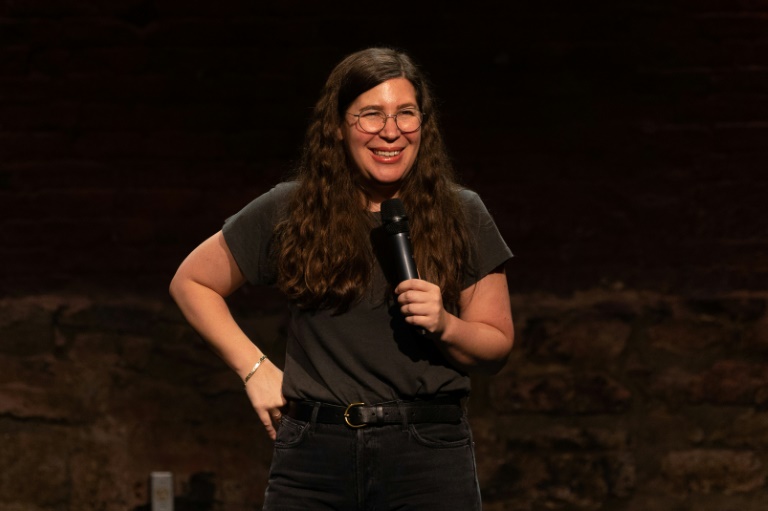
America is bitterly divided over abortion. But on stage in New York, comedian Alison Leiby tries to lift taboos surrounding the right by making people laugh at her own experience of ending a pregnancy.

In “Oh God, A Show About Abortion,” the 38-year-old takes up the challenge of making light of a subject that can be very delicate and difficult for many.

With a large dose of self-mockery, Leiby portrays herself as a New York anti-heroine, who has no dreams of motherhood and considers herself incapable of managing her finances and fails to keep her cactus alive.

But above all, Leiby downplays the medical procedure and its aftermath, recounting a banal Saturday in New York that did not leave her feeling discomfort or guilt.

“I thought that I just had not seen a lot of depictions or stories in pop culture or in a documentary or in interviews. I never hear people talk about the kind of abortion I had,” Leiby told AFP, describing her experience as “not traumatic.”

“This kind of abortion is incredibly common, at least in places where abortion is accessible. So I thought that maybe it would be worth telling that story to kind of destigmatise how afraid many are.”

Leiby says she is after laughs but also wants the show to be “an easy way to start talking about a difficult thing for people.”

She admits that she is aware of her privilege as a white, heterosexual women who lives in a state where abortion is legal.

“A lot of other people don’t have that kind of safety and don’t have that kind of access,” Leiby said.

The hour-long show, which has been running since April, was given impetus on the evening of May 2 when a leaked draft decision showed that the Supreme Court was planning to overturn Roe v. Wade, ending 50 years of nationwide access to abortion.

“It certainly made the show just take on more meaning for me performing it every day, and it feels more political,” said Leiby.

– ‘Scary’ –

Last week, one performance ended with a Q&A with Nancy Northup, president of the Center for Reproductive Rights, an advocacy group that campaigns for abortion rights.

“This show is terrific because it addresses stigma around abortion,” Northup told AFP.

“I think that she brought humanity and a real sense of urgency… (that) we need to be talking about abortion more,” she added.

Leiby also tackles in a raw and uninhibited way contraception, being a woman who does not want to have kids, and periods, calculating quickly on stage that they can take up 2,000 days or six years of a woman’s life.

Many themes spoke directly to members of the audience, which were overwhelmingly women.

“I’m someone that doesn’t want to have kids of my own,” said Briana Gio, a social worker who grew up in Oklahoma, a state that recently signed America’s most restrictive abortion ban.

“(But) we go through this phase. All of a sudden we have this moment of, am I getting too old? And then also just the fact that people are like, ‘You’re gonna regret it.’ I hear that a lot from my mother,” the 30-year-old added.

Leiby would like to take her show away from New York and its liberal audiences. But she is wary.

“There are people that have messaged me (saying) please bring this to Kentucky, bring this to West Virginia. We need this.

“(But) the people who do want it (Roe v. Wade) overturned are very, very active and present and involved in that belief in a way that can feel very scary.”

For now, her show’s run in Manhattan has been extended to June 30.

US Capitol assault hearings promise bombshell revelations

The committee investigating last year’s assault on the US Capitol launches public hearings Thursday, promising explosive revelations as it lays out in granular detail the story of the deadly siege and assesses Donald Trump’s culpability.

In the first of six made-for-TV presentations, the panel of lawmakers will aim to demonstrate that the president and his inner circle committed felonies in a criminal conspiracy to overturn his 2020 election defeat to Joe Biden that culminated in the violence of January 6, 2021.

Democratic panel member Jamie Raskin said at a recent event at Georgetown University in Washington that the hearings would “tell a story that will really blow the roof off.”

“No president has ever come close to doing what happened here in terms of trying to organize an inside coup to overthrow an election and bypass the constitutional order,” Raskin said. 

“And then also (to) use a violent insurrection made up of domestic violent extremist groups, white nationalist and racist, fascist groups in order to support the coup.”

As key witnesses testify in public for the first time, lawyers will exhibit texts, photographs and videos to shine a light on various schemes by the Trump White House that began to gestate before the election.

At the first hearing, in the 8:00 pm (0000 GMT) prime-time slot on Thursday, the panel said it will “present previously unseen material documenting January 6… and provide the American people a summary of its findings about the coordinated, multi-step effort to overturn the results of the 2020 presidential election and prevent the transfer of power.”

– ‘Rogue actors’ –

After Thursday, the Democrat-led committee, which has interviewed more than 1,000 witnesses, is expected to hold 10:00 am hearings on the June 13, 15, 16 and 21, followed by a final hearing in prime time on June 23.

The committee will run through several unlawful plots it says were devised by the Trump White House to keep the defeated president in power, including a scheme to use fake “electors” — the people appointed to vote for president in the state-by-state “Electoral College.”

They will also lay out an authoritarian plan to seize voting machines and the alleged plot to delay the certification of Biden’s win through the violence at the Capitol, which was linked to five deaths and the wounding of more than 100 police officers.

Investigators want to get to the bottom of a 187-minute delay before law enforcement was beefed up to protect the Capitol and learn why there is a gap of almost eight hours in White House logs of Trump’s calls as the violence played out.

One of the main aims though will be to draw a straight line from the alleged conspiracy to overturn the election, Trump’s rally speech encouraging the mob to march on Congress and the ensuing violence.

“If such a relationship can be established, it will have a profound and reverberating effect on our ability to impose legal consequences on incitement,” Gerard Filitti, a senior counsel for New York-based Jewish civil rights group The Lawfare Project, told AFP. 

“And in upholding the rights of minority communities to live free of the threat of physical violence incited by rogue actors.”

– Illegality ‘was obvious’ –

The question of whether Trump broke the law has already been answered in some respects.

Federal judge David Carter ruled in March that it was “more likely than not that President Trump corruptly attempted to obstruct the joint session of Congress on January 6.”

“The illegality of the plan was obvious,” he said.

The committee faces a challenge, however, in building up a compelling and dramatic narrative, as much of the evidence has already been aired in public.

Among the biggest leaked revelations is a trove of 2,319 text messages obtained by CNN that show Trump’s family and his allies in Congress and the media imploring White House chief of staff Mark Meadows to get the then-president to call off the mob attacking the Capitol.

The texts, which Meadows handed over voluntarily before ending his cooperation with the probe, also show Ginni Thomas, wife of Supreme Court Justice Clarence Thomas, pushing for the will of millions of voters in swing states to be overturned.

But the committee may still have a few shocks up its sleeve as Democrats look ahead to November’s midterm elections and hope to entice voters beleaguered by spiraling inflation and the lingering pandemic.

There has been no official word on who will take the stand, but the committee has ruled out Trump himself, concluding that his testimony would add nothing to the narrative.

The committee’s Democratic chairman Bennie Thompson has said however that the hearings will include testimony from witnesses “we’ve not heard from before.”

US orders seizure of two aircraft owned by Russian oligarch Abramovich

The US Justice Department ordered the seizure Monday of two aircraft owned by Russian oligarch Roman Abramovich, saying they had been used in violation of sanctions on Russia imposed over its invasion of Ukraine.

The department said in court filings that the two aircraft, a Boeing 787-8 Dreamliner and Gulfstream G650ER executive jet, had been flown into Russian territory earlier this year in violation of US export controls set for US-made aircraft on March 2.

The department’s move targets one of the wealthiest Russian billionaires, who has already been forced to sell Chelsea Football Club in the wake of Moscow’s February 24 invasion of Ukraine.

It aims to incentivize people close to the Russian government “to distance themselves from the Kremlin and from the Russian state as it continues to ramp up the war,” said Andrew Adams, director of the Justice Department’s KleptoCapture task force.

Both aircraft, which the Justice Department valued at $400 million, are believed to be out of reach of US officials — in Russia and, for the Boeing, possibly in Dubai, according to media reports.

“We will take active steps to pursue seizure, and we’ll keep an eye out to see if they move jurisdictions,” said Adams.

The seizure order outlined how Abramovich controls the two aircraft through a series of shell companies, centered on the Cyprus-registered Europe Settlement Trust.

Abramovich in February made his children, all Russian citizens, beneficiaries of the trust, according to the order.

– Not sanctioned by US –

Abramovich, 55, built a fortune estimated by Bloomberg at $12.5 billion on oil, steel, aluminum and other industries, maintaining close relationships with top Russian officials, including President Vladimir Putin.

Holding Russian and Israeli citizenship, as well as reportedly Portuguese, he is believed to have moved much of his wealth outside of Russia, but he retains substantial interests inside the country.

Since the Ukraine war began, he has been hit with sanctions in Europe.

The island of Jersey, a British crown dependency, announced on April 13 that it had frozen more than $7 billion in assets believed to be linked to Abramovich.

But unlike many fellow Russian tycoons, Abramovich has not been placed on US sanctions lists.

According to reports, he has avoided the seizures by European authorities of his 162-meter (500-foot) yacht Eclipse and the 140-meter Solaris by moving them into Turkish waters.

In parallel with the aircraft seizure order, the US Commerce department issued a letter charging Abramovich with knowingly violating US restrictions that seek to block specific technologies and goods from being exported to Russia.

The charges can bring financial penalties of up to double the value of the “export” transaction, the Commerce letter said, suggesting they could seek more than the value of the aircraft in fines.

Apple unveils message recall, other 'wish list' features

Apple opened Monday its first in-person developers conference since the onset of the pandemic with chips, maps and a way to delete precipitously sent messages, but was mum on any virtual reality offerings.

The tech giant touted new features and capabilities being built into the operating systems running iPhone, Apple Watch and more, along with a speedy new MacBook Air computer driven by a second generation of its custom chip.

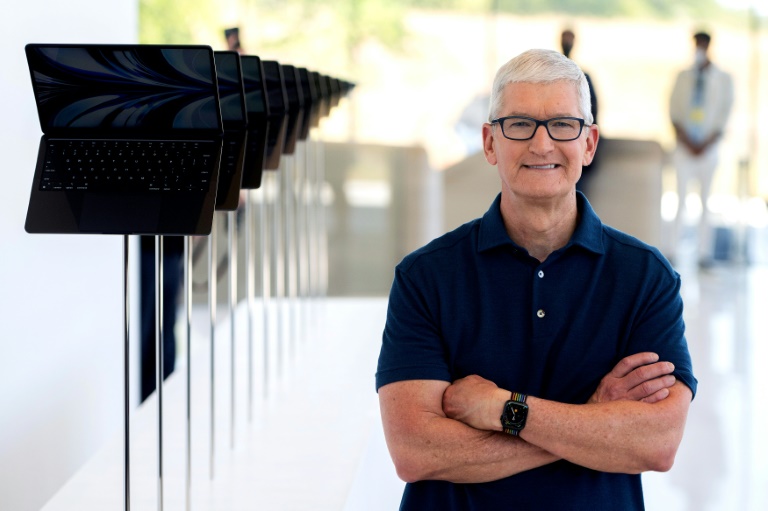
Apple chief Tim Cook and his team showed off coming innovations during a keynote presentation at its first developers conference to be held at its campus in the Silicon Valley city of Cupertino — and the first in-person version of the gathering since Covid-19 struck.

“It’s so good to see you all,” Cook said from a stage set up on a lawn next to Apple’s ring-shaped headquarters, as an audience of several thousand developers cheered in the morning sunshine.

No updates, however, were forthcoming on a rumored virtual reality operating system or hardware.

Still, developers will get to meet with Apple engineers during the weeklong conference, and even work in a new building with soundproof rooms to let them discuss ideas without being overheard.

Aside from new MacBook models, the event was a deep dive into coming new generations of operating systems for Apple’s line-up of offerings.

Apple will start letting people delete and edit messages after they have been sent as part of the latest update to its operating software, as well as customizable options for the iPhone main screen.

Users of its digital wallet should soon also be able to pay for purchases in installments.

Relying increasingly on custom made chips has enabled Apple to make its devices and software work more seamlessly together, and catch up a bit to features offered by rivals such as Google Maps and even Microsoft Xbox video game platform for Windows-powered computers.

Creative Strategies analyst Carolina Milanesi saw it as Apple filling “users’ wish-list,” adding capabilities to make its apps, services or hardware the natural option in an increasingly competitive market.

“They are listening to what the users are saying and they’re making changes,” Milanesi said.

As increased dependence on computers and the internet caused by the pandemic shows no sign of abating, and by better tuning hardware and software for convenience promises to keep people in Apple’s money-making ecosystem, the analyst added.

Afghan leader unlikely to have fled Kabul with millions in cash: US watchdog

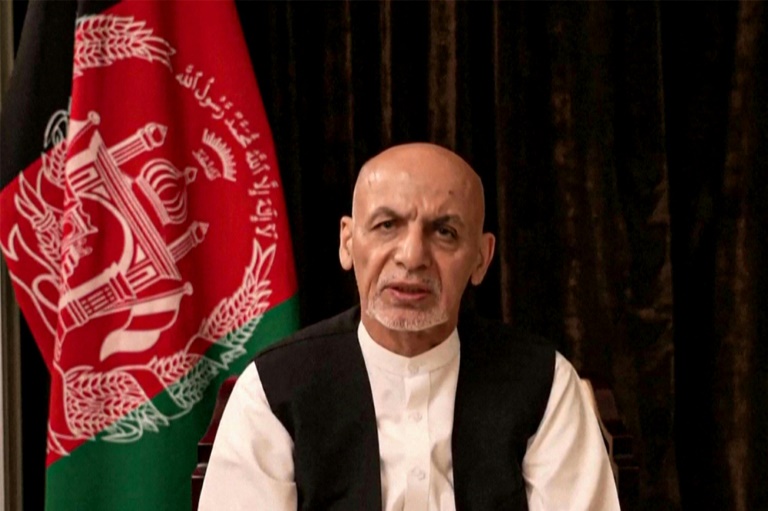
Former Afghan president Ashraf Ghani almost certainly did not flee Kabul as it fell to the Taliban with millions of dollars in stolen cash, a US government watchdog’s report said Monday.

The Special Inspector General for Afghanistan Reconstruction (SIGAR) report, which will be published on Tuesday, is an interim document, as the office is still awaiting answers to questions sent to Ghani.

First reported on by Politico, it interviews witnesses as well as officials who were in the helicopter convoy with Ghani as they hastily fled the Presidential Palace in Kabul while the Taliban marched into the capital on August 15, 2021.

In subsequent days, multiple reports suggested that Ghani and the other officials took up to $169 million in Afghan government money with them. Ghani has always fiercely denied these claims.

“Although SIGAR found that some cash was taken from the grounds of the palace and loaded onto these helicopters, evidence indicates that this number did not exceed $1 million and may have been closer in value to $500,000,” the report states.

It based that assessment heavily on interviews with the witnesses and officials involved, all of whom said they saw no signs of such large amounts of cash on the helicopters already overloaded with people fleeing for their lives.

“$169 million in hundred dollar bills, stacked end to end, would form a block 7.5 feet (2.3 meters) long, 3 feet wide, and 3 feet tall… This block would have weighed 3,722 pounds, or nearly two tons,” SIGAR noted, adding that witnesses reported “minimal luggage” on the helicopters, which had no cargo holds.

Instead one official carried around $200,000, another carried some $240,000 and others had “$5,000 to $10,000 in their pockets… No one had millions,” one former senior official told SIGAR.

“If true, this puts the total amount of cash on board the three helicopters at approximately $500,000, with $440,000 belonging to the Afghan government,” the report said.

“SIGAR also identified suspicious circumstances in which approximately $5 million in cash was allegedly left behind at the presidential palace,” the report added.

It was not clear where the money came from or what it was for, “but it was supposedly divided by members of the Presidential Protective Service after the helicopters departed but before the Taliban captured the palace,” it said.

The report said there appears to have been “ample opportunity and effort to plunder Afghan government coffers.”

But, the watchdog added, it “does not have sufficient evidence to determine with certainty whether hundreds of millions of dollars were removed from the country by Afghan officials as the government collapsed or whether any stolen money was provided by the United States.”

Washington accuses Moscow of trying to 'intimidate' US media in Russia

The United States on Monday accused Russia of trying to “intimidate” American correspondents in Moscow, who were summoned by the Russian foreign ministry and threatened with reprisals because of US sanctions.

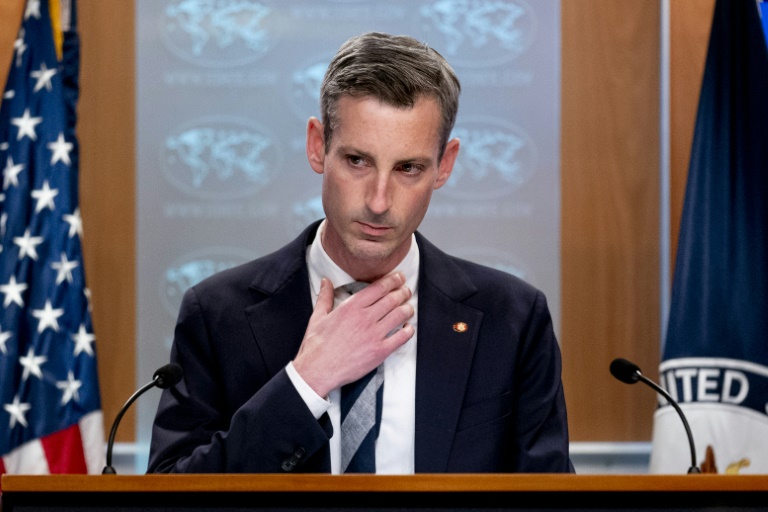
“The Russian Ministry of Foreign affairs summoned your colleagues to quote ‘explain to them the consequences of their government’s hostile line in the media sphere,'” State Department spokesman Ned Price told reporters in Washington. 

“Let’s be clear, the Kremlin is engaged in a full assault on media freedom, access to information and the truth,” he added, slamming what he called a “a clear and apparent effort to intimidate independent journalists.”

Russian foreign ministry spokeswoman Maria Zakharova threatened at the end of May to expel Western media if YouTube continued to block the department’s weekly briefings.

On Friday, she again accused Washington of “targeting for repression Russian media” inside the United States. 

“They are doing everything to make it impossible for Russia media to work,” she said, adding that “if they don’t normalize the work of Russian media on US territory, there will be forceful measures as a consequence.”

She said the US media representatives were “invited” to the Russian foreign ministry on Monday. 

Price said Moscow was reacting to the blacklisting a month ago of three Russian television channels — Pervy Kanal, Rossiia-1, and NTV — as part of international sanctions in response to Moscow’s invasion of Ukraine. 

He accused Moscow of “false equivalence” in comparing independent US journalists to the sanctioned Russian media, whom he described as “propaganda arms of the Russian government.”

“The United States continues to issue visas to qualified Russian journalists, and we have not revoked the foreign press center credentials of any Russian journalists working in the United States,” he said.

Stock prices rise on boost from China

Global stock markets advanced on Monday, driven by an easing of Covid lockdowns in China and as British stocks climbed ahead of a vote to maintain the government of British Prime Minister Boris Johnson. 

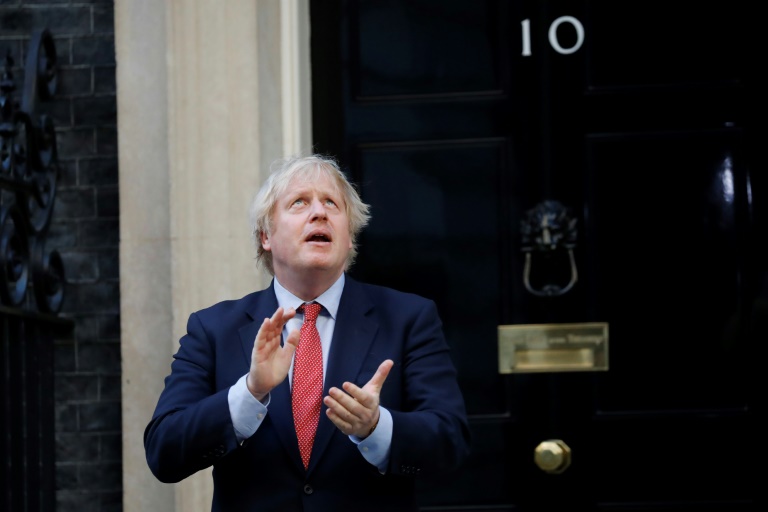
London’s stock market, reopening after a British public holiday to mark Queen Elizabeth II’s Platinum Jubilee, shrugged off uncertainty over Johnson, who late Monday survived a “no confidence” vote from his own Conservative members of parliament to hold onto power.

Eurozone stocks also closed higher ahead of a European Central Bank meeting Thursday when policymakers are set to draw a line under its massive bond-buying stimulus program.

On the other side of the Atlantic, Wall Street stocks finished a choppy session with modest gains.

US equities started the week strongly before giving up most gains as the yield on the 10-year US Treasury note, a proxy for inflation and interest rates, climbed above three percent.

Investors are especially focused on Friday’s consumer price index report, seen as an important input into the Federal Reserve’s next moves

“Friday’s inflation report will likely show that inflation is not easing just yet, but that the odds of a recession are still low,” said Oanda’s Edward Moya. 

“Wall Street will need to wait for a couple more inflation reports after this one before anyone can confidently make a call as to when the Fed may alter their tightening course.”

Traders took heart also from a wind-down of Covid containment measures in China that have crippled its economy for months.

With infections trending down in major cities, including Shanghai and Beijing, authorities have allowed some sense of normality to return, raising hopes for a pick-up in consumer activity.

“Positive news around Chinese economic activity and cheaper equity valuations could offer value from a long-term investment perspective, but volatility will remain high in the short-term,” said Diana Mousina, of AMP Capital.

In foreign exchange, the British pound was higher heading into the confidence vote on Johnson’s leadership, maintaining the gains after the outcome was announced.

Johnson needed the backing of at least 180 MPs to survive the challenge — a majority of the 359 sitting Conservatives in parliament. While 211 Tory MPs backed him, 148 did not.

Johnson’s public image has suffered in the past year, most notably over the “Partygate” controversy that saw him become the first serving UK prime minister found to have broken the law.

The Conservative government has come under pressure also from a cost-of-living crisis in Britain as UK inflation stands at the highest level in four decades, driven by surging oil and gas prices.

– Key figures at around 2045 GMT –

New York – Dow: UP 0.1 percent to 32,915.78 (close)

New York – S&P 500: UP 0.3 percent at 4,121.43 (close)

New York – Nasdaq: UP 0.4 percent at 12,061.37 (close)

London – FTSE 100: UP 1.0 percent at 7,608.22 (close)

Frankfurt – DAX: UP 1.3 percent at 14,653.81 (close)

Paris – CAC 40: UP 1.0 percent at 6,548.78 (close)

EURO STOXX 50: UP 1.1 percent at 3,838.42 (close)

Tokyo – Nikkei 225: UP 0.6 percent at 27,915.89 (close)

Hong Kong – Hang Seng Index: UP 2.7 percent at 21,653.90 (close)

Shanghai – Composite: UP 1.3 percent at 3,236.37 (close)

Brent North Sea crude: DOWN 0.2 percent at $119.51 per barrel

West Texas Intermediate: DOWN 0.3 percent at $118.50 per barrel

Euro/dollar: DOWN at $1.0699 from $1.0719 

Pound/dollar: UP at $1.2528 from $1.2488

Euro/pound: DOWN at 85.37 pence from 85.84 pence

Dollar/yen: UP at 131.88 yen from 130.88 yen

Proud Boys charged with sedition for US Capitol attack

A leader of the Proud Boys and four other members of the far-right group were indicted on sedition charges on Monday in connection with the January 6 assault on the US Capitol.

Henry “Enrique” Tarrio, 38, is already facing other charges related to the failed attempt by supporters of former president Donald Trump to block Democrat Joe Biden’s election victory.

A superseding indictment unveiled on Monday added the more serious charge of seditious conspiracy to the charges against Tarrio, the former “national chairman” of the Proud Boys, and the four other members.

Tarrio was arrested in Miami in March and is also charged with conspiracy to obstruct an official proceeding, obstruction of law enforcement, destruction of government property and other offenses.

More than 800 people have been arrested in connection with the storming of Congress by Trump supporters, according to the Justice Department, but only a handful face the charge of seditious conspiracy, which carries a sentence of up to 20 years in prison.

Stewart Rhodes, 56, founder of another far-right organization, the Oath Keepers, has been charged with seditious conspiracy along with 10 other members of the group.

Three members of the Oath Keepers have pleaded guilty.

According to the superseding indictment, Tarrio was not in Washington on January 6 but he met with Rhodes on January 5 in an underground parking garage in Washington and was in contact with members of the Proud Boys who breached the Capitol.  

Along with Tarrio, four other members of the Proud Boys — Dominic Pezzola, 44, Joseph Biggs, 38, Ethan Nordean, 31, and Zachary Rehl, 36 — were charged with seditious conspiracy in addition to their previous charges.

The indictment comes three days ahead of a public hearing by the House select committee investigating the storming of the US Capitol.

The committee is trying to see if Trump or members of his circle had a role in planning or encouraging the violent attack, and has subpoenaed advisors and aides to the former president.

The assault on the Capitol left at least five people dead and 140 police officers injured and followed a fiery speech by Trump to thousands of his supporters near the White House.

Trump was impeached for a historic second time by the House after the Capitol riot — he was charged with inciting an insurrection — but was acquitted by the Senate, where only seven members of his own Republican party voted against him.

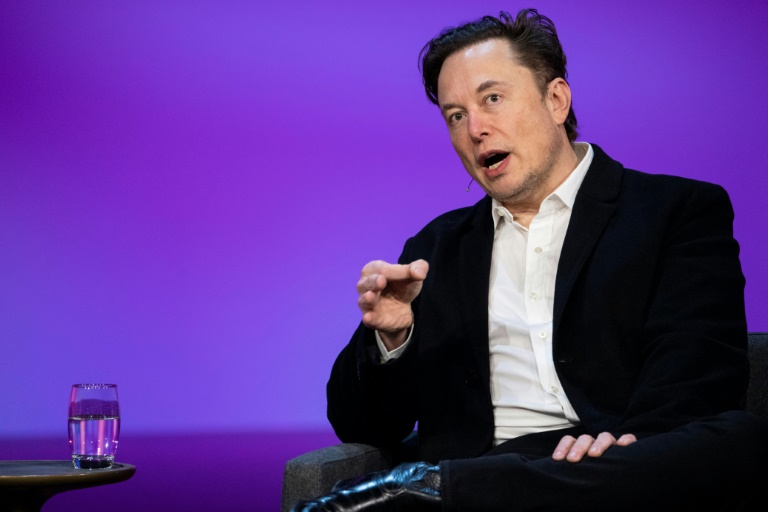
Musk accuses Twitter of withholding data, says may withdraw bid

Elon Musk threatened Monday to withdraw his bid to buy Twitter, accusing it of failing to provide data on fake accounts, in the latest twist in the Tesla billionaire’s push to acquire the social network.

Twitter has breached its “obligations under the merger agreement and Mr. Musk reserves … his right not to consummate the transaction,” according to a document filed with securities regulators.

The filing marks an escalation of Musk’s prior statements that have highlighted fake accounts as a threat to his proposed $44 billion deal to take over Twitter.

The mercurial Musk agreed a deal in late April to purchase Twitter.

But the proposed sale has stoked protest from critics who warn his stewardship will embolden hate groups and disinformation campaigns.

US securities regulators have also pressed Musk for an explanation of an apparent delay in reporting his Twitter stock buys.

Musk began making significant noise about fake accounts in mid-May, saying on Twitter he could walk away from the transaction if his concerns were not addressed.

Some observers have seen Musk’s questioning of Twitter bots as a means to end the takeover process, or to pressure Twitter into lowering the price.

Musk’s latest statement on bots signifies he is “looking to walk away from deal,” Wedbush analyst Dan Ives said Monday on Twitter, noting that there is a $1 billion breakup fee in the Twitter-Musk transaction. 

“We continue to believe that Elon is playing hard ball… to gain leverage/options to either reduce his offer price or indeed completely walk away if he gets cold feet,” said CFRA Research’s Angelo Zino.

Twitter on Monday defended its responsiveness, and vowed to complete the deal.

“Twitter has and will continue to cooperatively share information with Mr. Musk,” a spokesperson said. “We intend to close the transaction and enforce the merger agreement at the agreed price and terms.”

– Counting bots –

Musk has said that the real number of bots may be four times higher than Twitter estimates.

Bots can be used on social media to spread false news or create a distorted impression of how widely information is being consumed and shared.

Twitter chief executive Parag Agrawal has said that fewer than five percent of accounts active on any given day at Twitter are bots, but that analysis cannot be replicated externally due to the need to keep user data private.

But Musk has been dismissive of Twitter’s responses and reiterated that stance in Monday’s filing.

Musk’s attorney, Mike Ringler, said Twitter had failed to respond to Musk’s valid inquiry about fake accounts, according to the filing.

“Mr. Musk has made it clear that he does not believe the company’s lax testing methodologies are adequate so he must conduct his own analysis,” Ringler said. “The data he has requested is necessary to do so.”

To execute the deal, Musk “must have a complete and accurate understanding of the very core of Twitter’s business model — its active user base,” said the filing.

“Mr. Musk believes Twitter is transparently refusing to comply with its obligations under the merger agreement.”

Later Monday, Texas Attorney General Ken Paxton announced a civil probe of Twitter “for potentially false reporting over its fake bot accounts in violation of the Texas Deceptive Trade Practices Act.”

Shares of Twitter fell 1.5 percent to $39.56.

Close Bitnami banner
Bitnami