US Business

Russia seeking to wrest seized nuclear plant from Ukraine

Russia has hinted it is seeking to cut off Ukraine from Europe’s largest nuclear plant unless Kyiv pays Moscow for electricity.

The Zaporizhzhia plant was captured by Russian troops following President Vladimir Putin’s special military operation in Ukraine launched on February 24.

“If the energy system of Ukraine is ready to receive and pay, then (the plant) will work for Ukraine. If not, then ( the plant) will work for Russia,” Russian Deputy Prime Minister Marat Khusnullin said during a trip to the region on Wednesday, Russian news agencies reported. 

His remarks came after Russian officials indicated that Moscow intends to remain in territories it controls in southern Ukraine, such as the Kherson region and large parts of Zaporizhzhia. 

“We have a lot of experience of working with nuclear power plants, we have companies in Russia that have this experience,” Khusnullin said.

He said there was “no doubt” the Zaporizhzhia plant will remain operational.

Ukraine’s nuclear agency Energoatom said Thursday that the plant continued to feed the national power grid. 

Russians “do not have the technical capacity to supply energy from the Zaporizhzhia nuclear power plant to Russia or Crimea,” Energoatom spokesman Leonid Oliynyk told AFP. 

“This requires cost and time…. And in a month or two we will have everything under Ukrainian control again,” he added. 

– ‘Future lies with Russia’ –

Oliynyk said Russia did not have the ability to cut off electricity supplies to Ukraine, as “Ukraine controls all the relevant equipment”.

In 2021, before the outbreak of conflict, the plant accounted for one fifth of Ukraine’s annual electricity production and almost half the electricity generated in the country’s nuclear power plants.

Russian soldiers in early March took control of the plant in the city of Enerhodar, separated by the Dnipro river from the regional capital Zaporizhzhia which is still under Kyiv’s control. 

Clashes erupted in the plant in the first days of the conflict, raising fears of a possible nuclear disaster in a country where a nuclear reactor exploded at the Chernobyl plant in 1986. 

Khusnullin further hinted that Russia was there to stay.

“I consider that the future of this region is to work within the friendly Russian family. That’s why I came here, to help with integration as much as possible,” he said.

Russian officials and Moscow-appointed authorities said last week that the Ukrainian region of Kherson — which provides a land bride to the annexed Crimean peninsula — will likely become part of Russia. 

While launching the Ukraine campaign, Putin had assured that Russia does not seek to occupy Ukrainian territories. 

North Korea 'ready for nuclear test' with Biden due in Seoul

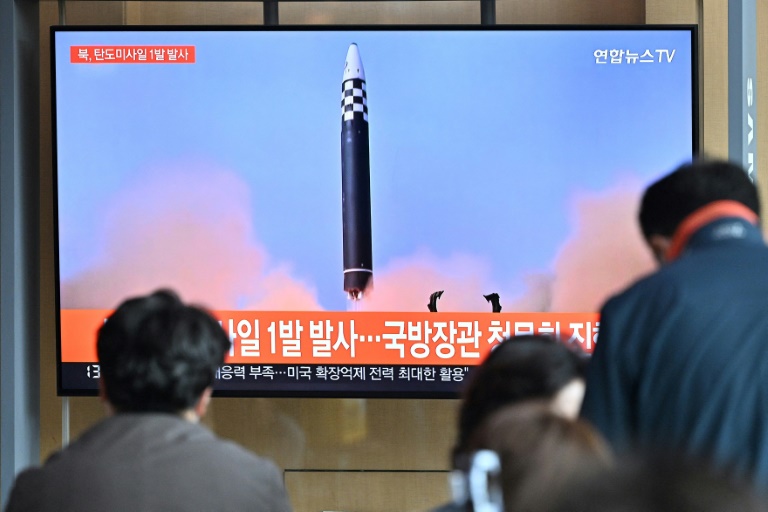
North Korea is poised to conduct a nuclear test, Seoul said Thursday, as the United States warned it could come as President Joe Biden visits South Korea this week.

The visits to Seoul, followed by Tokyo, are being touted as proof that Washington is seeking to cement its years-long pivot to Asia, where rising Chinese commercial and military power is undercutting decades of US dominance.

However, Biden’s first trip as president to the region looks set to be overshadowed by an increasingly belligerent North Korea.

Despite a spiralling Covid outbreak, Pyongyang’s “preparations for a nuclear test have been completed and they are only looking for the right time”, South Korean lawmaker Ha Tae-keung said after being briefed by Seoul’s spy agency.

US intelligence says there is a “genuine possibility” that North Korea’s Kim Jong Un could stage this “provocation” after Biden arrives in Seoul late Friday, his administration said.

This could mean “further missile tests, long-range missile tests or a nuclear test, or frankly both” around the time of Biden’s trip, National Security Advisor Jake Sullivan said.

Satellite imagery indicates North Korea is preparing to conduct what would be its seventh nuclear test — which would cap a record-breaking blitz of launches this year, including intercontinental ballistic missiles.

“North Korea will want to attract global attention by conducting a nuclear test during President Biden’s visit,” Cheong Seong-chang of the Center for North Korea Studies at the Sejong Institute told AFP.

– Military adjustments –

Biden, who will visit some of the nearly 30,000 US troops stationed in South Korea, is ready to make “adjustments” to the US military posture in the region, and Seoul’s hawkish new President Yoon Suk-yeol is eager for stronger ties.

Both Biden and Yoon have said they’re open for talks with Pyongyang but they expect to see real progress on denuclearisation — which analysts say is anathema to Kim and will stall talks.

“Biden judges that the North Korean issue can’t be resolved through impromptu meetings between the leaders as Trump did,” said Woo Jung-yeop, a researcher at the Sejong Institute.

North Korea will be watching the outcome of the Yoon-Biden meeting Saturday very closely, said Yang Moo-jin, a professor at the University of North Korean Studies.

“Depending on the result, North Korea will decide on whether it will speed up or slow down its ICBM and nuclear tests,” Yang said.

Sullivan said the security situation regarding North Korea was being “closely” coordinated with South Korea and Japan and that he had also spoken about the issue with his Chinese counterpart on Wednesday.

It is likely that Kim is still debating what to do, in particular due to this US pressure on Beijing — Kim’s sole major ally — to help rein in Pyongyang’s nuclear and ICBM tests, the Sejong Institute’s Cheong said.

Kim is also well aware of the gridlock at the UN Security Council after Russia’s invasion of Ukraine — so it is “highly likely” a nuke or ICBM test will come during Biden’s Asia tour, Cheong added.

Moscow would likely block any attempt at the UN to impose further sanctions on Pyongyang over a weapons test.

– Strategic neglect? –

After Seoul, Biden heads to Japan on Sunday for talks with Tokyo’s top leaders, before joining a Quad summit — a grouping of Australia, India, Japan, and the United States.

Sullivan said Biden is bound for Asia with “the wind at our back” after successful US leadership in the Western response to President Vladimir Putin’s now almost three-month-long invasion of Ukraine.

The high military, diplomatic and economic cost imposed on Russia is seen in Washington as a cautionary tale for China, given its stated ambitions to gain control over democratic-ruled Taiwan, even if that means going to war.

But the fact he arrives in Asia under the shadow of a possible North Korean nuclear test is partly due to his “strategic neglect” of the region since he took office, said Park Won-gon, a professor at Ewha University.

Talks between Washington and Pyongyang have been stalled for years, after an extraordinary show of diplomacy between then US president Donald Trump and Kim — brokered by Yoon’s predecessor Moon Jae-in — ultimately ended in failure.

Trump held three headline-grabbing meetings with Kim and claimed that the two were “in love”, but analysts say little to no progress was made in dismantling the North’s nuclear programmes.

At a vast military parade in Pyongyang recently, Kim said he was strengthening his nuclear arsenal “at the fastest possible speed”.

“In terms of denuclearisation and US-North Korea ties, we have returned to a situation where it’s difficult to find any progress,” Park said.

“There is no way to really stop North Korea now.”

Google's Russian subsidiary to file for bankruptcy

The Russian subsidiary of US tech giant Google said Thursday it will file for bankruptcy after authorities seized its bank account following a series of spats with Moscow.

Google has been under increasing pressure in Russia for several months and even more so after the start of President Vladimir Putin’s military campaign in Ukraine at the end of February. 

“Google Russia has published a notice of its intention to file for bankruptcy,” a spokesperson for the company told AFP.

“The Russian authorities’ seizure of Google Russia’s bank account has made it untenable for our Russia office to function, including employing and paying Russia-based employees, paying suppliers and vendors, and meeting other financial obligations,” the company said.  

It however said it will continue to provide free services “such as Search, YouTube, Gmail, Maps, Android and Play” to customers in Russia.

In late April, a Russian court fined Google 11 million rubles ($135,000 at the time) for ignoring the state regulator’s orders to remove contentious YouTube videos about the Kremlin’s military operation in Ukraine.

The tech giant also infuriated Russian officials by blocking the lower house of parliament’s official media channel and deleting the YouTube channels of many pro-Kremlin media. 

As part of efforts to control the information available to a domestic audience, Russian courts have already banned Facebook and Instagram, calling them “extremist” organisations, as well as Twitter.

Google's Russian subsidiary to file for bankruptcy

The Russian subsidiary of US tech giant Google said Thursday it will file for bankruptcy after authorities seized its bank account following a series of spats with Moscow.

Google has been under increasing pressure in Russia for several months and even more so after the start of President Vladimir Putin’s military campaign in Ukraine at the end of February. 

“Google Russia has published a notice of its intention to file for bankruptcy,” a spokesperson for the company told AFP.

“The Russian authorities’ seizure of Google Russia’s bank account has made it untenable for our Russia office to function, including employing and paying Russia-based employees, paying suppliers and vendors, and meeting other financial obligations,” the company said.  

It however said it will continue to provide free services “such as Search, YouTube, Gmail, Maps, Android and Play” to customers in Russia.

In late April, a Russian court fined Google 11 million rubles ($135,000 at the time) for ignoring the state regulator’s orders to remove contentious YouTube videos about the Kremlin’s military operation in Ukraine.

The tech giant also infuriated Russian officials by blocking the lower house of parliament’s official media channel and deleting the YouTube channels of many pro-Kremlin media. 

As part of efforts to control the information available to a domestic audience, Russian courts have already banned Facebook and Instagram, calling them “extremist” organisations, as well as Twitter.

Ukraine steelworks defenders surrender but Kyiv vows 'unbreakable' spirit

Russia said Thursday that 1,730 Ukrainian soldiers had surrendered this week at the Azovstal steel plant in Mariupol, showing some emerging on crutches after an all-out battle that has become emblematic of the nearly three-month-old war.

The number included 80 who were wounded and taken to a hospital in Russia-controlled territory in eastern Ukraine, the defence ministry in Moscow said.

The ministry released a video appearing to show the surrendered soldiers hobbling out of the sprawling plant after it was besieged for weeks. Russian troops patted them down and inspected their bags as they exited.

The International Committee of the Red Cross said it had registered “hundreds of Ukrainian prisoners of war” from the plant in Mariupol, a port city levelled by Russian shelling.

But while Mariupol has fallen, Ukraine’s President Volodymyr Zelensky said the wider invasion was an “absolute failure” as he marked “Vyshyvanka Day”, an annual celebration of Ukrainian folk traditions.

Wearing an embroidered shirt instead of his usual military khaki top, Zelensky said on the Telegram social media platform that his people remained “strong, unbreakable, brave and free”.

Zelensky’s defiance, and his army’s dogged resistance, have earned the West’s admiration and a steady flow of military support. G7 finance ministers were meeting in Germany to thrash out more cash support.

G7 partners have to “assure Ukraine’s solvency within the next days, few weeks”, German Finance Minister Christian Lindner told the newspaper Die Welt.

But German Chancellor Olaf Scholz said there could be “no shortcuts” to membership of the European Union for Ukraine. Ukraine’s Foreign Minister Dmytro Kuleba condemned the “second-class treatment” of his country.

– Famine warning –

Russia’s actions are already redrawing the security map of Europe. 

US President Joe Biden was to host the leaders of Finland and Sweden later Thursday to discuss their bids to join NATO, after the Nordic neighbours decided to abandon decades of military non-alignment.

“I warmly welcome and strongly support the historic applications from Finland and Sweden for membership in NATO,” Biden said, offering US support against any “aggression” while their bids are considered.

Beyond Europe, the invasion also threatens to bring famine, UN Secretary-General Antonio Guterres said.

“Malnutrition, mass hunger and famine” could follow “in a crisis that could last for years,” Guterres warned, urging Russia to release grain exports from occupied Ukraine.

Russia and Ukraine produce 30 percent of the global wheat supply, and the war has also sent food prices surging around the world.

– ‘Time to run’ –

Despite their last-ditch resistance in places such as Mariupol, and the successful defence of Kyiv, Ukrainian forces are retreating in the east.

The losses often come after weeks of battles over towns and small cities that are pulverised by the time the Russians surround them in a slow-moving wave.

“I tell everyone that there is no reason to worry when the banging is from outgoing fire,” Volodymyr Netymenko said as he packed up his sister’s belongings before evacuating her from the burning village of Sydorove in eastern Ukraine.

“But when it is incoming, it is time to run. And things have been flying at us pretty hard for the past two or three days.”

In the Russian region of Kursk, one person died and others were injured in an attack on a village on the border with Ukraine, the local governor said.

– War crimes trials –

Ukraine’s first trial for war crimes began in a cramped Kyiv courtroom on Wednesday.

Vadim Shishimarin, a shaven-headed Russian sergeant from Irkutsk in Siberia, pleaded guilty to a war crime and faces a life sentence.

He admitted to shooting dead an unarmed 62-year-old man in Ukraine’s Sumy region four days into the invasion.

Russia’s government has no information on Shishimarin, Kremlin spokesman Peskov said, adding that many such cases reported by Ukraine are “simply fake or staged”.

A second war crimes trial was due to open in Ukraine Thursday.

The International Criminal Court is deploying its largest-ever field team to Ukraine, with 42 investigators, forensic experts and support staff to gather evidence of alleged war crimes.

Ukrainian civilians are bearing the brunt of incessant Russia mortar fire raining down on the eastern city of Severodonetsk.

Nella Kashkina sat in the basement next to an oil lamp and prayed.

“I do not know how long we can last,” the 65-year-old former city worker said.

“We have no medicine left and a lot of sick people — sick women — need medicine. There is simply no medicine left at all.”

burs-jit/spm

Asian, European markets drop after Wall St battering

Markets in Europe and Asia posted losses Thursday, after Wall Street suffered one of its worst batterings in two years.

Downcast earnings reports from retailers had exacerbated worries about consumer resilience and corporate profitability Wednesday, sparking a rough day’s trade.

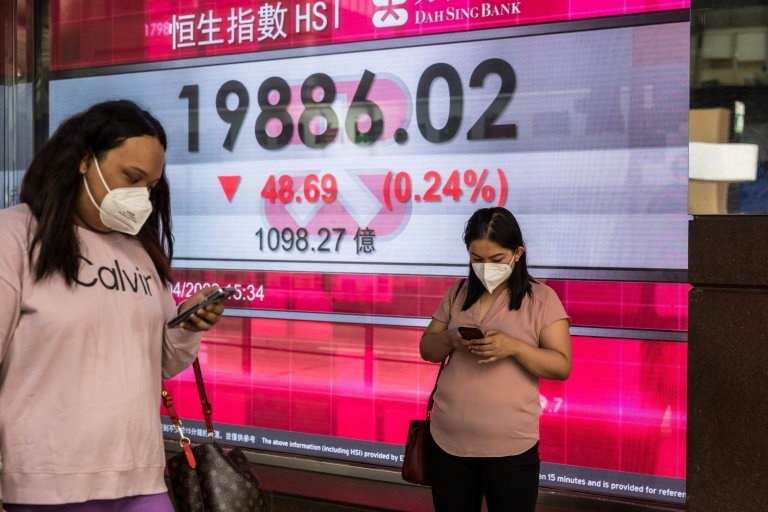
Hong Kong slumped 2.5 percent, while Tokyo closed down by 1.89 percent.

Among the biggest losers in Hong Kong were Chinese tech giants after Tencent reported lacklustre profits, fuelling wider concerns for a grim earnings season as China’s economic outlook worsens.

Tencent plunged more than eight percent in early trading before paring losses slightly, a day after it posted its slowest revenue gain since going public in 2004.

Alibaba dropped more than six percent, while Baidu and Xiaomi were also down.

Elsewhere in the region, Australia posted its lowest jobless rate in 48 years, in a potential boost to Prime Minister Scott Morrison two days ahead of a tightly contested federal election.

The unemployment rate dipped to 3.9 percent, the official statistics body said, the lowest rate since 1974.

But stocks in Sydney were still down, as were those in Singapore, Seoul and Taipei.

Jakarta and Shanghai eked out small gains.

Europe’s main stock markets opened lower too. London’s benchmark FTSE 100 index fell 0.8 percent, while Frankfurt lost 1.5 percent and Paris shed 1.4 percent.

– Retailer woes –

“Sentiment… is highly negative as traders and investors are largely concerned about an economic downturn and soaring inflation,” said AvaTrade analyst Naeem Aslam.

Stephen Innes at SPI Asset Management called Wednesday’s losses “the most significant daily decline since June 2020”.

“The weakness came as Target’s quarterly earnings added fuel to the recession risk narrative,” he added.

Target, the North American-focused big-box retailer, plunged around 25 percent after earnings missed expectations despite higher sales.

The company pointed to the hit from higher operating costs in results that echoed those of bigger rival Walmart.

The retailers said profits were under pressure and some consumers were avoiding discretionary purchases as prices for food, gasoline and other household staples rise.

All three major US indices dove Wednesday, with the Dow sinking 3.6 percent and the Nasdaq plunging 4.7 percent.

“The big falls in shares of these retails… highlights the damage inflation is inflicting on the sector’s profit margins,” said Fawad Razaqzada at City Index.

“What’s more, consumers are getting squeezed as well and if they now start to cut back on spending then retailers could suffer even further.”

In some of his most hawkish remarks to date, Federal Reserve Chair Jerome Powell said Tuesday that the US central bank would raise interest rates until there is “clear and convincing” evidence that inflation is in retreat. 

“We’ve had investors for the most part who’ve lived through three or four decades of declining interest rates, rising multiples for equities and strong earnings for the most part,” Christopher Smart, chief global strategist at Barings LLC, told Bloomberg Television.

“Now you’re entering a very new phase where we’re not really quite sure where inflation is going to level off.”

— Bloomberg News contributed to this report —

– Key figures at around 0820 GMT –

Hong Kong – Hang Seng Index: DOWN 2.54 percent at 20,120.60 (close)

Shanghai – Composite: UP 0.36 percent at 3,096.96 (close)

Tokyo – Nikkei 225: DOWN 1.89 percent at 26,402.84 (close)

London – FTSE 100: DOWN 0.8 percent at 7,376.16

Brent North Sea crude: UP 0.58 percent at $109.74 per barrel

West Texas Intermediate: UP 0.05 percent at $109.65 per barrel

Euro/dollar: UP at $1.0485 from $1.0479

Pound/dollar: UP at $1.2382 from $1.2346

Euro/pound: DOWN at 84.68 pence from 84.88 pence

Dollar/yen: DOWN at 128.00 yen from 128.58

New York – Dow: DOWN 3.6 percent at 31,490.07 (close)

Brothers keep Swiss mountains in high spirits

Depopulation threatens the future of Switzerland’s picturesque mountain villages, but three brothers are trying to keep theirs alive by capturing its essence in a bottle.

In the one-road hamlet of Souboz, nearly 900 metres (2,950 feet) up in the Jura mountains, the nature-loving Gyger brothers distill whatever they forage, such as gentian roots and juniper, in a bid to sustain the local economy.

Switzerland is trying to stave off the slow-motion extinction of its remote communities as young people move to the cities for jobs and opportunities.

Thanks to a grant from the Swiss Mountain Aid foundation, the Gygers were able transform their grandfather’s old home into the Gagygnole distillery, turning professional a couple of years ago.

The name comes from eldest brother Gaetan’s nickname Gagy, and gnole — French slang for a drop of the hard stuff.

On the ground floor of an old farmhouse, the scent of coriander and juniper berries hangs in the air, while warmth emanates from the 2.5-metre-high copper still in which Gaetan distills gin over a wood fire.

“This production site has been in our lives since we were very young. We really have roots anchored in our village,” he told AFP.

An agronomist by training, Gaetan, now 30, had studied in Geneva.

“We didn’t want to set up in the city,” he said, despite the bigger potential client base.

– Mountains in Swiss DNA –

The brothers’ choice is a rare one in Switzerland.

The mountains cover 70 percent of the country, but three-quarters of the population lives on the plain between the Juras in the north and the Alps in the south and east.

Geneva, Lausanne, Bern and Zurich all lie in the area of relatively flat terrain between the two mountain ranges.

The mountain villages are emptying, their grocery stores are closing and, as in Souboz, the schools are shutting, too, as the population gradually shifts ever more towards the lower-lying towns and cities.

The population of Souboz has dropped from 135 in 2012 to 85 last year.

Faced with the slow-motion exodus, some villages are trying everything they can to reverse the tide, including financial incentives to attract newcomers, such as offering empty houses for a symbolic sum of one Swiss franc.

And Swiss Mountain Aid provides funding to hundreds of entrepreneurs, such as the Gyger brothers, to bring jobs and business to the hills.

The mountains are “part of our genes, our DNA”, but “if we want to keep the mountains alive, there must be people”, said the foundation’s chairman Willy Gehriger.

“We act like the spark,” he explained.

Established in 1943 to help lift mountain dwellers out of poverty, the privately-funded foundation mainly supported farmers initially — but broadened its scope around a dozen years ago.

Now it helps small businesses, installs Wi-Fi, pays for computer courses and funds the transformation of dilapidated listed buildings into tourist accommodation.

Gehriger said the agricultural sector alone was no longer enough to keep the mountains thriving.

– Message in a bottle –

Dressed in baseball caps and t-shirts and armed with an iPad, the Gygers are far from the stocky, rustic, grumpy stereotype of mountain men.

They are on a mission to repopulate Souboz and revive the economy in the local Juras.

“We’re aware of doing something good for Souboz. Our mountain regions have enormous potential. They’re really something that we Swiss should be proud of,” said middle brother Luca, 27.

Their gamble has paid off as the family business has a handful of employees and occasionally takes on local artisans and farmers to help bottle up the brothers’ original gin, whisky and vodka recipes.

Last year, they produced 18,000 bottles of spirits.

Gagygnole’s eaux de vie are sold in 200 shops around Switzerland and one of their concoctions was voted the best gin in the country last year — while the brothers’ gin fondue is also a hit.

The Gygers think it is still too early to consider exporting.

“We always refused because it was difficult in terms of logistics, but why not… as long as it goes with our philosophy,” said 26-year-old Tim.

Asian markets drop after Wall St battering

Asian markets posted losses Thursday, after Wall Street suffered one of its worst batterings in two years in the previous session.

Downcast earnings reports from retailers had exacerbated worries about consumer resilience and corporate profitability Wednesday, sparking a rough day’s trade.

By Thursday afternoon, Hong Kong was down by more than two percent, while Tokyo closed down by 1.89 percent.

Among the biggest losers in Hong Kong were Chinese tech giants, after Tencent reported lacklustre profits, fuelling wider concerns for a grim earnings season as China’s economic outlook worsens.

Tencent shares plunged more than eight percent in early trading before paring losses slightly, a day after it posted its slowest revenue gain since going public in 2004.

Alibaba dropped more than six percent, while Baidu and Xiaomi were both down.

Elsewhere in the region, Australia posted its lowest jobless rate in 48 years, in a potential boost to Prime Minister Scott Morrison two days ahead of tightly contested federal elections.

The unemployment rate dipped to 3.9 percent, the official statistics body said, the lowest rate since 1974.

But stocks in Sydney were still down, as were those in Singapore, Seoul and Taipei.

Jakarta and Shanghai eked out small gains.

Stephen Innes at SPI Asset Management called Wednesday’s losses “the most significant daily decline since June 2020”.

“The weakness came as Target’s quarterly earnings added fuel to the recession risk narrative,” he added.

Target, the North American-focused big-box retailer, plunged around 25 percent after earnings missed expectations despite higher sales.

The company pointed to the hit from higher operating costs in results that echoed those of bigger rival Walmart.

The retailers said profits were under pressure and some consumers were avoiding discretionary purchases as prices for food, gasoline and other household staples rise.

All three major US indices dove, with the Dow sinking more than 1,150 points or 3.6 percent, and the Nasdaq plunging 4.7 percent.

European bourses were also down.

“The big falls in shares of these retails… highlights the damage inflation is inflicting on the sector’s profit margins,” said Fawad Razaqzada at City Index.

“What’s more, consumers are getting squeezed as well and if they now start to cut back on spending then retailers could suffer even further,” he added.

In some of his most hawkish remarks to date, Federal Reserve Chair Jerome Powell said Tuesday that the US central bank would raise interest rates until there is “clear and convincing” evidence that inflation is in retreat. 

“We’ve had investors for the most part who’ve lived through three or four decades of declining interest rates, rising multiples for equities and strong earnings for the most part,” Christopher Smart, chief global strategist at Barings LLC, told Bloomberg Television.

“Now you’re entering a very new phase where we’re not really quite sure where inflation is going to level off.”

— Bloomberg News contributed to this report —

– Key figures at around 0700 GMT –

Hong Kong – Hang Seng Index: DOWN 2.39 percent at 20,150.33 

Shanghai – Composite: UP 0.33 percent at 3,096.04 (close)

Tokyo – Nikkei 225: DOWN 1.89 percent at 26,402.84 (close)

Brent North Sea crude: UP 1.33 percent at $110.56 per barrel

West Texas Intermediate: UP 0.62 percent at $110.27 per barrel

Euro/dollar: DOWN at $1.0479 from $1.0487

Pound/dollar: DOWN at $1.2346 from $1.2349

Euro/pound: DOWN at 84.88 pence from 84.93 pence

Dollar/yen: UP at 128.58 from 128.54 yen

New York – Dow: DOWN 3.6 percent at 31,490.07 (close)

London – FTSE 100: DOWN 1.1 percent at 7,438.09 (close)

Biden set for first Asia trip with N. Korea nuclear fears looming

President Joe Biden leaves Thursday for South Korea and Japan to cement US leadership in Asia at a time when the White House’s attention has been pulled back to Russia and Europe — and amid fears of North Korean nuclear tests overshadowing the trip.

The visits are being touted as proof that the United States is building on recent moves to cement its years-long pivot to Asia, where rising Chinese commercial and military power is undercutting decades of US dominance.

But highlighting competing demands from two sides of the world, Biden will meet at the White House with the leaders of Finland and Sweden to celebrate their applications for joining NATO before he boards Air Force One for Seoul.

The Democrat is headed to South Korea, then Japan on Sunday to hold summits with the leaders of both countries, as well as joining a regional summit of the Quad — a grouping of Australia, India, Japan, and the United States — while in Tokyo.

During the first leg, he will visit US and South Korean troops, but will not make the traditional presidential trek to the fortified frontier known as the DMZ between South and North Korea, the White House said.

National Security Advisor Jake Sullivan insisted there was no “tension” between the European and Asian issues, calling them “mutually reinforcing.”

“There’s something quite evocative about going from meeting with the president of Finland and the prime minister of Sweden to reinforce the momentum behind the NATO alliance and the free world’s response to Ukraine, then getting on a plane and flying out to the Indo-Pacific,” Sullivan said.

– Taiwan lessons? –

Briefing reporters on Wednesday, Sullivan said Biden is bound for Asia with “the wind at our back” after successful US leadership in the Western response to President Vladimir Putin’s now almost three-month-long invasion of neighboring Ukraine.

The high military, diplomatic and economic cost imposed on Russia is seen in Washington as a cautionary tale for China to absorb, given its stated ambitions to gain control over democratic-ruled Taiwan, even if that means going to war.

Earlier this month, CIA Director William Burns said Beijing is watching “carefully.”

“I think they’ve been struck by the way in which particularly the transatlantic alliance has come together to impose economic costs on Russia as a result of that aggression,” he said.

Sullivan said the administration wants not so much to confront China on the trip as to use Biden’s diplomacy to show that the West and its Asian partners will not be divided and weakened.

He pointed to cooperation from South Korea and Japan, among others, in the sanctions regime against Russia led by European powers and the United States. He also referred to Britain’s role in the recently created security partnership AUKUS.

This “powerful message” will be “heard in Beijing,” Sullivan said, “but it’s not a negative message and it’s not targeted at any one country.”

– North Korean ‘provocations?’ –

Officials say North Korea’s nuclear weapons program is a wild card on the trip.

Sullivan said it was possible that North Korea, which has defied UN sanctions in conducting an array of nuclear-capable missile tests this year, could use Biden’s visit to stage “provocations.”

This could mean “further missile tests, long-range missile tests or a nuclear test, or frankly both, in the days leading into, on or after the president’s trip to the region,” he said.

The Biden administration is prepared to “make both short and longer-term adjustments to our military posture” in response.

Sullivan said the situation was being “closely” coordinated with South Korea and Japan and that he had also spoken about the issue with his Chinese counterpart on Wednesday.

US backs Nordic NATO bids, Ukraine tries Russian for war crime

US President Joe Biden will host the leaders of Finland and Sweden on Thursday to discuss their NATO membership bids, while Ukraine said no military option was left to rescue the soldiers still inside a steel plant besieged by Russian forces.

Moscow’s troops have been accused of widespread atrocities against civilians during their devastating campaign, and Ukraine began its first war crimes trial of the conflict on Wednesday with a Russian soldier pleading guilty.

The brutality of the invasion that began on February 24 shook Sweden and Finland, and the neighbours — after decades of military non-alignment — decided to seek NATO membership despite warnings from the Kremlin.

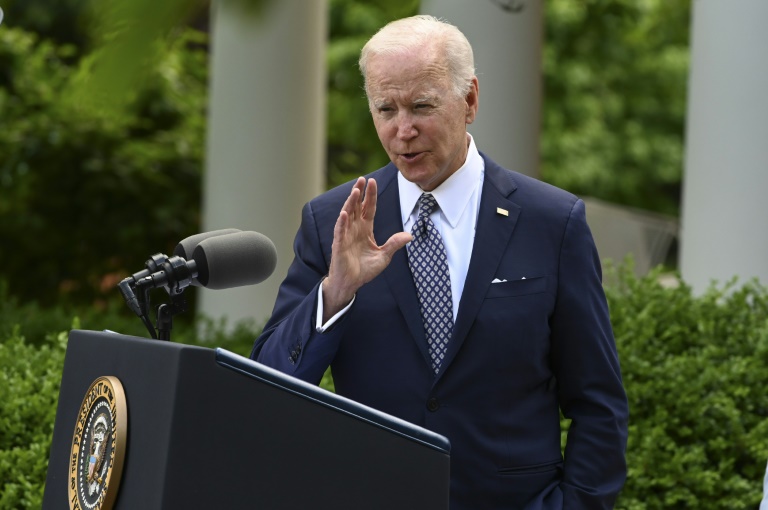
“I warmly welcome and strongly support the historic applications from Finland and Sweden for membership in NATO,” Biden said in a statement Wednesday, offering US support against any “aggression” while their bids are considered.

Biden will meet President Sauli Niinisto of Finland and Sweden’s Prime Minister Magdalena Andersson in Washington on Thursday for consultations.

Their bids face stiff resistance from NATO member Turkey, which accuses the two nations of harbouring anti-Turkish extremists.

But Western allies remain optimistic they can overcome Ankara’s objections.

In an effort to lower the diplomatic heat, US Secretary of State Antony Blinken met with Turkey’s Foreign Minister Mevlut Cavusoglu at the United Nations, who called the face-to-face discussion “extremely positive”.

Applications for entry into the alliance require the approval of all members.

For now, several including Britain have offered security guarantees to Finland and Sweden to guard against any Russian aggression.

British Prime Minister Boris Johnson said these applications would not have been expected recently “but Putin’s appalling ambitions have transformed the geopolitical contours of our continent”.

– ‘Catastrophic mistakes’ –

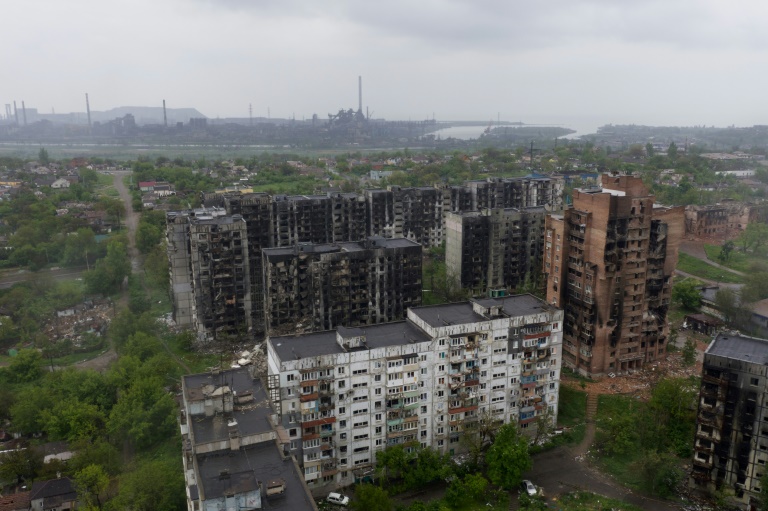
On the ground, in the ruined port city of Mariupol, more than 1,000 Ukrainian soldiers including senior commanders remained inside the besieged Azovstal steel plant, a pro-Russian separatist leader said.

Moscow said 959 of the troops had surrendered this week.

Ukraine’s defence ministry pledged to do “everything necessary” to rescue those still in the sprawling plant’s tunnels but admitted there was no military option available.

Those who have left the heavily shelled plant were taken into Russian captivity, including 80 who were seriously wounded, Russia’s defence ministry said.

The defence ministry in Kyiv said it was hoping for an “exchange procedure… to repatriate these Ukrainian heroes as quickly as possible”.

But their fate was unclear, with Kremlin spokesman Dmitry Peskov refusing to say whether they would be treated as criminals or prisoners of war.

Mariupol has been devastated by Russian attacks, and a US official alleged Moscow’s forces of committing atrocities in the city.

“Some Russian officials recognise that despite claiming to be ‘liberators’ of… Mariupol, Russian forces are carrying out grievous abuses… including beating and electrocuting city officials,” the official said.

Ukraine’s President Volodymyr Zelensky hit out at Moscow in his nightly address to the nation, calling the invasion an “absolute failure”.

“They are afraid to acknowledge that catastrophic mistakes were made at the highest military and state level,” Zelensky said.

Despite their last-ditch resistance in places such as Mariupol and the successful defence of Kyiv, Ukrainian forces are retreating across swathes of the eastern front.

The losses often come after weeks of battles over towns and small cities that get pulverised by the time the Russians surround them in a slow-moving wave.

“I tell everyone that there is no reason to worry when the banging is from outgoing fire,” Volodymyr Netymenko said as he packed up his sister’s belongings before evacuating her from the burning village of Sydorove in eastern Ukraine.

“But when it is incoming, it is time to run. And things have been flying at us pretty hard for the past two or three days.”

In the Russian region of Kursk, one person died and others were injured in an attack on a village on the border with Ukraine, the local governor said Thursday.

“Another enemy attack on Tyotkino, which took place at dawn unfortunately ended in tragedy,” Roman Starovoyt said on Telegram.

Authorities in Russian border regions have repeatedly accused Ukrainian forces of launching attacks.

– ‘Clear signal’ on war crimes –

The conflict has sparked a massive exodus of more than six million Ukrainians, many bearing accounts of torture, sexual violence and indiscriminate destruction.

Ukraine’s first trial for war crimes — expected to be the first of many linked to the Russian invasion — began in a cramped Kyiv courtroom on Wednesday.

Vadim Shishimarin, a shaven-headed Russian sergeant from Irkutsk in Siberia, pleaded guilty to a war crime and faces a life sentence.

Shishimarin admitted to shooting dead an unarmed 62-year-old man in Ukraine’s Sumy region four days into the invasion.

“By this first trial, we are sending a clear signal that every perpetrator, every person who ordered or assisted in the commission of crimes in Ukraine shall not avoid responsibility,” prosecutor general Iryna Venediktova said.

Russia’s government has no information on the soldier, Kremlin spokesman Peskov said, adding that many such cases reported by Ukraine are “simply fake or staged”.

The International Criminal Court is deploying its largest-ever field team to Ukraine, with 42 investigators, forensic experts and support staff to gather evidence of alleged war crimes.

– Global food crisis –

In another step affirming US support for Ukraine, the American embassy in Kyiv reopened on Wednesday after three months.

The Kremlin meanwhile intensified a tit-for-tat round of diplomatic expulsions against European countries, ordering dozens of personnel from France, Italy and Spain to leave.

The Russian invasion has blown a hole in Ukraine’s finances, as tax revenue has dropped sharply, leaving it with a shortfall of around $5 billion a month.

Finance ministers from G7 nations will meet in Germany on Thursday to try and find a solution for Kyiv’s budget troubles.

The conflict’s economic impact has cascaded across the world, fuelling a global food crisis that has pushed up prices, especially in developing nations.

Russia and Ukraine produce 30 percent of the global wheat supply.

UN Secretary-General Antonio Guterres said Wednesday that the conflict “threatens to tip tens of millions of people over the edge into food insecurity”.

“Malnutrition, mass hunger and famine” could follow “in a crisis that could last for years,” Guterres warned as he and others urged Russia to release Ukrainian grain exports.

burs-qan/dhc

Close Bitnami banner
Bitnami